A print exhibit goes to extremes in sizes, artists’ concepts of the African diaspora, a painter’s microscopic concepts and a printmaker’s unique approach.
Review | In the galleries: A dazzling show of mammoth and miniscule prints


The state of Arizona is not among those that recognises Indigenous Peoples Day as a public holiday but this year, for the first time, the sprawling city of Phoenix is. An open-air market in a downtown park has been set up to celebrate all things Native American – jewellery, food, clothing – bringing their creators from all across the south-west.
At one end of the park is a low stage, and throughout the late summer day, musicians from Indigenous communities far across the US have been performing. Now, after dark, in the Arizona heat, Ed Kabotie is dangling his legs off the tailgate of a battered pickup, beer in hand.
Kabotie has driven down from the Hopi reservation 200 miles north of here to play with his reggae-rock band, the Yoties. And he is keen to tell his story, one that weaves in and out of his identity as Native American, as it does for most musicians here gathered together under the banner of Native Guitars Tour, a collective of Indigenous artists promoting Native music, art and fashion that advocates for greater cultural and economic representation.

Kabotie, who is Hopi, emphasises that the vision of Indigenous life that is presented online or in films is frequently generalised, crudely drawn or misleading.
“It’s important that people recognise that a Hopi is not a Havasupai, and a Havasupai is not an Apache,” he says. “We don’t all have casinos, and some of our governments hate that shit. We’re not all pow-wow people, and the pow-wow culture that you see isn’t necessarily an internal tribal culture. For some it is, for others it’s not.”
Where Kabotie is from, “a lot of people don’t have running water and electricity … we don’t have stores and it’s two hours to get to a hospital. All that being said, I like it. It’s not representative of every Native culture, it’s just one, whatever that is.”
Soon after we speak, Wavelengths, a Navajo-Zuni powerpop band from Shiprock, New Mexico, come on. “We’re trying to inspire ordinary Native Americans that you can do more than stay at home,” says their singer-guitarist Cody Waybenais. “I feel we are reaching a point where all of us, all Indigenous people, are collectively worldwide, all directions; all tribes are finally reaching a world platform.”
Notwithstanding the thinning crowd in Phoenix as the event winds down, the platform for Native voices is definitely expanding. On TV, hit shows such as Reservation Dogs are bringing Native actors and directors to the forefront; in others areas, too, there are signs of representational improvement, whether that’s in the form of the Navajo (by geography) model and activist Quannah Chasinghorse; the Santa Clara pueblo ceramicist Rose B Simpson; or Mashpee Wampanoag tribal citizen (and owner of the Sly Fox Den Too restaurant in Rhode Island), Sherry Pocknett, who has been named best chef in the north-east US by the James Beard awards for two years in a row.
“It’s time for us to express ourselves as we’re supposed to, because the oppression, genocide and everything affected us mentally and spiritually,” says Waŋbdí Wašté, drummer with Black Owl Society, a White Stripes-esque brother-and-sister rock act from the Yankton Sioux reservation in South Dakota.
The duo, whose parents were inducted into the Christian missionary school system which aimed to assimilate or “westernise” Native American children, are overtly political, focusing on water rights, minerals rights, and the issues of violence and the disappearance of Native people. “There has been a lot of healing throughout the past few generations and that for us is expressed in music,” says Wašté.
Her brother, who records as Buffalo Man, points out that when he started playing, people still seemed to think his family lived in tipis: “Anything that has to do with our reality is what we talk about. It’s not politics, religion, it’s our reality. We try to keep it real.”

But how real is real, and who gets to channel that reality, remains contentious. Devery Jacobs, a Canadian First Nations actor who stars in Reservation Dogs, recently critiqued Martin Scorsese’s Killers of the Flower Moon, calling it “painful, gruelling, unrelenting and unnecessarily graphic” in its depiction of a series of murders of members of the Osage Nation tribe in 1920s Oklahoma.
The bands in Arizona are not – and may never be – competing with the giants of the music business, but the point is clear: Native American arts and cultural expression that were once limited to their localities are gaining a wider reach. The social and economic filters that once isolated and constrained Indigenous voices are lifting.
The Native Guitars Tours is the brainchild of Jir Anderson, a Cochiti pueblo guitarist who fashioned his first guitar from a piece of a table and became a touring musician after getting a knock on the door from the Jamaican singer Fuzzy Bush. “In the 60s and 70s it was hard for Natives to make a living,” he says. “My parents were silversmiths, and I grew up right by the plaza, so I heard the thundery drums and my path became music,” Anderson recalls, referring to the large open space used for gatherings at the heart of pueblo villages in New Mexico.
His partner is Alicia Ortega, formerly the director of the All Pueblo Council of Governors and co-founder of Native Women Lead, a group that promotes the role of Native women in the pueblos. She is close with Deb Haaland, the US interior secretary and 35th generation New Mexican from the Laguna and San Felipe pueblos, not far from her own Pojoaque and Santa Clara.
after newsletter promotion
“Everything was hidden, so at a certain point in time we weren’t able to go out and express ourselves without feeling judged,” says Ortega. “What we’re doing, in the present day, is celebrating very talented artists and musicians, and the amazing things Natives are doing right now, telling our own stories and advocating for the issues that we’re fighting for.
“We’re less than 3% of the US population struggling with invisibility and also with a romanticised, false narrative or struggling with poverty porn – other people’s idea of what Native people are, what we’re doing or where we come from,” Ortega continues, pointing out that it is only four decades since the American Indian Religious Freedom Act, guaranteeing freedom to worship through ceremonials and traditional rites, was passed. “Some people say it’s like walking in two worlds, but it’s not: it’s one multifaceted world. For us it’s just a way of life – our responsibilities to the communities we come from and the capitalistic, colonised world.”
Last month, at the international film festival in Santa Fe, the film and TV aspects of Native American cultural production came into view. Curated by Gary Farmer, the Cayuga nation and Haudenosaunee-Iroquois actor best known for his role in Jim Jarmusch’s Dead Man, the festival gave its top award to Sterlin Harjo, a Seminole from Oklahoma who co-created Reservation Dogs, which traces the exploits of four rebellious teens in a small town in Oklahoma’s Muscogee Nation.

The success of the show, which offered up-and-coming Native American film-makers episodes to direct, is not singular. There is also Dark Winds, a hit Navajo crime drama directed by Cheyenne-Arapaho Chris Eyre, who also made Smoke Signals; plus the comedy Rutherford Falls, which survived only two seasons, but gave Muskeg Lake Cree Nation actor Michael Greyeyes a leading turn.
“We’re seeing a lot of hot young film-makers coming out of the Santa Fe Institute for American Indian Arts and the University of New Mexico arts programme,” says festival director Jacques Paisner. The success of Rez Dogs and Dark Winds, he adds, “is creating more and more opportunities for Indigenous people to tell their stories on the screen”.
Despite the criticism of Killers of the Flower Moon, the production did at least consult with the Osage nation and feature many Native American actors. “While we’re happy that light is being shed on the history of Native people, it was told from a non-Native perspective.” says Ortega. “It was nice to see the Osage people involved, but it would have been better to see more focus on Native actors and the community. But it’s a step forward, right? I think we can be grateful for that. In the past, in movies, they would have had non-Natives acting as Natives and wouldn’t have consulted or had any connection with the tribal communities.”
Back in Phoenix, it is past midnight and still refusing to cool down. Ortega and Anderson are packing up for the six-hour drive back to Albuquerque, while Kabotie is gathering petrol money for the trek back home. He judges the night’s work to have been worth the trip, and a chance to bring “all that shit up but in a positive happy way. Someone once gave me a great compliment,” Kabotie recalls. “He said: so you guys are basically saying ‘fuck you’. But it’s fuck you creatively.”
Reservation Dogs is streaming on Disney+ now.


For its 2023-2024 season, The Symphonia picks up where it left off in its last series of concerts.
Last season saw the Boca Raton orchestra’s Inspired Naturally series — which had a climate change theme.
This year, The Symphonia’s performances will celebrate the natural world. The first concert, titled Native Wonders, will include Chokfi, a piece written by Native American classical composer Jerod Impichchaachaaha’ Tate.
Tate’s middle name pays tribute to his Chickasaw heritage. “Chickasaw families have house names and clan names,” he explains. “My house name, Impichchaachaaha,’ means ‘high corn crib.’ “
READ MORE: Florida Grand Opera coming to some unexpected places this season
Chofki is the Chickasaw word for rabbit, which Tate says is an important trickster legend within Southeast American Indian cultures. The piece was originally commissioned by the Oklahoma Youth Orchestra for young string players between the ages of 12 and 16.
“I had a blast writing this music,” he says.
Tate’s exposure to the arts began at birth. His Chickasaw father worked as an attorney in Native law, but was also a classically trained pianist and baritone. Tate’s mother came from an Irish background and was a dancer and choreographer. Tate says he decided at the age of nine that he wanted to be a classical pianist.
“When I’m composing, I have a very high expectation of myself that what I do has long-lasting value. And is hopefully inspiring to other generations of American Indian artists.”
Native American classical composer Jerod Impichchaachaaha’ Tate
Growing up playing old masters like Chopin, Tchaikovsky and Debussy deepened Tate’s appreciation for composers who paid tribute to their people through their music.
“When I’m composing, I have a very high expectation of myself that what I do has long-lasting value,” says Tate. “And is hopefully inspiring to other generations of American Indian artists.”
Tate views themed concerts like the ones produced by The Symphonia as an opportunity for audiences to really get inside the heads of composers and explore the creative process.
And during this time of political division within the U.S, where heated debates over what it means to be American dominate so many conversations, Tate regards his music-making as a beacon of hope and optimism.
“When I hear difficult discussions, I remind myself that I’ve been hearing these difficult discussions since I was born,” he says.
“In my own composition, what I do is make sure that I stay the course. I love to be very dramatic and lead with love in my music. And that will never change — no matter what is happening around me.”
If you go:
The Symphonia
Concert I: Native Wonders
Sunday, November 19 | 3:00 PM
Pre-Concert Conversation 2:00 – 2:30 p.m.
Roberts Theater at Saint Andrew’s School
3900 Jog Road
Boca Raton, FL 33434
Program:
Handel: Water Music Suite No. 2
Tchaikovsky: Souvenir D’un Lieu Cher
Tate: (Jerod Impichchaachaaha’) Chokfi
Copland: Appalachian Spring

MACON – McEachern Art Center (the MAC) will get into the holiday spirit with two special December programs at the art gallery, the Winter Artist Market and a Holiday Window Display. The displays will be available beginning Dec. 1, and the Artist Market will take place Dec. 9 from 11 a.m. to 4 p.m., the same day as Christmas in Downtown.
This will be the first-ever open community artist market held at the MAC, opening the gallery to vendors in Macon and surrounding local cities to both fine artists and crafters looking to sell their goods for the holiday season.
The MAC gives 100% of all sales to the artist and takes no commission.
“We are excited to create an opportunity for all creatives to share their passion for art-making and to be able to call the MAC their home,” said MAC Director Johnny Cohen.
The window display concept comes from Cohen’s expertise as a window designer and sculptor for retail concepts in Atlanta before taking this position. Passersby on 2nd Street will be able to see the bright, holiday-themed artwork as they walk around downtown Macon during the Christmas Lights Extravaganza.
“The window display was created as a way to present a strong curb appeal and have people stop and see the importance of art, not just from the inside but from the outside,” explained Cohen.
In the spring, art lovers can look forward to a Fluxus show featuring interactive works of performance art as well as visual spectacle, including a work of famed 20th-century conceptual artist John Cage. Cohen also says viewers can look forward to a speaker series that will handle niche topics in the art world.
While the interior of the gallery will be closed in December, other than for the artist market on Dec. 9, the window display will be open to the public at any time during the month. The MAC is located at 332 2nd Street, Macon. Admission is always free and open to the public. Media and educators may access the gallery outside of normal hours by appointment. Find out more at macmacon.com.


 Geoff MacCormack
A new art exhibition is showcasing David Bowie’s close friendship with a local photographer.
Geoff MacCormack is displaying photographs taken while he was touring with the music star in an exhibition on show in Nailsworth.
Mr MacCormack grew up with Mr Bowie in Bromley, London, and toured with him in the 1970s.
“It’s just a lovely way to remember him and his popularity never seems to wane. So the legacy carries on,” he said.

The exhibition opens at the Form Gallery on Market Street on 17 November and is open until 6 January 2024.
Mr MacCormack met Mr Bowie, then David Jones, when the pair were eight years old at a primary school in Bromley, south-east London.


Mr MacCormack said: “He was always David Jones to me and everything else was showbiz.
“He was always the same really.
“He was very funny, he was very silly, in fact. (He had a) silly sense of humour.
“Humour was a lot of the strength of our relationship.”


Mr MacCormack said photography started off as a hobby for him, which happened to come during the time he was on tour with Mr Bowie.
“It was a period where David looked fantastic and I’m so glad I had (a camera) for those three years on the road, because I thought he looked great,” he added.


One of the most influential musicians of his era, BDavid Bowie died of cancer at the age of 69 in January 2016
“I knew he had heart problems but I didn’t know he had a terminal illness,” said Mr MacCormack
“Having these images is really helpful because he remains there and people love the images,” he added.



Follow BBC West on Facebook, X and Instagram. Send your story ideas to: bristol@bbc.co.uk
.


Here are 3 things to do for the weekend of Nov. 18 and 19, 2023, curated by WGLT’s Lauren Warnecke. You can find more coverage on our Datebook – Arts & Music page or by subscribing to WGLT’s Weekend Scoop email newsletter, which goes out every Friday.
Have yourself a funky little weekend: The pandemic-born collective Artists of the Corn set up shop in Shirley. What’s more, this tiny town off the Mother Road and its neighbors, McLean and Atlanta, have mobilized for a full weekend of holiday shopping and outside-the-box fun. The “Shuckin’ Awesome Holiday Art Market” takes place 10 a.m. – 4 p.m. Saturday and Sunday at Funk Farms Premium Beef. Nearby attractions like Pinball Paradise and the American Giants Museum are listed at artistsofthecorn.com.
Chuck’s Papas at the Castle: This promising college band with a post-grunge vibe gets a big break, locally speaking: headlining the Castle. They’re joined by two bands from Champaign-Urbana, Kangaroo Court and Emily How, plus Peoria’s Grey Slush—all worth a listen. 7:30 p.m. Saturday (doors 6:30 p.m.) Tickets $15 at thecastletheatre.com.
Cantus Novus is back: This local choir gives its first public performance in three years after a prolonged pandemic pause. It’s not all “Silent Night” and “Jingle Bells”—though there will be some songs to get you in the holiday spirit. Cantus Novus is also committed to deeper cuts, including seasonal and secular songs by living composers. 3 p.m. Sunday at the Mennonite Church of Normal. Free (donations accepted). Details at bncantusnovus.com.
We depend on your support to keep telling stories like this one. You – together with donors across the NPR Network – create a more informed public. Fact by fact, story by story. Please take a moment to donate now and fund the local news our community needs. Your support truly makes a difference.

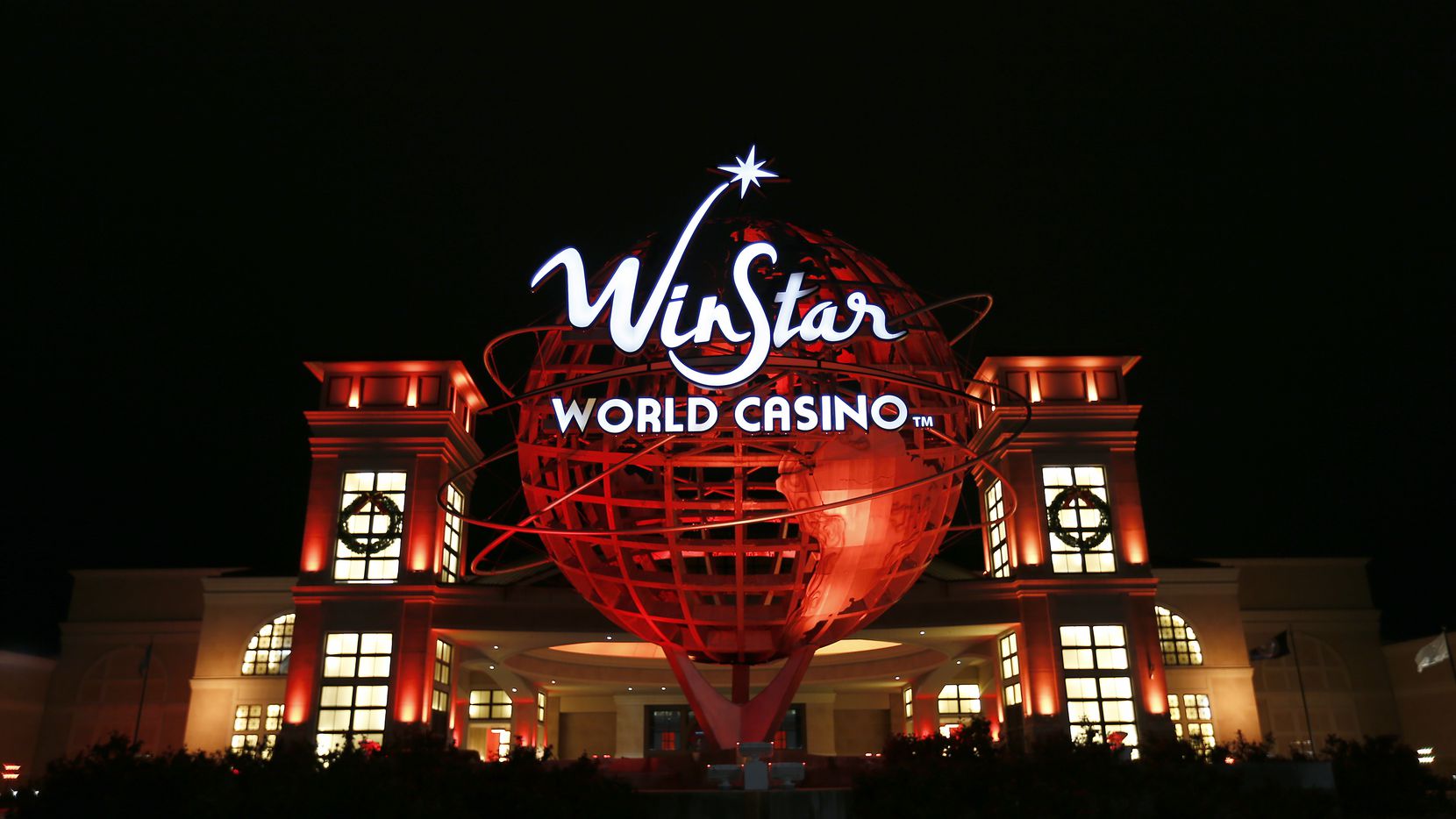
THACKERVILLE, OK – First American art and artists will be showcased during the first-ever Hushtola’ Art Market, Dec. 9-10 from 10:00am to 5:00pm, at the WinStar Convention Center at WinStar World Casino and Resort in Thackerville, OK.
Hosted by the Chickasaw Nation, more than 100 First American artists representing 26 tribal nations and eight states will display a wide variety of original art in 21 categories, including sculpture, beadwork, paintings, basketry, jewelry, metalwork, photography, textiles and pottery.
“We are thrilled to welcome many esteemed First American artists to the inaugural Hushtola’ Art Market,” said Mark Milligan, Chickasaw Nation Arts and Humanities Executive Officer. “Patrons and art collectors will discover a vast selection of unique art created by renowned First American artists during this holiday event.”
Hushtola’ Art Market is open to the public at no charge.





