Portland photographer embraces edible chaos

Portland photographer embraces edible chaos

Portland photographer Isabella Cassini loves food.

THANKS TO OUR SPONSOR:

“If we look at how much we talk about and photograph and video food in our culture, we love food. I think photographing it and just having a lot of fun and playing with it showcases that even more and especially doing exceptionally fun things with it,” she said.

Cassini also embraces the chaos of life.

“I don’t like to shy away from the ugly parts of life, the painful parts. And oftentimes those can mean chaos,” she said. “Not that I would want to invite it in!”

Cassini combines her love of food and tolerance of chaos into her latest photography project, “Splashes, Crashes, and Smashes.”

In her studio, Cassini takes foods that we normally don’t think go well together, like raw eggs and macaroons, and smashes them against each other.

The result? A beautiful mess.

“I’d like to think that it also invites other people to explore the chaos for themselves. Everything isn’t always pretty and really, we’re just all giant messes on the inside, just like a cracked egg yolk,” she said.

To achieve this, Cassini built two ramps out of wood and plexiglass, and faced them so that when she dropped the food, they would smash together in the middle.

Meanwhile, she has her digital camera set up right in the middle to in an attempt to capture the exact moment the two foods crash together.

“It was a lot of trial and error and the whole idea behind them was to be able to throw two different food items, liquid whatever it may be down them and into each other. And so that they would crash in the middle and create something explosive and exciting and unexpected,” she said.

Photographer Isabella Cassini stands in front of two of her photographs from her “Kaleidoscope” project. Cassini Cassini combines her love of food and tolerance of chaos into her latest photography project, “Smashes Crashes and Splashes.”

Steven Tonthat / OPB

THANKS TO OUR SPONSOR:

For 15 years, Cassini worked as a commercial food photographer, creating the perfect image of our favorite food and drink. But during the 2020 COVID-19 pandemic, she started “Splashes, Crashes and Smashes” to explore her artistic and fine arts side.

Cassini’s love of food and photography as an art came at a young age. Her father was a filmmaker and gave Cassini her first camera.

“Photography just really allowed me to articulate myself in a way that was just very accessible and as I started diving more into it, there were just so many subjects to explore and the way I could express myself artistically with lighting uh choosing subjects,” she said.

She became drawn to food photography in 2008 which allowed her to express her creativity.

“I think food visually was just very exciting. I was really able to teach myself about lighting and composition and it allowed me to explore, it’s just a very versatile subject.”

She further explores her love of food with her “Kaleidoscope” series.

“My ‘Kaleidoscope’ series was one of the first portfolios I started doing and that inspiration really came from, I think a lot of ethnic markets in Los Angeles,” she said.

Like “Splashes, Crashes and Smashes,” Cassini photographs food in unique and interesting ways. But unlike the chaos, she focuses on order, and pattern.

“They’re not kaleidoscopes in the sense that they’re a repeating pattern. There is a lot of precision and perfection that goes into placing every little thing where I want it to be,” she said.

Cassini said the kaleidoscope and the smashes projects are different representations of her creative process.

“One is leading more into the chaos and letting things happen as they happen. The other is I want this to look a specific way. “

“I think that’s part of why I love ‘Kaleidoscope’ so much because it really is about seeing how they are all going to fit together and it’s almost as if they have a perfect place, but I just haven’t figured it out yet,” she said.

Through her projects like “Smashes, Crashes and Splashes,” Cassini hopes people embrace the not-so-perfect sides of themselves.

“Sometimes I do feel like I’m here to let people know like they’re OK, just the way they are, perfectly imperfect,” she said.

Photographer Isabella Cassini photographs food crashing together in her latest project, “Splashes, Crashes, and Smashes.”

Courtesy Isabella Cassini

THANKS TO OUR SPONSOR:

WePresent | Marta Syrko uses natural elements to create supernatural photos

WePresent | Marta Syrko uses natural elements to create supernatural photos

Syrko also uses water, ice, steam and colored gels to disturb the surfaces of her photographs, drawing attention to planes we usually overlook or ignore. These methods feel at home in her work for the Dutch National Opera & Ballet, which is also informed by the dreamlike world it inhabits, by fairytale stories such as “Swan Lake” or larger-than-life narratives such as “Der Rosenkavalier.” Her poster for the Dutch National Opera & Ballet’s “Carmen” shows a woman’s face mottled by ripples, for example, while her image for the “Maria Stuarda” production shows two women plunging their faces into water. Syrko was invited to shoot two consecutive campaigns for the company, in 2022 and 2023. The only other photographer to have been invited twice is Erwin Olaf, a Dutch image-maker celebrated for his slick, hyperreal work.

She studied Art History at the Academy of Art in Lviv and draws on existing art in her work, be it Surrealism’s subversive take on society and sexuality, or the Renaissance’s rebirth of a certain way of looking. Her poster for the production “Giulio Cesare” draws on its Baroque origins, for example, her subject lit and even painted to evoke the sensuous, fleshy paintings of the time.

Culture, Landscape & Photography: Brandon Arik Garcia’s Frontera Film Project

Culture, Landscape & Photography: Brandon Arik Garcia’s Frontera Film Project

When you think of picturesque landscapes, South Texas may not be the first place that comes to mind. However, local photographers are capturing the rich history of the Rio Grande Valley (RGV), including its architecture, terrain, and people, and exploring what it means to find beauty in what many may think is a rundown, uninteresting part of Texas. Harlingen native Brandon Arik Garcia is aiming to correct the narrative about the region with the Frontera Film Project, which focuses on creating visibility for local photographers.

Given the scarcity of resources for practicing and exhibiting photography in the Valley, a significant number of individuals resort to sending their film rolls for development in locations such as San Antonio, Austin, or Mexico, leaving photographers to showcase their work solely on social media. 

Frontera Film is a first-of-its-kind project, pushing the limits to publish local photographers in a zine that follows a series of prompts to evoke creativity from participants. Below, I chat with Garcia about the project. 

Multicolored announcement for Frontera Film

Aime Miranda (AM): This isn’t your first time creating a zine for the community; what motivated you to create the Frontera Film Project?

Brandon Arik Garcia (BAG): What inspired me was making my first zine. I wanted to create something for the community; I got a lot of support, and people loved the idea! I wanted to make a zine for everyone; that is how Frontera Film came to life.

Members of our film community deserve for their work to be recognized; coming from a small town, I didn’t have that spotlight. We just support each other in this community, and I want to keep that alive. 

AM: Why is it important to capture moments in the RGV through this project?

BAG: There are many talented photographers in the region and they need their recognition. I want them to have a platform and for their work to be available for the public to view. I want them to showcase their lives, their families, and what is outside their homes, to capture whatever they see and what they like.

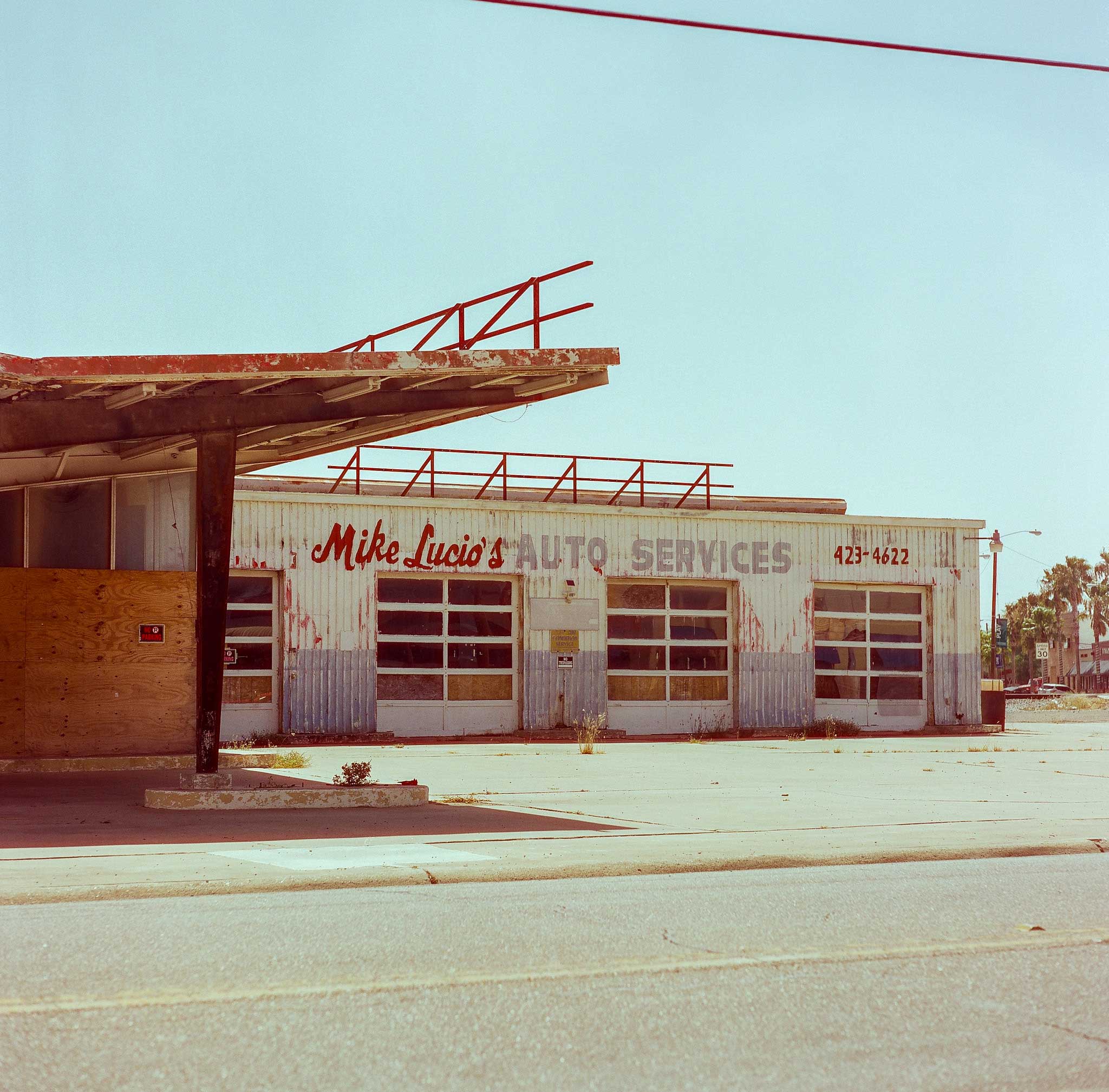
Photo of an an old service station

A landscape in Harlingen, Texas, photographed by Brandon Arik Garcia

AM: What is the process like for photographers to submit their photos?

BAG: Our first prompt was “sequence.” Photographers could go out and shoot whatever worked within that idea. It could be anything from making food to a sunset, as long as there was a process being shown. To submit to the zine, photographers submitted through a Google form. That way we could receive the full-quality images, their Instagram handles, and their project’s name. 

AM: How do you feel that Frontera Film will influence other photographers?

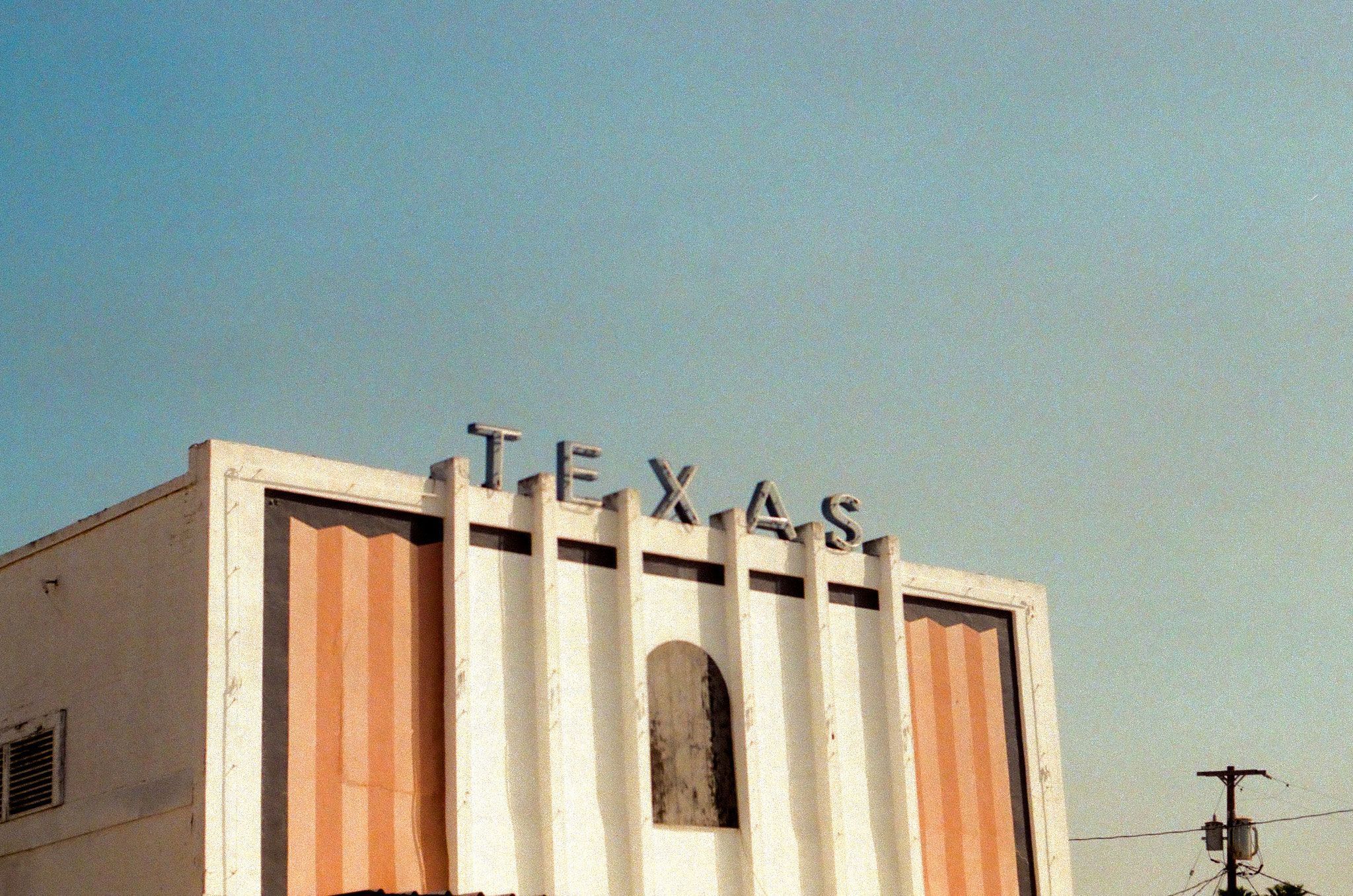
BAG: We tend to forget what’s around us; there’s a lot of culture in the Valley. We live right next to the border, and there are a lot of spots we tend to forget. Places like the Citrus Theatre in Edinburg and mechanic shops with old cars outside; these places can become gentrified, become another plaza or car wash, but that’s why I love capturing them — because they could be gone any day. I hope this keeps the wheels turning and inspires others to create.

Photo of Texas theater in Pharr Texas

The Texas Theatre in Pharr, Texas, photographed by Brandon Arik Garcia

AM: How is the zine organized? Where and when can we find it?

BAG: There is no order in the zine; you open it and you’ll see all the photos that everyone submitted. I hope when people get the zine, it will encourage new photographers to submit and create their own materials. I plan to distribute our first edition in coffee shops like Labyrinth in McAllen and Bandera in Harlingen. I want to distribute it all across the RGV coffee shop scene. The Frontera Film Project Zine will be out, I’m hoping, by the end of November, and will be available during the Harlingen Art Night on November 24. 

WLU Graphic Design Student Takes Second Place Honors at an Intercollegiate Advertising & Design Competition – News and Media Relations

WLU Graphic Design Student Takes Second Place Honors at an Intercollegiate Advertising & Design Competition – News and Media Relations

WEST LIBERTY,  W.Va., November 6, 2023 -West Liberty University’s graphic design senior, Frankie Lander, has clinched second place at the prestigious AdFlux 23 competition with her branding project, marking the culmination of her semester-long dedication to the ART 400 Branding course.

AdFlux is an Intercollegiate Advertising and design Competition sponsored by a coalition of professional associations, including AIGA (American Institute of Graphic Arts) Pittsburgh, AMA (American Marketing Association) Pittsburgh, and American Advertising Federation, and additional sponsors include the National Institute for Social Media and COHatch.  

Moonjung Kang, a professor of Graphic Design in the Visual Communication program at West Liberty University, remarked, “All successful graphic design begins with a comprehensive understanding of the brand. For graphic design students, acquiring a deep understanding of branding is a prerequisite for success. Our branding course was introduced in 2019, and the exceptional projects produced by our students over the years have stood up to the standards of professional companies. Many graphic design students have won awards in various competitions with projects they worked on in my class over the years, but being selected in a competition for branding work for the first time is quite special.”

To view the Frankie's entire branding work, please click here:
Branding by Frankie Lander

This competition is designed to recognize exceptional design work in marketing, design, and advertising produced by talented students from higher education institutions in Pennsylvania, Ohio, and West Virginia. It also serves as a launchpad for these emerging creative powerhouses to gain recognition in the Pittsburgh marketing and advertising community.

Frankie’s achievement in this highly competitive event did not come without fierce competition. The competition received a staggering 300+ entries from design majors representing numerous regional universities. Her project, “5th Dimension: An Innovative & Interactive Festival Event Company,” was submitted under the Digital Ads Campaign category and garnered praise from industry experts.

Kang emphasized, “The students who successfully complete the branding course, including Frankie, deserve special recognition. This course is undeniably challenging, spanning an entire semester dedicated to a single project and delivered through intensive one-on-one instruction.”

Frankie’s work, along with other honored projects, will be prominently showcased at the CCAC Richard Robert Smith Gallery and will be part of a months-long touring exhibition. It will be great accolades to start her career off with.

To view the Frankie’s entire branding work, please click here:

The Visual Communication program is one of the many majors offered in the College of Liberal and Creative Arts. To contact Kang for more information, please email her at mkang@westliberty.edu. 

West Liberty University is West Virginia’s oldest public university, offering more than 70 undergraduate majors and 12 graduate programs, both online and on campus. Learn more at westliberty.edu.”

The Art of Travel Photography featuring Vanelli and Scott Kelby

The Art of Travel Photography featuring Vanelli and Scott Kelby

“The Art of Travel Photography” features host Vanelli, Skylum’s Director of Education, and featuring special guest Scott Kelby.

This episode focuses on the art and nuances of travel photography. It places major emphasis on employing a “fixer” in the field, enabling access to remote and unique locations for capturing extraordinary images. The conversation also explores the difference between fixers and photo guides. Practical tips encompass vital photography gear like lenses, camera bodies, filters and bags.

Additionally, the discussion addresses strategies for navigating crowds, handling tourist disruptions, and employing post-processing techniques with software such as Adobe Lightroom and Luminar Neo.

[embedded content]

The Art of Photography Webinar Series is an insightful and educational program brought to you by B&H Photo in collaboration with Skylum, the makers of Luminar Neo, and led by Vanelli, Skylum’s Director of Education. This series has been crafted to provide valuable guidance and knowledge to photographers, regardless of their experience level, to enhance their photography skills.

Across a sequence of webinars, we will venture into diverse photography genres. This series offers in-depth insights into the tools, techniques, and artistic methodologies contributing to creating breathtaking images.

Dazed Club Spotlight: October 2023

Dazed Club Spotlight: October 2023

From editorial shoots to family photos, explore the latest photography and fashion projects by Dazed Club members from the past month

6November 2023

Dazed Club Spotlight is our monthly series showcasing up-and-coming talent from the Dazed creative community. If you’d like to be featured, join the Club here.

“My latest project ‘Lumen’ transcends the conventional realms of jewellery photography, as it delves deep into the art of lighting and its transformative power. Each image in this campaign is a testament to the masterful manipulation of light, showcasing how it breathes life into every facet, every gem, and every contour.

“I love working with lighting, and my favourite will always be continuous lights, as I can manipulate them to recreate a light I might have seen in real life. This could be as simple as the full moon’s light falling on a white rose. I have always seen my light set-ups as a way to paint a canvas, especially because I come from an artistic background so the basics are about looking around me to get inspired which can sometimes also be people.

“I don’t like doing a lot of post-production work – I love seeing my model’s skin as it is, as we all have beautiful details and textures which I don’t think have to be hidden. The only editing I do is perhaps balancing the contrast and brightness, everything else has always been done on set.”

Photographer and Creative director: Simran Kaur, Designer and nail artist: Callisto Hutchings, Casting Director: Autumn Jensen, HMUA: Yuliia Kuzmenko, Model: Georgina Favyer

“My friends and I have this saying, ‘give me more’, that we apply to everything, or ‘I think you can do better’ – all my fashion shoots are a play on that. They’re always about friendship. I love really eccentric looks and make-up, and ultimately I just want everything that I do creatively to be fun, and to look like it was fun to do. For this series, we had said from an outsider’s perspective that it looked like I had gone to get my sister from a night out, as I was so casual and she had eyelashes all over her face… so that was the overall aesthetic we carried on with!

“I came in contact with the model @isiskrisis through IG. I found her makeup page first and then asked if she would be happy to model and do her own make-up. We got on so well instantly – she actually turned up to the AirBnB listening to the same Doja Cat song as I was. The clothes are a mixture of mine, my grandad’s, my brother’s, my aunt’s, nan’s and Isis’. Recently, I have been raiding all my family’s wardrobes, because they have so many beautiful things around. Lots of pieces were literally things I found at my nan and grandad’s house.

My friends inspire me all the time, I definitely get most of my inspo from them. One of my friends @ivansmith.mua actually really brought me back into the love for makeup – looking at MUA’s such as Pat Mcgrath and Isamaya Ffrench, and the shows they have worked on. I am also really inspired by @matieresfecales. Jawara Alleyne also for the styling, because I have used safety pins all year to pin outfits together as that’s how my housemate Usman would create drag looks. I love this whole punk / reinvent your clothes aesthetic, because who can afford clothes any more? Anything that makes fashion more accessible I love and thankfully fabric and safety pins are definitely that for me.”

“This summer I got my first camera and spent time teaching myself photography and photo editing. For me, I was drawn to having my family members, such as my little cousins and my little brother, act as my subjects to create a personalised chronicling of my life.

“When I first started editing photographs, my approach and style were very spontaneous. The art style I had created through these images happened in a spontaneous moment; I had no intention of creating a unique look but when I did, I realised, ‘there’s potential in this, I think there’s something special here‘.

“The choice of setting is purposeful in my work. When I started photography, I chose my back garden to shoot in as it always had the most wonderful sunlight during the summers, and it allowed the kids to have fun and feel free while I took their photos. They always like to play outside, and so I felt it was best to capture their happiest moments in the place they enjoy the most. To have my family in the shots means everything to me – my family has always supported everything I’ve chosen to do. To feature my younger family members in something that is now shaping the future of my creativity is something I see as a blessing.

“Regarding my process, I take images with a bright flash and a small aperture, and then I use a low ISO setting. This makes the faces the focus of the images, particularly with the flash, and creates shadows in the background. In some images this contrast is inverted so there’s a bright background and everything is amplified. Essentially there’s just a large focus placed upon the person. I then go into DaVinci Resolve and work with colour grading tools to add those colours and subtract the saturation until I have my final piece.

“I realised that life should consist of things that you want to do and things that make you happy. Time doesn’t wait for anyone, so I get up and try new things all the time. I know that may sound quite melodramatic, but that’s my biggest motivator.”

“My photo essay, entitled VIVIANO, is born from my mixed heritage identity and captures the juxtapositions of my origins: a hybrid of British identity and Indian custom. The photo essay works to de-centre the cultural identity of fashion; its aesthetics are not defined by its Britishness, nor is it a mimetic representation of Indian culture, rather it exists ‘in-between’.

“The models’ styling was accented by precious items of jewellery, reminiscent of India, likely passed down through generations from mother to daughter, father to son, that my ancestors were forced to leave behind in the Amin Exodus of Uganda. The images are deliberately calculated to be an onslaught to the senses, a dynamic colourful interplay of beautiful visuals, offbeat photography, ugly aesthetics and added text, interspersed and feathered with humour and irony.

“The photo essay culturally floats between continents, celebrating the vibrancy of India through its rich colour palette, whilst respecting the clean lines, elegance and charm of British design. At the same time, it raises up the diasporic Indian man, like my ancestors who went before me, once exiled from their homes and divorced from their dreams and aspirations, thus restoring his sense of equality in the outside world and paying homage to his creative expression. VIVANO acts as a love letter to my family across both continents and to all those of mixed heritage – I’m constantly inspired by the concept of identity in motion.“

“My name is Dario and I live in Chinatown, NYC. I have been taking photos on disposables for years, but finally levelled up to a 35mm camera over the pandemic and cannot stop shooting. I love moments where I can make my subjects feel as beautiful as I see them, even if they are a stranger I have just met. I am blessed to be around such beautiful people, both inside and out, in the most inspiring city I can think of. These are a quick glimpse into the people I surround myself with, both new and old friends and things I have been able to see over this summer.

“All the subjects portrayed here are close friends of mine, how they live their lives inspires me. Some were captured in a natural habitat like my friend Michael or Felipe. Some are styled and directed by me. My surroundings are what inspires me the most right now, whether it be my new apartment and neighbourhood or my friends I have met along the way. Life is the ultimate inspiration. Photographers like Clifford Prince King are forever inspiration.”

“A lot of my latest photographic work represents my love for how shapes and colours cohere with items of clothing to create movement. Part of what has helped me in my practice is my community – Houston is a very diverse community full of very artistic individuals, and having such great photographers in our area helps me learn, and inspires me to try out new things and think outside of the box.

“These images represent Fashion from Rags – all these items were thrifted and did not cost more than 25 cents per piece. I wanted to create a high fashion-inspired outfit by not going above $2 per set. My goal is to challenge the stigma that fashion is entirely inaccessible; on the contrary, fashion can be how we piece together the items, to create art that flows together within the environment.
 
“Most of my process consists of searching and envisioning an ideal session for my team and I to create the looks, as well as a location that we choose for the session, whether this be in a studio or in nature. We then make the most of the session based on the vision we have going into it. I think love to go into Photoshop to add shapes and colour. If I can create an image where I am able show nature, beauty, and fashion simultaneously, then I am all for it.”

Join Dazed Club and be part of our world! You get exclusive access to events, parties, festivals and our editors, as well as a free subscription to Dazed for a year. Join for £5/month today.

Photography: Free Throw, Prince Daddy and the Hyena, and Charmer at LPR

Photography: Free Throw, Prince Daddy and the Hyena, and Charmer at LPR

Posted: 6th November, 2023 by The Editor

Promoting their new album “Lessons That We Swear to Keep” earlier this year, Free Throw played an incredible show at NYC’s LPR. The Nashville-based band play a fantastic show. Showcasing their high energy and musicianship, the band played a wide range of their discography. The fans went wild for every single song, singing every lyric and grooving throughout the set. Prince Daddy and the Hyena also came on as support for the tour. Ever since their self titled record came out last year, the band have been non-stop touring and hitting the ground running. I can’t wait to see what the Albany-based band will do next. There was also support from bands Charmer, and Saturdays at Your Place. The latter, is one to watch, an up-and-comer for sure. The whole night was absolutely wild. Sarah was there taking some pics, check them out!


Photos by Sarah Knoll

The Alternative is ad-free and 100% supported by our readers. If you’d like to help us produce more content and promote more great new music, please consider donating to our Patreon page, which also allows you to receive sweet perks like free albums and The Alternative merch.

What makes a masterpiece? It depends who is selling…

What makes a masterpiece? It depends who is selling…

There has been plenty of talk that the trade for pre-21st century art has now become a “masterpiece” market. The super-wealthy have become so rich that they only want to buy the best of the best by the biggest legacy names.

Further down the price scale, if business for lesser works by long-established or long-dead artists is slow, huge one-off results for purported masterpieces reinforce wider perceptions that the market is booming and art is a profitable investment. At least, that is the hope.

But a closer look at the recent supply of “masterpieces” raises the questions of how many are truly the best of an artist’s career, instead of merely the best of what is available—as well as what “the best” even means now.

After May’s underpowered series of marquee modern and contemporary auctions in New York—ArtTactic, the art market analysis firm, calculates sales were down 42% by value compared with the equivalent auctions in 2022—many in the trade were relieved when Sotheby’s announced it expects to raise at least $400m from its November 8-9 sales of 20th-century art owned by the collector and patron Emily Fisher Landau. The two-part auction of around 120 works is led by a 1932 Picasso “masterpiece” guaranteed to sell for more than $120m.

A generous supporter of New York’s Whitney Museum of American Art, Fisher Landau, the widow of a New York property developer, died in March, aged 102. Despite being denuded by a gift of 367 works to the Whitney in 2010, her collection is “era-defining” and still contains “key masterpiece examples” by American post-war artists such as Jasper Johns, Willem de Kooning, Robert Rauschenberg, Mark Rothko, Ed Ruscha and Andy Warhol, according to Sotheby’s. The house even puts her “unparalleled” holdings on a par with the “great pioneer collectors of the 20th century”, like Peggy Guggenheim and Gertrude Stein.

Given how important prestigious single-owner collections are to an international auction house’s sales figures (if not always its bottom line), Sotheby’s can be forgiven a little hyperbole. Last November its arch-rival Christie’s sold what it described as the “incomparable” collection of Microsoft co-founder Paul Allen for $1.6bn, the most ever achieved for a single-owner collection at auction. If one cannot compete on price, one must at least compete with compelling language.

The art market increasingly tends to differentiate major private collections mainly in terms of how much money they are worth. But comparing Fisher Landau with one of the autumn’s other big-name auction consignments shows how much the psychology of collecting has changed over the years.

Rothschild’s residue

Christie’s, which has also been free and easy with the M-word, held its Rothschild Masterpieces auction series in New York from 3-17 October. In reality, these four sales represented the residue of the once-great private collections of fine art and objects amassed—and sold—by this famous European banking family since the 18th century. The Rothschild dispersals culminated in 1977 in Sotheby’s legendary nine-day sale of the contents of Mentmore Towers in Buckinghamshire, which raised a then-astounding $10.3m from works by Thomas Gainsborough, Joshua Reynolds and François Boucher, among other canonical figures.

Nearly half a century later in New York, this latest series of Rothschild auctions was led by a 17th-century Gerrit Dou painting of a young woman standing in a window holding a dead hare, sold for $7.1m against a $3m-$5m estimate. Dou was a talented artist, but is that genre picture really the stuff of “masterpieces” like Rembrandt’s 1634 marriage portraits of Marten Soolmans and Oopjen Coppit, which the Rothschilds sold privately for €160m to the Rijksmuseum and the Louvre in 2015?

James Stourton, the author of the 2007 book Great Collectors of Our Time: Art Collecting Since 1945, makes a clear distinction between the thinking behind historic collections, like those amassed by the Rothschilds, and collectors of our own era.

“The difference today is that collectors buy art to show it—it is not about domesticity, and this is reflected in the art itself,” says Stourton, a former UK chairman of Sotheby’s. “What [Charles] Saatchi, [Eli] Broad, [François] Pinault, Dakis Joannou etcetera are doing is certainly collecting, but also to stage revolving shows in their kunsthalle, rather than furnish their homes.”

Like the contemporary mega-collectors Stourton mentions, Fisher Landau established a private museum where she showed selections from her holdings, at that time numbering around 1,200 pieces, to the public. The Fisher Landau Center for Art occupied a disused factory in Long Island City from 1991 to 2017. As well as having tax benefits, private museums can confer an aura of curatorial validity—even masterpiece quality—on exhibited pieces that even the most opulent 19th-century domestic interiors could not.

But does the Fisher Landau auction tell, as Sotheby’s states, “the entire story of 20th-century art in all its ground-breaking chapters” as powerfully as a private museum like, say, the Peggy Guggenheim Collection in Venice?

The key talking point is of course Fisher Landau’s 1932 Picasso, particularly as 2023 marks the 50th anniversary of the artist’s death. Purchased in 1968, when the 40-something Fisher Landau first started collecting, Femme à la Montre (woman with watch) comes from the celebrated series of pictures inspired by the middle-aged Picasso’s adulterous love affair with Marie-Thérèse Walter.

“He has painted and drawn no other woman in the same way, and no other woman half as many times,” wrote the critic John Berger in his classic 1965 study Success and Failure of Picasso. “What makes these paintings different is the degree of their direct sexuality.”

But Femme à la Montre lacks the languorous sensuality that characterises the market’s most coveted 1932 Marie-Thérèse paintings, such as Le Rêve (the dream), reportedly bought by the New York collector Steven A. Cohen from the Las Vegas casino owner Steve Wynn for $155m in 2013. That work has achieved consensus among critics and the market as one of the most “successful” paintings in the series, even a masterwork. Femme à la Montre, apparently, has not.

Picasso was a major thief of his fellow artists’ discoveries. [Femme à la Montre] looks as if he were trying to bring together Matisse and Léger, and somehow overdid himself

Christian Ogier, Picasso specialist

“It is big, it is colourful, and it is 1932, but it looks stiff and stereotyped,” says Christian Ogier, a Paris-based dealer who specialises in Picasso. “Picasso was a major thief of his fellow artists’ discoveries. Here, it looks as if he were trying to bring together Matisse and Léger, and somehow overdid himself.”

Tick-tock appeal

Yet Femme à la Montre has other, novel virtues, according to Sotheby’s, being one of only three major works by the artist to feature a watch. “Picasso had a deep passion for exceptional timepieces, and in fact owned three of the greatest watches in existence. To depict his young lover wearing one of his treasured watches was therefore to bestow on her the greatest of honours,” says Sotheby’s.

Fine watches have become a central component of international auction houses’ luxury offerings: Sotheby’s, Christie’s and Phillips combined sold $562m worth of watches (after fees) in 2021. The markets for fine art and luxury continue to align, turning the presence of a wristwatch into a key selling point for a $120m Picasso.

“‘Masterpiece’ is not a defined term. It’s malleable,” says Doug Woodham, a former Christie’s executive turned managing partner of the New York-based firm Art Fiduciary Advisors, as well as the author of the book Art Collecting Today.

When experts use the M-word, “they typically consider how the piece fits into the artist’s broader oeuvre”, adds Woodham. “The bar for A+ works is extremely high. However, for many buyers, this rigorous criterion may not be their guiding definition. The value of the word, unfortunately, has been diluted by overuse.”

During the same week that Sotheby’s is to auction the Fisher Landau collection in New York, Christie’s plans to offer “that rarest thing: a masterpiece rediscovered” in the form of a long-unseen Monet Le Bassin aux Nymphéas (water lily pond) painting, estimated to raise at least $65m. Held in the same family collection for the past 50 years, this is one of 14 or so large-scale canvases, each measuring two metres wide, that Monet executed at Giverny around 1917-19. These were precursors to his final magisterial, panoramic 1926 water lily grandes décorations, now at the Musée de l’Orangerie in Paris.

Back in 2008, Christie’s sold another painting from this two-metre Le Bassin aux Nymphéas series in London for $80.4m, then an auction record for Monet. That example appeared to be fully finished and bore a painted signature, while this latest canvas is more loosely worked andhas a stencilled signature.

There is general agreement that the ​​Musée de l’Orangerie water lily décorations are the culminating masterpieces of Monet’s career. But are those two-metre forerunners masterpieces too?

Nowadays, when it comes to such aesthetic judgments, what defines our era is the way that the market makes those decisions.