‘Very duped’: Indigenous musicians upset over Buffy Sainte-Marie ancestry revelations

‘Very duped’: Indigenous musicians upset over Buffy Sainte-Marie ancestry revelations

Buffy Sainte-Marie, wearing a shining dress and long necklace, was led on the stage by a group of Indigenous people in traditional regalia after she was inducted into the Canadian Music Hall of Fame in 1995. 

Her iconic dark hair and fringe hung long as she told the crowd about the importance of artists from remote communities.

“Most especially in the whole wide world, I’d like to acknowledge all the grassroots Indian artists who haven’t yet taken home a Juno, but who continue, as they have in the past, to capture our hearts at powwows across Canada, doing that magic which music does so well,” Sainte-Marie said to applause. 

Those words now ring hollow for some Indigenous musicians after a recent CBC News report raised doubts about the singer’s ancestry. 

Some musicians say they were disappointed to learn they may have lost career-shaping industry awards to someone who may be neither Indigenous nor Canadian. They say it amounted to lost opportunities at critical times in their careers. 

“Juno winners have toured the country and the world, and the runners-up get to play the neighbourhood pubs and occasional summer festival,” said Billy Joe Green, an Anishinaabe rock and blues musician who was a nominee for Indigenous Music Album of the Year in 2009 when Sainte-Marie took home the honour.

 “Resentful? I can’t afford that luxury.”

Sainte-Marie has received numerous Junos, the $50,000 Polaris Music Prize in 2015 and a Polaris heritage award for her 1964 debut album “It’s My Way!,” among a slew of other honours.

The story of her birth, childhood and identity has shifted throughout her six-decade career, with her identifying as Algonquin and Mi’kmaq before saying she was Cree, adopted from a mother in Saskatchewan.

However, CBC located her birth certificate, which says Sainte-Marie was born in 1941 in Stoneham, Mass. The document lists the baby and parents as white and includes a signature of an attending physician. CBC said Sainte-Marie’s marriage certificate, a life insurance policy, the United States census and interviews with family members corroborate the information on the birth certificate.

Sainte-Marie, 82, said in a statement the day before CBC’s story ran that she doesn’t know who her birth parents are or where she’s from, but called herself “a proud member of the Native community with deep roots in Canada.”

While Sainte-Marie’s career was skyrocketing in the 1960s, Green was also trying to make it in music, never surrendering to “the day-to-day rejection, racism and to the many number of obstacles” that came his way.

A life’s work culminated with the Juno nomination for his album “First Law of the Land” in 2009. While Sainte-Marie took home the hardware and accolades, Green said his opportunities evaporated and he struggles to make a decent living despite playing better than he ever has.

“I’ve accepted ‘life on life’s terms’ for the most part,” Green said in an online message to The Canadian Press. “Yet, I’m still reflecting on this very unpleasant circumstance that confronts all who lost opportunities.”

Karmen Omeasoo, who performs under the name HellnbacK, was nominated the same year as Sainte-Marie as part of the hip-hop group Team Rezofficial.

He first met Sainte-Marie as a child, with his mother explaining that she was an icon, so he understood losing to someone of her stature. 

“If we get beat by her, who cares?” Omeasoo said in an interview. “If one of us wins, we all win. That’s what it felt like … I held onto that.”

Now that feeling is gone. He thinks about all the Indigenous musicians who could have won and what it would have meant for their careers — recognition, radio play, touring opportunities, record sales.

“I’m feeling very duped. Like something was taken from me. Something was taken from all these other artists,” he said. 

Omeasoo said he can only speak for himself, not all Indigenous musicians. But, he said, the revelations have shaken him to his core. He imagines how meaningful it would have been to bring the Juno back to his First Nation in Maskwacis, Alta.

“I could have brought that hardware back home to my mom, my dad, my grandma, my kids.”

He continues to create with his wife, Lisa Muswagon, under the name The Resilience, but said it’s a constant battle to make music and provide for their children.

Chester Knight, who was nominated alongside Sainte-Marie in 1997, said his album “Freedom” should have won the Juno because his was actually an album for Indigenous people. The song “Love Me Strong” was “popular then and has grown to be even more popular now,” he said.

There have been calls for the Junos to rescind Sainte-Marie’s awards. An emailed statement said the Canadian Academy of Recording Arts and Sciences, which oversees the Junos, is aware of doubts about Sainte-Marie’s ancestry.

“We are processing the information presented and are consulting with our Indigenous Music Advisory Committee, other community members and key stakeholders,” the statement said.

Knight, who is from Muskoday First Nation in Saskatchewan, said the Juno Awards mean a lot to the artists competing for them. 

“It is unfair to my brother and sister artists who grow up in poverty and racism, and are somehow able to create something of emotional value like I did,” he said in an email. 

“Artists have to raise a family and balance a music career and a job career to fuel the production of an album.”

Black Bear, a drum group from Manawan First Nation in Quebec, was nominated in the same category as Sainte-Marie for “Come and Get Your Love: The Tribe Session” in 2016. The group said in a message to The Canadian Press they “work and walk in truth and this includes being true to yourself, your family and friends.”

“We certainly don’t know where to stand considering what (Sainte-Marie) has done for Indigenous artists and done to those same artists as well by taking away opportunities like Junos.”

Andy Summers: Hall of Fame Police Guitarist and Talented Photographer

Andy Summers: Hall of Fame Police Guitarist and Talented Photographer

Andy Summers is best known as a guitarist for the English rock band The Police, popular in the late 1970s to the mid-1980s. But he has also been a passionate and award-winning photographer from the film days through the digital transition to today. Summers has published five books on his photography, the latest from teNeues is A Series of Glances, and has had his work shown at over 60 exhibitions worldwide.

The Attraction to Black & White

“Well, color wasn’t really regarded very seriously then as art photography,” Summers tells PetaPixel on a phone call. “Color started moving a bit in the early 70s with William Eggleston. And a couple of others followed him, like Joel Meyerowitz, whose work was taken seriously as art photography.

“So, photography was black and white, and almost everybody shot black and white. And, of course, I had grown up with all those black-and-white films [movies]. So, it’s, of course, where I went. Color was regarded as secondary, but that’s not true anymore. So that was the atmosphere I grew up in. I went to B&W, thousands of rolls of [Kodak] Tri-X.

“Yeah, maybe a few shots [in the book], I used, sometimes shooting at night, I would use [Ilford] Delta 3200.

“I think this is a very powerful image. Loaded with people in sinister-looking costumes, it has an element of confrontation. The fact that I managed to get right in front of them, with the leader as the focal point, amazes me. I was going mad that night trying to get photographs from every aspect. The Nazarenos [in Seville, Spain, during Semana Santa, their Holy Week] came to a certain point in the parade, and as they stopped, I got down on my knees in front of them. They weren’t posing – I was very naughty and got right in the middle of the street to get this shot. I did it quickly, but it worked.” — The Guardian

Lest you get the idea that Summers is a B&W purist, that is untrue. He has a whole set of color photos and is even thinking about a future book on his color photography.

“In my years with The Police, I was in a tax exile — I lived in Ireland,” he says. “I did set up a darkroom. And worked at it for a while. And I liked to know that side of it. I was fanatical enough about photography outside of music to want to learn about darkroom processes. And I set one up and had a go at it for a while.

“But decided that it wasn’t for me. I didn’t want to be in a darkroom. Honestly, I’m glad to have tried it. I’m gonna let somebody else…I had one guy in London, an American guy I took my films to in Covent Garden [a shopping and entertainment hub in London’s West End].

“There’s probably some digital [in A Series of Glances]. I didn’t start digital until 2012. My first digital camera was a Leica. I’ve got Leica M10 cameras now – both black and white [M10 Monochrom] and color.

“I don’t like grain [referring to film photography]. A lot of photographers like it, [especially] photographers from older days. I like to have blur and distortion in the pictures. We’re always trying to push the edge of photography, you know, in your [photographic] statements… It’s an art form, so you can bend the rules.

We wanted to know the difference between shooting film and digital from Summers, who has done his fair share of both.

“I don’t think it’s about digital or film?” fires back Summers. “I think it’s about the eye and the mind. That’s what photography is about. It’s not about the camera or film. It’s about how you visualize, how you think about art. So those sorts of questions are interesting if you’re a nerd, but to me, they’re not. I’m quite happy using these Leica digital cameras, and I think [they] have made me better. They’ve made me a better photographer.

Summers typically shoots at 400 ISO on film and digital.

“I would rate [Kodak] 400 Tri-X at 800 or 1600 ISO and do things like that as well,” clarifies Summers.

“But of course, you know it’s digital. If you feel like, ‘Oh, I need more latitude on the F-stops,’ then you can push the ASA [ASA is a scale created by the American Standards Association, but it is no longer used. Now, most film is labeled by ISO, created in 1987 by the International Organization for Standardization] all the way up to 6400 on [Leica] M10.

“And with digital, if you go after a much higher ASA, it’s much less noticeable than film. So, I think you have a much, much more latitude with it. So, yeah, it’s a good thing.

“I don’t shoot film anymore. Okay. I’m sort of at it, returning to it, but it is a very, it’s a big deal. To shoot film and develop it is a real hassle. I was recently in Amsterdam with a kid who insisted on shooting film, but the trouble he had with developing and all the rest of it! It’s also costly now.

“I have a whole system of how I work with my photography. I have an assistant … returned from a trip and gave him ten cards. He loads them into our database, gives them to me, and I load them into my computer. I have a 27-inch computer which I work on and select the very best out of them.

“And then he takes them back, cuts it down to just the best shots, returns them to me, and then they go into another system [where the images are keyworded]. All [the images] fall into categories, so it’s easy for me to go through and find things.

“I’m not a landscape photographer or a fashion photographer. I hate fashion photography. I’m influenced by photographers like Ralph Gibson, Robert Frank, and Lee Friedlander and filmmakers like [François] Truffaut and [Ingmar] Bergman and [Federico] Fellini. That’s where the sensibility is for me.

“It’s just like music. You work in the media, and you come to find your own voice. I like abstraction, blur, distortion, and all these things because I come from a musical sensibility. And I think that works very well with photography.

“There’s great parallels for me. Because I practice both disciplines, you can bring the terms of one of the practices to the other. Why not? I feel like being a guitar player, or musician, is a significant advantage because I have a whole other set of ways of thinking that maybe other developers who aren’t like passionate musicians, they don’t have it.”

Photography and music are always in Summers’ mind, almost like he has a permanent headset.

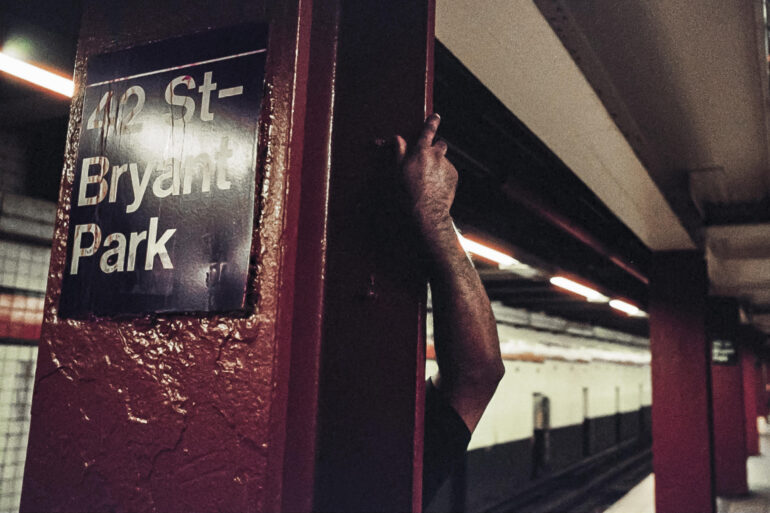
“When I listen to sounds in a city like Manhattan, New York, and I walk around, my eyes are turned on, and I’m always thinking. I was just there for a week in New York City. So great, thrilling, this is different than where I live [Los Angeles]. I’m always looking and thinking, throwing a rectangular frame on, as I’m looking at everything.”

Photographing China and the World

Outside the US, Summers has photographed the most in China.

“I went to China eight times,” he proudly exclaims. “A few years ago, I went to see the Naxi Orchestra play in their own little theatre in Li Jiang. So that was pretty interesting. I traveled all over, and I went to Tibet.

“I noticed yesterday I was looking at something to do in the studio, and there’s an overwhelming number of shots I did in China because it was so visually stimulating to me.

“One thing I noticed about China as opposed to, say, someplace like Morocco. [When you raise your camera] the Chinese don’t even blink an eye. They smile at you and don’t mind the camera at all. It’s really weird. It’s a cultural thing. In other cultures you go, they object.

“Sometimes I’m just traveling. Sometimes, I like to travel just to do photography. Yeah, I was in India. I wasn’t always on tour in China– I was just there. And, of course, I always have a guitar with me because I have to always play, but I wasn’t doing any actual concerts.”

Summers was not the official photographer for The Police, but he had the best vantage point being part of the band.

“I had the great and singular opportunity to be traveling in the world’s most famous band for a few years and photographing it always from the inside. Nobody asked me to do what I did, but I did it.

In the film days, X-rays were the biggest worry for photographers taking multiple flights.

“It was of great concern to me,” says the photographer. “I went on one of the trips and must have been before they came out with the first Leica digital, and I was still on film. I was traveling around China, and I had traveled all over Asia.

“I think I came in from somewhere like Laos or Cambodia, and they put my bag through the X-ray, and I was so freaked out. That was the only time that happened to me. I had 90 rolls of film, and only a couple were sort of destroyed. Mostly, they were okay. They were all in those X-Ray [lead-lined] bags. I was pretty paranoid about it.

In 2019, Leica introduced the $14,995 Andy Summers Leica M Monochrom. It also included a Leica Summicron-M f/2 35mm ASPH lens, a Fender guitar-inspired camera strap, and an Oberwerth leather black system bag. It was limited to 50 sets worldwide.

“I think I’ve got three of them or something like that,” says the Leica photographer. “I can’t remember. They are upstairs in an attic. They are precious. I’m really happy to have them, but I don’t sit around staring at them.

“By the time they came out with the camera, I was already on to the M10. I wish they’d made it as an M10. But I was very happy to have it done. It was a nice thing, and it sold out pretty quickly.

Read also: Lenny Kravitz Designed a $24K Leica with Faux Python Skin

“I’ve just spent two months on the road photographing, and I’ll be going on a musical tour for the rest of the year in America. And, of course, It’ll provide me with many photography opportunities. So, I’m looking forward to getting into that because I haven’t gone touring in America for a long time.

Summers has been touring South America in the last few months, including Brazil and Ecuador.

“I’ve been going to Brazil every year, sometimes a few times here since 1995. And I play South Brazil as my other home is there. I’m very used to being in Rio de Janeiro.

“I’ve done many things in Brazil, and also, Argentina, Chile everywhere. This last tour was Brazil, Ecuador, Panama, Venezuela, and Paraguay. And we have to go back to finish it in Mexico.”

Summers backs up his files on the road to four or five devices, including a small MacBook Pro.

He knows photographers are shooting in color and then converting to B&W. So, we asked him if he could/would do the same.

“I’m thinking about it,” he speaks with some hesitation in his voice. “And it’s the first time I’ve ever thought about that. Black and white is sort of sacred to me, but we’re living in different times.

“When I go this year, I normally would take an M10 mono and an M10 color, but I must always have a backup camera in case anything goes wrong. I might [just] take two color cameras, but I’m thinking about it.

Not a Street Photographer or Documentary Photographer

Summers has traveled streets around the world but is not a street photographer.

“I don’t like street photography,” he says. “I’m not looking for like the essence of street. I’m just not interested. That’s not a sensibility at all.

Is Summers a documentary photographer?

“No, I’m an art photographer. That’s what I’m interested in. I don’t really see doing documentary.”

The Leica Museum ran a Summers’ show called A Certain Strangeness, also the title of one of his books. Summers feels that the phrase describes the quality of a photograph to open the eyes.

“They have a certain way, always trying to find something, you know, oblique, a visual image that will catch [the eye] that is not a cliche. No ordinary [photograph] is gonna strike the viewer’s sensibility. A strange juxtaposition of elements in the photograph [can] make a much more interesting photograph.

Summers is in the Rock and Roll Hall of Fame, is in the Guitar Player Hall of Fame, has the keys to New York City, has won five Grammy awards, and has been awarded the Chevalier De L’Ordre Des Arts et Des Lettres by the Ministry of Culture in France.

“I don’t even think about it,” says Summers, brushing it aside. “I have so many awards and rewards and all that over the years. Getting these things is nice, but my life’s not based on that. The only thing that counts is doing the work.

Connecting Music and Photography

So, what is the connection between music and photography?

“That’s a very big question,” says the musical photographer. “There are certain elements like line, balance, frame, juxtaposition of the elements and, you know, bass, treble, middle chords, harmony, melodic lines. It’s the same thing in photography; you’re looking for all those same elements, except they are visual rather than aural. That’s the difference, but you can see how they translate from one to the other.

The title of Summers’ latest book is A Series of Glances, and we wanted to know if he is glancing through his viewfinder.

“Yes, you are glancing all the time,” says Summers. “And then you hold the glance, so it becomes [an image]. A glance implies it’s very quick, but some photography is done quickly. Like the camera tells you to do it at 1/125 of a second, and you must think that fast.

Summers’ photos have a dreamlike quality.

“Yeah, I think so,” says Summers in agreement. “I think you’re looking for another sort of reality that you could point [out]. You have the ability not to distort reality but to collect photographs, sequence them, and present another sort of reality that becomes personal and maybe more interesting to people.

“Most photographers that influenced me are American,” says England-born guitarist Summers. “A lot of them from New York. I mean, you’ve got people like I’m trying to think of, Bill Brandt, in England. Obviously, Cartier Bresson is the kind of person you start with when you first get into it.

“I spent a lot of time in New York and became very close friends with Ralph Gibson [who recommended a Leica M4-2 Best Premium Rangefinder Camera, which Summers often used]. And I thought his photography was wonderful and very musical. I then got into other people like Diane Arbus, Lee Friedlander, and Duane Michals.

Summers never uses flash and even hates the look of it.

“Some people [photographers] make a success of it. But I tend to associate flash with celebrity photography, and I don’t like flash. And most of the photographers I like don’t use flash.

“It’s absolutely disgusting [the firing of flash at a performer.] And I’ve been on the [receiving] end of that so many millions of times because I do concerts. Photographers are allowed to do [shoot] the first three songs, and you get a bunch of guys sitting/standing in front of the stage taking really bad photographs and often with flash. It’s horrible. When you’re on stage trying to play well for an audience, that flash is very disturbing.

Summers does admit that if you were using slow films like Kodachrome 64, you had to resort to flash.

In the future, Summers will keep photographing and refining his work. He is also planning on pulling out all the color work.

“Thinking about it, these things come to you slowly. You assemble things and then work your way through it, just like making music. I’m finishing up a new album now, and I’ve also got all this color photography on the computer in my studio.

“And so, I will start slowly arranging it into a sequence. After all the years of black and white, I’m challenging myself to see if I could do a whole book of color. So, that’s a little step for me!”

Getting Started in Photography

We asked Summers how he got started in photography.

“From boredom, “instantly replies the guitarist. “Years ago, I was always on tour and stuck in hotels. Like everybody else, I’d always take pictures with various cameras. But I was so involved with music that I did not take up photography as a serious pursuit.”

“I was also surrounded by photographers. We were so popular, so I told myself, ‘I am going to get a very good camera and become a photographer. I’m gonna study it,’ just like that. But, you know, I had no idea what it would really take, but the seed was there.

Summers asked a photographer in New York to help him get a camera, and she took him to B&H Photo.

“I bought a Nikon FE [1978-1983]. Oh, I’ve used that camera. Beautiful, beautiful,” says Summers fondly. [Me too! I enjoyed midnight long exposures of the Mount Everest region and the FE producing well-exposed Ektachrome 100 slides on aperture priority, selecting shutter speeds of 45 minutes plus.]

“Once I got it, it became a real passion for me. I always had cameras, and my brother was sort of an avid photographer. And when I was about 14, I got a job on the beach in England [Bournemouth in the south] in my hometown as a sort of summer photographer with some weird box camera photographing tourists and I did that for a couple of summers. I was 15,16, 17.

“I was going to a cinema in my hometown called the Continental Cinema, which showed all these fantastic European arthouse films, and I was going to those all the time. That was a big part of my sensibilities at a young age.

“I was completely involved with playing the guitar and American jazz, but I was also watching all these European arthouse films, and it didn’t make me take up photography then, although I sort of idly thought I should be a film director. But I was such an obsessive guitarist that that didn’t happen then.

“But all those films, all the black and white ones, absolutely infiltrated my consciousness. So, when I did get around to it a few years later, it was like seeds being sown, and it wasn’t coming from an empty place. That kind of stuff had a big impact on me. And so, therefore, it seems obvious that when I got the camera [it] sounded good, and I’m gonna get good at this. It came naturally.

When we spoke to noted academy award-winning cinematographer Sir Roger Deakins in May 2023, he told us a similar story of growing up in Bournemouth, photographing tourists on the beach as a summer job, and seeing arthouse films. But Deakins, in the late 60s and early 70s, was before Summers’ time.

“He must have been a few years before me, but yeah, that’s amazing.,” says Summers. “As I said, I thought I’d be a film director. I was 16 years old, 17 or whatever.”

“So, you see, it was all sort of there. But the guitar itself is such an obsessive instrument that I ended up doing. It kind of worked out at the end, right?”

You can see more of Andy Summers’ work on his website and Instagram.

A Series of Glances from teNeues is currently shipping.


About the author: Phil Mistry is a photographer and teacher based in Atlanta, GA. He started one of the first digital camera classes in New York City at The International Center of Photography in the 90s. He was the director and teacher for Sony/Popular Photography magazine’s Digital Days Workshops. You can reach him here.


Image credits: All photos by Andy Summers and used courtesy of teNeues.

GenAI and the Forced Evolution of Photography: From Artifice to Authenticity

GenAI and the Forced Evolution of Photography: From Artifice to Authenticity

The rise of Generative Artificial Intelligence has been nothing short of revolutionary, impacting every domain from finance to the arts. In the world of photography, GenAI has had a transformative effect, much like the impact photography once had on painting.

The Historical Parallel: Photography and Painting

When photography emerged in the 19th century, it provoked a crisis in the world of painting. No longer did painters need to act as the primary recorders of reality; photography could capture a scene with unparalleled accuracy and detail. This compelled painters to introspect, leading to movements like Impressionism, Expressionism, and Cubism. Painters began exploring the more abstract, emotional, and subjective aspects of art, areas where photography couldn’t intrude.

Is it photography, or is it GenAI? The question should rather be, is it authentic?

GenAI’s Emergence and Photography’s Dilemma

Today, GenAI poses a similar challenge to photographers. With the ability to fabricate hyper-realistic images, often indistinguishable from real photographs, GenAI blurs the line between reality and artificiality. If GenAI can recreate or even surpass the aesthetic appeal of a captured moment, what then becomes the essence of photography?

From Artifice to Authenticity

The response has been a compelling shift towards authenticity. In an age where GenAI can create realistic and artistic visuals, photography must return to its original purpose as a trusted recorder of reality. Art will be for painters and prompt engineers. Documenting reality will be for photographers. To maintain its integrity and relevance, photography is now being pushed to clearly demark itself from artificial creations. This means that photographers are gravitating towards:

Documentary-style photography: This involves capturing unaltered, candid moments, often with a focus on storytelling. By emphasizing the truth, photographers can offer something GenAI can’t fabricate – genuine human experiences. Think weddings, for example. No one will want GenAI images of the couple exchanging vows.

Photojournalism: Prioritizing truth over aesthetics, photojournalists aim to present an unbiased view of reality, further distancing themselves from the artifice of GenAI. A must for our democratic societies to thrive.

Emphasis on Process: Much like how painters celebrated the brushstroke post-photography, photographers will further highlight their unique processes, equipment choices, and techniques to differentiate their work from machine-generated images accompanied by certificates that verify each step of the process, ensuring it is firmly rooted in reality.

Beyond the Realism-Artifice Dichotomy

The push for realism doesn’t mean there’s no room for creativity in photography. On the contrary, photographers should merge realism with artistic interpretations. Use the “old” medium to explore deeper truths, playing with shadows, compositions, and contexts to evoke emotions and narratives, all while staying clearly rooted in authenticity.

A young boy running through a water sprinkler with the sun in the background
Do we really need to replicate this via AI, or is this better left to photography? Photo by MI PHAM on Unsplash

The Future of Photography in a GenAI World

Just as painting underwent a transformative evolution after the advent of photography, so too will photography evolve in response to GenAI. While GenAI boasts the ability to mimic and replicate, it cannot capture the human touch, the genuine intent, or the spontaneous moments that define a photographer’s click. Photography is more than just an image—it’s our connection to the real world, to one another, and to moments that inform our decisions. The next generation of photographers will become masters of probability, documenting reality with certitude. It’s this intrinsic human connection and touch with reality that will forever differentiate genuine photography from AI-generated imagery.

As the lines between the real and the artificial blur, photography’s role in preserving and portraying reality becomes even more paramount. While GenAI forces a reevaluation of the purpose and essence of photography, it certainly doesn’t diminish its value. Instead, it pushes photographers to evolve, to be more discerning in their approach, and to capture the world with an authenticity that only they can provide.


The opinions expressed in this article are solely those of the author.


About the author: Paul Melcher is a photography and technology entrepreneur based in New York, and the founder of Kaptur, a news magazine about the visual tech space. You can find more of his writings on his blog, Thoughts of a Bohemian. Melcher offers his services as a consultant as well. This article was also published here.


Image credits: Header photo generated with Adobe Firefly

Art of the City: Finding the balance: C Fodoreanu pursues his artistic dreams while working as a doctor

Art of the City: Finding the balance: C Fodoreanu pursues his artistic dreams while working as a doctor

For many, the formative dreams of becoming a successful artist or creative, no matter the medium, were written off years ago. We get up. We go to work. We come home exhausted. This cycle repeats, despite the unused paints and canvases in the corner, the camera collecting dust on the dresser, or that unfinished novel on the computer.

Have a conversation with artist C Fodoreanu and one might walk away either feeling inspired or resigned to their creative hiatus.

Just home after working at his day job as a pediatric physician, he speaks about all of his creative endeavors as if he has no choice but to pursue them as well. Outside of the hospital, he is a skilled photographer, but he also works in sculptural and video art. To hear him tell it, the demands of his career have never suppressed his creativity. If anything, they are symbiotic, one fueling the other and vice versa.

“I often look at them as the same dreams, but from different angles,” says Fodoreanu, whose full name is Andrei Cornel Fodoreanu. “It’s part of the same journey of reaching for the truth, whatever that might be, but different ways of getting to it. Art is medicine and medicine is art.”

“I don’t turn myself off from being an artist when I’m at work,” he adds later. “I’m the same, but maybe when I come home, some of the insights I have from work will translate into something artistic, something visual. I’ll take the time to express it instead of keeping it inside.”

San Diego artist C Fodoreanu's photography shown at CSU Los Angeles.

San Diego artist C Fodoreanu’s photography is exhibited in a recent show at California State University Los Angeles.

(Courtesy of C Fodoreanu)

Listening to Fodoreanu recount his life is equal parts beguiling and inspiring in that he’s managed to pursue both his passions (medicine and art) with uniform enthusiasm. What’s more, he’s done so while assimilating into American life after immigrating to the U.S. from, of all places, Transylvania, Romania.

“It really was a magical place,” says Fodoreanu, who grew up “very close” to Bran Castle, the medieval fortress that is most commonly associated with the fictional Count Dracula.

Vampire associations aside, Fodoreanu says growing up in the region laid an artistic foundation that persisted throughout his life. His photographic work is moody and wistful, dark but expressively romantic. When he was still a young boy, he learned the practice of glass iconographic painting and developed a love of poetry and music. He was also fascinated with his dad’s analog film camera, and eventually began using it to take pictures of nature and the people that fascinated him.

“It was winter and I think I was trying to take pictures of the mountains or something, and I don’t think I knew exactly how to roll the film in the camera,” Fodoreanu recalls, adding that his naïveté on how to operate the camera resulted in double exposed images that looked moody, but still evocative. “For me, that was powerful and I fell in love with it.”

One of the places he often found inspiring was the nearby Lake Sacalaia. Also known as Pike’s Lake, Fodoreanu describes it as a “magical” but “religious” place that he loved visiting as a child despite its associations with strange apparitions, mythical creatures and what he describes as “eerie silences.” Look up the lake online and it’s often referred to as the “Loch Ness of Transylvania.”

“We spent lots of summer at that lake,” says Fodoreanu. “We didn’t have cell phones at that point, of course. We didn’t even have TVs. So for us, we would fish and spend time at the lake.”

San Diego artist C Fodoreanu’s sculpture “cor fabrica.”

(Courtesy of C Fodoreanu)

This age of innocence, however, was shattered when the Romanian revolution began in 1989. Also known as the Christmas Revolution, it saw the people overthrowing the Communist government, but not before hundreds were killed and thousands injured by government fighters and secret police. For Fodoreanu, who was a teenager at the time, it marked the first time he became fascinated with the fragility of existence and the very human desire to repair and preserve it.

“For the first time ever, I was seeing dead bodies. The insides of human bodies,” Fodoreanu recalls. “There was a sense of ‘why them?’ and ‘why not me?’ It drew me to the human body in a fascinating way. It became more of a preoccupation with the inner workings of the human body, not just the magical aspects. I wanted to fix things, to put it back together and that made me want to be a doctor.”

Just after he completed high school in Romania, his family moved to Los Angeles. Fodoreanu eventually attended the University of California San Diego and then went on to Harvard Medical School, graduating in 2011. Still, that ineffable fascination with what lay beyond the body, whether it was rooted in spiritualism or magic, continued to press upon him.

Years after moving back to San Diego and beginning his medical career, he visited Transylvania just before the COVID-19 pandemic. Once he was back in San Diego, and during the lockdowns in the early days of the pandemic, he began to sort through a “dusty old box” of photographic negatives from his youth. He says looking at them again transported him “back through time.”

“It not only connected me back to the legends of the lake, how important it was for me to have a space like that growing up, but also how I was thinking at that point. What kind of dreams and ideas I had,” Fodoreanu recalls. “Is that boy proud of who I am right now?”

San Diego artist C Fodoreanu’s book of photography and poetry “Ode to the Lake Sacalaia.”

(Courtesy of C Fodoreanu)

He distilled these existential deliberations into “Ode to the Lake Sacalaia,” a book that includes analogue and digital photography, as well as video stills, essays and poetry. Divided into four sections, Fodoreanu seamlessly explores memory and present tense, his grainy analogue images lovingly contrasted with his current works of bodies in motion. The contents of the book were further curated and presented this year at a gallery show at the Ronald H. Silverman Fine Arts Gallery on the Cal State University, Los Angeles campus.

In one of the poetic passages from the book, entitled “Queerly,” Fodoreanu explores memory and what he calls a “new humanism.”

We are the same,

me and you,

you and me,

same height,

same eyes,

same heart beat

both on the same side,

almost alike, sky. Same love,

and pain, mostly unfulfilled,

mostly pain, drenched.

The lake then does its trick:

grains and shines, splits and seeds,

whirls and beats; bits and shadows,

tears and scars, mine. You,

adding to my equation.”

He extends this humanistic outlook to his other creative endeavors as well.

He curated a studio show in 2019 called “street smart,” with proceeds benefiting an educational fund for young artists. This led more recently to “water hands,” a body of work where he collaborated with a group of at-risk youth to photograph their hands while they thought of their past and what their hopes were for the future. The results were recently displayed at the Medical Education and Telemedicine Building (MET) at the UCSD School of Medicine.

In addition to the show, Fodoreanu was also asked to give a presentation about the work at the inaugural Sidney L. Saltzstein, MD Endowed Lecture on Compassionate Care. He has even added sculpture to his repertoire, creating a massive stainless steel piece (“cor fabrica”) depicting the human body.

“I’m even working on a play,” says Fodoreanu, laughing. “Wagner said that theater is the ultimate art form and I kind of agree with that.”

For Fodoreanu, there isn’t at all a sense of staying in a particular lane. He sees both of his lives, the medical and the artistic, as a means of giving back and embracing the universality of humanity. And while they might seem to most people like very different dreams, he can’t help but think they’re one and the same.

“That’s kind of the goal as an artist,” he remarks. “To take that empathy and message of my medical practice and spread it around through my art.”

Name: C Fodoreanu

Born: Cluj-Napoca, Romania

Fun Fact: In addition to both his art and medical practice, Fodoreanu also recently found the time to go back to school and is completing his MFA thesis at the School of Visual Arts in New York City.

Combs is a freelance writer.

How Photographers Can Buy a Working Macbook Pro for Just $22 |

How Photographers Can Buy a Working Macbook Pro for Just $22 |

MacBook Pro computers have been the industry standard laptop for many years now. These machines usually cost a small fortune but can be found much cheaper if you’re willing to do a bit of detective work.

We all know Apple products come at a premium, and for some photographers, those price points are just too high. The good news is that with a little bit of Internet sleuthing and some basic computer repair skills, it is possible to get a MacBook Pro laptop for very little money.

This is exactly what technologist Luke Miani does when he hits eBay in search of a working Apple laptop at a rock-bottom price. The laptop he finds is a MacBook Pro (15-inch, Mid 2010) model that he paid just $22 for. The video goes on to show Miani testing the machine, installing a hard drive, and updating the operating system to get the laptop back to life. Minus the odd surface scratch, it really is hard to believe this MacBook has been around for 13 years.

In the second half of this video, Miani shows us how we can personally take advantage of eBay’s search filters to find similar bargains and what exactly we should be looking out for in a listing on the auction site. I really like Miani’s tips for hunting out these machines, and a quick look myself found a few candidates at similar price points.

The video does not shy away from the fact this machine is well over 10 years old and shows that for many applications, it is still more than usable. While such an old machine may struggle with some of the more memory-intensive tasks of a photographer in 2023, I do think you may be surprised by how much a laptop bought for $22 is still capable of. The main take-home here is that there are decent laptops out there that could be bought for very little and added to your arsenal of photo gear. One important point that isn’t mentioned in the video is that these older laptops mostly come with various USB, HDMI, and memory card slots that are often missing from newer machines but are still more than useful for photographers on the go. I personally love the idea of having a cheap dedicated laptop for doing some light editing while on location and at a price point that not only doesn’t break the bank but also wouldn’t be the end of the world if it got damaged or stolen.

Would you consider buying such an old laptop for your photography work? Is anyone still using older tech in this way? We’d love to hear from you in the comments below.

Willie Velazquez: One of NY’s Best Street Photographers

Willie Velazquez: One of NY’s Best Street Photographers

“I think over time you get better at spotting emotions, as well as gestures, compositions, and more because these are the things that you’re constantly looking for; The ingredients of a photo,” says Willie Velazquez, arguably one of NY’s best street photographers, to the Phoblographer in an interview. “I think you may even begin to take in the world in a different way compared to the people around you who don’t shoot.” He continues to state that sometimes, even he doesn’t know what he sees — but it’s a gut reflex to just shoot. Overall, he attributed some of his work to just pure luck.

All images by Willie Velazquez. Used with permission. Please visit his website and his Instagram for more.

How Willie Velazquez Started Out

Willie first started out in sales, and that kept things running for him into the end of his 20s when he was finally making good money. But for him, life became really monotonous and rigorous. “Days melted into each other, and sleep was minimal due to the 5+ coffees I had daily,” he describes to us. “When the coffee lost its effects, I began supplementing. That led to barely sleeping at all during the work week, which I made up for by sleeping in all day on weekends, waking only to eat, and sometimes socialize.” That’s when he realized he was burning out and it was time to try something else.

Growing up, Willie had a lot of cameras but wanted something more professional. So in 2019, he bought a Canon Rebel. “Afterwards I sat outside on a nearby bench, unboxed the camera, turned it on and almost immediately realized I had no idea what or who to shoot,” he tells us.

Willie was a rapper in a past life, and grew up with Hip Hop cover albums as a prime example of photography. He didn’t live that life anymore though, so he went to parks to photography. From there, he shot streets, buildings, and eventually started photographing people. “After a short while, I just started walking around with the camera everywhere I went,” Willie shares. “It could’ve been a 5-minute trip to the store and back; I’d have the camera on me, finger on the shutter at all times. I was in the beginning stages and didn’t even realize street photography was an actual thing yet.” Needless to say, he was hooked.

For a while, Willie shot film: specifically a Leica M6 and an Olympus Mju II. And these days, he’s been using a Leica M10p and a Ricoh GR III. “So far, it’s the longest I’ve gone without feeling the urge to buy another camera, so I’m feeling great about that,” he shares with us. “Depending on the day I’m either shooting 28, 35 or both. I’m really at home with those two focal lengths.” Besides this, he carries a flash.

The Creative Vision of One of NY’s Best Street Photographers

Somebody once told me they didn’t shoot the homeless, the disabled, children nor senior citizens. His work was unremarkable to me, as I’d expect. No life in it. Mostly hip shots and side profiles of people just walking in the street, and a considerable amount of shots from behind a person; portraits of the back of heads. But seldom did he shoot head on. He was dabbling, beginning. We all go through it.

Willie Velazquez

Willie’s thought process and creative vision are fascinating. While many street photographers shy away from photographing the homeless and disabled, Willie tends to embrace it in a way that tells a much larger story than what we tend to see from more green photographers. Part of this perhaps comes from his upbringing.

Instead, Willie tells us that he shoots without restrictions. And in many ways, his images tell a story of NY that isn’t being told. It’s one with economic disparity at the root. “…if there’s any consideration to be made, it’s in the curation of my work and what it is I choose to share,” Willie explains. “But when I’m outside and shooting, it’s mostly a reflex to what I see and the feeling it evokes, whatever that feeling may be. To put a restriction on that is not being true to the soul of the work.” In the long run, Willie thinks that it more or less just became a reflex.

Can’t speak on the professional implications since photography is yet to be my main source of income. But as far as AI itself I’d be more curious to know once it’s got a uniform, hive-minded opinion on the human race. But when it gets to that, photos will probably be the last thing to worry about.

“And morally speaking; is it really any better to treat any demographic like they don’t exist and make the effort to not include them in an art form I put my heart and sweat into?”

Of course, Willie’s work is also quite raw, and not the type of stuff that you’d ever see an AI duplicate. To that end, Willie thinks that AI is fun and that people are making some remarkable visuals with it. “There’s a series of Steve Harvey running from monsters in the woods that looks like they shot it on a Polaroid I think,” he says. “I can’t get enough of it.”

Fleetwood: How an ‘amazing community’ shaped an artist’s work

Fleetwood: How an ‘amazing community’ shaped an artist’s work
LindaHannah O’Hara

The seaside towns of England’s North West are places steeped in nostalgia for many, filled with echoes of childhood trips, ice creams and bracing walks along the prom.

Photographer Hannah O’Hara was no different when she was commissioned to create work that reflected Fleetwood’s “people, places and heritage”.

However, she says spending a year “immersing” herself in the Lancashire fishing port has also given her a new perspective.

And the driving force for that was, she says, a simple one.

“People are much more talkative than in the South.”

Hannah O'Hara

Hannah O’Hara

Craig Whitbread

Hannah O’Hara

O’Hara is based in Sussex, but her father lived in Blackpool when she was a child and she has “fond memories” of trips to Fleetwood.

So she jumped at the chance to return there for a year, thanks to a commission from photography charity Photoworks and Fleetwood High Street Heritage Action Zone‘s cultural programme.

And while she admits that immersing herself in the culture of the town, which included taking photography walks with residents and visiting care homes to speak to residents, “triggered nostalgic memories”, it also allowed her to embrace Fleetwood’s “amazing community”.

Seamstress Carol

Hannah O’Hara

Fleetwood radar tower

Hannah O’Hara

“People are so friendly,” she says.

“I have met and worked with so many kind individuals who have helped me develop this project and given their time freely and told their stories openly.

“It has been a privilege as an artist to hear their memories.”

The resulting exhibition, From Nothing to Now, shares the stories and images she has gathered and explores the themes that run through all her work – temporality, place and memory.

It includes both her own images and some of those taken by residents on their photography walks and is being shown across the town, in its museum, library and bustling market.

Local photographer Alan taking photograph on a walk in Fleetwood

Hannah O’Hara

Jean

Hannah O’Hara

The wider cultural programme’s arts engagement co-ordinator Angelica Vanasse says O’Hara’s “dedication” to the work and “getting to know the people in Fleetwood has helped to create opportunities for connection to shape the stories… in ways that are meaningful to people in the present”.

“Hannah has gotten to know people… across the high street and its businesses, in cultural organisations, care homes and in community environments,” she says.

“The exhibition… reflects their heritage, stories, memories and connection to place in ways that are rooted deeply in the present and being proud of the place they call home.”

Photoworks curator Julia Bunnemann says the strength of it is the result of the “strong connections” O’Hara has made with people “across all ages and backgrounds… from a diverse range of local communities”

“It has been brilliant to witness the genuine connections that have emerged as a result of her artistic exploration,” she adds.

From Nothing to Now is at Fleetwood Museum, Fleetwood Library and Fleetwood Market until 28 November.

Presentational grey line

Why not follow BBC North West on Facebook, X and Instagram? You can also send story ideas to northwest.newsonline@bbc.co.uk

Related Internet Links

The BBC is not responsible for the content of external sites.