Bayside Photography Competition winners


Having already achieved a series of firsts, the 28-year-old photographer is thrilled to be a part of NGV Triennial.
By Sarah-Jane Collins
November 28, 2023

Tyler Mitchell’s portraits of Beyoncé, left, and Kamala Harris for American Vogue.
Tyler Mitchell was just 23 when he became the first black photographer to shoot the cover of American Vogue. His subject was Beyoncé, and his dreamy, delicately hued portraits spoke of a precocious visual talent. In the five years since, he has exhibited around the world, become an Instagram darling, with more than 500,00 followers, and shot what would become the most controversial vice-presidential portrait in living memory.
When Mitchell’s portrait of Kamala Harris dressed in sneakers and casual clothing was chosen for the cover of Vogue for February 2021, the social media backlash was swift. Critics questioned why his alternative image – in which Harris looked more, well, vice-presidential – hadn’t been used instead. Bowing to the outrage over the perceived lack of respect shown to the first woman – and the first black American – to reach such high office, the magazine later issued a limited edition using the more formal shot.
The controversy did little to dent the New York-based photographer’s reputation as a rising star of the medium and this month, three of his works can be seen in the NGV’s Triennial exhibition.
The first, Picnic, depicts a family gathering: young men throw a football, and a child is lifted on shoulders. There are wicker baskets and a thermos, and in the background, a darkened wood that perhaps hints at the fragility of a moment so peaceful and pure.

Tyler Mitchell, Picnic. 2021 (detail).Credit: Courtesy of the artist and Jack Shainman Gallery, New York
In the other works, his figures are arranged across a sandy expanse in idealised depictions of black American leisure. In Albany, Georgia, a football flies through the air, a father in dress shirt and tails twirls a child, and a young boy rides a toy truck. Vastness focuses on a teenage boy who stands patiently as his younger siblings stretch his wildly elongated sleeves out beside him; nearby, a dog sits listening to a violinist.
These carefully staged set-ups are evidence of Mitchell’s desire to establish a new visual narrative for black Americans.
“I think that I am part of a longer lineage of black artists who have considered how they respond to the Western historical art canon, but also it’s 2023, and it’s a new day and I think beyond just responding to that canon, we’re trying to use the limited language of pictures to try and imagine what personal and unencumbered freedom looks like for young black men and women today,” he tells me when we chat in New York in the lead-up to the Triennial.
In one of his favourite works, A Glint of Possibility, a teenage boy hangs over a river suspended on a tyre swing, studying his own reflection. The moment is pensive and peaceful at once, and relatable to anyone who’s ever been a child on a tyre swing on a hot summer day. Something about it speaks to the turmoil and tension inherent in the experience of black American teenage boys, about the ways their lives can be complicated by the world we all inhabit. How even when doing unremarkable things – walking home, playing in the park, talking to their crush – their lives can be destroyed or irrevocably altered.
Mitchell understands the significance of these contrasts. His work exists in the tension between what is possible and how things are. He describes it as: “A consideration of joy, perseverance and self-determination against the backdrop of history.”

Tyler Mitchell: “I’ve never been to Australia so it’s very exciting to sort of have a global or new conversation on a new continent with my work.″Credit: Courtesy of the artist and Jack Shainman Gallery, New York
The theme of the Triennial is “Magic, Matter, Memory”, making Mitchell’s pieces a logical inclusion.
“A lot of my work meditates on being between a heightened reality, or potentially even a magical reality and an actual reality,” he says.
“I’m creating what I call lightly staged moments. And so that means I’m setting up scenarios where these families are enjoying real moments of leisure in outdoor spaces, usually open pastures and fields, and those moments are meant to stand in for a meditation on what it means to enjoy leisurely outdoor nature as a black person.”

Tyler Mitchell, Vastness, 2021.Credit: Courtesy of the artist and Jack Shainman Gallery, New York
In the listless anxious days of the pandemic, as the Black Lives Matter movement rose in the summer of 2020, and the conversation of what black life looked like was being routinely debated in the press, black artists and activists looked to reframe that conversation, and force new perspectives of peace, luxury, and safety into the picture.
Instead of seeking to record things as they are, Mitchell’s work asks us to imagine new realities. He says he wants to challenge “visual regimes”: assumptions about certain people or cultures that are reinforced over and over again.
“I think that [photojournalism] is a well from which we all culturally – consciously or unconsciously – construct ideas of how people live around the world,” he says. “My work is really about responding to, and questioning, and challenging those ideas.”

Tyler Mitchell Albany, Georgia, 2021 (detail).Credit: Courtesy of the artist and Jack Shainman Gallery, New York
As a 20-year-old film student at New York University, Mitchell became enamoured with still photography after he signed up to do a documentary photography course in Havana, Cuba. Frustrated by the amount of time and money required to make films, he was drawn to the accessibility of still photography.
“I was impatient when I got started and just wanted to make visual things now, and I didn’t want to wait for permission, or didn’t want to wait on equipment, or didn’t want to lug large amounts of equipment up flights of stairs. I just wanted to make something that I felt compelled by, immediately,” he says.
His career has only blossomed in the years since he took that trip, and while some artists might feel trepidation at the attainment of so much success from such an early age, Mitchell is clear-eyed.
“The idea of the road ahead only excites me,” he says. “The idea that there will be very quiet, sleepy periods, and frenetic periods, or hyperactive periods … It’s always refreshing as a young person to see how the career of a much older, more senior artist has really gone.
“That senior artist that we know and love today had decades where they were out of style, out of fashion, people thought their work was done, their best work was behind them, and yet, often had resurgences.
“I think when we’re thinking about crafting a career … we’re really talking about allowing space for bad and good, allowing space for artists to make and work through complicated and sometimes not-so-favourable ideas. And I try to give myself that same space. It’s only about giving yourself grace and space and thinking one day at a time.”
Asked if there’s a dream project, or a dream collaborator for him, Mitchell says there are too many. But with one monograph (2020’s I Can Make You Feel Good) under his belt, he’s hungry to make more.
“I don’t find myself returning to an Instagram post that might have moved me four or five years ago, but I find myself returning to books from five, or even 40, or 50 years ago … Books are where my excitement is right now.”
In the meantime, Mitchell is excited to be part of the Triennial.
“I’ve never been to Australia, so it’s very exciting to sort of have a global or new conversation on a new continent with my work,” he says. “Who wouldn’t be excited to be billed next to Tracey Emin?”
The NGV Triennial runs from December 3, to April 7, 2024.
The Booklist is a weekly newsletter for book lovers from books editor Jason Steger. Get it delivered every Friday.

“Person Person” (2023), acrylic on canvas, 50 X 40 inches. All photos by Jessann Reece, courtesy of the artist and Cooper Cole, Toronto, shared with permission
Canadian artist Geoff McFetridge is known for his distinct aesthetic that privileges feeling over visuals, which he conveys through minimal shapes and clean lines. In his latest body of work titled Nature Mart, McFetridge takes on connection, empathy, fear, and exploitation as he explores what it means to be in a community.
Rendered in bold, flat panes of color, his acrylic paintings feature nondescript figures joining arms, hopping a fence, and haphazardly tucked head or foot first into a silhouette evocative of a Trojan horse. While some works, like “Group Hug,” portray people seamlessly joined as if fused together indefinitely, others show a separation as in the mirrored “Thruwall,” a piece that depicts two nearly identical figures approaching the wall that divides them. Many of the paintings ask what our responsibility as humans is to each other and the species we share this planet with, all broached through McFetridge’s unornamented visual language.
Nature Mart is on view through January 20 at Cooper Cole in Toronto. Find more from the artist on Instagram. (via Juxtapoz)

“Horse Brainz” (2023), acrylic on canvas, 30 x 26 inches

“Group Hug” (2023), acrylic on canvas, 30 x 36 inches

“Protected by Lion” (2023), acrylic on canvas, 50 X 40 inches

“Horse That Jack Built 2” (2023), acrylic on canvas, 40 x 50 inches

“Over Fence” (2023), acrylic on canvas, 50 X 50 inches

“Tennis!” (2023), acrylic on canvas, 50 x 40 inches

“Thruwall” (2023), acrylic on canvas, 40 x 40 inches
Do stories and artists like this matter to you? Become a Colossal Member today and support independent arts publishing for as little as $5 per month. The article In ‘Nature Mart,’ Geoff McFetridge Queries Human Responsibility and Connection Through Minimal Paintings appeared first on Colossal.


Two small business owners rooted in Western Alaska have spent hours preparing for a busy holiday season. As consumers gear up for gift-giving during the holidays, they have the chance to shop local and support small businesses.
For artists with small businesses, the holiday season kicks off well before the temperature starts to change. Two women from Western Alaska craft pieces that make for special, one-of-a-kind gifts.
Shirley (Kiparalria) Hootch of Emmonak is a Yup’ik jeweler who specializes in handmade earrings made of caribou antler and walrus ivory. She said she sources her materials through her family in Point Hope.
Hootch comes from a lineage of artists. She said this inspired her to begin making jewelry. The first earrings she ever created, she said, remains one of her most popular sellers. They resemble traditional Yup’ik masks.

“I decided I wanted to make mask earrings just like my grandfather made masks,” Hootch said. “So I made a mask earring and [her mother] loved it. And from there it just took off.”
Hootch participates in craft fairs throughout the year, but makes special designs for the holiday season. She said she never makes more than five pairs of the same earrings, so each pair is truly unique.
“By supporting artists and jewelers and carvers, you get a one of a kind treasure,” she said.
Hootch customizes each pair of mask earrings with different colors and materials.
Nikki (Quluqaaq) Corbett of Bethel is the owner of a popular qaspeq company called “Sew Yupik.” Corbett began her business eight years ago and recently began teaching workshops throughout the state.
Years ago, she joined Hootch at the Alaska Federation of Natives craft fair and sold out her qaspeqs in one day. This year, she shared a booth with her sister, Tina Harness, and sold out her stock in two days. Corbett said that when you support Alaska Native artists through your purchases, you have the chance to engage and connect with their culture.

She said she began preparing her stock in June, and like Hootch, each of her pieces are specially made.
“I don’t want people to be wearing the same one unless they request it,” Corbett said. “I really tried to make each one individualized with its trimming and the accent hoods, or cowells, or cuffs.”
Corbett said the sewing process begins before she even picks up the needle and thread. She makes sure to set good intentions because if she doesn’t, she says she risks passing negative energy to the piece she’s sewing, and that can transfer to the customer.
“Elders have always said when you’re sewing with something, you don’t want to be sewing and you’re feeling a certain way. [Like] if you’re feeling sad or any other negative feelings,” she said.
For more information or to support these artists, visit their business pages on social media, @Shirley_Hootch_Jewelrey and @SewYupik.

Thunder Voice Hat Company offers a sustainable hat option inspired by the owner’s Native American roots.
COCONINO COUNTY, Ariz. – An Arizona hat company creates pieces rooted in history.
“Creating additional waste is considered disrespectful in our culture. Therefore, we strive to find ways to minimize waste production. As a result, we are repurposing hats. These previously owned hats still possess high quality and have plenty of life left in them,” stated Lehi Thunder Voice Eagle Sanchez, Founder/CEO.
The company was established by Thunder Voice Eagle Lehi Sanchez, an artist hailing from the Navajo Nation, located near The Grand Canyon in Arizona in Coconino County.
He continued to explain, “The hats are obtained from individuals or thrift stores, then undergo a thorough cleaning, steaming, and reshaping process. They are later adorned with unique designs to give them a distinctive appearance. Sanchez added.
From there, his sister personally embroiders each hat and every hat carries a unique narrative.
“As I delved deeper into the art world, my work began to evolve into commentary pieces as we faced numerous challenges and sought ways to communicate with the rest of the world. Despite having limited resources, we continue to fight. Our community resides in a food desert, lacking sufficient stores. We are in a job desert, with few employment opportunities. Additionally, we have no water rights, denying us access to this vital resource. These are the obstacles we encounter on our own land.”
The Navajo Nation has a rich artistic heritage, renowned for its textiles and exquisite jewelry.
“Our history is a testament to resilience, starting with the creation of beautiful jewelry and later producing the iconic chief blankets,” shared Sanchez.
The style of their creations seamlessly blends vintage and modern elements.
“What makes beaver felt exceptional is its durability. Even if it gets flattened, it can easily be restored,” added Moroni Freedom Eagle Sanchez. They typically complete around 12 hats per week, but there are occasions where they manage to produce up to 24 hats. Every endeavor they undertake is driven by a deeper purpose.
“Our aspiration is for this success to benefit not only our family but the entire community. We strive to involve more individuals in our journey,” said Nephi Gentle Wind Eagle Sanchez.
Although it is a family-run enterprise, the focus of this business lies in the community.
“I’ve always had a passion for working with my hands and engaging in artistic endeavors. Being a part of a Native-owned business holds significant meaning for me, given my own Native heritage,” shared Amanda Lee Gibson. The company celebrates and pays homage to the past while simultaneously building a sustainable future for future generations. “Our aim is to demonstrate a sustainable approach to fashion. What sets hats apart is that they serve a purpose. If you find the right hat and take care of it, it can last a lifetime. It becomes a representation of who we are – resilient, beautiful, and deeply rooted in our culture. It signifies that we are still here today and thriving,” expressed Sanchez.
Visit Thunder Voice Hat Co. on their website or on Instagram.

This year’s Rotary Photography Contest winner is thrilled to have been in the right place at the right time to capture this beautiful picture of a Bighorn Mountain Sheep. His winning photograph will appear on the 2024 Friendship Card, and he will receive two Friendship Cards to use when in town.
Steven Rishel and his wife live most of the year in Eastern Nebraska, but their love of Estes Park and Rocky Mountain National Park draws them to Colorado for the month of February, where they love to hike and explore the park when the temperatures are low, and the visitors are few.
On a windy day last February, they left the Alluvial Fan parking lot to walk to Endovalley. Steve fell behind his wife as he stopped to take pictures along the way.
He rounded a curve to see his wife waving at him to come quick. There on the side of the road were two rams majestically standing in the sun. While he rushed to prepare his camera, the rams waited patiently without moving away. Steve was able to zoom in on them and captured seven or eight photos before they sauntered away.
Steve described it as the shot of a lifetime. The ram was looking directly at him, and most importantly its eyes were in focus.
They never saw Bighorns through the rest of their month-long visit.
Even before winning this contest, Steve and his wife were Friendship Card holders. Introduced to the card by the Country Market cashiers, they consider it to be a valuable shopping tool whenever they are in Estes Park. They look forward to receiving their complimentary cards for their upcoming return visit to Estes Park next February.
Watch for the announcement as Friendship cards for 2024 will go on sale the second week of December. They make great stocking stuffers.

Here’s the thing, they don’t really teach SEO in school, do they? You can read about SEO until you’re blue in the face, but the real learning? That happens when you’re actually in the trenches, optimizing websites, figuring out what clicks and what flops.
You’ve probably heard stuff like “do this for SEO” and “do that for SEO” all the time, right? And there you are, trying it out, but kind of wondering, “Is this actually doing anything? Why am I even doing this?” Trust me, you’re not the only one thinking this.
The best way to get the hang of SEO? Start your own website. Build it from the ground up, try to grow it organically. That’s the real deal.
Guess what? I’ve been there, done that. I’ve grown a bunch of sites: an EDM site, a candle site, and even a streetwear site. In fact, I rank number one if not top five for many photography-related keywords.
With that being said, I wanted to share 7 simple SEO tips for photographers that you can implement on your photography website today.
Here are the seven SEO tips for photographers.
Alright, first up on the SEO tips for photographers: make sure your website is using HTTPS. So, what’s HTTPS? It’s Hypertext Transfer Protocol Secure, which basically means it’s a more secure version of the old HTTP, thanks to SSL/TLS encryption and authentication.
Now, let’s skip the geeky stuff. The key thing is HTTPS makes your site safer, and guess what? Search engines love that. If they’re happy, your site’s more likely to rank well for your photography keywords. Wondering if your site’s already got HTTPS? Easy. Just pop over to an SSL Checker Website, throw in your URL, and see if you’ve got an SSL certificate. Here’s a screenshot from my site when I checked it. As you can see, I’m all good to go.
If your site needs one, you’ll have to chat with your web hosting provider. Most photography websites use popular hosts like SiteGround, Bluehost, or GoDaddy. If you need to get an SSL certificate, here are some helpful links based on who’s hosting your site:
If you aren’t using one of these hosting providers, then just head to a search engine and input your web hosting provider plus “SSL instructions” and you’ll find an article on how to add it.
Next SEO tip for photographers? Check if you’ve got a CDN, which stands for Content Delivery Network. Here’s why it’s a big deal: a CDN can seriously boost your photography website’s page speed, and that’s gold for SEO. Think of CDNs as a bunch of servers working together. They’re great for SEO because they:
Curious if your site’s using a CDN? There’s an easy way to find out. Just use a CDN Checker Tool. When I did this for my site, you can see I’m using Cloudflare’s CDN:
And speaking of Cloudflare, they’re like the go-to for getting a CDN. All you need to do is hop onto the Cloudflare website, sign up, add your domain, and then redirect your domain name to their nameservers. They’ve got a tutorial that makes it super straightforward, and it’s free too.
Tip number three for photographers looking to ace SEO is all about optimizing your image file names and alt text. As photographers, our websites are usually chock-full of images. This is actually a great chance to boost our SEO game by including our target keyword in both our image file names and alt text. The image file name? That’s what you name your image when you save it:
The alt text, or alternative text, is a brief description of the image on your site. It’s crucial for both accessibility and SEO because search engines can’t “see” images. The alt text explains what’s in the picture.
So, when you’re naming your files and writing alt text, try to sneak in your target keyword. Let’s say you’re aiming for “portrait photographer in Miami” and you’ve got shots of you taking photos of clients. Instead of naming an image something generic like “image1.jpg” or “DSC1002.jpg,” go for something like “portrait-photo-in-miami.jpg.” And for alt text, instead of just “photo,” use something more descriptive like “Portrait photographer with client in Miami city on a sunny day.” This approach makes your content way more search engine-friendly, helping you rank better for those keywords you’re targeting.
Fourth SEO tip for photographers: get those titles keyword-rich! Your page titles, also known as meta titles, are HTML elements that define the title of a web page. They’re the bits you click on in search engine results — the clickable headlines:
They’re written like this in HTML:
Here’s what you need to focus on with your title tags:
What’s truncation? It’s when your title is too long, and the search engines chop it off with an ellipsis (…), which can hurt your click-through rate. That means potentially less traffic, less revenue, less of all the good stuff:
If you’ve got a custom-coded website, you can tweak the HTML directly. But, if you’re like most folks and use a CMS like WordPress or Squarespace, it’s a bit different. On Squarespace, they’ve got settings for you to edit the meta title for each page. On WordPress, you’ll need a free SEO plugin for editing HTML elements. I use RankMath myself.
Fifth on the list for photographers’ SEO: Make sure your headings are structured right.
Your heading structure is all about the heading tags on your page, like your H1, H2, H3, and so on. These are HTML tags that define the headings and subheadings of your content. They’re like road signs, guiding both your visitors and search engine bots through your page, making your content easier to follow and letting the bots know what your page is all about.
Here’s how they look in HTML and then how they look on the page:
Here’s a key tip: each page should have just one H1 tag, and it’s a great idea to include your target keyword in it.
For instance, if you’re gunning for “new york headshot photographer,” that should be your H1 header. This isn’t the only thing that’ll get you to rank #1, but having your target keyword in your H1 definitely helps.
Now, what about the H2s and H3s? Here’s where your secondary keywords come into play. These are the keywords that support and relate to your primary keyword. Say your main keyword is “new york headshot photographer.” Your secondary keywords might be “new york headshot photographer for fashion,” “headshot photographer in new york,” “ny headshot photographer,” and “new york headshot photographer for actors.” Each photographer will have different secondary keywords that fit best. Figuring out which photography keywords are ideal for you will require consultation in order to tailor your keyword strategy to match your business goals.
Sixth SEO tip for photographers: make sure your website is mobile-friendly.
It’s a big deal to have a website that’s optimized for mobile devices. Here’s why: nearly 60% of all global web traffic comes from mobile devices. Plus, search engines like Google use mobile-first indexing. This means they look at your website as if they were using a mobile browser and use that version for indexing and ranking.
In simple terms, your site needs to look great on mobile, perhaps even more so than on desktop. If it’s not up to scratch on mobile, it could be hurting your rankings and your ability to attract traffic.
Wondering how to check if your site is mobile-friendly? Use Google Chrome’s DevTools. Just open Chrome, go to your site, right-click and hit Inspect. Then click the Toggle Device Toolbar icon and select a mobile device to simulate. This lets you see how your site looks on mobile.
For example, I checked how one of my articles looks on an iPhone 12 Pro. If things look wonky on mobile, like the padding, margins, images, or text, you might need to tweak them or get a developer to help out.
Seventh and final SEO tip for photographers: tap into the power of local SEO.
For photographers servicing local clients, local SEO is crucial. Actually, it’s vital for any business that customers would typically visit locally, like restaurants, contractors, salons, shops, and stores. Local SEO is a specialized niche within the broader SEO landscape, focusing on search results in a specific area. You’ll often see local results when you add “near me” to your search or when you’re looking for services that generally need local providers. This is a screenshot of the “local map pack” where you can show up with proper Local SEO:
Here are the key factors for nailing local SEO:
This free tool from Google lets your business appear in Local Map Pack and Google Maps. If you’re a local photographer without a Google My Business profile, it’s time to set one up. Fill out all the details like services, images, contact info, and website link.
These are about having your business listed on popular online directories and citation sites with consistent name, address, and phone number. For photographers, being on Yelp is a good start. Just like with Google My Business, make sure your Yelp profile is complete and consistent.
The third big piece of local SEO is gathering reviews on your Google My Business Profile and other local directory listings, like Yelp. A good practice is to ask clients for a review right after a successful photoshoot when their satisfaction is high and the experience is fresh in their minds.
That wraps up my SEO guide for photographers. Hopefully, you’ve found some valuable insights here. If you realize you’re missing out on any of these optimizations, now’s a great time to start implementing them!
Got questions? Drop a comment or shoot me an email.

Flagler County will be featured in the Florida Association of Counties 2024 calendar “Skylines of the Sunshine State” for the month of November with a stunning image of the canals in Palm Coast that was shot by photographer Lori Vetter Bowers, a member of the Flagler Beach Photography Club.
Dozens of photographers – both amateur and professional – provided photographers to Flagler County for the contest, all of which were submitted.
“There are many talented photographers here in Flagler County, and we appreciate their willingness and effort to help us showcase the county,” said County Administrator Heidi Petito. “Congratulations to Lori Vetter Bowers. Your lovely photograph shows the beauty of our largest municipality, the City of Palm Coast.”
More than 580 photos were submitted to the FAC from 52 counties, though the contest was open to all 67 Florida counties. The winners were announced on November 17 during the FAC’s Legislative Conference that was held in Hillsborough County.
“We decided to showcase the skylines of Florida counties because it highlights the beauty and diversity from the most rural to the most urban areas,” said Bill Truex, FAC President and Charlotte County Commissioner. “Among the 580 submissions, ranging from downtown cityscapes to historical landmarks, the selection of the 15 counties featured in this publication was not easy, but highlights the incredible variety Florida’s counties have to offer.”
The list of winning submissions for the 2024 calendar includes:
The FAC Skylines of the Sunshine State calendar can be purchased on the association’s website for $15, https://fl-counties.site-ym.com/store/viewproduct.aspx?id=23015610.
To view a list of calendar winners and pictures, visit https://www.fl-counties.com/2023-24-calendar/.


Once I started racing, I developed a newfound appreciation for photography. After an event, I’d excitedly hop online to look for as many photos and videos as I could find. These snapshots helped me relive the excitement and share it with friends and family. Photos of our cars, and coincidently, ourselves began covering our living room and office walls. I could look at those photos and be transported to the moments when they were captured. Seeing yourself doing what you love feels great, reminds you of your passion, and is confidence inspiring. Each day I look at all the photos around me and I am inspired to keep pursuing those passions.

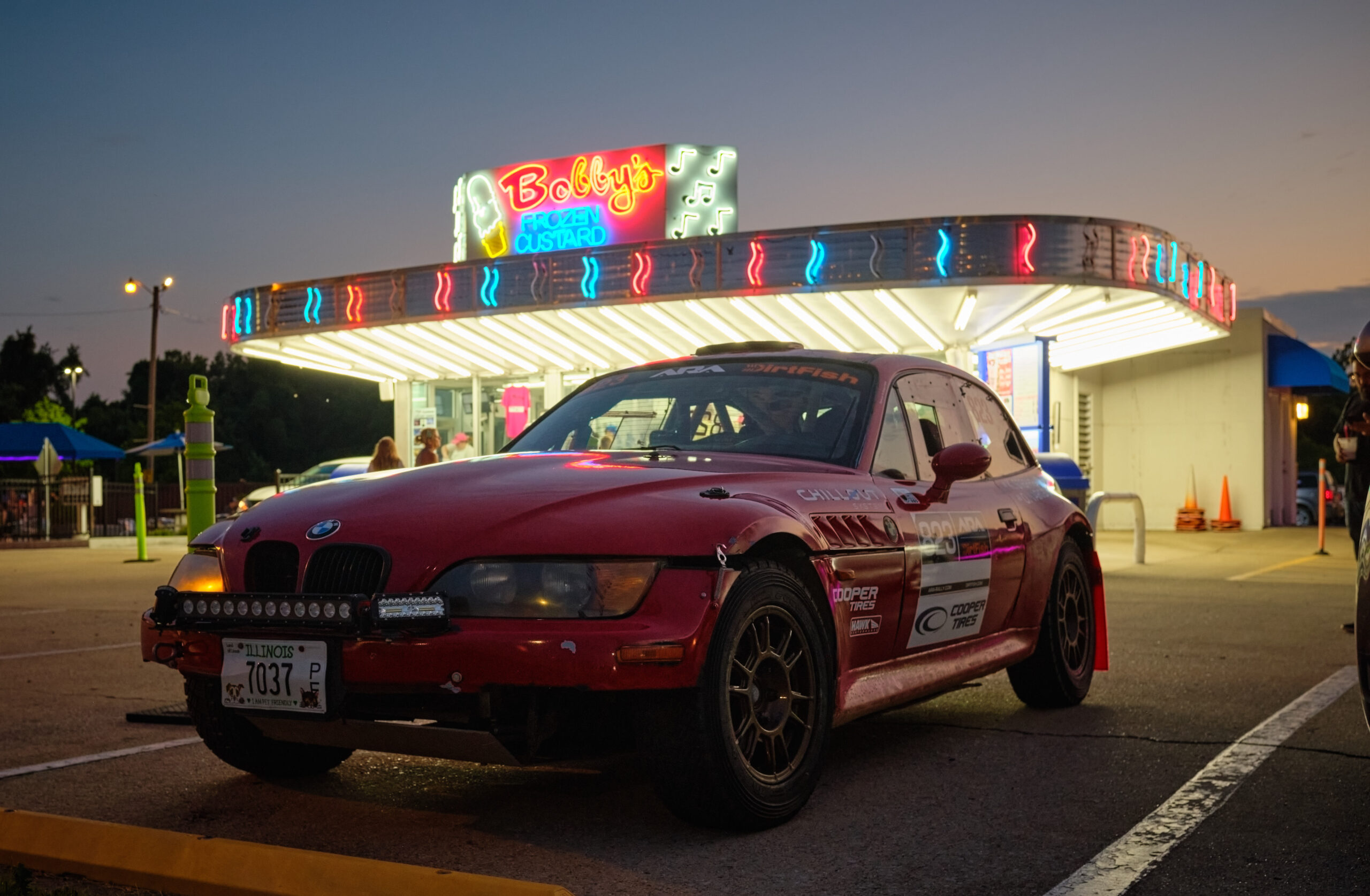
My curiosity about the world of photography was piqued, but the gear seemed expensive and confusing to choose from. Hearing a photographer discuss aperture, focal length, and which lenses to choose made my brain freeze over much like when you try to explain car modifications to a non-car person. I was so busy racing and competing myself that I didn’t feel I had time to pick up and learn another skill. On race days, if I had a few free moments I’d quickly snap a phone photo and toss it on social media hoping the photographers got the good stuff. Though it was an art form that I had a deep appreciation for, I decided it wasn’t for me, and that I’d rather be in front of the lens than behind it.
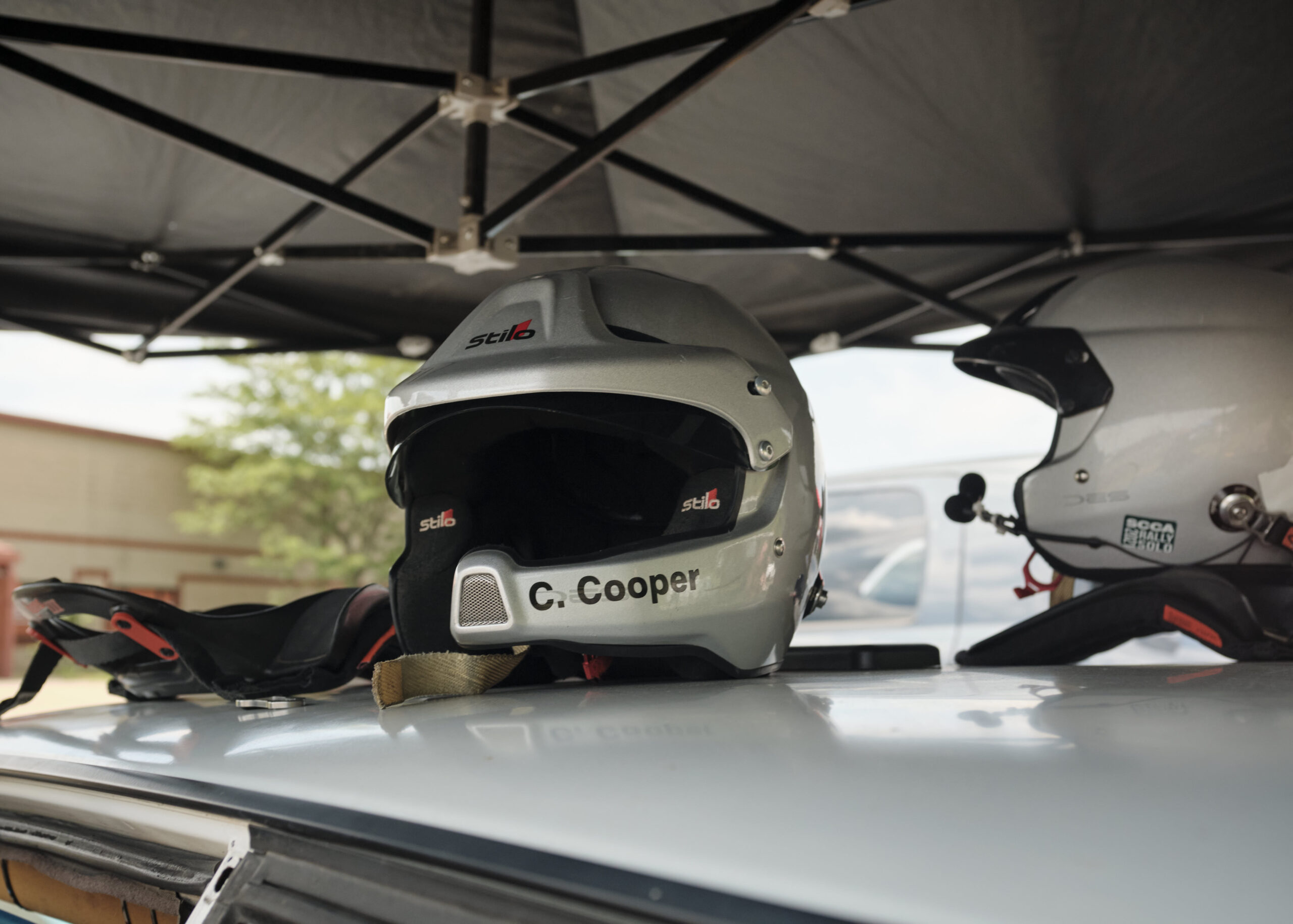
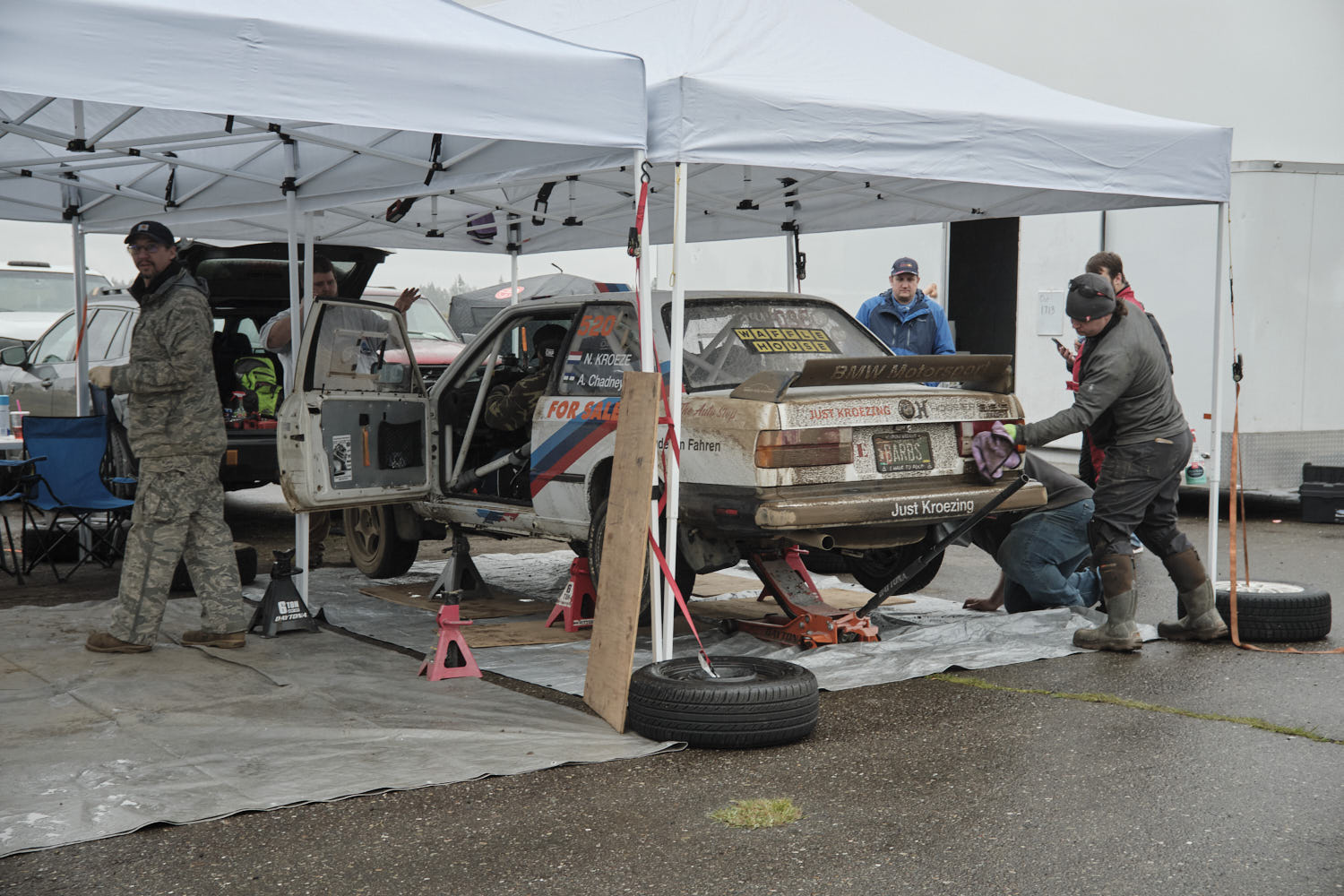
Over a year ago, I began preparing for the Rebelle Rally. This event is technologically closed from the outside world. This meant I wouldn’t be able to shoot pictures with my phone and with so many competitors spread out across the desert I had no idea how many photos would be captured of the X5 I’d be competing with. My partner Calvin pointed out to me that If I wanted to get photos of my week-long adventure to share with friends, family, and most importantly my sponsors, that I would need to pick up a camera and start learning as part of my event preparation. To start me on my journey, he gifted me a Fuji X100F. The camera body is wrapped in vintage brown leather and its diminutive size means it tucks into my bag easily. After seeing so many bulky black cameras with massive lenses at race events my cute little camera seemed far less intimidating.
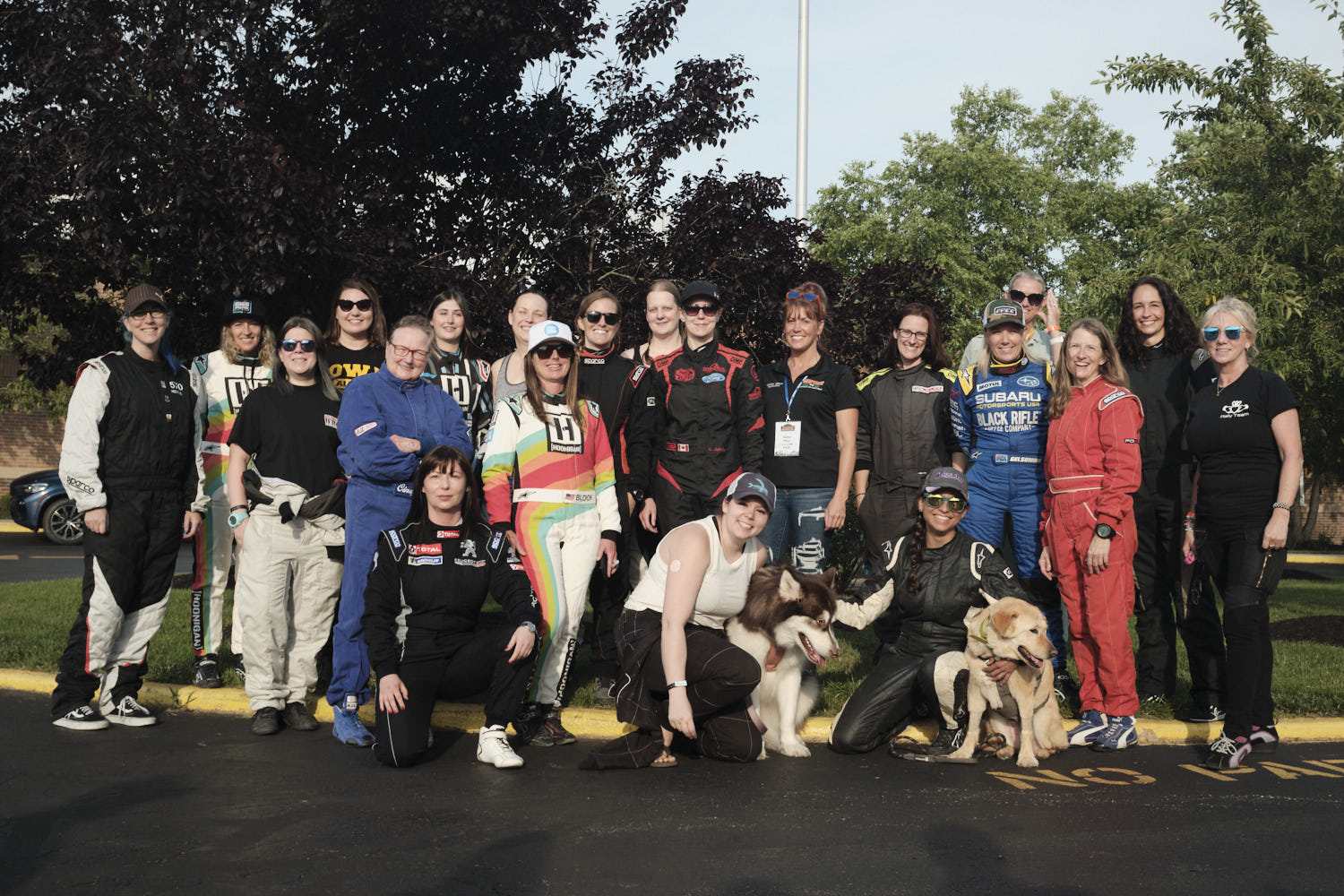
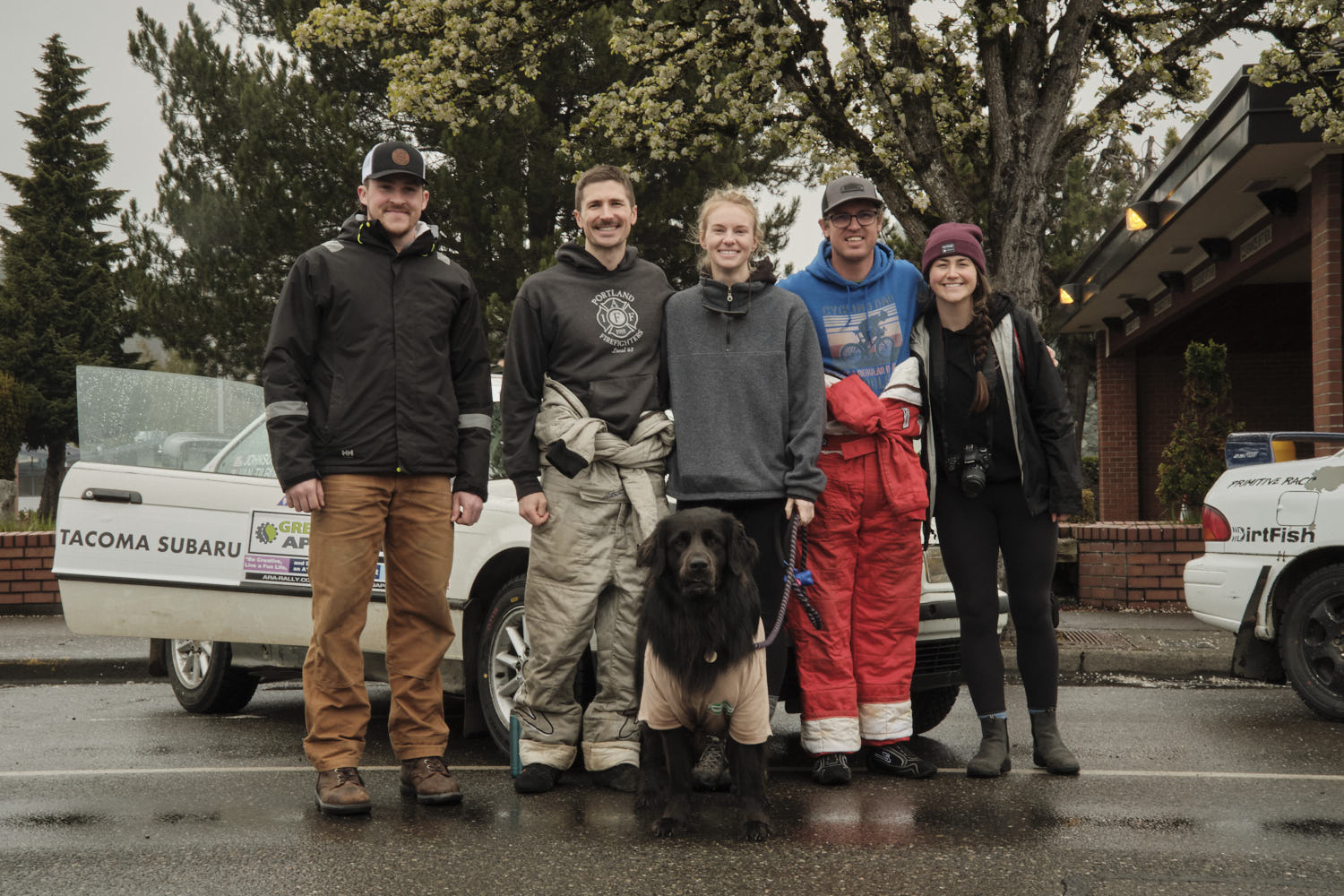
I had the privilege of taking the Ladies group photo at the Southern Ohio Forest Rally.
Calvin took me on a hike, knowing one of the few passions that rivals my love of motorsport is my love of nature. He figured that since I loved stopping every few steps to admire and identify plants that I might as well snap a few photos while I was there. I set the camera to “auto” and snap I did! I wanted to capture all the natural beauty around me. As we hiked out of the forest I hoped that the photos were at least good enough to help me identify a few of the plants and mushrooms I tried to capture. After being pleasantly surprised from seeing the results on my computer, I tucked my camera into my backpack excited to continue learning more.
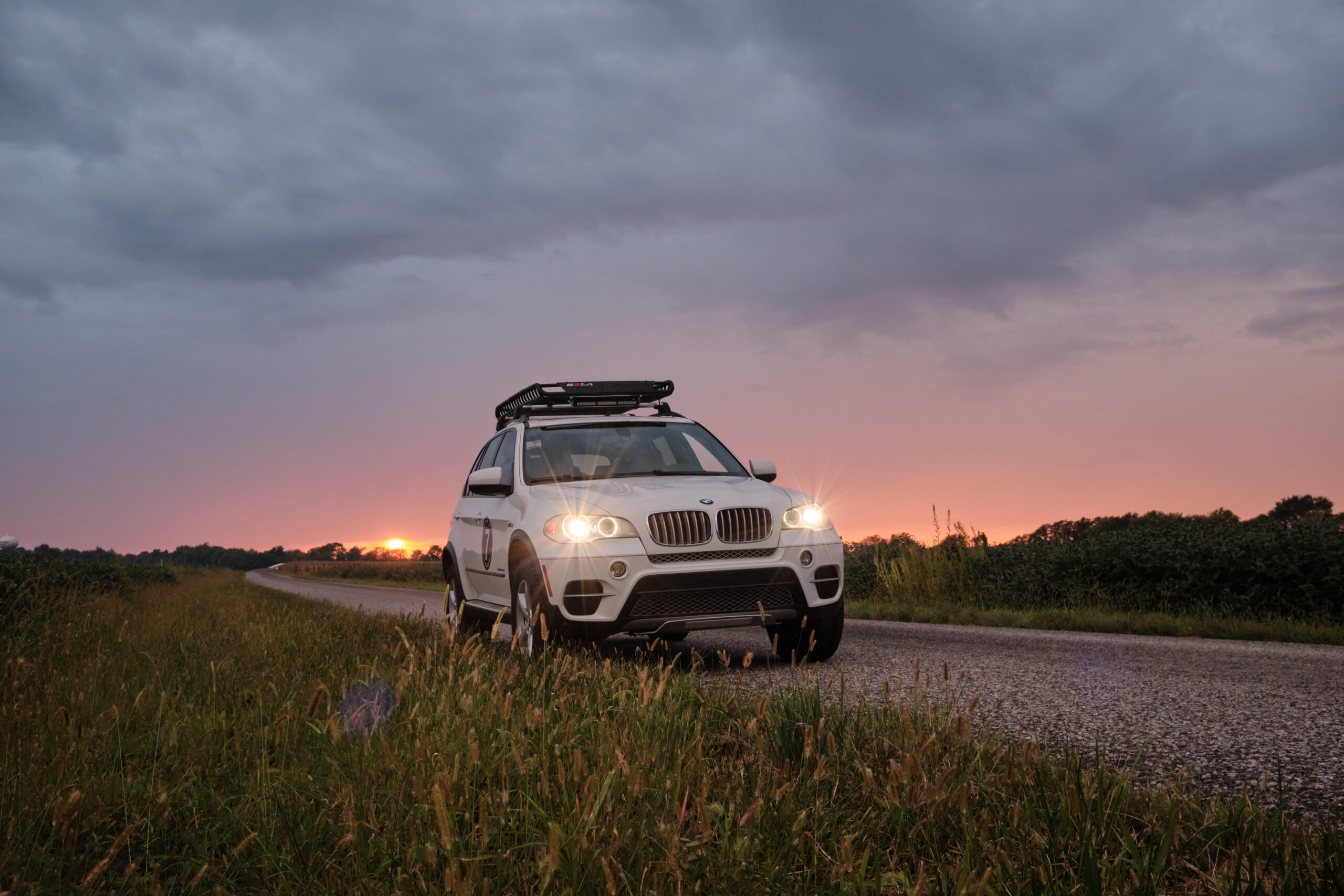
The sun sets behind my X5. This shot was taken while stopped during a Time Speed Distance Rally.
I packed my camera with me everywhere and took photos as often as I could to practice for the Rebelle. Before I knew it, I was searching the library for books on photography and watching videos on YouTube to learn more. I began playing with the settings on the camera to test out different effects. Car shows and track days were great places to practice. At first, I was worried photography would be a distraction but instead I found myself even more engaged so that I could time my shots perfectly.
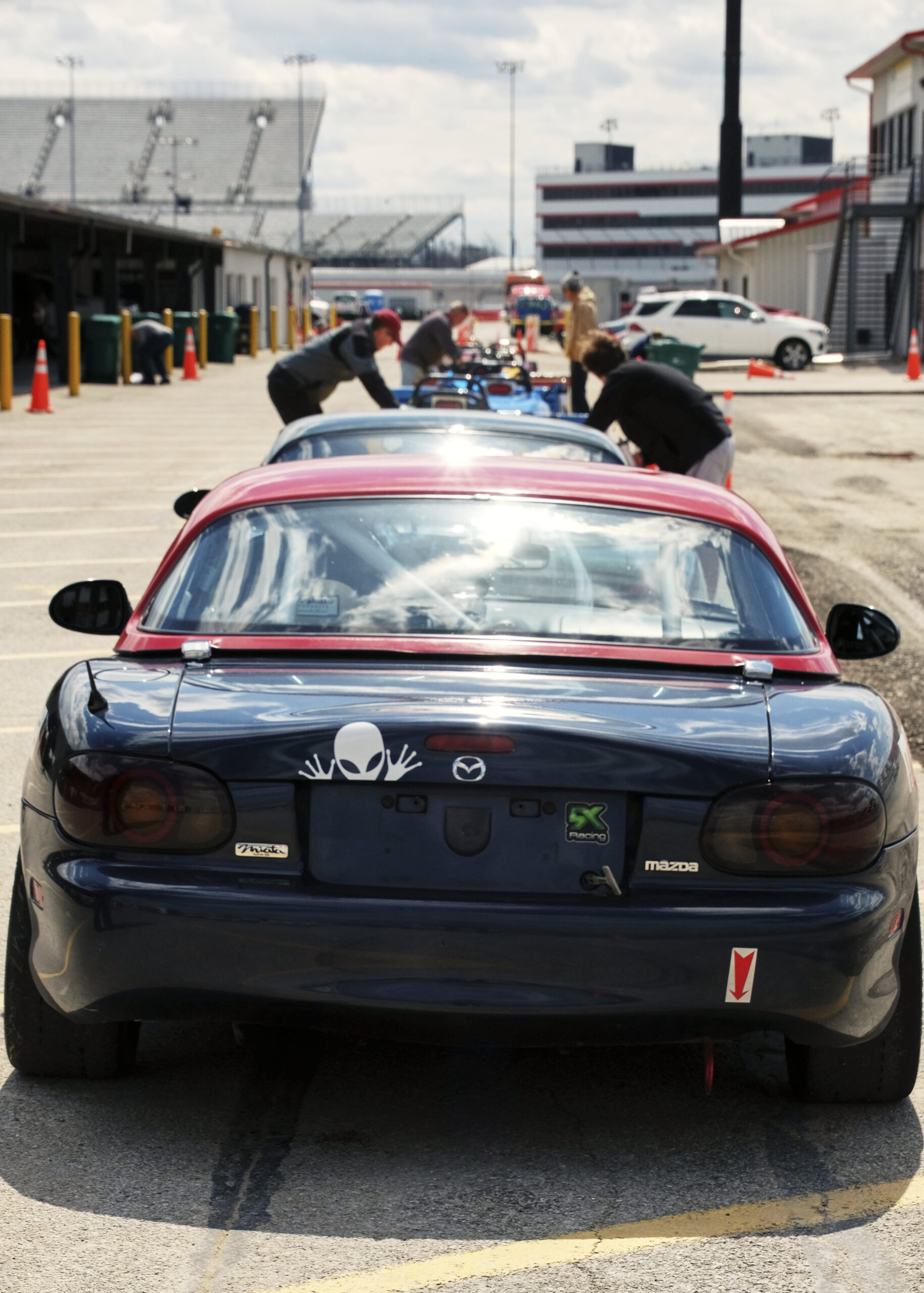
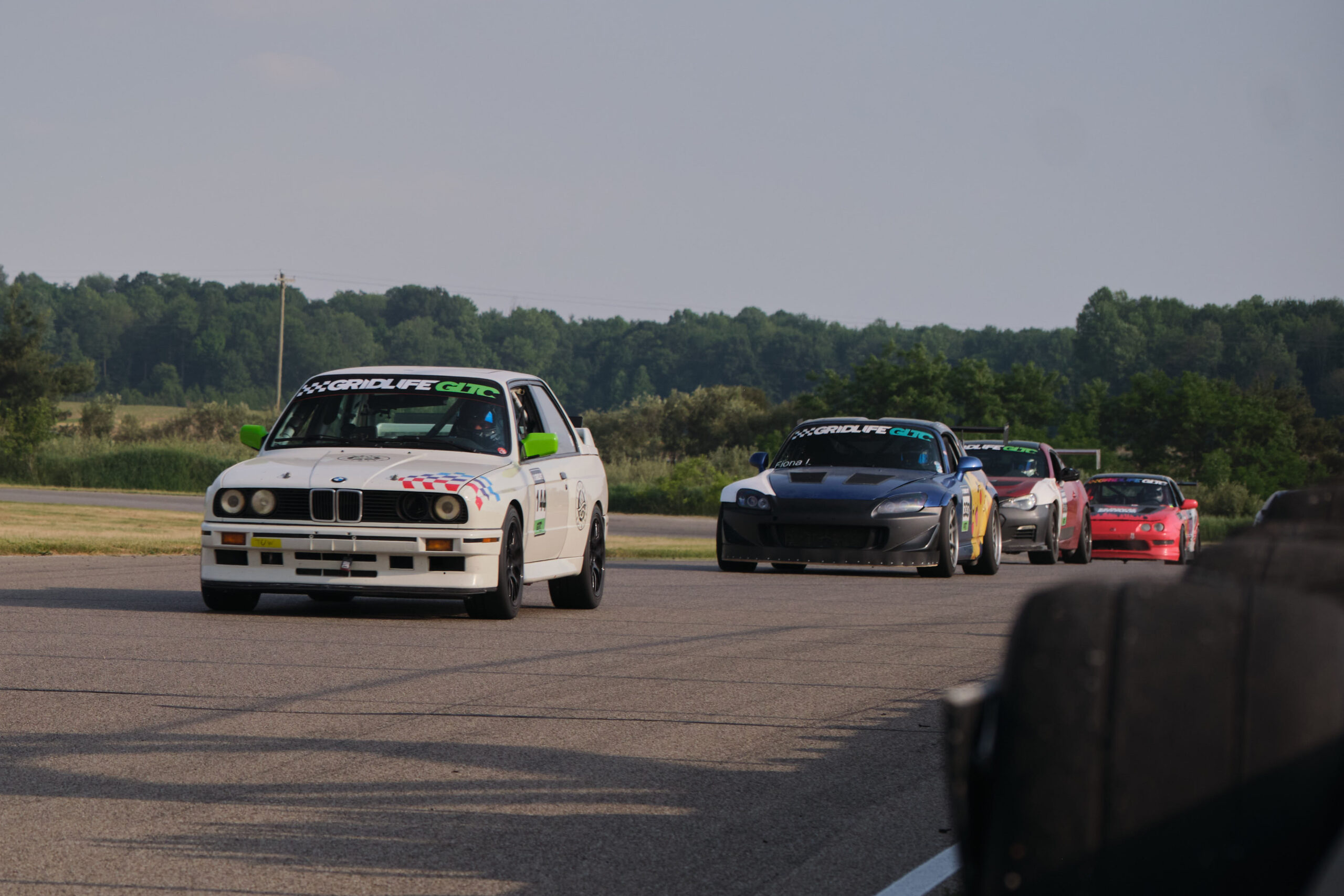
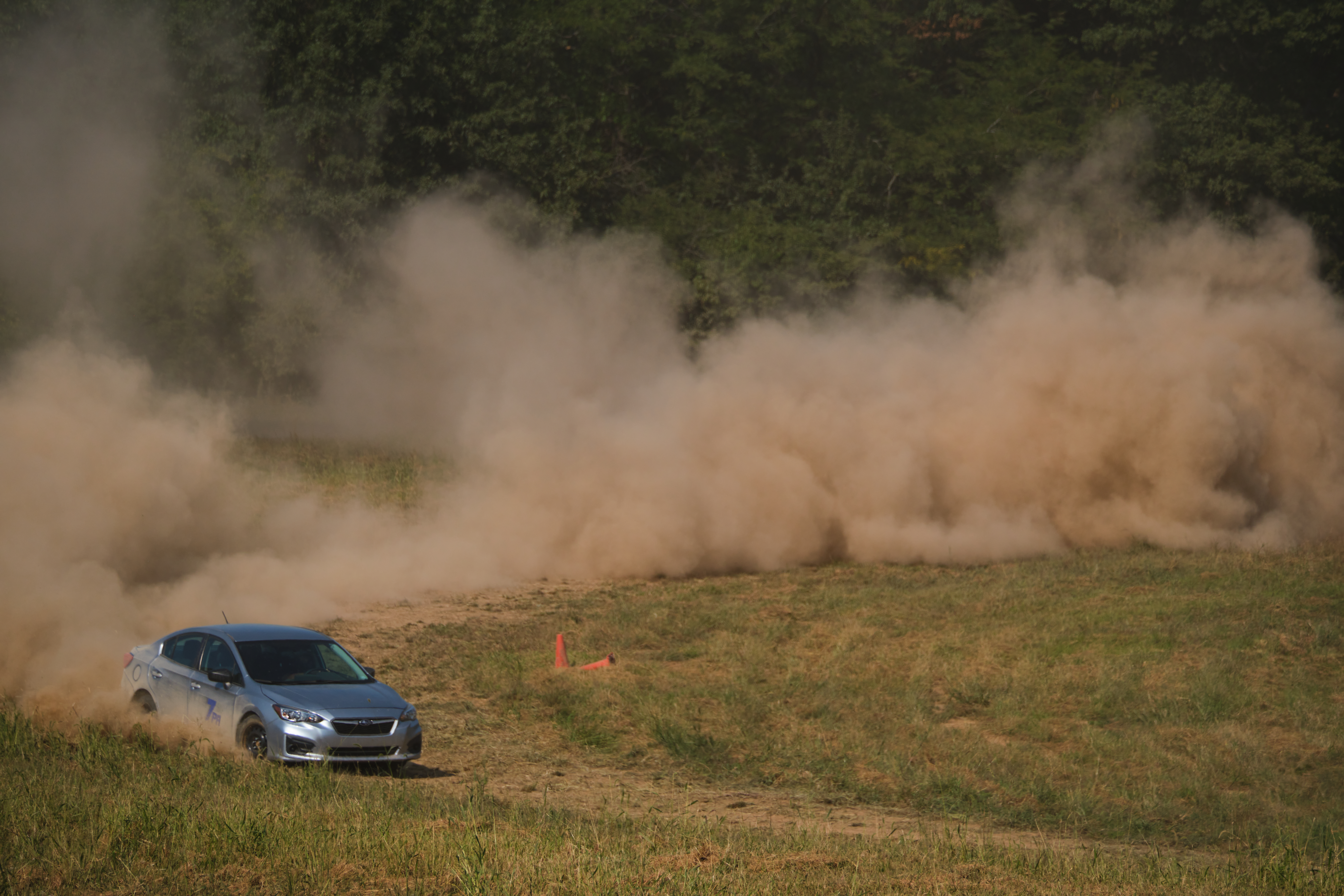
Some of my favorite photos combine the landscape with the cars, and rally provides no shortage of stunning scenery with cars in action. Even though the Rebelle schedule was action packed I couldn’t resist pulling over to capture the X5 in the vast desert scenery as often as I could. BMWs are growing in popularity in stage rally and when I hear a straight six barreling through the forest I get even more excited to capture it. Rally also presents a variety of dynamic landscapes and backgrounds. Gravel or dust slinging out from the tires adds even more drama to the photos. The conditions can also provide extra challenges for a photographer and learning to adapt or overcome also adds to the learning curve.

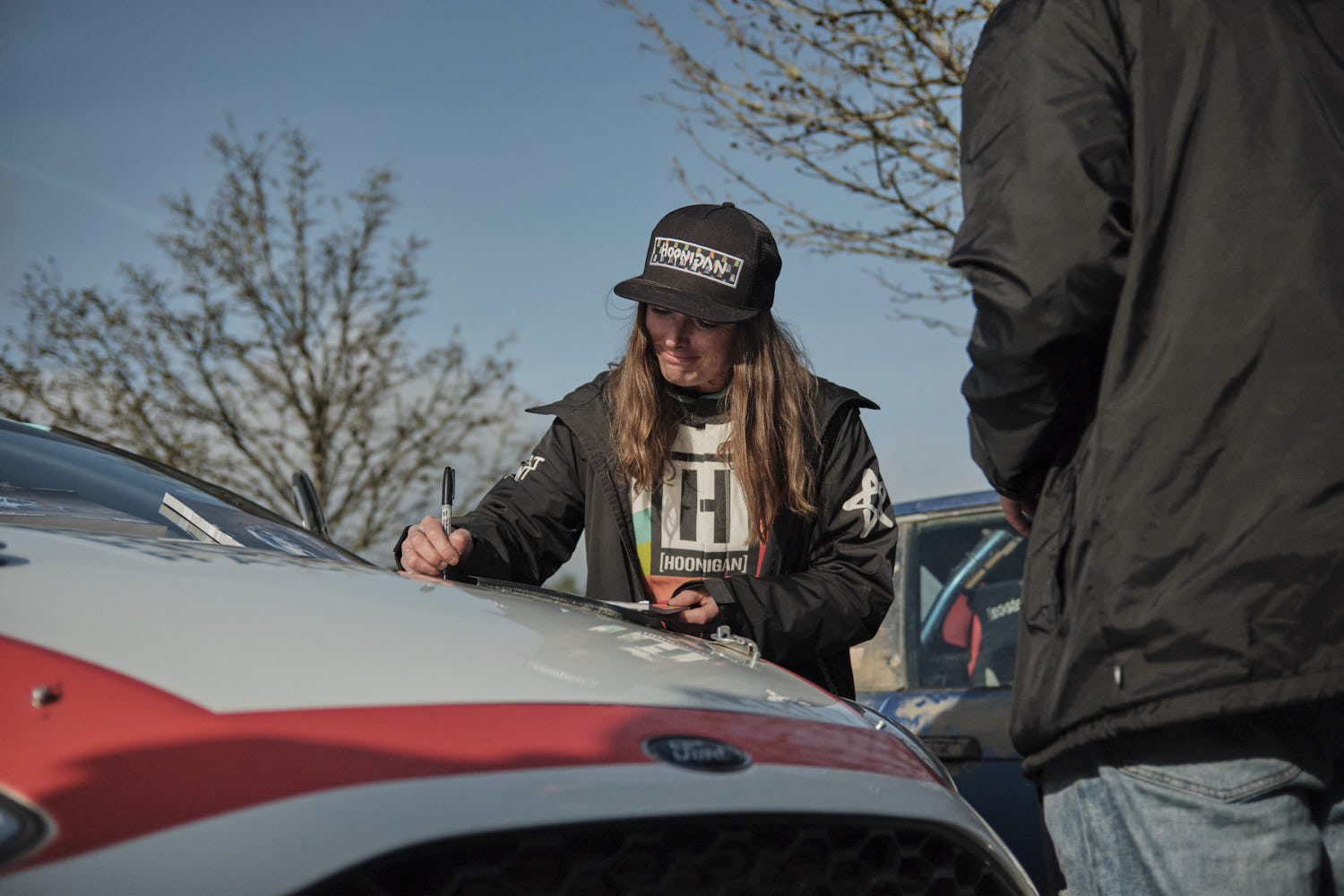
In the last year of shooting, I have captured so many memories. Aside from landscapes, my other specialty is candid photos of the crews and drivers. Since I am a driver myself, I have a personal connection with many of them and this eases their discomfort with being photographed. I love showing the world the people behind the wheels and wrenches. Standing trackside at GingerMan as cars drifted and raced just a few feet past the end of my lens was absolutely thrilling. I had to keep cleaning tire debris from my lens, my nose and eyes burned from tire smoke, but the rush of adrenaline and resulting shots made it worth it.
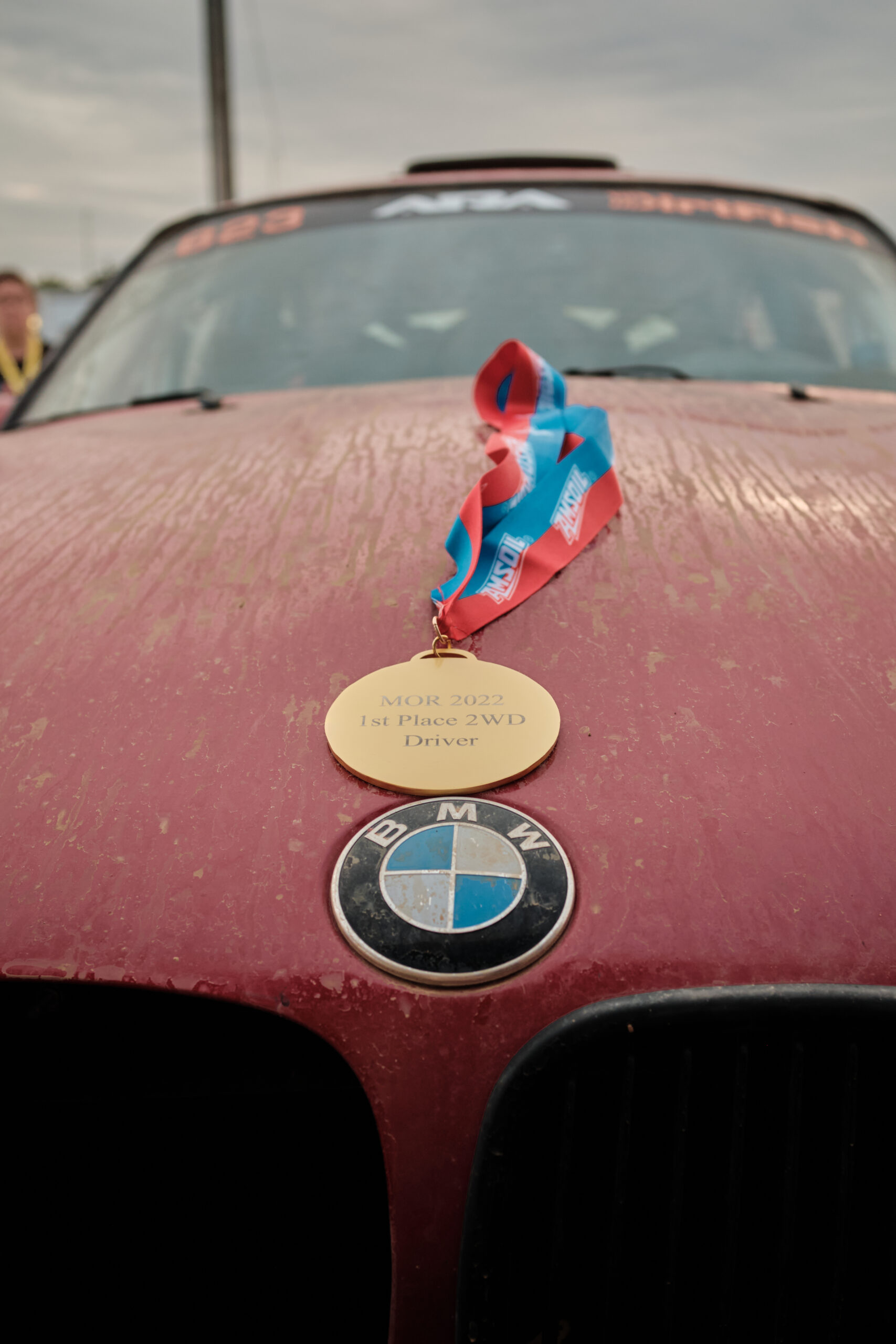
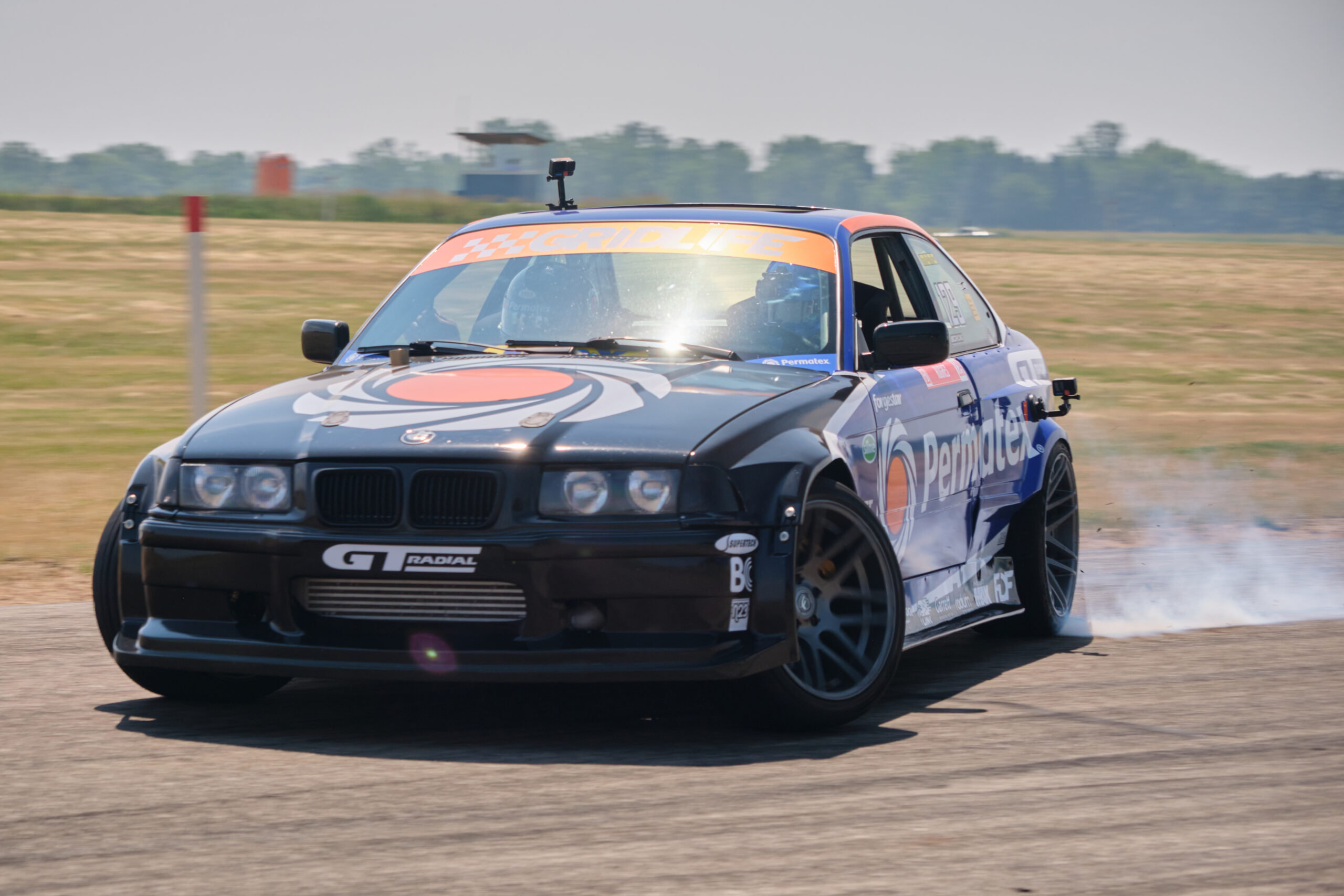
As much as I love being behind the wheel I have grown to love being behind a camera equally so. Capturing so many thrilling moments and splendid scenes makes me feel even more present and attentive to the little moments during an event. I notice the way the light reflects off the car accentuating its body lines or the way the lines on a driver’s face accentuate their smile. I have learned so much and my photography has grown and improved each time I pick up the camera. Each photo takes me back to the adventure that led to it and I’m so thankful for each snap of my shutter. —Kelsey Stephens