This photographer was hired to take pics for luxury real estate listings


Ryan Rice grew up in Carter County and it remains his favorite place to share the beauty of the region.
He now lives in Gray and works for an IT company based in Kingsport, but he explained Carter County is special because of number of mountainous terrain. Rice was one of three local photographers who had their shots chosen for the Tennessee Wildlife Federation’s annual calendar.

You’ve probably seen that a lot of YouTubers love their LUMIX cameras. They’re indeed really great for a variety of things. But we know that photographers are the ones who read this site, and photographers come first here. The LUMIX S5II is truly one of the best full-frame cameras that you can get your hands on if you’re looking for something that can give you special images. If you really want to do less post-production, we’ve got a camera kit for you that we know you’re going to love.
This article is presented in partnership with Lumix.


There are a lot of things about the LUMIX S5II that make it such a great camera for photographers. Ergonomically speaking, it appeals to the nice feeling of having a dial on either side of the viewfinder the same way they did in the film days. Then there’s the high resolution EVF that’s easy to see, the LCD screen that can help you take a photo in almost any angle you need, and so much more. Recently, there’s been talk of the sloped shutter button of cameras and how nice that can be for the ergonomics. The Lumix S5II has that for sure. But what’s even more special here is how they implemented the front dial. It’s right around the shutter button, so you don’t even really need to move your finger from it.
Combine all this with the features like scene detection autofocus, AF-Scope focusing, Real Time LUT, and so much more. This is an incredible camera for any working photographer that wants something lightweight, durable, and reliable.

This is the kit lens that comes with the LUMIX S5II. And we truly have to say that originally, we didn’t appreciate this lens. But the versatility that it allows is something that really isn’t talked about all that much, and so therefore people don’t understand it. It’s wider than your standard 24-70mm f4 lens — which doesn’t seem like a lot with just 4mm extra. But the difference can be huge. It might mean that you don’t need to take an extra step back or set your tripod even lower. And on the longer end, it becomes almost like working between a 50mm and 85mm lens. You just need to step back and forth as needed.

We’ve often called this lens the best nifty 50mm on the market, and we stand by that. The LUMIX 50mm f1.8 S is lightweight, fast to focus, and weather resistant. It also shares the same 67mm filter thread as most of the company’s other lenses. It can genuinely just do everything very well and if there’s a single prime that’s bound to stay stuck on your camera, it’s this one.
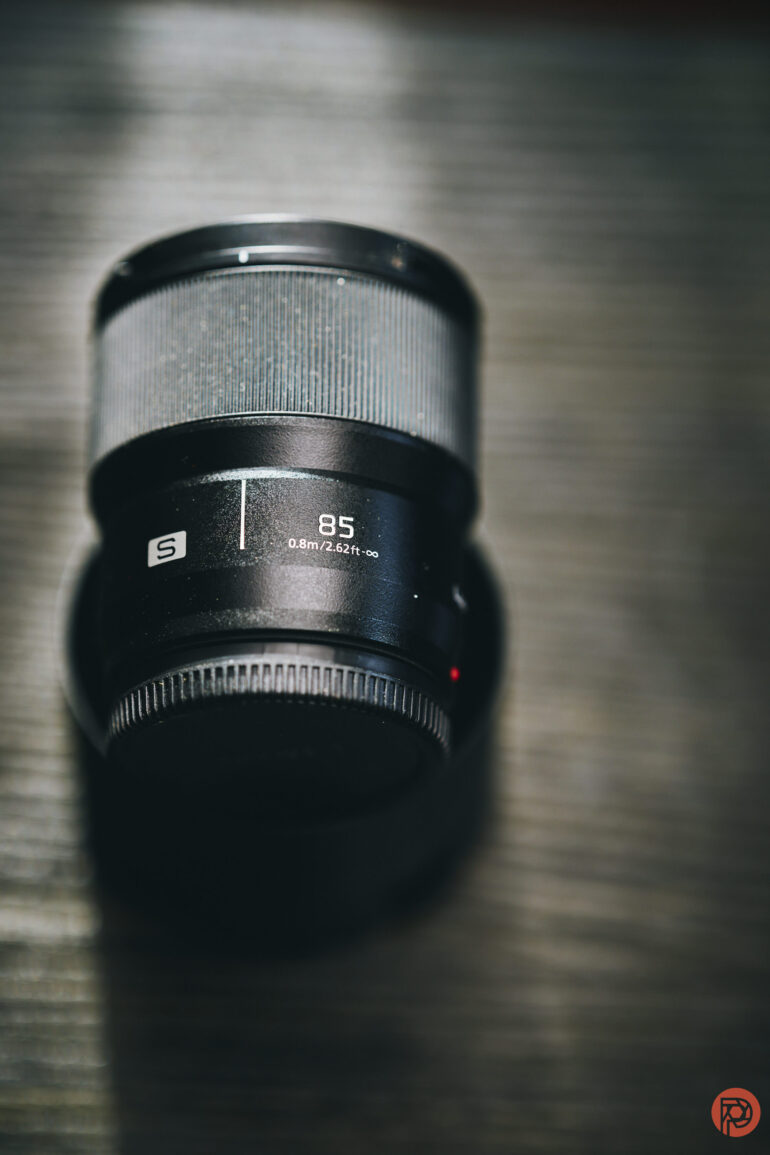
We recommend the LUMIX 85mm f1.8 for several reasons. First off, it’s the longest lens on this list. If you need something longer, the LUMIX S5II has a built in crop mode that lets it reach even further. It also has all the benefits of the 50mm f1.8. But we mostly recommend this lens for candid shooting, portraits, and product photography where you really want the bokeh to make a subject pop.
It’s truly one of our favorite lenses for the L Mount. The L-mount alliance was founded by Lecia, LUMIX and Sigma years ago. The three brands share autofocus algorithms, exposure data, and more through the mount so that their cameras and lenses can work as seamlessly as possible – allowing for a new level of freedom and choice. Photographers have options ranging from affordable to higher-end photographic instruments to make images that will enchant audiences. If you’re photographing while on a hike, in the desert, at a sports arena, or even at a local studio, LUMIX has a lens that can help the translation between your artistic and technical minds with ease.

Art Basel and UBS recently issued their latest annual Survey of Global Collecting, which analyses the habits and attitudes of more than 2,800 high-net-worth individuals (HNWIs) across the world. These affluent clients, who each have more than $1m of disposable wealth (excluding real estate and private business assets), keep the art trade bubbling, as the high end of the market was “key to maintaining aggregate growth” in 2022, according to the report. For auction houses and dealers, “the $1m-plus segment tended to fare better than other lower-price tiers”, it states.
However, among the survey’s findings is the cautionary note that, in the first half of 2023, only 9% of these wealthy respondents considered buying works priced at more than $1m, down from 12% in 2021. This decrease points to an “increasingly thin high-end following the strong post-Covid-19 bounce-back in sales”.
The most recent Art Basel and UBS Art Market report, which offers a wider view of the industry, estimates that the art trade last year turned over about $67.8bn in sales, about 5% more (discounting inflation) than its estimated $64.6bn turnover in 2011, when the market had recovered from the 2008 financial crisis.
The key indicator of health in the international art market, as in national economies, is growth. Yet the art trade is a relatively small global business in which sales have, by and large, flatlined for the past 11 years. Given that the population of the world’s HNWIs has more than doubled since 2011, according to UBS data, why is this the case?
Clare McAndrew, the economist who prepares the Art Basel and UBS reports, says that last year was “a very clear example of the high end carrying the rest of the market—but then we got this quite subdued result overall”. McAndrew adds that, although no one seems to know how many of the world’s 59.4 million millionaires and 2,640 billionaires regularly buy art, the number is “relatively small, so a widening of interest and spending across all segments would certainly mean more substantial growth”.
In other words, aggregate sales struggle to grow because the international art market has become over-reliant on a niche group of ultra-wealthy buyers. Significant growth could, theoretically, be achieved if the customer base expanded and individuals of more modest means bought lower-priced items in “scalable” quantities, as is the case in the $355bn luxury industry.
But how can that happen when the research of distinguished economists such as Thomas Piketty, Paul Krugman and Branco Milanović tells us that the middle classes in high-income nations are being squeezed by the forces of global income inequality, as more and more wealth is being concentrated in the hands of the 0.1% and 0.01%?
Unlike the art spending of the wealthy, the buying patterns of “professional class” collectors attract relatively little systematic study. But anecdotal evidence of shrinkage abounds in the art and collectibles markets.
“I remember one time, about 15 years ago, at Tefaf Maastricht, we wrote 81 invoices. This year, we did the same turnover, a little more even, and wrote five [invoices],” says the London-based antique map dealer Daniel Crouch. His experience exemplifies the much-heard observation among today’s art and antiques dealers that buyers are fewer but buy at higher price levels.
Yet other, younger players are aiming to reinvigorate the market from the bottom up, to try to democratise the ownership of high-quality art by serious practitioners. The Amsterdam-based online marketplace Avant Arte, for instance, has collaborated with contemporary artists since 2017 to produce affordable editioned prints and sculptural multiples. Begun as a blog in 2014 by 20-somethings Christian Luiten and Curtis Penning, Avant Arte now has 2.6 million followers on Instagram and has worked with 241 artists to date, including big names such as Ai Weiwei, Elizabeth Peyton, Jenny Holzer and Tschabalala Self. The company has sold more than 22,000 of its editioned works, says an Avant Arte spokesperson.
“The imbalance for me was that art can have a profound impact on people, intellectually and emotionally. And yet when you look at it next to music or fashion or other areas of culture that have built a much more democratic base, the breadth of impact is nowhere,” says Mazdak Sanii, the chief executive of Avant Arte, who, like Luiten and Penning, transitioned into contemporary art from the popular music scene.
Avant Arte recently surveyed what it calls its “new generation” buyers and found that 90% of respondents, more than half of whom are under 40, “didn’t find the art world welcoming”, says Sanii. “These younger collectors are going to provide at least part of the answer,” he adds, noting that the average price of an Avant Arte print is about €2,000.
Although prints have been democratising good art for centuries, Phillips New York gave this subset of the market a boost 15 years ago when it cannily rebranded prints by popular artists such as Warhol, Hockney, Hirst and Banksy as cooler-sounding “editions”, echoing the must-have limited offerings of the luxury industry. From 2008 to 2023, Phillips’s annual turnover in its worldwide Editions auctions increased by 827%. Last year, the department achieved sales of $40m, up almost 30% on 2022.
Other auction houses and companies like Avant Arte have followed Phillips in rebranding prints as editions. It seems the bigger challenge, given the prevalent perception of the art world as socially and financially intimidating, is how to encourage a wider audience to buy unique pieces.
At the rock-bottom price point of £200 or lower, the Instagram-based Artist Support Pledge (ASP) has proved a game-changer since its launch by the Sussex-based painter Matthew Burrows at the beginning of the Covid-19 pandemic in March 2020. The platform has posted more than one million original works since then, resulting in estimated sales of about £100m, according to Burrows. But he adds that turnover has slowed since the ebbing of the pandemic.
“The good news is that the Artist Support Pledge is expanding,” says Burrows. ASP is now working with the tech company Vortic to create a virtual gallery in which artists can show works of any value in their own dedicated exhibition space, provided they also post works on the original ASP site. The initiative is due to go live early next year. “The new platform is designed to give artists more autonomy in how and when their work is presented for sale while maintaining the ethos of a reciprocal economy,” adds Burrows.
At the same time, brick-and-mortar galleries are also doing their best to encourage a new generation of young professionals to buy original contemporary art. South London-based Copperfield is one of the many galleries now offering generous pay-by-installment terms to buyers who cannot afford to splash thousands in one go.
“One person quit their gym and used that amount to pay off monthly a small work by Larry Achiampong, while they took to running in the park,” says Copperfield director Will Lunn. “That work was really meaningful to them, and we were really pleased to make it possible.”
But can these sorts of lower-price initiatives really revive the international art trade’s moribund middle market in the way that, say, perfume has bolstered the luxury and beauty industries? According to the business data company Statista, worldwide sales in the fragrances market are set to hit $58.3bn in 2023—not far off Art Basel and UBS’s annual sales estimates for the entire global art market since 2011. Sales of the legendary Chanel No.5 accounted for about one-third of Chanel’s $12.3bn revenue in 2021, the perfume’s 100th anniversary, according to the Financial Times. A 35ml bottle currently sells for around £71, considerably less than even a £200 unique work from the Artist Support Pledge.
“The brand name is one of the most powerful assets for the luxury house,” says Kelly Meng Parnwell, a lecturer in luxury brand management at Goldsmiths, University of London. “Consumers buy lower-valued products with a luxury logo, not for the product’s aesthetic value, but for the social value that luxury brands can provide to them.”
Herein lies the problem for the art market’s “affordable” end. In relative terms, works by an interesting if little-known artist priced in the low thousands, or even the hundreds, can seem good value. But in a cash-strapped consumer culture dominated by luxury brands, if you can buy a legend for £71, pretty well all art looks expensive.

This week, punk music photographer Chelse Warren takes us into the pit.
We hop a tiny train to discover the miniature wonders of a West Virginia model railroad.
Then, we journey to eastern Kentucky, where they’re reclaiming their bootlegging heritage – along a new moonshine trail.
You’ll hear these stories and more this week, Inside Appalachia.
In This Episode:

Over the summer, Mason Adams visited a two-day DIY music festival called The Floor is Gone.
In the middle of it all was photographer Chelse Warren, who goes by Openhead Takes Photos online.
Mason reached out to talk music and more.

Credit: Zack Harold/West Virginia Public Broadcasting
Along with trees and candy canes, trains have become a symbol of the holiday season. Think: the Polar Express, or Santa-themed excursions on local railroads. And generations of people grew up hoping to find electric train sets under the tree on Christmas Day.
These days, model train sets are enjoyed by grownup collectors and hobbyists.
Folkways Reporter Zack Harold visited a model train club in West Virginia and brings us the story.
Kentucky is known for its bourbon. But that doesn’t mean it’s the only liquor with a history in the state.
A group of distillers wants to attract more visitors to eastern Kentucky by focusing on its historic ties to moonshine.
Shepherd Snyder has the story.
Travis Stimeling, a musicology professor and the director of the Bluegrass and Old-Time Bands at West Virginia University (WVU), died on Nov. 15. They were 44.
Stimeling was a big figure in Appalachian academia, and played an important role in establishing the Appalachian Studies and Appalachian Music programs at WVU. Stimeling spoke with Inside Appalachia several times.
In 2021, Caitlin Tan interviewed Stimeling about a book they edited called, “The Opioid Epidemic and U.S. Culture: Expression, Art, and Politics in an Age of Addiction.”
In memory of Stimeling, we replayed that interview.
——
Our theme music is by Matt Jackfert. Other music this week was provided by Collective Action, Dimension Six, Gaol, Sultry, Sean Watkins, Hurlbut-Kaukonen, Tyler Childers, Steve Earle and Gerry Milnes.
Bill Lynch is our producer. Zander Aloi is our associate producer. Our executive producer is Eric Douglas. Kelley Libby is our editor. Our audio mixer is Patrick Stephens.
You can send us an email: InsideAppalachia@wvpublic.org.
You can find us on Instagram, Threads and Twitter @InAppalachia. Or here on Facebook.
Sign-up for the Inside Appalachia Newsletter!
Inside Appalachia is a production of West Virginia Public Broadcasting.


For Angel Colmenares, photographer, cinematographer and San Juan Island resident, traveling around the world for his work is nothing new. He prefers to go by Angel, and he was born in Cuba and raised in Mexico City, eventually making his way to the Pacific Northwest during his high school years, when his family moved to Seattle from Mexico. Ever since he was a child, Angel had an interest in visual arts, specifically cinematography and filmmaking. However, due to an accident that caused him to lose sight in his right eye when he was 17, he thought he could not pursue filmmaking, transitioning to photography instead. He went to Brooks Institute of Photography in Ventura, CA, and after graduating, he worked as a commercial and fashion photographer in major hubs like Mexico City, New York City and San Francisco.
After his work in photography, Angel decided not to limit his artistic abilities and sold all of his photography equipment, moving to Los Angeles to pursue a career in cinematography. There, he worked on various films, documentaries and music videos as a cinematographer for ten years. After his time in LA, he and his wife moved to Hawaii, where he began shooting film for weddings, due to the lack of filmmaking opportunities there. His cinematic film style was well received for his wedding shoots, and they remained in Hawaii for many years before eventually moving back to Seattle, where he shot music videos for up and coming rappers in the area. In 2017, he and his family purchased a house on San Juan Island, making time to visit whenever they could. When COVID-19 hit during the spring of 2020, Angel and his family decided to permanently reside on the island, with his son starting at Friday Harbor High School that fall.
When looking at the photos currently displayed in his studio on First Street, Studio 50, one can witness Angel’s gritty, authentic style. Growing up, Angel loved watching art films with foreign directors, heavily influencing his preference for black and white photos and the imperfections of film – visible grain, out of focus shots – to the pixel-perfect images of digital photography.
“That’s what I love about the old style of photography: film has a feeling to it,” said Angel. “Now you have digital, which is so perfect in a way, and it has taken a bit of the soul of what photography is about.”
With artificial intelligence advancing more each day, Angel speculates that photography, especially older styles, is a dying art. Soon, people will be able to create a desired image without taking a photo of it.
“There’s something about sitting in front of a person you don’t even know and making that connection and capturing that moment. I like meeting people on the street or wherever it is, and having that connection, which is rare now,” said Angel.
When it comes to subject matter, Angel is not picky. He believes in creating what you can in the moment. Due to the constraints of COVID-19 on face-to-face interactions, Colmenares mainly drove around the island, capturing island landscape shots, including the towering image of English Camp which can be found in Studio 50. Despite his flexibility when choosing a subject, Angel often gravitates towards portrait photography. Whereas a landscape photo doesn’t always do justice to its location, a portrait can capture the visible character and genuineness of its subject.
“[A portrait] is just that. There’s nothing outside of that – everything is in their eyes, in their face,” said Angel.
His current show, “Perfect Imperfections,” perfectly combines the authenticity of the subjects and the film it was shot on to create unique, antiquated portraits. In the summer of 2016, Angel found himself in an artistic rut, unhappy with his work and his over-attentive editing. Thankfully around this time, he had come across a 19th century photographic procedure known as wet plate collodion by chance, and he traveled to Colorado to learn the process. Its method vastly differed from digital photography, taking 20 minutes to develop one photo and involving multiple chemicals, light-sensitive reactions and dark room processing.
“That’s what I needed. I needed to get my hands dirty again, to spend time creating and processing film. It brought me back to my love of photography,” said Angel.
Hitching his self-made darkroom trailer to his pickup truck, Angel continued to push his boundaries as he made the journey to North Dakota to photograph the protests against the Dakota Access Pipeline at Standing Rock Reservation in October 2016. He views the experience as one of growth, going outside of his comfort zone as an introvert to ask permission to photograph the protesters, as well as utilizing an intricate photographic process. While he was there, he connected with many natives who invited him to their powwows, and he later photographed one in Smokiam near Soap Lake. As his first wet plate collodion show at Studio 50, “Perfect Imperfections” is a triumph to his growth as an artist and person, and pays homage to those whose stories are often forgotten or left untold.
Following the show’s run through December, Angel will exhibit photography from his travels to Antarctica, Africa and portraits from this year’s All Souls procession for Day of the Dead in Tucson, Arizona. He is also working on his first book of portraits as well. The project will consist of shots of important community members on San Juan Island and their contributions to the island. Recently, he has decided to expand the project to include other prominent figures he has met over the years, and considers this project to be his main priority at the moment.
“There’s something real and natural and hardworking about [these community members] that I really admire,” said Angel.
Studio 50 is open Friday through Sunday, 11 a.m. – 4 p.m., but he welcomes anyone to knock on the studio door at any time, regardless of the sign reading “closed.” For more information about Angel Colmenares and his work, visit https://www.50onfirst.com/.


Copyright 2023 BBC. All rights reserved. The BBC is not responsible for the content of external sites. Read about our approach to external linking.
Beta Terms By using the Beta Site, you agree that such use is at your own risk and you know that the Beta Site may include known or unknown bugs or errors, that we have no obligation to make this Beta Site available with or without charge for any period of time, nor to make it available at all, and that nothing in these Beta Terms or your use of the Beta Site creates any employment relationship between you and us. The Beta Site is provided on an “as is” and “as available” basis and we make no warranty to you of any kind, express or implied.
In case of conflict between these Beta Terms and the BBC Terms of Use these Beta Terms shall prevail.


As a student photographer for Husker Athletics, Dillon Galloway, a senior from Omaha, has stretched his photographic strengths and capture emotion, tension and triumph across a variety of sports.
With the unique access and opportunities afforded to him through his internship, Galloway feels like he’s living a photographer’s dream. Across sports, Galloway is putting in the hours to capture the perfect moments to share with the rest of Husker nation.
“With my job in Husker Athletics, I can really get creative,” Galloway said. “I can get these shots that no one else can get — I can move around, go up into the rafters and just be very hands-on. I don’t think I’d be able to get that type of access anywhere else.”
As part of his sports media and communication program in the College of Journalism and Mass Communications, Galloway began working for Husker Athletics during his second year at Nebraska. He immediately hit the ground running, which he said helped hone his craft.
“I’ve certainly had a lot of hiccups,” he said. “But getting that experience, being on your feet and having to be ready no matter what happens has really helped me progress as a photographer.”
Part of that progression has been learning about all the different sports he covers, making sure that he’s in the right place at the right time.
“I grew up around sports, but I don’t think I’ve ever known more than I do now,” he said. “Now I can tell exactly where I’ll need be in order to get the game-winning play or capture a celebration.”
Chasing that perfect shot isn’t just a matter of catching a great play — Galloway looks for the feeling that tells the story of the athlete in front of his lens.
“I always ask myself, ‘What are the moments that evoke the most emotion in this sport?’” he said. “Whether it’s a high five or an athlete taking a moment to themselves, finding these moments is sometimes the biggest, most rewarding challenge.”
Of course, it’s impossible for him to pick a favorite photo, but he remembered vividly the first time he felt like he nailed it.
“It was a Husker baseball game, and I got a photo of a runner diving for home base,” he said. “The catcher is just about to catch the ball, but you can tell the runner is going to make it. I felt like I’d been waiting to take that photo my entire life.”
Nebraska’s Dillon Galloway said that an internship has helped him improve the quality of his work, allowing him to build an impressive portfolio that will give him a leg up in the professional world.





