Los Angeles Mayor Comes to the Aid of Fallen Photographer

Los Angeles Mayor Comes to the Aid of Fallen Photographer
[embedded content]

The mayor of Los Angeles, Karen Bass, used her background in medicine to help a photographer who collapsed during a press conference.

While speaking alongside the Los Angeles Police Chief Michael Moore on Thursday, a photographer in attendance apparently suffered a medical episode and collapsed.

Bass reacted quickly, immediately stopping the press conference and leaving her station to administer first aid.

Video footage captured the mayor crouched over the stricken photographer helping with his care until paramedics arrived.

Bass graduated from the University of Southern California Keck School of Medicine Physician Assistant Program and in the 1980s worked in an emergency room as a physician’s assistant.

“The very first person to run to his rescue was the mayor,” says KNX News reporter Craig Fiegener, who was standing next to the photographer when he fell.

Feigner adds that the mayor was orchestrating the photographer’s care — despite all of the police officers who were present.

The first thing Bass did was check his breathing and also took his pulse. An ambulance arrived 20 minutes later and took the man to hospital.

The photographer works for KCAL News which provided a positive update about his condition to KTLA.

“Our photographer is home and feeling back to normal. He expects to be back to work next week,” the station said in a statement.

Typically for a politician, not everyone is a fan of Mayor Bass but online commenters put political aspersions aside to applaud her for taking swift, decisive action.

“Good to know the photographer is doing ok, the mayor responded well, and good on her to have those medics qualifications,” writes one person on YouTube.

Bass has just passed one year in office with the Californian city’s homeless crisis topping her priorities. She has spent $76 million on the “Inside Safe” program which aims to permanently house those with no fixed abode.

‘Tamra with a Camera:’ How this local photographer aims to bring a smile into others’ lives

‘Tamra with a Camera:’ How this local photographer aims to bring a smile into others’ lives
image

Tamra Ward started her photography business in January 2022 and has since been photographing moments in the community, with family, performances, nature photography and more. Ward said this post-retirement gig has kickstarted many friendships for her in the North Texas community, as she aims to bring a little kindness and a smile into the lives of everyone she meets.

Tell our readers a little bit about yourself.

#placement_682772_0_i{width:100%;margin:0 auto;}

Gifts for Architectural Photographers – a Few Things to Make Life Easier

Gifts for Architectural Photographers – a Few Things to Make Life Easier

Gear Review

The Christmas holidays are approaching, and with them, the rise of consumerism. Many people are thinking about gifts and creating lists of gift suggestions. Articles on the APA website are typically read by photographers themselves rather than their loved ones. So, I thought I would create a list of things that we can buy for ourselves to make our work easier and more enjoyable. I wish you all to find something better under the Christmas tree this year.

Stone bag

A tripod is truly a crucial piece of equipment for architectural photographers. We use it extensively, and I’ve written about it in previous articles (check out my reviews of a large tripod and a small one, as well as a head). That’s why I’ll start with small accessories related to it. On my Instagram profile, I often share behind-the-scenes content, and I’ve noticed that I receive the most reactions and questions from around the world regarding my stone bag. It’s a really inexpensive, simple, and lightweight item that has been a tremendous help in my work!

As the name suggests, the bag is designed for holding stones. A fellow architecture photographer recently told me that he was capturing a building on the summit of Śnieżka Mountain in winds reaching 150 km/h! He found the stone bag I recommended to be very useful for him as he could weigh down the tripod with rocks he found on the summit. This prevented the wind from tipping over the camera. However, I often use this bag to carry lenses. The version with three compartments works perfectly for me because I frequently use the LAOWA 20 mm f/4 Zero-D Shift, Canon TS-E 50mm f/2.8L, GF 45-100 mm f/4 R LM OIS WR (waiting for the GF30 shift) so there’s still space for a bottle with something to drink. I can always have these lenses at hand, and in most situations, I can move the tripod with them inside the stone bag. This solution works especially well indoors.

I personally use two Leofoto products: the smaller RB-1 with compartments and the larger, more rugged RB-2. The latter is definitely more suitable for larger tripods and challenging mountain conditions, and additionally, it comes with a hook allowing you to hang extra weight. Of course, there are many other similar products from different companies. It’s not a complicated or expensive product, but I really regret that I’ve only started using it recently.

The umbrella holder

Have you ever had to work in rainy weather? While you likely photograph most often in optimal conditions, sometimes you have to work in the rain. I recently photographed a floating sauna. The designer who built it and commissioned the photos chose an autumn date for the session. The leaves on the trees and the overcast sky created a great atmosphere, combined with the warm light emanating from the heated stove. Additionally, there was a light rain. A handy accessory for me in such situations was the umbrella holder attached to the L bracket. It also has great applications for working in harsh sunlight. A lightweight, small umbrella that won’t be a hindrance when carrying or adjusting the camera can shield the screen from light and make it easier to assess the frame.

If you don’t want to buy a special holder, you can make one yourself, for example, by using A Practical Guide to Making an Umbrella Holder prepared by Holly Gordon…

source: https://www.hollygordonphotographer.com/tips/a-practical-guide-to-making-an-umbrella-holder/

Leofoto offers various solutions for holding a rain umbrella. However, I opted for a different option. I recommend a small additional holder that you can attach to an L-bracket or another Arca Swiss standard rail or plate. The TetherArca Cable Clamp is theoretically designed for holding cables but can also be used to attach an umbrella dedicated to studio lamps.

Tether Tools TetherArca Cable Clamp for L-Brackets

You can also screw in a magic arm, which allows you to secure an umbrella or other accessories. Instead of a cable, I simply insert the handle of the umbrella into this holder.

LCC plate 

If you have experience working with medium format digital backs and technical cameras, you’re likely familiar with the invaluable feature of Capture One called LCC, which stands for Lens Cast Calibration. This feature can also be useful when shooting with a DSLR or mirrorless camera. It significantly speeds up and facilitates the removal of vignetting and dust from the sensor. Therefore, it’s worth having the appropriate plate to create a reference file.

LCC Calibration Solution https://www.photo-digitaltransitions.com/product/lcc-plate/

The plate is simply a piece of semi-transparent white plexiglass that you can buy inexpensively, but if you prefer, you can spend a lot of money on a ready-made photographic product.

Multitool

Having a pocket-sized multitool is always a good idea, and there are plenty of interesting models out there. Here are a few of my suggestions:

Have you always wanted to buy a camera from the Swiss company Alpa (I do), but you think they’re too expensive or you’re too poor? You’re right, but maybe you can at least afford their screwdrivers?

Alpa Swiss Tool MK II £75.00 excl. VAT

Do you like jewelry? You can feel like a member of the Inquisition by buying the Sunwayfoto screwdriver. This company also produces a cool, small multitool that you can attach to your keys.

Or maybe you could use a small tripod that hides a screwdriver, or rather a multifunctional screwdriver that can also serve as a tripod extension or a handle when you want to shoot videos with your phone. Check out the LMT-10 produced by Leofoto.

Leofoto LMT-10

Geared panning head

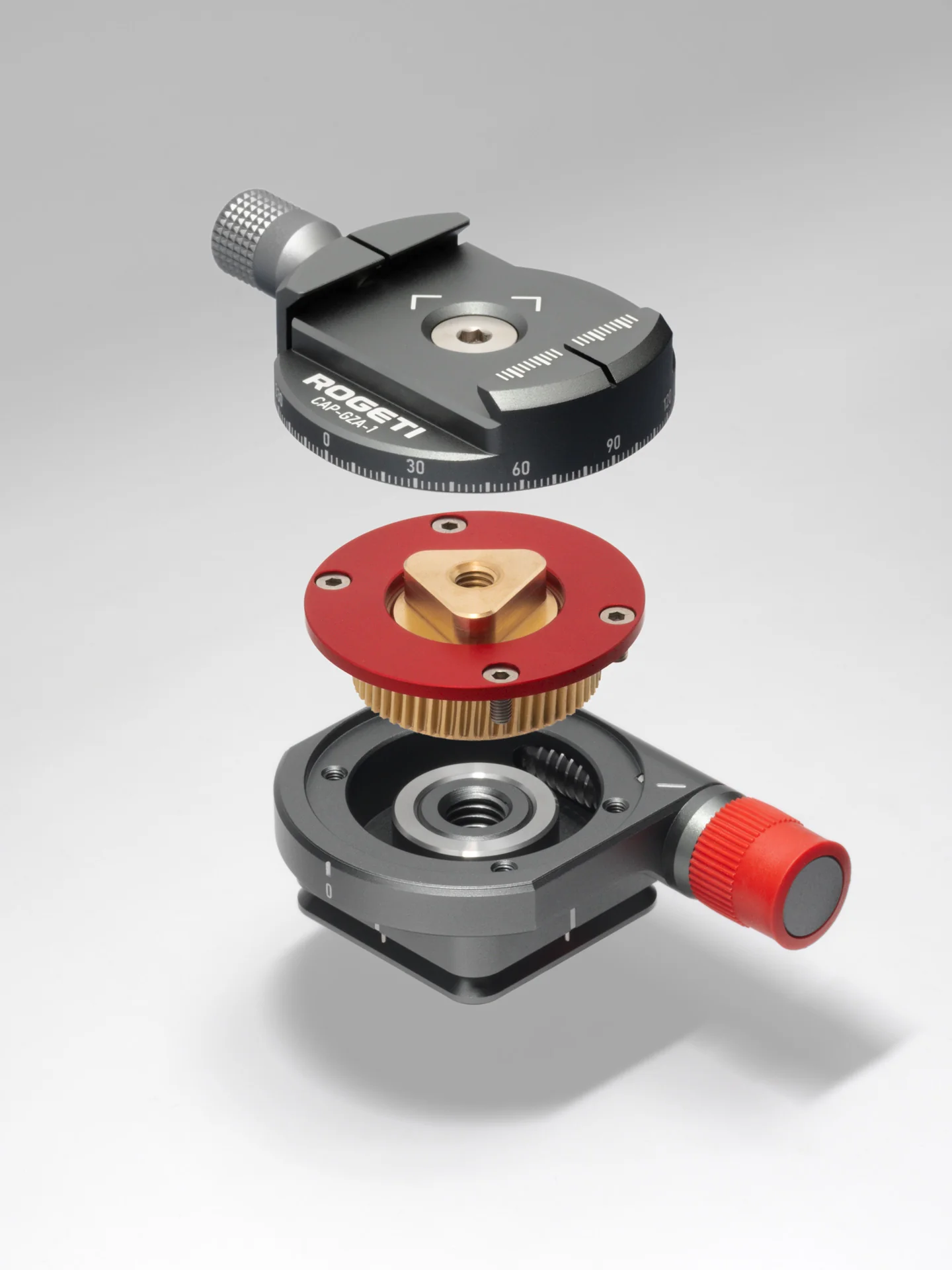
I am a fan of geared heads, and I believe it’s a great solution for architectural photographers. Unfortunately, practically no model is sold with geared pano as a standard feature. All movements are geared, except for panning. I personally use the Rogeti L-bracket and am very satisfied with it. I also had the opportunity to test their geared pano product CAP-GZA, and I liked it a lot. It’s a small, pocket-sized item that is really well-made.Thanks to the Arca Swiss standard connection, we can attach it to virtually any tripod head.

Memories Lost and Found: On the Photography of Binh Danh

Memories Lost and Found: On the Photography of Binh Danh

When I was eleven years old, I did an unforgivable thing: I set my family photos on fire. We were living in Saigon at the time, and as Viet Cong tanks rolled toward the edge of the city, my mother, half-crazed with fear, ordered me to get rid of everything incriminating.

Obediently, I removed pictures from the album pages, diplomas from their glass frames, film reels from metal canisters, letters from desk drawers. I put them all in a pile in the backyard and lit a match. When I was done, the mementos of three generations had turned into ashes.

Only years later in America did I begin to regret the act. A few pictures survived because my older brother, who was a foreign student, had taken them with him. But why didn’t I save the rest, the way I slipped my stamp collection in my backpack hours before we boarded the C-130 cargo plane and headed for Guam? For years I could not look at friends’ family photo albums without feeling remorse.

Then last week I had a dream that was so instructive it left me with a different estimation of that loss. In the dream, I find myself once more in front of my old home in Saigon. I walk through the rusted iron gate to find, to my horror, the place gutted—an empty structure where once there was life and love.

What I failed to retrieve in the dream survives, if only as an exquisite longing.

Immediately, I start to rummage among the pile of broken bricks and fallen plasters, finding, at last, a nightstand that once belonged to my mother. I pull at its drawer and out spill dozens of black-and-white photos. I am ecstatic. The photos are intact.

They are exactly as I remember them. Here’s one of my brother when he was twelve, wearing his martial art uniform and bowing to the camera. Here’s one of my mother as a teenager, posing next to the ruins of Angkor Wat. Here is my father as a young and handsome colonel, smoking a cigar. And me and my sister holding onto our dogs—Medor and Nina—as we wave to the photographer, smiling happily.

Suddenly a little boy appears in the dream. “This is my home,” he yells, “and you’re trespassing.”

“But these are my photos,” I meekly protest.

The boy looks at me with suspicion and shrewdness and changes his tone. “Well,” he says, “how much would you give me for these photos?”

But before I can find the answer, the boy laughs and snatches the photos out of my hand. I try to grab them back of course, but it’s too late.

I woke to find my arm still reaching out over the blanket in a gesture toward the pictures, still trying to retrieve them. Confused and astonished, I stared at my own empty hand for what seemed to be a long, long time. In that salty dawn with the cable cars rumbling up the hills and their bells clanging merrily outside my window, I saw what I hadn’t seen before: that nothing was ever truly lost.

What I failed to retrieve in the dream survives, if only as an exquisite longing. If words and language, as the poet Rilke tells us, can be made into a thing, mute as the statue of an orator, the reverse is true also.

Precious things lost are transmutable. They refuse oblivion. They simply wait to be rendered into testimonies, into stories and songs.

–Andrew Lam

*

Ambush in the Leaf, 2007 © Binh Danh, from Binh Danh: The Enigma of Belonging © Radius Books.
Untitled #4, 2009 © Binh Danh, from Binh Danh: The Enigma of Belonging © Radius Books.
Waiting, 2009 © Binh Danh, from Binh Danh: The Enigma of Belonging © Radius Books.
imageArchival Family Photograph, c. early 1978 © Binh Danh, from Binh Danh: The Enigma of Belonging © Radius Books.
” data-medium-file=”https://s26162.pcdn.co/wp-content/uploads/2023/12/Screen-Shot-2023-12-11-at-7.36.19-AM-229×300.png” data-large-file=”https://s26162.pcdn.co/wp-content/uploads/2023/12/Screen-Shot-2023-12-11-at-7.36.19-AM.png” class=” wp-image-230955″ src=”https://s26162.pcdn.co/wp-content/uploads/2023/12/Screen-Shot-2023-12-11-at-7.36.19-AM.png” alt width=”361″ height=”472″ srcset=”https://s26162.pcdn.co/wp-content/uploads/2023/12/Screen-Shot-2023-12-11-at-7.36.19-AM.png 563w, https://s26162.pcdn.co/wp-content/uploads/2023/12/Screen-Shot-2023-12-11-at-7.36.19-AM-229×300.png 229w, https://s26162.pcdn.co/wp-content/uploads/2023/12/Screen-Shot-2023-12-11-at-7.36.19-AM-46×60.png 46w, https://s26162.pcdn.co/wp-content/uploads/2023/12/Screen-Shot-2023-12-11-at-7.36.19-AM-38×50.png 38w” sizes=”(max-width: 361px) 100vw, 361px”> Archival Family Photograph, c. early 1978 © Binh Danh, from Binh Danh: The Enigma of Belonging © Radius Books.

Archival Family Photograph, c. early 1978 © Binh Danh, from Binh Danh: The Enigma of Belonging © Radius Books.
Archival Family Photograph, c. 1966 © Binh Danh, from Binh Danh: The Enigma of Belonging © Radius Books.
Archival Family Photograph, c. 1981 © Binh Danh, from Binh Danh: The Enigma of Belonging © Radius Books.
Immigration Paperwork, c. 1979 © Binh Danh, from Binh Danh: The Enigma of Belonging © Radius Books.

__________________________________

From Binh Danh: The Enigma of Belonging. Photography by Binh Danh. Texts by Binh Danh, Boreth Ly, Joshua Chuang, Isabelle Thuy Pelaud, and Andrew Lam. Copyright © 2023. Available from Radius Books.

Binh Danh

Flamenco sculpture finding new home in downtown Columbus

Flamenco sculpture finding new home in downtown Columbus
A refurbished iconic Columbus artwork will be receiving a new home downtown this week. According to the Columbus Area Arts Council, the red metallic Flamenco structure will be reinstalled at the entrance to Mill Race Park on Eighth Street between Lindsey and Brown Streets. The artwork, by Ruth Aizuss Migdal, had been installed outside The

Bright ideas: The best light painting tools for night photography

Bright ideas: The best light painting tools for night photography

A common question is what light painting tools I recommend for light painting for night photography. Here’s what I recommend — and why.

I’ll start with the most inexpensive light painting choices and work my way up.

Light painting a vintage Model T. Night photography.

What is light painting?

Light painting is a term that is often used loosely to describe any addition of light to a night photograph. Really, though, light painting is a technique that uses a handheld light source to illuminate a scene during a long exposure. You are quite literally painting light on a subject. Your light source is your brush. Night photographers have used this technique for many decades.

Lighting Arch Rock, Joshua Tree National Park, CA.

Inexpensive but high quality options for light painting

I also wrote an in-depth article about purchasing light painting tools for cheap. I encourage you to read this and see why I recommend what I do.

Wurkkos FC-11 LED flashlight. It also has a handy magnet.

For white light only, I would recommend the Wurkkos FC-11 (review here). It holds detail well and has a pleasing warm white light.

An abandoned vintage auto. I used a Wurkkos FC-11 LED light to light paint this vehicle during the exposure.

What if I want color?

Use some gels from a $5 Roscolux Swatchbook sample booklet. Simply put these in front of your flashlight. Bam. Done.

Another option is the Colorshine light. I have never used this, but hear that it produces good results. Best of all, the light typically sells for under $33. It produces “10 different LED colors with flash and smooth color-change modes” which they describe as “red, green, blue, orange, turquoise, purple, yellow, cyan, violet, and white.”

Read about more inexpensive color options for light painting lights here.

RGB LED Panels for light painting

Lume Cube RGB Panel Pro 2
Lume Cube RGB Panel Pro 2, perched on a tiny tripod. Of course, you can use this handheld, as I did for many photos.

Another possibility is to use an LED panel instead of a flashlight, simply using it as a handheld light instead of a stationary light (which isn’t really light painting anyway). I use a Lume Cube RGB Panel Pro 2.0, which has a high-quality light and holds detail well. You can read an in-depth review of the Lume Cube RGB Panel here.

Reo Speedwagon. I used a handheld Lume Cube RGB Panel Pro 2.0 to light paint the exterior of the REO Motor Works truck from a similar angle as the moon. I used the ProtoMachines LED2 to light the interior and the headlights red.
Reo Speedwagon. I used a handheld Lume Cube RGB Panel Pro 2.0 to light paint the exterior of the REO Motor Works truck from a similar angle as the moon.

This is a high-quality light that you can use for handheld light painting. You may need to wrap black Cinefoil or something similar around it to prevent the panel from shining into the camera lens if you are walking through the scene.

Another possibility is a Luxli light panel. There are some that have accessories that surround the light, similar to what you are doing with Cinefoil, so it prevents you from inadvertently shining the light into the camera lens and causing giant streaks.

High-quality LED RGB flashlights for light painting

The RGB Critter 2.0 from Ants on a Melon. It comes in several different colors.
The RGB Critter 2.0 from Ants on a Melon. It comes in several different colors. This is shown without an attachment.

Currently, the highest-quality LED flashlight with RGB that I know of is the Ants on a Melon RGB Critter 2.0. It has a high-quality light and holds detail well. You can read an in-depth review of the RGB Critter 2.0 as it pertains specifically to light painting here.

The challenge of the RGB Critter is that the user interface is challenging. It involves either pressing buttons simultaneously or pressing a sequence of buttons to change colors, brightness, and functions. It produces 39 colors, all rich and vibrant. However, you have no control over the saturation. You cannot produce any other colors besides the 39 colors. Still, though, those 39 colors would be more than enough for most people. The challenge here is primarily the confusing user interface. This also includes through the colors to reach another color instead of going straight to it.

The highest quality LED RGB flashlight for light painting

ProtoMachines LED2
ProtoMachines LED2

The light that I use, as well as the one all the Nightaxians use, is a ProtoMachines light. It’s meticulously designed for light painting scenes and subjects. The ProtoMachines light offers easily accessible, on-the-fly control over saturation and brightness from 1-100%, a timer, user presets, and more. The form function is perfect.

ProtoMachines LED2
ProtoMachines LED2

Before you get too excited, there are two issues.

One is that they are not cheap. Their products range in price from the Radium LED light wand at $249 to the LED8 at $559.

The other is that, as of this writing, they are currently not available.

They are worth every cent, in my opinion. The form factor, quality of light, and ease of use inspire creativity are second to none. They are, in short, the best.

They are so good that I would encourage you to ask to get on the ProtoMachines waiting list so you can be notified when they release new products. Many of us are hoping for this.

Night photo, Nelson ghost town Nevada
Night photo, Nelson ghost town Nevada. I used a ProtoMachines LED2 to light paint this during the exposure.

Do you have any light painting tools that you would recommend? Please leave them in the comments!

The War Photographer Who Had to Do Something Else

The War Photographer Who Had to Do Something Else

This Is War evolved out of my work as a photographer covering some of the bloodiest conflicts of the late 20th century. The imagery is not pretty, nor could it be. But seeing it—looking squarely at the misery delivered by leaders who promised to do good for their people—is important. More than that, refusing to see it, whether out of personal or political discomfort, is a form of misinformation.

The book tells the story of war through the experiences of both civilians and combatants. The civilians were entering a labyrinth of grief that they would occupy for the rest of their lives. Many of the combatants naively viewed war as an opportunity, only to discover that their bodies were mere fodder for the powerful.

I first picked up a camera in El Salvador in the mid-1980s. I photographed the bodies that the notorious death squads left on street corners at night. In the early ’90s, I was posted to the former Yugoslavia, and later, to Africa. Unscrupulous leaders, driven by ego, profit, and ethnic, religious, or nationalist agendas, waged war on civilians and turned villages into killing fields.

To be a war photographer is to forge an intimate relationship with the dead and dying. We occupy disparate worlds, empathizing with those reeling from profound loss, even while interacting with those who take human lives. To witness brutality is to sustain psychic damage: What the eye sees, the brain records and cannot erase. For the war photographer, the conjunction of horror and opportunity adds a further twist.

Picture of women and children waving to their loved ones as humanitarian convoys evacuated to safety hundreds of women, children, and the elderly suffering from indiscriminate attacks, hunger, and hardship.
1993, Sarajevo, Bosnia: Women and children wave to their loved ones as humanitarian convoys evacuate to safety hundreds of women, children, and the elderly suffering from indiscriminate attacks, hunger, and hardship.
Picture of Muslim women and children, who typically do not attend burials, grieving the deaths of several children killed by mortar fire.
1993, Sarajevo, Bosnia: Muslim women and children, who typically do not attend burials, grieve the deaths of several children killed by mortar fire.

I understood this ambivalence while photographing street battles between rival militias in Monrovia, Liberia, in 1996. I came upon a man foraging for food in a destroyed shop. A group of fighters pounced on him. They ignored his pleas for mercy as they dragged him through the streets and, moments later, executed him.

Developing the film in the quiet of my hotel room, I retched as I relived what I had seen an hour earlier: A group of teenagers stripped an unarmed man who did not expect to die that day to his underwear and socks and murdered him in a ditch for no apparent reason. But I was also gratified when I discovered that the photos were in focus and powerful. I knew they would distinguish my career, and they did.

Picture of Liberia
May 1996, Monrovia, Liberia: A combatant fires a rocket-propelled grenade (RPG) into a neighborhood occupied by the rival faction.
Picture of Liberian civilians crowding onto a ship to escape heavy fighting in the Liberian capital
May 1996, Monrovia, Liberia: Thousands of Liberian civilians crowd onto a ship to escape heavy fighting in the Liberian capital that had killed hundreds and brought Monrovia to its knees.

My life as a war photographer was punctuated by such moments of cognitive dissonance. Photographing the wounded in frenetic hospitals, mothers rocking in grief, soldiers stepping on land mines, and militiamen taunting, torturing, and killing one another, I wrestled with the awareness that the most painful episodes of these people’s lives were also occasions on which a part of me thrived.

I produced this work at a frenzied pace: airport, war, photograph, airport, war, repeat. My images exposed atrocities, signaled the beginnings of epidemics, and set off alarms in world capitals. But as the years passed, I became aware that with each war, what I gained in stature as a photojournalist, I lost in human empathy.

The realization drove me from my profession and led me to another: documenting war crimes in West Africa for a human-rights organization by means of witness testimony. Immersing myself in a world of policy, justice, and state building, I worked to stop the atrocities I had witnessed as a conflict photographer. I had a daughter, I fostered a son, and I didn’t look back.

Picture of wounded FLMN combatants, including a little boy who sits beneath the amputated leg of his father, occupy the national cathedral to demand medical care.
September 1989, San Salvador, El Salvador: Wounded Farabundo Martí National Liberation Front combatants, and a little boy who sits beneath the amputated leg of his father, occupy the national cathedral to demand medical care.
Picture of a little boy, wounded when a shell was lobbed by Bosnian Croat forces into the Muslim quarter of Mostar, stands in his destroyed home.
September 1993, Mostar, Bosnia: A little boy, wounded when a shell was lobbed by Bosnian Croat forces into the Muslim quarter of Mostar, stands in his destroyed home.

I stuffed boxes of negatives from my photojournalism days into footlockers. And then, 20 years later, I pulled them out again and saw the images I’d made through a different prism. I had spent decades analyzing how states fail and why wars persist. Raising children had forever altered my understanding of the aching magnitude of loss, and how this loss, if not managed, drives ever more violence.

This Is War represents a deeply personal journey—a reckoning with what I witnessed over a tumultuous decade and the toll it took on me. But the book is also my contribution to the historical record of the conflicts covered and the role women have played in conflict photojournalism.

Picture of a man wounded during an Eritrean air attack on a civilian neighborhood in the capital of Ethiopia’s northern Tigray Region, being carried from the scene minutes after the attack.
June 1998, Mek’ele, Tigray Region, Ethiopia: A man wounded during an Eritrean air attack on a civilian neighborhood in the capital of Ethiopia’s northern Tigray Region is carried from the scene minutes after the attack.
Rwanda
May 1994, Benako, Tanzania: Hutu refugees, many of whom participated in the massacre of 500,000 Tutsis, reside in a camp just across the border with Tanzania.

My work is also a call for reflection on why conflicts relapse. Way too many of the images I took decades ago could be taken today. At the time of writing, war has returned to Sudan, while in the Democratic Republic of Congo, it never left. El Salvador’s ideological war has been replaced by bloody gang violence. In Bosnia, ethnic tensions are on the rise. In too many places, the factors that drove conflicts in decades past—predatory governance, corruption, and crushing poverty—continue unabated. These images are a reminder that the parts of the world that are broken still need a durable fix.

To be the last person a dying woman, or a condemned man, sees on Earth is a morally uncomfortable thing, but also one that conveys a certain responsibility. War photographers are historians, artists, trespassers, and emotional bandits with complicated motives, some virtuous, some not. The images themselves, at their best, extract the essence of conflict, beseeching the viewer to honor those who have perished and to protect the rest of humanity from its worst, most abject failure: its capacity for war.


This article was excerpted from Corinne Dufka’s book This Is War: A Decade of Conflict: Photographs


​When you buy a book using a link on this page, we receive a commission. Thank you for supporting The Atlantic.

Bingo! Angela Christofilou captures recreation and tradition at a Lancashire church

Bingo! Angela Christofilou captures recreation and tradition at a Lancashire church

Due to the spontaneity of the shoot, the 28 images have an authentic, off-the-cuff feel to them. Trying to be as “unobtrusive” as possible, Angela lent into the natural light of the hall, which she says helped to “set the tone”: the beige colours and low light from the blind-covered windows create a muted palette that contrasts with the palpable warmth of the people and relationships on show. “I focussed on the participants, with the simple hall backdrop highlighting their interactions and the essence of the game.” Players are shown chatting away, sat at a long table waiting for the game to start; a digital number randomiser glows red, its operator sat proudly behind; and an array of chocolates and homeware are all labelled, ready to be snapped up.

A particular image that stands out to Angela is one of her nan and two friends taking a break, making a cup of tea and grabbing a few biscuits. Framed by the hatch that opens into the kitchen, the image has a satisfying composition, each figure at a different stage of the tea-making process. Depicting what Angela describes as a “very simple, yet very British moment”, the image fittingly won an award in British Journal of Photography’s Portrait of Britain 2022 and was displayed across the UK on screens and billboards, a fact that made Angela’s nan “very proud”.

The series gained new relevance in 2020, when the Covid lockdowns put an end to such gatherings. “This halt was especially poignant, considering the effort community members, like Janet and her late husband Karl who passed away during the pandemic, put into these games,” Angela says. “It wasn’t solely about bingo, it symbolised community building and provided a haven of joy in a town with limited recreational activities.” Through the series, Angela wants people to recognise how important such gatherings are, especially for elderly individuals who often rely on such events to keep loneliness at bay. Now, the photographer is preparing for Church Bingo to be displayed at a public exhibition in Heywood’s first outdoor gallery. In the wake of Covid, she hopes such exposure will push people to again start organising local recreational events, bringing communities together once more.