The Story Behind Taylor Swift’s Person of the Year Cover Shoot

The Story Behind Taylor Swift’s Person of the Year Cover Shoot

Inez van Lamsweerde and Vinoodh Matadin, better known professionally by their first names only, are responsible for some of the most striking celebrity portraits of their generation, from Lady Gaga to Barack Obama. The pair, who are partners in both work and life, met as students at fashion school in their hometown of Amsterdam and made names for themselves as the go-to photographers for cutting-edge fashion editorials and big-name luxury brands.

As early adopters of digital photography, they became known for their experimental style, sharp images, and fine-art sensibility—all elements that helped produce their distinctive portraits. Inez and Vinoodh have a way of making every subject look and feel confident. Their often-high profile subjects are rendered even more powerful, more glamorous, and more dynamic than they may already feel, making the couple apt documenters to the world of celebrity.

So perhaps it’s only fitting that the duo would take on a subject as culturally dominant as Taylor Swift. During her cover shoot in New York City for TIME’s Person of the Year story, Inez and Vinoodh captured the pop star in her prime, in the midst of her Eras tour. While the pair had photographed her once before, for a 2019 Vogue shoot, they were excited to collaborate with her again, calling her the “ideal subject.”

Ahead of the launch of TIME’s 2023 Person of the Year story, Inez spoke to TIME about their inspiration for the shoot, what’s changed since they last photographed Taylor, and their favorite Swift era.

TIME: How did you prepare for your shoot with Taylor?

Inez van Lamsweerde: First of all, we went to see The Eras Tour movie—it’s just incredible. And then we did a deep dive into all her different personifications and the way she expressed her feelings over the years of her career to form a concept. We were mostly struck by watching her perform her lyrics, the way she relates to you and how that releases an extraordinary sense of empathy in her. The way she talks, the way she looks at life, it’s with this heightened sense of empathy that’s quite extraordinary. Combined with this incredibly glamorous side that’s sort of like old Hollywood and her amazing strength, defiance and power, we tried to express each of them throughout all the different sessions that we did. 

Taylor’s currently in the midst of her Eras Tour. Obviously, she was in a different era the last time you shot her in 2019. How do you think she has changed? How do you perceive her in her current era?

I think it’s mostly growing up. I could see the extreme fulfillment she has from performing. She loves performing. She loves the connection that she has with people. That’s what’s extraordinary about her openness and respectfulness. She’s just a very generous, gentle person; she’ll have an opinion and she’ll express it in the most respectful way and is extremely collaborative. It’s extraordinary how someone of that level of fame can actually stay that connected and in touch with life and our own feelings. She doesn’t seem at all like she’s removed from reality—she’s very much in it.

What do you think makes Taylor an interesting subject to shoot?

Apart from her beauty, obviously, there’s this idea that she’s your best friend. What’s so wonderful about her is she’s open and real and she’ll talk about anything, like she does in her lyrics—she loves connecting. It’s about what she expresses that people can actually relate to, feel comforted by or inspired by, or [be] given strength by and it’s quite extraordinary the way she manages to do that. She basically provided the soundtrack to so many young people’s lives; people have grown up with her.

Read More: Taylor Swift Makes History as Person of the Year. Here’s How

Do you have a favorite era of Taylor’s?

That’s hard for me because I like all of it. I think Reputation is probably my favorite, just for the defiance of it. 

Can we talk about the photo of Taylor with her cat?

Benjamin! [Swift has a ragdoll cat named Benjamin Button.]

How did this photo come about?

There’s a book by photographer Bill Hayward called Cat People from the ‘70s, with journalistic photos of cat lovers and their cats, but it’s all entertainers, writers, journalists—some very famous, some not so famous. And the pictures are brilliant. It shows very well the relationship that people have with their cats. But at the same time, [shows] the way cats are kind of on their own—they’re a special breed of animal. So I got a vintage copy of it for Taylor because I know she’s a major cat lover, and her cats travel with her. And I said, “You know, I’ve always wanted to do a picture like the one that’s on the cover of that book where the cat’s on the shoulder of the girl.” It speaks to a sense of carrying everything on your shoulders but being defiant while doing so. And she agreed and that’s how that picture happened.

image

Read More: Behind the Scenes of TIME’s 2023 Person of the Year Issue

Why do you think that the photo would embody Taylor in this particular moment?

It really has everything: Her glamor, her power, her sense of empathy of carrying the whole world on her shoulders. Because if you do feel like that—she’s so involved in everything, whether it’s getting young people to vote, etc.—she’s always pushing for things that are outside of the music realm. I felt that there is something there in her body position that’s very powerful and strong. Her expression and the way she looks has this old Hollywood glamor but underneath, there’s so much power in her stance. The way she has Benjamin on her shoulders is kind of like, ‘Yeah, I’m carrying you all.’ 

This project traces the eccentricity and Welsh pride of Dagmar Bennett’s stylish uncle

This project traces the eccentricity and Welsh pride of Dagmar Bennett’s stylish uncle

Growing up, Dagmar Bennett was in perpetual awe of her uncle Keith’s flamboyant and eccentric style. Standing out from the crowd, in the small village in Wales that she and her uncle are from, she says, “the contrast between his style and attitude, and the town have always been refreshing”. Longing to create a body of work that captures this, alongside his experience as a person with a disability, the creative director and filmmaker began working on Village Style – a documentary for BBC Cymru Wales as a part of its New Voices From Wales series. And while Village Style showcases his individual flair, Dagmar wanted us to see that little bit more, in the form of a behind-the-scenes series titled Uncle Keith.

When the idea came to mind, Dagmar first contacted her dear friend and photographer, Stefy Pocket. “I just knew she would understand the subject matter,” Dagmar says. Stefy often documents subcultures and mass events around the world, from ceremonies in Mexico to the dapper and joyful characters of Jamaica’s Spanish Town. She jumped at the chance to zone in on one character. “In a world obsessed with conventional beauty and youth, there’s no better time to share the richness of life that comes with age,” says Stefy. “Uncle Keith is a celebration of uniqueness that challenges stereotypes in not just age but ability.” Dagmar holds a similar belief. While working with her uncle on styling for the project, she often wondered what Keith’s life as a fashion creative would have been without the barriers placed on people with disabilities: “That’s why we started this – to embrace and champion the creativity of differently abled individuals; it’s about shifting the narrative from limitations to possibilities.”

Art for Change: Kenyssa Evans, The Deliberate Photographer

Art for Change: Kenyssa Evans, The Deliberate Photographer

Kenyssa Evans is not a big fan of social media, which might be surprising considering that she is, after all, a photographer in her 20s. Evans’s dedication to staying enigmatic reflects in her life and her artwork. Similar to the paintings made by Jennifer Packer or to the videos created by Sonda Perry, the images Evans produces capture Black people — all while obscuring the identities of those within the images. Why? Because anonymity can be a type of freedom.

Evans says that her creative process is largely intuitive. As for her aesthetic choices: “Most of the time a lot of my images are just me winging it.” Once she completes a photo, she devotes heavy contemplation towards interpreting the work. Evans explains, “I feel like with every project, I have to dive into it, take a break and come back to it.”

Valuing feeling over judgment allows Evans to slow down and create meaningful images — a tactic that is especially important because her work often features people or environments that are near to her heart. Exhibitions in Philadelphia, Seattle, Chicago and Washington, D.C. have featured Evan’s artwork.

As part of a partnership with Forman Arts Initiative, the Citizen caught up with Kenyssa Evans. The interview has been condensed and edited for clarity.

What brought you to Philadelphia?

I’m from the 202, so I’m from Washington, D.C. I went to Duke Ellington School of the Arts. It’s the first performing arts school in D.C. To get in, you’ve got to go through a whole interview process and talk about why you love art. At that time I was not, honestly, really into art. The reason I applied is otherwise I would have had to go to a Catholic school. I didn’t really understand what art was really like. Then, once I got in, the teachers there were just awesome. They introduced me to a whole new world.

Kenyssa Evans, 2023-ongoing, photographic studies.

Moore College of Art & Design visited my school. I don’t know, I feel like the all-woman college thing kind of lured me in — and also just all the majors that they had there, especially curatorial studies. I came to Philly for school at Moore, and I just decided to stay here. I fell in love with the city.

In your experience, what is the skill leap between an amateur taking photos versus the images a photographer in the professional world makes?

There could be a difference, but I feel like sometimes I don’t see a difference. It’s really a question of, “What is the story you’re telling? What are you’re trying to portray in these images?” A lot of artists now take snapshots on their phones, don’t really edit anything, and they have an intentional reason for doing that. It’s the intention behind it that’s always stuck with me. That’s what I feel like with my personal practice. If I don’t have an intention, then I just have no interest in it.

With me personally, I’ve been straying away from my camera. I’ve been really just using — especially with the current project I’ve been working on — I’ve been using my cellphone and taking these images.

Tell me about your current photography project.

It really started over the summer. I went to go visit my grandma and I was just in her house and she had one of [engraver/painter] Ernest Watson’s paintings. I just love how the bodies are just so distorted and how he captured those scenes [of Black life]. I just like seeing it in Black households. Summertime, being surrounded by all these cookouts and these gatherings, I was observing people and how their bodies are reacting to these environments. That’s how I started getting interested in that sonic architecture and studying different sounds from different places.

In D.C., you have Go-Go music. It originated from jazz, blues and funk. Chuck Brown was the guy that founded it. In Chicago you have house music. I remember going to church as a kid and seeing these spaces, especially for Black and brown people, and how they gather in these spaces and felt like they could be themselves and be free. I’m trying to capture those spaces in my photography, and trying to study the music more.

I’m honestly just going for it. My nights out when doing this is like me being one with everyone in that space. I’m not telling anyone, “I’m here doing my project.” I’m just like, All right, I’m going to have a drink, dance, get in the crowd. If I see something, I take a picture. I don’t even look at it. I wait until the next day. It’s a project that I’m still figuring out.

I really like to talk about space and how it affects people. That’s where my work has been honing in on. Right now I’m really diving into sonic architecture. [Editor’s note: Sonic architecture works to reconstruct architectural spaces in sound, or, vice versa, to create listening experiences as sculpture or architecture.] It all goes back to space and how one’s emotion, body and everything responds to one’s space.

Kenyssa Evans, 2023-ongoing, photographic studies.

Do you feel pressure to produce work really quickly? I feel like generally you move through a project very slowly..

Yeah, so that’s me all the way. I think that’s why I got off Instagram for a bit because being on Instagram, social media, whatever, and just seeing people post at work and people asking me constantly, “Oh, what are you working on? What are you working on? You haven’t posted anything. Da da da da da.” I just felt, like, this pressure. But I don’t really care what people are thinking, or if I’m being lazy about something. I just feel like I always have to take my time. Again, I’m not a person just to release, release, release. Like, “Here’s an image. You guys like it, share it.”

What does success as an artist look like to you?

Having the freedom where I have full control of my work, what I want to do, how I want to do it, and when I want to do it. I think that comes into my practice, my success as an artist. It’s just about knowing who you are as an individual and making the work for yourself. That gets blurred in the world we live in now: We’re constantly making and trying to keep up our appearance and how many followers we have.

I just want to wake up and feel okay to not work on something and not feel like, Okay, I have to work, I have to go to the studio. I have to go open my laptop and at least work on something or at least apply to exhibitions or something. I’m still trying to figure that out for myself because I do have my moments, honestly, where I’m just like, I’m not doing anything with my practice. I should be applying to this. I should be applying to that. I should be taking these opportunities.

If something’s not really gravitating me towards that opportunity, then I just kind of sit with it and I’m like I don’t feel like it’s probably right for me, or I’m probably not ready for that yet. As an artist, I just want to reach that confidence level of just being like, Okay, something is not right for me and I will be okay with it. It doesn’t feel right. I don’t want to do it. I’m okay with it.

That’s why I enjoy most of my projects a lot, because I’m just on my own time compared to my friends who are constantly working with galleries. They just always seemed drained and are trying to keep up with that. I’m not built for that to just hurry up and produce something for someone to put on their wall. I think maybe it’s just my personality type. I like being in the shadows.


Logan Cryer is a curator based in Philadelphia with a penchant for local art histories. They currently serve as the Co-Curator of Icebox Project Space and they like to rewatch documentaries.


This story is part of a partnership between The Philadelphia Citizen and Forman Arts Initiative to highlight creatives in every neighborhood in Philadelphia. It will run on both The Citizen and FAI’s websites.

MORE FROM OUR ART FOR CHANGE SERIES

Kenyssa Evans, courtesy of the artist.

Expansive Landscapes Spill from Tiny Frames in Detailed Miniature Dioramas by A House of Wonders

Expansive Landscapes Spill from Tiny Frames in Detailed Miniature Dioramas by A House of Wonders

All images © House of Wonders, shared with permission

“I didn’t really set out with the intention of making miniatures. They just turned out that way,” says artist Caroline Dewison of A House of Wonders. For several years, the Warrington, England-based artist experimented with beads and clay to make small sculptures, but she was never quite satisfied. “It began with making little mossy patches on clay pieces, sourcing materials I found in model railway layouts, which I immediately fell in love with,” she says. “Seeing how others recreated such realistic scenes was really inspiring, so I bought some scenery supplies, and the ideas just grew.”

Small enough to hold in the palm of your hand, Dewison’s vistas open up far into the distance. Inspired by the woodlands around her home and holiday walks through the Lake District, the artist began to recreate mystical scenes of streams, shorelines, and hills. “The natural world has always filled me with a sense of wonder,” she says. “I grew up in the days where you could disappear all day as long as you were home for tea, and I spent a lot of my time exploring the woods and fields near our house.”

Using Jesmonite—a mixture of gypsum and water-based acrylic resin—to fashion frames, plus a lightweight MDF for the backgrounds, Dewison sources a range of small boxes, model-making supplies, and acrylic paints to create each intricate scene. For landscapes, she particularly enjoys using a type of clay that melds the malleability of clay with the strength of epoxy, plus a favorite 3D-printing pen. “I’m amazed at the fact you can just press a button and magic something out of thin air,” she says.

Find more of Dewison’s work on A House of Wonders’ Instagram and website.


Do stories and artists like this matter to you? Become a Colossal Member today and support independent arts publishing for as little as $5 per month. The article Expansive Landscapes Spill from Tiny Frames in Detailed Miniature Dioramas by A House of Wonders appeared first on Colossal.

Marcos Alberti Shows Photography Doesn’t Need to be Serious

Marcos Alberti Shows Photography Doesn’t Need to be Serious

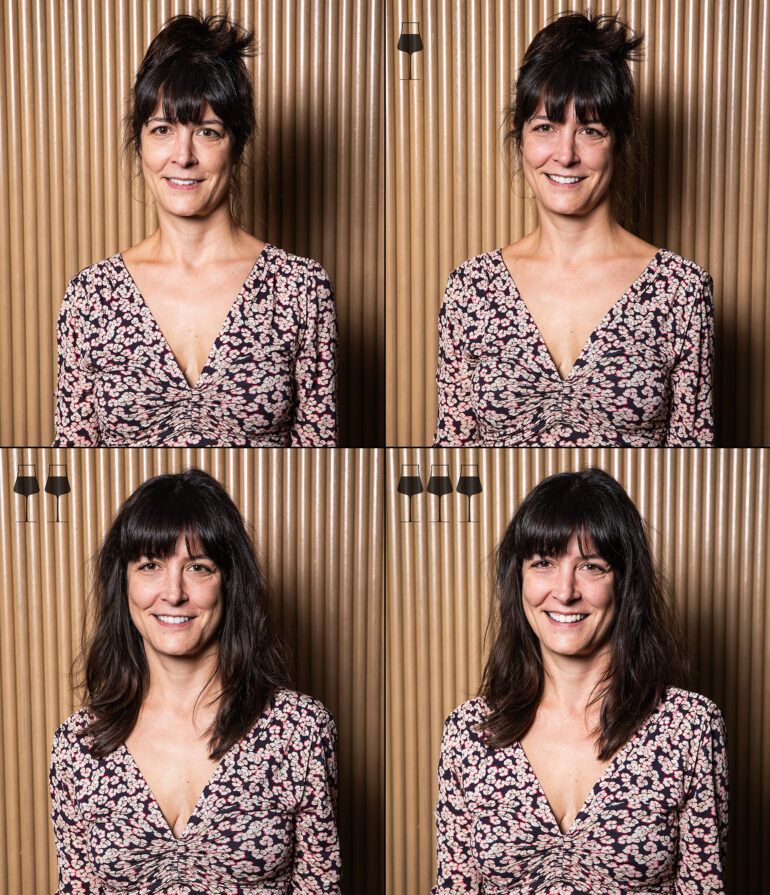
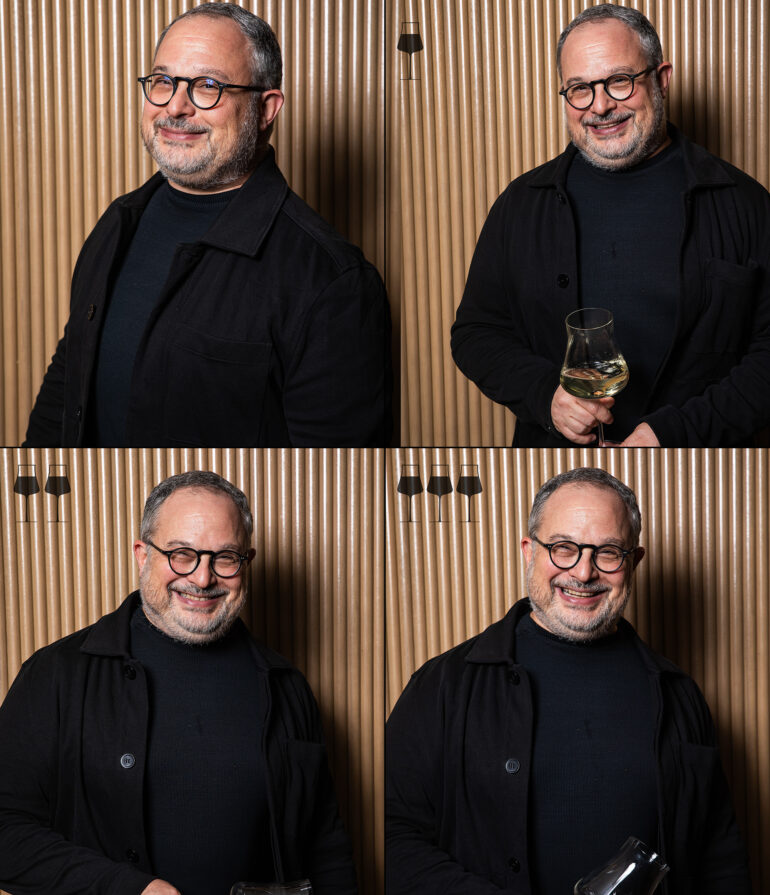
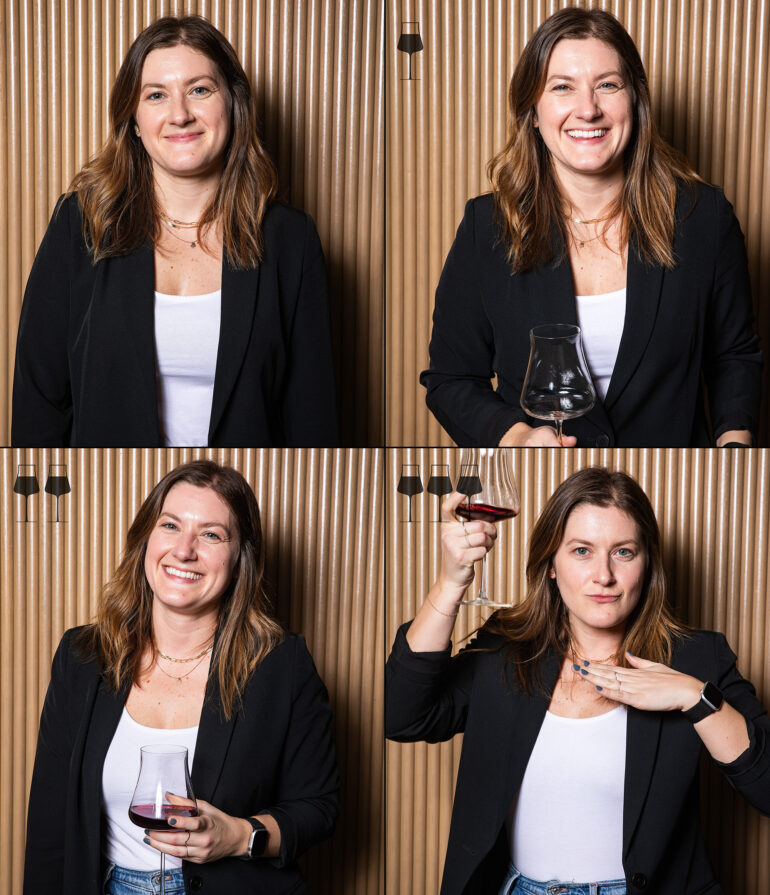
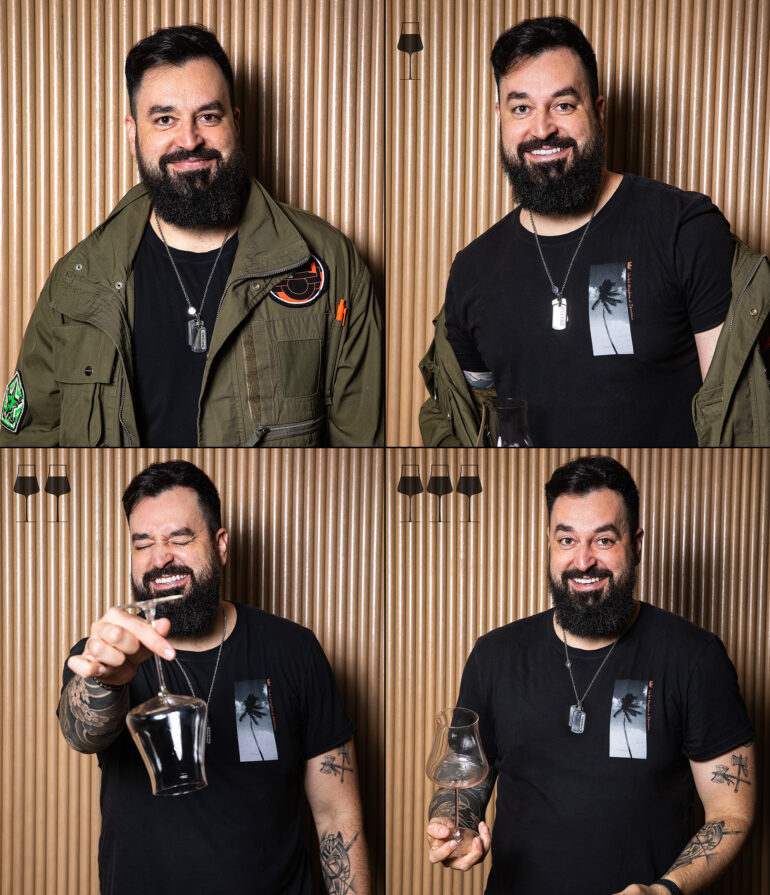
A few years ago, we featured Marcos Alberti and his incredibly fun Wine Project along with the sexually liberating O project. It’s a curious study that shows how someone changes after getting a few drinks in them. And this time around, he’s back. But this time, he chose his subjects to be wine sommeliers and NYC chefs. The concept: photograph the subject before they drink any wine, and then once for each glass they drink for three glasses. The expressions get goofier and goofier — and they’re an inspiration for anyone who hosts photo booths and photographs at parties.

All images used with permission by Marcos Alberti. Please follow him at @marcos_alberti or his website

To do this shoot, Marcos used a Canon 5D Mk IV and a 24-70mm L lens. “In other projects, I used a Hasselblad H4X with Phase One P65+ digital back, but its weight and the slowness of this camera hindered me during the photo shoot,” Marcos tells the Phoblographer. “Regarding the lens, I like to have versatility quickly. When I’m about to photograph these moments, everything happens very quickly, so having a zoom lens is essential.”

“I think this is the most important thing for all of humanity, to connect with others.”

Marcos Alberti

The photographs are all done in a photo booth style with consistent lighting and a person in front of a backdrop. But mostly, they’re a reminder to sometimes just set loose and have some fun. Not everything needs to be a super serious, majorly conceptual photography project or even need to try to change the world. At times, we need to see the good amidst all the bad that we’re bombarded with on social media and in the news. This project is a bit of a reminder about this. Sure, it shows that alcohol can help us sometimes forget our problems, too, if we’re in a comfortable position.

Of course, we also had to ask Marcos about AI imagery and his thoughts on it. “Well, I believe that photos made by AI are a passing thing, like other waves we had in the past, like 3D, for example, at the time many people questioned whether photography would survive, and this wave has passed,” he tells us. “I think we are all still amazed by the capabilities of AI, but I think it is unlikely that anything will replace the human effect. When I see a portrait, I don’t want to look at a person who doesn’t exist, I want to look at a real human being.” He continued to state that he want to feel and connect with this person through their photo — which is seemingly something he alludes to that he doesn’t get through AI imagery.

The party world of Nicolò Rinaldi

The party world of Nicolò Rinaldi

We attended the unveiling of Lavazza’s new calendar, a project that takes us into an uncharted Africa, brimming with energy, experimentation, and a forward-looking spirit influenced by its culture and the diverse communities that inhabit it. Three photographers collaborated on this year’s calendar: Thandiwe Muriu from Kenya, Aart Verrips from South Africa, and the latest addition, Daniel Obasi, whom we had the privilege to interview. The theme of Africa as the birthplace of coffee remains strong, linked to the Giuseppe and Pericle Lavazza Onlus Foundation, founded in 2004 and now involved in thirty-three projects across three continents. With Nigerian roots and a holistic approach to photography, Daniel Obasi is a creative talent who seamlessly blends fashion styling, cinema, photography, and art direction to create captivating and distinctly African narratives. Here’s our interview with him.

How did you first get into photography?
I started photography because of my background in design, and for a while, I also dabbled in fashion styling. That’s when I got into photography. Additionally, I had an eye for certain subjects, and the practice of photography attracted me in a unique way. Working with other people was often challenging for me, so I decided to learn how to take photos on my own to share my exact vision with the world. For me, it’s more about a concept and an idea, which is at the core of my holistic approach to creativity.

How do you manage to blend art direction, fashion photography, and your work as a director?
By approaching each practice in a holistic way and considering them as one, it’s easier to navigate. I don’t think of them as separate components but rather focus on the end goal.

How do you apply Afrocentrism to fashion photography? Can it be seen as the primary vehicle for promoting messages of inclusivity and cultural appreciation?
Absolutely. The concept of Afrocentrism and photography go hand in hand, and in this context, we can also recognize fashion as an art form. Moreover, you can see how it’s all connected to a certain cultural background. There’s also another aspect that brings a bit of your history into it. Of course, it’s not what’s needed in every shot, but in some cases, it gives you a good idea of the process behind the photos I take.

How did you accept the commission for Lavazza’s calendar project?
On an ordinary day, I received an email from Lavazza’s team. I waited for a week and then decided to propose the concept of working together, of unity. Everything started from the photos that depicted the young people together on the beach. I’m a big fan of simplicity, and sometimes the most astonishing images come from the simplest ideas. These images, which centralize the theme, are, in my opinion, the most powerful because beneath all those layers, the simple idea of working as one shines through.

What are your primary sources of inspiration in photography, cinema, and fashion?
My inspiration always changes depending on where I am. Currently, I’m more interested in architecture and composition, so I’m trying to improve the way I use space. I’m studying Bauhaus, Gothic architecture, and the movement. Additionally, choreography and contemporary dance – actually, all forms of dance – are a significant source of inspiration for me. Love, the idea of being loved, losing love, and being in love also fascinates me greatly at this moment.

Google’s Pixel Fold might get a new Dual Screen feature for enhanced photography

Google’s Pixel Fold might get a new Dual Screen feature for enhanced photography

Just recently, Google rolled out the Pixel Camera app 9.2 with its fresh design and features to all Pixel users, but the excitement doesn’t end there. The latest findings in the update suggest that Google has more up its sleeves, particularly tailored for the Pixel Fold.

Android Authority reports that the Pixel Camera 9.2 update brings to light strings hinting at an upcoming Dual Screen feature, internally known as “Saturn.” It looks like the Dual Screen feature is poised to let the Pixel Fold leverage its outer/rear display for preview while capturing the shot using the inner display.

Similar functionalities have been seen on the Galaxy Z Fold 5 and the OnePlus Open, so it’s no surprise Google is joining the foldable bandwagon.

However, according to the source, there are some limitations outlined in the strings. The Dual Screen feature won’t function in Battery Saver mode on your Pixel Fold, and it’s a no-go when the device is running too hot. These limitations align with Google’s approach of disabling certain camera features on Pixels when they heat up.

Right now, the Dual Screen feature isn’t operational on the Pixel Fold, even with APK sideloading. However, there’s a glimmer of hope for the future as the strings indicate ongoing work on this feature. Given it’s not officially announced, take this intel with a grain of salt—Google might flip the switch on or off at any given moment. Stay tuned for potential updates on this evolving feature.

Google stepped into the foldable smartphone arena this year with the Pixel Fold. Unfolding to reveal a 7.6-inch OLED display, it also features a 5.8-inch cover display. Going head-to-head with competitors like the Galaxy Z Fold 5, the newly launched OnePlus Open, and the Oppo Find N3, Google’s debut in the foldable market has some tough competition.