Columbia College of Chicago hosts Holiday Market, featuring art from students, alumni, staff

Columbia College of Chicago hosts Holiday Market, featuring art from students, alumni, staff
ByAngela Chen WLS logo

Friday, December 15, 2023 8:13PM

Columbia College hosts Holiday Market, featuring art from students

Columbia College of Chicago hosts a Holiday Market, ShopColumbia, featuring art from students, alumni and staff.

WLS

CHICAGO (WLS) — Columbia College of Chicago hosts a Holiday Market featuring art from their students, alumni and sometimes faculty.

This year is their 15th annual market.

ShopColumbia is not only a place to support student artists, but it’s also considered a learning laboratory, where students can learn how to market, price and get their foot in the door to start an art career.

The shop also hosts alumni and faculty art, and 75% of proceeds go to students, and the rest goes into operating the store.

RELATED: Chicago area holiday pop-up events 2023: Christmas themed bars, ugly sweater parties and more

ShopColumbia is open year-round for locals to check out their art. The Holiday Market closes by the end of this year.

Copyright © 2023 WLS-TV. All Rights Reserved.

Related Topics

Two Newly Discovered (and Very Tiny) Rembrandt Paintings Are On View for the First Time in 200 Years

Two Newly Discovered (and Very Tiny) Rembrandt Paintings Are On View for the First Time in 200 Years

Rembrandt portraits Jan and Jaapgen. All images courtesy of Rijksmuseum/Olivier Middendorp

Standing just under eight inches tall, two oval portraits rediscovered after 200 years are now considered Rembrandt’s smallest formal works. On view at the Rijksmuseum, which houses the largest collection of the Dutch painter’s oeuvre, the pair was rediscovered two years ago and depicts members of Rembrand’s family rendered with his characteristic loose brushstrokes.

Painted in 1635, the portraits feature the wealthy plumber and slater Jan Willemsz van der Pluym and his wife Jaapgen Caerlsdr, who were married in 1591 and ages 70 and 69, respectively, when they sat for Rembrandt. “Considering (the works’) small size and dynamic, sketchy style, he probably painted them as a favour to the couple,” a release from Rijksmuseum says. “The van der Pluyms had a close bond with Rembrandt’s family, which began in 1624 when Jan and Jaapgen’s son Dominicus wed Rembrandt’s cousin Cornelia Cornelisdr van Suytbroek.”

Larger versions of these tiny works have been known to researchers for decades, which helped to attribute the smaller pair. Using a combination of X-radiography, infrared photography, infrared reflectography, macro X-ray fluorescence, stereomicroscopy, and paint sample analysis, Rijksmuseum found that the portraits were built up like other Rembrandt works and alterations in the sitters’ collars were made similarly to his other pieces. The materials, including lead- and iron-based paints and Earth pigments, also match those often employed by the artist.

Both works are on view long-term in Amseterdam. (via Hyperallergic)


a painted portrait of a man with a white collar in a black frame on a gray wall

Jan Willemsz van der Pluym

a painted portrait of a woman with a white collar in a black frame on a gray wall

Jaapgen Caerlsdr

Do stories and artists like this matter to you? Become a Colossal Member today and support independent arts publishing for as little as $5 per month. The article Two Newly Discovered (and Very Tiny) Rembrandt Paintings Are On View for the First Time in 200 Years appeared first on Colossal.

F5: Jason Bird’s Favorite Chair + the Simple Things He Favors

F5: Jason Bird’s Favorite Chair + the Simple Things He Favors

Jason Bird has been the Founder, Creative Director, and Managing Director of Luxxbox since 2006. There, he designs and manufactures furniture, lighting, and objects for both residential and commercial use. A long and varied career has allowed Jason to channel his own brand’s unique aesthetic of urban design using unconventional materials, industrial finishes, colors, and production techniques.

Jason’s career in architectural lighting launched in Australia. He then relocated to the US and designed for several major manufacturers, gathering loads of experience along the way. Once he made the return to his own practice, Jason focused on designs that embodied a visual display of strength through the exploration of negative space. Then he kept pushing the boundaries to create an individual style statement.

Jason Bird Photo: Courtesy Luxxbox

“When I was in school I always loved art, but was also fascinated by engineering,” he recalled. “I remember going to a career day and discovering industrial design and it seemed to all fall into place. Design seems at the crossroads of art and engineering.” Jason added how he feels “lucky that my work is my passion and design is so interwoven into how I live so it has never felt arduous.”

But given the chance to go back and do it all over again, he said he’d choose to focus more on conventional visual art. “It would be interesting to step into a creative space where the process wasn’t about producing something commercially or at scale, but just creating art for art’s sake. To have the time and space to explore visually and materially.”

Jason’s knowledge of lighting design and manufacturing have seen him receive international awards and accolades for large-scale public and custom lighting installations in Los Angeles, London, New York, Tokyo, and Australia. Meanwhile, Luxxbox has become a major manufacturer exporting to Asia, Europe, and North America.

We’re happy to have Jason Bird joining us for this week’s Friday Five!

modern wood lounge chair

Photo: Chloe Chavanon

1. Marcel Breuer’s Wassily Chair / Eames’ Lounge Chair Wood

Both of these designs have always fascinated me. In my design practice I am always looking at how to use materials and production processes in new ways, and these are both classic examples of this concept at work. The innovation of bending steel to make furniture was so unconventional at the time. Likewise forming plywood for a chair. These days, both are ubiquitous ideas, but they were really game changing at their release.

light-skinned man in biking apparel leaning against the railing on an orange bridge

Photo: Courtesy Jason Bird

2. Northern California

I have lived in Northern California off and on for many years. It is a part of the world that really resonates with me. There is a lot which is reminiscent of home in Australia, but at the same time it has a distinct sensibility that I’m drawn to. The climate, weather, food, the riding, and the landscape are all so inspirational, but there is also a wonderful sense of community and compassion about the locals.

blue album sleeve

3. Music

It probably sounds very cliche, but music has always been a factor in my creative process. You could call me a frustrated musician, and I still play a little with my kids. I think that finding new music, discovering new talent, going to live gigs is really energizing. A current favorite is Fred Again. Fred Gibson is just endlessly positive and the way he mixes sound with video and performance is so innovative.

two people making glass in a workshop

Photo courtesy Jason Bird

4. Travel

I travel a lot, both for work and pleasure, and I try to make each trip encompass a little of both. There is no better way to refresh your mindset. Getting exposure to new perspectives, talking to designers and business people, and looking at new angles is really important. The key to continuing to create innovatively is not getting blinkered by the environment immediately around you.

blue sky, waterway, and buildings

Photo courtesy Jason Bird

5. Family

My children really inspire me, still as young teens, watching them learn and grow. Teaching me things every day. Being challenged by the future, but working through that and projecting their better, positive view of the world. I hope that having design as an influence in their life will help them solve life’s challenges. After all, everyone is a designer.

Work by Jason Bird and Luxxboxx:

two pink cone-shaped lamps suspended about a styled living space

Cono Photo: Courtesy Luxxbox

green geometric pendant light hangs over a styled living space

Tessell Photo: Courtesy Luxxbox

two green and ochre cone-shaped lamps suspended about a styled living space

Cono Photo: Courtesy Luxxbox

three half-dome grey pendant lights hang over a large modern conference table and swivel chairs

Georgina Photo: Courtesy Luxxbox

Kelly Beall is Director of Branded Content at Design Milk. The Pittsburgh-based writer and designer has had a deep love of art and design for as long as she can remember, from Fashion Plates to MoMA and far beyond. When not searching out the visual arts, she’s likely sharing her favorite finds with others. Kelly can also be found tracking down new music, teaching herself to play the ukulele, or on the couch with her three pets – Bebe, Rainey, and Remy. Find her @designcrush on social.

What One Professional Photographer Would Do if They Could Start Over

What One Professional Photographer Would Do if They Could Start Over

If you could start photography over again, there are probably a lot of things you would do differently. I know I would definitely make a few changes. This great video features an experienced professional discussing what she would do differently. 

Coming to you from Laura BC, this insightful video discusses what she would do differently if she could start over as a photographer. Central to the video’s message is the importance of hands-on experience and self-guided learning in the digital age, emphasizing the value of accessible online learning, which have revolutionized the way we learn photography. These resources provide a wealth of knowledge and diverse perspectives, making it easier for beginners to dive into the art without feeling overwhelmed or overburdened by high formal education costs.

The journey in photography, as presented in the video, is deeply rooted in practice and experimentation. The digital era has significantly lowered the barriers to entry, allowing aspiring photographers to experiment freely, learn from their mistakes, and gradually refine their skills and artistic vision. This process of trial and error is highlighted as a crucial aspect of learning, encouraging photographers to embrace every shot as a learning opportunity. It’s a good reminder that you need to get out there and practice, practice, and practice some more. 

Another key theme in the video is the exploration of different photographic genres. This exploration is not just about mastering various techniques but discovering one’s personal style and preferences. Whether it’s landscape, portrait, or street photography, each genre offers unique challenges and opportunities for creative expression. Don’t just emulate what you see on Instagram; experiment and find what makes you tick.

As an enthusiast and a follower of the photographic arts, I found the video both relatable and enlightening. Its focus on practical experience, personal growth, and creative exploration is a refreshing take on learning photography. The narrative underscores that photography is more than just capturing images; it’s a journey of personal and artistic discovery. Check out the video above for the full rundown. 

These Ten Brilliant Portraits Illuminate Ocean Creatures’ Nighttime Antics

These Ten Brilliant Portraits Illuminate Ocean Creatures’ Nighttime Antics

After the sun sets over Florida, and the sky and the seas beneath it become pitch black, 55-year-old Palm Beach County dentist Steven Kovacs grabs his photography gear, meets his friends and heads six miles or so out into the Atlantic Ocean. They throw out a mooring line with lights to guide them and their boat, but otherwise darkness stretches thousands of feet beneath them and miles in any direction. After Kovacs jumps into the inky ocean, he descends often 50 feet or more and waits with his camera and two strobe lights at the ready.

Giant fish swim by and check him out—dusky sharks, hammerheads, marlins, silky sharks and swordfish, which have whacked at least one of his fellow divers.It’s a little uncomfortable when they come in,” he says. “But it’s also pretty thrilling.”

The large predators are not his preferred subjects, however. Kovacs ventures out to capture the small stuff: tiny creatures, often in their larval stage, that are no bigger than a dime. They migrate up through the darkness, hundreds of feet or more. Kovacs uses his camera, a macro lens and those strobe lights to photograph them in stunning detail. “I specialize in looking for the deep-water animals, the rare, deep-water animals,” he says with emphasis. “And so my favorite are things like the cusk-eels—where there’s over 200 species of cusk-eel—and goosefish, anglerfish.” Adults of such fish species mostly occupy the ocean floor, but their youngsters often swim closer to the surface, where Kovacs waits.

Larval Gargoyle Cusk

Larval gargoyle cusk

Steven Kovacs

To chronicle the larval fish and other creatures, including adult squid and octopus and flying fish, Kovacs dives not just off Florida, but off Hawaii, Indonesia, the Philippines, Japan, Mexico and the Cayman Islands. He became a certified diver in high school, but he couldn’t afford the necessary underwater photography equipment until years later.

The practice of shooting such animals in the deep ocean at night is called blackwater photography, and more and more people are taking it up. Kovacs and other camera operators go home with stunning photos of creatures of exotic shapes, with flamboyant frills, that often have translucent skin accented with brilliant colors.

But Kovacs’ images are not just notable because of the brilliance they capture. They are also valuable to science.

If Kovacs sees a larval fish that he knows is special or that he’s never seen before, he’ll photograph it, collect it, place it in an alcohol solution to preserve it and send it off to scientists at the Smithsonian’s National Museum of Natural History.

G. David Johnson, a curator of ichthyology there, and Ai Nonaka, a contract ichthyologist, study such specimens. “We’re building the only larval fish collection in, well, I’d say in the world,” says Johnson.

Nonaka, Johnson and two other scientists from the Smithsonian, Carole Baldwin and Matt Girard, work with the blackwater photographers. After receiving the photograph and specimen, they’ll add a third identifying component: DNA. Nonaka extracts samples from an eye of a larval fish. The tissue allows the scientists to identify the animal down to the species level while the physical specimen is otherwise preserved for further study.

Larval Prickly Seadevil

Larval prickly seadevil, a deep-water anglerfish

Steven Kovacs

The Smithsonian scientists first started working with blackwater photographers in 2016. On Facebook, the hobbyists had been asking the scientists if they could help identify larval fishes, and Johnson and another larval fish expert from Hawaii said yes. But while photos showed the larval fishes’ physical characteristics in detail, without DNA, scientists couldn’t always determine the exact species. So Johnson suggested that the divers collect specimens and send them in, allowing the scientists to examine them further.

Such collecting isn’t detrimental to the ocean ecosystem, because most larvae—more than 99 percent in many species—won’t make it to adulthood. And the divers have permits, such as a special activity license in Florida, to collect specimens.

The first specimens came from a photographer named Jeff Milisen, who took samples and photos of larval fishes off Kona, Hawaii. Nonaka says when she saw his photos and collected specimens she thought, “Wow, this is incredible. We’ve never seen the larval fishes like this.”

“So that was a whole new world to me, to us,” she adds. “We couldn’t have done anything like that research without the photographers.”

The blackwater photographs that researchers receive of larval fish continue to surprise them; the same creatures are often drab as adults. In their younger stage of life, the larval fish are often harmless, but they may be mimicking more toxic species, like jellyfish, as a defense.

Larval Tripod Fish

Larval tripod fish

Steven Kovacs

The old way ichthyologists collected the creatures was to drag nets through the water, which beat the specimens up. Dead animals lost their shape and color, and they were often damaged, so much so that Johnson says the specimens collected in nets look like completely different animals than those in blackwater photographs.

The Smithsonian researchers don’t practice blackwater photography themselves. Johnson earned a license as a scientific diver a long time ago but doesn’t currently dive, and Nonaka is trained to dive but isn’t advanced enough to go blackwater diving and collect larval fish.

Off the Palm Beach coast, the shooters have likely collected more than 200 specimens. Kovacs has collected maybe 15 to 20 larval fish since 2020. The ichthyologists appreciate the photographers’ additional work. “For them to put the extra step in of actually carrying extra gear, and collecting the specimen, and bringing it on board and fixing it is a big effort,” says Johnson.

In 2021, Nonaka, Johnson and colleagues wrote an important paper about how blackwater photography can enhance the study of larval fishes. The researchers wrote that recreational divers and photographers’ observations of the fish can be “priceless,” as they give scientists access to an otherwise expensive-to-research habitat. The images and video can offer an exciting window into the way fishes appear and swim in their environment, and the cooperative efforts between the photographers and scientists could improve the quality of larval fish collections and increase knowledge about the animals. The scientists hope to inspire more photographers to collect specimens, and to encourage their colleagues to take part in blackwater diving themselves so they could collect specimens, too.

Photographers like Kovacs are also observing larval fishes engaging in rarely seen behaviors, such as riding jellyfish, swimming inverted and attaching themselves to other gelatinous organisms with their teeth. Their eyewitness accounts deepen scientists’ understanding of these species. For example, Nonaka says, Kovacs related to her that he can tell a type of anglerfish larva from far away, because it “bounces” in the water as it swims.

So far, Johnson says the team has worked with Kovacs on a few papers, and another is in the works. Nonaka says a species is being named after her due to her dedication to the discovery, identification and curation of larval fishes in collaboration with citizen scientists. She and Johnson marvel at Kovacs’ photos of larval animals such as the bony-eared assfish and the gargoyle cusk.

Kovacs finds many beautiful, interesting larval fish, the researchers say, possibly because he often goes deeper than other blackwater divers. Nonaka says while other divers may go 15 or 20 feet deep, the dentist goes sometimes to 50 and 80 feet. “And so occasionally he’ll get rarer specimens that other people don’t get,” says Johnson, later adding. “Yeah, he’s one of the best.”

We called Kovacs up to find out what drives him.

What are the greatest challenges of blackwater photography?

That you don’t have a bottom. You don’t have any reference. You’re floating out in the open ocean. There’s no operator. There’s no down, so you can’t stabilize yourself. And the animals are not happy to see you. They’re running. They’re moving—trying to get away from you. Technically, it’s much more difficult than regular reef macro photography.

What are the greatest rewards of blackwater photography for you?

It’s seeing animals that you don’t usually see. Just weeks ago, in Kona, we found a deep-water anglerfish that’s never been photographed before, never been seen before. That to me is an absolute thrill. And we work closely with the Smithsonian, showing them things they’ve never seen before.

Diamond Squid

Diamond squid

Steven Kovacs

How often has it happened that you’ve captured something that hasn’t been seen before?

The trip before Kona, we found a species of Ipnops fish that’s never been photographed, never been seen before, period. It happens once every year or once every couple of years. We’re still finding new stuff. That seems to be more prevalent off the coast of Kona, which is pretty much unexplored and is really deep water. In Kona, we go into water that is 5,000, 6,000 feet deep [beneath us] at night. It’s really open ocean, so we’re getting some pretty amazing deep-water animals coming up.

Baby Long Arm Octopus

Baby long arm octopus

Steven Kovacs

What’s your favorite blackwater image?

Oh, that’s a tough question. I have so many at this point. It would probably be the bony-eared assfish, Acanthonus armatus [pictured in the top image above], that we see off Florida once in a while. It’s one of the most beautiful animals I’ve ever seen underwater. It’s just absolutely gorgeous, and just so unusual and so rare. I mean, the adults live several thousand feet down, so to see these animals is incredible.

If I had to choose, it would be between that and a photo of pelagic nudibranchs mating.

Pelagic Nudibranchs Mating

Pelagic nudibranchs mating

Steven Kovacs

What was your toughest shot?

I mean, some of the images are challenging, but it’s not so much challenging getting the shot, it’s finding the animals. It’s like a treasure hunt. Some of these animals I’ve been looking to find for years. Sometimes it’s just a waiting game. The biggest challenge is to just keep doing it until they show up. I mean, you see all these images, but some of these animals I’ve searched for five, six, seven or eight years.

The hardest pictures to get are of two things actually. The lobsters riding on jellyfish are a real challenge—not to take a picture but to make it look aesthetically beautiful. The lobsters are in constant motion, as are the jellyfish. They are spinning and moving in every direction. To have the lobster and the jellyfish perfectly lined up takes a lot of time and a lot of shots. I’ve photographed them for over 30 minutes—and that’s still not a guarantee I’ll get a good shot.

The second-hardest shots are of some of the deep-water anglerfish. They are small, in the five- to eight-millimeter range, and they hang upside down and move constantly. To get straight underneath something that small and shoot upward while it’s in constant motion is a huge challenge.

Larval Lobster Riding a Jellyfish

Larval lobster riding a jellyfish

Steven Kovacs

And do you have a dream animal right now that you want to photograph?

I do. No. 1 on my list is the hairy goosefish, and only one person in the world has a photograph of it on a blackwater dive. That’s Jeff Milisen in Kona, Hawaii. It’s just the coolest-looking animal. It’s just so exotic.

Which of your photos gets the most attention?

The general population likes colorful photos, especially colorful photos like the lobster and the jellyfish. Things people recognize, like flying fish, will be popular. The rare and exotic are not usually popular because they’re for the fish geeks like us.

Adult Flying Fish

Adult flying fish

Steven Kovacs

And do you ever see marine debris or plastics when you’re out?

When we go to places like Anilao in the Philippines, or Indonesia, there’s a lot of plastic, a lot of garbage in the water. I haven’t seen too much off Hawaii. Occasionally we see it off Florida, but surprisingly not a whole lot yet. I do have a whole bunch of images with animals on my Instagram with garbage. You’ll see the nautilus riding the garbage, the plastic bags, and fish hiding in plastic. If there’s a connection between nature and the garbage, I’ll take a picture and show the relationship.

Nautilus Grabbing Garbage

Nautilus grabbing garbage

Steven Kovacs

You post a lot of your stuff on social media. What do you hope that folks take away from the images?

I’m just sharing the beautiful environment. It’s a way to get my work out there in the public, and people may want to purchase it. But I just enjoy sharing what I get to see—and a lot of people don’t get to see.

And have any scientists told you anything about the importance of your shots?

Yeah, they’ve actually done research papers on some of our animals. They’re absolutely thrilled, because we’re providing information they’ve never had access to. They didn’t know how these animals even looked in the wild.

And how does that make you feel when you find out there’s been a paper or you’ve captured a new species?

It’s absolutely thrilling. It makes it all worthwhile. I mean, it just gives me the motivation to keep going.

Get the latest Science stories in your inbox.

Check Out This Stunning Campus Restaurant Photographed by California Based Architectural Photographer Zack Benson

Check Out This Stunning Campus Restaurant Photographed by California Based Architectural Photographer Zack Benson

Project of the Week

We’re back on Project of the Week with another one of Zack Benson’s perfectly photographed restaurants — Soda & Swine. Zack’s photographs of Morning Glory were the object of my fixation back in March of 2020, and this new project – which is actually the coolest college dining hall on the University of California San Diego’s campus by Consortium Holdings and BASILE Studio – is my new favorite!

Sporting the same glossy feeling, powerful compositions, sexy lighting, and warm colorations as his other spectacular shoots, Zack’s images of Soda & Swine are so inviting and pique our interest in dining here.

Zack starts off by explaining one of his favorite photographs, saying, “I like the shot with the front door and sunlight streaming in. A version of this shot was on the shot list, but when I saw the late afternoon light coming in we quickly pivoted and composed the shot around the sunlight.

Often you have to work really hard to get a shot but my favorite ones are the ones that just bloom right in front of you. Like a fresh flower that just opened. You are at the right place at the right time and have the skill to capture it. When those stars all align, you feel the harmony with your subject and it is amazing.”

This next scene is arguably the hero shot of the project. We get a good look at the restaurant in its entirety, noting the bar area and table seating. Zack shows off the materiality and that glossy, glitzy feeling that conveys how dining here is special.

“Everything in the restaurant is custom-made. So one of the biggest challenges was when we would shoot. Of course, the client wants to shoot as soon as possible but I often have to push back and make sure everything is completed, finished and ‘photo ready.’ If something is missing I have to figure out how to overcome it. It could be art, furniture, signage etc,” Zack explains in regards to the shoot day.

He continues, “When possible, I scout a project before the shoot and then address any issues I find with the client making sure we aren’t missing anything we can’t live without. We were able shoot right before the grand opening. We started in the afternoon and then shot late into the night.”

I asked Zack a little bit about the business side of things, like locking down this commission and any advice he had about running his architectural photography business. He shared, “Like most of my shoots I already had an established relationship with the client. 95% of my work is repeat clients, I do no marketing besides my website but I probably should. I have been very fortunate with ‘word of mouth.’”

He continues, “When I was younger I wanted to be everyone’s photographer and shoot everything I could. That is an absurd idea that sets you up to fail. With more time in the saddle, you realize to focus on the things you enjoy. Try to identify the things/projects that you should let go.

Are you running your business or is your business running you? What is the goal of your photo business? I don’t mean a “mission statement” on your website. I don’t mean what it does for your clients. I mean what does it do for the owner, you! I spent many years trying to build my business up. Each year making a bit more. It became successful and I’m grateful for that but I was running myself very hard. Working nights weekends, and traveling way to much, etc. I became very burnt out and I am finally trying to recover from that now. To me my business has three goals:

1. Stimulate me creatively and mentally

2. Stimulate me financially allowing me and my family to have a work-life balance.

3. Produce high-quality work that you can take pride in.

If my business is not doing these three things then it is not successful. If I am very busy making lots of money but I am missing out on family time then it is not successful. Make sure your business is serving you and not the other way around.”

An enormous thank you to Zack for sharing this gorgeous project with us and a bit about his mentality while shooting and running his architectural photography business! What an awesome project, and a wise photographer!

You can find more of Zack’s amazing work on his website zackbenson.com and on good ole Instagram @zackbensonphoto.

If you have a project you’d like to be considered for Project of the Week, you can submit it here.

Photography exhibition | Documenting life on the margins

Photography exhibition | Documenting life on the margins

Broken, Asha Thadani’s exhibition of photographs of Dalit lives, makes us face some uncomfortable realities, but without robbing her subjects of their dignity

Amit Dixit

ISSUE DATE: Dec 25, 2023 | UPDATED: Dec 15, 2023 18:27 IST

According to self-taught photographer Asha Thadani, her work “has always centred around patterns and boundaries and power structures that define or differentiate the world and the complex ways in which these lines become etched, blurred, brittle and porous”. Thadani finds Dalit lives to be on this vulnerable frontier and feels “their inner world is not represented enough”. Broken: Dalit Lives, her ongoing exhibition at the India Habitat Centre, New Delhi (on till January 7, 2024), addresses this imbalance by showcasing 10 Dalit communities from across India. This is a substantial body of work, still in progress, and the set being exhibited took Thadani seven years to document.

First gallery show dedicated to Ghanaian photography pioneer will display previously unseen works capturing life under colonial rule

First gallery show dedicated to Ghanaian photography pioneer will display previously unseen works capturing life under colonial rule

Few people photographed as many major events and notable figures in Ghana’s pre and post-colonial history as the late J.K. Bruce-Vanderpuije.

On 28 February 1948, he captured on camera the fatal shooting of three local ex-servicemen who were on a march to the seat of the British colonial government, protesting unpaid war allowances. Riots and further protests broke out in response to the shooting, and Bruce-Vanderpuije’s images were tendered as evidence in a commission of inquiry that was set up to investigate. The 1948 Accra riots, as they are now known, are said to have been a pivotal moment leading to the independence of Ghana and other African countries.

In the 1920s, as the official photographer of Achimota School (formerly known as Prince of Wales College and co-founded by the then Gold Coast governor Sir Frederick Gordon Guggisberg) he had captured images of a very young Kwame Nkrumah, who would later become the first president of the newly independent Ghana. On 6 March 1957, the day independence became a reality, Bruce-Vanderpuije was at the old polo grounds (now Kwame Nkrumah Mausoleum), capturing the moment Nkrumah famously proclaimed, “…at long last, the battle has ended… Ghana, your beloved country, is free forever.”

J. K. Bruce-Vanderpuije, Kwame Nkrumah Waving (1961)

Courtesy of Deo Gratias Studio and Efie Gallery, Dubai

“He was probably the only person to take certain photographs in [Ghana’s] history at a certain time,” says Kate Aku Tamakloe, his granddaughter and manager of the century-old photo studio he founded. There might have been other photographers during Nkrumah’s landmark 1957 pronouncement, she adds, “but he was right in front.”

“That picture,” she added, referring to the print of Nkrumah on a podium flanked by members of the Gold Coast cabinet at the entrance of the Deo Gratias studio. “We [at the studio] have several of them. It’s [an image that is] out there but [his version] is unique to him.”

J. K. Bruce-Vanderpuije, Telephonist at their Exchange (1940s)

Courtesy of Deo Gratias Studio and Efie Gallery, Dubai

Referred to as the forgotten forefather of 20th-century African photography, James Kobla Bruce-Vanderpuije was born in Jamestown (a suburb of Ghana’s capital city, Accra) on 7 March 1899 to Emmanuel Vanderpuije, who worked in the shipping industry, and Eleanor Afua Bruce of the Otublohum royal family.

He took up photography as a hobby while at school. Later, he spent three years learning from photographer J.A.C Holm, and also worked briefly with the Accra Metropolitan Authority (then known as Accra Town Council.) In 1922, aged 23, he established the Deo Gratias Photo Studio in Jamestown, now said to be the oldest operational photography studio in West Africa.

J. K. Bruce-Vanderpuije, Miss Ghana (1958)

Courtesy of Deo Gratias Studio and Efie Gallery Dubai

Under his helm, the studio was a hub of activity with diplomats, elites, and traditional and community leaders all trooping in to have their portraits taken. The studio has an archive of more than 50,000 images— taken over a span of seven decades—of figures ranging from Nkrumah to the late Ghanaian politician J.B. Danquah and the late British Queen Elizabeth II.

Around a decade ago, Tamakloe (who now runs Deo Gratias studio) set out on a journey to “categorise”, she says, the images in the portfolio as a way to make it easier to process requests she was receiving for photographs. She grouped images based on themes including “families,” “weddings,” “funerals,” and “people wearing [specific] Kente design”. This was done with the assistance of her now visually impaired 89-year-old father Isaac Hudson Bruce-Vanderpuije (J.K’s son, and the person who first inherited the space). Isaac shared stories about some of the pictures and helped to identify their subjects.

J. K. Bruce-Vanderpuije, Fishermen at Sea (1940s)

Courtesy of Deo Gratias Studio and Efie Gallery, Dubai

Tamakloe has also worked hard to preserve the images, a journey that itself has included some bumps in the road, including losing the hard drive after beginning the process of digitising the archive, an experience Tamakloe says was “very depressing after having done so much.” She says, however, that she is “enjoying that the end is not yet here because I’m still discovering” images—citing recent examples such as a photograph of Seth Anthony, the first African commissioned as an officer of the British Army, and his family in the 1940s. It was one of Anthony’s daughters, who visited the studio in 2016, that identified him in the photograph.

Prints of images from the archive, including the shot of Seth Anthony, were featured in a group presentation by Efie Gallery at the 1-54 Contemporary African Art Fair in London this past October. On 12 January 2024, Unveiling the Shadows of the Past: J.K Bruce-Vanderpuije – The Hidden Icon of Photography, the first gallery show to be dedicated to Bruce-Vanderpuije’s work, will be on view at the Efie Gallery in Dubai. Curated by Ethiopian photographer Aida Muluneh, it will showcase more than 40 previously unseen black-and-white images by Bruce-Vanderpuije, depicting life in Ghana in the 1920s and 30s and offering insight into the formation of an independent, 20th-century Ghanian social and political identity as the country prepared to liberate itself from colonial rule.

J. K. Bruce-Vanderpuije, Nee Kodjo Ababio IV (1936)

Courtesy of Deo Gratias Studio and Efie Gallery, Dubai

“I am really looking forward to having interactions with people who will see [the images] for the first time—not just the art or photo lovers but also historians,” says Tamakloe of the upcoming exhibition. “I have always said I want to tell the Ghanaian story.”

Wedding Photographer Dies After Falling From Roof While Taking Pictures

Wedding Photographer Dies After Falling From Roof While Taking Pictures
The Kitano Club in Kobe City.

A wedding photographer in Japan has died after he fell from the roof of a restaurant while photographing a couple as they prepared for their wedding.

The 26-year-old was at the Kitano Club in Kobe City on the morning of November 26 when he fell from the third floor, a distance of 30 feet (nine meters). He suffered a blow to the head and was transferred to a local hospital where he died two weeks later on December 9.

According to local police who held a press conference, the cause of death was septic shock brought on by the injury to his head.

The man was reportedly taking photos of the couple on the roof of the venue at a pre-wedding event when he stepped back and fell.

The rooftop offers a spectacular view across Kobe City and has a lawn on top of it but there was no fence in the area he fell. Police are now investigating whether the photographer’s death was due to professional negligence.

The Kitano Club is a popular wedding venue, the grass lawn elevating couples above the skyline allowing for spectacular photos of the bride and groom but serious questions will have to be answered as to how this happened.

In 2015, wedding photographer Gordon Jack passed away at the wedding rehearsal of tennis superstar Andy Murray.

Initially, it was reported he had fallen and had a freak accident but it was later revealed he had actually suffered a heart attack which is what caused him to fall.

The Perils of Being a Photographer

Wedding photography can be hazardous: there are a lot of moving parts and photographers can find themselves in unfamiliar locations, walking backward, and having to avoid random objects and small children.

Most professionals will have insurance to cover themselves in case anything goes wrong.

Earlier this year, PetaPixel interviewed Robyn Lindemann, an elite wedding photographer from Chicago who was forced to close her business after a rare eye disease caused her to go blind and she lost almost all of her peripheral vision.

“I was horribly embarrassed when I missed the outreach of a common handshake, bumped into little flower girls, or humiliatingly tripped over something that was outside my visual field range,” she said.

Lambeth Archives hosts Harry Jacobs Photo Archive

Lambeth Archives hosts Harry Jacobs Photo Archive

Rescued from a closed studio in 1999, The Harry Jacobs photographic archive is one of Lambeth Archives’ many treasures.

Finding history

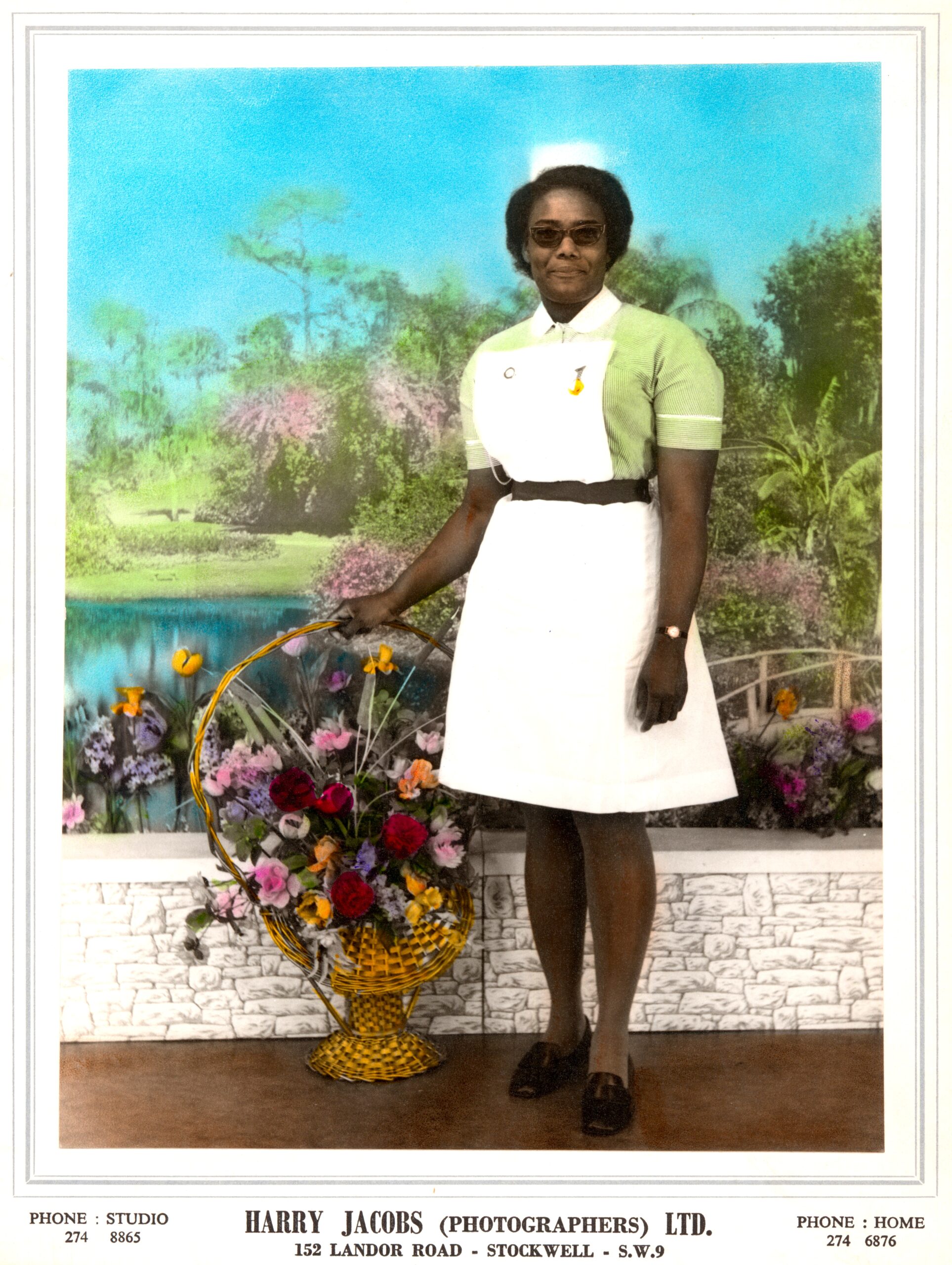
Hand-tinted photo of nurse from Harry Jacobs' studio

Hand-tinted photo showing Harry Jacobs’ unchanging studio backdrop

The Jacobs photographic archive – over 5,000 rescued portrait pictures – is available for everyone to view at Lambeth Archives. Local people visit in search of the past, finding photographs of parents, friends, neighbours and relations – and sometimes even themselves.

Local institution

Jacobs’ photos capture the personal and domestic side of the Windrush Generation. Jacobs started taking pictures of Jamaican families in their front rooms and became the portrait photographer of choice for the local Black community for more than 35 years – so much so that when Jamaican Prime Minister, Hugh Shearer visited Brixton in 1969, Harry was called to record the occasion.

The Harry Jacobs Story

Two years before the Windrush voyage, young Eastender Harry Jacobs returned from the Second World War: “I’d never done photography before, but I started with a 35mm Leica camera. Going out ‘on the knocker’ I used to explain what I was doing and say, “I don’t want to bother old people; are there any families with children on the street?” and she’d say “Oh, Mrs so-and-so opposite, Mary at no. 24 and so on”. I‘d knock, arrange to go back in the evening, and the whole family would be in their best clothes in the front room.“

Posing for portraits

After 1962, when Harry Jacobs opened his own studio at 152 Landor Road, Stockwell, posing for a portrait became a rite of passage for generations of local people. “I became a bit of an institution for the black community in Brixton. The funny thing was people used to insist it was a scene from their home country. Jamaicans would say it was Hope Gardens, ‘Oh! The waterfall was just there; and the trees; it reminds me of home’. I didn’t use many props; there was the famous basket of flowers, the raffia chair and the Bakelite telephone; for children there was a tricycle and a plastic parrot; and every Christmas the tinsel Christmas tree came out.”

Rescuing the pictures

When Lambeth Archives staff arrived at the closed studio in 1999 to rescue the contents, they were confronted by a montage of over 2,000 photographs covering the shop and studio walls: proud faces and special moments; in work uniforms and party frocks, displaying new hairstyles and babies, new suits and swimsuits, offering wedding toasts and eating funeral meats.”

Lambeth Archives opens in Brixton