Artists praise Hushtola’ Art Market

Artists praise Hushtola’ Art Market

THACKERVILLE, Okla. – A husband and wife jewelry making team from the New Mexico Pueblo of Zuni tribe were awarded “Best of Show” by judges at the Chickasaw Nation’s Hushtola’ Art Market.

More than 100 artists contributed works to the show, conducted at WinStar World Casino and Resort Dec. 9-10.

Raylan and Patty Edaakie took Best of Show and also finished first in the 3-D competition with jewelry pieces reflecting their Southwestern tribal roots.

Many Chickasaw artists finished in top places in categories, including Norman-based artist Billy Hensley for a mixed-media painting and Chickasaw artist Jimmy Dean Horn. Horn, from California, finished in third place in mixed media.

“The selection of artists was great, and there was a wide variety of fantastic artworks available to art patrons,” Mr. Hensley noted. “The show is new and has the potential to be a wonderful holiday shopping experience. I know I purchased a number of wonderful things from other artists from beadwork to pottery as gifts this year.

“The piece I won with is called ‘Finding My Way to the Past,’ mixed media acrylic painting embellished with handstitched glass beadwork and gar scales,” he added.

Hensley has expanded his offerings to include alligator gar scales on paintings, jewelry and leather works.

Both Hensley and Horn have displayed their talents in art galleries located in the United Kingdom and Portugal, respectively.

Chickasaw artist Brian Landreth said he enjoyed Hushtola’ Art Market and praised the show’s management.

“The culture and humanities department did a wonderful job with the market, and the location was beautiful. The department did a great job providing direction to the market in WinStar. I sold a few small works and prints, and got to network with my fellow artists, which is something I always enjoy. WinStar staff were also excellent in providing support to the artists,” Mr. Landreth noted.

The art show also saw Landreth become acquainted with a relative. “A cousin’s wife saw (an article) in the Chickasaw Times and wanted to connect with me about our family and its history. I’ll be sending her some photos I have of our elders for her husband and family to have access to,” he said.

Tribes from vastly different locales graced the show. Two Southwestern tribes – Pueblo of Zuni and San Felipe Pueblo – joined the juried art show, as did Caddo, Navajo and Coushatta Nation of Louisiana tribal artists.

Chickasaw artists were awarded first place in 10 judged categories. They include Jennifer Hicks, pottery; Mary Wilds, handwoven textiles; Melissa Freeman for general textiles and traditional dress and regalia; Glenda Dewbre, miniatures; Michael Cornelius, instruments; Marcella Yepa, traditional pottery; Jim Keel, cultural diversity; Regina Free, drawing and sculpture; and Hensley, mixed media.

How to enter the GTA Online Wildlife Photography Challenge?

How to enter the GTA Online Wildlife Photography Challenge?

GTA Online always has something going on to keep the players invested in the game. The new year has just started, and Rockstar Games has brought back the Wildlife Photography Challenge, where players are required to click pictures of certain animals to unlock rewards. However, many players don’t know how to start this challenge as the developers are often unclear with the instructions.

Since this challenge is only available for PS5 and Xbox Series X/S players, the ones on PC or other consoles will not be able to start the event or unlock the prizes.

Well, if you are on PS5 or Xbox Series X/S and are looking for a way to participate in the photography challenge, then you simply need to follow this guide. In this, we will tell you where to go, how to trigger the event, and how to unlock a specific vehicle related to this event in the game.


” loading=”lazy” width=”1440″ height=”220″ alt=”fortnite-promotional-banner”>


The Wildlife Photography Challenge in GTA Online requires you to visit a certain location

[embedded content]

youtube-cover

Before starting the event, players will receive an email with details about the challenge. However, if you overlooked this email and don’t know where to go, then there is no need to fret. To start the challenge, hop onto your vehicle in GTA Online and go to the Chiliad Mountain State Wilderness.

You will also see a purple camera icon on the map at this location. At the start of the muddy road that leads deeper into the forest, you will need to interact with the notice board right beside the path. This will show you the list of animals that need to be photographed for that day.

[embedded content]

youtube-cover

Since this is a daily event and the animals will keep refreshing, you can visit the board to take a look at the new list. You can also purchase the new Declasse Park Ranger in GTA Online for the ultimate Mount Chiliad Wildlife Photographer experience. However, you must photograph at least one animal before it unlocks on the Warstock and Cache’s website.

The pictures can be clicked through your phone’s camera, and you get around $20k for each picture, alongside some RP. Clicking 10 pictures throughout the event will unlock the Park Ranger outfit in the wardrobe along with the Trade price of the new car in GTA Online.


[embedded content]

youtube-cover

It is a cool event for PS5 and Xbox Series X/S players because Rockstar Games recently added animals to the free-roam mode for these consoles. So, the option to explore the wildlife further and obtain rewards for photographing them is a great way to keep the community invested.

The ongoing GTA Online weekly update has also brought several other discounts and double/triple XP events that offer a great chance for everyone to make good money while having lots of fun in the online multiplayer.


It is a great start to a new year for gamers who are looking to explore fresh avenues in GTA Online. Hopefully, Rockstar Games brings similar fun events for PC and other platforms as well.

Poll : Are you excited about the ongoing event in GTA Online?

0 votes

More from Sportskeeda

Edited by Ritoban “Veloxi” Paul
Profile picture

Ultra-Wide and Selfie Cameras – Where Does the New Era of Photography Begin?

Ultra-Wide and Selfie Cameras – Where Does the New Era of Photography Begin?

Apple is renowned for its constant innovations in its smartphones, and the latest news from MacRumors promises that the iPhone 16 Pro models will bring a revolution in the field of photography. According to renowned analyst Ming-Chi Kou, Genius will be the sole supplier of the new ultra-wide and selfie camera modules for Apple, indicating a potentially significant increase in the company’s revenue in the coming years.

One of the main changes that the iPhone 16 Pro will bring is the “tetraprism” zoom camera from the iPhone 15 Pro Max, which will enable advanced photography and videography. Additionally, it is expected that the screens of these models will be larger, with a diagonal of 6.27 inches, contributing to better visual and user experimentation.

Of course, cameras are often the most important part of a smartphone for most users, and the iPhone 16 Pro will not disappoint. Both models will have improved cameras, with a 12MP main camera and a 48MP ultra-wide camera. Users will particularly enjoy the ultra-wide camera, which will retain its 6P lenses, allowing for wide angles and crystal clear photos.

But that’s not all – Apple is also planning a revolution in the selfie camera. All iPhone 17 models will be equipped with a completely new 24MP front camera, which will have 6P lenses. This represents a significant improvement compared to the current 12MP camera with 5P lenses present in previous models.

In summary, the new iPhone models bring advancements in the field of photography that will satisfy even the most demanding users. Ultra-wide and selfie cameras are becoming a key factor in choosing a smartphone, and Apple is ready to exceed all expectations. Don’t miss the opportunity to be part of the new era of photography with the iPhone 16 Pro.

FAQ

What are the main updates in the iPhone 16 Pro models?
The main updates in the iPhone 16 Pro models include the “tetraprism” zoom camera, a larger 6.27-inch screen, improved 12MP main cameras, and 48MP ultra-wide cameras.

What is the difference between the selfie camera on the iPhone 16 Pro and iPhone 17 models?
The difference lies in the resolution and lenses. The iPhone 16 Pro comes with a 12MP selfie camera and 5P lenses, while the iPhone 17 models will have a 24MP selfie camera and 6P lenses.

Who will be the supplier of the cameras for the iPhone 16 Pro models?
According to analyst Ming-Chi Kou, Genius will be the sole supplier of the new ultra-wide and selfie camera modules for Apple.

Chattanooga Times Free Press

Chattanooga Times Free Press
Chattanooga’s only daily newspaper. Complete coverage of breaking news in Chattanooga, Other local, regional and national news. Classifieds and online marketplace.

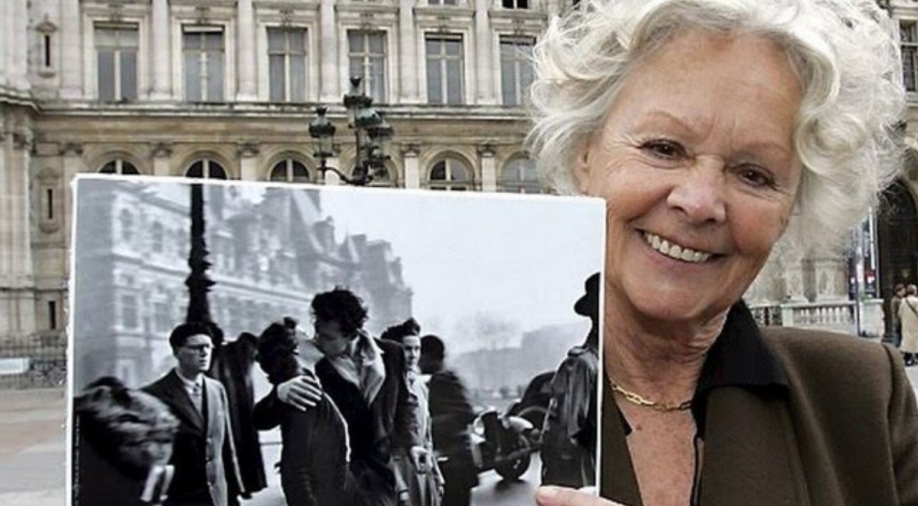
Francoise Bornet, young woman in Robert Doisneau’s Paris kiss photograph dies at 93

Francoise Bornet, young woman in Robert Doisneau’s Paris kiss photograph dies at 93

Photographs seize moments in a way that it brings back all the memories when you look at them, but some photographs remain forever etched in history. The famous photograph of The Kiss by the Hotel de Ville in Paris, clicked by Robert Doisneau is one such photograph that will never grow old. 

Francoise Bornet, who was captured by the French photographer Dosineau in the photograph, recently passed away at the age of 93 but remains forever immortalised as a young lover in the picture.

The famous photo was clicked in the 20th century, in postwar times, outside a hotel in Paris where two young lovers were seen in each other’s embrace kissing passionately. This photograph later became the romantic symbol of love in Paris.

Forever young lover in Doisneau’s Paris kiss photograph dies at 93

At the time when this photograph was clicked, Bornet was a 20-year-old drama student who was simply enjoying the days of young romance in Paris with her then-boyfriend Jacques Carteaud. Doisneau spotted the couple in a cafe and was already on a mission to capture a series of photos illustrating love in Paris for the American magazine Life.

Kiss in Paris

Bornet later told French TV, “He said, ‘I’m Robert Doisneau, I find you both charming and wondered if you would accept to kiss again in front of my camera.’” They took several photos with him in different loications of Paris.

Last year, Bornet, living in Normandy told La Dépêche d’Évreux: “I was with my boyfriend. We couldn’t stop kissing. We were kissing all over the place, all the time. Robert Doisneau was in the bar, he asked us to pose for him.”

Doisneau was all open about having the photo being staged rather than clicked like a random one. He was lauded for his ability to compose and capture a scene so expressively. He died in 1994.

When the photo was published in Life magazine, it didn’t catch much attention. But it had a revival in the 1980s when it was transformed into posters and postcards capturing the romance of Paris, followed by a frenzy of merchandise from duvet covers to shower curtains, calendars and mugs.

By the time the photo became popular, Bornet married another man after separating from Carteaud and also married him later. In 2005, she sold a copy of the original photo given to her by Doisneau, which was bought at auction and fetched the then very high sum of more than €150,000 ($164,244).

(With inputs from agencies)

Serban Enache, Dreamstime: We went from photography on film to AI-generated content. Change is probably the only constant in the stock photo industry

Serban Enache, Dreamstime: We went from photography on film to AI-generated content. Change is probably the only constant in the stock photo industry

Romanian entrepreneur Serban Enache, founder and CEO of Dreamstime, shares in this interview how the company he launched in 2000 has managed to get to the top and consolidate its position as the biggest stock photo community in the world.

Serban Enache, an architect and designer by formation, started Dreamstime with a simple vision: to allow people to sell their images and make money during their travels. Then, he wanted to make high-quality visuals accessible to everyone. Today, Dreamstime’s stock photo library exceeds 200 million images and videos.

Dreamstime is currently the only leading independent stock photo agency. Around 2015, it became the world’s largest stock photo community and has kept this position ever since.

“We remained one of the few stock photo leaders in the last 20 years, innovating and improving the industry throughout our journey,” says Serban Enache.

The company’s success relies on a mix of ingredients that includes technological innovation and early adoption of AI tools to make the user experience as smooth as possible for both contributors and clients, a fair royalty structure for contributors, and a good understanding of its customers’ needs that have become increasingly complex.

“If you look at the beginnings of the stock photography market when there were no social platforms, for instance, and compare it to what we have now, billions of images, clips, and reels produced in just one year, the answer to lasting long is to adapt and scale up,” Enache explains. “We’ve been through photography on film, digital cameras, mobile photography, the social network revolution, and AI generative content, adjusting to new industries and various types of audiences all the time. Change is probably the only constant.”

In the Q&A interview below, Serban Enache talks about:

  • how he started Dreamstime,
  • how the company has developed over the last 23 years,
  • the technology that powers the largest stock photo community in the world,
  • what contributors and users appreciate most about the service,
  • copyright protection in the age of content,
  • and the challenges raised by AI.

How did you start this journey, and what is Dreamstime today? How big is the Dreamstime stock photo community in numbers (files, contributors, users, team)?

Serban Enache: Dreamstime launched in 2000, four years ahead of Facebook. All the images we had in our first years took up less space than the videos we now receive in a single day, so the Internet was in a hugely different stage volume-wise. In 2004, we upgraded as a community, accepting images from other contributors, and in one year, more authors were submitting to stock photography than ever before in our industry. We started as designers and site builders, and because stock photo choices were few and expensive, we also dabbed our hands into photography. By the time we launched Dreamstime, we had hands-on experience with content users’ and providers’ needs and demands. Looking back, it is incredible how the industry has changed: our contributors are now prompting generative AI to produce content for their designs. And just like downloading stock photos, software use has to be legal and moral. 

Dreamstime is currently the only leading independent stock photo agency. Around 2015, we became the world’s largest stock photo community; we still are the largest community. We remained one of the few stock photo leaders in the last 20 years, innovating and improving the industry throughout our journey.

Contrary to competitors, Dreamstime has been financially independent and profitable since its first year. Current numbers: around 227 million files online, 51 million registered users, and 1.2 million contributors (photographers, videographers, illustrators, audiographers). We have offices in the US and Romania, but other teams are working across all continents.

How have you climbed to the top of such a competitive market with many international brands, and what do you think sets you apart from other stock photo services?

Serban Enache: If you look at the beginnings of the stock photography market when there were no social platforms, for instance, and compare it to what we have now, billions of images, clips, and reels produced in just one year, the answer to lasting long is to adapt and scale up. 

We’ve been through photography on film, digital cameras, mobile photography, the social network revolution, and AI generative content, adjusting to new industries and various types of audiences all the time. Change is probably the only constant.

We have moved from offering just media to integrative AI-powered solutions that reach beyond regular stock photo customers. As far as we know, Dreamstime is the only agency that employs human and AI-supported reviews in parallel, with remarkable results: over 3 million files are uploaded monthly. No AI engine is ready to replace humans, but editors should refine the work of scripts rather than do repetitive actions.

Over the years, we’ve expanded Dreamstime to include a dedicated knowledge resource: our stock photography blog section and photography tools (such as WordPress, MS or Google plugins) to new platforms dedicated to free stock photos, Stockfreeimages, or our vetted premium stock photo collection, Megapixl. 

It is crucial to keep promises to your users. Continuing to offer quality service under price pressure and huge content volumes is a privilege. We have not changed our contributors’ royalty structure, which your users will always appreciate. Dreamstime still awards its contributors up to 60% of the gross price paid for a visual. Prices remain unchanged while the content quality has immensely increased.

At its core, Dreamstime is a technology company. What technology powers your vast database of over 200 million image files, and how does it work?

Serban Enache: Our journey began with a simple vision: to allow people to sell their images and make money during their travels. Then, we wanted to make high-quality visuals accessible to everyone. Today, our stock photo library exceeds 200 million images and videos. This explosive growth demanded innovative solutions to ensure a seamless user experience.

The initial infrastructure, while efficient, couldn’t handle the exponential surge in data, so we realized we needed a robust and scalable solution. We opted for a database with proven performance and reliability, ensuring fast loading times. A caching layer was implemented to significantly reduce the database load and improve responsiveness in our early stages. This proved a winning point; we run a massive database with minimal infrastructure costs compared to competitors.

Finding the perfect image or video became increasingly challenging as our library expanded. We needed a search engine capable of navigating vast data volumes with precision and speed. We chose a leading search engine renowned for its ability to handle complex queries and deliver relevant results in a fraction of a second. Its ability to understand and differentiate between plurals vs. singular, syntax, and topic is remarkably ahead of competitors and, in many cases, on par with or above the leading search engines.

These strategic infrastructure upgrades have yielded remarkable results. We have faster data retrieval, and users can access and explore the vast library with remarkable speed and ease. We boast a flexible architecture that can easily accommodate future growth, ensuring a smooth experience. Our intuitive search engine helps users discover the perfect visual content effortlessly.

Our team is constantly innovating and pushing the boundaries of technology to create an even more vibrant and accessible platform for our community. Our dedication to scaling efficiently ensures that everyone can continue to enjoy the power of storytelling through visuals.

What are some of Dreamstime’s features that are more appreciated by your users?

Serban Enache: Small details make a significant difference. The key ingredients are listening to your audience and using your product. And we’ve seen tons of people using each of these. There’s a feature for everyone, so we can receive fantastic content from people outside the industry who were not pros or fancied themselves as professional photographers initially. People became pros while creating their Dreamstime portfolios. 

We sell stock photography, illustrations or the more popular vectors, raw files, stock footage video clips, audio, and, recently, generative AI content. 

Our site launched when digital cameras were just released on the market, and photographers were debating whether the speed of digital outperforms the quality of the film. Then, people started using their mobile phones to take photos, and we launched dedicated stock photo apps for designers and content creators. We migrated from a website-only platform to providing several channels to submit or download content: mobile apps, FTP, API, remote tracking, and cloud synchronization. You can turn ON your Airplane more and still be able to submit images to Dreamstime during your flight. We also discovered that users were eager to send us their content instantly, but providing keywords was tiresome, so we’ve added AI-supported automatic tools to keywords the media submitted. This is one popular feature with contributors.

The website has been used by top collections and amateurs alike. The same goes for the designers downloading images. Dreamstime provides accounts to all major advertising agencies, creative powerhouses, and top corporations, but it also caters to the everyday needs of small design studios and work-from-home freelancers. 

Artificial intelligence has augmented our advanced search filters in recent years, and we have even added seasonal and regional search filters. We suggest content based on both visual searches and additional keywords. Users can include or exclude specific content, such as the number of people in a photo or their ethnicity, select ratio, primary color, RAW/vector filters, AI content only.

In addition to the broad array of content, there are various tools and features, such as free media editing, which is always appreciated by designers on low budgets, plugins for fast editing, and our own PhotoEye image tracking and machine learning API, providing AI capabilities remotely. Major corporations reach out to use our visual inventory for AI training or machine learning capabilities. Not to be forgotten, we just launched our Romanian version: you can now search for Fotografii Stock in Romanian, which was long overdue. 

We have tried to be an all-encompassing media service. Customers come for a visual, but in reality, their needs are more complex today, so we’re developing and adding new features or updating the existing ones virtually every day.

How much do the most successful Dreamstime collaborators earn, and what type of images generate the highest revenues for photographers in your community?

Serban Enache: One of the main advantages of Dreamstime is that everyone gets a fair chance to sell their media at all times. Our search engine is built so that media is displayed to the potential buyers in rotation over periods. Chances are you will see your images pushed in front, other times in the back, and so on. This ensures contributors have constant revenues and motivation to upload higher-quality content. 

Of course, there are seasonal ups and downs, but revenue for our collaborators can reach thousands of dollars per month. We are referring mainly to established yet active contributors whose content variety and volume generate considerable royalties, but small, very good portfolios can also earn significant amounts. The beauty of royalty-free is that your media may sell countless times, which generates residual or passive income and, for others, a whole new industry, the gig economy. Unless you sell the rights for a file, you can sell it indefinitely, and one single image can generate a passive income of thousands of dollars over time.  

One of Serban’s images as an example:

The upload process is straightforward: drag and drop your photos from your computer, you can use one of our apps, or you can synch your Insta accounts with Dreamstime for instant, automatic upload.

Most contributors approach uploading eclectically, in the sense that they are here to make money, and they upload subjects that sell, perfecting their skills and portfolio in that direction, mixing this with their passion for photography and craving for artistic satisfaction. We release a yearly report of best sellers and send monthly notifications about the latest stock photo trends, but the concepts that stick and sell well revolve around business, diversity, sustainability, and family. Vectors and backgrounds are always in huge demand and generate downloads if well executed. 

What are the biggest challenges in managing a stock photo service today? What challenges does the AI bring? How do you protect against copyright infringement in an age when vast amounts of content are generated daily and shared across platforms?

Serban Enache: The stock photography industry has yet to expand fast enough beyond the margins of its specialized customers. These designers know what to download and sometimes use stock photo agencies like Dreamstime as their secret key ingredient. The industry needed to push beyond boundaries and secure licensing rights for search engines that distribute much of the visual content nowadays. Unfortunately, many people still don’t know that downloading content illegally from Google Images may and will eventually lead them to trouble. 

Compared to engines scraping the Internet’s websites, Dreamstime offers an integrated, all-solution service, safe to use, and AI-enabled engine. It is a vertical engine that provides far more capabilities than a regular search engine. A vertical search may give designers the leverage they need against competitors, while a traditional Google-like engine will give you more mundane, cliche-like images. Considerable content volume is coming in, and the AI-generated content will challenge traditional royalty-free stock even though AI-generated content needs to be appropriately regulated. Then again, this industry has always been so very dynamic. 

At the same time, the AI and Machine Learning channels open up a new market for us because we can now provide content outside our regular stock media business. 

PhotoEye offers partners content filtering, copyright and logo detection, automatic keyword suggestion, smart cropping, privacy tools, and scalability to improve company and customer results and marketing, advertising, and creative campaigns. 

Protecting intellectual property rights across borders has become more challenging than ever. An alarming percentage of images used online are misused intentionally or accidentally. Last year, we launched our proprietary copyright tracking tool, LicenseGuard, to protect our contributors. The tool monitors, detects, and flags potentially unlicensed usages across the Internet, matching images from Dreamstime’s extensive database. This makes it the most comprehensive copyright tracking tool available today, considering Dreamstime hosts’ visual content volume. LicenseGuard uses AI-powered scanning technology and advanced visual recognition algorithms paralleled by human review. 

Our mission is simple: to ensure content creators’ work is protected and adequately compensated while providing a hassle-free experience for image users without getting entangled in complex legal procedures for either of the parties involved.

Acclaimed by the specialized media, LicenseGuard is a significant step towards the ethical and lawful use of visual content. It aims to change the narrative around copyright infringement by promoting industry-accepted practices and providing reasonable settlement solutions for creators and infringers.

One of the serious challenges of AI is the black box of current algorithms becoming even more opaque. Many industries rely entirely on engines such as Google or only Google. It is not a rule to have the best sites with the best offer listed first (for our industry, that being lowest prices, best content, and most accurate search engine). The algorithms were manipulated many times and will continue to be so in the AI era, with less curation ability from the moderators. Sometimes, you have to dig deeper for the best result, such as looking for “Dreamstime stock photos,” But who knows what happens in a manipulated dialogue with an AI or in an AI-generated article that doesn’t give you access to an exhaustive list of results.

BIO

Serban Enache is the CEO/founder of Dreamstime.com LLC.

Serban has over 25 years of experience in design and new media and successfully blends creative and executive abilities to manage Dreamstime, the world’s largest stock photo community. In 1998, he co-founded Archiweb, an award-winning web design company in SE Europe, and envisioned the later-to-become Dreamstime stock agency in 2000. As a designer, he has helped many companies, like Xerox, Unilever, various national universities, and private companies, establish or improve their online presence.

Serban handles the business development strategy for Dreamstime, and is deeply involved in the everyday operations of the website community. His approach is visionary, as he believes in disrupting business norms to explore new options. He is often involved in civic or philanthropic actions and believes in corporate responsibility and giving back to society. 

Serban is a licensed architect and graduated from the Romanian University of Architecture & Town Planning. He lives in Bucharest, Romania, with his wife and two daughters. A regular marathon runner and a sponsor interested in new models for societal improvement, Serban loves nature, sailing, and spending quality time with his family and pet dogs.

*This interview was edited by Romania Insider for Dreamstime.

How Your Camera’s Autofocus is Making You a Bad Photographer

How Your Camera’s Autofocus is Making You a Bad Photographer

Modern photography is a game of technological recklessness where our brains are so focused on telling the camera to do everything for us to satisfy an algorithm. The skill comes with disconnecting from the algorithm and creating, not capturing. It requires intention. In the past year or so, I’ve become far more intentional about my photography by only using a single focusing point. For several years, I used the ones at each intersection point and the center. But cameras became so good that they could find a subject in almost any situation. Composition took a back seat — but using the center focus point is a slap in the face to that thought process. This all has to do with your camera’s autofocus.

This isn’t a piece about technology — it’s an article about how we need to take back creative control instead of letting the cameras make the decisions for us. Many photographers shoot in the continuous autofocus mode and let the camera decide. Others use the wide-area AF setting and let the camera decide what needs to be in focus. This turns the experience truly into a point-and-shoot affair. But it doesn’t necessarily make for better photographs.

We’re outsourcing tasks to a device while not necessarily allocating the other mental resources to the creative things that make our images stand out from what an AI image maker can do. AI can evolve, but we can, as well as photographers. We need to evolve to keep expressing ourselves in different ways and to dive deeper into our own ways of expressing our deepest feelings and thoughts on an image.

So, what does all this have to do with the center focusing point? That’s a great question. Your camera’s autofocus is making you a bad photographer.

Years ago, photographers used to do this process called center and recompose. It’s when they focus on a subject and then recompose the scene. And back then, they did it because autofocus abilities on other points were terrible. Now, all of them are pretty good, depending on the situation. But they can also encourage bad composition that makes you do more post-production. By using the center focusing point along with autofocus tracking and recomposing, you can get a higher keeper rate that’s more in line with your intentions to begin with.

That’s the important part: we must be more intentional about our image-making. We don’t need to be shooting portraits at 20 frames a second. No photographer needs to go back culling through a few hundred photos of a subject looking at the same moment. Instead, we need to shoot more carefully.

Now, I will tell you a possibly harder truth if you’re a photographer who only shoots for Instagram and social media. That truth: no one will care about your images for more than a few seconds unless you make them do it. And you can do that by using your brain and creative muscles to make a better photograph.

If you’re a photographer who wants to build a legacy, then you need to do a few of the following:

  • Stop letting social media dictate your work.
  • Stop judging your worth based on what an algorithm or other people tell you to be.
  • Stop looking at your images only on a screen.

Print your images. Move away from outsourcing all of your creative tasks to a camera.

W. E. King’s New Book, “North Carolina Ghost Signs,” is a Remarkable Collection of Photography of Ghost Signs in Several North Carolina Towns

W. E. King’s New Book, “North Carolina Ghost Signs,” is a Remarkable Collection of Photography of Ghost Signs in Several North Carolina Towns
image

Laurinburg, NC, January 04, 2024 –(PR.com)– Fulton Books author W. E. King, who was born in Charlotte and grew up in Greensboro, has completed his most recent book, “North Carolina Ghost Signs”: a photography collection that offers a unique look into the ghost signs of several North Carolina towns.

Author W. E. King has traveled all over the state of North Carolina and its one hundred counties. In the course of his travels, he noticed advertising painted on the sides of buildings across the state and started to get photos of them as he continued to travel. To date, he has found over 1,500 signs in North Carolina and has started to put together a collection of many of the photos. This book will hopefully be the first in a series of famous wall art and will feature some of the very talented people who continue to restore and replace aging signs across the state.

King writes, “Many times, the old ads were painted on barns and promoted such things as chewing tobacco and the opportunity to visit tourist attractions such as Rock City over in Tennessee. Many of these historic signs are still found on the sides of small and large buildings across North Carolina and many have now been restored to their former glory. Cities and towns such as Sanford, Concord, Salisbury, Lincolnton, and Mooresville, to name a few, have spent thousands of dollars to repaint and restore the old signs. Many remain just as they were decades ago and are still unique works of art.”

Published by Fulton Books, W. E. King’s book features photographs of ghost signs in the following North Carolina towns: Albemarle (2), Asheboro, Asheville (2), Badin, Belmont (3), Black Jack, Black Mountain, Browns Crossroads (2)
Burlington, Castle Hayne, Catsburg, Charlotte (2), Cheraw, S.C., Cherryville, China Grove, Clayton, Clear Run, Concord (3), Cooks Crossroads, Croft, Derita, Durham, Ellerbe, Enfield, Erwin, Estil, S.C., Everetts, Farmville, Franklinton, Fremont, Garner, Gastonia (2), Graham (2), Granite Falls, Greensboro (5), Greenville, Grizzard, Va., Goldsboro, Happy Hollow, Hardin, Jackson, Kelford, Lexington (2), Lincolnton (2), Marion, Mooresville (6), Mount Gilead (2), Mount Holly, Oakboro, Old Highway 70′ Pink Hill, Raleigh (3), Ramseur, Randleman, Reidsville, Rich Square, Rutherfordton (2), Salisbury (5), Sanford (3), Seagrove, Semora, Shelby, Siler City (2), Spruce Pine, Stanfield, Statesville, Troutman, Troy (2), Wallace, Warrenton, Washington (3), Waynesville, Weldon’s Mill, West Philadelphia, Williamston, Wilson (2), and Youngsvile.

Readers who wish to experience this memorable work can purchase “North Carolina Ghost Signs” at bookstores everywhere, or online at the Apple iTunes store, Amazon, Google Play, or Barnes and Noble.

Please direct all media inquiries to Author Support via email at support@fultonbooks.com or via telephone at 877-210-0816.