Car Interior Photography Tips From A Professional

Car Interior Photography Tips From A Professional

In today’s world of virtual reality, with social media platforms taking centre stage, people like to share their lives with others via photographs, videos, etc. While it has become pretty easy to click good pictures thanks to the advanced smartphone cameras, there’s always room for improvement. And precisely for that, we have come across a video in which a professional is sharing car interior photography tips.
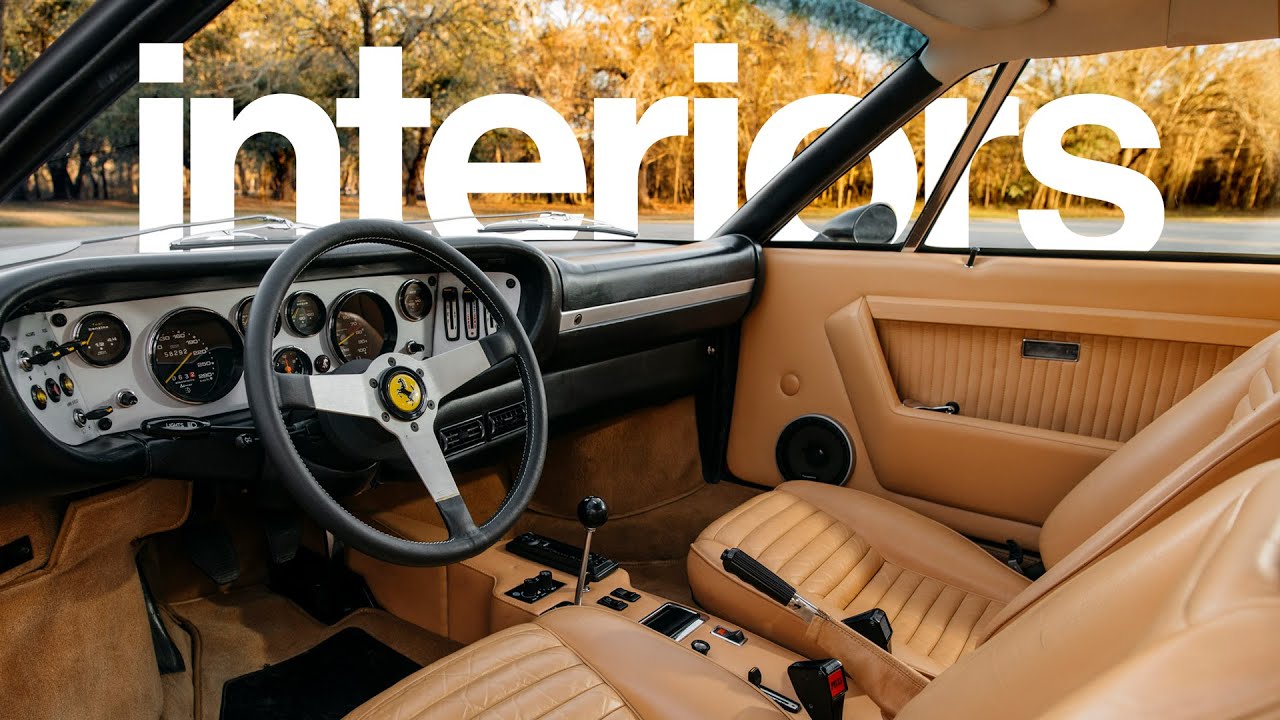
Car Interior Photography Tips

Kevin McCauley, a professional car photographer, published this video on his YouTube channel Capturing the Machine. In the clip, he talks about various things that one should keep in mind when doing car interior photography. For example, location, camera, background, etc.

Some of the car interior photography tips that McCauley shares include picking the best spot, no distractions in the background, no direct sunlight, etc. He also tells us about the different factors to keep in mind during car interior photography like door count, body style, interior colour, material usage, and so on.

So, whether you are trying to take pictures of your car’s interior for social media or trying to take up this as a hobby or passion or profession, do check out McCauley’s video to learn more.

Josef Koudelka: Next by Melissa Harris review – in praise of a wandering star

Josef Koudelka: Next by Melissa Harris review – in praise of a wandering star

In 2008, I spent a few days with Josef Koudelka in Prague, the city he had immortalised in photographs 40 years previously as Russian tanks rolled into its streets on the evening of 20 August 1968. He had only recently returned to his homeland, and was about to be belatedly honoured with an exhibition of his photographs from that pivotal moment, a mere fraction of the 5,000 he shot in the first week of the invasion.

It was the first time they had been shown there and, unsurprisingly, he was in a reflective mood. “For a long time no one here was interested in remembering,” he told me, “but now I think they start to remember again.”

For a long time, Koudelka, who is 85, also seemed to have little interest in remembering – at least publicly – the remarkable adventure of his own life as a photographer. Two years after the Russian invasion, he left Czechoslovakia and began an extended exile during which he became a nomad of sorts, travelling constantly. His vagabond life became the stuff of legend, particularly among his fellow members of the Magnum photo agency: Koudelka drank slivovitz (a fearsome Czech plum brandy) for breakfast; he slept beneath a desk in Magnum’s office in Paris, or on the floors of friends: he would suddenly disappear for months at a time with his sleeping bag and a rucksack containing a change of clothes, his camera and as many canisters of film as he could carry.

His close friend and fellow photographer Elliott Erwitt described Koudelka to me as “an eccentric, who thinks differently and sees the world differently”, before adding, revealingly, that he was an artist who was “utterly aware of his own legend and his legacy”.

Josef Koudelka taking photographs atop a Russian tank in Prague, August 1968

Melissa Harris’s visual biography, intriguingly titled Next, was written with his cooperation, and is a thorough and informative overview of his life and work. Rich in personal ephemera – family portraits, snapshots and glimpses of his many journals – it traces his trajectory from Boskovice, a small town in Moravia, where he had dreams of becoming an engineer, to his status as one of the world’s most revered photographers. Koudelka emerges as a fiercely single-minded individual, whose freedom is synonymous with constant movement. “Never stay for a long time in one place,” he wrote in a diary from the early 1970s. “When you stop somewhere… things start to stick. When you go from one place to another, you are cleaning yourself.”

Having fled his homeland, Koudelka seems to have instinctively known that he would never be at home elsewhere. The Roma people he lived among and photographed for his first great book, Gypsies (1975), called him the “romantico clandestino”. His relentless restlessness, which even they considered extreme, informed his choice of early subject matter: Gypsies was followed by another book titled Exiles. In both, his eye for haunting human tableaux and stark, unforgiving landscapes was acute, no more so than in his image Slovakia (Jarabina) (1963), in which a handcuffed young Romani man stands on a hill, with a gaggle of villagers and handful of policemen in the background.

Slovakia (Jarabina), 1963

When it was exhibited in a group show at the Museum of Modern Art in New York in 1973, the extended caption incorrectly described it as the moment in which the young man was being taken away to be executed for murder. In fact, Koudelka photographed him when he had been taken back to the scene of the crime by the local police, who were trying to accurately reconstruct the moment. When Koudelka returned to the Slovakian village more than 20 years later, he tells Harris, he somehow managed to track down the man and show him the photograph. “He looked at me,” Koudelka recalled. “He put his arms around me and with great happiness, he said: ‘It’s me! It’s me! It’s me!’”

That particular photograph, even more so than Koudelka’s other haunting images of isolated Roma communities, their rituals and celebrations, is complex in its atmospheric rendering of isolation and belonging. It exemplifies one of the underlying themes of Harris’s book, and of Koudelka’s classic photographs: the sense that, for all his lone wanderings, he is the very opposite of the detached observer. Instead, he is an image-maker whose identification with, and empathy for, his subjects underpins his immersive approach and produces photographs that often possess a kind of grainy romantic realism.

Harris also tracks Koudelka’s various romantic relationships, which were often intense and fleeting, and sketches his relationships with his three children, one of whom, Rebecca, he met for the first time in 2000, almost 30 years after she was born. The abiding sense is of a man whose dedication to his work, and innate wanderlust, precluded the possibility of long-term commitment. “No one can ever help you,” he wrote in one of his journals. “It’s you who has to help yourself.” Alone, and on the move, he seems to have experienced his most rewarding interactions and somehow formed his most enduring friendships. Not so much an eccentric, then, more, as Harris’s book attests, an enigma. His thousands of photographs, he tells her, are “proof that you were alive. That it was not just a dream.”

Tips given on how to become a great photographer

Tips given on how to become a great photographer
image

Clem Wehner will teach those interested in photography how to take extraordinary photos of ordinary things at the Jan. 11 meeting of the Wichita Wildlight Photographic Society.

Learn the step-by-step approach to taking photos that say “Wow!” Wehner will show 50 photo opportunities to capture subjects you may otherwise miss. See how experienced photographers made ordinary scenes into extraordinary photographs.

I can’t wait for Paris 2024 – I love Olympic years, what a time to be a photographer!

I can’t wait for Paris 2024 – I love Olympic years, what a time to be a photographer!

So 2024 is here, and I’ve been looking forward to it for a long time. Why have I been so excited, you may ask? It’s because 2024 is an Olympic year, which is always a big deal for the camera world, and for the wider technology world. Olympic and World Cup years tend to herald the largest leaps in camera specs and features, as well as screen technology, because the games are the perfect opportunity for brands to show off what their kit is capable of.

Some of the most significant camera releases in terms of pushing technological boundaries have been released in the run-up to – or in the year of – global sporting events, including: the Nikon D3 (2008); the Nikon D4 and the Canon EOS-1D X (2012); the Canon EOS-1D X II and the Nikon D5 (2016); the Canon EOS R (2018); the Fujifilm X-T4 (2020); and the Sony A1 (2021).

This year, the digital camera world welcomes the headline-grabbing Sony A9 III, the world’s first hybrid full-frame stacked CMOS camera (that’s a lot of qualifiers) to feature global shutter technology. But what is a global shutter, and why does Sony and its many fans believe that this development is a ‘game changer’? Will we see a trend of global shutter cameras coming in 2024 and beyond? Let’s take a quick scan ahead.

Global warming?

A global shutter sensor is capable of reading all the pixels in its array at the same time. This eliminates visual imperfections such as the rolling shutter or jello effect from video. It also prevents distortion, banding and LED / light flicker from ruining shots of fast-moving action, crucially helping to deliver better images while capturing sports events. 

This development going mainstream means flash sync speeds beyond anything that was previously capable; burst rates with full autofocus that defy logic; and no more pesky banding lines when you capture images indoors with flickering lights.

But global shutter technology isn’t new: many high-end cinema cameras use global shutters already. In fact, the first ‘global shutter’ sensors were introduced by Kodak in the Seventies; they were charged-couple device (CCD) sensors. Despite their technological advantages, CCD sensors struggled to compete with the more common CMOS sensors due to cost and availability.

In 2018, Panasonic announced the world’s first global shutter CMOS sensor. Its Organic-Photoconductive-Film (OPF) CMOS Image Sensor could deliver 8K resolution (36MP) with a maximum frame rate of 60fps and even had an electronically controlled variable ND-filter system. 

Mind blown? Well, it shouldn’t be. Many of the biggest developments in camera technology are many years in the making. The fact that we’re only seeing global shutter sensor technology coming to hybrid cameras like the Sony A9 III now is a sign that the benefits are starting to outweigh the trade-offs that have to be made to implement it. Some of these include cost, of course, but they also currently see a reduction in dynamic range and noise handling capabilities compared with CMOS sensors at this stage.

However, now that Sony has fired the starting gun and you’re aware that Panasonic is also developing the technology, it’s only a matter of time before global shutters become as ubiquitous as silent shutters have been over the past few years. I can’t wait for Paris 2024 – I love Olympic years, what a time to be a photographer!

Keep up with the Olympians with the best cameras for sports photography along with the best lenses for sports photography.

‘I can remember photographing Kylie but not what I did this morning’

‘I can remember photographing Kylie but not what I did this morning’

By Vanessa PearceBBC News, West Midlands

imageJason Scott Tilley Pop star PrinceJason Scott Tilley
Jason Scott Tilley photographed Prince and other celebrities

A celebrated photographer has used his own archive to help preserve past memories and create future ones following a diagnosis of dementia.

Using his images as prompts, Jason Scott Tilley can vividly recall details of covering local and international news stories, as well as capturing celebrities and trips to India exploring his Anglo-Indian heritage.

But, he says he struggles to remember what he has done that morning.

At Christmas in 2020, the 55-year-old suffered a series of mini strokes, which had an impact on his short term memory.

imageJason Scott Tilley Girl with camelJason Scott Tilley
The photographer’s collection includes portraits of people he encountered on trips to India

“I had two TIAs – transient ischaemic attacks – and have been diagnosed with vascular dementia,” he said.

“My friends all take the mickey,” he joked. “They say, ‘That’s the name of one thing you can always remember'”.

imageJason Scott Tilley Kylie MinogueJason Scott Tilley
The photographer remembers photographing Kylie Minogue, but struggles with new memories

Some basic tasks became more difficult after the strokes. He explained: “I just had to call home to ask my mum if I’d taken my tablets today.”

He described feeling “terrified” about losing the ability to develop photographs, but added that with support he has started exploring the practice again.

imageJason Scott Tilley ProtesterJason Scott Tilley
He captured animal rights protesters campaigning in Baginton, Warwickshire

Arts Council England (ACE) funding has enabled him to put his archive in order, using the photographs to “help build new memories,” said friend and collaborator Dr Ben Kyneswood.

The project, with Coventry organisation Art Riot Collective (ARC), will also see him collaborate with eight other neurodiverse artists – who will respond to his photographs resulting in associated exhibitions next year.

The commission was “really important” added Mr Tilley. “It’s something I really needed to do after the diagnosis”.

The artist, whose work has been exhibited in the city, with some preserved in the Coventry and Birmingham archives, said he had been inspired to take up photography by his grandfather, Bert Scott.

Mr Scott worked for the Times of India throughout the 1930s and 40s, documenting the country as the British government devolved power resulting in partition, in 1947.

On 14 August that year, he was in place to capture an image of the moment Lord and Lady Mountbatten walked down the steps in New Delhi, ceremonially leaving India and signalling the end of the British Empire, Mr Tilley explained.

imageBert Scott/Bombay Times of India Bert ScottBert Scott/Bombay Times of India
Bert Scott worked as a photographer at the Times of India before fleeing to Coventry during partition

Mr Scott and his wife Dolly were forced to flee the country in the wake of partition, along with their two daughters, eventually settling in Coventry.

“I grew up looking towards my grandpa’s photographic albums when I was really young and that’s what inspired me to make photographic memories for the future,” Mr Tilley said.

The photographer learned his trade firstly on a Youth Training Scheme (YTS), before he moved on to work with local newspapers the Coventry Citizen and Coventry Evening Telegraph.

imageGetty Images Elton JohnGetty Images
Elton John is pictured at the National Exhibition Centre in Birmingham, in 1989

He went on to work for national media outlets, often photographing visiting bands and celebrities.

“I remember photographing Elton John on his 50th birthday, as well as Prince and James Brown,” he said.

“I can remember Kylie at a hotel in Birmingham, but I sometimes don’t remember 30 seconds ago,” added Mr Tilley.

“I also photographed Desmond Dekker for an album cover with The Specials, and another cover for The Selecter”.

imageJascon Scott Tilley Desmond Dekker and The SpecialsJascon Scott Tilley
An image of Desmond Dekker and The Specials was used as an album cover

He was also one of the first photographers to capture images of children found dumped in Romanian orphanages and hospitals, following the fall of the country’s communist leader Nicolai Ceausescu.

“That was really horrible,” he explained. “Not all the memories I’ve retained are good ones.”

He has been helped to produce a timeline of his most prominent memories by Kyla Craig, director of ARC, an organisation that works to support disabled and neurodiverse artists.

Recall was easy with Mr Tilley’s memories from long ago, she explained. “Whereas, we have to do more shoring up of new things and new information.”

“We have done our most to make sure that those new memories are reinforced, and what should happen over time is they become embedded,” she added.

imageJason Scott Tilley RebeccaJason Scott Tilley
The photographer captured images of local residents as part of the Imagine Hillfields project for Photo Miners

Dr Kyneswood, of Coventry University, and Mr Tilley’s collaborator in Community Interest Company Photo Miners, helped enable the funding of the project.

He said Mr Tilley had taken some “valuable” documentary photographs, which are also being digitised and uploaded onto the university’s Coventry Digital site.

imageBBC Jason Scott TilleyBBC
Through working on the project, Mr Tilley has been able to “get a bit of his swagger back”, Dr Ben Kyneswood said

The project enabled the photographer to “get a bit of his swagger back, a bit of his artistic self-importance, which is nice to see,” Dr Kyneswood said.

He added he hoped the project could be part of a movement for “marginalised artists like Jason”, who often “stayed quiet, because the opportunities aren’t there”.

ACE said it is trying to create opportunities for disabled and neurodiverse artists through its Let’s Create programme, supporting organisations like Art Riot Collective.

All images are subject to copyright.

imagePresentational grey line

Follow BBC West Midlands on Facebook, X and Instagram. Send your story ideas to: newsonline.westmidlands@bbc.co.uk


Copyright 2024 BBC. All rights reserved.  The BBC is not responsible for the content of external sites. Read about our approach to external linking.

Beta Terms By using the Beta Site, you agree that such use is at your own risk and you know that the Beta Site may include known or unknown bugs or errors, that we have no obligation to make this Beta Site available with or without charge for any period of time, nor to make it available at all, and that nothing in these Beta Terms or your use of the Beta Site creates any employment relationship between you and us. The Beta Site is provided on an “as is” and “as available” basis and we make no warranty to you of any kind, express or implied.

In case of conflict between these Beta Terms and the BBC Terms of Use these Beta Terms shall prevail.





