Western Acoustic Speakers Turn Up the Volume on Sonic Simplicity

Western Acoustic Speakers Turn Up the Volume on Sonic Simplicity

A decade ago the end of the home stereo seemed all but final. Streaming audio, mobile devices, and headphones as functional fashion unplugged most of us from the dedicated audio system, allowing us to listen to music anywhere and at any time. Then like any trend, a counter-movement emerged – vinyl began satiating a desire for the tactile and analog. Audio speakers from the likes of Devon Turnbull and his company OJAS became highly sought design objects as much as audio components. More recently, listening events have emerged as intimate social gatherings devoted to the ritual of music. Consider small San Francisco audio upstart Western Acoustics reflective of this emerging new generation of audiophiles collecting and coveting gear transcending mere sound.

First thing you’ll notice is the sculptural organic design of Western Acoustic speakers. Characterized by its custom horn-machined solid wood construction and customizable graphic grille, you’d be forgiven for imagining the speaker’s spherical wave horn as a plain bagel – albeit, one beautifully carved into a gently smooth shape paired with a Purifi USHINDI-series ultra-low distortion transducer 6.5” woofer.

Detail of the metal Western Acoustics metal emblem adorning the Type 2 bookshelf speakers with a 2-tone speaker.

With a catalog comprising just two models, both the brand’s Type 1 and Type 2 speakers are actively powered, meaning neither requires the aid of a separate amplifier for playback. Connect a turntable and you’re ready to spin.

At a 16.5″ h x 10.5″ w x 13.5″ d size, the speakers allow for a wide range of placement, whether it be across a surface or on stands. But don’t let the dimensions deceive you, as Western Acoustics has engineered a speaker system with a 350-watt (RMS) Hypex 123 DSP plate amp within each speaker, powerful enough to perform in both residential and retail environments.

Young man with bowl cut in armchair and young woman with short blond hair laughing holding cocktail seated on ground listening to music from a turntable and two bookshelf speakers.

Representative of its boutique nature, the speakers can be customized with an assortment of woods, finishes, and grille cloth options to complement whatever environment they’re intended to inhabit.

Western Acoustics Type 2 bookshelf speakers with blonde wood cabinet construction and red acoustic speaker cloth grilles.

Specs include an operating range of 32Hz-18KHz and nominal impedance of 6 ohms.

Western Acoustics Type 2 bookshelf speaker with blonde wood cabinet construction and red acoustic speaker cloth grille.

Those seeking to add a pair of Type 2 active speakers will need to reach out here as each set is made to order. Just be ready to part with $4,000/pair.

Gregory Han is a Senior Editor at Design Milk. A Los Angeles native with a profound love and curiosity for design, hiking, tide pools, and road trips, a selection of his adventures and musings can be found at gregoryhan.com.

Famed Photographer Shows How Easy it is to Recreate His Photos With AI

Famed Photographer Shows How Easy it is to Recreate His Photos With AI
Real photos versus AI image
Tim Flach’s photo of a snow leopard, left, and the AI version he recreated, right, by inputting his own name into Midjourney.

A photographer whose name was found on a list of artists whose style the AI image generator Midjourney wanted to emulate tells PetaPixel that “creatives must be remunerated.”

Tim Flach, known for his exquisite photos of animals that look like humans, says that he wasn’t surprised when his name was on the list becacuse he has already been recreating his own photos using Midjourney.

The British photographer shared two of his photos with PetaPixel which he created AI versions of by inputting his own name as a prompt. The results speak for themselves.

Tim Flach photography recreated with AI

AI image of eagle

Opt In, Not Opt Out

Flach feels strongly that when it comes to training datasets for AI programs, photographers should be able to “opt in”, rather than the current “opt out” state of affairs.

“I think we should demand from governments a clear ‘opt-in’ and not an ‘opt-out’ situation,” Flach tells PetaPixel.

He likens it to an editor running a photograph in a magazine, “You don’t go and run something in an article without checking with the photographer first and say ‘Well, you can now opt out’.”

Flach says that for some of his projects, he has spent hundreds of thousands of dollars and insists creatives should be remunerated when their work is ingested by an AI program.

“The fact is, if you are impersonating the style of artists, what does it leave when that technology gets a thousand times more powerful?” He says.

“It does create a challenge, I think, for many people’s livelihood. The data sets are being trained on our images. Without these images, it wouldn’t function so effectively.

“And the irony is, many of the artists who’s been scraped will be paying subscription fees back to Midjourney who have investments and profit that runs into billions, one assumes.”

Midjourney could be valued as much as $10 billion after it reportedly generated $200 million in revenue last year despite being a small team of just 40 employees.

Recreating His Own Photos With Midjourney

Flach, whose magnificent photos emphasize animals’ characters and personalities, has been recreating his photos on Midjourney and finds it remarkably easy to generate images in his unique style.

AI image of snow leopard and prompt
The prompt, left, and the resulting AI image, right. Midjourney has since released an even newer model, v6.

“My style is quite distinctive,” he says. “I did a book on birds that came out in 2021, and you can literally ask the system to do a bird in my style and it picks a particular bird that was in the book and is incredibly close.

“And it always has the black background; it’s looking straight at the viewer. All these factors, you’re not asking it to do anything other than produce an eagle in my style.

“The fact that without our images they would have no capacity at all, I think that’s very hard to grasp. And when it comes to style, the fact you can actually ask it to describe a style by a particular photographer — it seems extraordinary.

“I don’t look at it as today. I look at it as what would happen in five years’ time because effectively it’ll be a thousand times more powerful according to the speed at which generative AI is improving by.

“Essentially, we’re putting a lot of resources into generating content that is being ingested and spat back out again.”

He calls this process image laundering or data laundering. Recently, a database of some 16,000 names of artists kept by Midjourney whose style the AI image generator allegedly wanted to copy was released as part of a lawsuit amendment to a class-action complaint brought by three artists suing Midjourney and Stable Diffusion.

The huge list includes thousands of artists’ names; among them are scores of photographers — both living and dead — whose styles Midjourney apparently wanted to copy so that users of its AI image generator could make AI pictures in the style of that photographer.

The case is ongoing and Midjourney has not commented.

You can find more of Flach’s work on his website and Instagram.


Image credits: Photographs by Tim Flach

Bird photography exhibition at SVU attracts students, displays over 200 species

Bird photography exhibition at SVU attracts students, displays over 200 species

The awe-inspiring photographs of rare birds captivated visitors at the bird photography exhibition arranged by the Zoology Department of Sri Venkateswara University (SVU) on Wednesday. Titled ‘Capturing Feathered Wonders’, the exhibition aimed to showcase the diverse avian species through the lens of talented photographers to students.

Over 200 bird species were displayed at the exhibition, inaugurated by SVU vice-chancellor V. Srikanth Reddy, in the presence of registrar O.Md. Hussain, SVU College of Sciences principal Ramakrishna Reddy and zoology head S. Kishore.

“The collection included a variety of species, vibrant nesting habits, roosting and brooding pictures, thus offering a holistic window into the avian ecosystem to the visitors,” said M. Rajasekhar, professor and wildlife researcher in zoology, who organised the event.

The students browsed through the gallery and learnt about the ecological roles, behaviour and conservation status of the birds; some expressed interest in wildlife photography, especially in ornithology, while some interacted with the experts to learn the significance of avifauna.

Among the photographers whose work was displayed was V. Kiran Kumar, a Deputy Inspector-General in the Department of Registration and Stamps. Passionate about wildlife photography as a hobby, he toured the State, especially the Pulicat and Kolleru lake areas, to capture hundreds of images.

‘Messengers’ explores photography as communication

‘Messengers’ explores photography as communication

Tarrah Krajnak 

A multidisciplinary artist working across photography, performance, and poetry, Krajnak focuses on the craft and material process of photography, printing all her own photographs. She uses analog cameras as a tool to examine ties between her body; her birthplace of Lima, Peru; and the invisible histories of both. Krajnak’s life experiences as an Indigenous transracial adoptee connect with much broader systems of socioeconomic inequality, corruption, and instability, and she employs her own transracial body, performing archival interventions to make visible marginalized histories and bodies hidden in the archive. “Messengers” features three series of works from Krajnak – “Black Messengers,” “Automatic Rocks/Excavation,” and “Master Rituals II: Weston’s Nudes.” 

Rodrigo Valenzuela 

Valenzuela’s work traverses photography, video, and installation, merging his interest in art history, architecture, the concept of work, and the realities of laborers. Valenzuela builds scenes in his studio, often working with simple building materials, and his compositions resemble miniature ruins built from studio detritus. The resulting monochrome photographs constantly shift between flatness and architectural space and between documentary photography and fiction. This exhibition features his newest series, “Garabatos,” which depicts his tableaux of wood and plaster sculptures painted white. Each image is meant to evoke figurative gestures of insults from varying nationalities, i.e. “flipping the bird.” Valenzuela is interested in abstract gestures that are part of the collective lexicon, a desperate attempt to communicate. 

Messengers” will be on view from Thursday, Feb. 1, through Saturday, April 20.

Visiting the galleries

Located at 190 Alumni Mall, the Moss Arts Center’s galleries are open on Tuesday-Friday, 10 a.m.–5 p.m., and Saturday, 10 a.m.–4 p.m. The center offers many opportunities for students, faculty, and community members to engage with artists and their work. To arrange a group tour of the galleries, contact Laura Higgins.

Parking is available in the North End Parking Garage on Turner Street. When not staffed for a special event, visitors may park in the garage by taking a ticket at entry and paying with Visa or Mastercard upon exit. Find more parking details online.

If you are an individual with a disability and desire an accommodation, please contact Jamie Wiggert at least 10 days prior to the event at 540-231-5300 or email wiggertj@vt.edu during regular business hours. 

Oriane Zerah’s Photographs of Afghan Floral Beauty

Oriane Zerah’s Photographs of Afghan Floral Beauty

Even in the midst of conflict and hardship, there still exists a charming beauty that often goes unnoticed by the ordinary eye. And this beauty is what French photographer Oriane Zerah has embarked on showcasing, in a remarkable expedition throughout Afghanistan. In this country often plagued by conflict, she captures floral grandeur in the middle of the crises that its people face. 

Oriane’s evocative photographs showcase a different side of Afghanistan. They reveal the resilience and beauty that coexist with the harsh realities of war and stereotypes. Through her lens, she strives to challenge prejudiced thinking about the country and offers a fresh perspective on a nation often defined by conflict. 

The Floral Photography of Oriane Zerah

A self-trained in photography and an enthusiast of traveling, Oriane has always been fascinated by the interest that Afghan people have in flowers. The photographer, who, for years, spent her time capturing the beauty of flowers in the often volatile Afghanistan notes that despite the not-so-peaceable conditions that the country often finds itself in, its people still showcase an admiration for floral beauty.

Oriane Zerah’s Photography Captures Afghanistan’s Floral Beauty
An Afghan child with pink poppy flowers.

In a series of floral snapshots that she has taken in a photography project named Afghanistan: Roses under Thorns, Oriane documents the daily lifestyles of Afghans detailing how the people perceive flowers and how they hold them in great reverence. 

The Inspiration Behind the Project and Its Metaphoric Impression

Oriane’s fascination with Afghanistan began long before she even set foot in the country. Drawn to the rich cultural heritage and intrigued by the juxtaposition of floral beauty and conflict, she felt compelled to challenge the prevailing stereotypes and shed light on the untold stories of its people. Her project, titled ‘Afghanistan: Roses under the Thorns’, showcases the deep respect and admiration that she has for the Afghan people and their enduring spirit.

Oriane Zerah’s Photography Captures Afghanistan’s Floral Beauty
Afghan man with roses in Oriane Zerah’s photography

Flowers have always held a special place in human culture, often symbolizing elements like love, beauty, and hope. In Oriane’s project, the flowers are, in ways, metaphors for resilience and defiance demonstrated by the Afghans. In her capturing of Afghan men adorned with flowers, she defies conventional notions of masculinity and confronts the stereotype of the Afghan warrior. 

In a society deeply affected by war and violence, she says the sight of men proudly wearing or holding flowers confronts expectations and accentuates the universal human need for delicate beauty, even in the harshest circumstances.

Oriane Zerah’s Photography Captures Afghanistan’s Floral Beauty
Happy Afghan children with a bunch of flowers in Oriane’s photography.

Oriane Zerah:

“I’ve been very lucky to do this project because it’s quite a privilege to show the beauty of flowers in Afghanistan, and to share it. People there have always been so happy about my photography. The media hardly talks about the country positively. Whoever talks about this country is always portraying it in negative terms.

Afghanistan has so much to offer but what we see or read isn’t always the reality. So, people here are actually appreciating me. I’ve never had any bad experience whenever I took a photo of an Afghan with flowers. And surprisingly, even after the takeover by the Taliban, there were some soldiers on the streets with flowers on their weapons, and they were happy to pose for me. I took photos of them with their weapons adorned with flowers.” 

Oriane Zerah’s Photography Captures Afghanistan’s Floral Beauty
Afghan children in a field of poppy flowers in Oriane’s photography.

Essentially, the Kabul-based French photographer’s pictures offer a new perspective on Afghanistan, depicting the inherent dignity and grace of its people. Be it men wearing flowers on their traditional hats or soldiers juxtaposing rifles and other weapons and blossoms, Oriane’s images speak volumes about the complex realities of life in the country. 

Her lens captures the often too-fragile balance between hope and despair during war and showcases the resilience and determination of the Afghans amid these situations.

Oriane Zerah’s Photography Captures Afghanistan’s Floral Beauty
Little girl with rose petals used for making essential oils.

The Afghan Allure

Her photography project, Oriane says, is a means to positively talk about Afghanistan, a country she says she deeply fell in love with ever since she first visited in 2012, and lived there till 2015 before leaving then going back to settle down in 2019.

Oriane Zerah’s Photography Captures Afghanistan’s Floral Beauty
Afghan men pose with flowers in Oriane’s photographs.

Oriane:

“It’s been twelve years that I’ve been in Afghanistan. It was, therefore, important for me to show another aspect of the country, because whenever anyone talks about Afghanistan, it’s always about tragedies and wars, which of course, was a reality. The country has been at war for more than forty years. But there’s always a different side to a story. And I wanted to show this other side.

Any foreigner who goes to Afghanistan and anyone who’s been there will notice this love that afghan people have for flowers. I believe that the more there’s violence in a place, the more the need for beauty. And flowers are like the beauty within. You don’t need to be rich or have money to have flowers. Anyone can grow them even in the smallest space they have. That’s what Afghans do.”

Oriane Zerah’s Photography Captures Afghanistan’s Floral Beauty
Afghan man poses next to roses in Oriane’s photographs

Afghanistan, she says, is a land of many contrasts, which, however, add to the richness of the floral beauty that the country possesses. It is, for instance, much easier for Afghan men to pose with flowers than it is for women. Women, Oriane says, hardly accept to pose. Though they sometimes do, it is rare. But men, on the other hand, easily accept; they take photographs outside and in public places. Women who accept to have their photographs taken usually do so inside their homes. 

That notion, she says, she found quite fascinating because the impression it portrayed was contrary to traditional beliefs that often associated Afghan men more with Kalashnikovs than with roses. 

Oriane Zerah’s Photography Captures Afghanistan’s Floral Beauty
Afghanistan floral photography of a smiling man next to a pink flowering rose plant.

She adds:

“Every place in Afghanistan is very scenic but it all depends. For some photography, I would just be walking through the city with a bunch of flowers, and if I see an interesting face with an interesting background, I would just ask the people to pose for me with the flowers. I would also ask them what flowers represent in their lives. And every so often I noticed this little moment; whenever you give a flower to someone and they hold it, it was enough to make them open up.” 


Oriane Zerah’s Photography Captures Afghanistan’s Floral Beauty
An Afghan man in a flower garden he created himself.


Breaking Stereotypes With Flowers

As previously noted, one of the main inspirations behind Oriane’s flower photography project is to challenge stereotypes and misconceptions about Afghan society. Afghanistan is often portrayed in the media as a war-ravaged nation, overshadowing its rich floral and cultural heritage and the daily lives of its people.

Oriane Zerah’s Photography Captures Afghanistan’s Floral Beauty
An Afghan girl with flowers (left) and (right) Oriane Zerah with her book.

Focusing on the beauty of flowers and the individuals who proudly embrace them, therefore, inspires anyone else to question their preconceived notions of the country and see beyond the stereotypes.

And through her photography, Oriane has managed to significantly achieve this feat, and in turn gain widespread acclaim for the photographs’ ability to arouse emotions. Her exhibitions have, equally, provided a platform for dialogues and understanding of the Afghan people on a much deeper level. 

Oriane Zerah’s Photography Captures Afghanistan’s Floral Beauty
Two Afghan girls smell the scent of a rose

Appreciating the universal language of flowers and floral beauty, her works basically use these elements to foster empathy and human connection; a pointer to the humanity that exists beneath the surface. Additionally, through her photographs, she showcases, not just floral beauty, but also the strength that coexists with the challenges faced by the country and its people.

You can also read about gardening and the tranquility that it brings even amid wars and chaos.

All photos by Oriane Zerah (@oriane_zerah_photo)

A week spent not taking a photo of Steve Jobs for Apple …

A week spent not taking a photo of Steve Jobs for Apple …

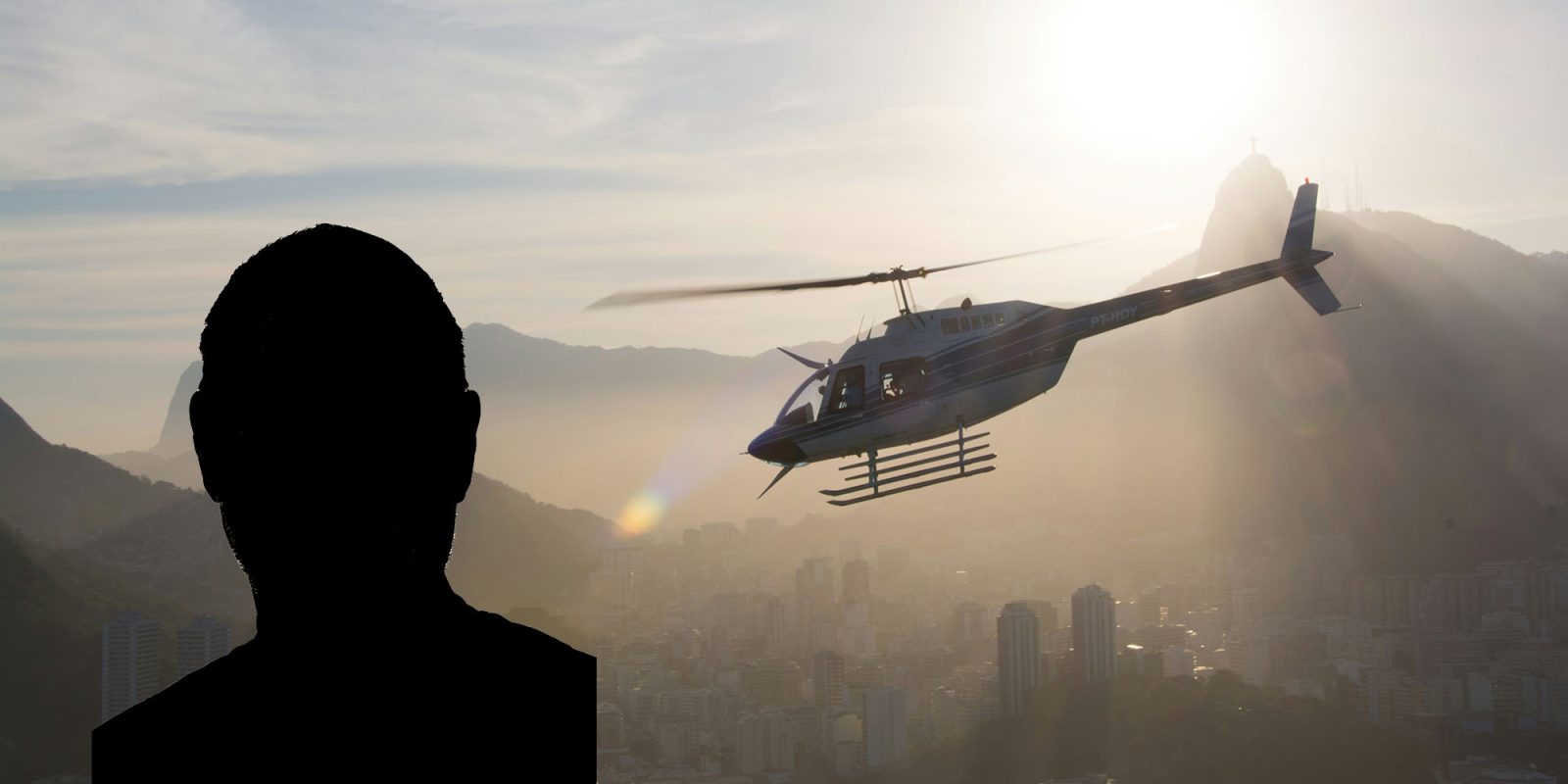
Apple co-founder Steve Jobs was infamous for his lack of patience with photoshoots, and another 40th anniversary of the Mac piece includes a story of how Apple hired a photographer for a week, flew him to Sweden, hired a helicopter – but he still didn’t get the photo because Steve changed his mind …

The Macworld piece starts with a shot photographer Will Mosgrove did manage to get: a photo of Steve with the original Macintosh, for the cover of the magazine.

He said that one wasn’t easy, but Steve at least gave them enough time to take it.

We did a couple of quick Polaroids and make sure everything was looking good, lighting-wise. Shot about five minutes or so, and he said, are we done? And I said, we can be, I’d like to try a couple of different things. And he said, well, I’d like to try something, too. 

So, he started making this really kind of interesting, zany kind of symbols with his hands, and I kind of looked over to the people from Macworld and they were just kind of shaking their heads–don’t worry, we’re not going to use those. [Laughs.] We played along with it and shot some film, and it was literally over in probably 15 to 20 minutes.

But the funnier story is when Apple commissioned him to take a promo photo of Steve, went to a huge amount of trouble to set it up – but when they were actually in the helicopter, Steve decided he didn’t want any photos.

There was a university consortium going on, and at the end of this–it was in Lund, Sweden–Steve was going to fly in from Stockholm, and they wanted a photograph of him coming into this castle location, showing the landscape in the background, looking down at the castle, saying he’s going to this consortium of Macintosh users to kind of give him a look like a world leader. Here he is in a European country coming down to talk to university people […]

They said, okay, Steve’s flying in from Stockholm. Let’s go to the airport so you get a helicopter there. We’d like him to be looking out the window. If you can get the castle in the background, the beautiful landscape. I said, sure, let’s go […]

So, we take off, we get about an eight-minute ride to this, this dinner at the castle to close off the consortium. 

And as I’m getting my camera out and ready to go, he said, you know, I don’t think I want any pictures. And I said, well, okay, you know, they flew me from California to Sweden to get this shot and you know, I’m here and I’m ready to do it. Can we just think about this? 

He kind of grunted and I was looking through the camera again doing this. He goes, I don’t think I really want any photographs.

I said, well how about if we take some photographs and you take a look at them? If you don’t want to use them that’s fine with me, but you know, Tom Hughes (who was the artistic director) said can you get this shot, and I said, yeah, and I need to come back with something. And he goes, I don’t want any photographs. 

There’s about 30 seconds of awkward silence. And, you know, I kind of was playing, I start picking up one more time. He goes, no fucking photos. So I went, okay, put the camera away. And his aide was kind of saying, you know, don’t, that’s it. We’re done. 

Fortunately, Hughes heard about it, and laughed it off.

FTC: We use income earning auto affiliate links. More.

Travel the Mediterranean via Cassina’s 2024 Outdoor Collection

Travel the Mediterranean via Cassina’s 2024 Outdoor Collection

Outdoor living, it’s as flexible as it’s ever been and we love extending our creature comforts from the inside out. Cassina’s 2024 Outdoor Collection continues the brand’s quest to characterize outdoor spaces – from gardens to poolsides – with a variety of styles. Their latest offering combines innovative products and design classics to furnish your outdoor spaces with pieces by designers Antonio Citterio, Rodolfo Dordoni, Piero Lissoni, Patricia Urquiola, Gerrit T. Rietveld, Le Corbusier, Pierre Jeanneret, and Charlotte Perriand.

Cassina’s Outdoor Collection has been specifically designed for open-air use, making certain that durability, aesthetics, and daily life are prioritized by the series. Drawing inspiration from the Mediterranean landscapes, each piece hopes to create an interaction between human and nature through comfort, function, and versatility. The new textured fabrics and vibrant colors used throughout were inspired by the azure sea, shaded gardens, and the warmth of terracotta on an afternoon.

Antonio Citterio’s timeless Ecosoft design is welcomed outdoors as a complete system, comprising a two- and three-seater sofa and end element, a love-bed, an armchair, and a series of low tables. With visual and textural contrast to spare, what really shines is the weaving that reinterprets Citterio’s indoor pieces into furniture that feels at home outside with the bonus of circular design.

A metal frame supports a shell of hand-woven fiber that’s durable, resistant to scratches, heat, and UV rays, and easy to clean. It can then be completely disassembled at the end of the product’s life and recycled.

The Ecosoft system is rounded out with a series of low tables. Each features a solid Iroko wood slatted top to add warmth and ambiance.

modern cushioned outdoor seating

outdoor dining room

Patricia Urquiola’s Trampoline Table and Trampoline Chair are playful, with rounded contours that are ready to fit in with a variety of outdoor settings.

The Trampoline Table features a modern architectural aesthetic, with a base that twists and turns in an interlocking of elements, supporting a rectangular or square tabletop. There’s a nice contrast in materials between the two elements, as the table’s base can be paired with a concrete top in the same color for a monochromatic look or with a marble top for a more dynamic look.

The Trampoline Chair’s shapes can be traced to Mediterranean landscapes. Its unique structure features two removable cushions for the seat and backrest made using soft padding that’s protected by water-repellent fabric, and made of recycled PET fiber wadding and polyurethane foam. The chair is available in two versions: the first with the backrest in hand-woven polypropylene and nylon cord, the second with an exposed metal structure.

outdoor dining room

outdoor dining room

two blue floral patterned outdoor armchairs and green ottoman

Dutch architect Gerrit Thomas Rietveld’s iconic Utrecht armchair, named after his hometown, goes outdoors with the new Utrecht XL Outdoor. The reinterpreted version is the same as the original, structurally and aesthetically speaking, with the XL version offering a larger seat.

Rietveld liked to rethink design with an eye toward wider distribution, with the original model giving shape to the neo-plastic movement. The Utrecht XL Outdoor is imbued with De Stijl movement references and a respect for the designer’s legacy.

The Utrecht XL Outdoor’s soft padding, in recycled PET wadding, is protected by a water-repellent canvas that covers the inner metal structure and the okoumè wood armrests to prevent moisture from permeating the armchair. It’s available in new textures and patterns, with an option of a Favignana fabric version.

blue floral patterned outdoor armchair

outdoor sofa and armchair

plush outdoor loungers

With three different-sized bases, the Mex-Hi Outdoor modular sofa system bends to your needs. Designed by Piero Lissoni, the system also includes a larger three-seater sofa that can be used independently or paired with a daybed. A blend of new materials and finishes specifically chosen for exterior use highlight the seating’s ample forms.

The Mex-Hi Outdoor collection also includes three metal framed, free-standing side tables. Opt for an ivory glazed porcelain stoneware surface or slatted solid Iroko wood top to form a functional coffee table. In addition, you can also choose to place a cushion on top to transform it into an extra seat.

plush outdoor sofa and low table

outdoor sectional sofa, coffee table, and two armchairs

outdoor daybed

Rodolfo Dordoni has added three new products to his Sail Out, Lie Out outdoor collection, including a 66cm high table that embraces informal dining. It’s smaller than the original table in the collection, making it ideal for a terrace or poolside. It can be paired with small armchairs and poufs – also part of the Dine Out collection – to create a focal point. Its sculptural silhouette is emphasized by the available finishes: a single-material version in natural concrete, colorful variations in yellow-white or green-white terrazzo, or a natural teak top paired with the concrete base.

The stackable Lie Out sunbed welcomes you to relax for a spell with its three different angles of inclination. Solid teak slats accommodate a generously-sized mattress. And thanks to two back wheels, it can be easily moved toward what you’re seeking – sun or shade.

Adding to the collection further are the Sail Out poufs, available in two sizes with different diameters and heights. Easily moveable and combined into groups, each versatile pouf is framed by a ton-sur-ton or contrasting gros-grain piping that’s available in a range of colors.

outdoor daybeds

A celebration of design itself, the 3 Fauteuil Grand Confort, méridienne, Outdoor features outdoor versions of the models in the Le Corbusier®, Pierre Jeanneret®, Charlotte Perriand® Collection that have been developed aside the Fondation Le Corbusier, Pernette Perriand-Barsac, and the heirs of Pierre Jeanneret in respect of the original models.

The 3 Fauteuil Grand Confort, méridienne, Outdoor aims to create atmospheres that celebrate design through these masterpieces. Each piece includes the logo and signature of the designers as well as its production number engraved on the metal structure, corresponding to its identity card.

To learn more about Cassina’s 2024 Outdoor Collection, visit  cassina.com.

Photography by Francesco Dolfo.

Kelly Beall is Director of Branded Content at Design Milk. The Pittsburgh-based writer and designer has had a deep love of art and design for as long as she can remember, from Fashion Plates to MoMA and far beyond. When not searching out the visual arts, she’s likely sharing her favorite finds with others. Kelly can also be found tracking down new music, teaching herself to play the ukulele, or on the couch with her three pets – Bebe, Rainey, and Remy. Find her @designcrush on social.

Windsor photographer braves icy cold to capture Lake Erie ‘volcanoes’

Windsor photographer braves icy cold to capture Lake Erie ‘volcanoes’

Article content

Be prepared, dress warm — and let your friends deal with the flying ice.

These are a few of the vital life lessons Gerry Kaiser has learned over years of taking photos in icy, desolate, and dangerous places.

Article content

While most people hunkered down last week to avoid winter’s bitter-cold mid-January assault, Kaiser was perched at the frozen, wind-hammered tip of Point Pelee, photographing ice volcanoes and acquiring another case of frostbite.

Advertisement 2

Story continues below

This advertisement has not loaded yet, but your article continues below.

Article content

At least he didn’t break his arm again.

“These kinds of things, you’ve always got to watch out for, especially if you’re going out on ice,” said Kaiser, 60, a Windsor photographer and retired autoworker.

“Ice is pretty dangerous, you know, and really bad weather conditions. But at the same time, that’s the kind of stuff I love.

“It makes life worth living. Because most of the time we’re stuck in this sedentary environment. We’re driving around and sitting around. It’s basically boring as far as I’m concerned.

“I like a little bit of adventure.”

ice
An ice volcano erupts at the frozen tip of Point Pelee during last week’s bitterly cold weather. Photo by Photo courtesy Gerry Kaiser /Windsor Star

One of the best places to see ice volcanoes, also known as ice shelves, are the northern shorelines of Lake Erie and Lake Ontario. But watch from a distance.

While ice volcanoes can make for some dramatic photos, they are extremely dangerous. It can be easy to get stuck in one. The ice shelves can also be unstable and even hollow underneath.

Experts warn that you should always watch ice volcanoes from far away, and definitely stay on shore.

The stunning formations appear when powerful winds hurl water against the shoreline, where it freezes on impact. The process repeats itself, and a shelf builds up, layer by layer. Waves rush under the shelf and shoot up through any cracks or holes.

Advertisement 3

Story continues below

This advertisement has not loaded yet, but your article continues below.

Article content

“The waves would hit the hollowed-out sections,” said Kaiser. “They would hit, and chunks of rocks, sand, big chunks of ice, would just fly up and then fly in the air because the wind was blowing pretty good.”

If conditions are right, ice volcanoes can form in a matter of hours. Kaiser experienced this first hand.

Lured by the plummeting temperature, the prospect of adventure, and the chance for some good photos, he took a trip to Point Pelee early last week.

ice
Not an eerie Arctic landscape in Canada’s north, but rather the frigid terrain of Point Pelee during last week’s blast of winter that hit southwestern Ontario. Photo by Photo courtesy Gerry Kaiser /Windsor Star

“There were no ice volcanoes or anything,” said Kaiser. “All that was going on at the tip were super-high winds, very cold temps, and ice balls were forming.

“The wind was blowing basically from the west, so the ice balls were forming along the beach. And more formed on the water and they would roll up on the beach and they’d roll back with the waves and get bigger and bigger.”

Unable to stay away, he ventured out again the following day.

“We don’t get much winter anymore and when we actually do get winter, it’s very short-lived” said Kaiser. “So you gotta get out there as much as you can.”

By the time he returned, the ice volcanoes had stretched 12 feet into the frosty air.

Advertisement 4

Story continues below

This advertisement has not loaded yet, but your article continues below.

Article content

“Basically, all the round ice pieces started to weld together along the beach,” said Kaiser. “Then, as more and more waves hit, they’d get taller and taller.”

For perspective on their size, he had a friend stand near the volcanoes while he took photos.

“I didn’t realize she was going to get hit by the wave,” said Kaiser, not even trying to stifle his laughter.

“She was standing a good 30 feet back. You could see the eruptions and then all of a sudden you could see her covering her head and running in the opposite direction. I thought it was pretty funny.

“She was covered in ice. She had goggles on and what happened was the goggles were frozen to her hair. It was pretty amazing.”

Kaiser also didn’t escape unscathed. He woke up the next day to realize he had frostbite, again.

“I’m susceptible to that because I got it a few years back,” he said. “So I always protect against it.”

But his glasses kept fogging up.

“I had to keep pulling my mask down and taking the ice off my glasses,” said Kaiser. “I didn’t realize until the next day I got frostbite again. Like frost nip on my nose.

“It’s still got like a crusty chunk. So I’m still looking for a good solution for that.”

Advertisement 5

Story continues below

This advertisement has not loaded yet, but your article continues below.

Article content

ice
Windsor photographer Gerry Kaiser is shown at his home on Friday, Jan. 19, 2024. The frostbitten tip of his nose is a souvenir of his most recent wintry adventures. Photo by Dan Janisse /Windsor Star

It’s not the first — or worst — mishap he’s endured on one of his expeditions, which include regular trips to Port Stanley, Algonquin Park, and to a lesser extent — now that “there’s a million people there” — the Bruce Peninsula.

In 2022, he broke his arm on the ice at Port Stanley when he tripped over a loose crampon.

“Good thing my head didn’t hit as well,” he said. “I was on blood thinners because I’d just had a heart attack about six months before.

“I think I’m like a cat. Hopefully I’ve got a few lives left. But I’m doing really good now.”

The misadventure left him “paranoid of ice,” but that hasn’t really slowed him down.

It’s all about adventure and some occasional serenity, which he found last week on a third visit to the Point Pelee ice volcanoes.

“The wind was still going pretty strong, the lake had frozen, and there was not a soul out there,” said Kaiser. “I had to tape up my nose because now I had frostbite.

“But I went out, I sat right inside one of the volcanoes way out on the very tip. I just sat looking out at the beautiful sky.

“All you could hear was the wind howling. The air was fresh. It was just a fantastic feeling.”

twilhelm@postmedia.com

ice
The southernmost tip of mainland Canada sported a look more akin to the country’s far north during January’s frigid blast of winter that hit southwestern Ontario. Photo by Photo courtesy Gerry Kaiser /Windsor Star

Article content

Comments

Join the Conversation

This Week in Flyers