Hasselblad 907X CFV 100C: Best Camera for Street Photography?

Hasselblad 907X CFV 100C: Best Camera for Street Photography?

I’ve always been in awe of street photographers who could use medium-format cameras to get their shots. Mostly, they would do it shooting with film. But when Jonathan Higbee did it for us in 2017, I became ever so hopeful.”I don’t use autofocus when I’m shooting the streets,” he said. “Over the years, I’ve found that my hit-to-miss ratio is greatly improved when I zone focus manually.” With the Hasselblad 907X CFV 100C, you can zone focusing using the Hasselblad X mount lenses. I truly never thought that I’d be typing something like this, but it’s also incredible for street photography.

Why Medium Format?

If you’re zone-focusing, any camera format can work well. For example, the Laowa 25mm f0.95 is fantastic on the X Pro 3. But why medium format? Well, there’s a completely different look to it. When I looked at my images, I really noticed it. The way that the light is rendered is something that is inexplicably better than the way that full-frame 35mm renders.

But let’s also move away from the technical side of things and instead focus more on the mental side. You have to move slower because the medium format is slower. So that means you’re prepping more to get the shot, or you’re sitting still in one place for a while to get a photo you like. Your wide-angle scenes look incredible when you go to edit, and there’s less of a need for trying to get the lines perfect or correcting distortion — which really does make all the difference when you’re shooting for the aesthetics of an artistic medium like street photography. Because there’s more resolution, you’ve got more room to crop, too.

More importantly, medium format gets you back to basics. Micro Four Thirds, APS-C, and full-frame 35mm cameras get too much in the way when you’re just trying to document a moment. There’s a ton of tech inside them, whereas the Hasselblad 907X CFV 100C is really simple. I liken this to the difference between reading a book with tons of notifications going across the screen vs reading a book with no notifications. Medium format is truly the gift of silencing your brain so that your technical and artistic sides can have a conversation where they’re both speaking their second language to the best of their ability.

I don’t want to say that this is a meditative process — especially as I’ve been meditating for years and know much better than this. But instead, it’s a process that lets you embrace the moment as much as possible while behind the camera. When you work with a camera like the Hasselblad 907X CFV 100C, you really want to sit down and make an image. You don’t want to capture a ton of them to pick the right one later. You either get it, or you don’t. And in the end, you typically either get a photograph worthy of being in your portfolio or you miss the shot. It’s much better than having 50 or so mediocre photographs.

Photographers these days have been relying on cameras to do all the work for them. But a camera like this makes you a more active part of the picture-taking process. You have to think — and therefore your creative vision comes through with ease.

How to Shoot Great Street Photography
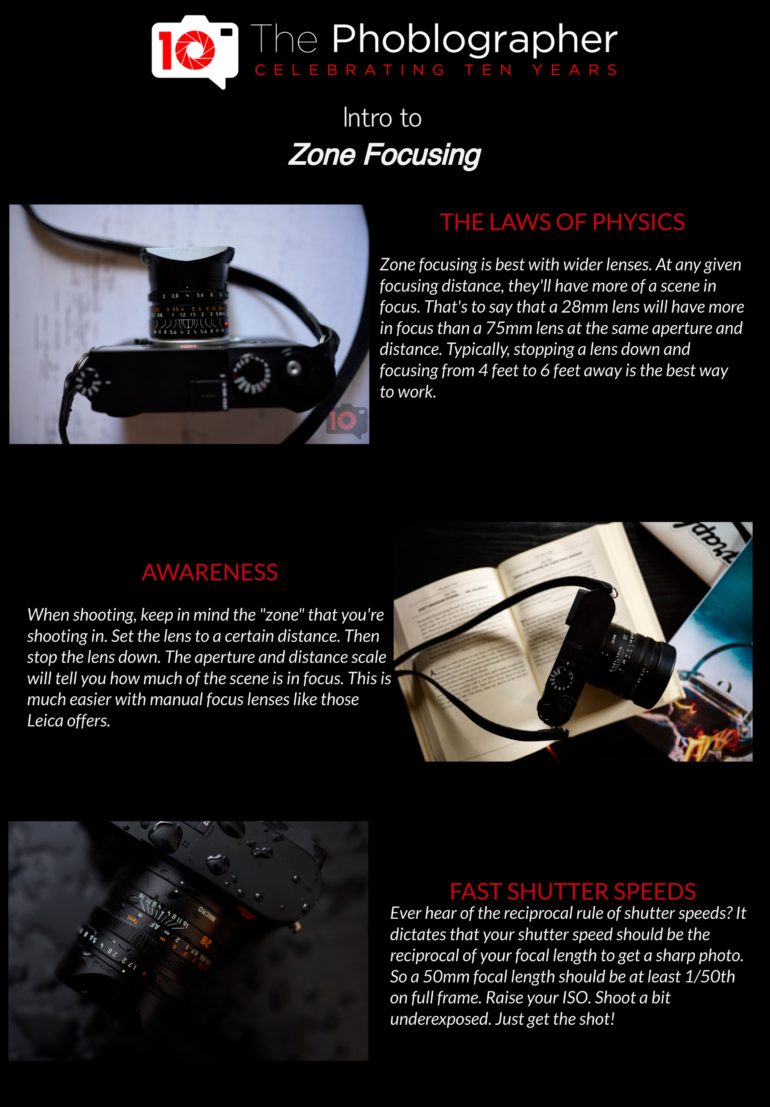
Over the years, we’ve done a lot of tutorials on zone focusing. In 2021, Leica sponsored a tutorial we did on zone focusing, so we recommend that you check it out.

Is The Hasselblad 907X CFV 100C Worth It?

With an $8,100 price tag attached to it, I’m not totally sure that the Hasselblad 907X CFV 100C is worth it unless you’re very well off or know how you can use it to make your money back with some print sales. But I can surely tell you that it’s a very enjoyable experience that puts photographers and photography first rather than trying to put content creation first.

This isn’t about content creation; it’s about making photos.

Eric Campbell Photography Collaborates with State Farm for Professional Headshots and Website Imagery

Eric Campbell Photography Collaborates with State Farm for Professional Headshots and Website Imagery
Eric Campbell Photography

Eric Campbell Photography

Wyatt Rancourt - State Farm Team Website Photography in Florida

Wyatt Rancourt – State Farm Team Website Photography

State Farm Headshots

State Farm Headshots

FORT LAUDERDALE, FLORIDA, UNITED STATES, January 24, 2024 /EINPresswire.com/ — Eric Campbell Photography, a distinguished photography service known for its professional and tailored approach, is proud to announce its latest collaboration with State Farm, one of America’s leading insurance providers. This partnership involves Eric Campbell providing professional headshots and website photography, aiming to enhance State Farm’s corporate image and online presence.

With over a decade of experience in the field of professional photography, Eric Campbell has developed a keen eye for detail and an understanding of the diverse needs of corporate clients. His approach to photography is rooted in a deep commitment to capturing the true essence of his subjects, whether they are individuals or corporate entities.

This collaboration with State Farm marks a significant step in Eric Campbell Photography’s journey. The project entails photographing State Farm’s personnel across various departments for their professional headshots, as well as creating a series of images that will be featured on the company’s website. These images are not just photographs but are crafted to convey the professionalism, trust, and reliability that State Farm stands for.

Eric Campbell’s process is meticulous and client-focused. He works closely with each subject to ensure their individuality and professional persona are captured in the headshots. Understanding that a headshot is often the first impression in the digital world, Campbell takes the time to consult with each individual, ensuring their personal brand aligns seamlessly with State Farm’s corporate ethos.

Eric Campbell has taken a strategic approach to the website imagery. The photographs are designed to resonate with State Farm’s diverse clientele. They showcase various aspects of the company, including its commitment to customer service, its community involvement, and its range of products and services. These images are more than just visual aids; they are a narrative tool that helps State Farm tell its story more effectively.

Eric Campbell’s work is characterized by its clarity, attention to detail, and the ability to convey a narrative through imagery. His photographs are more than just a representation; they enhance the subject’s persona and the corporate brand. This unique ability is what made Eric Campbell the ideal choice for State Farm’s latest visual branding initiative.

This project is not only a testament to Eric Campbell’s expertise in photography but also his ability to understand and translate corporate values into visual stories. The collaboration is expected to significantly enhance State Farm’s digital and print presence, profoundly impacting how the company is perceived by its current and potential clients.

Eric Campbell Photography’s work with State Farm is set to be a benchmark in corporate photography, setting new standards for how professional headshots and website imagery can be leveraged to strengthen corporate branding and communication.

Please contact Eric Campbell Photography for more information about headshot and website photography services.

Eric Campbell
Eric Campbell Photography
email us here
Visit us on social media:
Facebook
LinkedIn
Instagram

image

Photographer and Kat Von D Go on Trial in Case That May Upend Tattoo Industry

Photographer and Kat Von D Go on Trial in Case That May Upend Tattoo Industry

Celebrity tattoo artist Kat Von D went on trial over a photographer’s claims that an image of a Miles Davis tattoo she inked on a client infringed his copyright — in a case that may upend the entire industry.

On Tuesday, Von D appeared in a Los Angeles federal courtroom against photographer Jeff Sedlik, who has filed a lawsuit accusing her of infringing on his copyright by using his iconic 1989 photo of Davis for a tattoo on her friend Blake Farmer — that she inked free-of-charge for him.

The iconic photo of Miles Davis by Jeff Sedlik that’s at the center of this legal battle. Image from court filing exhibit.
Screenshot from court filing exhibit.

Los Angeles-based photographer Sedlik has been granted a jury trial against Von D following the U.S. Supreme Court’s recent ruling on The Andy Warhol Foundation v. Lynn Goldsmith case.

In May last year, America’s highest court held that Warhol’s portraits of music icon Prince was not fair use of Goldsmith’s copyrighted photo, and ruled that Warhol’s work shared the same commercial purpose as the original image photo of Prince.

Sedlik’s case is believed to be the first ever to consider whether copyright protections for images apply to tattoos.

‘Nobody’s Ever Complained Before’

Sedlik’s lawsuit challenges widespread tattoo creation practices, whereby tattoo artists rarely ever purchase a license for a photograph to base an inking on. The trial could have wide-ranging implications for the tattoo industry.

According to Bloomberg Law, Von D’s lawyer told a jury that she had never purchased a license for any of her inkings as “nobody’s ever complained” about these tattoo industry norms — and she knows of no tattoo artist who does.

According to Rolling Stone, Von D’s lawyer added that she had only used Sedlik’s famed photo for “inspiration” and that it was “transformative” enough to not count as an exact replication.

“You will see that there are many differences,” Von D’s lawyer Allen B. Grodsky told jurors on Tuesday.

Grodsky pointed to “differences in the position and shape of shadows, difference in the use of light, difference in the hairstyle, differences in the shape and rendering of the eyes.” He also said that Von D’s tattoo had no jacket and no black background like Sedlik’s original photograph.

“Kat Von D’s interpretation of Miles Davis had a sentiment that was more melancholy than Mr. Sedlik’s,” her attorney claims.

“And you’ll see that it has movement that’s not found in his. Kat Von D did not attempt to monetize the tattoo in any way.

“She did not make photos of prints that she sold. She didn’t sell tee shirts or mugs. She didn’t sell products in any way.”

A Photographer Relies on Licensing Fees

However, Sedlik’s attorney argued that the photographer’s copyright still stands, even for a free tattoo. This is especially because, while Von D may not have directly monetized the tattoo, she indirectly likely profited from the social media posts she made featuring the tattoo while promoting her brand on Instagram, Facebook, and YouTube.

The photographer’s attorney also challenged the current industry norms whereby tattoo artists do not license an image for an inking.

“Don’t be fooled by the, well, everyone else is doing it, so it’s okay [argument],” Sedlik’s attorney Robert Allen told the jury in his opening statement

During questioning at the trial, Sedlik said that he relies on licensing fees to support himself and his family.

“I support my family by licensing my images. Please respect the rights of all artists,” the photographer’s Instagram bio reads.

Bloomberg Law reports that Sedlik’s attorneys showed examples of photographs that he has licensed to artists in the past for them to adapt and sell, according to parameters the photographer and other artists negotiate. In one case where a painter adapted the Miles Davis portrait into a more colorful image, Sedlik expects to make up to $85,000.

The seminal trial is expected to run between six and seven days, with Von D expected to testify today.

Jurors will be tasked with deciding whether Von D made “commercial” use of Sedlik’s image and whether her use of the image hurt Sedlik’s ability to license the image himself, a key question in any fair use case.


Image credits: All photos via court documents.

Tributes to beloved community photographer Marc Morris

Tributes to beloved community photographer Marc Morris

One of the community’s most familiar faces, who spent decades working as a photographer for Jewish News and many other titles, has passed away at the age of 57.

Marc Morris, who grew up in Leytonstone and attended Simon Marks Jewish Primary School and JFS, died last week following a period of ill health, leaving behind his wife Nicola and daughter Elisheva.

Marc left school at 16 and trained as an electrical engineer before starting work at De Lane Lee recording studios in Soho.  While there he bought his first camera and found a new creative and artistic outlet. He became a full-time photographer, combining his love of sport and photography, travelling the world to cover football, athletics and particularly boxing. He was lead photographer for Boxing News and a press photographer for international media outlets. He also covered numerous International and European Maccabiahs.

In 2021 as the UK emerged from the Covid pandemic, Marc created a moving series of photographs that followed people returning to synagogues after lockdown.

Wife Nicola told Jewish News: “Marc was always incredibly creative and intelligent.  His greatest joy was his bike, his friends and especially watching any type of sport – especially Leyton Orient FC.

“We are distraught at the loss of our husband, daddy and brother. Marc had a massive heart, and we just can’t imagine our lives without him. We have been blown away by the response from, in particular, the Jewish footballing community and know how much he was loved and respected by so very many people.”

Opinion | A mouse moved into my car. I decided she could stay.

Opinion | A mouse moved into my car. I decided she could stay.

Benjamin Olson is a wildlife photographer based in Minnesota.

I’m a wildlife photographer. In August 2020, I had flown home after a couple of weeks at Isle Royale National Park in northern Michigan. When I got in my car at the Grand Marais Airport in rural northern Minnesota, where I’d left it, I noticed something peculiar: tiny footprints across my dust-covered dash.

They were a clear sign that Peromyscus leucopus — a.k.a. the white-footed mouse — had moved in. I decided not to seek an eviction. I know what you’re thinking. How unsanitary. I’d get sick from the droppings. She’d chew the wires in the engine. Valid points! But I was willing to take the risk — I was curious about my new companion and didn’t want to harm her — though I did clean a lot and was careful not to leave food in the cabin.

I named her Morticia. I didn’t find signs of her often, just enough to remember she was there. But when fall 2021 arrived with nothing from her for months, I figured she had moved on to greener pastures, and I got a little careless. I left a coffee mug containing an apple core in my cup holder one night. The next morning, there were droppings on the lid.

This was the opportunity I’d been waiting for. I set up a camera-trap with five lights, along with reflectors and diffusers. I ran extension cords out to the driveway from the garage. I lay in bed wondering what my neighbors would think if they saw the flashes go off. How long until the police showed up wanting to know why my car looked like a techno concert?

Typically, in my work, I spend three months a year living out of a tent and exposed to all that nature has to offer. That’s another reason I wasn’t too bothered by sharing my car with a rodent. It also meant I had much more control over the shot I was seeking than I normally do. It was like having a studio to document this wild creature; I was able to fine-tune the setup and make adjustments daily. In the end, it took a week to get the shots, of which three are shown here. I was particularly pleased by the moody feeling created by the frost forming on my windows and windshield as we transitioned into winter.

And one added surprise: Morticia had a friend!

Eventually, there were no more signs of Morticia or her friend. Then my car, with about 250,000 miles on it, reached the end of the road. Probably Morticia did, too — the life span of a white-footed mouse in the wild is generally about a year. But I will always have her image, and the lesson it carries: The natural and human worlds are in fact one and the same, and there is beauty to be found everywhere you look.

Review | Dawoud Bey turns to landscape, well trodden and haunted

Review | Dawoud Bey turns to landscape, well trodden and haunted

RICHMOND — The horizon is a rare event in the landscape photographs of Dawoud Bey, one of this country’s preeminent photographers, whose previous work has been mainly focused on portraiture.

You can see a bit of the line where earth meets sky in the background of “Conjoined Trees and Field” from “In This Here Place,” a series that documents the landscape of slave plantations along the lower Mississippi River. Perhaps there’s a suggestion of horizon at the far end of a gash of illuminated water in another image, “Irrigation Ditch,” from the same series, which looks like a wound or fissure in the land, and may reference a 1951 Robert Frank photograph called “Street Line/New York.”

How do you think we’re doing? Take a short survey about the new Style.

Not until a photograph called “Untitled #25 (Lake Erie and Sky),” perhaps inspired by the poetic seascape photographs that Hiroshi Sugimoto has been making for decades, do you see the horizon in its full, linear expanse, a just barely perceptible line separating fields of gray sky from churning water. That image is the last in a 2017 series called “Night Coming Tenderly, Black,” which documents sites along the Underground Railroad, ending with a view of Lake Erie, where enslaved people embarked for Canada and freedom.

End of carousel

Both series, and a new one called “Stony the Road,” are on view in an engrossing exhibition titled “Dawoud Bey: Elegy” at the Virginia Museum of Fine Arts.

Bey works in black and white, making richly textured silver gelatin prints. The luminosity and depth of these images is increasingly a rarity in photography, now dominated by the flat, brilliant precision of digital printing. The traces of light captured in silver gelatin prints seem to hover in planes just below the surface of the paper, and Bey is a masterful printer, such that his photographs often feel three-dimensional, as if the leaves of a tree in the foreground are literally closer to the surface of the photograph than the dark of the forest behind them.

Bey, who is African American, also makes large prints, mimicking the heroic scale of America’s great, romantic landscape photographers, but the impression his images leave is very different. Bey’s camera never commands or dominates the landscape, never incorporates its breadth or depth. It doesn’t surveil, scan or survey, and though he often focuses on the ground — earth carpeted with leaves and pathways through dark places — you never feel as if the images are made from on high.

When the Roman empire was African

Rather, he looks into and through the landscape, as ordinary people do when they walk amid it. He captures details, sometimes nervously, as one might when exploring an unknown trail or taking a new way home at nightfall. Vines cross your path, a leaf dances in a pinprick of sun, a patch of turbid water like polished gunmetal promises a clearing in the distance. This leaves the impression that you are seeing the world not as the camera sees it, but through the eyes of someone standing exactly where the camera stands. Nature is processed not with a lens, shutter, paper and chemicals, but through the alchemy of another person’s psyche. It is haunted.

“All of this work is made intentionally from a vantage point that relates to the close and intimate encounter of that space for those enslaved Africans who were moving through those spaces,” says Bey in a catalogue interview.

The Southern landscape as haunted is territory rich with possibilities. Sally Mann has made spectral trees and forests befogged with darkness into metaphors for the unresolved traumas of history. The mug shot muteness and formality of Bey’s portraits of slave cabins from “In This Here Place” recall the images of vernacular structures photographed by William Christenberry. The decision to document sites along the Underground Railroad at night for the 2017 series “Night Coming Tenderly, Black” echoes the work of Jeanine Michna-Bales, who has been making nocturnal images of these places for more than a decade for her thoroughly researched “Through Darkness to Light” project.

Bey’s work is distinguished not so much by its conceptual novelty as by its perfection of finish, its reticence and its invitation to spiritual work on the part of the viewer. The printing is extraordinary, especially the limits-of-perception clarity of the images made at night, in which Bey is explicitly wrestling with the virtuoso precedent of Roy DeCarava when it comes to printing dark tones.

This level of finesse seals the world in photographs of curious silence. If you were to approach these images without knowledge of what they represent, they could be anything. The slave cabins might well be any worker’s home, humble, shabby, solid, even inviting if you imagine the smells and sounds of domestic life within. Any photograph divorced of its caption, its provenance or metadata, exists in a realm of extended possibility. We can imprint almost any meaning we wish.

The Met reopens its European galleries, refreshed

Bey’s work, which focuses on places where African Americans experienced the worst traumas of slavery, is particularly disciplined in its refusal to be explicit. The exhibition catalogue quotes historian Robin D.G. Kelley about art and messaging: “The most radical art is not protest art but works that take us to another place, envision a different way of seeing, perhaps a different way of feeling.”

Bey’s work envisions, through the literal darkness of night and the metaphorical darkness of lost time and people, new ways of seeing. By scrubbing out the telltale signs of the modern world and framing this work as images of the world as seen by enslaved people, Bey creates a spiritual invitation. This is what the ancestors saw, and if we can see the world through their eyes, perhaps we can feel the world they felt.

Taking up that invitation, of course, requires one to believe, or pretend to believe, that we can find connection with people who are long dead. Even if you don’t believe that is possible, the work still stands as a determined effort to elicit an active empathy.

Indeed, the world Bey depicts is even more bleak if you don’t believe there’s any hope of communing with the people who walked these paths. When we look on these places of pain, we see a landscape that can never be redeemed. Yes, it witnessed trauma, but that trauma can never be healed because those who felt it are simply dust among the leaves and humus in the soil. No matter how unflinchingly we stare at the sorrow of human existence, the ancestors are simply gone, and nature is always indifferent. We haunt the land, not the other way around.

Dawoud Bey: Elegy is on view at the Virginia Museum of Fine Arts through Feb. 25. vmfa.museum.

Wildlife Photographer Highlight of Southbury Library Exhibit

Wildlife Photographer Highlight of Southbury Library Exhibit
image

SOUTHBURY — The Southbury Public Library will host the exhibit, “Capturing the Wild: Photographer James Ward Showcases Wildlife Beauty” in the Gloria Cachion Gallery from Friday, February 2, through Wednesday, February 28, at 100 Poverty Rd.

James Ward, a wildlife photographer with a passion for preserving the beauty of the natural world, is dedicated to capturing breathtaking moments in the lives of animals big and small.

This exhibition is a testament to Mr. Ward’s commitment to raising awareness about the importance of wildlife conservation through the lens of his camera.

Visitors to the exhibit can expect to be enthralled by the vivid and intimate portraits of animals in their natural habitats.

From the majestic grace of African elephants to the delicate beauty of a flamboyance of flamingos, Mr. Ward’s keen eye and technical mastery bring these subjects to life with unparalleled clarity and detail.

The photographs represent Ward’s travel to remote wild spaces around the world, including Botswana, Zimbabwe, Tanzania, Indonesia, and Alaska.

Mr. Ward is also a safari guide and agent and his company, Safari Professionals, specializes in designing conservation-based safaris to Africa, India, Malaysia, Patagonia, Antarctica, and other wildlife destinations.

He also leads wildlife photography workshops to unique locations globally. He is a resident of Southbury with his wife, Hollie, and three daughters, Camryn, Payton, and Reagan.

The exhibit will be open during regular library hours which are 9:30 a.m. to 5:30 p.m. Monday, Wednesday, and Friday, from 9:30 a.m. to 9 a.m. Tuesday and Thursday, from 9:30 a.m. to 4 p.m. Saturdays, and from noon to 5 p.m. Sundays.

A sample of photos will be posted online in the virtual gallery.

Those seeking more information may visit www.southburylibrary.org or call 203-262-0626.

What happens after a storm?

What happens after a storm?

Not even a week ago, Alessia Glaviano – Head of Global PhotoVogue – a guest on our Spigola podcast, reminded us that it no longer matters whether you shoot with a camera or a smartphone. What matters is the intention behind the shot, not the means. We pondered deeply on this statement, and although there was initially some skepticism, we concluded that to take a true stance on the matter, we had to try it ourselves: capturing moments solely with a smartphone, but with the same attitude we would have had with a professional camera. Xiaomi provided us with the opportunity and the means.

Almost by chance, Xiaomi presented us with a challenge: to visit a distant place and attempt to capture its uniqueness using the brand-new Redmi Note 13 Pro+ 5G. And so began our journey, short but very intense, in Bangkok.

All the promises of this new device – which, along with four others, forms the new Redmi Note 13 Series, further enriching the brand’s Redmi Note lineup – were substantial. Starting from the battery, rechargeable to 100% in just 19 minutes with a lasting capacity of days (not hours), and of course, the camera system consisting of 3 cameras, including a main 200 MP camera, an ultra-wide-angle camera, and a macro camera.

We decided to put Xiaomi to the test in every moment spent in the Thai capital. The first stop was at the Royal Palace and the Wat Pho temple, where the goal was to capture the colors of the mosaics and decorations.

XiaomiXiaomi

Being one of the most touristy places in the city, we encountered many people who, like us, were fascinated by the architecture of these sacred places. The Redmi Note 13 Pro+ 5G came to our aid in this moment as well. The smartphone is equipped with AI-based editing tools that, among other things, allow us to remove people who accidentally end up in our shots. You know those photos you see on Instagram of tourist spots always empty? Now you can have them too, effortlessly!

But a city is not only visited during the day; often, it comes to life at night, illuminated by a myriad of different lights. In our case, the lights were those of the legendary tuk-tuks, indispensable in a trip to Bangkok. In this case, the challenge was formidable: darkness, colored lights, movement. All the ingredients for a challenging shot were present.

XiaomiXiaomi

Not content with just the shot, we continued to play with AI tools and added a bit more movement, some stars, many stars.

When traveling, we know very well that we are not only captivated by architecture, landscape, and glimpses, but we also focus on the faces we encounter on the streets. However, we often don’t have much time to photograph them, sometimes because they move, other times because we are the ones on the move. That’s exactly what happened to us in the characteristic Thai markets, first and foremost the Floating Market.

Reviewing the photos on the return flight and at home with friends was like reliving the journey once again, leaving no detail behind.

XiaomiXiaomi

In Bangkok, on the occasion of the launch of the new Redmi Note 13 Series, the brand also introduced the brand-new Redmi Watch 4 and Redmi Buds 5 Pro. Visit Xiaomi’s website to discover all the features of these devices.

XiaomiXiaomi

Photos shot on Xiaomi Redmi Note 13 Pro+ 5G

Want to dig deep into cosplay photography? Here are some tips for aspirants

Want to dig deep into cosplay photography? Here are some tips for aspirants

JUST BY LOOKING at the extreme level of detail on their outfits, their makeup, and their facial expressions, one can marvel at the amount of time and effort that these cosplayers would exert to bring life to a character.

And while the spotlight is directed towards them, one should also learn to appreciate the individuals responsible for highlighting the details of their hardwork, the photographer.

From the lighting and smoke effects to the numerous angles to showcase various expressions, these individuals from behind-the-scenes are crucial for the success of a cosplayer. Their photos would end up being publicly posted on a cosplayer’s social media page, which would then garner traction.

Among these photographers is Army from Afterhours Story, who was seen taking photos in the Cosplay Blitz event in Circuit Makati.

Before venturing into the business, Army was once a cosplayer though he eventually made the leap to photography as he wanted to further hone his skills. He was also inspired by the community.

ADVERTISEMENT – CONTINUE READING BELOW ↓

He admitted that being a cosplay photographer isn’t easy especially since he needed to juggle his time efficiently. Army even told SPIN.ph that he had a plethora of backlogs from previous events.

undefined

The struggles of cosplay photography

“I’m having difficulty in balance things especially the post processing segment of photography,” he said in an exclusive with SPIN.ph. “Taking photos is easy, but editing it is quite the opposite. Balancing is very difficult. In a scale of 1-10, it’s around 8.

CONTINUE READING BELOW ↓

Yet despite the problems he endured, Army said: “But I’m having fun with this, it’s like a hobby as well.”

The community is what drives Army as he met a thousand cosplayers from various conventions. For him this is the most memorable experience in his journey.

undefined

Starting small

But besides managing his time, there are other struggles he had to endure. As of now, Afterhours Story has a plethora of cameras and effects that they can use to further amplify a cosplayer’s persona.

ADVERTISEMENT – CONTINUE READING BELOW ↓

But not everyone has the luxury to go big and this was something that Army pointed out.

“Start something small, kaya ako naging ganito to the point na medyo mabibigat yung items ko is because I had the funds to begin with. If you don’t have the funds, start small.”

Army then narrated his journey where he started with a 10K budget, and grinded his way to get better equipment.

“I started with a 10K budget na camera because that’s a good camera and due to the nature of my work and my business, medyo naka-jump up ako into something higher,” he revealed.

However he did mention that one’s limited budget shouldn’t be a cause for concern.

“Others have 6K budget, but as you invest more and more into photography, you’re forced to buy equipment. However, that shouldn’t limit the cosplayer or photography to go further into the hobby as well.”

ADVERTISEMENT – CONTINUE READING BELOW ↓

Being a newcomer into the scene could be a daunting experience especially when there are loads of photographers and cosplayers everywhere, and things could go downhill if one would get discouraged by the lack of opportunities.

But Army gave an important advice to those who wish to dig deep into the craft.

“Inspiration comes from everywhere kasi maraming cosplayers and photographers who are easily burnt out kasi their art isn’t appreciated enough but actually start small and others will eventually notice that.”

“Keep sharing, keep sharing, keep sharing,” he reiterated.

undefined

ADVERTISEMENT – CONTINUE READING BELOW ↓

Everything is trial-and-error

While it may seem fun to take photos of cosplayers doing iconic poses, it could also pose a problem especially if the photographer hasn’t fully grasp their craft.

Cosplay photography isn’t as simple as taking shots on the subject which was something that Army elaborated.

“Everything was trial-and-error. Actually it’s good if you know someone who is well-versed with photography because the learning curve is really high for this hobby.”

And how long does it take to learn the tricks and techniques in cosplay photography? Here’s what Army has to say.

“One day isn’t enough, others would take six months to dig deep into the scene.”

Yet despite the shenanigans he faced, for Army the overall experience is rewarding. Through his years of grinding he slowly made his name, securing bookings in conventions.

Get more of the latest sports news & updates on SPIN.ph

The next generation of photographers shortlisted in student and youth Sony World Photo Awards 2024

The next generation of photographers shortlisted in student and youth Sony World Photo Awards 2024

It feels like no time has passed since we made the final announcement about the Sony World Photo Awards 2023 and already the shortlist for the 2024 Student and Youth award has been announced. Unlike most photography competitions, the Sony World Photography Awards drip feed the winners over a few months, leading to a black-tie awards ceremony held in London where the winners are invited to accept the award. 

In the short amount of time between the 2023 competition and this year’s, the photography landscape has changed drastically with discussions around AI at the forefront. After Borris Eldagsen’s controversial win and subsequent non-acceptance, the Sony World Photo rules now specify that generated content cannot be the origin of entry although AI could be used in the editing process. 

Middle Break (Image credit: © Yufei Ma, China Mainland, Shortlist, Student Competition, Sony World Photography Awards 2024)

The Student competition shortlist showcases the impressive work of 10 students hailing from leading higher education institutions. This year’s theme, of “Home,” prompted participants to submit a series of five to 10 images exploring their perspectives on place, community, identity, and belonging. The selected projects offer a rich tapestry of nuanced stories and conversations, reflecting the diverse experiences of emerging photographers.

Family relationships and personal histories emerged as recurring themes across the shortlisted images. From Horses and Caravans by Frederik Rüegger which documents the nomadic lifestyle of English and Irish tarvellers which is so often subject to discrimination to Yufei Ma’s Intermission which captures everyday traditions such as hanging the laundry to dry. 

Keep Me Awake (Image credit: © Kas Christiaens, Belgium, Shortlist, Youth Competiton, Sony World Photography Awards 2024)

The Youth competition shortlist showcases the work of another 10 photographers aged 19 and under, each responding to the theme “Through Your Eyes”. The young photographers capture their personal experiences of the natural world and environment, exploring questions of identity and individuality. Across the shortlist, their creative approaches to composition are evident as they document their surroundings.

This shortlist represents a global array of talent, with photographers hailing from Belgium, South Africa, Argentina, Bangladesh, and the USA in the student competition and from Australia, Malaysia, the UK, Spain, and the Philippines in the Youth competition.  The winner of the Student Photographer of the Year 2024 will be revealed at the prestigious Sony World Photography Awards 2024 ceremony in London on April 18th alongside the winner of the Youth competition. The overall winning student’s university will be awarded €30,000 Sony digital imaging equipment as well as inclusion in the book and exhibition. 

Home traditions (Image credit: © Gaston Zilberman, Argentina, Shortlist, Student Competition, Sony World Photography Awards 2024)

Ubumbano (Image credit: © Makaziwe Radebe, South Africa, Shortlist, Student Competition, Sony World Photography Awards 2024)

Tea-Portrait (Image credit: © Shayna Cuenca, United States, Shortlist, Youth Competition, Sony World Photography Awards 2024)

Check out the best Sony lenses including a range of primes, telephoto zooms and wide-angles




