Alfredo Cunha: The photographer who defined the Carnation Revolution

Alfredo Cunha: The photographer who defined the Carnation Revolution
This article was originally published in Portuguese

Fifty years after the Carnation Revolution, Cunha’s photographs continue to immortalise the military coup that changed the course of Portuguese contemporary history.

ADVERTISEMENT

On 25 April 1974, Alfredo Cunha was working as a photographer for ‘O Século’, a daily newspaper published in Lisbon.

Little did he know, when he left for work that morning, he was about to embark on a three-day, career-defining assignment.

Over the next few days, Cunha, who was then 20 years-old, documented the Carnation Revolution; the nearly bloodless coup that ended more than forty years of authoritarian rule in Portugal and Europe’s longest-lasting dictatorship.

Today, Cunha’s pictures are considered one of the most important and complete testimonies of the revolution which takes its name from the flowers offered to soldiers and placed in the muzzles of their guns.

“I left work in the evening and when I got home my mum told me there was a revolution going on. I went back to the newspaper again, ‘O Século’, where I worked, and took photographs,” Cunha told Euronews.

An iconic portrait

One of the most famous photographs from Cunha’s series wasn’t published until 1994. 

It was printed by the newspaper ‘Público’ as part of an editorial entitled ‘O olhar do capitão’ and helped elevate Cunha’s career. 

“There are those who consider this portrait to be the portrait of 25 April. I think it’s a portrait of Salgueiro Maia, nothing more than that, but it takes us to a point where the man becomes a myth. That’s what people see in this portrait,” explained Cunha.

Another photo from his series captured a group of young people gathered behind a cordon of soldiers. It’s also one of Cunha’s favourites: “It’s a partial portrait since there are no women, but it shows us the state of mind on that day. 

“What we were like, how we dressed, how we had our hair, whether it was a multiracial society or not. And it was. I think this is a portrait in which everything is there if we bring these two faces together (the military man who smokes and the young black man at the back). It’s Portugal in the 1970s.”

The award-winning photojournalist is holding a series of exhibitions across Portugal called ’25 April 1974 Thursday’ to mark the 50th anniversary of the revolution. 

Cunha has also published a book under the same name in collaboration with the Portuguese street artist Vhils and texts by Fernando Rosas, Carlos Matos Gomes and Adelino Gomes.

series of works based on Cunha’s photos will also be exhibited at the Lisnave shipyards in Almada, some six kilometres from Lisbon, to provide fresh interpretations.

Video editor • Bruno Filipe Figueiredo Da Silva

TV photographer taken into custody during pro-Palestine protest at UT Austin

TV photographer taken into custody during pro-Palestine protest at UT Austin

AUSTIN, Texas – A TV photographer was arrested during a pro-Palestine protest held Wednesday on the University of Texas at Austin campus.

The Austin protest was one of several that took place across college campuses in Texas, including UTSA, as well as California and Massachusetts.

Recommended Videos


[embedded content]

Earlier this week, U.S. senators voted 79-18 to approve a $95 billion war aid package that would directly benefit Israel, Taiwan and Ukraine. Approximately $26 billion would go to “Israel and humanitarian relief to citizens of Gaza,” the Associated Press reported Tuesday.

Before the arrest in Austin, video shows multiple Texas Department of Public Safety troopers armed with helmets and batons attempting to move protesters back.

A trooper off-camera can be heard saying, “Get on the ground! Lay down!”

“I was moving!” the photographer was heard saying to the trooper.

The photographer was handcuffed. An unidentified person held onto the photographer’s camera and walked alongside him as it continued to roll.

[embedded content]

After the arrest, local reporters already at the protest caught up with the photographer. He identified himself as “Carlos” and said he worked at KTBC Fox 7, a TV station in Austin.

“They were pushing me, and they said that I hit an officer,” the photographer told KXAN reporter Nabil Brent Remadna. “I didn’t hit an officer. They were pushing me.”

The photographer told reporters that he had never experienced something like this before.

“I told them I was the press,” the photographer said.

It isn’t immediately clear what charges he may be facing.

KXAN also reported that Texas DPS sent Houston-based troopers to Austin ahead of Wednesday’s protest on the UT campus.

The DPS response to the protest drew the ire of District 19 state Senator Roland Gutierrez, who represents Uvalde in addition to other areas along the Texas-Mexico border.

“The Department of Public Safety has pulled out all the stops to harass innocent college students, but wouldn’t lift a finger to help the victims in the Uvalde massacre,” state Sen. Gutierrez said in a statement Wednesday evening. “Our broken state moved troopers all the way from Houston to Austin so they could quash students’ first amendment rights.

“The very force that you see beating and arresting these college students are the same ones that, for 77 long minutes, stood by as a lone teenage shooter massacred 21 precious lives in an elementary school. We live in a broken state where actual violence is met with fear and trepidation from those meant to protect and serve, and where exercising our rights is seen as a threat.

“I am demanding accountability for the actions carried out by DPS at the University of Texas today.”

At least 20 protesters were taken into custody during Wednesday’s protest in Austin, the Associated Press reported.

KSAT reached out to DPS on Wednesday evening. So far, we have not heard back.

The Associated Press contributed to this report.

Artist Profile: Isabella Madrigal ‘24 on the Cahuilla Community and Multidisciplinary Creativity | Arts

Artist Profile: Isabella Madrigal ‘24 on the Cahuilla Community and Multidisciplinary Creativity | Arts

Isabella D. Madrigal ’24, Cahuilla playwright, stage and TV actress, and now aspiring filmmaker, has created collaborative and meaningful art all her life and doesn’t plan to stop any time soon.

Madrigal grew up surrounded by artistry. Her father is a musician and cultural singer in the Cahuilla Band of Indians, which led her to begin participating in cultural dance in her youth. Madrigal said that being an enrolled member of the Cahuilla community remains an integral part of her creative work.

In high school, Madrigal wrote “Menil and Her Heart,” a play based on Cahuilla stories that tackles the issue of Missing and Murdered Indigenous People, the horrifically high rates of Indigenous people — especially women — who are victims of homicides and disappearances. The play follows a pair of Cahuilla sisters, portrayed by Madrigal and her real-life sister Sophia. When Menil (portrayed by Sophia) goes missing, Nesune (portrayed by Isabella) must go on an adventure to find her. With a cast entirely comprised of Cahuilla community members, the show was performed 16 times throughout Southern California. Despite attending a performing arts high school, Madrigal felt discouraged by the lack of roles for Indigenous people. Her play not only thematically tackled Native issues, but also put the spotlight on the talents of her community’s actors.

Motivated by a desire to give back to her community, Madrigal entered college thinking she would become a doctor and spent two years as a pre-med student. However, during her sophomore year, she realized that the academic requirements prevented her from pursuing art due to the time commitment.

“I was like, okay, I’m gonna take a break for a semester. I can come back to it, but I’m going to try to get involved with my art things, do more of what I was doing before. And that just really changed my whole Harvard experience,” Madrigal said.

Exploring the world of professional arts gave Madrigal insight into the ways that Native artists give back to the entertainment industry. Through playing roles in TV shows such as “Echo” and “Rutherford Falls,” and working with Native directors who “were centering native communities,” Madrigal experienced the process as a mode of “healing.” Furthermore, the recent increase in dynamic roles for a variety of Indigenous actors has been encouraging. She pointed out “Echo,” which is part of the Marvel Cinematic Universe, in which she played a younger version of the grandmother of the main character, an Indigenous superhero. The change in the acting landscape between today and Madrigal’s time in high school exemplifies the tangible impact of Indigenous artists.

“Without Native creators writing, not really collaborating, not directing, that would never have been an opportunity for me. So I’m really grateful for all the older people who have put in so much work to get us to this space. And how people are constantly challenging: How can we be better? How can this be a better process?” Madrigal said.

Now, Madrigal is excited to turn “Menil and Her Heart” into a film as a 2022 recipient of an Artist Development Fellowship from the Office for the Arts at Harvard. She wrote a screenplay version of her work for her English senior thesis and plans on a short film version after graduation to serve as a proof of concept for a larger feature.

“I’ve loved doing the play, because it’s live and we can be there. But there’s a limit to the amount of people that we can bring this to,” Madrigal said.

“In a film, it was really exciting for me to think about how exactly I’m gonna represent this visually. And part of the story is it goes into these alternate worlds that are inspired by some cultural stories,” she added.

Even with the change in format, Madrigal said that the heart of the story remains unchanged.

“The screenplay version really focused on this issue of Missing and Murdered Indigenous People, specifically women, girls, and Two Spirit people, and the incredible devastation that it has had on a lot of Indigenous communities, my community. But it’s really a global issue. And I think that part of it — why am I writing and who am I writing for — has stayed the same,” Madrigal said.

When prompted to give artistic advice, Madrigal offered a simple and effective maxim.

“As an art maker, you really don’t exist alone or in a vacuum,” she said.

Madrigal’s work strives to bring people together, regardless of the boundaries between audiences and performers or writer and subject. Wherever film, theater, and “Menil and Her Heart” take her, she won’t be alone.

Mvskoke Art Market expanded in third year

Mvskoke Art Market expanded in third year

TVLSE, Okla. – The 2024 Mvskoke Art Market was held April 20-21 at River Spirit Casino and Resort in Tulsa. The third annual market, held Saturday and Sunday, featured over 90 Native artists, public lectures, a comedy show, and a children’s activity table.

Visitors speak with an artist at the 2024 Mvskoke Art Market. (Meredith Johnson/MM)

Cherokee artist Bryan Waytula took home the Best of Show Prize for his colored pencil portrait, “The Grass Dancer.” Art is a handed-down family tradition for Waytula, whose mother and grandmother are both Cherokee treasures. “The Grass Dancer” has recently been named as a finalist for the National Portrait Gallery.

New to this year’s program were a series of public lectures. Muscogee (Creek) Nation Tribal Historic Preservation Officer Turner Hunt presented, “Symbols, Iconography, and Myth: An Exposition of Muskogean Art Through Time.” Hunt spoke about the archeological and historical context of Muscogean art and creative expression. Hunt’s presentation focused on non-Indigenous misinterpretations of artifacts and contemporary Mvskoke cultural continuity.

Close up of a shell carving by Sandy Fife-Wilson. (Meredith Johnson/MM)

Concluding his lecture, Hunt stated, “As I’ve talked about art through time, how we look about art, I hope that I’ve answered questions and made people think about some things and want to pursue different areas because it’s a really neat thing to look at, our art, our ancestors and how we can use it in the modern day to make a living, to tell stories, to honor our ancestors in the past.”

Scott Hale presented “People Don’t Call… A Picasso a Spanish Painting: Recontextualizing Indigenous Art of North America.” Hale, a scholar and appraiser of Native art, owns Native American Art Appraisals and has worked and studied at the University of Oklahoma, the Gilcrease Museum, and the Oklahoma City Museum of Art. Hale’s lecture gave a history of the collection of Indigenous art and focused on the ever-increasing market for contemporary Indigenous art.

Mvskoke painter Starr Hardridge awon 1st prize in painting for “The Three Sisters.” (Meredith Johnson/MM)

Jason Asenap discussed the Indian art world of the 1970 and 1980s with his father, artist Hollis Asenap in “Portraits of the Artists.” The discussion featured work by Jason that highlighted found polaroid portraits of Indian artists found in McKee’s Indian Store in Anadarko, Okla during the time period.

Wilson family creates Mvskoke design motif cards. (Meredith Johnson/MM)

The market also featured children’s activity tables. The MCN Native Youth Community Project sponsored these tables. The activities featured Mvskoke motif stamp designs and ink pads in numerous colors. The tables were a place children and families could create and take their own art home.

2024 Mvskoke Art Market Award List:

Best of Show
Bryan Waytula

Mvskoke Heritage Award
Kenneth Johnson

1st Place – Innovative Award
Tony Tiger

2nd Place – Innovative Award
Dustin Mater

3rd Place – Innovative Award
Eva Cantrell

Honorable Mention
Jon Tiger

Honorable Mention
Jackie Sevier

Honorable Mention
Leslie Deer

1st Diverse Category
Johnnie Diacon

2nd Diverse Category
Sandy Fife-Wilson

3rd Diverse Category
Jamie Bennett

1st Basketry
Michael Dart

2nd Basketry
Ronda Moss

3rd Basketry
Jacob Waytula

1st Drawing/Graphic Art/Photography
Benjamin West

2nd Drawing/Graphic Art/Photography
Ron Mitchell

3rd Drawing/Graphic Art/Photography
Randy Kemp

1st Painting
Starr Hardridge

2nd Painting
Candace Shanholtzer

3rd Painting
Jimmie Fife

1st Place Sculpture
Danny Beaver

2nd Place Sculpture
A. Wayne “Tay Sha” Earles

3rd Place Sculpture
Grant Morris

1st Jewelry (Stone/Silver)
Nelson Garcia

2nd Jewelry (Stone/Silver)
Antonio Grant

3rd Jewelry (Stone/Silver)
Mark Stevens

1st Pottery
Tama Roberts

2nd Pottery
Erna Wilson

3rd Pottery
Karin Walkingstick

1st Textiles (wearable)
Leslie Deer

2nd Textiles (wearable)
Jaylee Lowe

3rd Textiles (wearable)
Jaylee Lowe

1st Textiles (non wearable)
Randi Narcomey-Watson

1st Textiles (non wearable)
Cathy Abercrombie

1st Beadwork/Quillwork
Deana Ward

2nd Beadwork/Quillwork
Breana Hill

3rd Beadwork/Quillwork
Patricia Belagarde-Cornelius

1st Digital Art
Raven Kemp

2nd Digital Art
Joseph Hopkins

3rd Digital Art
Chad Earles

Royal Winnipeg Ballet to premiere T’əl, a historic Indigenous-language production

Royal Winnipeg Ballet to premiere T’əl, a historic Indigenous-language production
image
Open this photo in gallery:

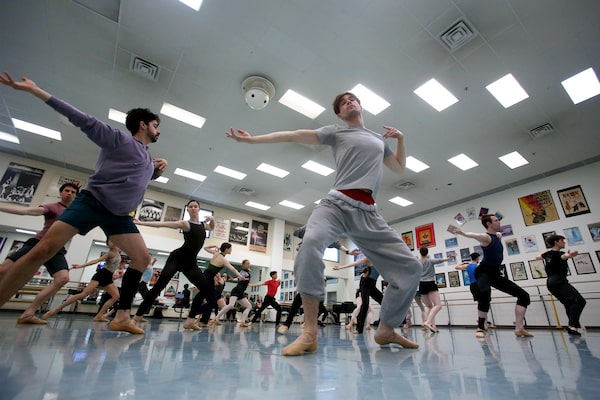
Dancers Stephan Azulay, front left, and Tymin Keown, front right, rehearse for the Royal Winnipeg Ballet’s T’əl: The Wild Man of the Woods, which debuts April 25.

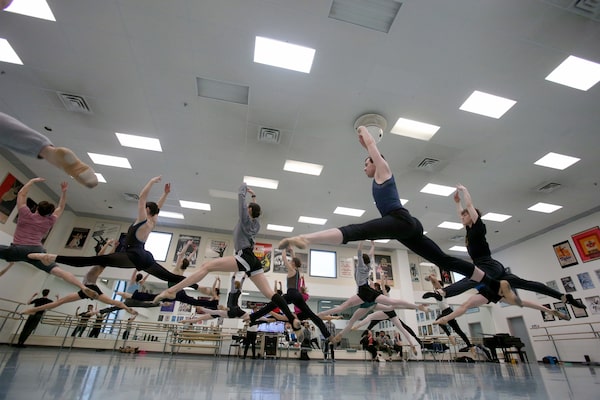
Silhouetted against beams of fluorescent light shining from the ceiling of a vast studio, more than two dozen dancers from the Royal Winnipeg Ballet listened closely to choreographer-in-residence Cameron Fraser-Monroe.

In the centre of the room, ballerina Emilie Lewis spread her arms out like wings. She took flight to the sound of her instructor’s voice, held aloft by the encircled ensemble lifting her from below.

“Brilliant. Keep paying attention to each other,” said Mr. Fraser-Monroe, nodding with satisfaction.

Open this photo in gallery:

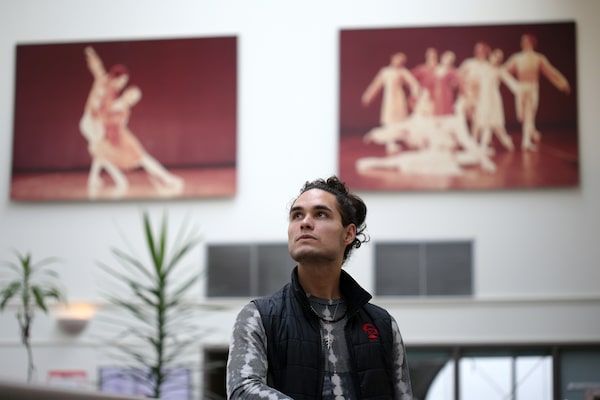
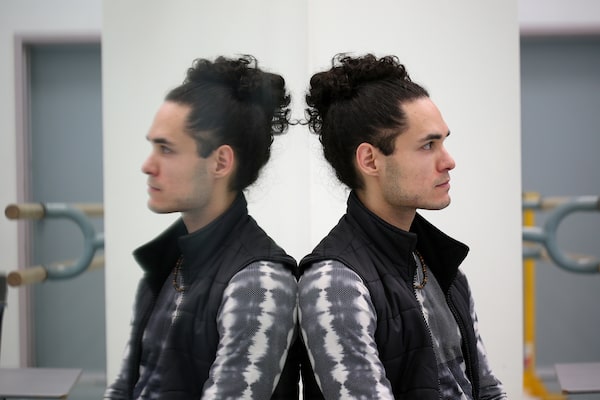
Cameron Fraser-Monroe is a member of the Tla’amin First Nation in B.C., whose stories inspired T’əl.

That evening, a week before the RWB’s last production of the season, as sonorous strings filled the air, the 26-member troupe was acutely aware: They were about to make history. For the first time since it was founded in 1939, North America’s longest continuously operating ballet company is collaborating with Indigenous artists from across Canada and the United States to present a performance in a First Nations language.

T’əl: The Wild Man of the Woods, an entirely new ballet, will premiere at Winnipeg’s Centennial Concert Hall on Thursday for a four-show run. But there are already talks about the international touring company taking it on the road.

Contrary to most ballets, which typically rely solely on movement as a storytelling device, the hour-long piece will be narrated in Ayajuthem and English by Elder Elsie Paul, a knowledge keeper of the Tla’amin First Nation on British Columbia’s upper Sunshine Coast. A residential school survivor, Ms. Paul is one of the few remaining people fluent in Ayajuthem, a language native to her nation.

Open this photo in gallery:

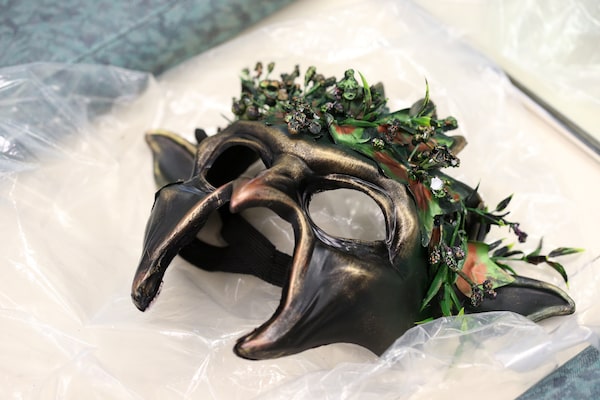
Indigenous artists have been involved at all levels of T’əl’s production, from costuming and music to the narration in the Ayajuthem language.

Two-spirit composer and cellist Cris Derksen, who comes from a line of chiefs from the North Tall Cree Reserve in Alberta on her father’s side and has Mennonite heritage on her mother’s side, will join the Winnipeg Symphony Orchestra with a live score from the pit of the concert hall.

Navajo designer Asa Benally, a New York-based alumnus of Yale University, is leading the costume work.

T’əl – pronounced “tall” and spelled in Ayajuthem with an upside-down and backward “e” – is inspired by the various legends that Mr. Fraser-Monroe, the creative force behind the RWB’s performance, grew up hearing as a member of Tla’amin, years before he found his calling in ballet.

“It feels like all my life’s work has led up to this point,” he told The Globe and Mail.


The dancers lift each other through the air on poles as they follow Mr. Fraser-Monroe’s choreography. Usually, ballet tells a story through movement alone, but T’əl is narrated in Ayajuthem and English.


A decade ago, Mr. Fraser-Monroe was a teenaged newbie in Winnipeg just trying to get through RWB’s rigorous program.

In Grade 10, he was visiting the Prairie city on a trip with his dad when he was recommended by his West Coast dance teacher to try out for the prestigious ballet school. At the audition, he was offered a scholarship on the spot. He soon left his British Columbia high school for the housing facility on campus, joining ambitious peers recruited by the RWB from around the world.

After getting commissions by many national ballet companies as a choreographer, and performing globally as a dancer, the 25-year-old now holds the company’s coveted choreographer-in-residence position that allowed him to create T’əl.

“We’ve all been talking about how I wanted to make this happen for over two years,” Mr. Fraser-Monroe said, sitting in the RWB’s lobby. “This is the kind of story that’s for everyone, but especially pays honour to something we never get to see or hear among the Eurocentric fairy tales we’re used to at the ballet.”

The piece follows the tale of a wild man who kidnaps children from a village after dark and then disappears – until one day a young woman dares to be brave as she ventures to save her sister.

“It’s simple like most ballet stories, but there’s so many layers,” said Mr. Fraser-Monroe, who has been working on the piece since October last year. He went back to Tla’amin to learn everything about the legend of T’əl straight from the source: his elders.

Open this photo in gallery:

Talking with elders helped Mr. Fraser-Monroe, 25, to get to the heart of the story he wanted to tell.

He frequently consults by phone with his dad and auntie to learn about traditional teachings. In order to fully understand this story, however, he had to sit down with Ms. Paul, who then shared with him its significance.

“Because I’m bringing forward a story that wasn’t told to everyone as they’re falling asleep at night, and for which there is no official text, I have to often fulfill the role not only of creation, but also of education,” he said.

“In my past works, that’s meant me being the one that is speaking. But I thought I can’t do nearly as good a job of passing down this story as the person who has spent her entire life maintaining it through hardship.”

The English narration is so the tale can be understood by everyone, while the words in Ayajuthem are an homage to the few who know where it comes from.

Stories such as this, Mr. Fraser-Monroe said, barely made it through Canada’s assimilation policies and residential schools. They were also made illegal during the potlatch ban, which saw the Canadian government forbid Indigenous peoples to pass along their customs to their descendants from at least 1885 to 1951.

“That’s what makes this so special. Now, our piece will give this story its legs,” Mr. Fraser-Monroe said. “It can be told over and over again.”


Open this photo in gallery:

None of the dancers in T’əl are Indigenous, but Mr. Fraser-Monroe hopes the production will inspire other Indigenous artists to consider ballet.


The dancers Mr. Fraser-Monroe is working with for T’əl are not new to him. He has performed with some of them and choreographed the whole troupe on at least two other occasions, albeit never on such a large scale.

But he is cognizant of the fact that none of the company’s dancers are Inuit, Métis or from a First Nation.

That’s something he is hoping the new production can change, inspiring other Indigenous artists to embrace the potential of ballet. In the meantime, he is making the conscious casting choice to give featured roles to every dancer of colour in the company.

“I’m proud for this piece to be a first in many respects. I just don’t want it to stop there, with me or anyone else,” he said. “Because when I walked into this space, I didn’t see myself fitting in. I just didn’t see myself represented.”

André Lewis, RWB’s artistic director, who will celebrate 50 years with the company in 2025, called the new work a “historic milestone.” He said it epitomizes the power of storytelling through dance and showcases a commitment to cultural diversity.


Open this photo in gallery:

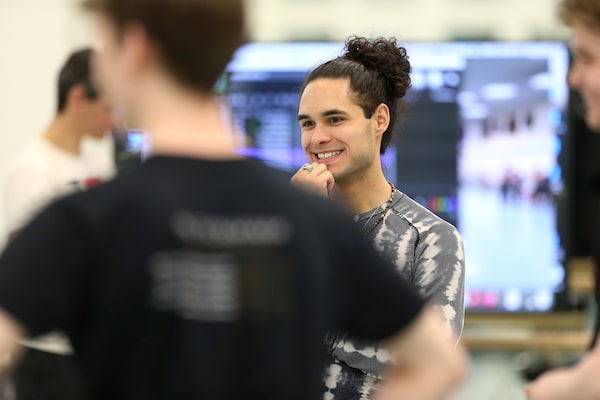
‘It feels like all my life’s work has led up to this point,’ Mr. Fraser-Monroe says.

On the night of the premiere, Mr. Fraser-Monroe’s two moms are coming from their home in Vernon, B.C. His brother, who is on a volleyball scholarship in New Brunswick, is driving from Saint John.

His dad, who is from Tla’amin, is also flying in. But he’s not sure whether his dad’s husband can make it. “I think he just broke his ankle,” the dance director said with a chuckle.

Mr. Fraser-Monroe is hoping to watch his ballet from somewhere in the furthermost corners of the concert hall.

“I’ve spent so much of my time with the work right in my face,” he said. “That night, I just get to enjoy it with everyone else.”

San Diego weekend arts events: Photography, flowers, books and more

San Diego weekend arts events: Photography, flowers, books and more

Top picks

Medium Festival of Photography

Medium Festival highlights:

Photography Pop-Up
6:30-9:30 p.m. Thursday, April 25.
10 a.m. to 4 p.m. Saturday, April 27.
Marriott Courtyard, 2435 Jefferson St., Old Town. Free.

Open Portfolio Walk
6:30 p.m. Thursday, April 25.
Marriott Courtyard, 2435 Jefferson St., Old Town. Free.

Keynote lecture with Cara Romero
7 p.m. Friday, April 26.
San Diego Central Library, 330 Park Blvd., downtown. $20 lecture/reception without festival pass.

‘The Artist Speaks: Cara Romero’ exhibition opens
11 a.m. to 5 p.m. Saturday, April 27.
MOPA @ SDMA, 1649 El Prado, Balboa Park

‘Size Matters’ Exhibition Reception
5-7 p.m. Saturday, April 27.
Athenaeum Art Center, 1955 Julian Ave., Logan Heights. Free.

Mónica Arreola Exhibition
5-7 p.m. Saturday, April 27.
Best Practice, 1955 Julian Ave., Logan Heights. Free.

Bus Tour to Tijuana
8 a.m. to 6 p.m. Sunday, April 28. $150 without festival pass.

Tickets, festival passes and more information available at mediumphoto.org

Visual art, Photography | The 12th annual Medium Festival of Photography kicks off this week, a locally based convening of photographers and photography lovers worldwide. With a keynote from Indigenous photographer Cara Romero, exhibitions, lectures, studio tours, a Tijuana bus tour, receptions, portfolio reviews, pop-up markets and more, it’s a busy week with plenty to stumble upon, even if you don’t have a festival pass.

The festival began in 2012 by an organization called Medium Photo, founded by Scott B. Davis.

“Medium started because I knew a lot of people working in fine art photography who didn’t have a platform for their work, and I myself as a photographer learned the most in my career by hearing other artists speak about their work and by attending educational workshops. And those didn’t exist in San Diego,” Davis said. “I really want to see the community feel a shared love of photography. It’s such a dynamic medium and it reaches people on so many different levels — as a storytelling tool, as a tool for creative expression, as a tool for abstract ideas.”

Photography has transformed significantly since the festival originated. Smartphone camera use is not just more widespread, but the technology is much better today than in 2012. Davis has also noticed a resurgence of analog photography. In addition, artificial intelligence has begun to shape the landscape of photography — and a Medium Festival panel on copyright and AI will attempt to help attendees sort through it.

Festival passes are still available, but some of the events are free and open to the public, or — like Romero’s keynote lecture on Friday evening at the Central Library — are ticketed separately at a lower-cost and don’t require a festival pass.

Details: Event link. Thursday, April 25 through Sunday, April 28. Locations vary.

San Diego Book Crawl and Independent Bookstore Day

For more arts events or to submit your own, visit the KPBS/Arts Calendar. If you want more time to plan, get the KPBS/Arts Newsletter in your inbox every Thursday to see event picks for the weeks ahead.

Books, Poetry | Independent Bookstore Day is back, and with it, every local book lover’s favorite tradition: San Diego Book Crawl. Here’s how it works: visit and support as many of the 13 participating indie bookstores in San Diego as you’d like. Bonus perks may be yours if you make purchases at each shop. This year’s author ambassador is Susan Lee, and a new addition to the crawl this year is a shuttle service, on Saturday. You can learn more in our interview with Book Crawl organizers here.

Details: Event link. Saturday, April 27 through Monday, April 29. Times and locations vary. Free (purchases required at stores to receive prizes).

‘Afterburner’

A sculpture by John Oliver Lewis is shown in an undated photo.

Courtesy of Techne Art Center

A sculpture by John Oliver Lewis is shown in an undated photo.

Visual art | Named after the afterburner combustion mechanism on jet engines, this exhibit at Oceanside’s Techne Art Center spotlights artists who push boundaries — with materials and form in art. Artists include Jon Elliott, Jack Henry, Robin Kang, Dave Kinsey, Jason Clay Lewis, John Oliver Lewis, Mônica Lóss, Jessica McCambly, Tim Murdoch, Sasha Koozel Reibstein and Allison Renshaw. Curated by Chuck Thomas. You can view samples of the works by some of the participating artists here. Notable are the intricate, charred-looking relief pieces by Dave Kinsey, the sculptural, textile works of Mônica Lóss, the curious and almost candy-like constructions of John Oliver Lewis and the minimal works on paper by Jessica McCambly — but there’s so much to discover from the 11 artists.

Details: Event link. Opens with a reception from 5-8 p.m. on Saturday, April 27. On view through July 20. Gallery hours are 1-6 p.m. Wednesday through Friday; and 1-5 p.m. Saturday. Techne Art Center, 1609 Ord Way, Oceanside. Free.

‘Madama Butterfly’

Opera, Music, Theater | Giacomo Puccini’s masterpiece opera, “Madama Butterfly” returns to the San Diego Opera stage — it was last produced in 2016. The story follows a young woman in Japan, Cio-Cio-San, known as “Butterfly,” who meets an American officer, Pinkerton, falls in love and — so she thinks — marries him. He returns to his American family, while she is left to raise their son alone, awaiting his return. It’s a tragic story, with a gorgeous and quintessential operatic score.

Details: Event link. 7:30 p.m. Friday, April 26, and 2 p.m. Sunday, April 28. San Diego Civic Theatre, 1100 Third Ave., downtown. $13-$340.

Art Alive

Visual art | San Diego Museum of Art’s annual spring floral show will be on view this weekend. Floral designers are tasked with interpreting works of art in the museum, and those floral arrangements are displayed near the inspiring art. Don’t miss the kid-friendly activities in the sculpture garden. And of course, there’s the ever-dazzling rotunda display in the museum’s two-story entrance lobby — designed this year by Meghaa Modi, Art Alive’s first international selection for rotunda designer.

Details: Event link. 12-5 p.m. Friday, April 26, and 10 a.m. to 6 p.m. Saturday and Sunday, April 26-28. San Diego Museum of Art, 1450 El Prado, Balboa Park. $40 for general admission, $5 for guests aged 7-17, or free for museum members.

Courtesy of The Front Arte & Cultura

Alejandra Dueñas’ sculpture, “¿A dónde se van las lágrimas que nos guardamos?” is shown in an undated photo.

Sidro Saturdays

Visual art, Music, Food, Theater | This special community arts event in San Ysidro is a great chance to check out the “Invisible Traditions” exhibition at The Front Arte y Cultura Gallery, curated by Katalina Silva and Arzu Ozkal. Plus, between The Front and the nearby El Salon space, you’ll also find live theater performances, music and lots of food, including tacos from Los Pinches Birrieria.

Details: Event link. 12-4 p.m. on Saturday, April 27. The Front, 147 W San Ysidro Blvd., San Ysidro. Free.

Live music picks

* indicates a local act

Thursday: San Diego Music Awards Showcase: Blair Gun*, Swive*, The Psychlops* and Grampadrew* at Casbah (pop, rock, alternative, folk); Cathedral Bells, Foliage and Rew at Soda Bar (indie); Gone Gone Beyond, Lily Fangz and Jesus Gonzalez* at Music Box (folk/Americana, alternative/hip-hop); Eliza McLamb, Mini Trees and Tan Universe at House of Blues (indie); Kamaiyah at SOMA (rap); Neil Young & Crazy Horse at Cal Coast Credit Union Open Air Theatre (rock)

Friday: LA LOM and Radio Malilla at Quartyard (cumbia); Tep No and Sunsets* at Soda Bar (dance/electronic); Guerilla Dragfare: Greenwitch, Lacerated, Agonista* (Tijuana), Angel Guts*, and Violuminescence* at Che Cafe (metal, hardcore/punk, indie); Johnny Dynamite & the Bloodsuckers at Casbah (rock); Songwriter Sanctuary: Lizzie Wann*, Calman Hart*, Bug Guts* and Missy Alcazar* at Normal Heights United Church (singer-songwriter); Bang Yongguk III at Observatory (rap/hip-hop/k-pop); The Gravities* and Jonny Tarr* at Civita Park (funk/blues, pop); The Brothers Burns*, San Diablo Allstars*, Bastard The Enemy* and Katie Ladubz* at Pour House Oceanside (hip-hop)

Saturday: Rufus Wainwright and Francis Blume* at Belly Up (indie/pop/folk); Choir Boy and Trit 95* at Lou Lou’s Jungle Room (darkwave, goth); Surfer Girl, The Wide Eyed Kids* and Dune Blue at Casbah (reggae/rock); Peter Sprague plays Antonio Carlos Jobim at Dizzy’s (jazz); Julia Wolf, Scro and Zach Palmer at Quartyard (pop, alternative)

Sunday: Nico Play and Aloe Vera* at Soda Bar (indie); A Beacon School at Casbah (pop/dreamwave); PinkPanthress at Observatory (pop); Tenille Townes and Henry Morris at House of Blues (country, indie); Quarters of Change at SOMA (alternative); The Grinnells at Books & Records (jazz).

More arts and culture events this weekend

Adams Avenue Unplugged
Live music, Festivals | Browse the schedule and lineup of bands that will take over bars, cafes, restaurants and performance spaces along Adams Avenue. Event link. 12 p.m. to midnight, Saturday, April 27. Adams Avenue, University Heights, Normal Heights and Kensington. Free (except headliner concert, which is $25). 

Little Italy Mission Fed ArtWalk
Visual art, Festivals | This annual art festival is the longest-running one in the region, and it celebrates its 40th year with more than 250 artists working in painting, sculpture, photography, jewelry and more. Learn about this year’s featured artists here. Event link. 11 a.m. to 6 p.m. Saturday, April 27; and 10 a.m. to 5 p.m. Sunday, April 28. India St. between Grape St. and Beech St., Little Italy. Free. Free MTS trolley passes while supplies last.

Sazón Live
Dance, Music | Centro Cultural de la Raza will host vibrant performances of Mexican dance along with live music. Event link. 2 p.m. and 7 p.m. Saturday, April 27; and 2 p.m. Sunday, April 28. Centro Cultural de la Raza, 2004 Park Blvd., Balboa Park. $15-$90. 

‘Tuck Everlasting’
Theater, Music | This weekend, Coronado Playhouse opens their production of “Tuck Everlasting,” a musical adaptation of Natalie Babbitt’s classic book. The story follows 11-year-old Winnie as she gets caught up with a mysterious, immortal family in the woods near her home. Event link. On stage April 26 through May 2. Coronado Playhouse, 1835 Strand Way, Coronado. $27.

Twelfth Night Ensemble: ‘The English Orpheus’
Music, Classical | San Diego Early Music Society presents the debut of a new ensemble featuring harpsichordist David Belkovski and violinist Rachell Ellen Wong. The group will perform works by Purcell and Handel. Event link. 7:30 p.m. Saturday, April 27. St. James-by-the-Sea, 743 Prospect St., La Jolla. $10-$50.

‘Duruflé Requiem’
Music, Classical, Choral | The San Diego Master Chorale will perform Maurice Duruflé’s 1947 “Requiem” along with works by J. S. Bach, Mark Butler, Benjamin Britten, Felix Mendelssohn and Gerald Finzi. 4 p.m. Saturday, April 27 at St. Paul’s Episcopal Cathedral, 2728 Sixth Ave., Banker’s Hill; and 4 p.m. Sunday, April 28 at St. James-by-the-Sea, 743 Prospect St., La Jolla. $10-$35.