Sculptures are ‘everymen questioning the privilege of their surroundings’ at the Norfolk stately home
Antony Gormley’s Time Horizon – a ‘judgmental army’ of 100 cast-iron men


Janet Berlo knows a thing or two about fakes. For starters, they can be hard to spot.
“Many things would fool me. I can’t be an expert on the art works of scores of Native nations,” admits Berlo, a professor emerita in the Department of Art and Art History at the University of Rochester. But a Northwest Coast Native mask made in Indonesia? “Well, that’s relatively easy.”
As the commercial value of Native American art has increased dramatically over the last decades, so has its forgery.
At one point, a top international auction house approached Berlo, an expert on Native American art and visual culture, for her opinion on a notebook of complex 19th-century Native American pencil drawings. There was just one small problem.
Berlo knew it was a fake. She was also convinced that the late Mexican caricaturist, Miguel Covarrubias, in whose estate the notebook was discovered, had never meant for it to be sold as authentic but had merely entertained himself by making his own version of Native art.

An “accidental fake,” as Berlo calls it.
The auction house Sotheby’s, meanwhile, thanked her politely and then contacted other experts. Curators at the Smithsonian Institution agreed with Berlo’s assessment. Eventually some non-academic, a known collector, spun a whole fantasy around the notebook. And up it went for auction as the real McCoy.
“Anybody in art history who deals with major auction houses gets disillusioned very quickly,” Berlo says.
Of course, forgery and mimicry aren’t new phenomena. Renaissance artists regularly imitated classical originals. Take for example Sandro Botticelli’s famous Birth of Venus, in which the goddess covers her nakedness with her hands. That particular pose-cribbed from classical sources-was so widely copied in the Renaissance that it had its own name, “Venus pudica.”
Following decades of research and interviews with curators, collectors, restorers, Native artists, and replica makers, Berlo has traced the historical and social contexts of forgeries, imitations, replications, and appropriations by both Native and non-Native makers. The result is her newest book, Not Native American Art: Fakes, Replicas, and Invented Traditions (University of Washington Press, 2023).

“An excellent question,” says Berlo with a sigh. Recently, the FBI called to ask if she could lead a Zoom conference for a group of special agents. She told them they’d be disappointed.
Those hoping for hard-and-fast rules won’t get them from Berlo, who says she’s not interested in being able to declare authoritatively, “This is how you tell which one is fake. And, no, real moosehide doesn’t feel like this.” Instead, she’s digging into the bigger cultural issues.
Her book is an invitation to ponder the tangled history of Native art. Thoughtful and nuanced in her writing, Berlo seeks answers in the gray areas, acknowledging that what constitutes “genuine” versus “fake” when it comes to Native American identity and Native objects is often not clearcut.
Honored by the Native American Art Studies Association in 2023 with its lifetime achievement award, Berlo says she tried to show that “something that seems very simple, is in reality complex and complicated, not something to make a snap judgment about.”
After a more than four-decades-long career in art history, she wrote her latest book also in the hopes that younger generations of scholars won’t rush to immediate judgment and condemn automatically “as cultural appropriation” when non-Native people are involved in creating Native-style art.
Replica-making by non-Natives, Berlo points out, can entail painstaking training with Native crafts people, researching tribal histories, becoming expert in various techniques, and attempting to ensure the preservation of knowledge and traditions.
She tells the story of Paul and Laurel Thornburg, non-Natives who make “authentic replicas” from scratch. The Arizona couple has experimented with various aspects of making so-called Mimbres pottery-specifically, the pre-historic ceramic clay bowls featuring decorations of geometric patterns and natural life that were produced by the indigenous peoples of the Mimbres Valley in New Mexico about a thousand years ago.
Every aspect of the couple’s craft conforms as closely as possible to ancient Mimbres-making practice, Berlo observed-from finding the right white clay, to firing bowls in open pits, to assessing the advantages of oak over cottonwood as fuel. Their experimentations, instructions, and results of nearly 40 years of reproducing Native pottery are carefully recorded in photos and notes that the couple intends to donate to the Arizona State Museum.
That begs the question-is Native art automatically a forgery if it’s made by a non-Native artist, even if it conforms to all the original procedures? Is careful reproduction a kind of illegitimate appropriation? Opinions differ widely, often depending on age.
“For many of my colleagues under 40, it’s cut and dry: You’re either Native or non-Native. It’s either right or it’s wrong,” she says. “But life is not that simple.”
And then there’s the issue of Native artists’ making replicas themselves. Is that considered forgery, too?
Take, for instance, the example of the Seneca people of western New York who replicated their ancestral arts during the Great Depression, under the auspices of the 1935 Works Progress Administration, a government employment and infrastructure program created by President Franklin Roosevelt.

“The impetus may be principally economic, and arise from outside the community,” Berlo writes, acknowledging that “aesthetic pride in the work of ancestors is not incompatible with a desire to earn a living through one’s art.”
Of course, borrowing ideas and using techniques from other cultures is nothing new. “If people only knew history, says the pedantic scholar in me, they would see that these actions are so old, and happen all around the world,” says Berlo, who has authored, coauthored, and coedited a dozen books, including four textbooks and a memoir, Quilting Lessons: Notes from the Scrap Bag of a Writer and Quilter (Bison Books, 2001). Hardly anybody would argue colonialism didn’t involve stealing and usurping. “I’m not saying, ‘Oh, that’s good.’ But it’s always been that way,” she notes.
Native American arts have long been enlivened by outside influences and additions. “Everyone thinks of beadwork, when they think of Native American art,” she says. But beads were introduced from Venice more than 200 years ago. “No one would say that beads are now not ‘traditional’ in Native art.”
While cultural sensitivities have evolved over the last two decades, leading to greater awareness of cultural appropriation or misappropriation (such as reducing Native culture to a Halloween costume or party theme), gray areas nonetheless persist.
Tracing the long history of non-Natives “playing Indian” and replicating Native American art comes with a whole host of underlying motivations, many of which have no harmful intentions but, rather, are signs of admiration, Berlo contends. Often the answer lies in the eye of the beholder.
“The long-standing Anglo-American desire to recall and embody a mythic Native past is a troubling one, rooted in a deeply violent and racist past, as anyone with a cursory knowledge of American history recognizes,” Berlo writes in her chapter “Cultural Cross-Dressers: A Long History of Imitating Indians.” Describing her visits to non-Native groups who engage in various reenactments of either fictional or historic Native events, Berlo discovered that while some of the participants “did have romanticized ideas,” many more demonstrated “so much knowledge and respect.”

The role-playing phenomenon is not limited to America. Germans, Berlo notes, love imitating a romanticized version of Native Americans, a tradition that predates even the (often inaccurate) adventure tales of widely read German author Karl May (1842-1912). According to Berlo, many Germans have been fascinated by North American Indians since the first translation of James Fenimore Cooper’s Leatherstocking Tales nearly 200 years ago. Today, one would be hard-pressed to find a German who doesn’t know the dashing Apache chief Winnetou and his white “blood brother” Old Shatterhand, May’s most famous fictional characters.
Since the early 1990s, the German town of Radebeul (May’s last residence) has hosted an annual outdoor festival during which locals, dressed in pseudo-Native garb, participate as extras in the reenactments of the author’s famous stories. An even larger, live outdoor drama, the Karl-May Spiele in Bad Segeberg, has been running “Indian” theater performances every summer for the past 70 years.
Lakota artist and scholar Arthur Amiotte, one of Berlo’s friends and past coauthors, has worked as a consultant for the Karl May Museum. “He’s very relaxed about all of this,” Berlo says.
At one point, her research took an unexpected turn.
In coastal British Columbia, Canada, Berlo met a Native American who admitted to buying “Indian” quilled bags, used by his family for ceremonial dances, from “a white guy.”
“It’s a cosmopolitan world,” she says. “There’s no one-size-fits-all if you really take seriously the fact that Native cultures have interacted with so many forces in culture and history over the past 500 years.”

Janet Berlo knows a thing or two about fakes. For starters, they can be hard to spot.
“Many things would fool me. I can’t be an expert on the art works of scores of Native nations,” admits Berlo, a professor emerita in the Department of Art and Art History at the University of Rochester. But a Northwest Coast Native mask made in Indonesia? “Well, that’s relatively easy.”
As the commercial value of Native American art has increased dramatically over the last decades, so has its forgery.
At one point, a top international auction house approached Berlo, an expert on Native American art and visual culture, for her opinion on a notebook of complex 19th-century Native American pencil drawings. There was just one small problem.
Berlo knew it was a fake. She was also convinced that the late Mexican caricaturist, Miguel Covarrubias, in whose estate the notebook was discovered, had never meant for it to be sold as authentic but had merely entertained himself by making his own version of Native art.
An “accidental fake,” as Berlo calls it.
The auction house Sotheby’s, meanwhile, thanked her politely and then contacted other experts. Curators at the Smithsonian Institution agreed with Berlo’s assessment. Eventually some non-academic, a known collector, spun a whole fantasy around the notebook. And up it went for auction as the real McCoy.
“Anybody in art history who deals with major auction houses gets disillusioned very quickly,” Berlo says.
Of course, forgery and mimicry aren’t new phenomena. Renaissance artists regularly imitated classical originals. Take for example Sandro Botticelli’s famous Birth of Venus, in which the goddess covers her nakedness with her hands. That particular pose—cribbed from classical sources—was so widely copied in the Renaissance that it had its own name, “Venus pudica.”
Following decades of research and interviews with curators, collectors, restorers, Native artists, and replica makers, Berlo has traced the historical and social contexts of forgeries, imitations, replications, and appropriations by both Native and non-Native makers. The result is her newest book, Not Native American Art: Fakes, Replicas, and Invented Traditions (University of Washington Press, 2023).
“An excellent question,” says Berlo with a sigh. Recently, the FBI called to ask if she could lead a Zoom conference for a group of special agents. She told them they’d be disappointed.
Those hoping for hard-and-fast rules won’t get them from Berlo, who says she’s not interested in being able to declare authoritatively, “This is how you tell which one is fake. And, no, real moosehide doesn’t feel like this.” Instead, she’s digging into the bigger cultural issues.
Her book is an invitation to ponder the tangled history of Native art. Thoughtful and nuanced in her writing, Berlo seeks answers in the gray areas, acknowledging that what constitutes “genuine” versus “fake” when it comes to Native American identity and Native objects is often not clearcut.
Honored by the Native American Art Studies Association in 2023 with its lifetime achievement award, Berlo says she tried to show that “something that seems very simple, is in reality complex and complicated, not something to make a snap judgment about.”
After a more than four-decades-long career in art history, she wrote her latest book also in the hopes that younger generations of scholars won’t rush to immediate judgment and condemn automatically “as cultural appropriation” when non-Native people are involved in creating Native-style art.
Replica-making by non-Natives, Berlo points out, can entail painstaking training with Native crafts people, researching tribal histories, becoming expert in various techniques, and attempting to ensure the preservation of knowledge and traditions.
Is Native art automatically a forgery if it’s made by a non-Native artist, even if it conforms to all the original procedures? Is careful reproduction a kind of illegitimate appropriation? Opinions differ widely.
She tells the story of Paul and Laurel Thornburg, non-Natives who make “authentic replicas” from scratch. The Arizona couple has experimented with various aspects of making so-called Mimbres pottery—specifically, the pre-historic ceramic clay bowls featuring decorations of geometric patterns and natural life that were produced by the indigenous peoples of the Mimbres Valley in New Mexico about a thousand years ago.
Every aspect of the couple’s craft conforms as closely as possible to ancient Mimbres-making practice, Berlo observed—from finding the right white clay, to firing bowls in open pits, to assessing the advantages of oak over cottonwood as fuel. Their experimentations, instructions, and results of nearly 40 years of reproducing Native pottery are carefully recorded in photos and notes that the couple intends to donate to the Arizona State Museum.
That begs the question—is Native art automatically a forgery if it’s made by a non-Native artist, even if it conforms to all the original procedures? Is careful reproduction a kind of illegitimate appropriation? Opinions differ widely, often depending on age.
“For many of my colleagues under 40, it’s cut and dry: You’re either Native or non-Native. It’s either right or it’s wrong,” she says. “But life is not that simple.”
And then there’s the issue of Native artists’ making replicas themselves. Is that considered forgery, too?
Take, for instance, the example of the Seneca people of western New York who replicated their ancestral arts during the Great Depression, under the auspices of the 1935 Works Progress Administration, a government employment and infrastructure program created by President Franklin Roosevelt.
“The impetus may be principally economic, and arise from outside the community,” Berlo writes, acknowledging that “aesthetic pride in the work of ancestors is not incompatible with a desire to earn a living through one’s art.”
Of course, borrowing ideas and using techniques from other cultures is nothing new. “If people only knew history, says the pedantic scholar in me, they would see that these actions are so old, and happen all around the world,” says Berlo, who has authored, coauthored, and coedited a dozen books, including four textbooks and a memoir, Quilting Lessons: Notes from the Scrap Bag of a Writer and Quilter (Bison Books, 2001). Hardly anybody would argue colonialism didn’t involve stealing and usurping. “I’m not saying, ‘Oh, that’s good.’ But it’s always been that way,” she notes.
Native American arts have long been enlivened by outside influences and additions. “Everyone thinks of beadwork, when they think of Native American art,” she says. But beads were introduced from Venice more than 200 years ago. “No one would say that beads are now not ‘traditional’ in Native art.”
While cultural sensitivities have evolved over the last two decades, leading to greater awareness of cultural appropriation or misappropriation (such as reducing Native culture to a Halloween costume or party theme), gray areas nonetheless persist.
Tracing the long history of non-Natives “playing Indian” and replicating Native American art comes with a whole host of underlying motivations, many of which have no harmful intentions but, rather, are signs of admiration, Berlo contends. Often the answer lies in the eye of the beholder.
“The long-standing Anglo-American desire to recall and embody a mythic Native past is a troubling one, rooted in a deeply violent and racist past, as anyone with a cursory knowledge of American history recognizes,” Berlo writes in her chapter “Cultural Cross-Dressers: A Long History of Imitating Indians.” Describing her visits to non-Native groups who engage in various reenactments of either fictional or historic Native events, Berlo discovered that while some of the participants “did have romanticized ideas,” many more demonstrated “so much knowledge and respect.”
The role-playing phenomenon is not limited to America. Germans, Berlo notes, love imitating a romanticized version of Native Americans, a tradition that predates even the (often inaccurate) adventure tales of widely read German author Karl May (1842–1912). According to Berlo, many Germans have been fascinated by North American Indians since the first translation of James Fenimore Cooper’s Leatherstocking Tales nearly 200 years ago. Today, one would be hard-pressed to find a German who doesn’t know the dashing Apache chief Winnetou and his white “blood brother” Old Shatterhand, May’s most famous fictional characters.
Since the early 1990s, the German town of Radebeul (May’s last residence) has hosted an annual outdoor festival during which locals, dressed in pseudo-Native garb, participate as extras in the reenactments of the author’s famous stories. An even larger, live outdoor drama, the Karl-May Spiele in Bad Segeberg, has been running “Indian” theater performances every summer for the past 70 years.
Lakota artist and scholar Arthur Amiotte, one of Berlo’s friends and past coauthors, has worked as a consultant for the Karl May Museum. “He’s very relaxed about all of this,” Berlo says.
At one point, her research took an unexpected turn.
In coastal British Columbia, Canada, Berlo met a Native American who admitted to buying “Indian” quilled bags, used by his family for ceremonial dances, from “a white guy.”
“It’s a cosmopolitan world,” she says. “There’s no one-size-fits-all if you really take seriously the fact that Native cultures have interacted with so many forces in culture and history over the past 500 years.”


‘I’m not using the word ‘representing’ as I can’t represent Australia,” says the softly spoken Indigenous artist Archie Moore, recovering after the packed opening of the Australian pavilion at the Venice Biennale. “I can’t even represent all the Aboriginal people – because we’re not a homogenous group. So I choose to just say I’m presenting an exhibition for the Australian pavilion.”
Although First Nations artists have been to Venice before, with the Nordic pavilion hosting Sámi artists in 2022, this time they seem to have broken through en masse at the biennale. The main exhibition, called Foreigners Everywhere, is packed with their work, sourced from all over the world by the Brazilian curator Adriano Pedrosa. The idea is that being colonised makes you feel like a foreigner in your own country, with the erasure of your culture, the robbery of your land, and at worst the extermination of your people.
There are postcard-sized scenes of life as an Indigenous woman in Guatemala by the late Rosa Elena Curruchich; an image of a wise man emerging from a sacred pond by the Amazonian artist Aycoobo; and the timeless geometric wooden carvings of Māori artist Fred Graham. More Māoris, the Mataaho Collective, won a prize for their shimmering canopy made out of the heavy-duty straps used to secure loads to trucks, which hovers over viewers’ heads as they head into the Arsenale. Almost every wall text for pieces by Indigenous artists notes that this is their first time at the biennale.
Their presence has made an impact. On Saturday, Moore’s show, called kith and kin, won the top prize, the Golden Lion, a first for an Australian artist. Moore painted the interior of the pavilion black and then drew a speculative family tree on the walls going back 65,000 years. This was in white chalk as a nod to his schooldays, when he learned virtually nothing about his heritage (he laughs when I ask if he had any Indigenous teachers). The dating refers to when the first Australians are believed to have existed – they are thought to be one of the oldest peoples on earth.
As you look up into the family tree, it becomes illegible and fades into the darkness of the ceiling. “I’m trying to include everyone in the tree, because if you go back 3,000 years we all have a common ancestor,” Moore says. “I’m saying we’re all connected and we’re all human beings living on Earth and we should have respect for each other and show kindness.”
There’s a distinct absence of respect and kindness in the enormous white platform that sits in the middle of the pavilion, ringed by a ceremonial mourning pool. On this platform, Moore has piled coroner reports into 557 Aboriginal deaths in custody since 1991 – “sourced from a Guardian database,” he adds. The work speaks to the wildly disproportionate incarceration rates that blight the lives of Indigenous Australians. “We are 3.8% of the population, but 33% of the prison population,” Moore says. “And Aboriginal people will go to jail more easily just for trivial offences like littering or drinking in public.”
Last October, Australia had a national referendum about whether it would recognise Indigenous people in the constitution via a parliamentary advisory body of First Nations people known as the voice. It was ignominiously defeated after the rightwing Liberal party refused to support it. The referendum “didn’t influence the work”, which was already under way, Moore says, adding that the result was “no surprise”. Yet in its own time-spanning, quietly eloquent way, kith and kin seems to embody the kind of voices Australia declined to listen to, but people overseas might. “I’m not sure how much people over here know about Aboriginal art or Aboriginal people or the history,” Moore says. “So this is maybe one thing I can tell them about.”
Round the corner from the Australian pavilion, there is a bright red painted pedestal outside the American pavilion. The rooms inside are filled with beaded sculptures of birds, priestlike figures with ceramic heads and multicoloured fringes, as well as a video of a Native American woman called Sarah Ortegon HighWalking performing a jingle dance to thumping techno. At the entrance, you can pick up a psychedelic badge with the slogan: “Every body is sacred.” Taken as a whole, it’s part rave, part powwow, part drag show, part protest march, featuring singing, drumming, regalia and ceremonies that were all previously outlawed in North America in an attempt to suppress Native culture.
Called The Space in Which to Place Me, the work is by Jeffrey Gibson, a Mississippi Choctaw/Cherokee artist. On the Wednesday morning of the opening week, he is relaxing with his Norwegian husband and their two children. Wearing a lifesize pendant of a slug around his neck, Gibson is reminiscing about his time as an art student in London during the late 1990s, when he was a regular at gay club the Fridge and at cutting-edge jungle night Metalheadz.
Gibson says the starting point for his pavilion was the fact that “the term ‘nation’ means something very different to many Indigenous people when we speak about national pavilions and nationhood”. He also wanted to show all the aspects of his work, from performance to ephemera. “Terms like kitsch and queer and novelty and craft are central in my practice,” he says. “I’m telling my story – being queer, being American, being a parent – but also making space for you to find parallels. That is the most important thing.”
The biennale lasts until November, by which point Donald Trump may have been voted back in for a second assault on democracy. Will Gibson’s flag-festooned, psychedelic pavilion then seem more like a wake than a celebration? “It is frightening,” Gibson says. “But I do feel that the majority of voices want there to be peace and democracy in the US. This is a call for us to gather and to speak loudly.”
Down the hill there’s the Denmark pavilion, although “Denmark” has been crossed out and replaced with the words “Kalaallit Nunaat” (“the land of the Kalaallit”). This is a display by the artist Inuuteq Storch, who is from Greenland, a country of just 57,000 that was colonised by the Danes in 1921. Storch says that there would be around 250,000 to 300,000 Greenlanders now, but the birth rate was suppressed, with scores of women fitted with contraceptive coils without their knowledge. More than 100 are now suing the Danish government. “We can get university-level education in Denmark,” Storch says. “Yet there are these stories. So there’s always this love/hate relationship.”
The 31-year-old photographer, whose disposition, he acknowledges, is “very chill”, is reclining on one of three hammocks outside the pavilion. Lying in them, you can enjoy a wraparound image of the view from his balcony at home printed on the walls – Storch says that the sight of the freezing seascape and the spectacular sky above it gives him energy.
His exhibition, called Rise of the Sunken Sun, takes in six photographic series, including Necromancer – eerie images printed on transparent plastic that nod to the region’s suppressed but ingrained shamanic spirituality. Storch shows me the tattoos on his forearms. On his left there is an image of Torngarsuk, a smiling bear wearing a harness. This is the “helping spirit” revered by the Kalaallit people, but which the Danes consider an equivalent to Satan and whose name is a swear word. On his right arm there is Arnarulunnguaq, an Inuit woman in a fur bonnet. “She is the reason the fifth Polar Expedition was successful,” Storch says, referring to the conquest in the early 1920s. “But the whole credit went to Knud Rasmussen. She was making the food, she was doing all the clothes. She’s actually the real hero.”
As we talk, pro-Palestinian protesters come through the Gardineri to form a flashmob outside the Israeli pavilion – which the artist Ruth Patir decided to close until a ceasefire is reached in Gaza. “The riots are here again,” Storch remarks. “They’re very important. Personally, I’m very supporting of the riots against the war, but I’m very far from the war. I’d rather concentrate on what we can fight for in my country.”
These struggles are shown in the photographs Storch took in Qaanaaq, one of the world’s most northern towns. “Its people are living around a lot of animals, but the hunting is limited by the Danes,” Storch says. “People can get fresh avocados, but they’re not allowed to hunt natural food.” In 1953, 27 Kalaallit families were forced off their ancestral hunting grounds to make way for a US airbase; now, their enemy is more likely to be the climate emergency. Storch’s photographs highlight the humans on the frontline of these existential struggles, often through humour – as in his shot of a hand throwing the devil’s horns sign in front of a melting ice cliff. The artist hunts himself, too, and with a grin, uses my phone to tell me the last bird he killed and ate. It was a “very tasty” rock ptarmigan.
The Dutch pavilion has been taken over by a Congolese workers’ collective called CATPC, whose installation is a shocking cri de coeur about the catastrophic cost of the forced extraction of cacao and palm oil from their land. Palm oil oozes from the ceiling; the gallery is filled with sculptures made of clay, cacao and palm oil depicting rape and pillage; a performance film puts museums and galleries on trial for their “ideologies of dominance”. Over in the Brazilian pavilion, which has been renamed Hãhãwpuá and contains work by a trio of Indigenous artists, museums are indicted there too, with letters displayed asking for the return of a sacred feathery mantle called the Tupinambá cloak – which needless to say went unanswered.
With its bloodstained floors and flying poison arrows, the Hãhãwpuá pavilion is as disturbing as it is beautiful. But the presence of so many Indigenous artists in Venice, and the high quality of their work, has its own potency.
“Now we are in the main role, the protagonists and authors of our own history,” says Ziel Karapotó, one of the artists, who is wearing a bright orange coat and a traditional blue feathered headdress. “That’s a new thing in Brazil – and especially in the art world. The planet is sick and a cure depends on all of us. But I believe that the non-Indigenous need to listen to us. Because our way of life could be a solution.”


The Coastal Carolina Camera Club held its April competition with the theme of “Night Photography.” Awards are given in two Divisions, A and B. Critiques are provided for all images entered by a judge through the Photographic Society of America. The judge then places images first through third for each division. The following images placed for ribbons:

NYC EATSS – Immersive Celebration of Native Culture, Food and Expression Returns to the Big Apple
NYC EATSS — Immersive Celebration of Native Culture, Food and Expression Returns to the Big Apple
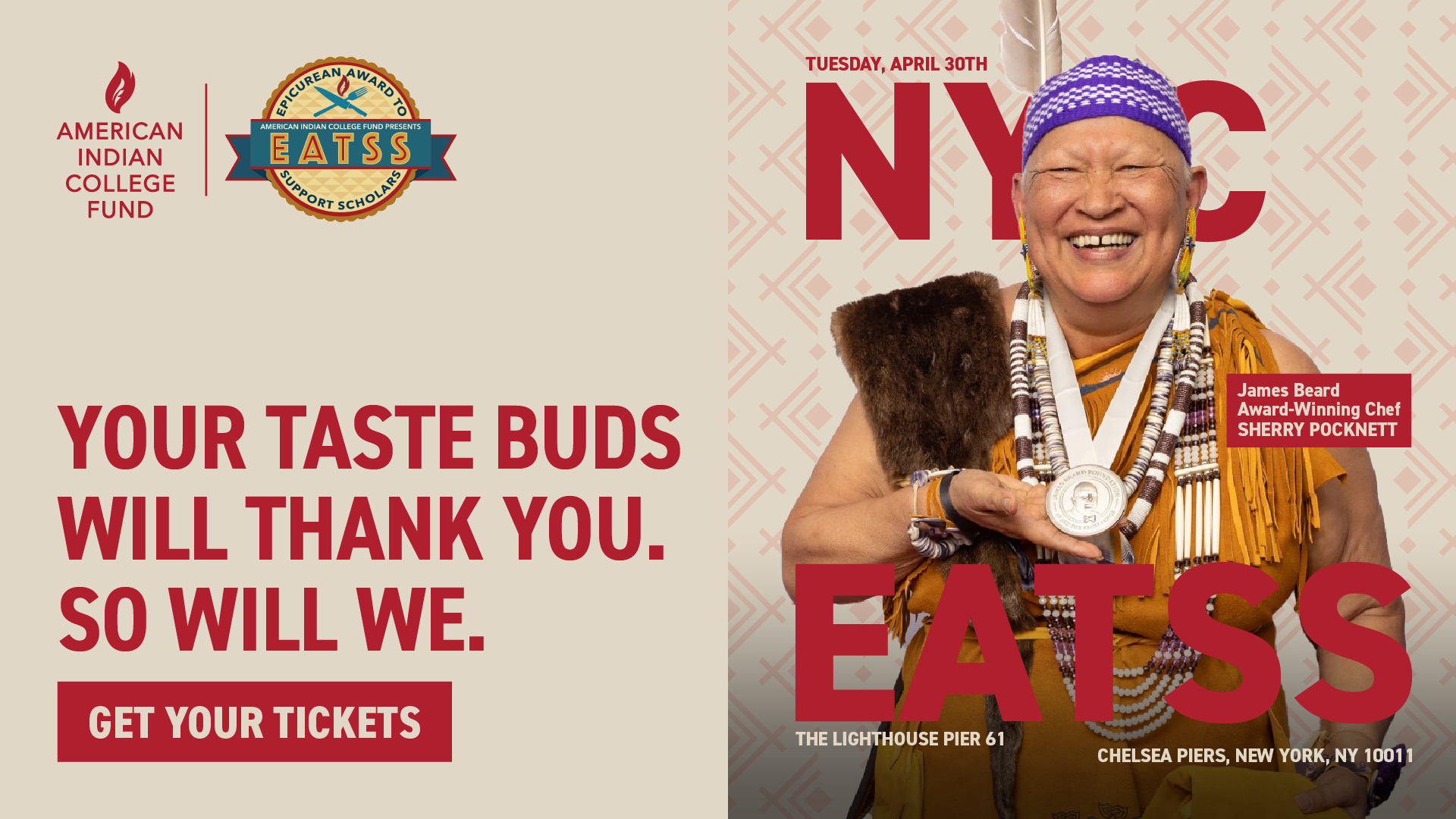
NEW YORK, April 25, 2024 (GLOBE NEWSWIRE) — Native American allies in the culinary, music and arts industries are joining forces with the
American Indian College Fund
for its upcoming
NYC EATSS
Event to take place on the evening of April 30, 2024. The American Indian College Fund aims to change lives and communities by investing in Native students and tribal college education.
For one night only on April 30, an immersive cultural celebration unlike any other will unfold in the most culturally diverse city in the world at
Chelsea Piers – The Lighthouse Pier 61
in New York, New York from 5:30 to 8:30 p.m. ET.
To purchase tickets or learn more about NYC EATSS, follow this link.
Guests will be able to indulge in a meal prepared by some of the nation’s top Native chefs, including
Chef Sherry Pocknett
, recipient of the prestigious
2023 James Beard Award
. “Fourteen thousand years later and we’re still here,” Pocknett said. “It’s our responsibility to nurture and protect the planet. My aim is not to commodify culture but to share our way of life and educate others on the importance of environmental stewardship.”
“An artistic exhibition from the
Institute of American Indian Arts (IAIA)
will provide a unique opportunity for attendees to marvel at their Native students’ creative work in a vast spectrum of mediums and platforms. These Native artists and students are empowered to develop their artistic style without being confined by tradition and history, and to embrace their creativity with no limitations. An on-stage discussion with
Cheryl Crazy Bull
,
President and CEO of the American Indian College Fund
, and her daughter and granddaughter will take place during the evening. This transparent and impactful dialogue between generations will highlight the vital role of higher education in their lives and in uplifting communities in tribal settings.”
“I am deeply aware that our young people need our love and support in order to overcome the many challenges they encounter. Our Native children and youth, and indeed, all young people, deserve to see themselves in positive ways,” remarked Crazy Bull. “The prayers and dreams of our ancestors have given us the courage and strength to work towards transforming the lives of all Native students today and for future generations. I am hopeful that you will join me in supporting this life-changing celebration and immersive experience on April 30.”
Featured Chefs:
Chef Sherry Pocknett (Mashpee Wampanoag)
: Pocknett brings her Indigenous heritage and culinary expertise to the forefront, specializing in the Bounty of the Season, Native American indigenous food, and New England cooking. Raised with a deep appreciation for tradition by her parents, Bernadine and Vernon, who instilled in her the values of Wampanoag culture, Sherry’s passion for food and education is evident in her work. As the first Indigenous woman to win a
James Beard Award
for Best Chef Northeast in 2023, Chef Sherry is the proud owner of
Sly Fox Den restaurant and is expanding with a second location, Sly Fox Den Too
.
Chef Bradley Dry (Cherokee)
: With over 12 years in the restaurant industry, Dry is dedicated to crafting traditional Cherokee dishes using wholesome, locally sourced ingredients. His heartfelt cooking aims to foster happiness and community, whether at special events like Pow Wows or
in his future restaurant, Elisi, named after the Cherokee word for grandmother
.
Chef Anthony Bauer (Turtle Mountain Band of Chippewa)
: Bauer, an Economic & Workforce Specialist with the
North Dakota Indian Affairs Commission
, brings over 25 years of culinary experience to the table. Inspired by his family’s love for food and tradition, Chef Bauer combines traditional ingredients with contemporary flair at his restaurant, Traditional Fire Custom Cuisine, aiming to inspire Native youth to explore the culinary field.
Chef Andrea Condes (Andean)
: Condes, an Andean chef and entrepreneur, channels her experiences into
Four Directions Cuisine
, emphasizing local and indigenous sourcing while preserving traditional knowledge. Through food menus, workshops, and speeches, Chef Condes seeks to dismantle colonial perspectives and make a positive impact in local and national communities.
Chef Ben Jacobs (Osage)
: Jacobs is a nationally renowned chef and co-founder of
Tocabe, An American Indian Eatery
, which showcases Osage family recipes in a modern context. With a commitment to supporting Native American food professionals and communities, Chef Jacobs’ restaurants have garnered acclaim from esteemed publications and media outlets nationwide, solidifying Tocabe’s position as the country’s largest Native American restaurant chain.
The evening culminates with an exclusive concert featuring Native musician
Raye Zaragoza
, whose music poignantly reflects her compassion, dedication to justice and equality for all, and a keen eye for the seemingly small daily moments that become our most meaningful memories.
The International Folk Music Awards
presented by Folk Alliance International honored Zaragoza with the
Rising Tide Award in 2021
. Presently she is in charge of writing the music for
Netflix’s Spirit Rangers
, a series that has an entirely Native American cast and writers’ room.
“When I wrote this song
‘Fight Like a Girl
,’ to me it was an anthem to acknowledge all the women of color, like the unsung heroes of feminism,” Zaragoza said, listing among them her grandmothers, great-grandmothers, the Indigenous women in her life as well as the “not-famous women” whom she considers her personal champions. She was honored for her song ‘
In The River
,’ which was written to express opposition to the Dakota Access Pipeline in 2016. Zaragoza and her brother made a
video for ‘In The River
’ that included facts about Standing Rock, and it received 100,000 views overnight. In 2017, the song was given the Heretic Award for Protest/Activist Music by the Global Music Awards, as well as the Honesty Oscars’ award for Best Song at the Honesty Oscars.
“The Native
community in LA has been a huge part of my life
since I moved here at the age of 14,” added Zaragoza. “Indigenous artists aren’t played on the radio or given space in mainstream publications enough, so I do what I can to be as proud as I can and pave the way for other artists too.”
NYC EATSS
Chelsea Piers – The Lighthouse Pier 61
in New York, New York
On April 30, 2024 from 5:30 to 8:30 p.m. ET.
To purchase tickets or learn more about NYC EATSS, follow this link.

To learn more about the American Indian College Fund
–
collegefund.org
The American Indian College Fund has been the nation’s largest charity supporting Native higher education for 35 years. The College Fund believes “Education is the answer” and provided $17.4 million in scholarships and other direct student support to American Indian students in 2022–23. Since its founding in 1989 the College Fund has provided more than $319 million in scholarships, programs, community, and tribal college support. The College Fund also supports a variety of academic and support programs at the nation’s 34 accredited tribal colleges and universities, which are located on or near Indian reservations, ensuring students have the tools to graduate and succeed in their careers. The College Fund consistently receives top ratings from independent charity evaluators and is one of the nation’s top 100 charities named to the Better Business Bureau’s Wise Giving Alliance.
To learn more about Raye Zaragoza
–
rayezaragoza.com
Raye Zaragoza is an award-winning singer, songwriter, and performer whose multinational heritage (Native American (O’odham), Mexican, Taiwanese and Japanese) deeply informs her music. Raye performs her music all over the United States and Europe. Her music has been featured on Democracy Now! and on numerous lists of the best modern-day protest songs, including those by Paste Magazine, What Culture, and Overblown. Raye has been invited to perform at the United Nations in New York City, and will be performing with TEDxHerndon in Virginia.
Related Links
The American Indian College Fund
NYC EATSS
Raye Zaragoza
Sly Fox
Vladimir Jones Advertising Agency
Photos accompanying this announcement are available at
https://www.globenewswire.com/NewsRoom/AttachmentNg/b5924ef4-a111-4f4c-9d82-f44070663617
https://www.globenewswire.com/NewsRoom/AttachmentNg/2e6fe05a-384d-4a61-bb90-0edf620c8b15
For all press/media inquiries or to schedule an interview please contact:

Amanda Mastera, amastera@vladimirjones.com