A new chapter in the history of New York street-style photography

A new chapter in the history of New York street-style photography

When he was growing up in Queens, Johnny Cirillo’s mom thought he’d one day be a talk-show host. That’s how much he loves chatting up strangers. “She was like, ‘You have so many questions.’ I couldn’t let somebody walk by if I had a question,” he says with a laugh.

Instead, though, Cirillo, 44, wound up directing his interpersonal curiosities toward a quieter medium: Since 2016, he has been known on Instagram and throughout the internet as the photographer behind Watching New York, a street-style feed that shares photos every day of stylish city dwellers getting around on foot. In a way, he says, “It’s a natural progression of things.”

Watching New York, which has 1.3 million followers on Instagram, has come to be known for its distinctive, friendly visual style, consisting of vertical shots with the subject perfectly centered, walking straight toward the camera with the background out of focus. (Cirillo politely declines to share his equipment and settings, and fair enough — he knows not to give away the ingredients to the special sauce.)

Now, after eight years as one of the city’s premier street-fashion spotters, Cirillo’s first book of collected photographs arrives on bookstore shelves this week. “Watching New York: Street Style A to Z” catalogues some of Cirillo’s favorite trends and individualistic wardrobe flexes: E, for example, is for embroidery and eyewear; P is for patches, patterns and prints, plaid, pops of color and puffers. Though pictures far outnumber words, “Watching New York” the book not only commemorates the long-standing tradition of street-style photography in New York but also illustrates what has changed about it in the age of Instagram — and how street-style shooters become known entities in an increasingly crowded field.

Cirillo’s book acknowledges in its introduction that it exists only because Bill Cunningham so memorably popularized street fashion photography in the late 20th century. When he passed away in 2016, “I felt a void,” Cirillo writes. “I thought going out and doing what he did so well and dedicated so much of his life to would be my way of honoring him.” That’s how Watching New York started: as a sort of tribute to Cunningham’s work. Cirillo never anticipated it would last as long, or become as well-known, as it has. (The foreword is written by Gigi Hadid.)

Looking through Cunningham’s work, “you can spot decades. You can spot certain eras, certain political movements,” Cirillo says. “He had his finger on the pulse all the time.” Cirillo aims to uphold that tradition; indeed, he has provided expert fashion-trend analysis to The Post before, including insights into the styles that came and went with the pandemic.

Of course, there are a few key difference between Cirillo’s work and Cunningham’s: Cunningham famously loved to photograph people from the side, while the vast majority of Cirillo’s subjects are pictured straight-on. Some of Cirillo’s subjects look right into his lens, posing to whatever extent one can while walking — lending the images a feel of interaction more than observation. (Yes, he does sometimes end up running ahead of people when he doesn’t think he’s gotten the shot yet: “I’ll get ahead of them a block and try to do it again,” as many times as it takes, he says. And yes, he confirms with a laugh, he’s pretty fast.)

Cunningham sometimes shot and published pictures of people who had no idea they were photo subjects. When Cirillo began publishing his own photos regularly, he did the same — until, as he writes in the book, “I posted a photo of a guy and a girl holding hands, smiling. I got a message shortly after I posted. ‘That’s me in the photo. My girlfriend and I are huge fans of your work; unfortunately, that’s not my girlfriend in the photo.’” Ever since, Cirillo has asked permission to publish from every person he photographs.

End of carousel

After he’s captured an image, “we always talk afterward,” he says — about permission and about Instagram handles, but also about the provenance of particular pieces and about personal style philosophies. Many make their own clothes; one young woman describes living with her grandma during covid-19 as her inspiration for repurposing old clothes into trendier, sexier looks — “making dad clothes hot, basically.” The after-chats are also how Cirillo met some of the characters who pop up repeatedly throughout “Watching New York.” A woman named Amber, whose outfits are featured in a two-page spread, says in the book that she loves “the wildfire effect [personal style] has on other people — how one outfit can inspire an onlooker to freshly embody themselves.”

In the Instagram age, Cirillo adds, getting the subject’s sign-off just feels like the responsible thing to do. A photo that appears only in a print newspaper and never touches the internet “basically goes away after a couple of days,” while Instagram is “such an archive.”

“People go back years on Instagram, and they find people they know,” Cirillo says. “What if it’s two guys or two girls holding hands, and the family doesn’t know? Or it could even be that somebody’s not supposed to be in New York, you know?”

Not every street-fashion photographer follows the same rules that Cirillo sets for himself; as anyone who’s ever accidentally walked by a fashion show or a red-carpet event in the city, plenty still shoot photos of every person walking in or out, paparazzi-style, without a word. Does Cirillo worry he might miss out on getting to share a unique or compelling shot by letting his subjects opt out? Not really: “Ninety-eight percent of people tell me yes right away. Two percent tell me no,” he says, “and usually half of that two percent, I convince.”

As street-style photography has proliferated, both Instagram and the sidewalks have gotten crowded. Scott Schuman has over a million followers as The Sartorialist. Phil Oh shoots street fashion for Vogue and posts on Instagram as @mrstreetpeeper. Karya Schanilec provides real-time trend analysis as @karyastreetstyle. Brandon Stanton’s Humans of New York broadens the assignment, depicting all walks of life in the city and occasionally an eye-catching outfit; Joshua Kamei’s @ladiesofmadisonave narrows his mission to (mostly) glamorous women uptown.

But Cirillo says street-style photographers rarely clash with one another over material or turf. Some of his favorite streets and city blocks — like a few in SoHo — have been regularly patrolled by other street-style photographers for “years and years,” some even before he started shooting there. And that’s okay.

“We can shoot the same subject, but it comes out completely different,” he says. For example, Cirillo loves running into Chaz Langley, whose work he describes as “intimate portraits of fashionable people,” out on the sidewalks — and Jean Andre Antoine, who shoots each subject on expired Polaroid film. The latter “has his spot that he stands in every day,” Cirillo says.

“After time, everybody finds the place that they’re comfortable in,” he says, “and it kind of just feels like home when you get there.”

Reuters photographer wins World Press Photo of the Year with poignant shot from Gaza

Reuters photographer wins World Press Photo of the Year with poignant shot from Gaza

PARIS (AP) —

Reuters photographer Mohammed Salem captured this year’s prestigious World Press Photo of the Year award Thursday with a depiction of loss and sorrow in Gaza, a heartrending photo of a Palestinian woman cradling the body of her young niece. The photograph, taken in Khan Younis just days after Salem’s own child was born, shows 36-year-old Inas Abu Maamar holding five-year-old Saly, who was killed along with her mother and sister when an Israeli missile struck their home.

Salem, who is Palestinian, described this photo filed Nov. 2 last year, as a “powerful and sad moment that sums up the broader sense of what was happening in the Gaza Strip.”

The image ”truly encapsulates this sense of impact,” said global jury chair Fiona Shields, The Guardian newspaper’s head of photography. “It is incredibly moving to view and at the same time an argument for peace, which is extremely powerful when peace can sometimes feel like an unlikely fantasy,” she added.

The World Press Photo jury praised the shot’s sense of care and respect and its offering of a “metaphorical and literal glimpse into unimaginable loss.”

This is not the first time Salem has been recognized for his work on the Israeli-Palestinian conflict; he received a World Press Photo award more than a decade ago for another depiction of the human toll of conflict in the Gaza strip.

In the three other global categories announced Thursday, South Africa’s Lee-Ann Olwage won Photo Story of the Year for her touching series “Valim-babena,” featured in GEO magazine. The project focused on the stigmatization of dementia in Madagascar, a topic she explored through intimate portraits of “Dada Paul” and his family. Lack of public awareness surrounding dementia means that people displaying symptoms of memory loss are often stigmatized.

In the series, “Dada Paul,” who has lived with dementia for 11 years, is tenderly cared for by his daughter Fara. One of the standout images in the series shows him preparing for church with his granddaughter Odliatemix, capturing moments of normalcy and warmth amidst the challenges of dementia.

Photographer Alejandro Cegarra, a Venezuelan native who migrated to Mexico in 2017, won the Long-Term Project award for “The Two Walls,” published by The New York Times and Bloomberg. Cegarra’s project, initiated in 2018, examines a shift in Mexico’s immigration policies, which have moved from being historically open to enforcing strict regulations at its southern border. The jury said the photographer’s perspective as a migrant gave it a “sensitive,” human-centered perspective, according to a press release.

Julia Kochetova of Ukraine won the Open Format award for “War Is Personal.” The project stood out from coverage of the ongoing conflict by offering a personal look at the harsh realities of war. On a dedicated website, she merged traditional photojournalism with a diary-like documentary style, incorporating photography, poetry, audio clips and music.

The Associated Press won the Open Format award in the regional Africa category with the multimedia story “Adrift,” created by journalists Renata Brito and Felipe Dana. The story investigates the fate of West African migrants who attempted to reach Europe via a treacherous Atlantic route but ended up on a ghost ship discovered off Tobago. The team’s compelling use of photography, cinematography and detailed narrative, enhanced by expert design and multimedia elements, highlights the perils faced by migrants and the human stories behind global migration issues.

The Associated Press’ Ebrahim Noroozi won the Asia Stories award for his series “Afghanistan on the Edge,” which documents the country since the Taliban took over in August 2021.

World Press Photo is an independent, nonprofit organization based in the Netherlands, founded in 1955.

Thomas Adamson, The Associated Press

Calendar

Calendar
Calendar of events happening in Lancaster County and beyond: museums, music, festivals, kids activities, theater

A Millennial Weaver Carries a Centuries-Old Craft Forward

A Millennial Weaver Carries a Centuries-Old Craft Forward

Spiders are weavers. The Navajo artist and weaver Melissa Cody knows this palpably. As she sits cross-legged on sheepskins at her loom, on one of the wooden platforms that boost her higher as her stack of monumental tapestries grows, the sacred knowledge of Spider Woman and Spider Man, who brought the gift of looms and weaving to the Diné, or Navajo, is right there in her studio with her.

It also infuses “Melissa Cody: Webbed Skies,” the first major solo exhibition of the artist’s work, which is on view at MoMA PS1 through Sept. 9. in a co-production with the São Paulo Museum of Art in Brazil (known as MASP).

The exhibition is part of the overdue recognition of Indigenous artists by museums and other institutions, from the recent retrospective of Jaune Quick-to-See-Smith’s work at the Whitney Museum of American Art to the expanding roster of artists at the Venice Biennale. Cody, 41, is a millennial at the forefront of an art form harking back millenniums — at once building on tradition and joyously venturing beyond it.

Her show’s title alludes to her 2021 work “Under Cover of Webbed Skies,” in which hourglass shapes resembling a spider’s underbelly stand in for the artist herself, passing Spider Woman’s wisdom on to future generations and a web of motherly protection from mountain to sky. (Selected works are also at the Garth Greenan Gallery from April 25 to June 15.)

The artist Melissa Cody, her long dark hair tied in a low ponytail and dressed in a gray T-shirt that exposes her artfully tattooed arms, weaves on her traditional loom. She is using a wooden comb to tap yarns for her textiles.
Melissa Cody, a fourth-generation Navajo weaver, at her loom in her studio in Long Beach, Calif. She is tapping yarns for her textiles with the same wood comb she started out with at age 5.Nia Macknight for The New York Times

Cody was weaned on weaving, tapping weft yarns for her nine-foot-tall textiles with the same wood comb she started out with at age 5. She grew up on the western edge of the Navajo Nation in Arizona, the fourth generation from a family of distinguished female weavers, most notably her award-winning mother, Lola S. Cody, who raises her own churro sheep for traditional patterns like “Two Grey Hills,” and her grandmother Martha Gorman Schultz, still pioneering in her 90s on her outdoor loom.

We are having trouble retrieving the article content.

Please enable JavaScript in your browser settings.


Thank you for your patience while we verify access. If you are in Reader mode please exit and log into your Times account, or subscribe for all of The Times.


Thank you for your patience while we verify access.

Already a subscriber? Log in.

Want all of The Times? Subscribe.

Party Like It’s 1989

Party Like It’s 1989
image

In the 1980s and ’90s, Dafydd Jones’s party shots captured Manhattan’s rich and powerful.

Nine years ago, while recovering from a serious health crisis, the British society photographer Dafydd Jones decided to return to his archive of negatives and print a few of his old party pictures. Mr. Jones had spent three decades documenting the social scenes of British and American upper classes for The Tatler, The New York Observer and Vanity Fair under Tina Brown and Graydon Carter, but the frenetic pace of society photography had never given him time to look back on his own work.

In 2020, he published his first book of these photos, “Oxford: The Last Hurrah.” It was a surprise hit, prompting Mr. Jones to look back at his nights in the 1980s and 1990s, when he rubbed shoulders with Manhattan’s rich and powerful. These pictures of a bygone era, both glitzy and seedy, have been gathered together for the first time in a new book, “New York: High Life / Low Life,” available now in Britain and next month in the United States.

Mr. Jones spoke via video chat from his studio in East Sussex, England. The conversation has been condensed and edited for clarity.

Dafydd Jones spent much of the 1980s and ’90s photographing the British and American upper classes. Jillian Edelstein

In 1988, you left the London society circuit and moved to New York for a month. Why did you decide to uproot your life?

I’d never planned to be a social photographer. I just found myself in that situation and realized it was a really interesting world to photograph, and no one else was really covering it in a journalistic way. I was going to May balls in Cambridge, Oxford, Royal Ascot and the Derby, and there is a fixed calendar. I had a fantastic opportunity, but I suppose after you’ve been to Ascot eight times. …

We are having trouble retrieving the article content.

Please enable JavaScript in your browser settings.


Thank you for your patience while we verify access. If you are in Reader mode please exit and log into your Times account, or subscribe for all of The Times.


Thank you for your patience while we verify access.

Already a subscriber? Log in.

Want all of The Times? Subscribe.

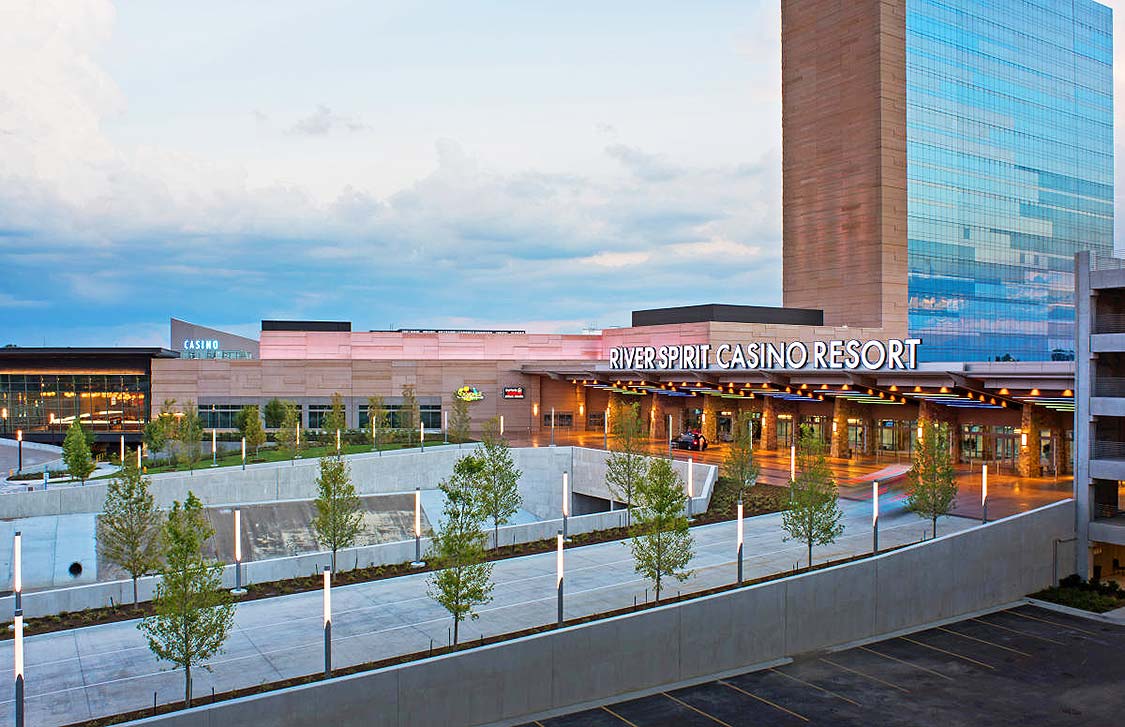
River Spirit Casino To Host Mvskoke Art Market

River Spirit Casino To Host Mvskoke Art Market

TULSA, OK – The Third Annual Mvskoke Art Market will take place at River Spirit Casino Resort in Tulsa on April 20-21. The market has experienced significant growth in its first two years. Artists participating increased from 60 and 82 in years one and two, respectively, to 94 Native artists this year, representing over 30 tribes from across Oklahoma and Indian Country.  

In addition to the showcase and purchasing of artwork in various mediums by renowned Native artists, visitors can enjoy educational presentations and panel discussions on early Muskogean, First American and Oklahoma Indian art. A Mvskoke motifs stamping activity will be available to children who will be able to create their own piece of artwork using traditional Mvskoke designs and patterns. A book signing for the recently published biography of Muscogee Actor Will Sampson by Norma Sampson Bible and an all-Native comedy show is included on the market’s event schedule.  

image