“Civil War” — a nightmarish exploration of war photographers’ experiences

“Civil War” — a nightmarish exploration of war photographers’ experiences

Unlike other war movies, writer/director Alex Garland’s Civil War (trailer) is told from the point of view of those behind the cameras. War photographers in search of the elusive moneyshot, Lee Smith (Kirsten Dunst’s veteran photojournalist) and Jessie Collins (Cailee Spaeny’s ambitious newbie) take their quest all the way to the top. The film follows them from New York City to Washington DC–from war-torn city streets, through the free-for-all frontier law of rural areas, all the way to the White House. As Sammy (Stephen McKinley Henderson’s veteran journalist) says on the way, “It’s not a story if it never gets filed.”

The scariest part of the film isn’t the gunfire, explosions, death, or destruction. By far the film’s scariest feature is its ontological instability, the watching of one’s world crumble with nothing in the way of recourse. The lack of cues from limited access to media heightens the sense of helplessness. The lack of partisan politics is part of the film’s power. There is precious little information about what will come next, which adds to the fear and anxiety.

There is a paradox here, a struggle between exposure and isolation: exposure to danger and isolation from information.

The camera work of the better found-footage films, like The Blair Witch Project, Chronicle, and Cloverfield, which the latter’s director Matt Reeves likened to “looking through a soda straw,” is eerie and effective in a similar fashion. There’s such a sense of exposure. The first-person point of view makes the viewer feel “in” the movie, as opposed to passively watching it. Much like the security camera footage of Columbine, and the camera-as-character of Cloverfield, Garland gives us a crippled information flow while subjecting us to total exposure. 

Filmmakers are typically trying to get movie cameras “out of the way” of the movie. Filmmakers typically aim for the camera to be transparent, much as transparency has been advocated in computer interface design. Authors Jay Bolter and Diane Gromala have argued that the interface needs to be reflective as well as transparent, as in windows and mirrors and their book of the same name. The interface needs to get out of the way sometimes (transparency) and provide cues for interaction at other times (reflection). Moving images have similar needs to fulfill.

In Civil War, the cameras are so decidedly in the way as to become focal points. Snapshots pause on the screen as they are taken. Their wobbles, glitches, blurs, and unrelenting singularity of viewpoint define and redefine our experience in the film’s undulating chaos. In this way, Garland deftly mixes form and content, mention and use. The photographic process is integral to the picture.

Even if it’s far from grainy security camera footage, the camera’s limits are what define this viewing experience. Even in defying our expectations, it is a surprisingly effective film. Even with its focus on photography, in Civil War the best shot is all Garland’s.

Previously: WATCH: `Ex Machina` examines love and exploitation in the age of AI

[embedded content]

Stellar Photography Shines a Light on Suffolk’s Night Sky

Stellar Photography Shines a Light on Suffolk’s Night Sky

A high-definition, realistic photograph of the night sky as observed from Suffolk. The celestial bodies glisten against the darkness, forming a panorama of twinkling stars. Milky Way's brilliance spills across the scene. Constellations are discernible, their forms etched delicately by the distant stars. The landscape below is subtly illuminated, hinting at the verdant meadows and quaint, rural environs of Suffolk. A few wisps of cloud streak across the sky. The image captures the serenity and extraordinary awe of a clear, star-studded night in rural England.

Summary: The serene skies of Suffolk become the stellar canvas for Jon Allard, an astrophotography enthusiast whose recent work underscores the fascination with the cosmos. This article delves into the implications of such photography on tourism, the growing astro-tourism industry, and the challenges of preserving night skies in the face of light pollution.

Under the tranquil Suffolk skies, Jon Allard, through his lens, has artfully documented the majestic swirl of the Milky Way. This particular capture atop Aldeburgh beach is merely the latest star in his growing galaxy of night photography. Suffolk’s natural beauty and ideal stargazing conditions have rendered it a hotspot for astronomical enthusiasts and photographers like Allard.

From March through May, and sporadically during summertime, the Milky Way reveals itself to those patient enough to seek out its splendor. Jon Allard’s dedication to astrophotography represents humanity’s ceaseless intrigue with the universe above.

Astro-tourism is on an upward trajectory, with destinations like Suffolk rising to meet the demand of travelers eager to experience the celestial sights firsthand. The economic benefits are tangible, as dark sky reserves and astro-festivals increasingly contribute to local revenue.

However, the popularity of night sky photography brings its own challenges. Advancements in camera technology, while necessary to capture the night sky’s nuances, prompt discussions on sustainable practices. The influx of visitors to remote locations requires careful management to avoid harm to delicate ecosystems. Additionally, combating the scourge of light pollution remains paramount, necessitating policy changes and community action.

In this dawning age of astro-tourism and astrophotography, opportunities abound for business growth in tourism, hospitality, and photography equipment sectors. Educational initiatives are also key, fostering public knowledge on preserving our night skies and engaging in astrophotography mindfully.

The celestial photograph taken by Allard serves as a beautiful reminder of our connection to the vast universe – and highlights the necessity for sustainable practices to maintain and share the wonder of starry nights for generations to come.

Under the serene Suffolk skies, astrophotography enthusiast Jon Allard captures the galactic beauty of the night, highlighting an emerging trend in the global tourism industry—astro-tourism. Suffolk, with its dark skies, has become a prime location for those looking to gaze into the cosmos, and Allard’s photos only magnify its allure. The charm of stargazing is not unique to Suffolk, as regions around the globe capitalize on their celestial offerings, drawing visitors from near and far.

The trend of astro-tourism parallels the expansion of the overall travel industry, where unique experiences drive destination choices. Market forecasts anticipate continued growth in this niche, alongside the increasing popularity of activities like aurora viewing, meteor shower gatherings, and dark sky festivals. These events not only promote local tourism but also have the potential to boost spending in accommodation, food, and specialty equipment designed for nocturnal adventures.

Yet, while the stars are aligning for the tourism sector, challenges such as light pollution are prompting necessary conversation. Communities and industry stakeholders are advocating for regulations to curb artificial light leakage that obscures the night sky’s natural splendor. This advocacy plays a crucial role in safeguarding astro-tourism’s future and preserving delicate night environments for wildlife and ecosystems that depend on natural darkness.

Moreover, the burgeoning interest in astrophotography fosters growth in the photography equipment industry, with an increased demand for high-sensitivity cameras, tripods, star trackers, and specialized lenses. Innovations continue to evolve, pushing the boundaries of what can be captured on camera under the night sky.

In summary, while Jon Allard’s photographs underscore a personal passion for the heavens, they also reflect greater movements within various industries tied to the astro-tourism market. The imperative for protective measures of our dark skies creates a unique intersection where conservation efforts meet economic interests—a convergence that, if navigated thoughtfully, promises a bright future for night sky enthusiasts and the industries they influence.

To learn more about astro-tourism and astronomy-related initiatives, one might visit the International Dark-Sky Association’s website at International Dark-Sky Association or the World Tourism Organization’s portal at World Tourism Organization to discover how these organizations are impacting the industry.

[embedded content]

Leokadia Głogulska

Leokadia Głogulska is an emerging figure in the field of environmental technology, known for her groundbreaking work in developing sustainable urban infrastructure solutions. Her research focuses on integrating green technologies in urban planning, aiming to reduce environmental impact while enhancing livability in cities. Głogulska’s innovative approaches to renewable energy usage, waste management, and eco-friendly transportation systems have garnered attention for their practicality and effectiveness. Her contributions are increasingly influential in shaping policies and practices towards more sustainable and resilient urban environments.

Unleashing the Macro Universe in Your Pocket: Moment’s Groundbreaking Lens Revolutionizes Smartphone Photography

Unleashing the Macro Universe in Your Pocket: Moment’s Groundbreaking Lens Revolutionizes Smartphone Photography

High-definition, realistic visual depiction of a ground-breaking scenario, where the vast expanse of the macro universe is unleashed from a pocket-sized object - a momentous lens that revolutionizes smartphone photography. The image should clearly portray a smartphone lens dramatically bringing into view celestial bodies, galaxies, and other astronomical elements that were previously unseen, capturing their minute details and grandeur within its frame, thereby metaphorically placing the abstract concept of the 'macro universe' inside one's pocket.

Prepare to be mesmerized by the minuscule wonders that have been eluding the naked eye! The renowned camera accessory company, Moment, has ushered in a new era for macro photography enthusiasts and smartphone users worldwide. With the release of the Moment 75mm Macro Mobile Lens, the realm of professional macro photography is now accessible to all, wrapped up in a reasonably priced package that broadens its reach to an eager audience.

Retailing at a modest $119, Moment’s latest marvel doesn’t play favorites – it’s been crafted with compatibility in mind for high-end smartphones such as the iPhone 13, Google Pixel 7, and Samsung Galaxy S22. Even if you’re not the owner of one of these tech titans, fear not! A compatible case ensures that other smartphone models can join in on the magnified fun, making sure no one misses out on the chance to elevate their photography prowess.

This macro lens is not just about bringing the tiniest details into sharp focus; it’s about fusing creativity with functionality. With an optional adapter at hand, it pairs up with a 67mm filter, promising an exciting adventure into the art of photography. Moment strides further in empowering passionate content creators with cutting-edge accessories that lend a professional touch to smartphone cameras.

Sure, you can snag this lens easily through Moment’s online store, but bear in mind the small print – some phone models need specific cases or a universal adapter to join the macro party. Despite these additional considerations, the Moment 75mm Macro Mobile Lens stands as a significant advancement for mobile photography, inviting everyone to capture the intricate beauty of the tiny universe around us with vivid clarity.

Intrigued? Here’s a quick FAQ rundown on the Moment 75mm Macro Mobile Lens:

**What exactly is the Moment 75mm Macro Mobile Lens?**
An innovative creation by Moment, this camera accessory is designed to enable anyone with a compatible high-end smartphone to snap professional-grade macro photos.

**How much does the Moment Macro Lens cost?**
The consumer price for the Moment Macro Lens is $119.

**Which smartphones are compatible with the Moment Macro Lens?**
Compatible models include the iPhone 13, Google Pixel 7, and Samsung Galaxy S22, which all require a specific case. Universal adapters allow the use of other models.

**Is there a solution for phones incompatible with the macro lens?**
Yes, a universal adapter is available for phones that don’t directly pair with the Moment Macro Lens, priced at $29.99.

**Can I use filters with the Moment Macro Lens?**
Yes, the lens can be used in conjunction with a 67mm filter with an optional adapter.

**Where can I purchase the Moment Macro Lens?**
This lens is available directly from Moment’s online store.

**Do I need anything extra to use a macro lens with my smartphone?**
Yes, a compatible case or a universal adapter for other smartphone models is necessary.

**Glossary:**
– Macro Photography: A technique that captures close-up images of small subjects, making them appear larger than their actual size.
– Universal Adapter: A device that enables the macro lens to be compatible with diverse smartphones that are not directly compatible.

**Related Links:**
Shop Moment
Apple
Google Pixel
Samsung

Diving into a domain of photography that was once reserved for high-end DSLRs and complex equipment, Moment’s 75mm Macro Mobile Lens promises to spark a new wave of creativity and exploration. In a world that’s growing increasingly mobile, the power to capture the extraordinary in the ordinary now fits comfortably in your pocket. So why wait? The magnificent microcosm awaits your lens, and the perfect shot is just a click away!

[embedded content]

Marcin Frąckiewicz

Marcin Frąckiewicz is a renowned author and blogger, specializing in satellite communication and artificial intelligence. His insightful articles delve into the intricacies of these fields, offering readers a deep understanding of complex technological concepts. His work is known for its clarity and thoroughness.

You can convert the Module 8 PL Tuner to Fujifilm X and Leica L mounts

You can convert the Module 8 PL Tuner to Fujifilm X and Leica L mounts
[embedded content]

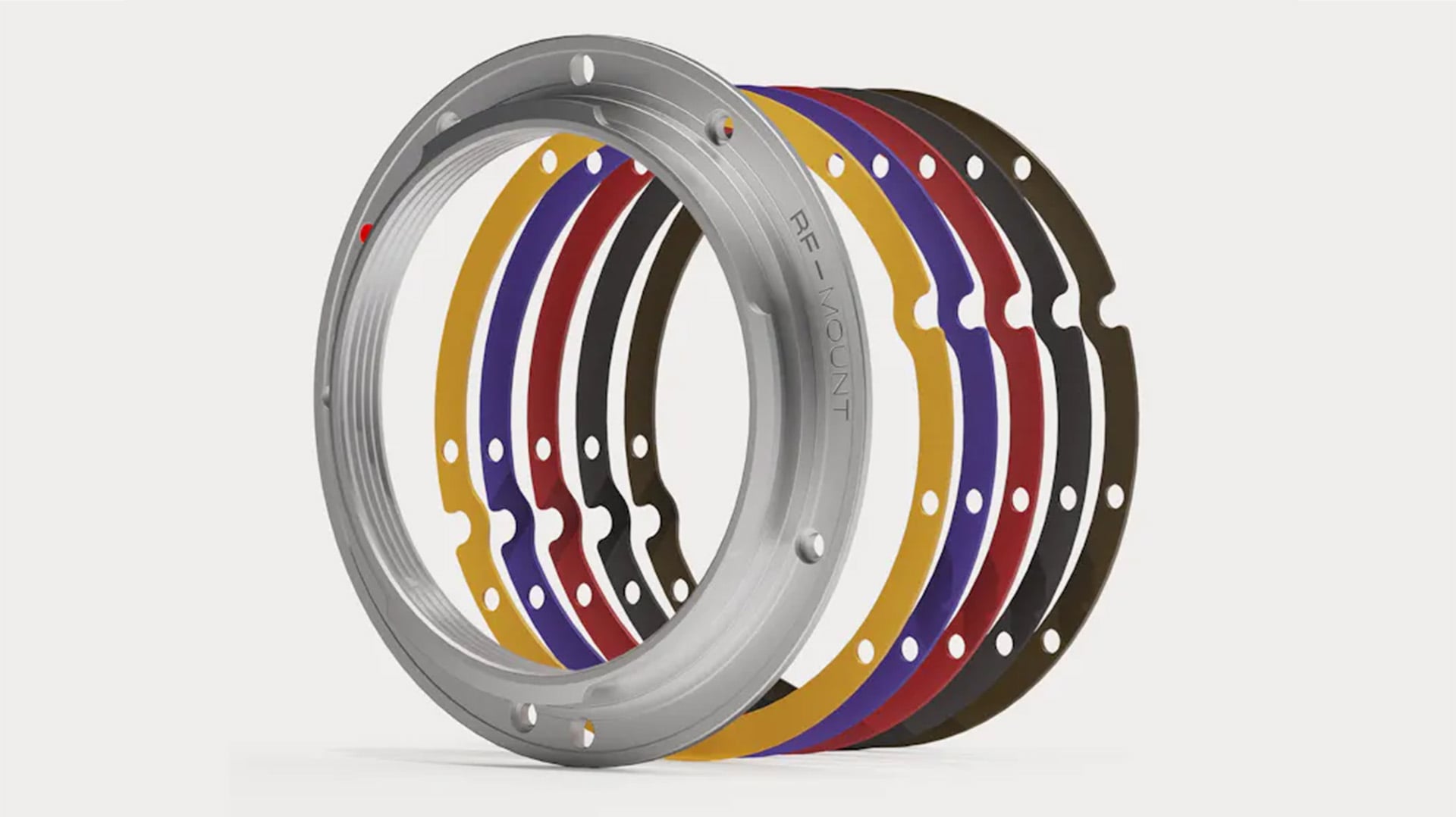
Happy NAB2024 everyone. Last we covered the Module 8 series, its L1, L2, and L3 tuners just got a new PL version that acts as both a tuner and a PL lens adapter for RF and E mount cameras. Now, Moment is releasing a mount conversion kit for $100 that allows you to convert the tuners’ mounts. This allows you to switch between the previously available RF and E mounts or adapt the tuners between two new options: the Fujifilm X and Leica’s L mounts.

YouTube videoYouTube video
[embedded content]

What are the Module 8 Tuners?

Moment 8 tuner vs vintage glassMoment 8 tuner vs vintage glass

If you are a fan of classic lenses, you may have already heard of the Module 8 Tuners. They’re essentially front filters that give your lenses a “classic lens look”. Specifically, Lenses like the Canon FD,  Super Baltars, and Canon K-35. If the claim is solid, getting a Tuner is an order of magnitude cheaper than getting a high-end vintage lens.

Here is the deal: if you like vintage looks, digital filters are great, but they are not the real thing. A lens “look” is tied to its optics and is hard to reproduce in post. There is a reason that old optics are getting a renaissance. The Nour TripletPetzval 80.5mmLensbaby Velvet, and the Daguerreotype Achromat 2.9/64 Art Lens are just a few samples. They are more on the stills side, but you get my point.

Optical flows are hard to reproduce digitally, but what if you reproduce them optically? That’s what the Module 8 Tuners are for. Of course, it does not hurt that multiple-Oscar winner Iain Neil is the optics designer behind this project.

Module 8 Tuners showcaseModule 8 Tuners showcase

Specifications

Lens Type Variable Look Zoom Attachment
Materials Aerospace Quality
Mechanical Design Precision Multi-cam
Lens Side Mount Canon EF Lenses and PL Lenses Only
Electronics Support Canon, Tamron, Sigma
Electronics Support EF Tuner: Focus (wire), Aperture, IS and Autofocus Pass though – PL Tuner: None
Inspired By Canon® K-35
Neutral Setting Yes
Adjustment Rage 0-10
Halation (Center) Low/Medium
Halation (Edge) Low
Axial Aberrations Spherical
Full Frame Aberrations 5th Order Coma Oblique Spherical
Resolution 4K+
Max. Bokeh Effect Soap Bubble
Magnification Factor 1.1x
Tuner Breathing < 0.25%
F/# Range (Optimal) EF Tuner: F/1.2-F/2.8 – PL Tuner: F/1.0-F/2.8
Stop Loss < 1/4
Lens Image Circle Full Frame
Coatings Vintage Emulation
Weight 180g (E Mount) – 170g (RF Mount) – 280g (PL Tuner)
Tuner Dial Rotation 70 degrees
Firmware Update EF Tuner: Via Micro USB – PL Tuner: No Firmware
Warranty 1 Year
Dimensions EF Tuner: Ø76mm x L31mm – PL Tuner: Ø80mm x L45mm
Moment Tuner conversion kitMoment Tuner conversion kit

Price and availability

The mount conversion kit costs $100 per unit. Personally, I find this price to be quite “bananas” for what is essentially a rear mount part and a shim kit.

Sponsor shout-out: A huge shout-out for our #NAB2024 gear sponsors. They pick up the bill so you can get amazing free content: Nanlite, ProGrade Digital, Sennheiser, SmallRig, Ugreen, YC onion

An AP photographer explains how he captured the moment of eclipse totality

An AP photographer explains how he captured the moment of eclipse totality
image

FORT WORTH, TEXAS (AP) — Photographer Mat Otero has been working at the AP in the Dallas bureau for nearly 30 years. In that time, he’s covered an annular and partial solar eclipse, so he was prepared for the challenge of making a photo of the only total solar eclipse on this scale he will likely cover in his career (the next coast-to-coast eclipse in the U.S. is expected in 21 years). This is what he said about making this extraordinary image.

Why this photo

Cornell Watson photography presentation set for April 20

Cornell Watson photography presentation set for April 20
image

The Mount Airy Photography Club is hosting a free photography presentation featuring award-winning photographer Cornell Watson on April 20 at 2 p.m. in the Arts Center at 215 Rockford Street during the Downtown Art Walk.

Cornell Watson is an award-winning photographer based in Durham. His photography is centered around sharing the stories of Black people. He frequently contributes photography to national publications such as The New York Times, The Washington Post, The Wall Street Journal, NPR, ESPN, and Bloomberg.

This page requires Javascript.

Javascript is required for you to be able to read premium content. Please enable it in your browser settings.


Featured Local Savings


The first Nikon RED cameras are here – RED V-RAPTOR [X] and V-RAPTOR XL [X]

The first Nikon RED cameras are here – RED V-RAPTOR [X] and V-RAPTOR XL [X]
[embedded content]

The RED V-RAPTOR [X] ($29,995) and V-RAPTOR XL [X] ($39,995) are the first RED cameras released since the Nikon-RED acquisition. The new cameras feature large format 40.96 x 21.6-millimeter image sensors, insane video quality, and an impressive dynamic range. Needless to say, RED’s new tech is worth being excited about. But, the most interesting thing about the new RAPTORS isn’t their new sensor or new video capabilities. Rather, it’s the fact that Nikon now has access to this new tech, which interests me, as it suggests we may see some of this tech returning in a future Nikon Z camera.

The first Nikon – RED cameras

Visually, the RED V-RAPTOR [X] and V-RAPTOR XL [X] don’t look much different than the cameras RED made before the acquisition. That much is to be expected, as their design was most definitely finished by the time the acquisition took place. It will take time until we’ll see a RED camera that looks a bit more “Nikon-like”.

RED V-RAPTOR [X] and V-RAPTOR XL [X] – the first global-shutter, large-format cinema cameras

RED V-RAPTOR [X] and V-RAPTOR XL [X] - the first global-shutter, large-format cinema camerasRED V-RAPTOR [X] and V-RAPTOR XL [X] - the first global-shutter, large-format cinema cameras

The RED V-RAPTOR [X] and V-RAPTOR XL [X] utilize the new large-format V-RAPTOR [X] 8K VV and V-RAPTOR XL [X] 8K VV sensors, respectively, alongside a global shutter. As we saw with the Sony a9iii, the world’s first full-frame global-shutter camera, the global shutter offers a massive speed improvement when compared to the traditional rolling shutter. While a rolling shutter reads sensor data line-by-line, a global shutter reads all the sensor data simultaneously. This means you’ll have a much faster image read speed, allowing you to avoid effects like rolling shutter distortion. You can read more about the differences between the two shutter types in this great post by Studiobinder.

Rolling shutter vs Global shutterRolling shutter vs Global shutter
Image by Studiobinder

RED’s Global Vision

With the new V-RAPTOR [X] and V-RAPTOR XL [X], RED introduced their Global Vision, “a new suite of tools that use the global shutter sensor to provide even more flexibility and ease of use throughout the production process. Global Vision’s Extended Highlights allows the camera to see even further into highlight detail, providing more detail for HDR finishes or softer and more subtle highlight roll-off for SDR.

RED’s Phantom Track

RED also introduced the new Phantom Track feature, a new recording option for cinematographers who work in virtual productions that utilize tools like Unreal Engine or Ghostframe:

YouTube videoYouTube video
[embedded content]

RED V-RAPTOR [X] and V-RAPTOR XL [X] – dynamic range

RED V-RAPTOR [X] and V-RAPTOR XL [X] - dynamic rangeRED V-RAPTOR [X] and V-RAPTOR XL [X] - dynamic range

According to RED, the new RAPTORS have 17-plus stops of dynamic range in normal shooting modes and a whopping 20-plus stops when the new “Extended Highlights” feature is enabled.

“Extended Highlights is a beta feature designed to capture more color and detail in the extremely bright portions of your image. It uses multiple exposures to reconstruct previously clipped details in the most faithful way possible. There are no adjustments or levers for the Extended Highlight process; it is simply an On or Off feature,” explains RED on their Extended Highlights feature support page.

Price and availability

The RED V-RAPTOR [X] and V-RAPTOR XL [X] are available starting at $29,995 and $39,995, respectively.