How Photographer Platon Captures the Power of Everyday Heroes

How Photographer Platon Captures the Power of Everyday Heroes

Platon proudly calls himself a cultural provocateur. While other mononymous artists like Bono or Madonna use music to provoke, Platon communicates through photography. Photographs, he argues, are only effective if they “make you stop in your tracks to think about the times we’re living in”—they should “choke like mustard gas.” A professional photographer since the late ’90s, Platon has consistently applied this approach to his work creating images of boldface names across every sector, including President Barack Obama, Serena Williams, Prince, Mark Zuckerberg, Muammar Gaddafi, and President Vladimir Putin. His images have appeared on more than 25 TIME magazine covers.

image

In 2010, an assignment came from Human Rights Watch that opened Platon’s eyes to another kind of story to tell. He was asked to travel to Burma (now Myanmar) to help bring awareness to the toll of the civil war by photographing everyday heroes. He would be paid nothing, he would have to leave his young family, and his life would be in danger. Even so, he took the job. When he arrived, Platon immediately felt out of his element. But understanding that the subjects were counting on him to take their photographs and share their stories gave him a sense of responsibility. He remembers thinking: “I’ll roll up my sleeves, I’ll get to work, and I’ll photograph them the way I shoot TIME covers—powerful, in your face, unapologetically defiant.”

Image from The Defenders by Platon

Throughout the process, Platon saw that his subjects projected many of the same qualities—courage, leadership, resilience—as the high-profile figures he was so used to shooting. He became motivated to show through his photographs that the term “powerful leader” does not exclusively apply to those with cultural or institutional power. The greatest trail blazers, he observed, are often ordinary people who rise up against the odds to fight for something bigger than themselves.

Platon’s new book, The Defenders: Heroes of the Fight for Global Human Rights, is a visual commemoration of powerful figures around the world. The book, weighing in at nearly 9.5 pounds and 560 pages, weaves together images of everyday and high-profile leaders. It encourages the viewer to embrace the definition of power in all its forms, with a focus on amplifying the voices of those fighting for a more just world. Platon’s hope is that the book will embolden and inspire the next generation of human rights activists. After all, he says, “Real power is not to be kept protected. It is to be shared.”

Image from The Defenders by Platon
” data-credit=”Platon” data-sizes=”(max-width: 768px) 90vw, (max-width: 1024px) 75vw, (max-width: 1280px) 55vw, 800px”>Image from The Defenders by Platon
Image from The Defenders by Platon

Nye & Company Auctioneers will hold two important online-only photography auctions on Wednesday, May 15th, at 10 am EDT

Nye & Company Auctioneers will hold two important online-only photography auctions on Wednesday, May 15th, at 10 am EDT
Gelatin silver print by Valdir Cruz, (Brazilian, b. 1954), titled Gypsy Woman I.

Gelatin silver print by Valdir Cruz, (Brazilian, b. 1954), titled Gypsy Woman I.

Photograph by Flip Schulke (1930-2008), titled Muhammad Ali Underwater at the Sir John Hotel Pool.

Photograph by Flip Schulke (1930-2008), titled Muhammad Ali Underwater at the Sir John Hotel Pool.

Halftone print by Alfred Stieglitz (American, 1864-1946), of the artist Georgia O'Keeffe.

Halftone print by Alfred Stieglitz (American, 1864-1946), of the artist Georgia O’Keeffe.

Silver gelatin photograph by Ansel Adams (American, 1902-1984), titled Two Skiers, stamped “Photographed in Yosemite by Ansel Adams” on verso.

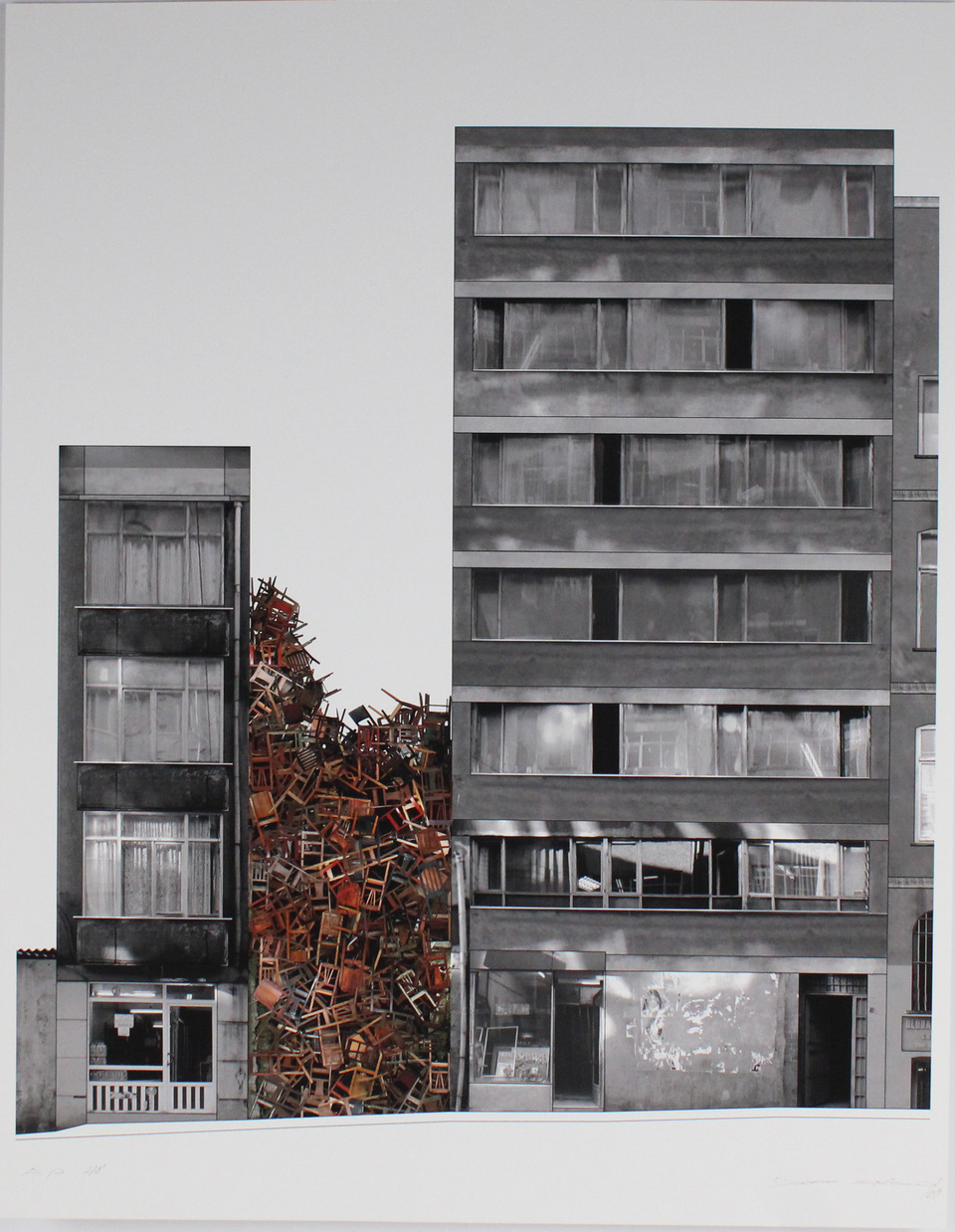
Doris Salcedo (Columbian, b. 1958), Istanbul Project I, Piezo-Pigment, 2003, Edition 8 of 8 AP, on Hahnemuhle German etching paper.

Doris Salcedo (Columbian, b. 1958), Istanbul Project I, Piezo-Pigment, 2003, Edition 8 of 8 AP, on Hahnemuhle German etching paper.

The Wednesday auction will begin at 10 am Eastern for the Photographer’s Lens Collection and at 2 pm Eastern for the Various Owner, Photographs sale.

BLOOMFIELD, NJ, UNITED STATES, May 2, 2024 /EINPresswire.com/ — Nye & Company Auctioneers will hold two online-only photography sales on Wednesday, May 15th, starting at 10 am Eastern time, with The Photographer’s Lens; A Collection of Images auction, featuring about 200 lots of contemporary photography from a private New York City and Ibiza, Spain collection; followed by a Various Owners Photographs auction at 2 pm Eastern, featuring over 100 lots of traditional and contemporary photography.

The single-owner Photographer’s Lens; A Collection of Images sale features a variety of contemporary photography from artists across the globe. The captured images will be sure to delight even the most seasoned and scrupulous collector, dealer and institution alike.

The auction includes several well-known and museum collected photographers from across Europe, South America and the Middle East – artists such as Tono Stano, William Ropp, Philippe Pache, Didier Ben LouLou, Valdir Cruz, Virgill Brill, Lynn Bianchi, Slim Aarons, Houshyar Kashani, Mario Cravo Neto, George Silk, Flip Schulke and John Rooney.

Highlights include works from the Brazilian artist Valdir Cruz. Gypsy Woman I and Girl from Mokarita are both striking images that seem to portray the heart and soul of the sitter. John Rooney, George Silk and Flip Schulke have all captured the magic of Muhammad Ali in their photographs. Somehow, they all managed to capture lightning in a bottle.

Israeli-born artist Didier Ben LouLou has managed to depict the people of Israel and illustrated some of the struggles they face and the hardship of the landscape. This is especially poignant relative to what has been happening as of recent. His use of the Fresson printing technique is incredibly rare and difficult.

Tono Stano, the Slovakian-born photographer, has masterfully portrayed the beauty and sculpture of the human body in his works. The interplay of light and shape create visually exciting images. The American photographer, Lynn Bianchi, also captures the human form within a more Classical context. Her use of the gelatin silver print with a gold wash serves to deliver a warm and almost retro look to her works.

The Various Owner Photographs sale has a nice mix of both traditional and contemporary photography. Artists represented in the sale include Ansel Adams, Alfred Stieglitz, Roman Loranc, Tom Millea, Doris Salcedo, Jay DeFeo and others.

The Alfred Stieglitz picture is a portrait of famed painter Georgia O’Keeffe. This striking image captures the very essence and soul of the artist in a stoic photograph. Not to be outdone is a terrific photograph by the celebrated photographer Ansel Adams. His image of two skiers in the glades is a perfect balance of light, shadow and atmosphere.

Following in the footsteps of Adams, Roman Loranc’s Western style landscapes are visually stimulating and transformative. His use of gelatin silver prints is a time-honored tradition.

For more contemporary photographs, Doris Salcedo, Willie Cole and Jennifer Bolande are all represented with a variety of c-prints, inkjet and pigment prints. Salcedo does a masterful job of capturing the urban landscape of Istanbul in her series of works, while Willie Cole uses the c-print to capture his modern interpretations of objects.

Real time Internet bidding and absentee bidding will be provided by LiveAuctioneers.com, Invaluable.com, Bidsquare.com, BidSpirit.com and the Nye & Company website. Telephone bidding will also be available on a limited basis.

People can bid in absentia and online. An online preview is being held from May 1st thru May 15th at the abovementioned websites. Anyone looking for additional images, condition reports or info about an object is invited to visit the Nye & Company website (nyeandcompany.com) or send an email to info@nyeandcompany.com.

For more information about Nye & Company Auctioneers and the two online-only photography auctions planned for Wednesday, May 15th, beginning at 10 am Eastern time, please visit www.nyeandcompany.com, www.bidspirit.com, www.bidsquare.com or www.invaluable.com. Updates are posted frequently. The full color catalog will be available to viewed online shortly.

# # #

Andrew Holter
Nye & Company Auctioneers
+1 973-984-6900
email us here

image

UChicago Medicine photographer trains her eye on the of role hands in new solo show

UChicago Medicine photographer trains her eye on the of role hands in new solo show
image

Jordan Porter-Woodruff, the staff photographer at UChicago Medicine, never planned to be a visual artist.

When she graduated from Loyola University Chicago with an English degree 11 years ago, she had hopes of being a screenwriter.

But, as Porter-Woodruff told the Herald, she wanted the stability of a day job to support her interest in the arts.

“I’ve never wanted to be that person that was a starving artist, that’s never been my vibe,” she said.

And yet, just over a decade later, she opened her second solo photography exhibition at the Epiphany Center for the Arts, 201 S. Ashland Ave earlier this month. Running until May 18, Porter-Woodruff’s newest show, “Portraits: Working Hands,” focuses on the role of hands in sports, art and work.

Photography had been a part of her life from an early age. From kindergarten to third grade, Porter-Woodruff was a model for clothing, toys and commercials, and learned how to get comfortable in front of a camera.

“While doing that, I remember the specific conversation I had with a photographer. He said to me, ‘you take 100 photos to get that one photo.’ For some reason that truly stuck with me, and it’s kind of what has carried me through my current photography,” said Porter-Woodruff.

Porter-Woodruff hadn’t touched a camera until she began working at UChicago Medicine in January 2017. Her interest in health and fitness led her to the role. There, she wrote consumer friendly medical articles that made health and wellness issues accessible to the general public.

Her gravitation to medicine and health can be traced back to childhood. She grew up on the South Side, at 91st Street and Crandon Avenue. In the 1970s and 1980s, Porter-Woodruff explained, her neighborhood of Calumet Heights was dubbed “Pill Hill” due to the robust community of Black doctors, police officers and nurses who lived in the area. Porter-Woodruff’s grandmother was a nurse and her grandfather a police officer.

But after a while in her job at UChicago Medicine, she found herself getting antsy, and looked for ways to expand her role. She convinced her team to start an Instagram page for the hospital.

“And with that,” explained Porter-Woodruff, “they were like, ‘here’s this camera, go take pictures for it!’ It was not something I anticipated. But it literally started from there and has truly just snowballed.”

Now, Porter-Woodruff runs all of UChicago Medicine’s headshots, photographs surgeries and takes pictures of other hospital events for social media and press coverage.

Her work documenting medical procedures got Porter-Woodruff thinking about the connection between brains and hands.

“I realized that my job puts me in a lot of really unique situations that a lot of people will never get to see,” she said. “I have photographed groundbreaking surgeries where they put some electrodes in this guy’s brain so he could use a prosthetic arm.”

“I’m surrounded by these very important people, I’m taking pictures of them, I’m taking pictures of their patients, and I think that really just got my brain going on how important the brain-hand relationship is,” she added. “And I can’t really think of anyone where it’s more important than (for) a surgeon.”

This connection inspired “Portraits: Working Hands.” For this series, Porter-Woodruff photographed a dozen spotlit pairs of hands of artists, chefs and hairdressers emerging from the shadows.

“I wanted to make sure that we don’t forget about the darkness that our hands can produce, which is why the photos are seemingly shot in darkness,” Porter-Woodruff explained. “A big example I usually use to talk about the darkness that they can produce is (politicians) signing into law discriminatory policies.”

One image, which shows two hands meticulously wrapping hair around a set of green hair rollers, echoes some of Porter-Woodruff’s images of surgeons delicately using their hands on a patient’s body. Though the subjects differ, Porter-Woodruff gives the same attention and respect to both images and both uses of human hands.

Porter-Woodruff is now thinking about the role of technology in our lives, specifically in the lives of children. Though she doesn’t have a set timeline for her next exhibition after “Working Hands,” she hopes to start a conversation on the dangers of technology in the hands of young children, and the kinds of play that young people in current times aren’t exposed to anymore.

“Portraits: Working Hands” is on view at the Epiphany Center for the Arts, 201 S. Ashland Ave., until May 18.

The Story Behind Five of Willy Vanderperre’s Favourite Photographs

The Story Behind Five of Willy Vanderperre’s Favourite Photographs

May 02, 2024

Lead ImageKiki, Jonas, Document, #9, 2016, models: Kiki Willems, Jonas Gloër, ©Willy VanderperrePhotography by Willy Vanderperre. Courtesy of MoMu

The crowds at the opening of Willy Vanderperre’s new exhibition at Antwerp’s MoMu were a testament to the photographer’s indelible mark on the medium. Designers Raf Simons, Walter Van Beirendonck, Ann Demeulemeester, Matthieu Blazy and Pieter Mulier arrived among droves of top models, artists and fashion-inclined celebrities to catch an early glimpse of Willy Vanderperre: Prints, Films, a Rave and More …. Each of the invitees were collaborators or friends, some of them whom Vanderperre had met in his career infancy as a student of Antwerp’s Royal Academy of Fine Arts. The mammoth new show distils almost three decades across his intertwined fashion and fine art practices, where he’s crafted a universe that draws on the expressive and emotional power of youth, and the subcultures that they form.

Since his emergence in the early 2000s, the Belgian photographer’s images have become landmark; from those early days following in the footsteps of the Antwerp Six, photographing editorials with this very magazine, Vogue, W and Dazed, to campaigns for fashion houses like Dior and Prada. He’s the photographer who captured the pictures you’d torn from magazines to stick above your bed back in your teens, as an early manifestation of his romantic world of beauty and angst. By virtue of this, there’s some heady nostalgia in the exhibition space, where visitors are reacquainted with these same formative images – 250 of them in total – which come plastered on the walls, framed, blown up to the size of murals and shrunken down to postcards. Memories take the form of memorabilia, becoming T-shirts, stickers and printed towels, or badges haphazardly taped up. 

Admittedly, a fashion photographer depicting youth in no way defies convention, but Vanderperre’s renderings are a far cry from dreamlike coming-of-age scenarios whipped up in some nostalgic fantasy land. There’s something honest and raw in his stark portraiture, centred in the still expanses of negative space, where his subjects are discovered at ease, gently humming with an innately youthful aura. “A good photograph is a snapshot of pure emotion,” he says. “In that moment, the model lifts the veil from their soul. We see uncalculated, unvarnished, highly individual, and therefore universal humanity.” 

Here, to coincide with the exhibition’s opening, Willy Vanderperre tells the stories behind five of the show’s most potent photographs.

Robby for Arena Homme +, 2010

“The exhibition had to open with this picture. I came to the Royal Academy of Antwerp [in 1989] when I was 18. I come from a small village, and I’d said to my mother that I needed to be there at least a week in advance to understand the city. When I arrived, Olivier [Rizzo] was walking on the other side of the street – some people just have that aura. It was like everything else faded. I felt like I needed to know that person. Even at night, I remember thinking about that person I saw walking on the other side of the street. He was so beautiful – because let’s be honest, the first attraction is always physical. 

“I came into school to pay my tuition on my first day, and he was walking in the same corridor as me. He was in the same year as me. I was so, so happy. We chatted. There were about 150 students who wanted to be fashion designers, so we were divided into three classes – he was group two, I was group three. The only time where we would meet would be in our drawing class. Even when we were an item, living with each other, it would be the one period during school when we were in the same room. In 2010, we went back to that room for Arena Homme +, and we named our [fashion editorial] the Dream Academy because it’s where our dream started. The school had changed so much, but that class was exactly the same. We cast boys on the street and we dressed this guy in an outfit from Olivier’s second-year collection. ‘You wanted to be a hero’ is on the T-shirt: at that point in your youth, you feel aspirational. You’re young and naive, and you’re looking for the future. [The exhibition] had to start with that one, because it’s where it all began. It’s a celebration of everything combined.”

Anne Vyalitsyna for AnOther Magazine, 2009

“The theme of this shoot was bored 1950s housewives that do homemade porn, so we called it Homemade Erotica. Sometimes [mine and Olivier Rizzo’s concepts] are as random as that. Lara Stone and Anne Vyalitsyna were there. Olivier Rizzo – of course not only is he my husband, but he’s a super talented consultant-stylist, and he has such a beautiful eye for detail and construction. The clothes [for the shoot] came in these big cardboard boxes. The idea was homemade erotica, and Olivier took it to a whole new level of homemade: he took the cardboard, ripped it, shredded it, taped it, and then all of a sudden Anne V came out wearing it as a dress. It was just such a magical moment. 

“[In the exhibition] we put this image next to a Dior couture dress by Raf Simons. I wanted to show that the [cardboard dress] is equally as important to me as couture is. When we start out, we don’t all have the ability to get a Dior dress, but this, to me, is equally as impactful as couture. It’s a message I want to continue to say to younger kids: they all want to shoot that amazing Balenciaga look for instance, but it can also be a cardboard dress that you fabricate yourself, and it will be just as impactful.”

Alex Turner for Another Man, 2013

“You’re always shy when you’re meeting your heroes because they might be disappointing people. Alex Turner turned out to be the exact opposite, he was just amazing. We went to LA to shoot him [for Another Man], and it was just this magical moment. The light in LA can be really hard, but when it gets diffused it’s just magical. It felt like one of those days where everything was in our favour. That motel was brilliant, the styling was heavenly – Alister Mackie styled him, of course – and he was very supportive of every action we wanted, because he’s very shy being photographed. Sometimes celebrities come with a big gang around them, and he was there on his own. Did he jump in the pool? Unfortunately not. But did he jump off the ledge? No, unfortunately not. He did not do our ‘Iggy Pop moment’, but hey, it was a spectacular day, and he’s a brilliant artist and talent.”

Oskar and Metta for Vogue Italia, 2021

“This is shot at a park near where I live. It’s not the biggest park, but it’s a beauty. It’s super inspiring to go to and I love being there. We invited a lot of kids to be on that shoot. There’s something so beautiful about a meeting in a park. When you walk through the park, it’s so endearing to see those young people meeting each other and spending quality time, so focused on each other. I tried to capture that innocence. Of course, it was [styled with] a lot of Raf Simons, because Raf is that designer who puts his main focus on youth cultures, and on providing them with a wardrobe. It was magical to see all those kids together, being able to connect with them, and also let them be by themselves. It was a beautiful energy between all those young kids.”

Protect Me From What I Want for Dust, 2020

“The final image that we get [in the exhibition] is Protect Me From What I Want, just because it’s such a powerful sentence. And it’s a powerful image for me because it’s like the [show’s opening image], You Wanted To Be A Hero. My favourite club in the world is Club 55, which you’ll see if you walk through the exhibition. It was also the first time I ever heard techno. The waiters were wearing ‘Protect Me From What I Want’ T-shirts on their backs, and at that point, I didn’t know what it was. It made me start looking into Jenny Holzer, who is now really important to me. We shot this [for Dust] during Covid, when we had to work with an empty chair. Brands couldn’t lend out material. You couldn’t lend out lighting. You could not work with models. So we dressed up an empty chair. From ‘You Wanted To Be A Hero’ to ‘Protect Me From What I Want’, we thought it would make a good exit.” 

Willy Vanderperre Prints, Films, a Rave and More … is on show at MoMu in Antwerp, Belgium until 4 August 2024.

Native Art Fellowship Applications from Wyoming Arts Council now open

Native Art Fellowship Applications from Wyoming Arts Council now open
image

The Native Art Fellowship is a $5,000 unrestricted award of merit, based on the artist’s portfolio, honoring the work of Native artists based within Wyoming.

Artists working across any artistic discipline or medium (visual, literary, performing, folk & traditional, etc.) may apply. This fellowship is designed to raise the profiles of the highly talented Native artists in Wyoming and celebrate their artistry.

Recipients of the Native Art Fellowship will also be given support to find a venue to showcase their work.

Applications are juried by noted Native artists outside the state. Two fellowships will be given this year. Jurors may also select honorable mentions.

2024 Applications close on May 15, 2024.

World’s Largest Fishing Fly Sculpture, world record in Dutch John, Utah

World’s Largest Fishing Fly Sculpture, world record in Dutch John, Utah
Dutch John, Utah, United States–A giant fishing fly sculpture was built by Jerry Carlson in the 1990s and was moved from a fishing shop in Logan to its current location near the Flaming Gorge in 2017; the fly is a replica of a “Royal Wulff” and weighs three tons and is 36 feet long, setting the world record for being the World’s Largest Fishing Fly Sculpture, according to the WORLD RECORD ACADEMY.