Captivating ‘Project 365’ Photography Showcase Opens at Cecil College

Captivating ‘Project 365’ Photography Showcase Opens at Cecil College

NORTH EAST, MD — In a display of creativity and commitment, ‘Project 365’, a unique photography exhibition, is set to open at Cecil College, showcasing the works of eight diverse photographers. What began as a friendly challenge among associates twelve years ago, has now blossomed into an engaging and yearly art exhibition.

The intention behind ‘Project 365’ is beautifully simple – take a photo every single day, post it online, and construct a year-long narrative through the lens of each photographer. This year, the exhibit will be stationed at the Milburn Stone Gallery on the North East Campus, hosted by the Cecil College Art and Design Program.

An original member of Project 365, who is also an adjunct at Cecil College, Mary Johnson, speaks highly of the inclusive nature of the project. With participants ranging from amateurs to professionals and students, the project displays a remarkable assortment of photographic artworks.

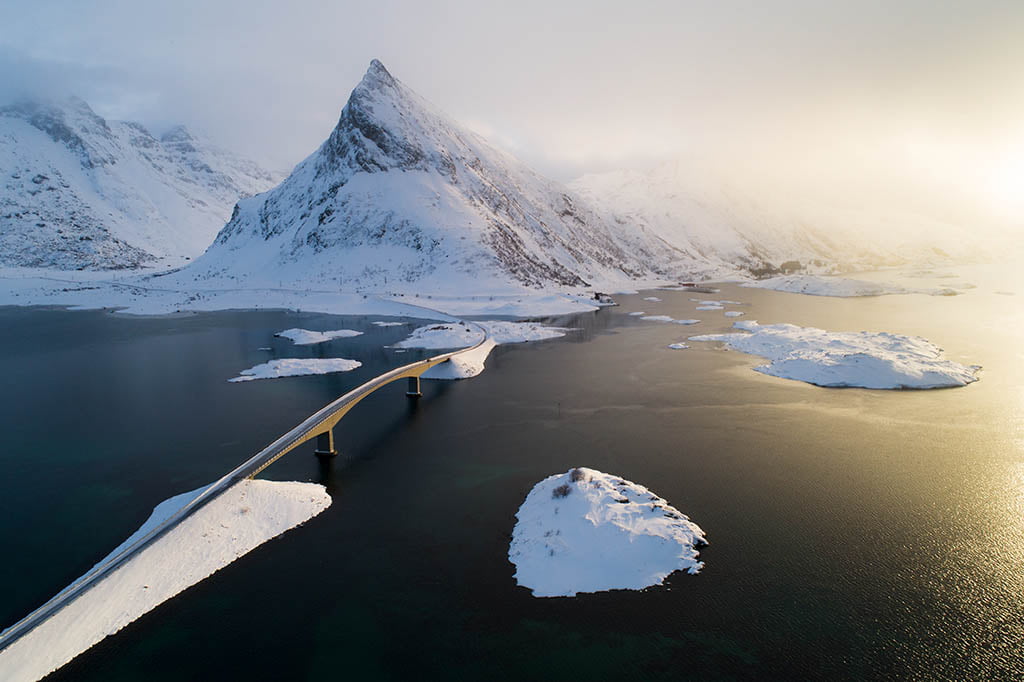
Among the exhibitors is Barry Gorrell, a photography veteran with a career spanning 47 years, who has developed an interest in drone photography post-retirement. Another participant is Barbara Bell, a watercolor artist introduced to ‘Project 365’ by Johnson’s brother, who uses her photos as a reference for her artwork.

The exhibit also includes works from Jennifer Fox, a nature-inspired visual arts educator; Dave Vallée, a hobbyist photographer; and Rita Schreiner, a current student at Cecil College.

Completing the lineup is Kathy Buckalew, a multi-genre photographer and teacher, and Julie Perone, who discovered her passion for photography after retiring from a career in psychology.

With such an eclectic collection of artists, visitors to the ‘Project 365’ exhibition can expect to immerse themselves in various photographic narratives, each image holding its unique story to tell.

.u2d43f1a958ca9a26373514ad57985af7 { padding:0px; margin: 0; padding-top:1em!important; padding-bottom:1em!important; width:100%; display: block; font-weight:bold; background-color:#eaeaea; border:0!important; border-left:4px solid #E74C3C!important; box-shadow: 0 1px 2px rgba(0, 0, 0, 0.17); -moz-box-shadow: 0 1px 2px rgba(0, 0, 0, 0.17); -o-box-shadow: 0 1px 2px rgba(0, 0, 0, 0.17); -webkit-box-shadow: 0 1px 2px rgba(0, 0, 0, 0.17); text-decoration:none; } .u2d43f1a958ca9a26373514ad57985af7:active, .u2d43f1a958ca9a26373514ad57985af7:hover { opacity: 1; transition: opacity 250ms; webkit-transition: opacity 250ms; text-decoration:none; } .u2d43f1a958ca9a26373514ad57985af7 { transition: background-color 250ms; webkit-transition: background-color 250ms; opacity: 1; transition: opacity 250ms; webkit-transition: opacity 250ms; } .u2d43f1a958ca9a26373514ad57985af7 .ctaText { font-weight:bold; color:#000000; text-decoration:none; font-size: 16px; } .u2d43f1a958ca9a26373514ad57985af7 .postTitle { color:#464646; text-decoration: underline!important; font-size: 16px; } .u2d43f1a958ca9a26373514ad57985af7:hover .postTitle { text-decoration: underline!important; }

READ:  Cecil College Nursing Faculty Honored with Dr. Peg E. Daw Nurse Faculty Award for Excellence

The exhibition will take place at the Milburn Stone Theatre Gallery, running from May 31 to August 30, with a reception scheduled for June 21.

To experience this magnificent showcase of dedication and artistic expression, visitors are welcome to visit during gallery hours, which include Tuesday and Thursday from 10 a.m. to 2 p.m., Wednesday and Friday from 12 p.m. to 4 p.m., and three hours before showtimes at Milburn Stone Theatre.

For more captivating art events at Cecil College, keep an eye on their social media and website.

For the latest news on everything happening in Chester County and the surrounding area, be sure to follow MyChesCo on Google News and Microsoft Start.

iPhoneography – iPhone Photography Class

iPhoneography – iPhone Photography Class

In today’s technological world, even professional photographers and artists are recognizing the iPhone as a useful (and even practical) photographic tool. Join photographer artist, Kelli Klymenko in his one-day class for beginner and advanced students and you’ll go beyond the basics and learn to shoot professional quality photographs with your iPhone.

You will learn how to shoot, edit and share remarkable landscapes, portraits and the macro world around you using only your iPhone. Kelli will guide you through simple tips and tricks that will take your photography to the next level. Discover how to capture the essence of a place and your subjects rather than just taking a picture. You will also learn basic video and video editing techniques for use with apps such as Facebook and Instagram.

Learn how to get the highest resolution images on your iPhone and apps

Practice creative techniques including HDR (High Dynamic Range)

Shoot panoramas
Learn about the latest editing, filters and stylizing apps
Learn about iPhone equipment: remotes, tripods and more
Learn how to use the hottest new tools on your iPhone
Materials Required For Students To Bring: Please see Materials List

May 31, 2024 | Friday | 9 am – 2 pm AZ time

Medium – iPhone
Materials List – Click the Materials List tab above
Registration – Each student must enroll individually. Click the Cancellation Policy tab above for more info.
Location/Time – Sedona Arts Center

Capturing the Arctic: A Decade of Unforgettable Photography with Arctic Exposure

Capturing the Arctic: A Decade of Unforgettable Photography with Arctic Exposure

Arctic Exposure, a distinguished photo tour company founded in 2013, is celebrating ten years of transporting photography enthusiasts to the Arctic’s most awe-inspiring landscapes. Renowned for its unique blend of travel, education, and photography, the company offers immersive workshops that allow participants to capture the untouched beauty of the Arctic through their lenses. From the remote Highlands of Iceland to the mesmerizing northern lights, Arctic Exposure’s workshops are designed to enhance photography skills while fostering a deep connection with the elemental wonders of the Arctic wilderness.

Arctic Exposure, a distinguished photo tour company founded in 2013, is celebrating its decade-long legacy of providing immersive photography workshops across the Arctic’s most breathtaking landscapes.

 Known for its unique blend of travel, education, and photography, Arctic Exposure offers enthusiasts and professionals the opportunity to capture the untouched beauty of the Arctic through their lenses.

“From the remote wilderness of the Highlands of Iceland to the dancing northern lights above, our workshops are designed to enhance your photography skills and truly connect you with the elemental beauty of the Arctic,” says Skarphéðinn Þráinsson, founder of Arctic Exposure, also affectionately known as Skarpi. 

Arctic Exposure’s most notable workshop, the Highlands of Iceland Drone Photo Workshop, is a prime example of this immersive approach. It brings photographers to one of the most otherworldly locations on Earth, where rugged volcanic landscapes, cascading waterfalls, and vast expanses of uninhabited terrain unfold in every direction. Participants find themselves amidst Iceland’s highlands’ raw, untamed beauty, where the ever-changing weather adds more drama to their photographic pursuits. 

“Our workshops go beyond photography; they are a journey into the heart of Arctic wilderness,” Skarpi adds. “We facilitate not just the capture of images, but the creation of memories that resonate with the dramatic landscapes and the vibrant stories they hold.”

The small group sizes of Arctic Exposure’s tours ensure personalized attention, enhancing both the learning experience and the cultural immersion. Accommodations are often in remote guesthouses and hotels, and meals focus on local ingredients. The company strives to blend comfort with adventure, providing a cozy backdrop to the day’s photographic pursuits.

This story is a part of the 100 Stories from Iceland.

Capturing the Arctic: A Decade of Unforgettable Photography with Arctic Exposure

Name: Skarphéðinn Þráinsson, Skarpi
Title: Founder and Head Guide
Company: Arctic Exposure
Phone: +354 6174550
Email: info@arcticexposure.is
Address: Skemmuvegur 12, 200 Kópavogur, Iceland

Arctic Exposure is a premier provider of photography tours and workshops specializing in the Arctic regions of Iceland, Greenland, Norway, Canada, and the Faroe Islands. Founded by a former engineer turned professional photographer, Skarphéðinn Þráinsson, the company offers all-inclusive, educational travel experiences designed to enhance photographic skills in capturing the raw beauty of the Arctic. With a focus on small group sizes and local expertise, Arctic Exposure stands out for its commitment to responsible and enriching travel.

Tags:

Take a look in the camera rolls of Ryan McGinley, Jack Pierson and more

Take a look in the camera rolls of Ryan McGinley, Jack Pierson and more
image

Inside the opening night party of Camera Roll Orgy – the NYC group show revealing the lost gems from the iPhones of the city’s revered photographers

22May 2024

“I’ve been thinking about the state of photography today in a historical context, and imagining what art scholars of the future may have to say about us,” says photographer and curator, Thomas Polcaster. “Our camera rolls have replaced physical photo albums. What an atrocity that we can’t pick them up and look through them. They are stuck in the digital ether and demanding to be released.” 

Galvanised by this sense of loss, the New York-based creative has curated a group show inviting ten fellow photographers to transform the digital imagery relegated to their phone camera rolls into physical photographs. He tells Dazed, “The act of printing breathes life into photographic works that many do not consider to be works in the first place.”

Held at new gallery The Shop – an exhibition space co-founded by photographer Matt Weinberger in the back of a pest control shop in the Lower East Side – Camera Roll Orgy brings together hitherto unseen pictures by Ryan McGinley, Jack Pierson, Lyle Ashton Harris, Luca Imperatori, Paul Levack, Justin Leveritt, David Lindsay, Armando Nin, Nick Sethi, Lucien Smith and Polcaster himself. 

A guiding principle in the curation of the exhibition was friendship. “All of the artists in the show are deeply important to me, personally. I worked closely with each artist to draw conclusions about their respective practices,” Polecater explains. The trust elicited by these relationships was a crucial aspect of putting the show together, allowing the curator a level of access and intimacy that proved invaluable. “Some of them actually handed me their phone and gave me unrestricted access,” he says. “There is so much trust in that exchange. Many of these artists did not have iPhone works in their portfolios, but now they do. I’m honoured that most of them made work specifically for this show.”

I wanted to remind viewers that photographic works can be just as dynamic as paintings and sculptures. I have a profound faith in the medium” – Thomas Polcaster

Perhaps this network of homosociality contributes to the ways these images interact with one another across the walls of the gallery. “The works are elated to sit in the same room as each other,” Polcaster tells us. “They have so much to talk about!” He describes the atmosphere of the exhibition as one of “quiet joy” and “wholesomeness radiating through the room”. “This was not a conscious decision, but it revealed itself beautifully when we installed,” he recalls. “There’s also a nod to Pictorial Effect in Photography by Henry Peach Robinson. I wanted to remind viewers that photographic works can be just as dynamic as paintings and sculptures. I have a profound faith in the medium.”

Polcaster hopes the exhibition raises questions about the volume, value and dissemination of images. How has digital photography changed the currency of pictures? “The over-saturation of images is a conundrum,” he says. “Have you noticed that people are posting less than ever on social media? Thank god, because it’s a dead end. Much of the value of art hinges on scarcity. This is a very interesting question to ponder, but Camera Roll Orgy does not attempt to answer it. The show acts like a koan.” 

More than anything, his wish is that visitors will take time to tune into the pace of the show, which must feel somewhat slower than the frenetic speed of life on the city streets outside the gallery. From Paul Levack’s “Untitled (Enzo Playing)” (2024) which captures the artist’s hand plunged into the fur of his beloved Brittany spaniel, Lucien Smith’s “Untitled (Jane & Goji 83 Canal)” (2024) which takes as its source material a photograph of a reclining woman happily contemplating a cat, or Lyle Ashton Harris’s matt selfie taken in the narcotic wake of a hot yoga session, Camera Roll Orgy glorifies moments which exist outside the stream of hectic pace of modernity. Polcaster concludes, “I hope the show divorces viewers from their sense of urgency and brings them deeper into the here and now.”

Take a look at the galleries above for a closer look at the show and also Matt Weinberger’s photographs of what went down at the exhibition’s opening night party. 

Camera Roll Orgy is showing until June 22, 2024 at The Shop (Addison Pest
Control’s community space for cultural programming) at 176 Delancey St, New York, NY.

For these Broward photographers, cameras are a preservation tool

For these Broward photographers, cameras are a preservation tool

A photograph stops time for a fraction of a second. Then, life keeps moving. But what if a photograph could be used to preserve the place you love from changing?

It’s why Sierra Grace spends most of her days off doing what she refers to as “light trespassing” around Hollywood Beach.

Grace is part photographer, part archivist and part activist — raising red flags about development and demolition of historic buildings on her Instagram account LushSuburb. She’s a frequent voice at city meetings around South Florida.

“I have always had a compulsion to take pictures. And pretty pictures help get a point across,” she said while guiding WLRN around the Hollywood Beach Broadwalk. “That’s how I do good work with it, you can catch people’s attention and then get them mobilized.”

More than a decade ago, Grace started creating an archive of “old Florida” motels and shops that represented the esoteric and art deco architecture around South Florida. She posts the photos on social media where her followers connect with the nostalgic aesthetic.

Then, during the pandemic and the housing crisis that followed, Grace became more politically active — sometimes urging her followers to sign petitions to save historic buildings or speak out against anti-preservation bills like HB 1317.

The courtyard of the Neptune Motel on the Hollywood beach Broadwalk.

Sierra Grace

/

LushSuburb

The courtyard of the Neptune Motel on the Hollywood beach Broadwalk.

Preserving the Broadwalk

On a recent afternoon, Grace wore her blonde hair up and tucked under a red baseball hat. She draped her camera over her shoulder and a fanny pack around her waist. And even though she was walking the beach in the middle of the afternoon, she wore construction boots — necessary for visiting certain sites, she said.

“It’s not that we’re anti-development, it’s that we’re anti reckless development,” Grace explained. This “reckless development” — according to Grace — threatens the look and feel of Hollywood Beach.

She stopped at the historic Neptune Motel on the Broadwalk — the motel was purchased by a real estate investment group in 2022.

“Could you imagine … if this was a massive tower now? It would be the beginning of the end of the character of the Broadwalk,” Grace said as she walked into the courtyard to take some photos of the beachfront motel.

The Condra Property Group plans on building a 3-story beach club and restaurant over the Neptune. They are also planning an 18-story apartment building with affordable housing units a few blocks away on A1A. They plan to utilize the Live Local Act, which prohibits local officials from weighing in on zoning, density and height restrictions for eligible developments.

Qualifying projects are defined as any residential housing project on commercial, industrial or mixed-use land that allocates at least 40% of units to be affordable for residents earning up to 120% of the area median income.

The Neptune Motel on the Hollywood Beach Broadwalk.

Sierra Grace

/

LushSuburb

The Neptune Motel on the Hollywood Beach Broadwalk.

Restoration vs. redevelopment

Grace tries not to draw too much attention to herself when she’s out photographing — she likes to use her iPhone instead of a larger DSLR camera — but often she’ll run into people curious about what she’s up to.

It happened while she was showing WLRN around — a woman asked Grace what she was taking photos of, and Grace asked how she felt about new development on the beach.

“This is going to make it so much more like Miami Beach, versus the intimacy that we have here right now,” the woman told Grace. “And just in general, the comfort. I come here often to avoid tourism.”

But Grace hasn’t lost hope for Hollywood. She grew up moving throughout different cities in Broward and Miami-Dade counties which helped shape her appreciation for the unique style of South Florida.

“Every Florida city has its vernacular. Floridians, we’re really known for like crazy roadside architecture. We just kind of do what we want freely. So it’s unique. There’s nowhere else that exists like us,” she said. 

Grace guides us by the Marlin hotel, a carefully remodeled art deco building complete with Miami-Vice-teal paint and a pink neon sign.

“It’s a great example of restoration, she says. “It’s perfect. It’s painted. People have great experiences. They make good money. It contributes to the look and feel and the character of Hollywood.

The Marlin Beach Motel on the Hollywood Beach Broadwalk.

Sierra Grace

/

LushSuburb

The Marlin Beach Motel on the Hollywood Beach Broadwalk.

Photographing local landmarks

David Paulo is another photographer working to preserve parts of Broward. He started taking photographs of what he calls “Broward County landmarks” last year.

He’s self-taught and uses a FujiFilm point-and-shoot film camera. It’s unobtrusive, light and creates warm images that he shares on his Instagram account ShotByLeather.

We met recently in Sistrunk, a historically Black neighborhood in Fort Lauderdale. It’s in neighborhoods like this where Paulo’s work has its greatest impact.

“I don’t think most people would be comfortable walking down these ways,” he told WLRN. “I think it’s extremely vital to preserve the history. By me taking these photos, essentially, I’m capturing history.”

William J. Cone Plaze on Sistrunk Boulevard.

David Paulo

/

ShotByLeather

William J. Cone Plaze on Sistrunk Boulevard.

Whereas most photographers stick to the beaches and downtown areas, Paulo roams the streets of neighborhoods like Lauderhill and Dania Beach to create snapshots of some of the most recognizable buildings in the area.

“It’s so important to me because this is where I’m from and I’m seeing it change rapidly with all the development,” he told WLRN.

Walking the streets of these neighborhoods is vital for the work that Paulo does. While taking WLRN on a tour, Paulo was stopped multiple times by members of the community who were curious about his camera.

“I connect with the community. It’s deeper than just taking pictures. It’s also knowing the people in your community, digging deep,” he said. “As humans, we’re supposed to connect with other humans.”

Many of the neighborhoods Paulo photographs are bustling with construction of new apartment buildings and with the new development comes the threat of gentrification.

“Change is good, as long as change comes with equality,” he said. “I’m not talking about gentrification and pricing people out. I mean changing the dynamic of the neighborhood.”

David Paulo sits for a portrait at Lincoln Park in Sistrunk. Paulo is better known as ShotByLeather on Instagram.

Gerard Albert III

/

WLRN News

David Paulo sits for a portrait at Lincoln Park in Sistrunk. Paulo is better known as ShotByLeather on Instagram.

Photographing buildings before they are torn down

Paulo’s photographs are unvarnished and mostly unedited. When he sees something he likes he takes a few steps towards or away from it and fires a few shots with natural instinct. He prefers to shoot during the day when the sun is high and shadows are intense, casting a tropical light on buildings so that they emit a blinding glow that South Floridians are all too familiar with.

There is urgency in the work of both Grace and Paulo. They are both Florida natives who have seen the landscapes of the places they grew up in change rapidly.

“Everything is changing. So I’m trying to preserve as much community as I can through my art,” Paulo said.

On a recent afternoon Paulo wanted to photograph one last landmark — the amphitheater at Huizenga Plaza in downtown Fort Lauderdale.

“I know you remember the Broward Performing Arts Field trips?” he said. “And then after we’d go to Subway, we’d have sandwiches and sit at Huizenga Plaza and just chill, enjoy the breeze.”

But when he got there, construction tape surrounded the rubble of the former amphitheater. Soon a restaurant will take its place.

“I’m mad I didn’t get a picture of it bro,” he said. “And look, now it’s gone. History’s gone.”

Huizenga Park in Downtown Fort Lauderdale.

David Paulo

/

ShotByLeather

Huizenga Park in Downtown Fort Lauderdale.

Brain injury survivor forges new photography career

Brain injury survivor forges new photography career

19 minutes ago

imageHeadway David Baker wearing a brown shirt and a black eye patch over his left eyeHeadway

A former detective who sustained life-changing injuries in a cycling crash is sharing his story to help raise awareness of brain injury.

David Baker from Wareham, Dorset, was seriously injured in a crash with a van as he rode home from work in 2016.

He has no memory of the incident which forced him to leave his job as a police detective.

Now a photographer, he wants to encourage other brain injury survivors to find new ways of living their lives.

The 49-year-old features in an awareness campaign – A Life Re-Written – by the charity Headway which explores how brain injury can alter people’s sense of identity.

Mr Baker learned from witnesses that, on the day of his accident, a Transit van turned across his path.

“I had no time to react, apparently, and I went head-first into the side of the van,” he said.

imageDavid Baker A tri-coloured border collie dog against a black backgroundDavid Baker

His cycling helmet saved his life but he suffered brain damage and lost his sight in one eye.

He said: “I lost my identity the moment I had that accident. I was always a police officer and that’s all I’ve ever done.

“I’m still dealing with it in many ways. Depression and anxiety is all part and parcel of a brain injury.”

While recovering, Mr Baker began experimenting with photography, initially taking photos of his beloved dog, Rapha.

He said: “I decided I needed to retrain and prove to myself I could still do something, so I went back to uni.”

He earned a degree in commercial photography from the Arts University Bournemouth and now his work is being used in the Headway awareness campaign.

He said: “I think anybody who has a brain injury needs to have the support of other people, but you also need to do things that get you speaking about what’s happened to you – getting on with life and socialising and not hiding away.”

imagePresentational grey line

Fashion, photography, fine art and the royal family unite for Knights of Gala charity in Cannes

Fashion, photography, fine art and the royal family unite for Knights of Gala charity in Cannes
Published


May 22, 2024
Reading time


2 minutes
Download


Download the article
Print

Text size


Published


May 22, 2024

Fashion, photography, fine art and the royal family will all unite Wednesday evening in Cannes for the Knights of Gala charity, where guests can even bid on a day on a private tour with Sarah, Duchess of York.
 

The auction includes the chance of lunch in Miami with Gisele Bundchen

An evening auction that will also include the chance of lunch in Miami with Gisele Bundchen, along with classic large scale black and white photography of the Brazilian supermodel shot by Luigi & Iango.
 
The event will be staged inside Le Palm Beach in Cannes, with noted society auctioneer Simon De Pury manning the gravel. All hosted by Bundchen and Milutin Gatsby, the financier and prolific philanthropist.

With the presence of goodwill ambassadors Eva Longoria and Andy Garcia, in Cannes for the film festival, guests will be entertained by performances from Robin Thicke and DJ Blond:ish.
 
Bidders will have the opportunity to acquire one of Longoria’s own personally engraved Qannati watches, or enjoy a match of paddle ball with the star. Other lots include a day on a movie set with Garcia, or even a tour of Balkan monasteries and UNESCO world heritage sites with the Duchess of York.
 
Also up for auction are a personal tour for two of Ferrari headquarters by Lapo Elkan and a chance to test drive a supercar; a rare oil and pencil sketch by Paul Klee; a Juan Miro bronze; and a Devon Dejardin geometric oil painting. 
 
And if that all seems too much, there is even an after party by LA nightlife impresario Darren Dzienciol, where DJ Mr. Bones will spin.


Copyright © 2024 FashionNetwork.com All rights reserved.

A conflict photographer captures a moment of brotherhood between two soldiers

A conflict photographer captures a moment of brotherhood between two soldiers

Editor’s Note: In Snap, we look at the power of a single photograph, chronicling stories about how both modern and historical images have been made.


CNN
 — 

At an outpost in Afghanistan’s eastern Korengal Valley, in the midst of a heightened American military campaign against the Taliban, two soldiers appear to be fighting — each other. It’s a play fight and the young man on the bottom has his comrade in a headlock, forcing a kiss on the cheek.

The photograph, taken in 2008 by the late British photographer Tim Hetherington, is from a time when nearly a fifth of all combat in Afghanistan was taking place in the six-mile valley.

In the long stretches of boredom that would arise when the enemy was nowhere to be found, the men had to find other things to do at their remote outpost.

“These guys are tough, aggressive guys and when there wasn’t any combat, they turned their aggression on each other — in a fraternal way,” explained Sebastian Junger, a writer and journalist who first brought Hetherington to Afghanistan on an assignment for Vanity Fair magazine in 2007.

'Doc' Kelso sleeping. Korengal Valley, Kunar Province, Afghanistan. July 2008.

Both Hetherington and Junger became “enamoured with the opportunity to show the intimacy of a platoon in combat,” Junger said in an interview via telephone. The pair went on to co-direct what would become the Oscar-nominated documentary “Restrepo” filmed over the course of the same platoon’s deployment.

Bobby, the soldier on the bottom of this image, is remembered by Junger as “incredibly funny, extremely smart.” On top is Cortez, “an incredibly sweet kid,” said Junger, adding that he was “sort of the pretty boy in the platoon.”

The photograph is currently on display at London’s Imperial War Museum (IWM), accompanied by an excerpt from Hetherington’s journal written that same year: “In the end it has little to do with the war, and a lot to do with being men… Or in the case here, becoming men.”

The works form part of an exhibition called “Storyteller: Photography by Tim Hetherington,” which opened on the 13th anniversary of the photographer’s death (he was killed by shrapnel while filming and photographing the Libyan Civil War in April 2011).

A young rebel fighter and hand grenade, taken in Tubmanberg. Liberia in June 2003.

Junger agrees with his friend’s sentiment. “One of the things that place is very good at is turning children into men. And I think that’s always been true of war.”

Young men in conflict

“The experience of war was the only opportunity that men had in a society to express unconditional love for each other,” is a quote that Hetherington often repeated, according to his friends.

He first learned it from another friend, photographer James Brabazon while the pair waited with Liberian rebel forces who were going to attack the capital Monrovia, during the Liberian Civil War in 2003. It was Hetherington’s first experience of combat.

A casualty from an ambush lies in the back of a 'technical' during the push on Liberia's capital Monrovia in June 2003.

Brabazon first heard the saying from his grandfather, a British soldier who served in World War II. “He just clearly, really took it to heart,” said Brabazon in a video interview with CNN. “Tim was really interested in the dynamics of young men… He was really interested in how young men related to one another, how they represented one another to each other, where those representations came from, how they were amplified and how they were perpetuated — particularly in conflict.”

In a remote outpost where society was “stripped away,” these bonds captured Hetherington’s attention more than the war itself.

“I became much more interested in the inter-relationships between the soldiers and my own relationship to the soldiers than I was in the fighting,” reads a quote from Hetherington in the exhibition. “My examination of young men and violence, or of young men… It’s as much a journey about my own identity as it is about those young soldiers,” he wrote.

An anti-Gaddafi combatant during the Libyan civil war, April 2011.

Following his year in the Korengal, Hetherington published “Infidel,” a photography book of stills taken during his deployment with bits of commentary from himself and the US soldiers he was embedded with.

One contributor is Cortez, one of the subjects of the photo, who wrote: “I told them time and time again that if a grenade went off, I would actually throw myself on the grenade… Because I actually love my brothers. I mean, it is a brotherhood… I think any of them would do it for me also.”

‘It’s very important that this work happened’

The IWM, which holds the entire archive of Hetherington’s work, worked with researchers and different communities to find out how they engaged with conflict photography. Greg Brockett, who curated the exhibition, was especially interested in how refugee communities would respond to Hetherington’s work.

“It’s very difficult to say how people are going to respond… Because a lot of them have experienced war and conflict directly,” he told CNN over a video interview. “What struck me was there was generally an overwhelming sense of people who felt it’s very important that this work happened, and people were able to see the realities they experience.”

“I’m less interested in people taking away knowledge of Tim, I’m more interested in people taking inspiration away from Tim,” said Stephen Mayes, executive director of the Tim Hetherington Trust, who also spoke to CNN via video call.

A woman brings cassava leaves into the central market area of Tubmanberg, Liberia in May 2003.

Hetherington was distinguished from other conflict photographers by his approach, which involved spending prolonged periods of time with his subjects. He often used film cameras and would speak to his subjects while photographing them.

“He wasn’t interested in photography in and of itself, for its own sake. He was interested in how that would allow him to access the lives of others,” said Brabazon.

‘It took a little bit from his soul’

In this process, Hetherington worried about how photography could be extractive. “He wanted the process to be consensual and also to leave something in the community,” added Brabazon, recounting a series of street photographs Hetherington took in Liberia where he would take photographs of people, keeping one Polaroid for himself and giving another to the subject.

“I think that was really important, because it allowed people to have agency in the work that was being created… It’s about extending the courtesy of participation in the creation of the work to the subject themselves.”

Tim Hetherington self-portrait taken during the Libyan Revolution in Misrata, Libya, April 2011.

Hetherington’s friends reflect on the tragedy of his death in Libya, believing he was killed in his prime as a photographer — not only because of the images he produced, but because of his reflections on what it meant to capture conflict.

Mayes mentions the old adage that making a picture takes a little piece of the subject’s soul. “Tim thought, definitely, in his mind, he’d sold his soul to the devil in a way, because he saw that in making every picture he made, it took a little bit from his soul.”

“What did Tim want the effect of his work to be? That is a question which I don’t think we will every really know the answer to, because he died in the process of working that out himself,” Brabazon explained.

In his final diary entry on April 19, 2011, Hetherington wrote about attending the funeral of a rebel fighter who was killed by a mortar. He wrote of the young men he met there: “They are grimily happy that we are here to help them. They feel that now the whole world can see.”

“Storyteller: Photography by Tim Hetherington” is on at London’s Imperial War Museum until September 29.

Fragile Beauty: an archive of iconic photographs

Fragile Beauty: an archive of iconic photographs

The V&A’s new exhibition showcases iconic photos by the likes of Tyler Mitchell, Nan Goldin, Ryan McGinley, Cindy Sherman, Robert Mapplethorpe and more

22May 2024

A devilish self-portrait by Robert Mapplethorpe, a snapshot from the club bathroom by Nan Goldin, a sun-drenched portrait from a road trip with Ryan McGinley, and a carefully-staged Cindy Sherman film still. All of these photos, representing a breadth of human experience, have something in common: they have been displayed across the walls of Sir Elton John and David Furnish, avid collectors of photography. Now, they’re also gracing the walls of London’s V&A museum, as part of its newly-opened exhibition, Fragile Beauty.

Featuring more than 300 rare prints and over 140 individual photographers from the pair’s collection, the exhibition spans some of the greatest bodies of work from the 20th and 21st centuries, with an emphasis on the simultaneous strength and vulnerability of their human subjects. Some highlights? A photo of Divine by Peter Hujar, one of Gillian Wearing’s uncanny masked portraits, Tyler Mitchell’s 2022 photo “Simply Fragile”, and iconic fashion images by Herb Ritts. Also featured is work by international photographers including Carrie Mae Weems, Diane Arbus, Ai Weiwei, Mickalene Thomas, Wang Qingsong and more.

Elton and David first gave the museum access to their homes – where photographs are displayed across the walls – a few years ago, explains the V&A’s Shannon Nash. The themes and structure of the show emerged, she adds, as a result of “seeing how intensely they both live with photography”.

As suggested by the title, these themes include human vulnerability, in both a physical and emotional sense, as opened up by the creative act. Many creatives are featured in the collection themselves, as images in front of the lens, from Aretha Franklin to The Beatles, to Miles Davis and Marilyn Monroe. Other images turn away from celebrity to capture famed moments in time, including key moments from the Civil Rights Movement, 80s Aids activism, and the aftermath of 9/11, highlighting the importance of photography not just as an art form, but as a vehicle for reportage.

Take a look at some of the images from Fragile Beauty in the gallery above, and read more about the curation, themes, and highlights of the show below.

Could you tell us a bit about the title, Fragile Beauty? What kind of themes or common threads does that draw from?

Shannon Nash: The collection is unique in its breadth and tone. It is at once playful and surprising, and – as Elton has often reminded us – mischievous in spirit. But it is also contemplative and thoughtful, with many of the photographs evoking a sense of human vulnerability. It combines the cruel and tender, the fragility of Robert Mapplethorpe’s flower still-lifes with the beauty of Frances McLaughlin-Gill’s fashion pictures. 

Fragile Beauty  is also the name of one of the sections at the heart of the exhibition. Both Elton and David felt strongly that this should be the title of the entire show, as it captures so many of the ideas explored in the 300 works we are exhibiting. 

Why was it important to bring this collection into the public eye?

Shannon Nash: Elton and David’s collection allows us to bring out new intriguing narratives in photography that we may not have showcased with our own collections to our audiences before. One question – that we are leaving up to the visitors to answer – is what the exhibition reveals about the collectors themselves.

How involved were Elton and David in the curation of the exhibition?

Shannon Nash: It’s been an exciting and truly memorable experience working alongside Elton, David, and their teams. They have been incredibly generous in opening their homes to us and sharing their photography collection with the museum and its visitors. We are grateful to them for this and their engaged participation and creative drive throughout the collaboration. They actively continue to collect, so it’s been fascinating to see the collection evolve as we prepared the exhibition too.

The collection responds to historic moments and movements as much as it celebrates celebrity portraiture. How do these two parts sit alongside each other in the exhibition?

Shannon Nash: Our key challenge as curators has been to translate an extensive and exuberant private collection into a display for the public. We were helped by being able to experience the collection in situ [to gain] a feeling of how Elton and David encounter and live with the collection every day. Each chapter in the show has its own room with a different design and atmosphere. Visitors will move through a new theme, from ‘Stars of the Stage, Screen and Studio’, to ‘Desire’, to reportage, all the way to abstract photography.

There’s an obvious appeal for Elton John fans – how do his interests and aesthetic sensibilities shine through in the collection?

Shannon Nash: The exhibition is both a celebration of their collecting and a serious engagement with the individual objects on display. We open with fashion, and the photographs that first caught Elton’s attention and launched his photography collection. In this section, visitors see images that often reflect the contemporary culture of their time and chart transitions from the glamour and femininity of the post-war period to the radical diversity of contemporary streetwear.

In another section, we see portraits of figures who have inspired both Elton and David, including Elvis Presley, Marilyn Monroe, Chet Baker and Divine. The collectors have an incredible knowledge of photography history and it’s been wonderful to discover artists through their eyes too. Ralph Eugene Meatyard has been a particular favourite for me. He was an optician in Lexington, Kentucky but also a photographer who took surreal and abstract pictures of his family in the style of the ‘Southern Gothic’.

What do you hope that visitors who aren’t fans of the musician – or familiar with his work – can take from the show?

Shannon Nash: Whether [visitors] are fans of Elton’s music or photography afficionados, the diversity of the collection has allowed us to select a range of works for display, and we hope there is something for everyone. Each section journeys across the recent history of photography, with some known photographs and some perhaps entirely new to our visitors.

Fragile Beauty runs at the Victoria and Albert Museum until January 5, 2025. 

City exhibit celebrates fine art photography and paintings from Maine to Arizona

City exhibit celebrates fine art photography and paintings from Maine to Arizona
image

The city invites the public to save the date for its next artist reception on Wednesday, May 22 from 4 – 6 p.m. in the Council Chambers and Vultee Conference Room at City Hall located at 102 Roadrunner Dr., where paintings created by Ed Buonvecchio and photographs by Terry Shoulders are on display through Sept. 4. The special musical guest will be jazz musician, Erroll Foldes.

Buonvecchio’s exhibition ‘Between ME & AZ: A Painter’s Journey,’ is a testament to his life as a painter living in Maine and Arizona and his love for these beautiful and divergent landscapes. What has emerged in these paintings is a wild and wonderful juxtaposition of terrain as untamed as his own journey. He began his career as a graphic designer, art director and illustrator in New York. In the 1990’s he established a freelance business in design and Illustration.

This page requires Javascript.

Javascript is required for you to be able to read premium content. Please enable it in your browser settings.