On Non-Photography: A Snapchat Story

On Non-Photography: A Snapchat Story

It came as a familiar burglar of my attention, as I sat sorting through photo albums. I
remembered how we acted like spies, sending covert information in self-destructing parcels,
intercepted only by the shameful act of screenshotting. Indignant, I watched that hollow ghost
drift by, in a mist of smarm and lemon-drop yellow.

Taking photos—an instinctual human gesture. It’s impossible to imagine their absence, a time
when time could not be recorded and printed and revisited (or uploaded, to our lifelong
construction of a mausoleum in the cloud). Susan Sontag called photography a ‘mass art form’,
it’s almost antisocial to reject the activity; she gives the example of not taking photos of one’s
children growing up, which some would almost consider neglect

The camera obscura was the first attempt to generate an image, albeit ephemeral, hypothesised
in the years BC. But it was not until the 1820s, that the unpronounceable Nicéphore Niépce
engraved the first photograph, drawing on lithographic techniques and the light of a camera
obscura. It was an anthropological milestone, our first encounter with what Roland Barthes
called ‘messages without a code’; a representation which exists beyond ideological and
authorial intent.

I swipe right. Each name evokes an abandoned digital back-and-forth. The fleshy walls are
gone, architectural ribs exposed. It smells of decay. The passing domesticity that once endured,
erased by design. Laughter, argument, heartbreak. Wispy traces echo in these deserted rooms.

It was an event with a distinctive before-and-after in the collective consciousness, the invention
of both time travel and teleportation. Sontag says the promise of photography was to
‘democratize all experiences by translating them into images’. It’s now our technology-given
right to see through the eyes of others, as well as to gaze in high-definition at the youthful faces
of our now-dead relatives, friends, selves.

Nothing could be more divorced from the chemical, mechanical, frustrating process of early
photographic image-making, than Snapchat’s simple user interface. But it’s not the divide of
difficulty which should concern us, Kodak made shooting easy enough in 1888; ‘You press the
button, we do the rest’. The problem then, is rather the assertion that Snapchat—and all the
platforms which have duplicated its distinctive features— can be said to produce photographs
at all, as we know them. The nomenclature doesn’t apply, it’s like comparing a light bulb to the
sun, because both vaguely house and project light.

Am I being followed? I dart my eyes back at the slightest movement. The grinning automatons –
the bitmojis, dare I speak their name – are unnerving, like at any moment they might break
from their tableaux, find my house on Snap Map and violate me.

We should think about this in terms of use, and function. Snapchat is a particularly crude
interpretation of one modern and one lost art: photography and correspondence. We’ll focus on
the former in this admittedly hasty argument.

One must think of the Snap-Image as a social production, rather than a work of art or
preservation. The experience is diametrically opposite to Niépce’s breakthrough, but resembles
the ephemeral images first produced in the camera obscura. Recorded not for posterity, these
images exist to be seen and abruptly destroyed.

Like Wittgenstein argued for language, photography can be defined by its use, it is a means
with many opposing ends. But this strain of communicative photography has splintered from
its photographic lineage.

In a bizarre reimaging of McLuhan’s words, the medium is now literally the message. The
photo is a visual sketch for a linguistic purpose, an acting-out in a game of online charades.
Back and forth, images go, sometimes with text, sometimes saying enough on their own. The
form becomes meaningless, replaced by pure subject and perspective: this is what I’m seeing,
where you are, who I’m with, this is an image with a dog filter to cover your nose, an image of
my ceiling to maintain our messaging streak, a picture of the blue sky—only there as wallpaper
for your paragraph placed above it. The photograph loses its final materiality and becomes
material for collage and décollage, while impersonating authentic experience. For Sontag,
photography claims an ‘instant access to the real’, but to ‘possess the world in the form of
images is, precisely, to reexperience the unreality and remoteness of the real’. Snapchat facilitates a cyclical unending unreality, but stops short of possession, so that we can’t even sit
and contemplate the simulacra, we are swept up by its flow.

I scroll down, stumbling into the tomb which Snap Inc. calls Memories. It starts with school
uniforms, faces distorted or bearing animalistic veils. It descends in a vertical flood of
embarrassment. Friends looking to the camera with eager confusion. Enthralling concerts
broken up into unwatchable chunks of light-speckled noise. Videos panoramically drift over the
geography of a party, surveying unwitting subjects. The latter do well to follow Sontag’s
dictum, that good citizens of a ‘camera culture’ ‘pretend not to notice when one is being
photographed’.

Despite the app’s conceit, there is a storage function. Does this dismantle our entire theory of
Snapchat as operating uniquely? Rather, the incongruity is resolved when we think of its cloud
storage as a response to the act of photography, which Snapchat enables, rather than the storing
of photography itself. The leftovers found in Memories are traces of lost communication, letters and flyers stored in a library’s ephemera collection. Photographs, no matter how well-
planned, reach for the beyond and pull back the unexpected. The Snap-Image, alternatively, is always created, received, and saved with a code.

I can delete this overflow of imagery, right? But isn’t it wrong to delete a photo once it’s
taken? It feels like I’m scrubbing evidence from the historical record or tearing up a piece of
art. To delete is sin.

Perhaps we ought to follow Snapchat’s philosophy of ephemerality. Treat the app as one long
disappearing message, its obliteration always predetermined, the timer in the corner reaching
its climax.

Photography has been morally dubious from the outset. ‘Images transfix, they anesthetize’.

Imagery has numbed our sensory ability, narrowed our faculties to the visual, submerged us in
a deluge of images whose veracity and psychological impact is proving more difficult to fix.
But for all the failings and dangers of image-making, there is a spiritual or sentimental
satisfaction, an aesthetic fulfillment, a historicist impetus to taking photos. Snapchat strips
those ambitions away, degrades the act into the primal desire to hunt down experience, shoot it
dead, and show off its carcass to our friends. Whatever remains of the integrity of the image
dissipates with the Snap-Image, and it takes language and experience with it.

.

French actor Depardieu in ‘violent’ scuffle with photographer

French actor Depardieu in ‘violent’ scuffle with photographer

A well-known Italian paparazzi photographer accused French film star Gerard Depardieu of punching him in Rome on Tuesday, media reported, with the actor’s lawyer saying he had been defending a companion.

Italian daily Il Messaggero quoted the photographer Rino Barillari as saying the 75-year old actor punched him three times in the face when he tried to photograph the star.

Barillari, 79, dubbed the “king of paparazzi”, told the paper he approached the actor and a woman at Harry’s Bar on the chic Via Veneto on Tuesday afternoon.

“Mamma mia, he is fat. He punched me three times in the face,” the newspaper quoted him as saying. “First I’m going to hospital, then I’m going to deal with him. I’m going to file a complaint to the police.”

He said the woman, Depardieu’s partner Magda Vavrusova, initially tried to block him from taking photographs.

In a statement released later, the couple’s lawyer Delphine Meillet cited Vavrusova as saying the photographer had pushed her violently and touched her chest with his arm.

“It still hurts. He was extremely violent,” it quoted Vavrusova as telling police when she filed a complaint.

Meillet said Depardieu slipped and fell on Barillari while trying to get between him and Vavrusova.

The lawyer said Barillari was “well known as much for his photos as for his aggressive methods”.

Reached by telephone, Barillari told AFP he was in hospital and could not talk.

During a long career that started young, Barillari has photographed numerous stars including Elizabeth Taylor and Ingrid Bergman in the Italian capital.

Depardieu, a giant of French cinema, has faced scandals over recent years, including a series of sex assault charges that he denies.

He is scheduled to go on trial in October over accusations of sexual assault against two women.

© 2024 AFP

One Scientist Painstakingly Establishes a Chronology for More than 100 Surviving Prints of ‘The Great Wave’ by Hokusai

One Scientist Painstakingly Establishes a Chronology for More than 100 Surviving Prints of ‘The Great Wave’ by Hokusai

Capucine Korenberg, a scientist at The British Museum, is a big fan of ukiyo-e artist Hokusai, who lived during the Edo period in Japan. Hokusai is best known for a series of woodblock prints titled Thirty-Six Views of Mount Fuji, which includes his iconic “The Great Wave off Kanagawa.”

Often referred to simply as “The Great Wave,” the work spawned thousands of editions—some estimates put the total output at more than 8,000—until the blocks wore out and could no longer be used. When the piece was made in 1831, people could purchase a print at a price point Korenberg compares to a “double helping of soba noodles.”

In a video, Korenberg describes how scientific analysis of the three editions in The British Museum’s collection drew her closer to the 19th-century masterpiece. She commenced a search for all existing copies to try to establish a chronology based on the specific characteristics of each impression. At the time of filming, there were 111 known versions, and a further two have been uncovered since.


All images © The British Museum

How does one begin to sort through the chronology of a print? The blocks now long gone, Korenberg relied on tiny details in the images themselves, such as the quality or completeness of linear elements, plus the quality of color or alignment of different layers. She could begin to narrow down the states, which refers to impressions made when a key block—the first block to be carved that contains the outline of the composition—is added, removed, or altered.

Scholar Roger Keyes had researched the subject before 2007 and based his findings on the archival material available, often relying on low-resolution, black-and-white Polaroid photos. He initially devised a theory that “The Great Wave” included 21 states, characterized by breaks in the cartouche, signature, Mount Fuji, the boats, or the wave itself.

Through a painstaking compare-and-contrast process using the original pieces from the museum’s collection and additional high-resolution photos supplied by institutions around the world, Korenberg narrowed down the number of woodblock wear states to eight.  She also employed ultraviolet and infrared technologies to get a closer look at the coloration and how, over time, certain elements faded due to fugitive pigments. Her next challenge is to find out what the print looked like when it was newly pressed and pristine.

You can dig further into Korenberg’s research in her report, and you might also enjoy checking out Jason Kottke’s look at the evolution of “The Great Wave.”


Do stories and artists like this matter to you? Become a Colossal Member today and support independent arts publishing for as little as $5 per month. The article One Scientist Painstakingly Establishes a Chronology for More than 100 Surviving Prints of ‘The Great Wave’ by Hokusai appeared first on Colossal.

Embrace Failure: The Path to Better Photography

Embrace Failure: The Path to Better Photography

The belief that good photographers must consistently produce great photos is a myth that can hinder your growth. This notion implies that every shot must be perfect, discouraging experimentation and risk-taking, which are essential for artistic development. Understanding that not every photo needs to be a masterpiece is crucial for evolving your skills and creativity and enjoying the craft.

Coming to you from Adrian Vila of aows, this thought-provoking video challenges the myth of the “keeper rate” and emphasizes the importance of embracing failure. Vila reflects on his early days in photography, where he believed that each shot had to be exceptional. This mindset, reinforced by shooting film, made him cautious and inhibited his growth. He argues that photography is not about achieving a high keeper rate but about allowing oneself to make mistakes and learn from them.

Vila stresses that the early stages of any creative process are often rough and imperfect. Through continuous experimentation and practice, you refine your vision and develop your unique style. Avoiding mistakes by playing it safe might protect your ego, but it also stunts your growth as an artist. Vila encourages embracing the frustrations and failures, as they are crucial for artistic development. He highlights the danger of waiting for the perfect conditions, gear, or knowledge, which can lead to missed opportunities for growth and creativity.

Vila also addresses the unrealistic standards set by viewing the polished work of others without recognizing the struggles and failures behind those images. He reminds viewers that the stunning final images are the result of a long process of creativity, filled with experimentation and mistakes. Acknowledging this reality can alleviate the pressure to produce perfection and encourage more risk-taking and learning.

The video serves as a powerful reminder that great images are the exception, not the norm. They are the product of relentless practice, numerous failures, and a willingness to take risks. Vila’s message is clear: to grow as a photographer, you must embrace the journey, with all its imperfections and challenges. This approach not only enhances your skills but also makes the creative process more exciting and rewarding. Check out the video above for the full rundown from Vila.

Native Art Fellowship Deadline Extended to May 24th

Native Art Fellowship Deadline Extended to May 24th


Native American artist Colleen Friday photo

2022 Native Art recipient Colleen Friday.


The deadline for the Wyoming Arts Council’s Native Art Fellowship has been extended to Friday, May 24.

Additionally, Wyoming Arts Council staff will be present at the Wind River Community Alliance, located at 1202 S Federal Blvd, Riverton, Wyo., on Wednesday, May 22, from 10 a.m. to 3 p.m. to provide application assistance. Wyoming Arts Council staff members will be present to give hands-on assistance with the Native Art Fellowship application, take images of any 2D or 3D works, and to answer any programming questions. 

“This fellowship is an excellent way to recognize the exceptional work of indigenous artists in Wyoming. We are hoping that with some additional outreach, we can help spread the word about this program,” said Kimberly Mittelstadt, Creative Arts Specialist for the Wyoming Arts Council.  

The Native Art Fellowship is awarded based on the artist’s portfolio and is open across various artistic disciplines, including visual, literary, performing, folk, and traditional arts. Its primary aim is to elevate the visibility of Wyoming’s remarkably skilled Native artists and commend their creative endeavors. This fellowship is open exclusively to residents of Wyoming.  Up to two $5,000 fellowships will be awarded. 

Noted Native artists from outside the state will evaluate all applications. Applications must be submitted online through Submittable. Serving as jurors for this year are Ben Pease and Dakota Hoska.

Recipients of the Native Art Fellowship will also be given support to find a venue to showcase their work.

25 Jaw Dropping Photos of the Milky Way Taken From Around the World

25 Jaw Dropping Photos of the Milky Way Taken From Around the World
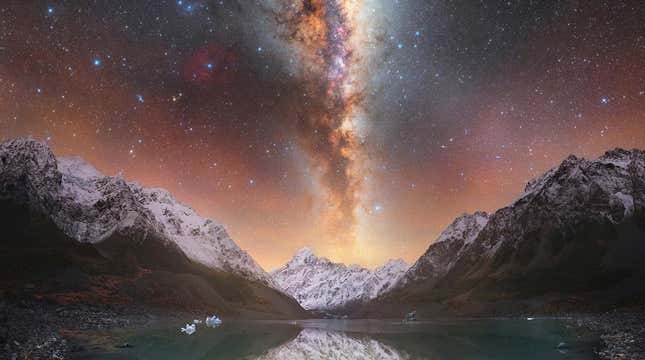
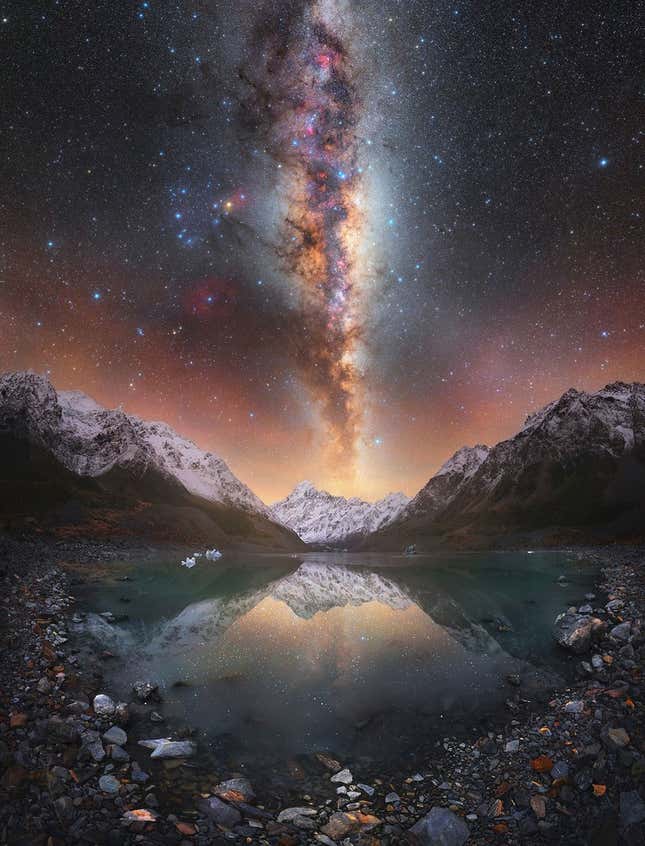
The Milky Way as seen above New Zealand’s highest mountain, Aoraki.
The Milky Way as seen above New Zealand’s highest mountain, Aoraki. Photo: Tom Rae

Our galaxy stretches across 100,000 light-years and contains somewhere between 100 to 400 billion stars. It appears in our night skies as a long, hazy strip of light littered with celestial objects. Photographers worldwide have been captivated by the sight of the Milky Way from Earth, capturing its incredible details in stunning high-contrast images.

Advertisement

Capture the Atlas, a travel photography blog, released the seventh edition of its Milky Way Photographer of the Year, a collection of the best 25 photographs of the galaxy that were captured over the past year. The 2024 collection features photographs taken from 15 different countries, including Australia, Spain, Bulgaria, Egypt, and Chile, and by photographers of 19 different nationalities.

The photos combine color and light to inspire wonder about the Milky Way—the galaxy that houses our star system near the edge of its spiral arms. Here are the 25 photographs for your viewing pleasure.

Image for article titled 25 Jaw Dropping Photos of the Milky Way Taken From Around the World
Photo: Lorenzo Ranieri

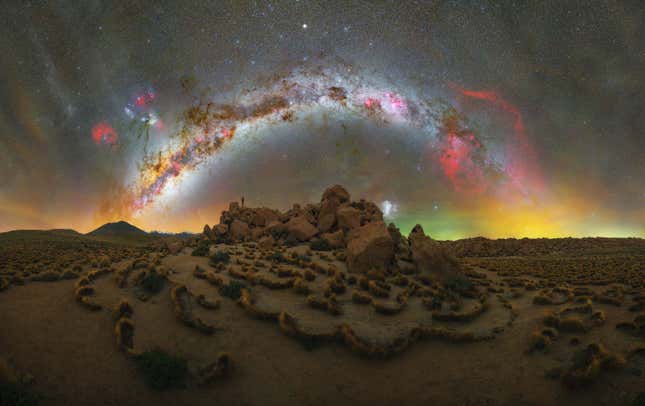
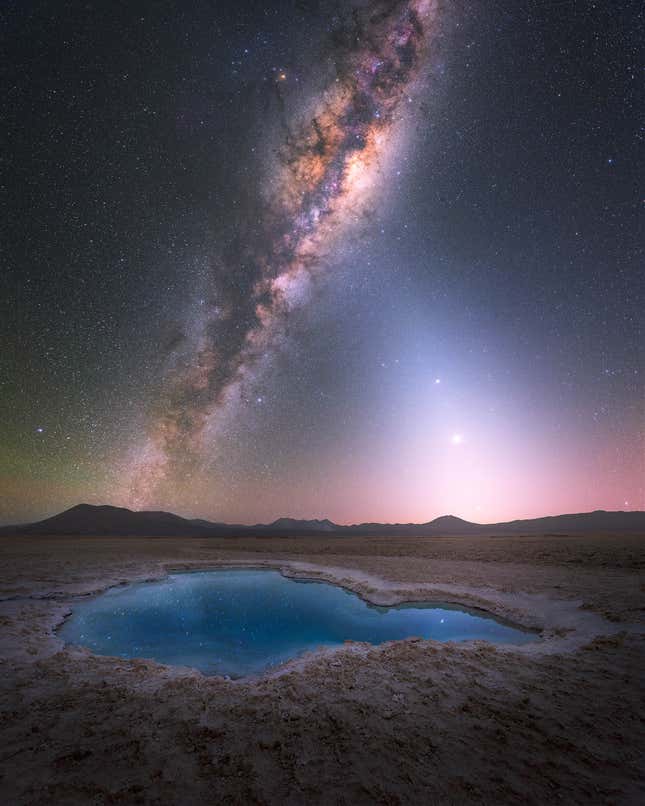
The Milky Way arching majestically above a plateau of the Atacama Desert in Chile.

Image for article titled 25 Jaw Dropping Photos of the Milky Way Taken From Around the World
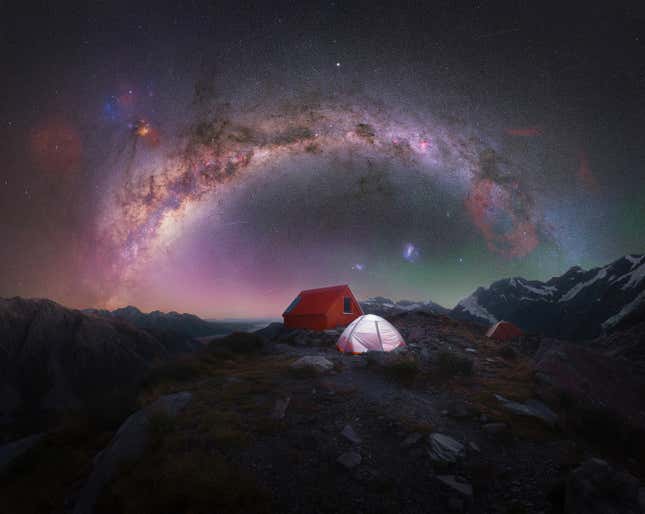
Photo: Rachel Roberts

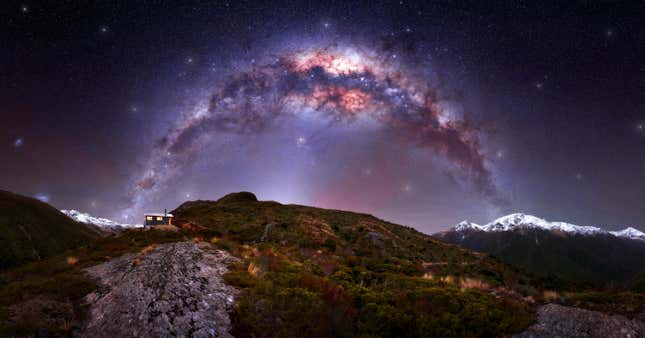
The Milky Way shines over a hut nestled in the Southern Alps on New Zealand’s South Island, one of the darkest places on the planet.

Image for article titled 25 Jaw Dropping Photos of the Milky Way Taken From Around the World
Photo: Julien Looten

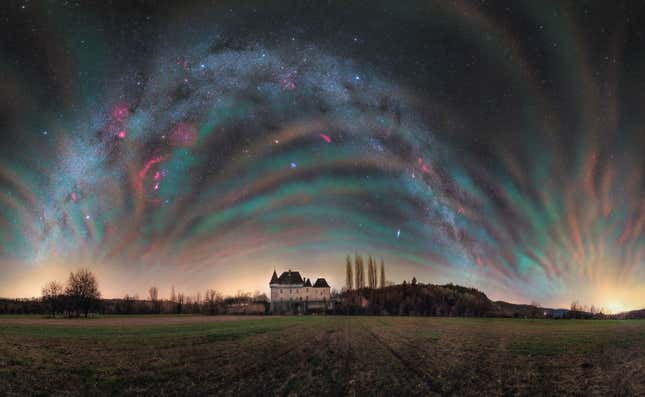
The the Milky Way’s winter arc creates a magical spectacle of light above a medieval castle in France.

Image for article titled 25 Jaw Dropping Photos of the Milky Way Taken From Around the World
Photo: Yuri Beletsky

The galactic center shines above a remote site in the Atacama Desert in Chile.

Image for article titled 25 Jaw Dropping Photos of the Milky Way Taken From Around the World
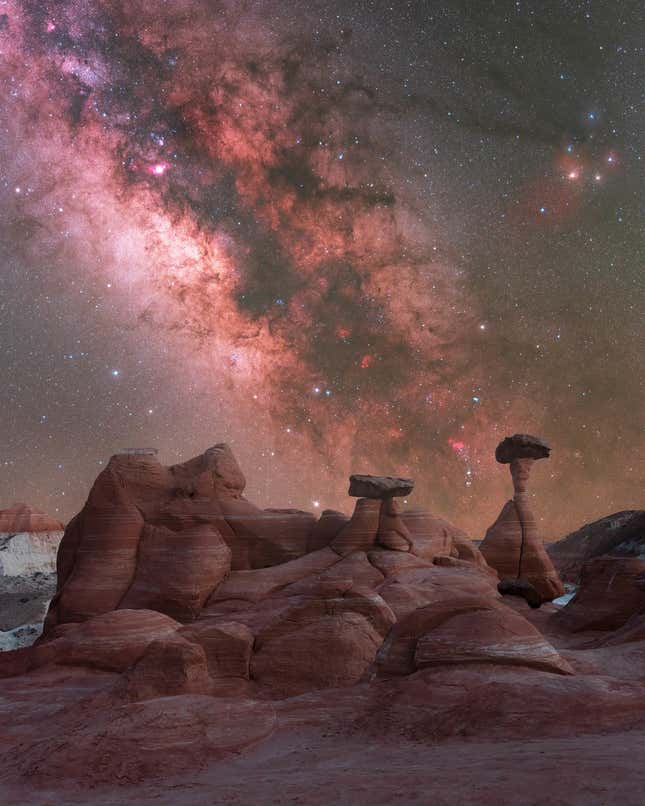
Photo: Marcin Zajac

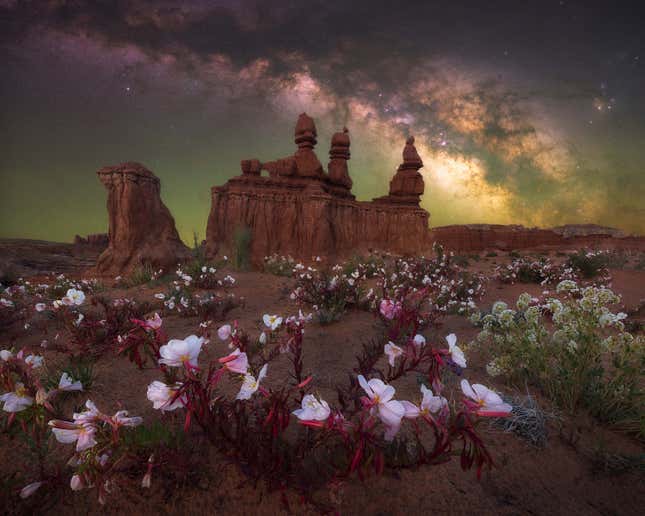
The Milky Way provides a dazzling backdrop to wildflowers growing at the Goblin Valley State Park in Utah.

Image for article titled 25 Jaw Dropping Photos of the Milky Way Taken From Around the World
Photo: Matej Mlakar

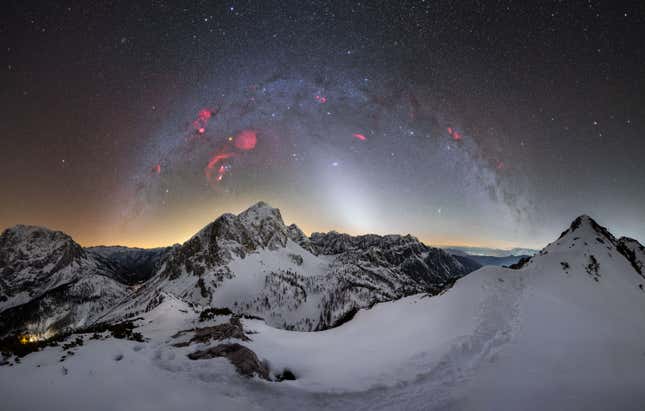
The Milky Way’s winter arch over Vršič Pass, a high mountain pass across the Julian Alps in northwestern Slovenia.

Image for article titled 25 Jaw Dropping Photos of the Milky Way Taken From Around the World
Photo: Rositsa Dimitrova

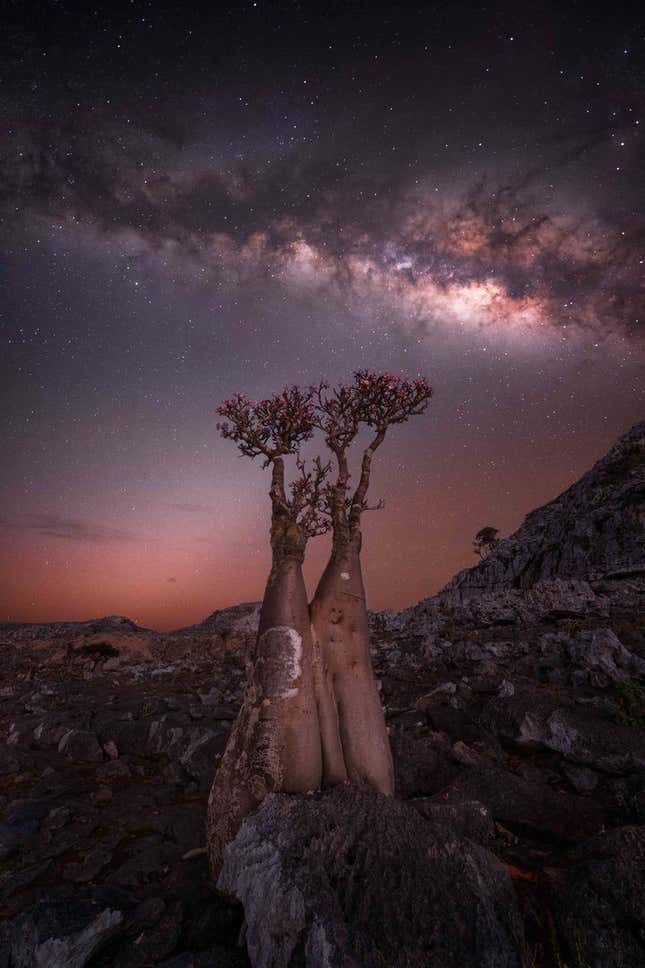
A view of the Milky Way captured from Socotra island in Yemen.

Image for article titled 25 Jaw Dropping Photos of the Milky Way Taken From Around the World
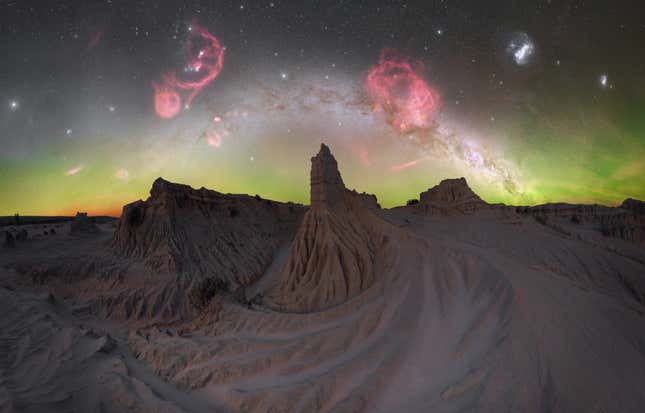
Photo: John Rutter

The Milky Way creates mystical shapes above the shores of dried-up Lake Mungo in Australia.

Image for article titled 25 Jaw Dropping Photos of the Milky Way Taken From Around the World
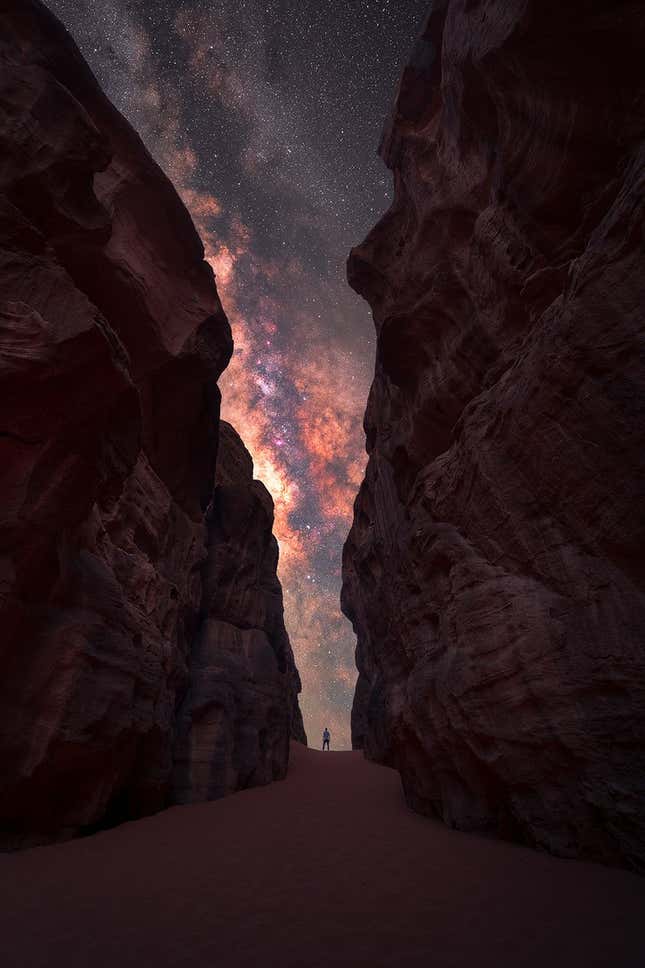
Photo: Mihail Minkov

The Milky Way peaks through the valley of the Wadi Rum Desert in Jordan.

Image for article titled 25 Jaw Dropping Photos of the Milky Way Taken From Around the World
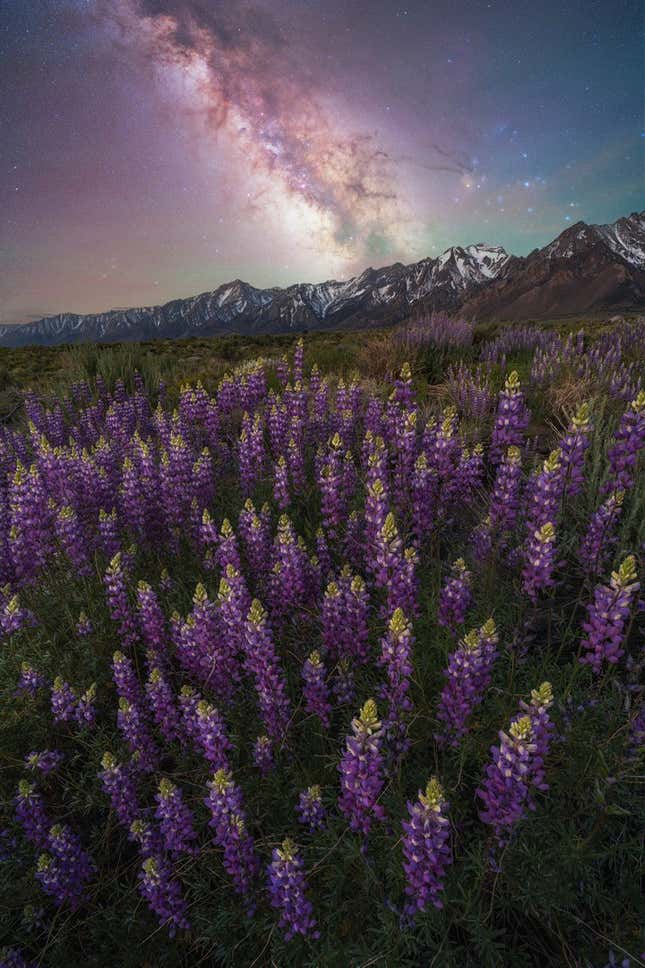
Photo: Brandt Ryder

Lupines in the foothills of the town of Lone Pine, California coming into bloom with a stretch of the Milky Way above.

Image for article titled 25 Jaw Dropping Photos of the Milky Way Taken From Around the World
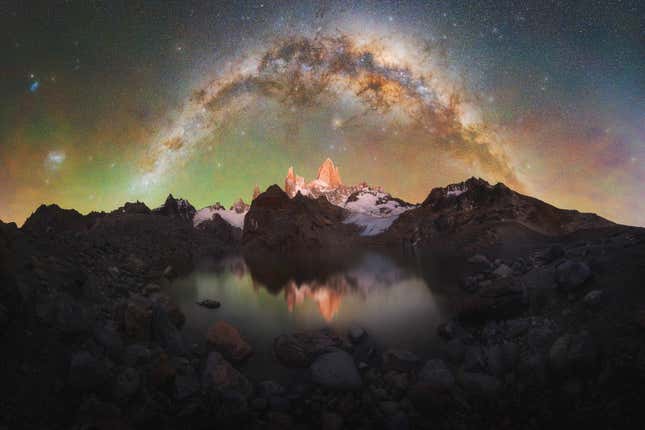
Photo: Francesco Dall’Olmo

The arch of the Milky Way framing Fitz Roy mountain in Laguna de los Tres, Patagonia, Argentina.

Image for article titled 25 Jaw Dropping Photos of the Milky Way Taken From Around the World
Photo: Stephanie Thi

A view of the Milky Way taken from Kanab, Utah.

Image for article titled 25 Jaw Dropping Photos of the Milky Way Taken From Around the World
Photo: Kavan Chay

The Aoraki/Mt Cook National Park in New Zealand shines under the starry light of the Milky Way.

Image for article titled 25 Jaw Dropping Photos of the Milky Way Taken From Around the World
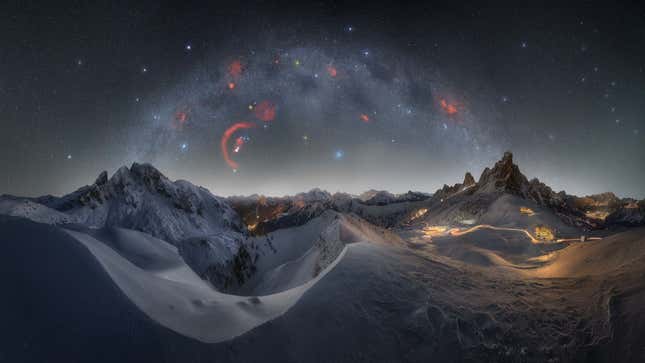
Photo: Andrea Curzi

The Milky Way shines above Passo Giau in Italy.

Image for article titled 25 Jaw Dropping Photos of the Milky Way Taken From Around the World
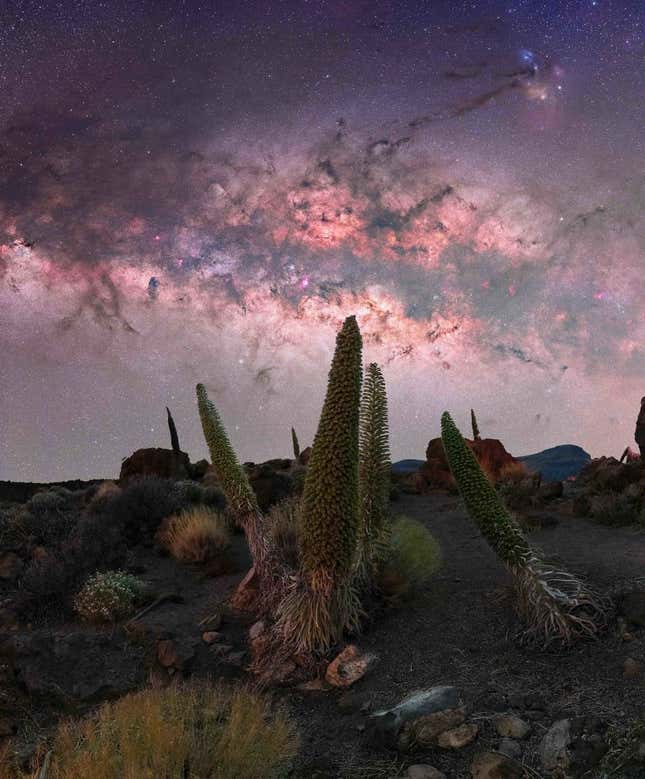
Photo: Maximilian Höfling

The magic of the Milky Way against the backdrop of Tenerife’s night sky in Spain.

Image for article titled 25 Jaw Dropping Photos of the Milky Way Taken From Around the World
Photo: Baillie Farley

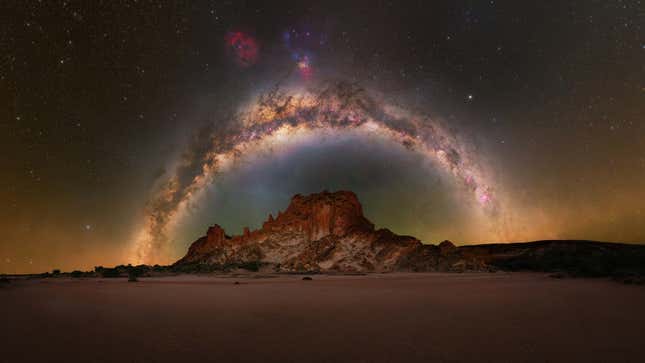
The Australian outback at the Rainbow Valley Conservation Reserve shines under the arch of the Milky Way.

Image for article titled 25 Jaw Dropping Photos of the Milky Way Taken From Around the World
Photo: Benjamin Barakat

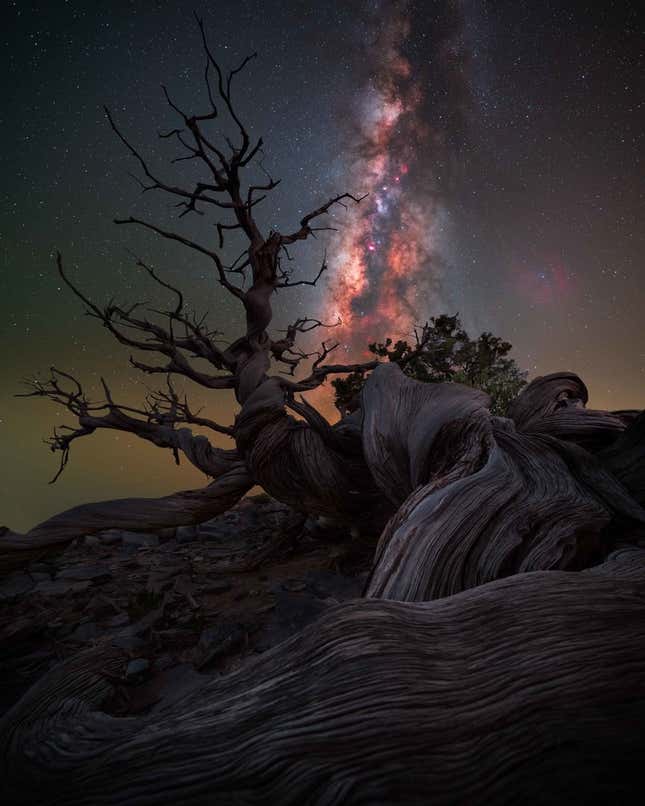
The roots of a Juniper tree point upwards towards the Milky Way in the night skies above Jebel Shams in Oman.

Image for article titled 25 Jaw Dropping Photos of the Milky Way Taken From Around the World
Photo: Kerry-Ann Lecky Hepburn

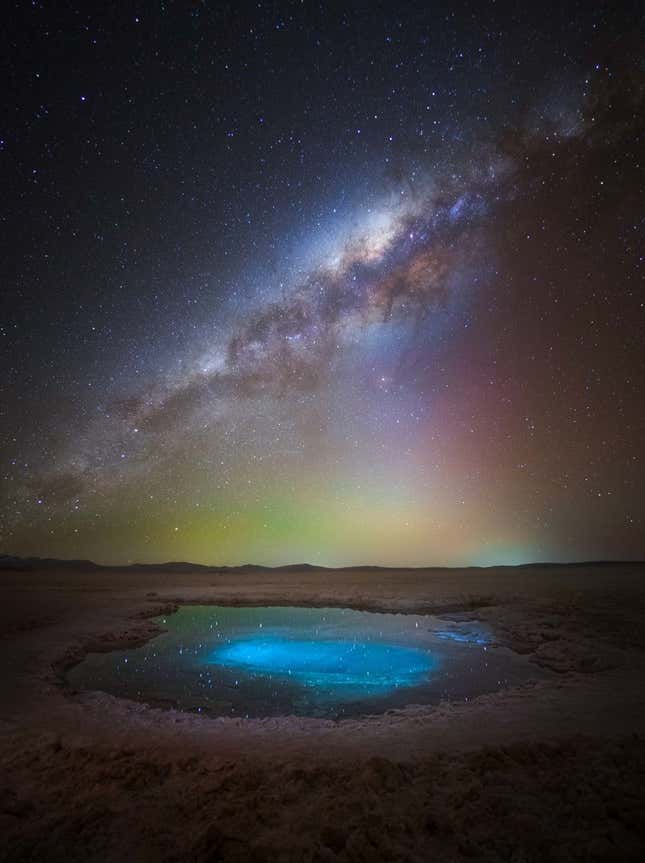
A shimmering lagoon in the Atacama Desert in Chile shines beneath the Milky Way.

Image for article titled 25 Jaw Dropping Photos of the Milky Way Taken From Around the World
Photo: Tervel Kutsev

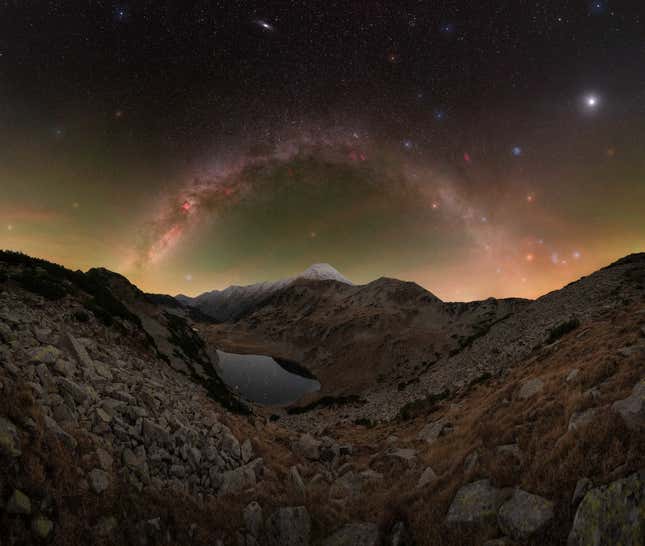
An image of the Milky Way above Pirin Mountain in Bulgaria.

Image for article titled 25 Jaw Dropping Photos of the Milky Way Taken From Around the World
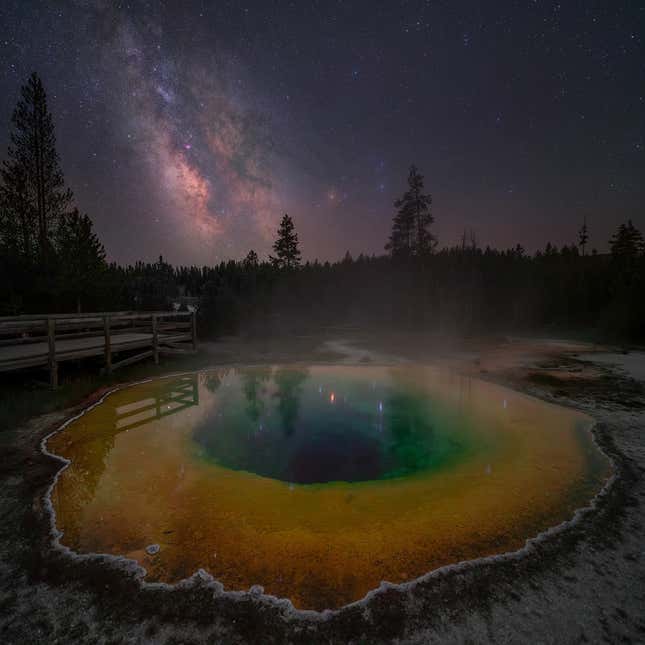
Photo: Jerry Zhang

The Milky Way seen hovering above Morning Glory, a famous hot spring at Yellowstone National Park.

Image for article titled 25 Jaw Dropping Photos of the Milky Way Taken From Around the World
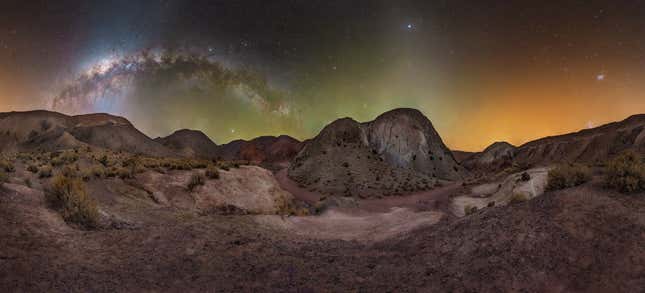
Photo: Cari Letelier

The Milky Way galaxy peeking above Rainbow Valley in Chile.

Image for article titled 25 Jaw Dropping Photos of the Milky Way Taken From Around the World
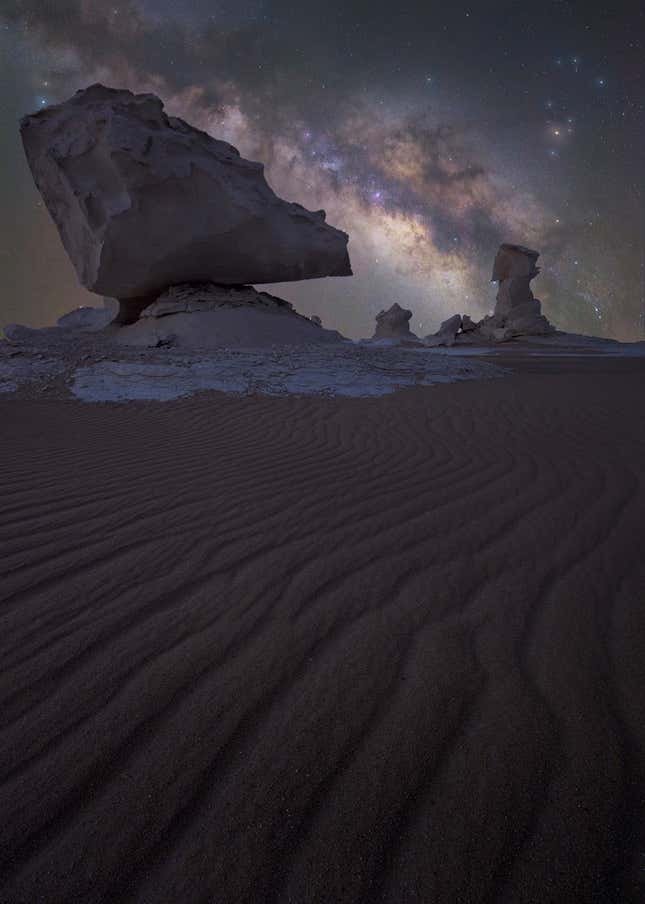
Photo: Hugo Valle

A strip of the Milky Way shines above the White Desert in Egypt.

Image for article titled 25 Jaw Dropping Photos of the Milky Way Taken From Around the World
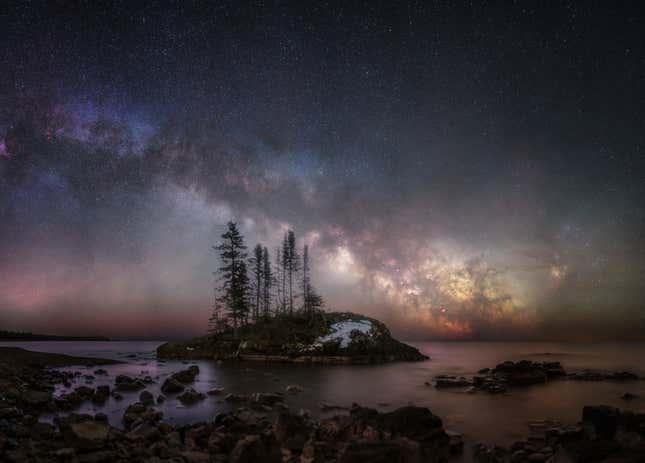
Photo: Marc Rassel

A view of the Milky Way emerging from Lake Superior in Minnesota.

Image for article titled 25 Jaw Dropping Photos of the Milky Way Taken From Around the World
Photo: Tom Rae

The Milky Way seemingly rising from New Zealand’s highest mountain, Aoraki/Mount Cook, on a winter night.

Image for article titled 25 Jaw Dropping Photos of the Milky Way Taken From Around the World
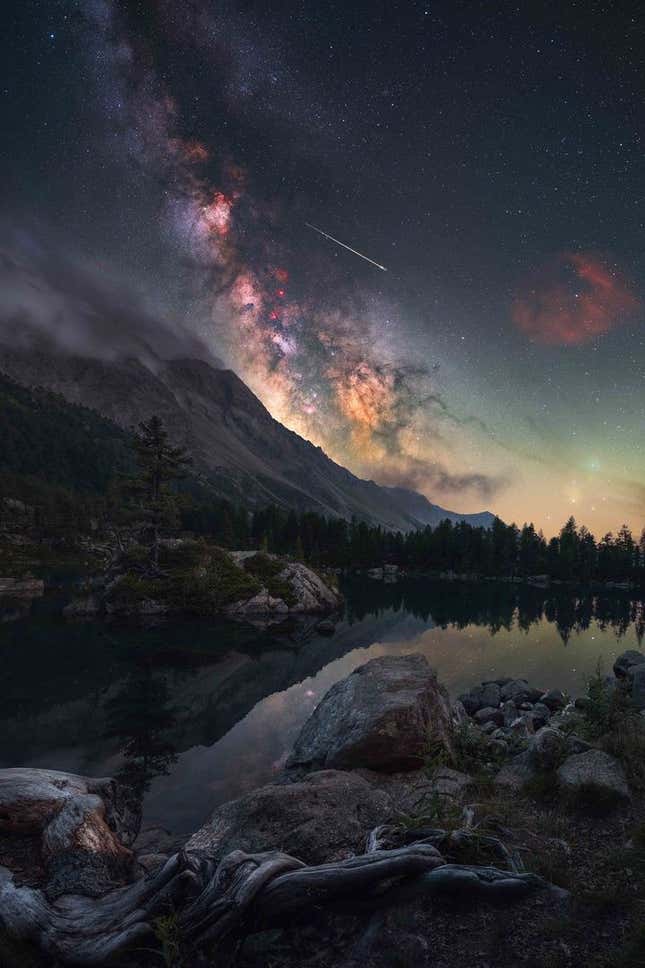
Photo: Alexander Forst

The Milky Way painted across the background of a haunting lake in Switzerland.

Milky Way Photographer Of The Year—See The Best Of The Winners

Milky Way Photographer Of The Year—See The Best Of The Winners
image

Travel photography website Capture the Atlas has unveiled the winners of its seventh Milky Way Photographer of the Year collection. Showcasing the top 25 photos of our galaxy, the collection comes at the peak time of the year to see and photograph the Milky Way on Earth.

Photographers of 19 nationalities have contributed images from 15 countries, from the U.S, Chile and Argentina to Australia, Oman and Jordan.

Dan Zafra, editor in chief at Capture The Atlas, selected the winners from 5,000 entries. The collection aims to inspire and share the beauty of the Milky Way.

The Milky Way is about 50,000 light-years across and contains over 100 billion stars. It’s visible to its greatest extent in May and June each year when its arc stretches across the sky at night. However, the “Milky Way season” is different for each hemisphere:

  • Northern hemisphere: February to October
  • Southern hemisphere: January to November

Here are a sample of the winning entries, with a brief description with each one:

‘Atmospheric Fireworks’

The winter Milky Way (above), as seen from the Dordogne, France, with Sirius and the constellation of Orion, Mars, the Pleiades, the California Nebula, Cassiopeia, the double cluster of Perseus, and the Andromeda galaxy.

Blooming Bottle Tree

Rositsa Dimitrova captured this stunning image (above) of the Milky Way behind a “bottle tree” on Socotra, an island in the Gulf of Aden off the coast of Somali, Yemen and Oman, under a Bortle 1 dark sky (the darkest there is).

‘Blue Lagoon

Noted astrophotographer Yuri Beletsky took this image (above) of the Milky Way’s center in the Atacama Desert in Chile.

‘Bluff Hut’

Rachel Roberts took this image (above) in Mungo River Valley, West Coast, New Zealand, in a region only accessible by hiking or a helicopter.

‘Lightning Lake’

Aoraki, Mount Cook National Park, New Zealand was the location for this stunning image (above) by Tom Rae.

‘Mother Juniper’

Benjamin Barakat took this image (above) of the Milky Way from Jebel Shams, Oman, the country’s highest mountain.

‘Sand Path

The White Desert of Egypt—a region of 2.8 million square kilometers that stretches from the west bank of the Nile into Libya—was the location for this incredible shot by Hugo Valle (above).

‘Saoseo’

Known for it’s very clear water, Lago di Saoseo in Graubuenden, Switzerland reflects the stars as photographed by Alexander Forst (above).

‘The Tajinaste’

The tajinaste flowers stars in this image (above) by Maximilian Höfling taken in Tenerife in the Canary Islands, an island beloved of astrophotographers for the clarity of its skies.

Tombolo Milky Way’

The Milky Way over Lake Superior, Minnesota, (above) as captured by Marc Rassel.

Wishing you clear skies and wide eyes.

Grumpy baby goes viral for hilarious newborn photoshoot

Grumpy baby goes viral for hilarious newborn photoshoot

CINCINNATI (WXIX/Gray News) – A newborn’s photoshoot is going viral for his grumpy facial expressions.

Drawing in Light Photography, owned by Cincinnati-based photographer Lauren Carson, posted photos of a 7-day-old baby boy that is melting the hearts of social media users.

Her Facebook post from May 15 has received nearly 150,000 reactions and more than 32,000 shares.

Carson, a former teacher, says she has been a professional photographer for 11 years.

In her decade of photographing newborns, she says no baby’s expressions compare to the ones she got from this little guy.

“I’ve been photographing newborns for a decade and have photographed hundreds of babies who have given me tons of great expressions,” Carson wrote on Facebook. “But none, and I mean NONE compare to the looks this sweet guy threw my way.”

Despite his funny faces, Carson wrote that the little guy was “a sweet little snuggle bug.”

Innovia Foundation looking for local photography talent

Innovia Foundation looking for local photography talent

SPOKANE, Wash. – Innovia Foundation is hosting its annual photo contest for local photographers in Eastern Washington and North Idaho.

The contest is for locals to submit their photos to support their favorite regional nonprofit organizations. 

The winner will receive a $1,000 grant to a 501(c)3 organization of their choice, a canvas print of their photograph and a feature on Innovia’s website. There will also be winners in each category that will receive a $200 grant as well. 

The categories open for submission are: 

  • People
  • Landscape/Wildlife
  • Education
  • Arts & Culture
  • Community
  • Nonprofit Mission in Action
  • Youth (open to photographers aged 0-17)  

The photo must be taken inside one of Innovia’s 20-county service areas which can be found here. 

Photographers are limited to 5 photos per entry, and submissions close on June 28. 

For more information on the contest and submission instructions click here.