About

Posts by :

Tang Shuo’s Vivid Paintings Conjure the Strife and Stories of His Native Boulder Hill

Tang Shuo’s Vivid Paintings Conjure the Strife and Stories of His Native Boulder Hill

“Co-conspirators” (2023), oil on linen, 192 x 200 centimeters. All images © Tang Shuo, shared with permission

Many of Tang Shuo’s paintings begin with a memory. “I recall a story from the past that left a deep impression on me, extracting a moment from the story and arranging the relationships between characters,” he says. Inspired by his childhood pastime of “playing house,” Shuo renders hunters, snake catchers, and shepherds, imagining himself taking on the roles of his forefathers.

The artist, who is now based in London, grew up in Boulder Hill, a small village on the edge of Guilin, China, that his ancestors founded more than a century ago. For many years, the area was home to the descendants of this single family who upheld many traditional, patriarchal values and farmed the land. Given the political upheaval of the country’s reforms and the Great Leap Forward policies of the mid-twentieth century, its inhabitants struggled for resources like water and food, particularly as famine spread rapidly.

The stories from Shuo’s childhood reflect these realities and are full of grief, labor, and strife, from “water disputes for irrigating rice fields in this agricultural society leading to murder (and) logging for cooking and heating during winter” to scouring the mountains for roaming sheep and children dying from uremia. While the artist’s earlier works looked primarily to the professional lives of his kin, his more recent paintings take an introspective approach.


a man wearing a long sleeve white shirt with a hat around his shoulders and a lighter in his hand looks up at the clouds

“Shepherd’s Sorrow” (2023), oil on linen, 200 x 150 centimeters

“While the figures in the paintings still represent my image, I am using my physical form as a medium to depict others,” he says, noting that after identifying the narrative he wants to convey, he photographs himself in various positions to capture bodily movement and gesture. “I have become an observer and storyteller, merely recounting their stories—stories rooted in the realities I heard or experienced during my time in Boulder Hill.”

Following a round of sketching, Shuo moves to the canvas. He shares that finding the right shade of orange for clouds or deep greens for a jungly field is one of the most difficult parts of each painting, which he renders with a characteristic flatness. Replicating men with sleek, shoulder-length hair and long-sleeved shirts, the artist gravitates toward moments of difficulty and melancholy. For example, in “Fleeing Wanderer,” he depicts an exhausted figure slumped over a green sack asleep, while “Sheperd’s Sorrow” is one of many pieces reflecting the pains of agricultural life and features a herdsman searching for lost animals.

Shuo has exhibitions planned for June at Beers London and another later this year at Steve Turner in Los Angeles. He’s currently working on a book co-published with Fabienne Levy, where he’s represented. You can find more of his paintings and glimpses into his studio on Instagram.


a man in a white long sleeve shirt leans against a red tree holding a rope in one hand

“The Man Holding the Rope” (2022), oil on linen, 120 x 160 x 2 centimeters

a painting of a man in a yellow long sleeve shirt resting with his eyes closed on a pale green sack. puffy white clouds are in the background

“Fleeing Wanderer” (2023), oil on linen, 90 x 70 centimeters

three men sit around a wooden stump in a jungle-like scene with a small cat and dog on the top of the stump. one man dangles an object in his hand

“Magician” (2023), oil on linen, 150 x 150 x 3 centimeters

one man in a red long sleeve shirt holding a branch covers his eyes with his fist while another in a blue shirt cowers below and holds up his hand

“Abuser” (2022), oil on linen, 180 x 120 x 4 centimeters

a portrait of a man wearing a beige long sleeve shirt holding a wooden pole standing next to a white ram with brown horns

“Shepherd” (2022), oil on linen, 160 x 120 x 4 centimeters

a painted portrait of a man in a white long sleeve shirt grasping red grapes in both his hands

“Grape Harvester” (2023), oil on linen, 90 x 70 centimeters

Do stories and artists like this matter to you? Become a Colossal Member today and support independent arts publishing for as little as $5 per month. The article Tang Shuo’s Vivid Paintings Conjure the Strife and Stories of His Native Boulder Hill appeared first on Colossal.

Fearless Apartheid Photographer Peter Magubane Dies Aged 91

Fearless Apartheid Photographer Peter Magubane Dies Aged 91
[embedded content]

Fearless South African photographer Peter Magubane, who captured 40 years of South Africa’s apartheid era, has died.

According to Reuters, Magubane’s daughter Fikile Magubane said that the photographer died peacefully around midday on Monday at the age of 91.

Magubane was a celebrated photographer across the world. His searing images captured the cruelties and violence that Black South Africans faced for four decades under apartheid.

While his images drew global acclaim, Magubane was punished for his photography at home in South Africa. He was regularly harassed, assaulted, arrested, and spent 586 days locked up in solitary confinement

Magubane was born in 1932 in the Johannesburg suburb of Vrededorp (now known as Pageview).

According to Reuters, Magubane gained prominence as one of the few Black photographers documenting the repressive apartheid era after he joined the South African magazine Drum in 1955.

One of his most renowned images, taken a year later in a wealthy Johannesburg suburb, showed a White girl sitting on a bench with a sign reading “Europeans Only” while a Black nanny sat behind her combing her hair.

Magubane went on to photograph decades of apartheid South Africa, including the 1960 Sharpeville massacre, the trial of Mandela and others in 1964, and the Soweto uprising of 1976 — when thousands of Black students protested against the apartheid government’s law making the Afrikaans language compulsory in school.

A Photographer Who Fought Apartheid With His Camera

According to AP News, Magubane became a target of South Africa’s apartheid government after photographing a protest outside a jail where Mandela’s then-wife Winnie Madikizela-Mandela was being held in 1969.

Following this, Magubane was jailed and kept in solitary confinement for over a year-and-a-half.

The photographer was imprisoned numerous times during his career and subjected to a five-year ban that prevented him from working or even leaving his home without police permission.

Magubane said that he was shot 17 times with shotgun pellets by apartheid police while on a photography assignment and was beaten and had his nose broken by police when he refused to give up the images he took of the Soweto uprisings.

Faced with the option of leaving South Africa to go into exile because he was a marked man by the apartheid regime, Magubane bravely chose to stay and continue taking photographs.

“I said, ‘no I will remain here. I will fight apartheid with my camera,’” Magubane reportedly said in a recent interview with national broadcaster SABC.

Magubane was appointed official photographer to Mandela after the anti-apartheid leader was released from prison in 1990 and photographed Mandela up until he was elected the first Black president of South Africa in historic all-race elections in 1994.

Following news of his death this week, the South African government paid tribute to Magubane — saying the photographer “covered the most historic moments in the liberation struggle against apartheid.”


Image credits: Feature photo licensed via Flickr/BBC World News.

Mobile Photography Awards Have Announced Their Best Photos Of All Time, And Here’s All 43

Mobile Photography Awards Have Announced Their Best Photos Of All Time, And Here’s All 43
ADVERTISEMENT

The Mobile Photography Awards, recognized as the world’s longest-running contest dedicated solely to smartphone camera photography, has once again showcased an astonishing level of quality in its entries this year, rivaling any traditional photography competition.

Frankly speaking, this serves as proof of the advanced capabilities of modern smartphone cameras. As of now, the winners of the twelfth edition are yet to be revealed. Interested participants still have time to register, with the deadline set for January 3rd of 2024.

More info: mobilephotoawards.com | Instagram | Facebook | twitter.com

Photography Contest

Photography Contest

The City of Zephyrhills and the Zephyrhills Community Redevelopment Agency has announced the 2024 City of Zephyrhills Photography Contest, open to all ages, both professional and amateur. Images should depict “how you would jump right in to the #cityofzephyrhills community.” For inspiration, visit ci.zephyrhills.fl.us/288/About-Zephyrhills. The deadline for submissions is Jan. 17 at noon. Prize money will be awarded to first place ($300), second place ($200) and third place ($100) photographs. The City of Zephyrhills also will enter the first-place photo into the Florida City and County Management Association Photo Contest, with a chance to be featured on the cover of the FCCMA 2024-2025 Membership Directory and/or the FCCMA website. For more information, email

*protected email*.

Puma Pantone Mimes the Color of the Year With New Scoot Zeros

Puma Pantone Mimes the Color of the Year With New Scoot Zeros

Portland Trail Blazers and third NBA draft pick rookie Scoot Henderson probably doesn’t keep tabs on Pantone’s Color of the Year trends, but there’s a good chance the design team at Puma was well aware of putting their hoops star into sneakers styled both to represent his hometown state of Georgia and feature the on-trend hue with the release of the rookie’s first signature shoe, the PUMA Scoot Zeros.

Even if sports aren’t your thing, PUMA‘s latest signature sneaker might catch your eye if you identify as a color lover. With its PEZ-candylicious marriage of colors, Puma has given their first year hopeful some captivating kicks swirling in hues, including one color labeled as “Peach Fizz” in Puma parlance, only a letter apart from its currently popular Pantone counterpart.

Pair of Scoot Zeros Georgia Peach basketball shoes

Scoot Henderson seated on hardwood basketball court wearing his signature Scoot Zeros Georgia Peach basketball shoes with basketballs at his hip and feet.

The bouncy kicks feature Puma’s PROFOAM EVA and an aggressively styled lime green PUMA Formstrip flame streaking across the Blazer’s first signature silhouette shoe. Only when you peek underneath does it become clear these peachy paws are Pumas.

Bottom sole of the Scoot Zeros Georgia Peach basketball sneakers with large Puma logo across it.

Top detail of the tongue of the Scoot Zeros Georgia Peach basketball sneakers.

Puma Scoot Zeros Georgia Peach retail for $100 and are available now via puma.com and select stores.

This post contains affiliate links, so if you make a purchase from an affiliate link, we earn a commission. Thanks for supporting Design Milk!

Gregory Han is a Senior Editor at Design Milk. A Los Angeles native with a profound love and curiosity for design, hiking, tide pools, and road trips, a selection of his adventures and musings can be found at gregoryhan.com.

Rogersville native honored as the East Tennessee’s Photographer of the Year

Rogersville native honored as the East Tennessee’s Photographer of the Year
image

Jessica Millard, the creative force behind Jessica Millard Portraits, was recently awarded Photographer of the Year by the Professional Photographers of East Tennessee (PPETN).

This page requires Javascript.

Javascript is required for you to be able to read premium content. Please enable it in your browser settings.


Featured Local Savings


“An autobiographical element can be an interesting way to approach landscape photography”

“An autobiographical element can be an interesting way to approach landscape photography”

About Benedict Brain

Benedict Brain with camera

(Image credit: Marcus Hawkins)

Benedict Brain is a UK-based photographer, journalist and artist. He is an Associate of the Royal Photographic Society and sits on the society’s Distinctions Advisory Panel. He is also a past editor of Digital Camera Magazine, and the author of You Will be Able to Take Great Photos by The End of This Book.

This is an image from my recent trip on a ship, which I wrote about in my previous column. It was taken toward the end of the voyage, and I had been at sea in the north Atlantic for about five days without seeing land. While there were a bunch of passengers and crew, I was traveling solo: on the whole I don’t mind that, but it can start to feel a bit weird after so many days in the ocean. 

This lone rock was taken not long after arriving in the Newfoundland port town of St John, conveniently on Canada Day. It was a glorious day, and delightful to set foot on land again. I chose this image to talk about because, apart from quite liking it, I feel it also has an autobiographical element, which can be an interesting way to approach landscape photography.

I often refer to American photographer Robert Adams. Adams suggests in his wonderful book Beauty In Photography: “Landscape pictures can offer us, I think, three verities – geography, autobiography and metaphor. Geography is, if taken alone, sometimes boring, autobiography is frequently trivial, and metaphor can be dubious. But taken together… the three kinds of information strengthen each other and reinforce what we all work to keep intact – an affection for life.” 

This has stuck with me since reading the book at college over 30 years ago, and something I always strive to achieve. For me, this is what I think Adams means: by ‘geography’, he is referring to the visual record of a place, topography, weather, light and so on. In this case, a rock on another rock in the mist. By ‘autobiography’, he’s asking for an element of personal expression. For me, the lone rock speaks to how I was feeling at the time – maybe a little bit lonely. Finally, by ‘metaphor’, Adams asks if the image can be used to imply an alternative meaning or message, of which there are myriad interpretations. What does it mean to you?  

• Other articles in the Art of Seeing series

Read more:
The 50 best photographers ever
100 best photography quotes from famous photographers
The best coffee-table books on photography

The Camera Trick That Makes Every Photographer’s Life Easier

The Camera Trick That Makes Every Photographer’s Life Easier

I’ve seen too many photographers these days shoot portraits at 20 frames a second or more. But beyond that, they then need to sift through all those images in post-production. These days though, it’s becoming increasingly ridiculous, with cameras shooting way more images than you possibly need. Years ago, I used to go through and manually delete those photographs to clear up space on my memory cards. But these days, there’s another camera trick you can use that will become much more important: star rating.

The Camera Trick

The camera trick is none other than star ratings. I’ve been using it for years but haven’t seen many photographers using it too. However, it truly does help. Other photographers have used the “protect” feature on their images. But then it’s annoying because those can’t be deleted, so you often need to unlock them afterward when you format the card. With star ratings though, you’re telling yourself that the image you’re rating is one that you think is a winner beyond the others. It can help you cull 1,000 images down to 120 photographs instead.

Compared to several other journalists that test cameras, I don’t tend to shoot nearly as much. But even if I only have 300 images, I don’t want to sit there sifting through all of them. So when I’ve got a spare moment, I’ll look at the images. Then I’ll zoom in and make sure that they’re in focus. If they are acceptably so, then I’ll add a star rating. And even if it isn’t, I’ll add a star rating if it’s a nice enough photograph.

Often, this has more involved, though. If I’m shooting portraits or photographs of a human, it’s all about capturing an emotional moment. The same goes for photographing pets. But if I’m photographing food, a cityscape, or something else, then it’s all about eliciting a feeling in the image. If I can get a feeling from that photograph, then I roll with it.

And if really needed, then I can fix it in post-production. However, I shoot in a way that I often don’t need to do so. This is still really helpful when shooting wildlife, sports, weddings, events, etc.

How to Use the Star Rating Function on Your Camera

Every camera manufacturer does this camera trick differently. However, here’s how I’ve set it up with different camera manufacturers over the years.

  • Canon: I use the rate button. If the camera doesn’t have one, I program it to something else. If you keep pressing the rate button, it will give it more stars. For example, it’s different on the R5 vs the EOS R.
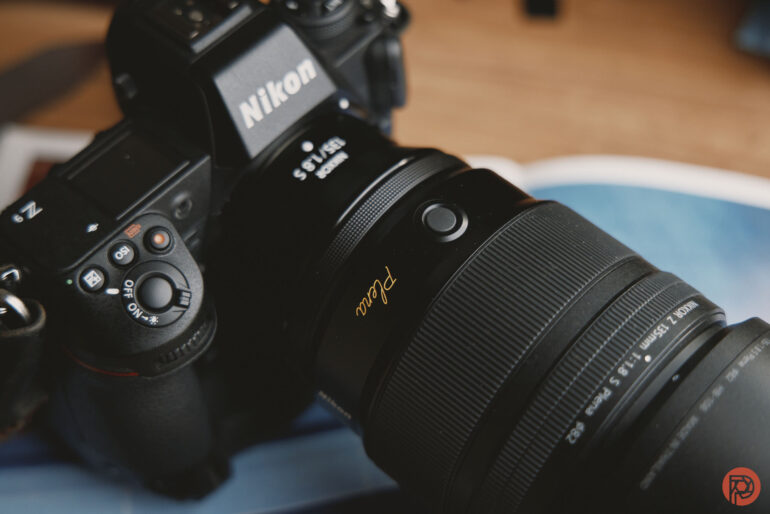
  • Nikon: I rewired the protect button to star rating.
  • Sony: I often rewire one of the buttons to do this during playback. It works like Canon.
  • Leica: Usually, when reviewing photos, Leica cameras let you do this by default with the push of a button. I can usually just give something a star or not.
  • Fujifilm: It’s the most complex here. You have to choose the image, then choose a menu setting, and then assist the star rating using a combo of the buttons and the dials.
  • Panasonic: I set a button to automatically give the image three stars when pressed.
  • OM System: I assign a button to do this. Usually, it’s the protect button

It’s always a lifesaver when it comes to looking at images later on.

What to Keep in Mind

Here are some things to keep in mind when using the star rating camera trick.

  • Make sure you’re viewing the image from the memory card that you intend on importing the photographs from. When you make your star ratings, the ratings will often be applied to this card and not always the other one.
  • I’m legally blind, and a lot of photographers say that they want to view the image on a bigger screen before making their final selections. But if I can do it, then I’m positive that most other photographers can, too.
  • The mindset here involves cutting down on timing. You could just not shoot as many images, to begin with, and get better at understanding the moments in front of you. But an AI algorithm can only really understand what’s in focus or not. We’d know; we’ve tested a bunch. It doesn’t understand the moment — and it really doesn’t understand the context and how it relates to your client or the intent. So, if anything, you can star rate those images yourself or have an assistant do it.

This year, camera manufacturers are just going to keep plugging in all these features that older generations have asked for, and not those that younger photographers have. So get ready for a world where there are tons of frames being shot per second.