About

Posts by :

Q&A: The Police’s Andy Summers discusses solo tour, photography, ahead of intimate Clearwater concert

Q&A: The Police’s Andy Summers discusses solo tour, photography, ahead of intimate Clearwater concert

While the name Andy Summers may not be as recognizable or roll off the tongue as easily of those of his former bandmates, it should elicit a hefty amount of praise and respect. The 80-year-old veteran artist whose musical resume had already boasted plenty of experience as a member of psych/progressing band Soft Machine and an incarnation of Eric Burdon’s Animals, but is better known for his innovative approach and his contributions to pop music as the mastermind guitarist for one of the most popular and successful rock bands of all time: The Police.

Bursting on the scene in 1977, the cusp of punk rock morphing into the easier-to-digest new wave tag, Summers, along with ace bassist and singer Sting and mesmerizing drummer Stewart Copeland, cornered the market on making smart, witty, catchy, memorable records that straddled the line between the afore-mentioned genres du jour with a good dose of reggae and world music thrown in for good measure.

Summers’ often elegant, but sometimes cryptic and experimental, guitarwork was the perfect vehicle to give color and texture to the incredible rhythm section he played alongside. Boasting five multi-million selling albums in their canon that only got better as they progressed, he and The Police were arguably the most popular band on the globe during their all-too-short tenure. The group decided to put the brakes on the ensemble, following their blockbuster 1983 album, Synchronicity and the record-breaking world tour of stadiums around the world that accompanied it. The band has since reunited for a few tours since their split—and Sting is set to play Tampa’s Raymond James Stadium next year—but its members have concentrated more on solo careers, side projects, and other ventures.

In one of the more interesting and appealing solo undertakings its members have pursued, Summers, who has quite the impressive discography as a soloist, has decided to go on the road to present an intriguing-sounding one-man show, which visits Clearwater’s Bilheimer Capitol Theatre this weekend. Besides his mastery of the guitar, Summers has had a longtime interest in photography and has published several books of his snapshots.

More recently, he’s taken to short story writing and published “Fretted and Moaning,” a collection of his works to great acclaim. For his current series of solo performances, his new series of shows, dubbed “The Cracked Lens + A Missing String” tour, Summers has developed a performance that culminates the mediums he’s worked in on his own. A combination of onstage photo displays, readings from his short stories, and, of course, plenty of music, Summers has received dazzling reviews for the show that was intended to make the rounds just before COVID hit but, in recent months, has finally gotten to play for audiences around the country.

On a short break between legs of his solo tour, Summers, who’ll see his 81st birthday on New Years Eve, took some time out to talk to Creative Loafing Tampa Bay from his home in California about his current jaunt and some of his inspirations.

Tickets to see Andy Summers play Clearwater’s Bilheimer Capitol Theatre on Sunday. Dec. 10 are still available and start at $44.50.

Event Details

What can you tell us about this tour? How is it going so far?It’s on and off; I don’t play every night. I started back in July and I play a few shows at a time, like five or six at a time. I show photos on a big screen and it’s a mixed media show. I’m telling stories and playing guitar, sometimes with backing tracks. I did 11 of these shows in the pre-pandemic days. It’s a different thing onstage. It’s a visual presentation and it’s going well. It’s carefully worked out.

You’re a renowned, respected guitarist and I know you’ve been into photography for a long time. Now you have a book of your short stories to your credit. Nowadays, of those avenues, is there one medium that gives you more pleasure than the others?

I’m a musician first and foremost. It’s music over writing and taking photos. But with photography, in the early days of The Police, it became an all-consuming passion. When I was a teenager, I saw a lot of foreign films made by the directors [Ingmar] Bergman, [Francois] Truffaut, [Federico] Fellini. In 1979, I got a black and white Nikon camera and I had this substrata of films I’d seen in my head from when I was 12 years old. I didn’t think to myself, ‘I’m a very visual person; I need to make films,’ but these visuals seemed like the next plateau, even at an early age.

How are you liking playing more intimate venues as opposed to the large arenas or stadiums you’re used to playing with The Police?

It’s a different type of freedom, ego-wise. It’s just me; no band. To some extent, it’s a work in progress but with a live audience. These venues are ideal for a performer. And, in the USA, there are so many beautiful, deco-period theaters that are so nice inside. I mean the red velvet, the oil paintings. And they are all small to mid-size. When you’re playing to 1,000 people, you feel like you can really communicate with the audience. It’s different from the huge stadium. You can put forth your personality on the stage. It’s a perfect setting. There’s a big screen and you get to be close to the audience. It’s very satisfying. Have you been inside the theater where I’ll be playing in Clearwater?

Yes! And it is, like you mentioned, a very beautiful theater. You also, on The Police’s first visit to Tampa many years ago, played at another of the gorgeous theaters we’re lucky to have here in our area, the Tampa Theater.

Who knew all these great theaters existed?

For those coming to see the show, what can be expected in terms of a setlist? I have to imagine there will be plenty of solo material but The Police’s catalog will be represented too?

Yes. There will be solo material and Police stuff as well. But it will all be worked out in a special way and with plenty of visuals.

Subscribe to Creative Loafing newsletters.

Follow us: Apple News | Google News | NewsBreak | Reddit | Instagram | Facebook | Twitter | Or sign up for our RSS Feed

Local Photographer hopes to capture the spirit of ‘The People of Beacon Hill’

Local Photographer hopes to capture the spirit of ‘The People of Beacon Hill’

SAN ANTONIO — A local photographer and business owner in the historic Beacon Hill neighborhood is working on a project to highlight the diverse and vibrant energy that made her want to call it home.

“Kind of hold your hands like this for me,” Nancy Beal Canseco said, gesturing to her subject’s paint-covered hands.

“I love that,” she said as the shutter on her Canon mirror-less camera came down.

Canseco is the owner of the Artist’s Collective, but it’s a different project that has her attention lately.

She is looking to capture the spirit of Beacon Hill.

“Lots of artists in the neighborhood,” Canseco told Liz Lindstrom, one of her subjects.

“I didn’t even know when I moved here. It’s like I moved to my dream neighborhood,” she said.

The photographer moved to San Antonio from Chicago three years ago, she says she was inspired by the atmosphere she found in the historic neighborhood.

“We were looking all over Alta Vista and Beacon Hill and found this house,” Lindstrom said. “It’s way smaller than any house I’ve ever lived in, and I love it.

She’s calling her project “The People of Beacon Hill” but she’s just as interested in photographing their homes and the local businesses she feels make the neighborhood truly special.

“I was really struck by in the neighborhood was how the houses have just stayed,” Canseco said. “Like, people don’t tear them down. They restore them calm and the character of the houses and just of the neighborhood is so special.”

Conseco spent Saturday morning taking portraits of Beacon Hill residents in front of a backdrop at Bright Coffee, but in the afternoon, she was traveling from house taking shots of her neighbors in front of the places they call home.

She also took photos of local business owners like Karolina’s Antiques Owner Maria Vega.

“We see this neighborhood changing a lot,” Vega told Canseco during their session.

Vega said she and her family have been running their business in the Beacon Hill neighborhood for 18 years and have watched it go through a lot of change.

“It’s a good feeling to see all this new stuff around like, to everything combine, like old, new,” she said.

Canseco has taken portraits of 25 of her neighbors so far and she is still looking for more people to participate.

Canseco said she is hoping to include at least 100 of her neighbors in the project, which will go on display at Bright Coffee in January and eventually become a book.

“I’m really just trying to paint the, you know, a full picture of the neighborhood in this project,” she said.

Canseco is asking beacon hill residents interested in participating in the project to reach out to her through the website of her business, The Artist’s Collective.

[embedded content]

‘It’s a start’: Gainesville drag community celebrates temporary lift on Florida ban of children at shows – The Independent Florida Alligator

‘It’s a start’: Gainesville drag community celebrates temporary lift on Florida ban of children at shows – The Independent Florida Alligator

Ethan Garrepy began doing drag with a $10 Target face paint palette, an old Halloween wig and a lot of time on their hands during the COVID-19 quarantine. Three years later, the 19-year-old UF musical theater sophomore is one of many artists and performers who make up Gainesville’s flourishing drag scene. 

On Nov. 16, the United States Supreme Court refused the state of Florida’s request to re-enact a law punishing businesses for allowing children into drag shows. Artists like Garrepy are taking the opportunity to celebrate the rare legal victory, which follows a flurry of Florida anti-LGBTQ laws passed over recent legislative terms.

Under the Protection of Children Act, filed in the Florida Senate March 2 and signed into law by Gov. Ron DeSantis May 17, the state could fine, suspend or revoke the license from any business that admits a child to an “adult live performance.” 

Although the bill does not mention drag shows explicitly, its definition of an adult live performance as including “the lewd exposure of prosthetic or imitation genitals or breasts” has levied criticism for targeting drag performance.

The bill’s House sponsor, Rep. Randy Fine, R-33, announced the bill would “protect our children by ending the gateway propaganda to this evil — ‘Drag Queen Story Time’” in a Facebook post in March.

Florida restaurant successfully sues state

Hamburger Mary’s, an Orlando restaurant that has hosted family-friendly drag events since 2008, filed a suit against the state of Florida, DeSantis and Secretary of State Melanie Griffin over the law one week after it went into effect. The law is unconstitutional under the First Amendment and portrays drag as a public nuisance rather than an age-old art form, the restaurant claimed.

U.S. District Judge Gregory Presnell sided with Hamburger Mary’s June 26 in a ruling that blocked Griffin from enforcing the act. 

Florida already has obscenity laws giving it the power to protect children from indecent shows, making the Protection of Children Act unnecessary as well as expression-stifling, Presnell wrote. Florida appealed the District Court’s judgment to the Eleventh Circuit, where it remains pending.

The state of Florida also appealed to the Supreme Court to keep the law on the books during the appeal process. The Supreme Court denied this request in a brief ruling that emphasized its decision had nothing to do with whether the law itself was unconstitutional.

The Supreme Court voted 6-3 against the state, with dissenting opinions from Justices Clarence Thomas, Samuel Alito and Neil Gorsuch.

Gainesville drag artists celebrate victory with caution

Enjoy what you’re reading? Get content from The Alligator delivered to your inbox

For Garrepy, the ability to attend and perform drag shows isn’t just a freedom of speech — it’s a freedom of protest. To be out, proud and performing in the U.S. has long been considered an act of rebellion by those in the queer community, they said. 

Aside from showing off their own drag looks on social media, Garrepy often attends shows at Gainesville’s pre-eminent queer nightclub, The University Club. Gainesville’s vibrant queer nightlife, including UC performances and even weekly drag shows at the new Libby’s Grog and Grill, makes it a uniquely safe environment for queer artists, said Garrepy, an Orlando native. 

“I was told a lot of things coming here [for college] like, ‘Oh, Gainesville is completely empty, Gainesville doesn’t have anything going on,’” they said. “The people that were telling me that were like, straight jocks … but I’ve been able to find an awesome queer community here.”

Garrepy feels cautiously optimistic following the Supreme Court ruling, they said. But people are stubborn about the issue on both sides, and it’s hard to know what will happen next, they added.

“Republican politicians are completely wanting to shut out drag as an art form, not only just in Florida but across the U.S.,” they said. “And queer people, queer activists are fighting every day to make sure that we have a spot at the table.”

Christina Guiriba, the 37-year-old founder of the first-ever sleepaway summer camp for transgender and nonbinary kids, has seen the worrying effect of recent legislation on LGBTQ+ youth, she said.

“I absolutely hate that they’re having to hear that they shouldn’t exist,” she said.

Guiriba lives in Jacksonville but performs every Thursday at the UC under her drag stage persona Faith Taylor. She also worked as a cast member at Hamburger Mary’s for 10 years and remembers seeing many young people at her shows, she said.

“I know the joy that it brings them to see just another LGBTQ person that identifies on some level with who they are,” she said. “They get so cheery and so excited and bright when they come to the shows, and I hate that they’re robbed of that.”

As a transgender woman, beginning to perform in drag as Faith was how Guiriba realized part of her was missing as a young person, she said. The law could prevent young people from recognizing drag as a potential creative outlet like she did, she said. 

Guiriba is glad Florida judges are seeing the law as the violation of rights that it is and views any victory — temporary or not — as a step in the right direction, she said. She’s hopeful courts will continue to see the law’s defects, she said.

Legal experts doubtful about the law’s future

Any law targeting a specific type of speech the government dislikes is subject to the highest level of constitutional scrutiny, said Lyrissa Lidsky, UF Raymond & Miriam Ehrlich chair in U.S. constitutional law.

“Just from my own perspective as a First Amendment lawyer, this law is pretty clearly unconstitutional,” Lidsky said.

By driving certain content out of the marketplace of ideas, the law could scare businesses from performing drag at all for fear of criminal liability or — in the case of restaurants — losing their liquor licenses, she said.

The definition of the banned “adult live performance” is vague, so businesses won’t know whether or not their performances violate the rules. But if the government tries targeting certain ideologies more explicitly, First Amendment challenges will pop up in retaliation, Lidsky said.

“One of the best arguments about these laws came from Dolly Parton,” Lidsky said. “Her argument was, under a lot of these drag ban laws, her performance would be banned.”

The preliminary injunction against the law could send it back up the appeals ladder, during which more evidence could come out at trial and more appeals could occur, she said. But the more reasonable step for Florida would be to go back to the drawing board rather than litigating a poorly drafted law, she said.

The law is still in Florida’s Eleventh Circuit U.S. Court of Appeals. The state of Florida filed its brief Nov. 24 and its appendix Dec. 1. The appeal is still awaiting its final verdict. 

Contact Zoey Thomas at zthomas@alligator.org. Follow her on Twitter @zoeythomas39.

The Independent Florida Alligator has been independent of the university since 1971, your donation today could help #SaveStudentNewsrooms. Please consider giving today.


Zoey Thomas

Zoey Thomas is a second-year media production, management and technology major, reporting for the metro desk. Other than writing, her passions include sweet potatoes, Agatha Christie and long-distance running.

East Texas photographer takes photography to ‘match-making’ level

East Texas photographer takes photography to ‘match-making’ level

An East Texas photographer is taking her skills and turning her photography into a way for clients to meet for a “blind date” photography session.

Anita McElroy, owner of A Sweet Day Photography, said she came up with the idea after a potential client asked her if she did “stranger sessions.”

“I was approached by a potential client about whether or not I did stranger sessions. I had not known about them so I looked it up and made a post about it to get some interest,” she said. “As it progressed , I liked the concept of matching people for potential love rather than just as strangers. So the blind date sessions came about; I will plan a small date activity and just let the couple connect.”

#placement_588494_0_i{width:100%;margin:0 auto;}

McElroy starts by blindfolding the clients and taking their photo together. After a few photos, she takes the blindfolds off and does another round of pictures before allowing the couple to enjoy each other’s company and get to know one another.

The photographer turned matchmaker said most of her sessions have turned into second dates.

“Most sessions I’ve done have turned into second dates so far. I know of one becoming pretty serious,” she said. “I try to give each person space and only get information that is openly given; I try to be respectful. But I also encourage all of them to tell me all the details.”


photo1.jpg

Some of the photo sessions have turned into second dates.


McElroy, who started as a professional photographer in 2011, said she has loved photography for as long as she can remember.

“I’ve loved photography since I was young. I was the girl with the disposable camera taking photos of friends in middle school,” she joked. “Then putting the photos in my binders; old school Facebook.”

@import url(https://fonts.bunny.net/css?family=ibm-plex-sans:400,600);

#_form_9_ { font-size:14px; line-height:1.6; font-family:arial, helvetica, sans-serif; margin:0; }
#_form_9_ * { outline:0; }
._form_hide { display:none; visibility:hidden; }
._form_show { display:block; visibility:visible; }
#_form_9_._form-top { top:0; }
#_form_9_._form-bottom { bottom:0; }
#_form_9_._form-left { left:0; }
#_form_9_._form-right { right:0; }
#_form_9_ input[type=”text”],#_form_9_ input[type=”tel”],#_form_9_ input[type=”date”],#_form_9_ textarea { padding:6px; height:auto; border:#979797 1px solid; border-radius:4px; color:#000 !important; font-size:14px; -webkit-box-sizing:border-box; -moz-box-sizing:border-box; box-sizing:border-box; }
#_form_9_ textarea { resize:none; }
#_form_9_ ._submit { -webkit-appearance:none; cursor:pointer; font-family:arial, sans-serif; font-size:14px; text-align:center; background:#004cff !important; border:0 !important; -moz-border-radius:4px !important; -webkit-border-radius:4px !important; border-radius:4px !important; color:#fff !important; padding:10px !important; }
#_form_9_ ._submit:disabled { cursor:not-allowed; opacity:0.4; }
#_form_9_ ._submit.processing { position:relative; }
#_form_9_ ._submit.processing::before { content:”; width:1em; height:1em; position:absolute; z-index:1; top:50%; left:50%; border:double 3px transparent; border-radius:50%; background-image:linear-gradient(#004cff, #004cff), conic-gradient(#004cff, #fff); background-origin:border-box; background-clip:content-box, border-box; animation:1200ms ease 0s infinite normal none running _spin; }
#_form_9_ ._submit.processing::after { content:”; position:absolute; top:0; bottom:0; left:0; right:0; background:#004cff !important; border:0 !important; -moz-border-radius:4px !important; -webkit-border-radius:4px !important; border-radius:4px !important; color:#fff !important; padding:10px !important; }
@keyframes _spin { 0% { transform:translate(-50%, -50%) rotate(90deg); }
100% { transform:translate(-50%, -50%) rotate(450deg); }
}
#_form_9_ ._close-icon { cursor:pointer; background-image:url(‘https://d226aj4ao1t61q.cloudfront.net/esfkyjh1u_forms-close-dark.png’); background-repeat:no-repeat; background-size:14.2px 14.2px; position:absolute; display:block; top:11px; right:9px; overflow:hidden; width:16.2px; height:16.2px; }
#_form_9_ ._close-icon:before { position:relative; }
#_form_9_ ._form-body { margin-bottom:30px; }
#_form_9_ ._form-image-left { width:150px; float:left; }
#_form_9_ ._form-content-right { margin-left:164px; }
#_form_9_ ._form-branding { color:#fff; font-size:10px; clear:both; text-align:left; margin-top:30px; font-weight:100; }
#_form_9_ ._form-branding ._logo { display:block; width:130px; height:14px; margin-top:6px; background-image:url(‘https://d226aj4ao1t61q.cloudfront.net/hh9ujqgv5_aclogo_li.png’); background-size:130px auto; background-repeat:no-repeat; }
#_form_9_ .form-sr-only { position:absolute; width:1px; height:1px; padding:0; margin:-1px; overflow:hidden; clip:rect(0, 0, 0, 0); border:0; }
#_form_9_ ._form-label,#_form_9_ ._form_element ._form-label { font-weight:bold; margin-bottom:5px; display:block; }
#_form_9_._dark ._form-branding { color:#333; }
#_form_9_._dark ._form-branding ._logo { background-image:url(‘https://d226aj4ao1t61q.cloudfront.net/jftq2c8s_aclogo_dk.png’); }
#_form_9_ ._form_element { position:relative; margin-bottom:10px; font-size:0; max-width:100%; }
#_form_9_ ._form_element * { font-size:14px; }
#_form_9_ ._form_element._clear { clear:both; width:100%; float:none; }
#_form_9_ ._form_element._clear:after { clear:left; }
#_form_9_ ._form_element input[type=”text”],#_form_9_ ._form_element input[type=”date”],#_form_9_ ._form_element select,#_form_9_ ._form_element textarea:not(.g-recaptcha-response) { display:block; width:100%; -webkit-box-sizing:border-box; -moz-box-sizing:border-box; box-sizing:border-box; font-family:inherit; }
#_form_9_ ._field-wrapper { position:relative; }
#_form_9_ ._inline-style { float:left; }
#_form_9_ ._inline-style input[type=”text”] { width:150px; }
#_form_9_ ._inline-style:not(._clear) + ._inline-style:not(._clear) { margin-left:20px; }
#_form_9_ ._form_element img._form-image { max-width:100%; }
#_form_9_ ._form_element ._form-fieldset { border:0; padding:0.01em 0 0 0; margin:0; min-width:0; }
#_form_9_ ._clear-element { clear:left; }
#_form_9_ ._full_width { width:100%; }
#_form_9_ ._form_full_field { display:block; width:100%; margin-bottom:10px; }
#_form_9_ input[type=”text”]._has_error,#_form_9_ textarea._has_error { border:#f37c7b 1px solid; }
#_form_9_ input[type=”checkbox”]._has_error { outline:#f37c7b 1px solid; }
#_form_9_ ._error { display:block; position:absolute; font-size:14px; z-index:10000001; }
#_form_9_ ._error._above { padding-bottom:4px; bottom:39px; right:0; }
#_form_9_ ._error._below { padding-top:8px; top:100%; right:0; }
#_form_9_ ._error._above ._error-arrow { bottom:-4px; right:15px; border-left:8px solid transparent; border-right:8px solid transparent; border-top:8px solid #fdd; }
#_form_9_ ._error._below ._error-arrow { top:0; right:15px; border-left:8px solid transparent; border-right:8px solid transparent; border-bottom:8px solid #fdd; }
#_form_9_ ._error-inner { padding:12px 12px 12px 36px; background-color:#fdd; background-image:url(“data:image/svg+xml,%3Csvg width=’16’ height=’16’ viewBox=’0 0 16 16′ fill=’none’ xmlns=’http://www.w3.org/2000/svg’%3E%3Cpath fill-rule=’evenodd’ clip-rule=’evenodd’ d=’M16 8C16 12.4183 12.4183 16 8 16C3.58172 16 0 12.4183 0 8C0 3.58172 3.58172 0 8 0C12.4183 0 16 3.58172 16 8ZM9 3V9H7V3H9ZM9 13V11H7V13H9Z’ fill=’%23CA0000’/%3E%3C/svg%3E”); background-repeat:no-repeat; background-position:12px center; font-size:14px; font-family:arial, sans-serif; font-weight:600; line-height:16px; color:#000; text-align:center; text-decoration:none; -webkit-border-radius:4px; -moz-border-radius:4px; border-radius:4px; box-shadow:0px 1px 4px rgba(31, 33, 41, 0.298295); }
#_form_9_ ._error-inner._form_error { margin-bottom:5px; text-align:left; }
#_form_9_ ._button-wrapper ._error-inner._form_error { position:static; }
#_form_9_ ._error-inner._no_arrow { margin-bottom:10px; }
#_form_9_ ._error-arrow { position:absolute; width:0; height:0; }
#_form_9_ ._error-html { margin-bottom:10px; }
.pika-single { z-index:10000001 !important; }
#_form_9_ input[type=”text”].datetime_date { width:69%; display:inline; }
#_form_9_ select.datetime_time { width:29%; display:inline; height:32px; }
#_form_9_ input[type=”date”].datetime_date { width:69%; display:inline-flex; }
#_form_9_ input[type=”time”].datetime_time { width:29%; display:inline-flex; }
@media all and (min-width:320px) and (max-width:667px) { ::-webkit-scrollbar { display:none; }
#_form_9_ { margin:0; width:100%; min-width:100%; max-width:100%; box-sizing:border-box; }
#_form_9_ * { -webkit-box-sizing:border-box; -moz-box-sizing:border-box; box-sizing:border-box; font-size:1em; }
#_form_9_ ._form-content { margin:0; width:100%; }
#_form_9_ ._form-inner { display:block; min-width:100%; }
#_form_9_ ._form-title,#_form_9_ ._inline-style { margin-top:0; margin-right:0; margin-left:0; }
#_form_9_ ._form-title { font-size:1.2em; }
#_form_9_ ._form_element { margin:0 0 20px; padding:0; width:100%; }
#_form_9_ ._form-element,#_form_9_ ._inline-style,#_form_9_ input[type=”text”],#_form_9_ label,#_form_9_ p,#_form_9_ textarea:not(.g-recaptcha-response) { float:none; display:block; width:100%; }
#_form_9_ ._row._checkbox-radio label { display:inline; }
#_form_9_ ._row,#_form_9_ p,#_form_9_ label { margin-bottom:0.7em; width:100%; }
#_form_9_ ._row input[type=”checkbox”],#_form_9_ ._row input[type=”radio”] { margin:0 !important; vertical-align:middle !important; }
#_form_9_ ._row input[type=”checkbox”] + span label { display:inline; }
#_form_9_ ._row span label { margin:0 !important; width:initial !important; vertical-align:middle !important; }
#_form_9_ ._form-image { max-width:100%; height:auto !important; }
#_form_9_ input[type=”text”] { padding-left:10px; padding-right:10px; font-size:16px; line-height:1.3em; -webkit-appearance:none; }
#_form_9_ input[type=”radio”],#_form_9_ input[type=”checkbox”] { display:inline-block; width:1.3em; height:1.3em; font-size:1em; margin:0 0.3em 0 0; vertical-align:baseline; }
#_form_9_ button[type=”submit”] { padding:20px; font-size:1.5em; }
#_form_9_ ._inline-style { margin:20px 0 0 !important; }
}
#_form_9_ { position:relative; text-align:left; margin:25px auto 0; padding:20px; -webkit-box-sizing:border-box; -moz-box-sizing:border-box; box-sizing:border-box; *zoom:1; background:#fff !important; border:0px solid #b0b0b0 !important; max-width:500px; -moz-border-radius:0px !important; -webkit-border-radius:0px !important; border-radius:0px !important; color:#000 !important; }
#_form_9_ ._form-title { font-size:22px; line-height:22px; font-weight:600; margin-bottom:0; }
#_form_9_:before,#_form_9_:after { content:” “; display:table; }
#_form_9_:after { clear:both; }
#_form_9_._inline-style { width:auto; display:inline-block; }
#_form_9_._inline-style input[type=”text”],#_form_9_._inline-style input[type=”date”] { padding:10px 12px; }
#_form_9_._inline-style button._inline-style { position:relative; top:27px; }
#_form_9_._inline-style p { margin:0; }
#_form_9_._inline-style ._button-wrapper { position:relative; margin:27px 12.5px 0 20px; }
#_form_9_ ._form-thank-you { position:relative; left:0; right:0; text-align:center; font-size:18px; }
@media all and (min-width:320px) and (max-width:667px) { #_form_9_._inline-form._inline-style ._inline-style._button-wrapper { margin-top:20px !important; margin-left:0 !important; }
}
#_form_9_ .iti.iti–allow-dropdown.iti–separate-dial-code { width:100%; }
#_form_9_ .iti input { width:100%; height:32px; border:#979797 1px solid; border-radius:4px; }
#_form_9_ .iti–separate-dial-code .iti__selected-flag { background-color:#fff; border-radius:4px; }
#_form_9_ .iti–separate-dial-code .iti__selected-flag:hover { background-color:rgba(0, 0, 0, 0.05); }
#_form_9_ .iti__country-list { border-radius:4px; margin-top:4px; min-width:460px; }
#_form_9_ .iti__country-list–dropup { margin-bottom:4px; }
#_form_9_ .phone-error-hidden { display:none; }
#_form_9_ .phone-error { color:#e40e49; }
#_form_9_ .phone-input-error { border:1px solid #e40e49 !important; }

McElroy shared another one of her passions — seeing people happy — and said she has always believed in “love at first sight.”

“I met my husband and married him six months after meeting. I believe in ‘when you know you know’ so being able to hopefully help someone find their person; it fills my heart,” she said. “Love fills the soul. I’ve had people say, seeing my posts make them happy. I have so many people invested in these couples, I love it.”

“To have gained popularity because of love is my favorite part,” McElroy said. “ I always loved being a photographer but my newfound passion is matchmaking and photography.”

McElroy said she never would have thought to combine her photography with matchmaking and is grateful the opportunity presented itself.

“The blind date sessions seem to really set me apart from other photographers and I’m so grateful. This has all happened so genuinely,” she said. “To have gained popularity from love and my work as a photographer truly fills my heart – I love what I do.”

While A Sweet Day Photography serves both Tyler, Longview, and several communities in between, McElroy said she hopes to expand to reach even more potential couples through her photography.

“I’m actually trying to broaden my reach so I can connect with a larger audience of potential matches,” she said.

In addition to the blind date sessions, A Sweet Day Photography also offers sessions for families, maternity, children, graduates, small events, and more.

For more information, visit the A Sweet Day Photography Facebook page.

‘One of the most valuable Old Masters to ever come to market’: Diego Velázquez portrait is unveiled in London ahead of $35 million New York auction

‘One of the most valuable Old Masters to ever come to market’: Diego Velázquez portrait is unveiled in London ahead of $35 million New York auction

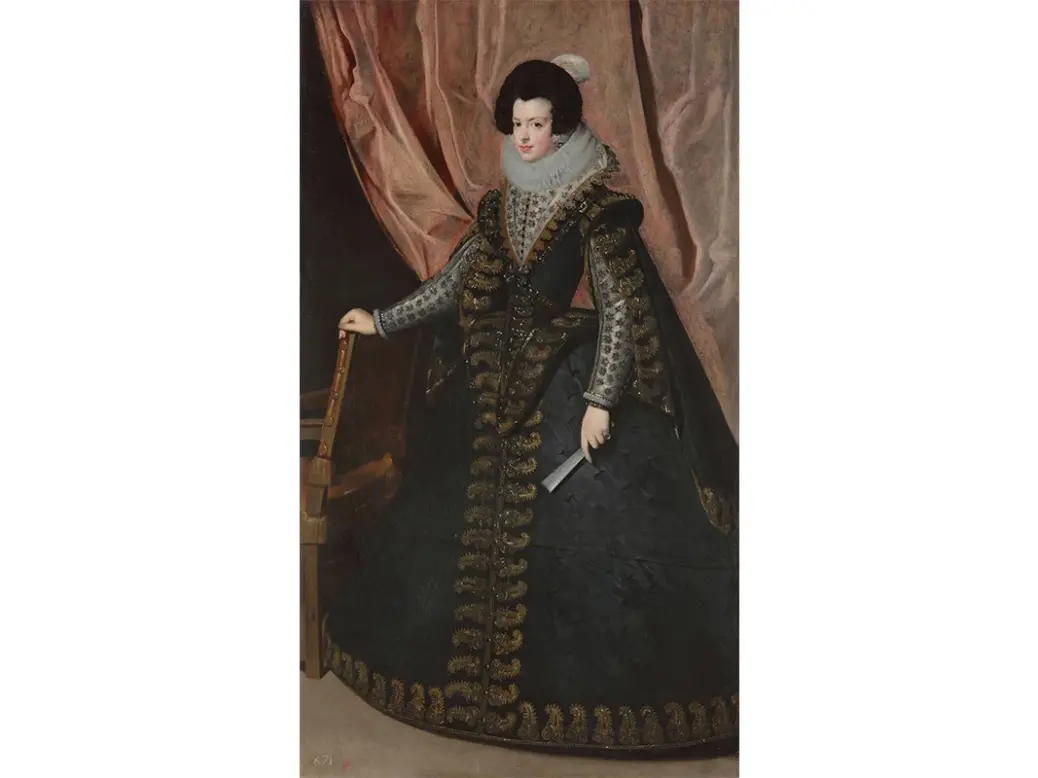
An ‘exceptional’ 17th-century royal portrait by celebrated Spanish artist Diego Velázquez has gone on display at Sotheby’s London ahead of being auctioned in New York in February.

The 2-metre tall portrait of Isabel de Borbón, wife of King Philip IV of Spain, has been described by industry experts as ‘the most important Velázquez to be sold in 50 years’ and ‘one of the most valuable Old Masters to ever come to market’. 

[See also: Picasso ‘golden muse’ masterpiece sells for $139.4 million in record-breaking New York sale]

Such portraits of royalty typically remain in royal collections and museums, meaning this sale presents a rare opportunity to own a piece of art – and royal – history. Sotheby’s anticipates the portrait will realise in the region of $35 million, more than double the current $16.9 million record for the sale of a Velázquez.

Diego Velázquez at the height of his portrait powers

‘This exceptional painting is remarkable not just for its beauty and quality, but also for its scale and subject matter,’ explains George Wachter, Sotheby’s chairman and co-worldwide head of Old Master paintings. 

‘Royal portraiture allowed Velázquez to push forward art in new and revolutionary ways and this grand portrayal of Isabel de Borbón is an exceptional example of the artist at the height of his powers, shaping the direction of portraiture for generations to follow. No other Velázquez paintings of this scale and importance have come to the market in more than half a century.’

[See also: the most outstanding art advisers for ultra-high-net-worth individuals]

This tour de force of portraiture depicts Isabel de Borbón, who as the first wife of King Philip IV of Spain (King Philip III of Portugal), was Queen of Spain from 1621 until her death in 1644, and Queen of Portugal from 1621 to 1640. She was the daughter of Henri IV of France and his second wife, Marie de Médicis, and known as Élisabeth de France prior to marriage. The union between Isabel and Philip strengthened the diplomatic ties between France and Spain.

Content from our partners
How preventative screenings can help HNWs to manage their health

Family office report: Repositioning investment portfolios to preserve wealth

High five: How to holiday without leaving home

A towering portrait of an admired queen

Isabel de Borbón, Queen of Spain, was painted by Diego Velázquez at the height of her powers in the 1620s

The queen was painted by Diego Velázquez in the 1620s, alongside a portrait of her husband, both of which hung at Madrid’s Buen Retiro Palace. (Velázquez’s Philip IV in Black, is now at the Museo del Prado). Isabel is depicted at the height of powers – a beloved and respected Queen, widely admired for her quick wit, intelligence and generous spirit. This is reflected in her stance, attire, and demure yet confident expression.

[See also: The top art finance advisers for high-net-worth individuals]

Velázquez revisited the portrait in the 1630s, reworking various aspects, including visible changes to the skirt. It is understood this revision was prompted by the artist’s recent encounter with Sir Peter Paul Rubens, then regarded as the greatest artist of the time, and still today a giant among painters.

Christopher Apostle, Sotheby’s international head of Old Master paintings, explains: ‘Though Velázquez was already widely celebrated when he painted this work, here we see him at a moment of transformation. He had already been crowned official painter to the Spanish King, but in 1628, he met, for the first time, Sir Peter Paul Rubens, whose confidence with the brush, and whose fluid style Velázquez quickly adapted, making of them something entirely his own, and – in the process – taking the art of royal portraiture to the next level.’

[See also: Sale of Rothschild treasures soars above estimates at first of-its-kind auction]

The painting has an illustrious provenance. After Napoleon’s invasion of Spain in 1808, it was taken to France, where it was later displayed in King Louis Philippe’s Galerie Espagnole at the Louvre until the king’s fall from power in 1838. It was then sold to merchant banker and noted book collector Henry Huth, who hung it at Wykehurst Park in Sussex, and in whose family it remained until it was sold in 1950 – the last time it was on the public auction market. It has been in the collection of its current owners since 1978.

Isabel de Borbón, Queen of Spain by Diego Velázquez will be displayed at Sotheby’s New Bond Street Galleries until 6 December. It will be auctioned in New York as part of the annual Masters Paintings auction on 1 February 2024. 

The auction follows the sale of Picasso’s Femme à la montre for $139.4 million at Sotheby’s New York in November.


Discover more with Spear’s: Why is wealth management becoming more progressive and ‘values-driven’?

[embedded content]

14 Virtual And IRL Things To Do Around D.C. This Week

14 Virtual And IRL Things To Do Around D.C. This Week

This website uses cookies so that we can provide you with the best user experience possible. Cookie information is stored in your browser and performs functions such as recognising you when you return to our website and helping our team to understand which sections of the website you find most interesting and useful.

Shop for Unique Finds at the Del Ray Artisans 28th Annual Fine Art & Fine Craft Holiday Market

Shop for Unique Finds at the Del Ray Artisans 28th Annual Fine Art & Fine Craft Holiday Market
Artist Maxine Cholmondeley, Max’s Mixtures Candles & Soaps (All Photos: Del Ray Artisan)

Alexandria, VA – Looking for great gifts that are unique, hand-crafted, and special? Then you must be at the Del Ray Artisans’ 28th Annual Holiday Market the first three weekends in December. “You might want to attend all three because different artists are featured each weekend!” says Amy Kitchin, DRA Curating Director.

The market offers unique handmade fine arts and fine crafts from local artists presenting a variety of media, including fiber/textiles, glass, jewelry, mixed media, polymer clay, ornaments, mosaics, painting, prints, paper crafting, photography, pottery/ceramics, sculpture, watercolor, wood, candles, soaps and more. In addition, 2024 wall calendars featuring art by Del Ray Artisans members will be available for purchase with proceeds supporting the 501(c)(3) nonprofit organization.

Artist Alanna S. Graboyes, asgraboyesart
Artist (right) Amy Kitchin Hower, AKHStudioDesigns

This year’s Holiday Market artists are:

  • Sandra Alami, There’s Something About Purl;
  • John T. Allen, Permian Designs;
  • Bridget Anthony-Hlioui, B A Hlioui;
  • Bhavani Arabandi, Samhara Ceramics;
  • Caron Arnston, Caron & Co. Creations;
  • Pinar Artuk-Boegel, Renkli;
  • Victoria Barnes, Victoria Barnes Photography;
  • Carolyn Barone;
  • Ken Beerbohm, Ken Beerbohm Sculptures;
  • Lynn Chadwick, Lynn Chadwick Design;
  • Maxine Cholmondeley, Max’s Mixtures Handcrafted Candles & Soaps;
  • Edward Colahan, Ed Colahan Pottery;
  • Evelyn Rose Cook;
  • Gretchen D’Amore, Gdamore Original Art;
  • Marcel Artes Deolazo;
  • Timothy Duncan;
  • Patty Moloney Figlioloa, Aisling PhotoArt;
  • Laine, Lainemindinventions;
  • Alanna Graboyes, ASGraboyesArt;
  • Tom Johnson, Infinite Variations Pottery;
  • Maria Kinnane;
  • Amy Kitchin Hower, AKH Studio Designs;
  • Nancy Kline, Nancy Kline Art;
  • Audrey Kremer, AudreyK-Designs;
  • Stephen Lally, Stephen Lally Pottery;
  • Steve Lapin;
  • Susan Lefler, Susan Lefler Studios;
  • Megan Levanduski, Megan Elaine Designs;
  • Nan Lopata, Nan Lopata Metalsmith;
  • Diana Manchak, DesignsInClay;
  • Liz Martinez;
  • Patti North, All Fired Up!;
  • Miyoung Obenschain, Purple Cardinal Arts LLC;
  • Diana Papazian, Papazian Design, LLC;
  • Mary Pike, Recycled Bag Lady;
  • Madeline Ramsey, Unique Stained Glass;
  • Stacy Rausch;
  • Ken and Sue Reed, Green and Burning Tree;
  • Donna Reinsel, Irons in the Fire;
  • Cynthia Schoeppel;
  • Kevin Sherlock;
  • Ann Cameron Siegal;
  • Kathy Stoner;
  • Jackie Vavra; Birdybeads Handmade Jewelry;
  • Christine Vinh, Stitches n’ Quilts;
  • Joyce Wagner, Reinvented Elegance;
  • Tracy Wilkerson, Recycled Works;
  • Tamara Wilkerson, WiRealm by Tamara;
  • Nancy Yonehiro, Angst and Attitude
Artist Nancy Kline, Nancy Kline Art.

Held at the Del Ray Artisans Gallery in the Colasanto Center, 2704 Mount Vernon Avenue, Alexandria, Virginia 22301, the eye-popping market will also have bonus market days on December 22 and 23. Regular market hours are Fridays 6-9 pm and Saturdays & Sundays 11 am-6 pm. Hours for Friday, December 22 are 3-9 pm. The market is free to browse and is open to the public.

To see which weekend each artist is present and for more information, please visit delrayartisans.org/holiday-market.

ICYMI: New Events Planned for First Night Alexandria This Year

Post Views: 1

MCA – Pocket Con: Comics for Chicago’s Youth | Museum of Contemporary Art Chicago

MCA – Pocket Con: Comics for Chicago’s Youth | Museum of Contemporary Art Chicago

Conversation with Elgin Smith

Elgin Smith.

Image courtesy of the artist

“For me, I’m extremely excited about having this show,” said Smith. “So, coming to the MCA, it’s been something that has been on our minds about trying to make happen if we could. So, it’s so great that it’s finally here now. So, I’m super excited about that.”

Smith, a St. Louis native, is the son of an artist who started his journey with comic illustration at the age of five, when he drew his first five-page comic titled The Big Ninjas. Smith would continue this artistic passion at age 13, when he designed a mural by himself and created a comic book titled Electro Kid. This comic was created collaboratively with a peer who previously fought Smith; the two eventually became friends.

“After that [the fight], I realized that me and that dude both like to draw,” Smith recalled. “And I was like, ‘Your drawing is kind of dope.’ And he said, ‘Yours is too.’”

“A lot of Black superheroes actually have electrical powers,” Smith added. “I think maybe Black people, especially Black youth, have an affinity with electricity. Because it’s one of the few things that we’re heavily into, like having powerlines through your cheeks when you throw your sneakers on. Maybe there’s a correlation between that, I don’t know.”

Later, Smith’s mother would enroll him in an entrepreneurship program. During this time, he would attend family reunions and drew caricatures of family members. When he reached grammar school, he encountered a gentleman who would launch his passion to a new level.

“I went to start selling my posters and stuff, I was coloring everything,” he said. “From there, there was a guy who bought my art; I wish I can remember his name. There was a dude who came up and he was like, ‘Brother, can I show your art in my talk today?’, and I was like, ‘Sure!’ I was still in middle school. He held up my art, I remember he bought the female equivalent to the Electro Kid which was Electro Girl. And he was like, ‘This is what I was talking about. This young man is selling this, and we need to invest into young people like this.’ And that changed my life.”

Despite being a successful young artist, Smith dealt with a tumultuous period of ruthless bullying by classmates. He would use this pain as a catalyst for creative projects, as well as an outlet, as Smith got older.

“It was bad,” he recounted. “It would get to the point where I was getting stabbed with pencils and all of that kind of stuff. I actually made a comic book after that based on that experience called The Shmo, where that dude had the power to change to any superhero as long as he had like a comic book of that person on him, and he would get those powers. I did it actually when I was in college. There was a scene where The Shmo was getting beat up and bullied by everybody. He’s just taking focus on drawing comics and stuff like that. And it was kind of like a real-life experience.”

Smith then attended Central Visual and Performing Arts High School, and found mentorship in his former teacher, William Perry, who led him in a unique direction for his artistic practice and career.

“Shout-out to Mr. Perry,” Smith added. “He helped to really steer my career. He would take me to the art museum and helped me out with my portfolio. And that got me into SAIC.”

Prior to graduating from high school in 2005, Smith had received over $40,000 in scholarship funds from different colleges and art institutions—this was the highest amount in his alma mater. He arrived at the School of the Art Institute of Chicago the following fall. Smith released his comic book titled Choi during his time at SAIC, visiting South Korea for research and inspiration. In 2009, he would complete his bachelor’s in fine arts with a focus on graphic illustration and sculpture.

“I wanted to challenge myself,” he said. “I stayed there all four years. I was an RA (resident assistant) and an orientation leader. And that kind of handles the journey from St. Louis to Chicago.”

Smith landed a job as an assistant for renowned sculptor Theaster Gates, and later received an opportunity to give back to his community as an art instructor at the Gary Comer Youth Center, teaching the basics of fine arts to youth of color.

“They were short-staffed,” Smith added. “A friend of Theaster’s reached out to him and said, ‘Hey, we’re short-staffed here [Gary Comer Youth Center]. We can use another teaching artist. What about that guy that works for you? Do you think he would be interested in teaching?’ And then, that’s how I got that job.”

View from behind of someone perusing a comic book.

Pocket Con.

Photo: Elgin Smith.

For the next 14 years, Smith taught art at other local nonprofit organizations; he even taught cartoon and anime design at Columbia College Chicago, an institution that offered him a scholarship while he was in high school. Smith also revised workshops and developed curriculums at Northwestern University School of Law for the Know Your Rights program, which focused on empowering youth to know their rights and protect their rights. Smith has devoted much of his time to teaching art to incarcerated minors.

“I love youth,” he said. “And youth work is so important.”

In 2012, Smith’s love for comics sparked the idea to co-create a convention for all comic enthusiasts, especially those of color—that’s when Pocket Con first came into existence.

“Back when we started the convention, I used to teach at the Gary Comer Youth Center,” Smith said. “That’s actually where the name of the convention comes from. Like from “Pocket Town” in that area of 75th and South Chicago. And back during that time, I was teaching a comic book illustration class. I was asking a youth like, ‘Hey, do you know any comic book heroes of color?’ And after doing like a self-portrait project, all of the kids were drawing themselves as white folks. When I asked them if they know any characters of color, one student said ‘Batman.’ He said it because his suit was black. He didn’t identify any other characters that they could think of that were Black superhero characters.”

“I have been going to different conventions. And shout out to Turtel Onli, who used to run the Black Age of Comics at the DuSable Museum of African American History, they would have a table there. And when I went there and I was just like, ‘Yo, this is really dope. But I would love to see this happen on a larger scale.’ And that’s where Pocket Con came from.”

Pocket Con includes music and dance performances, workshops, panels, video gaming setups, and costumes. Phenomenal artists such as Turtel Onli, Maurice Buckley, Lenny Alves, Ramel Hill, Andrea Pearson, and Robin Carnilius will be attending this event. The Microphone Misfitz, Rai Musica, Jovan Landry, Electric Mothership, and Juke 4 Liberation will be the musical guests.

“It’s all been a diverse event and whatnot,” Smith added. “It’s going to be super-diverse even with our artists that we chose this year, which is what I am super excited about too.”

Pocket Con is a haven for anyone who admires the stories and graphic illustrations of comic books, regardless of color; that’s what Smith wants to create by giving people from all backgrounds a space to celebrate their love of comics for an entire day.

“We want to make sure that the demographics are as balanced and diverse as possible,” he said. “We want to make sure that there’s a large amount of female artists too. We want to make sure that the comics reflect the community that I live in, and you live in. It is a celebration of creators and characters of color because we live in a world of color. I want to make sure the convention reflects that, and that’s also going to be reflected in the artists.”

Pocket Con: Comics for Chicago's Youth video still

Intro to Pocket Con

Find the full schedule and more on the event page.

The Twist : un musée sculpture – Aurore de Granier

The Twist : un musée sculpture – Aurore de Granier
Au milieu de la dense forêt norvégienne, au nord d’Oslo, c’est un véritable OVNI qui enjambe la rivière Randselva. Dernier élément venant s’intégrer dans le plus grand parc de sculptures d’Europe, The Twist accueille depuis son inauguration en 2019 la nouvelle institution d’art contemporain du musée Kistefos. Une prouesse architecturale réalisée par le groupe BIG-Bjarke Ingels, et la première intervention du célèbre architecte danois connu pour ses projets aux dimensions et aux formes toujours plus étonnantes et impressionnantes. En Norvège, c’est sur l’illusion de flexibilité du bâtiment qu’il joue, imaginant un musée à l’architecture presque nouée. Une merveille d’ingénierie et d’esthétique qui se fait à la fois écrin à l’art et œuvre en elle-même.

Dorothea Lange: 10 of the most iconic portraits from a lost US

Dorothea Lange: 10 of the most iconic portraits from a lost US

By Cath PoundFeatures correspondent

Dorothea Lange Human Erosion in California (Migrant Mother) by Dorothea LangeDorothea Lange
Human Erosion in California (Migrant Mother) (Credit: Dorothea Lange)

An exhibition at the National Gallery of Art in Washington explores the work of legendary photographer Dorothea Lange, who captured some of the most striking images ever shot of American poverty, hardship and resilience in the 20th Century.

Over the course of her 50-year career, Dorothea Lange created some of the most iconic photographs of the 20th Century. From White Angel, Breadline to her poignant works on Japanese Americans denied their rights during World War Two, Lange embodied the humanity of the people caught up in events beyond their control.

More like this:

–       Photos that ask what it means to be American

–       Eight photos of the US’s iconic wilderness

–       Eight photos showing a US in crisis

Lange began her career as a studio photographer and first experimented outside the studio on trips with her then-husband, the artist Maynard Dixon. But it was the Great Depression that spurred her to turn to documentary photography. “In the early days of the Depression in San Francisco she began to see people in need on the streets. It was the experience of seeing something that was not right that made her go out and want to do something,” says Philip Brookman, curator of Dorothea Lange: Seeing People at the National Gallery of Art in Washington. “She believed that photographs could help change people’s minds.”

Throughout her career it was Lange’s “sense of empathy and ability to connect with people” that made her such a great photographer, says Brookman. He selects 10 of her key works for BBC Culture.

The Dorothea Lange Collection La Estrellita, 1919 (Credit: The Dorothea Lange Collection)The Dorothea Lange Collection
La Estrellita, 1919 (Credit: The Dorothea Lange Collection)

1. Untitled (La Estrellita, “Spanish” Dancer), San Francisco, California, 1919

“What makes this exhibition different to previous Dorothea Lange exhibitions is that we wanted to show the impact of her early training and career as a studio portrait photographer on her social documentary works,” says Brookman. 

This portrait of Estrellita, who was an internationally famous vaudeville dancer before turning her hand to business, is one of Lange’s earliest works. Although it adopts the traditional pictorial style of the era – using soft focus and soft tones to create a dreamlike quality – it also sees Lange experimenting with composition, positioning her subject to the far left of the pictorial frame, rather than simply focusing on her features. For Brookman “it conveys a sense of a person who is in transition. It’s not her dressed as a Spanish dancer. It’s a portrait of a woman who has become a businesswoman.”

The Dorothea Lange Collection Hopi Man, 1923 (Credit: The Dorothea Lange Collection)The Dorothea Lange Collection
Hopi Man, 1923 (Credit: The Dorothea Lange Collection)

2. Hopi Man, Arizona, 1923, printed 1926

Lange made Hopi Man when she was on a trip with her then-husband Maynard Dixon, a well-known painter of the American West. “This is the time when she was just beginning to photograph outside of her studio,” explains Brookman. “She didn’t make a lot of photos on those trips but the ones that have survived are really interesting. They’re much more direct than her studio images.”

The way in which Lange was beginning to experiment with the possibilities of portraiture is evident in the way she chose to closely crop the image when she printed it a few years later. “It’s so tight on his face that it looks like a topographic mapping of his experience rather than just a picture of a person,” says Brookman.

The Dorothea Lange Collection Native American Girl, Taos, New Mexico 1931 (Credit: The Dorothea Lange Collection)The Dorothea Lange Collection
Native American Girl, Taos, New Mexico 1931 (Credit: The Dorothea Lange Collection)

3. Native American Girl, Taos, New Mexico, 1931

Native American Girl is one of a series of images of the same child that Lange took on a family trip with her husband and children. At the time Brookman thinks she was “experimenting with different ways to connect with people and make pictures that were more about that world and the culture she found.” In this image Brookman sees a “really direct connection between Lange and the girl. There’s a sense of understanding between them. She’s looking right at the camera and seems pretty comfortable. There’s a bond.

“I see this photograph as a transitional one that shows how Lange has been able to move outside the studio, and begin to transition to a more documentary form,” says Brookman.

The Dorothea Lange Collection White Angel Breadline, San Francisco, California, 1933 (Credit: The Dorothea Lange Collection)The Dorothea Lange Collection
White Angel Breadline, San Francisco, California, 1933 (Credit: The Dorothea Lange Collection)

4. White Angel Breadline, San Francisco, California, 1933

Although White Angel Breadline is often considered to be Lange’s first documentary photograph, Brookman thinks otherwise. The exhibition hopes to emphasise that her experiments in a number of earlier images “lead to her full understanding of documentary practice,” he says.

The image is notable “because it was made with this great intention. Lange was in her studio looking down, and saw so much poverty that she made a decision to consciously take her camera out of the studio on to the streets of San Francisco to document it,” says Brookman.

This photograph, taken at the White Angel Jungle, a soup kitchen on the waterfront, was one of the first that she took. “It’s become one of her most iconic, in part because of its simplicity,” says Brookman.

Dorothea Lange Demonstration, San Francisco, 1934 (Credit: Dorothea Lange)Dorothea Lange
Demonstration, San Francisco, 1934 (Credit: Dorothea Lange)

5. Demonstration, San Francisco, 1934

Taken in the middle of the Great Depression, Demonstration reveals how “Lange began to use the situation to set up more information for us, like the words in the picture,” explains Brookman.

Her empathy and respect for those that were suffering is evident in the way she began taking photographs from a lower angle at this time, giving her subjects a sense of stature. “She’s not looking down on people. That angle gives them a power they might not otherwise have,” says Brookman.

Dorothea Lange / The J Paul Getty Museum Human Erosion in California, (Migrant Mother), 1936 (Credit: Dorothea Lange / The J Paul Getty Museum)Dorothea Lange / The J Paul Getty Museum
Human Erosion in California, (Migrant Mother), 1936 (Credit: Dorothea Lange / The J Paul Getty Museum)

6. Human Erosion in California (Migrant Mother), 1936

Although Human Erosion in California, better known as Migrant Mother, has become one of the most iconic photographic images of all time, it is not what it appears to be.

The image was one of a series of photos taken in a Pea Picker’s camp in California when Lange was working for the Federal Resettlement Administration. Having come across the woman and her children in the camp, Lange spoke with them and posed them but didn’t get their names. Brookman speculates that this may have been because Lange was tired after a long drive.

“I think she knew right away that this was a special sequence of photographs,” says Brookman. Lange contacted the local press who agreed to publish one of the images in the sequence. When the State Government saw it, they immediately made aid available. “It was an indication of the power of a photograph,” says Brookman.

However, after Lange’s death it was discovered that the woman “was a full-blood Cherokee from Oklahoma. She was not a migrant worker,” says Brookman. “The picture stands for something because of how Lange made it and how it was used but it is not true to who the woman was,” says Brookman.

Dorothea Lange / National Gallery of Art, Washington On the Plains a Hat is More than a Covering, 1938 (Credit: Dorothea Lange / National Gallery of Art, Washington)Dorothea Lange / National Gallery of Art, Washington
On the Plains a Hat is More than a Covering, 1938 (Credit: Dorothea Lange / National Gallery of Art, Washington)

7. On the Plains a Hat is More than a Covering, 1938, printed c 1965

Brookman considers On the Plains a Hat is More than a Covering to be “an innovation in portraiture… I can see it as a portrait of a man but it doesn’t show his face, it doesn’t show his environment. It’s about the character of the man, not just what he looks like.”

Lange was clearly pleased with the image. She “made more traditional portraits of the same man, but this is the one she chose to print,” says Brookman.

Dorothea Lange Children of the Weill Public School, 1942 (Credit: Dorothea Lange)Dorothea Lange
Children of the Weill Public School, 1942 (Credit: Dorothea Lange)

8. Children of the Weill Public School Shown in a Flag Pledge Ceremony, San Francisco, California, April 1942, printed c 1965

Shortly after the US entered World War Two, Lange was hired by the War Relocation Authority to document Japanese Americans who were now seen as a potential danger and being forcibly relocated to incarceration camps. “I think Lange didn’t agree with the policy. She agreed to work on the project so she could have access to show what was happening,” says Brookman.

The poignant image of a Japanese-American girl standing alongside her classmates with her hand on her heart, earnestly pledging allegiance to the US flag, was taken before she and her family were incarcerated. “For me this is one of Lange’s most important photographs. The innocence of an American child who is considered to be a threat,” says Brookman.

The Dorothea Lange Collection Family Portrait, from Death of a Valley, 1956 (Credit: The Dorothea Lange Collection)The Dorothea Lange Collection
Family Portrait, from Death of a Valley, 1956 (Credit: The Dorothea Lange Collection)

9. Family Portrait, 1956

In the late 1950s Lange was working on an ultimately unpublished project for Life Magazine about the intentional flooding of a town in a valley in Northern California to make way for a dam to supply much-needed water to the area.

“It was an early environmental project that Lange was interested in. How the post-war boom caused so many people to come to California, but at a cost,” says Brookman.

This picture was taken in a house before it was flooded but after it had been abandoned. “It’s a poignant image that shows what is lost when an entire town is flooded. And what’s lost is the memories of entire families,” says Brookman.

The Dorothea Lange Collection Korean Child, 1958 (Credit: The Dorothea Lange Collection)The Dorothea Lange Collection
Korean Child, 1958 (Credit: The Dorothea Lange Collection)

10. Korean Child, 1958

Lange’s emotive image of a young child’s face was taken in South Korea five years after the end of the Korean War, when people were living in extreme poverty. “The actual picture shows a whole classroom of rambunctious children acting out for the camera and in the middle of the group is this boy with his eyes closed. He seems calmer and more at peace than the others,” explains Brookman.

Lange focused in on the boy, creating different, closely cropped, images. “The closer she gets to his face, where you just see his features, the more it becomes a universal image,” says Brookman. “To me it is a picture about the innocence of children in a world at war,” he says. “These images are so relevant to us today.”

Dorothea Lange: Seeing People is at the National Gallery of Art in Washington until 31 March 2024.

If you liked this story, sign up for The Essential List newsletter – a handpicked selection of features, videos and can’t-miss news delivered to your inbox every Friday.

If you would like to comment on this story or anything else you have seen on BBC Culture, head over to our Facebook page or message us on Twitter.


Copyright 2023 BBC. All rights reserved.  The BBC is not responsible for the content of external sites. Read about our approach to external linking.

Beta Terms By using the Beta Site, you agree that such use is at your own risk and you know that the Beta Site may include known or unknown bugs or errors, that we have no obligation to make this Beta Site available with or without charge for any period of time, nor to make it available at all, and that nothing in these Beta Terms or your use of the Beta Site creates any employment relationship between you and us. The Beta Site is provided on an “as is” and “as available” basis and we make no warranty to you of any kind, express or implied.

In case of conflict between these Beta Terms and the BBC Terms of Use these Beta Terms shall prevail.