About

Posts by :

This Canadian producer used AI to transform U.S. singer’s hit into a K-pop track

This Canadian producer used AI to transform U.S. singer’s hit into a K-pop track

When Canadian producer Jordan Young started playing around with AI voice-cloning technology — ultimately creating a fake Kanye West song that sounded, well, just like Kanye West — it immediately prompted him to think about the ethical implications of the technology. 

“As soon as I made it, I started to think … if anybody can make music with anyone’s voice, what does this mean for artists? What does this mean for music?” said Young, who has worked with Beyoncé, BTS and Dua Lipa.

He and his company Hooky recently developed a technology that could make an artist sound like they were singing in a different language from their own.

That resonated with American pop singer Lauv, who at the time had just finished a Korean tour and wanted to find a meaningful way to thank his fans. Why not develop a new version of his song Love U Like That, transformed to make it sound like he was performing in Korean?

The process began with Young’s company tapping Kevin Woo, a South Korean singer-songwriter who is fluent in English and Korean, to rewrite and sing the song in a new tongue. That interpretation has to capture the nuances of the Korean language, explained Young.

Three men are pictured in a music studio.
From left, Jordan Young, Lauv and Kevin Woo. Young’s company tapped Woo, a K-pop artist, to work on a Korean-language version of Lauv’s song facilitated by AI. (Hooky)

“It’s not just, throw it into a translator website and whatever it spits out, that’s your song. You have to be artistic about it,” Young said.

The recordings also had to match musically. For example, if Lauv sang in falsetto on a few bars, Woo did the same in his Korean-language demo.

Enter artificial intelligence.

The technology is trained on “every corner” of Lauv’s voice, as Young puts it — from the highest frequencies and tones to the lowest — to build a comprehensive model of his vocals.

The Korean-language demo written and sung by Woo is then combined with the AI model of Lauv’s voice, creating a Korean-language song that sounds like it’s sung by Lauv.

WATCH | The Korean-language version of LAUV’s Love U Like That: [embedded content]

It’s been a year of reckoning for creative industries wrestling with artificial intelligence.

The music business in particular has seen an explosion of AI-generated songs made to sound like the world’s most popular artists — such as the viral track Heart On My Sleeve, which featured computer-generated vocals that sounded like Drake and The Weeknd.

Some artists are fighting the non-sanctioned use of their voices and likeness, while others like Grimes, John Legend and Demi Lovato are embracing the tech to varying degrees. 

“At minimum, we should give artists control over how their voice is used,” said Young, who is from Toronto, noting that’s where the idea came from to use AI to change languages.

“It was about creating a control mechanism for artists to be able to manage their likeness in a world where AI can totally disrupt that.”

Other companies are working on technology that focuses on music and translation.

AudioShake, a San Francisco company that specializes in audio separation, isolates a song’s vocal track from the music, then uses AI to transcribe and translate the song, building technology that maps the original English with the new language so that fans can follow the lyrics of the original song in their language. Pop singer Sia is one of their clients.

Meanwhile, South Korea’s largest record label HYBE used in-house AI technology so that its artist Lee Hyun, known as MIDNATT, could record his song Masquerade in six different languages: English, Korean, Spanish, Japanese, Chinese and Vietnamese.

The singer recorded his song in each language, which was then combined with demos of native speakers reading out the lyrics. Hyun speaks Korean as well as limited English and Chinese.

“It’s a scary thing that people don’t fully understand, and often AI is portrayed as this monolithic thing, and it’s not,” said Young.

“AI is actually many different technologies that can come together in many different ways.”

Artists already trying to reach international fans

Even before AI came to the forefront this year, artists had already been trying to use different languages to target fans, according to Kristin Robinson with Billboard Magazine.

She points to Despacito, a 2017 song by Puerto Rican singer Luis Fonsi and Puerto Rican rapper Daddy Yankee, that saw its remixed version featuring Justin Bieber become a huge hit. 

“Having Justin Bieber hop onto a Latin track is not something I would have ever anticipated. Having Beyoncé try to sing in Spanish is not something I had on my bingo card for Beyoncé to do.”

But with AI now factored into this already successful trend, Robinson says people will likely have mixed feelings about “the authenticity” of the process.

A woman wearing a plaid jacket with green and gray details holds one hand to her cheek and crosses her other arm.
Kristin Robinson, a music publishing reporter at Billboard Magazine, says artists have been trying to target international fan bases using different languages even before the emergence of this technology. (Caity Krone)

It remains to be seen if this type of music will be well received. Robinson says that using the technology in a way that is both ethically and culturally appropriate is an important part of the conversation.

That was reflected in some of the online reaction to Lauv’s Korean-language version of Love U Like That. 

Some fans said they were “obsessed” with the new version, while others questioned the optics of a white artist using technology to insert his voice over a song sung by a Korean artist. Still others suggested different ways to have Lauv and Woo sing on the same track.

Getting ‘nuance’ of language important: Toronto artist

Toronto jazz vocalist and songwriter Jacqueline Teh hopes to incorporate her family’s language — Hokkien, a Chinese dialect from the Fujian province — into her future projects. As a multilingual artist, she can see the benefits and the downsides of using AI to create songs in different languages.

She says the technology seemed exciting at first, adding that it can be a “great springboard” for artists to access other languages.

But she says credit and agency are incredibly important to artists — and that she wouldn’t want AI to come between a potential relationship with a language that’s new to her, or with a person who speaks a language different from her own.

LISTEN | AI in music generates existential questions for artists: 

Front Burner29:01The Beatles and the future of AI music

Featured VideoBefore his death, John Lennon recorded a demo of a new song, “Now and Then” on a cassette. His Beatles bandmates later tried to repurpose it for release, but abandoned the project in part because of the poor voice quality. This week, Paul McCartney revealed that, 43 years after Lennon’s death, the song will drop – thanks to AI technology. It’s just the latest example of artificial intelligence’s increasing presence in the music industry. Fake Drake songs, AI-generated Kanye covers and posthumous Biggie collabs have raised alarm about copyright, and existential questions about songwriting and creativity. Today, Saroja Coelho speaks with the host of Vulture’s Switched on Pop podcast, Charlie Harding, about what the technology means for the music industry and art itself. For transcripts of this series, please visit: https://www.cbc.ca/radio/frontburner/transcripts

“I think with language there’s so much nuance and there’s so much slang and there’s so much that can’t really be translated just through technology,” she said, which is why working with a native speaker makes the song more meaningful to her. 

She says as long as artists aren’t using AI to bypass the hard work that goes into creating meaningful relationships with fans and other artists, “there’s so much that is accessible to us with technology.”

Young, the producer, is working on a new translation project — potentially with a Canadian artist. He says now that the genie is out of the bottle, the industry has to figure out how to steer the tech in the right direction.

“I’m never going to build something that removes the human being from the creative process,” he said. “And there are lots of companies that are attempting to do that right now.”

Photography Exhibit opens in December in Grass Valley

Photography Exhibit opens in December in Grass Valley
image

A stunning exhibition of winter landscapes and wildlife photography by Nevada City photographer, Janice Rosner showcases the raw beauty of the season. This display of 30 photos, titled “Chill and Thrill: Wildlife and Landscapes in Winter’s Grasp” opens on December 4 at the Edward Jones gallery on Brunswick Rd in Grass Valley and runs through the end of February. The opening reception will be on Thursday, December 7 from 4:00 — 6:00 p.m.

An international traveler, Rosner’s photos include the serene beauty of frozen Norwegian mountain ranges at sunrise; Japanese cranes dancing in the snow and enchanting penguins from the Falkland Islands. Breathtaking bald eagles in flight; frost-kissed bison; and swans in the mist from Alaska and Yellowstone are also featured.

Epson’s Newest SureLab Professional Minilab Printer Designed to Help Photography and Event Businesses Grow is Now Available

Epson’s Newest SureLab Professional Minilab Printer Designed to Help Photography and Event Businesses Grow is Now Available

SureLab D1070DE Brings Double-Sided Printing on Photo Media for Use in Creating Photo Books, Promotional Inserts, Invitations, and More

LOS ALAMITOS, Calif., Nov. 30, 2023 /PRNewswire/ — The Epson SureLab® D1070DE Minilab Photo Printer designed to help businesses expand offerings with automated double-sided printing is now available. Engineered for outstanding image quality and reliability the SureLab D1070DE is ideal for on-site printing at fulfillment labs, photo studios, retail operations, and entertainment venues looking to increase profits quickly.

 “Pictures and graphics have become synonymous with big events, memories and milestone achievements,” said Aaron Brill, associate product manager, Professional Imaging, Epson America, “The SureLab D1070DE supports a variety of businesses, including on-site photographers, photography labs and graphic artists with fast, outstanding single and double-sided photo applications for creating tangible mementos.”

The SureLab D1070DE offers low cost of ownership and high productivity that is designed to help print businesses grow their bottom line. Additional features include:

  • Outstanding photographic quality – Delivers high-quality prints using Epson’s MicroPiezo® AMC printhead and AccuPhoto™ image processing technology, with 6-color UltraChrome® D6r-S dye-based ink for vibrant water-, smudge- and fade-resistant prints1
  • High-capacity ink packs – UltraChrome D6r-S high-capacity 250 mL ink packs deliver wide color gamut; Cartridge-Free Printing can help reduce waste compared to traditional cartridge systems
  • Easy to operate – New front-facing 1.44-inch LCD panel simplifies print tasks and operation; features new nozzle detection and alignment technology for less downtime and more reliable operation
  • Improved connectivity and simplified software – Easily connect over Wi-Fi®, Ethernet or USB using redesigned printer driver for Windows® and Mac®
  • Small footprint – Compact size with integrated output tray is well-suited for photo booths, as well as portrait and event photography
  • Versatile media handling – Prints on a range of high-capacity roll and double- or single-sided sheet photo media, including glossy, luster and matte finishes
  • Built for reliability – Reliable print engine backed by U.S.-based support team and Epson’s limited warranty
  • Epson Cloud Solution PORT® – Monitor the live status of your entire printer fleet regardless of where they are in the world, view output production rates, printer status, errors, and more

Pricing and Availability
The SureLab D1070DE Minilab printer ($2,995 MSRP) is now available with a standard 1-year Epson PreferredSM Limited Warranty through Epson Authorized Professional Imaging Resellers. SureLab D1070 Duplex Feeder ($600 MSRP) is available for purchase separately to add double-sided printing to the SureLab D1070. For more information, visit www.epson.com/minilab.

About Epson
Epson is a global technology leader whose philosophy of efficient, compact and precise innovation enriches lives and helps create a better world. The company is focused on solving societal issues through innovations in home and office printing, commercial and industrial printing, manufacturing, visual and lifestyle. Epson’s goal is to become carbon negative and eliminate use of exhaustible underground resources such as oil and metal by 2050.

Led by the Japan-based Seiko Epson Corporation, the worldwide Epson Group generates annual sales of more than JPY 1 trillion. global.epson.com/

Epson America, Inc., based in Los Alamitos, Calif., is Epson’s regional headquarters for the U.S., Canada, and Latin America. To learn more about Epson, please visit: epson.com. You may also connect with Epson America on Facebook (facebook.com/Epson), Twitter (twitter.com/EpsonAmerica), YouTube (youtube.com/epsonamerica), and Instagram (instagram.com/EpsonAmerica).

*This product uses only genuine Epson-brand ink packs. Other brands of ink packs and ink supplies are not compatible and, even if described as compatible, may not function properly or at all.

1 Smudge-, water- and fade-resistant prints with Epson Genuine Photo Media and Ink only.

EPSON, MicroPiezo, SureLab, UltraChrome, and Epson Cloud Solution PORT are registered trademarks of Seiko Epson Corporation. AccuPhoto and AMC are trademarks of Epson America, Inc. Mac is a trademark of Apple Inc., registered in the U.S. and other countries. Windows is either a registered trademark or trademark of Microsoft Corporation in the United States and/or other countries. All other product and brand names are trademarks and/or registered trademarks of their respective companies. Epson disclaims any and all rights in these marks. Copyright 2023 Epson America, Inc.

SOURCE Epson America, Inc.

‘I want fun and colour’: Walter Pfeiffer on his search for beauty

‘I want fun and colour’: Walter Pfeiffer on his search for beauty

In the wake of his latest photo book, Chez Walti, we speak to the cult photographer about stage fright, social media and his advice to upcoming image-makers

30November 2023

“I can’t tell you what beauty looks like, but I know when she’s in the streets,” quips Walter Pfeiffer in the middle of our phone call. Indeed, the artist’s leitmotif has long been beauty, found in rosy cheeks, Swiss fields and flower beds. Pfeiffer has a hefty new volume out called Chez Walti: Photographs 2000–2022 (published by Edition Patrick Frey), which takes a long, hard look at what the artist has been up to since the turn of the millennium.

The cult photographer has a history with publisher Patrick Frey. In 2001, they released Welcome Aboard: Photographs 1980–2000, a star-making book that put the artist at the top of every fashion house’s wish list. While Pfeiffer was a trailblazer for his times, at the heart of his repertoire lays a charged and sexy realism that set the mood of what would follow in fashion, his new book contains enough knockouts to evidence his enduring originality, appeal and attitude – if you needed reminding, of course.

Below, we catch up with Walter Pfeiffer about falling into photography, his love of ‘colour and fun’, and influencing the next generation of image-makers.

Hi Walter! How are you? How was your book launch in Paris?

Walter Pfeiffer: A success, I tell you! I love to walk around, but I missed the turning because my cell phone clearly wasn’t made for Paris. So I was ten minutes late and full of sweat and despair. But when I arrived, everyone was already queueing up with their books under their arms, like in the movies. So many people came! So many beauties! I was trapped behind the table for two hours because I like to write personalised messages to everyone. They all shared my messages on Instagram, and I reshared them on mine.

Why do you like using Stories?

Walter Pfeiffer: Well, they’re only up for 24 hours, so it’s easier. It takes too much time to post, and my time is really, really running out. My agent told me I had to get a smartphone, and he was right. I love it when people write to me. You never know what might come out of it. I recently got a message from a woman who asked me to photograph her two sons, but they were, well, a little unripe.

How do you deal with fame?

Walter Pfeiffer: After my first book, I was kind of overwhelmed by all the fan mail. One boy wrote to me every week and I thought, ‘Ugh! Do I really have to reply to each and every letter?’ Anyway, I’m not interested in making a book every year. I prefer to collect the photographs every decade or two, so I can see which ones have aged well. I never think about whether I have a style or not. I just don’t want to be boring. Sometimes I have my moment, but sometimes you need to know when to box it up for another day.

What was the editing of the book like?

Walter Pfeiffer: It took ages. And as soon as it’s finally printed, when you can’t change anything anymore, you think, ‘Oh no! How could I? Blah blah blah!’ I always start the editing by pinning photographs to the wall, and everything slowly comes together. I want to see a story, with a beginning, a middle and an end. I followed the colours, which was a way for me to find a line of beauty.

I can’t see any of your ‘super fashion’ scenes in the book.

Walter Pfeiffer: Can you image a book of all of my fashion work? Please! There’s only some fashion in the book, including my very first Robbie Spencer pictures for Dazed. Before I ‘restarted’ in 2000, I wouldn’t dare to make photographs for fashion. They would have said I’m too much of an amateur. I only ever photographed my people. In 2000, I had to find a living, so the commissions racked up. After my 2007 retrospective book called In Love with Beauty, I was asked whether I would do Vogue Hommes. I was thrilled! Then Dazed came. That was when I had an agency. Before that, I didn’t even know what an agency was.

You’ve said that you use humour to free your models from anxiety, even the supermodels?

Walter Pfeiffer: I prefer working with beginners. The supermodels can be a bit too stiff sometimes, but I think they end up understanding what I’m looking for. When I saw Eva Herzigova making all these poses in the hotel room, I told her to lie on the floor, and she did. [Laughs].

Do you still get stage fright?

Walter Pfeiffer: Yes. But not as bad as before. I used to take sleeping pills at all those wonderful, grand hotels before shoots. Can you imagine? Next week, I’m taking a portrait of a dear friend who helped me out in a difficult situation, and I’m so nervous. My head is constantly working. I imagine the worst all the time, and then it never happens. When I look back, I’m glad I did all those things, but oh, time goes by so quickly. I always used to think, [sings] ‘It’s ooover!’ You know, like my favourite Roy Orbison song. But nothing ever seems to slow down. I haven’t had time to go on holiday all year. Only little walks.

How did your big summer retrospective in Lucerne go?

Walter Pfeiffer: Fabulous! I asked for a huge room showing all of my movies. ‘Is this you?’ they asked. No one had seen them before. They aren’t, you know… [shouts] ‘Attention! Art! Deeper meaning!’ I have no time for any of that intellectual business. I want colour and fun.

You’re often labelled as the precursor – or ‘gay grandfather’ – of the late 90s and early 00s photographers like Wolfgang Tillmans and Ryan McGinley. How do you feel about that, considering you fell into photography accidentally and never studied it?

Walter Pfeiffer: It’s nice, but I don’t believe it. You have to remember that I come from a different era, when everything was under the carpet. I grew up in the countryside, but when I was 19, destiny brought me to Zurich to study art. My head was turned upside down. I wouldn’t dream of studying photography. My arms would, and still do, shake like crazy. Those heavy cameras were too much for me. I started out with this cheap little Polaroid and then bought a real camera with a flash. From then, there was no holding me back.

Do you still teach?

Walter Pfeiffer: Only as a guest lecturer now. I love the energy you get from being around young people. You will understand what I mean when you reach my age. I love to learn and forget as soon as possible. I don’t want to influence anyone. No young Walters, please!

Do you have any advice for photography students?

Walter Pfeiffer: They seem to know everything already. They’re so perfect, or too perfect. I’m a little worried that they’re perched to become world famous next week. The most important thing is to teach your eye. Don’t take yourself too seriously. Be funny. And keep your feet on the ground… Are you on TikTok?

I’m not… Are you?

Walter Pfeiffer: No. Isn’t it funny, how it all started with Facebook in the old days? What I miss is that you can’t share links. Like the link of the article I will hopefully receive from you!

Of course! And maybe we can touch base again when your 2040 book comes out?

Walter Pfeiffer: That’s too kind. Will I still be here in 2040? I don’t think so. But let me surprise you.

Chez Walti: Photographs 2000–2022 is published by Edition Patrick Frey.

Join Dazed Club and be part of our world! You get exclusive access to events, parties, festivals and our editors, as well as a free subscription to Dazed for a year. Join for £5/month today.

The Comedy Wildlife Photo winners are here — and they are a hoot

The Comedy Wildlife Photo winners are here — and they are a hoot

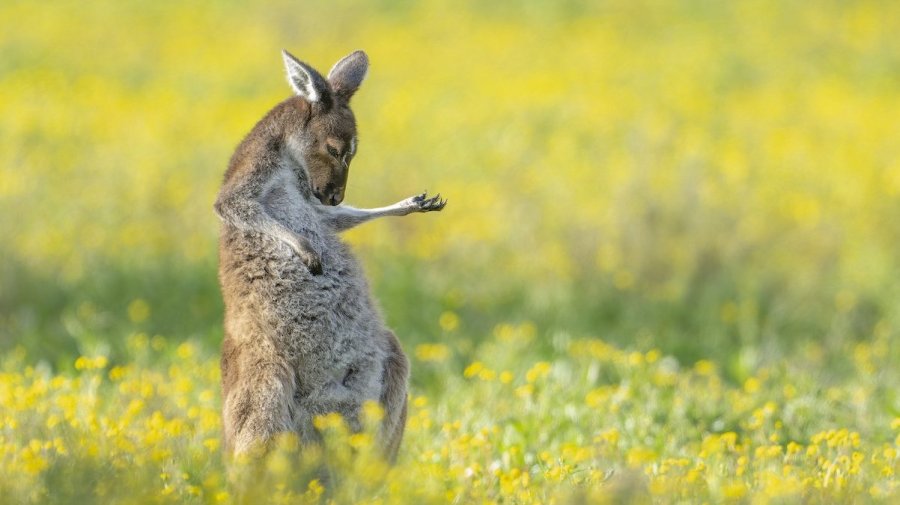
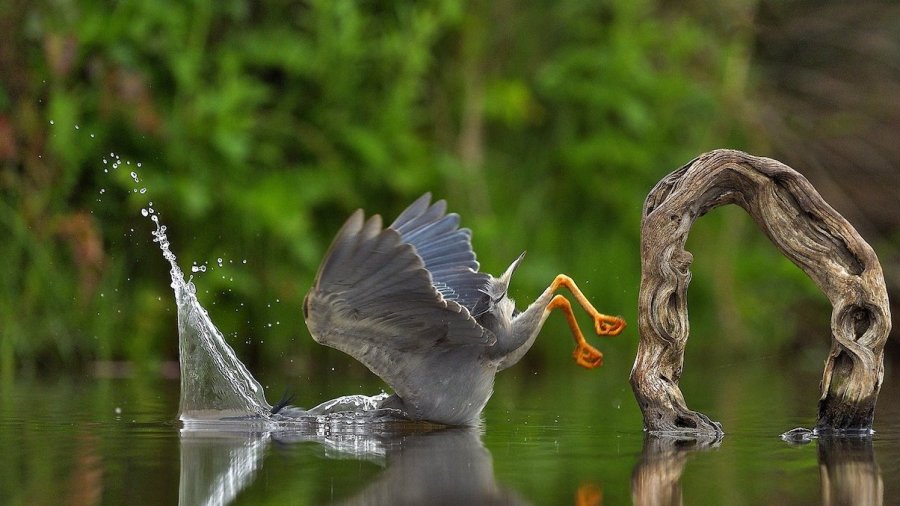
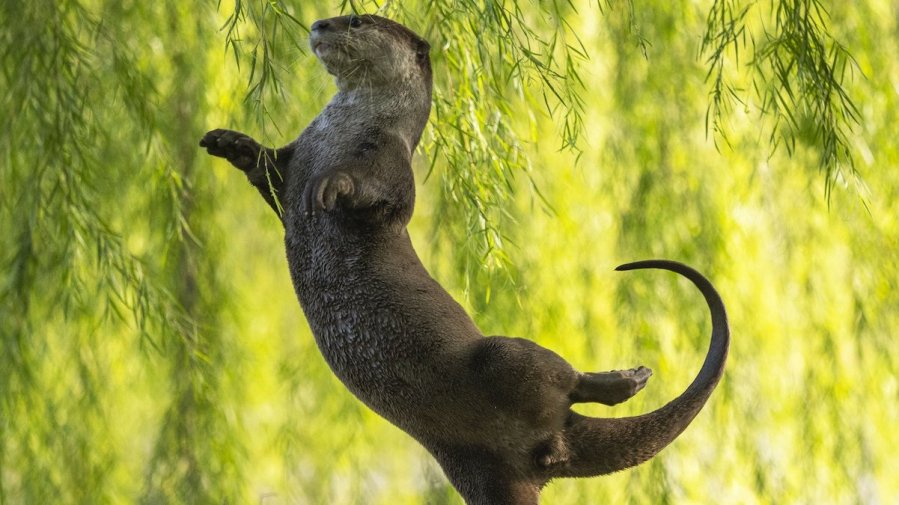
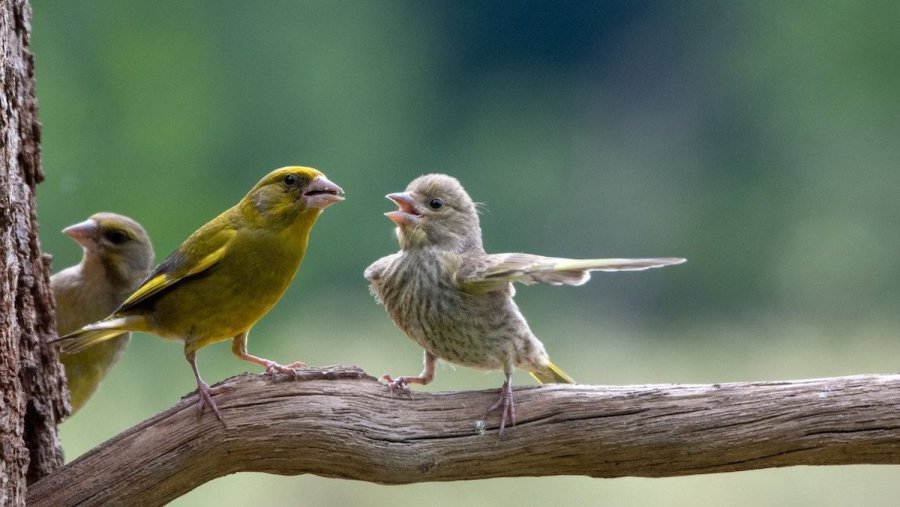
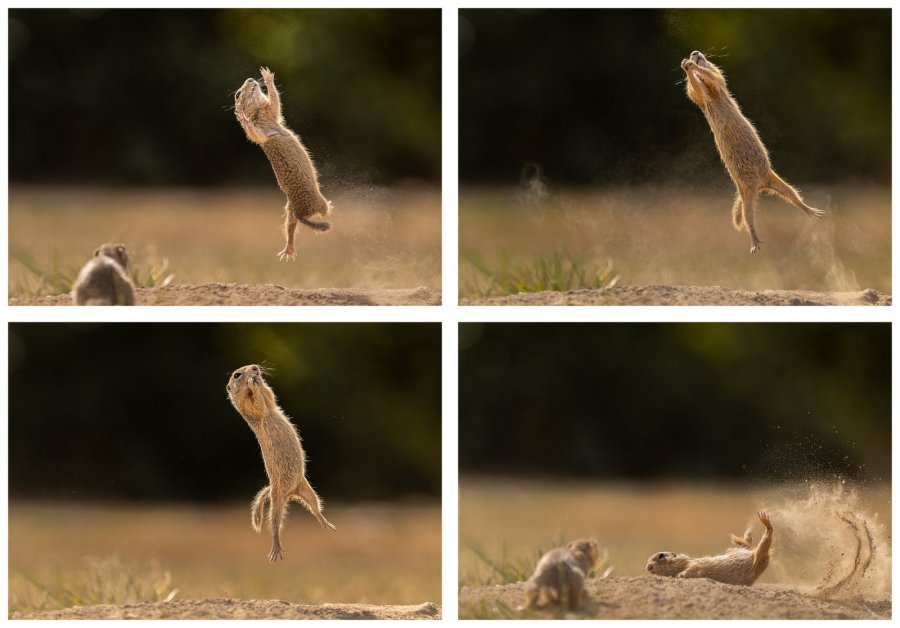
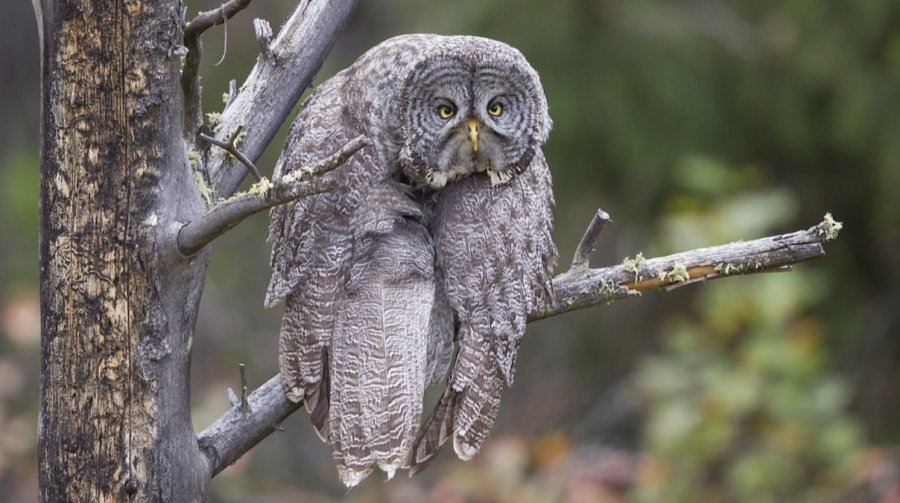
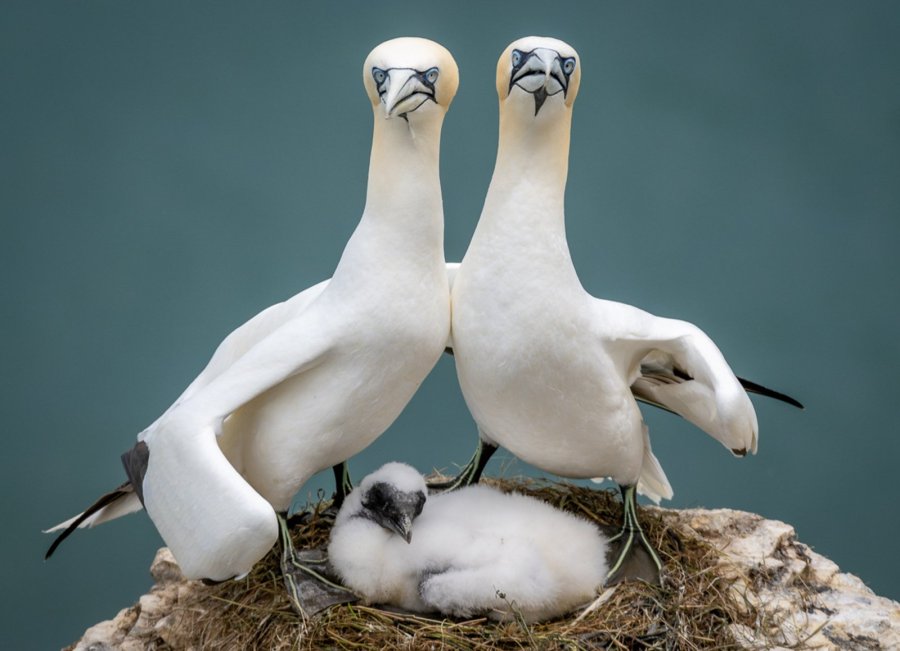
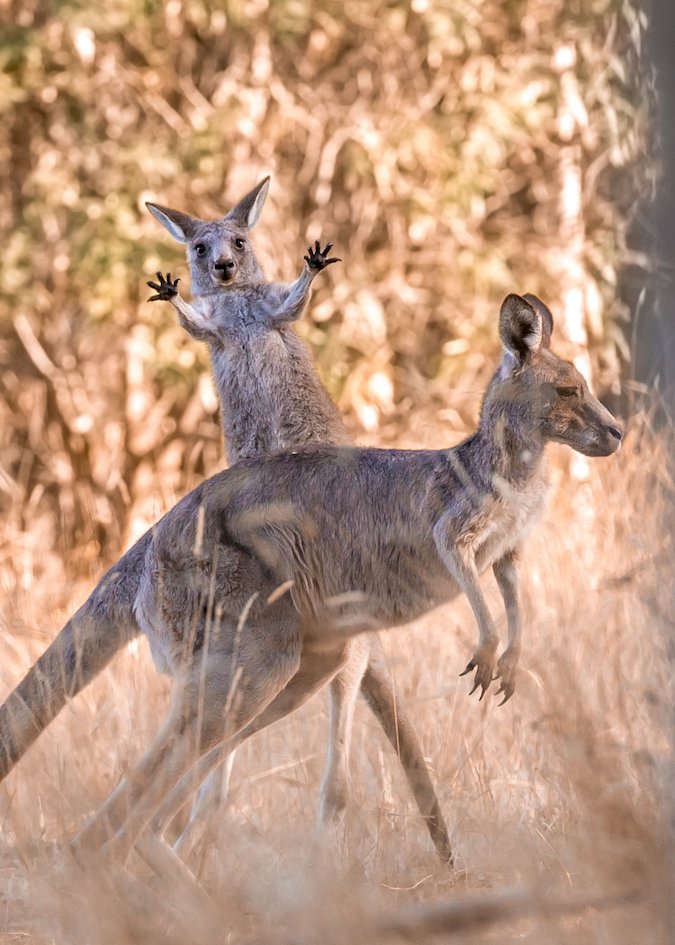
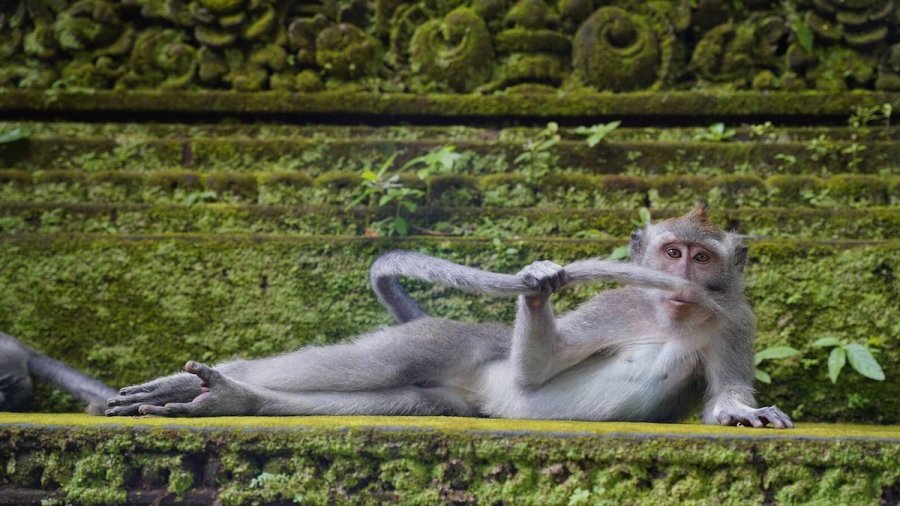
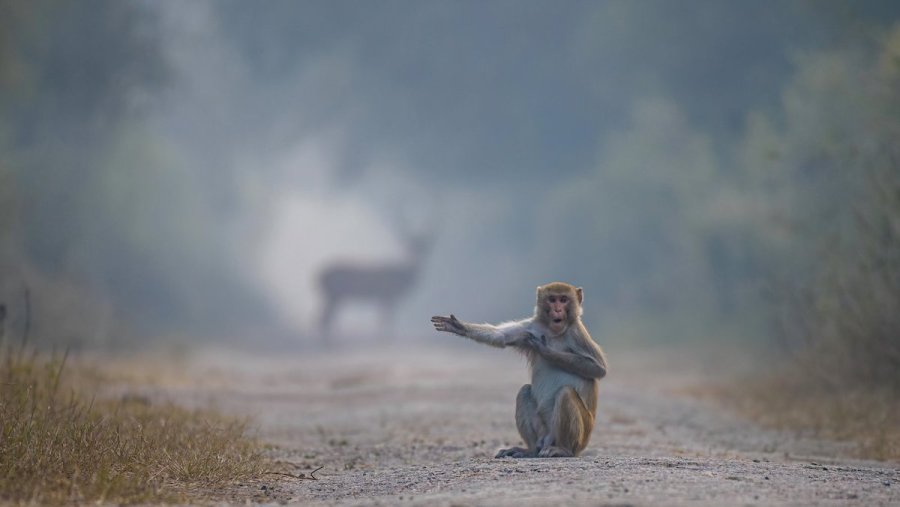
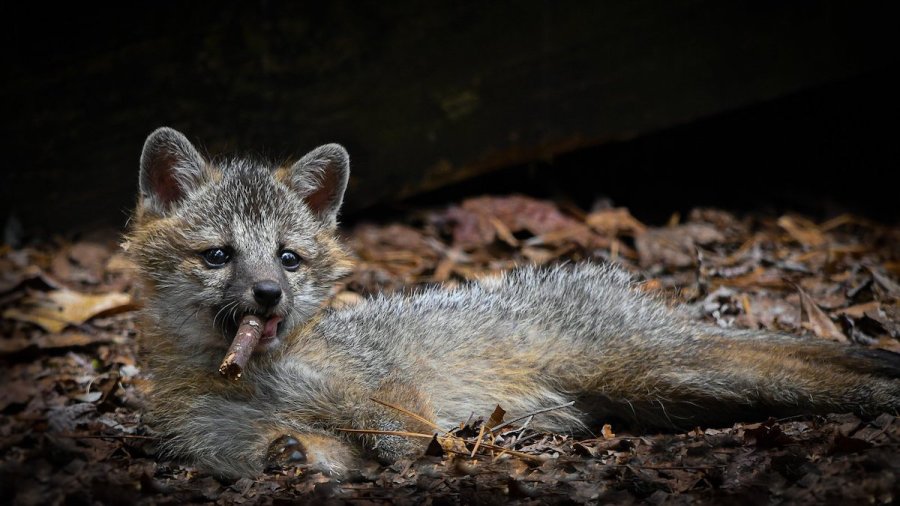
From a kangaroo seemingly rocking out on an air guitar to a fox taking a “smoke break” on a twig cigar, the 2023 Comedy Wildlife Photography Award winners and finalists are a hoot, and will surely make you say “animals, they’re just like us.”

Thousands of photos from 85 countries were submitted. There were six categories of winners. The top prize went to photographer Jason Moore for his photo “Air Guitar Roo.” Moore said he took the photo in a wildflower field in the suburbs of Perth, Australia in 2021.

“I was driving past a mob of Western Grey Kangaroos feeding in an open field that was filled with attractive yellow flowers,” Moore said. “I had my camera with me, so I stopped to grab a few photos. I suddenly noticed this individual adopt a humorous pose – to me it looks like he’s practicing strumming on his air guitar.”

The comical awards is for a serious cause. Photographers Paul Joynson-Hicks and Tom Sullam launched the competition to promote wildlife conservation. This year’s event supports Whitley Fund for Nature, a U.K.-based charity that helps fund conservationists around the world.

Scroll below to see some of this year’s hilarious winners and honorable mentions:

Overall Winner and Alex Walker's Serian Creatures of the Land Award - Air Guitar Roo

Overall Winner and Alex Walker’s Serian Creatures of the Land Award – Air Guitar Roo (Jason Moore/Comedy Wildlife 2023)
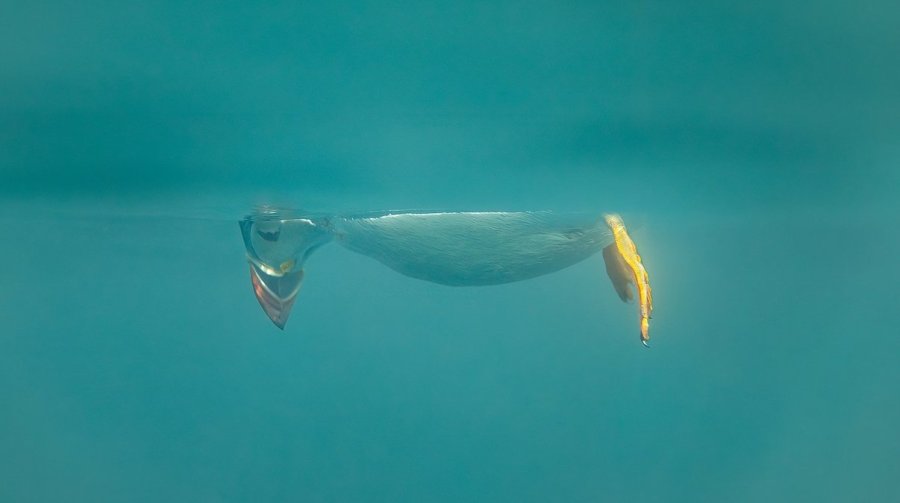
Spectrum Photo Creatures in the Air Award - Unexpected plunge
Spectrum Photo Creatures in the Air Award – Unexpected plunge (Vittorio Ricci/Comedy Wildlife 2023)
Creatures Under the Sea Award - Otter Ballerina
Creatures Under the Sea Award – Otter Ballerina (Otter Kwek/Comedy Wildlife 2023)
Affinity Photo 2 People's Choice Award and Junior Award - Dispute
Affinity Photo 2 People’s Choice Award and Junior Award – Dispute (Jacek Stankiewicz/Comedy Wildlife 2023)
Amazing Internet Portfolio Award - I finally learned to fly or - or maybe not
Amazing Internet Portfolio Award – I finally learned to fly or – or maybe not (Tímea Ambrus/Comedy Wildlife 2023)
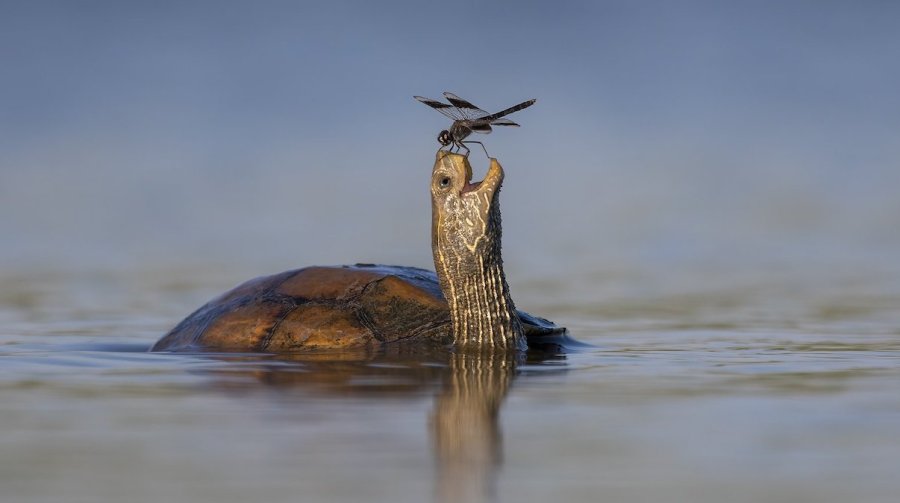
Highly Commended Winner - The happy turtle
Highly Commended Winner – The happy turtle (Tzahi Finkelstein/Comedy Wildlife 2023)
Highly Commended Winner - Monday Blahs
Highly Commended Winner – Monday Blahs (John Blumenkamp/Comedy Wildlife 2023)
Highly Commended Winner - One for the family album
Highly Commended Winner – One for the family album (Zoe Ashdown/Comedy Wildlife 2023)
Highly Commended Winner - Don't look down
Highly Commended Winner – Don’t look down (Brian Matthews/Comedy Wildlife 2023)
Highly Commended Winner - Boing
Highly Commended Winner – Boing (Lara Mathews/Comedy Wildlife 2023)
Highly Commended Winner - The rainforest dandy
Highly Commended Winner – The rainforest dandy (Delphine Casimir/Comedy Wildlife 2023)
Highly Commended Winner - Look at right Bro
Highly Commended Winner – Look at right Bro (Pratick Mondal/Comedy Wildlife 2023)
Highly Commended Winner - That wasn't here yesterday
Highly Commended Winner – That wasn’t here yesterday (Wendy Kaveney/Comedy Wildlife 2023)
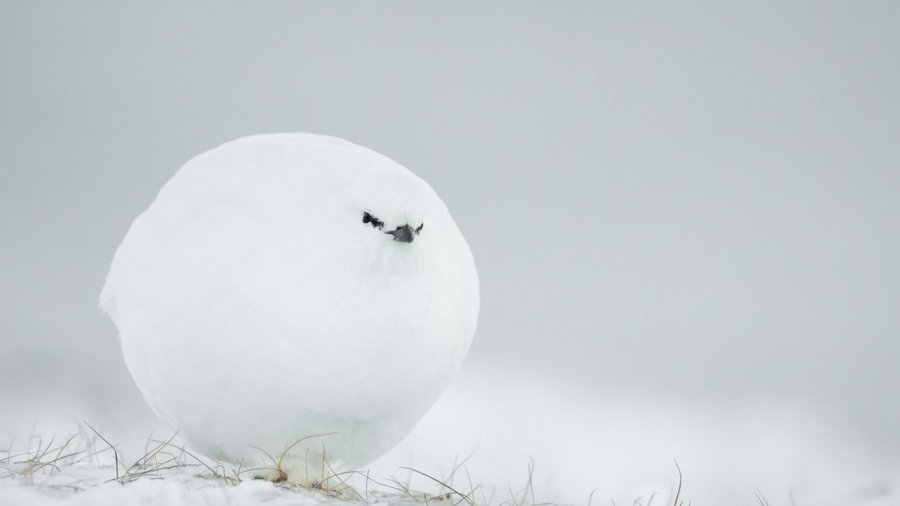
Highly Commended Winner - Snowball (Jacques Poulard/Comedy Wildlife 2023)
Highly Commended Winner – Snowball (Jacques Poulard/Comedy Wildlife 2023)
Highly Commended Winner - Excuse me sir but I think you're a little too young to be smoking
Highly Commended Winner – Excuse me sir but I think you’re a little too young to be smoking (Dakota Vaccaro/Comedy Wildlife 2023)

See the full list of the finalists, winners and honorable mentions here.

Robert Mapplethorpe: Subject Object Image review – penises, perfection and Patti Smith

Robert Mapplethorpe: Subject Object Image review – penises, perfection and Patti Smith

“He’s famous for his objectionable sexual representation,” Louise Bourgeois says gleefully in a BBC documentary on the American photographer Robert Mapplethorpe. Bourgeois once sat for a portrait by Mapplethorpe, grinning maniacally at the camera while clutching her latex-covered, phallic-shaped sculpture Fillette. The documentary, shot in 1988 – a year before Mapplethorpe’s death – plays downstairs at Alison Jacques gallery, a finale to a new exhibition on his work.

Bourgeois recognised an affinity between her own work and Mapplethorpe’s. They both made a lot of works about the phallus, and at this exhibition, there’s no shortage of cocks. Mapplethorpe photographed them voraciously, sculpturally, with ebullient, ecstatic erotic desire. And – as demonstrated in a photograph of a protruding willy staged in a stand-off with a devil figurine – a dose of humour.

Alistair Butler, 1980 Silver Gelatin Print .

Sex and sexuality remained a theme throughout Mapplethorpe’s brief and brilliant career, cut short when the artist died, aged 42, from complications related to Aids. He met some of his subjects in bath houses, leather bars and BDSM clubs like the Mineshaft in downtown Manhattan he frequented. He also met lovers there. He photographed men and women, with a predilection for Black men. Among his most frequent muses was Ken Moody, a fitness instructor who posed for the photographer on numerous occasions between 1983 and 1985. According to Moody, there was no sexual chemistry between the two – Mapplethorpe simply saw Moody’s body as exemplary. Several images of Moody included here are extraordinarily sculptural. They are also astonishingly objectifying. Mapplethorpe’s interest in objectification is the crux of this exhibition – he was unabashed in embracing it: “I’m looking for perfection in form … it’s no different from one subject to the next.”

Mapplethorpe was engaged in an unrelenting pursuit of beauty, but he was also plagued by contradictions. Manichaean struggles are ever-present in Mapplethorpe’s black-and-white photographs, flitting between prurience and piety. Catholic imagery recurs , a hangover from his upbringing. One rare sculptural piece from 1971, a mirror latticed with wire mesh, recalls a confessional booth and sets the tone for the show. Dramatic drapery envelopes Patti Smith, as she disappears into the folds, her back turned to the camera. Devils contrast with roses – the Catholic symbol of martyrdom.

Arnold Schwarzenegger, 1976 Silver Gelatin Print 40.7 x 50.8 cm (20 x 16 in).

In the first room of silver gelatin prints, there are some riveting, simmering juxtapositions between Mapplethorpe’s worlds: a luxurious print of Mapplethorpe’s lover, Milton Moore, buttocks taut under fishnet tights; two men, their lower bodies wrapped in bandages, holding each other in a tight embrace; the simplicity of a single orchid in a vase. Whether inanimate or alive, Mapplethorpe levelled it all with his mastery of formalism. The delicacy of it knocks your breath away.

Patti Smith, 1978 Silver Gelatin Print 50.8 x 40.6 cm (20 x 16 in).

In a second room, the exhibition becomes baggy at the seams. Opposite a single picture of a penis let loose from formal suit trousers is a constellation of portraits of Mapplethorpe’s very famous friends and acquaintances in New York through the 1970s and 1980s. Haring, Warhol, Ono and de Kooning are all here, alongside Richard Gere, Patti Smith and Mapplethorpe himself. It’s great if you enjoy portraits of celebrities – I don’t. An irksome, oversized portrait of Steve Strange hangs in the centre, with a frame much thicker than the rest, which draws unwarranted attention. Blank stares and uninspired poses, the portraits left me cold. They fulfil the purpose of the exhibition – as the title Subject, Object, Image suggests – in that they show Mapplethorpe’s interest in objectifying all of his subjects. But as portraits, this approach leaves them flattened and dull. They show an unexpected side of Mapplethorpe – that he could be boring too.

Mapplethorpe today has cult status. He was among the first to treat photography as art, and to dare to transgress what could be turned into art. Though derailed by censorship over the years there’s an intensity in his vision that can’t be extinguished and remains perennially relevant.

A cluster of works downstairs add sparks of effervescent colour to put this show back on track. A series of staggering dye transfer prints from 1985, rarely exhibited before, bring orchids and tiger lilies into a heightened realm of sublime and sensual delight. Somehow, looking at a photograph of a flower here feels like looking at porn. Next, a photograph of a penis peeking back through a hole cut out of the back of white underpants looks more like a Courbet. That’s the Mapplethorpe magic.