
ONE LARGE LATTE: A cement sculpture of a latte stone created by Guam artist Ariel Dimalanta and helper CJ McCarrel, commissioned by Inalåhan Mayor Anthony P. Chagualaf Jr. and the
Modern sculpture, ancient iconography


A stunning photograph of a Turkish buffalo shepherd rearing back on his horse wins top prize at ViewSonic’s 4th ColorPro Awards.
The ViewSonic ColorPro Awards is an annual competition for photography and video, that showcases enormous talent across the two mediums. ViewSonic has announced the top 10 winners of the 4th ColorPro Awards titled Rise, which was also the theme prompt for the competition. The prize pool for the competition includes both cash prizes and some of ViewSonic’s best products. ViewSonic is a manufacturer of some of the best monitors and features highly in our guide to the best monitors for video editing.
The top honors in the photography category went to Turkish photographer Meriç Aktar for his image titled The Return of the Buffalo Shepherd. The shot was taken of a buffalo shepherd in Dokuzpınar Village of Kayseri province, Turkey, and depicts the start of the day’s journey of adventuring over dusty landscapes with his herd of around 500 buffalos. The image shows the shepherd on horseback, rising up through the sun-filled cloud of dust, surrounded by his buffalos and dog companion.

Second place in the photography category went to Jonas Hafner of Germany for his image Rise. The photograph portrays a woman lying in a field of plants, acting as a visual representation of transformation. Hafner says, “Like plants, we humans also undergo a transformation over time and grow through our challenges and experiences.”

Svetlin Yosifov from Bulgaria won third place, with a touching portrait titled Caro Boy. The photograph shows a small boy from the Karo Tribe who lives in the Omo Valley in Ethiopia. The community survives on agriculture and the rising levels and annual flooding of the Omo River. The stunning black-and-white image portrays a tender moment of a boy with his cattle.
In addition to the photography category the newly introduced video category also presented some exceptional work from creatives all around the globe. First place in this category was awarded to British photographer and videographer Lucy Galliford for her film Rise. Galliford says, “My film is a visual expression of my passion – I stripped my soul of the ‘why’ and poured it into this. I didn’t have the budget to go to any extravagant locations; I just wanted to stick to my roots and tell my story to the world, showcasing how I rise to the challenge of fulfilling my dreams”.
Second place was awarded to Maor Benezri from Israel, whose film centers around memories and experiences made whilst visiting Jordan, and how those things we cannot touch can often provide us with more value. The film is titled Jordan – Collect Memories, Not Things.
“Through the ColorPro Awards, we have fostered a global community where creators can connect and achieve visual excellence in their artistic expression. This year’s winners have brilliantly captured the theme of ‘RISE,’ bringing forth diverse stories of personal growth and resilience from around the world,” said Oscar Lin, General Manager of the Monitor Business Unit at ViewSonic
This year’s submissions showcased an extreme amount of talent, from hundreds of entrants. The finalists’s work has been put on exhibition in London, and will also be displayed in Vietnam and Taiwan. For a full list of finalists and for more information on the work and the ongoing exhibition, visit the awards website.
For more information on monitors see our guides on the best monitors for photo editing, the best ultra-wide monitor for photo editing, and the best monitors for MacBook Pro.


This year’s titles include Daughter of the Dragon, Whalefall and Witness.
Illustration by Emily Lankiewicz
In April this year, Smithsonian scientists in collaboration with NASA launched a revolutionary new tool into space from Florida’s Cape Canaveral Space Force Station. At 7,000 miles per hour, a Falcon 9 two-stage rocket delivered its satellite payload to geostationary orbit, 22,236 miles above the United States, Mexico and Canada. The satellite—a washing machine-sized suite of instruments known as TEMPO, short for Tropospheric Emissions: Monitoring of Pollution—is now providing detailed analysis of the continent’s air pollution. The project has been in development for more than 30 years at the Smithsonian Astrophysical Observatory in Cambridge, Massachusetts.
Then, this summer, a female orca that had been found stranded on a Florida beach in January became a prized new Smithsonian specimen: Its putrid carcass was loaded into a small pickup truck and driven north on I-95 toward its new home at the Smithsonian’s National Museum of Natural History. Visitors to that museum, meanwhile, were taking in a new long-term exhibition, the first of its kind on a device that has become ubiquitous—the cellphone. Also this year, curators at the National Museum of African American History and Culture made headlines with a fresh take on Afrofuturism and its seismic influences in Black life. And at two of the Smithsonian’s art museums, well-received shows honored the work of video artist John Akomfrah. Other exhibitions included a look at the Disney Parks and a dig into the Chinese ancient city of Anyang, along with shows on contemporary artists like the Japanese-born Ay-O and the Native artists Shelley Niro and Robert Houle, as well as the vibrant works inspired by nature created by the former teacher and Washington, D.C. artist Alma Thomas.
Informing this extraordinary work is a cast of thousands—Smithsonian staffers bringing their best game to the work of preserving specimens and collecting artifacts, launching scientific discovery, and bringing curatorial reconsideration to our nation’s complex history. At the invitation of Smithsonian magazine, 12 representatives make recommendations of stellar 2023 novels, biographies, story collections and journalistic reporting across a range of topics including mid-20th-century Hollywood, life in a New York City art colony, weather-related folk wisdom and what it takes to survive being swallowed by a whale.
Recommended by Ryan Lintelman, curator of entertainment, National Museum of American History
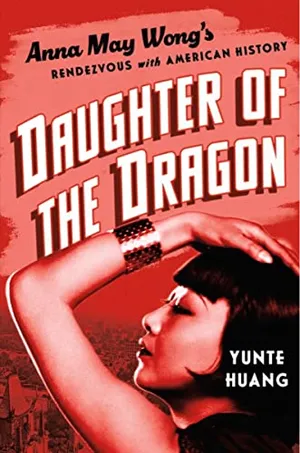
The captivating, beautiful Anna May Wong overcame adversity and prejudice in the early to mid-20th century to build a remarkable career as the first Chinese American movie star. But when she began losing glamorous parts to white actresses and found herself increasingly typecast in racist roles, Wong left Hollywood, disillusioned and mostly forgotten. Scholar Yunte Huang from the University of California, Santa Barbara, skillfully recovers the actor’s fascinating story. While fleshing out the missing details of Wong’s life and times, Huang explores the historical, social and cultural context with an English professor’s attention to words, symbols and the meanings behind them. And from this book, a picture immerges of a cosmopolitan, well-connected woman who persevered, finding opportunities to work in Europe and in television before her untimely death in 1961 at the age of 56. Wong is an Asian American icon only now earning the recognition and praise she so long deserved.
Recommended by Nick Pyenson, curator of fossil marine mammals, National Museum of Natural History
How would it feel to be swallowed by a whale? Not just nibbled, like a lobster diver or a kayaker, but full Jonah? The science fiction and fantasy novelist Daniel Kraus imagines a modern riff, pitting a teenage boy against (and inside) an old, bull sperm whale off Monterey Bay. Kraus locates much of the teen’s ordeal in the whale’s multi-chambered stomach, with heavy pours of father-son angst. Impressively, Kraus defies incredulity by doing his homework. I study whales and, as a scientist, I appreciated that all of the pieces of Kraus’ griping narrative fit together from the anatomy of these awesome creatures. Much of the story feels like John Steinbeck’s Cannery Row meets the Red Planet in Andy Weir’s The Martian, paced to the tense countdown of the dwindling air in the teen’s scuba tank. The recently announced movie should be wild—and not for the squeamish.
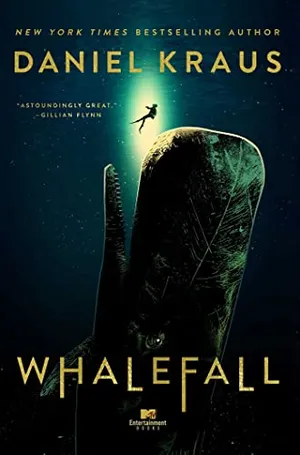
The Martian meets 127 Hours in this “powerfully humane” (Owen King, New York Times bestselling author) and scientifically accurate thriller about a scuba diver who’s been swallowed by an eighty-foot, sixty-ton sperm whale and has only one hour to escape before his oxygen runs out.
Recommended by Stephanie Stebich, director, Smithsonian American Art Museum
Several prominent art personalities—from Agnes Martin to Ellsworth Kelly, and from James Rosenquist to Lenore Tawney, not to mention the intense character of New York City itself—abound in this artful story about a specific spot and moment in American art. In the mid-20th century, Coenties Slip, located in the financial district of lower Manhattan, began to attract artists who sought the energy and “collective solitude” of the new art capital. That concept describes both the need for creative quiet and the convening of like spirits. That power of place is also important for artists who came from afar to develop different artistic styles and personal relationships. The history of this unique place is well described from its early shipping days to its heady redevelopment into a vibrant artist colony in the years between 1956 and 1964. For those who love the history of New York City and an insider’s view of the early life of major figures in modern art, this is a compelling read.

Recommended by William Pretzer, supervisory curator for history, National Museum of African American History and Culture
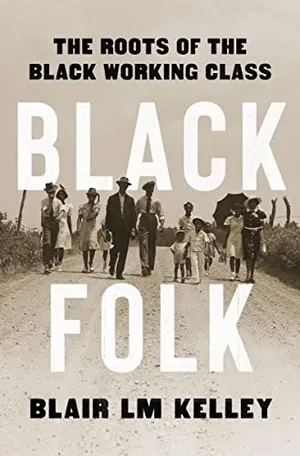
Inspired in part by the civil rights movement, American scholars of the 1960s and ’70s began to take seriously the notion of social class and the history of marginalized peoples in the U.S., an approach labeled “history from the bottom up.” Research into the social and cultural experiences of workers, immigrant groups and enslaved people led the way, soon to be followed by family, women’s and cultural history. In this well-crafted narrative, Kelley’s own family history spanning 200 years becomes a lens on the development of a Black working class. As good historians do, Kelley raises more questions than she answers about the creation of the Black working class. Those who follow in her footsteps, however, will find Black Folk an excellent guide for examining in greater detail (and thus more diversity) the intersections of family, gender, race, work, class and social justice.
Recommended by Jeffrey K. Stine, curator for environmental history, National Museum of American History
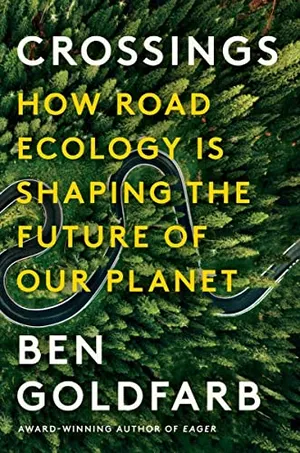
Why did the chicken cross the road? Environmental journalist Ben Goldfarb questions the logic of that old riddle, which, he says, treats the road as immutable while demanding an explanation and rationalization for the fowl’s actions. With wit and a wealth of detail, Goldfarb explores the multitude of hazards that the world’s 40 million miles of roads impose upon wildlife and the growing efforts to lessen or mitigate those effects. His discussion of road ecology—a relatively new branch of conservation biology—could hardly be timelier. Highway mileage is projected to double by midcentury, yet biodiversity loss continues at a rate faster than at any time in human history. Without pulling punches in his assessment of highway impacts, Goldfarb laces the book with examples of hope, showcasing how purpose-built infrastructure, such as wildlife tunnels and bridges, redesigned culverts and rewilding roadsides, can blunt some ecological problems, benefiting all inhabitants of the world, both human and nonhuman.
Recommended by Lindsay Harris, head of the Research and Scholars Center, Smithsonian American Art Museum
The highly visual narratives crafted by the award-winning short-story writer Jamel Brinkley remind us of the range of perspectives that coexist at any given time, and the importance of storytelling to make sense of the world and our place in it. In his newest collection of ten stories, Brinkley portrays contemporary New York City in the throes of change. A widow, soon to retire from delivering room service in a Queens hotel, finds joy exchanging hand-written missives with the delivery woman from her favorite food app. A young man attending a dance party at the Brooklyn Museum unexpectedly meets his estranged father’s former lover. A group of friends in Bedford-Stuyvesant struggles to recall the business that once operated in a local storefront, which now shelters animals and a troubled, homeless man they barely recognize from their childhood. Throughout the vignettes, photographs recur as portals to the past that offer glimpses of characters and their surroundings as they once were. The story collection highlights how revelatory it can be to formulate and express point of view by integrating the arts.
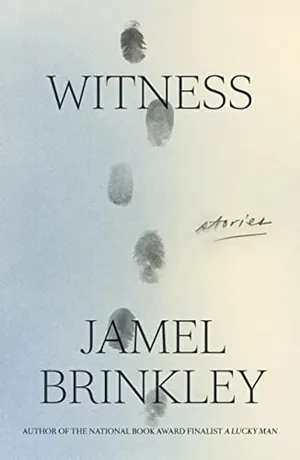
In these ten stories, each set in the changing landscapes of contemporary New York City, a range of characters―from children to grandmothers to ghosts―live through the responsibility of perceiving and the moral challenge of speaking up or taking action.
Recommended by Jocelyn Knauf, docent program manager, National Museum of American History
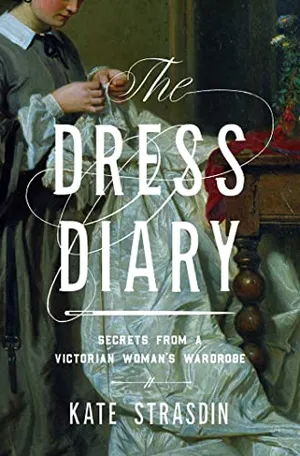
As a museum educator and former archaeologist, I am fascinated by how the seemingly insignificant things that people used and discarded in past eras can give us insight into their lives and experiences. In 1838, an Englishwoman named Anne Sykes began to document in a bound volume the clothing that she and her friends and family wore, including pieces of printed fabrics and swatches of silk. Nearly 200 years later, after in-depth study of what has become known as “The Dress Diary,” fashion historian Kate Strasdin shows us how Sykes’ wardrobe and the garments worn by those around her are tied to broader cultural landscapes and connected to larger social networks, industry and empire. Clothing chronicles the everyday lives of women; the rituals of mourning, the move to a new home, weddings and christenings are rendered meaningful and consequential. But the author also contextualizes this period of the 19th century, tracing the elements of women’s clothing from the cotton plantations in the southern U.S. to the far reaches of the British colonial empire.
Recommended by Chris Wilson, director of Experience Design and the African American History Program, National Museum of American History
In remembering the civil rights movement, we are often blinded by our tendency to understand this period as the consequences of the actions of super-heroic leaders—who are usually men. There is no better example of this than how we remember Martin Luther King Jr. The Black freedom struggle of the 1950s and ’60s is often seen as being defined by King, and King, in turn, is seen as being defined by his public life and work. One antidote to this simplistic understanding is to broaden one’s consideration and see the movement as the far-reaching efforts of the many. In reality, a vast number of people and groups worked to redefine the nation from many directions and through many, sometimes competing, tactics. To deepen our knowledge, we need to fully understand these people along with their weaknesses, fears, flaws and lives beyond the public spheres of their activist work.
In his King biography, which the New York Times calls the “first comprehensive account of the civil rights icon in decades,” Eig helps us see the complexity. We learn the difficult relationship King had with his father and other leaders, his struggles with mental health, and his discomfort with conflict. We learn about those who had as much to do with the successes of the movement but who continue to receive little credit, including women like his own wife, Coretta Scott King, as well as Rosa Parks, Ella Baker and Diane Nash. To better understand this world icon, we should—as Eig does—explore his full life to more fully grasp the movement and our nation’s history.

In this landmark biography, Jonathan Eig gives us an MLK for our times: a deep thinker, a brilliant strategist, and a committed radical who led one of history’s greatest movements, and whose demands for racial and economic justice remain as urgent today as they were in his lifetime.
Recommended by James Deutsch, curator of folklife and popular culture, Smithsonian Center for Folklife and Cultural Heritage
Folk wisdom about the weather, known to folklorists as “weatherlore,” dates to the earliest humans, whose lives often depended on the vagaries of snow, rain, heat and gloom of night—to borrow the folkloric motto of the U.S. Postal Service. The 15 essays in this volume, written by specialists in communications, folklore, literature, philosophy, religion, science and other fields of study, evenly divide into sections on belief, text and tradition. Specific topics include the personal narratives of storm survivors, the contemporary usage of the word “snowflake,” the roles of magic and prophecy in weather prognostication, the effects of climate change on Christian belief, and the difficulties climate change is bringing to home canning. My contribution, titled “Bob Dylan’s Windlore,” derives from my all-time favorite song lyric espousing weather wisdom—“You don’t need a weatherman to know which way the wind blows” from the legendary poet’s 1965 anthem “Subterranean Homesick Blues.”
Recommended by Elisabeth Kilday, visitor services manager, National Portrait Gallery and Smithsonian American Art Museum
The critic and reporter Maureen Ryan has been writing about entertainment for years and, in her new bestseller, she looks at the widespread sexual harassment and misconduct in the television industry. Through interviews with actors, writers and others in the industry, Ryan doggedly pursues the question of why, after the much-vaunted #MeToo campaign, bad antics and toxic abuses continue behind the scenes at popular television shows. Harvey Weinstein may be behind bars, but the industry allows other abusers to continue working. It was difficult at times to read about shows that I enjoyed in the past, but Ryan doesn’t just highlight the problems—she offers ideas for improvements going forward. Hollywood is not alone in facing these issues of harassment and biases, and readers may be surprised at how they can relate to the stories told and the proposed solutions.
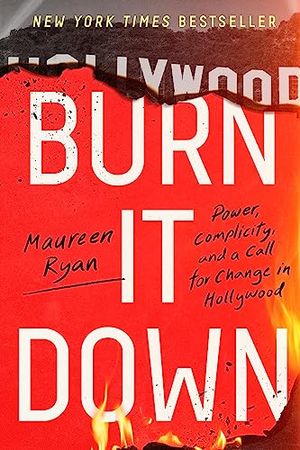
In this spectacular, newsmaking exposé that has the entertainment industry abuzz and on its heels, Vanity Fair‘s Maureen Ryan blows the lid off patterns of harassment and bias in Hollywood, the grassroots reforms under way, and the labor and activist revolutions that recent scandals have ignited.
Recommended by Theodore Gonzalves, curator of culture and the arts, National Museum of American History
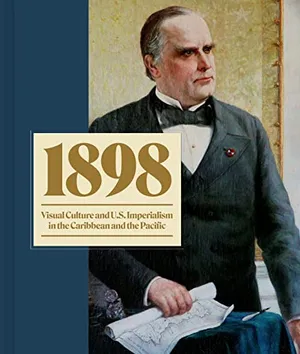
Caragol and Lemay have accomplished an incredible feat—they curated a thoughtful exhibition and edited an accompanying text that links a sorrowful past with the urgency of the present. During the War of 1898, commentators and scholars asked the question about the U.S.: “Are we an empire or a republic?” To dispossess people of their land, seize it for themselves, administer the transfer of treasure and labor across borders, brutally suppress movements for self-government, and feed media with one-sided narratives—all of those and more were the hallmarks of an empire coming into view. Caragol and Lemay highlight perspectives from communities deeply affected by these events in Hawaiʻi, Guam, the Philippines, Cuba and Puerto Rico. Full disclosure: For the catalog, I wrote a short essay about the cost of forgetting empire as well as remembering acts of resistance in the Pacific. If you are not able to visit the show, which remains on view through February 25, 2024, and which the Washington Post referred to as the “best and most engaging work the National Portrait Gallery has done in a decade,” then turn to this accompanying text for the finely crafted context it offers of distant events that today continue to offer us powerful lessons.
A Note to our Readers
Smithsonian magazine participates in affiliate link advertising programs. If you purchase an item through these links, we receive a commission.
Recommended Videos

This year’s Rotary Photography Contest winner is thrilled to have been in the right place at the right time to capture this beautiful picture of a Bighorn Mountain Sheep. His winning photograph will appear on the 2024 Friendship Card, and he will receive two Friendship Cards to use when in town.
Steven Rishel and his wife live most of the year in Eastern Nebraska, but their love of Estes Park and Rocky Mountain National Park draws them to Colorado for the month of February, where they love to hike and explore the park when the temperatures are low, and the visitors are few.
On a windy day last February, they left the Alluvial Fan parking lot to walk to Endovalley. Steve fell behind his wife as he stopped to take pictures along the way.
He rounded a curve to see his wife waving at him to come quick. There on the side of the road were two rams majestically standing in the sun. While he rushed to prepare his camera, the rams waited patiently without moving away. Steve was able to zoom in on them and captured seven or eight photos before they sauntered away.
Steve described it as the shot of a lifetime. The ram was looking directly at him, and most importantly its eyes were in focus.
They never saw Bighorns through the rest of their month-long visit.
Even before winning this contest, Steve and his wife were Friendship Card holders. Introduced to the card by the Country Market cashiers, they consider it to be a valuable shopping tool whenever they are in Estes Park. They look forward to receiving their complimentary cards for their upcoming return visit to Estes Park next February.
Watch for the announcement as Friendship cards for 2024 will go on sale the second week of December. They make great stocking stuffers.


The Most Beautiful Places in Chicago 2 premieres on Monday, December 4 at 7:00 pm on WTTW and streaming on the PBS app. Check out the companion website at wttw.com/mostbeautiful
On Monday, December 4 at 7:00 pm, WTTW will premiere The Most Beautiful Places in Chicago 2 with host, writer, and producer Geoffrey Baer. Viewers will be invited to come along on Geoffrey’s newest journey to discover the stories behind eye-popping spaces and places around Chicago – from sparkling mosaics and historic homes to public parks and gardens to intricate facades and architectural marvels.
We sat down with Geoffrey this month to talk about the show, a few of his favorite locations, and the fascinating Chicagoans who share the places they think are beautiful in the new special.
Why did you decide to follow up The Most Beautiful Places in Chicago with a sequel?
The response to the first program was overwhelming. People let us know that they loved seeing what it is that makes Chicago great, and why they are so proud of the city.
How did you define a “beautiful place?”
In the first show, we really leaned into jaw-dropping physical beauty. In part 2, you’ll see more, including “the Bean” at Millennium Park and the dazzling Tiffany interiors of the Chicago Cultural Center. But what makes these and the many other places we explore in this program deeply beautiful has as much to do with the human stories behind them as with their physical beauty.
Can you give us some examples?
If you’ve ever gotten off Lake Shore Drive at Foster, there’s a mosaic mural that’s twinkly and sparkly and really lights up the underpass – but almost nobody ever stops to really look at it. This stunning public work, called Indian Land Dancing, has an almost folk art quality to it, and the story that it tells is about the Native American community in Chicago. Viewers will hear from the Indigenous artists who took the lead in imagining this beautiful community-made space to serve as an antidote to the more cliché sculptures you see around town and to remind people that Native Americans are still here. They’ve always been here.
Another good example is the Chicago Vocational High School. It has a remarkable and giant classical columned entrance with beautiful relief sculptures of drill presses and T-squares, designed to reference what the students are learning inside. The original plan was to create an inspiring place to signal the future of Chicago as an industrial city and train the next generation of trade workers who would feel proud of their vocation and training.
The architectural critic Lee Bey went there, right? He’s featured in the show.
Yes, Lee’s trade focus at the high school was the printing press and, go figure, he grew up to be an author! In the show, we visit a number of buildings Lee highlighted in his book, Southern Exposure, about under-appreciated architecture on the South Side.
Who else will we meet in the show?
We talk to Gunny Harboe, the most famous restoration architect in Chicago, about his team’s astonishing restoration of the Chicago Cultural Center. I think most people who know the building are aware of Preston Bradley Hall and the Tiffany dome, but there’s another dome in the Grand Army of the Republic Hall that deteriorated over time. During the restoration process, Gunny discovered that a century of paint layers could be scraped off to reveal the original paint that was still there underneath. When you are in that hall today, you will see paint that was brushed on by the people who first finished those rooms in the late 1800s.
In another part of the show, there’s a young ecologist and conservation biologist, Deja Perkins, who is one of the most remarkable people I have ever interviewed. Her mission in life is to help people of color feel comfortable and welcome exploring nature and birdwatching. She speaks very poignantly about how Black people have not always felt safe exploring nature. We venture to Jackson Park with Deja and a group of young people, and I know our viewers will be moved by the conversation. And I got to go birdwatching! It was so much fun.

:focal(715x552:716x553)/https://tf-cmsv2-smithsonianmag-media.s3.amazonaws.com/filer_public/43/ee/43ee2ab3-9e42-42d6-8b17-11b214285a71/dec2023_h13_prologue.jpg)
Left, a 1932 self-portrait by Lee Miller. Right, a 1943 portrait of Miller by American photojournalist David Scherman.
© Lee Miller Archives, England 2023. All rights reserved. leemiller.co.uk; David E. Scherman © Courtesy Lee Miller Archives, England 2023. All rights reserved. leemiller.co.uk
Lee Miller’s big break began with a near-death experience. Miller was discovered at 19 by publishing scion Condé Nast himself when he pulled her out of the way of an oncoming car in Manhattan—then put her on the cover of Vogue. But Miller, born in Poughkeepsie, New York, in 1907, was not content to be a muse for male photographers.
Instead, she moved to Paris, where she stepped behind the lens and studied with Surrealist photographer Man Ray, her mentor and lover. Miller mastered the technical aspects of photography quickly and distinguished herself among the few high-profile women photographers of the day by opening her own studio in the City of Light. There she took portraits of royalty, literary elites and even the pet lizard of a French socialite, who paid $100 for the image. Soon, Miller turned to photojournalism, ultimately producing some of the 20th century’s most groundbreaking images for the magazine whose cover she once graced.
During World War II, ignoring personal warnings from U.S. diplomats to return stateside, Miller embedded with the U.S. military. She chronicled the war across Europe, capturing unforgettable images: Londoners huddled in underground stations during the Blitz; bloodied patients at an Allied field hospital in Normandy. Miller pushed the bounds at Vogue: At a time when the 1940 bombing of Vogue’s London office didn’t merit a mention in its own pages, Miller ensured that her images went to press: She was among the first reporters to enter Dachau after its liberation and sent a message with her photos to her editor, “I IMPLORE YOU TO BELIEVE THIS IS TRUE.”
After the war, she settled on a Sussex farm, where artists like Pablo Picasso and Jean Dubuffet were regular visitors. Yet Miller struggled to find a sense of purpose and was largely forgotten until a trove of her photographs was rediscovered in her attic, several years after her death in 1977.
Now a feature film is helping rescue Miller from obscurity: In Lee, which premiered at the Toronto International Film Festival in September 2023, Kate Winslet (center) is magnetic in the title role, and was so inspired by Miller’s story that she wrote the foreword to Lee Miller: Photographs, a book by Miller’s son released this past October.
Recommended Videos


This dachshund puppy appears to be floating in the air as he hurtles towards his owners. As the photographer Alessandro Grandoni says, “Love gives you wings to fly high in the sky.” (PHOTO: Alessandro Grandoni/Dog Photography awards)
They come in all shapes and sizes. Some love to spend their days playing fetch, while others’ idea of heaven is simply getting to spend time with their favourite human. Either way, they brighten our days with their unconditional love and slobbery kisses.
This year’s Dog Photography Awards is a celebration of our furry friends in all their glory.
A total of 1 440 entries from more than 50 different countries were received for the annual competition. Here are some of the stand-out entries.
A BOND BEYOND WORDS
Cassie Thurrott, Canada

Photographer Cassie Thurrott says, “The smoke enveloping them represents the challenges and darkness that mental-health issues can bring into one’s life.” The dog is pictured protectively nestled against her chest, symbolising their bond while providing comfort, stability and love in times of distress.” (PHOTO: Cassie Thurrot/Dog Photography awards)
THE LIBRARIAN
Sandy van Kruijsdijk, Netherlands

“I took this photo of our dog, Skûtsje, with the help of my husband,” Sandy van Kruijsdijk explains. “When he sees my photography equipment, he knows he’s going to earn a lot of cookies. “He borrowed this shirt from our three-year-old son. He’s completely used to it by now and sees posing as a fun activity.” (PHOTO: Sandy van Kruijsdijk/Dog Photography awards)
READ MORE | Round of ap-paws! These amazing pics of dogs will put a smile on your dial
THE LEIA ORGANA LOOK
Tina Stahl, Germany

Maddie’s puppy dog eyes could melt even the coldest of hearts. The reason for her expression: dog treats. But her owner thinks it makes her bear an uncanny resemblance to Star Wars’ Princess Leia. (PHOTO: Tina Stahl/Dog Photography awards)
FLY HIGH IN THE SKY
Anne-Laurie Léger, Canada
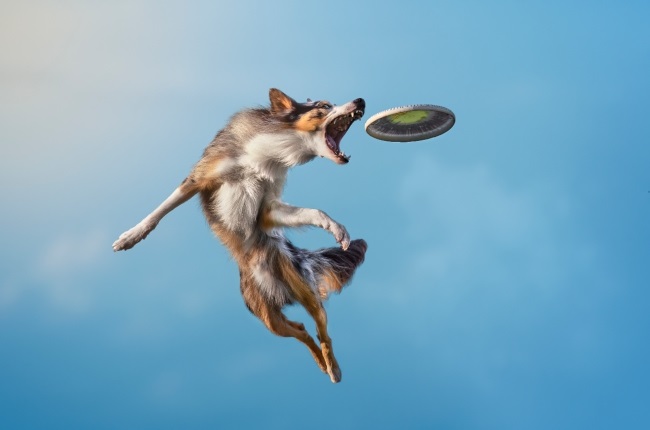
Showing off its athletic prowess, this Border collie did a back vault, jumping from his owner’s back to catch their Frisbee. (PHOTO: Anne-Laurie Léger/Dog Photography awards)
READ MORE | Awww! Jack Russell becomes a mummy to six abandoned kitties
SUNRISE MOOD
Petra Nestelbacher, Austria

“Since Nala and Stephi love going on adventures together and exploring the world, the sunrise shoot on a stand-up paddle was just perfect for them,” Petra Nestelbacher says. The sunrise at Lake Woerth in Carinthia provided the ideal backdrop for the pair. (PHOTO: Petra Nestelbacher/Dog Photography awards)
ALMOST GOT IT
Desiree Nickerson, Canada

Josee’s face is a picture of laser-sharp focus as she attempts to catch a ball. The Canadian pup loves playtime, especially when it involves her favourite toy. (PHOTO: Desiree Nickerson / Dog Photography awards)
LET’S DANCE!
Carla Gea Perales, Spain

This pup broke out dancing in the studio when the music came on. “Relying on spontaneity in photography allows me to experience positive surprises and unexpected results,” Carla Gea Perales says. (PHOTO: Carla Gea Perales/Dog Photography awards)
Source: AIRTABLE.COM
We live in a world where facts and fiction get blurred
Who we choose to trust can have a profound impact on our lives. Join thousands of devoted South Africans who look to News24 to bring them news they can trust every day. As we celebrate 25 years, become a News24 subscriber as we strive to keep you informed, inspired and empowered.






