About

Posts by :

Indigenous glass artist opens immersive exhibit in OKC during Native American Heritage Month

Indigenous glass artist opens immersive exhibit in OKC during Native American Heritage Month

Get unlimited access with a subscription

Essential Digital

$1 for 6 months*

Subscribe Now

What’s included

  • Unlimited access to and our apps.
  • The eNewspaper: a digital replica of the newspaper.

Sunday Plus

92¢ per week

Subscribe Now

What’s included

  • 92¢ per week for the first 12 months*
  • All the features of Essential Digital
  • Sunday print delivery of
  • USA TODAY Crossword

Daily Plus

$3 per week

Subscribe Now

What’s included

  • $2.99 per week for the first 12 months*
  • All the features of Essential Digital
  • Sunday – Friday print delivery of
  • USA TODAY Crossword

Photographer Lukasz Spychala Makes Beautiful Magic (NSFW)

Photographer Lukasz Spychala Makes Beautiful Magic (NSFW)

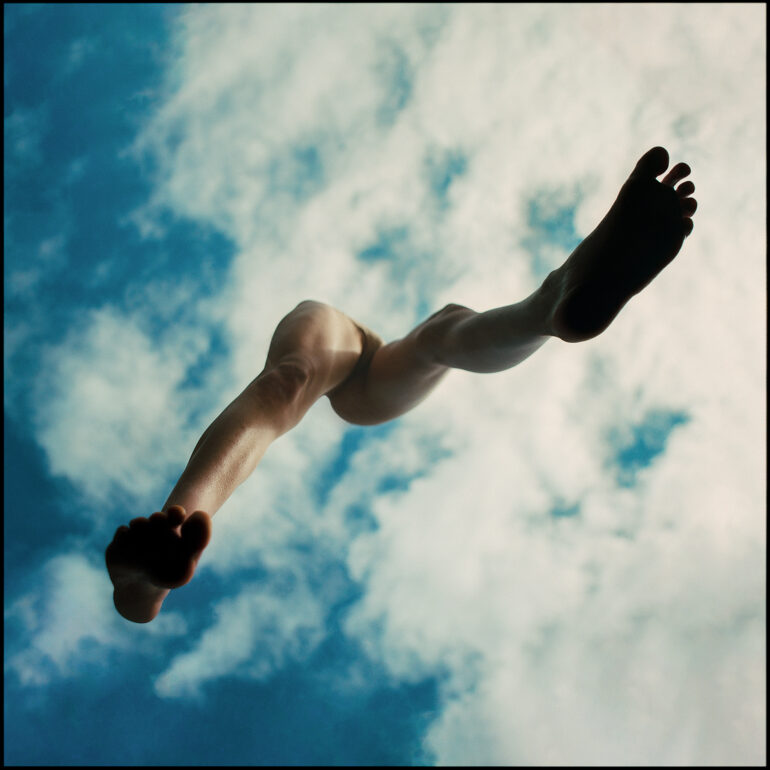
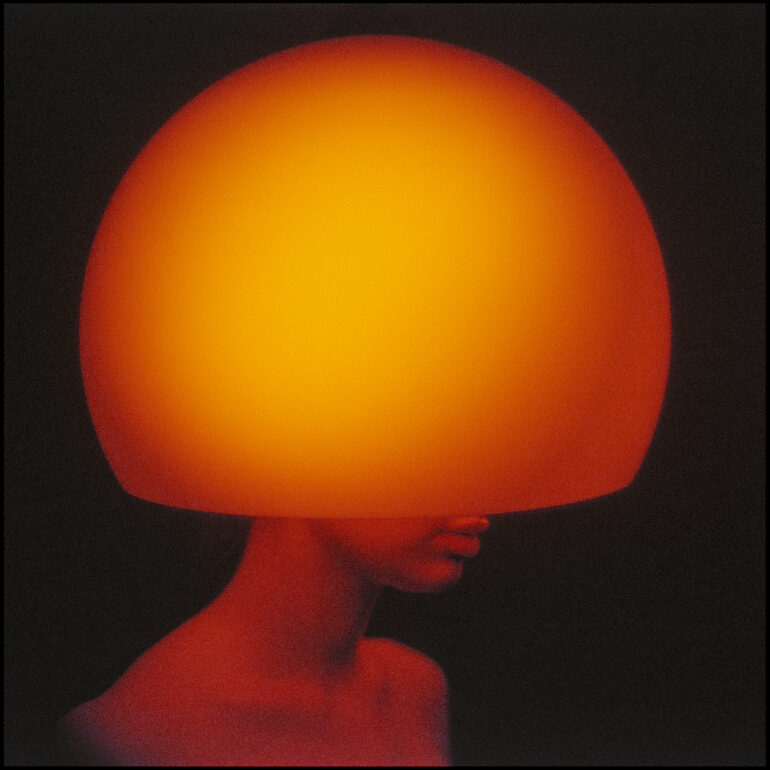
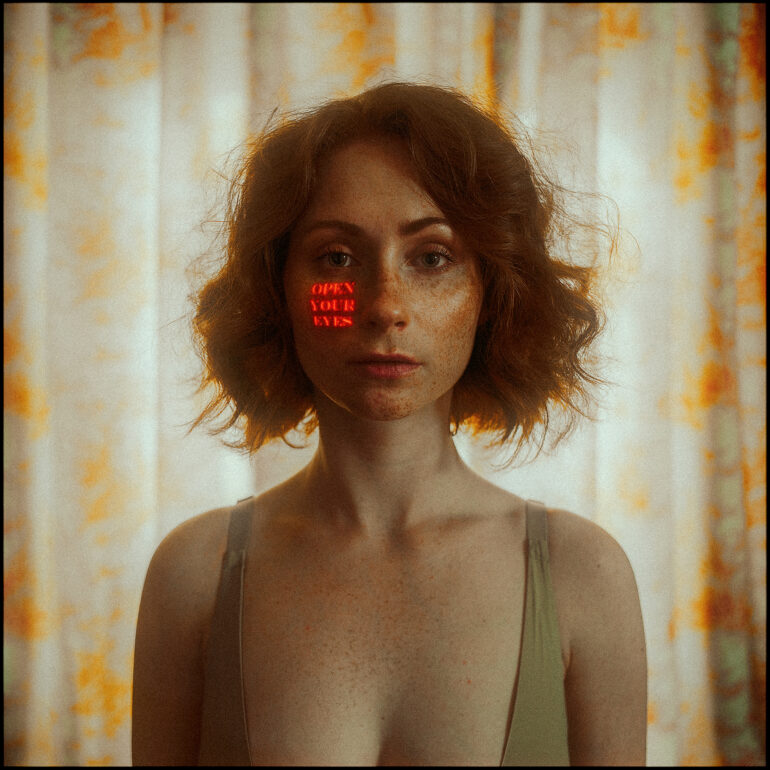
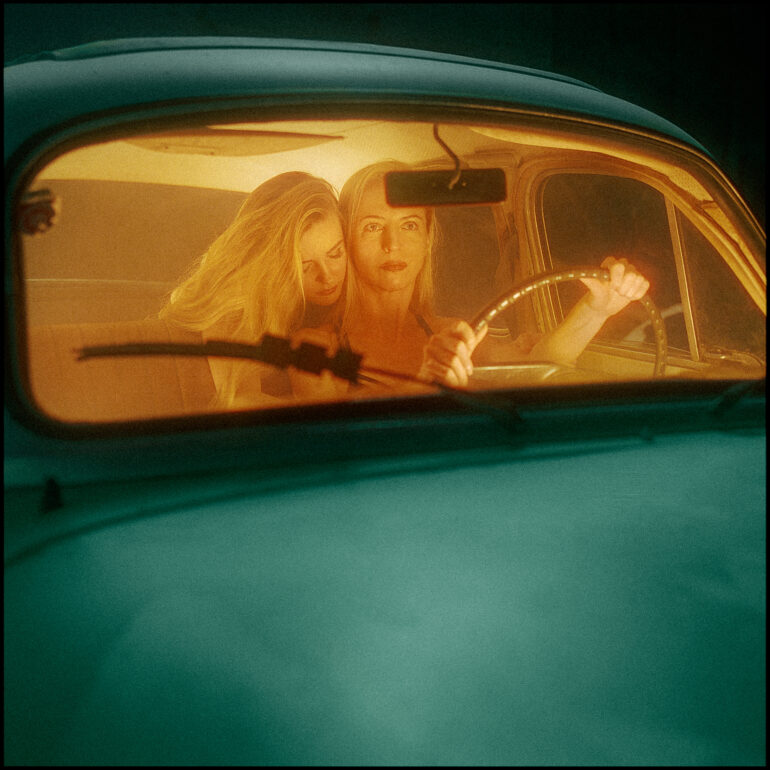
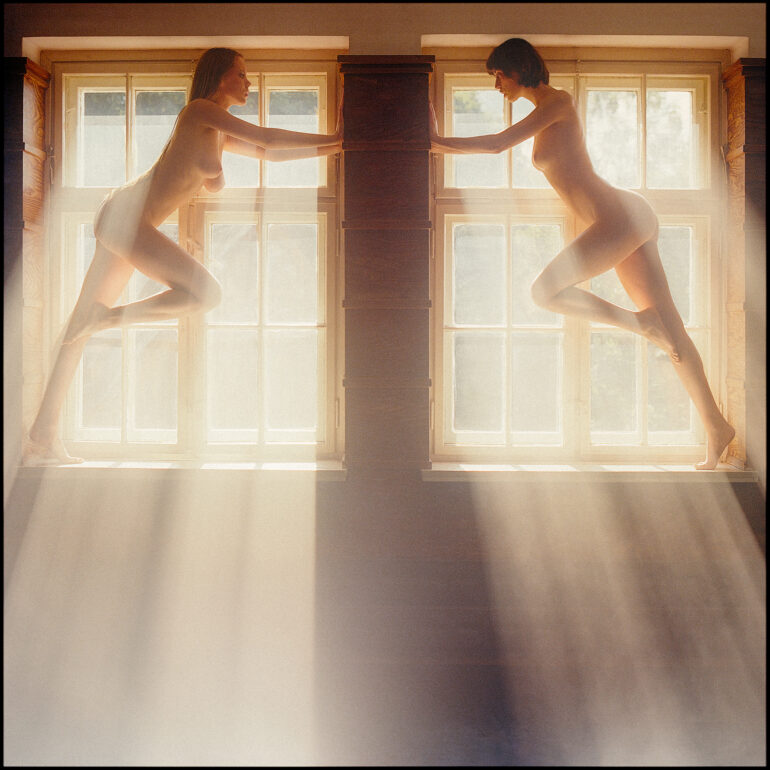
“I try to get out of my comfort zone all the time, and I get inspiration from pretty much everything – from a book I read, from a walk, from a random conversation, a mural, or maybe even more from what feelings something triggered in me and how I can tell others about it through my point of view. I am mostly inspired by places,” says photographer Lukasz Spychala to the Phoblographer in an interview. We’ve featured Lukasz before in an interview, but we’re so in love with his work and how he’s evolved as a photographer that we needed to give him the spotlight again. And when he walks around, he pays a lot of attention to his surroundings, the memories they evoke, the emotions in him, etc. This is the type of inner connectivity that so many photographers yearn for when they’re in a creative slump.

All images by Lukasz Spychala. Used with permission. Visit his website and Instagram page to see more of his workWant to have your work featured? Click here!

“My photography is a sincere journey into myself, constant research and experimentation.”

Lukasz Spychala

Lukasz, in many ways, sounds like what many photographers want to be. He strives to make new things. “Maybe it’s unrealistic these days, but I try to create something new so that I can look at myself in the mirror and call myself a true creator, not a reproducer,” he says, in words that sound all too familiar to all of us. “On the other hand, I try not to be inspired and look at the photos of others around me who are taking pictures. I believe that they can very quickly get stuck in our subconscious and make us try to reproduce them, even involuntarily.” So what does he do? He looks at the photography books of various historical photographers instead. Additionally, he takes in paintings and the mise en scene within them all.

Beyond that, he’s inspired by the models that he photographs. He feeds off of the person, their energy, how they’re affected by the location, the idea, etc.

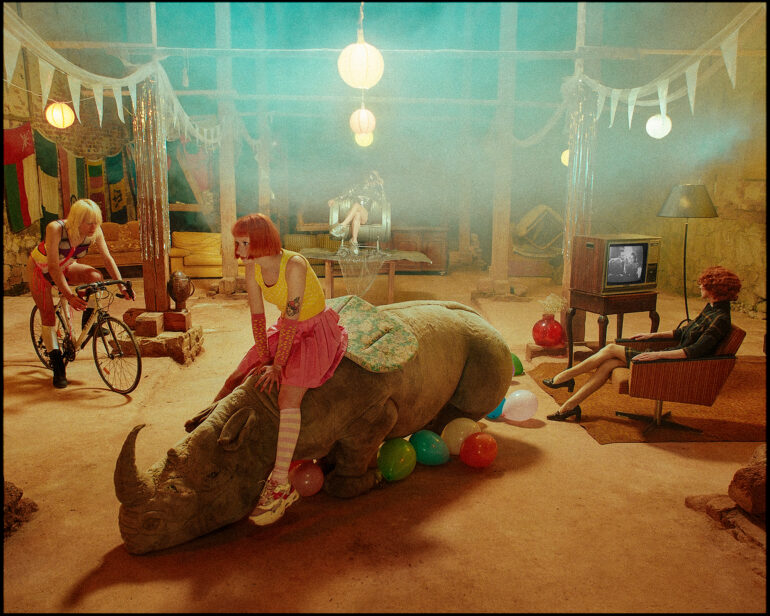
He’s constantly trying to raise the bar for himself, too. He references his “Multiverse” series as a reference to his practices here. “This series takes us on a journey through time and space, revealing the remarkable intergenerational differences that have arisen as a result of rapid technological development,” he tells us, in a very beautiful and thought-provoking way. “For this shoot, I set the scene and provided each character with his or her separate zone in which they function on a daily basis. Each actor symbolizes a different generation of people.” He continued to explain the series to us.

The woman, with curly hair, symbolizes the oldest generation that grew up without the virtual world. There is also an athlete in the photos, symbolizing the generation that has experienced both the analog and digital worlds. In addition to this figure, we also find a red-haired girl symbolizing the youngest generation that was born in the era of the digital revolution. Also appearing in the frames is a mysterious silver figure symbolizing the technology that more or less runs through each generation.

Although we all currently live at the same time, it feels as if we are functioning in completely different dimensions. The “Multiverse” series, therefore, encourages us to reflect on the impact of technology on our lives and encourages us to seek a point of balance between the real and virtual worlds.

Lukasz Spychala

There’s often a lot of work involved for Lukasz and his images. It involved stylists, lighting, set designers, etc. And he shoots analog, so it’s not like this is all done in Photoshop. He tells us that much of this can be very exhausting because of the setup, cleaning, modifications of set design, environmental conditions, etc. “When I press the shutter button, it brings me joy beyond description,” he says. “In turn, watching the developing negative gives me inner peace and a sense that I am trying to grow in my greatest passion.”

With all this said, Lukasz is a true photographer in the sense of the word. And to that end, he finds AI imagery to be just another tool. In his eyes, it’s a big paradigm shift similar to the switch from analog to digital. However, he doesn’t consider AI imagery to be real photography, and instead just a separate category of the visual arts.

So what separates him? “When photographing, I have a certain vision,” Lukasz shares. “I shape my entire photo plan tangibly with my hands or with a message to the model. For me, creating photos with AI is similar, which starts at the level of someone else’s idea.” He explains that there needs to be a creative vision first — and the the actualization of the final product is just achieved in different ways. And overall, he’s not drawn to working with AI.

Workshop participants learn how to craft wreaths with native flora

Workshop participants learn how to craft wreaths with native flora

Participants explored the art of wreath making while learning more about Hawaii Island’s native plants during a workshop Saturday in Hilo.

The Big Island Invasive Species Council and the Department of Forestry and Wildlife hosted a two-hour workshop to show people how to make wreaths with native plants while also teaching about the significance of those plants.

ADVERTISING

BIISC and DOFAW spent about four hours cutting and picking all the native plants used during the workshop from a forest on the slopes of Mauna Loa. Since the class couldn’t go to the forest together, instructors described how to identify and pick the plants correctly with a permit.

“The workshop originally started in 2015 as a way to educate people on rapid ohia death and how we can use other native plants to make a beautiful wreath for the holidays,” said Molly Murphy, invasive plant prevention coordinator with BIISC. “Before making the wreaths, we also go over different native plants, how to get a permit to pick plants, how to pick sustainably and how to enter forest with love and peace in your heart.”

After learning about the cultural importance of native plants and how to pick sustainably, participants started the creative process by cutting ti leaves and wrapping them around the wreath.

After pinning the leaves together in a circle and making a rope to hang the wreath, they then chose plants such as, uluhe, ohia ha and ama‘u, to create a design for each wreath.

Chelsea Ferrera joined her mother, Judith, for the class and was excited to make a wreath while spending quality time with her mom.

“I’ve never made a wreath before and I didn’t think I would be able to make it look this good, but these plants are perfect,” Chelsea Ferrera said. “This was really fun to do together.”

While everyone used the same plants, each wreath was unique as the creativity flowed differently from each student.

“This is always a great activity for people to learn and the holidays are a great time to do this high quality outreach and make a difference,” Murphy said. “I think people get more from learning what they can do versus what they can’t do.”

BIISC is also hosting its first series of Christmas tree planting classes next month for free, however, both classes are sold out.

According to Murphy, many invasive species have been brought to Hawaii on imported Christmas trees, so BIISC is taking the time to teach participants how to pot their own Mexican cypress as an alternative.

BIISC is consistently hosting classes, workshops and hands-on activities throughout the year to help educate the community on the importance of protecting the island from invasive species.

More information on BIISC and its programs can be found at biisc.org, or on its social media pages.

Email Kelsey Walling at kwalling@hawaiitribune-herald.com

Justus Fine Art Gallery to premier Holiday Exhibit

Justus Fine Art Gallery to premier Holiday Exhibit
The Holiday Exhibit at Justus Fine Art Gallery will feature work by a variety of artists including work by Mark Blaney, Donnie Copeland, Randall Good, Robyn Horn, gallery owner Dolores Justus, Dennis McCann, Linda Palmer, Tony Saladino, Sandra Sell, Gene Sparling, and Michael Warrick, along with introducing work by Adrian Deckbar.

Concorde’s last flight: Is this the greatest aviation photograph of all time?

Concorde’s last flight: Is this the greatest aviation photograph of all time?

November 26, 2023 at 4:59 AM

On November 26, 2003, supersonic airplane Concorde made its last flight, returning to the airfield near Bristol, in southwest England, where it’s remained since.

As this marvel of modern engineering soared over the Clifton Suspension Bridge in Bristol, a landmark of Victorian engineering based on a design by Isambard Kingdom Brunel, it created a poignant moment witnessed by cheering crowds.

High in the sky, dangling out of a helicopter and buffeted by icy winds, photographer Lewis Whyld managed to capture it on camera – an image that has become the defining shot of the golden age of faster-than-the-speed-of-sound travel.

Whyld, who now works as an aerial cameraman for CNN, reveals how he took one of the coolest airplane photos ever taken.

The photographer’s story

I remember somebody shouting: “There it is, there’s the aircraft!” I was so excited just to see it, I took a picture straight away, and then thought, “hold on, I’ve got to wait until it’s over the bridge.”

We were, I think, at about 3,000 feet, with Concorde 1,500 feet below us. I was standing on the skid outside the helicopter, freezing cold, with downdraft from the rotors blowing on me. I couldn’t feel my fingers, couldn’t feel my toes, couldn’t feel my face.

It wasn’t an easy shot. I had to lean right out of the helicopter because of the angle we were flying at. I was terrified. Terrified of the newness of being in a helicopter for only the second time in my life, terrified of messing the job up.

I was 25. I’d only recently been hired by an agency called South West News Service, which supplies images and reports from the southwest of England to national UK and international media. When the Concorde job came up, I simply put my name down for it.

The only thing my boss really said to me was just, “don’t f*** this up.”

3,000 feet in the air

Lewis Whyld in 2003, the year he photographed the Concorde. This photograph was taken on his first-ever attempt at aerial photography. He was in a plane with his friend, who was training to fly at the time. - Courtesy Lewis WhyldLewis Whyld in 2003, the year he photographed the Concorde. This photograph was taken on his first-ever attempt at aerial photography. He was in a plane with his friend, who was training to fly at the time. - Courtesy Lewis Whyld
Lewis Whyld in 2003, the year he photographed the Concorde. This photograph was taken on his first-ever attempt at aerial photography. He was in a plane with his friend, who was training to fly at the time. – Courtesy Lewis Whyld

Because we were in a helicopter, there was a lot to go wrong. Trying to line everything up in three-dimensional space was a challenge. The chances of the plane flying over the bridge at exactly the angle we needed were small.

And, of course, the plane is moving very fast.

Whereas today, you can fire your camera in a burst and get a selection of images, back then they were much slower. I only had one shot.

The plane was so white in the bright sunlight, against a dark background of foliage and the river, the contrast was huge. It would’ve been easy to overexpose Concorde and just be left with a white triangle with no detail.

Because the plane was traveling so quickly and my focus point was so small, it would’ve also been very easy to focus on something on the ground, leaving the Concorde a blurry mess.

And the helicopter was constantly moving. The pilot couldn’t hover, we had to fly in circuits – something to do with keeping the helicopter in the air.

Trying to balance those things out, you stop the aperture down so that you have more depth of field, but that lowers your shutter speed, which means you could get blur if you move the camera too quickly. There was a lot of mental arithmetic and I probably changed my camera’s settings 10 times before Concorde arrived

Capturing the moment

There was no trial and error. When it flew by, I would get one chance to take the picture.

And then it was there, banking in the sky beneath me.

I was standing on the helicopter’s skid and leaning out, pulling against the harness, over thin air and shooting the picture, just as it passed the bridge.

I didn’t realize the photograph would make that shape it does – with the cliff face, the bridge and the crowd all kind of framing the aircraft, against a relatively clean background and almost mirroring the shape of the wing.

Everyone loved Concorde, so having that human element in there meant that the picture was elevated a bit more than if it was just empty scenery behind.

Brunel’s Suspension Bridge also helped – the engineering triumphs of the 19th and 20th centuries together.

After the fly-by, we landed at Filton airfield, where Concorde had also landed. I took other photos of it being towed into its hangar with the pilot waving from the window.

Then I started to edit my images to send them back to the office.

I remember people looking over my shoulder when I brought the bridge picture up on my laptop. I really didn’t know what I had, right then. I didn’t know that it was a special picture and people would really love it. I was just thinking, “job done.”

Then people started crowding behind me. Other photographers said: “Well, what’s the point in us sending anything, because that’s the one that everyone’s going to use.”

I had no idea at the time that that would turn out to be true. It did run in all the newspapers – of course they used other shots too – but that was certainly the main one.

Some produced it as a collector’s poster. I got my mum to collect the tokens needed to send off for them. Some of the newspapers sent me bottles of champagne. I’d never known anything like it.

Enduring image

The image certainly made an impression with aviation fans.

I’ve been contacted by a few groups asking if I can help get Concorde flying again. Ironically, I thought it would be better for my photo if it didn’t ever take off again, as that would no longer be the last flight.

But it is an incredible machine. I didn’t ever get the chance to fly on it and, in fact, I’ve never actually been on it. I’ve only seen it from the outside, beneath me. That was the first and the last time that I saw it flying.

In the 20 years since 2003, I’ve taken other memorable pictures, but you’re always remembered for your greatest hits and I guess that will always be – in inverted commas – one of my “greatest hits.”

Part of that is because of the picture and part of it is because there was no other chance to do it. So no matter how good the picture is, it would always be the last picture of Concorde. I was lucky that it happened to be a good one.

I’m quite known for doing drone footage now. So, this was my first aerial picture and from then I’ve coincidentally made a bit of a career niche out of a doing aerial pictures and using drones.

Even with advances in technology, if we went back and did that Concorde shot again we’d have to use a helicopter. A drone wouldn’t be permitted to hover over the airplane and take pictures.

So we would still do it the same way, but we’d have better cameras and I would come back with a burst of pictures that we could choose from, rather than just one.

But in some ways, I am quite glad the technology was as it was – because there is just one photo. We’re a bit spoiled now and having more than one version of an image can water down its power.

Changing technology

Concorde Alpha Foxtrot, the aircraft photographed by Whyld, is now on display at Aerospace Bristol. - Suzanne Plunkett/CNNConcorde Alpha Foxtrot, the aircraft photographed by Whyld, is now on display at Aerospace Bristol. - Suzanne Plunkett/CNN
Concorde Alpha Foxtrot, the aircraft photographed by Whyld, is now on display at Aerospace Bristol. – Suzanne Plunkett/CNN

Interestingly, although camera technology has moved on, aircraft technology in a lot of ways hasn’t. Back then you could get to New York in three and a half hours. Sure, we have bigger aircraft – the A380 for example – but in terms of raw speed, Concorde’s still the pinnacle of aviation.

The photo represents the end of an aviation era – and nothing’s come along to replace it, certainly nothing’s grabbed the public’s imagination like Concorde. I think part of the reason the picture still resonates today is due to that enduring affection we all have for that bygone era of travel.

There are always rumors of new supersonic aircraft in the works, and I enjoy tracking the updates, but nothing seems concrete yet. I’d love supersonic travel to come back in a greener, more modern form – to shorten distances across the globe and make the world an easier place to traverse.

Plus, it would just be a mark of human ingenuity to see something like that back in the skies, which would be great from a geeky standpoint. But while I’m keeping an eye out, I’m yet to see anything close to realization.

If I were to take the photo today, I would have also much higher resolution camera, so I would be able to take a wider picture that we could then crop to different compositions. At the time I used a relatively long lens and it’s really the full frame that you see, that is the best way to get the highest resolution possible out of the picture.

Now we could afford to use a wider lens and still get a high-resolution picture if we needed to zoom in afterwards, but at that time we didn’t have that.

The general consensus at the time was to shoot the shot on a wide lens, and be as close to the aircraft as you possibly could. But then that would obviously mean the bridge would be tiny in the background, and you wouldn’t get the same kind of effect. I gambled on the long lens and it was only later, as a I gained more experience, that I realized that was a quite a risky thing to do. It means you’re shooting in a narrow space. As it was, everything lined up, everything worked out – but generally speaking those things don’t tend to line up so perfectly.

I was very gung ho and confident back then – knew what I wanted and figured there was no reason why it wouldn’t work out. I guess you get a bit more jaded or realistic as life goes on. But I’d like to think that today I would still take that risk and try and take the ultimate photo, rather than trying to play safe and getting something that people don’t really remember.

Twenty years on, there are postcards of my photograph and posters – there’s even a cross-stitch. In the early years, people would gift me that kind of thing all the time. I think I have at least one jigsaw somewhere in my house. I’ve been approached to do a limited-edition print run.

With modern technology, in terms of editing, we could make a better print of the photo than ever before. We can’t change the camera it was taken on, but we can change the way that we edit it and the details that we draw out.

I still have the digital negatives, so we can we can always go back to the raw file and take it into the digital darkroom – and then run it through the incredible modern technology that we’ve got today to extract details that we couldn’t previously.

There are methods to increase the resolution, make old photos high quality, get more detail – especially with AI. But I don’t want to change the nature or the reality of the picture. I don’t want to manipulate it any way.

Incredible opportunity

Lewis Whyld in 2017, photographing in the Arctic for a CNN project highlighting the impact of global warming. - Courtesy Lewis WhyldLewis Whyld in 2017, photographing in the Arctic for a CNN project highlighting the impact of global warming. - Courtesy Lewis Whyld
Lewis Whyld in 2017, photographing in the Arctic for a CNN project highlighting the impact of global warming. – Courtesy Lewis Whyld

Looking back, I was surprised actually, that the final flight of Concorde would be this small hop from London to Bristol, but it was a chance for our photo agency to punch above our weight, to compete with international photojournalists from New York and London.

It was a fantastic chance to take a great image on a story that wasn’t really political, wasn’t terrible, wasn’t a disaster or anything like that.

In a way, I’m pleased that one of my enduring images is of something that’s celebratory, rather than depressing or a disaster, like all the hurricanes and typhoons I’ve been to, all the war zones and riots. There’s something uplifting about the Concorde photo.

In the years since the final flight, I moved on from Bristol to London. I worked for the UK’s Press Association and The Telegraph newspaper before eventually moving to CNN to shoot aerial footage, videos and drone footage. I was a part of the CNN team covering the Ukraine war which won an Emmy earlier this year.

The Concorde shot was always the springboard for my career. It’s where it kind of all started. After that people knew my pictures and offered me jobs. It oiled the wheels, moving my career forward.

I didn’t expect that to happen when I took the photo, but I’m grateful for it.

This article was originally published on November 26, 2018. It was updated and republished on November 26, 2023.

For more CNN news and newsletters create an account at CNN.com

Seven incredible places to learn about Native American culture

Seven incredible places to learn about Native American culture

Between AD 850 and 1250, New Mexico’s ancient Puebloan communities would come together among the vast desert dunes of Chaco Canyon, to share their traditions and knowledge. Their descendants, the Chacoan people, were known for their incredibly complex and well-organised ways of life  from monumental architecture to far-reaching trade channels – and this incredible know-how is still evident in the structures seen at Chaco Culture National Historical Park today. Clans are said to have gathered in multi-story ‘Great Houses’, containing hundreds of rooms – that are thought to have taken decades, even centuries, to build – to hold ceremonies and celebrations. In fact, Chaco culture is thought to be at the core of several Navajo ways of life today.

Tourism is especially important to Chaco because it’s surrounded by one of the most productive gas and oil basins in the US. Increasing interest from fossil fuel companies to drill new wells in the area has the potential to destroy these sacred lands of present-day Navajo and Pueblo tribes. Therefore, a visit to Chaco Culture National Historical Park is more important than ever, as it shows the government that Indigenous land can still be lucrative for the state, without selling out to fossil fuel giants. Within the park, ranger-led, accessible tours share the history of archaeological discoveries. Alternatively, four backcountry hiking trails (Wijiji, South Mesa, Pueblo Alto, and Peñasco Blanco) will take you past some of the most significant cultural aspects of Chaco. The shortest, Wijiji Trail is a three-mile round-trip and well worth the time. Stop by the visitor’s centre to find out what’s open (weather-permitting). In 2013, Chaco received International Dark Sky designation, making it one of the most remarkable regions in the world to see the Milky Way in all its glory.

Somerset photographer’s gannet picture highly-commended

Somerset photographer’s gannet picture highly-commended

Copyright 2023 BBC. All rights reserved.  The BBC is not responsible for the content of external sites. Read about our approach to external linking.

Beta Terms By using the Beta Site, you agree that such use is at your own risk and you know that the Beta Site may include known or unknown bugs or errors, that we have no obligation to make this Beta Site available with or without charge for any period of time, nor to make it available at all, and that nothing in these Beta Terms or your use of the Beta Site creates any employment relationship between you and us. The Beta Site is provided on an “as is” and “as available” basis and we make no warranty to you of any kind, express or implied.

In case of conflict between these Beta Terms and the BBC Terms of Use these Beta Terms shall prevail.

Small businesses featured in South Bend Holiday Market

Small businesses featured in South Bend Holiday Market

The holiday season was in full swing in South Bend this weekend with the Holiday Market on Small Business Saturday.

Shoppers were able to walk through rows of pottery, ceramics, art, clothing and candles.

Many of the purchases made at the event went right back to businesses in the area.

Event organizers say they are proud to see the community come together to make the event happen.

Special Events Coordinator Demetrius Kennedy said, “It’s great to see the city coming together and pushing for all the businesses that are in this area, you know. That’s how we grow as a city. That’s how we grow as a community, but putting that support in one room and it just keeps on growing.”

Organizers say the event shows the importance of having dreams, and that if you have passion and work hard you can make a living out of what you love.