
The artist restores depth and interiority to the caricatures of racism.
Betye Saar Reassembles the Lives of Black Women


The sun-drenched lab on the fourth floor of Susquehanna
Hall is anchored by a large wooden table that will host projects and
events from feasts and crafting workshops to a speaker series—all
centered on Indigenous knowledge. The room features colorful art, a
weaving loom, crafting supplies and bundles of tobacco, sage and
sweetgrass.
“In this lab, we’re here to use our privilege and access to
honor and serve local Indigenous communities in their struggles for
justice and to co-create futures of flourishing,” said Meissner, who is
also Cupeño. “That requires tools to build community and have
conversations.”
Though Meissner’s ancestors are from California, she was
raised in New Mexico and Arizona after her family moved to work for the
U.S. Bureau of Indian Affairs. She received her Ph.D. from Michigan
State in 2019 and then moved to Washington, D.C. to teach at Georgetown
University. After spending her life among Indigenous
communities—primarily Diné and Pueblo in the Southwest and Anishinaabe
in the Great Lakes, as well as her Luiseño and Cupeño family members—she
said she was surprised to find a “profound absence of Indigenous
voices” in the national capital region.
“I started thinking about how I could start lifting up the
voices of people whose land this is,” she said. “I drafted an
initiative, a strategic plan for a lab, and started talking about it to
anyone who would listen.”
Meissner was recruited to the university this year as part
of UMD’s FAMILE initiative, a $40 million investment to help attract
tenure-track faculty from diverse backgrounds. She will begin teaching
classes next semester in Indigenous feminisms and Indigenous aesthetics.
Neda Atanasoski, professor and chair of the Harriet Tubman
Department of Women, Gender, and Sexuality Studies, said the department
was immediately drawn to the idea of creating the lab.
“It’s essential that we’re really paying attention to how
the work that we do can affect for the better not just the lives of our
students but also beyond—into the community,” Atanasoski said. “What’s
so exciting about the lab is that it can be this kind of hub for
bridging Indigenous community activism with students and faculty.
Hopefully, this is just the beginning of a more robust Indigenous
studies presence on campus.”
Indigenous research and evaluation practices often counter
Western approaches. For instance, methods like storytelling, ceremonies
or art creation are used to ground research in tribal knowledge and
worldviews. When knowledge is offered, such as from an elder, it’s
common practice for researchers to offer traditional medicines in
exchange.

From left, UMD students Nelly Cooley, Eva Stavisky, Briajah Blackwell and Anika Reddy, Britney Bibeault and Xandie Iti Luskabi look for inspiration for their beaded projects at the Indigenous Futures Lab.
Meissner was recently recognized by the National Science
Foundation (NSF) as an Ocean Decade Champion for her work with
Indigenous communities in the Great Lakes region, where she has focused
on water rights, dam removal and more. For instance, she and her team
developed novel ways to evaluate an NSF project to monitor wild rice ecosystems that takes into account the land, animals, plants and other “relatives.”
Last month, 20 students, faculty members and staff showed
up for the Indigenous Futures Lab’s first workshop in a “Bead, Weave and
Read” series. Meissner said she was heartened by the group’s openness
to learn the tradition of beadwork, and even more so their willingness
to talk—about crafting, creativity and honoring their family members and
friends through their pieces. Meissner comes from a family of basket
weavers.
“We often say that when you hold a single basket made in an
Indigenous community, you’re holding something that overheard so much
storytelling—so much knowledge,” she said. “That’s what I want to create
here.”
Other ongoing events in the lab include a “Decolonizing Death Café”
to build community around Indigenous death and grieving practices, a
faculty consortium to explore “Black and Indigenous Environmental
Futures,” and a speaker series.


British photographer Alastair Philip Wiper talks Dezeen through eight images from his latest book, Building Stories, including a spooky skiing resort, nuclear missile control centre and Steve Jobs’ childhood home.
Published by the Danish Architectural Press, Building Stories is filled with photographs that contrast with typical architecture imagery.
Wiper‘s aim is to “bring viewers into a fantasy world where their interpretation of the buildings escapes reality”.
“My photography is not about how people interact with architecture, how it blends with the landscape, or how the architect wanted it to look. It’s about stories and fantasies,” the Copenhagen-based photographer told Dezeen.
“I want people to make up their own stories”
As the follow-up to Unintended Beauty, a book that focused on industrial buildings such as factories and power stations, Building Stories features a far more diverse mix of buildings.
Famous works of architecture sit alongside forgotten or ubiquitous structures and spaces.
“I want people to make up their own stories,” Wiper said.
“The pictures might seem completely random – there are nuclear bunkers, car parks and a dead Albanian dictator’s toilet – but I’ve thought carefully about the order. I hope people will wonder what they have to do with each other.”
In a Dezeen exclusive, Wiper reveals the thinking behind eight key photos:

“Apple-2” House used in Atomic Bomb Test at the Nevada National Security Site, Nevada, USA
“This is an iconic building in the nuclear world,” said Wiper.
“Meant to represent an average American house, it is one of the buildings used to test atomic bombs in the 1950s. Now it is a national landmark,” he continued.
“It could be just a ruined house in the middle of nowhere, yet it is so much more – it represents the atomic age.”

Chalet l’Ours II, Avoriaz, France
“I lived in this skiing resort when I was in my early 20s and was fascinated by the architecture,” said Wiper.
“The buildings reminded me of an old horror film from the 1930s. I decided to capture the buildings in the way I saw them in my imagination and emphasise their spooky, cinematic nature.”

The Danish National Archives (Landsarkivet), Copenhagen, Denmark
“The space used to contain the National Archives of Denmark but has now been stripped for redevelopment into apartments and shops,” Wiper said.
“There was so much atmosphere but it was totally dark. I wanted to elevate it, rather than make it look like ruin porn, so I worked with lights and coloured gels. It was like having a playground to myself.”

Silver Legacy Resort Casino, Reno, Nevada, USA
“Because Reno isn’t as obvious as Vegas, that made it more interesting for me to photograph,” Wiper said.
“The hotel where I stayed didn’t look that interesting by day, but at night they lit it up with this garish green light. By capturing it when the sun had just gone down, I could bring out the purple colours in the sky and create this contrast.”
“I found it really futuristic in a retro way, like what people in the 60s thought buildings on the moon would look like in 100 years’ time.”

Underground Nuclear Fallout Shelter, Las Vegas, Nevada, USA
“This is a bunker built by an eccentric billionaire called Jerry Hendersen, a proponent of living underground full-time,” Wiper explained.
“It is built like a real house, but it’s underground and it’s massive. Jerry lived here for five years with his wife Mary until he died in the early 80s. About 10 years ago, it was bought by an organisation called The Church of Perpetual Life, which promotes cryonic preservation.”

Steve Jobs’ Childhood Home, Los Altos, California, USA
“In 1976, together with Steve Wozniak, Steve Jobs built the first 50 Apple 1 computers in this Silicon Valley garage,” Wiper explained.
“I was interested in the contrast between this very normal suburban house and what Apple grew into. The house is on a completely normal street; you would never know that there was something special about it if it wasn’t for the signs saying ‘no trespassing’.”

Launch Control Centre of Titan II Nuclear Missile, Arizona, USA, 2022
“This decommissioned silo, complete with a disarmed intercontinental ballistic missile, is where World War Three could have started,” said Wiper.
“The Titan II nuclear intercontinental ballistic missile carried the most powerful nuclear warhead ever built by the United States. At nine megatons, it was about 600 times more powerful than the bomb dropped on Hiroshima.”
“It was crazy to think that, if the two people sitting here had received an order with some codes, it would have meant the end of the world as they knew it.”

Vitra Schaudepot, Weil am Rhein, Germany
“This building by Herzog & de Meuron is one of the best-known works of architecture in the book,” said Wiper.
“I wanted to give it another twist, an element of the unknown. What is this weird brick building? What is going on behind the door? Is the black sky real?”
“The idea was to remove it from its context so that the viewer has more questions than answers.”


Communiqué officiel de UNIVERSAL MUSIC GROUP N.V.
Addis Abeba – Universal Music Group (UMG), the world leader in music-based entertainment, and Sewasew Multimedia, Ethiopia’s leading music and Entertainment Company, today announced that they have signed the first of its kind distribution agreement for the Ethiopian market.
Under the terms of the agreement, Sewasew Multimedia will be responsible for the digital distribution and marketing of UMG’s extensive catalog of music in Ethiopia. This includes music from UMG’s globally recognized labels, such as Def Jam, Interscope Records, Island Records, Motown Records, Republic Records, and Virgin Records, as well as music from their African divisions, such as Def Jam Africa, Motown Gospel Africa, and Republic Records Africa.
Sewasew Multimedia said the Download Service Provider (DSP) agreement between UMG and Sewasew Multimedia is a significant development for the Ethiopian music industry. It will provide Ethiopian consumers with access to a wider range of music than ever before, and supercharge the reach of Ethiopian artists, bringing their music to a global audience.
“We are excited to partner with Sewasew Multimedia to bring UMG’s music to the Ethiopian market,” said Ulrik Cahn EVP Africa, Middle East and Asia. “UMG has a long and successful presence in Africa, and given Ethiopia’s rich and vibrant music culture, we are excited to work with Sewasew Multimedia to help grow the Ethiopian music industry to its full potential.”
Abraham F., Managing Director, Sewasew Multimedia, on his part said “We are thrilled to partner with UMG, the world leader in music-based entertainment to bring their extensive catalogue of music to the Ethiopian market. This partnership is a testament to Ethiopia’s growing importance in the global music industry, and we are confident that it will be a success for both companies.”
Sub-Saharan Africa was the fastest growing region in 2022 with recorded revenue growth of 34.7%. The agreement is a demonstration of UMG’s commitment to the region, and its wider strategy to increase its presence and accelerate its growth in high potential music markets around the world, according to a media statement from Sewasew Multimedia.
Copyright 2023 Addis Standard. All rights reserved. Distributed by AllAfrica Global Media (allAfrica.com)., source News Service English

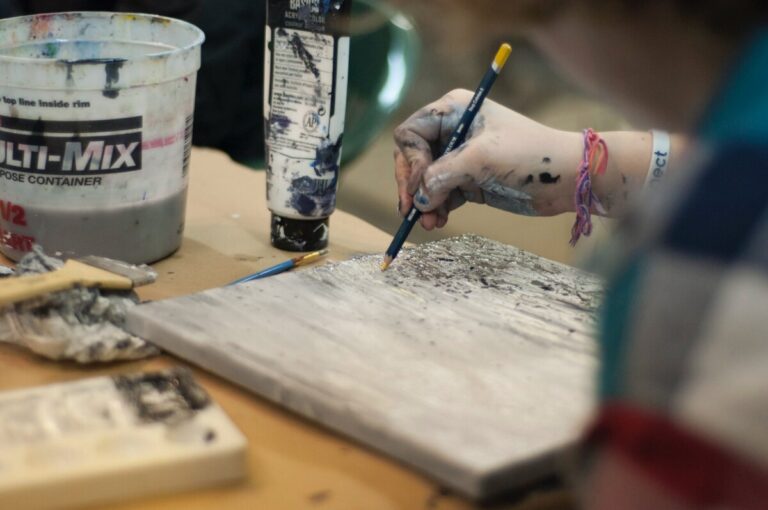
The International Body of Art (IBA), which helps underrepresented artists launch their careers through its public exhibitions programme, has launched a platform to enable funders to sponsor and connect with emerging artists.
It follows research from the IBA that shows that 26% of artists have had to abandon their careers in the arts due to limited financial prospects, and 29% of ethnic minority artists have seen their white peers’ careers progress further than theirs. The research also found that 35% of ethnic minority artists have had to abandon a career in the arts due to having limited financial backing.
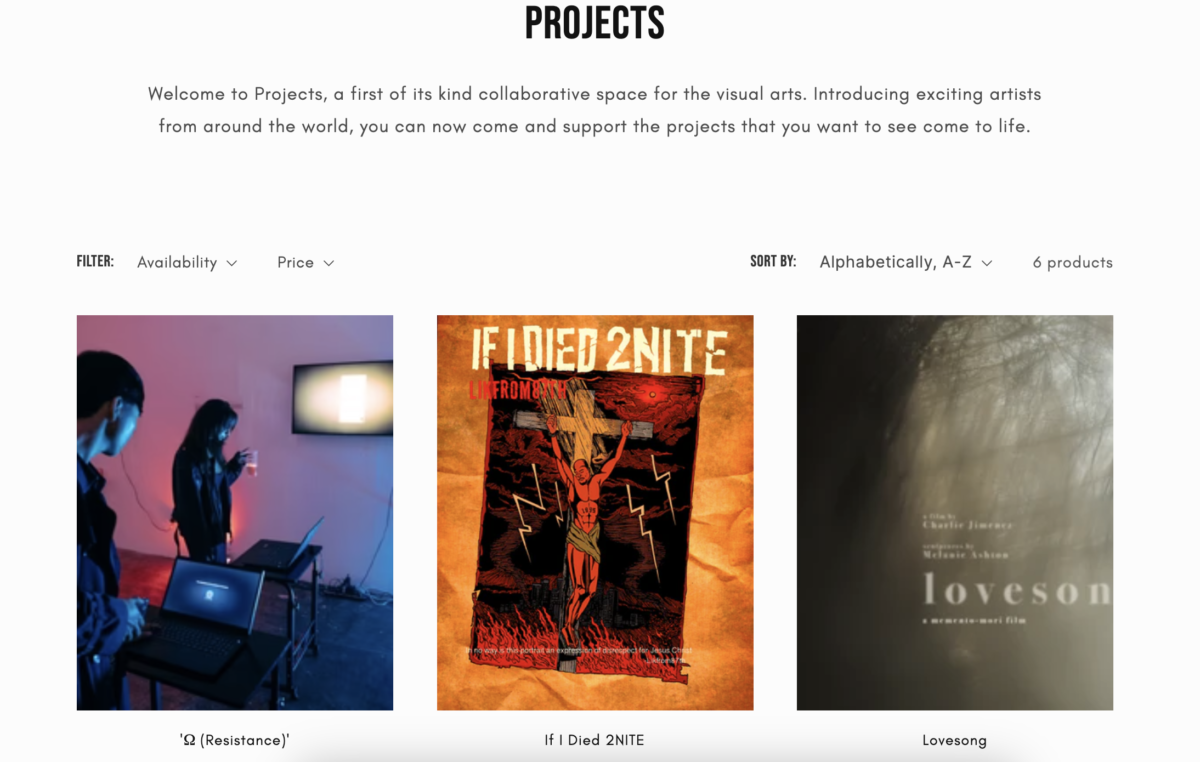
The platform is called ‘Projects‘, and to contribute to a project there are various options of different values, ranging from £5 to £1100. With each contribution, there are different ‘rewards’. These can range from a signed ‘thank you’ note, to private premier invitations, 1-on-1 Q&A calls, or even an extended meditation session with an artist.

The rewards have been created by the artists themselves, with each one tailored to their project. ‘Projects’ aims to allow early-stage art collectors to connect with promising emerging artists to break down the barriers to entry for both artists and art enthusiasts.
April Kelly, IBA’s project manager said:
“In our artist support and exhibition curation, we always ensured that artists felt that they could be experimental, that they could take risks, and that they could be supported in creating honest, passionate, and personal works. After an early exhibition, we experienced artists thanking us for giving them this freedom – it was then that we realised how profound the problems of the art world are.
“Its rigidity does not simply affect access, but it continues to dictate from within the work of artists. The traditional market almost forces artists to keep making the same works that are instantly sellable and recognisable, so it doesn’t actually allow any room for innovation. That’s what we want to be here for.”
IBA CEO Maria Artool commented:
“What truly sets IBA’s Projects platform apart is its focus on community. It’s not just about funding projects for the sake of it; it’s about becoming part of an extraordinarily diverse, open-minded, international, and innovative community that thinks outside the box and challenges barriers.
“While individual projects offer their own set of rewards that align with their artistic goals, the platform as a whole provides a space for art lovers and enthusiasts to actively shape the future of the art world. By selecting which projects should receive funding and be brought to life, backers are invited to play a unique role in defining the future of art. They become an integral part of the artistic process, which is a structure that is the first of its kind in the industry.”






