
The project will see a number of life-sized ox sculptures form part of an art trail next summer.
Oxford hospice’s last call for ox art trail support


The generally diplomatic British art collector and businessman Chris Ingram, 80, sees no reason to hold back his views on some fellow art-buyers. “The biggest change in the market has been the number of billionaire so-called collectors who are buying art, putting it into freeports and not even looking at it,” he declares over lunch in London.
A major collector of Modern British art since selling his media-buying business two decades ago, Ingram’s credo is clear. “I like the collection to be seen,” he says. It’s not just warm words: in the past financial year, 73 per cent of the 400-plus works in the core collection were on public display, while the contemporary and outsider-art collection of nearly 200 works also travels widely. Since he suffered a stroke in 2016, limiting movement on his right-hand side, art has offered Ingram a distinct motivation. “In a way, it’s kept me going,” he says.
Unlike many of his collector counterparts, he says he was never tempted to have a private museum for his holdings. “People would have to go there, to one place, whereas I’m sending art out to them,” he says.
As a result, Ingram’s works have adorned some surprising venues recently, ranging from The Clink prisoner rehabilitation restaurants at HMPs Styal and High Down to the Scottish National Gallery of Modern Art’s Barbara Hepworth retrospective last year. Works from the Ingram Collection are also frequently on display at The Lightbox gallery and museum in Woking, the Surrey suburban town where Ingram grew up, and an institution that he has long supported.
Ingram notes that as well as skewing the display of art, the new money in the market has also “upset its value”. There is, he says, “no difference to these buyers, whether they get something at say £60,000 or £80,000, so the rest of us fall back” when bidding. The impact, it must be said, is not all bad news for Ingram, whose first purchases of Modern British art were made when prices reflected the category’s unfashionable status.
He is reluctant to give the current value for the whole collection, as it isn’t for sale, preferring to focus on what it does, though a trustees’ report put it at more than £10mn in 2021. He is prepared to highlight some individual pieces whose values have grown over time. In 2002, Ingram bought a 1965 Hepworth oil and pencil work for £14,000, now valued for insurance at £180,000. In the same year, he purchased an Elisabeth Frink Riace warrior sculpture for £40,000, and notes that a work from the same series, “Riace II” (1986), sold publicly for £230,000 in 2008. Work by Frink, who runs deep in the Ingram Collection, has since made more than £1mn at auction.

Ingram is not a straightforward interviewee — he keeps me on my toes by frequently answering questions with a follow-up question or two. It seems part of his inbuilt instinct to challenge the status quo. Curator and art adviser Jo Baring, who is director of the Ingram Collection, recalls that in the early days, “I would often tell Chris that ‘in the art world, we work like this’ and he would answer, ‘Well, why?’”
It perhaps explains why he seems just as comfortable branching out from Modern British and into the contemporary realm. “Supporting the current generation is a natural adjustment,” he says. He sees his role as partly educational in a world unfamiliar with business practices. Already a regular at degree shows, Ingram noticed how uncomfortable young artists were when it came to selling their works. “Many didn’t know how to invoice me,” he says.
This observation contributed to the thinking behind the Ingram prize, a free-to-enter competition for UK-educated artists at the start of their careers, launched in 2016; its 32 shortlisted artists are on view this week at Cromwell Place. The shortlisted works are in a range of media: as well as paintings, there are films, sculptures and installations with materials that include recycled sari silk and St John’s wort seeds.

Winners’ work is bought for the Ingram Collection while all of the shortlisted artists are offered ongoing support, including a professional development day that covers areas such as copyrighting, applying for residencies and, of course, invoicing. The prize, whose previous winners include Sin Wai Kin (nominated for last year’s Turner Prize), had its highest number of entries this year, Baring says.
Also this month, works from the Ingram Collection are on loan to venues ranging from Woking coroner’s court — 16 works including a 1990 lithograph by Elisabeth Frink — to Brasenose College, Oxford — 24 pieces, including David Hockney’s etching and aquatint “My Bonnie Lies Over the Ocean” (1962). The collection has joined forces with the Women’s Art Collection for the exhibition Women & Water, featuring work by artists including Frink and Tracey Emin (Murray Edwards College, Cambridge, until February 25). Ingram and Baring are still buying, including opportunities that fill any gaps in the Modern British holdings. The future of his collection is squarely with the nation, Ingram says. “There’s nothing for my children and grandchildren to fight over,” he semi-jokes.

He is conscious that it isn’t just artists who need support now. “It is very saddening that councils are pulling out of local museums,” he says. The Lightbox is one of the latest to face an uncertain future as Woking borough council has proposed stopping all funding for arts and culture as part of a £12mn cut to local services. Ingram confesses he is “confused” by the UK government’s policy towards culture, including severe cuts in London, but lays some of the responsibility at the foot of private individuals. He questions once again: “Where are all the others who could make sure their collections are seen by all and sundry?”
The Ingram Prize is on view at London’s Cromwell Place, November 22-26, ingramcollection.com

The overlords of the photo industry are finally starting to listen to the photographers in the field. Aesthetics and soul are desperately missing from modern cameras — but film is here to help with that. In 2023, we reviewed a whole slew of film photography products. So here are the 5 best gifts for film photographers that we think they’ll love.
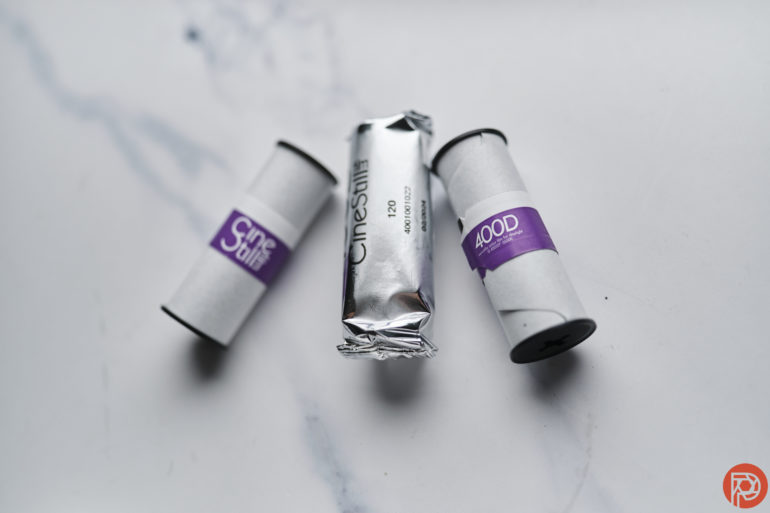
We gave CineStill 400D an Editor’s Choice award in our review. And more or less, the company gave photographers exactly what they wanted. This is a cinema film balanced to daylight and available at a faster ISO than their previous 50D. Essentially, it’s the daylight version of 500T — and that also means that it can be a suitable replacement for so many other C41 films on the market. Available in 35mm and 120 (which most photographers shoot with), this film has a unique look thanks in part to the remjet layer of the film being removed. So you’ll get red halation around point light sources.
These specs are taken from CineStill’s website:
CineStill 400Dynamic is a fine grain daylight balanced color negative film that delivers a soft color palette with natural saturation and rich, warm skin tones. The film has a wide dynamic range with a base sensitivity of ISO 400, but can be rated from 200 to 800 and pushed up to 3200. This makes the film highly versatile, usable both indoors or in the studio, under virtually any lighting conditions.
400D was specifically designed for still photography to be processed in C-41 chemistry by any photo lab or at home. In addition, it also features a process-surviving anti-static lubricant coating ideal for both manual SLRs and automatic winding cameras. This film continues CineStill’s ongoing tradition of cinematic film emulsions made for still photographers, allowing them to maximize their creativity and produce remarkable images that express who they are as artists.
RECOMMENDED ACCEPTABLE EXPOSURE FOR PUSH PROCESSING:
No push – EI 200-800
1 stop push – EI 400-1000
2 stop push – EI 800-1600
3 stop push – EI 1000-2000
Storage and Handling: Load and unload film in subdued light. Store unexposed film in a refrigerator at 13°C (55°F) or lower in the original sealed package. To avoid moisture condensation on film that has been refrigerated, allow the film to warm up to room temperature before opening the package. Process film as soon as possible after exposure. Protect processed film from strong light, and store it in a cool, dry place.
A
Expiration: Film is a perishable good. For best results, expose and process the film within the stated expiration date. Exposed film should be processed promptly in C-41 chemistry to preserve latent image latitude and color fidelity. All current productions of CineStill have expiration dates for two years from manufacture date on the box.
In our review, we state:



The CineStill 400D hype is real! This is a gorgeous film that will remind you of lots of the movies and television shows you’ve seen. It absolutely stands on its own apart from 500T and 50D. Where 50D is always kind of difficult to use, 400D is more versatile. This, coupled with 500T, should be the mainstay of your camera bag in lots of situations, along with Kodak Portra 800.
While Cinestill is a great option, there are lots of others on the camera and film market. And best of all, they’re not super expensive. If you truly love the film photographer in your life, then you’ll get them more film. Just kidding — you’ll actually console their soul that film isn’t dead. But surely, these products can help.
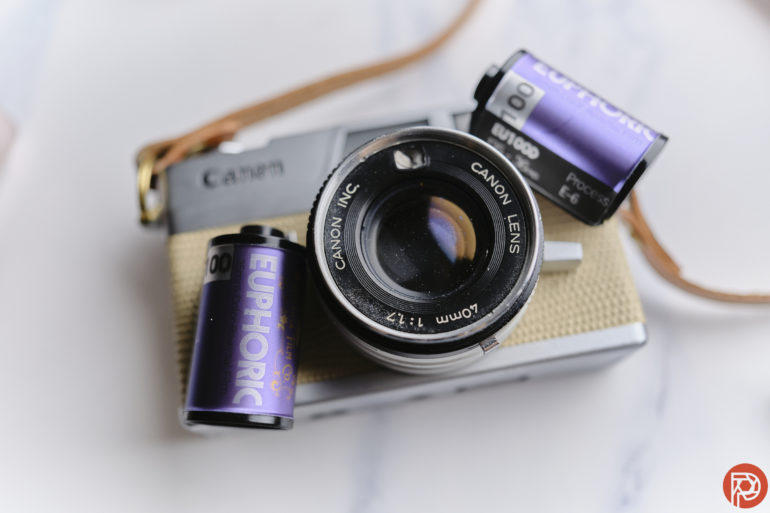
In our review, we state:
This is a film I think some photographers might scoff at. I mean, where are those tones and the beautiful skin render you see so much of on Reddit, Instagram, and Tumblr? Well, if you develop with E6, you’ll get a more standard image. However, other photographers might like it. Folks who care more about the moment captured will adore this film, the fact it’s affordable, and that it offers a unique look. The modern film world is the Wild West though, and these folks are either a niche within a niche or they’re everywhere. And unfortunately, you can never completely figure it out.

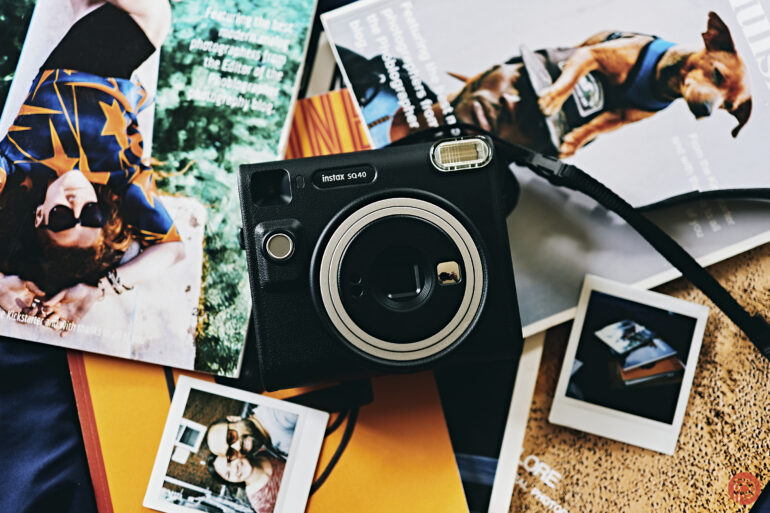
In our review we state:
If we’re talking about pure image quality, the Fujifilm Instax SQ40 doesn’t have a glass lens like the Lomography Lomo’Instant Square does. It also doesn’t have interchangeable lenses like the Nons SL660. But it’s also far simpler to use than all of them. While Lomography takes inspiration from vintage Kodak cameras with its folding design and glass lens, the Fujifilm Instax SQ40 keeps it simple. When you’re in the moment, you truly just want the camera to get out of the way of making a better picture. That’s when the Fujifilm Instax SQ40 will serve you best.
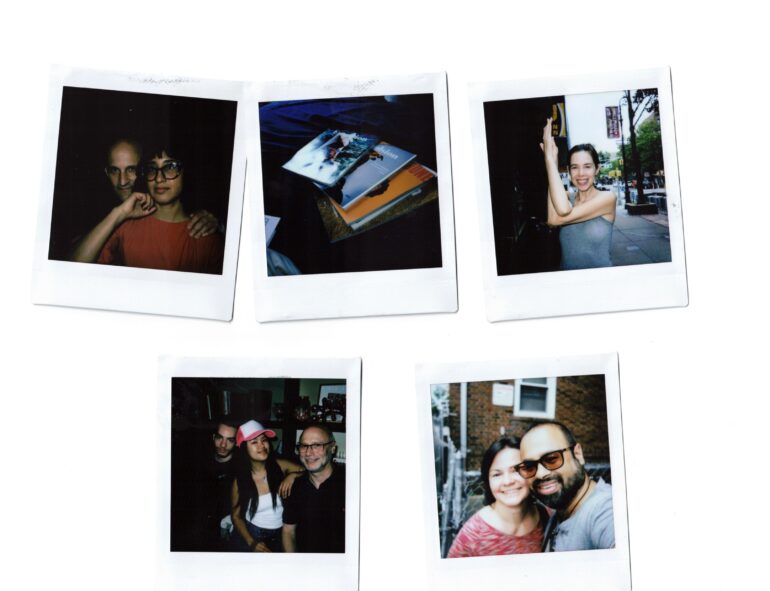
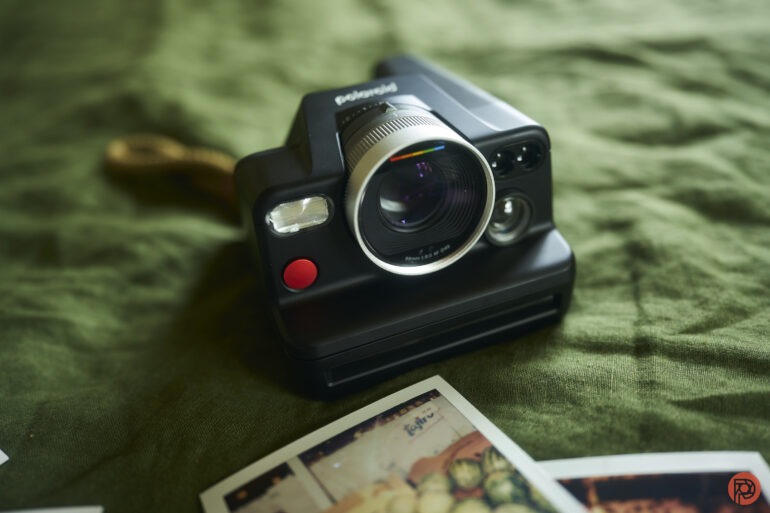
In our review, we state:
I like my film cameras retro. The Polaroid I2 is a fascinating camera that feels like a brand of retro from a time when manufacturers started to make cheaper feeling products. And overall, the Polaroid I2 doesn’t feel like the highest quality option on the market. But at the same time, this is arguably one of the most modern analog cameras to date. In the end, I’m quite happy that Polaroid made this camera.


In our review, we state:
Admit to it or not, we all tend to “spray and pray” with our digital cameras and smartphones. With the Jollylook pinhole camera, there’s definitely a lot of praying. Praying that the exposure you so painstakingly calculated (or guesstimated) turns out right. Otherwise, that’s one frame that’s just gone to waste. And the more frustrating thing? You don’t really know what exposure to put in after that last wasted shot.

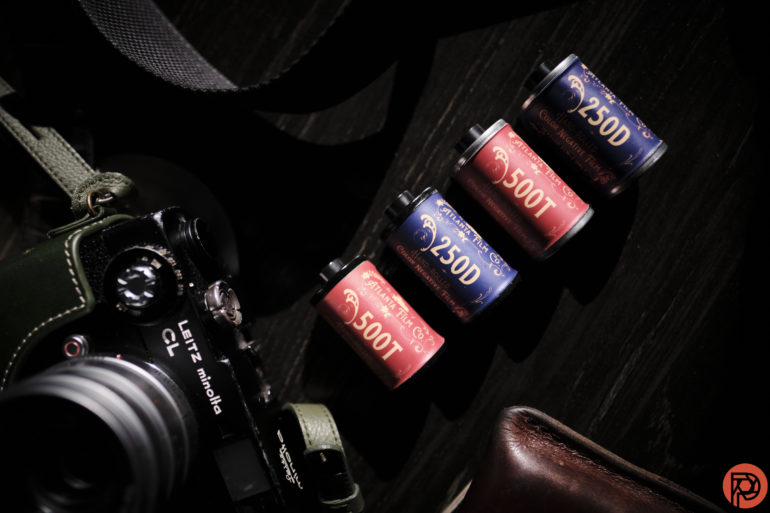
If you’re considering purchasing anything from this list of the best gifts for film photographers, consider the following:
If you’re still a bit confused as to the right lens for you, here are some questions to ask yourself
These are just a few of the questions that we ask ourselves, but we think that you should ask yourself these for sure.

Woman’s Club of Evanston hosts more than 50 vendors at annual Holiday Bazaar Woman’s Club of Evanston hosts Holiday Bazaar

EL PASO, Texas (KFOX14/CBS4) — He sees you when you’re sleeping, and he knows when you’re awake.
He knows if you’ve been bad or good, and we’re not talking about good old Saint Nick.
Krampus is coming!
Kaleidoscope Art Market is hosting its 7th Annual Krampus Fest, Art Show and Market.
It’s happening Saturday, December 9th at the El Paso County Coliseum, 4100 E. Paisano.
RECOMMENDED: Socorro kicks off the holiday season with Winterfest
Organizers say this year’s event is their biggest fest yet!
The free, family-friendly event kicks off at 4 in the afternoon and the festivities won’t wrap up until midnight.
RECOMMENDED: Free holiday movie screenings return to downtown El Paso as part of annual WinterFest celebration
There will be fire dancers, food trucks, live music and local vendors as well as a Krampus parade and contest.
Do you have what it takes to be crowned Prince, Princess, King or Queen?
Well grab your best set of horns and dress to impress!
Organizers will also be collecting household supplies for the Reynolds Home, a shelter that helps homeless women and children.
Items that will be accepted include, but are not limited to, baby wipes, trash bags and toilet paper.
Sign up to receive the top interesting stories from in and around our community once daily in your inbox.


In a video performance she shared called “Lix Cua Rahro / Tus tortillas mi amor” — in English, “Your tortillas, my love” — the artist speaks Q’eqchi’while she grinds corn with her mouth to make tortillas. She then shapes and presses the tortillas with a heart stamp and fills them with blood from a wound on her finger.
Parth Shah, a writer and an adjunct professor in the Hussman School of Journalism and Media, attended the lecture and said that performance was one of the most striking takeaways for him.
“I know that this kind of imagery repulses people, and it’s seen as ‘savage,’ but I love the point she made at the end about [how] these are technologies,” he said. “These indigenous practices have their own merits as well, and we in our modern reductionist scientific society will push away these kinds of things as dirty, or as regressive, but to see someone create this performance that’s honoring millennia-old food practices — I found that really rebellious and energizing to see.”
Monterroso links performance with her origins as a Mayan artist, connecting ancient knowledge and culture with contemporary art. She incorporates achiote and Mayan indigo — pigments with spiritual and healing properties — to dye textiles that she uses for her sculptures and sometimes her performances.
One of her recent textile projects, called “Rambo para sonar heridas,” or, “Rhombus to Heal Wounds,” is embroidered with traditional Mayan recetas, or instructions to make remedies for physical and spiritual healing. She drew the text for the remedies from a book that was passed down through her family.
UNC senior Brenda Palacios Rodriguez, who is working on an independent project researching arts in her own Qatanum culture, said she loved how Monterroso visually expressed traditional Q’eqchi and Mayan knowledge and connected it to a holistic ecological system.
“I think that’s so valuable and so important a perspective that many of us should definitely reflect on more and connect to, because at the end of the day, it is all connected,” she said. “And art is a beautiful way of expressing that.”
@dthlifestyle | lifestyle@dailytarheel.com
To get the day’s news and headlines in your inbox each morning, sign up for our email newsletters.





