About

Posts by :

Why Feel Is More Important Than Rules in Landscape Photography |

Why Feel Is More Important Than Rules in Landscape Photography |

Between the rule of thirds, camera settings, guidelines on focal length, depth of field calculations, and more, landscape photography can be a rather prescriptive genre. And while it can be good to have rules that increase your chances of coming home with a keeper, they can also be overly restrictive. This great video tutorial features an experienced landscape photographer discussing why feel is more important than following the rules in the genre. 

Coming to you from Alister Benn of Expressive Photography, this fantastic video tutorial discusses the importance of feel over following the rules in landscape photography. For sure, this does not mean there is no value in learning the rules. After all, as Picasso said: “learn the rules like a pro, so you can break them like an artist.” Rather, adhering too strictly to rules can make your work overly formulaic and prevent you from discovering what makes your individual creative voice unique and special. The next time you’re out shooting and catch yourself on autopilot, stop and make each decision intentionally instead. Check out the video above for the full rundown from Benn. 

And if you really want to dive into landscape photography, check out our latest tutorial, “Photographing the World: Japan With Elia Locardi!” 

Buttoned Up With Ceramics: A Virginia Sin and Haptic Lab Quilt Coat Collab

Buttoned Up With Ceramics: A Virginia Sin and Haptic Lab Quilt Coat Collab

Soft vs. hard, quilted vs. fired. These dualities describe the latest collaboration between award-winning ceramicist Virginia Sin and B-corp certified textile maker Haptic Lab, both who happen to be studio neighbors at New York’s Brooklyn Navy Yard. Created just in time for fall and winter, their newly debuted Quilt Coats bring together two different spheres of craftsmanship in a garment that’s as delightful as it is cozy.

woman wearing a patchwork quilted coat with her hand holding onto the ceramic button

two hands touching a ceramic button on a quilted coat

Haptic Lab, known for their quilted coats and maps, made this particular design oversized and roomy, with a drop shoulder sleeve to remove bulk around the arms. There are three designs – Snake Path, Pinwheel, and Nine Patch – and all of them come with a hood, a first for the textile brand. To finish off the coat, Sin, who is associated with a very distinct playful and modern style, designed a single large button, adding a contrast against the soft 100% organic cotton. Each ceramic button is made by hand and left unglazed so that the button can patina with time and use. To launder, simply wrap the button in tinfoil and wash the coat inside out on a gentle cycle. Like ceramics and quilts in their traditional forms, this Quilted Coat is intended to be an heirloom to be passed down for years to come.

brown ceramic buttons

beige ceramic buttons

hands making ceramic buttons

woman wearing a black and white quilted coat

woman wearing a black and white quilted coat

woman wearing a grey and red quilted coat

woman wearing a grey and red quilted coat

woman wearing a colorful patchwork quilted coat

woman wearing a colorful patchwork quilted coat

two women wearing quilted coats walking together

Emily Fischer, founder of Haptic Lab, with ceramicist Virginia Sin

To learn more or shop the collection, visit hapticlab.com.

As the Senior Contributing Editor, Vy Yang is obsessed with discovering ways to live well + with intention through design. She’s probably sharing what she finds over on Instagram stories. You can also find her at vytranyang.com.

Icons Only: Steven Klein’s Polaroids Of Madonna, Prince & Naomi Are Going Under The Hammer

Icons Only: Steven Klein’s Polaroids Of Madonna, Prince & Naomi Are Going Under The Hammer
image

Back in 1989, having never photographed a celebrity, Klein set his sights on shooting the icon that was Prince. By then, the photographer had already worked with Liz Tilberis, the editor-in-chief of British Vogue, and she had expressed a vague interest in running an editorial with the Grammy winner – without making any specific promises re its prominence or pagination. Klein, though, decided to take some liberties with the truth for the sake of his art, telling Prince’s team that Tilberis wanted the “Purple Rain” singer “to be the first man on a cover in the history of [the magazine]” and promptly flying to Minnesota’s Paisley Park, sans either editor or clothes. “The first thing I remember seeing in the house is [Prince’s then partner] Kim Basinger… At that time, they were filming Batman, and he was in full gear, transparent purple shirt and pants.” The shoot took place in Prince’s bedroom – complete with a round bed, while the Cocteau Twins played on the stereo in the background. “When he came in, he said to me, ‘Okay, what do you want me to do?’ And I just froze,’” Klein recalls. As did Prince, it seems: “He didn’t really move… He didn’t really talk… It taught me to never expect celebrities to perform in person the way that they do onstage.” Eventually, though, Klein “shot a series of black and white portraits that were really beautiful”, along with some close-ups that did indeed make their way into British Vogue. While the publication ultimately declined to run Prince on the cover proper – the supers had already claimed the first slot of the decade – it did run a full feature inside the magazine.

The TELLUS Bench Is the 1st Furniture Made of 100% Fossil-Free Steel

The TELLUS Bench Is the 1st Furniture Made of 100% Fossil-Free Steel

Vestre’s TELLUS bench, designed by Swedish multidisciplinary designer Emma Olbers, has released the first piece of furniture that uses SSAB’s 100% fossil-free steel. The Norwegian furniture company and celebrated designer have both been proponents of sustainability within the industry, and Tellus is the milestone result of their collaboration. By doing so, they hope to inspire others to follow suit.

”For me, it is important that form and design follow the planetary boundaries and aim to be part of the solution in the green transition,” said Olbers. “Therefore, it´s great to collaborate with companies that also want to be at the forefront and have actually realized that we are sawing off the very branch we are sitting on. These are companies that set Science Based Targets (SBTi) to contribute in meeting the Paris Agreement.”

steel outdoor bench overlooking water

TELLUS is timeless and inviting, with a design that makes it ideal for parks and other city environments. The bench received its name because it was designed “with Tellus in mind,” in accordance with planetary boundaries. ”TELLUS is great example of what steel can be used for. There is little that is more social, tangible, and accessible to people than a park bench in a public space. A place where people can sit down, talk to each other, and get to know each other,” said Bjørn Fjellstad, CEO at Vestre.

detail of steel outdoor bench

Like Olbers, Vestre has made moves to be at the forefront of testing new technologies and solutions to reduce the brand’s overall climate impact. Traditional steel production relies on coal burning – and the large emissions of greenhouse gases that accompany it. Globally it accounts for 7% of all CO2 emissions, and for Vestre, steel makes up more than 60% of its total carbon footprint.

steel outdoor bench in a green space at sunset

“The main goal was to create a bench with as few emissions as possible. An outdoor bench for public environments must also withstand a lot of wear and tear. Therefore, a strong construction is important,” Olbers shared. “We have striven to use as little material as possible, but still maintain the strong construction. I think it should both radiate a metal feel and a tactility, but also look welcoming, hence the wide armrests which visually is inviting and functionally provides space for a coffee cup.”

detail of steel outdoor bench

Vestre aims to be the world’s most sustainable furniture company, pushing forward developments while transitioning to more sustainable materials and production methods. “To get there, we need to be ahead of the curve,” says Øyvind Bjørnstad, CSO (Chief Sustainability Officer) at Vestre. “Early estimates show that converting all our steel to fossil-free could reduce our overall footprint by around 60 percent.”

detail of steel outdoor bench

detail of steel outdoor bench

steel outdoor bench in a green space

To learn more about the TELLUS bench and SSAB’s 100% fossil-free steel, visit vestre.com.

Photography by Einar Aslaksen.

Kelly Beall is Director of Branded Content at Design Milk. The Pittsburgh-based writer and designer has had a deep love of art and design for as long as she can remember, from Fashion Plates to MoMA and far beyond. When not searching out the visual arts, she’s likely sharing her favorite finds with others. Kelly can also be found tracking down new music, teaching herself to play the ukulele, or on the couch with her three pets – Bebe, Rainey, and Remy. Find her @designcrush on social.

Photography: Faye Webster at Franklin Music Hall

Photography: Faye Webster at Franklin Music Hall

Posted: 25th October, 2023 by The Editor

Indie singer-singwriter, Faye Webster, has earned their title as an indie icon. The Atlanta, Georgia-based singer has an impressive discography. Their sound has only developed and grown with age as they explore new themes and explore their instrumentals. Promoting their latest album “I know I’m funny haha” in 2021, captivating a more sultry sound and dynamic, the whole band played an incredible set. Jay was at their Philly show at Franklin Music Hall. Check out their incredible pics from the night.


Photos by Jay Leiby

The Alternative is ad-free and 100% supported by our readers. If you’d like to help us produce more content and promote more great new music, please consider donating to our Patreon page, which also allows you to receive sweet perks like free albums and The Alternative merch.

An Inside Look at Anish Kapoor’s Next Act

An Inside Look at Anish Kapoor’s Next Act

In a former boat repair workshop in Venice, down a narrow alley just off the Grand Canal dead-ending at the water’s edge, hides a space now used as a painting studio with Corinthian columns and skylights overhead. Towering canvases hang on every surface. Many more are stacked like dominoes in the corners. A bloody shade of red, the artist’s signature color, mixed from an oil paint base of alizarin crimson, is pervasive in the abstract work here.

“I’ve used it again and again and again and again,” says Anish Kapoor, the 69-year-old British Indian artist behind this particular hue, chatting in his newly occupied Venice studio in August. Kapoor has spent decades exploring the possibilities of this corporeal color, in three-dimensional objects forged from silicone, wax and other malleable materials and, increasingly, in gobs of thick paint on canvas.

Both Kapoor’s wax and silicone works, often on canvas, led him to painting as “a logical step,” he says. Many of the works in his studio remain untitled.

Both Kapoor’s wax and silicone works, often on canvas, led him to painting as “a logical step,” he says. Many of the works in his studio remain untitled.

Mattia Balsamini

Visitors step inside Leviathan, a giant inflated structure at the Grand Palais in Paris.

Visitors step inside Leviathan, a giant inflated structure at the Grand Palais in Paris.

Raphael Gaillarde / Getty Images

Kapoor is best known as a sculptor of monumental, abstract, perception-defying works of public art, mirrored surfaces that seem to have no beginning or end, like Cloud Gate, better known as “The Bean,” his apparently seamless 110-ton stainless steel ellipse in Chicago’s Millennium Park, and immersive forms so enormous they consume entire building interiors, like Leviathan, his bulbous PVC balloon installation that filled the Grand Palais in Paris in 2011.

Kapoor has had a decades-long obsession with negative space, with the void—the “non-object,” he calls it—in all its permutations, cutting up museums and galleries with site-specific gashes in the walls and black holes in the floors that seem to have no end.

In 2016, he sealed a deal with British technology firm Surrey NanoSystems for the exclusive use of Vantablack, touted as the blackest substance on earth, a technological marvel developed for scientific and stealth applications and produced in a high-temperature reactor. Kapoor had to sign an agreement under the Official Secrets Act at the British Home Office before he could negotiate a lock on its artistic use.

A number of artists began criticizing Kapoor publicly after news broke of his monopoly on the “world’s blackest black.” British painter Stuart Semple responded tongue-in-cheek by unveiling what he called the “pinkest pink,” offering his fluorescent hue for sale online, but requiring each buyer to first confirm “you are not Anish Kapoor, you are in no way affiliated to Anish Kapoor, you are not purchasing this item on behalf of Anish Kapoor.” Kapoor replied with an image on Instagram of his middle finger drenched in Semple’s “pinkest pink.”

“That silly young fellow,” says Kapoor of his 43-year-old faux nemesis. “I understand the impulse to say, ‘How can a color be exclusive?’ But it isn’t a color.”

Vantablack is not even “a paint,” he explains, but “a highly complicated, bloody difficult, damned expensive technical process, and extremely fragile,” less a color than the absence of it, absorbing light, so that a coating applied in lab conditions makes three-dimensional objects, like a sphere protruding from a cube, appear head-on to be entirely flat. “Is there an object? Is there not an object? Is it real, not real?” says Kapoor of the mystifying work he produced with the material after years of trial and error, unveiling the first pieces at an exhibition in Venice in spring 2022.

Non-Object Black 2019

Non-Object Black 2019 shows off Vantablack, the world’s blackest substance, which Kapoor has exclusive rights to use artistically.

Dave Morgan

Kapoor’s art often requires teams of collaborators to execute, and months—even years—to bring to fruition. Along with the technicians, fabricators and stone carvers employed by his London studio over the years, he’s tapped structural engineers, architects, shipbuilders and mirror-makers, among other experts. As a respite from his laborious collaborative work, in recent years he’s been embracing a more solitary focus on painting, spending hours alone working in his studios in London and Venice.

“Having this physical work that he can make immediately and by himself I think just gives him an energy, an outlet,” says Greg Hilty, partner and curatorial director at Lisson, a gallery in London where Kapoor’s work is regularly on exhibition, “and, also, is a counterpoint to some of the more shiny work, the sublime work. In his mind, they couldn’t exist in the world without each other.”

Kapoor’s canvases sometimes have a three-dimensional quality, jutting out from the surface as they blur the lines between painting and sculpture. They tend to be spontaneous, visceral works, exploring messy, violent, often sexual themes, in brutal abstractions conjuring flesh ripped open exposing viscera and blood, fiery rivers of lava rushing past. A trio of large paintings hanging in the Venice studio feature the outlines of a prone figure gushing torrents of red. “It’s the body, if you like, expunging its interior,” says Kapoor. The piece was inspired, in part, by a late medieval painting he saw hanging in Padua depicting the death of the Madonna.

Still, this high-octane body of work is particularly jarring taken alongside the cold precision of Kapoor’s conceptual sculptures.

“You know there are two sides to Anish, what I call the clean side, the polished side, and then there’s the dirty side, and it was when I saw the dirty side that I understood the clean side as well,” says British curator Norman Rosenthal, former exhibitions secretary of the Royal Academy of Arts in London, who helped organize Kapoor’s first showing there in 2009.

black white and red painting in studio

“In my heart, I’m still a sculptor, even if I’m making paintings,” says Kapoor.

Mattia Balsamini

Kapoor painting - no caption

“I’m making paintings, in a way, of things, and then I spend the rest of my time getting rid of things,” he says.

Mattia Balsamini

Kapoor echoes the sentiment. “There’s this way in which I’ve worked which is very pure, very clean and all that,” he says, of his precise sculptural work. “But I had a feeling there’s something else, which is more essential. I don’t know what the word is, because they’re both essential, in fact. They’re not in conflict, but they are different ways of seeing the world.”


Kapoor was born in Mumbai when it was still called Bombay, in 1954, to a Punjabi Hindu father and a mother of Iraqi Jewish heritage. He arrived in London for art school in 1973. Eighteen years later he won the Turner Prize, Britain’s highest art accolade. In 2013, he was knighted by Elizabeth II for “services to visual arts” in her annual birthday honors.

“I’ve always had a very strange relationship to England and to London,” he says, reflecting on his adopted country, India’s former colonial ruler. “I’ve lived there longer than I’ve lived anywhere else, had my children there, got married there, built too many homes there … it’s a complicated history with England for me—Sir-bloody-Anish, all that crap. So, in a sense you get drawn into the establishment, but at the same time I’ve always felt uncomfortable about it.”

Now, after 50 years living in Britain, Kapoor has begun shifting his center of gravity to Venice. “What I like about being in Italy is, unequivocally, I’m a foreigner and I like that,” he says.

“Venice,” says Hilty, “represents in many ways historically and symbolically an opening up of Europe to the wider world, in some ways a meeting of East and West, kind of like Istanbul. And that’s Anish’s world, really, neither west nor east but some dynamic fusion or dialogue between them.”   

In 2018, Kapoor took over the Palazzo Priuli Manfrin, an abandoned Venetian landmark, with layers of history extending back to the 16th century and a grand ballroom overlooking the Cannaregio Canal, announcing his intention to establish a foundation headquarters, a future home for his archive and a new creative hub there. “In very large terms I try to think of it as a working space in which I might leave some works and maybe ask some artists to come and do something else, or use part of it,” he says.

Last year, with restoration work on the building ongoing, he set up his new painting studio across town. This winter he plans to move the studio into a much larger space nearer the palazzo, in a former factory building with room enough to also produce sculpture on-site.

Paint-stained rags on the floor resemble the folds and undulations of the clothing in the ceiling art found at Palazzo Priuli Manfrin.

Paint-stained rags on the floor resemble the folds and undulations of the clothing in the ceiling art found at Palazzo Priuli Manfrin.

Mattia Balsamini

Kapoor has been enthralled with Venice since 1990 at least, when he was chosen to represent Britain at the 44th contemporary art Biennale. The work he showed at the British Pavilion—including Void Field (16 imposing sandstone blocks on the floor) and The Healing of St. Thomas (a red gash in the wall)—won him the Premio Duemila for artists under 35 (even though, controversially, Kapoor had turned 36 by then). “On the day of the opening, I walked into a restaurant, the whole restaurant stood up and applauded,” he says. “That was so touching, wonderful.”

He returned frequently to Venice over the years, showing new work during subsequent Biennales. Eventually he bought an apartment there. “I’ve had this very long association with Venice,” he says. “I’ve always felt it to be good to me, and good to the work. I like that it’s a village and that it’s cosmopolitan. I still have my studio in London, spend roughly half my time between here and there, but I do feel more and more that it’s home, Venice.”

Though works on paper and canvas have always been part of his practice, they’ve become much more of a focus over the last ten years as he’s embraced a new parallel path to his work as a sculptor. “I’ve watched so many colleagues do what they do and then they do what they do. It’s not my road,” he says. “I’m interested in what I don’t know and what I haven’t done. I feel that’s the real mission of the artist.”

Kapoor Painting in Studio and ladder

“I do a lot of blue and black and red,” Kapoor says. “The whole thing of painting is giving appearance to objects. What the black things are doing is exactly the opposite of that.”

Mattia Balsamini

A smock, shoes and book of Hindu hymns accompany a mid-century modern chair in Kapoor’s studio, “a place of experimentation, mostly of failure,” he says.

A smock, shoes and book of Hindu hymns accompany a mid-century modern chair in Kapoor’s studio, “a place of experimentation, mostly of failure,” he says.

Mattia Balsamini

These days when he’s in painting mode, whether he’s in London or Venice, Kapoor tries to finish a canvas a day. “I’m pretty prolific—I’ve got a hell of a lot of work. I probably let 10 percent out into the world on a yearly basis,” he says. To store it all, recently Kapoor purchased a huge warehouse north of London. Much of the unreleased work there, he says, will be donated to the foundation eventually, so that his children won’t be responsible for managing these portions of his estate after he’s gone—he has a son and two daughters from two different marriages.

Even away from the studio his output is impressive. Along with homes outside London and in Venice, he has places in Harbour Island in the Bahamas and in Jodhpur, India. He produces works on paper at all of the sites, mostly colorful gouache abstractions. There are literally hundreds stashed in drawers at the London studio, categorized based on where they’re made. The Jewish Museum in New York will showcase a few of them in a works-on-paper show next year.

In recent years Kapoor’s paintings have become a much bigger presence in his gallery and museum shows, often presented alongside his precise machine-made sculptural objects. A whole crop of new paintings will make their public debut in November in a broad survey of his new work at the Lisson Gallery’s New York outpost, opening just after Kapoor’s mini-retrospective in Florence, Italy, at the Palazzo Strozzi art space.


By now Kapoor has begun mastering the bewildering maze of pedestrian roads and bridges that snake through the Venice canals. “I’m mostly successful in finding ways of going through the back streets where there aren’t thousands of tourists,” he says as we cut across town for a late lunch in August.

When he bought the sprawling Palazzo Priuli Manfrin from the local government—which lacked the funds to restore it—he had little idea what he’d do with the space. Curator Mario Codognato, a Venice native and old friend of Kapoor’s from his early days as a young artist in London, first introduced him to the building.

Codognato, the former chief curator of the MADRE contemporary art museum in Naples, where he often showed Kapoor’s art, has been working on the renovation ever since, after signing on as director of Kapoor’s new foundation. “The project grew so organically,” says Codognato, who first suggested basing the foundation in Venice. Initially, he found a smaller site for the headquarters inside an existing art foundation before hearing about the Palazzo Priuli Manfrin.

Over the last 20 years some of the most important palazzos in Venice, historic landmarks once occupied by the city’s most powerful families, have been snapped up by deep-pocketed buyers, among them some of the world’s biggest contemporary art collectors, who’ve opened them up to the public as private museums—showcases for their art foundations—adding bookshops, ticket offices and sleek new gallery spaces. French fashion tycoon François Pinault runs two outposts of his Pinault Collection, at the Palazzo Grassi and Punta della Dogana. The Prada Foundation also has an art space in Venice. And billionaire investor Nicolas Berggruen is finishing up work on two more foundation spaces, including the 18th-century Palazzo Diedo near Kapoor’s foundation.

“The thing about all these foundation buildings, and there are more and more of them, is that they are done to the nines; they are really done. I want to do exactly the opposite,” says Kapoor. “I don’t want to touch it, or hardly touch it.”

Kapoor scrapped early plans from a local architect, Giulia Foscari, for a bookshop and café on the ground floor, preferring to leave the whole site open-ended for now, with simple infrastructure upgrades. “There will be beautiful rooms to show works in, to make works in … and then we’ll see,” he says.

Kapoor hopes to preserve the sense of decay in the space, cleaning up the 18th-century frescoes and other decorative elements left behind over the years but not changing much else. “I don’t want restoration; what I want is conservation,” he says.

The palazzo was in decent shape when Codognato first found it. Kapoor, an astute student of history, says he was drawn to the building with its soaring double-height ballroom before he learned of its role in the history of art in Venice.

The first portions of the building were completed in the 16th century, when it was home to the aristocratic Priuli family, who produced three doges, the rulers of Venice. In the late 18th century, the palazzo underwent upgrades under a new owner, Girolamo Manfrin, a social-climbing tobacco merchant who burnished his reputation as a tastemaker by opening up his home, and its important collection of art, to prominent figures of the day.

“Mr. Manfrin was a great art collector. He had everything from Giorgione’s La Tempesta to various Rembrandts, all sorts of magical stuff, which I didn’t know when we were negotiating for the building,” says Kapoor.

After Manfrin’s death in 1801 or 1802 (questions remain about the exact year), some of his collection wound up eventually at the Gallerie dell’Accademia, one of the most venerable art institutions in Venice. Over the years Manfrin’s palazzo went into decay. Catholic nuns moved in for a time in the 1900s. The building, though, had been empty for years by the time Kapoor stepped in.

Work has gone slowly in the five years since he first saw the site. “Doing anything in Venice is a nightmare,” he says of the bureaucracy. A completion date for construction still hasn’t been set. “It is an artist’s project,” says Codognato, “so, in a way [it’s] permanently in progress.”

In a full-circle moment during last year’s Biennale, Kapoor was invited to exhibit his own work among Manfrin’s collection at the Gallerie dell’Accademia, as part of an ongoing program showcasing contemporary art. Though Manfrin’s palazzo was still a work in progress, he decided to put renovations on hold so he could also show work there. “We did this folly of expanding the exhibition into this half-destroyed, half-not building,” says Codognato. “The fire brigade were not enthusiastic about it. We had to do a lot of work to make them happy.”

Kapoor filled the ballroom with heaps of red wax, part of a theatrical installation, Symphony for a Beloved Sun, he’d shown years earlier in Berlin. Concave mirror works, turning the world upside down, were displayed under an 18th-century fresco of Medusa. “Obviously, she has to have the mirror,” says Kapoor, of the choice of backdrop.

Though the show closed in October of last year, there are a few remnants in the building as we tour the palazzo. Mount Moriah at the Gate of the Ghetto, an inverted mountain of silicone and red paint that had anchored the entry, lies partially dismantled. The piece, referencing the historic Jewish ghetto of Venice—the main entrance is just across the canal—might be reinstalled after the renovation is done.

Known to appreciate the “non-object,” Kapoor examines piles of pigment at the palazzo where a multicolored mixed-media work, White Sand, Red Millet, Many Flowers, once stood.

Known to appreciate the “non-object,” Kapoor examines piles of pigment at the palazzo where a multicolored mixed-media work, White Sand, Red Millet, Many Flowers, once stood.

Mattia Balsamini

Fractal towers of powdered pigment were removed, part of another piece from the Kapoor archive, White Sand, Red Millet, Many Flowers, leaving behind colored outlines on the floor. “It’s the absent work,” says Kapoor as we walk through the space. The piece, which dates back to 1982, is a variation on his early breakout pigment series, 1,000 Names, which was inspired in part by the colors of India following his first return trip after art school in the late 1970s.

“I went with my parents, my brothers and my wonderful girlfriend at the time. We just traveled—architecture, temples, all that business,” he says. “I saw stuff, felt connected, and then I came back from that trip and a few months later I began to make my first pigment works.”

Kapoor, the eldest of three brothers, was born into a well-heeled Indian family six years after the country won independence from Britain. His father, a hydrographer, in charge of map-making in the Indian Navy, encouraged his sons to follow in his footsteps with professional careers. Kapoor’s mother, an amateur dressmaker, cantor’s daughter and “Sunday painter,” was more open to her eldest son’s artistic interests. She made copies of works by Henri Matisse, he says. “I would finish them for her, and go off in a different direction, start with Matisse and then go somewhere else.”

When Kapoor was a teenager, his family moved to the foothills of the Himalayas, where he and one of his brothers attended one of India’s most prestigious private academies, the Doon School, the country’s answer to Eton, the elite British boarding school. Kapoor, who is dyslexic, says he “hated every single second of it. I was a terrible, terrible student, terrible at sports, a complete slacker.”

At 16, Kapoor and his brother Roy, who is a year younger, were dispatched on their own to Israel, which was offering residency to Indian Jews. “My mother was obsessed with getting us out of India,” he says. With the country struggling through a population surge and conflict with neighboring Pakistan, she hoped for a better life elsewhere.

Kapoor finished high school on a kibbutz south of Haifa and then, in a bid to make his father happy, began studying engineering at the University of the Negev (now Ben-Gurion University) in southern Israel. “I did six months. … I just couldn’t deal with it,” he says. After dropping out, he returned to the kibbutz for a bit of soul-searching. “I decided, in the midst of all my inner turmoil, I was going to be an artist,” he says.

When an art school in Jerusalem rejected his application, he hitchhiked across Europe with a Swedish friend, starting in Istanbul, en route to a new life in London.

It was the early 1970s, a time of creative and political ferment in England. Kapoor enrolled at the Hornsey College of Art in London, where he found a sense of belonging. “For the first time in my life I felt free,” he says.

The school was a hotbed of radical ideas and experimental art. Marina Abramović, then a pioneering young performance artist, was a visiting tutor. Artist Paul Neagu, a mentor on the faculty, encouraged Kapoor to think conceptually. “It really gave me the sense that being an artist, or being an object-maker, wasn’t necessarily about the object; it was about propositions through the object,” he says. “Paul didn’t use those words at all, but he worked in a way that prompted that kind of thinking for me.”

After graduation, Kapoor’s work quickly attracted attention. In 1982, when he was 28, he showed his first pieces in Venice, in the Aperto section of the Biennale devoted to young artists. “I showed next to Julian Schnabel, who put all his work in my space. We had an almighty brawl. It wasn’t very nice, but in retrospect it’s very funny,” recalls Kapoor with a laugh. “We’ve since become friends.”

Kapoor in 1986

Early in his career, Kapoor (above, in 1986 with an untitled work) created whimsical sculptures coated in powdered pigments.

Jack Mitchell / Getty Images

But it was representing Britain at the Biennale eight years later that pushed his career into the stratosphere, opening the door to the technically challenging monumental work that followed. “Then in the art world—it’s gone now—there was strongly a sense that just because it’s big doesn’t mean that it’s good, and if it’s big, it’s probably crap,” he says. “And I tried to jump in with both feet, to take on the idea that scale is properly, fully a tool of sculpture, that we must not be embarrassed by it.”

In 1999, Kapoor beat out Jeff Koons to win the commission for a public sculpture in Chicago’s Millennium Park with his proposal for Cloud Gate. “Everybody said a mirrored object of this scale, it’s impossible, can’t be done,” he says. In the six years it took to complete, the budget for the 66-foot-long, 33-foot-high funhouse mirror spiraled from $8 million originally to $23 million by the time it was completed in 2005, receiving a rapturous welcome from the public as it helped usher in the selfie era as one of the first truly viral works of public art.

Cloud Gate

Cloud Gate, nicknamed “The Bean,” remains a draw in Chicago.

Patrick Pyszka

“When it first opened there were thousands of people, and, as ever, I go, ‘Oh no, what have I done? Disneyland, it’s so popular,’” says Kapoor. “And so, I decided to go to Chicago and sit with it, and I sat with it for two or three days, and I realized something. Going back to scale, I realized it’s a big object and not a big object, a big object and a small object. It has no joints at all; you can’t tell how big it is. When you’re near it, it’s enormous, and when you step back from it, it’s not that enormous. The shifting scale felt to me, in my terms at least, there’s a poetic quality to it. And for me that saved it.”

Kapoor’s work hasn’t always gotten such a warm response. In 2015, he unveiled a series of site-specific installations in the gardens of the Palace of Versailles outside Paris. Dirty Corner, a 200-foot-long biomorphic Corten steel funnel that seemed to erupt from the earth, was quickly maligned in the French press—the Le Figaro newspaper dubbed it the “queen’s vagina”—and marred by vandals who covered it in antisemitic graffiti. “I think it was an inside job,” says Kapoor, who met with French President François Hollande, eventually, to discuss the defacements.

Kapoor has been outspoken on many issues over the years—as a frequent fixture in the British press, he has used his stature to campaign against Brexit; rail against India’s Hindu nationalist prime minister, Narendra Modi; and advocate for refugees in the global crisis. Still, he has often said his work, as an artist, has nothing to say. “I don’t set out to make political message art. Agitprop is agitprop, doesn’t make great art,” he says. His abstractions, though, are deeply rooted in art history and in heady metaphysical notions, referencing the avant-garde ideas of early conceptual artists like Russian Kazimir Malevich and Frenchman Marcel Duchamp.

Still, there’s sometimes a prankster quality to Kapoor’s more provocative work. “I quite like being naughty and controversial,” he says.

The wax- and oil-based Svayambhu moves slowly through the Royal Academy of Arts in London, leaving a sticky trail of goo.

The wax- and oil-based Svayambhu moves slowly through the Royal Academy of Arts in London, leaving a sticky trail of goo.

Dave Morgan

His 2007 piece Svayambhu, which in Sanskrit means “self-made,” features ten tons of red wax and Vaseline paint on a track. The piece, tailored to the space where it’s shown, squeezes through doorways, splattering violent red streaks on the walls as it goes. It made a proper mess of the 19th-century galleries at the Royal Academy of Arts when it was installed there in 2009, squeezing through five separate doorways.

A critic in the Guardian, praising the show as “exhilarating,” “self-critical,” “funny and uncomfortable,” wrote that the piece transformed the Royal Academy galleries into “a kind of alimentary canal, an intestinal tract.”

The piece, which has continued to wreak havoc on museum galleries, traveled to Florence in October for Kapoor’s show at the Palazzo Strozzi before it continues on to the United States next year for a planned retrospective at the Minneapolis Institute of Art.

The work started with a simple notion of creating a form by pushing something through something else, before layers of meaning began to gel on top. “Suddenly it becomes a train, and all the associations with it, being blood—you know, blood-red—associations to everything from the Holocaust to, all kinds,” says Kapoor. “I think that’s the quality of the work: its ability to accumulate to itself layers of meaning.”

Get the latest Travel & Culture stories in your inbox.

Christopher Rothko on Preserving His Father’s Legacy

Christopher Rothko on Preserving His Father’s Legacy

With long silver hair and a sharp suit, he could pass for an ageing rockstar—or even British art dealer Ivor Braka. Nevertheless, Christopher Rothko does bear a striking resemblance to his father, the legendary Abstract Expressionist painter Mark Rothko.

Christopher speaks in a considered manner with soft tones, inherited perhaps from his father. Along with his sister, Kate, he has dedicated much of his life to nurturing his father’s legacy. And as he discusses Rothko’s desire to ‘raise painting to the level of poignancy of music and poetry’, it becomes clear how well placed he is to curate the artist’s first major survey in France since 1999.

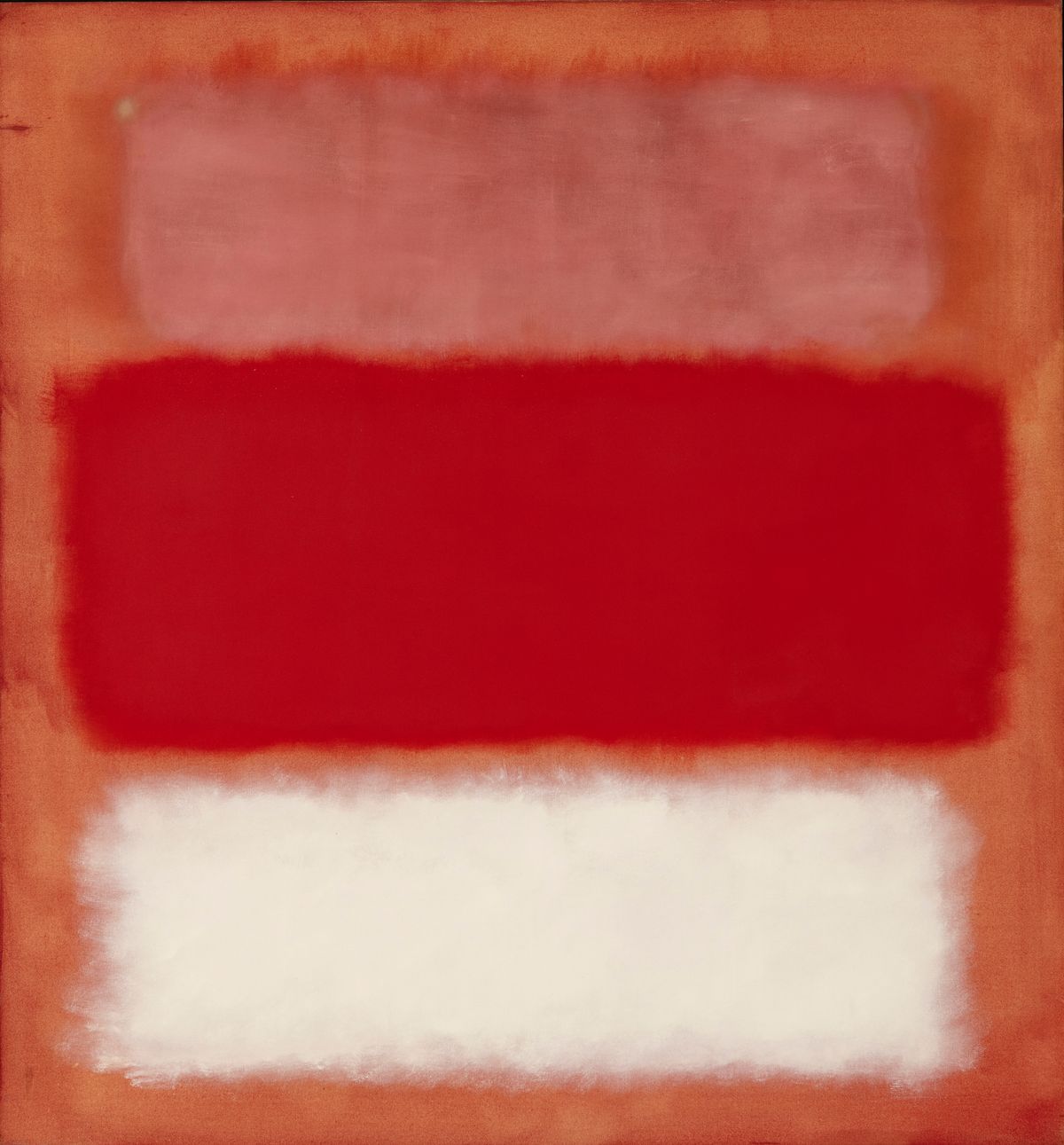
Mark Rothko, Light Cloud, Dark Cloud (1957). Oil on canvas. 169.6 x 158.8 cm. Modern Art Museum of Fort Worth Museum purchase, The Benjamin J. Tillar Memorial Trust. © 1998 Kate Rothko Prizel & Christopher Rothko - Adagp, Paris, 2023.

Mark Rothko, Light Cloud, Dark Cloud (1957). Oil on canvas. 169.6 x 158.8 cm. Modern Art Museum of Fort Worth Museum purchase, The Benjamin J. Tillar Memorial Trust. © 1998 Kate Rothko Prizel & Christopher Rothko – Adagp, Paris, 2023.

Christopher Rothko has curated a comprehensive retrospective at Bernard Arnault’s Fondation Louis Vuitton in Paris (18 October 2023–2 April 2024) with the Foundation’s artistic director Suzanne Pagé, whom he also partnered with back in 1999.

Rothko’s previous retrospectives in Europe have mainly included works from the Family Collection and the Mark Rothko Foundation, he explains.

‘These are easy paintings to get because we consider our collections essentially public. But I wanted to bring paintings that Europeans have never seen. So we have paintings from Utica, New York; Toledo, Ohio; Lincoln, Nebraska; and Tempe, Arizona, as well as from the Art Gallery of Ontario in Toronto.’

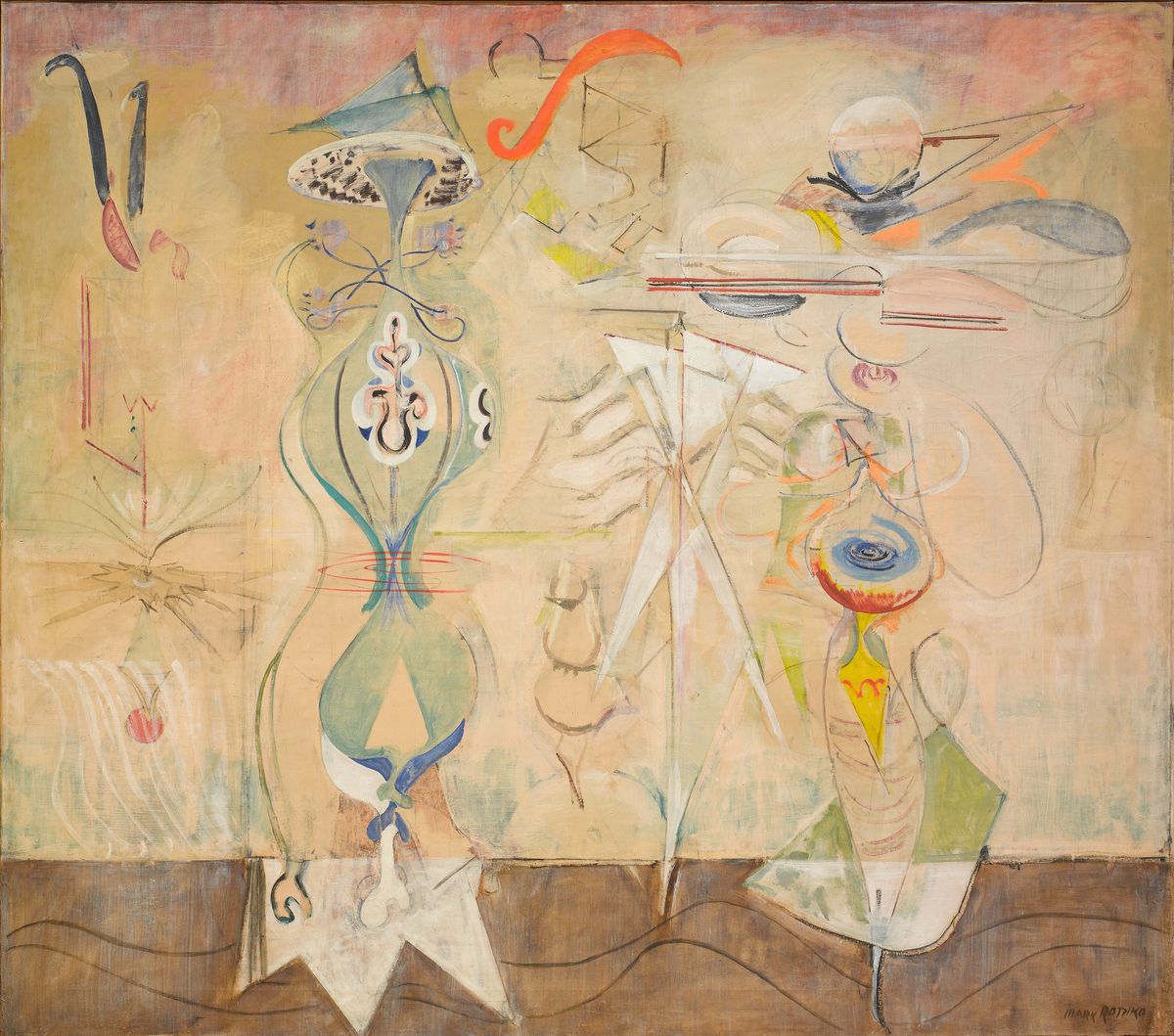
Hunting down these paintings and securing them for public exhibitions is clearly something that Christopher feels very strongly about. The show includes the early painting, Slow Swirl at the Edge of the Sea from 1944, which is in the permanent collection of the Museum of Modern Art (MoMA) in New York and has never before been loaned for an exhibition due to its historical significance.

‘It’s a painting of him and my mother shortly after they met. I grew up with that over my couch,’ he explains. This, coupled with the tragedy of losing both his parents by the time he was just six years old, surely made it impossible for even MoMA to turn him down.

Mark Rothko, Slow Swirl at the Edge of the Sea (1944). Oil on canvas. 191.1 x 215.9 cm. Museum of Modern Art, New York. Bequest of Mrs. Mark Rothko through The Mark Rothko Foundation, Inc. © 1998 Kate Rothko Prizel & Christopher Rothko - Adagp, Paris, 2023.

Mark Rothko, Slow Swirl at the Edge of the Sea (1944). Oil on canvas. 191.1 x 215.9 cm. Museum of Modern Art, New York. Bequest of Mrs. Mark Rothko through The Mark Rothko Foundation, Inc. © 1998 Kate Rothko Prizel & Christopher Rothko – Adagp, Paris, 2023.

His eyes light up when discussing some of these works, including the 1962 painting No. 1, White and Red from Toronto, which he describes as his ‘absolute favourite’.

He also recounts how he had never even seen No. 9/No. 5/No. 18 (1952) in the flesh before as the work has been in the same collection since 1971 after being sold by Marlborough Gallery.

‘It’s a spectacular painting and I’m very touched that they have agreed to lend,’ he says.

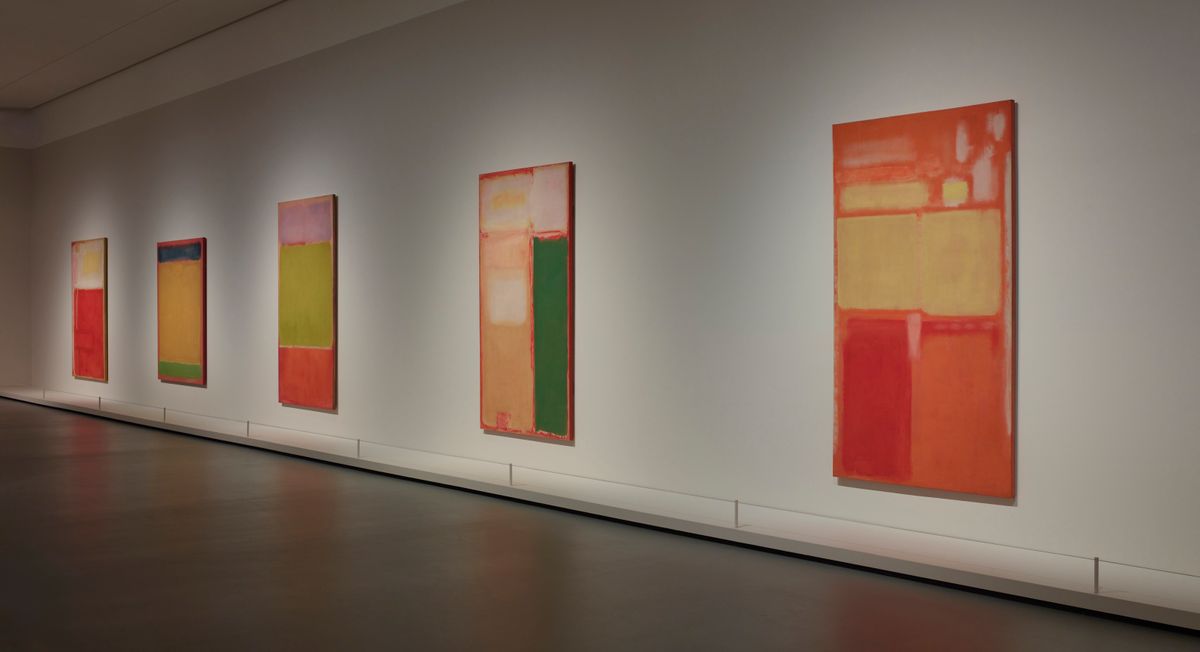
It’s equally moving to hear the presence of Rothko within the hanging of the show. ‘My father was very sensitive to what his works needed, and he was very clear that he wanted it to be a personal interaction between the painting and viewer.’

‘He wrote about this when he sent his paintings to the Whitechapel Gallery in 1961. He sent instructions for hanging the canvases low, near to the floor with lower lighting close enough together so they are in interaction with each other. So this is always where we start and then we listen to the paintings. They usually tell you when they’re happy or they’re not.’

Exhibition view: Mark Rothko, Fondation Louis Vuitton, Paris (18 October 2023–2 April 2024). © 1998 Kate Rothko Prizel and Christopher Rothko - Adagp, Paris, 2023.

Exhibition view: Mark Rothko, Fondation Louis Vuitton, Paris (18 October 2023–2 April 2024). © 1998 Kate Rothko Prizel and Christopher Rothko – Adagp, Paris, 2023. Courtesy Fondation Louis Vuitton, Paris.

It’s touching to think of these objects as vessels through which Christopher Rothko can somehow communicate with his father. In his eyes, Rothko was a family man who taught his son how to play chess and bestowed upon him a love of music, which seems so crucial to not only the artist himself, but also his son’s understanding of Rothko’s practice.

His father described Mozart as ‘smiling through tears’ when composing—an exquisitely poignant interpretation that gives us a window into Rothko’s psyche. Simple human emotions were the target for Rothko but he wanted viewers to question them to reveal the complexity of these emotional states, as well as the uneasiness and precariousness of our existence.

When Rothko died, the family lost the contents of his studio to his dealer, Marlborough Gallery. After years of court cases, they recovered some items including receipts for paint and a huge amount of turpentine used to thin the paints, further indicating how the artist would almost stain the canvas in many instances rather than applying layers of impasto.

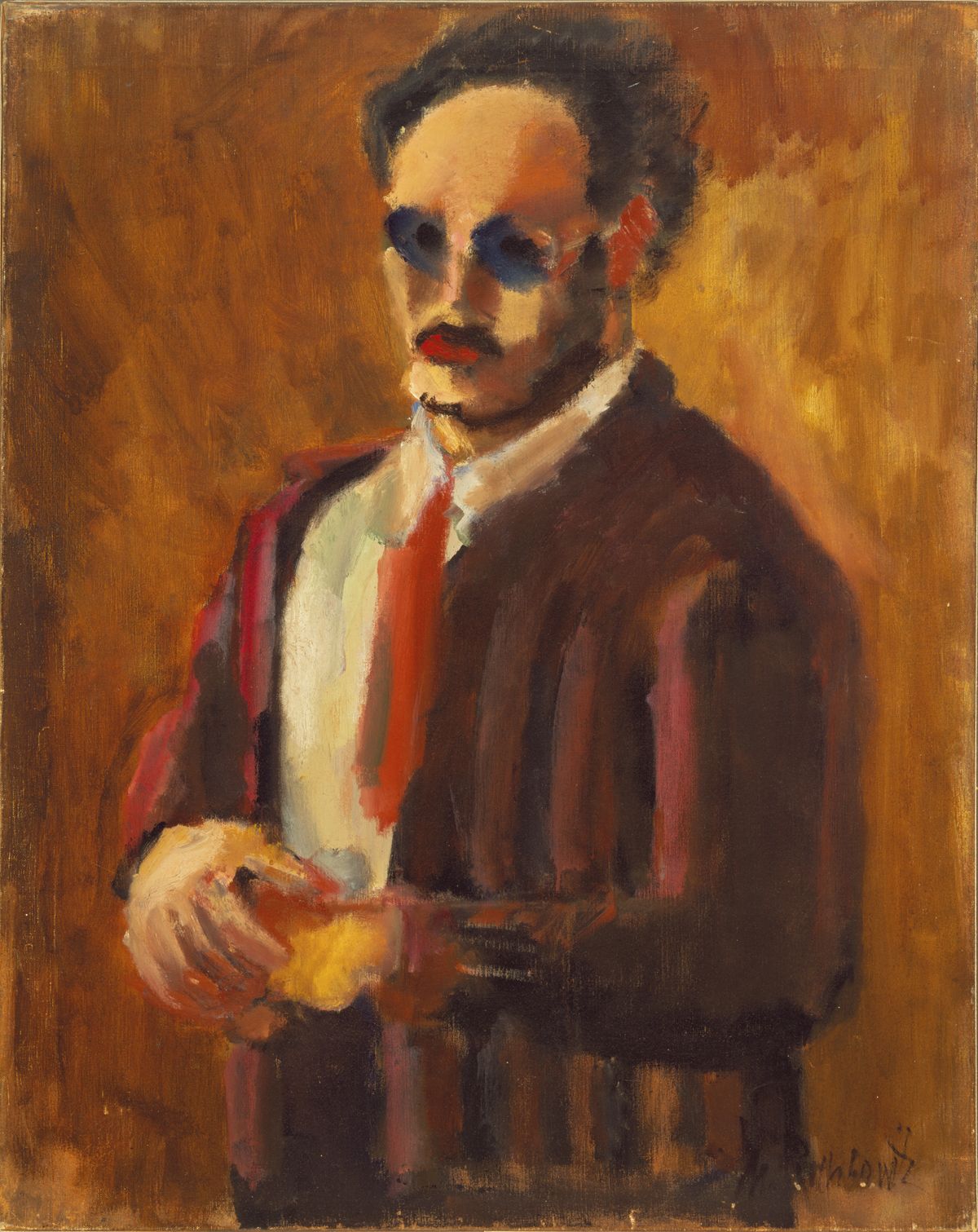
Mark Rothko, Self Portrait (1936). Oil on canvas. 81.9 x 65.4 cm. Collection of Christopher Rothko. © 1998 Kate Rothko Prizel & Christopher Rothko - Adagp, Paris, 2023.

Mark Rothko, Self Portrait (1936). Oil on canvas. 81.9 x 65.4 cm. Collection of Christopher Rothko. © 1998 Kate Rothko Prizel & Christopher Rothko – Adagp, Paris, 2023.

‘We still have some of the boards that he used to paint his works on paper, which is a very important part of his practice, especially later on,’ Christopher adds. It’s unsurprising when he suggests that his father would be appalled by not only the value of his works today, but the state of the art market as a whole. ‘For him, if paintings become a commodity or a trophy, he would be very upset by that.’

Rothko’s legacy remains in safe hands under the guidance and direction of his two children and this colossal show is evidence of the power his art still has to attract a new generation of admirers, while reminding the rest of us of his status as an unrivalled legend of abstract painting.

Main image: Exhibition view: Mark Rothko, Fondation Louis Vuitton, Paris (18 October 2023–2 April 2024). © 1998 Kate Rothko Prizel and Christopher Rothko – Adagp, Paris, 2023. Courtesy Fondation Louis Vuitton, Paris.

Can Photography Build Peace? The Case From Thailand

Can Photography Build Peace? The Case From Thailand
Yostorn with youth at the training session, photo by Realframe.

Thailand has experienced conflict in its Deep South over recent decades. The Deep South includes the provinces of Yala, Pattani, and Narathiwat, as well as four districts of Songkhla province. Muslims make up 76% of the region, with Buddhists comprising around 23%, and Christians and other religious groups making up smaller percentages of the population. Most Thai Muslims are ethnically Malay. 

Some Muslim separatist groups are active in the region, most notably the Barisan Revolusi Nasional (BRN). Violence related to the separatist conflict and politics caused 3,686 deaths and 10,872 injuries between January 2004 and March 2022. When counting deaths from other crimes and resource conflicts in the region, the numbers stand at 7,344 deaths, and 13,641 injuries.

In August, photographer Yostorn Triyos led a training session for youth in the region to do photography about peace. The training, sponsored by Minority Rights Group International, allowed youth ages 18 to 30 to submit their photography portfolios, before participating in a four-day camp. This is the second year Yostorn has led the camp, where youth are instructed to take photos telling stories about their communities. 

Yostorn said, “There is a theme of peace, but these trainees are new to this. So their interpretation is very wide in scope in terms of what it means for them regarding peace.”

The topics of the the youth’s photography include a range of societal issues and challenges in their communities. Some have taken photos about the heavy presence of military checkpoints in their communities, particularly when compared to other areas. Others have taken photos showing how women play a role in their communities, even though the communities are very male-dominated. Yostorn said that many of the youth also have their own platforms and fan pages, and therefore “can also play a role in social movements.” For example, one youth, Yostorn said, has focused on their work helping disabled people in the region. 

“So they don’t just come and learn skills to take pictures, but also how to make photos look interesting and tell an interesting story,” he said.

While both Muslims and Buddhists attended the camp last year, this year, the 12 youth who participated were all Muslims. However, Yostorn said that in all the projects he has done, there have never been issues between the two groups. He said the two groups live together, and understand each other’s way of life.

From September 19 to October 1, Yostorn had an exhibition displayed at the Bangkok Art and Culture Centre titled “The Deep Places in the Deep South.” The photos in the exhibition captured residents of the Deep South during their day-to-day activities. Yostorn took these photos to challenge stereotypes that many Thais have about the Deep South. People often think of the region as filled with terrorists, thieves, and people causing chaos, he said. He added that the key message of his exhibition was to erase these stereotypes and. and to remind the public that people in the Deep South are fathers, mothers, and teachers. 

“Because the understanding of the people in the society is such that people cannot live together because of their differences, because of different religions. But I want to portray and help people be able to relate to the human side of this.”

The subjects of Yostorn’s photos included a woman named Tua who works for a civil society organization called Duayjai. The organisation provides counseling and peace education to detainees and their families, and also provides support to survivors of torture. Yostorn’s photos of Tua show her smiling while sitting with her family. Yostorn wrote in the photos’ caption that his friendly conversation with them appeared to involve clashes between the different generations.

Realframe’s photos of Tua, photo by Tara Abhasakun.

One subject in the exhibition was a Buddhist peace leader known as ‘Uncle Kook.’ He is respected by both Muslims and Buddhists in his community, and ensures that the two groups live in harmony together. The photos of Uncle Kook show him with his beloved dog, and photos of his family. 

Realframe’s photos of ‘Uncle Kook,’ photo by Tara Abhasakun.

In the exhibition, Yostorn aimed to highlight three special laws in the Deep South, which he believes have caused the conflict to continue for the past 19 years. Yostorn said these laws: the Martial Law, the Internal Security Act, and the Emergency Decree, give authorities the power to violate human rights. 

“People get arrested without bail. As long as the time the court takes to judge whether they’re in the right or wrong, they don’t get bail,” he said. “So some people who are innocent might get locked in jail for a year or 10 months. And at the end of it, the court decides they’re innocent.”

Another subject in the exhibition was a man named Mulid, who was imprisoned for eight months after being labeled as an “insurgent.” The court eventually dropped the charges. Yostorn’s photos show Mulid with his wife and their baby. 

Realframe’s photos of Mulid, photo by Tara Abhasakun.

Yostorn noted that the government has made people “desperate,” since when they try to fight for their rights using the law, they are fighting “an unjust system.” He said that this is why people turn toward groups like the BRN.

When asked if he believed that art could fight stereotypes in a way that political discussions cannot, Yostorn said, “Yes, definitely, otherwise I would not be doing this. I think that if I choose the right topic, then it can reduce stereotypes. And it will speak to people with various opinions.”

Yostorn said that most people who have discussed his exhibition with him say that it allowed them to see the other side of people living in the Deep South. They say they have seen the side of the region different from the violence shown in the news. Yostorn added that his photos, together with the captions, made people understand the reality of the area, and see more of the humanity of the people living in it.


Tara Abhasakun

Tara Abhasakun is a journalist in Bangkok. She has written for several outlets on a range of human rights issues involving youth protests in Thailand, as well as arts and culture.