
More than two dozen artists will take part in a group show at The Magnet Factory and a print fair at Enlightened Brewing Company.
Ink Curds to showcase Midwest printmakers October 20-21


Rosie has always let curiosity take the wheel when it comes to her career.
“When I’m talking to people and they’re really passionate about what they do, it makes me think how can I get there? What can I do to get closer to that feeling?” she says.
Since training in contemporary art, Rosie has worked in marketing and as a project manager in startups and banking. She started out in the field of science, technology, engineering and mathematics (STEM) in 2014.
Rosie is a now a Technical Program Manager with our world-leading robotics team.
©
CSIRO 2022. All rights reserved.
Rosie comes from a long line of creatives, with her parents meeting at art school. She followed in their footsteps, but ultimately the lonely aspects of artistic practice set her on a different path.
“I’m a social person and I just felt as though the actual career of it was a bit isolating and may not suit my needs,” Rosie says.
“I really like being part of a team and building something with people together.”
A collaborative team, driven by impact, where her people skills could come into their own became her north star. She completed a double masters in marketing and advertising, and started out in the industry. But she still didn’t quite feel at home.
Rosie fought hard not to be pigeonholed by her former roles. It took her 60 job applications to get a callback for her first job in tech.
But eventually, her persistence paid off. She landed a job with a small software engineering business in 2014. After eight years in the tech industry, Rosie joined us in 2022.
“I do feel that my job at CSIRO is actually the closest I’ve ever achieved in getting to that end goal… this is where I’m meant to be,” Rosie says.
Rosie is now a Technical Program Manager in robotics and autonomous systems. She ensures projects are delivered within scope, timeline, budget and acceptable risk.
She’s currently leading a project to help the International Atomic Energy Agency stop nuclear fuel from being stolen to make weapons. The project is building a robotic device to monitor spent fuel in cooling ponds. This task currently falls on the shoulders of human nuclear inspectors, who spend almost a quarter of the year on the road, carrying heavy equipment, and wearing protective gear to prevent radiation exposure.
Rosie said this game-changing prototype is the first of its kind to be submerged in the pond. This technology is increasing the accuracy of monitoring, relieving some of the pressure on human inspectors, and supporting world peace.
“What I’m most passionate about is the translation piece, helping people understand what it is we’re trying to do and why,” Rosie says.
“It’s technically complex, we’re working with a client based in Vienna, in a very politically sensitive and sometimes secretive space.”
©
CSIRO 2022. All rights reserved.
It’s hard to imagine two fields more different than contemporary art and robotics for nuclear safety. But Rosie says her arts degree helped teach her how to communicate complex concepts and ideas, without getting lost in the noise.
“Creating art teaches you to look to history, acknowledge those before you, have a vision and resonate on a higher level with an audience,” Rosie says.
“This was great practice for translating complex ideas and taking stakeholders on the journey of research visions that might take years, even decades to realise.
“But it’s just as important to stay focused, and not get caught up in the concept. I’ve worked to condense this project into bite-sized pieces so we know we’re we’re going and why. This helps ensure what we’re doing is sustainable and achievable.”
Rosie’s current workplace, nestled among the gumtrees in Pullenvale outside Brisbane, is a far cry from the crisp white gallery spaces and the towering high-rises of her previous roles.
Her team is also a total change of scene. Rosie is one of just 11 women in a team of 58 at Pullenvale. She is one of two women in the robotics leadership team.
“I’ve never worked with so many men before. There is an incredible sense of camaraderie and just wonderful banter,” she says.
But being one of a handful of women in a workplace can be isolating.
“I am deeply committed to connecting and creating an environment for more women to flourish. We have succeeded in improving the representation of female scientists and engineers, but there is still much more work to be done,” Rosie says.
“Transparency in data and tracking the opportunities that women receive, their seniority and the number of women on term contracts versus permanent employees is important to me.”
Rosie runs monthly gatherings for female managers, scientists, and engineers in her wider research group. These gatherings aim to provide a platform for women in robotics to connect, offering support and sharing information regarding opportunities and industry events. She’s also actively worked to lift the representation of women in senior roles on the nuclear safety project from 10 to 50 per cent.
©
CSIRO 2022. All rights reserved.
Championing diversity and inclusion has always been a key deliverable for this program manager. She originally set her heart on working at us when she saw our team march in the Sydney Gay and Lesbian Mardi Gras parade.
Her journey came full circle this year, with Rosie marching along Oxford Street during Sydney WorldPride 2023 with CSIRO’s team of 70 LGBTQIA+ staff and allies.
“Participating in the parade as an ally this year was a once-in-a-lifetime opportunity. I actually lived my dream,” she says.
“It was tiring to continue dancing the whole way, and I didn’t think I would make it, but I had a lot of electrolytes afterwards and was on a high that lasted for a few days.
“In some of the more corporate environments I’ve worked in, you feel like you need to conceal who you are. The celebration of the individual and that celebration of being different at CSIRO is something truly special.”


You are now leaving the official website of the City of Coral Springs. Please be aware that when you exit this site, you are no longer protected by our privacy or security policies. The City of Coral Springs is not responsible for the content provided on linked sites. The provision of links to these external sites does not constitute an endorsement.
Please click ‘Continue’ to be sent to the new site, or Click ‘Cancel’ to go back.


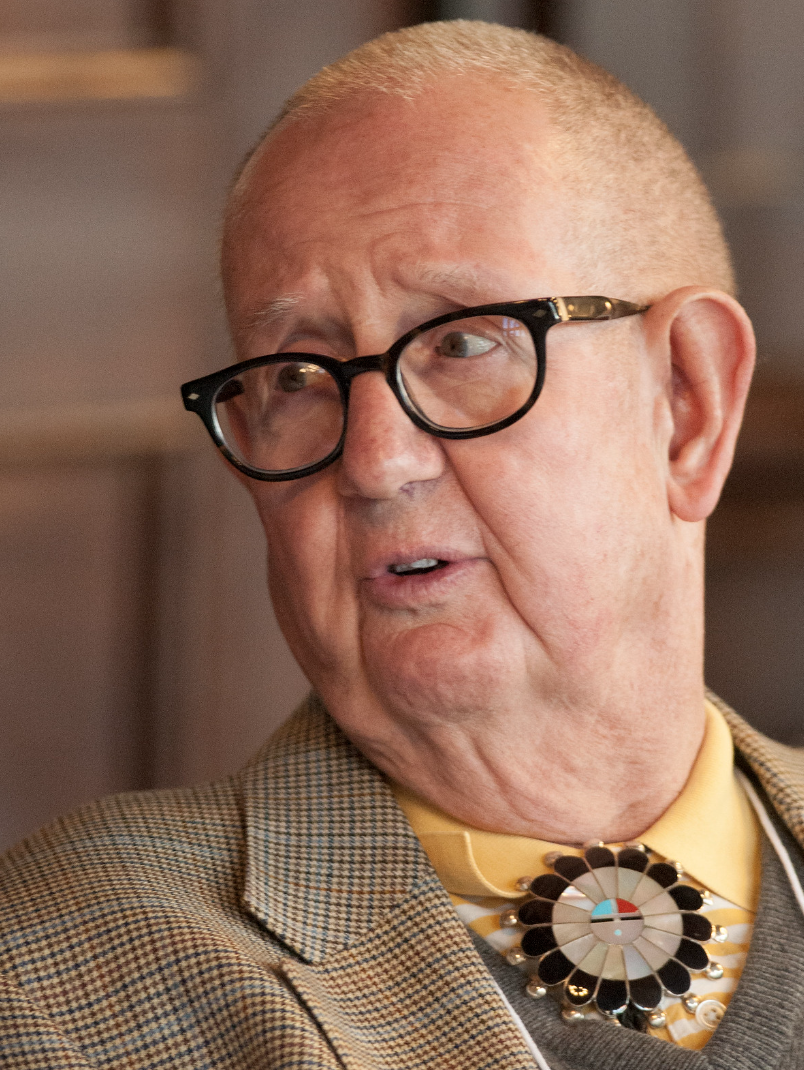 By Railfan & Railroad Staff
The Center for Railroad Photography & Art announced last week that it was receiving a major financial gift totaling more than $1 million from the estate of the late Ronald C. Hill. It is among the largest gifts ever to the non-profit dedicated to railroad imagery.
Hill was a masterful photographer who spent decades capturing dramatic images of railroading in the North American West. He died on January 23 at the age of 85.
“We’re over the moon and feeling tremendously grateful and humbled by Ron’s generosity,” said Scott Lothes, president and executive director. “As one of the West’s premiere railroad photographers, Ron had already made a lasting impact when he donated his collection to us. Words can’t fully express how grateful we are for Ron’s great confidence and trust in the Center.”
Hill was born in Illinois in 1937 and later moved to Colorado, where he would do some of his most memorable work. But he wasn’t contained by the boundaries of the Centennial State. Beginning in the 1960s, Hill crisscrossed the west in pursuit of dramatic images of mainline railroading, hitting such iconic mountain railroads as Montana’s Marias Pass, British Columbia’s Kicking Horse Pass and California’s Cajon Pass.
Over the years, he authored 12 books, including “Railroading West: A Contemporary Glimpse,” “Rails in the Northwest” with Dave Stanley, “Mountain Mainlines of the West,” and “Rio Grande in the Rockies.” Most of those titles focused on his own work, but he also co-authored “The Railroad Artistry of Howard Fogg” with Al Chione about the legendary rail painter. Hill served as president of the Colorado Railroad Museum from 1981 to 1994.
Hill became a member of the Center in 2015 and presented at its annual conference at Lake Forest College in 2016. In 2020, Hill donated his photo collection to the Center for Railroad Photography & Art. The collection includes more than 27,000 slides, negatives, and prints.
Lothes also thanked Center board chair Bon French; board member Michael Schmidt, who befriended Hill in his later years; Tim Tonge, a long-time friend of Hill who is helping with the remainder of Hill’s collection; and Jeff Brouws, who was friends with Hill for more than 50 years and helped bring the photographer’s collection to the Center.
“Above all, we are grateful to Ron Hill—a masterful photographer and a vital, colorful member of the railroad history scene and the railfan community—for his landmark gift that will support our programs for decades to come,” Center officials wrote in an announcement of the gift.


Video: A preview of the dance film “Skywalkers,” now playing at O’Hare International Airport. It is a collaboration between P-Top De La Cruz, Wills Glasspiegel and Winfield RedCloud Woundedeye. (Courtesy of “Skywalkers”)
Between the international arrivals and departures at O’Hare International Airport’s Terminal 5 move dancers with contrasting styles.
The movement comes courtesy of the film “Skywalkers,” a collaboration between the Chicago West Side collective the Era Footwork Crew’s P-Top De La Cruz and multidisciplinary artist Wills Glasspiegel, a pair WTTW News first introduced you to in September 2021.
New to their collaborative team is Native American dancer Winfield RedCloud Woundedeye.
“For the better half of the 1900s, it was illegal to dance the Native dance style,” Woundedeye says. “Laws were put into place to prevent Natives from expressing their culture but it’s had a big resurgence since then.”
He was tasked with connecting the movements of footwork and Native dance.
“Native American-style dance is very close to me because I feel super connected with my people when I dance,” he said. “It was incredible to work with P-Top and the Era, sharing moves and learning the history of footwork, and teaching them the history of Grass dance.”
Both styles of dance have Chicago and American roots, says Woundedeye.
“Footwork originated here and the Grass dance originated not too far from Chicago — in Omaha, Nebraska. That was before Western colonization pushed us west,” he said. “Footworking and Grass dance has a lot of face and feet movement. Grass dance might not be as elaborate, but we still move our feet.”
P-Top said the collaboration was a rewarding one.
“It helped me take footworking to the next level. Our language is dance,” P-Top said. “Seeing the similarities of indigenous style dance when Winfield would break it down, and seeing certain movements that aren’t too far apart — it was a connection. It encouraged me to think outside the box.”
Filmed at the Willis Tower, on the lakeshore at the Promontory Point with the city’s skyline in the background and other locations, “Skywalkers” is set to play on a permanent loop as part of the largest public commission to Chicago artists through DCASE in three decades.
“We wanted to connect themes between dance and flight,” Glasspiegel says. “Everyone has their own take on what that means.”
It’s also a new stage for footwork, which Glasspiegel says has often been performed in basements and roller rinks.
“Winfield expressed powwows often happen outside of the city, often more rural areas,” Glasspiegel said. “So we want to show that these dances are at the height of the city. They deserve to be on our tallest tours and also ground us too.”
For Woundedeye, this celebration of flight and dance excites him, as he has future aspirations to become a pilot. But that’s not the only place his creative talent lies. He also sews his own regalia, which is described as clothing or adornments that Native Americans wear during powwows or social dances.
“We don’t call them costumes,” Woundedeye says. “ … For us, this is who we are, it is our identity. We don’t dress up to be something we’re not. When we wear these outfits, it’s the most formal wear that we can wear. The craftsmanship is more intricate than any blazer or pants I’ve ever worn. The original style of Grass dancing wasn’t flamboyant. As Natives, we use this dance in a humble way to convey prayers and thoughts. We use it to show the brilliance of our people.”
“Skywalkers” also includes movement by dancers Ladybug Williams, Steelo Lofton, Ziggy Simone, Litebulb Oliver, as well as female First Nations dancer Kisis.
“Her dance imitates butterflies, or flight if you will,” Woundedeye says. “The dance you see by her is called the Fancy Dances. It imitates a butterfly flying through the wind.”
Woundedeye said he hopes travelers passing by will see that dance is always evolving.
“As a Native American, … I’m in classrooms, and a lot of people think we’re extinct,” he said. “The installation, at least for Native people when they enter Terminal 5, I hope they see that were still here. Our existence is our resistance.”
Follow Angel Idowu on Twitter: @angelidowu3
Angel Idowu is the JCS Fund of the DuPage Foundation Arts Correspondent.


Teen and adult artists are invited to participate in the Parkersburg Art Center’s “Chalk The Block” event on Saturday, Oct. 14. (Photo Provided)
PARKERSBURG — The Parkersburg Art Center is asking teen and adult artists to participate in “Chalk The Block” on Saturday, Oct. 14, as part of the annual ArtOberfest.
To participate in “Chalk The Block,” you need to reserve your space and set of chalk pastels by completing the online registration https://www.parkersburgartcenter.org/upcomingcurrent-events. The first 24 artists to register will receive a 48-color set of chalk pastels to use. Registration will remain open through Oct. 12.
Your “canvas” will be a square of sidewalk roughly 4’x4′ or 6’x6′ on the sidewalk along Market Street between Eighth and Ninth streets. The size of the work is the artist’s choice. The Art Center and the Chalk the Block event sponsor, Artsbridge, will provide the chalk, and you provide your other supplies (stool, water, rags, brushes, tape measures, etc).
This year the festivities will also include pizza, water, soda and music by DJ Casey Powell. ArtBeat Studio will be set up on the street offering a community project for all to enjoy and there will be an open area for artists of all ages and abilities to draw without being registered participants.
Artists can start work as early as 1 p.m. on Oct. 14, but all work should be finished by 5 p.m. that evening. Chalk the Block and ArtOberfest attendees will be encouraged to walk the Chalked Block and vote for the chalk art pieces that speak to them.

Teen and adult artists are invited to participate in the Parkersburg Art Center’s “Chalk The Block” event on Saturday, Oct. 14. (Photo Provided)
People’s Choice Awards will be cash prizes offered in adult and teen categories. There will be first and second place in each. Prize packages will be awarded on Oct. 17.
If the weather doesn’t cooperate, Chalk the Block will be rescheduled to another date.
Directly following Chalk The Block, ArtOberfest will open from 5-9 p.m. on the 700 block of Market Street. Artists will fill the street with unique and hand-crafted items for your shopping pleasure. Entertainment for the evening will include performances by Evie Schaffer, Evan Cunningham, Moonking and Division Street. Attendees will be able to enjoy great food and drink from WineDown on Market, Royally Baked WV, DJs Sweet Creations, Sips Coffee and Parkersburg Brewing Company.
The Art Center and the PAC713 Market will also be open all evening.
Both Chalk the Block and ArtOberfest are free, but donations will be accepted and all proceeds support the Art Center’s free community outreach activities, scholarships for youth art classes and the establishment of a senior art studio.
If it rains, ArtOberfest will move indoors at the Art Center at Eighth and Market streets.
The Parkersburg Art Center thanks its title sponsor Bill Bailey Insurance, and its other generous sponsors West Virginia University at Parkersburg, Artsbridge, United Bank, Joe Munoz, Discount Pool Supply and Downtown PKB. The festivities are also made possible with the help of Parkersburg Brewing Company, WineDown on Market and the crew at ArtBeat Studio.
For more information about this event or other artful activities at the Parkersburg Art Center visit the website www.parkersburgartcenter.org, email info@parkersburgartcenter.org or stop into the gallery at 725 Market St. in downtown Parkersburg. The Art Center is open from 10 a.m. to 5 p.m. Tuesdays through Saturdays.





