
In an exciting revelation for the archaeological community in Mexico, an Atlantean sculpture has been discovered on the path that will lead to a new section of Chichén Itzá.
Historic Atlantean Sculpture Unearthed at Chichén Itzá’s New Zone


One of our favorite things about writing the Buzz is learning more about our fascinating neighbors, like Pen Densham. Well-known as an accomplished film and television producer, writer, and director, Densham is also a photographer.
Densham began his career in still photography, but abandoned it to develop his career in film and television. The longtime Windsor Square resident, who now lives in West Hollywood, told us his interest was piqued a few years ago when he saw the photography of his teenage daughter taking a high school photography class.
“Her work was so free, it was inspiring,” explained Densham. Since returning to photography and now using a digital camera, Densham has developed a unique body of impressionistic images inspired by nature. Recently Densham invited us to take a look at his work.

“I was raised loving photography. My mother and father made 35 mm theatrical short films. I even rode an alligator in one at the age of four. Cameras seemed like magician’s instruments. I yearned to cast “spells” with them,” wrote Densham in the introduction to one of his photography books, filled with images inspired by his koi pond.
“Casting a spell” is a theme throughout Denham’s work. His images are very large, some as large as six feet. The sense of motion and vibrant color draw the viewer in. His work is inspired by nature and is created without any manipulation of the digital images in Photoshop.
“I keep it very simple,” explained Densham. “I don’t know how to do any of that. I’m interested in creating something you’ve never seen.”
“Waiting, by a wind blown tree, a wave smashed beach, a vigorous mountain stream. I want to pull everything in the world through my lens. I want to paint with the sun, at a 186 thousand miles a second,” wrote Densham on his website.

Once captured by the camera, the images are beautifully printed on very large paper, which adds depth to the image, drawing the viewer deeper into the image trying to figure out what you are looking at. Naturally, we asked as he gave us a tour of Schoos Design where much of his work is displayed. Densham explained we were looking at a reflection, or a plant rippling in the breeze or a wave. He has managed to cast a spell with his camera and capture a moment on film that we would never have seen otherwise.
Densham said he will often wait until he finds the right moment to snap the shutter, and thanks to digital photography he can take hundreds of shots, overexposing some or using long blurring shutter speeds to create just the right image. He loves finding patterns and developed a series of images where he folded the image on itself, creating a mirrored reflection.

Densham brings his filmmaker’s eye to still photography, creating dynamic moving images. He made a conscious decision to forget about all the rules of photography that he learned years ago in his search for “qualia,” the philosophical term for experiences that have no words, just feelings. The images are colorful, cheerful, and uplifting. Abstract and yet familiar. What a treat to explore with the artist!




A German wildlife photographer managed to get some amazing shots by entering the metaphorical lion’s den and encountering a not-metaphorical pack of wolves.
The photographer in question is 20-year-old Meline Ellwanger, who goes by @meline.wildlife on TikTok and @meline.ellwanger on Instagram, shared a video of her being surrounded by 13 wild wolves in the Arctic. Her video has already accrued over 14.6 million views at the time of writing.
“During my visit to the Arctic, something incredible happened,” the social media video says before panning around to show the intrepid photographer indeed surrounded by a literal pack of fierce-looking and technically dangerous wolves.
@meline.wildlife Surrounded by 13 wild wolves in the Arctic
Of course, one look through the video will show that these fierce predators certainly aren’t behaving as dangerous as their reputation may indicate.
In one shot, one of the wolves “menacingly” puts its front paws forward as it stretches its back. Other shots showed the wolves all together howling, tails wagging.
 Olaf, a 9-month-old Arctic wolf, is pictured inside an open-air enclosure at the Royev Ruchey Zoo in Krasnoyarsk, Russia January 11, 2019. (credit: REUTERS/ILYA NAYMUSHIN)
And in another shot, a wolf assumes what must be some sort of devious hunting position by rolling around on its back, paws tucked in, and fearsome belly exposed.
In the comments on TikTok, viewers expressed some of their shocked and horrified thoughts at this sight of pure terror.
“Look at all those good doggos!!” one commenter wrote. “I’ve experienced wolves howling and I bet that was the most magical moment.”
A third commenter stated, “My toxic trait is I’d pretend I tamed them and now I’m the goddess of wolves.”
“If not friend, why friend-shaped?” pondered another viewer.
“They were letting all the other wolves know you’re a homie,” said another.
Several commentators also pled with Ellwanger, praying she had the foresight to shout “BIG STRETCH” at the first wolf she cut to in her video. Another viewer asked if she had found the three wolves in the famous laughing wolves Internet meme.
Other commenters legitimately described how terrifying the situation must have been.
“Isn’t this an ambush?” asked one viewer.
“Am I the only one who would run for her life?” asked another. “I mean they are fluffy, yes, but they are wolves.”

ATLANTA, Aug. 29, 2023 /PRNewswire/ — Clark Atlanta University Art Museum is among several HBCU museums and galleries to have artwork featured in the Metropolitan Museum of Art’s upcoming exhibition, “The Harlem Renaissance and Transatlantic Modernism.” The exhibition is scheduled to run from February 25 through July 28, 2024.
“Through some 160 works, it will explore the comprehensive and far-reaching ways in which Black artists portrayed everyday modern life in the new Black cities that took shape in the 1920s–40s in New York City’sHarlem and Chicago’sSouth Side and Nationwide in the early decades of the Great Migration when millions of African Americans began to move away from the segregated rural South. The first survey of the subject in New York City since 1987, the exhibition will establish the Harlem Renaissance as the first African American–led movement of international modern art and will situate Black artists and their radically new portrayals of the modern Black subject as central to our understanding of international modern art and modern life.” The MET News Release
CAU Art Museum’s Woman in Blue, a painting by William H. Johnson, is the signature image for all media and banners for the exhibition. The portrait is of a Black woman in a vibrant blue dress, staring straight ahead but facing forward, seated sideways on a wooden chair.
“The colors are striking,” said Danille K. Taylor, director of the Clark Atlanta University Art Museum, in an article appearing in the New York Times announcing the exhibition. “It’s the angle that she looks at you. The colors and texture give it a three-dimensional quality.”
The CAU Art Museum loaned the MET four additional paintings: Woman with Kerchief by William Artis, Mr. and Mrs. Barton by John N. Robinson Jr., Friends by Margaret Taylor Goss, and Pickets by Roy DeCarava. Denise Murrell, the Merryl H. & James S. Tisch Curator at Large at the MET, researched and traveled to several HBCUs over a two-year period identifying pieces for the exhibition. The MET provided funding for conservation of Woman in Blue. Fisk University Galleries, Hampton University Art Museum, and Howard University Gallery of Art Howard, Fisk also loaned pieces to the exhibition.
About Clark Atlanta University
Clark Atlanta University was formed with the consolidation of Atlanta University and Clark College, both of which hold unique places in the annals of African American history. Atlanta University, established in 1865 by the American Missionary Association, was the nation’s first institution to award graduate degrees to African Americans. Clark College, established four years later in 1869, was the nation’s first four-year liberal arts college to serve a primarily African American student population. Today, with nearly 4,000 students, CAU is the largest of the four institutions (CAU, Morehouse College, Spelman College, and Morehouse School of Medicine) that comprise the Atlanta University Center Consortium. It is also the largest of the 37-member UNCF institutions. Notable alumni include James Weldon Johnson, American civil rights activist, poet, and songwriter (Lift Every Voice and Sing, “The Black National Anthem”; Ralph David Abernathy, Sr., American civil rights activist; Congressman Hank Johnson, Georgia District 4; Kenya Barris, American award-winning television and movie producer; Kenny Leon, Tony Award-winning Broadway Director; Jacque Reid, Emmy Award-winning Television Personality and Journalist; Brandon Thompson, Vice President of Diversity and Inclusion for NASCAR; Valeisha Butterfield Jones, Chief Diversity and Inclusion Officer at the Recording Academy. To learn more about Clark Atlanta University, visit www.cau.edu.
 View original content to download multimedia:https://www.prnewswire.com/news-releases/clark-atlanta-university-art-museums-woman-in-blue-is-signature-marketing-image-for-mets-harlem-renaissance-exhibition-301912998.html
SOURCE Clark Atlanta University

ATLANTA, Aug. 29, 2023 /PRNewswire/ — Clark Atlanta University Art Museum is among several HBCU museums and galleries to have artwork featured in the Metropolitan Museum of Art’s upcoming exhibition, “The Harlem Renaissance and Transatlantic Modernism.” The exhibition is scheduled to run from February 25 through July 28, 2024.
“Through some 160 works, it will explore the comprehensive and far-reaching ways in which Black artists portrayed everyday modern life in the new Black cities that took shape in the 1920s–40s in New York City’s Harlem and Chicago’s South Side and Nationwide in the early decades of the Great Migration when millions of African Americans began to move away from the segregated rural South. The first survey of the subject in New York City since 1987, the exhibition will establish the Harlem Renaissance as the first African American–led movement of international modern art and will situate Black artists and their radically new portrayals of the modern Black subject as central to our understanding of international modern art and modern life.” The MET News Release
CAU Art Museum’s Woman in Blue, a painting by William H. Johnson, is the signature image for all media and banners for the exhibition. The portrait is of a Black woman in a vibrant blue dress, staring straight ahead but facing forward, seated sideways on a wooden chair.
“The colors are striking,” said Danille K. Taylor, director of the Clark Atlanta University Art Museum, in an article appearing in the New York Times announcing the exhibition. “It’s the angle that she looks at you. The colors and texture give it a three-dimensional quality.”
The CAU Art Museum loaned the MET four additional paintings: Woman with Kerchief by William Artis, Mr. and Mrs. Barton by John N. Robinson Jr., Friends by Margaret Taylor Goss, and Pickets by Roy DeCarava. Denise Murrell, the Merryl H. & James S. Tisch Curator at Large at the MET, researched and traveled to several HBCUs over a two-year period identifying pieces for the exhibition. The MET provided funding for conservation of Woman in Blue. Fisk University Galleries, Hampton University Art Museum, and Howard University Gallery of Art Howard, Fisk also loaned pieces to the exhibition.
About Clark Atlanta University
Clark Atlanta University was formed with the consolidation of Atlanta University and Clark College, both of which hold unique places in the annals of African American history. Atlanta University, established in 1865 by the American Missionary Association, was the nation’s first institution to award graduate degrees to African Americans. Clark College, established four years later in 1869, was the nation’s first four-year liberal arts college to serve a primarily African American student population. Today, with nearly 4,000 students, CAU is the largest of the four institutions (CAU, Morehouse College, Spelman College, and Morehouse School of Medicine) that comprise the Atlanta University Center Consortium. It is also the largest of the 37-member UNCF institutions. Notable alumni include James Weldon Johnson, American civil rights activist, poet, and songwriter (Lift Every Voice and Sing, “The Black National Anthem”; Ralph David Abernathy, Sr., American civil rights activist; Congressman Hank Johnson, Georgia District 4; Kenya Barris, American award-winning television and movie producer; Kenny Leon, Tony Award-winning Broadway Director; Jacque Reid, Emmy Award-winning Television Personality and Journalist; Brandon Thompson, Vice President of Diversity and Inclusion for NASCAR; Valeisha Butterfield Jones, Chief Diversity and Inclusion Officer at the Recording Academy. To learn more about Clark Atlanta University, visit www.cau.edu.
SOURCE Clark Atlanta University


… it was a beautiful day and I got to spend time with two favorite endeavors … working with gem material and working on photos that I have captured … terrific day!
The photo above is a great blue heron that I shot a while back at Lake Pleasant as he gazed off into the eternal light facing life … proffering himself as a willing recipient of all that is and that which is to come … or so it seems … to me.
Below is a shot of a young couse whitetail deer in our back yard earlier this year … a young buck and a nod of recognition before he continued on his way.
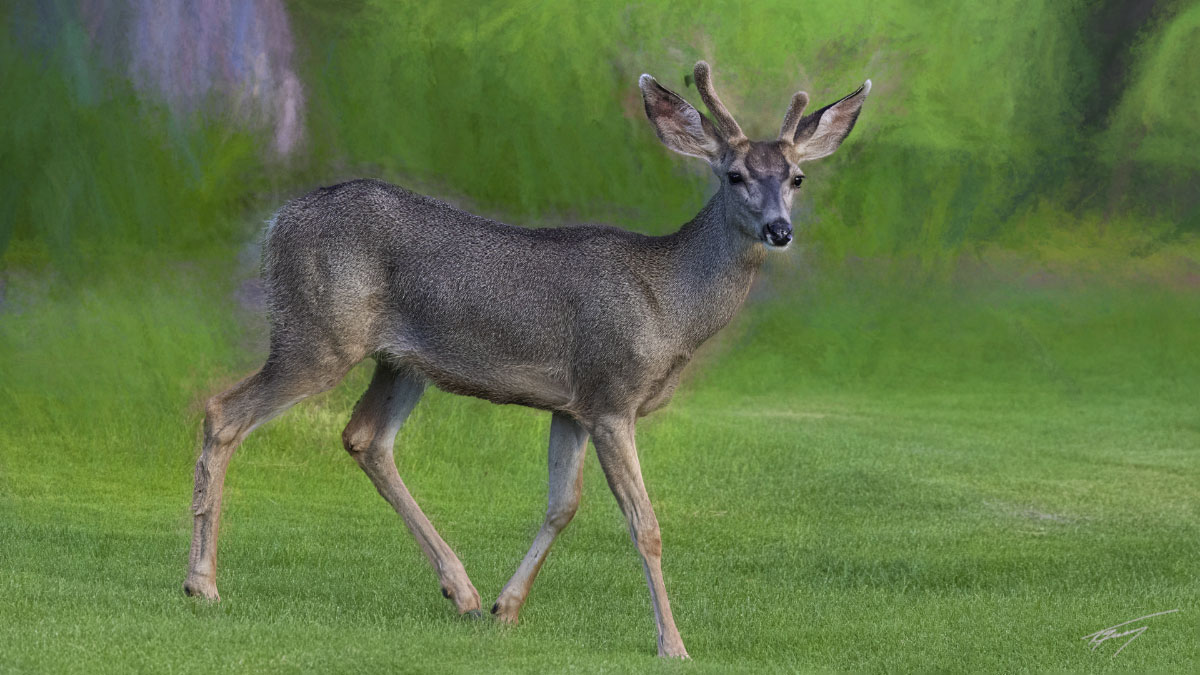

Life is good and it abounds everywhere we look … all of us including other species face the same challenges daily … providing for our needs and making it through the day. We ponder that which is to come and daily interact with others … be kind and extend a hand to others … share smiles and you will bring one to another person.
Keep breathing and live life … it is an awesome opportunity we have every day!
With joy!
Ted
Though I know I shall sometime no more open
my eyes to the night or day,
I am one who looks at the stars when unchained from
the work-bench at nightfall.

They are a sign that I am not ephemeral, not you, nor
you, whoever you are.
The dawn comes and the dark and the sign sparkling
in the brooding night forever and forever.
At Nightfall by Max Ehrmann
###
 The easiest way to reach Mr. Grussing is by email: ted@tedgrussing.com
In addition to sales of photographs already taken Ted does special shoots for patrons on request and also does air-to-air photography for those who want photographs of their airplanes in flight. All special photographic sessions are billed on an hourly basis.
Ted also does one-on-one workshops for those interested in learning the techniques he uses. By special arrangement Ted will do one-on-one aerial photography workshops which will include actual photo sessions in the air.
More about Ted Grussing …

This is an advertisement

Artist Whit Olsen, an Orem native, captures identity and memories in her art with passion and a pocket full of flowers.
Her journey into floral art began in 2019 when Olsen’s husband gifted her a flower press for Christmas. Growing up in an artistic home, Olsen said she looked for her artistic niche for a long time before finding what truly inspired her.

“Everyone is an artist, you just have to find out what kind,” Olsen said.
Olsen presses her own flowers and frames them in glass, preserves them inside jewelry, attaches them to candles, sells them as original prints, creates custom works and creates what she calls her “flower girls,” one of her most popular creations.
For her flower girls, Olsen arranges flowers and petals into human representations.
“The petals fell out of the press and it looked like a little skirt and I was like ‘wait a second, I can make a girl out of this.’ And that’s how it started,” Olsen said.
Olsen said she received an enormously positive response from the community and often hears stories of people seeing themselves or their loved ones in the flower girls.
“People come up and they’re like ‘I saw this and it spoke to me and I’ve got to have it.’ It makes me feel so good because I hope that it speaks to people,” Olsen said.
Olsen grows most of her flowers at home in her garden, or sources them through other local growers.


Olsen said she felt more connected to family and nature since creating art with florals, especially when she uses the flowers she and her husband grew themselves.
Olsen’s mother is a florist, and that family connection means a lot to her. Olsen said she notices an added spiritual boost and sense of mindfulness come into her life when she works with flowers.
“I feel close to my Creator when I’m in nature. … I notice all the little things like how many butterflies we have on average each day in our front yard, or other things I’ve never noticed before, like what kind of insects like our yard like bumblebees and dragonflies,” Olsen said. “I’m taking in the small things a lot more.”
Along with her using her own flowers, Olsen takes custom orders, often preserving flowers from weddings, proms and funerals.
“When I’m creating art from flowers that someone has given me I take it seriously, especially funeral flowers. That is like the most sacred art I can do,” Olsen said.
Olsen is self-taught. She initially dove deep into YouTube tutorials and learned everything she could, with lots of trial and error. She currently sells her art on Instagram, Etsy and at local markets. She also takes custom orders via Instagram messages and teaches workshops.


In July, Olsen worked with the Sun River Gardens to teach flower pressing techniques. She has also worked with Utah lettering artist Betsy Goodman.

Olsen and Goodman connected over Instagram as local Utah artists, and Goodman expressed an interest in learning how to press flowers to include them in the wax seals she creates.
“The very first time I met her it was just like meeting an old friend. It’s kind of like I felt like we were already friends,” Goodman said.
Olsen then invited Goodman into her home to teach her the basics of flower pressing.
“Not only is she just pressing flowers and making her artwork, she’s involved in the whole process, especially with ones she grows herself,” Goodman said.
Since then, Olsen and Goodman have collaborated together in Goodman’s subscription box program, teaching a workshop to participants on how to dry flowers and include them in wax seals and lettering art.


Olsen’s younger sister, Courtney Campbell, is a Provo photographer and has seen Olsen’s “addiction” grow and enrich Olsen’s life. Campbell said she loved seeing Olsen’s artistic pursuits come to life through florals.
“Whit ventured into so many different ways to showcase the flowers, choosing different flowers, doing different designs, everything like that,” Campbell said. “I know she started mainly with flower girls, but it’s so cool to like see her do these big pieces, bouquets, the necklaces, the candles like, she’s added so much into her creative realm.”
Campbell owns several pieces of Olsen’s artwork and promotes them when she can.


“I get compliments on every piece that I have from her. And I just think, like, it brings me so much happiness because I’m such a nature child. And so is she. And so bringing that aspect into a house is so happy,” Campbell said.

Olsen considers her art mainly a creative outlet, and currently has no plans to take on her business full-time.
“Selling the art supports my addiction to making the art,” Olsen said.
Olsen will be selling her artwork at the upcoming September Beehive Bazaar and is always taking orders via Instagram.


The art market is moving closer and closer to Indigenous villages. In recent years, several exhibitions have been held abroad that focused on Indigenous peoples from Brazil and Latin America, giving unprecedented visibility to their artists, historically erased by gallery owners and museums.
At this time of high demand for Indigenous art, Europe is also debating how colonialism usurped Amerindian culture and wrongly appropriated its artifacts. An example is the 16th-century Tupinambá mantle at the National Museum of Denmark, which will be returned to Brazil after three centuries in the institution’s collection. A late reckoning.
Such renewal in the circuit shows how art and politics are inseparable, and it may guide exhibitions and change curators’ colonial thinking. This is the case of Siamo Foresta, an exhibition that opened at Milan’s La Triennale in June, gathering works by 27 artists related to the Amazon Rainforest. They include Indigenous collectives such as the Yanomami Group, one of the best known in the country, with artists such as André Taniki, Sheroanawe Hakihiiwe, Vital Warasi and Joseca Mokahesi.
This is the collective’s second international exhibition in 2023, after The Yanomami Struggle, at The Shed culture center in New York in February. Alongside the work of photographer Claudia Andujar, who has documented changes in the Yanomami Territory for 50 years, the artists showed, in the largest U.S. city, the struggle of a people who have recently faced one of their worst humanitarian tragedies.

French anthropologist Bruce Albert, the exhibition’s curator, pointed out in a statement to the press that “Siamo Foresta stages an unprecedented encounter between thinkers and defenders of the forest; between Indigenous … and non-Indigenous artists.” The exhibition “draws its founding inspiration from this aesthetic and political vision of the forest as an egalitarian multiverse of living beings, human and non-human and, as such, offers the vibrant allegory of a possible world beyond our anthropocentrism.”
This important role played by today’s Indigenous artists has drawn the attention of the international community, which is beginning to see the history of Indigenous peoples’ art in a different light, says curator Edson Kayapó, a member of the Mebengokré Indigenous community. He is co-responsible for programming at the Indigenous Histories department of the São Paulo Museum of Art Assis Chateaubriand (MASP). “We Indigenous peoples have always been here, producing art. And now that society has the opportunity to see this in great depth, it is important to debate issues that have been dragging on for some time,” he says.
Edson Kayapó mentions a point addressed by Albert when he explains that, from the Eurocentric point of view, “man had to dominate nature because it is hostile.” He points out that the COVID-19 pandemic was one of the factors that expanded discussions on our codependency with nature. “After that world crisis, people had to open their eyes. There are U.N. studies mentioning the possibility of new and worse pandemics if we keep devastating the system of biomes. We now face a major climate problem: The Earth is getting hotter and therefore the human project is in a crisis,” the researcher adds.

Edson Kayapó points out that the role of today’s Indigenous art goes beyond exposing socioenvironmental problems; it is a means of preserving traditions and everyday ritualistic acts, something that can be seen in the visions of the Mahku collective, created by the Huni Kuin people, who are also participating in the Siamo Foresta exhibition.
“Mahku is a very sound resistance act, which arises from an artistic and educational project within Indigenous communities. They say, ‘We sell land to demarcate our territories,’ ‘We make art to fight drugs and any other vice within the community,’” says Edson Kayapó.

One of Mahku’s best-known members, Cleiber Bane takes part in Siamo Foresta alongside names like Sheroanawe Hakihiiwe from the Venezuelan side of the Yanomami community, who had a solo exhibition at MASP in July and August. There are also works by Jaider Esbell, from the Makuxi people, one of the biggest names in today’s Brazilian Indigenous art.
Over the last decade, Esbell was responsible for a network that supported Indigenous artists as they established themselves on the circuit and brought many of them along in the wake of his meteoric career. In addition to taking ancient knowledge such as songs and myths of his people beyond Indigenous lands, the artist, who was born in the Raposa Serra do Sol Indigenous Territory in Roraima, used his work to denounce crises in the territory, in addition to being a critic of the art scene itself.
One of the most notable artists of the 34th São Paulo International Art Biennial, Jaider Esbell took his own life at the height of his career, in November 2021, in the same week he exhibited his works at the pavilion. His paintings were covered by black cloths. It was not only a shock to the art field and Indigenous communities but also a warning about the processes of the art market.
The Jaider Esbell Art Gallery was then created in Boa Vista, Roraima, to manage the artist’s estate and keep his legacy alive. A year later, in 2022, Esbell’s work was featured in Le Vivants, a collective exhibition of Amerindian artists in Lille, France, and some works were acquired by museums around the world such as Paris’ Centre Pompidou.

In addition to the political nature of the works, the alignment between aesthetics and cosmology is a strong feature of Indigenous artists’ works, as reported by sculptor Mayawari Mehinako from Kaupüna village in Xingu, who traveled to Japan in 2019 to open the exhibition BEĨ Collection: Indigenous Banks of Brazil. Such pieces have become objects of desire for the Brazilian intellectualized middle class and each cost an average of 5,000 reais (about $1,270 at the time).
With examples from 43 Indigenous peoples in Brazil, the BEĨ Collection became “a way of disseminating the millennia-old Indigenous culture,” says Mayawari about how Indigenous benches transcend their utilitarian nature. “They are not decorative items; they are [associated with] cosmology, [since there is a specific moment] for the use of each bench. Our life is strongly related to nature. Some animals are exclusive to the chief’s throne; there are figures for singers, shamans and women.”

Encouraged by his father, who was also a bench maker, to sculpt in order to preserve the images of endangered species such as birds, snakes and the giant armadillo, the largest armadillo in the world, Mayawari bridges the gap between collectors and the village. Thanks to his role as a mediator, several infrastructure works have been built in his community in recent years, such as a health center. The artist also says that a school will be built in the village, in addition to projects that seek to encourage handwork such as the creation of benches, ceramics and basketry. It’s just the beginning,” he says.
According to BEĨ director Tomás Alvim, more international exhibitions of the collection are already scheduled for next year in countries such as Portugal and Spain. Art dealer Carmo Johnson, who works with the Mahku collective, explains that the group will be responsible for a large mural on the main façade of this year’s Venice Biennale — a space coveted by artists from all over the world that opens the doors to a new panorama in the history of art.
Indigenous artists from the Amazon use art for environmental advocacy
Banner image: Siamo Foresta exhibition at La Triennale Foundation, in Milan, Italy. Image courtesy of Andrea Rossetti/La Triennale.
This story was first reported by Mongabay’s Brazil team and published here on our Brazil siteon Aug. 21, 2019.





