About

Posts by :

‘Folks of Duluth’ photographer profiles people of the street

‘Folks of Duluth’ photographer profiles people of the street

DULUTH — How would you respond to a stranger approaching you on the street with a camera, requesting to take your portrait and asking the soul-searching question: “What do you love about yourself?”

A thought-provoking conversation starter, indeed.

a woman in plaid with glasses

Folks of Duluth Photographer Max Brunner.

Contributed / Max Brunner, Folks of Duluth

Photographer Max Brunner admits the question catches many people off-guard.

“They hem and they haw. I’m realizing, wow, I don’t think we answer that question for ourselves enough,” Brunner said.

When asked what she loves about herself, Brunner pondered for a moment before saying, “I love my compassionate heart and my ability to overcome a lot of stuff.”

ADVERTISEMENT

Over 400 portraits and accompanying stories are posted to Brunner’s photography project called Folks of Duluth on

Facebook

and

Instagram.

Each portrait will be on display for exhibitions at Duluth Public Library on Thursday, Aug. 31 from 4-5 p.m. and at Zeitgeist Arts on Friday, Sept. 1 from 6-8 p.m.

“We are super excited to host Max Brunner’s exhibit at the library in partnership with Duluth Superior Pride,” Duluth Public Library Branch Supervisor Lori Crocker said. “We have art exhibit space in the library specifically so people feel represented as they come through the doors by the different artists in our community that we display. This exhibit in particular is the perfect representation of our diverse community. Max really does go out and photograph people in our community — just a variety of people and just a beautiful way of speaking their stories through these pictures.”

A woman smoking

Brandi told Folks of Duluth she loves that she’s artistic.

Contributed / Max Brunner, Folks of Duluth

“I’m really hoping that all of these framed prints will sell for $10 apiece and I could donate half of the proceeds to a couple of nonprofits in the area,” Brunner said.

Brunner studied digital art and photography at the University of Minnesota Duluth before graduating in 2013.

Now, she works as a representative payee for a Sauk Rapids nonprofit called

Independent Lifestyles

to serve veterans and people with disabilities. She transferred to the organization’s Duluth office in February.

“I was feeling lonesome and longed for human connection,” Brunner said.

On a whim, she began walking the downtown city streets with her Canon Mirrorless camera in hand.

ADVERTISEMENT

Ryanna Folks of Duluth.jpg

Ry’anna loves that she is beautiful — “I love my family and my cousins. I am confident and I love my hair and style.”

Contributed / Max Brunner, Folks of Duluth

In her quest, she’s meeting people from all walks of life — from children to elders.

“The struggle is real. Every single person is struggling, no matter what,” Brunner said. “And everyone is facing their struggles and overcoming them in some way, shape or form.”

Brunner said she doesn’t feel unsafe when approaching strangers, although their reactions vary.

“Some people are on guard. Some people say ‘no’ right away and walk away. Some people are really excited,” Brunner said.

Time spent connecting with others on the streets has been personally healing for Brunner, who hopes it brings healing to those sharing their stories, too, as well as for her audience.

“Every city needs this. I want to give a face to the unseen and a voice to the unheard, and I think I’m able to do that through Folks of Duluth because everyone should be honored and respected, and everyone deserves love no matter what their capacity to give. Even if they can give nothing,” Brunner said.

The front profile of an elderly woman

This Folks of Duluth portrait of Lisa is captioned, “I have been sober now for 13 years. In Duluth, I help the homeless by being there for them when they need someone to talk to, and I also bring them hats, gloves, socks during the winter months.”

Contributed / Max Brunner, Folks of Duluth

Many of her encounters are with the homeless community, and listening to the stories of their daily struggles resonates with Brunner.

“Sometimes I feel like I’m talking to my brother, in a way,” Brunner said. “My brother struggles with addiction and mental health. He is not capable of holding down a job nor is he able to live on his own. If my mom was not taking care of my brother, he would be homeless, or dead by now, and that’s the reality.”

ADVERTISEMENT

She continued, “With the anger that I’ve felt, I’m like, ‘Why don’t you kick him out? Why don’t you make him find a job? Why do you keep supporting him? He’s just using you.’ I’m not a mom, so I can’t put myself in her shoes.”

But after speaking with people who battle drug addictions, Brunner is learning that some folks use drugs to help with their internal pain, while others use drugs to help with external pain.

Edmund Folks of Duluth.jpg

Edmund said, “At one point I was a married man with a family. Had a nice home, had money. I have three kids but my middle child died two years ago just before Christmas. He was 32 years old. That hit very hard. I used alcohol to cope and it has caused many things to happen that no man or woman wants to live through, but yet, it happened. In time I was able to eliminate alcohol from my life, which is not easy but can be done.”

Contributed / Max Brunner, Folks of Duluth

“I can’t even imagine what these folks go through having to walk miles and miles every day with all of their belongings on their back,” Brunner said. “I’m so glad that these nonprofits who give out supplies exist because people are going to use no matter what, so why not give out unused needles?”

According to Brunner, local organizations such as

RAAN

and

Harm Reduction Sisters

that offer syringe services programs to injection drug users don’t enable drug use, but promote safety by helping to reduce the spread of HIV and Hepatitis C throughout the community.

At times, her portrait subjects will share the extenuating circumstances that have contributed to them becoming homeless.

A woman on the street, smiling from ear to ear

The caption of this Folks of Duluth portrait of Kathy Gaffke reads, “One time I was on my way to go do laundry, someone attempted to rob me and they fractured my skull. I now have a TBI. Businesses and people in general look down on people just because they are homeless. I have experienced that and it felt dehumanizing and unworthy. They look at the outside of us and they do not see what is going on in the inside nor the reason behind why I am homeless.”

Contributed / Max Brunner, Folks of Duluth

“Everyone, you or I, or the person at the bar up there, I think we are all one step away from becoming homeless. I mean, one hunting accident, one car accident, one snowmobile, one ski, one boating accident. …”

There are also many barriers to getting back on their feet. Some folks have felonies and are unable to get a job in Duluth or secure housing, Brunner said.

A woman in plaid with her white dog

In this Folks of Duluth portrait, Crystal said, “I got my dog and Phoebe is what keeps me going every day. There are so many places that won’t help me because I have a dog and well, I’m not turning my back on her because she has never turned her back on me.”

Contributed / Max Brunner, Folks of Duluth

The testimonials of the Folks of Duluth range from having gratitude for being alive, to heavy criticism of broken societal systems, city practices and nonprofit resources — revealing a dark underbelly of Duluth with a glimmer of hope.

ADVERTISEMENT

“Sometimes I feel like the city is trying to do everything within its power to get rid of the homeless folks,” Brunner said.

For instance, when the power was cut off to the lamp posts along Superior Street, one woman Brunner met was upset because she was no longer able to charge her cell phone.

“It felt like the city was cutting off lines of communication for people. I mean, not even tourists could charge their phones,” Brunner said.

Then there’s the closing of the skywalk system downtown over the weekends, and the lack of benches within the skywalk, Brunner added.

“Where are people supposed to go in the heat or the frigid cold?” Brunner asked. “I mean, who cares if a homeless person comes in and wants to rest their feet or take a nap on a bench?”

She believes the downtown workforce, elderly people and other members of the general public would also probably appreciate these simple improvements, too.

An elderly woman smiling

When Kay’s portrait for Folks of Duluth was taken, she said, “I have been in pain for the last six months and there isn’t anything, any pills, any medicine, that will help for this pain except for the opioids and they help, but you know, you can’t take them for life and I’ve been weaning off.”

Contributed / Max Brunner, Folks of Duluth

In another instance, Brunner met a new mother staying at

CHUM

who felt the organization should have helped her further to get into a different shelter, such as

Safe Haven,

so she could have her baby with her.

“I’m noticing that the stories they’re telling me, that they can be sitting outside of CHUM or what-have-you and people walk by with disgust on their faces, or they’ll pretend to be on their phone, or they’ll walk by with their head hanging down,” Brunner said. “A lot of the people that’s happening to makes them feel worthless — unhuman. A simple ‘hello’ would go a long ways.”

ADVERTISEMENT

A woman outside a tent

Jennifer loves that she doesn’t give up.

Contributed / Max Brunner, Folks of Duluth

Perhaps they’re not treated the same as everyone else because of the perception that homeless folks are lazy, or that they’re choosing to be on drugs or to be homeless, according to Brunner.

“I don’t think it’s really a choice,” she said. “I think the public should stop shunning homeless folks, or people in general. They’re just like us, they’re our neighbors. Help thy fellow neighbor, right?”

Others find shelter outdoors on public or private property, claiming they don’t feel safe at CHUM or the shelter is already at full capacity, Brunner said.

Woman on the street with glasses and dyed red hair.

A portrait for Folks of Duluth of Sirena, who said, “I stay with a friend here n’ there, but I mostly sleep outside. I would rather sleep outside than sleep at Chum. I have been homeless for a year.”

Contributed / Max Brunner, Folks of Duluth

“The city will come to campsites and kick people out after a week of being there. It’s like uprooting their lives after a week. Then they’ll go find another spot and the city will come and tell them that they have to go so they have to uproot their lives again and then find another spot,” Brunner said. “If they find a spot and they’re not harming anybody, why does the city have to keep shuffling people around?”

In Brunner’s opinion, the government has the power to create change and local nonprofit organizations such as Lincoln Park Children and Family Collaborative, Community Action Duluth, Life House, Safe Haven Shelter, Raan, Harm Reduction Sisters, Chum, Loaves & Fishes, Center for Changing Lives, Union Gospel Mission and AICHO can only do so much.

“The government expects all of these nonprofits to put an end to homelessness, etc. However, nonprofits are generally poor and these organizations are putting on fundraisers each year to not only keep their organization above water, but to also help the greater community. Our local government has access to land and even if our local government cannot fully fund a project, they can certainly make publicly owned land available to affordable developers in order to create more affordable housing in the area,” Brunner said.

At the end of the day, homeless individuals are exhausted just taking care of their basic self-care needs to live a humane life, Brunner explained.

A man next to a cart and tarp

This portrait of Justin is captioned: “… The cops come and say their spiel and tell me that I can go anywhere, just don’t block the sidewalk. I go across the street and I stop to get a drink a water and here comes the DTA official saying that I’m committing a felony because I’m blocking the buses. …”

Contributed / Max Brunner, Folks of Duluth

While Brunner doesn’t volunteer for any specific organization, she has helped those in need with rides from the grocery store to their campsite so they don’t have to wait two hours for a bus.

ADVERTISEMENT

“It hasn’t been taxing to me at all. It’s just made my heart bigger and my love for people grow, even for strangers I don’t know.”

If someone is really hungry, she’s provided rides to the

Damiano Center

or the

Union Gospel Mission,

where she will occasionally join them for a meal.

She encourages others to try it, “Maybe it would shed some light or something.”

Festival La Gacilly-Baden Photo: Shining a Light on Iran & Afghanistan Photography

Festival La Gacilly-Baden Photo: Shining a Light on Iran & Afghanistan Photography

The Festival La Gacilly-Baden Photo, from 15 June to 15 October 2023, features The Orient, emphasizing photography in Iran and Afghanistan. The photo exhibits are all outdoors over 7 kilometers (4.3 miles), making it the longest outdoor gallery, which a quarter million visitors will view.

This large outdoor Festival in Baden, Austria (25 miles southwest of Vienna) collaborates with Festival La Gacilly Photo in La Gacilly, Western France.

Photographers have always had difficulties with the authorities in Iran, as shown by PetaPixel time and again: Iranian Photographer Set To Shoot World Cup is Arrested and DisappearsFrench Photographer Gets 8 Years in Jail in Iran Over Drone PhotosThis Iranian Music Streaming Site is Photoshopping Women Out of Their Own Album CoversPhotos Show What Life Looked Like for Iranian Women Before 1979 Revolution.

Festival Director Lois Lammerhuber is concerned about the difficulties photographers face in Iran today.

“I think they [photographers] are doing the right thing,” Lammerhuber tells PetaPixel. “They stand up as good as they can. And some of them really take a big risk. Some of them have to feel the consequences, so others [can] go away. But altogether, I think they are incredibly brave, incredibly tough…contributing to society’s progress, and pushing through women’s rights.

“And they need to know they have to have a few artists around. I am not informed enough to judge Iran because it must be an incredibly complex society.”

Soori, a musician, in the middle of Kabul’s bird market. From the Pearl in the Oyster series. © FATIMAH HOSSAINI
© SARAH CARON
© WAKIL KOHSAR
A woman with her burqa lifted, wearing make-up, driving a car, and smoking: a criminal offense and provocation for the religious fanatics now in power. From the series Burqa Behind the Steering Wheel © FATIMAH HOSSAINI
© WAKIL KOHSAR

2023 is the sixth annual edition of the Festival, with 30 exhibitions from as many photographers, with 25 of them participating in person. There are about 1,500 photos distributed between a Garden Route and a City Route.

The largest print on display is about 23×12 meters (75×39 feet) by Rudolf Koppitz, an Austrian photographer best known for his works of the human figure and his use of the nude in natural settings.

Why a Photo Festival in Austria?

Lammerhuber, who has shot over 250 assignments for Geo (similar to Nat Geo in content and published from Germany) magazine since 1983, wanted to increase the awareness of photography in Austria.

GLOBAL PEACE PHOTO AWARD © Patricia Willocq
GLOBAL PEACE PHOTO AWARD © Kushal Gangopadhyay
Kijini Primary School students learn to float, swim and perform rescues on Tuesday, October 25, 2016, in the Indian Ocean off of Muyuni, Zanzibar © ANNA BOYIAZIS
This Empty World © Nick Brandt

“It might sound silly, but Austria is not a photography country,” admits the photographer with sadness in his voice. “There is no photography museum. In some museums, little things are going on, but not much. And the interest in photography [is not everywhere].

“People do not know the names of the important Austrian photographers like Inge Morath or Erich Lessing. The recognition is not there. That is not the case in France. I think every child knows about some of the prominent [French] photographers.

“In Vienna, I thought the first step is to make photography known by telling stories [through photographs]. Everybody is affected by these [photo] stories.”

From the Today’s Life and War series, 2008. © GOHAR DASHTI
Although the Taliban were not in power for 20 years (from 2001 to 2021), many women continued to wear the burqa. They were, however, able to take part in political gatherings, which had hitherto been forbidden. © Shah Marai.
Kabul. In front of the war-torn mausoleum of King Muhammad Nadir Shah of Afghanistan, who ruled the country from 1929 to 1933. © VÉRONIQUE DE VIGUERIE
A snapshot of life in a rural village, 1964. © PAUL ALMASY

The Festival is committed to environmental issues and has collaborated with Reporters Without Borders (Reporters sans frontières or RSF). RSF is celebrating its 30th anniversary by publishing an album of 100 photos by 100 photographers on the theme of The Tree – an emblem of the fight to preserve our environment. About 20 images are displayed near the tourism office.

A young mahout and his elephant in Chiang Mai, Thailand. © Steve McCurry/Magnum Photos.

This year, the notable Austrian photographer is Horst Stastny, a lover of B&W.

“I photographed Las Vegas – actually the most garish place imaginable – in black and white for Paramount,” says Stasny. “It took some convincing, but it turned out to be a very special project.”

Gmunden 1989. Wassertiefe | Water Depth 23 cm © HORST STASNY

The Challenges of an Outdoor Exhibit

CEWE Photo Award. Das ist mein Fisch! Category Animals © Roland Reitmaier (Austria)
© Erik Johansson
The rare foggy days in the region often give the wilderness area a mystical quality. © GREGOR SCHORG
© Gregor Schörg

Putting up an outdoor exhibit that remains open to the public day and night over four months has unique challenges.

“[There is] the hope that it is not vandalized or stolen,” says the director.

“I’m not here alone. It is a city of 25,000. So, I have also to respond to what people wish. It’s all about the acceptance of the public who live here. Let’s not forget that a festival of four months means that the picture is out there for six months [including installation and removal]. This is an incredible intervention for the look of the city. When the pictures are down, it looks calm. Completely different.

“[There is always] the hope that it will be accepted widely by the people who live there and not [just] the visitors who commute in and out of the exhibit. It’s the stage, you know. The visitors go into a museum or another place, but they matter to those living there. They’re the most important visitors, so to speak, because it’s their city with their kind of look.

KIADI KIBENI, THE PLASTIC WOMAN Artist: Sarah Ndele/Kimbangu Kalamu district in Kinshasa. © STEPHAN GLADIEU
TYRE MAN Artist: Savant Noir/Matonge Kimpwanza district in Kinshasa. © STEPHAN GLADIEU

“[To give you an example] last year we had birds facing extinction at a landmark place [and everybody loved the beautiful birds].

“This year we have artwork which deals with garbage, a serious problem in Africa, but very nicely photographed, very attractive photographs. It has a lot of humor, and you can look at it easily.

“But of course, some people [who live there and do not like it] say, ‘How can you do [put up garbage photos] that?”

BG/BRG Frauengasse, Klasse 2A begleitet von dem Fotografen © Christian Schörg.
© Mélanie Wenger

Big Festivals Need Big Budgets, and Canon is Not Interested in the Austrian Market

There are 1,500 prints at the Festival. And since it is outdoors, people will view them from a greater distance than a gallery show, and therefore, the images have to be generally printed large-sized. 60% of the images are on aluminum Dibond, the rest on canvas or fabric. This is a considerable expense, plus the cost of framing/installing the displays all over the city and ensuring that strong winds do not blow them away and injure people or damage property.

“1 million euros [$1,079,550] is the Festival budget,” explains Lammerhuber. “€192,000 comes from the city of Baden [Beethoven, during the summers of 1821, 1822, and 1823, wrote substantial parts of the 9th Symphony here]. And from the government of Lower Austria another €80,000 and the remaining from sponsors, which number about 80.

“Austria is not a photography country. You do not find main [big, single] sponsors. Leica, a sponsor, has a solid connection to Austria and is owned by an Austrian, and another main sponsor is Cewe.

“All [30] participating photographers receive the same amount, €2,000 [$2,160] and, of course, all travel expenses. If they give a talk, it depends on what it is, where it is, and how I can finance it. They get an extra €500, €750, or €1,000.

“They [Leica, Cewe] are strong in Austria, but Canon and all the others are not interested. I even have it in writing. They tell me, ‘This is no market. Don’t contact us again. Austria is no market.”

“[Austria has a population of] just 9 million people [which is like the population of New York City]. They tell me, ‘Why don’t you do it in Germany? We’re on.’ It’s not unfriendly. You know how companies think…they have the market and a budget for photography. But if there’s no market, there’s no budget.”

Ipoh, Malaysia, 1987. In a Quranic school. © ABBAS/Magnum
Tehran, Iran, 1997. Director Abbas Kiarostami on the hills surrounding the capital where he shot his film Taste of Cherry, which won the Palme d’Or at the Cannes Film Festival in 1997. © ABBAS/Magnum
Tehran, Iran, 2003. An actress gets her make-up done for a play to be performed at the City Theatre. © ABBAS/Magnum

Producing Colored Prints that Keep Photographers Happy

From the Reading for Tehran Streets series. © MARYAM FIRUZI
UNESCO World Heritage Wachau. Melk Abbey. © Nimo Zimmerhackl
© WAKIL KOHSAR
The Kuchis are Pashtun nomads native to Afghanistan. Bibi-Zorak, who says she is between 45 and 55 years old, has three sons and two daughters. Having lost her first husband, tradition dictated that she had to remarry her husband’s brother, Zahir Khan. © VÉRONIQUE DE VIGUERIE
From the An Elegy for the Death of Hamun series. Lake Hamun was once the seventh-largest lake in the world and the largest freshwater lake in Iran. After 18 years of drought, the province has been bled dry. Exodus is gradually becoming the only option, which comes with its own host of trials and uncertainties. © HASHEM SHAKERI

When so many photographers send files from around the world for printing in an outdoor exhibition, making prints that will make them happy with the colors, whether it is a cloudy day, bright sunlight, or dusk with some street lighting thrown in good measure, may be challenging.

“This is very easy,” says the photographer turned Festival director. “This is very easy for us because we are a publishing house [Edition Lammerhuber]. So, I have everything in-house.

“And we do quite a few books with National Geographic photographers. They sit in our studio for a week. They come to do the layout; they sit with the technicians. So, whatever files we get, we look at them, work on them, and proof-print them.

And if necessary, we check back with the photographers. Our studio has a huge terrace, and we always take the largest possible print into the sun. What you usually do for a book [is that] you try to find a place, you think, you could most likely be that you look at it. So, there should be a balance between red light, yellow light, sun, and the pictures must always work.

“Most of the pictures, we have to bring them down a little bit. So, maybe, let’s call it one stop, make them a little darker.”

The Indian government has issued more than 40 permits allowing private companies to operate coal mines. In all, nearly 350 million tonnes will be produced by 2030. © MONEY SHARMA
From the Reading for Tehran Streets series. © MARYAM FIRUZI

At next year’s Festival, two giants will be exhibiting – Martin Parr and Sebastião Salgado.

“I have a feeling that I know him [Parr] for 100 years,” says Lammerhuber. “Because he feels the pulse of our time. He is honest. He does go really close to people and shows us how we are. We are not models. We are ordinary people. We have our flaws, we have our beauty, we have everything. And he can make this visible and always with a lot of humor. That is maybe the most influential voice in photography currently.

“Salgado has found a way to become an ambassador for nature for the world and mankind. The first images I saw about his work have been so full of poetry. Amazingly, I bought a few of them [prints] because I thought I had to have them nearby in my house, which was also seen by others. At the heart of all his work is Amazônia.”


About the author: Phil Mistry is a photographer and teacher based in Atlanta, GA. He started one of the first digital camera classes in New York City at The International Center of Photography in the 90s. He was the director and teacher for Sony/Popular Photography magazine’s Digital Days Workshops. You can reach him here.


Image credits: All photos courtesy of Festival La Gacilly-Baden Photo, Baden, Austria.

World’s Largest Holstein Cow Sculpture: world record in New Salem, North Dakota

World’s Largest Holstein Cow Sculpture: world record in New Salem, North Dakota
New Salem, North Dakota, United States–Salem Sue (also known as The World’s Largest Holstein Cow), a giant fiberglass Holstein cow sculpture located in New Salem, North Dakota, United States, was built in 1974 for $40,000, by donations from local farmers and residents, and was sponsored by the New Salem Lions Club in honor of the local dairy farming industry; the statue stands 38 feet (12 m) high and 50 feet (15 m) long and weighs about 12,000 pounds (5,400 kg), setting the world record for being the World’s Largest Holstein Cow Sculpture, according to the WORLD RECORD ACADEMY.

Street Photography Now is still a MUST-READ book, even 13 years later!

Street Photography Now is still a MUST-READ book, even 13 years later!

If you’re serious about shooting street photography or are thinking of purchasing one of the best cameras for street photography so you can take images like Alan Schaller or Henry Cartier-Bresson, then Street Photography Now is a must-read. Edited by Sophie Howarth and Stephen McLaren, published by Thames & Hudson, it was first published in 2010 – but is still the best book on the genre 13 years later.

(Image credit: Future)

This remarkable book features tons of contemporary street photography by some of the biggest names in the genre including,  Joel Meyerowitz, Carolyn Drake, Alex Webb, Martin Parr, and Matt Stuart (whose images flaunt the front and back cover) to name but a few, the whole book actually features the work of 46 photographers around the world, each with their own unique style and way of capturing street photography around the world.

As someone who has transitioned to street photography, I can’t count how many times I have opened up this book over the years to gain inspiration and insight into how to make my street photography better.

This book demonstrates that this vast genre of photography is forever changing and evolving as time goes on and showcases some fabulous work that really needs to be seen to be believed.

See our guide to the essential street photography tips

(Image credit: Future)

(Image credit: Future)

Spanning 301 photographs in black and white and color totaling 240 pages this book is an amazing read and visual representation of the genre around the world.

I personally have the paperback version which is still a hefty book for the coffee table, but for those that want this book to be a pride and joy, they did, and still do, offer it in hardback cover – which I can only imagine weighs a ton!

(Image credit: Future)

A spread from the book Street Photography Now

(Image credit: Future)

This book I think is simply a must-read for any street photographer to tuned-up on their skills for what to look out for, how to compose images, and really just look for any inspiration you can find, I said earlier I get this out often, and can honestly say even today, after owning it for a number of years I never get bored of looking through this remarkable book, and I really think if you haven’t already done say to pick it up and enjoy it, because I think it is one of the best street photography books on the market, regardless of its age, it might be old, but it’s gold!

Afghan photographer shares ‘positive side’ of home country in library exhibition

Afghan photographer shares ‘positive side’ of home country in library exhibition
image

There are familiar images: a man selling balloons, kids flying a kite, the passion captured in the throes of playing the national pastime, people walking past a religious place of worship, or a group of children excitedly scrambling to look at the digital images a photographer just took of them. The difference is that they were all taken in Afghanistan.

Omer Khan is a photojournalist who was born and raised in Kabul, earning a journalism degree there and selling some of his photography out of a space at the U.S. Embassy since 2015. In 2021, he and his wife, son, and brother evacuated on a military flight after U.S. troops withdrew and the Taliban resumed power. Among the tens of thousands of refugees who left the country, they settled in San Diego where he began exhibiting images from his self-published 2019 book, “Hidden Treasure,” which he created “to show the positive side of Afghanistan to the world.” Previously on display in Oceanside, where he also answered questions about his home country and his work there, about 20 of the 250 pictures from his book are currently on display at the El Cajon Library through Wednesday.

Initially here on humanitarian parole, which provides two years of benefits to Afghan nationals set to expire Sept. 30, Khan says that he, his wife and their 3-year-old son were granted permanent resident status this past June. Although the couple was working at a local Subway, they moved to Dallas in April for a job he found as a sound technician with an event production company; their plan is to return to San Diego in October. He took some time to talk about his photography, sharing an often unseen side of his home country, and the kind of life he would like to build in America. (This interview has been edited for length and clarity.) Khan’s quotes have been edited to maintain the way that he spoke during our interview as a non-native English speaker.

Q: Before leaving Afghanistan in 2021 when the Taliban resumed power, you had worked as a photographer at television stations and nongovernmental organizations. What inspired your photography when you were taking pictures back home?

A: My background was I was a calligrapher myself. I love arts, and when I joined the [department] of journalism, the first semester of university I read about a camera and photography that made me inspired and become in love with the camera. Then, I started photography, but since I saw the people that they feature of Afghanistan, I saw they just have bad in the media for Afghanistan. All the world, the media of Afghanistan [was negative] and that made me to photograph positive side of Afghanistan. I published a photo book in 2019 by the name of “Hidden Treasure” and I published that photo book because I want to show the positive side of Afghanistan to the world.

Q: What catches your eye/inspires your photography since arriving in San Diego?

A: Whenever I become free from work, I do street photography. I love street photography a lot. The main reason I still do photography is because it is my passion and I love it. It makes me feel free, makes me feel comfort to do photography. Yeah, so whenever I become free [from work] I just take my camera and walking sometimes in the beach, taking pictures. Sometimes, early morning, going downtown and to take a picture of daily life, like people running to their jobs, and find a good subject for photos. Outside of that, small events, big events; depends on the people, what kind of contract I get.

For myself, usually, I like street photography, a sunset, landscape photography, the beach, landscape photography of the city. These kinds of photos. When I take my camera, I feel comfortable with my passion. Whenever I take pictures, I feel very comfortable. I love to take pictures. I search a lot to work in my own field, but it’s still a little hard to work in the U.S. in the same field and find a job, but I don’t want to lose, to forget my passion. That is why I do it, to continue my own passion.

Q: Your book features photographs from across Afghanistan and was something you created to “show the positive side of Afghanistan.” How would you describe what that positive side is to people who’ve never been there? To people who’ve only seen news images of war and the Taliban?

A: When I was working at the U.S. Embassy, whenever people saw my pictures at the coffee shop, they say, ‘Oh wow, Afghanistan is that much beautiful?’ I say, ‘Yeah, you never hear about this location?’ He or she say, ‘No, we just saw all the news, the explosion, the fighting, war.’ It gave me the main reason I shoot the photos. Afghanistan have very beautiful landscapes, beautiful national parks, and also a lovely people. Every day, tourists and people come and they are surprised, saying, ‘We never seen such beauty in other countries.’ A lot of countries, they have the same thing, but every country has a different view from each other. Afghanistan has lots of beauty, the mountains of Afghanistan. Afghanistan is a mountain country, so the mountains are very beautiful and this is the beauty side of Afghanistan. I’m going to show the people. Whenever you search about Afghanistan, at first, the pictures in the internet come to war, so my main purpose is to show the actual location of Afghanistan, the beautiful landscape of Afghanistan, the national game of Afghanistan, the people of Afghanistan. It never shows the people. Whenever you search about Afghanistan it always shows, the first pictures from the internet come? The war in Afghanistan. So, it was my main purpose to show the ancient location of Afghanistan; the beautiful landscape of Afghanistan; the national game of Afghanistan; the people of Afghanistan, that they are very kind and they’re just people. The world, they know Afghanistan as a war country and the people can look not like normal people, they all grow up in the war or these things, but actually, the people are very kind. Whenever I had some friends, tourists or journalists from other countries, when they walking with me around Kabul, taking pictures, they were surprised that shopkeepers or restaurant people will offer them free food or something. They say, ‘Oh, we never had something in other countries. They never offered like that. [People here] have too much kindness.’ This was the main purpose [for my photos], to show the positive—landscape, people, ancient locations.

Xiaomi’s 13 Ultra camera kit is more fun than it should be

Xiaomi’s 13 Ultra camera kit is more fun than it should be

Camera grips are back, baby.

As long as there have been smartphones, there have been goofy-ass mashups between phones and cameras.

We’ve had cameras that clamp to your phone or attach by magnets. We’ve had accessory lenses and shutter grips to make your phone act more like a camera. We’ve had cameras that were also kind of phones. None of them have been good enough to convince the masses, and everyone seems to have settled into an agreement that phones can just look like phones and cameras can just piggyback on your mobile data as needed. A sane world is a just world, etc.

I was ready to close that particular chapter of the digital photography history book when Xiaomi announced its 13 Ultra with a for an extra 999 yuan (about $137, though eBay resellers are asking for around $200). “Oh ho ho!” I chuckled smugly. “Not this old chestnut again!” Six months later, the joke’s on me because it’s actually really good — it’s just a shame that the camera and kit aren’t officially sold in the US and likely never will be.

Photo of Xiaomi 13 Ultra with camera grip and wrist strap attached.

Photo of Xiaomi 13 Ultra with camera grip and wrist strap attached.

a:hover]:text-black [&>a:hover]:shadow-underline-black dark:[&>a:hover]:text-gray-e9 dark:[&>a:hover]:shadow-underline-gray-63 [&>a]:shadow-underline-gray-13 dark:[&>a]:shadow-underline-gray-63″>It looks kind of normal, right?

The key to this particular phone / camera mashup’s success — and I can’t overstate the importance of this feature — is that you don’t look like an absolute dingus using it. It’s all relatively low profile, at least until you start using the filter holder, but that’s on you.

At its core, the kit includes a normal-looking phone case and a shutter grip that slides on when you want it and clicks into place. It’s easy to take the shutter off when you want to use your phone like a normal phone. The grip’s two-stage shutter connects to the camera via Bluetooth. There’s also a wrist strap attachment, and if there’s a single most underrated camera accessory, I think it’s the humble wrist strap. I want one on every phone.

There’s a mostly ornamental screw-on lens cap and the aforementioned 67mm filter adapter. I snapped the grip into place and headed to one of Seattle’s favorite tourist destinations to Do Photography for a couple of hours.

Photo of reflection of the Space Needle in a window.

Photo of reflection of the Space Needle in a window.

a:hover]:text-black [&>a:hover]:shadow-underline-black dark:[&>a:hover]:text-gray-e9 dark:[&>a:hover]:shadow-underline-gray-63 [&>a]:shadow-underline-gray-13 dark:[&>a]:shadow-underline-gray-63″>Two telephoto lenses is twice the fun.

I once heard a description from a mushroom forager that you need to “get your eyes on” when you’re on the hunt. You go to your foraging spot and start looking, but at some point, another sense kicks into gear. You start spotting the morels or whatever you’re after more easily.

In my experience, photography is like that, too. Anytime I go into a situation intent on Doing Photography, I’ll struggle for a bit, and then I “get my eyes on” and start seeing better photos. And there’s something about having a camera-shaped thing in my hand that helps me get my eyes on.

That was the case at least when I walked around Seattle Center on a sunny Tuesday afternoon with the Xiaomi 13 Ultra. Sure, the camera grip makes it more comfortable to hold the phone while you take a photo. And the physical shutter button helps you keep more attention on your subject rather than on the screen. But at least 50 percent of the kit’s utility — at least for me — is straight-up in my head. It helps put me in a photography mindset faster, much like a dedicated camera does.

Crucially, the 13 Ultra is also an absolute unit. There are four rear-facing cameras, one of which features a huge one-inch-type sensor. There are 5x and 3.2x telephoto lenses, plus an ultrawide. The main camera also includes a 2x crop zoom. It’s a smorgasbord of camera hardware, and the software backing it up ain’t too shabby, either. It’s all Leica-branded, down to the color processing, which you should take with a grain of salt. But I’ll be damned if I didn’t take some of my favorite portraits of the past year with this thing.

Portrait mode photo of a child playing with legos.

Portrait mode photo of a child playing with legos.

a:hover]:text-black [&>a:hover]:shadow-underline-black dark:[&>a:hover]:text-gray-e9 dark:[&>a:hover]:shadow-underline-gray-63 [&>a]:shadow-underline-gray-13 dark:[&>a]:shadow-underline-gray-63″>I’d be so obnoxious with this portrait mode if I had access to it all the time. I mean, come ON.

Of course, the 13 Ultra suffers from the same problems that trip up even the best modern phone cameras. It has a hard time freezing moving subjects in dim light, occasionally goes HAM on color saturation, and doesn’t always hold onto fine detail as well as a camera with a bigger sensor. (Take a look at the kiddo’s hair in the shot above.) And the vignetting in some of the portrait mode settings goes a little hard for my taste. But it’s easily one of my favorite mobile cameras of the past year, and I dearly wish we could buy it in the US.

You don’t need a top-of-the-line camera to take nice photos. You certainly don’t need a fancy camera grip for your phone to enjoy taking photos with it. But Xiaomi’s take on the old phone-is-a-camera concept is the smartest one I’ve come across, and I think it helped put me in a mindset to take better photos. If there’s an accessory — magnet, clamp, grip, or whatever — that helps you enjoy taking photos with your phone, then that’s a pretty good thing in my book. It’s just a nice bonus if it doesn’t make you look like a huge dingus.

Photography by Allison Johnson / The Verge

‘Abandoned Theatres’ Spotlights the Remains of Small-Town Midwestern Cinemas

‘Abandoned Theatres’ Spotlights the Remains of Small-Town Midwestern Cinemas

All images © Ben Geier, shared with permission

Like many sectors of the U.S. economy, movie theaters struggled during the Covid-19 pandemic. Many were forced to shut their doors after months of lockdown, an additional blow to the small, independently run spots that had been competing with multiplex chains for decades.

When the pandemic hit, Ben Geier already had his eye on local cinemas, particularly those in Midwestern areas that closed years before. He photographed the remains for Abandoned Theatres, an ongoing series that’s both a nostalgic and clear-eyed look at small-town life. As more cinemas shuttered in 2020, Geier’s subject matter became more abundant. “Covid times really allowed me to get out on the road and photograph most of the theatres without anybody around, which gave each photo an eerie quality,” he tells Colossal.

Primarily shot straight on, the images document remnants and what are now relics of an earlier era: painted plywood covers the spot where a poster once hung, metal gates rest along a drive-in wall, and a marquee advertises the phone number of the movie hotline. So far, the series includes about 20 locations with a wide variety of architecture, from the classic State Theatre to the old-world farmhouse style of the Delft.  “I really enjoy rural America and the roadside aesthetic from the ’50s to ’80s, and there’s still a lot of it hiding in small towns, so I try my best to photograph it while it’s still around,” he says. “I have a lot of interests, and the Abandoned Theatre series seemed like a perfect blend of so many of them: Americana, architecture, and neon signs.”

Geier, who’s based in Batavia, Illinois, will be traveling throughout the Southwest U.S. in the coming months, in part, to scout theatres to add to the series. You can find more of his work, including a collection that peers inside a house with impeccably preserved 1960s charm, on Behance and Instagram. (via Present & Correct)


A closed movie theatre called STATE

A closed movie theatre with a white and red facade called Majestic

Two closed movie theatres, one called Gem, the other Liberty

A closed Bavarian style movie theatre called Delft

A modernist movie theatre with large sign and pink box office

A painted brick wall that says Drive-In Theatre and another stone facade theatre that's closed with snow in the foreground

A closed movie theatre with an ELMO sigh

Do stories and artists like this matter to you? Become a Colossal Member today and support independent arts publishing for as little as $5 per month. The article ‘Abandoned Theatres’ Spotlights the Remains of Small-Town Midwestern Cinemas appeared first on Colossal.

Is Oil States’ Pivot Towards Art and Culture Succeeding?

Is Oil States’ Pivot Towards Art and Culture Succeeding?

As supply dwindles and the climate warms, oil states have promised to diversify away from fossil fuels. Building the cultural economy is part of their plan, with Saudi Arabia alone aiming to open more than 200 cultural attractions by 2030. Is it working?

Is Oil States’ Pivot Towards Art and Culture Succeeding?

Aerial view of the National Museum of Qatar, designed by Ateliers Jean Nouvel. Photo: Iwan Baan.

‘Phasing down fossil fuels is inevitable and it is essential—it’s going to happen,’ promised Sultan Ahmed Al Jaber, CEO of the Abu Dhabi National Oil Company, in an interview with The Guardian last month.

With the spigot of oil money supposedly being closed, the United Arab Emirates (U.A.E.), Saudi Arabia, and Qatar are among the countries seeking to diversify their economies, in part by developing their arts and culture industries. To that end, Saudi Arabia aims to open more than 200 cultural attractions by 2030.

A large-scale museum by Centre Pompidou is set to open in Saudi’s AlUla desert complex and archaeological site in 2028 or 2029. That same site will also feature Wadi AlFann (Valley of the Arts), showcasing public art installations by artists such as Ahmed Mater and James Turrell in 2024.

Saudi launched its first-ever art biennale, the Diriyah Contemporary Art Biennale, in 2021, which will return under the art direction of Ute Meta Bauer from 20 February 2024. The Diriyah Biennale Foundation (DBF) also produces the world’s first Islamic Arts Biennale, which launched in January 2023.

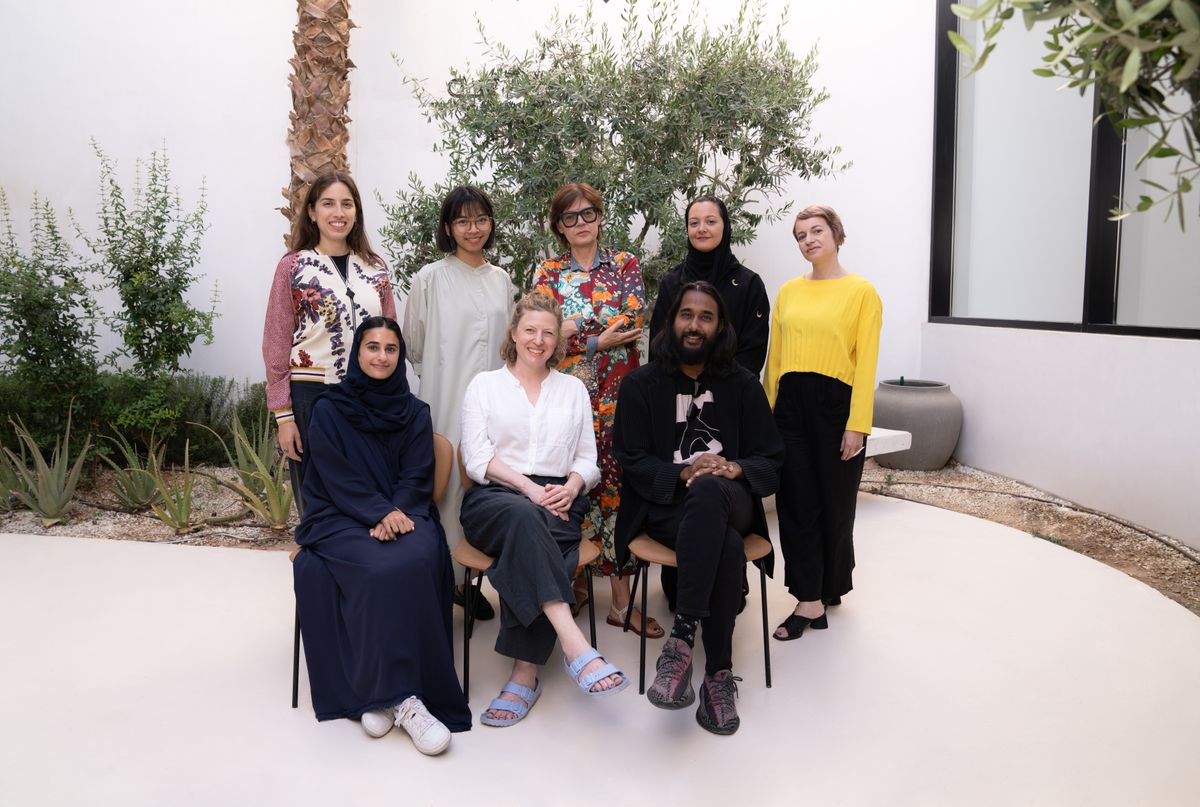
The 2024 Diriyah Contemporary Art Biennale curatorial team. Image

The 2024 Diriyah Contemporary Art Biennale curatorial team. Image courtesy of Diriyah Biennale Foundation. Top (L-R): Ana Salazar, Dian Arumningtyas, Ute Meta Bauer, Wejdan Reda, Anca Rujoiu. Bottom (L-R): Alanood A Alsudairi, Rose Lejeune, Rahul Gudipudi.

According to Aya al-Bakree, CEO of DBF, over 600,000 visitors saw the Islamic Arts Biennale, free of charge, over a four-month period. That’s right up there with the number of ticketed visitors to the 59th Venice Biennale‘s International Exhibition (800,000) and documenta 15 (738,000).

Qatar, meanwhile, has announced plans to build several new museums as part of its 25-year plan to improve cultural infrastructure in the country.

Sheikha Reem al-Thani, Acting Deputy CEO of Exhibitions and Marketing and the Director of Centralised Exhibitions at Qatar Museums, explained that Qatar began its latest cultural infrastructure push by developing museums focused on heritage and culture, and then expanded into sports and technology. New art museums are coming next.

The Art Mill Museum, an international museum of modern and contemporary art, is slated to open in a former flour mill in 2030, while the Lusail Museum will exhibit works from the Qatar Museum’s Orientalist collection from 2029.

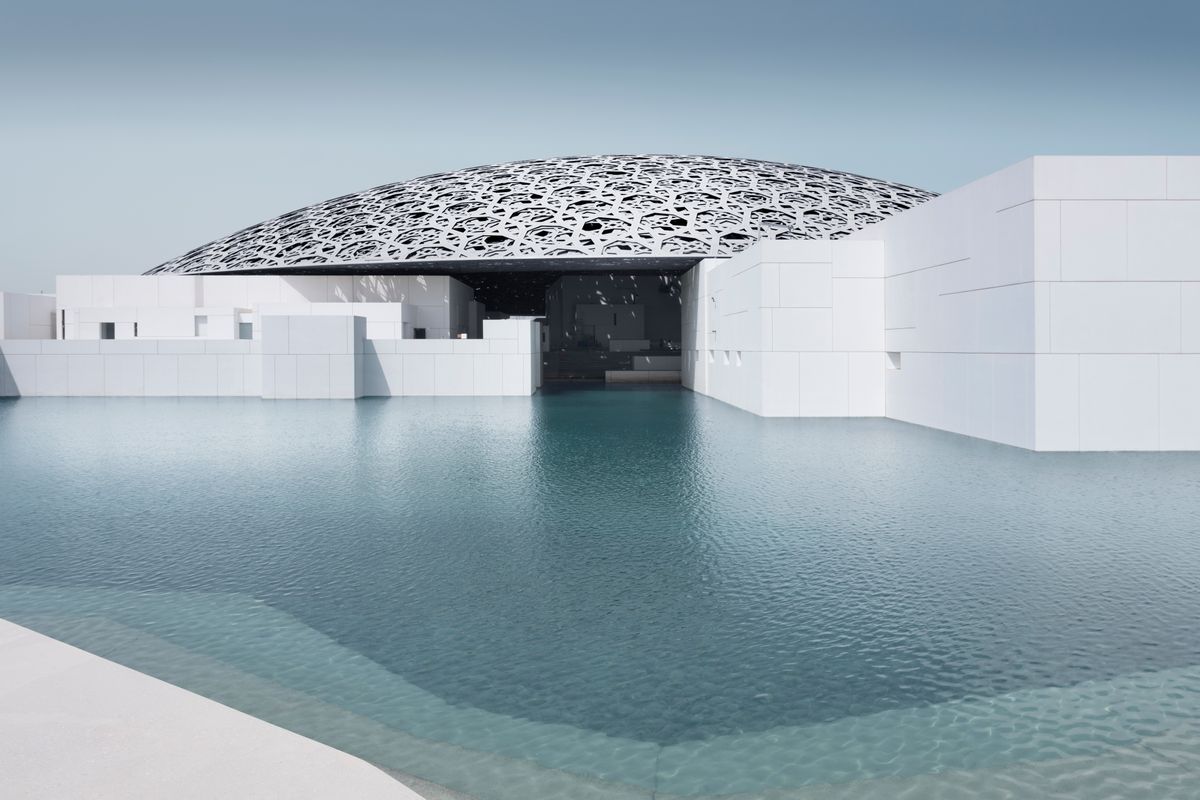
Louvre Abu Dhabi's exterior.

Louvre Abu Dhabi’s exterior. Courtesy Louvre Abu Dhabi. Photo: Mohamed Somji.

The U.A.E. has begun to see the fruits of its Saadiyat Island development, which was drawn up by American architecture firm Gensler in 2004. The Louvre Abu Dhabi opened in 2017 and by 2019 it had attracted over 2 million visitors, making it the most visited museum in the Arab world. (For comparison, almost 8 million people visited the Louvre in Paris last year alone.) The Guggenheim Abu Dhabi, designed by Frank Gehry, will open on Saadiyat Island in 2025.

In April, the U.A.E. launched the Dubai Creative Economy Strategy, aiming to double the number of creative businesses operating in the country by 2025. The Emirates also intends to build a national art collection by sourcing loans from private collectors.

Despite new strategies and the splurge of spending on art museums, arts and culture initiatives will play a negligible role in weaning Gulf economies off oil.

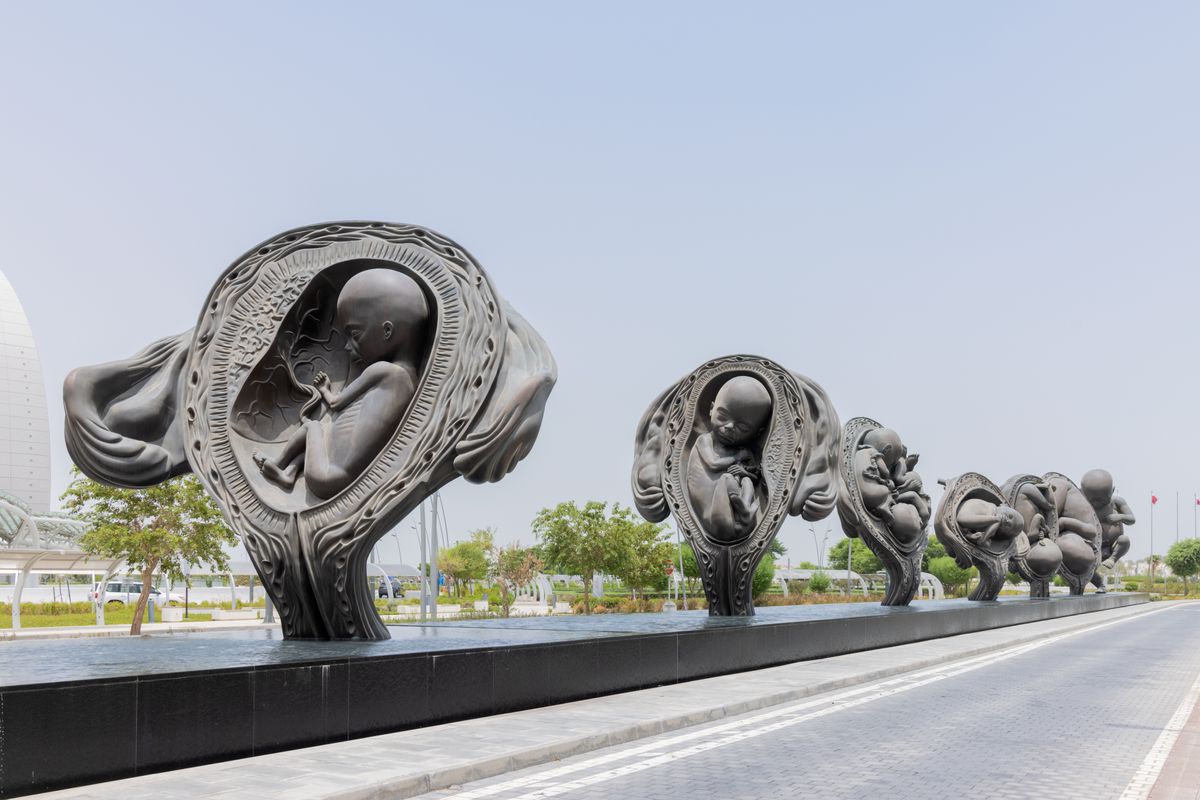
Damien Hirst, The Miraculous Journey (2013). Bronze. Sidra Medical Centre. Photo: Iwan Baan.

Damien Hirst, The Miraculous Journey (2013). Bronze. Sidra Medical Centre. Photo: Iwan Baan. Courtesy Qatar Museums.

As of 2021, arts and culture made up just 1.7% and 2.6% of GDP in Saudi Arabia and U.A.E. respectively, as reported by the World Bank. Saudi Arabia’s Vision 2030 plan would see the cultural sector bring in U.S. $20 billion, or almost 3% of GDP. By comparison, the oil and gas sector made up 42% of Saudi GDP, or $288.5 billion, in 2021. (In the U.A.E., oil and gas makes up less than 20% of GDP, while in Qatar it’s more than half.)

For now, it is difficult to see spending on art and culture as a pivot away from the fossil fuel industry when the two are so obviously entwined.

On 13 September, for example, The King Abdulaziz Centre for World Culture (Ithra) in Dhahran will launch an exhibition entitled Net Zero, a contemporary art exhibition that responds to global environmental challenges. Ithra, who also run the U.S. $500,000 Ithra Prize, is backed by Aramco, the world’s largest corporate greenhouse gas emitter.

By another metric, though—art’s ability to critique power structures and speak up for the marginalised—there is room for optimism.

The Flying Saucer, Sharjah, UAE, 2020. Photo: Danko Stjepanovic. Image

The Flying Saucer, Sharjah, UAE, 2020. Photo: Danko Stjepanovic. Image courtesy Sharjah ArtFoundation.

Ocula Magazine’s Global Editor-at-Large, Stephanie Bailey, wrote admiringly of Sharjah Biennial 15 this year, describing the exhibition as ‘subversive’. She said the inclusion of works depicting drug use and same-sex relationships demonstrated a ‘willingness to carefully test the lines of acceptability in the U.A.E.’

At the Diriyah Biennale, she noted ‘significant, if incremental, strides’ made by the inclusion of works that depicted matrilineal family trees and moments of queer intimacy.

(Such freedoms can’t be taken for granted—Turkish curator Defne Ayas was selected to organise the next Istanbul Biennial only to be rejected this month, ostensibly for political reasons.)

While we can expect art world ‘software’ to lag behind the ‘hardware’ of rapid museumification, as happened in China during the 2000s and 2010s, art industry leaders in the Middle East that Ocula Magazine spoke to were optimistic that artists and curators would make good use of the opportunities provided by new museums and biennials.

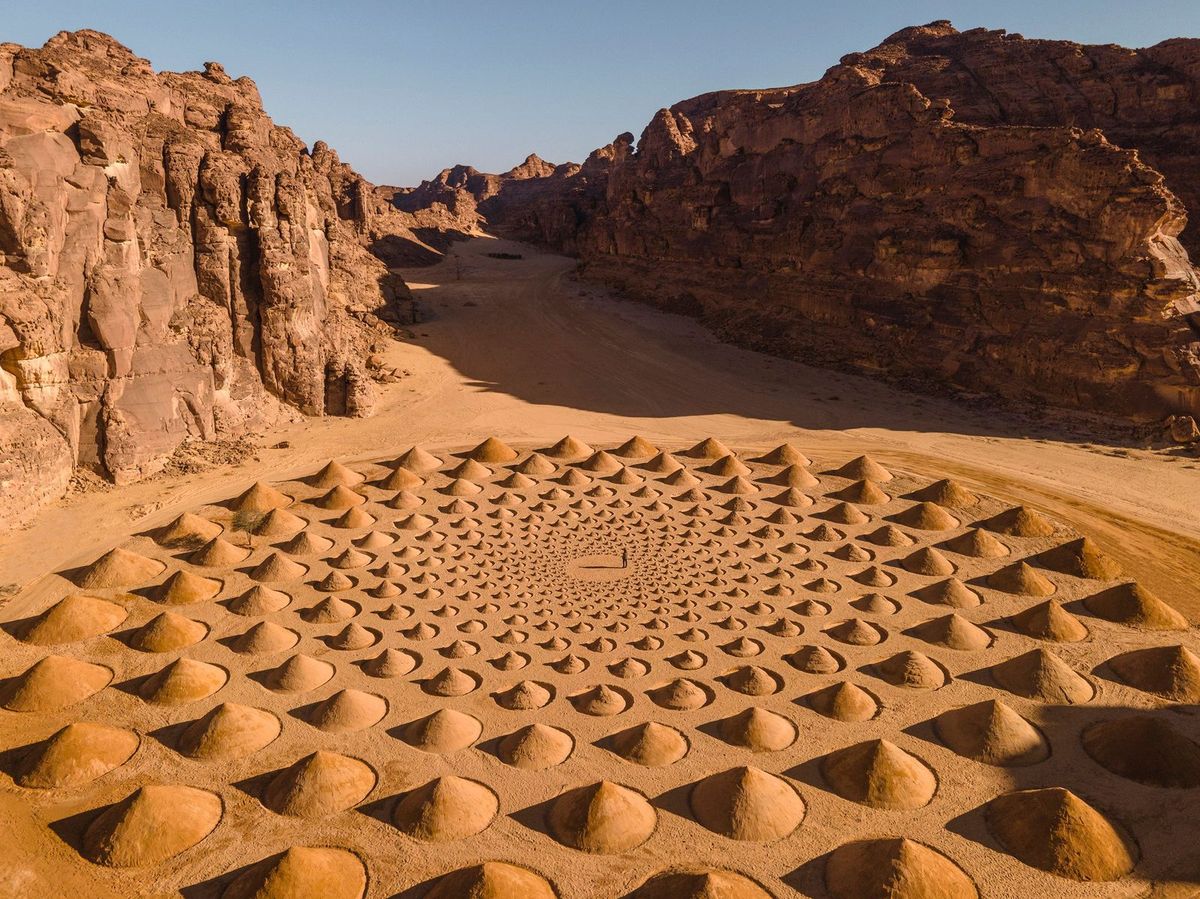
Jim Denevan, Angle of Repose. Exhibition view: Desert X AlUla 2022 (11 February–30 March 2022).

Jim Denevan, Angle of Repose. Exhibition view: Desert X AlUla 2022 (11 February–30 March 2022). Courtesy the artist and Desert X AlUla. Photo: Lance Gerber.

Sabih Ahmed, Associate Director and Curator at the Ishara Art Foundation, a nonprofit in Dubai, said investment in art infrastructure by countries in the Gulf Cooperation Council (GCC) means the younger generation does not have to go to the West to see great art, or pursue a career in the arts.

It finally allows for ‘a polyphony of centres rather than the age-old centre-periphery model for culture,’ he said.

‘I hope that alongside investments in museum-building and the art market, there will also be support for artist-run spaces, artist studios and ateliers, and magazines and publications, which are very important to the biodiversity that all arts require,’ he added.

Antonia Carver is the British-born director of the Saudi nonprofit Art Jameel. She said that, ‘if people choose not to engage with art from the GCC then they are missing out on getting to know bold, innovative cultural practitioners from a great breadth of backgrounds, positions.’

‘This is a time of cultural change, especially in Saudi and the U.A.E., with more and more efforts to promote and support a diverse range of creative expression, and a greater imperative to allocate resources to sustain our cultural landscape for years to come,’ she said. —[O]

Five best travel photography spots in Jackson Hole

Five best travel photography spots in Jackson Hole

Jackson Hole, Wyoming is one of the most beautiful, yet pricey places you might consider visiting. It’s a popular spot for wealthy millionaires and billionaires to spend a few days in their second home during summers and ski seasons, as well as ordinary folks who love the skiing and national park touring.

While winter is what Jackson Hole is known for, more people actually visit in the summer, despite the expense. Fall is an even better time to visit, before the snow starts to drop. 

So what’s the attraction for Jackson?

It’s a really fun, classic Western town that wears its history on its sleeve, (“The Last of the Old West” is the town motto). You’ll find live shootout recreations in the center of Jackson Square, the classic Million Dollar Cowboy Bay right in the heart of town, where patrons can sit at the bar on a saddle, and dozens of Western wear shops lining the streets.

Also, it’s near not just one amazing, major national park, but two. Jackson is a ten-minute drive to the Grand Teton National Park, and 40 minutes from Yellowstone National Park. The Tetons is arguably even more impressive, at least in the summer and fall. Both parks attract just under 4 million visitors yearly.

The area has “exceptional wildlife” said Zeb Hermanson, a local photographer who works at the Jackson camera store, Wyoming Camera Outfitters. “Outside of Africa or Alaska, we have some of the most diverse wildlife you’ll find anywhere.”

Wildlife and smartphones? Yes, it can be done! As always, I filmed the latest episode of #PhotowalksTV on two iPhones, the 13 and 14 Pro Max models, the Samsung Galaxy S23+, a GoPro Hero 11 and my DJI Mavic Air 2S drone.

The Galaxy really came in handy for the moose shots, as it has a stronger, 10x optical zoom that just knocks the 3x of the iPhone out of contention in these types of situations. (Note the close-up of the moose below!) The iPhones did great for the traditional widescreen landscape scenes one would associate with visiting a national park. I couldn’t fly my drone in the park (a no-no) but I got great shots in Victor and Teton Valley, over the hill.

Did I miss having the big camera and huge zoom lens? Sure, but my body appreciated not having to lug them. And besides, how much closer did I really need to be to the moose? If I zoomed in any closer, I wouldn’t catch the antlers.

Top 5 Jackson Hole photo spots

Schwabacher’s Landing

About 16 miles from Jackson, this is a popular place for picnickers to sit and watch the moose graze in the mornings and early evenings. It’s a pretty safe bet you’ll find the moose if you come during those times.

Mormon Row

Dating back to the 1870s, these old barns belonging to settlers still look incredible today against the backdrop of the Tetons.

Jenny Lake

Known as the centerpiece of the park, here you’ll get your best view of the Tetons themselves. If you want to go beyond your basic sighting, you can hop a boat here (for a fee) and take a little ride to another part of the lake, where a short hike will bring you to a wonderful, huge waterfall.

Jackson

Downtown is a fun old Western town for walking around — but hold onto your wallet! Everything is pricey. Ice cream cones at the popular Moo’s start at $7.50!

Ansel Adams

The Snake River Overlook— Ansel Adams. The Snake River Overlook is where the legendary photographer captured the image of the Teton Range meeting the waters. But when he did it, he had an unobstructed view, which today is covered in trees. A drone would solve the issue, but that’s a no-no! If you can get high (like on a stepladder) when you visit, you’ll get a better shot.