About

Posts by :

5 Tips for Capturing Beautiful Waterfall Photos

5 Tips for Capturing Beautiful Waterfall Photos
[embedded content]

Landscape photographer Michael Shainblum is extremely experienced across a diverse range of landscape photo subgenres, including woodland, seascape, and abstract landscape photography. Among Shainblum’s favorite landscape photography genres is waterfall photography, the subject of his latest tutorial.

Shainblum’s first tip for shooting waterfalls is to use an ultra-wide lens, such as a 14-24mm or 16-35mm zoom. Shainblum recently touted the value of longer zoom lenses for landscape photography, but shooting waterfalls with a wide-angle perspective helps create immersion, especially if the photographer can stand in the water beneath the waterfall. Shainblum explains that if someone ventures into the water, they should exercise caution.

“Personally, I walk through the water cautiously, ensuring it’s not too deep or forceful. For those new to this experience, take your time to acclimate to the surroundings and gauge your comfort level. If standing in the stream feels uneasy, nature often provides logs or rocks that offer stable platforms for observation,” he writes.

Michael Shainblum waterfall photography

As for composition, Shainblum likes to point his camera slightly downward to include two-thirds or three-quarters of the ground, which creates a pathway to the waterfall itself.

“If the flow of water doesn’t naturally guide the viewer’s eye toward the falls, experiment with your positioning until you achieve a satisfying composition. This adjustment might require some patience, but the resulting image is well worth the effort,” recommends Shainblum.

His next tip is to bring out that long telephoto lens to shoot a bit of minimalist waterfall photography.

“Telephoto photography introduces a distinct departure from the previous technique. Instead of immersing yourself in the lively waterflow, opt for a serene experience on the shore. Choose a dry spot where you can comfortably enjoy the waterfall spectacle,” Shainblum explains. “With the telephoto lens, you’ll zoom in on specific details of the falls, rather than encompassing the entire scene.”

Michael Shainblum waterfall photography

With a longer lens, photographers can zero in on specific details in the scene and find intriguing colors and patterns. Shutter speed selection can dramatically impact the image’s ” feel ” as well, with a shorter speed showing more power and texture in the waterfall and a slower shutter speed offering a dreamier, soft look.

These are just a couple of ways photographers can improve their waterfall photography using two very different approaches. Shainblum delivers three additional excellent waterfall photography tips in the video above and on his blog, including finding compelling framing elements, utilizing reflections, and embracing spontaneity in the field.

Michael Shainblum waterfall photography

More of Michael Shainblum’s photography tutorials are featured on his website and more of his beautiful imagery is available in his portfolio and on Instagram.


Image credits: All images © Michael Shainblum

Museum archivist speaks on Ruohomaa photographs

Museum archivist speaks on Ruohomaa photographs

ROCKPORT — Kevin Johnson, photo archivist for the Penobscot Marine Museum in Searsport, presents a slide show and talk entitled “Kosti Ruohomaa: The Maine Assignments” Sunday, Aug. 27, at 2 p.m. at the Rockville Community Chapel, 87 Old Rockland St. (behind the Green Thumb). The Ruohomaa Collection has come home to Maine as the newest addition to the photography holdings of the Penobscot Marine Museum. The Rockland photographer’s collection was recently donated to the PMM by Black Star of New York, Ruohomaa’s photography agency, and consists of thousands of medium and large format negatives, 35-mm negatives and slides, as well as contact sheets and vintage prints.

During the age of the photo magazine, Ruohomaa was a rock star in the photography world. His photographs graced the cover of Life Magazine numerous times. Other major magazines such as Look, National Geographic and Life used his photos regularly. He moved to Dodge Mountain in Rockland at the age of 13, where his family had a blueberry farm. He discovered his love for photography in the 1930s while working as a cartoonist for Disney. During the 1940s and ’50s, his career blossomed. While he photographed around the world, Maine was his favorite subject, both the people and land. He died prematurely in 1961 at the age of 47.

Christie’s and Sotheby’s Are Competing to Land the Estate of Emily Fisher Landau, Whose Collection Could Fetch Up to $500 Million

Christie’s and Sotheby’s Are Competing to Land the Estate of Emily Fisher Landau, Whose Collection Could Fetch Up to $500 Million

As the major auction houses look ahead to their blockbuster November evening sales, Christie’s and Sotheby’s are both vying to secure the estate of Emily Fisher Landau, the noted art collector who died in March at the age of 102.

Whichever house lands the Fisher Landau estate will be hoping the collection—which ARTnews reports could rake in between $375 million and $500 million—will help make up for a lackluster first half for auction results. In May, one of the season’s most-anticipated auctions, of the estate of collector Gerald Fineberg at Christie’s New York, totaled just $153 million, compared to an estimate of $163 million to $235 million.

The Big Three auction houses—Sotheby’s, Christie’s, and Phillips—have seen a 51 percent dip in total sales year-over-year, as reported by the Artnet Intelligence Report. Christie’s sales dropped 23 percent, from $4.1 billion to $3.2 billion, between June and January, while Phillips clocked in at just $453 million for the same period, 39 percent less than the $746 million it brought in the first six months of 2022.

As of press time, neither Christie’s nor Sotheby’s had responded to inquiries from Artnet News.

Jasper Johns, Flags (1986). Collection of Emily Fisher Landau. ©Jasper Johns.

Jasper Johns, Flags (1986). Collection of Emily Fisher Landau. ©Jasper Johns.

Fisher Landau credited her entree into the world of fine art collecting to the 1969 art robbery of her Upper East Side apartment. The thieves, disguised as air conditioning repairmen, made off with her valuable jewelry collection. But instead of replacing her diamonds, emeralds, and rubies, Fisher Landau used the insurance money to begin what would become one of the premiere contemporary art collections of the U.S.

Among the artists in the collection were Mark Rothko, Georgia O’Keeffe, Cy Twombly, and Andy Warhol, who famously did a silk screen portrait of Fisher Landau.

Her holdings eventually numbered 1,500 works, many of which were for years on view to the public at the Fisher Landau Center for Art, which she opened in a former parachute factory in Long Island City, Queens, in 1991. Suffering from Alzheimer’s disease in her later years, Fisher Landau closed the private museum in 2017.

An influential trustee at New York’s Whitney Museum of American Art for close to a quarter century, Fisher Landau made a major donation of 367 works to the institution in 2010. Said at the time to be worth $50 million to $75 million, the gift featured art by Jasper Johns, William Eggleston, Ed Ruscha, Robert Rauschenberg, and James Rosenquist, among other artists.

imageFemme à la montre (Woman With a Watch), 1932. Collection of Emily Fisher Landau. ” width=”807″ height=”1024″ srcset=”https://www.mecreates.com/story/news/wp-content/uploads/2023/08/picasso-watch-807×1024.jpeg 807w, https://news.artnet.com/app/news-upload/2023/08/picasso-watch-237×300.jpeg 237w, https://news.artnet.com/app/news-upload/2023/08/picasso-watch-39×50.jpeg 39w, https://news.artnet.com/app/news-upload/2023/08/picasso-watch.jpeg 1140w” sizes=”(max-width: 807px) 100vw, 807px”>

Pablo Picasso, Femme à la montre (Woman With a Watch), 1932. Collection of Emily Fisher Landau.

Last year, Fisher Landau loaned works by the likes of Piet Mondrian, Robert Indiana, Willem de Kooning, Glenn Ligon, and Agnes Martin for a special exhibition at the Norton Museum of Art in West Palm Beach, near her home in Palm Beach.

Among the expected highlights of any Fisher Landau auction will be a major Pablo Picasso work, Femme à la montre (Woman With a Watch), from 1932. (That’s considered the artist’s “annus mirabilis,” and even inspired a 2018 show at London’s Tate Modern.) Two of his works from that year hit the auction block in recent years, with Femme nue couchée selling for $67.5 million at Sotheby’s New York in 2022, and Femme assise près d’une fenêtre (Marie-Thérèse), 30 October 1932 fetching $103.4 million at Christie’s New York in 2021.

Follow Artnet News on Facebook:
Want to stay ahead of the art world? Subscribe to our newsletter to get the breaking news, eye-opening interviews, and incisive critical takes that drive the conversation forward.

Subtle Hues and Papery Textures Create Intimate Atmospheres in Lea Woo’s Tender Illustrations

Subtle Hues and Papery Textures Create Intimate Atmospheres in Lea Woo’s Tender Illustrations

All images © Lea Woo, shared with permission

Lea Woo coaxes subtle polarities from her illustrated interactions. Centering on women in moments of quiet affection and admiration, the renderings contrast a vintage style with modern subjects and a largely soft color palette with spots of bolder hues. “Red, a frequently used tone in my works, represents bravery and boldness and green a close relationship with mother nature,” she shares. Grainy, paper-like textures add to the retro feel of the scenes, which convey a warm tenderness between people and the birds, fish, and cats around them.

Based between Shanghai and Hangzhou, Woo draws stark distinctions between her personal works and commissions—recent collaborators include Burberry and The New Yorker. For the latter, she tends to start with a sketch that captures the directive, while other projects are more instinctive. “I open my heart for all possibilities and unexpected ‘accidents,’” the artist tells Colossal.  “I collect and save my daily doodles and pictures I took for future use. With less set-ups, more random arrangements, I find it so much fun to freely combine different elements and they turned out to be harmoniously together at the end.” 

Woo has prints, postcards, and other goods available in her shop, and you can follow her latest projects on Instagram.


A woman lies on the grass with cats nearby

Two portraits of women, on the left is a larger bird in front of the figure, on the right are smaller white birds flying around

A woman crouches underneath a large green mushroom in the rain

Two women embrace on a white horse with geese in the backdrop

Two women in suits stand in a field of dogs

A woman stands on a boat with flying fish in the foreground

Do stories and artists like this matter to you? Become a Colossal Member today and support independent arts publishing for as little as $5 per month. The article Subtle Hues and Papery Textures Create Intimate Atmospheres in Lea Woo’s Tender Illustrations appeared first on Colossal.

The 19th Century Photographer Who Shined a Light on American Poverty | The Saturday Evening Post

The 19th Century Photographer Who Shined a Light on American Poverty | The Saturday Evening Post

Weekly Newsletter

The best of The Saturday Evening Post in your inbox!

The last few decades of the 19th century brought unprecedented changes to New York City. The population exploded, growing from about 800,000 people in 1860 to more than 3 million by 1900, according to U.S. Census Bureau numbers. The Metropolitan Museum moved into its impressive Fifth Avenue location in 1880. The Brooklyn Bridge opened in 1883. Construction was completed on the luxurious Dakota Apartments in 1884. The Statue of Liberty was dedicated in 1886.

But just a few miles from the Gilded Age glory, more than a million people — many of them recent immigrants — were packed into squalid, dank neighborhoods where disease ran rampant and thousands of children died every year from the filthy conditions. As images of New York’s iconic landmarks were being shared across the world, the poor suffered just out of sight.

But one man decided to train his camera on the millions packed into the city’s shoddily built, six- to seven-story windowless tenements that offered no plumbing, light, ventilation, or fire escapes. In his efforts to expose New York’s poverty-stricken underbelly, Jacob August Riis produced some of the most iconic photographs of the late 19th century. International Photography Day on August 19 is a good day to remember the mighty impact of his photographs and how they helped the world realize the power of photography to expose injustice and repression.

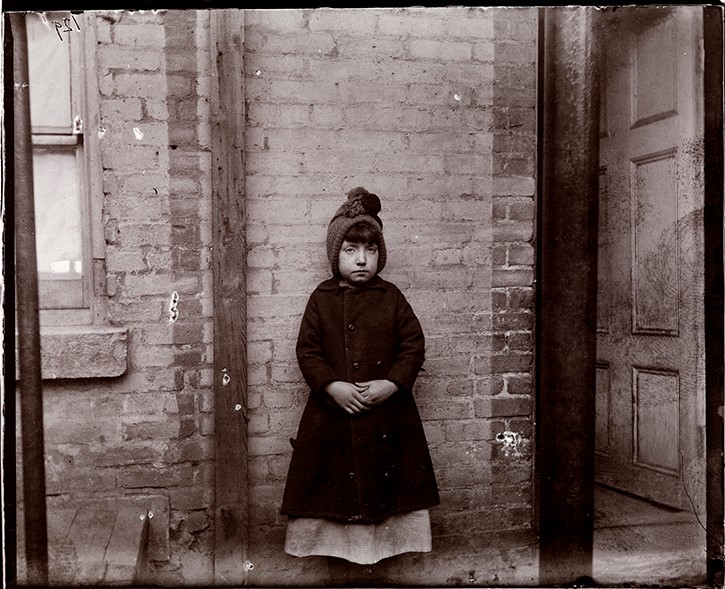
image“I Scrubs”— Little Katie from the West 52nd Street Industrial School, 1891–1892 (Jacob Riis, Library of Congress)
” data-medium-file=”https://www.saturdayeveningpost.com/wp-content/uploads/satevepost/poverty-01-400×325.jpg” data-large-file=”https://www.saturdayeveningpost.com/wp-content/uploads/satevepost/poverty-01-500×406.jpg” decoding=”async” loading=”lazy” class=”size-full wp-image-1154813″ src=”https://www.saturdayeveningpost.com/wp-content/uploads/satevepost/poverty-01.jpg” alt width=”725″ height=”589″ srcset=”https://www.saturdayeveningpost.com/wp-content/uploads/satevepost/poverty-01.jpg 725w, https://www.saturdayeveningpost.com/wp-content/uploads/satevepost/poverty-01-400×325.jpg 400w, https://www.saturdayeveningpost.com/wp-content/uploads/satevepost/poverty-01-500×406.jpg 500w, https://www.saturdayeveningpost.com/wp-content/uploads/satevepost/poverty-01-300×244.jpg 300w, https://www.saturdayeveningpost.com/wp-content/uploads/satevepost/poverty-01-600×487.jpg 600w” sizes=”(max-width: 725px) 100vw, 725px”>
“I Scrubs”— Little Katie from the West 52nd Street Industrial School, 1891–1892 (Jacob Riis, Library of Congress)

Arriving in New York City in 1870 from Denmark, the 21-year-old Riis often was forced into the squalid conditions he would later record. By the time he was 28, he had found steady work as a writer, editor, and journalist, and was able to forge a firm path into the middle class. But his job never let him forget the misery he had experienced. A night-shift police reporter for a popular newspaper, he trailed policemen into some of the worst slums and seediest spots in the city.

When Riis tried to expose the squalid living conditions through his writing, he discovered that words had a limited effect. In his 1901 autobiography, The Making of an American, Riis wrote, “It was upon my midnight trips with the sanitary police that the wish kept cropping up in me that there were some way of putting before the people what I saw there.”

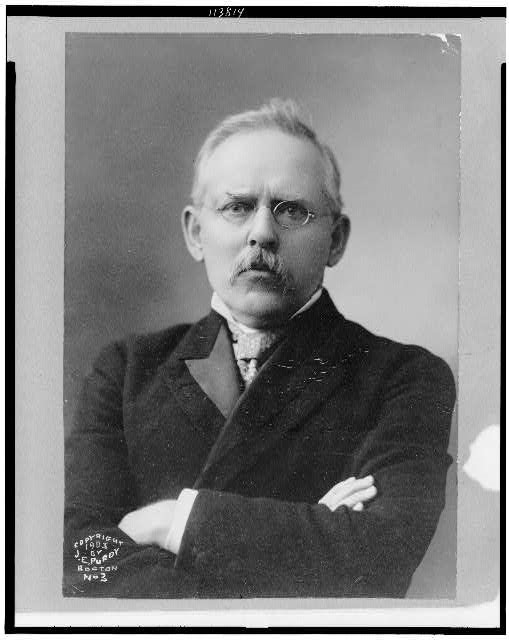
imageJacob Riis, ca. 1903 (Library of Congress)
” data-medium-file=”https://www.saturdayeveningpost.com/wp-content/uploads/satevepost/poverty-02-400×503.jpg” data-large-file=”https://www.saturdayeveningpost.com/wp-content/uploads/satevepost/poverty-02-500×629.jpg” decoding=”async” loading=”lazy” class=” wp-image-1154814″ src=”https://www.saturdayeveningpost.com/wp-content/uploads/satevepost/poverty-02.jpg” alt width=”392″ height=”493″ srcset=”https://www.saturdayeveningpost.com/wp-content/uploads/satevepost/poverty-02.jpg 509w, https://www.saturdayeveningpost.com/wp-content/uploads/satevepost/poverty-02-400×503.jpg 400w, https://www.saturdayeveningpost.com/wp-content/uploads/satevepost/poverty-02-500×629.jpg 500w, https://www.saturdayeveningpost.com/wp-content/uploads/satevepost/poverty-02-300×377.jpg 300w” sizes=”(max-width: 392px) 100vw, 392px”>
Jacob Riis, ca. 1903 (Library of Congress)

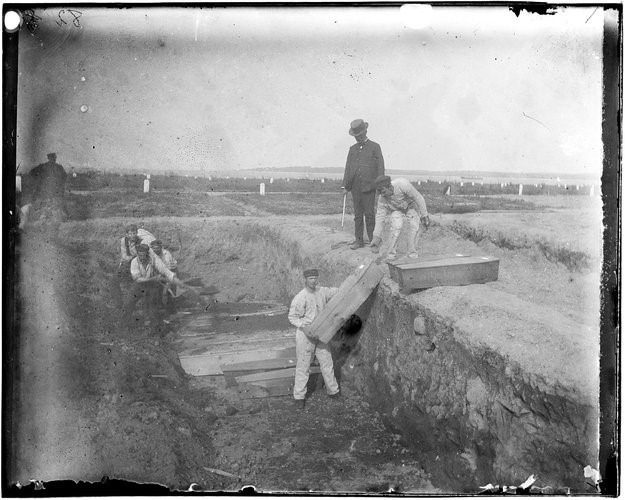
In 1887, Riis saw an advertisement heralding the invention of magnesium flash that would allow photographers to illuminate dark places. He found two amateur photographers who were interested in the new technology to help him photograph life in the tenements, but they soon lost interest, so he learned to use the camera himself. He took his first picture at the Potter’s Field on Hart’s Island, where the poorest of the poor were buried. The overexposed photograph was an inauspicious technical beginning, but the image of gravediggers standing over a trench filled with a row of caskets remains as shocking today as it was then.

image“The Potter’s Field, the Common Trench,” Hart’s Island, ca. 1890 (Jacob Riis, Museum of the City of New York)
” data-medium-file=”https://www.saturdayeveningpost.com/wp-content/uploads/satevepost/poverty-03-400×320.jpg” data-large-file=”https://www.saturdayeveningpost.com/wp-content/uploads/satevepost/poverty-03-500×400.jpg” decoding=”async” loading=”lazy” class=”wp-image-1154815″ src=”https://www.saturdayeveningpost.com/wp-content/uploads/satevepost/poverty-03.jpg” alt width=”800″ height=”640″ srcset=”https://www.saturdayeveningpost.com/wp-content/uploads/satevepost/poverty-03.jpg 625w, https://www.saturdayeveningpost.com/wp-content/uploads/satevepost/poverty-03-400×320.jpg 400w, https://www.saturdayeveningpost.com/wp-content/uploads/satevepost/poverty-03-500×400.jpg 500w, https://www.saturdayeveningpost.com/wp-content/uploads/satevepost/poverty-03-300×240.jpg 300w, https://www.saturdayeveningpost.com/wp-content/uploads/satevepost/poverty-03-600×480.jpg 600w” sizes=”(max-width: 800px) 100vw, 800px”>
“The Potter’s Field, the Common Trench,” Hart’s Island, ca. 1890 (Jacob Riis, Museum of the City of New York)

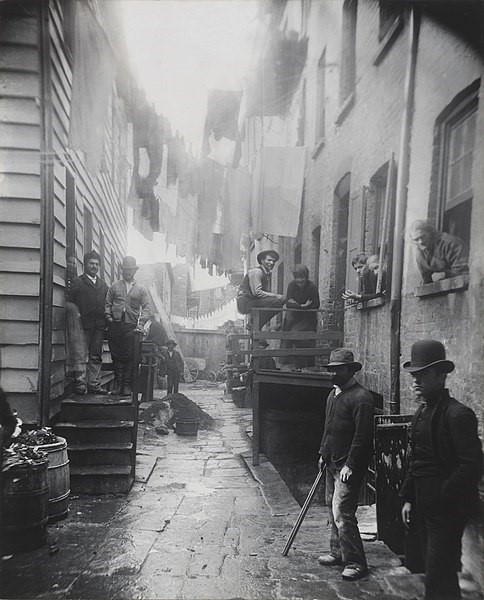
Thus began Riis’s journey of providing photographs that opened people’s eyes to the suffering of the poor. His unique photographs have only gained power and significance in the decades, providing an important historical record of life in the shadows of New York’s wealth. Some photos show only tenement buildings, while others record people sleeping in police stations, living in city dumps, hanging out in bars, or standing in alleyways. Many pictures focus on poor children working in sweatshops, selling newspapers, and sleeping in streets.

image“Bandit’s Roost,” 1888 (Jacob Riis, MoMA)
” data-medium-file=”https://www.saturdayeveningpost.com/wp-content/uploads/satevepost/poverty-04-400×496.jpg” data-large-file=”https://www.saturdayeveningpost.com/wp-content/uploads/satevepost/poverty-04.jpg” decoding=”async” loading=”lazy” class=”size-full wp-image-1154816″ src=”https://www.saturdayeveningpost.com/wp-content/uploads/satevepost/poverty-04.jpg” alt width=”484″ height=”600″ srcset=”https://www.saturdayeveningpost.com/wp-content/uploads/satevepost/poverty-04.jpg 484w, https://www.saturdayeveningpost.com/wp-content/uploads/satevepost/poverty-04-400×496.jpg 400w, https://www.saturdayeveningpost.com/wp-content/uploads/satevepost/poverty-04-300×372.jpg 300w” sizes=”(max-width: 484px) 100vw, 484px”>
“Bandit’s Roost,” 1888 (Jacob Riis, MoMA)
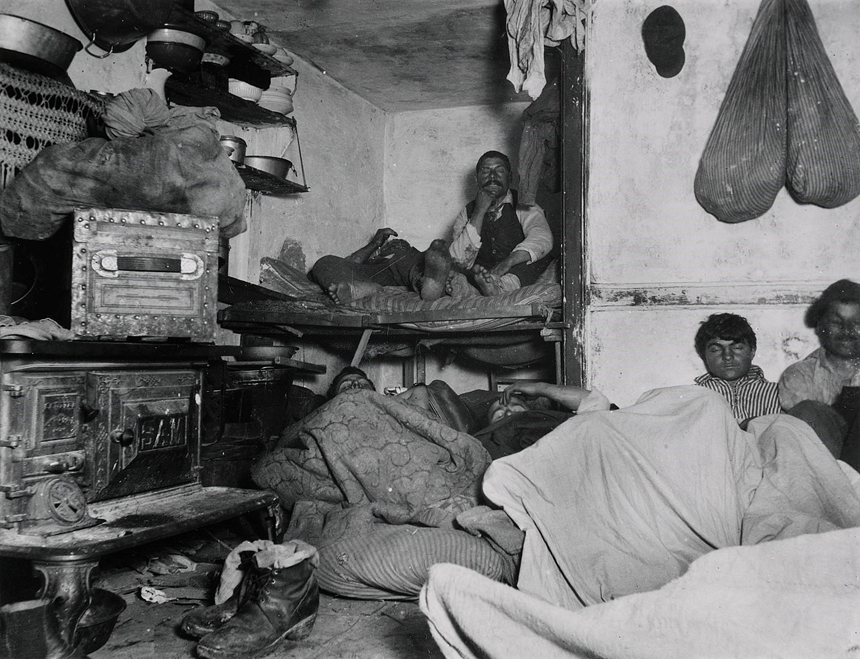
image“Lodgers in Bayard Street Tenement, Five Cents a Spot,” 1889 (Jacob Riis, MoMA)
” data-medium-file=”https://www.saturdayeveningpost.com/wp-content/uploads/satevepost/poverty-05-400×307.jpg” data-large-file=”https://www.saturdayeveningpost.com/wp-content/uploads/satevepost/poverty-05-500×383.jpg” decoding=”async” loading=”lazy” class=”size-full wp-image-1154817″ src=”https://www.saturdayeveningpost.com/wp-content/uploads/satevepost/poverty-05.jpg” alt width=”860″ height=”659″ srcset=”https://www.saturdayeveningpost.com/wp-content/uploads/satevepost/poverty-05.jpg 860w, https://www.saturdayeveningpost.com/wp-content/uploads/satevepost/poverty-05-400×307.jpg 400w, https://www.saturdayeveningpost.com/wp-content/uploads/satevepost/poverty-05-500×383.jpg 500w, https://www.saturdayeveningpost.com/wp-content/uploads/satevepost/poverty-05-768×589.jpg 768w, https://www.saturdayeveningpost.com/wp-content/uploads/satevepost/poverty-05-300×230.jpg 300w, https://www.saturdayeveningpost.com/wp-content/uploads/satevepost/poverty-05-600×460.jpg 600w” sizes=”(max-width: 860px) 100vw, 860px”>
“Lodgers in Bayard Street Tenement, Five Cents a Spot,” 1889 (Jacob Riis, MoMA)

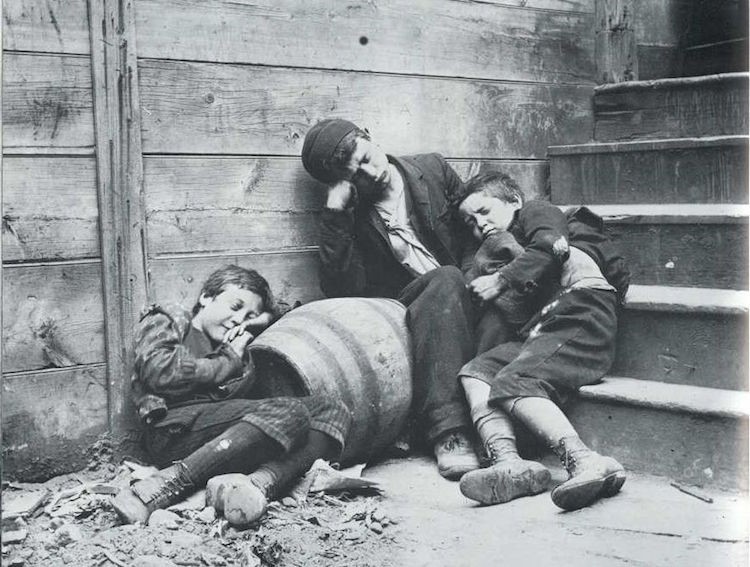
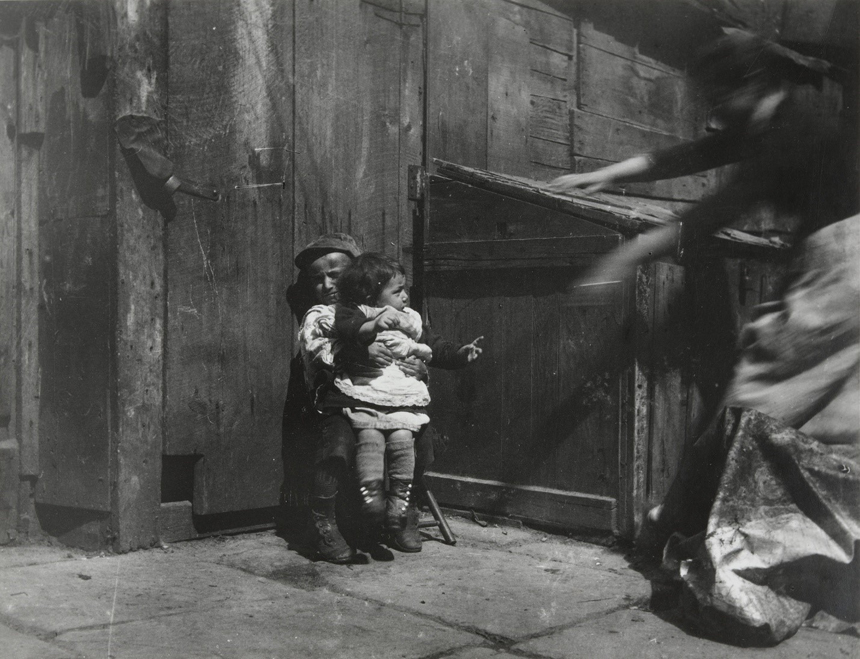
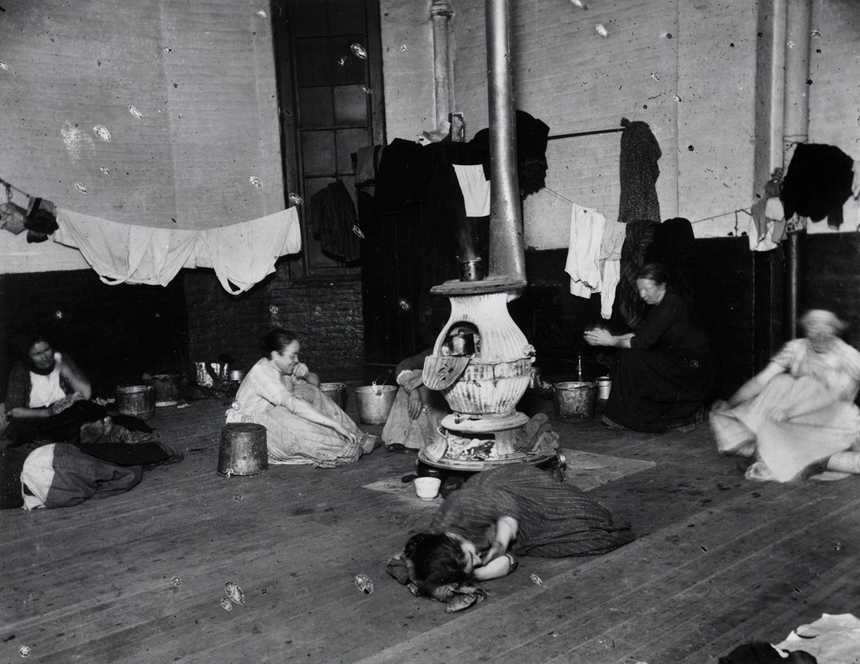
These images are raw, vulnerable, and realistic, revealing the chaos and trauma of poverty. Claustrophobic cramped rooms. Broken windows. Dark, streaked walls. Rumpled, torn, and ill-fitting clothes. Uncombed, matted hair and dirty faces. Kids in rags with no shoes, sleeping on stairs and in the streets.

image“Minding the Baby” (Jacob Riis, MoMA)
” data-medium-file=”https://www.saturdayeveningpost.com/wp-content/uploads/satevepost/poverty-06-400×307.jpg” data-large-file=”https://www.saturdayeveningpost.com/wp-content/uploads/satevepost/poverty-06-500×383.jpg” decoding=”async” loading=”lazy” class=”size-full wp-image-1154818″ src=”https://www.saturdayeveningpost.com/wp-content/uploads/satevepost/poverty-06.jpg” alt width=”860″ height=”659″ srcset=”https://www.saturdayeveningpost.com/wp-content/uploads/satevepost/poverty-06.jpg 860w, https://www.saturdayeveningpost.com/wp-content/uploads/satevepost/poverty-06-400×307.jpg 400w, https://www.saturdayeveningpost.com/wp-content/uploads/satevepost/poverty-06-500×383.jpg 500w, https://www.saturdayeveningpost.com/wp-content/uploads/satevepost/poverty-06-768×589.jpg 768w, https://www.saturdayeveningpost.com/wp-content/uploads/satevepost/poverty-06-300×230.jpg 300w, https://www.saturdayeveningpost.com/wp-content/uploads/satevepost/poverty-06-600×460.jpg 600w” sizes=”(max-width: 860px) 100vw, 860px”>
“Minding the Baby” (Jacob Riis, MoMA)
image“Street Arabs in their Sleeping Quarters” (Jacob Riis, My Modern Met)
” data-medium-file=”https://www.saturdayeveningpost.com/wp-content/uploads/satevepost/poverty-07-400×302.jpg” data-large-file=”https://www.saturdayeveningpost.com/wp-content/uploads/satevepost/poverty-07-500×378.jpg” decoding=”async” loading=”lazy” class=”size-full wp-image-1154819″ src=”https://www.saturdayeveningpost.com/wp-content/uploads/satevepost/poverty-07.jpg” alt width=”750″ height=”567″ srcset=”https://www.saturdayeveningpost.com/wp-content/uploads/satevepost/poverty-07.jpg 750w, https://www.saturdayeveningpost.com/wp-content/uploads/satevepost/poverty-07-400×302.jpg 400w, https://www.saturdayeveningpost.com/wp-content/uploads/satevepost/poverty-07-500×378.jpg 500w, https://www.saturdayeveningpost.com/wp-content/uploads/satevepost/poverty-07-300×227.jpg 300w, https://www.saturdayeveningpost.com/wp-content/uploads/satevepost/poverty-07-600×454.jpg 600w” sizes=”(max-width: 750px) 100vw, 750px”>
“Street Arabs in their Sleeping Quarters” (Jacob Riis, My Modern Met)

Riis first presented his photographs in lectures, “How the Other Half Lives and Dies in New York,” projecting images onto a screen by a “magic lantern.” He delivered his two-hour presentations to churches and civic groups in New York City and throughout the Northeast. Appealing to the tenets of his Christian faith, Riis petitioned for compassion and help for the people trapped in the tentacles of poverty.

image“Police Station Lodgers,” women`s lodging room in the West 47th Street station (Picryl, Preus Museum)
” data-medium-file=”https://www.saturdayeveningpost.com/wp-content/uploads/satevepost/poverty-08-400×309.jpg” data-large-file=”https://www.saturdayeveningpost.com/wp-content/uploads/satevepost/poverty-08-500×386.jpg” decoding=”async” loading=”lazy” class=”size-full wp-image-1154820″ src=”https://www.saturdayeveningpost.com/wp-content/uploads/satevepost/poverty-08.jpg” alt width=”860″ height=”664″ srcset=”https://www.saturdayeveningpost.com/wp-content/uploads/satevepost/poverty-08.jpg 860w, https://www.saturdayeveningpost.com/wp-content/uploads/satevepost/poverty-08-400×309.jpg 400w, https://www.saturdayeveningpost.com/wp-content/uploads/satevepost/poverty-08-500×386.jpg 500w, https://www.saturdayeveningpost.com/wp-content/uploads/satevepost/poverty-08-768×593.jpg 768w, https://www.saturdayeveningpost.com/wp-content/uploads/satevepost/poverty-08-300×232.jpg 300w, https://www.saturdayeveningpost.com/wp-content/uploads/satevepost/poverty-08-600×463.jpg 600w” sizes=”(max-width: 860px) 100vw, 860px”>
“Police Station Lodgers,” women`s lodging room in the West 47th Street station (Picryl, Preus Museum)

In 1890, he packaged his lecture material into a book, How the Other Half Lives, which became a bestseller and led to national fame. Although Riis characterized immigrants in terms that today would be considered racist, his work as a writer, lecturer, and photographer helped Americans recognize and combat some of the worst poverty and misery in New York. His efforts led to the abolition of the most decrepit tenements and the construction of many city parks, including today’s Columbus Park in what had been Mulberry Bend, one of the City’s most crime- and disease-ridden neighborhoods. Today, Riis’s legacy is commemorated through developments that still bear his name, such as the Jacob Riis Houses on the Lower East Side, the Jacob A. Riis Settlement House in Long Island City, and Jacob Riis Park in Far Rockaway.

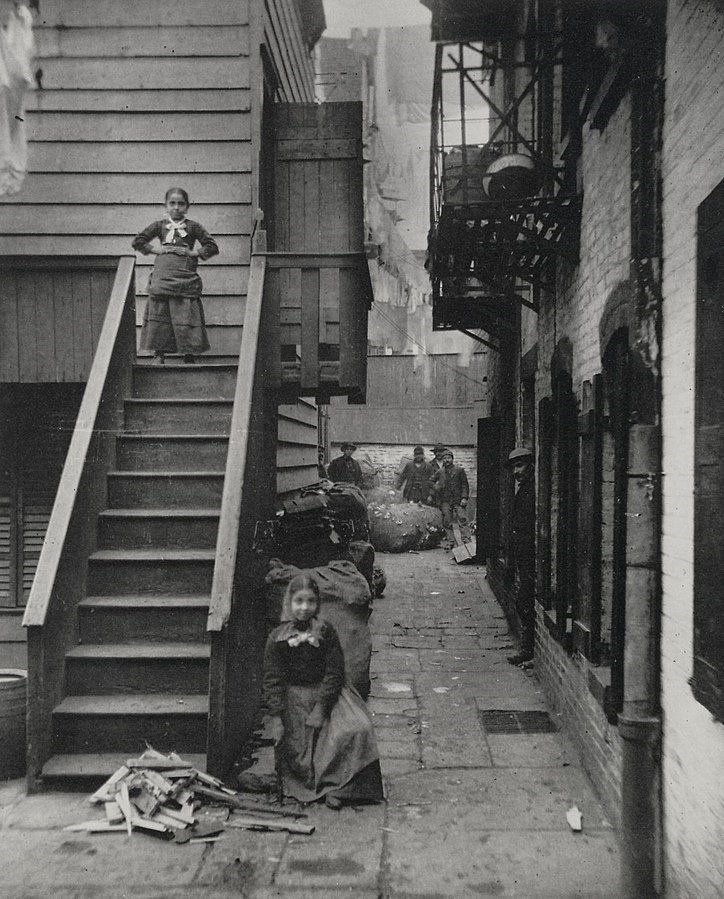
imageBaxter Street Alley in Mulberry Bend (Jacob Riis, Museum of the City of New York)
” data-medium-file=”https://www.saturdayeveningpost.com/wp-content/uploads/satevepost/poverty-09-400×497.jpg” data-large-file=”https://www.saturdayeveningpost.com/wp-content/uploads/satevepost/poverty-09-500×621.jpg” decoding=”async” loading=”lazy” class=”size-full wp-image-1154821″ src=”https://www.saturdayeveningpost.com/wp-content/uploads/satevepost/poverty-09.jpg” alt width=”724″ height=”899″ srcset=”https://www.saturdayeveningpost.com/wp-content/uploads/satevepost/poverty-09.jpg 724w, https://www.saturdayeveningpost.com/wp-content/uploads/satevepost/poverty-09-400×497.jpg 400w, https://www.saturdayeveningpost.com/wp-content/uploads/satevepost/poverty-09-500×621.jpg 500w, https://www.saturdayeveningpost.com/wp-content/uploads/satevepost/poverty-09-300×373.jpg 300w, https://www.saturdayeveningpost.com/wp-content/uploads/satevepost/poverty-09-600×745.jpg 600w” sizes=”(max-width: 724px) 100vw, 724px”>
Baxter Street Alley in Mulberry Bend (Jacob Riis, Museum of the City of New York)

By the time he died in 1914, Riis had written 12 books and crisscrossed the country many times to give lectures. “Riis was the first muckraker and the first American social documentary photographer,” Bonnie Yochelson and Daniel Czitrom write in their 2014 book, Rediscovering Jacob Riis: Exposure Journalism and Photography in Turn-of-the-Century New York. “A century later, [his photographs] remain a powerful and unique record of the lived material conditions in turn-of-the-century New York.”

Riis’s work reminds us that much of what he witnessed over 100 years ago remains relevant to this day: that grinding poverty is still with us, and a segment of our society still dwells in homes that are dangerous and unfit, or live unhoused on the streets. But Riis understood we have a hard time fixing problems that we can’t — or don’t want — to see, and he showed how shining a light in dark places can often be the first step toward real change.

Become a Saturday Evening Post member and enjoy unlimited access.
Subscribe now

F5: Jen Samson Treasures the Old, the Well-Made + the Unexpected

F5: Jen Samson Treasures the Old, the Well-Made + the Unexpected

Jen Samson is the founder and principal designer of Laguna, California-based design firm Jen Samson Design. Her creative style often results in unexpected design elements that highlight intrigue and self-expression through combined styles. JSD’s spaces are sophisticated but relaxed, playful, and always unique. A lot of inspiration for her “curated creative abandon” comes from world travel, culture, fashion, and interiors both new and old.

The interior designer keeps filing away ideas as she travels with her family. “Traveling is basically the only thing that forces me to truly disconnect from day to day work,” Jen admits. “My husband and I have definitely passed along the travel bug to our two adventurous teenage daughters. We love to take a deep dive into other cultures, traditions, and experiences. We’ve taken our girls to Thailand, (visited Bangkok, Chiang Mai, and Phuket), explored Peru (Lima, Cusco, the Sacred Valley, and climbed Machu Picchu), and spent time in Costa Rica and Panama in recent years and we’re headed to Spain as a family this summer. We love to explore art and architecture, and the whole family loves vintage/thrift and antique shopping, so that is always a must as well. These vacations allow me to check out from the day to day of the studio, shift my focus solely to my family, and fill up on inspiration for when I return!”

Jen Samson Photo: Studio Mellon

Before starting JSD, Jen began her career in the fashion and lifestyle industries of Los Angeles. While her passion for all things visually inspiring and her eye for style grew, she helped to create lifestyle driven programming for E! and the Style Network. Jen’s next step was working for renowned luxury fashion house Salvatore Ferragamo as the Director of West Coast public relations. One last project before she jumped into interior design was a successful artisan-crafted, hand-crocheted shoe brand – Painted Bird. The footwear was designed by Jen and handmade in a small village outside of Pondicherry, India.

You get an even greater sense of Jen’s passion and love of all things design after hearing about a collection of rings that belonged to her grandmother. “They are definitely my most treasured possession. We had a very intimate and special bond – I was the oldest of six granddaughters, and we shared a deep connection throughout her life. I was the only granddaughter that had a true affinity for “old” things, so over the years she gifted me a variety of things, from china and coats to handbags and jewelry. When she got much older, she gave me a few rings that I had always admired and borrowed. Whenever I wear the rings, I see her hands so clearly. It is an extraordinary gift.”

This week, Jen Samson is joining us for Friday Five!

two views of a quilted jacket

My favorite coats EVER! The craftsmanship of each of their pieces is bar-none. The fit and the the details of these Italian-made garments coupled with the ability to add to, switch out, and reverse pieces to change the look and feel makes Marfa Stance truly original. As an interior designer who prides myself on being unique and rarely, if ever, repeating aspects of my design, I truly admire and respect the originality and the quality of their pieces.

interior room of a Korean spa

2. Korean Spa

It’s like the ultimate car wash for your body and all of the relaxing and re-invigorating one could possibly want. My favorite one is ISPA in Irvine, California. I usually start in the salt room and make my way through a few other favorites, including the forest and ice rooms, before heading to the wet side of the spa. Cold plunge, sauna, steam, and jacuzzi… and that is all before your number is called for the deepest body scrub down and massage. I’m talking total heaven, and when I leave it’s as if my skin has returned to the most incredible baby soft state, and all is good in the world.

round makeup compact with four shades of red-toned lipstick colors

Just because I love a bold lip! I also love all natural, beautiful makeup (and the packaging!!). All of Gucci Westman’s products are amazing. The Lip Suede is as bright or sultry as you want it to be – and I love that I can mix the colors to create my own perfect shade for whatever mood i’m in.

4. Pottery

I am always collecting pottery for future projects and installations. I can’t seem to get enough of classic mid century studio pottery and Japanese ikebana vessels from the 60’s. I am also a huge fan of a handful of incredibly talented Los Angeles artisans creating moderns works. Two of my faves that I love to source from for clients are Bari Zipperstein (Zippy) BZippy and Heather Rosenmann. Both take a very nontraditional approach to their work, creating pieces that always bring a sense of modernism and an immense amount of creativity to what they make. Plus, both of these women are just plain cool.

neutral toned throw blanket on white background

Neeru Kumar’s textiles are beautiful, textural weaves using all-natural fibers. Her fabrics are relaxed and incredibly elegant at the same time, all hand loomed weaves that work beautifully as window coverings, pillows, and blankets. All of her patterns have a very organic feel to them and the natural vegetable dyes are to die for. Kumar’s handwoven textiles have been called “Antiques of the Future,” a design sensibility that is very much up my ally. We are currently using her fabrics in custom pillows, soft roman shades, and as bed blankets – a personal fave!

Work by Jen Samson:

colorful living space with ochre sofa, tall floor plant, and palm leaf wallpaper

As featured on the May/June 2023 cover of Luxe Los Angeles, this LA stunner boasts 14-foot ceilings and bold palette of color throughout. Every corner of this architecturally stunning home is filled with art and objects that spark curiosity and conversation.

bedroom with long wood headboard and built-in nightstand

A truly modern bedroom retreat. The primary bedroom was designed to create a relaxed and warm space while allowing for the texture of the walls, bench, bedding, and rug to truly sing.

colorful kitchen with light green backsplash, pink counter stools, and open wood shelving

Drawing inspiration from famed mid-century society photographer Slim Aarons, this kitchen in Indian Wells is a modern take on true mid-century style. It combines pops of color, playful patterns, and an undeniably chic aesthetic that was found in 1960’s design in both Palm Springs and Palm Beach.

wood and light filled sitting space with four lounge chairs and a coffee table

The Lake Tahoe home sits almost on top of the blue waters in Crystal Bay. The home has four levels, all of which have spectacular views of the mountains and the lake below. Tasked with creating a light a bright lake home for the clients, this entry to the home serves as a beautiful and natural welcome to a home designed for enjoying all summer long.

Kelly Beall is Director of Branded Content at Design Milk. The Pittsburgh-based writer and designer has had a deep love of art and design for as long as she can remember, from Fashion Plates to MoMA and far beyond. When not searching out the visual arts, she’s likely sharing her favorite finds with others. Kelly can also be found tracking down new music, teaching herself to play the ukulele, or on the couch with her three pets – Bebe, Rainey, and Remy. Find her @designcrush on social.