About

Posts by :

one&done Toothbrush Dispenses Toothpaste Like PEZ Candies

one&done Toothbrush Dispenses Toothpaste Like PEZ Candies

Oftentimes the most meaningful and useful designs are not wholly new solutions, but born from revisiting the mundane tools we depend upon every day, simply seen with fresh eyes. Industrial designer Pelin Özbalcı’s one&done toothbrush is one such concept, a toothbrush reimagined for travelers seeking to pack lightly and efficiently, combining the identifiable form of dental hygiene with a functional addition normally associated with tooth decay.

The one&done’s frosted transparent plastic storage allows users to keep track of whether it’s time to reload the 20 toothpaste tablets capacity. Fully loaded, it’s sufficient for ten days of travel with a morning and evening brushing schedule.

With the one&done, the Istanbul-based industrial designer mashes up what could be two diametrically opposed objects: the toothbrush and a candy dispenser. Designed into a singular object using toothpaste tablets in lieu of standard tubed paste, the one&done offers a convenient space saving form ideal for travel, eliminating the chances of making a mess, while also standardizing the proper amount of dental product to an exact amount each time, something not always true while squeezing a tube.

Close up the toothbrush tablet dispenser section of the one&done toothbrush in coral finish.

Close up the where the toothbrush neck meets the clear tablet storage cylinder across all three colors of coral, blueberry, and lagoon.

To make brushing a little more fun, the design is realized in three vibrant colors – coral, blueberry, and lagoon.

Detail of the coral and blueberry colorways of the one&done toothbrush side by side.

Detail of the coral red toothbrush with replacement head partially removed.

“I designed one&done as a toothbrush with a twist,” explains Özbalcı about the PEZ dispenser inspired design. “The toothbrush securely holds up to 20 toothpaste tablets within its compact design, and also features a replaceable brush parts for a more eco-friendly approach to oral care.”

Detail of the coral red toothbrush with its magnetic plastic brush cover.

Travel toothbrushes have a habit of creating a mess. Özbalcı’s solution is a magnetic toothbrush cap to keep brushes away from germs (and vice versa).

Detail of the coral red toothbrush with its magnetic plastic brush cover fully placed over bristles.

Detail of one&done logo across the toothbrush head holder in coral finish.

Optional blueberry and lagoon versions of the one&done toothbrush rendered in 3D floating the air with toothpaste tablets.

One coral colored one&done toothbrush standing in the center of a grid work of white columns.

The designer’s sustainable hygiene dispenser was recognized with a ProCarton Young Designers Award.

one&done packaging staged to show the embossed cardboard design of the base, toothbrush head, toothpaste tablets, cover and toothbrush replacement embellished with coral highlights.

Özbalcı’s vision for one&done extends to its packaging, each component embossed in profile across the box.

The Junior industrial designer currently works at Silicon Valley mobility start-up ACTON Global, responsible for visualization, UI/UX, and industrial design, while also founding her own industrial design studio, Nest Studio. More of Özbalcı’s most recent work is available on her Instagram.

Gregory Han is a Senior Editor at Design Milk. A Los Angeles native with a profound love and curiosity for design, hiking, tide pools, and road trips, a selection of his adventures and musings can be found at gregoryhan.com.

Enigmatic Scenarios Unfold in Levi van Veluw’s Complex and Confrontational Sculptures

Enigmatic Scenarios Unfold in Levi van Veluw’s Complex and Confrontational Sculptures

“In the depths of memory.” Photos by Michèle Margot, courtesy of Galerie Ron Mandos. All images © Levi van Veluw, shared with permission

Combining translucent polymer clay with saturated pigments or carving delicate ridges from tulipwood, Levi van Veluw constructs enigmatic, immersive narratives. The Dutch artist has been fascinated by symbols and rituals since childhood, spurred by an upbringing in a religious household. The complexity and conviction of faith and “the stark visual language of its practice made him sensitive to the visual vernacular of religious seduction,” reads a statement for the artist’s series Beyond Matter.

Memory, architecture, and storytelling manifests in Beyond Matter through the portrayal of naves or chapel-like spaces, altars, and mandalas redolent of rose windows. Geometry and repetition interact with light and shadow in meditative patterns, exploring the parallels of spiritual experience and viewing art. Van Veluw prompts questions about what and how we see and our role in completing the picture.

In another body of work, In the depths of memory, van Veluw explores portraiture and interactions between figures in a series of framed reliefs that echo movie stills or storyboard frames. And an immersive room stacked top-to-bottom with identical portraits invites viewers to stand in the center of a mysterious chamber. Mirrors on the floor and ceiling reflect the walls and one another, giving the impression of a space that is both confined and infinite. The artist leaves its interpretation open: Are you in a studio? A fever dream? Inside the artist’s mind?


A blue carved artwork depicting a group of people sitting around a table.

“Dinner”

Van Veluw’s uses portals, windows, and the power of the gaze to invite us into the narrative. “In between,” for example, depicts an unhappy family in a car, viewed straight-on through the windshield. In “Dinner,” an argument has been interrupted, and one subject turns around in his seat to face outward in frustration. “Stared at by piercing gazes, you are made complicit in a situation that unfolds before your eyes,” says a statement. “You are being looked at, but, in a way, you are also looking at yourself from the outside.”

An acquisition of van Veluw’s piece “Planetary Chapel” by the Stedelijk Museum Schiedam is scheduled to go on view soon, and he is currently preparing solo exhibitions for the Singer Museum in Laren, The Netherlands, and Les Filles du Calvaire in Paris. The artist is represented by Galerie Ron Mandos, and you can explore his work in much more detail on his website. He also shares updates and amazing process videos on Instagram.


A green carved artwork depicting a family in a car, viewed through the windshield.

“In between”

A detail of a green carved artwork depicting a family in a car, viewed through the windshield.

Detail of “In between”

An art installation made from numerous compartments of identical portrait busts.

“In the depths of memory”

A detail of an art installation made from numerous compartments of identical portrait busts.

Detail of “In the depths of memory”

A blue, circular artwork that resembles a rose window.

“Circular Compound”

A blue, geometric artwork that resembles the outline of an altarpiece.

“Beyond Matter”

A carved relief portrait in yellow.

“Distinct”

A blue carved artwork depicting a minimal, geometric cathedral nave.

“Divine”

A carved artwork in yellow depicting two figures talking.

“Conversation”

A carved portrait in black of a male figure.

“Abstruse”

Do stories and artists like this matter to you? Become a Colossal Member today and support independent arts publishing for as little as $5 per month. The article Enigmatic Scenarios Unfold in Levi van Veluw’s Complex and Confrontational Sculptures appeared first on Colossal.

Directing and photography team Marc and David sign with Casey

Directing and photography team Marc and David sign with Casey
image

Marc and David joined forces in 2013 combining their practices in, respectively, transportation and people photography. The duo often shoots from two angles simultaneously to capture both crafted and honest lifestyle moments. They have worked for virtually every major car brand and magazine all over the globe.

Frequent clients include Volkswagen, Citroën, Hyundai, Opel, Renault, BMW, Audi, and Porsche. Some of CASEY’s selected clients are Nike, Apple, Samsung, Lexus, Starbucks, Glossier, Vogue, Levi’s, HBO, and Meta.

Call for Entries: L A M P 2023 International Lighting Design Competition

Call for Entries: L A M P 2023 International Lighting Design Competition

Calling all lighting designers around the world! The 2023 L A M P International Lighting Design Competition is now accepting entries for its 9th edition, with a deadline of September 30, 2023. Design Milk is happy to once again be the media partner of the competition that devotes itself to promoting and connecting talented designers with new markets in lighting design. With each year’s competition we’re blown away by the submissions more and more!

There will once more be three main categories: Manufactured, Professional, and Student. Five sub-categories will include table, floor, chandelier/sconce, portable, and outdoor. In a twist, an additional ACOUSTIC category has been added for 2023 and is open to submissions from both students and established designers. An esteemed panel of judges will make their decisions based on a set of evaluations ranging from aesthetics to marketability and innovation.

If you need some inspiration, check out the winners from the L A M P 2022-2023 competition here. Follow @lampthecompetition on Instagram and register your designs today!

Manufactured Overall Winner + Manufactured Table Winner (tied): Puff by Habitex, Si Balcón (Taiwan)

three wall lights that appear to be suspended inside thing frames

Professional Overall Winner + Professional Pendant/Sconce Winner: Maya by Luiza Guidi @luizaguidi (Balneário Camboriú, Brazil)

classic purse-shaped lamp with an illuminated central spacex

Student Overall Winner + Student Table Winner (tied): Skylar by Jiahao Huang @jiahao_hh (Lausanne, Switzerland)

three glass pendants hang over a kitchen island

Manufactured Overall Winner (tied) + Pendant/Sconce Winner (tied): Viro by Robert John Morrison, Emma Waters, Viro Lighting @virolighting (Salt Lake City, UT)

three grouped bulbous cement pendant light hang over a styled interior space

Manufactured Pendant/Sconce Winner (tied): Booi by Graypants @graypantsstudio (Seattle, WA)

white mushroom shaped floor lamp

Manufactured Floor Winner: Iron by Hassene Jeljeli / JK lighting / JK design SARL @jklighting (Tunis Tunisia)

selection of mushroom shaped table lamps in black, white, and chartreuse

Manufactured Table Winner (tied): Maja by Magdalena Boggiano, OBLUMO @oblumo.coleccion (Buenos Aires, Argentina)

minimal floor lamp shaped like a T

Professional Floor Winner: T-Lamp by Heajin Ko @heakostudio (New York, USA)

one green and one white table lamp resembling bamboo

Professional Table Winner (tied): Bamboo by Rostyslav Sorokovyi, mudu design studio @mudu_design (Lviv, Ukraine)

versatile cone-shaped lamp that can be used on a table or suspended

Professional Table Winner (tied): Mikono by Moritz Putzier, Studio Moritz Putzier @studiomoritzputzier (Cologne, Germany)

adjustable suspended square shaped lamp featuring a lit frame

Student Pendant/Sconce Winner: Swi-Wal by Darsh Patel, Dhruv Patel @darshpatel_id @dhruvpatel_id (Gujarat, India)

tall white column floor lamp next to a chair

Student Floor Winner: Horizon by Didi NG Wing Yin @dd_ng (Hong Kong)

illuminated organic-shaped table lamp

Student Table Winner (tied): Zabriske by Rachel McGovern @rachelmcgovern_dsign (Los Angeles, USA)

aqua colored table lamp with large circular head

People’s Choice Manufactured Winner: LUPO Table Lamp by Recozy, Moritz Putzier @recozy.shop (Germany)

grey table lamp with circular head

People’s Choice Professional Winner: Arpeggio, light and music Table Lamp by Yume Studio (Valencia, Spain + French Guiana, France)

U-shaped grey table lamp that sits on its side

People’s Choice Student Winner: Sol by Fabian Malmhagen @fabian.h.c.malmhagen (Ljunghusen, Sweden)

Kelly Beall is Director of Branded Content at Design Milk. The Pittsburgh-based writer and designer has had a deep love of art and design for as long as she can remember, from Fashion Plates to MoMA and far beyond. When not searching out the visual arts, she’s likely sharing her favorite finds with others. Kelly can also be found tracking down new music, teaching herself to play the ukulele, or on the couch with her three pets – Bebe, Rainey, and Remy. Find her @designcrush on social.

Exploring the roar of the wild: Capturing the essence of wildlife photography

Exploring the roar of the wild: Capturing the essence of wildlife photography

Wildlife photography is a thrilling and rewarding genre that allows us to immerse ourselves in the untamed beauty of nature.

The challenge lies in capturing the essence of the wild and bringing it to life through our lenses. In this article, we will delve into the art of wildlife photography. These five tips will help you embark on your journey of capturing the roar of the wild.

1. Research and plan

In wildlife photography, research and preparation are the foundations of a successful shoot. Before embarking on your photographic adventure, take the time to research the wildlife species you intend to capture thoroughly. Dive into books, documentaries, and online resources to understand their behaviors, habitats and patterns. Knowledge about your subjects will empower you to predict their movements and increase the likelihood of capturing unique and captivating moments.

Furthermore, familiarize yourself with the specific locations where your chosen wildlife species can be found. Seek information from local experts, park rangers, or experienced photographers who have worked in the area. Discover the best times of day or seasons when the animals are most active. By immersing yourself in this knowledge, you can plan your photography excursions with precision. This will ensure that you are in the right place at the right time to witness extraordinary scenes and secure remarkable photographs.

Remember, wildlife photography is about capturing images and understanding and appreciating the subjects you photograph. By conducting thorough research and preparation, you lay a solid foundation for your artistic journey into the untamed world of wildlife.

2. Patience and observation in wildlife photography

Patience and observation are the cornerstones of successful wildlife photography. It is crucial to understand that wildlife follows its rhythm and timeline, often unpredictable and beyond our control. Whether you are waiting for a particular behavior or searching for a rare sighting, patience becomes your closest companion. Be prepared to spend long hours in the field, waiting for the perfect moment to unfold before your lens.

During this waiting game, take the time to observe and understand the behaviors of the animals around you. Wildlife has its own language of communication through body language, sounds, and interactions. By keenly observing and interpreting these cues, you can anticipate and capture extraordinary moments that epitomize the essence of the wild.

Remember to stay still and blend into your surroundings as you wait and observe. Wildlife is sensitive to sudden movements and human presence. Create a sense of camouflage by wearing appropriate clothing and minimizing any disruptive noises. Immersing yourself in the environment and adopting a patient and observant mindset, enhances your chances of witnessing and capturing magical moments. These moments will translate into stunning wildlife photographs.

3. Master your equipment

When it comes to wildlife photography, choosing the right lens can significantly affect your image quality. The ideal lens choice depends on various factors such as the type of wildlife you photograph, the distance between you and your subject, and the desired composition.

A few lens recommendations

Telephoto Lens (70-200mm or 100-400mm): A telephoto lens is a must-have for wildlife photography. It allows you to capture subjects from a distance without disturbing them. This makes it perfect for photographing shy or easily startled animals. The 70-200mm lens is versatile, offering a wide range of focal lengths. And, the 100-400mm lens provides even more reach, making it suitable for wildlife that tends to stay far away.

Super-Telephoto Lens (300mm or longer): If you want to get up close and personal with distant wildlife or capture intricate details, consider investing in a super-telephoto lens. These lenses from 300mm to 600mm offer incredible reach and magnification. This reach and magnification allow you to fill the frame with your subjects. They can be quite heavy and expensive, so be sure to consider your specific needs and budget before making a purchase.

Wide-Angle Lens (24-70mm or wider): While telephoto lenses are often the go-to choice for wildlife photography, don’t forget about the potential of wide-angle lenses. They can be useful for capturing animals in their habitat, and showcasing their surroundings. Wide-angle lenses can also offer a unique perspective when you are closer to your subject. A wide-angle lens can help you tell a broader story and add context to your wildlife images.

Remember, lens choice is subjective and depends on your shooting style and the wildlife you encounter. It’s recommended to have a versatile lens combination that includes a telephoto lens for most situations and a wide-angle lens for creative opportunities.

By mastering your equipment and selecting the appropriate lens, you will have the flexibility to adapt to different wildlife scenarios and capture captivating images that showcase the beauty and intricacies of the animal kingdom.

4. Composition and storytelling

Composition is the visual language that allows you to create compelling wildlife photographs that go beyond mere documentation of the subject. When it comes to wildlife photography, pay attention to your main subject and the surrounding elements that contribute to the overall composition.

Consider your shot’s background, foreground, and framing to create a harmonious and balanced image. A cluttered or distracting background can take away from the impact of your subject, so look for clean and uncluttered backgrounds that help your subject stand out.

In addition to the technical aspects of composition, storytelling is a powerful tool in wildlife photography. Every animal has its unique behaviors, interactions, and characteristics that can tell a story. Look for those special moments that reveal the essence and personality of the animal you photograph. It could be a nurturing interaction between parent and offspring, a captivating display of courtship, or a fleeting expression that conveys a range of emotions.

These moments allow your audience to connect with the subject on a deeper level and provide a glimpse into the fascinating world of wildlife.

Remember, composition and storytelling go hand in hand. When you compose your shot thoughtfully, you create a visual narrative that engages the viewer and evokes emotions. By capturing the animal’s behaviors, interactions, and unique moments, you transport your audience to the wild and allow them to experience the story behind the image. So, keep an eye out for those defining moments that convey the true nature of the animal. Let your composition and storytelling skills bring those moments to life in your wildlife photographs.

5. Respect and ethical wildlife photography

As a wildlife photographer, it’s your responsibility to prioritize the well-being and conservation of the subjects you photograph. Ethical wildlife photography ensures that we do not harm or disturb the animals or their environment for the sake of a photograph. Respect their space and maintain a safe distance. Use long lenses to bring them closer while preserving their natural behavior.

Follow local regulations and guidelines for wildlife photography. They are in place to protect both the wildlife and their habitats. Avoid baiting or feeding wildlife, as it can disrupt their natural foraging and hunting behaviors. Be conscious of your impact on the environment and leave no trace behind. Refrain from altering or manipulating the scene to create a more dramatic image.

In addition, focus on creating images that promote awareness, empathy, and appreciation for the natural world. Highlight the beauty, fragility, and importance of wildlife and their habitats through your photographs. Share your images to educate and inspire others to protect and conserve our precious biodiversity.

Love of wildlife

Wildlife photography captures stunning images and fosters a deep connection with the natural world. It requires dedication, persistence, and a genuine love for wildlife. Remember, it’s not just about the result; it’s about the journey and the experiences you encounter along the way. Embrace the challenges, learn from each encounter, and let the wild guide you toward breathtaking moments that will forever be etched in your photographs.

Your wildlife photography assignment

Now that you have learned the fundamental tips for wildlife photography, it’s time to put your knowledge into practice. Choose a local wildlife sanctuary, national park, or any nearby natural setting where you can encounter wildlife. Spend a day observing and photographing the animals, applying the techniques and principles you have learned. Return with a collection of images that truly capture the essence of the wild. Reflect on your experience and select your favorite photograph, sharing it with others to inspire a deeper appreciation for the beauty of the natural world.

Remember, the essence of wildlife photography lies in the result and the profound connection you establish with the creatures that inhabit our planet. Happy shooting, and may the wild always ignite your passion for capturing its untamed glory.

Share your wildlife images with us in the Photofocus Community. We would love to see them and hear how you created them.

[embedded content]

Senior Curator of Photographs John Rohrbach Retires from the Amon Carter Museum of American Art

Senior Curator of Photographs John Rohrbach Retires from the Amon Carter Museum of American Art

The Amon Carter Museum of American Art (the Carter) in Fort Worth has announced the retirement of longtime photography curator John Rohrbach.

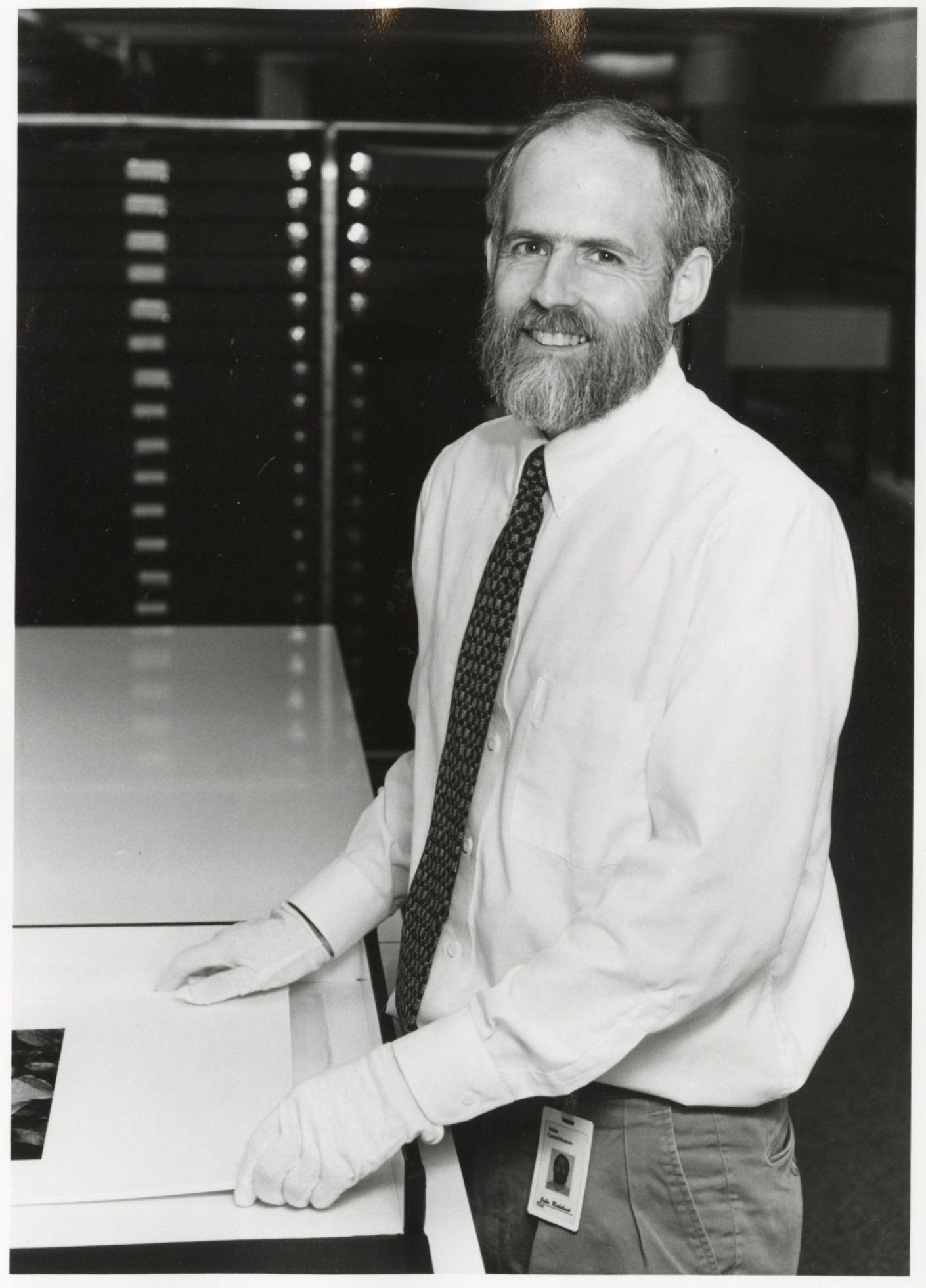
A black and white photograph of curator John Rohrbach from 1996.

John Rohrbach, 1996. Image courtesy of the Amon Carter Museum of American Art.

Mr. Rohrbach joined the Carter in August 1992 as Assistant Curator of Photographs, a temporary position which was funded by the Mellon Foundation. In this role, he was tasked with organizing and rehousing the museum’s Eliot Porter Collection, a bequest that included more than 8,000 prints, 100,000 transparencies, and other ephemera. During his time at the museum, Mr. Rohrbach was promoted to the positions of Associate Curator of Photographs (1995), Curator of Photographs (1999), and ultimately Senior Curator of Photographs (2003).

Prior to his work at the Carter, Mr. Rohrback served as the Director of the Paul Strand Archive at Aperture Foundation in New York, NY, after having previously held positions at the George Eastman House in Rochester, NY, and the Photographic Archive and Exhibitions Program at Apeiron Workshops, Inc., in Millerton, NY. He holds a BA in Government from Wesleyan University (1979) and a PhD in American Civilization from the University of Delaware (1993).

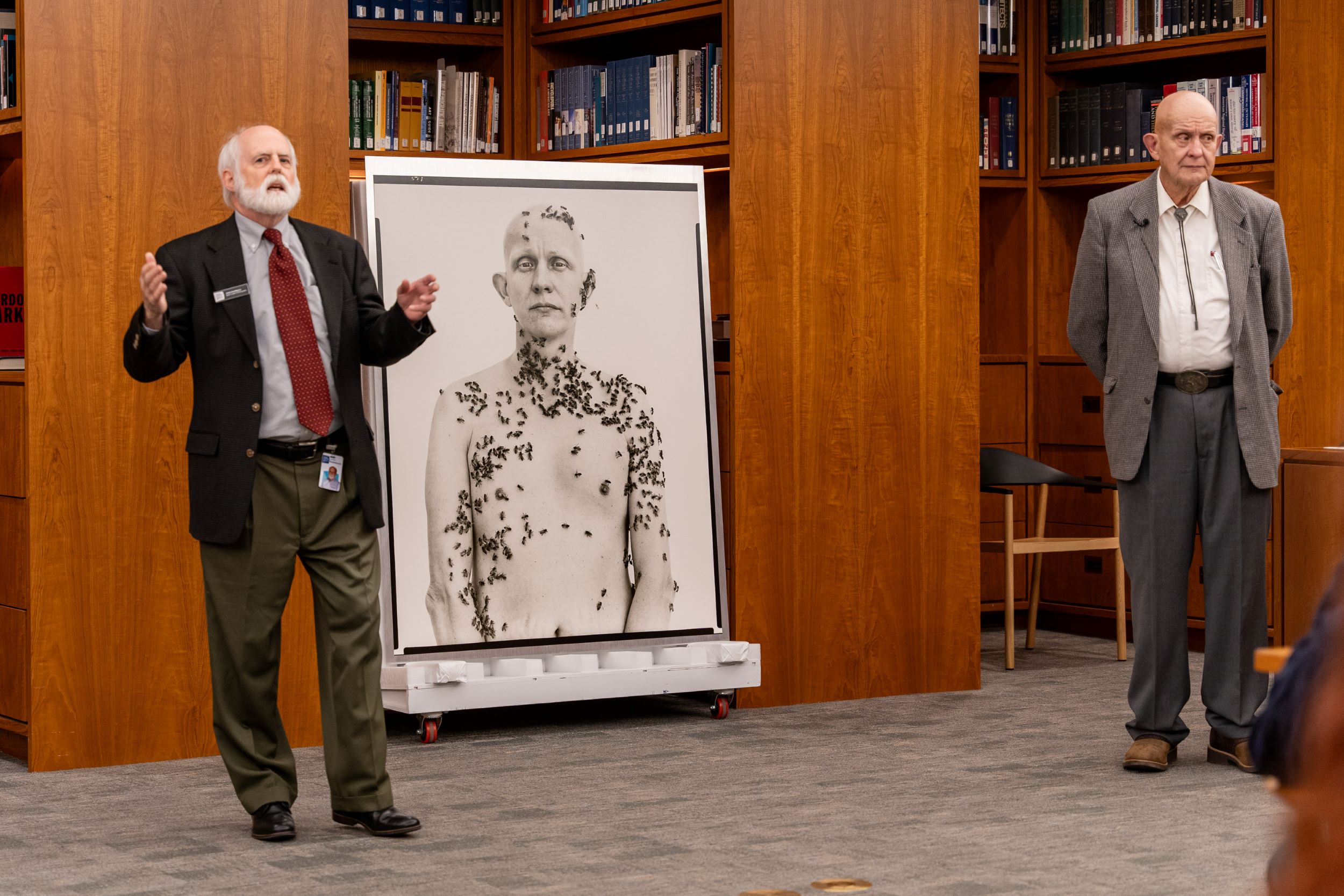
A photograph of curator John Rohrbach discussing a work by Richard Avedon.

John Rohrbach discusses a work by Richard Avedon for the Carter’s Photo Forum, 2021. Image courtesy of the Amon Carter Museum of American Art.

During his 31-year career at the Carter, Mr. Rohrbach spearheaded significant acquisitions that built on the museum’s strong 19th century holdings and photographer archives. Some key pieces include rare full-plate daguerreotypes by Albert Sands Southworth & Josiah Hawes; complete sets of Alfred Stieglitz’s art publications Camera Notes, Camera Work, and 291; and a complete set of Edward S. Curtis’ 20-volume work The North American Indian, which aimed to document traditional Native American cultures.

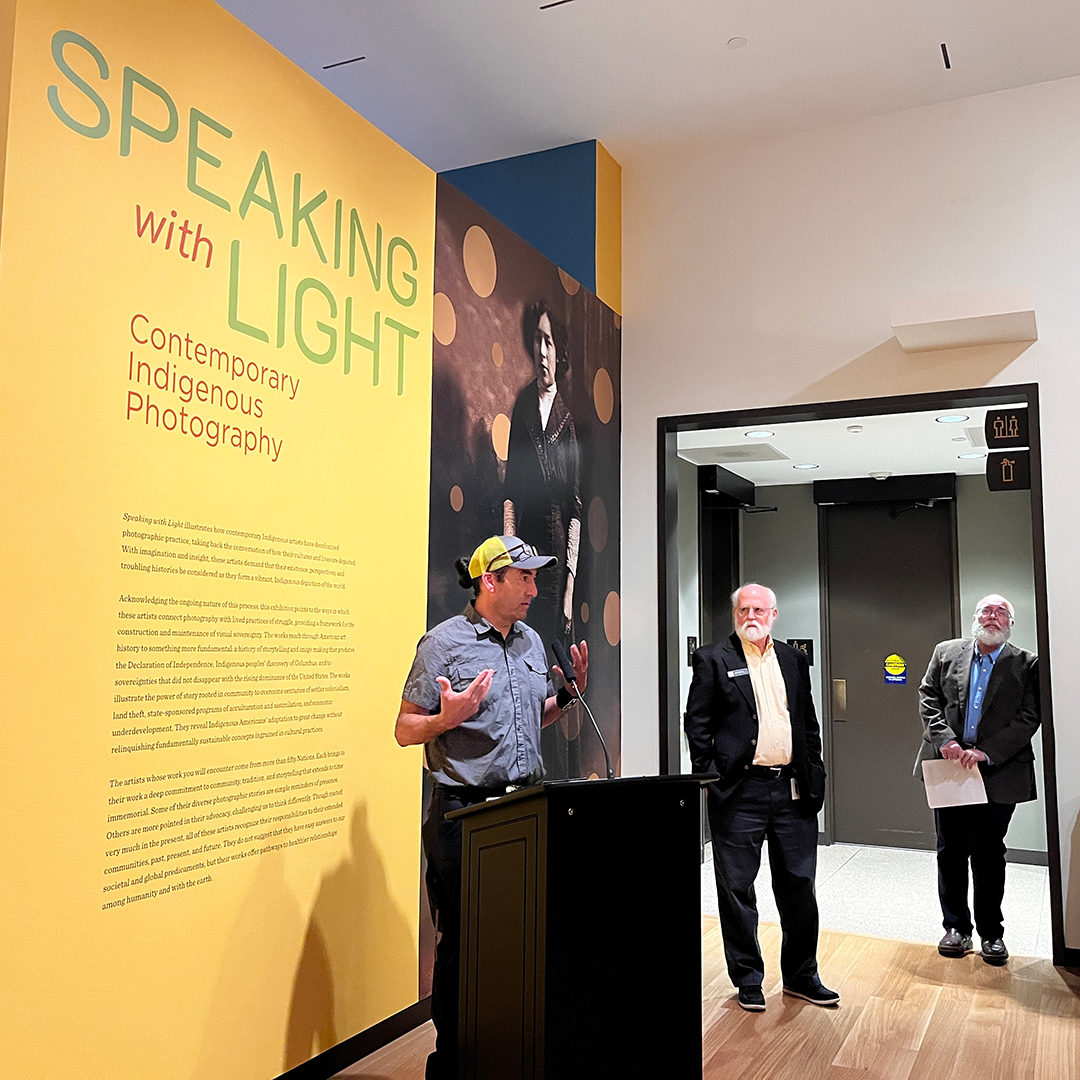
A photograph of Will Wilson standing at a podium and speaking about co-curating an exhibition with John Rohrbach, who stands in the background.

Will Wilson and John Rohrbach speak at a press preview for “Speaking with Light: Contemporary Indigenous Photography” at the Amon Carter Museum of American Art.

Because the documentation done by early American photographers like Mr. Curtis’ has been revealed to be romanticized and often inaccurate portrayal of Indigenous peoples, Mr. Rohrbach has also worked to diversity the Carter’s collection and expand on the idea of what an “American” art museum’s holdings should encompass. Specifically, he spent a significant amount of time acquiring works by contemporary Indigenous photographers. These efforts culminated in the 2022 co-curated exhibition and publication Speaking with Light: Contemporary Indigenous Photography. This was just one of his more than 80 exhibitions for the Carter, which also included the first critical studies of the careers of Frank Gohlke, Robert Glenn Ketchum, and Eliot Porter; a commission of photographer Terry Evans to photograph Fort Worth’s Trinity River; and groundbreaking studies of cabinet cards and American color photography.

As a steward of and advocate for photography, Mr. Rohrbach’s contribution to the museum extended beyond acquisitions and exhibitions. He also led the Carter’s cold storage initiative, which led to the implementation of a state-of-the-art storage facility to better maintain the museum’s photography collection. 

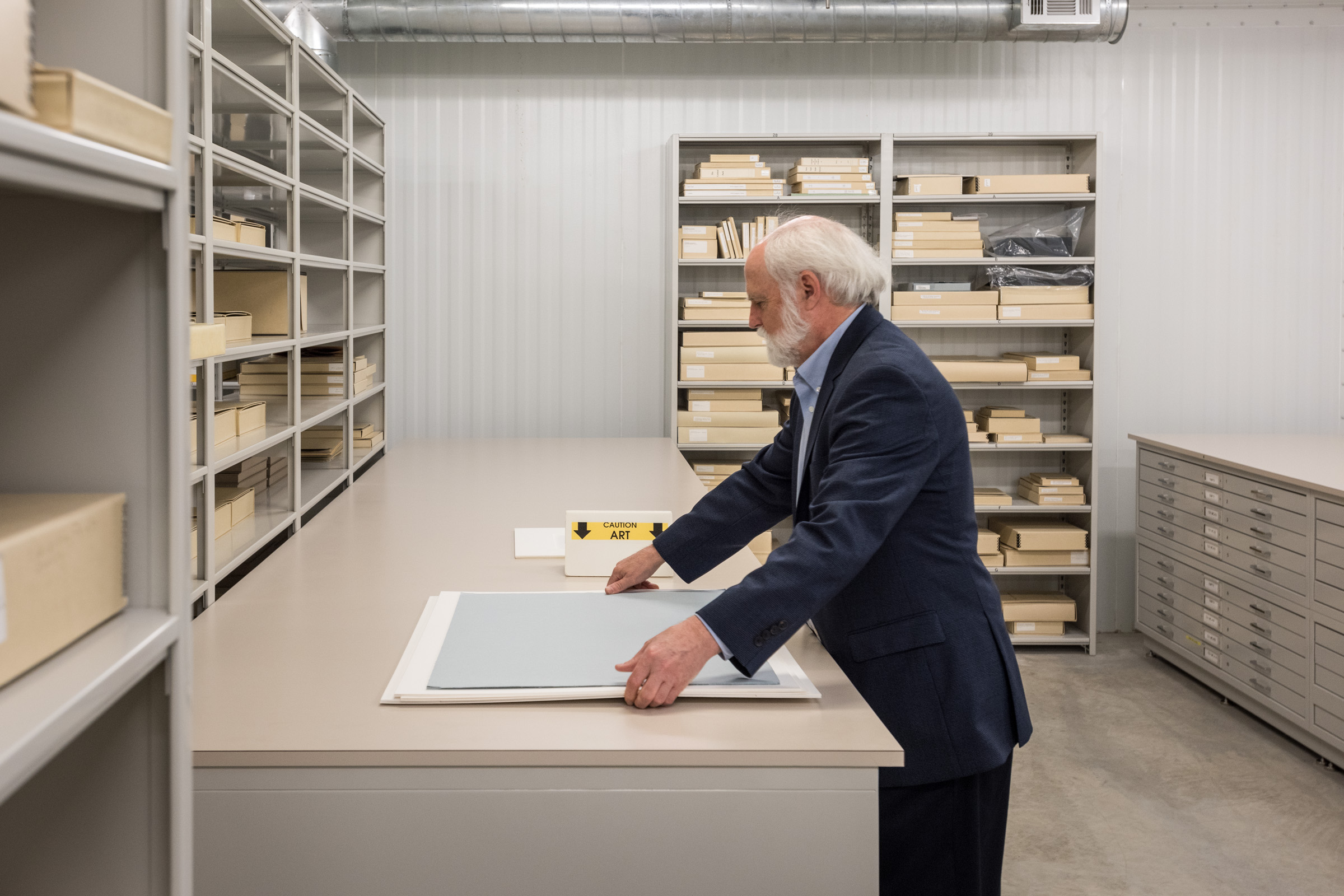
A photograph of curator John Rohrbach handling artworks in storage at the Amon Carter Museum of American Art.

John Rohrbach handles artworks in storage at the Amon Carter Museum of American Art. Image courtesy of the Amon Carter Museum of American Art.

Andrew J. Walker, Executive Director of the Carter, told Glasstire, “The Carter will greatly miss John Rohrbach upon his retirement, both as a colleague and as a friend. His impact is felt in the additions to the collection under his tutelage and the numerous exhibitions he curated including popular shows such as the 2003 Eliot Porter: The Color of Wildness to last year’s Speaking with Light: Contemporary Indigenous Photography. John has introduced generations of visitors to the importance and magic of photography.”

A photograph of curator John Rohrbach discussing works at the Carter's Photo Forum.

John Rohrbach discussing works at the Carter’s Photo Forum in 2019. Image courtesy of the Amon Carter Museum of American Art.

Mr. Rohrbach’s last day at the Carter will be Friday, September 1, 2023. Following his retirement, he plans to serve as a guest curator in a forthcoming exhibition at the museum that has not yet been announced. In the meantime, he plans to focus on repairing his yard after a long, hot, dry Texas summer; completing home repairs; organizing, digitizing, and sharing with his family his parents’ thousands of family photographs; returning to making art; and traveling.