About

Posts by :

National Gallery Nights Returns With New Outdoor Activities

National Gallery Nights Returns With New Outdoor Activities

This website uses cookies so that we can provide you with the best user experience possible. Cookie information is stored in your browser and performs functions such as recognising you when you return to our website and helping our team to understand which sections of the website you find most interesting and useful.

Oscar Zifang Wan Photography Exhibition in New York

Oscar Zifang Wan Photography Exhibition in New York
Oscar Zifang Wan
Oscar Zifang Wan photography exhibition “Unveiling the Unseen” scheduled for showing in Tribeca’s “Untitled Space” gallery

Oscar Zifang Wan is ready to present “Unveiling the Unseen” a photography exhibition at the “Untitled Space” gallery in Tribeca, New York. This compelling collection of Oscar’s photography will be on display from August 16 to August 18 at 45 Lispenard Street, New York, NY 10013.

Oscar, a talent emerging from Blair Academy, embarked on his journey into the world of photography at an incredibly young age. While his peers were engrossed in games and toys, Oscar’s fascination gravitated toward the Leica camera, a tool he would use to explore the world with unparalleled curiosity. His ability to capture the multifaceted essence of life has guided him across five continents and numerous cities, shooting everything from the urban landscapes to the serene beauty of rural vistas. Today, Oscar’s photographs transcend mere visuals, encapsulating emotions, intellectual reflections, and a profound commitment to environmental sustainability and that is what the New York exhibition is about.

Oscar Zifang Wan
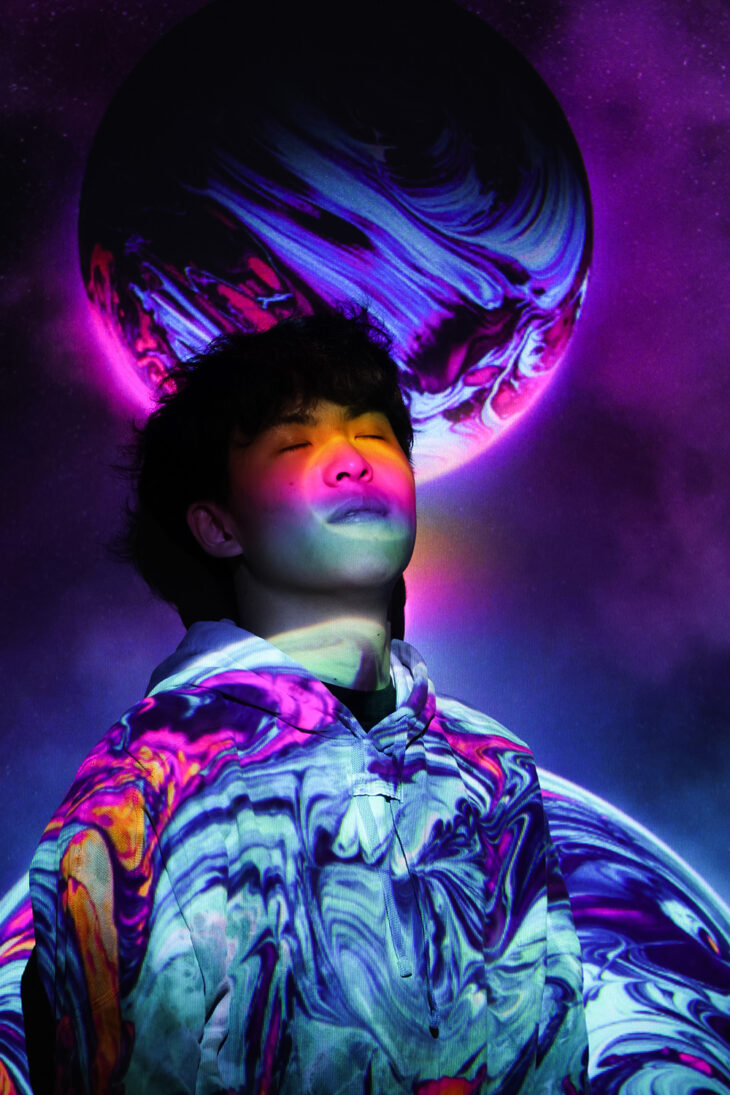
“Unraveled Realities” series by Oscar Zifang Wan

Oscar is also redefining the known in his work, as in the photo above – Zifang Wan confronts traditional perceptions, dissecting the mysterious, and inspiring reflection. Each image offers a window into a realm where tangible forms give way to abstract concepts, encouraging viewers to interpret the complex interplay of shapes, colors, and thoughts.

“Unveiling the Unseen” beautifully explores Oscar’s growth and vision as a photographer interested in the changing world around him. It offers glimpses into the vibrant lives of fellow young students, the beauty that surrounds us, and a deeper understanding of our world’s state today. Oscar Zifang Wan exhibition serves as more than a visual display; it is an exploration of thought-provoking concepts and a mirror to our times through his personal visual diary.

RELATED: Interview With Artist Qualeasha Wood for DSCENE Magazine

Oscar’s approach in this exhibition also takes a bold step beyond the familiar, delving into a realm where beauty is reimagined through a unique lens of creativity, and forms converge to redefine our connection with the natural world. For Oscar Zifang Wan the collection doesn’t merely present photographs; it narrates stories and reflections of our existence, advocating for a more sustainable future. Each image invites viewers to see the world anew, encouraging a renewed appreciation for the beauty and complexity that often remains unseen.

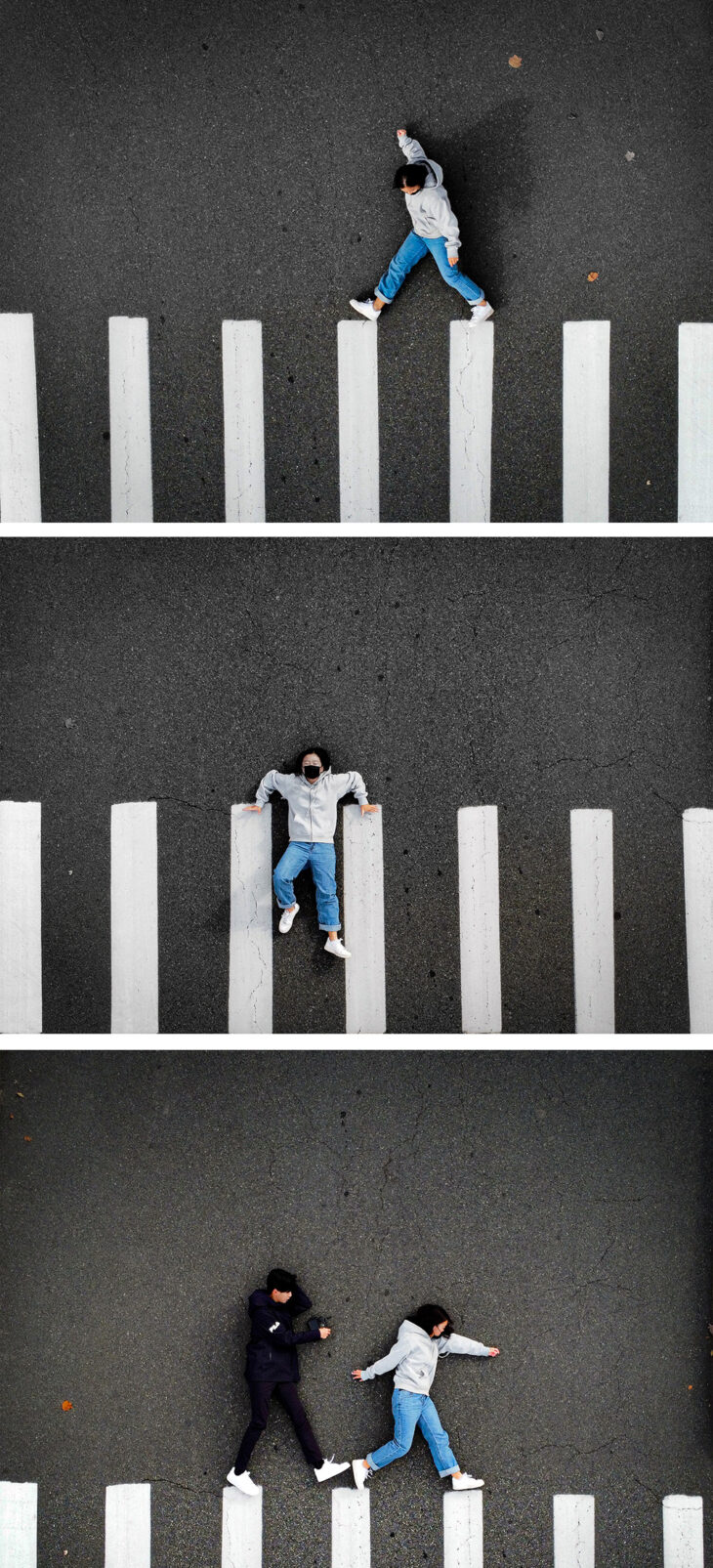
Concrete Reverie, 2022

“Unveiling the Unseen” is more than a photography exhibition – it’s an artistic statement by a photographer who is deeply committed to raising awareness about environmental sustainability. Oscar’s dedication shines through every photograph, allowing the world to witness his unique perspective.

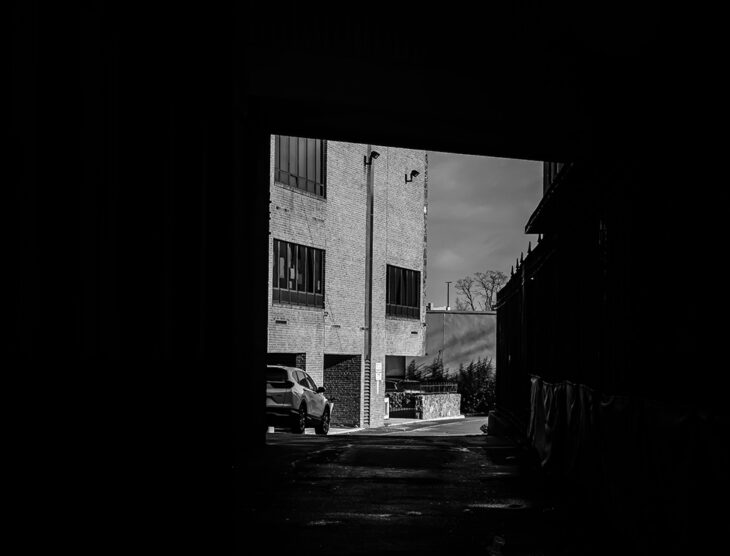
Oscar Zifang Wan
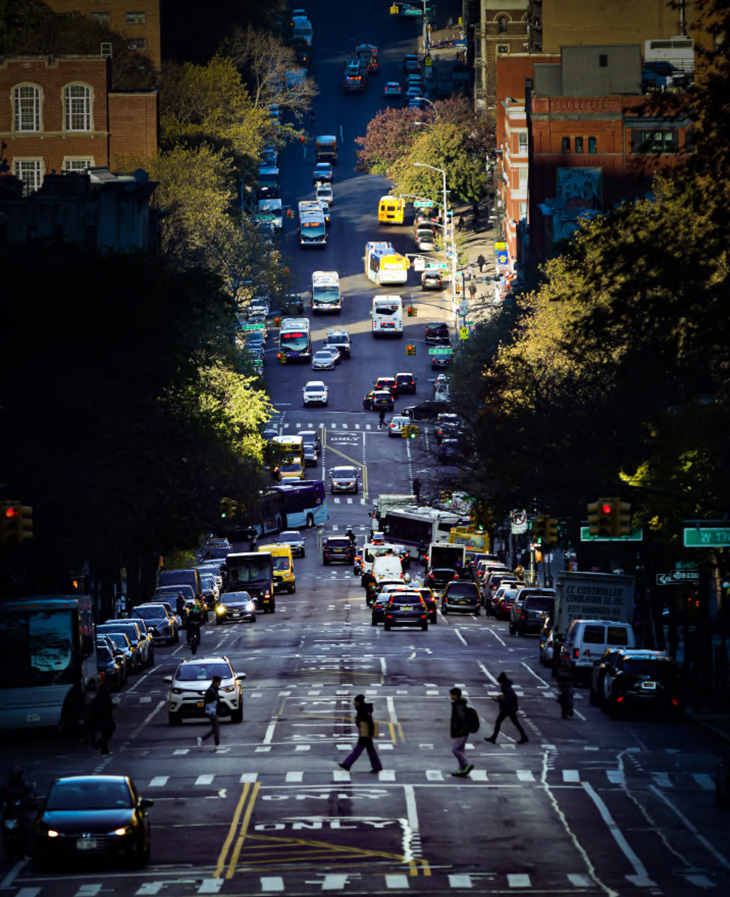
Elevated Perspectives captured in 2022 is part of the “Metropolitan Reverie” segment of Oscar’s exhibition in New York

In the “Metropolitan Reverie” segment of his exhibition, Oscar breathes new life into cityscapes, transforming them into striking landscapes and serene contemplations of daily human reality. These captures elevate the ordinary, resonating with the very soul of urban life, laced with a touching profundity.

Unveiling the Unseen exhibition beautifully rounds up a visual diary, in and out of an urban landscape, also witnessing the change we have gone through around the planet in the past years. At the  “Unveiling the Unseen” you can delve into a world of young creativity, where  Oscar as a bystander documents all of our lives, at the same time creating an archive of visual landscapes.

Unveiling the Unseen at the “Untitled Space” Gallery
45 Lispenard St, New York, NY 10013
August 16 – August 18, 2023

Opening Reception: August 16, 6:00pm-8:00pm
General Hours:
August 16, 6:00pm-8:00pm
August 17 – August 18, 10:00am-6:00pm

‘It was my life’: Former North Hills resident continues 40-year photography business in Manor

‘It was my life’: Former North Hills resident continues 40-year photography business in Manor

Alicia Dallago’s journey with photography first took shape far outside Western Pennsylvania.

Over a 40-year career behind a camera, she earned numerous accolades, including two Kodak Gallery awards.

Dallago, owner of Alicia Photography, was a portrait photographer in the North Hills for 36 years. For the past year, she has operated a photo restoration studio out of her home in Manor using skills refined during the darkest days of the pandemic.

Dallago came to the United States from Buenos Aires, Argentina, in 1977 with her then-husband and two sons, who were 4 and 6. Her husband had a work permit for a job in Cleveland, but she did not.

“The only thing that I could legally do was volunteer (at) a museum or go to school,” said Dallago, 81. “I didn’t speak English, and I had never driven in the snow. I thought going downtown to the museum area — it was out of the question.”

Photography quickly captured her eye.

Dallago enrolled in photography classes at a community college in Cleveland and fell in love with the art form. She earned an award from the Cleveland Museum of Art at one of the first photography shows she entered.

Despite her passion for photography, Dallago realized she had a lot to learn after booking her first two portrait photography contracts.

“I didn’t know anything about posing, so my posing was awful,” Dallago said. “My lighting was even worse.”

Seven years later, Dallago’s husband was transferred to Pittsburgh for work.

“I left all of my mistakes behind,” Dallago said. “But then I knew that I didn’t know anything.”

She studied under a master photographer for a few years and opened her own studio in the North Hills in 1986, shortly after she and her husband filed for divorce.

To continue honing her craft, she enrolled in classes at the Winona International School of Professional Photography — a branch of Professional Photographers of America — which operated from 1921 to 1984. She learned a variety of photography styles and techniques, shooting different images each week and receiving critiques from her instructors.

Her studio began to grow.

She had a real knack for capturing expressions, said Kay Bush, Dallago’s former studio manager and close friend of 30 years.

“When she worked with kids, she was down on the floor with them,” said Bush of Allegheny Township. “It was fun to watch her work.”

Through photography, Dallago found ways to give back to the community.

In place of a portrait sitting fee, she accepted toys from her clients, which she donated to North Hills Community Outreach for Christmas.

Dallago created a scholarship for women with children who wanted to return to school.

She generated funding through her studio work. The recipients — many of whom were single mothers or domestic violence survivors — were selected by the outreach and the Pittsburgh North Regional Chamber.

“She is an active leader, especially toward women who need a lift,” Bush said. “She is really helpful with that.”

When Bush herself needed a lift, Dallago was there.

The two met through a divorce support group held in a local church and became fast friends. They went on walks “most every evening” to commiserate, Bush said.

“Sometimes, the angrier we were, the faster we walked,” Bush said. “But other times, we just had a really good time and enjoyed being together.”

For Dallago, photography was more than a job.

“There’s people that take their job as a job,” Dallago said, “and there are people like me (for whom) it has never been a job. It was my life.”

Dallago closed her studio in 2012. She shot portraits out of her home, using the wildflowers and water feature in her yard as backgrounds.

Then the pandemic hit.

Unable to safely invite clients into her home for portraits, Dallago became depressed.

While decluttering her home, Dallago came across a few old photos of her family, including a candid shot of her mother and father holding her as a baby. Her mother hated having her picture taken, Dallago said. It touched her to see her mother’s natural expression and smile again.

Dallago found a new direction. She began restoring and enhancing old photos — fixing spots that were dark, blurry, torn, scratched or stained. Soon, she realized others may want the same.

“When you’re a business person, the idea of a business is always there,” she said.

After moving to Manor to be closer to her son, she opened her home photo restoration studio on Sandy Hill Road. She has stuck with the practice since.

Dallago is still searching for organizations to support in her new Manor community.

“I told my son, ‘I’m not going to get involved in the community. I’m not going to be a chamber member,’ ” she said. “I went downtown (during my first week in Manor), I saw the (Norwin Chamber of Commerce) on Main Street, I walked in and I left being a member.

“I thought, ‘No, I have to be a part of this.’ ”

Quincey Reese is a Tribune-Review staff writer. You can contact Quincey by email at qreese@triblive.com or via Twitter .

The Impact of AI and Machine Learning on the Field of Photography

The Impact of AI and Machine Learning on the Field of Photography

In today’s dynamic world, the convergence of art and technology has significantly transformed various industries, including photography. The development of artificial intelligence (AI) and machine learning (ML) has brought exciting possibilities to the field of photography, and this article aims to delve into how these technologies are reshaping the industry.

Photography has always embraced technological advancements, from the evolution of camera designs to the development of photo editing software. Now, AI and ML are the new frontiers in photography, offering unparalleled opportunities to enhance creativity and efficiency.

One of the most significant impacts of AI and ML can be seen in image processing and editing. With the help of AI-powered software, complex editing tasks can be automated, image flaws can be identified and corrected, and composition improvements can be suggested. This not only saves time but also allows photographers to focus more on their creative vision.

Computational photography is another area revolutionized by AI. Advanced algorithms now enable smartphone cameras to offer features like High Dynamic Range (HDR) imaging, depth perception, and low-light processing, which were once limited to high-end cameras.

Moreover, ML algorithms can analyze vast amounts of data to recognize patterns and make predictions. In photography, this can be used for tasks such as object recognition, scene recognition, and optimizing camera settings for a particular shot. Wildlife photographers, for example, can benefit from ML algorithms that help identify species, track movements, and predict behavior.

The integration of AI and ML in photography is only the beginning. As these technologies continue to evolve, we can anticipate even more intriguing breakthroughs. AI could be used to create hyper-realistic virtual models for fashion photography, while ML algorithms could analyze and learn a photographer’s unique style, applying it consistently across their work.

For aspiring photographers, this presents a world of opportunities. Pursuing a career in photography means not just mastering the art of capturing light and moments but also being at the forefront of technological innovation. The fusion of art and technology opens up new avenues for creativity and offers unique ways to express one’s vision.

In conclusion, the intersection of technology and photography, with the advent of AI and ML, is shaping a new paradigm in the field. These technologies enhance the capabilities of photographers, transform image processing and editing, and redefine what is possible in a photograph. For students considering a career in photography, this is an exciting time to explore the field and be part of a rapidly evolving intersection of innovation and creativity.

Want to Buy This Painting? First, You’ll Have to Audition.

Want to Buy This Painting? First, You’ll Have to Audition.
image

A younger, more diverse generation of artists are demanding a greater say in which collectors end up with their work.

IN JANUARY 2020, less than two months before galleries around the world closed to the public because of Covid-19, Lauren Halsey had a solo show at David Kordansky Gallery in Los Angeles. She was exhibiting works about the historically Black community in South Central — where she was born, raised and still works — which is physically quite close to the gallery in Mid-Wilshire but is spiritually farther away. A big crowd came to the opening to see Halsey’s large-scale sculptural installations, which resembled storefront signage, some featuring protest slogans. “Reparations Now! In Memory of Our Black Ancestors,” one of them read. “Black Workers Rising! For Jobs Justice & Dignity,” said another.

But the show soon caught the art world’s attention for a different reason after a white collector posted on Twitter what he claimed to be a note attached to a sales list from the gallery, which indicated that a number of Halsey’s works were not for sale. Or at least not for sale to him. According to the gallery, in a statement released to Artnet at the time, “Per the artist’s wishes, we reserved certain (not all) sculptures from this body of work for people of color and public collections.” Halsey, 36, wanted her art to be acquired — to be lived with — by a diverse group of owners who’d have a special appreciation for the artist’s overall project, which is dedicated, as she’s put it, to “the empowerment and transcendence of Black and brown folks sociopolitically, economically, intellectually and artistically.”

With the exception of a co-op apartment, buying a work of art is unlike buying anything else in America. Just because you have the funds to purchase a painting doesn’t mean you can. Since the art world has few formal regulations, it’s guided instead by longstanding rules of decorum: Galleries, which are responsible for discovering artists and fostering their careers, generally take a 50 percent cut, exponentially higher than that of manager equivalents in other creative fields. And visual artists, unlike any other cultural producer, receive no official percentage in residuals, thanks in large part to the outdated first-sale doctrine in U.S. copyright law. This has helped make flipping art at auction a common revenue-generating practice among a certain collector class.

One way that artists and galleries have protected themselves from speculative buyers is by making potential owners audition for the privilege of purchasing art. A first-time buyer can expect to be questioned by a gallery, with no apparent irony, about what other works they have in their collection. Another collector might need to promise to buy two works by the same artist: one they vow not to sell at auction, the other they pledge to give to a museum. Some artists have had success with other strategies. Major works by the painter Julie Mehretu have only rarely been resold at auction, which has made her work among the most expensive by a living artist — there’s never enough supply to meet the demand. The conceptual artist David Hammons spent much of his career not showing in white-owned galleries and making difficult-to-sell works, preferring to exhibit in public areas like vacant lots.

A work by Lauren Halsey, “Reparations Now + Welcome Family,” which was included in the artist’s 2020 exhibition at David Kordansky Gallery in Los Angeles.Courtesy of David Kordansky Gallery. Photo: Jeff McLane

Historically, the artists who’ve made collectors prove their good intentions have been those, like Hammons and Mehretu, with enough power and influence to make the business bend to their will. Most artists have no autonomy, which means that once their work leaves the studio and goes to the gallery, their involvement with it is through. Lately, though, the practice of auditioning collectors has changed, especially as galleries and museums attempt to elevate work by artists who’ve long been neglected or ignored by mainstream institutions. A younger, more diverse generation of artists are asking for more control over how their work gets sold and to whom. Their motivation is as much cultural — and personal — as it is financial.

ONE OF THOSE artists is Janiva Ellis, whose paintings she once described as “inherently Black because I am.” She said it was witnessing the art world’s “gross and stressful” embrace of Black painters, especially figurative painters who focus on Black lives, during the protests against racial injustice in 2020 that “encouraged me to be more intentional” in deciding who gets to collect her work. At 35, she has a resale agreement that grants her residuals so long as she’s living, and she’s tried to prioritize what she calls “safe stewardship.”

Black artists are not the only ones pushing against precedent. Queer artists — another historically marginalized group — are also fighting for the same rights. These efforts have unsettled standard practices in an industry that remains overwhelmingly white, and attempts by artists of color and others seeking a more equitable share have proven controversial enough that few art-world figures are willing to talk about the subject. Ellis was an exception: She agreed to speak on the record but only over email in a conversation mediated by her gallery, 47 Canal in New York, where a representative told me, “She is open to talking, but I hope you understand that we’d like to be cautious as we approach this.” Both Halsey and Kordansky declined to comment on the details of the sales contract for her show in 2020.

Among collectors, the response has varied. Gardy St. Fleur, an art adviser originally from Haiti who has helped galleries place works by artists of color with “people who look like them,” said it was important to find collectors who will truly value a work rather than cash in on what’s popular. “For some people,” he said, “it’s cool they collect Black art, but they’re not hanging that stuff in their home. I’ve dealt with collectors who will want to collect Black artists, but then they’ll just put them directly into storage.” But Komal Shah, a philanthropist and former tech executive who grew up in India and now lives in California among some 300 pieces of art made by women and artists of color, told me that the idea of sorting collectors by race left her feeling “a little dismayed — because works by Black artists going to Black collectors does not really make for a broader acceptance.” It was the same logic, she said, as arguing that art by women can only be enjoyed by women: “To me, that sounds almost like death upon arrival.”

A scene from Rashid Johnson’s 2019 film “Native Son.”Matthew Libatique/HBO

One of the people who bought Halsey’s work at the 2020 show at Kordansky was the visual artist Rashid Johnson, who’s spent his career making works that subtly and often ambiguously center Black identity. “If Lauren feels that she’s empowered and feels rewarded by having her work located in the homes of Black families, then that is absolutely her right as an artist,” he told me. “I’m not even sure it has to be viewed as an activist position. I think to view it as an activist position is to condition the experience of Blackness as one that is inherently radical. Whiteness is nothing if not great at centering itself. This act by a young Black woman saying this is what she wants for her work can be taken by a white audience as somehow being about them — when she has explicitly said that this is about the Black folks [whom she wants] to acquire the work, not about a rejection of whiteness.”

Johnson is also one of the few artists who’s made work that explicitly addresses the idea of white ownership of Black art. In 2019, he directed a film adaptation of “Native Son,” based on Richard Wright’s 1940 novel about the tragedy that results after a 20-year-old Black man, Bigger Thomas, is hired as a driver by the Daltons, a wealthy white family in Chicago. In the book, the Dalton patriarch is also Bigger Thomas’s landlord, the owner of the rat-infested building where Bigger lives with his mother, sister and brother. In the film, which updates the story, Bigger is a lover of punk music, and Mr. Dalton is a philanthropist and an art collector. The walls of his mansion are covered in works by Sam Gilliam, Deana Lawson, Glenn Ligon, Henry Taylor and Johnson himself — all Black artists the art market has recently anointed as valuable. Mr. Dalton’s taste in Black art is intentionally difficult to interpret. “There’s a read of this where we recognize that Dalton sees the opportunity to invest in a group of voices with incredibly thoughtful and critical ways of amplifying their thinking,” Johnson said. “There’s a more sinister read that could imagine Dalton as opportunistic. There’s also the hybrid read, which is the place where I think we mostly live.” In that case, Johnson said, Dalton “is all of the above.” As a prominent man of wealth, he’s certainly able to buy this work. But left unanswered is the question of whether he truly has the right to it.

Kordansky, who is also Johnson’s dealer in Los Angeles, makes a cameo in “Native Son” as the owner of a record store that Bigger frequents. Really, he’s playing a stand-in for the contemporary art world, or for the way the business has operated until recently. Bigger’s experience in the store parallels the alienation many people feel when they walk into a gallery. He inquires about an LP on display behind the store’s counter, a rare 1976 promo by the short-lived but influential Detroit punk band Death, which was one of the few bands that looked like Bigger within a largely white milieu. Kordansky’s character regards Bigger’s interest as unworthy. “This, man?” he says. “There’s one in the Smithsonian.” It’s a real collector’s item, and he won’t even say the price.