
Enjoy a variety of eclectic events in Louth this month
Louth’s world class makers on display this August for Craft Month


Rashid Johnson, “Antoine’sOrgan ” 2016, black steel, grow lights, plants, wood, shea butter, books, monitors, rugs, piano. PHOTO: © ISABELLA STEWART GARDNER MUSEUM
With its flower-filled courtyard and Monk’s Garden, the Isabella Stewart Gardner Museum has always been a home to both horticulture and fine art. Now through Sept. 17, its exhibition “Presence of Plants in Contemporary Art” presents works by eight artists that incorporate living plants.
Organized by Pieranna Cavalchini, the Gardner’s curator of contemporary art, and Charles Waldheim, its curator of landscapes, the exhibition begins outdoors with a 32-by -16-foot panel on the museum façade entitled “The Declaration of Interdependence” (2023). Australian Natalie Jeremijenko’s environmental manifesto is laced with more than 100 flowering plants, including the Gardner’s signature blossoms, nasturtiums.

Ackroyd & Harvey, left to right: “Netooeusqua / West Woods, Shinnecock Tribal Territory, Long Island, New York” 2023; “Elizabeth Solomon / Muddy River, Fenway, Boston, Massachusetts” 2023, seedling fescue, native and perennial ryegrass, clay, jute. PHOTO: © ISABELLA STEWART GARDNER MUSEUM
Inside the palazzo, a video by Zheng Bo of Hong Kong follows a group in a subtropical Taiwanese forest. Most of the show is in the special exhibition gallery of the museum’s contemporary wing. In the first room are three images fashioned in grass by the UK-based duo Ackroyd & Harvey. Two large portraits of Indigenous advocates for environmental justice are lawns of light and shadow. Another work presents an equation to track energy released from fossil fuels. An elegant sculpture by Piero Golia of Los Angeles pairs living, growing mushrooms with a marble column.
In the main gallery, works by two artists are silent accompanists to a grand installation that transforms the room into a temple. Swedish artist Henrik Håkansson’s wall-mounted cuttings of plants are arranged like musical notes. And Welsh artist Cerith Wyn Evans presents a pair of entwined willow saplings which, slowly rotating on electric turntables, resemble music stands.
Dwarfing these works is “Antoine’s Organ” (2016) by Rashid Johnson of Brooklyn, which with sound and sight celebrates African American culture and history. Within this 16-by-28-by-10-foot grid of black steel is an array of evocative objects, primarily 285 plants (more than 32 species), from huge cala lilies and ferns to tiny succulents, many in pots of assorted shapes and sizes handmade by Johnson in earthen metallic tones.

Piero Golia, “Ikebana #3” 2021, wood, mushrooms, marble PHOTO: SUSAN SACCOCCIA
The display also includes iconic books such as Richard Wright’s “Native Son” and Debra Dickerson’s “The End of Blackness”; and muted monitors playing video loops by Johnson. Surrounded by the greenery and barely visible is an upright piano. The installation’s title is a nod to pianist Antoine Baldwin (aka Audio BLK), whose performances inaugurated the installation. At the Gardner, his seat is taken by 13 students and alumni of the Berklee College of Music and New England Conservatory of Music, whose contemporary jazz improvisations animate the installation daily, from 1 to 3 p.m. and 6 to 8 p.m. every Thursday, throughout the run of the exhibition.
At the keyboard last week was Jonathan Paik, NEC ’23. Visiting from Los Angeles, where he curates the concert series “Fire Spitter,” Paik was invited by his former NEC professor, renowned jazz musician Jason Moran. Paik’s expansive chords and now and then, his pulsing backbeat, induced a meditative mood as visitors viewed Johnson’s intricate structure or gazed through the gallery’s wall of windows at the sky, the majestic trees along the Fenway, and below, the Monk’s Garden.
“I felt suspended in mid air,” said Paik after concluding his two-hour set. “The whole structure is an instrument.”
Of and beyond time, the work and its music bring the gallery, and the show, to glorious life.


Evan Puschak of Nerdwriter brings us another dose of art history as he explains a profound shift in Western painting traditions. The insightful “Bruegel: Birth Of A New Genre” video explains how many works made prior to the 16th century dealt with religious and mythic themes or were portraits of the elite, all commissioned by the church or wealthy patrons. Protestant reforms in the church, political revolution, and a rise in the merchant class shifted the economic makeup, culture, and values, and as generally happens, art reflected this change. Painters like Pieter Bruegel The Edler began to render scenes and people that better captured this reality, focusing on the daily lives of regular people.
You also might enjoy Pushack’s lesson on realistic impressionism. (via Kottke)


Do stories and artists like this matter to you? Become a Colossal Member today and support independent arts publishing for as little as $5 per month. The article A Brief Lesson Explains the Art Historical Shift to Painting Everyday People appeared first on Colossal.


High sales figures for artworks are driving solid investment returns for UHNWs, according to new data from Knight Frank.
The property consultancy’s Luxury Investment Index, which tracked a weighted basket of 10 luxury goods over the 12 months running up to the end of June 2023, was driven by growth in the art market. The art portion of the basket saw growth of 30 per cent.
Other luxury goods saw more modest increases, with watches and jewellery each growing by 10 per cent in value, and investments in cars and wine both rising by five per cent. Only rare whisky investments fell in the index, by 4 per cent, while investments in furniture remained flat, neither increasing or decreasing in value.
Overall, the luxury goods basket grew by seven per cent, providing ‘credible’ returns for UHNWs, the firm said.
Gains were higher than the FTSE 100 equities index, which rose by five per cent, and house prices in prime central London, which grew by only one per cent.
According to the property group, the Luxury Investments Index ‘is arguably the most comprehensive guide to the performance of luxury investments available’.
Art market activity was measured by consultancy Art Market Research (AMR)‘s All Art index, which records auction prices each month. While strong for the 12-month period, auction results from this spring suggest that growth in the market may have peaked, according to AMR’s Sebastian Duthy.
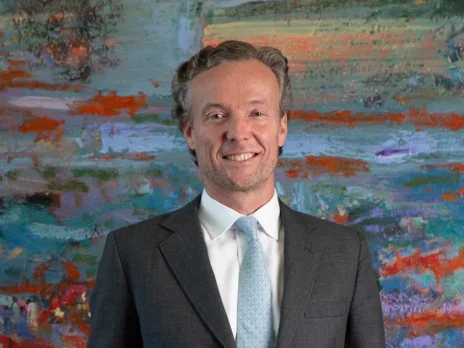

‘The auction season’s spring sales are the first measure of market confidence and recent results suggest growth is already starting to slow,’ Duthy said.
While growth in the art market topped the luxury leaderboard, the findings reflected the wider post-pandemic recovery in the art market – rather than just robust sales, according to Duthy.
According to the property consultancy’s Luxury Investments report, there is a strong association between interest in luxury collectibles, the art market and the world of property, with UHNWs eager to style their homes with vibrant art collections.
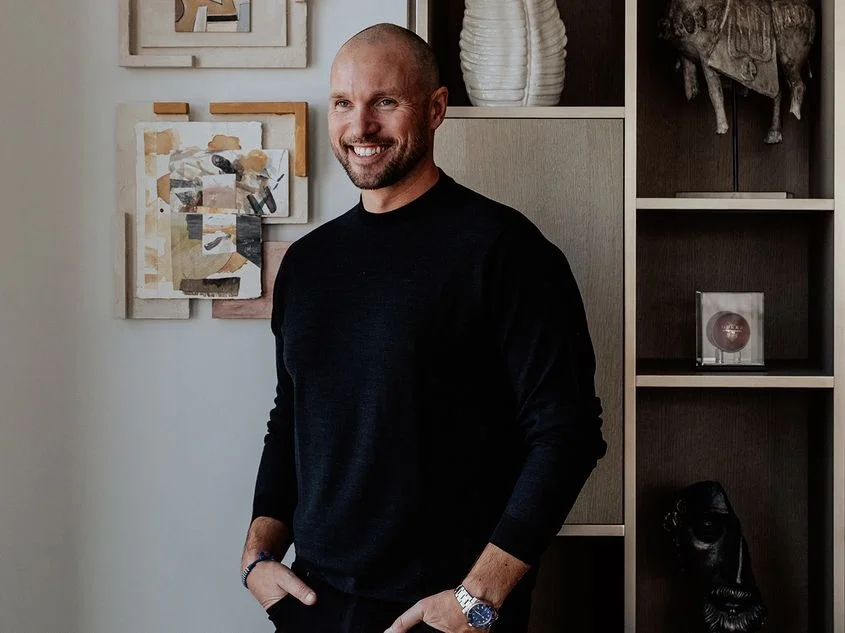
‘We love to curate art for our clients. Many will see interior design as an opportunity to start afresh and reimagine the way they emotionally connect to their surroundings,’ Richard Angel, of design firm Angel O’Donnell, said. ‘Art plays an inspiring role in that transformation.’
‘Art enlivens a space, whether it’s adding colour, texture, movement, drama, humour or all the above.’
[See also: Global art market sales reach $67.8 billion, new study shows]
Other evidence from the investment index also points to falling interest in luxury investments. While the car market grew by five per cent over the year measured, it has fallen by seven per cent so far this year – reflecting a high degree of variability over the period.
‘The performance of classic cars has been mixed,’ said Dietrich Hatlapa of Historic Automobile Group International (HAGI), which measures the performance of 50 investment-grade cars to put together its HAGI Top Index.
‘After a strong performance in 2022, when the value of the most investable classic cars rose by 25%, this year has seen the market slip into reverse gear due to macro-economic factors,’ he added.
Purchases of rare whisky bottles, which have been the strongest performer over the past 10 years in the Knight Frank index, were the only luxury asset class to see a fall, of four per cent. The results were compiled for Knight Frank by Rare Whisky 101, an intelligence and insight firm which tracks interest in fine whiskies.
‘Bottles of rare whisky have had a far more sedate time from a performance perspective over the past three years,’ said Rare Whisky 101’s Andy Simpson of industry consultant Simpson Reserved.
‘Higher value (over £5,000) bottles have re-traced recently due to a myriad of geo-political, social and economic reasons. Certain brands have still performed well, while the market leader (from a sheer volume of market perspective), Macallan, has seen particularly punishing losses with its index re-tracing almost 12% over the past twelve months,’ he concluded.






