About

Posts by :

Today’s Photo from Ted Grussing Photography: Slope Soaring … For Dick

Today’s Photo from Ted Grussing Photography: Slope Soaring … For Dick

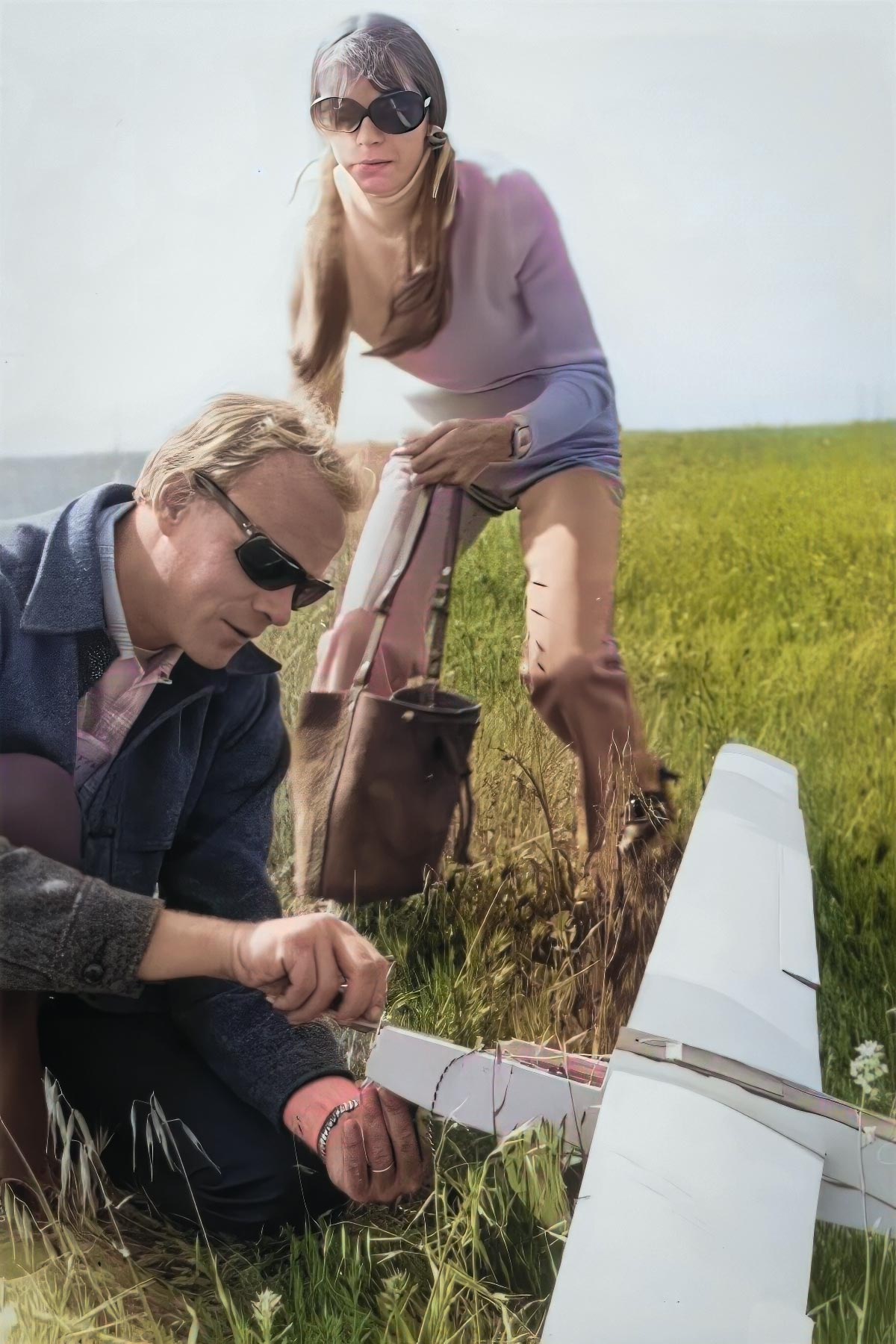
… a few days ago I got an email with photos from a friend on the east coast recounting the days that he and friends spent slope soaring RC gliders at Cape Cod … well, I never did Cape Cod, but I did fly RC gliders on the bluffs overlooking the Santa Ana River and the beautiful Huntington Beach, beaches and the Pacific Ocean.

I wanted to send Dick a few photos of those days so I have been combing old and forgotten folders with scans from those days … time got away from me so the length of the search has determined what will go out tonight. I always wanted to be a pilot, but those days were not here then … I was busy running the family business and going to law school at night as well as coaching the Costa Mesa Synchro Sylphs synchronized swim team which Corky and I along with several other parents had formed. Flying the RC gliders was a great way of releasing stress and enjoying the days on the slopes.

In the top photo all was going well … Corky and I had smiles on our faces and my sailplane was performing as it should … then I brought it in for a landing and when slope flying that can be a bit of a trick with rotor type air behind the bluff face. The photo below shows my beautiful glider in a somewhat disassembled state after a crash landing … fortunately my crew was there to give comfort and aid … what fun.
Tomorrow night some of the photos doing slope soaring in the real thing … that started at the other end of my career.

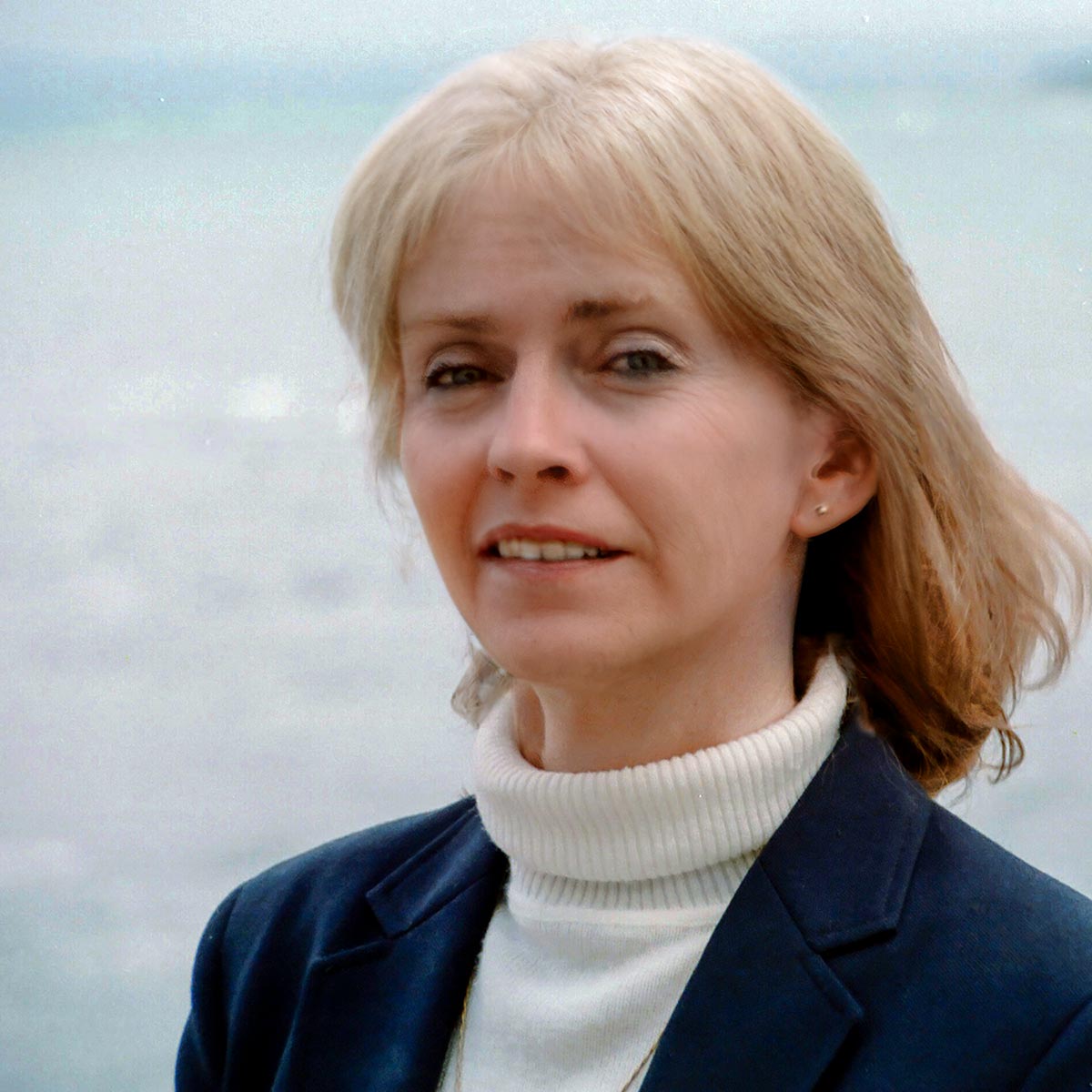
Last below, a photo of Corky that I found and have spent time working it up … it was taken back in the mid to late 80’s on a ferry to Denmark from Germany. We were with good friends and business partners. Fun times … also fun to re-work old photos and colorize them.
Have a beautiful day and smile … we are here and breathing!

Cheers,

Ted

To-morrow, O to-morrow!
Fast fall the fading years. A thought, a dream
Of gentle words; of faith and love a theme;
A smile, a step or two, and all is done.
Quick is the veering stream of life full run;
Yet in the crimson west still gleam
To-morrow and to-morrow’s endless dream.

excerpt from To-morrow by Max Ehrmann

###

photo_tedgrussingThe easiest way to reach Mr. Grussing is by email: ted@tedgrussing.com

In addition to sales of photographs already taken Ted does special shoots for patrons on request and also does air-to-air photography for those who want photographs of their airplanes in flight. All special photographic sessions are billed on an hourly basis.

Ted also does one-on-one workshops for those interested in learning the techniques he uses.  By special arrangement Ted will do one-on-one aerial photography workshops which will include actual photo sessions in the air.

More about Ted Grussing


Healing Paws

Healing Paws

This is an advertisement

Capturing Wellness: Photography and Mental Health

Capturing Wellness: Photography and Mental Health

In today’s fast-paced and digitized world, finding solace and maintaining good mental health has become crucial. There are many ways one can find an escape from it all, and one of those is the powerful ally of photography. Beyond being a mere hobby or artistic expression, photography can have numerous benefits for mental well-being. Engaging with photography can have a positive impact on a person’s state of mind, providing them with a creative outlet, promoting mindfulness, fostering self-expression, and connecting them with their surroundings. 

Today’s world seems to be growing louder and moving faster. It’s easy to fall into the trap of the daily routines that, at times, sees us forgetting what we enjoy. There’s now this mindset of hustling. Thanks to numerous social media types, the idea of “work, work” is glorified, with one’s mental health being sacrificed. Hard work is something we need to do in order to live the life we seek. But at what cost?

Oh, that cost is what makes you who you are if you’re not careful. You’re a photographer. You picked up a camera because it’s something you enjoy. It’s something that grounds you. It’s something that gives you a voice. Does life get in the way sometimes? Yes. But that doesn’t mean you should give up on what you find peace in. Photographer Lucy Lumen goes on to discuss the benefits of photography being that much-needed positive influence on your life. She goes on to talk about how photography offers you the ability to be creative, cutting down on consumption of content, exercising as you walk around with your camera out in the world, belonging to a community, and the ability to practice mindfulness. 

These concepts are easy to write down or talk about. However, putting it into practice isn’t always so easy. We’re all on our own journey, so maybe going out and making photographs, even one meaningful photograph, can be that first step towards that light at the end of the tunnel. Speaking for myself, photography offers me a chance to silence the noise in my life. For me, it’s therapeutic. 

Through the act of capturing images, individuals can find solace, express themselves creatively, and cultivate mindfulness. Whether it is through a professional camera or a smartphone, photography is a versatile tool that has the potential to transform lives and nurture mental well-being. So, keep picking up a camera and embark on a journey of self-discovery, connection, and healing. Remember, we all have a finite amount of trips around the Sun. Life gets difficult. Life gets stressful. But make time for yourself. Pick up that camera, and go have some fun. 

California tribe gifts Sundance Institute with $4 mil for Indigenous program

California tribe gifts Sundance Institute with $4 mil for Indigenous program

Native News Online

CALIFORNIA – The nonprofit Sundance Institute has been given a $4 million endowment gift from the Federated Indians of Graton Rancheria — the largest such endowment gift in the organization’s history.

The money will support the Institute’s Indigenous Program, which offers labs, fellowships, screenings, and gatherings around the world for Native storytellers and filmmakers, per a Sundance Institute statement. In particular, this new endowment gift will support a new fellowship for emerging and mid-career Indigenous artists with projects in development or production.

New fellows will receive grants of $25,000 each, yearlong creative mentorship from Indigenous Program staff, networking opportunities, and attendance at the Sundance Film Festival. Applicants for the fellowship must be from a Native tribe within California, though the press release does not specify if that designation includes both state and federally-recognized tribes. For a more global effort, the money will also support scholarships through Sundance Collab, a digital learning space.

Grafton Rancheria chairman Greg Sarris, himself an alumnus of the Sundance Institute’s Screenwriters’ Lab in 1992, said his firsthand experience with the organization’s support for Native stories led him to organize the endowment award.

“We are excited to see the creative breakthroughs from future fellows and scholarship recipients,” Sarris said in a statement. “Supporting and nurturing these artists will open up pathways to success for the entire California Indigenous creative community and enable us to tell our stories.”

Adam Piron, Director of Sundance Institute’s Indigenous Program, called the Graton Rancheria fellowship contribution a “generous gift” and said the money would amplify Native storytellers’ voices in California, a long-time bastion of the entertainment industry.

“So much of cinema’s history and the establishment of the American film industry has been created within California, but very rarely has it ever included the people on whose very land sustained it,” Piron said in a statement. “The ripple effect of the opportunities created through this endowment will be significant. Our program is dedicated to empowering a broad range of Indigenous voices, and we’re so excited to be able to expand our mission, specifically to California Indigenous tribes, with the addition of the fellowship and Collab scholarships.”

Sundance CEO Joana Vicente echoed the sentiment, calling the Grafton Rancheria endowment award an opportunity to strengthen and expand the Institute’s indigenous support.

“It means a lot to us that so many Native talents will be provided a space to learn, connect, and create thanks to this substantial support, and we’re especially appreciative of Greg for giving back to the Sundance family he has belonged to for decades,” Vicente said in a statement.

Applications for both the fellowship and Sundance Collab scholarships are available online here. Applications are due by August 28, and awards will be distributed early next year, per the Sundance Institute statement.

Eight Humanoid Forms Congregate in a Glowing Gathering Space in Taipei

Eight Humanoid Forms Congregate in a Glowing Gathering Space in Taipei

“Gathering Pavilion.” All photos by BlackBird Imagine Studio, JL, © Ling-Li Tseng, shared with permission

Evoking the supple curves of the human body, an installation by artist Ling-Li Tseng (previously) explores the power of connection and community. Created in collaboration with Serendipity Studio for the 2023 Taipei Lantern Festival, “Gathering Pavilion” is comprised of eight figurative forms that lean together with shoulders touching to establish a space with a flower-shaped opening. Each module is made of laser-cut metal with a baked enamel finish, with lights embedded near the base to shine upward and reflect on the material’s surface.

When on view earlier this year in Four South Village, Xinyi District, Taipei City, viewers “would instinctively walk into the artwork, engaging in a visual dialogue with the humanoid geometry or using the eight modules as frames to catch a glimpse of Taipei 101, the iconic skyscraper,” Tseng told Colossal. “The involvement of viewers completes the artwork, embodying the original intention behind the creation of the ‘Gathering Pavilion.’”

Explore more of Tseng’s organic forms on her site and Instagram.


A person walks through a metal pavilion with a flower-shaped opening glowing at night

A metal pavilion with a flower-shaped opening

A detail image of metal slats forming three modules

A person looks up through a metal pavilion with a flower-shaped opening

A detail image of metal slats forming various modules

A person walks toward and open-air metal pavilion

Do stories and artists like this matter to you? Become a Colossal Member today and support independent arts publishing for as little as $5 per month. The article Eight Humanoid Forms Congregate in a Glowing Gathering Space in Taipei appeared first on Colossal.

6 Theatre Workers You Should Know

6 Theatre Workers You Should Know

This edition shines a light on artists who’ve made their mark in Chicago, as part of our renewed focus on that city’s vibrant theatre culture (and our second focused on the Windy City, if you’re counting). If you would like to recommend a theatre artist (from anywhere) for a future Role Call, fill out our open Google Form here.


Alex Meyer (he/him)

Alex Meyer. (Photo by Sarah West Photography)
” data-medium-file=”https://i0.wp.com/www.americantheatre.org/wp-content/uploads/Alex-Meyer.jpg?fit=240%2C300&ssl=1″ data-large-file=”https://i0.wp.com/www.americantheatre.org/wp-content/uploads/Alex-Meyer.jpg?fit=574%2C718&ssl=1″ decoding=”async” loading=”lazy” src=”https://i0.wp.com/www.americantheatre.org/wp-content/uploads/Alex-Meyer.jpg?resize=345%2C432&ssl=1″ alt class=”wp-image-76093″ width=”345″ height=”432″ srcset=”https://i0.wp.com/www.americantheatre.org/wp-content/uploads/Alex-Meyer.jpg?resize=819%2C1024&ssl=1 819w, https://i0.wp.com/www.americantheatre.org/wp-content/uploads/Alex-Meyer.jpg?resize=240%2C300&ssl=1 240w, https://i0.wp.com/www.americantheatre.org/wp-content/uploads/Alex-Meyer.jpg?resize=768%2C960&ssl=1 768w, https://i0.wp.com/www.americantheatre.org/wp-content/uploads/Alex-Meyer.jpg?w=1080&ssl=1 1080w” sizes=”(max-width: 345px) 100vw, 345px” data-recalc-dims=”1″>
Alex Meyer. (Photo by Sarah West Photography)

Profession: Theatre administrator and stage manager
Hometown: Port Huron, Mich.
Current home: Chicago
Known for: Meyer serves as the Goodman Theatre’s board relations and individual giving coordinator, facilitating their board meetings, taking care of VIP ticketing, and coordinating donor processing and acknowledgement. He has also stage managed at numerous Chicago companies.
What’s next: As the Goodman gears up for The Who’s Tommy, Meyer is finalizing end-of-fiscal-year processes and preparing for the next fiscal year and 2023-24 board meetings.
What makes him special: Detroit-based playwright Kevin Elliott Chrisney praised Meyer for being an “insatiably kind and gracious artist who is always giving back to their community by volunteering for the Lincoln Square food pantry.”
Fostering relationships: Meyer finds inspiration in working toward making theatre accessible to everyone, including supporting the Goodman’s education and engagement programming, which brings performances to communities that may not typically have a connection to live theatre. “Fostering relationships with our community is a main passion point for me,” Meyer says, “whether it’s the thoughtful acknowledgement of a trustee gift or supporting programs that bring moving stories to Chicago’s parks.”


Arti Ishak (they/them)

Arti Ishak. (Photo courtesy Ian McLaren Photography)
” data-medium-file=”https://i0.wp.com/www.americantheatre.org/wp-content/uploads/Arti-Ishak-1-scaled.jpg?fit=218%2C300&ssl=1″ data-large-file=”https://i0.wp.com/www.americantheatre.org/wp-content/uploads/Arti-Ishak-1-scaled.jpg?fit=574%2C791&ssl=1″ decoding=”async” loading=”lazy” src=”https://i0.wp.com/www.americantheatre.org/wp-content/uploads/Arti-Ishak-1.jpg?resize=319%2C439&ssl=1″ alt class=”wp-image-76091″ width=”319″ height=”439″ srcset=”https://i0.wp.com/www.americantheatre.org/wp-content/uploads/Arti-Ishak-1-scaled.jpg?resize=743%2C1024&ssl=1 743w, https://i0.wp.com/www.americantheatre.org/wp-content/uploads/Arti-Ishak-1-scaled.jpg?resize=218%2C300&ssl=1 218w, https://i0.wp.com/www.americantheatre.org/wp-content/uploads/Arti-Ishak-1-scaled.jpg?resize=768%2C1059&ssl=1 768w, https://i0.wp.com/www.americantheatre.org/wp-content/uploads/Arti-Ishak-1-scaled.jpg?resize=1114%2C1536&ssl=1 1114w, https://i0.wp.com/www.americantheatre.org/wp-content/uploads/Arti-Ishak-1-scaled.jpg?resize=1485%2C2048&ssl=1 1485w, https://i0.wp.com/www.americantheatre.org/wp-content/uploads/Arti-Ishak-1-scaled.jpg?w=1857&ssl=1 1857w, https://i0.wp.com/www.americantheatre.org/wp-content/uploads/Arti-Ishak-1-scaled.jpg?w=1722&ssl=1 1722w” sizes=”(max-width: 319px) 100vw, 319px” data-recalc-dims=”1″>
Arti Ishak. (Photo courtesy Ian McLaren Photography)

Profession: Actor, director, writer, educator, and community organizer
Hometown: Detroit
Current home: Chicago
Known for: A communally engaged multi-hyphenate, Ishak develops and co-manages the Chicago Inclusion Project’s foundational Active Anti-Racism training series, teaches with Black Box Acting, and serves as co-founder and central organizer of SWANASA Central, an artist collective dedicated to uplifting Southwest Asian, North African, and South Asian communities. Ishak’s acting credits include Buried Child and Witch at Writers Theatre and The Best Decision You Ever Made at Second City, as well as television appearances on NBC’s Dark Matter and HBO’s Southside. Recently Ishak wrapped up their stage directing debut with the Chicago premiere of Rehana Lew Mirza’s Hatefuck.
What’s next: After closing Hatefuck, Ishak is seeking more companies “interested in bringing complex and authentic Muslim representation to their stage.” In addition to developing new projects, Ishak will present the short film ba la at the Los Angeles Micheaux Film Fest this July and see their original play Closure premiere at San Francisco’s ReOrient Festival later this year.
What makes them special: Adelina Feldman-Schultz, casting associate and facilitator at the Chicago Inclusion Project, called Ishak “one of the most exciting and groundbreaking multidisciplinary artists working today, redefining our understanding of both Muslim and multiethnic identity and representation.” Feldman-Schultz added that Ishak approaches their work with rare care and integrity, prioritizes mentoring young BIPOC artists, and is “tireless in their dedication to developing and uplifting stories by and for MENASA artists, creating a new canon of theatre that reflects the true diversity, and beautifully complex stories of their communities.”
Uplifting multiplicity: Ishak’s work centers around expanding contemporary art that explores the intersection of multiple identities, empowering artists of color, and upending traditional hierarchies. “As an Indonesian, Lebanese, non-binary Muslim American, I’ve often felt the pressure to simplify my existence for the comfort of others, and the loneliness that comes from never getting to see my whole identity reflected in art and media,” Ishak says. “The inability to fit into one neat little box and the realization that I don’t need to is what inspired my interdisciplinary art practice as an actor, writer, director, educator, and community advocate.”


Gabriel Ruiz (he/him)

Gabriel Ruiz.
” data-medium-file=”https://i0.wp.com/www.americantheatre.org/wp-content/uploads/Gabriel-Ruiz.jpg?fit=300%2C300&ssl=1″ data-large-file=”https://i0.wp.com/www.americantheatre.org/wp-content/uploads/Gabriel-Ruiz.jpg?fit=574%2C574&ssl=1″ decoding=”async” loading=”lazy” src=”https://i0.wp.com/www.americantheatre.org/wp-content/uploads/Gabriel-Ruiz.jpg?resize=333%2C333&ssl=1″ alt class=”wp-image-76092″ width=”333″ height=”333″ srcset=”https://i0.wp.com/www.americantheatre.org/wp-content/uploads/Gabriel-Ruiz.jpg?w=800&ssl=1 800w, https://i0.wp.com/www.americantheatre.org/wp-content/uploads/Gabriel-Ruiz.jpg?resize=300%2C300&ssl=1 300w, https://i0.wp.com/www.americantheatre.org/wp-content/uploads/Gabriel-Ruiz.jpg?resize=150%2C150&ssl=1 150w, https://i0.wp.com/www.americantheatre.org/wp-content/uploads/Gabriel-Ruiz.jpg?resize=768%2C768&ssl=1 768w” sizes=”(max-width: 333px) 100vw, 333px” data-recalc-dims=”1″>
Gabriel Ruiz.

Profession: Actor, writer, composer, sound designer
Hometown: Born in Camden, N.J., and raised in Cherry Hill, N.J.
Current home: Hamilton Heights, NYC
Known for: A prolific creative, Ruiz is currently appearing in the role of Alejandro, which he originated, in Broadway’s MJ: The Musical, and has worked extensively with Chicago companies. You may have recently experienced his work as writer and co-sound designer of The Fifth World podcast at Teatro Vista, where he is an ensemble member.
What’s next: Ruiz is currently focused on MJ: The Musical.
What makes him special: Teatro Vista co-artistic directors Wendy Mateo and Lorena Diaz value Ruiz’s commitment to self-evolution during his time working in Chicago theatre. “Ruiz has a thirst for life and a deep need to create,” they add. “Anything. Everything. He’s not just an actor, he’s an artist. We cannot think of one idea that he has pitched in the last two years that couldn’t be a genre bending live performance, a film, or a serial podcast.” 
Upending expectation: Ruiz cites Chicago as a well of inspiration, a place where people create “work for its own sake” and where “goals can shift away from professional climbing and seeking accolades, and toward personal growth and artistic expansion.” As this creative city and the world experience cultural shifts, Ruiz craves radical innovation. “I want to be a part of inviting new voices that blow the dust off of the medium and meet people in this dynamic moment,” Ruiz says. “I’m desperate for new work that upends expectation in form and content. I can forgive a play for angering me, saddening me, taking my sleep—I can rarely thank a play for being ‘nice.’ I like when our work can make a ruckus.”


Gwendolyn Whiteside (she/her)

Gwendolyn Whiteside. (Photo by Johnny Knight)
” data-medium-file=”https://i0.wp.com/www.americantheatre.org/wp-content/uploads/Gwendolyn-Whiteside.jpg?fit=300%2C282&ssl=1″ data-large-file=”https://i0.wp.com/www.americantheatre.org/wp-content/uploads/Gwendolyn-Whiteside.jpg?fit=574%2C540&ssl=1″ decoding=”async” loading=”lazy” src=”https://i0.wp.com/www.americantheatre.org/wp-content/uploads/Gwendolyn-Whiteside.jpg?resize=332%2C310&ssl=1″ alt class=”wp-image-76096″ width=”332″ height=”310″ data-recalc-dims=”1″>
Gwendolyn Whiteside. (Photo by Johnny Knight)

Profession: Theatre administrator, actor, director
Hometown: Topeka, Kans.
Current home: Chicago
Known for: Serving as artistic director of American Blues Theater since 2010, Whiteside has overseen 40 productions and begun various community initiatives. As an actor, she has appeared on both stage and screen. Chicagoans may recognize her from her company’s production of Grounded or her performance as Mary Bailey the holiday classic It’s a Wonderful Life: Live in Chicago, which she has directed since 2015. 
What’s next: Whiteside is producing the 2023 Blue Ink Festival, featuring plays by award recipient Kristoffer Diaz and finalists Audrey Cefaly, Victor Lesniewski, and Gloria Majule. She is also excited to continue fundraising for American Blues Theater’s first permanent home, which opens later this year.
What makes her special: Actor, director, and producer Ashley Bishop applauds Whiteside for her humility and dedication to the theatre, calling her “an absolute force of nature.” She adds that Whiteside, “supports those in need, always sends notes of thanks or encouragement, and never asks for anything for herself.” She would, no doubt, be terribly embarrassed that anyone says these things about her.”
Centering the collective: Whiteside’s inspiration and motivation lies with the audience. “I do not mean applause at curtain call,” Whiteside says. “I’m talking about moving people with storytelling.” Living by the maxim “intelligence isn’t individual, it’s a collective,” she strives for better access both for audiences and theatremakers, especially those at Chicago’s smaller companies. 


Kayle Menz (she/they)

Kayla Menz. (Photo by Collin Quinn Rice)
” data-medium-file=”https://i0.wp.com/www.americantheatre.org/wp-content/uploads/Kayla-Menz-scaled.jpg?fit=200%2C300&ssl=1″ data-large-file=”https://i0.wp.com/www.americantheatre.org/wp-content/uploads/Kayla-Menz-scaled.jpg?fit=574%2C862&ssl=1″ decoding=”async” loading=”lazy” src=”https://i0.wp.com/www.americantheatre.org/wp-content/uploads/Kayla-Menz.jpg?resize=309%2C464&ssl=1″ alt class=”wp-image-76094″ width=”309″ height=”464″ srcset=”https://i0.wp.com/www.americantheatre.org/wp-content/uploads/Kayla-Menz-scaled.jpg?resize=682%2C1024&ssl=1 682w, https://i0.wp.com/www.americantheatre.org/wp-content/uploads/Kayla-Menz-scaled.jpg?resize=200%2C300&ssl=1 200w, https://i0.wp.com/www.americantheatre.org/wp-content/uploads/Kayla-Menz-scaled.jpg?resize=768%2C1153&ssl=1 768w, https://i0.wp.com/www.americantheatre.org/wp-content/uploads/Kayla-Menz-scaled.jpg?resize=1023%2C1536&ssl=1 1023w, https://i0.wp.com/www.americantheatre.org/wp-content/uploads/Kayla-Menz-scaled.jpg?resize=1365%2C2048&ssl=1 1365w, https://i0.wp.com/www.americantheatre.org/wp-content/uploads/Kayla-Menz-scaled.jpg?w=1706&ssl=1 1706w, https://i0.wp.com/www.americantheatre.org/wp-content/uploads/Kayla-Menz-scaled.jpg?w=1148&ssl=1 1148w” sizes=”(max-width: 309px) 100vw, 309px” data-recalc-dims=”1″>
Kayla Menz. (Photo by Collin Quinn Rice)

Profession: Director, intimacy director, performer, stage manager
Hometown: Louisville, Ky.
Current home: Chicago
Known for: A founding member of the Unheard Of Company, Menz has directing credits including Jennifer Bradley’s ILY and Zack Peercy’s Muffed. As an intimacy director and coordinator for stage and screen, Menz’s projects include Prop Thtr’s The Cleanup, Cat McGee’s The Hillary Duff Project, and the films Bros Before and Yellow Polka Dot.
What’s next: After a welcome summer of recharging, Menz is lining up her projects for the upcoming 2023-24 season in Chicago theatre.
What makes them special: Collaborator, resident playwright at Three Brothers Theatre, and artistic associate at The Factory Theatre Zack Peercy lauds Menz as “an unsung hero” of Chicago storefront theatre. “She has saved countless productions through her interdisciplinary skills and extensive contacts,” Peercy adds. “They are one of those essential paperclips in the delicate jerry-rigged structure of Chicago theatre.”
Spectra of the physical and emotional: Menz feels most inspired by music and movement, looking to bring elements of dance and lyricism to realistic worlds. “I am driven by challenges and the constraints around making a moment happen. Creativity flourishes within containers. I believe in guiding from joy and fun because I don’t want us to forget why we got into this art form in the first place. I believe in play and silliness and unearthing such high moments of wonder for characters that the devastation later is all the more heartbreaking.”


PennyMaria Jackson (she/her)

PennyMaria Jackson. (Photo by Joel Moorman)
” data-medium-file=”https://i0.wp.com/www.americantheatre.org/wp-content/uploads/PennyMaria-Jackson.jpg?fit=200%2C300&ssl=1″ data-large-file=”https://i0.wp.com/www.americantheatre.org/wp-content/uploads/PennyMaria-Jackson.jpg?fit=574%2C861&ssl=1″ decoding=”async” loading=”lazy” src=”https://i0.wp.com/www.americantheatre.org/wp-content/uploads/PennyMaria-Jackson.jpg?fit=200%2C300&ssl=1″ alt class=”wp-image-76095″ width=”287″ height=”431″ srcset=”https://i0.wp.com/www.americantheatre.org/wp-content/uploads/PennyMaria-Jackson.jpg?w=1500&ssl=1 1500w, https://i0.wp.com/www.americantheatre.org/wp-content/uploads/PennyMaria-Jackson.jpg?resize=200%2C300&ssl=1 200w, https://i0.wp.com/www.americantheatre.org/wp-content/uploads/PennyMaria-Jackson.jpg?resize=683%2C1024&ssl=1 683w, https://i0.wp.com/www.americantheatre.org/wp-content/uploads/PennyMaria-Jackson.jpg?resize=768%2C1151&ssl=1 768w, https://i0.wp.com/www.americantheatre.org/wp-content/uploads/PennyMaria-Jackson.jpg?resize=1025%2C1536&ssl=1 1025w, https://i0.wp.com/www.americantheatre.org/wp-content/uploads/PennyMaria-Jackson.jpg?resize=1367%2C2048&ssl=1 1367w, https://i0.wp.com/www.americantheatre.org/wp-content/uploads/PennyMaria-Jackson.jpg?w=1148&ssl=1 1148w” sizes=”(max-width: 287px) 100vw, 287px”>
PennyMaria Jackson. (Photo by Joel Moorman)

Profession: She considers herself an “arts angel”—i.e., an enthusiast, arts marketer/audience builder, and advocate
Hometown: Miami
Current home: Chicago
Known for: A general arts marketing and communications professional, Jackson has initiated many audience development programs for inclusivity. Currently serving as Steppenwolf Theatre Company’s director of marketing and communications, she hosted Steppenwolf’s first AAPI opening night festivities for Bald Sisters alongside community partners, promoted audience activations and ticket subsidies at the Apollo Theater with “Half Off for Harlem,” and worked extensively with NYC’s Alvin Ailey American Dance Theater to develop millennial audiences.
What’s next: Jackson and the newly formed marketing/communications team at Steppenwolf are excited to strategize audience development plans and activations for the upcoming season to expand who fills the theatre’s seats.
What makes her special: Steppenwolf executive director Brooke Flanagan praises Jackson’s wealth of knowledge around audience development, community engagement, and accessible pathways, “particularly as we face the threat of post-pandemic audience decline and the dire need to call audiences back to our theatres. She centers our patrons in her work.” Flanagan adds that she appreciates how Jackson imbues each day with “joy and community.”
Bridging cultural gaps: From an early age, Jackson has recognized the arts’ capacity to build community. Drawing inspiration from her mother and grandmother as well as from her early days working at Miami’s African Heritage Cultural Arts Center, she has always valued “the importance of celebrating my ancestors artistically while creating space to support the next generation.” Jackson dreams “to have arts audiences that are widely inclusive and reflect the totality of our nation and world. This should be achievable in any and every diverse city across the country. My personal mission is to bridge cultural gaps utilizing the power of art as a driving force, and I look forward to doing so for decades to come.”

Support American Theatre: a just and thriving theatre ecology begins with information for all. Please join us in this mission by making a donation to our publisher, Theatre Communications Group. When you support American Theatre magazine and TCG, you support a long legacy of quality nonprofit arts journalism. Click here to make your fully tax-deductible donation today!

Photographer Gives Rescue Dogs Their Ears Back With the Help of AI

Photographer Gives Rescue Dogs Their Ears Back With the Help of AI
A dog with cropped ears
Junior. Original photo, left, edited with DALL-E, right.

A photographer has digitally reversed the cruel practice of ear cropping dogs with the help of artificial intelligence (AI).

Sophie Gamand used AI image generator DALL-E to rebuild the ears of shelter dogs who had their ears chopped off before arriving at a humane society.

“I have been taking photos of adoptable dogs in shelters across the U.S. (and abroad) for over a decade,” she tells PetaPixel. “The portraits I used are part of those archives.”

a dog with cropped ears
Peanut
a dog with cropped ears
Mason

Gamand says that she has long considered the practice of mutilating dogs’ ears “absurd and cruel” and when thinking of how she could use AI to spotlight shelter dogs she decided to use the technology to give them their ears back.

“I used DALL-E. It wasn’t particularly difficult but the results could be hit or miss,” she explains.

“The photo needed to be clear and the angle easy to work with. When I used people’s own photos, I struggled a bit more than when I used my studio portraits.”

To create the images, Gamand erased the dogs’ cropped ears on DALL-E and typed in a text prompt, in this case “dog ear”, and then clicked generate after which she was presented with four different options to choose from.

a dog with cropped ears
Thunder
a dog with cropped ears
Raven
a dog with cropped ears
Xena

Gamand was inundated with requests from people who wanted her to “add ears” to their adopted dogs.

“I really didn’t expect that. These people shared they had always wondered how their dogs might have looked like with their natural ears,” she says.

“Some became very emotional when I sent them the results. I spent a week retouching hundreds of images until I was all eared out. It’s been a fun and touching project.”

a dog with cropped ears
Chato
a dog with cropped ears
Kato

Why is Cropping Dogs’ Ears Cruel?

The American Veterinary Medical Association (AVMA) opposes the ear cropping and tail docking of dogs when done solely for cosmetic purposes.

“One of the top reasons people crop their dogs’ ears, is because they are under the impression that it will prevent ear infections. This has not been proven,” Gamand writes on her website.

“Another argument is to prevent ear injury, particularly with working dogs. But this argument seems weak considering most working dogs have intact ears…Moreover, most dogs today are pets and not working dogs.”

a dog with cropped ears
Lisa
a dog with cropped ears
Halo

The biggest reason for ear cropping appears to be purely for looks — to make dogs look more intimidating.

“It is rooted in traditions of blood sports such as bull-baiting and bear-baiting,” Gamnd continues.

“There are various types of crops: the long crop, the show crop, the short crop, and the shortest one called the battle crop, where the ears are cropped very close to the skull, which can lead to serious health issues.

“The battle crop is routinely seen on dogs who end up in rescue. The ear canals are exposed to the elements and debris, and these dogs may suffer ear infections because of this.”

a dog with cropped ears
Marzipan
a dog with cropped ears
Sophie

However, the American Kennel Club still recognizes that ear cropping “as prescribed in certain breed standards are acceptable practices integral to defining and preserving breed character,” according to a press release from 2008 which remains on its website.

“Perhaps the cruelest aspect of ear cropping, is that it robs dogs of one of their most important communication tools,” adds Gamand.

The photographer points out that dogs need their ears for picking out where a sound is coming from and to communicate with other dogs and humans.

“Many dogs have intricate and complex social lives, meeting dogs during their walks and at the dog park, living in humans’ homes and having to contend with children, and more,” she adds.

“Cropping ears is akin to tying someone’s hands behind their back and making them approach someone in silence.”

More of Gamand’s work can be found on her website, Instagram, and Patreon.


Image credits: Header photo licensed via Depositphotos.





