About

Posts by :

Hip-hop artists in India call out caste discrimination

Hip-hop artists in India call out caste discrimination
image

When Harish Kamble, 29, was in his late teens, he said, he had a humiliating encounter that stuck with him.

He had gone to collect a document from someone’s house in his village in southern India. The man wasn’t home so his wife asked Kamble to take a seat and wait.

After the man arrived, he was furious to see Kamble, who is from a so-called lower caste, or social class, in his house. Kamble said he’s never been able to shake it off.

“Till today, when I go somewhere, I think twice before going to anyone’s house. See that childhood trauma you carry with you all the time,” he said.

Kamble also remembers his grandparents telling him how their land was taken away by people from the dominant caste. The injustices that his family and others from his community faced became the subject of a lot of his poetry and later, rap lyrics.

In India, a new wave of Dalit artists like Kamble are using hip-hop to stand up to one of the world’s oldest forms of discrimination: caste, similar to how Black rappers in the US began channeling decades ago to call out prejudice and injustice.

But this wasn’t the kind of hip-hop these artists grew up listening to. In Indian pop culture, hip-hop is associated with misogyny. The popular rappers in the country mostly sing about partying, drinking and chasing after girls.

Kamble said that he used to think that’s all hip-hop was about.

“When I got to know that hip-hop is something that was started for a good cause back in the ’70s, it was all started in America, then it was very relevant for my experiences too,” he said.

Since then, he said, he’s discovered a lot of American hip-hop artists — from Tupac to Kendrick Lamar.

Kamble’s rap is a continuation of his family’s tradition of musical activism. His grandfather used to sing “Bhim geet,” songs about B. R. Ambedkar who fought for Dalit rights and wrote India’s constitution.

In his 2019 song called “Jaati,” which means “caste” in his native Kannada language, Kamble compares caste-based thought to a tsunami.

“Where is my place in this great country?” he asks. 

Vipin Tatad, who grew up in a slum in the western state of Maharashtra, said that he writes about what he sees his community go through on a daily basis. His latest song includes verses about how scores of Dalits die each year while manually cleaning sewers, suffocated by the toxic gases inside.

The words go: “Those drains and gutters, why do we have to clean them?/Do we own contracts to clean them/Those gutters are filled with toxic gases/Hydrogen sulfide and poisonous methane/One fatal breath ends our life/We’re dying and you say, “let them die/Is there anything even left to talk?”

If you want to get your message across to young people, you have to rap, Tatad said.

And he is getting attention.

He helped create the theme song of a Netflix documentary about a serial rapist who was murdered in a courtroom in 2004 by dozens of lower-caste women, his victims. Tatad has also written a rap song for a Bollywood movie starring superstar Amitabh Bachchan.

But his journey, he said, has been full of struggles. He’s been stopped in the middle of performances. He and his bandmates have to produce songs on their own, which is expensive. The income from gigs is never enough, he said.

“The mainstream music industry doesn’t have space for us,” Tatad said.

Likewise, most of the listeners of anti-caste rap are from the same communities as the artists. Mainstream audiences are far from accepting anti-caste rap, said Brahma Prakash, assistant professor in the school of arts and aesthetics at Delhi’s Jawaharlal Nehru University.

He said that Indian listeners want music that soothes or heals you. But “rap is to disturb you,” he said. “I don’t think Indian consciousness in a larger way is ready for these kinds of songs.”

For now, anti-caste rappers are carving their own space — on social media. Top artists like Arivu have more than 1.5 million monthly listeners on Spotify. Some of Tatad’s songs have more than 200,000 views on YouTube. But he doesn’t think of his music as a career — it’s more of a responsibility, he said.

“If we don’t raise our voices, we will continue to be exploited,” Tatad said. “Until society treats us equally, we will carry on his musical struggle against caste.”

City Life Org – The Seaport Unveils Summer Arts Showcase with New Photography Exhibitions El Camino: Stories of Migration, Hip Hop at 50 and More

City Life Org – The Seaport Unveils Summer Arts Showcase with New Photography Exhibitions El Camino: Stories of Migration, Hip Hop at 50 and More

Salt n Pepa, Lower East Side NYC 1986 ©Janette Beckman

Seaport Arts summer lineup kicks off with free exhibits, outdoor sculptures, augmented-reality digital galleries and more on display throughout the Lower Manhattan waterfront neighborhood

The Howard Hughes Corporation® (HHC) announced its Seaport Arts lineup for the 2023 summer season, kicked off the showcase with the unveiling of the El Camino: Stories of Migration photo series, part of Lower Manhattan Cultural Council’s River To River festival, and Photoville’s Hip Hop at 50. With a wide variety of installations on display throughout the year, Seaport Arts presents curated works designed to intrigue and inspire, from intricate outdoor sculptures to augmented reality digital art, positioning the Lower Manhattan neighborhood as a destination for arts and culture.

On June 9th, El Camino: Stories of Migration took center stage at the Seaport. Featuring an exhibition of photographs and stories by the multimedia and archival project Nuevayorkinos, El Camino: Stories of Migration was installed in the window galleries of the Seaport’s Fulton Market Building along Front Street. The exhibition celebrates the stories of Caribbean and Latin American immigration by portraying the visual narratives of the struggle and joy of finding a new home and community in New York City. In collaboration with the Lower Manhattan Cultural Council’s annual River To River Festival, El Camino will be on display at the Seaport now through June 30th.

Also in June, the beloved public photography festival Photoville will display Hip Hop at 50 by Janette Beckman on the windows at the corner of Fulton and Front Street. Known for her work in the 80’s with hip-hop, Beckman is an influential documentarian with an eye for the cutting-edge in urban culture. To celebrate the 50th anniversary of Hip Hop in NYC, her work will be displayed from early June through October.

The Seaport also welcomes SuperRare, a leading marketplace for unique digital art, for a two-month-long pop-up at the 0x.17 Gallery on Pier 17. A community-focused NFT gallery showcasing digital works of art, SuperRare at the 0x.17 Gallery will host four curated exhibitions featuring works from over 20 renowned digital artists. The exhibitions will provide a captivating look at a wide variety of themes and concepts found in digital art. Visitors will be able to enjoy the immersive pieces adorning the 0x.17 Gallery until the end of July.

From June 16th through July 2nd, the New Museum’s cultural incubator NEW INC, in collaboration with Science Sandbox, will display a Creative Science Showcase at the Heineken Riverdeck on Pier 17 as part of NEW INC’s art and technology festival DEMO2023. The artists, researchers, and scientists in the Creative Science track at NEW INC look at the evolving relationships between the species inhabiting the earth and the effects of the ongoing climate crisis. The showcase features outdoor sculptures, augmented reality videos, a lighting installation and other scientific and fictional works. With pieces set against the stunning backdrop of the Manhattan skyline, the Creative Science Showcase brings a vibrant, one-of-a-kind exhibition to the Seaport.

For more information on Seaport Arts, please visit https://theseaport.nyc/arts/.

In addition to Seaport Arts, the neighborhood welcomes the return of its four popular summer series, Seaport Sounds, Seaport Fit, Seaport Cinema and Seaport Kids. With renowned dining and entertainment experiences, cultural celebrations, pop-up exhibits and more, the Seaport offers events throughout the summer. For more information on programming at the Seaport, please visit https://theseaport.nyc/neighborhood-events/.

About The Seaport

The Seaport is New York City’s original neighborhood, a maritime hub of history located along the East River in Lower Manhattan, with iconic waterfront views of the Brooklyn Bridge and the city skyline. It serves as a vibrant home to residents and a global destination for travelers, offering more than 450,000 square feet of entertainment, dining, and cultural experiences.

Home to independent businesses, the historic South Street Seaport Museum, the entertainment hub Pier 17®, and the newly restored Tin Building—a 53,000-square-foot culinary destination curated by Jean-Georges, the Seaport is an epicenter of culture. With support from Chase® and Heineken®—founding partners in The Howard Hughes Corporation’s revitalization of the Seaport—the neighborhood celebrates emerging and resident artists, local organizations, and community connectivity through its curated seasonal programming. Visit www.TheSeaport.nyc for more.

About The Howard Hughes Corporation®

The Howard Hughes Corporation owns, manages and develops commercial, residential and mixed-use real estate throughout the U.S. Its award-winning assets include the country’s preeminent portfolio of master planned cities and communities, as well as operating properties and development opportunities including: the Seaport in New York City; Downtown Columbia®  in Maryland; The Woodlands®, The Woodlands Hills®, and Bridgeland® in the Greater Houston, Texas area; Summerlin® in Las Vegas; Ward Village® in Honolulu, Hawai‘i; and Teravalis™ in the Greater Phoenix, Arizona area. The Howard Hughes Corporation’s portfolio is strategically positioned to meet and accelerate development based on market demand, resulting in one of the strongest real estate platforms in the country.

Today’s Photo from Ted Grussing Photography: Sometimes you do and sometimes…

Today’s Photo from Ted Grussing Photography: Sometimes you do and sometimes…

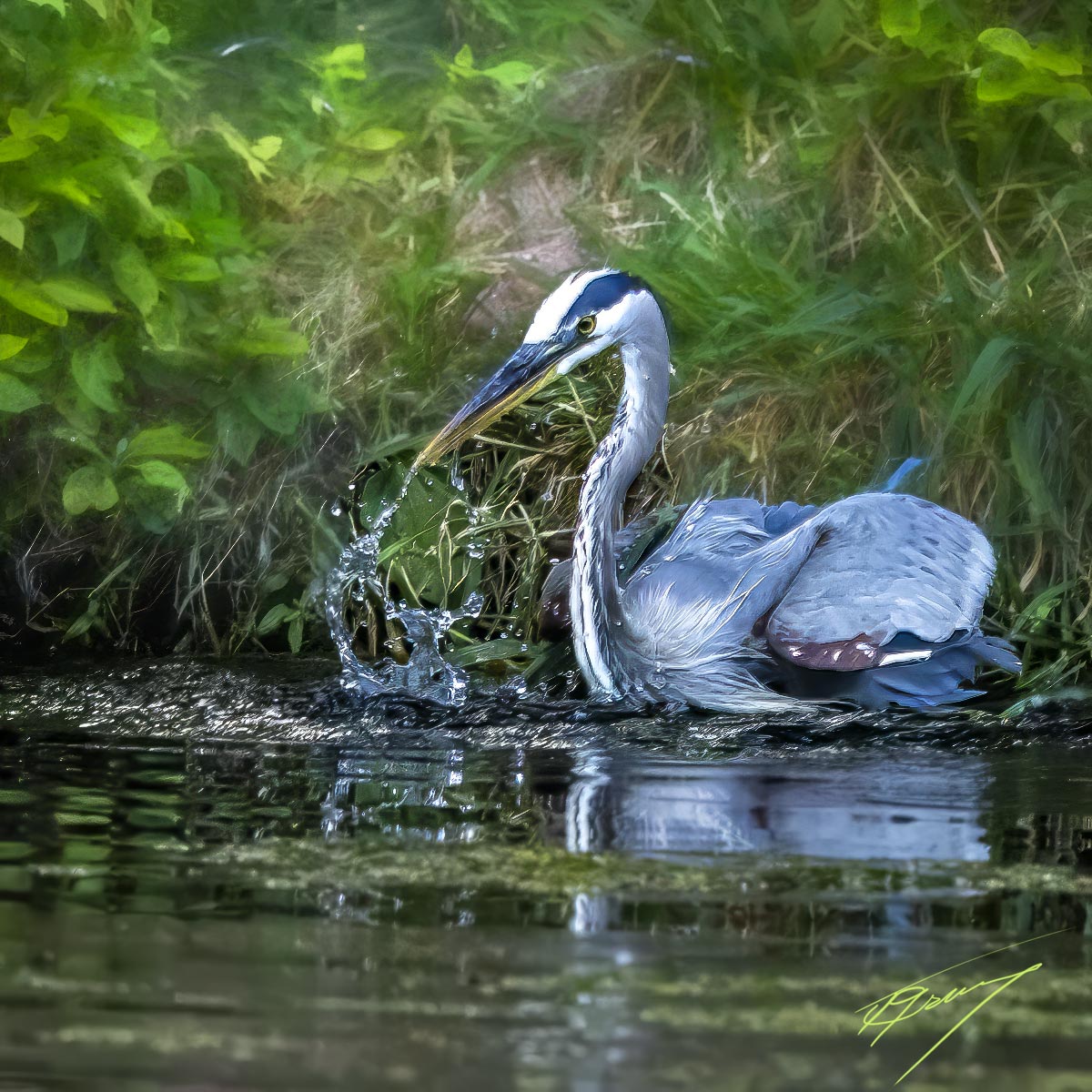
… life is filled with opportunities and choices … sometimes you get it right and sometimes not so much. Spent most of the day catching with friends I have not talked to in a while and near the end of day I headed up to the Rainbow Trout Farm in the canyon … a very quiet place at end of day and important to a few herons and hawks that grab a meal there.

Above is a great blue heron who scored a fine meal and below one that didn’t … kinda like us when we go fishing, but for us survival is usually not what is at stake!

End of the week for me … have a beautiful day and weekend. The plan is to be back Monday morning having had more days filled with beauty and joy … always a choice how we experience each day!

Smiles,

Ted

Filled with dreams and songs and love, I wander
afield.

Meditation, softened by the peaceful lands of grain and
the illimitable blue sea overhead, draws my heart to
my lips as one whose talent is in song.

I yield to the thousand felicities of this transport, like a
child led by his father’s hand; and no questions darken
this day of my content.

Afield by Max Ehrmann

###

photo_tedgrussingThe easiest way to reach Mr. Grussing is by email: ted@tedgrussing.com

In addition to sales of photographs already taken Ted does special shoots for patrons on request and also does air-to-air photography for those who want photographs of their airplanes in flight. All special photographic sessions are billed on an hourly basis.

Ted also does one-on-one workshops for those interested in learning the techniques he uses.  By special arrangement Ted will do one-on-one aerial photography workshops which will include actual photo sessions in the air.

More about Ted Grussing


Healing Paws

Healing Paws

This is an advertisement

Joyful photographs of Scouts show a sense of belonging and freedom

Joyful photographs of Scouts show a sense of belonging and freedom


CNN
 — 

In sun-dappled scenes shot across the German countryside, boys and girls in navy Scout uniforms hike through the woods, pitch tents and lay on the grass under open skies. They wear striped kerchiefs and frayed patches of their national flag. In quiet moments, girls clasp hands and recline against one another; one Scout erupts in laughter as she holds another’s foot to be mercilessly tickled.

Taken by the German photographer Stephan Lucka, the images, “Das Gefühl, das nur wir kennen,” or “The feeling, that only we know,” are saturated in coming-of-age nostalgia for anyone who relished in a sense of freedom in the outdoors.

For Lucka, who was first a Scout in the 1990s in Bad Salzuflen, a town in Western Germany, and later a troop leader there, the project served as both a homecoming and a way to better understand those formative years. Having photographed Scout groups around the country beginning in 2015, he published the series as a book late in 2022.

Stephan_Lucka_Das_Gefühl_das_nur_wir_kennen_Pressefoto-2982

“Sometimes with life you can only understand it backwards,” Lucka said in a video interview. “In a simple way, I wanted to return to that time that was part of my youth… and try to understand what this time meant to me.”

“I realized that (Scouting) shaped me in an important way,” he added.

Nature and nurture

Though Lucka said some aspects of Scouting have adapted to new technology since he was young — today, troops shoot social media content and use Slack to organize themselves, for example — he found the reasons why young people join are largely the same: to foster “this feeling of connection” to others and to nature, as he described it.

“With the Scouts I am more on my own, I have to be more independent… but I also feel part of something big,” said 13-year-old Jette, whose Scout nickname is Tonks, in a translated interview from the book. “The fact that you are independent but also part of a community at the same time is somehow paradoxical to me… It is a feeling of freedom and belonging in equal measure.”

Stephan_Lucka_Das_Gefühl_das_nur_wir_kennen_Pressefoto-3561
Stephan_Lucka_Das_Gefühl_das_nur_wir_kennen_Pressefoto-7769

One of Lucka’s favorite images is one of the earliest he took, of two teenage girls laying entwined on a purple mat on the grass while out camping in the woods, eyes closed and hair fanning out beside them.

“It was just one exposure, and then I went away because I didn’t want to disturb them,” Lucka recalled. “But to me, there’s this intimacy that always resonated.”

Wandering the path

In Germany, the Scouting movement took off in 1909, a year after the publication of British Army officer Robert Baden-Powell’s book “Scouting for Boys,” which is the framework for the organization (now present in 216 countries). But at that time, the country’s youth were already experiencing a revolution that brought them into nature. The movement, called Wandervogel, or “wandering bird,” began in Berlin, and saw children and teens rebel against industrialization by hiking and adventuring in groups, rejecting city lifestyles and materialism. Under Nazi Germany, Wandervogel and Scouting groups were banned; Scouting returned to West Germany following the war, but not to East Germany until 1990 when the country was reunified.

In German, scouts are called “pfadfinder,” meaning “pathfinder,” which Lucka pointed out as he recalled an anxiety-inducing time when, as a troop leader, he nearly couldn’t find the way back to camp for his group.

Stephan_Lucka_Das_Gefühl_das_nur_wir_kennen_Pressefoto-1951

“I got lost — I had a map and a compass, but I couldn’t actually identify where I was,” he said with a laugh. “It was kind of strange situation.”

How did he get back on track? Thanks to Scouts guidance that had been ingrained in him when he was young: Seek higher ground for a better perspective. So he climbed a tree, identified a point that was recognizable, and led his troop there using his compass.

“I found the Scout solution: When you get lost, try to get a better view,” he paused. “And this is a bit metaphoric for life.”

Today, Scouting in Germany emphasizes hiking, camping and practical skills, as well as the creative arts, Lucka said. He also credits the community with helping him to develop social skills and gain confidence in himself. At the end of his book, he rewinds time with a collection of personal snaps from his Scouting days: a portrait of a young Lucka with sunglasses and long, curly hair on a night he remembers falling in love; another of his troop on a bus trip from France, triumphantly holding a baguette. Ultimately, he thinks “Das Gefühl, das nur wir kennen” is “a story about freedom,” but also one of acceptance, showing a community where many have found a “safe space” to be themselves.

In its cultivation of this environment, and kinship, “The Scouts (could be) a model for how to treat each other in a decent way,” he added.

Das Gefühl, das nur wir kennen” is available now.

3 Steps to Finding the Photography Tour That’s Right for You

3 Steps to Finding the Photography Tour That’s Right for You

Regardless of your level, photography tours are an exciting way to learn from a pro and hone your skills, but they’re much more than capturing the perfect shot. They take you to the most photogenic spots in dream destinations and encourage you to be present and appreciate the visual nuances of your surroundings — all of which enrich your experience. Amateur photographer and nine-time photo tour fan Nancy Brandt, 75, loves photography tours for the opportunity to meet like-minded souls — people whom she says become “friends who stay with you for years afterward.”

The type, size and vibe of photography tours vary widely. You can shoot sherbet-colored villas in Cinque Terre, Italy, capture silverback gorillas in Uganda, or snap Myanmar’s bustling outdoor markets. Some itineraries focus on one style of photography, such as landscapes. Other tours — in Paris, for instance — may encourage a mix of portrait and street photography. Tour operators differ, too. You need to decide whether an individual, photographer network or international tour operator best suits your needs. In short, the most challenging part of a photography tour is figuring out which one to choose. 

With this in mind, these are the three essential steps to finding the tour that’s right for you.

1. Determine your goals

The distinction between photographic tours and workshops would be clear-cut in a perfect world. A tour would be a fun, casual experience that gets you to the right place at the right time for the best shots possible. Workshops would focus on education, including lectures, assignments and critiques in the itinerary. In reality, tour operators blur the lines with elements of both. Knowing what you want beforehand will make it easier to peel back the layers and steer you in the right direction. Consider the following:

Proactive instruction

“Not all tours are created equal,” warns Andrew Beck, cofounder and director at Wild Eye Destinations and Photographic. “Make sure to find out how much of an educational element there is on the tour versus just traveling with like-minded people.” As an industry, there is no standard. I’ve seen a range of instruction from proactive pointers on lighting, composition and settings to a more hands-off approach, where they only share their expertise when asked.

Leaders on location

Some pros I’ve found leave guests on their own during the day, meeting later to share meals and answer questions. Photographers who favor independence will find this setup appealing. Others stay with the group to answer questions and demonstrate how to capture a scene. Some do a little of both. In many cases, the destination influences the plan. In a city like Paris, it’s easy for guests to wander independently. Whereas in more remote locations, it’s better to stay together. 

How about setups?

Sometimes an itinerary includes a learning exercise called a setup shot with models dressed in traditional garb, lighting and a beautiful backdrop. Everyone takes turns photographing the same lovely image. As a teaching tool, staging can be helpful. But if you prefer candid situations, you may find it limiting.   

One-on-one time

One-on-one critique sessions can be incredibly helpful. They offer personalized attention and candid advice about your work. But not every company offers it. If it’s included, it will be in the itinerary. Otherwise, ask if it’s possible. They may add it.   

Help with post-processing 

Assistance with post-processing (editing) isn’t a given either. If you want help with software such as Adobe Lightroom, inquire if it is included.

How Do Certain Foods Become National Dishes?

How Do Certain Foods Become National Dishes?
image

A new book digs into the histories of some of the world’s most iconic fare.

NATIONAL DISH: Around the World in Search of Food, History, and the Meaning of Home, by Anya von Bremzen


“We have a compulsion to tie food to place,” Anya von Bremzen writes in her new book, but that compulsion, it turns out, has more to do with myth and marketing than with historical fact. “National Dish” is the story of her quest to understand why certain foods, like pizza, ramen and tapas, are adopted as symbols of their places of origin.

Von Bremzen’s journey takes her through five cities — Naples, Tokyo, Seville, Oaxaca and Istanbul — and countless restaurants, kitchens and bars as she nibbles her way to an answer. Along the way, she talks to star chefs, food bloggers, agricultural scientists and culinary historians. The result is a fast-paced, entertaining travelogue, peppered with compact history lessons that reveal the surprising ways dishes become iconic.

The author of six cookbooks and “Mastering the Art of Soviet Cooking,” a memoir of living, eating and rationing in the U.S.S.R., von Bremzen is ideally suited to this undertaking. Having exchanged Soviet propaganda for the American promise of the multicultural melting pot, she has a deep-seated skepticism for the stories nations tell to create unified identities. She is also a curious eater, keen on digging out the rich cultural background of, say, Iberian ham or pasta puttanesca — before wolfing them down. Reading this book is like traveling with someone who knows the best places to eat and the right people to meet, but who can still find joy in humble, improvised meals.

The journey begins, naturally, with carbs. In Naples, Italy, von Bremzen settles into a flat in the still ungentrified Spanish Quarter. Somewhere here, between hanging laundry, loose pit bulls and the beatific presence of Diego Maradona, is the secret to a true pizza margherita. The legend goes like this: In 1889, Naples receives a visit from King Umberto and his beautiful, charismatic queen, Margherita. The situation is tense. Italian unification has not been good for the southern economy, and is seen as a Piedmontese scheme. The royal couple from the north need to sell Naples on the idea of the nation. Margherita invites a local chef, Raffaele Esposito, to bring her pizza, a cheap street food that keeps this poor city going. He invents a version with tomatoes, mozzarella and basil, the colors of the new Italian flag. The queen loves this patriotic pie, and gives it her name.

Of course, none of this is true. Neapolitans had been eating that combination of toppings for ages, and there is no evidence in state papers of a royal pizza tasting. Pizza margherita was a clever marketing idea cooked up by an enterprising pizzaiolo in the 1930s, complete with a fake letter from the queen to hang in his restaurant. The idea of the one authentic pizza margherita, which only Neapolitan chefs knew how to make properly, became even more useful as a symbol of Italy in the late 20th century, when globalization was threatening local cuisines. “Authenticity,” muses von Bremzen, is “such a monster marketing tool.”

The myth busting doesn’t stop there. In Tokyo, von Bremzen chases down another convenient starch with an international reputation. Accompanied by an impossibly hip American ramen influencer — “let’s go crush some bowls,” he says gamely — von Bremzen slurps seafood ramen with scallops and delicate slices of raw chicken, and develops an addiction to high-end instant noodles.

However gourmet it is now, ramen, like pizza, has roots in necessity. Originally a Chinese import to Japan, the dish owes its popularity to the United States’ occupation of Japan after World War II. Gen. Douglas MacArthur, worried that famine could push Japan toward communism, had excess American wheat sent in. The Japanese Health Ministry encouraged the populace to replace rice with wheat, warning parents that rice could doom their children to “a life of idiocy.” Momofuku Ando, the inventor of instant ramen, received funding as part of this effort.

Von Bremzen decides to explore the art of preparing white rice, which “has zero millennial-hipster glamour” and is a powerful symbol of Japanese culture. Even that, it turns out, wasn’t always as central to the Japanese table, which used to include more barley and beans. In the late-19th-century Meiji era, government authorities promoted rice as part of their policy of nostalgic nation building.

Things get more dispiriting in Seville, Spain, where von Bremzen learns that foods like Catalan sausage and Andalusian gazpacho were not regional specialties but dishes historically cooked by families across the country. It was La Sección Femenina, the women’s branch of Spain’s fascist movement, that assigned these recipes to regions, as part of its effort to foster “a sanitized, politically acceptable form of cultural diversity.”

Around now, the reader might grow antsy. If so many dishes considered iconic expressions of place and history are really the result of clever marketing or nationalist propaganda, does this mean each plate is a lie? Is eating authentically even possible?

The answer is yes, but it comes at a cost. In Oaxaca, Mexico, von Bremzen learns how to make black mole, laboriously roasting rare local chili peppers and layering them with spices that first came to Mexico on Spanish trading ships. The result is a blend of Indigenous agricultural and culinary knowledge and colonial conquest, with all the violence that came with it: mestizaje, or cultural mixing, on a plate.

Corn is even more profoundly linked to a sense of Mexicanness, she finds, as one person after another tells her: “Somos gente de maíz. We’re people of corn.” Domesticated 9,000 years ago in the Balsas River valley, corn was stigmatized by Spanish colonizers, who associated wheat with racial superiority. Now, the farmers who produce corn are threatened by NAFTA, industrial production and climate change. The men and women who hold on to traditional methods of corn preparation perform the backbreaking work of shucking, soaking and grinding to produce their meals.

It is true that if you look into any dish or ingredient deeply enough, you might discover a gloomy history. The unctuous jamón served at tapas bars recalls the suppression of Jews and Muslims in Spain: Inquisitors served pork to Christian converts to test their faith. Armenian and Greek meze dishes served up at an Istanbul restaurant reveal the culinary legacies of peoples who were killed or exiled and then forgotten. But this is an incomplete picture. “National Dish” begins with the connection between food and place, but it is ultimately about the intimate, transitory communities people make when they eat together.

At a potluck dinner in Istanbul, guests bring their favorite dishes from their cultures. They argue about culinary origins while drinking raki, smoking on the balcony and singing so loudly the neighbors call the police. In Oaxaca, the Zapotec chef Abigail Mendoza and her sisters spend days making chocolate atole, an elaborate celebration drink with pre-Hispanic roots. Back in Brooklyn, von Bremzen prepares borsch (the “t” in “borscht” is a Yiddish addition, she notes) for two Ukrainian friends still reeling from the invasion of their home country. Our beloved dishes may not always tell a happy story about who we are, but they tell us what we have to give.


Irina Dumitrescu teaches medieval literature at the University of Bonn, and is writing a book about perfectionism.


NATIONAL DISH: Around the World in Search of Food, History, and the Meaning of Home | By Anya von Bremzen | 340 pp. | Penguin Press | $30

Madison Public Library Seeks Presenters for the Annual Teejop & Beyond Program

Madison Public Library Seeks Presenters for the Annual Teejop & Beyond Program

MADISON, WI — Madison Public Library is accepting applications for Teejop & Beyond from June 15 – July 30, 2023. Any Native person living in Wisconsin is invited to apply to present a program during this annual celebration of Native nations taking place October-December at the library. 

Teejop & Beyond is hosted by Madison Public Library in partnership with Ho-Chunk Gaming Madison. The program welcomes a variety of Native artists, storytellers, and community leaders for a series of programs celebrating Indigenous people in and beyond Teejop (pronounced day-JOPE, meaning Four Lakes, or Madison). Beginning on Indigenous People’s Day each year, Native folks from different nations lead programs highlighting both traditional and contemporary practices, stories, and community relationships.

“In the past, this series has included art workshops, youth storytimes, in-person or virtual presentations, outdoor guided activities, and more. We welcome any ideas that offer opportunities for participants to learn and connect with you and with each other,” said Neeyati Shah, the Community Engagement Librarian coordinating the program.

All selected applicants will receive $150 payment + cost of supplies, per program. Applicants are welcome to pitch multiple program ideas when applying. Other payment options may be available in select cases. If you have questions before applying, please email community@madisonpubliclibrary.org.
Consider programs in the following categories: 

  • Creation stories
  • Cultural celebrations and seasonal customs
  • Food, herbs, and crops
  • Skills and crafts
  • History: removals, returns, important figures, other topics
  • Indigenous peoples in community or government
  • Relationships between different nations, or collective efforts towards decolonization

Apply online at madpl.org/teejopandbeyond

About Madison Public Library
Madison Public Library’s tradition of promoting education, literacy and community involvement has enriched the City of Madison for more than 145 years. Visit the library online at www.madisonpubliclibrary.org, madisonpubliclibrary on Facebook, @madisonlibrary on Twitter, or @madisonpubliclibrary on Instagram.