
The artists explore a variety of subjects and create space for ideas, technology, and process.
To be connected to the latest show in Aisha Alabbar Gallery Press Print!


1st Place People: Bobby Gutierrez, The Stare Down
This photo was taken in the Barelas neighborhood of Downtown Albuquerque during a cruise night where local Custom Car Clubs line Fourth Street with beautifully detailed cars, motorcycles, and bicycles. I was walking near the center of the road and noticed this young man riding his Low-rider Bicycle with numerous motorcycles behind him. I decided to use the motorcycle lights to add drama to the scene. As you can see his stare was not impacted by me or my camera. I was born and raised in New Mexico and I have been documenting custom car culture and other cultural celebrations since I was a teenager as a participant and photographer.


Photographer Craig McAllister says he was given his first “big boy” camera in 2010 by one of his best friends, a big-time bookseller with five New York Times best sellers, who had witnessed him taking pictures with his iPhone.
“Half of what had made this man famous were the pictures he had taken on his ‘Walk Across America.’ He gave me the camera he had used. I started taking pictures, first of my friend’s ’54 Chevy at the beach. I also got into birds. Birds of prey were one of my major things. I wanted to try everything you could try,” McAllister says.
Originally from Greenwich, Conn., and more recently from San Francisco, McAllister retired from marketing and advertising and has been a serious photographer for about 10 years.
Currently, he says he has become, sort of, possessed with boats.
“If you look hard enough, you find new stuff and the new stuff is like these little gems.
When I find a boat, I will fall in love with the boat,” says McAllister.
He explains that he often camps out, waiting for the sun to rise, itching to get those “first light” shots where he can capture craft in unique and spectacular fashion. In some of his photos, it is difficult to tell which is the boat and which is its reflection in the water.
McAllister says his approach is just to attack, taking multiple shots before determining which are the best ones. While living in California, for example, he had access to thousands of boats in the water. “I would go out and take 500 shots and then pick out 10 or 15 shots that were the best,” he recalls.
While there, McAllister experimented by taking pictures of sunsets, sunrises, hummingbirds, views from their home. He also tried nighttime shots on rainy days and wet surfaces, getting some wonderful reflections on the pavement from neon lights. “I wanted to take all the pictures that everyone takes, I wanted to do all of that.”
He had a Bird’s Eye View series, including one shot of a large bird holding a lizard, its catch for dinner, with some parts already consumed. In another, the eye of a large and beautiful osprey is captured looking straight back at you.
Visually, his work straddles the line between paintings and photographs. On first view, his photos resemble contemporary paintings, with vibrant colors and crisp lines. But further review reveals that they are photographs, imbued with glimmers of sunlight and reflections and, in some cases, edited with pops of color.
McAllister says he thought his first boat photo, taken in 2011 in Hyannis Harbor, Mass., was interesting, but filed it away. It wasn’t until a visit to Naples, Fla., that he and wife, Suzanne, came upon a little inlet with a group of boats.
“It was so calm, and it was like the lightbulb went off. The resulting picture wasn’t a big deal, but to me, it said, ‘OK, I can do this.’ And that was the picture that really got me going,” he says.
On a trip to Auckland, he says, “The picture I took there was a major breakthrough, the back of the boat, the reflections off the side of the boat. I just loved that.”
Encouraged by Suzanne, his brother and a childhood friend, he decided to take the art form seriously. He says Suzanne is a strong partner in this team. With an amazing sense of what works and doesn’t, she assists with the entire process.
“My buddy had a show, the San Francisco Art and Antique Show, and in 2018 I put up two pictures. Those sold for a decent amount, and I thought, ‘OK, we’re on our way.’”
That same year he sent in his work to the Sausalito Art Festival, which he says is “a big deal,” attended by upwards of 30,000 people. It was the first time he entered a serious show, adding that being considered as an artist was a hard moniker for him to accept.
“But all of a sudden, I’m putting my pictures out, it’s a juried thing, and I got picked,” he says.
McAllister did really well at that show and the one the following year, but the pandemic put a halt to festivals for the next few years.
However, it gave him time to listen to an inner voice that guided him to act on instinct, developing a photographic style that is both interesting and unique. Each time he takes a picture, he says he is totally reinventing the wheel.
“Finding a new boat with a new angle, you never know what you’ll find.”
Locally, McAllister participated in the Sea Oaks Art Stroll this past March, his first “face to face” show in nearly three years. “That was great, and I sold a number of pictures.”
He and Suzanne have traveled the world, scouting out a variety of places, including Honolulu, where he took hundred shots of one particular boat, experimenting with sunlight and flash over three days. “I just focused on this boat I named ‘In The Pink.’ It had so many different looks,” McAllister says.
In Picton, a small town in New Zealand, there were two marinas and another about 5 miles away, each with spectacular boats, clean water and colorful boats.
“You look at the boats and it tells you about the people, about the place.”
A boat in Sausalito, featured in his photograph, ‘Sunda,’ was “so photogenic” he says it could be taken from any angle.
“It was just incredible. The owner of the boat wanted a cleaned-up copy of the boat,” says McAllister, but he felt that leaving the imperfections gave the photo a depth, a “realness.”
His printer in San Francisco showed him how to edit photos, to the point where he could essentially redo the whole picture. But, he says, “you lose the soul. The defects add to the picture, giving it depth, reality, keeping it from becoming too clean, too stiff.”
Some, though, do require extensive editing. “A picture of a boat in very still water had so many dust particles on the water, it took me six hours to edit the specs out.”
Another time he edited a piece to too great an extent.
“It was too clean. I stripped it back to what the photo had been, and it’s so much better, seeing the lines, the moisture on top of the paint, the current on the water. It is the imperfections that add to it and make it,” McAllister says.
His photographs are printed on Hahnemuhle, a museum-quality, digital fine art paper from Germany, and he limits most editions of his work to 20, which keeps it in a higher-end market.
His work is on display in marinas in New Zealand, California and South Carolina, and in galleries in New York, Washington, D.C., California and Massachusetts.
Recently, his photograph ‘Hyannis 6:15’ was shown at the Vero Beach Art Club’s Art by the Sea event at the Vero Beach Museum of Art, where it received an Award of Merit. It will also be shown at the Vero Beach Art Club, where McAllister is a member, starting May 25.
Photos by Joshua Kodis


Fine art photography can be very lucrative, but it is a business and may not be for everyone.
What is fine art photography, and is it worth pursuing as a career? I recently started my journey of creating and selling fine art prints of my work online and at markets. It’s a somewhat passive income business once you have the photos up on your website that you are going to sell as prints. Now, you do still need to have the photos printed and shipped to your customer, and you are constantly updating your website, social media, and other sales channels; creating email marketing campaigns; advertising ads and dealing with Google for the best SEO; selling at art fairs and other markets; and shooting new work to sell. So, I lied. It’s not actually passive at all; it’s a business, just like any other photography genre is a business. However, it is a great way to earn some extra money on the side or even go at it full-time. You just have to put in the work.
Fine art photography consists of images created with the intention of being sold as art. Fine art photography is a way for the photographer to express a vision, theme, or concept. Sometimes, it’s personal or maybe a worldwide issue, like climate change. Typically, to be considered a fine art print, it needs to be part of an edition, which is a set number of prints sold for each image and size, such as 1 of 25. Limited edition prints are for art collectors or anyone looking for a special, one-of-a-kind art print. Limited edition prints are limited so that the value of the print will go up once all prints in the edition are sold. Once an edition is sold out, a collector can choose to sell their print at a profit, as there will not be any more printed by the photographer.
Online presence is crucial for selling photography prints. Creating an e-commerce website is number one, but that is just the first step. For me, Shopify has worked the best as my e-commerce website. It integrates with many other sales channels and marketing sites. From there, you need to get your name out with advertising and meeting people, yes, meeting people! I do the latter by selling my prints at local flea markets. I set up my booth and have my smaller “open edition” prints for sale, something easy for people to carry around. I have really great business cards with my images on them, and people love them! Two months from now, that person might come across my card sitting on their dresser and decide to buy a piece of art from me. I also gain Instagram followers every time I do a market, and I collect emails addresses as well.
I also am constantly contacting websites that sell art, and I try to become one of their artists. They take a commission, but it’s a great way to get your name out and hopefully make a sale. I also reach out to interior designers who always need art for their clients. It’s all a hustle, but put in the work and some things will stick and others won’t.
I do a lot of research and watch a lot of tutorials and documentaries on photographers/ I think it’s a great way to learn and see other people’s processes. It’s also just great inspiration to see what other photographers are creating and what has worked for them. I get inspired by some of the great photographers, such as Helmut Newton (he is known as a fashion photographer, but his work is art), Ansel Adams, Cindy Sherman, and Robert Mapplethorpe, to name a few.
It’s not just about taking beautiful photos that you think will sell, it is also a business. So, you have to get your name out there, getting your art in front of people and creating relationships. It’s very easy for us photographers to get comfortable with working from home on our computers all day without a lot of interaction with people. But it’s important to network and make connections. This goes for any genre of photography. No one is going to come knocking on your door asking if you want to photograph their new fashion campaign for $10,000 or to have a show of your photography at their gallery. It just isn’t going to happen. Think outside the box and try different things also keep shooting and experimenting. This is usually where your best work comes from or the next great idea from something that maybe you thought was a failure, but it was actually a stepping stone to the next great image. It’s up to you to decide if fine art photography is right for you. I do like the fact that I’m my own boss and there is no client to tell me what to do. This is good and bad, as you need to be your own motivator. So, is it worth it? I know some fine art photographers are getting $15,000 or more for a print. So, there is definitely a market for photography prints and money to be made if you want to put in the work.


CHARLESTOWN, Mass. (BP) – The neighborhoods around Boston have an eclectic mix that simultaneously express unity as well as differences. They show the former in their love for the Sox, Celtics, Bruins and Pats. The latter has more to do with where they’re from, who they are and where they would like to go.
And each year, Christ Church hands out 100 disposable cameras in an effort to catch it all.
JD and Natalie Mangrum spent their first year in Charlestown – the oldest neighborhood not only in Boston, but in the United States – becoming part of the community.
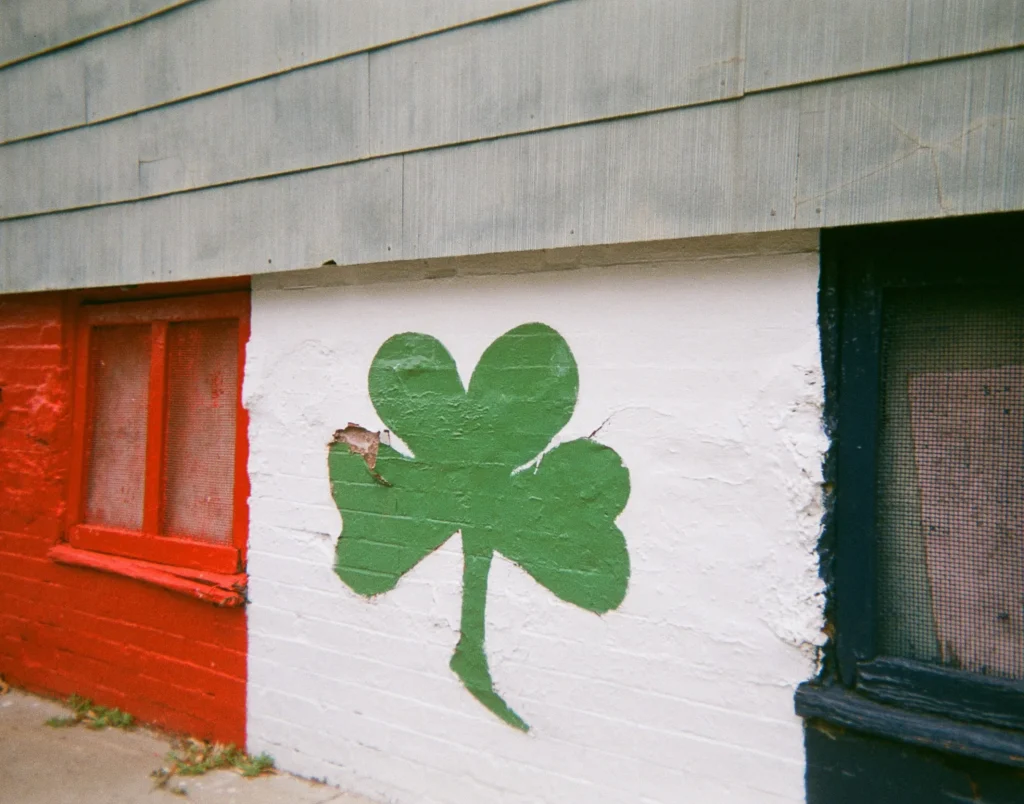
Serving at Charles River Church in Boston’s Roslindale neighborhood, the couple immersed themselves in Boston life. Locals, they saw, value things like patience, kindness and loyalty. Trust must be earned. They learned names at the grocery store and park.
The process brought results.

Six months in, they had made contact with about 1,000 people. Natalie was asked to lead the parent council at their sons’ elementary school. JD coached Little League and was invited to join the neighborhood council.
They eventually established Christ Church in Charlestown. After bouncing around to different meeting spots, the congregation was gifted the building of First Church in Charlestown in March 2022.
The location gave Christ Church a prominent location in the community as the only Protestant church in the immediate area. It also instantly connected them to the town’s history. The Battle of Bunker Hill monument is a five-minute walk from the church’s front doors. First Church, founded in 1632 and which joined the Baptist Churches of New England in 2017, counts John Harvard (yes, that Harvard) as one of its former pastors.
Christ Church’s steps to grow its congregation include participation in Through Our Eyes, a photography outreach/exhibit.
Through Our Eyes originated at Church at the Mill, a Southern Baptist congregation in Moore, S.C. Mangrum reached out to Jason Williamson, Church at the Mill’s missions pastor, for more information on doing something similar at Christ Church.
“They had done this in several cities in the Carolinas to address homelessness,” said Mangrum, who envisioned the project helping in a different way.
Williamstown consists of approximately 19,000 people across one square mile. There are a lot of cultural differences represented, but three groups emerge.
Townies are fourth-generation Irish Roman Catholic. “Toonies” are those who have moved in and generally don’t make an effort to become part of the area. The third group is those who live in income-adjusted housing.
Native Bostonians are fiercely proud of that heritage, with Townies a term specific to those in Charlestown.
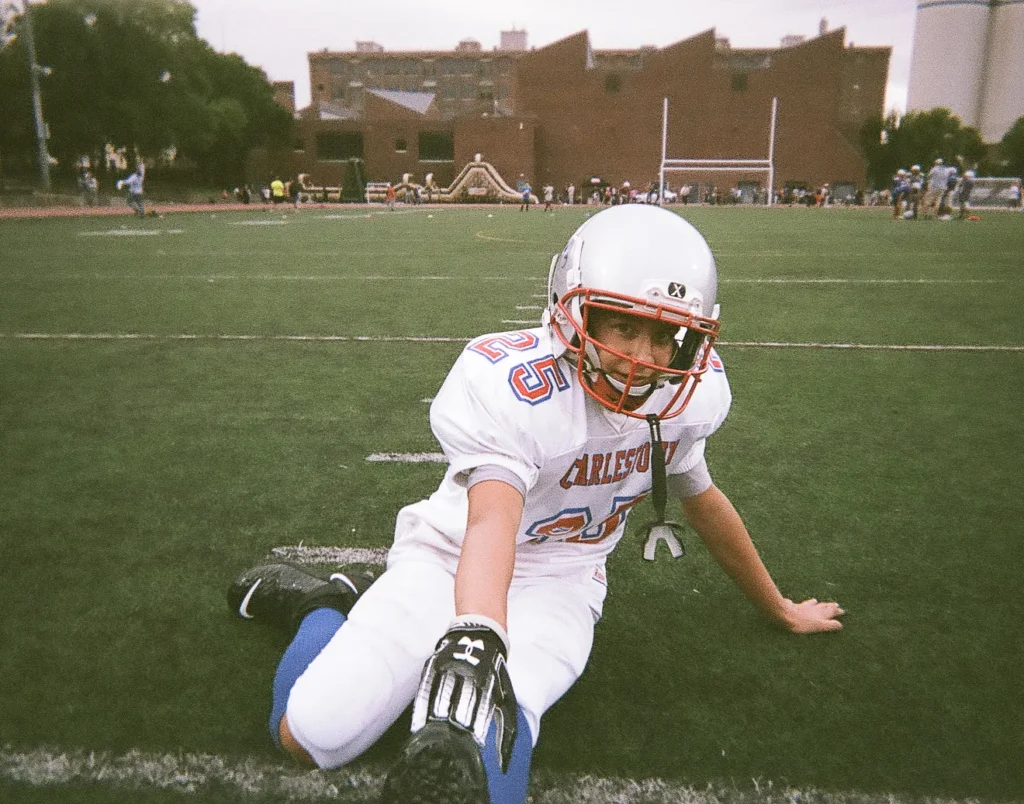
“We’re living in the midst of each other, but there is a gap between those three,” Mangrum said. “Our heart as a church is to bring the community together around the Gospel and do events and church services where all three groups are welcome and can be served.”
Through Our Eyes, which is expanding to the United Kingdom and Africa, promotes dignity, he added. The assignment is a simple one – take photos of others in your neighborhood.
The result is an image of a person, not a label.
“Where you live in this one square mile brings a different experience of Charlestown than others,” he said. “We wanted to do something that would help people understand life in this community from a perspective that wasn’t their own.”
Through Our Eyes takes place in the fall, with Christ Church participating since 2019. Typically, half of the cameras are returned and bring about 1,000 photos to sift through. All are displayed as 4X6s in an exhibit, with the top 25 blown up and presented on canvas. Inappropriate ones are screened out.
Favorites include a woman who runs a deli at one of the income-adjusted housing complexes. Another is a little girl sketching with sidewalk chalk during the pandemic.
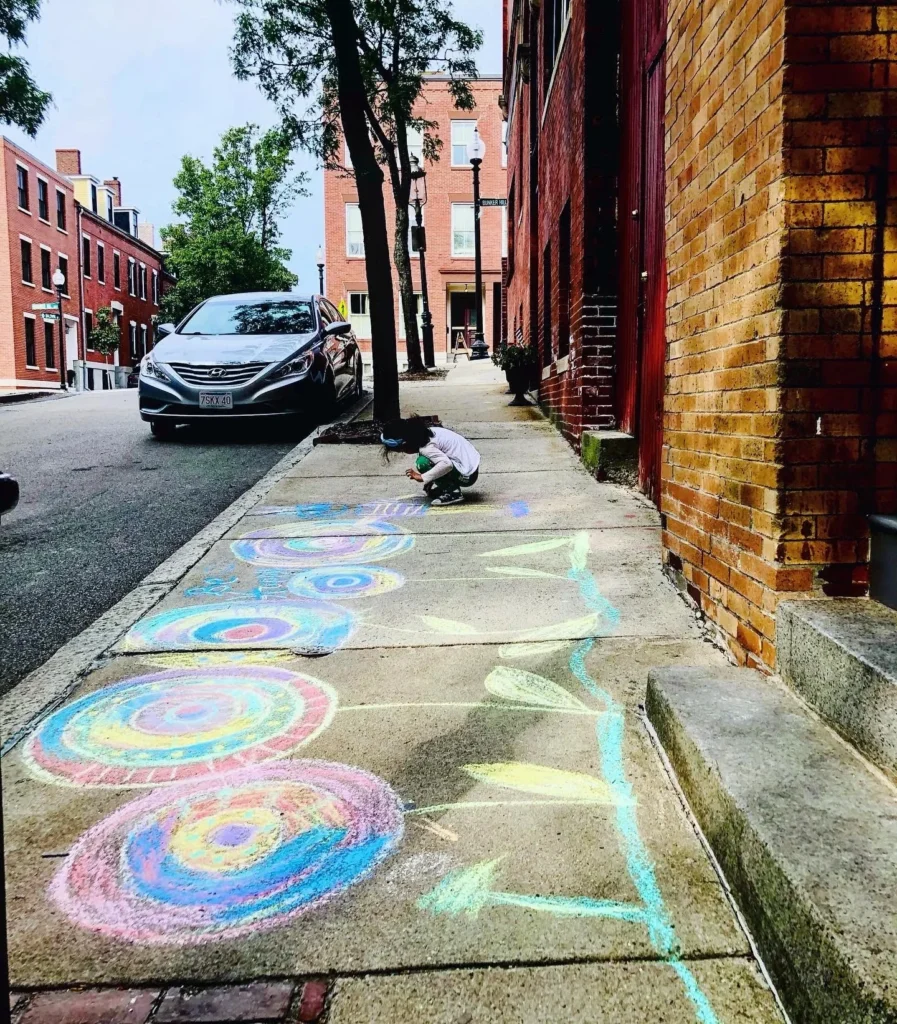
Support for the effort comes from inside and outside the church.
“We have some really good friends who aren’t interested in church, but they see the value this project brings to the community and they’ve become big advocates,” Mangrum said.
A native of Macon, Ga., Mangrum first visited the area on a church youth group trip to Boston’s South Shore when the 14-year-old helped with backyard Bible clubs.
“New England got in my blood,” he said. “God just gave me a love for this place.”
That love eventually led him back. Mangrum isn’t a Toonie, as his personal investment in the area testifies. He’s more like a Townie who got there late.
Now, he wants others to see – whether inwardly or through a photo – the intrinsic value everyone shares.
“Our strategy is to love Christ, love the church and love Charlestown,” said Mangrum. “This is a key part of how we do that.”
Additional reporting by Dan Nicholas.








