About

Posts by :

Orlando photographer to hold portrait sessions to help residents feel confident in gender identities

Orlando photographer to hold portrait sessions to help residents feel confident in gender identities
image

If a picture is worth a thousand words, then Harry Aaron is a millionaire.A photographer by trade, his portrait sessions cost hundreds of dollars. But during covid when so many people were out of work, including himself, Aaron had an idea.He created “pay what you can” photoshoots.In other words, if all you have is $2, you pay $2. Aaron says it gave everyone a “new sense of confidence, that maybe something good might come forward.”With the people he met, the stories he heard astounded him, like the chef who survived by selling cheesecakes on Instagram.”He was making them out of his home kitchen and making them through the pandemic. That’s how he kept the lights on,” Aaron said.Aaron says one musician barely made it to his photo session in one piece.Somewhere on the journey from his home to the photo shoot, someone gave him a black eye.Even though the man had a shiner, he posed for the pic with a cigarette dangling from his mouth, looking exasperated. To Aaron’s amazement, the musician called to say he was using the pic to get gigs.Aaron doesn’t like to get involved in politics but says politics inspired his upcoming photo session. He calls it the truID Project, an opportunity for people to get a portrait-quality picture of themselves in the gender they identify with.Aaron says the gender-affirming portraits will “let someone stand in front of a camera and show who they truly feel they are” instead of “somebody that society expects.” The photo sessions will happen in several cities in the nation, including Orlando, on June 3.Aaron says stylists and makeup artists have volunteered their time so that the portrait “matches who they really are,” and they will “ leave with a photo they can hold on to and really cherish.” Top headlines: Florida man who lost arm in gator attack says it’s ‘not the end of the world’ Man pronounced dead after rollover crash that shut down part of SR-417 Brevard sheriff: Elementary school teaching assistant arrested for possession of child pornography

If a picture is worth a thousand words, then Harry Aaron is a millionaire.

A photographer by trade, his portrait sessions cost hundreds of dollars. But during covid when so many people were out of work, including himself, Aaron had an idea.

Advertisement

He created “pay what you can” photoshoots.

In other words, if all you have is $2, you pay $2.

Aaron says it gave everyone a “new sense of confidence, that maybe something good might come forward.”

With the people he met, the stories he heard astounded him, like the chef who survived by selling cheesecakes on Instagram.

“He was making them out of his home kitchen and making them through the pandemic. That’s how he kept the lights on,” Aaron said.

Aaron says one musician barely made it to his photo session in one piece.

Somewhere on the journey from his home to the photo shoot, someone gave him a black eye.

Even though the man had a shiner, he posed for the pic with a cigarette dangling from his mouth, looking exasperated.

To Aaron’s amazement, the musician called to say he was using the pic to get gigs.

Aaron doesn’t like to get involved in politics but says politics inspired his upcoming photo session.

He calls it the truID Project, an opportunity for people to get a portrait-quality picture of themselves in the gender they identify with.

Aaron says the gender-affirming portraits will “let someone stand in front of a camera and show who they truly feel they are” instead of “somebody that society expects.”

The photo sessions will happen in several cities in the nation, including Orlando, on June 3.

Aaron says stylists and makeup artists have volunteered their time so that the portrait “matches who they really are,” and they will “ leave with a photo they can hold on to and really cherish.”

Top headlines:

4 Mistakes to Avoid When Shooting With Filters in Landscape

4 Mistakes to Avoid When Shooting With Filters in Landscape

Filters are some of the most transformational tools when it comes to creating possibilities in landscape photography. Aside from the intended exposure effects, there are some things you might need to learn about using them that will help you achieve better-quality images.

If you’re an experienced landscape photographer, the use of filters may already be obvious and second nature to you. Whether it be for doing long exposures to achieve visual effects, using filters to deal with glare and reflections, or balancing out a high-dynamic range scene, it is undeniable that filters help us turn our photographs into more refined and visually pleasing images. There are, however some things that we all should know when it comes to physically using filters that will help us avoid any unwanted effects, artifacts, or even just wasted time and effort in shooting.

1. Unnecessary Use of ND Filters

The first and best lesson to learn about using filters is how and when to use them. This pertains to not only knowing how to use the filters but more importantly, to be able to use them with artistic intent. There is a common tendency especially for people who have just started learning how to shoot long exposures with ND filters, to use them all the time and at any chance that they get. We have a tendency to be fixated on getting the exposure setting right and being able to get well-exposed images, that we might tend to forget that the purpose of ND filters is not exactly that. We shoot long exposures during the day to be able to use the motion of certain objects in the frame to achieve better visual design. ND filters come in handy because, with the abundance of light, we have to limit its entry into the sensor to be able to prolong the exposure enough for the motion to happen.

It is important to always check whether something is moving within the frame and if that particular motion would benefit the photograph visually. If not, shooting with longer exposures and even setting up your filters will just be a total waste of time and effort. Not all landscape photographs need filters and not all need to be done in long exposure. Knowing when they will be beneficial is important in planning your shot.

2. Stacking on a Filter Holder

There are a few things to consider when using multiple filters on a filter holder. Filter holders allow us to use multiple filters with better ergonomics and at the same time reduce the probability of getting a vignette that usually comes from physically having the rims of circular filters visible in the frame. One important aspect when it comes to stacking filters would be to try to limit the number of layers to use. Having too many filters could mean making it harder for auto-focus to work and at the same time, there is a general rule that each layer of filters will result in varying levels of degradation when it comes to image quality.

All of that aside, there is one important factor to consider when using filter holders that will help you avoid any unwanted reflections and flares on your images and that is to avoid leaving any unused slots in between filters. This is most important when photographing any strong and direct light source especially the rising or the setting sun. Flares result from light reflecting back and forth between glass layers and this includes both filters and the front glass element of your lens. Choosing a filter holder that minimizes the space between filters would be the best move to avoid this however if you already have a set of filters, making sure to occupy the slots closest to the lens would be the best practice.

3. Skipping Polarizers

Circular polarizers are possibly the most useful filters across all genres of photography. For landscape photographers, this is commonly known to be a useful filter when shooting reflections on bodies of water or to increase the contrast between a blue sky and clouds. However, when one understands how circular polarizers work, there is one benefit that is even more universally applicable that we should all take advantage of and that is how CPL filters manipulate glare.

In the same way that it manipulates reflections on bodies of water, polarizers also manage micro-reflections on other mildly reflective surfaces. Most commonly, this is when we photograph foliage or even just moist rocks in natural locations. By turning your polarizer and finding the right angle it can either intensify these micro-reflections or reduce them to add more detail and vibrance to the image. This is most applicable when photographing waterfalls but also applies to other landscape scenarios especially when shooting seascapes.

4. Unnecessary Uses of Graduated Neutral Density Filters 

Graduated neutral density filters have always been handy tools in being able to deal with a wide dynamic range specifically in situations when the sky is way too bright to be able to expose the details of your foreground properly. With camera sensors being more and more capable, there are instances when GND filters can be considered unnecessary. In addition, exposure bracketing or sky replacement are also viable options. However, there are instances when the shot can only be done with one exposure especially when swift motion is involved. In these instances, it is always better to use a GND to have more assurance that the important details in your image can fit within the dynamic range that can be captured in a single shot.

For photographers who do use GND filters, something that we might overlook is over-using a GND. In instances wherein the difference between the brighter part of the frame (the sky) and the darker side of the frame (commonly the foreground) is not too far, using a denser filter might over-do the effect and make the sky way too dim to a point where the foreground becomes unnaturally brighter. There are of course some instances when this can happen specifically when the photographer is facing the opposite direction as the light source since your viewers would not be aware of such, you might want to double-check any irregularities. At the same time if your intention is really to achieve that effect then that should be no problem at all. But if the aim of your landscape photography is to illustrate the scene in a realistic manner then taking an extra few seconds to balance out your exposure should be good for you.

Filters have always been very useful tools for photographers, especially for landscape photographers who see potentially better images through exposure effects. However, using them does not always equate to better quality images especially if certain steps in using them are missed. Having the right set of filters that you know how to use properly will always be the key to a more successful shooting process.

Photographer Spotlight: Steve Levy

Photographer Spotlight: Steve Levy

I’ve never met Steve Levy in-person, but I’ve followed his photography on social media for some time now. His photos give life to just how energetic and interactive underground music is. Steve manages to capture both chaotic and intimate moments on his photos in a very subtle and unintrusive way.

He just got back from a short tour with Angel Du$t, chronicling a bunch of their shows around the east coast. Steve sat down to offer his ideas on photography, music, and Long Island hardcore.

What got you into photography?

A photojournalism course I took while at SUNY Plattsburgh was the reason I bought my first digital camera which was like the original Canon Rebel. I was terrible at first
and had no photography experience before that. My professor made us shoot a little bit of everything and eventually I started shooting nature and landscapes in my free
time to get better.

DRAIN @ Brooklyn Monarch, NY, 2022. (Photo: Steve Levy)

What is your usual camera and setup?

I always shoot with my Sony a7iii and my primary lens is a Sony 24-70mm f/2.8. I also bring along my 14mm f/1.8 and switch between those two lenses during sets. That combination helps ensure I get solid portraits of individual band members as well as photos that include the band and the crowd. For bigger venues I have a 70- 200 f/4. For smaller venues which allow flash, I have a little Godox speedlite.

King Nine @ Flatspot World, Brooklyn, NY, 2023. (Photo: Steve Levy)

What was the first show you shot, and how do you feel you’ve improved since?

The first show I shot was Gamblers and Tom Moran at the Amityville Music Hall in September 2021. My childhood friend, Ryan Shea, asked me if I wanted to go see our
mutual friend play. At this point I had a few years of photography experience under my belt, particularly with portraits. COVID really limited my ability to plan shoots with people and shows were just starting up again so it was an awesome opportunity for me to try shooting something not only new, but something I love more than anything—music.

While I had a lot of fun with this show, I was still shy about going to shows if I had no one to go with so I would only shoot a couple more until I overcame that fear in April 2022 by going to AMH despite not knowing anyone or even the artists performing. I shot local long island band Ronin one week and then Angel Du$t the following week. That AD show was when everything clicked.

advertisement

Since starting, I’ve been tirelessly trying to get my style right. Photo editing is where your taste comes into play and there’s a million directions you can take a photo. I was extremely self-conscious about my color editing for months and couldn’t really figure out a way to make photos work better in color. Shooting such a high volume of shows over a short period of time naturally made me much better at capturing sharp, well exposed photos.

When you’re starting with strong RAWs, editing becomes much easier. Aside from that, I like to think my show etiquette is better having watched the best LI/NY photographers do it for the past year or so. The most important part about shooting a show is that you don’t disrupt it. Stay out of everyone’s way and I promise you’ll get better photos because people are having a better time.

One Step Closer @ Music Hall of Williamsburg, Brooklyn, NY, 2022. (Photo: Steve Levy)

What’s your favorite show you’ve photographed?

Angel Du$t, Spiritual Cramp, and Webbed Wing at Amityville Music Hall. This is the show that put me onto the scene and made me obsessed with shooting live music. All the other incredible shows that would follow, I owe to this one. I left this show and had a new favorite band in AD and would listen to them every day for months on end.

advertisement

Hangman @ Flatspot World, Brooklyn, NY, 2023. (Photo: Steve Levy)

What kinds of shows do you find it most difficult to shoot?

Shooting at venues with photo pits means no flash which can be pretty difficult when it comes to bands that keep the lighting really dark for their set. The lights look awesome for show goers but can be a photographer’s nightmare forsure. Shooting Turnover at Brooklyn Steel last year was like shooting in a cave.

I’m very glad I got the chance to shoot them again at the TLA recently and redeem myself with better photos.

Turnover @ Theatre of Living Arts, Philadelphia, PA, 2023. (Photo: Steve Levy)

Which types of show do you enjoy shooting the most?

Shows I enjoy shooting the most are when bands play their hometown. That love is like no other. Seeing someone like Stand Still, Koyo or Innerlove play Long Island is incomparable and is by far my favorite type of show to be a part of.

Silent Majority @ Massapequa VFW Hall, Massapequa, NY, 2023. (Photo: Steve Levy)

Are there any specific bands or events that you want to photograph in the future? A dream project?

Would love to photo Sound & Fury, but who wouldn’t? At the top of my bucket list of current bands I wanna check off are the Story So Far and Turnstile. Getting to photo blink-182 would be end-game for me. Brand New is another big one.

Knocked Loose @ The Paramount, Huntington, NY, 2022. (Photo: Steve Levy)

What is your favorite photo you’ve taken so far?

It’s gotta be this pic of No Pressure at The Meadows where Pat’s in the foreground, Harry’s drumming and Parker’s flying through the air. Really cool framing and does a pretty good job showing what they’re about. Definitely one of the funnest shows I’ve been to.

No Pressure @ The Meadows, Brooklyn, NY, 2022. (Photo: Steve Levy)

What bands first got you into punk and hardcore?

I was really young when I got into the Ramones. “Blitzkrieg Bop” was in Tony Hawk’s Pro Skater 3 so that was probably the first punk I got exposed to and I’ve loved them ever since. I tell people all the time that I didn’t grow up on hardcore. I found it through shooting shows so I’m really playing catch-up now.

What first put me on was finding Trapped Under Ice through Angel Du$t. Early on, I got to photograph some really strong current artists like Kublai Khan TX, Knocked Loose, One Step Closer, and Pain of Truth as well as legends like Madball and Cruel Hand.

Even though hardcore isn’t my favorite genre, the artists doing it right now are undeniable and have fully made a fan out of me.

Madball @ Amityville Music Hall, Amityville, NY, 2022. (Photo: Steve Levy)

How is the Angel Du$t tour going? How did that collaboration come about?

Coolest experience of my life. I get to watch my favorite current band rip shows every night. Non-stop laughs and good times no matter where we’re at. They’re all masters at their craft and what I’ve learned in just a week from being around them is invaluable. It’s probably worth mentioning, this was my first touring experience. I
couldn’t have asked for a better crew to show me the ropes.

advertisement

How this all came to be is when that Turnover, Fiddlehead, Angel Du$t, Glitterer show got announced last minute in Philly I hit them up to try and get photo access and they hooked it up. That night they played an after show at Bonks and following their set Justice asked if I’d be down to ride with them for a few shows later that month. I said, “I’m there.”

Angel Du$t @ Welcome to Rockville, Daytona, FL, 2023. (Photo: Steve Levy)

What recent releases do you think everyone should listen to?

Moments of Clarity by Narrow Head is album of the year unless someone can dethrone it. Koyo’s latest single is not only crazy but really has the best music video I’ve seen in a while. Shoutout 48. Those Militarie Gun singles are wild and that album is gonna make waves when it drops. Extremely cool to see Illusion putting out new music and equally cool to be getting an Incendiary record in a few days.

Lastly, one of LI’s finest, Innerlove, has an album dropping soon that’s going to stay on repeat.

Trapped Under Ice @ Disturbin’ the Peace, Baltimore, MD, 2023. (Photo: Steve Levy)

Give us your pick for Long Island’s most underrated band, from any era.

I’m gonna go with Straylight Run. They embody that Long Island emo sound perfectly and do so in a unique way. John and Michelle’s vocals work beautifully together. They’re as lyrically vulnerable as you can get and that vulnerability is amplified by their instrumentation choices.

Straylight has an effect on me that few artists do where I can’t help but be drawn to tears by certain songs. Very lucky to have caught them play. Hopefully they’ll do some more shows.

Taking Back Sunday @ Jones Beach Theater, Wantagh, NY, 2022. (Photo: Steve Levy)

***

Hit up Steve’s Linktree to find all of his social media and website info.

***

Tagged: photographer spotlight

Native American market in Cedar City invites public to learn about culture

Native American market in Cedar City invites public to learn about culture

CEDAR CITY — As the season of outdoor farmer’s markets heats up in Southern Utah, Cedar City News recently stopped by one of the newer markets in town.

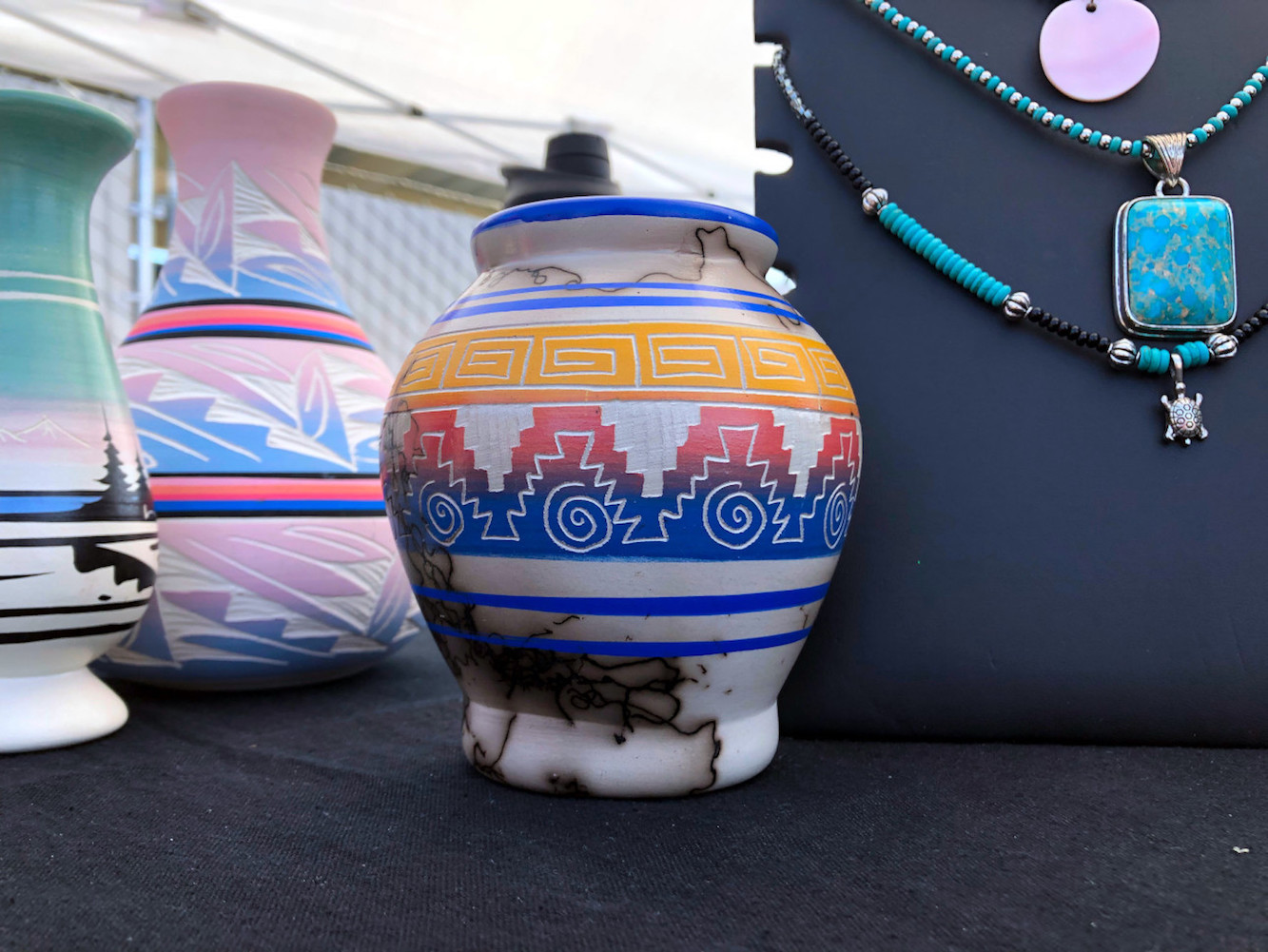
An artist shows her eagle design at the Native Goods Marketplace in Cedar City, Utah on Friday, April 28, 2023 | Photo by Haven Scott, St. George News

The Native Goods Marketplace, held on the grounds of the Utah Paiute Tribal Housing Authority, is a once-a-month opportunity to shop for locally produced Native American gifts and delicacies.

Jamee Vargas, resident opportunity and self-sufficiency, or ROSS coordinator at the tribal housing authority, said the market is showing success to start their second year. Native Americans can display their wares with no fee for booth rental, she added. A limited number of non-Native American vendors are also allowed each week.

“The marketplace gives the tribal members a chance to market their handmade goods and food,” Vargas said. “We have lots of jewelry, some baked goods, Indian tacos, lumpia — a variety of things.”

April Jimenez, who works with the housing authority human resources, said another goal of ROSS program events is to aid in the preservation of local culture, art, language and history.

“The marketplace also provides Southern Utah residents a chance to talk to the artists, ask about the products they make and experience the culture,” she said.

The housing authority’s ROSS program is funded by the United States Department of Housing and Urban Development.

Items on display at the Native Goods Marketplace in Cedar City, Utah on Friday, April 28, 2023 | Photo by Haven Scott, St. George News

And according to the department’s website, ROSS funds are awarded to successful grant applicants who design a well-planned program for public housing residents to provide supportive services, resident empowerment activities and tools to promote economic self-sufficiency.

“This program works to promote the development of local strategies to coordinate the use of assistance under the public housing program with public and private resources, for supportive services and resident empowerment activities,” the government website states.

The Paiute Indian Tribe of Utah, consisting of five bands — Cedar, Indian Peaks, Kanosh, Koosharem and Shivwits — was without government aid for more than a quarter century.

In 1954, the U.S. Congress passed the Termination of Federal Supervision over the Paiute Indians of Utah, Title 25, Sections 741–60.

As with similar tribal agreements during the time, the act provided for “termination of federal assistance and distribution of tribal lands to individuals or tribally organized entities,” according to the now revoked legislation.

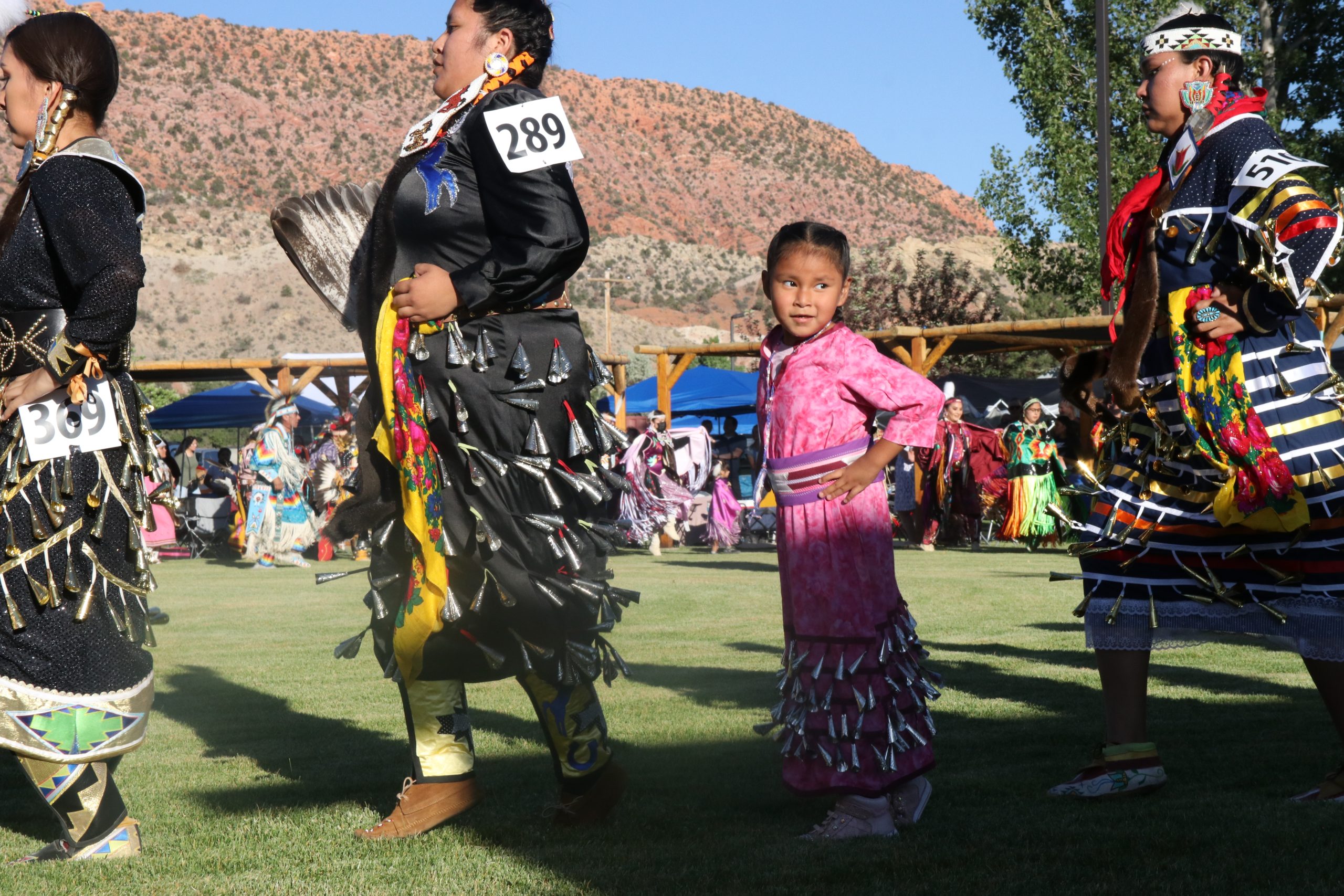
Dancers perform during the grand opening of the Paiute Indian Tribe of Utah’s 42nd annual Restoration Gathering Powwow, Cedar City, Utah, June 10, 2022 | Photo by Jeff Richards, St. George News / Cedar City News

The Paiute Indian Tribe of Utah’s recognition and assistance was officially restored by Congress in April 1980. The current reservation consists of 10 land parcels in four southwestern Utah counties.

The next Native Goods Marketplace will be held Friday, May 26, at 565 North 100 East, in Cedar City between the hours of 10 a.m. to 2 p.m. The community commerce continues at the same time on the last Friday of every month until colder weather prevails.

For information on becoming a vendor in future events, contact Vargas at this link.

Copyright St. George News, SaintGeorgeUtah.com LLC, 2023, all rights reserved.

Washoe County School District K-12 Students Get Creative With Taxi Art contest

Washoe County School District K-12 Students Get Creative With Taxi Art contest
image

The EDAWN Foundation and Washoe County School District announced the winners of the 8th Annual Taxi Art Contest Wednesday.

This year, a record 300+ students submitted entries from 20 schools. 

The taxi art design entries were evaluated by a panel of judges from The EDAWN Foundation and the Arts community for their originality, creativity, and message highlighting why Northern Nevada Is a great place to live.

The top nine classroom designs were awarded a check for $500.

The taxi art campaign allows Washoe County School District K-12 students an opportunity to join in a friendly competition to showcase their artistic talent by creating a compelling story to visitors, families, and business travelers in the form of taxi art that depicts why our region is a great place to live, work, and play.

The marketing campaign was first launched by the EDAWN Foundation in 2014 with billboards throughout the community and airport, then changing to student art displayed on taxi cabs.

Since its inception, the EDAWN Foundation (non-profit 501c3) has awarded over $34,500 to WCSD classrooms.

The Imperfect Art of Biosimilars

The Imperfect Art of Biosimilars

A biosimilar, by definition, is a biologic that is highly similar – in structure and function(s) – to a registered reference biologic, with no clinically meaningful differences in terms of safety, purity, and potency. Biosimilars are regulated in a somewhat different context compared with chemically derived small molecule generics. Regulatory agencies mandate that biosimilars be exchangeable in clinical practice with a reference product. However, in practice, exchangeability has a specific definition that can be vague in meaning. Here, we discuss the concept of interchangeability for biosimilars and offer some operational perspectives on interchangeability considerations in the design and execution of preclinical developments leading to later phases of clinical studies on biosimilar products. 

Biologics as functional biosimilars require corresponding structures. Many marketed biosimilars are, of course, proteins – monoclonal antibodies, enzymes, and so on. And a distinctive feature for functional biologics as proteins is correct folding into a tertiary (3D structure) after translation with the appropriate configurations of post-translational modifications (PTMs), such as glycosylation, ubiquitination, and methylation (1). In the cellular networks, there are more than 400 different types of PTMs that can impact many aspects of protein functions (2).Appropriate PTMs ensure correct folding and, therefore, how effectively surface receptors and/or other allosteric binding sites are exposed.

The scientific principles underlying the quality of a biosimilar mandate careful attention to PTM patterns to ensure correct protein folding for functionality – and that means the manufacturing processes must be well controlled (3, 4).


If a biosimilar has a similar or highly similar configuration of PTMs to the reference product, it should indicate that the protein folding is highly similar to the original product.

From a safety point of view, the biosimilar and reference product should have similar antigenicity and in vivo toxicity profiles; however, ultimately, adverse events in humans will not be known until first-in-human data for the biosimilar become available. Regardless, reliable in vitro structural and functional data are helpful in planning next development steps, including study designs and executions

The current systems of protein expression for industrial-scale manufacturing are based on imperfect science, which makes the manufacturing process for biosimilars as much an art as a solid science. In particular, there is a lack of understanding when it comes to the underlying cellular and molecular mechanisms of action for PTMs because these are enzyme-mediated and highly dynamic processes. 

Folding patterns also determine correlation to other biological characteristics, such as toxicity profiles. Unlike small molecule generics, biological drugs need to interact with the tissue and cells of human systems by binding to cell receptors to elicit a downstream therapeutic effect. This is fundamentally different to the classic pharmacodynamic model of absorption, distribution, metabolism, and excretion model. The biological reactions, both in potential side effects and therapeutic responses from biosimilars, are multi-systemic and, therefore, difficult to predict from pre-clinical animal models. As a result, reactions can be highly complex depending on the nature, administered routes, strength, and dosage form (5).

Current EMA and FDA guidelines stipulate that biosimilars should be interchangeable with their reference product, without further intervention from prescribing physicians. The FDA has been clear about the scientific risks and benefits of interchangeability. A biosimilar can be expected to produce the same clinical result as the reference product in any given patient of the target population. And for a product administered to a patient during a treatment course, the risk in terms of safety or diminished efficacy of alternating or switching between use of the biosimilar and its reference product should not be greater. The FDA has developed standards for biosimilars, but these can be subject to different interpretations in clinical development (6, 7, 8, 9).

In the US, the traditional approval pathway for a biosimilar is a 351(k)-marketing application, which should include, among other specific considerations, information demonstrating structural biosimilarity and functional interchangeability based on data derived from analytical, animal, and clinical studies demonstrating that the biological product is “highly similar.” The pre-clinical studies should include structural and functional analyses. Measuring protein folding is also technically feasible with advanced methodologies.

Animal models are used to determine toxicity, toxicity profiles, and initial dosing. Clinical studies, including early studies and the assessment of immunogenicity and pharmacokinetics or pharmacodynamics, should lend credible support to demonstrate safety, purity, and potency in one or more appropriate conditions of use for which the reference product is licensed.

Extrapolated indications for biosimilars are a concern if there are no head-to-head comparison data with a reference product.

The “no clinically meaningful difference” aspect of biosimilars should be a consensus reached by a collective group of stakeholders. However, from a statistical perspective, data supportive of a null hypothesis in randomized trials with appropriate clinical or patient outcomes suggest that claims of biosimilarity are, at least, highly likely.

Every effort should be made to ensure complete sets of data are collected and used to justify downstream clinical developments for biosimilars and to support and facilitate future marketing applications. With the right pre-clinical analytical data, it can be reasonable to assume that a biologic will be highly similar to its reference product in structure, and therefore safety, purity, and potency, before entering later human trials.

Albany Visitors Association announces winners of annual photography contest

Albany Visitors Association announces winners of annual photography contest
image

The Albany Visitors Association recently announced the winners of its 16th Annual Photography Contest.

More than 100 photos were entered in this year’s contest. The association uses some of these in the official Albany Visitors Guide, social media and its online calendar.

Prizes this year included certificates and gift cards for in the categories of Champion, Reserve Champion, People’s Choice, Student, and first-, second- and third-place winners in six categories.

The winners are:

  • Champion: “Albany Clock Tower” by Brenda Autry
  • Reserve Champion: “Autumn Waterfall, Talking Water Gardens” by Pavla Zakova-Laney
  • People’s Choice: “Sky On Fire” by Camron Settlemier
  • Student: “Bryant Park Train Bridge” by Liv Kottre

People are also reading…

  • First Place: “Fruit Tart, Linn-Benton Community College Culinary Arts” by Brenda Autry
  • Second Place: “Ice Cream at the Carousel” by Melinda Martin       
  • First Place: “Albany Veterans Day Parade Motorcycles” by Donna Short
  • Second Place: “Growler Garage Antiques in the Street” by Brenda Autry
  • Third Place: “Car Show, Timber Linn Park” by Dave Maestas

Historic Albany:

  • First Place: “Second Empire Snow” by Camron Settlemier
  • Second Place: “Pink Dogwood” by Melinda Martin
  • Third Place: “Dutch Colonial Snow” by Camron Settlemier

Landmarks:

  • First Place: “Gothic Sunset” by Camron Settlemier
  • Second Place: “Christmas at Holley Church” by Donna Short
  • Third Place: “Weddle Bridge” by Dave Maestas
  • First Place: “Short Covered Bridge” by Donna Short
  • Second Place: “Reminisce, Lebanon” by Camron Settlemier
  • Third Place: “Stroll in Talking Water Gardens” by Pavla Zakova-Laney
  • First Place: “Poppies on Elm Street” by Melinda Martin
  • Second Place: “Short Bridge” by Brenda Autry
  • Third Place: “Harvest Time Steam, Linn County” by Camron Settlemier

All photos in this year’s contest can be viewed on the Pix Theatre screen prior to the feature film, and at albanyvisitors.com.

#lee-rev-content { margin:0 -5px; }
#lee-rev-content h3 {
font-family: inherit!important;
font-weight: 700!important;
border-left: 8px solid var(–lee-blox-link-color);
text-indent: 7px;
font-size: 24px!important;
line-height: 24px;
}
#lee-rev-content .rc-provider {
font-family: inherit!important;
}
#lee-rev-content h4 {
line-height: 24px!important;
font-family: “serif-ds”,Times,”Times New Roman”,serif!important;
margin-top: 10px!important;
}
@media (max-width: 991px) {
#lee-rev-content h3 {
font-size: 18px!important;
line-height: 18px;
}
}

#pu-email-form-entertainment-email-article {
clear: both;

background-color: #fff;

color: #222;

background-position: bottom;
background-repeat: no-repeat;
padding: 15px 0 20px;
margin-bottom: 40px;
border-top: 4px solid rgba(0,0,0,.8);
border-bottom: 1px solid rgba(0,0,0,.2);

display: none;

}
#pu-email-form-entertainment-email-article,
#pu-email-form-entertainment-email-article p {
font-family: -apple-system, BlinkMacSystemFont, “Segoe UI”, Helvetica, Arial, sans-serif, “Apple Color Emoji”, “Segoe UI Emoji”, “Segoe UI Symbol”;
}
#pu-email-form-entertainment-email-article h2 {
font-size: 24px;
margin: 15px 0 5px 0;
font-family: “serif-ds”, Times, “Times New Roman”, serif;
}
#pu-email-form-entertainment-email-article .lead {
margin-bottom: 5px;
}
#pu-email-form-entertainment-email-article .email-desc {
font-size: 16px;
line-height: 20px;
margin-bottom: 5px;
opacity: 0.7;
}
#pu-email-form-entertainment-email-article form {
padding: 10px 30px 5px 30px;
}
#pu-email-form-entertainment-email-article .disclaimer {
opacity: 0.5;
margin-bottom: 0;
line-height: 100%;
}
#pu-email-form-entertainment-email-article .disclaimer a {
color: #222;
text-decoration: underline;
}
#pu-email-form-entertainment-email-article .email-hammer {

border-bottom: 3px solid #222;

opacity: .5;
display: inline-block;
padding: 0 10px 5px 10px;
margin-bottom: -5px;
font-size: 16px;
}
@media (max-width: 991px) {
#pu-email-form-entertainment-email-article form {
padding: 10px 0 5px 0;
}
}
.grecaptcha-badge { visibility: hidden; }

San Diego’s museums of art and photography will merge

San Diego’s museums of art and photography will merge

The San Diego Museum of Art (SDMA) and the city’s Museum of Photographic Arts (MOPA) will merge into a single institution, effective 1 July.

Under the terms of the merger, announced on Tuesday (23 May), SDMA will create a new department, called the Museum of Photographic Arts at the San Diego Museum of Art, where MOPA’s existing collection will reside. Currently the two institutions operate out of nearby buildings in Balboa Park, the city’s central green space, which is home to most of its legacy cultural institutions.

“We will be able to share a greater story told together through photography and in dialogue with our overall collection, as both organisations share a commitment to promoting cultural understanding, education and diversity,” Roxana Velásquez, SDMA’s executive director and chief executive, said in a statement. “By joining forces, we can achieve these goals more effectively.”

SDMA has put on 20 photography exhibitions over the past decade, including Motion Pictures: Photographs by Gjon Mili (2018) and Black Life: Images of Resistance and Resilience (2019), thanks in part to the thousands of photographs that have joined its 22,000-piece collection over the last eight years. MOPA’s collection, meanwhile, contains more than 9,000 images by more than 850 artists, on top of nearly 22,000 books and other art objects that mine the advancement and expansion of the medium.

Deborah Klochko, executive director and chief curator at MOPA, take on the role of curatorial advisor during the merger, overseeing the photography institution’s current exhibition schedule at its original location, which will remain open through 2024.

“MOPA has always been a museum that embraces change, from multiple community partners in our education and film programmes to bilingual text for all of our exhibitions,” Klochko told NBC San Diego. “Together, with our similar missions and combined photography collections, there will be so much more for our audiences.”

The merger with MOPA follows another major recent boost to SDMA’s collection. In March the museum received a $2.4m bequest from the estate of Janet Brody Esser, a sum that will support the acquisition and exhibition of art by Black artists and artists of the African diaspora.

SDMA has received donations of more than 200 books from Esser’s estate, plus a selection of artworks from her collection. The bequest has facilitated the institution’s acquisition of a mixed media work by Nick Cave and helped fund a recent Justin Sterling exhibition.