
Morris Museum’s Photography Exhibit Honors Sacrifices by Nation’s Famed and Unsung Heroes


“Gardens of Perfect Brightness” (2022), Financial Times newspaper, archival inkjet, acrylic, and sand on linen, 200 x 150 x 3 centimeters. All images © Gordon Cheung, shared with permission
In 1634, during the Dutch Golden Age, an unprecedented financial phenomenon began in the form of skyrocketing prices for rare and fashionable tulip bulbs. By 1637, the speculative bubble collapsed, and while the plummeting price of tulips may have bankrupted a few investors, it didn’t take a steep toll on the overall economy, unlike the U.S. housing bubble that spurred a global crisis and led to severe recession in 2008.
“Tulip mania” is a term still used today to describe when the prices of assets—such as mortgages or technology—rise exponentially from their intrinsic or general market values and present a threat to economic stability. For London-based artist Gordon Cheung, Dutch still-life paintings provide a lens through which to explore ties between historical socio-economic systems, modern capitalism, and China’s new power on the global stage. “In part, they are about the rise and fall of civilisations, as well as the romantic language of still-life painting: futile materialism and fragile mortality reflected by the transient beauty of flowers,” he says.
Like much 16th and 17th-century Dutch painting, the artist’s still-lifes brim with symbolism and references to historical events. The linen surface is collaged with pages from the Financial Times, literally grounding the work in data and news about the global markets. The painting above, for example, references the Old Summer Palace of Beijing, also known as Yuanmingyuan, which translates to “Gardens of Summer Brightness.”

c Detail of “Gardens of Perfect Brightness”
The residence of Qianlong Emperor and his successors, the Summer Palace was home to celebrated gardens and an enormous collection of historic treasures and antiques dating back thousands of years. French and British troops captured the palace in October 1860 during the Second Opium War, which led to mass vandalism, looting, and eventually, total destruction.
In “Gardens of Summer Brightness,” the two holy mountains of Sinai and Song flank the vase in the background, suggesting a collision that may have led to the fractured pillar. A map of the park punctuated by an architectural ruin tops the pedestal, and the mille-fleurs or “thousand flowers” style, a popular motif in the Qianlong period, decorates the vase. The vessel also contains botanicals by the emperor’s court painter Giuseppe Castiglione and sunflowers to symbolize the face of the sun as a deity and energy source.
Combining inkjet printing methods, acrylic paint, and sand to create a variety of textures and three-dimensional features, Cheung’s flowers appear to delicately float across ethereal surfaces. He assembles each bloom by applying thick paint onto plastic that can be peeled off when dry and collaged onto the canvas. He is interested in what he calls the “Ozymandian eventuality” of grandeur and power to physically and metaphorically crumble over time, using sand to represent impermanence and the constantly shifting nature of the human condition.
Cheung’s solo exhibition The Garden of Perfect Brightness opens at the Atkinson Museum in Southport, England, on June 3. You can find more on his website, and follow Instagram for updates.

“Augury of Dongguan” (2022), Financial Times newspaper, archival inkjet, acrylic, and sand on linen, 87 x 52 x 5 centimeters

Detail of “Augury of Dongguan”

“Augury of Xi’an” (2022), Financial Times newspaper, archival inkjet, acrylic, and sand on linen, 82 x 57 x 5 centimeters

“Augury of Hong Kong” (2022), Financial Times newspaper, archival inkjet, acrylic, and sand on linen, 82 x 57 x 5 centimeters

Detail of “Augury of Hong Kong”

“Traveller From an Antique Land” (2022), Financial newspaper, archival inkjet, acrylic, and sand on paper, 135 x 100 x 5 centimeters

“Timeless Sands” (2022), Financial newspaper, archival inkjet, acrylic, and sand on paper, 135 x 100 x 5 centimeters

Detail of “Timeless Sands”
Do stories and artists like this matter to you? Become a Colossal Member today and support independent arts publishing for as little as $5 per month. The article Bursting Blooms Link Modernity and History in Gordon Cheung’s Decadent Still-Life Paintings appeared first on Colossal.


A photographer in the UK has managed to get up close and personal with puffins by wearing a humorous puffin disguise to put the birds at ease.
40-year-old photographer Martin Yelland was on a snorkeling trip at Skomer Island off the coast of West Wales earlier this month when he decided to wear a decoy puffin on his head to approach the real seabirds swimming in the area.

“I was absolutely thrilled to see so many puffins,” Yelland says. “I have snorkeled with big blue sharks off of Penzance before, and seen tiger sharks whilst surfing in Indonesia, but this was an absolutely magical encounter.”
The disguise not only allowed the photographer to approach the birds, but they even attracted curious puffins who ventured near Yelland to investigate the strange-looking (and strangely still) faux bird.


“The decoys we were given to use were brilliant,” Yelland continues. “The puffins became very interested in them and would come up to them to check them out.
“We were told to move the decoys about, and this is what drew the puffins close by. It was one of the best things I have ever done.”


The encounters were so magical that the St Erth, Cornwall-based photographer has already made plans to return with his family in tow.
“Next summer I shall be taking my whole family to see the puffins and other birdlife, such was the impact it had on me,” he says.
Skomer Island is well known for its wildlife and particularly for its puffin colony. The 1.1-square-mile (2.92-square-kilometer) national nature reserve has the largest colony of Atlantic puffins in southern Britain — around 22,000 individual birds were counted on the island back in 2015.
The puffins feature iconic colorful beaks — which can only be seen during breeding season, after which they turn black — and bright orange feet that have given them nicknames such as “sea parrots” and “clowns of the sea.”


Snorkeling is the ideal way to view and photograph puffins, as the birds spend most of their lives in the water. Unlike penguins, which sleep on land and ice, puffins mostly rest on ocean waves.
Visitors to Skomer Island can find the puffins there from April through August, but the peak time for the maximum number of birds is around June through mid-July.
Image credits: Photographs by Martin Yelland / SWNS


Target’s CEO has defended the company’s controversial ‘tuck friendly’ female swimwear line, insisting the woke product rollout will be a success.
The retail giant sparked backlash after releasing a new line of clothing to celebrate Pride month in June, which includes a label advertising ‘tuck-friendly construction’ and ‘extra crotch’ coverage. The design is made to help conceal a person’s private parts.
Despite facing sharp criticism for the release, which also includes items for babies and children, CEO Brian Cornell told Fortune’s Leadership Next podcast he approved of the campaign.
‘When we think about purpose at Target, it’s really about helping all the families, and that “all” word is really important,’ he said.
‘Most of America shops at Target, so we want to do the right thing to support families across the country.’


Cornell’s remarks came as he was pressed on criticisms the company faced in the aftermath of its rollout.
‘I think those are just good business decisions, and it’s the right thing for society, and it’s the great thing for our brand,’ Cornell said.
‘The things we’ve done from a DE&I (diversity, equity, and inclusion) standpoint, it’s adding value.
‘It’s helping us drive sales, it’s building greater engagement with both our teams and our guests, and those are just the right things for our business today.’
His comments come as some southern Target stores have reportedly been forced by the corporation to move its LGBTQ merchandise from view as customers revolt against the brand.
The Pride product selection includes a variety of clothes and home goods, including a lime green adult romper suit with the word ‘gay’ emblazoned on the back, and a mug with a label reading: ‘Gender Fluid.’
Criticisms were also levied against the company after it was believed the ‘tuck friendly’ clothing was also for children, however a spokesman for the company told the Associated Press the swimsuits are only offered in adult sizes.
Target has been contacted by DailyMail.com for further comment.


Cornell insisted that the release would fuel profits despite the backlash, saying: ‘I know that focus on diversity and inclusion and equity has fueled much of our growth over the last nine years.’
However, some critics have said the brand ‘deserves the Bud Light treatment’ – a reference to the devastating boycott of the beer giant after it partnered with trans influencer Dylan Mulvaney.
Target’s campaign also comes amid criticism of Adidas for its decision to use biological males to model its women’s swimwear.
The sportswear giant has faced calls for a boycott after it used the male models to advertise its female product line for their Pride 2023 collection, leading to accusations the marketing campaign was ‘erasing women’.
Both models, who are described as ‘they’ online, have hairy chests, visible bulges and their description says they are 6ft 2in with a 34′ chest and 27′ waist. Additionally, one of the biological male models posed in a sports bra.


The recent push from some major brands to use woke marketing campaigns led ex- NCAA swimmer Riley Gaines to tell DailyMail.com that she is ‘hopeful that athletes will do the right thing and come out and denounce it.’
‘As a female swimmer, seeing these men and seeing these companies put these men in a position where they are advertising women’s clothing is not just heart-breaking, or belittling, but it feels like betrayal.
‘It’s something that we are seeing time and time again, but we are only seeing it one way. We only see men advertising women’s clothing and not vice versa.’
Gaines, a spokesman for Independent Women’s Forum, has become a leading voice against the inclusion of transgender athletes in women’s sports, after tying for fifth against controversial trans swimmer Lia Thomas at last year’s NCAA championship.

2023 marks the return of MoMA’s New Photography series—a biannual presentation of contemporary perspectives on photography—after five years away from the Museum’s galleries. This year, the series has shifted approach to focus on artists working in relation to a specific art scene across the globe. New Photography 2023 features the work of seven international artists—Kelani Abass, Akinbode Akinbiyi, Yagazie Emezi, Amanda Iheme, Abraham Oghobase, Karl Ohiri, and Logo Oluwamuyiwa—each of whom maintains a connection to the art community flourishing in the port city of Lagos, Nigeria.
Over the last year and a half, we have worked with these artists within and beyond the bounds of the city in order to make this exhibition. The following questionnaire provides an opportunity to get to know these artists. It surveys the motivations and creative decisions that shape their practices, articulating the stakes of their works in relationship to the flow of time. These photographers are alert to how images project instant visions into the future, ossifying ephemeral moments into bounded carriers of meaning. They are attuned to the effects of time on pictures—altering them as objects and shifting their messages continually. Their relationships to the picture are inflected with space and poetry, social motivations and political awareness. Engaging the photograph as a site that is ever unfolding, their positions are exemplified in Yagazie Emezi’s statement: “I work with time.”
 Bar Beach, Victoria Island, Lagos from the series Sea Never Dry. 2010. Courtesy the artist” data-image-overlay-item data-image-overlay-src=”/d/assets/W1siZiIsIjIwMjMvMDUvMTUvOGVpNmduMWY5Zl8yX0FraW5ib2RlX0FraW5iaXlpLmpwZyJdLFsicCIsImNvbnZlcnQiLCItcXVhbGl0eSA5MCAtcmVzaXplIDIwMDB4MjAwMFx1MDAzZSJdXQ/2%20Akinbode%20Akinbiyi.jpg?sha=a8c00ed1b083b50f” tabindex=”0″ ontouchstart onerror=”window.MoMA.onImageError(this, 1)”>
Akinbode Akinbiyi. Bar Beach, Victoria Island, Lagos from the series Sea Never Dry. 2010
 Old Secretariat—Stagnation—11 from the series The Way of Life. 2018. Courtesy the artist” data-image-overlay-item data-image-overlay-src=”/d/assets/W1siZiIsIjIwMjMvMDUvMjIvYzFzajNxNjFsXzEuX0FtYW5kYV9JaGVtZS5qcGciXSxbInAiLCJjb252ZXJ0IiwiLXF1YWxpdHkgOTAgLXJlc2l6ZSAyMDAweDIwMDBcdTAwM2UiXV0/1.%20Amanda%20Iheme.jpg?sha=85254efdc824e0e6″ tabindex=”0″ ontouchstart onerror=”window.MoMA.onImageError(this, 1)”>
Amanda Iheme. Old Secretariat—Stagnation—11 from the series The Way of Life. 2018
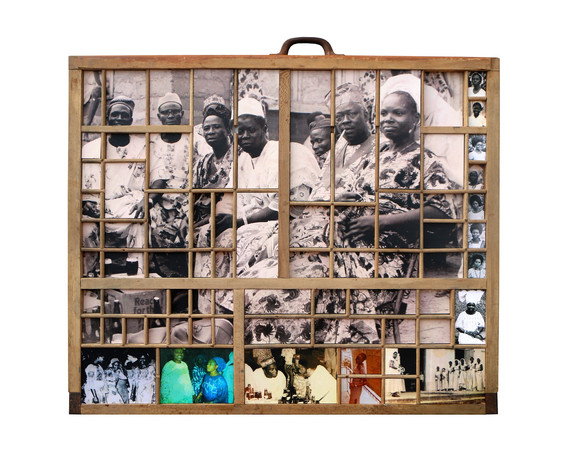 Unfolding Layers 6. 2021. Courtesy the artist” data-image-overlay-item data-image-overlay-src=”/d/assets/W1siZiIsIjIwMjMvMDUvMjIvMnBxemlpN2FiNF9DYXNpbmdfSGlzdG9yeV9VbmZvbGRpbmdfTGF5ZXJzXzZfNTB4NjBjbV8yMDIxX0xldHRlcnByZXNzX3R5cGVfY2FzZV9hbmRfZGlnaXRhbF9wcmludF93ZWJfMi5qcGciXSxbInAiLCJjb252ZXJ0IiwiLXF1YWxpdHkgOTAgLXJlc2l6ZSAyMDAweDIwMDBcdTAwM2UiXV0/Casing%20History,%20Unfolding%20Layers%206,%2050x60cm,%202021,%20Letterpress%20type-case%20and%20digital%20print%20%28web%29-2.jpg?sha=b8fb6a2e5f144172″ tabindex=”0″ ontouchstart onerror=”window.MoMA.onImageError(this, 1)”>
Kelani Abass. Unfolding Layers 6. 2021
 Hazy II, from the series Monochrome Lagos. 2015. Courtesy the artist” data-image-overlay-item data-image-overlay-src=”/d/assets/W1siZiIsIjIwMjMvMDUvMTUvM2FldDFyeTBrbl80Ll9Mb2dvX09sdXdhbXV5aXdhX0hhenlfSUlfZnJvbV90aGVfc2VyaWVzX01vbm9jaHJvbWVfTGFnb3NfMjAxNS4uanBnIl0sWyJwIiwiY29udmVydCIsIi1xdWFsaXR5IDkwIC1yZXNpemUgMjAwMHgyMDAwXHUwMDNlIl1d/4.%20Logo%20Oluwamuyiwa,%20Hazy%20II,%20from%20the%20series%20Monochrome%20Lagos,%202015..jpg?sha=3b6bf241247b1c2b” tabindex=”0″ ontouchstart onerror=”window.MoMA.onImageError(this, 1)”>
Logo Oluwamuyiwa. Hazy II, from the series Monochrome Lagos. 2015
 Constructed Realities. 2019–22. Courtesy the artist” data-image-overlay-item data-image-overlay-src=”/d/assets/W1siZiIsIjIwMjMvMDUvMTUvNjUwNGpwNTduZ181Ll9BYnJhaGFtX09naG9iYXNlX1VudGl0bGVkXzAyX2Zyb21fQ29uc3RydWN0ZWRfUmVhbGl0aWVzX2luc3RhbGxhdGlvbl8yMDE5XzIwMjIuLmpwZyJdLFsicCIsImNvbnZlcnQiLCItcXVhbGl0eSA5MCAtcmVzaXplIDIwMDB4MjAwMFx1MDAzZSJdXQ/5.%20Abraham%20Oghobase,%20Untitled%2002,%20from%20Constructed%20Realities%20installation,%202019%E2%80%932022..jpg?sha=693335334dc4ade3″ tabindex=”0″ ontouchstart onerror=”window.MoMA.onImageError(this, 1)”>
Abraham Oghobase. From Constructed Realities. 2019–22
 Untitled, from the series The Archive of Becoming. 2015–ongoing. Courtesy the artist” data-image-overlay-item data-image-overlay-src=”/d/assets/W1siZiIsIjIwMjMvMDUvMTUvM2Z1NWgzb2dneV82Ll9LYXJsX09oaXJpX1VudGl0bGVkX2Zyb21fdGhlX3Nlcmllc19UaGVfQXJjaGl2ZV9vZl9CZWNvbWluZ18yMDE1X29uZ29pbmcuXy5qcGciXSxbInAiLCJjb252ZXJ0IiwiLXF1YWxpdHkgOTAgLXJlc2l6ZSAyMDAweDIwMDBcdTAwM2UiXV0/6.%20Karl%20Ohiri,%20Untitled,%20from%20the%20series%20The%20Archive%20of%20Becoming,%202015%E2%80%93ongoing.%20.jpg?sha=665c4d7472109996″ tabindex=”0″ ontouchstart onerror=”window.MoMA.onImageError(this, 1)”>
Karl Ohiri. Untitled, from the series The Archive of Becoming. 2015–ongoing
 Untitled, from the series #EndSARS Protests. 2020. Courtesy the artist” data-image-overlay-item data-image-overlay-src=”/d/assets/W1siZiIsIjIwMjMvMDUvMTUvcWY1MXZvOXN3XzcuX1lhZ2F6aWVfRW1lemlfVW50aXRsZWRfZnJvbV90aGVfc2VyaWVzX0VuZFNBUlNfUHJvdGVzdHNfMjAyMC5fLmpwZyJdLFsicCIsImNvbnZlcnQiLCItcXVhbGl0eSA5MCAtcmVzaXplIDIwMDB4MjAwMFx1MDAzZSJdXQ/7.%20Yagazie%20Emezi,%20Untitled,%20from%20the%20series%20%23EndSARS%20Protests,%202020.%20.jpg?sha=6c18a74fd829e81c” tabindex=”0″ ontouchstart onerror=”window.MoMA.onImageError(this, 1)”>
Yagazie Emezi. Untitled, from the series #EndSARS Protests. 2020
New Photography 2023, organized by Oluremi C. Onabanjo, Associate Curator, with Kaitlin Booher, Newhall Curatorial Fellow, and Samuel Allen, MRC Fellow, Department of Photography, is on view May 28–September 16, 2023.

SALEM — In this city, one popular souvenir is both extremely portable and Instagram-able: aura photographs.
An aura photograph looks like a typical Polaroid, except the subject is swathed in blurred, colorful hues. Faces might be shrouded by melded blues and greens or oranges and reds. Those colors are believed to illustrate people’s auras, or “the visual representation of their energetic bodies,” said Melissa Nierman, manager of the newly installed aura photography booth at HausWitch Home + Healing, a popular metaphysical boutique on Washington Street.
Since HausWitch launched its Personal Rainbow aura photography booth in March, visitors have flocked to get their $50 instant film portraits taken in the hopes of self-discovery. The store has done several hundred portraits, Nierman estimates. Aura photography is part of the trending tide of witchcraft and magic, they said. It finds a particularly fitting home in “Witch City” Salem.
According to Nierman, the process for each aura photograph involves placing your hands on metal plates with sensors. The algorithm in a camera called the AuraCam 6000 then takes biofeedback data like temperature and uses software to construe it into colors. The result is an image printed from the camera, much like a Polaroid instant photograph, through a double-exposure process in which the initial exposure renders the image and the second exposure layers the vibrant shades.
Aura photography isn’t new — its origins come from Kirlian photography, which was invented by Russian electrician Semyon Kirlian in 1939 — but social media, namely Instagram, helped revive the concept in the 2010s. Artists like Radiant Human founder Christina Lonsdale photographed celebrities and patrons at the Whitney Museum of American Art. Stores with aura-capturing cameras, like New York City’s Magic Jewelry, drew crowds eager to share their colors.
Kirlian photography involves setting an item on a photographic plate and adding voltage, which generates electrical discharge around the item. That electrical discharge is what is interpreted as a luminous “aura.” Aura photography has its fair share of critics because the mysterious visualized energies have been boiled down to scientific processes rather than mystical origins. Still, the aura photography’s followers have embraced the experience as a personal journey that happens beyond the art form’s technicalities.
HausWitch — which also sells goods of the spiritual and aesthetically pleasing variety: crystals, oracle decks, and home and self-care goods, like soy candles in the scent, A Secret Spell for Re-Enchanting the World — had been planning for the booth since before the store’s opening in 2015. The appeal of aura photography is its capacity to affirm a person’s sense of self, Nierman said.
Like tarot cards, “aura photography is a mirror where it never really tells you things you don’t know. People already know what’s going on. They already know how they feel. They already know what they think about,” Nierman said.
What do the visualized auras supposedly mean? Auras are commonly described as the body’s invisible electromagnetic field, within which colors and shades correspond to different emotions and dispositions. According to a guide published by Cosmopolitan, red means confidence, yellow means playfulness, and white means sensitivity, to name a few examples. The shape and distribution of the colors are also meaningful. Anything above the head represents your “mental space,” Nierman said.
At HausWitch, visitors receive interpretations to help make sense of their auras. The store offers appointments and welcomes walk-ins for individuals or pairs, who enter the booth together and each simultaneously place a hand on one of the two metal plates. The latter option captures “relationship auras,” Nierman said, which are the energies people create together. HausWitch has photographed friends, married couples, and even a first date.
In March, Stephanie Hall, an Everett resident, celebrated her birthday with a HausWitch aura photo session. Hall said she and her friend “just kept looking at each other with our mouths hanging open” when they received their respective aura interpretations. Hall’s photo predominately featured blue and magenta colors, which reflected her creative energy, she added.
“Having someone that I had never met before just take an aura photograph and then be like, ‘hey, this is some of your personality attributes’ … is pretty mind-blowing,” Hall said.
One Instagram user tagged HausWitch in April in photos of their blue, magenta, and red-hazed portrait and a friend’s portrait, and wrote, “got our auras photographed yesterday!! I’ve been wanting to do this for YEARS. thank you @hauswitch for the amazing experience 🥰.”
The boutique also has a separate pop-up aura photography booth available to book for weddings; the cost depends on the time range and volume of portraits for each event.
Other local aura photography services can be found in holistic wellness and spiritual-related specialty boutiques. Fellow downtown Salem shop ASCEND Get Lifted offers $45-69 individual or couples aura photos and $35-50 aura imaging reports which include face and body imaging. Holistic wellness spot EveryBody in Mind Wellness Center in Sudbury offers $65-110 individual or couples aura photos with energy reports, as well as on-site and off-site group aura readings. New Age store Open Doors in Braintree regularly hosts aura photography and reading and chakra analysis events, including one on May 28 that offers $22-65 sessions.
To see your energy is significant, Nierman said. Aura photography is “a different way of getting to know yourself.”
Abigail Lee can be reached at abigail.lee@globe.com.


An artist based in Washington state has been sentenced to 18 months of federal probation for violating the Indian Arts and Crafts Act (IACA) after misrepresenting himself as Native American to sell his work.
Over the course of a decade, Jerry Chris Van Dyke, also known as Jerry Witten, sold more than $1,000 worth of carved pendants based on Aleut masks in Seattle’s Pike Place Market. In doing so, he claimed to be a member of the Nez Perce Tribe, despite having no Native heritage.
Van Dyke, 67, pleaded guilty this March to misrepresentation of Indian produced goods and products. In handing out his sentence at a hearing last week, U.S. District Judge Tana Lin cited Van Dyke’s long history of “undermining a community and identity,” according to an announcement from the United States Attorney’s Office in the Western District of Washington.
“Artwork is full of our culture… it is a piece of who we are,” said Shannon Wheeler, Chair of the Nez Perce tribe, at the hearing. The sale of fake Native art “continues a process of devaluing us as a people,” she added.
The investigation into Van Dyke began in early 2019, when the Indian Arts and Crafts Board (IACB) received a tip that he was erroneously representing himself as a Nez Perce member. Undercover authorities from the U.S. Fish and Wildlife Service purchased the artist’s work and learned that he had been provided with ivory, antlers, and animal bones from the owner of the gallery.
In interviews with agents, Van Dyke admitted that he was not enrolled with the Nez Perce Tribe and was aware of IACA, a 1990 truth-in-advertising law that prohibits the false marketing of Native arts and crafts products. He was charged in 2021.
“The prosecution of Jerry Van Dyke under the Indian Arts and Crafts Act for counterfeiting Alaska Native art is another critically important step in protecting the economic livelihoods and rich cultural heritage of contemporary and traditional Indian artists, as well as preserving the vitality of the Indian art market in the Northwest and nationwide,” said IACB Director Meridith Stanton in a statement.
In a separate case that paralleled Van Dyke’s, another Western Washington artist, Lewis Anthony Rath, was charged with misrepresenting himself as a member of the San Carlos Apache Tribe through his work. He too pled guilty in March. Rath’s sentencing hearing is scheduled to take place on September 27, 2023.
Follow Artnet News on Facebook:
Want to stay ahead of the art world? Subscribe to our newsletter to get the breaking news, eye-opening interviews, and incisive critical takes that drive the conversation forward.





