About

Posts by :

Spend Your Leisure Time With Joyf’s Tube Collection

Spend Your Leisure Time With Joyf’s Tube Collection

Ukrainain design brand Joyf is on a mission to make your life happier – who can say no to that? In collaboration with designer Rostyslav Sorokovyi, the brand has released its first outdoor furniture collection: Tube. Entirely sustainable, the series consists of six pieces: a chair, a coffee table, a dining table, a bench, a bar table, and a bar stool. Tube embodies clean, concise design, with a fun color palette and playfully rounded shapes – each aluminum tube is bent at the same radius – that emphasize Joyf’s philosophy that focuses on leisure.

Joyf looks for a balance of function, design, and durability in their products. Frugal production – in the case of this collection, a single aluminum tube – allows for eco-consciously created furniture that allows you to relax, set your worries aside, and enjoy your spare time. Chosen for its practicality, aluminum is lightweight, resistant to weather conditions, and able to be recycled at the end of its product life.

army green outdoor long bench by pool

“I prefer clean and aesthetic design,” Sorokovyi said. “The main principles of my work are simplicity, utility, and the emotionality that design can provide. I’m convinced that the designer should give a sense to everything he creates, maintain a responsible, sustainable approach in production, and look for inspiration in everyday life.”

navy blue outdoor tall bar table and bar stools

The element that unites all of Tube’s elements is a lowered central module, which allows you to easily move the furniture. This feature will be especially practical for commercial spaces. Available in four colors, customization is available for the B2B segment and wholesale orders. The collection can be made in any other colors upon request.

outdoor dining table, with long bench and two short benches

yellow outdoor long bench

outdoor patio filled with sets of outdoor dining tables with long benches and short benches

army green outdoor dining table, long bench, and two short benches

outdoor tall bar table and bar stools on white background

army green outdoor dining table with long bench on white background

long army green bench and short white bench on white background

long white bench with two short army green and yellow benches on white background

collection of outdoor tables and stools on white background

detail of yellow outdoor stool on white background

detail of yellow outdoor table and army green long bench on white background

detail of army green outdoor stool on white background

To learn more about the Tube outdoor furniture collection, visit joyf.design.

Kelly Beall is senior editor at Design Milk. The Pittsburgh-based graphic designer and writer has had a deep love of art and design for as long as she can remember, and enjoys sharing her finds with others. When undistracted by great art and design, she can be found making a mess in the kitchen, consuming as much information as possible, or on the couch with her three pets. Find her @designcrush on social.

College of Business provides unique learning opportunity with international flair | University of Nevada, Reno

College of Business provides unique learning opportunity with international flair | University of Nevada, Reno

A new course offered by the College of Business at the University of Nevada, Reno allows students to experience an international learning opportunity without leaving the United States.

“Museums and Marketing” (Marketing 492), which will be offered during the 2023 summer mini session from May 22 to June 9, will be co-taught by Thomas Burnham, associate professor of marketing at the University of Nevada, Reno, and Andrea Lauria, professor of museology at the University of Rome Tor Vergata. The course combines the two professors’ expertise in marketing and museology, the study of museums and the history of their establishment and development, to create a unique course with an international perspective and multi-disciplinary approach.

“Considering my experience in museology and the strong economic and social impact that the hyper-museums have on the territories on which they are built, professor Burnham and I decided to associate our subjects and create a course on museums’ marketing,” Lauria said. “The topic of hyper-museums is extremely interesting and not only from the art historical perspective but also for its socio-economic impact on societies and territories.”

The course will explore the inner workings of museums, providing a unique perspective on the history of museums as institutions of power, how museums work as an example of brand marketing and the shifting business models of museums today. Museums throughout the northern Nevada and California region will participate in the course through field trips and guest lectures from experts in the field. Participating museums include the San Francisco Museum of Modern Art (MOMA), the California Academy of Sciences Museum, the National Automobile Museum, the Nevada Museum of Art and the Discovery Museum.

The partnership between University of Rome Tor Vergata and the College of Business began in 2019. In addition to the course being taught this summer, Burnham also hosted two of Lauria’s graduate students from Rome and helped them work on their theses in September 2022. Future plans for collaboration between the two universities include an official exchange program.

“Part of the future that they envision is bringing our students there,” Burnham said. “We want more student exchanges to take our students to Rome.”

Interested students can register online for the course until May 23. The course is open to all undergraduate students pursuing a business major or minor.

The Wait Is Over as Nikon Officially Announces the New Nikon Z 8 |

The Wait Is Over as Nikon Officially Announces the New Nikon Z 8 |

The wait is over! The moment Nikon shooters have been waiting for has finally arrived and it’s likely even better than many could have expected.

I was a D850 shooter. I still maintain that it’s the best DSLR ever created. Before that, I owned the D800. The Nikon “8” numbered cameras have always seemed the perfect fit for my needs as a professional photographer. They have offered the highest resolution in the brand’s lineup. They have not been the most expensive camera in the lineup. That title understandably belongs to the ultra rugged D6 or now Z9 level products. But the “8” cameras always come in just below that with many of the bells and whistles but at a lighter weight and lower cost.

As I am hardly the only person to have fallen in love with the D850, I am also hardly the only person to have immediately thought about a mirrorless version once the industry began to change over from DSLRs into a mirrorless world. I searched far and wide, both inside the Nikon ecosystem and outside of it for a camera that could provide me with the same user experience of the D850, but with all the benefits of mirrorless.

After an embarrassingly large number of my own missteps in that direction, I finally found the perfect camera for my needs when Nikon released the Z9 in late 2021. It was the first mirrorless camera that could legitimately beat my D850. It allowed me to go all-in on the Z system and never look back.

Yet still, as I mentioned earlier, that camera belongs in the flagship category of the camera market. There was still room for another mirrorless body that would fall into that segment which the D850 occupied within the DSLR lineup. The camera that has it all, but comes in a more manageable form factor than the larger built-in-grip pro bodies and at a more manageable price tag as well. It was always built right into the naming scheme for the Z system. We had a Z5, Z6, Z7, and Z9. So, where was the Z8?

Ask that question no more, as Nikon today has announced the brand new Z8 mirrorless camera. Speculation has been rife on the internet for years. I myself started using the term “the mythical Z8” in an article three years ago. Would it be a super high-resolution beast? Would it be a cinema camera? Would it be a mini-Z9? Well, for those of you who picked option C, you win the jackpot.

The Z8 has basically all the same features as the Z9. So much so that to repeat all the specs feels a little like rehashing my Z9 review. But here are the essentials that you will want to know right off the bat.

The camera has the exact same 45.7 MP stacked CMOS sensor as the Z9. Like the Z9, there is no mechanical shutter. Also, like the Z9, it has the sensor cover that automatically comes down to protect the sensor from dust when changing lenses. It has an identical autofocus system, right down to the super handy dedicated autofocus mode button on the lower left-hand corner that is present on the Z9 as well (one of my favorite features). Same EXPEED 7 image processor. Same ability to shoot up to 20 fps raw or 30 fps JPEG. And, yes, it does have the same option to shoot 11 MP JPEGs at 120 fps. The Z8 even adds the ability to shoot in the HEIF format. It also has the same pre-release capture capabilities which can be so helpful when shooting sports or wildlife.

It sports the same blackout free live viewfinder system that is in the Z9. This is actually one of the most valuable parts of the Z8. Especially for those who are switching over from a DSLR. The one thing I always absolutely hated about the mirrorless experience was having to lose my optical viewfinder in favor of an EVF. EVFs have a lot to offer in terms of exposure previews and other features. Yet, personally, I just didn’t like the experience, especially the blackout, as compared to an optical experience. The dual flow system introduced with the Z9 fixed all of that. It is simply the best viewing experience for a mirrorless camera on the market. Very close to an optical viewfinder with the added benefits of mirrorless. And the new Z8 has brought in the exact same system.

As someone who spends even more time as a filmmaker than as a still photographer these days, I was particularly interested in knowing what video features would make it to the Z8. Would Nikon hold back some features and reserve them for its higher end system? I am extremely happy to say that the exact same video features in the Z9, including 8.3K N-RAW at up to 60p, ProRes RAW HQ, ProRes 422 HQ, 10-bit N-log internally, and all the other formats available to filmmakers in the Z9 are available in the Z8.  

So, yeah, basically it’s a mini-Z9. Oh, and all of this comes in at an incredibly competitive price of $3,999.95.

But what isn’t there? Obviously, there has to be some difference to separate this camera from its big brother and allow it to come in roughly $1,500 less. And if you are deciding between the Z8 and Z9, there are some minor tradeoffs. For one, the camera uses the same battery form factor, the EN-EL15c, that has been around with all the D850/Z6II/Z7II bodies. This is actually good for D850 shooters, as you will likely already have a bunch of spare batteries which you can use with this camera. And, for the vast majority of photographers, this battery is all you will need. The Z9, on the other hand, comes with a significantly larger battery. Hence, the built-in battery grip. That battery can pretty much run forever, whereas you would need to change the D850 battery more often. Then again, Nikon has also announced an optional battery grip, the MB-N12 ($349.95), which will work with the Z8 and extend battery life even further. So, you get a more compact body with the Z8 by default, but the option of more battery life when you need it.

The Z8 also features two card slots. However, whereas the Z9 has dual CFexpress Type B card slots, the Z8 features one CFexpress/XQD slot and one SD slot. Again, for the majority of use cases, this is more than adequate.  And the SD option gives you a choice of using less expensive SD media if you don’t need the speed of CFexpress. The only limitations come in when it comes to dual card recording. For instance, on the Z9, you can record 8K N-RAW to both cards simultaneously so that you have a backup. On the Z8, you would only be able to record the 8K N-RAW to the CFexpress card and not to the SD card. That’s not to say that you can’t record to both cards simultaneously. There are just some limitations when using things like 8K. This is to be expected though and not something that is going to be a practical detriment for the majority of use cases.  

Unlike the Z9, the Z8 does not have an Ethernet port. In its place, it offers dual USB-C jacks. This is a blessing for studio photographers who may now use one connection to tether while still having a free port to use for powering the camera over a long shoot. This is one of those small additions that I suspect will add up to big dividends for working photographers.

If you are a D850 owner and considering whether to switch to the Z8, this seems like a clear upgrade. The Z9 was already the mirrorless camera that convinced me to switch to mirrorless and is arguably the best camera I’ve ever owned. The Z8 is essentially the Z9 but smaller and less expensive, with the main trade-offs being the battery life and the card slots. So, if the Z8 is anything like the specs suggest, it will be a clear upgrade over the D850 for all users.

I’ll give you a full review once I’ve gotten a chance to take the camera out in the field. I’m trying to get my hands on one as quickly as I can and will come back to offer some of my thoughts.  

But what are your thoughts? Does this product announcement scratch your itch? Is this what you always wanted from the mythical Z8? Will you be the first in line? Nikon has announced that they have put all their resources into making sure there will be as many cameras available as possible once they start shipping. But, we all know that these will sell out fast. So, if you want one, now is the time to place your order. The camera begins shipping May 25th.


The Nikon Z8 is here – and Canon and Sony need to watch out

The Nikon Z8 is here – and Canon and Sony need to watch out

After years of rumors, the Nikon Z8 has finally been announced by the Big N – and, as expected, it is a “baby Z9” in terms of both specs and price, which incredibly is a thousand bucks less than the flagship camera. 

Indeed, the company itself used those words in describing the Nikon Z8 to us, saying, “In a nutshell, it is the baby Z9,” while it also calling it, “the true successor to the Nikon D850“.

Essentially, the Z8 is a Nikon Z9 in a regular body (as in, it doesn’t have an integrated vertical grip or high-capacity battery). So naturally it packs all the same specs: a 45MP stacked sensor, 8K 60p and 4K 120p video, up to 120fps burst shooting, an exclusively electronic shutter, and intelligent AF built on deep learning

In fact, the latter represents one of the areas in which the Z8 is actually more advanced than the Z9. While it carries over the existing subject tracking categories – people, cats / dogs / birds, car, motorcycle, bicycle, train, airplane – it also adds a new category that the Z9 lacks: aircraft.

Nikon couldn’t tell us exactly what kind of airborne craft this could detect, though we would hazard a guess at things like helicopters and drones (we asked about obscure vehicles like microlights, too, but that couldn’t be confirmed). 

The Z8 also possesses dual USB-C ports – the first camera we can recall having this feature – enabling the camera to, for example, charge and tether simultaneously. It is also the first Nikon camera to support USB to ethernet connectivity. 

In short, the “baby Z9” actually does more than the “daddy Z9” does – and for much less bank. Certainly the Z9 proper has longer battery life, can shoot video for longer, and has more programmable buttons. 

Otherwise, though, this really is a Z9 for people who want the specs but don’t want the bulky “pro DSLR” form factor – Nikon concedes that there is a category of user who simply won’t buy a camera that shape and size, no matter how good it is.

The Nikon Z8 goes on sale May 25, priced at an incredible £3,999 (US and Australian pricing to be confirmed). And unlike the chaos that was the Z9 launch, the company assures us that availability will be much improved for the Z8. 

(Image credit: Nikon)

If you enjoyed this article, you might be interested in reading about the best Nikon cameras, the best Nikon lenses and the best 8K cameras.

Vienna Tourist Board Unveils ‘UnArtificial Art’

Vienna Tourist Board Unveils ‘UnArtificial Art’

The Vienna Tourist Board has launched UnArtificial Art, a marketing campaign designed to ‘promote the city’s 100+ museums in order to “See the Art behind AI Art”’.

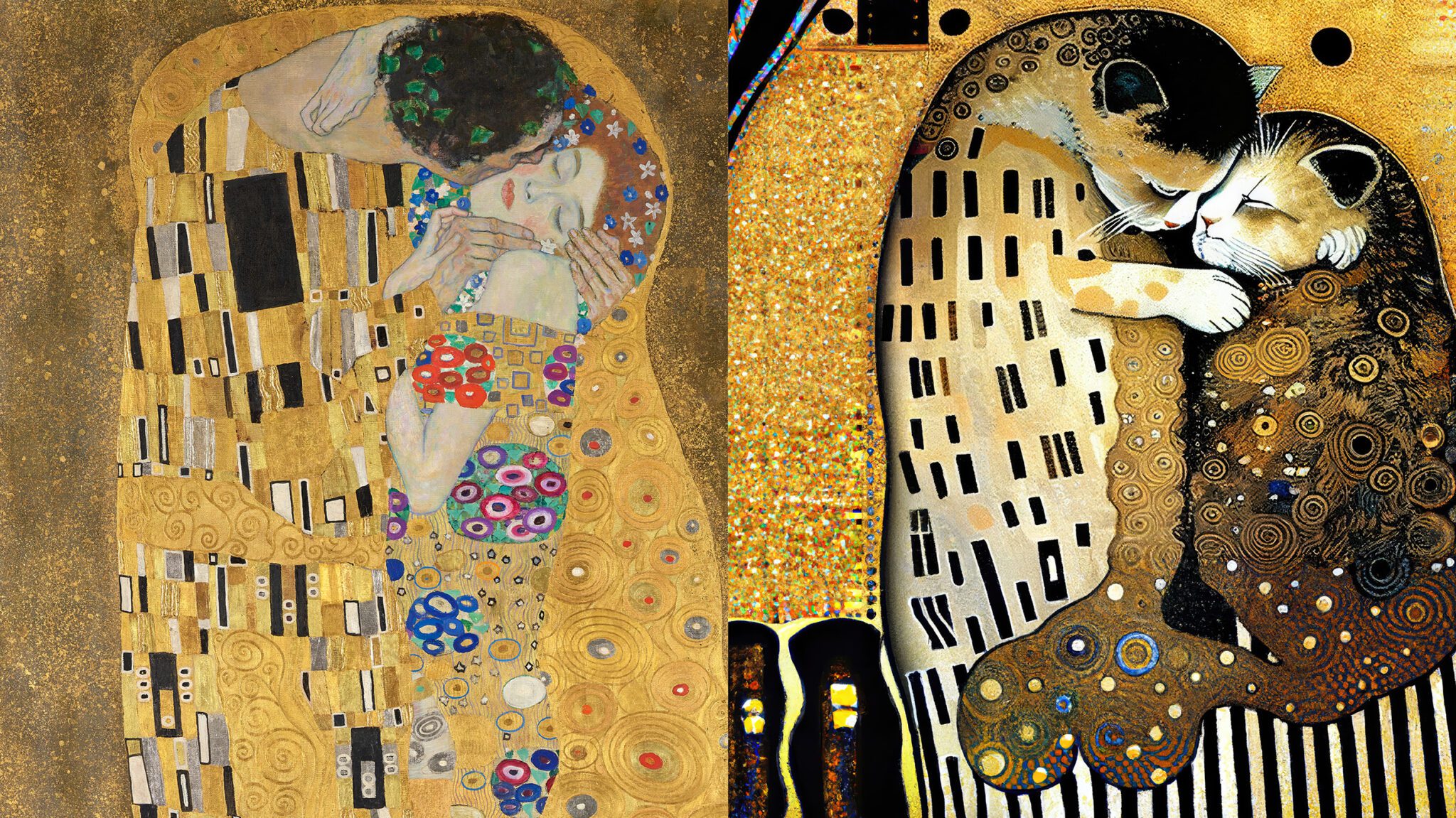
The new campaign sees famous figures from the world’s most acclaimed artists transformed into the internet’s universally adored animal – the cat – using the power of Artificial Intelligence. 

One such example featured in the campaign is a mash up of Gustav Klimt’s ‘Kiss’, which sees the much adored lovers transformed into cats, still wearing the intricately decorated robes and positioned in the iconic lovers embrace.

Credit: Jung von Matt DONAU & Vienna Tourist Board

“With so much artificial intelligence (AI) invading lives – particularly with programs like DALL-E or Midjourney that allow anyone to create “works of art” – Vienna wants to remind visitors of who made that all possible in the first place” said Norbert Kettner, Vienna Tourist Board’s CEO.

“The campaign aims to show that AI art is only possible because an algorithm references real works made by real humans, and the originals can often only be seen in Vienna. The Viennese Modernism movement that revolutionized the artworld over a century ago continues to live on and affect today’s art through the algorithms that guide AI creations,” he continued.

As part of the campaign, the Vienna Tourist Board has also released a short film with art expert Markus Hübl, which aims to showcase the art that made AI possible. You can view the video below:

[embedded content]

This isn’t the first time AI has been used in a marketing campaign, with VisitDenmark turning to the power of artificial intelligence for a marketing campaign launched earlier this year.


At the Skift IDEA Awards, we are looking for advertising campaigns created with the intent to drive action.

If you have an initiative to share, head to the Skift IDEA Awards and start your submission today.

Famed photographer Dorothea Lange’s images of Japanese internment during WWII was censored by the US government that also hired her to document it in the first place

Famed photographer Dorothea Lange’s images of Japanese internment during WWII was censored by the US government that also hired her to document it in the first place

In 2006, a book collection of Lange’s wide portfolio of Japanese American internment was published under the title, “Impounded: Dorothea Lange and the Censored Images of Japanese American Internment.”

Manzanar Relocation Center, Manzanar, California. Grandfather and grandson of Japanese ancestry at this War Relocation Authority center.

image

A grandfather and grandson of Japanese ancestry at the Manzanar Relocation Center in Manzanar, California.

Dorothea Lange / United States National Archives


Linda Gordon, a historian at New York University who edited the book, maintained that the temporary suppression of Lange’s photography was not by happenstance.

“The photographs were impounded because they were unmistakably critical,” she wrote in the Asia-Pacific Journal. “They unequivocally denounced, visually, an unjustified, unnecessary, and racist policy.”

Source: Asia-Pacific Journal

What to read to avoid getting hoaxed

What to read to avoid getting hoaxed

HUMANS ARE, and have long been, a credulous bunch. In 1844 Edgar Allan Poe published an article in the New York Sun about a man who had flown across the Atlantic in a balloon. Two days later the newspaper fessed up (“We are inclined to believe that the intelligence is erroneous”), but not until its offices had been besieged by people wanting to know more. In 2009 a similarly inflated story—which caused American news networks to scramble their reporters— was released by a couple from Colorado who said that their six-year-old son was in a giant balloon soaring 7,000 feet into the air. Later that day “balloon boy” was found at home, where his publicity-hungry parents had apparently hidden him.

Hoaxes can hint at the nature of the societies that fall for them. When Stern, a German magazine, published what it believed to be Hitler’s diaries in the 1980s, it was an early example of a trend that Germans call “Hitler kitsch”, using the Führer as a marketing tool. Similarly Anna Delvey, who created a false identity on Instagram in order to defraud people, exploited for dastardly ends a social-media platform used by millions. These five books cover some of history’s most notorious hoaxes, not all of which have been entirely debunked.

Selling Hitler. By Robert Harris. Pantheon; 387 pages; $18.95. Cornerstone; £10.99

Forty years ago Konrad Kujau appeared to make the find of a century: dozens of volumes of Adolf Hitler’s diaries. They were hand-written in delicate Gothic script and spanned the period from his rise to power in the 1930s almost up to his death in 1945. As well as recording Hitler’s assessment of Germany’s progress in the war, they confided such prosaic troubles as bad breath and flatulence. Thus began an audacious hoax. Stern bought the diaries (pictured). A bidding war among English publications led Rupert Murdoch to fly to Switzerland to negotiate the serialisation rights for one of his newspapers, the Sunday Times. Hugh Trevor-Roper, a British historian, initially vouched for their authenticity. On closer examination, however, the diaries turned out to be an amateurish fake. Kujau, who began his counterfeiting career by forging lunch vouchers, had stained the pages with tea to make his fabrications look old. The incident is told with biting wit by Robert Harris, a British journalist and novelist. The diaries, which will soon go on display at the German national archives, may have been deeply embarrassing for all involved. But the story also captivated the public. As Mr Murdoch put it at the time: “After all, we are in the entertainment business.”

Fake: The Story of Elmyr De Hory, the Greatest Art Forger of Our Time. By Clifford Irving. Out of print. Download on Kindle; $2.99

After the second world war some of Europe’s most distinguished families found themselves destitute. That is how Elmyr de Hory, a Hungarian aristocrat, ended up touring the galleries of America, selling works by Matisse, Modigliani, Picasso and Renoir. Or so he claimed. In fact de Hory (which almost certainly was not his real name) had forged the pictures. His stories of life in Paris in the 1920s, and his personal relationships with some of the artists he faked, gave him an air of authenticity that helped him to fool the art world. He hobnobbed with celebrities, such as Zsa Zsa Gabor. In the 1960s, having sold more than 1,000 fake artworks, he was found out. By then he was living in Ibiza, where Clifford Irving, a struggling novelist, was his neighbour. Irving offered to write de Hory’s story, which became “Fake: The Story of Elmyr De Hory, the Greatest Art Forger of Our Time”. But much of what de Hory told Irving is impossible to verify, deepening the mystery about him. Irving was clearly inspired by his subject. He went on to write a purported autobiography of Howard Hughes, claiming that he collaborated on the book with the reclusive billionaire. Hughes in fact never met Irving, but he was not so reclusive that he did not get in touch with his lawyers: Hughes sued Irving’s publisher. Irving went to prison. Today de Hory’s forgeries are sought after in their own right. He became so notorious that after his death in 1976 fake “Elmyrs” flooded the art market.

The Coming of the Fairies. By Arthur Conan Doyle. Bibliotech Press; 130 pages; $24.95. Cosimo Classics; £12.99

Modern techniques of image manipulation have turned the public into sceptics. But in the early 20th century seeing was believing. In 1917 two girls in Yorkshire, in northern England, borrowed a camera and went to play in the garden. When the pictures they took were developed, they showed the girls surrounded by small, sprite-like creatures. They became known as the Cottingley fairies, after the village in which the images were taken. After the mother of one of the girls showed the images at a meeting of the Theosophical Society, a mystical movement, word of the fairies spread. Photography experts found no sign of fakery. When Sir Arthur Conan Doyle, the author of the Sherlock Holmes mysteries and a keen spiritualist, wrote an article on the fairies using the photos as evidence of their existence, he caused a sensation. He called the images an “epoch-making event”. He later expanded on the article in a book published in 1922, “The Coming of the Fairies”. Unfortunately, the sprites never did come out of the woods. In 1983 the two friends admitted that they had faked the photos, though they continued to maintain that they really had seen fairies.

Piltdown Man: The Secret Life of Charles Dawson. By Miles Russell. The History Press; 272 pages; $14.99

Arthur Conan Doyle appears in another of the 20th century’s murkiest hoaxes. In 1912, at a meeting of the Geological Society of London, Charles Dawson, an amateur archaeologist, presented fragments of a skull that he claimed was the missing evolutionary link between apes and humans. He found them in a gravel pit in Piltdown, in southern England. The jaw was almost indistinguishable from that of a chimpanzee. Some scientists were suspicious from the beginning, but it wasn’t until 1953 that Time magazine published evidence showing that the Piltdown man was not a million-year-old human ancestor but a hacked-together chimera consisting of a medieval human skull, a 500-year-old orangutan’s jaw and fossilised teeth from a chimp. Dawson died a few years after he presented his find, and the full story remains unclear. Did he orchestrate the whole thing, or were the fragments planted for him to find? If the latter, who did it? One outlandish theory is that Conan Doyle, who played golf near where the bones were found, may have wanted to discredit the scientific community after one of his favourite psychics was debunked. Miles Russell, an archaeologist at Bournemouth University, puts this theory to bed in his book. He pins the blame squarely on Dawson, writing that he hoped the discovery would get him elected to the Royal Society.

My Friend Anna. By Rachel DeLoache Williams. Gallery Books; 288 pages; $27. Quercus Publishing; £16.99

Anna Sorokin is among the most charismatic of contemporary scammers. Ms Sorokin, who was born in Russia, created an alter ego in the form of Anna Delvey, a wealthy socialite. After moving to New York, between 2013 and 2017 she defrauded banks, hotels and people who thought they were her friends of hundreds of thousands of dollars. By convincing them that she was fabulously rich, she found it easy to get others to bankroll her lifestyle. Rachel DeLoache Williams, who worked for Vanity Fair, was one of those who fell for Ms Delvey’s tricks, at a cost of $62,000. She wrote about it in the magazine, and later in a book, “My Friend Anna”. Ms DeLoache Williams, who was already familiar with Ms Delvey from her glamorous posts on Instagram, was drawn in by her talk of family trusts and setting up charitable foundations. It was only when they went on a luxurious holiday together, and Ms Delvey scarpered, leaving Ms DeLoache Williams with the bill, that the penny dropped. Rather than succumb to bitterness, Ms DeLoache Williams reflects on the ease with which anyone can use social media to create an alternative reality. Ms Sorokin just took it further than most. She was locked up for almost four years, and has since sold the rights to her story to Netflix (though much of the money went to pay legal fees and restitution). As a condition of her release, she must no longer post on Instagram.

Also try

The Economist has published its share of April Fools hoaxes, some of which have caught readers out. Read why corporate practical jokes can often backfire (a lesson we should perhaps keep in mind).

Photography Project Turns Around a Fictitious Disease Used to Prevent Women from Riding Bicycles

Photography Project Turns Around a Fictitious Disease Used to Prevent Women from Riding Bicycles

The story of women and  bicycles has never been easy. When the bike appeared in the 19th century and began to become popular among women, it was a revolution. Suddenly, women could go further than their own neighbourhood, they could do so without permission and without asking anyone to take them. In fact, the bicycle became especially popular among suffragettes, becoming a symbol. Which some sectors of society did not take kindly to.

So, doctors at the time invented what would become known as Bicycle Face. A fictitious disease that supposedly affected women who rode bicycles and caused dark shadows under the eyes, generated masculine facial traits and even led to depression, breastfeeding difficulties and miscarriages.

image

However, they ignored the warnings. And women cyclists and women’s cycling in sports are currently experiencing a hay day, with the official celebration of the first ever Vuelta Femenina. An event that began in Torrevieja, Spain, on 1st May and finished with an ascent to the Covadonga Lakes on 7th May.

On the occasion of the event, Škoda, the Official Sponsor of La Vuelta Femenina, and Proximity Barcelona came up with an initiative to celebrate the fact that women never stopped cycling and that women’s cycling has been becoming more and more popular over the years. So, they are launching a photography project to redefine, positively, what Bicycle Face means in 2023: a face showing the effort of getting to the top of a hill, the satisfaction of finishing with the best time or, in other words, the face of empowerment on two wheels.

With this aim, from the start of the competition, the sports photographers Naike Ereñozaga and Lara Ortiz de Zárate took on a photographic challenge: they took moving portraits of the cyclists as they raced to show all of the competition’s faces. In their statements, Naike said, “I have witnessed what it has taken for women’s cycling to get here. We’ve come a long way, but there is still further to go.” And Laura acknowledged that, “It is an honour to be able to take part in this project, to be a part of the change, and to have the opportunity to immortalise these moments struggling to win the race that represent the female attitude.”

image

The result of this photographic report can be seen here

Through this project, Škoda Spain is reaffirming its commitment to women’s sport. And, particularly, to cycling. In the words of Miguel Piwko, the company’s marketing director, “Škoda has always had strong links with the bicycle sector. It’s in its DNA. And it’s natural for us to support women’s cycling, just as we sponsor the women’s football teams RCD Espanyol and Valencia CF. Only with everyone’s support will we ensure that women, in sports too, get all the acknowledgement and visibility they deserve.”

Ramon Caba, the executive creative director of Proximity Barcelona, claims that “We’re in a moment in which brands have the obligation to commit, more than ever, to their values. This campaign reinforces what Škoda has been doing for women’s sport and cycling for years.”