About

Posts by :

Photographers reveal, evade at Brownfield

Photographers reveal, evade at Brownfield
image

For Shari Brownfield, photography is an interesting medium.

“It was created with the intent to produce a replica of what is seen through a lens, in an unlimited fashion, where the image remains consistently the same, without nuance or filtration by the photographer,” the gallerist and art consultant said. “It’s been nearly 200 years since the first photograph was taken, and the medium has evolved to embrace so much more than its original intent.”

Tseng Kwong Chi’s Iconic Portraits of Art Stars

Tseng Kwong Chi’s Iconic Portraits of Art Stars

One day in the spring of 1979, Keith Haring spotted artist Tseng Kwong Chi cutting a distinct silhouette as he stood on the corner of First Avenue and Fifth Street in Manhattan. Intrigued, Haring approached, got Tseng’s phone number, and went about his day, only to call Tseng later that day with an invitation to a poetry reading at Club 57 — the fabled St. Mark’s Place nightclub which was home to the burgeoning East Village art scene. 

The two artists quickly became collaborators as Tseng accompanied Haring on his jaunts through New York’s literal underground, traversing countless train platforms in search of prime real estate: empty wall spaces where advertising would otherwise appear. With chalk in hand, Haring crafted a powerful and profound love letter to New York City that launched his career into the stratosphere. Tseng documented it all, photographing these ephemeral works made for the people, not the industry.

Tseng’s love of portraiture was rooted in his training as a painter, a passion he brought to photography when he moved to New York in 1978 and honed with the creation of the “Ambiguous Ambassador” persona for his series East Meets West (a.k.a. Expeditionary Self-Portrait Series), which began the following year. Donning a Zhongshan suit, sunglasses, and an ID badge, Tseng traveled to major landmarks, cosplaying the stereotypical Asian tourist, and making enigmatic and reflective self-portraits with a 1940s Rolleiflex.

Using photography to play with notions of image and identity, Tseng was the perfect portraitist to chronicle the 1980s downtown New York art world. His close friendships with Haring, Jean-Michel Basquiat, and Andy Warhol provided an insight and understanding of their vision and character, allowing him to create cinematic tableaux that elevated artists to the realm of rock stars — selections from which were on view at the Yancey Richardson booth during The Photography Show in New York.

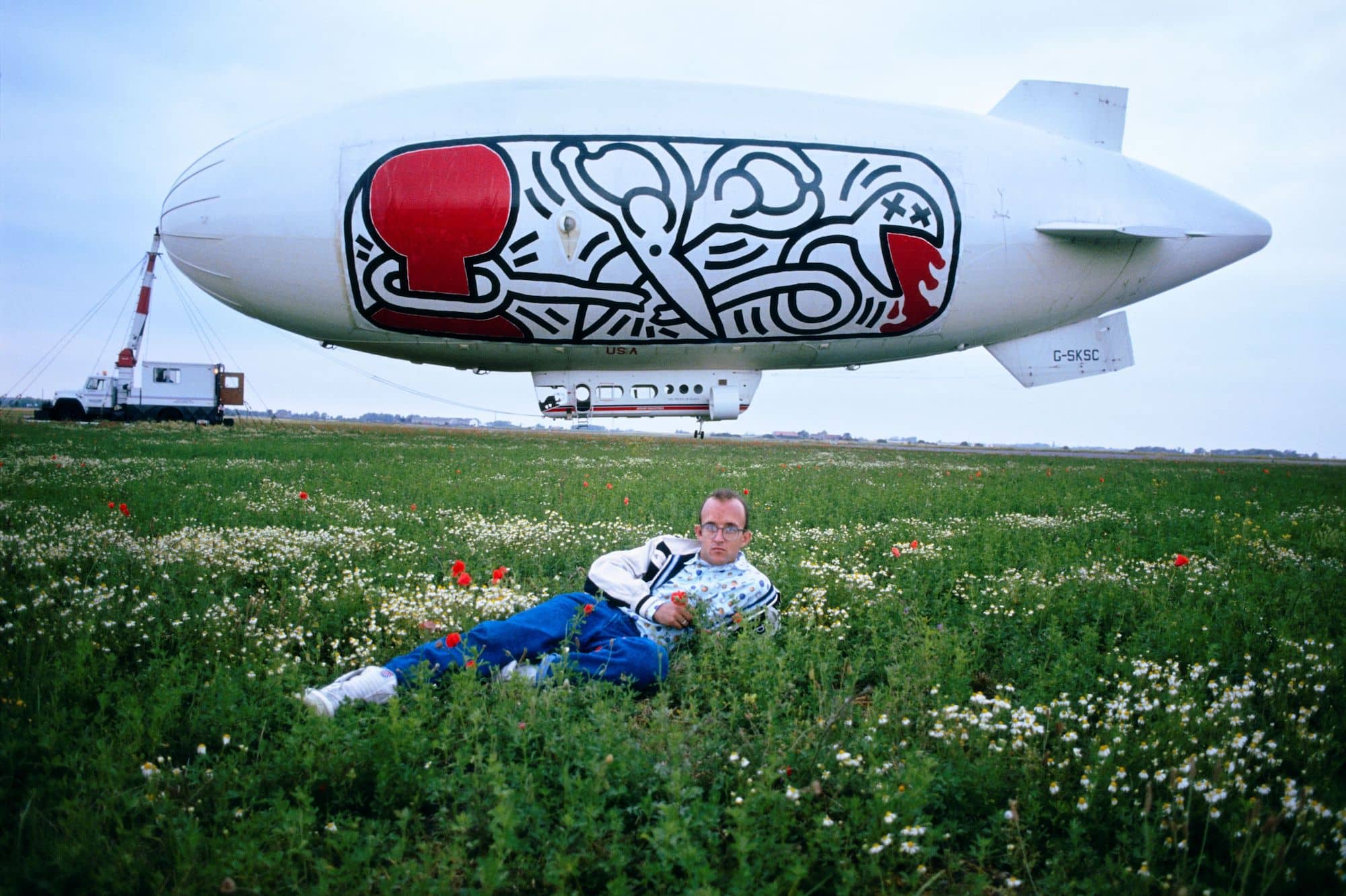
Keith Haring with blimp in France, 1989. Photo: Tseng Kwong Chi © Muna Tseng Dance Projects Inc, Art: © Keith Haring Foundation, courtesy of Yancey Richardson Gallery

New Art, New Money

Hailing from Hong Kong, Tseng Kwong Chi was a child prodigy who studied in Paris before settling in New York in 1978 to pursue his passion for photography. He developed the “Ambiguous Ambassador” persona after wearing it to meet his family for dinner at the legendary Windows on the World restaurant, where the maître d’ treated him as a foreign dignitary.

Impressed by the ways in which Chairman Mao’s influence had shaped Western thought, Tseng brought the “Ambiguous Ambassador” to the 1980 Met Gala, posing alongside designers, socialites, and philanthropists with singular aplomb, bringing a splash of downtown shenanigans to the insular uptown scene. Fluidly moving through different communities, Tseng felt right at home in the 1980s art scene, just as the art world began to make headlines with record breaking sales.

Suddenly the figure of the starving artist was replaced with the rock star, a mythic figure whose name alone would demand 7 or 8 figure sales. The New York Times Magazine investigated the marketing of Jean-Michel Basquiat in a 1985 cover story, “New Art, New Money,” only further adding to his mystique. It was a long-awaited moment — the seeds of which had been planted and sown for years by Andy Warhol, who wisely aligned himself with Basquiat. 

[embedded content]

A Constellation of Art Stars

With art prices skyrocketing in the 1980s, the media was transfixed by the New York art scene. Tseng Kwong Chi’s portraits of Keith Haring, Jean-Michel Basquiat, and Andy Warhol perfectly encapsulated the spirit of the times, playfully using and challenging our obsession with myth by making the artists appear both accessible and larger than life.

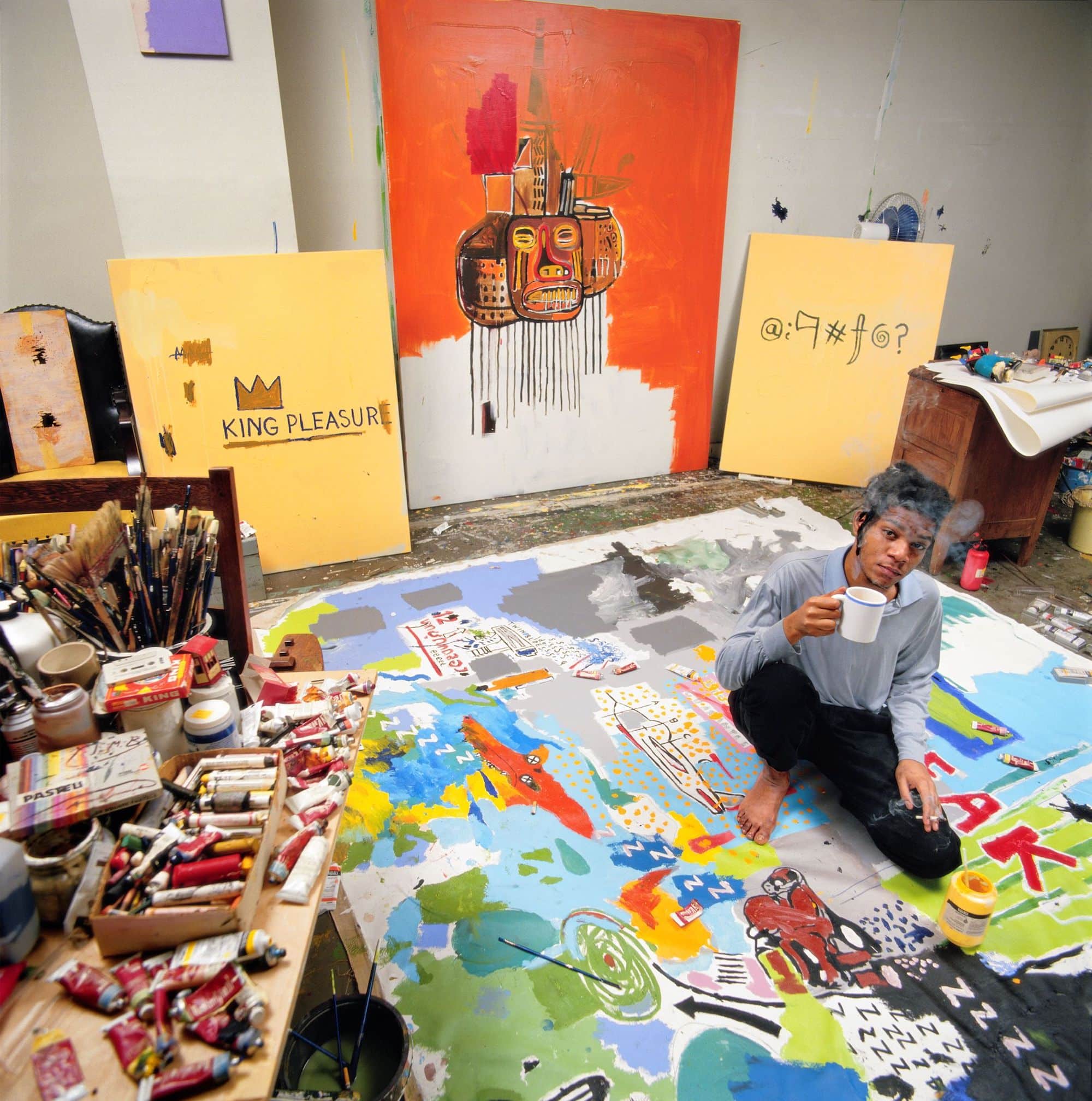
Jean-Michel Basquiat, New York, “KING PLEASURE” sitting with coffee cup, 1987. © Muna Tseng Dance Projects Inc, courtesy of Yancey Richardson Gallery

Jean-Michel Basquiat, New York, “KING PLEASURE” sitting with coffee cup, 1987. © Muna Tseng Dance Projects Inc, courtesy of Yancey Richardson Gallery

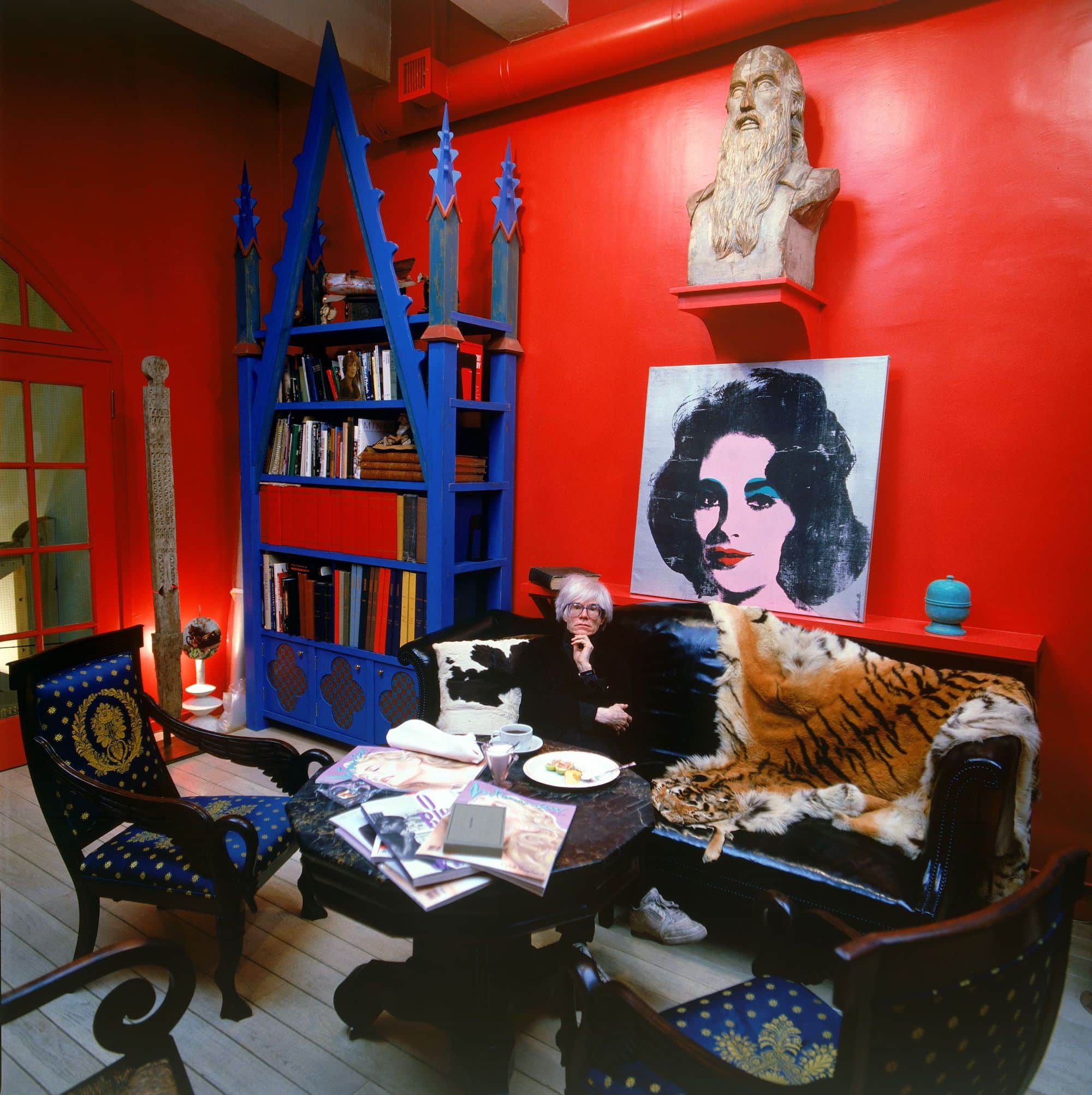
Andy Warhol, New York, with Liz Taylor’s portrait in Fred Hughes’ red studio, 1986. © Muna Tseng Dance Projects Inc, courtesy of Yancey Richardson Gallery 
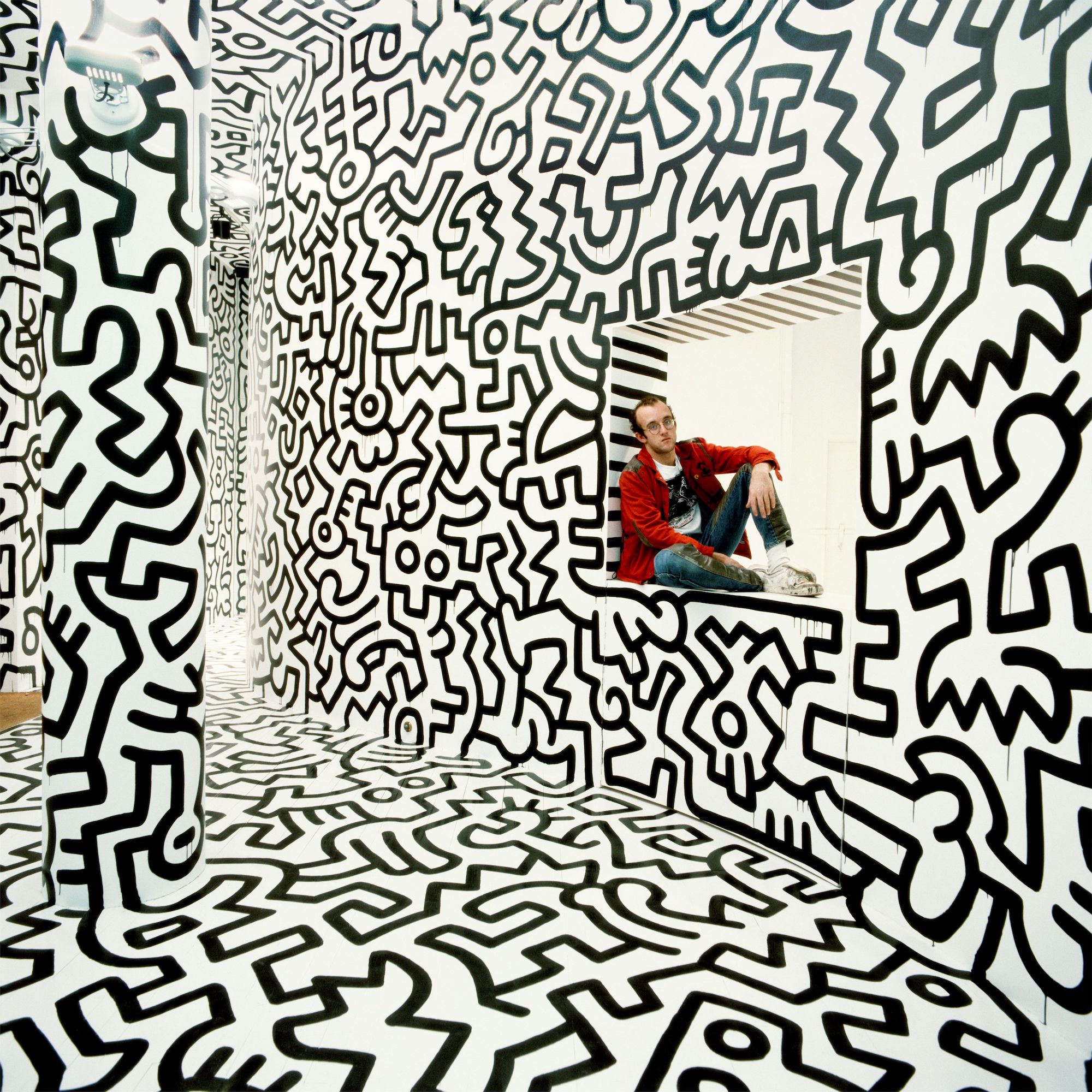
Keith Haring Pop Shop New York, 1986.
Keith Haring Pop Shop New York, 1986. Photo: Tseng Kwong Chi © Muna Tseng Dance Projects Inc, Art: © Keith Haring Foundation, courtesy of Yancey Richardson Gallery

Formal yet familiar, Tseng simultaneously embraces and subverts notions of American exceptionalism. In his 1987 portrait of Basquiat, the artist is sitting atop a large canvas on the floor, enjoying a fresh cup of coffee and a cigarette, still dressed in loungewear and barefoot. He’s in the studio amid the art supplies and unfinished canvas and looks utterly at peace, as though there’s no other place he’d rather be.

Crafted as landscapes and interiors, each photograph offers a glimpse into the world of the artist as they breathe and live. In Tseng’s 1986 photograph of Warhol, he sits beneath his portrait of Elizabeth Taylor at home, wearing all black (with white Reeboks to match his fluffy wig), surrounded by the detritus of his daily life.  

But perhaps it’s his 1986 portrait of Haring in the Pop Shop that is the culmination of Tseng’s on-going collaboration with the artist. Haring sits snuggled inside his work, just one more figure inside the bigger landscape he imagines in his art. After their fateful encounter in 1979, Tseng and Haring worked together to amass an archive of some 20,000 photographs over the course of a decade — before they both passed from AIDS in 1990, just one month apart.

Yseng Kwong Chi’s portraits can be found on the website of the Yancey Richardson Gallery, New York.

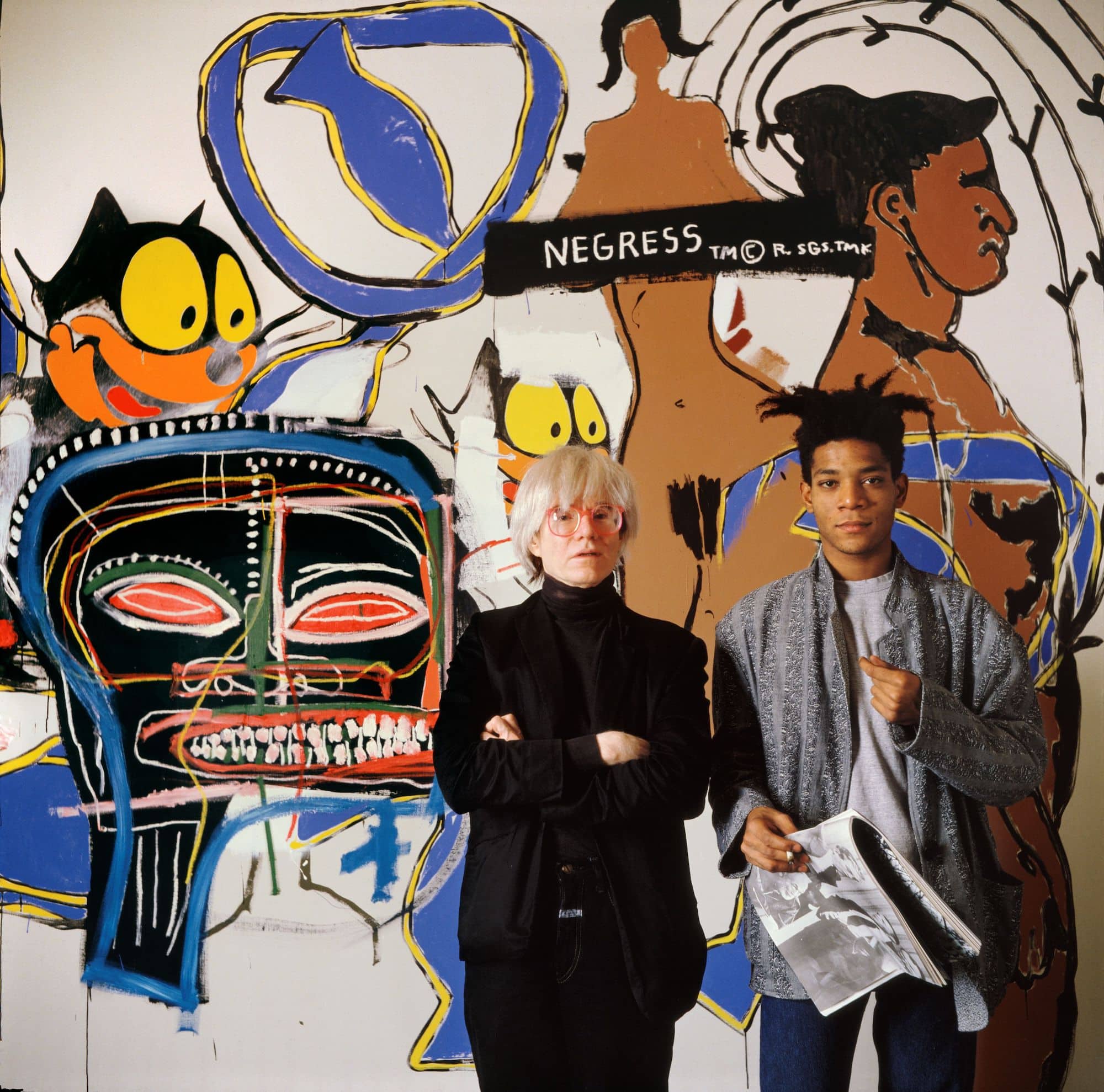
Jean-Michel Basquiat and Andy Warhol, New York, 1985. © Muna Tseng Dance Projects Inc, courtesy of Yancey Richardson Gallery

Jean-Michel Basquiat and Andy Warhol, New York, 1985. © Muna Tseng Dance Projects Inc, courtesy of Yancey Richardson Gallery


New Native Art Exhibition at Renwick Gallery

New Native Art Exhibition at Renwick Gallery
Smithsonian Renwick Gallery

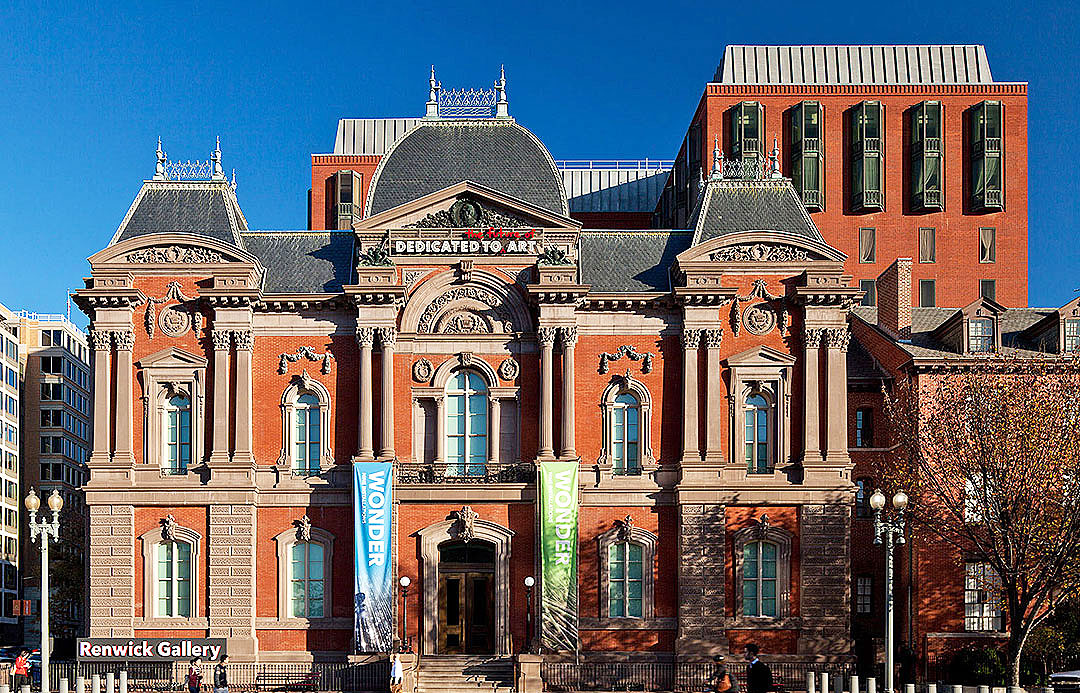
WASHINGTON, D.C. – “Sharing Honors and Burdens: Renwick Invitational 2023” focuses on fresh and nuanced visions by six contemporary Native American and Alaska Native artists who express the honors and burdens that connect people to one another. The exhibition features objects by Joe Feddersen, Lily Hope, Ursala Hudson, Erica Lord, Geo Neptune and Maggie Thompson that speak to the responsibility of ushering forward cultural traditions while shaping the future with innovative works of art. Their works are often culturally specific, yet they communicate across cultural boundaries. The 55 artworks in the exhibition arise from traditions of making that honor family, community or clan and require broad community participation.

The exhibition is on view from May 26, 2023 through March 31, 2024, at the Smithsonian American Art Museum’s (SAAM) Renwick Gallery in Washington, D.C. It is organized by guest curator Lara M. Evans, Founding Director of the Research Center for Contemporary Native Arts at the Institute of American Indian Arts in Santa Fe, NM, and current Vice President of programs for First Peoples Fund, with Nora Atkinson, the Fleur and Charles Bresler Curator in Charge at the Renwick Gallery.

“It is a great honor to spotlight these artists from Alaska, Washington State, New Mexico, Minnesota and Maine at SAAM’s Renwick Gallery, the preeminent center for American craft in the United States,” said Stephanie Stebich, the Margaret and Terry Stent Director of the Smithsonian American Art Museum. “It is also a special burden of responsibility to showcase their artwork in a way that recognizes the past, present and future. As visitors experience groundbreaking craft from these makers, we invite them to embrace a more nuanced understanding of how Indigenous perspectives and experiences are shaping American art today.”

It is the first time that artists chosen for the Renwick Invitational are all Native Americans and Alaska Natives. All are members of separate sovereign nations: Tlingit and Haida Tribes of Alaska, Nenana Native Association, Wabanaki Confederacy, Okanagan Nation and Fond du Lac Band of Lake Superior Chippewa. The artists were selected by a panel of distinguished jurors, including Evans; Miranda Belarde-Lewis, independent curator and the Jill and Joe McKinstry Endowed Faculty Fellow of Native North American Indigenous Knowledge at the University of Washington’s iSchool; and Anya Montiel, curator at the Smithsonian’s National Museum of the American Indian.

The exhibition includes 13 new artworks that were created within the past year in addition to three pieces the museum commissioned specifically for the exhibition: “Between Worlds (Child’s Robe)” by Hope, “Sister Bear” by Hudson and “The Codes We Carry” by Lord. The museum recently acquired Feddersen’s “Horses and Deer” and anticipates acquiring works by all of the featured artists for its permanent collection. 

Making serves as not only a form of self-expression, but also a powerful way of  processing everyday life and expressing ties to community. In doing so, each artist uses traditional forms of making – weaving, beading or sewing – and adapts the materials and techniques to create contemporary works of art. Individually, each craftsperson works in some manner with techniques, materials or concepts embedded within their tribe’s customary practices and history, but their work is also intended to engage with global audiences. Adding to the complexities of making are the unique decisions Native and Alaskan Native artists must often consider while creating, including balancing customary functional forms with beauty and personal narratives, determining which aspects are suitable to share with outside, non-Native audiences, and weighing the risks and benefits involved in adapting historical practices to new uses.

The artists in “Sharing Honors and Burdens: Renwick Invitational 2023” come from communities where making is an honored way of coming to know. For example, Feddersen is a printmaker, glass artist and basket maker who creates geometric patterns sourced from everyday life. Lord, a multimedia artist, crafts beaded burden straps and sled-dog blankets with abstracted representations of the diseases that disproportionately impact Native and other marginalized communities. Neptune is a master basket maker, activist and educator who uses colorful narratives to emphasize the honor and burden of keeping tradition alive. Hope and Hudson, who are sisters, weave labor-intensive textiles that convey Tlingit values of reciprocity and balance, maintaining cultural integrity while experimenting with new forms and materials. Thompson, a textile artist, creates large-scale works that explore the intersections of grief and trauma with honor, beauty and healing.

“In the summer of 2021, as Anya, Miranda and I discussed our selections, we found our way toward two related themes that link these artists’ practice and artwork: honors and burdens,” said Evans. “The artworks themselves make tangible the range of honors and burdens we carry with us, from the grief and trauma of personal and community loss to precious knowledge gained from teachers and ancestors. ‘Sharing Honors and Burdens’ helps us think about these ideas through beautifully crafted artworks, large and small, in stillness and in movement.”

A series of videos was produced for the exhibition, including an introductory video with guest curator Evans and six artist videos that focus on the artists in their studios produced by the Institute of American Indian Arts in collaboration with the museum. The videos are available on the museum’s YouTube channel and are part of the in-gallery presentation. Visitors are encouraged to reflect on the honors and burdens in their own lives via a response wall at the end of the exhibition.

Established in 2000, the Renwick Invitational showcases emerging and mid-career makers deserving of wider national recognition. “Sharing Honors and Burdens: Renwick Invitational 2023” is the 10th installment of the series. It is the latest example of the museum’s commitment to highlighting contemporary Native American artists and Indigenous voices through acquisitions and exhibitions.

Istanbul displays Gervasio Sanchez’s powerful photography

Istanbul displays Gervasio Sanchez’s powerful photography

Amid the vibrant energy of Istanbul, the acclaimed Spanish photojournalist and writer Gervasio Sanchez revealed his artistic odyssey through his arresting and poignant photographs.

These images, which have garnered numerous awards throughout his illustrious career, offer a rare and powerful glimpse into the human cost of war and political upheaval. With his unique artistic vision, he captures the essence of human struggle in times of conflict, producing records that are both evocative and profound.

The attendees were treated to a mesmerizing voyage through time and space as they delved into the multifaceted works of Sanchez. From the war-torn Balkans of the ’90s to the enchanting landscapes of Southeast Asia, and from the vibrant cultures of Latin America to the vast expanses of Sub-Saharan Africa, the artist’s creations covered a panoramic canvas of human history.

Sanchez’s artistry is a testament to his deep-seated passion for shedding light on some of the most pressing issues of our time. The haunting images of forcibly disappeared persons, the chilling reminders of anti-personnel mines, and the poignant representations of women violence all bore witness to his unyielding commitment to social justice.

The event was presented with the title of “Una mirada audaz” (“A daring look”) and organized by the Embassy of Spain in Istanbul with the collaboration Cervantes Institute. Sanches was joined by the cultural adviser of the Spanish Embassy, Jose Luis Martin Yagüe, as well as journalists Mikel Ayestaran and Ilya Topper.

The conversation at the event was a thoughtful blend of human and artistic content, making for a captivating and engaging experience for all in attendance.


Spanish photojournalist Gervasio Sanchez in Istanbul's Cervantes Institute, Istanbul, Türkiye, May 2, 2023. (Photo courtesy of Cervantes Institute)
Spanish photojournalist Gervasio Sanchez in Istanbul’s Cervantes Institute, Istanbul, Türkiye, May 2, 2023. (Photo courtesy of Cervantes Institute)

“Who would have thought that 43 years after I came to Istanbul as a tourist during a military, de facto government in the 1980s, I would come to give a lecture at the Cervantes Institute? I am really excited because first of all, Türkiye is a country that I love, and second, it is quite surprising and motivating to see that people here are interested in my work,” he shared in accounts of being in Istanbul.

“If I wasn’t a photographer, I don’t know what I would be. A photographer and journalist, that is. Since childhood, I wanted to be a journalist. From the age of 14, when people asked me what I wanted to be, I would say I wanted to be a journalist. Eventually, I achieved my goal. When I turned 18, I wanted to specialize in the military field as both a photographer and a journalist. I also achieved that goal. I am lucky that no harm has come to me in any of the wars, although I have lost my closest friends in those wars,” he explained how he started his career.

Imagine the person who takes photos that are hard to digest even when you see them, witnessing the pains of the people firsthand. For this, his encounters with the moments of life give way to a captivating perspective, creating a shocking effect on the viewer, completely shattering the concepts of beauty and ugliness, and hitting the truths to the viewer’s face with a hair-raising perspective.

“This situation requires working with a great sense of responsibility and producing good work. I am someone who always tries to take their work to the next level because I have a great responsibility. We are the communicators of pain, the forgotten, the violence, and the people who bury their pains deep within themselves. Of course, no one knows what is going on in these people’s inner worlds,” he added.

As he weathered the trials of his arduous mission, he contemplated the seed of inspiration that had first driven him to embrace this vocation and found solace in the purpose that had guided him all these years.


Gervasio Sanchez in Istanbul's Cervantes Institute, Istanbul, Türkiye, May 2, 2023. (Photo courtesy of Cervantes Institute)
Gervasio Sanchez in Istanbul’s Cervantes Institute, Istanbul, Türkiye, May 2, 2023. (Photo courtesy of Cervantes Institute)

“I am 63 years old, and I started this profession at a very young age. What motivates me to continue in this profession is my belief that this profession will help improve people’s thinking and help them understand the history of suffering. I believe it will contribute to people empathizing more with victims, evaluating history more critically, and demanding that governments fulfill their responsibilities to prevent violence. I believe that the purpose of my profession is to keep a record of history for the betterment of the world,” he said.

Sanchez’s work has been published in major newspapers and magazines around the world, including The New York Times, The Guardian, and National Geographic. He has also published several books, including “Vidas Minadas,” (“Mined Lives”) which focuses on the victims of land mines, and “La Vida de un Fotografo,” (“The Life of a Photographer”) a memoir of his experiences as a photojournalist.

Besides his photographic work, Sanchez is a vocal advocate for human rights and social justice. He has received numerous awards and honors for his work, including the World Press Photo Award in 1989, the Ortega y Gasset Award in 1997, and the National Photography Award of Spain in 2009.

Through his work, he has highlighted the experiences of those who are often forgotten or overlooked and has challenged us to confront the realities of conflict and its impact on individuals and communities.

From tooth gems to flat caps, Arthur Comely captures the fashion of London’s car boot sale community

From tooth gems to flat caps, Arthur Comely captures the fashion of London’s car boot sale community

Growing up in South East London, Arthur later went on to study commercial photography at Arts University Bournemouth. He got his first proper insight into the industry by chance, after he was cast by Jamie Hawkesworth to model for a story for Arena Homme. “I was obsessed with his work at the time”, Arthur adds. He then went on to model for the likes of Campbell Addy, Tim Walker, Jurgen Teller, Tom Johnson and Nadia Lee Cohen. “It was a massive learning curve to be able to see behind the camera and look at what all these photographers did, to see how a set worked and what went into each shoot” Arthur reflects. From there, Arthur went on to assist in photo studios across London, before beginning his own practice.

Primarily, £1 Entry involved approaching people who stood out to Arthur at the boot sales – not an easy task, but one that he says he acclimated to quickly. “I think with every project you have to immerse yourself, and quickly strangers become people you see every weekend,” Arthur outlines. One such person was Gerald, a figure who pops up a few times throughout the zine, in a stand out image he smiles down the lens of the camera, a bright red flat cap on his head and in a suave fur collared leather jacket. A regular at the boot sales, Arthur says he’s “always the best-dressed person with the best clothes going”.

While many of the photos are candid shots of the boot sale attendees, half of the project also involved Arthur buying a load of clothes, and then styling people he had “cast”. Although styled and planned, keeping the location to the car boot kept these images “a lot more natural and authentic”, Arthur says.

Reflecting on the series as a whole, there’s one image that particularly resonates with Arthur, both for its palpable warmth, and the way it represents the sentiment of the whole series. In the image three women are huddled together, their closeness evident upon even a preliminary glance. But, as Arthur explains, the subjects in fact hadn’t seen each other for years. “I’d taken a picture of one of them before, and then later on they all came over – they hadn’t seen each other since primary school,” Arthur says. “It felt like a really authentic moment to catch.” It’s this coming together of people – old friends, eccentric figures and fashion lovers – that really encapsulates the £1 Entry, a beautiful portrayal of a close-knit London community where you may not initially expect it.

‘My love-hate relationship with my homeland’: Martin Parr’s Britain

‘My love-hate relationship with my homeland’: Martin Parr’s Britain
image

‘With my ongoing fascination with the seaside this is a set of images taken with a telephoto lens, where I explore distant figures on the beach, usually with out of focus greenery in the foreground. Although each is an individual work, they become a fascinating grid when put together. This lens, with its ability to flatten and compress, has been somewhat shunned by the art world (with the honourable exception of Beat Streuli) so I was keen to explore what was possible’

Reality Makes Them Dream: American photography from 1929 to 1941

Reality Makes Them Dream: American photography from 1929 to 1941
image

Wolcott was another FSA photographer who documented wealth inequity and race relations during the period. “As an FSA documentary photographer, I was committed to changing the attitudes of people by familiarizing America with the plight of the underprivileged, especially in rural America,” she said. This image is known as Center of town. Woodstock, Vermont, “Snowy Night” from 1940.

Guest column: Native artisans want better access to the Grand Canyon

Guest column: Native artisans want better access to the Grand Canyon

As the executive director of the Hopi Foundation, Monica Nuvamsa’s day job keeps her busy in service to her community. But in her free time, she’s looking to invest in her art. Working in pen, ink, paints, and textiles, and inspired by her culture and heritage, Nuvamsa prints her designs on chiffon scarves, jigsaw puzzles, and more.

“It’s an expensive side hobby,” she says. “I wasn’t willing to take the risk to invest in my art when I went to college. But now that I have some foundation for myself, I can afford to grow.”

Nuvamsa’s dream is to sell her products in every national and state park across her ancestral homelands — places like Grand Canyon National Park, Chaco Canyon, Mesa Verde National Park, Wupatki National Monument, Tuzigoot National Monument, and Montezuma Castle.

“Those places are really important connections to my heritage, and I want my cultures to be represented in those spaces.”

Nuvamsa, a member of the Hopi Tribe, also traces her lineage to the Tewa people of the Rio Grande basin, the Acoma Pueblo, and the Havasupai Tribe within the Grand Canyon.

“I’m literally a swath of the Colorado Plateau. This is my homeland. This is who I am. Every space has a meaning for me and for my people.”

Nuvamsa is on her way toward realizing her dream. The Grand Canyon was the first park to come to her door, well, booth technically, at an art show in Flagstaff, Arizona. Nuvamsa started selling her puzzles to the Hopi House gift shop on the South Rim shortly thereafter.


Selling through middlemen

The park service relies on concessionaires — companies with long-term contracts — to run gift shops, hotels, restaurants, buses, and more. For artists like Nuvamsa, concessionaires are middlemen between them and their customers. But being a vendor selling wares to a concessionaire is limiting, she says. Xanterra, the company that buys Nuvamsa’s puzzles, purchases small quantities from her and caps the price it pays per item.

“They wanted to buy my scarves, but they don’t fit into their cost structure. I don’t want to eat into my value to do that, so I told them no until I am able to find a way to make it work more sustainably for me,” she says. “The cultural value and the significance that an artist adds, that’s really hard to put a number to. And it’s also hard for people to quantify who don’t have the same appreciation of what you structure into your value.”

Often, a lack of transparency exists around concessionaires’ pricing and markups.

“Before I sold to [Xanterra], I asked how much they’d sell it for, and they said, ‘we can’t really share that.’”

Nuvamsa found out by visiting the Hopi House gift shop to look at the pricing and was glad to learn the company stayed within the retail range they had discussed. Not every retailer will provide artists with retail ranges for their work. Some artists have a hard time negotiating these ranges because they don’t know how to value their work to include time and talent, in addition to the raw materials.

Overall, she says her relationship with Xanterra is going well. She’s happy with the display and presentation of her work at the Hopi House and feels her buyer is respectful of her and the other Hopi artists she knows.

Seeking change at Grand Canyon National Park

The challenges Nuvamsa describes are common for Native artists trying to sell their work in national parks and monuments. In August 2022, a group of Native entrepreneurs, tourism professionals, park service staff, concessionaires, and many others came together for the Emergence Intertribal Economic Summit to brainstorm new ways to do business at Grand Canyon National Park. Ideas flowed like the Colorado River in a flash flood.

To strengthen the arts and crafts market in Grand Canyon National Park, Native entrepreneurs want to see increased transparency, artist education (like how to price your products, business 101, marketing, etc.), trade shows, fair and equitable contracts, and more selling locations in the park, among other ideas.

Building a more inclusive Grand Canyon economy

Improving concessionaire support for Native artists is a good start toward building a sustainable and inclusive Grand Canyon economy. But to truly address economic barriers, challenges, and inequities, we need to think bigger.

To build a regional economy around the Grand Canyon, Nuvamsa says we should start by looking at the environments, geographies, challenges, and barriers tribes face in their own backyards.

“There’s a lot of equity building that’s needed,” she says. “I think it becomes a game changer when we ask for what we want, and most importantly, what we need. Because we’ve always given over to somebody else’s power, and that’s not gotten us anywhere.”

An Indigenized Grand Canyon, according to Nuvamsa, would be run by tribes.

“If the parks and the nation want to see this place sustainable, they should invest in tribes to do that. The Grand Canyon is a spiritual place for us, and the people that practice spirituality give it meaning. When we’re absent from that picture, it’s just a very big hole in the ground or simply a playground for recreationists.”

The Emergence Intertribal Economic Summit looks at new ways of doing business at Grand Canyon National Park, with the goal of building a regional economy guided by Indigenous cultural values.