About

Posts by :

NeoCon 2023: What’s New + How To Register for Free

NeoCon 2023: What’s New + How To Register for Free

We’re only weeks away from the 54th edition of NeoCon, the leading platform and event for the commercial interior design industry. Have you registered? Beginning June 12th and running through the 14th, the community will gather at THE MART in Chicago to experience new product launches, programming, networking, and more. Under this year’s theme of “Together We Design,” attendees will have the opportunity to learn from educational programming, see ground-breaking innovations, and interact with creative installations.

NeoCon 2023 will showcase the latest from 400+ leading and emerging companies, and feature new initiatives to add a fresh spin to the experience. In addition to an impressive roster of keynote and CEU programming, this year features a new NeoCon Talks program. A series of “Live from NeoCon” podcasts, a special design-oriented ART on THE MART projection, and the official launch of THE MART’s WorkLife Conference Center and expanded River Park will be shared, among other highlights.

This year, NeoCon’s keynotes look to hip hop, community, and technology to help build the future with a brilliant group of thought leaders. Speakers will include world-renowned futurist Amy Webb (Founder & CEO of the Future Today Institute) and celebrated designer, writer, and teacher, Michael Murphy (Co-Founder of MASS Design Group). “The Hip Hop Architect” Michael Ford, AIA, NOMA, alongside Chicago hip hop legend and visiting MIT professor, Wasalu Muhammad Jaco, a.k.a Lupe Fiasco, will also take part. Their diverse backgrounds and experiences that draw from music, poetry, and tech will come together to explore how we can build a more sustainable, equitable, and brighter future.

two people conversing over a tray of fabrics

Now in its 33rd iteration, the Best of NeoCon will recognize superlative new products in 56 categories, spanning a range of verticals that include workplace, healthcare, hospitality, and education. New for 2023, entries will be considered for a Business Impact Award, in addition to honors for Gold, Silver, Innovation, Sustainability, and the honor of Best of Competition. The program is an evolution of last year’s inaugural Business Innovation Awards, which were a great success.

a hand moves small white architectural pieces

The jury will be able to nominate products for consideration for a Business Impact Award, which will recognize exceptional solutions through a business-oriented lens. Each of the nominated products will be reviewed based on the degree to which they contribute to a more successful business and better enterprise-oriented, built environment across verticals – from workplace to healthcare.

one person hands another a blue statue award

The roster of jurors who will decide this year’s Best of NeoCon awards is made up of forward-thinking industry professionals representing a broad cross-section of the NeoCon community, including members of leading design associations such as ASID, IIDA, AIA, and the premier facility manager organization, IFMA. Influential designers, architects, specifiers, facility managers, and decision-makers who have a deep understanding of the evolving needs and emerging trends in the commercial design industry have been selected. The jury features representatives from reputable firms in design, technology, and enterprise, including Gensler, Studio O+A, NELSON, CannonDesign, Oracle, NBBJ, HOK, SSM Health, and Studio GC, among others. For the full list of jurors, please visit the Best of NeoCon.

colorful office showroom full of people with one woman sitting at a desk

As always, NeoCon has created a robust lineup of featured presentations, virtual and on-site CEU programs, workshops, and tours. Adding great dynamic to the daily keynote presentations, these sessions allow attendees to dive deeper into topics to gain insightful perspectives and strategies for professional advancement. Registration for all can be found on neocon.com.

Seven afternoon featured presentations will explore topics from rethinking the concept of occupancy in an evolved work landscape to the power of design to be a force for good in social justice. More than 50 virtual and on-site CEU-accredited programs and hands-on workshops will be led by speakers from leading design associations, universities, architecture firms, manufacturers, and top media outlets, as well as experts in emerging technology, sustainable building, and inclusive workplace culture. These
presentations and panels will offer discussions and insight into evolving industry topics, including Workplace, Sustainability, Healthcare, Technology, Wellness, Hospitality, DEI, Public Space, and Facilities Management.

a brown-skinned DJ performs at a crowded outdoor event

The NeoCon Programming Hub, the show’s digital portal, will host virtual streaming of these featured presentations and the full lineup of CEU-accredited programs, as well the daily keynote presentations. For the
full NeoCon 2023 programming listing, head to neocon.com.

Registration is free for all attendees, and we’ve barely scratched the surface of what’s in store. Hope to see you in Chicago!

three people walk in front of a large orange sign readings NeoCon Design makes a statement

Kelly Beall is senior editor at Design Milk. The Pittsburgh-based graphic designer and writer has had a deep love of art and design for as long as she can remember, and enjoys sharing her finds with others. When undistracted by great art and design, she can be found making a mess in the kitchen, consuming as much information as possible, or on the couch with her three pets. Find her @designcrush on social.

Class of 2023: Kennedi Woods has fashioned a New York state of mind

Class of 2023: Kennedi Woods has fashioned a New York state of mind

Kennedi Woods used to joke that her favorite holiday was the Met Gala.

She loved shopping and clothes, and TV programs such as “America’s Next Top Model” and red-carpet coverage of award shows offered a look at the latest trends. The annual Met Gala in New York City is considered “fashion’s biggest night out.”

So as Woods embarked on her college journey in 2019, her mother had advised her to pursue a passion so she could build a career, not just “hold jobs.” The choice was clear, and Woods is now graduating from Virginia Commonwealth University with a fashion degree with a concentration in fashion merchandising, with minors in marketing and art history as well as a certificate in human-centered design from the da Vinci Center for Innovation.

A native of Gainesville in Northern Virginia, Woods was introduced to VCU as a high school sophomore, living in a dorm for three weeks during a summer intensive program at the School of the Arts. She got to work in the studios and with VCUarts professors who uphold the school’s national reputation.

“That experience solidified that VCU and the department here was the right place for me,” said Woods, but “I knew I wanted to go to a bigger university that had more to offer than art programs. When I was comparing cost to value, especially as an in-state resident, VCU was the leader.”

She noted that Rudy Lopez, an assistant professor of fashion design and merchandising who taught the summer intensive program, was later her professor on multiple occasions and made a big impact.

“He is so knowledgeable about the industry and taught the soft skills you need to survive in it. His classes were challenging, but they prepared me for the real world,” Woods said, noting Lopez’s willingness to mentor students outside of class. “He gave me some of the best advice because he has an amazing way of imparting his wisdom in a way that is relatable.”

She also cited the impact of Charles Ajemian, a Richmond-area innovation technologist who taught her Conscious Capitalism course at the da Vinci Center. Woods said she learned how passion can be molded into profit that can then be turned into impact.

“He is one of the kindest, most warm-hearted and brilliant people I’ve ever met,” Woods said. “The course brings everything I’ve learned in undergrad thus far full circle. He is so integrated and invested in the health and well-being of the Richmond community.”

She praised Lopez and Ajemian, both VCU alums, for sharing their passion with new students. “Their commitment and energy both in and out the classroom is something that they can’t ‘teach’ me how to have, but I have been able to learn from through their example.”

Like all of her peers, Woods endured highs and lows related to the pandemic – and in her case, one led to the other.

As part of a fashion class that visited Italy, Woods looked forward to attending Milan Fashion Week, only to have COVID scuttle the plan. So she turned her sights closer to home: New York Fashion Week – and participating in it, not just attending.

She searched LinkedIn for people with ties to NYFW, messaging them for advice to find a production assistant role – it would build on her interest in event or experiential production. Leslie Russo, the president of fashion events and properties for IMG, responded and asked Woods to share her résumé and her availability. Less than two weeks from the start of NYFW, she secured the role.

“During the week, I worked on events such as the Tiffany Brown Foundation brunch and Ella Emhoff Likes to Knit pop-up activation, brand activations for Core Hydration water and Tresemmé, and fashion shows for designers such as Sergio Hudson, Christian Siriano and The Blonds,” Woods said.

New York is beckoning again. After graduating, Woods has an internship there working in production at Anomaly, which was Adweek’s 2022 U.S. Agency of the Year. She hopes it will develop into a full-time position, supporting her long-term plans of becoming an experiential producer.

Even amid her dedicated pursuits, Woods is proud of doing the wide array of things she wanted to do in college while graduating on time.

“I look at the vision boards I’ve created over the years and see the dreams and ideas I had that turned into realities,” she said. “I took classes, like glassblowing, out of pure interest. I was able to use the pandemic as a springboard for exponential growth and perseverance. I met my best friends. I had an article published in the Richmond Times Dispatch. I was able to travel for leisure, school and work. I made connections in New York City — [it was] one of the biggest things I was concerned that I wouldn’t be able to do by choosing to go to school in Richmond.

“I learned so much about myself, the fields I’m interested in and life in general while at VCU.”

St. Petersburg Month of Photography names inaugural photographer laureate this weekend

St. Petersburg Month of Photography names inaugural photographer laureate this weekend

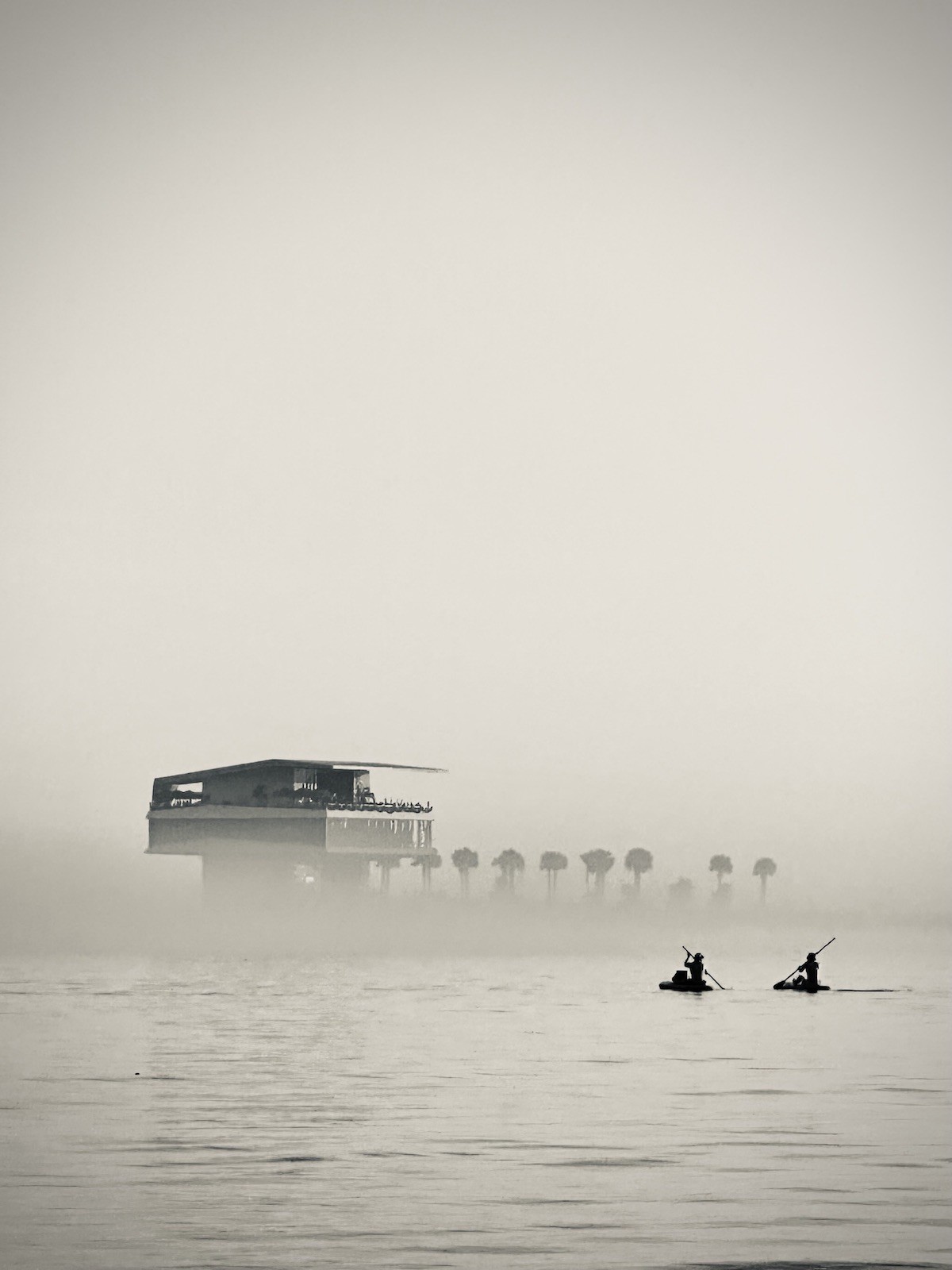
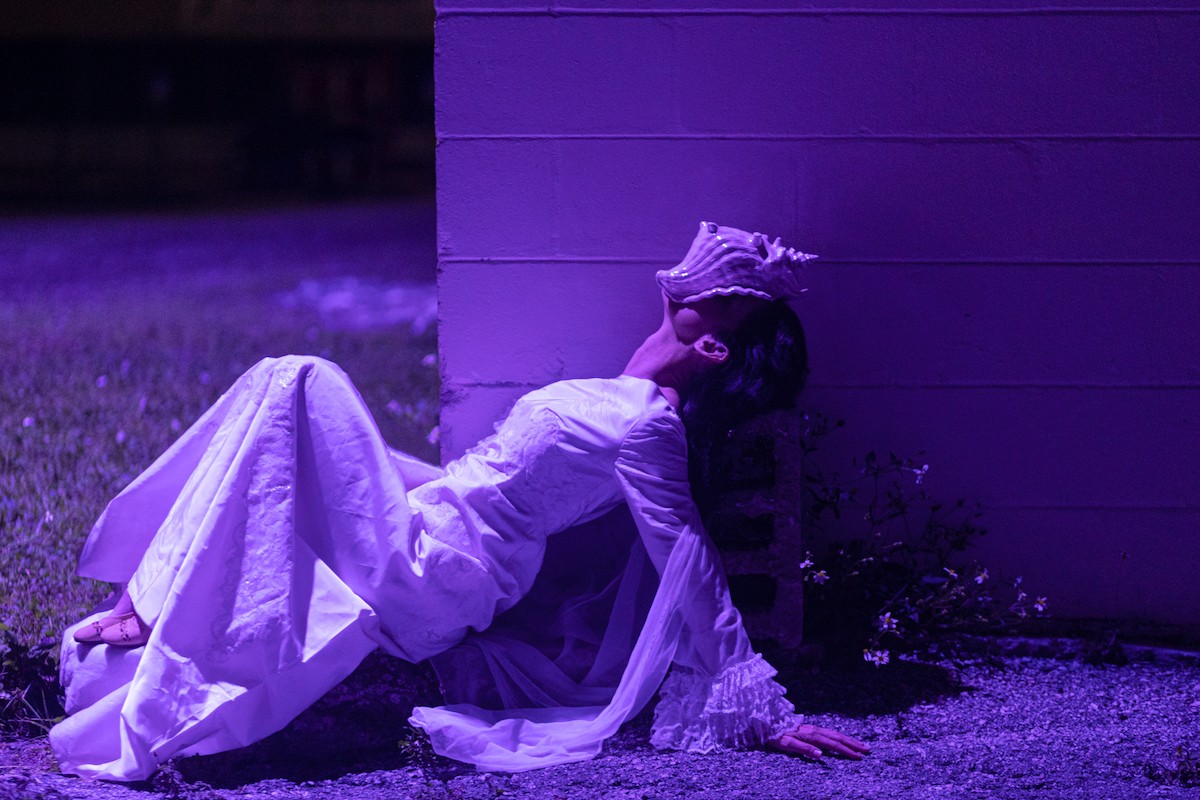
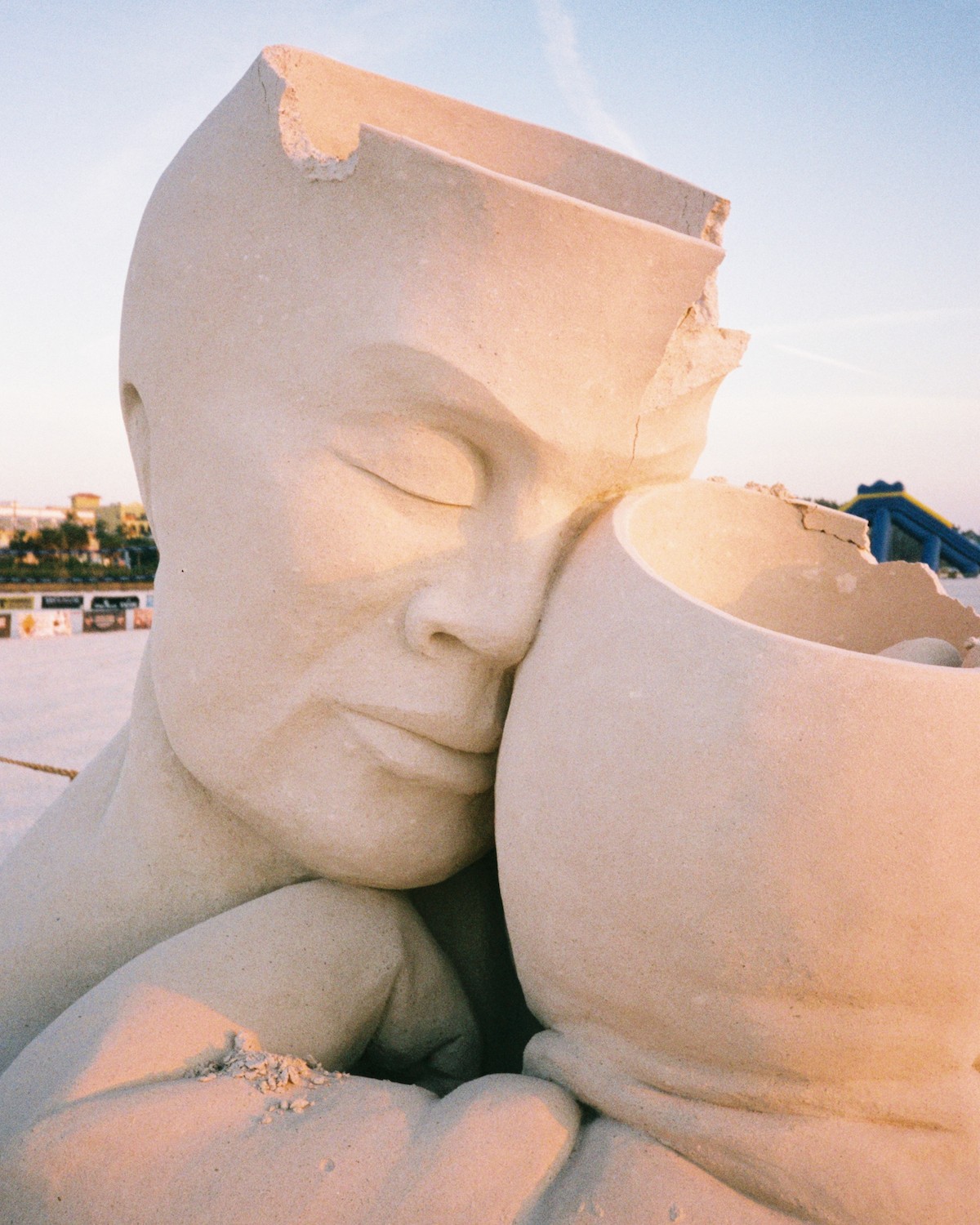
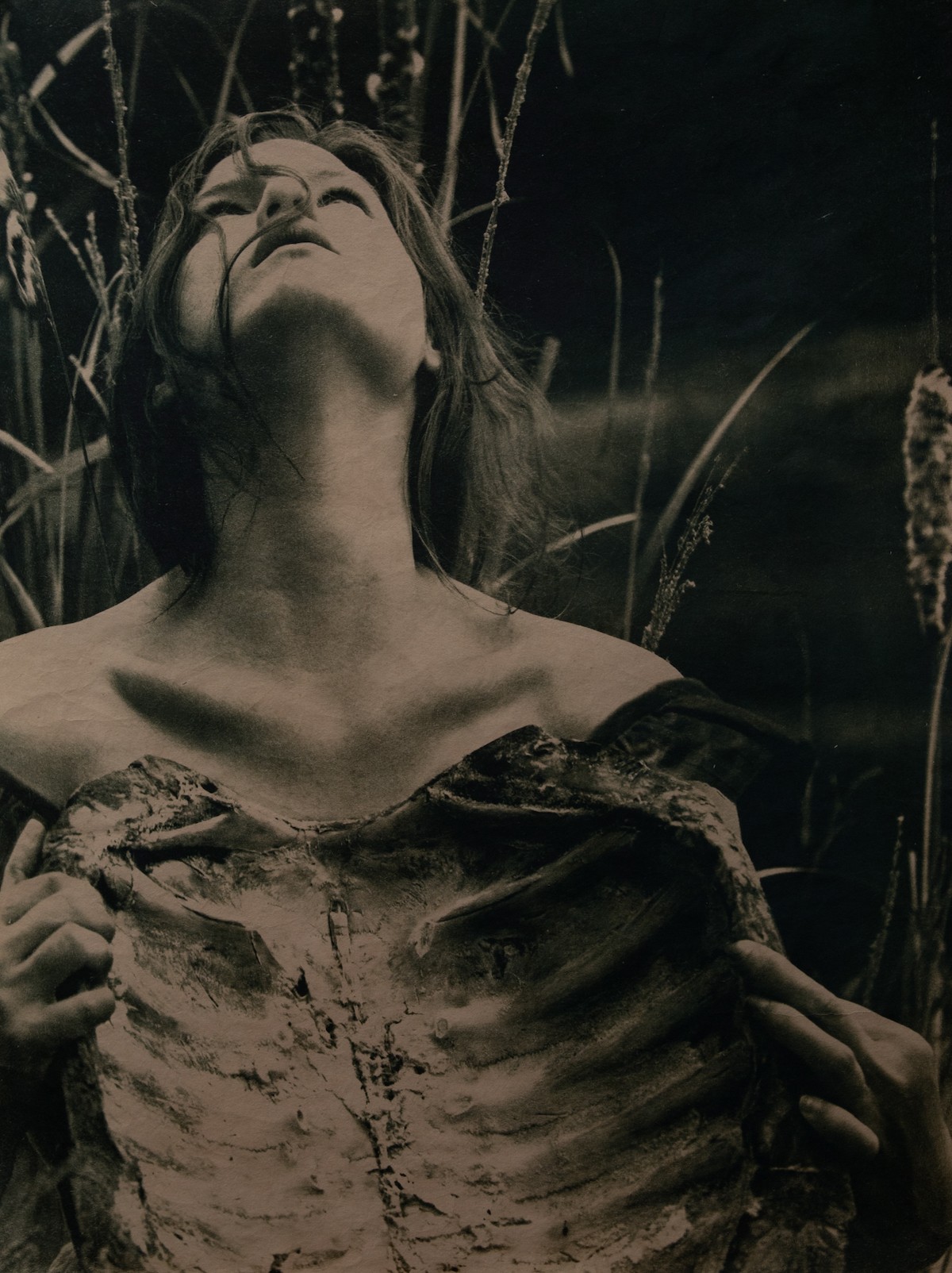
It’s an exciting time for Tampa Bay-area photographers. We’re in the middle of the inaugural St. Petersburg Month of Photography month, and the city’s about to crown its first photo laureate who will “create a document of Tampa Bay life, events, and its people for a year.”

Thirty-two local photographers threw their portfolios into the hat. From these, SPMOP organizers narrowed it down to five finalists—Selina Roman, Jaime Aelavanthara, Emily Will, Tristan Wheelock and Thomas Sayers-Ellis—whose work is currently on display at the Morean Arts Center at 719 Central Ave.

The photographer laureate award reception for St. Petersburg Month of Photography happens on Saturday, May 13 at Morean Arts Center in downtown St. Petersburg.

Some of them, like Roman and Aelavanthara, are already established as fine art photographers and photography professors in the Tampa Bay area. Others are students, journalists, musicians, and poets still making a name for themselves as photographers. All of them had interesting things to say when we asked them about inspiration, photography, and St. Pete.

Here are St. Pete’s photo laureate finalists in their own words.

Event Details

What’s your biggest source(s) of inspiration?“The poetic reality of humanity—all of humanity—as I encounter it in its state of continuing creation. And the creative process. Simple acts, complex interactions and invisible actions. I like predicting, camera in hand, the wondrous exchanges.”—Thomas Sayers-Ellis

“As Chuck Close says, ‘Inspiration is for amateurs. The rest of us just show up and get to work.’ It may sound like hubris, but I truly believe this. I draw influence from various sources, but I don’t wait to be inspired. I just follow intuition.”—Tristan Wheelock

“My grandmother, Carol Upham, was my first inspiration. She introduced me to the world of photography and the art of storytelling. When I started to travel internationally, it then became my fuel of inspiration. Exploring new places and cultures while capturing the unique beauty and essence of each location is not only for me to revisit but also to share with others my perception of the world.”—Emily Will

“Florida is so mythic and mysterious—mermaids, mayhem and murder—to name a few. This state has always been my biggest source of inspiration at so many levels—the colors of its architecture, its history and its people, its mystery and myths. It continues to fascinate me, and I couldn’t imagine living anywhere else because my work is so rooted in the region.”—Selina Roman

“Outside of the visual arts, literature and the written word often inspire my image-making. I also find inspiration in my everyday surroundings, whether that’s a pocket of light, or a discovery made on a walk such as a bird’s nest, or an insect wing, or other found object that I can work into a photograph.”—Jaime Aelavanthara


What excites you about the prospect of photographing St. Pete for a year?

“I’m a boots-on-the-ground photographer. I walk. I talk. I meet. I learn. I befriend the shadows where both delight and despair can’t hide from exposure. Physical St. Pete and social St. Pete are uniquely layered in a great conversation about Florida, old world and new. I’m excited to be its visual listener.—Thomas Sayers-Ellis

“I have a long history with this community. I went to high school here. I left for years. I eventually returned and bought a house on a whim before prices skyrocketed. I’ve watched a great transformation begin, and I believe it will only continue. I love the idea of pointing a camera at that and creating a kind of historical record.”—Tristan Wheelock

“My family contributed to the early history of St. Petersburg. Photographing the city I was born and raised in would be an honor and a privilege. I would love to honor their vision and showcase the growth and diversity the city has to offer while also learning more about my own home.”—Emily Will

“What excites me about the prospect of photographing St Pete for a year is going beyond the obvious and discovering the hidden gems that the area has to offer—places and people that may have been overlooked but still add so much to the fabric of the city.”—Selina Roman

“St. Pete is a multi-faceted, vast place to explore, and that excites me! You can go from being in an urban setting, to white sand beaches, to a location that looks like it hasn’t changed since the Jurassic Period. Kayaking through the narrow mangrove tunnels at Weedon Island Preserve was an early immersion into Florida coastal wilderness and a place that kicked off the potentiality of the natural wonders that St. Pete has to offer.”—Jaime Aelavanthara


What do you hope to accomplish with your images of St. Pete?

“A new alphabet, a reservoir of images that any curious eye can feast on and wonder about the many here-wheres and elsewheres that make up St. Pete, the kind of testimony that suggests that both geography and biology need one another in tropical life, one grand environment!”—Thomas Sayers-Ellis

“I hope to show people all sides of this community. There’s, of course, the small geographical pocket the people want to occupy, but there’s also an entire world outside of that. There is a lot of underrepresentation in our community. As a photojournalist by trade, I feel equipped to document and share the stories of those who aren’t heard or seen. It’s valuable; it might even be a catalyst for positive change.”—Tristan Wheelock

“My main hope for photographing St. Pete is to showcase the beauty and individuality of the city, highlighting its distinctive features and landmarks, and capturing the essence of the local culture and lifestyle. I aim to create art that provokes thought, emotion, and a deeper understanding of the uniqueness of St. Pete.”—Emily Will

“My work is about finding the beauty in non-traditional places. I want viewers to be surprised and see the city in ways which may not be familiar to them.”—Selina Roman

“I hope to capture a sense of magic in our everyday surroundings. I constantly think about how we are all connected in this world and what unites us; to me, that is the shared human condition. I hope to continue examining our connection with the natural environment, each other, and with the places we inhabit to create a shared experience and sense of connection.”—Jaime Aelavanthara

PRophet Announces Strategic Alliance with LexisNexis® to Superpower Its Journalist Data for Enterprise Customers, Launches ‘Powered by PRophet’ White-Labeling Option for Agencies

PRophet Announces Strategic Alliance with LexisNexis® to Superpower Its Journalist Data for Enterprise Customers, Launches ‘Powered by PRophet’ White-Labeling Option for Agencies

NEW YORK, May 8, 2023 /PRNewswire/ — Stagwell (NASDAQ: STGW) Marketing Cloud’s PRophet, the first and only generative and predictive AI SaaS platform built by and for modern PR professionals, today announced an alliance with LexisNexis®, one of the world’s leading providers of news and business data, information and insights. This strategic alliance with LexisNexis® will further power PRophet’s industry leading AI platform, which collectively boasts access to upwards of 200,000 global news sources from high authority outlets and journalists, including hyper local media, newsletters, trade publications and blogs. The PRophet platform ingests and analyzes millions of news articles daily, using AI-techniques to predict journalist interest and sentiment. Its latest generative AI writing tool, Taylor, then drafts personalized pitches to journalists demonstrating the highest interest in the pitch.

“The current media landscape is complex, fragmented, contracting and dynamically evolving – and client-side expectations are higher than ever. Outdated PR practices are no longer working, and communications pros and clients alike are tired of low open rates, frustrated journalists, wasted time, mis-managed expectations and poor results,” said Aaron Kwittken, founder and CEO of PRophet and CEO of Stagwell Marketing Cloud’s Comms Tech Unit. “Our alliance with LexisNexis furthers our mission to help PR pros become more performative, predictive, and productive Communications Engineers©.”

PRophet also announced the launch of “Powered by PRophet,” a white-labeling option for PR agencies of all sizes. Customers can now customize the PRophet platform to their own specifications and go to market with a unique and differentiated agency-branded platform that combines their own unique value proposition alongside the powerful capabilities of PRophet’s predictive and generative AI capabilities.

“We’re happy to offer this white-labeling option to agencies,” added Kwittken.” As a former agency leader and owner myself, I understand how important it can be to brand, customize and integrate proprietary technology into an agency’s capabilities and bring a new level of innovation and differentiation to clients.”

About PRophet
PRophet is the first-ever generative and predictive AI SaaS platform designed by and for the PR community. The platform uses AI to help modern PR professionals become more performative, productive and predictive by generating, analyzing and testing content that predicts earned media interest and sentiment. PRophet was founded in 2020 by PR and marketing industry thought leader and entrepreneur Aaron Kwittken and is part of the Stagwell Marketing Cloud, a suite of SaaS solutions that powers research, communications, and media activation for in-house marketers. To learn more, visit prprophet.ai.

About Stagwell Marketing Cloud
Stagwell Marketing Cloud (SMC) is a suite of data-driven SaaS solutions built for the modern in-house marketer. Born out of Stagwell’s network of award-winning marketing agencies, SMC’s technology empowers marketers to drive business impact by giving them intuitive tools equipped with proprietary, actionable data. SMC’s portfolio of solutions powers strategic customer research, communications, and media activation for brands worldwide by leveraging technology such as generative artificial intelligence, shared augmented reality, and more. Get your head in the cloud at www.stagwellmarketingcloud.com.

About Stagwell
Stagwell is the challenger network built to transform marketing. We deliver scaled creative performance for the world’s most ambitious brands, connecting culture-moving creativity with leading-edge technology to harmonize the art and science of marketing.  Led by entrepreneurs, our 13,000+ specialists in 34+ countries are unified under a single purpose: to drive effectiveness and improve business results for their clients. Join us at www.stagwellglobal.com.

About LexisNexis Legal & Professional
LexisNexis Legal & Professional® provides legal, regulatory, and business information and analytics that help customers increase their productivity, improve decision-making, achieve better outcomes, and advance the rule of law around the world. As a digital pioneer, the company was the first to bring legal and business information online with its Lexis® and Nexis® services. LexisNexis Legal & Professional, which serves customers in more than 150 countries with 10,500 employees worldwide, is part of RELX, a global provider of information-based analytics and decision tools for professional and business customers.

Media Contact
Alex Birmingham
KWT Global
[email protected]

SOURCE Stagwell Inc.

Alumni and diverse business owners star in the construction of the Judy Genshaft Honors College building

Alumni and diverse business owners star in the construction of the Judy Genshaft Honors College building

By Tina Meketa, University Communications and Marketing

As the construction dust clears from the Judy Genshaft Honors College building, its
immaculate design symbolizes the hundreds of talented individuals who brought the
state-of-the-art facility to life. 

Since its groundbreaking in late 2020, nearly 80 businesses have worked on the five story, 85,000-square-foot
building – about half are diverse-owned with an estimated spend on contracts exceeding
$11 million. 

“Our goal was to have 30 percent utilization of diverse-owned firms on the Judy Genshaft
Honors College building. So, the fact that we far exceeded that goal is a great example
of if we work together of what can be done together,” said Terrie Daniel, assistant
vice president of the USF Office of Supplier Diversity.

Woman-owned Level Line Interiors installed the metal framing and drywall, the ensemble
acoustic lobby ceiling – which optimizes sound absorption – and the fiber-reinforced
concrete panels on the building’s interior walls.

“The Honors College was like no other job we have worked on – beautiful and unique
and filled with challenges, which our company thrives on,” said Stephanie Schoenberg,
who owns Level Line Interiors with her husband, Don. “The building’s design, with
all the curved walls, glass openings and multiple wall finishes brought a new challenge
every day, and that was very fulling to see it all come together.”

Founded in 1994, Level Line Interiors has about 20 employees and has secured contracts
to work on other USF projects, such as the Marshall Student Center and Osprey Suites on the USF St. Petersburg campus. 

Diverse-owned Evolve Mechanical Services also worked on Osprey Suites and its dining
hall and installed the HVAC system in the Judy Genshaft Honors College building. Founder
Reggie Clark employs 14 technicians, including a Vietnam War veteran.

Several USF alums are at the core of construction of the new Judy Genshaft Honors
College building, which is funded in part by a $20 million gift from USF President
Emerita and Professor Judy Genshaft and her husband Steve Greenbaum. 

Woman-owned Ceco Concrete Construction poured the concrete foundation, columns, walls,
beams and slabs. District manager Chad Anast has been with the company for more than
15 years and earned his executive Master of Business Administration degree from USF
in 2021. 

“I was very excited to be back on campus working on an iconic project with some of
my former classmates right next to where we went to class,” Anast said.

Cableytics owner Floyd Freeman is also an alum, graduating in 1996 with a degree in
electrical engineering. His team installed public safety Distributed Antenna Systems
throughout the Judy Genshaft Honors College building, which boosts police and fire
radios. The diverse-owned business landed the contract while participating in the
USF Mentor Protégé Program – developed in partnership with Skanska to support the Tampa Bay region’s diverse-owned
small businesses in the construction industry. 

The USF Office of Supplier Diversity will soon welcome its third cohort for the mentor
program. Participants will be selected based on recommendations from community partners,
such as the Hillsborough County NAACP, Prospera, the Women’s Business Enterprise Council
Florida, Inclusive St. Pete and the Manasota Black Chamber of Commerce. 

Applications will be accepted May 15-June 16 with the next class beginning in August.
You can register here to learn more about how to sign up for the program and receive notifications about
future Office of Supplier Diversity events or USF purchasing opportunities.

The Joys of Large Format Landscape Photography

The Joys of Large Format Landscape Photography

In the era of digital photography, it can be easy to click away without a second thought, but what if every time you pressed the shutter, it cost you $5? That might sound like an insane proposition, but the beauty of large format photography is that you get images that are simply not possible with a full frame camera or even with the most expensive modern medium format camera. This neat video takes you behind the scenes to show you large format landscape photography’s process and some of the images you can create.

Coming to you from Ben Horne, this neat interesting video will show you the process of and images made during a large format landscape photography trip. Even the smallest large format size, 4×5, is behemoth compared to the sensor sizes we are more accustomed to, with a negative that is almost 15 times larger than a 35mm frame. This means that a large format image often comes with unimaginable levels of detail. Beyond that, large format cameras are often more versatile in certain ways, offering precise control of the image-making process that is not possible with smaller formats. Of course, the major downside is the cost, along with a relatively high barrier of entry when it comes to technique, but if you put in the time and effort, it can be tremendously rewarding and enjoyable. Check out the video above for the full rundown from Horne. 

Contemporary Native American photographers tell their story their way at the Denver Art Museum

Contemporary Native American photographers tell their story their way at the Denver Art Museum

The exhibition “Speaking with Light” is a provocative group show featuring landmark images captured by more than 30 contemporary Indigenous photographers. It’s an exhaustive and surprising collection of photos that documents important shifts in the art form over the past four decades.

But the show is also, and perhaps more interestingly, about the power of art-making itself — about the ability of artists to make objects that take command of the social narrative, that rewrite stories from their own perspective, and that offer up different endings.

The show aims “to shift power dynamics and bring attention to misrepresentations,” as the exhibition materials explain. These pictures of Indigenous people made by Indigenous people stand in opposition to centuries of imagery, created and distributed by outsiders, that confuse the truth about Native American history.

Organized by Will Wilson and John Rohrbach, the show acknowledges that the term “Indigenous” can be troublesome. Before the era of colonialism, native tribes were organized into scores of separate, sovereign entities with individual languages and cultural establishments. Grouping members of different tribes together in one show suggests every Native American shares the same perspective.

But the exhibition makes a solid argument for that economy of language by showing how mutual events — in particular, colonialism and its enduring impacts on humans, land and commerce — created a collective history among those tribes and contributed to common distortions and fabrications about their identities over time. Then it blows up those fictions with powerful imagery offering a different point of view.

Before it does all that, though, the show takes an important step back in time, opening with a series of formal, black-and-white portraits, taken in the mid-1800s, of tribal leaders on the occasion of their meetings with representatives of the U.S. government.

Such portraits were customary at the time and meant to document the negotiations between the tribes and the various entities that wanted their land and resources. The pictures are posed and peaceful and give no hints to what was really happening — that concessions of land by tribes were often forced and that agreements of protection were quickly broken by the government.

These relics make for an unusual opening for a show of contemporary art, but they lay important groundwork by establishing that these tribes were considered governments at the time. Native American officials stand shoulder-to-shoulder with federal representatives, equally. These tribes were actual nations, and that is a perspective held by many Native Americans — including the artists in this exhibition — today.

From there, “Speaking with Light” quickly moves onto the present, displaying work by Native American art photographers who challenge that sort of imagery and the decades of false narratives that followed. There are striking images in the mix.

Some of them are straightforward and speak for themselves, such as Zig Jackson’s 1999 diptych, “Beat Them Savages, San Francisco, California/Praise Them Savages, Salt Lake City, Utah.”

The piece pairs two photos of public sculptures of Native Americans — one that shows them submitting to white settlers, and a second that portrays them as heroic, noble savages. Set side-by-side, they show how representations of Indigenous people were arbitrary and reductive and used for whatever purpose was convenient at the time.

Jeremy Dennis's

Another photo featured in the exhibition, Tom Jones’s 2006 “Chippewa” is simply a picture of a sign for a roadside motel, called The Chippewa, that features a male figure in full, feather headdress and promises guests an “indoor pool” and a “sun whirlpool.” The piece documents how Native American imagery was commodified — often, ridiculously — by non-natives for profit.

“Speaking with Light” also delves into fantasy with staged photos that make interesting observations about time and place. For his 2016 photo “Nothing Happened Here,” Jeremy Dennis concocted a photo of a contemporary Native American man sitting peacefully on a porch on New York’s Long Island with five arrows shot into his body. His stoic face shows no sign of pain or distress and the piece is meant to illustrate how the past sufferings of local Shinnecock nation go unrecognized by local authorities.

To set up her 2019 photo “Evolvers,” Cara Romero brought four Native American boys from a nearby reservation, dressed in traditional feathers and loin cloths, to a Southern California valley where their tribal nations originated and which is now home to a series of wind turbines. The piece has a science-fiction feel — the boys look to be running for their lives at the sight of the windmills — and is meant to evoke the enduring connection between people and their land.

Other photos get at different aspects of Native American identity. Some take on time, eschewing the sense that American history started when European settlers arrived. Some dive into current social issues that are the legacy of colonialism, such as violence and environmental damage.

But cumulatively, they aim for depth, adding layers of identity to a group of people who have too often been treated as singular objects. One of the best examples: the piece titled “Smiling Indians,” created by the performance artists known as The 1491s.

The piece is, simply, a digital slide show of contemporary Native Americans smiling, one after another. It is meant to contrast frequent representations of Indians as somber and humorless.

image
Cara Romero’s “Water Memory,” an ink-jet print from 2015. (Provided by the Denver Art Museum)

Some of the narratives in the show are extreme. Some pick and choose facts in service of the messages they want to convey. Some are unsettling and others are downright funny. Some feel journalistic while others are exaggerated.

What is important is that these pictures are owned by the people being pictured. They are created by insiders, not outsiders. They are, like all stories, both fact and fiction, but by claiming authorship, these artists are able to tell things their own way. That is the power of a photographer with skill and shrewdness, and that is the power of art.

IF YOU GO

“Speaking with Light: Contemporary Indigenous Photography” continues through May 22 at the Denver Art Museum. Info: 720-865-5000 or denverartmuseum.org.

Subscribe to our weekly newsletter, In The Know, to get entertainment news sent straight to your inbox.