About

Posts by :

Expressive Hands Capture Portraits of Relationships and Cultural Heritage in Malisa Suchanya’s Acrylic Paintings

Expressive Hands Capture Portraits of Relationships and Cultural Heritage in Malisa Suchanya’s Acrylic Paintings

“Felicia.” All images © Malisa Suchanya, shared with permission

In vivid pinks, reds, greens, and blues, Oakland-based artist Malisa Suchanya renders the expressive contours of hands immersed in florals and ornamental motifs. Interested in painting the human figure, she started to focus on the appendages specifically during the pandemic, sharing that she “found a deep love and satisfaction in trying to convey emotion and reflect relationships all through the different arrangements, compositions, and entanglement.” She then participated in Var Gallery’s ongoing 30 x 30 x 30  project, which invites artists to make 30 artworks in 30 days every January, spurring creativity at the start of the new year.

I know very well that it’s projects like these that harbor an amazing environment for growth, and that was exactly what it was for me,” Suchanya says. Required to complete a painting per day, she spent about five hours on each work, plus an hour or two to prepare the next one. “Over the course of the month, I did find that my technique of painting changed quite a bit. It became a bit more time efficient and I was layering my colors with more confidence and ease… and it became close to meditative.”

Suchanya organized three sub-series within the collection, including portraits of hands belonging people who have have deeply impacted her throughout her life, reflections on being with others, and her cultural identity and upbringing in Singapore. Hands blossom from floral arrangements in the portraits series and are titled with individuals’ names, while limbs that twist and float on a black background comprise a set exploring the nuances of relationships. And looking to her Chinese, Indonesian, and Thai heritage, she included examples of colorful, traditional masks framed by hands. 

Throughout the year, Suchanya participates in markets and artist fairs around the country, including San Jose Made, which you can find updates about on her website and Instagram. She will also have a solo exhibition at Mom and Pop Art Shop in Point Richmond, California, later this year, and 30 x 30 x 30 continues at Var Gallery in Milwaukee through June 4.


An acrylic painting of hands.

“I bend for you”

Acrylic paintings of hands.

Left: “May.” Right: “Red demon mask”

Acrylic paintings of hands.

Installation view, image courtesy of Var Gallery

An acrylic painting of hands and a mask.

“Black kitsune”

Acrylic paintings of hands and a mask.

Left: “Thai mask.” Right: “I lean on you”

An acrylic painting of hands and flowers.

“Hana”

An acrylic painting of hands.

“We don’t see eye to eye”

An acrylic painting of hands and a Chinese opera mask.

“Chinese opera mask”

An acrylic painting of a hand and flowers.

“Malisa”

An acrylic painting of hands.

“We’re gonna be okie”

Do stories and artists like this matter to you? Become a Colossal Member today and support independent arts publishing for as little as $5 per month. The article Expressive Hands Capture Portraits of Relationships and Cultural Heritage in Malisa Suchanya’s Acrylic Paintings appeared first on Colossal.

How to photograph everyday subjects in unique ways

How to photograph everyday subjects in unique ways

Tamron – Need lightweight, compact mirrorless lenses? Tamron has you covered, with superior optics perfect for any situation. With weather sealing and advanced image stabilization, you’ll open up your creative possibilities.

Radiant Photo – Radiant Photo superior quality finished photos with perfect color rendition, delivered in record time. Your photos — simply RADIANT. The way they are meant to be.

AfterShoot – AfterShoot helps photographers cull their photos faster, leaving them more time to spend on creative tasks. Save $10 with the code PHOTOFOCUS10.

Mylio Photos – Access your photos from anywhere, without the cloud! Easily showcase your photos on-the-go, resolve duplicates, find faces and look for those stunning locations.

Skylum – Your photos, more beautiful in minutes. Skylum adapts to your style and skill level. Check out Luminar Neo’s unique sky replacement and portrait editing tools, now available.

B&H – B&H is a world renowned supplier of all the gear photographers, videographers, and cinematographers need and want to create their very best work.

MPB – Grab used but perfectly working cameras and lenses for less, or turn your old gear into cash by trading and selling them on MPB!

Ready, Set, Selfie! See Inside Orange County’s Pop-up Photography Museum Neon WRLD

Ready, Set, Selfie! See Inside Orange County’s Pop-up Photography Museum Neon WRLD

What to Know

  • The experience is located at the Westminster Mall
  • Tickets start at $20 for adults, $15 for children (3-12) and $7 for pets
  • Complimentary tripods are available upon request and ring light rentals are available to purchase as an add-on

Neon WRLD OC isn’t just another selfie museum. The pop-up selfie and photography museum is a content creator’s dream, with plenty of Instagrammable neon signs.

Visitors can touch, play and interact inside more than 30 interactive photoshoot rooms at the now-open Orange County pop-up.

The space is over 7,000 square feet and boasts more than 30 interactive rooms where you can pose against different backdrops and even incorporate props into your photos. 

Take off in your pink private jet, sip on a milkshake at the retro diner Milkshakes & Dreams or step into a life-sized Barbie box. 

Tripods are available upon request and if you’re a stickler for good lighting, you can rent a ring light. 

Tickets to the limited-time experience are available for 1 to 2 hour sessions, and private events like birthdays, bachelorette parties and more are available for booking, too.

And if you’d like to take more than a photograph home to commemorate your time at Neon WRLD OC, you can purchase a custom neon sign to be shipped to you, or buy some themed merchandise.

The experience is open Fridays through Sundays from 12 to 6 p.m. Reservations are available online at neonwrldoc.com.

Strike a Pose: See Inside OC’s Pop-up Selfie Museum, Neon WRLD

Chateau du Sureau: Yosemite Photography Weekend & More

Chateau du Sureau: Yosemite Photography Weekend & More

OAKHURST — The Yosemite Photography Weekend is the first-of-its-kind experience offered in partnership with Château du Sureau, a Relais & Châteaux resort located at the gateway to Yosemite National Park, and The Ansel Adams Gallery, an authorized concessioner of the National Park Service operated in Yosemite Valley by the Ansel Adams family since 1902.

Image of the Chateau de Sureau logo.Participants will follow in the footsteps of the visionary Ansel Adams, learning his innovative techniques adapted for digital cameras while visiting the iconic park scenes he made famous, and enjoy a Five Diamond stay at the nearby luxury property. This expert-guided curated instructional program is for photography enthusiasts at all levels.

The Ansel Adams Photography Weekend is offered June 9 to 11 (one spot left) and November 4 to 6, 2023, and is priced at $2,700 double occupancy; and $2,350 single occupancy.

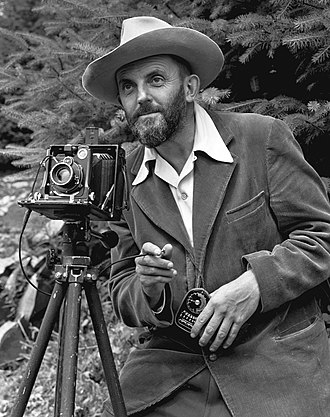
Image of Ansel Adams.

Ansel Adams, circa 1950.

The weekend package includes elegant accommodations inclusive of all meals and transportation to and from the park. During a full-day guided experience in the park, participants will gain insight into the artistic creativity of Ansel Adams through a curated discussion and presentation of Adams’ fine print original photographs. They will also visit Yosemite’s most picturesque locations, where they will be taught how to best use their cameras to incorporate Adams’ photographic techniques and compositions.

Designed for beginning photographers, hobbyists, and Ansel Adams enthusiasts, participants will have the opportunity to frame in their own lens the scenes made famous by Adams and replicate his awe-inspiring use of light. They will be transported to an “outside classroom” for a walking tour of Cooks Meadow where digital camera techniques and compositional theory will be discussed. Then the group will be transported to other scenic areas of Yosemite Valley to have the opportunity to put their skills to the test.

Participants will receive a detailed list of required and recommended equipment, which includes wide angle and zoom lens, filters, a tripod and a carrying bag.

Back at Château du Sureau, the weekend will commence with a welcome reception and group dinner. While in-residence, guests will enjoy luxurious accommodations, expansive grounds and gardens to explore, an outdoor pool, and all-inclusive inspired dining moments throughout their stay at The Elderberry House and Cellar Bar. Specialty treatments may also be reserved in Spa du Sureau.

Image of the Cellar Bar at The Elderberry House.

Cellar Bar at The Elderberry House.

A detailed itinerary and equipment list for the November 4 to 6, 2023 weekend can be found here: 

Yosemite Photography Weekend Itinerary November (PDF)

Rates are exclusive of tax and 22% service fees, and reservations must be reserved seven days in advance.

In the event of forecasted heavy rain, participants will have the option of reserving a 2024 experience or requesting a full refund. A 50% advance deposit is required. Cancellations are allowed up to 14 days prior to the event.

Guests can book by clicking here.

About Château du Sureau
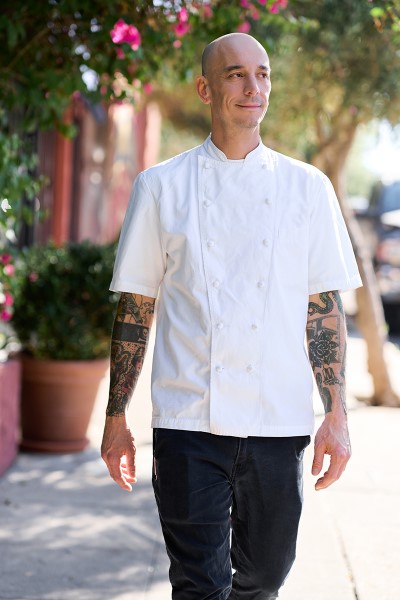
Image of Chris Flint.

Chris Flint.

Nestled across nine-sprawling acres of rolling foothills at the gateway to Yosemite National Park, Château du Sureau blends the charm and beauty of France’s Provencal region with central California’s verdant landscape. This luxurious hideaway features ten elegantly appointed guestrooms inspired by the South of France in addition to the private Villa du Sureau.

The Elderberry House offers an inventive menu from Culinary Director Chris Flint showcasing the finest local, seasonal, and organic ingredients sourced locally, and is complemented by a premier wine list. That caliber of dining is a rarity for the destination, and Chef Chris’ new role as Culinary Director is a major reason diners have the opportunity to experience a Michelin-starred quality menu. The three-course and six-course menus can be found here.

Château du Sureau features a full-service spa, outdoor pool, and expansive gardens and grounds provide moments of wellness and tranquility. Beyond the estate’s gates, an adventure travelers’ paradise awaits, from Yosemite National Park just 16 miles away to scenic hiking, biking and fishing excursions. Château du Sureau is a member of Relais & Châteaux and a AAA Five Diamond hotel.

Image of Château du Sureau from the air.

Image by Château du Sureau.

About The Ansel Adams Gallery

From its origin in 1902 in a tent in the California wilderness, Best’s Studio, now operating as The Ansel Adams Gallery, has evolved into a center that celebrates the arts and grandeur of our environment. The Gallery strives to cultivate aesthetic appreciation and a concern for our natural world by offering visitors a unique variety of crafts, books, fine arts, and an extraordinary collection of Ansel Adams original photographs. With over 70 years of photography educational programming started by Ansel Adams, the Gallery hosts classes, workshops, and private photo tours to help visitors make the most of their Yosemite experience.

Featured image courtesy of The Ansel Adams Gallery. 

Check out this great documentary about Ansel Adams! 
[embedded content]

Google Doodle Honors Corky Lee, Photographer of Asian-American Life

Google Doodle Honors Corky Lee, Photographer of Asian-American Life

Google Doodle Corky Lee

Visitors to Google today will see a striking Google Doodle celebrating the life and work of photographer Corky Lee.

In honor of Asian Pacific American Heritage Month, Google is highlighting Lee’s lifetime of photography and powerful activism. May 5 also holds special significance because the date was proclaimed “Corky Lee Day” in honor of Lee’s work and contributions to New York City’s communities in 1988.

A Chinese American photographer, journalist, and activist, Corky Lee was born in 1947 in Queens, New York City, to Chinese immigrant parents. “When he was in school as a young boy, he learned about the transcontinental railroad in social studies class. During the lesson, he saw a photo that celebrated the completion of the railroad — but noticed a lack of representation for the thousands of Chinese laborers who helped build it. Lee later shared that this event inspired his life’s work. He went on to teach himself photography and attended Queens College to study history,” Google explains.

Throughout his life, Lee captured powerful moments from countless protests and demonstrations. He dedicated his life to representing the efforts of the Asian Pacific American community, including its members’ achievements and struggles.

Google Doodle Corky Lee
American visitors to Google on May 5, 2023, will see this excellent illustration of the late Asian American photographer Corky Lee. May 5 has been “Corky Lee Day” since 1988 because of the photographer’s countless contributions to documenting the achievements and struggles of Asian Americans. Lee passed away in 2021 at age 73. It’s believed the he contracted the sickness that ultimately took his life while he was protecting the residents of Chinatown in New York City from a surge in anti-Asian violence.

One of Lee’s most notable photographs showed young Chinese American Peter Yew as he was dragged away by police in 1975. Yew’s “crime” was intervening to protect a 15-year-old boy being beaten by police following an alleged traffic violation. Police then assaulted Yew, and Yew was subsequently charged with numerous offenses, including assaulting an officer.

Lee’s photo of Yew helped inspire a response from thousands of Chinatown residents who gathered to protest police brutality. Lee’s images of the protests remain just as powerful and vital decades later.

[embedded content]

Throughout his life, Corky Lee’s photographs were published in many publications, including Time Magazine, The New York Times, New York Post, and many more. He received numerous awards and was the subject of many exhibitions.

ABC 7 in New York writes, “Lee would often say his camera was his sword to combat racial injustice,” adding that a 2022 Exhibit, “Photographic Justice: A Tribute to Corky Lee,” also included the works of 31 fellow photographers all inspired by Lee, and who aim to honor him by carrying his legacy forward.

Corky Lee died at age 73 in January 2021 following complications from COVID-19. ABC 7 reports that it’s suspected that Lee contracted the illness that would claim his life while patrolling Chinatown to protect its residents from anti-Asian violence.

Today’s Google Doodle was made possible with the help of Corky Lee’s brother, John “Johann” Lee, and E. Samantha Cheng.

“Throughout our childhood, our parents expounded upon the importance of doing the right thing. Simply because it was the right thing to do and carried with it an implicit call to action. Perhaps they were prescient in giving Corky his Chinese name (Lee Young Kuo). Loosely translated it means, ‘to praise,’ ‘uplift the nation,’ and so he did. Through his lens, he gave Americans of Asian descent their history, pride, and dignity and reminded all Americans of Asian contributions to the national American mosaic. Corky raised the consciousness not only of his camera’s subjects but that of the nation as well,” says John “Johann” Lee.

[embedded content]

E. Samantha Cheng, the founder and executive producer of Heritage Series LLC and APA Legacy, adds, “Although Corky is gone, his life’s work and passion live on in his photographs. Through his commitment to raising the visibility of all Asians and their contributions to America, his images have become tools to combat racism and bias and proof that we are all Americans.”

Additional information about Corky Lee’s life, work, and vigilance in bringing the Asian American Pacific Islander community is available in a Google Arts and Culture article.

Google has honored photographers with special Google Doodles before, including one for a father of photography, Louis Daguerre in 2011, a tribute to street photographer Robert Doisneau in 2012, and a Doodle that celebrated photography pioneer Anna Atkins in 2015.


Image credits: Google

A new Art Gallery of Ontario exhibit looks at the beauty and culture of the African diaspora

A new Art Gallery of Ontario exhibit looks at the beauty and culture of the African diaspora

“The Hair Appointment,” by Jeremy Rodney-Hall, 2018 (All images courtesy of Sunday School)

At 24 years old, Josef Adamu was an aspiring model struggling to gain traction in his career. Then he had an idea: if he wanted to find a path forward in his industry, he should carve one out for himself. Adamu initially wanted to start a modelling agency, but found the concept too restrictive. Instead, while working out of his mother’s basement in Toronto, he conceived of Sunday School, a creative brand agency that would work with companies on visually striking projects. His agency’s services include corporate campaign art direction, social media marketing, photography and videography, with a strong focus on stories and subjects from the African diaspora.

At first, Adamu wanted to control every shoot and project himself. “I didn’t leave much creative breathing room for people working with me,” he says. As the agency’s only permanent member, he primarily worked with freelancers, whom he hired on a project-by-project basis. Over the years, as he built up an international network of photographers, cinematographers, stylists and makeup artists, he learned to embrace bona fide creative collaboration. 

“The people behind the scenes are part of my culture,” he says. “Because the work is coming from our community, it’s easy to be intentional with every detail.” Soon, major brands noticed something special about Sunday School: the agency has worked on campaigns for Nike, Converse, Topshop and Sony, and celebrities like Lupita Nyong’o have recognized its work.

Sunday School’s first major Toronto exhibition, Feels Like Home, debuts at the Art Gallery of Ontario in May. The exhibit, which will run for a year and showcases the collaborative efforts of at least 40 people, features work from three projects. 

The Hair Appointment looks at the practice and ritual of natural hair braiding, exploring salons as community spaces. Ten Toes Down depicts a Black ballerina who has finally found pointe shoes and tights that match her skin tone—a meditation on identity, representation and belonging. And Jump Ball, a five-part series, is about the intersection of basketball and the African diaspora. “These three pillars are ways for us to tell stories around what it means to feel at home, far beyond a place where you rest your head,” says Adamu. It’s also a literal homecoming for Adamu, born and raised in Toronto, who has been working in New York for the past few years. 

The exhibition reveals the fruits of Adamu’s transformation as a creative director: after relinquishing some of his control, he’s become more open to spontaneity and improvisation during photo shoots. In an image from Jump Ball, which shows two Ghanaian youths wearing traditional garments on a basketball court, the use of colour is striking. Between their clothing, the basketballs and the hoop, it’s a veritable spectrum of orange—a happy accident, it turns out, and the type of creative coincidence that Sunday School has come to embrace. “I dropped my ego,” Adamu says, “and there’s real power in that.”

“Ten Toes Down,” by Kreshonna Keane, 2021

For much of her dance career, this young ballerina from Philadelphia had to use tights and pointe shoes that were too light for her skin tone. She would “pancake” the garments, applying makeup to them to match her complexion. For this photo shoot, Sunday School partnered with Freed of London, a British company that was one of the first to offer shade-inclusive ballet wear. The project’s name has a double meaning, referencing both the position of the dancer’s feet and a message to focus on what you love to do.

“Jump Ball: Toronto,” by O’shane Howard, 2019

Jump Ball is a five-part series about the cultural intersection between basketball and African tradition. Photographed on a basketball court in St. James Town, Toronto, this image is from the series’ first iteration. It depicts two Ghanaian youths wearing traditional garments that they would normally wear to a family function or special occasion. Adamu met the pair through friends, and he is interested in the way members of the African diaspora shed or don traditional attire—and in turn, parts of their identity—to adjust to their environment.

“Jump Ball: Mighty Migration,” by Joshua Kissi, 2020

The Gabriel family, photographed in their Manchester, New Hampshire, living room, escaped the civil war in South Sudan for the United States in the ’90s. Several children in the family are basketball stars, including Wenyen (not pictured), who plays for the Los Angeles Lakers; Piath, the young woman holding a basketball, is the next prospect to go pro. The house is filled with basketball jerseys and trophies, and the living room is the site of a family tradition: gathering in front of the TV on NBA draft night and waiting for a family member’s name to be called.

“Jump Ball: Mighty Migration,” by Joshua Kissi, 2020

This young man is a close friend of the Gabriel family, who are the main focus of the series. This shot was taken on a New Hampshire basketball court during a casual weekend game. Adamu chose this subject in part for his large hands—posed on the ground with his hands over the ball, looking dead centre into the camera, he suggests the strength and empowerment imparted by the game. On his left wrist, he wears a bracelet depicting the South Sudanese flag.

“The Hair Appointment,” by Jeremy Rodney-Hall, 2018 

An intimate image of an auntie and her niece during their Sunday night hair-braiding routine. They are real relatives, and Adamu met the woman through a casting call for an early project. She connected Adamu to her aunt’s hair salon, which became the inspiration for The Hair Appointment series. The child mimics her aunt’s movements on the doll’s hair, depicting how this knowledge is passed from generation to generation. Adamu intentionally centred his subjects between two picture frames on either side of the mounted mirror, and kept the colours muted to pull focus towards them.

“The Hair Appointment,” by Jeremy Rodney-Hall, 2018

In this image, choreographed by Sunday School, a little girl leans on her sister, both sporting perfectly coiffed braids and posed in front of their Brooklyn apartment building. The girls are sisters (though these aren’t their real school uniforms), and the image is all about their kinship. The older child keeps her fist loosely clenched and her expression stoic, as though she’s protecting her sleepy little sibling. One child wears high white socks, while the other is bare-legged—an intentional detail meant to highlight their contrasting personalities.

“The Hair Appointment,” by Jeremy Rodney-Hall, 2018

This installment in Sunday School’s series features natural hair braiding, which takes place in salons and living rooms—spaces that have long been community hubs within the African diaspora. The image, taken in Alima’s Hair Braiding Salon in Brooklyn, recreates the moment before a client leaves the appointment, in which a stylist will often document their work with a final shot against the salon wall.

Feels Like Home is on display at the Art Gallery of Ontario until May 2024. 

HEMVIST Furniture Uses Every Last Bit of Leftover Wood

HEMVIST Furniture Uses Every Last Bit of Leftover Wood

Just north of the Swedish city of Gävle, in the middle of the Västerbottnian forest, lies Norsjö and the Drömtrappor factory. It’s been there since 1922, the forest for much longer. Designer Alexander Lervik claims that his first visit to the factory is the only time in his 25 years in the furniture industry that the sight of production has given him goosebumps. What was most impressive to Lervik was the craftsmanship was being done using materials that had mainly come right from the forest outside – a sustainable dream!

Lervik’s work for Drömtrappor began with the idea of quality furniture that’s been maintained over generations, which led to the design of a piece that would come to be named the Hemvist staircase. Afterward, Lervik took the leftover bits and pieces of wood created during manufacturing and brought to life a limited-edition collection of furniture – HEMVIST. Made up of an armchair, a small table, and a bench, Lervik uses the same eye-catching peg and wedge technique used to make the staircase.

three piece of abstract wooden furniture

HEMVIST’s furniture pieces feature simplified shapes with strong silhouettes and big personalities. Armchair Hemvist is generously proportioned with clean forms, the joint highlights the wedge mounted on the armrest. Choose between nature, a yellow stain, and a red stain finish to add even more character. Bench Hemvist is a classic bench with a clean form, made exceptional with the addition of a joint where a wedge sits recessed into the wood.

abstract wooden furniture

abstract wooden furniture

abstract wooden furniture

abstract wooden furniture

detail of abstract wooden furniture

detail of abstract wooden furniture

wooden side table

wooden side table

wooden side table

detail of wooden side table

long wooden bench table

detail of long wooden bench table

Lervik’s HEMVIST furniture is currently on exhibit at Unikat Gallery.

Kelly Beall is senior editor at Design Milk. The Pittsburgh-based graphic designer and writer has had a deep love of art and design for as long as she can remember, and enjoys sharing her finds with others. When undistracted by great art and design, she can be found making a mess in the kitchen, consuming as much information as possible, or on the couch with her three pets. Find her @designcrush on social.

Enchanting childhood photos show King Charles III’s early love of photography

Enchanting childhood photos show King Charles III’s early love of photography

He’s already one of the most photographed people in British history. And as King Charles III prepares to be crowded in Saturday’s coronation, an army of news photographers will be jostling to take his picture once more, not to mention the tens of thousands lining the streets, cameras in hand. 

But it all could have been so different. Had his great-uncle King Edward VIII not abdicated, making this grandfather king and placing him directly in line to the throne, Charles would have led a very different life as a less important Royal. 

Perhaps then, he’d have had more time to follow one of his passions, and turn it from hobby to profession. Could, in fact, he have been on the other side of the lens, as a working photographer – like his mother’s cousin, Lord Lichfield? 

Prince Charles plays with a camera in the grounds of Balmoral Castle, Scotland, 28th September 1952.

Three-year-old Prince Charles plays with a twin-lens reflex camera in the grounds of Balmoral Castle, Scotland (Image credit: Lisa Sheridan/Studio Lisa/Hulton Archive/Getty Images)

It’s a strange thought, given the Royal Family’s vexed relationship with photography over the years, from the involvement of paparazzi in Diana’s death, to Prince Philip losing his temper with photographers, to the ill-fated snapshot of Prince Andrew (himself a keen photographer) that contributed to his recent downfall.

On the whole, though, photography has played a positive role for Royals, as an endless stream of iconic images have helped sell them as a force for stability and family values, both amongst their own subjects and across the world. (Indeed, we can all learn useful tips on posing like the Royals for our own pictures.)

And just look at how many incredible images of the late Queen Elizabeth were shared following her death last year, with a continuing fascination in new pictures emerging, such as these photos of the Queen and her corgis.

Perhaps most significantly, the archive photos on this page, taken in the grounds of Balmoral Castle, Scotland on September 28 1952, show just how fascinated the infant Charles was with the idea of taking pictures himself.

28th September 1952: Queen Elizabeth II plays with her children, Charles and Anne in the grounds of Balmoral Castle, Scotland

Queen Elizabeth II plays with her children, Charles and Anne in the grounds of Balmoral Castle, Scotland (Image credit: Lisa Sheridan/Studio Lisa/Hulton Archive/Getty Images)

These heartwarming images were captured by Lisa Sheridan (1894-1966), a portrait photographer who worked under the professional name of ‘Studio Lisa’ and had a close working relationship with the Royal Family.

One (top) shows the young Charles keenly interested as his mother, the Queen, plays with the twin-lens reflex camera, while in another (above) he becomes engrossed in the device himself. In a third (below), it’s all smiles as he stands clutching the camera in front of his mother and sister, Princess Anne.  

Royal photographer Lisa Sheridan in her studio in 1960 (Image credit: Getty Images)

Such images shouldn’t really surprise us, because a love for photography seems to run deep within the Royal Family as a whole. Queen Victoria and Prince Albert first became Patrons of the Royal Photographic Society in 1853, a tradition that’s continued ever since, with The Princess of Wales (aka Kate Middleton) recently taking up the RPS mantle from the late Queen. 

Queen Elizabeth herself was captured a number of times with a camera in her hands, and famously filmed her coronation tour in 1953. Meanwhile, with the next generation of Royals are getting even more hands-on with photography. For instance, Princess Kate, who’s known to be a Canon user, published a photo book called Hold Still (opens in new tab) in 2021, documenting the realities of the pandemic through photos of the people who lived through it.

King Charles, however, has himself become a keen and accomplished painter, whose preferred medium is watercolors. According to the UK newspaper The Independent, “King Charles never sells his originals but has been making money for his charitable foundation for many years by offering limited edition signed prints at up to £15,000 (around $19,000) each. It was revealed in 2016 that sales of his prints had raised £6 million (over $7.5m) and the amount is believed to have soared since then.” 

40 of his paintings are currently on display in his Sandringham House residence in Norfolk.

Chicago Art Exhibit Examines Global War on 20th Anniversary of Iraq Invasion

Chicago Art Exhibit Examines Global War on 20th Anniversary of Iraq Invasion

When I first heard about “Surviving the Long Wars,” a series of art exhibitions and events that opened with a Veteran Art Triennial and Summit in March, I was both curious and skeptical. Having lived through the events of 9/11 and the structural Islamophobia that intensified in its wake, I’m jaded about American portrayals of war and Muslims, and how quickly they fall into a ’good Muslim’, ’bad Muslim’ dichotomy. I had never met anyone who was a veteran, let alone a veteran who was stationed in countries where my people came from.

But I trusted one of the co-organizers, Aaron Hughes, who put on an incredible interdisciplinary exhibit at the DePaul Art Museum in the fall that connected policing and militarism around the world, from Guantanamo Bay to Homan Square. So at the same time, I was drawn to attend, to see for myself what veteran art would evoke in me and whether it would feel like propaganda about the necessity of war or critically reflect on U.S. militarism. 

I wasn’t disappointed. The triennial questioned the origins and impacts of war at home and abroad by bringing together art and artists. By putting a face to the individuals creating pieces intimately linked to their identity, the exhibits moved past reflection and invited artists and attendees to make space for all the hurt that came with bringing up the displacement and violence of war. 

The summit took place March 16-19 and was put together with support from the National Endowment for the Humanities Veteran fellows and the three institutions the exhibit will be housed in: the Chicago Cultural Center, Hyde Park Arts Center, and the Newberry Museum. The summit featured performances, speeches, and hands-on arts activities hosted by the artists at all three locations.

The triennial was organized by a group of artists, organizers, and academics, mostly in Chicago, who are well-versed in work and writing around the global war on terror, policing, and the American Indian wars. In addition to Aaron Hughes, an Iraqi War veteran, curator, and anti-war activist, the triennial was organized by Ronak K. Kapadia, an associate professor of Gender and Women’s Studies at UIC; Therese Quinn, a professor in Museum Exhibition Studies; Joseph Lefthand, a veteran descended from the Cheyenne-Arapaho, Taos, and Zuni tribes; Amber Zora, veteran and artist from South Dakota; and Meranda Roberts, who recently co-curated the Aspaalooke Women and Warriors exhibit at the Field Museum. 

In an interview with the Weekly, Ronak K. Kapadia talked about the internationalist work they were attempting to do by curating this project. “It is about putting Arab, Muslim and South Asian diasporic art in conversation with the long, centuries long history of native and black led rebellion against security orders in the US.”

This triennial was coming at the twenty year anniversary of the U.S. Invasion of Iraq. The advertising of the summit brought to light the two longest wars in U.S history: the American Indian Wars and the Global War on Terror. Those parallels were explored and made even more apparent throughout the weekend. 

There was a palpable discomfort among the viewers of this art; forcing a recknowing about how to hold multiple truths about the war machine. 

“It’s this particular group of people whose lives and communities have also been destroyed by the war machine, trying to have discussions about transformative conversations, healing, justice oriented conversations about the perpetrator, perpetration of violence and some mode of reconciliation or reckoning now,” said Kapadia.

The second day of the exhibit, at the Hyde Park Arts Center, featured programming that captured the essence of seventeen artists’ works while speaking to the themes being navigated during this summit. This space felt more casual than the Newberry from the day before and the Cultural Center would later. There was space to walk around, eat, and drink at your own pace; luxuries not afforded as readily in the more policed arts spaces downtown. 

Mahwish Chisty, a visiting artist from Massachusetts who was raised in Pakistan, brought with her a series of pieces called “Drone Art”. Beautifying the ugliest parts of violence, she created collages in the outlines of the aerial drones used by the U.S. military in Pakistan, Afghanistan, and Yemen. 

“The imagery on these machines is borrowing from the truck art, which is a native tradition of Pakistani truck art culture, where trucks are painted beautifully, elaborately in bright colors, and they have this iconography mixed with text and almost universal visual symbols that require no language in some way,” Chisty said during the group tour. “So I’m using that to show the deadliness of these machines.” 

The exhibit wasn’t remarkable just because of the incredible art. As a fly on the wall in the room, one could expect to overhear the history of the U.S. Annexation of Native land, the Patriot Act, and policing in schools all while breaking bread and sipping a glass of wine. The threads of Chisty’s work, and how intimate and enmeshed surveillance is in the lives of drone victims, drew parallels to the work of June Carpenter, another exhibit artist. 

Carpenter, repatriation specialist at the Field Museum, made visible the violence of the forced expulsion of Native Americans through the creation of hand embroidered shawls. The shawls contained  the language of the six most egregious Supreme Court cases that set the precedent for violence against Native Americans. In one such case titled Cherokee Nation v. Georgia (1831), the Cherokee nation was deemed a “domestic dependent” nation, thus establishing the guardian-ward dynamic between Native nations and the American government. 

This case, along with many others, set legal precedent for the ways the U.S. government received leeway to intervene in every aspect of Native life through forced separation of families and schooling. This was all portrayed in ornately embroidered woven shawls functioning almost as shrouds and expansive coverings for the abuse done by the American government. Shawls, symbols of beauty and warmth, even wealth, in Carpenters’ pieces are symbolic of all the covers that have allowed for American violence. 

“These seventeen stars that are here are the beaded stars. These are seven pointed stars,” said Carpenter. “They are on the Cherokee seal. And that refers to these 17,000 people, 17,000 Cherokee, who are removed from Georgia after this case was decided.”

Art by June Carpenter. Photos courtesy of Ronak Kapadia with Surviving the Long Wars.Art by June Carpenter. Photos courtesy of Ronak Kapadia with Surviving the Long Wars.
Art by June Carpenter. Photos courtesy of Ronak Kapadia with Surviving the Long Wars.

In a place like Chicago, where indigeneity is understood differently than in states like Oklahoma and South Dakota where reservations are visible and present spaces, it is not by coincidence that Native American art is less seen and visible. 

While Native Americans were offered land in neighboring states, they were continuously pushed out of IL, making it one of sixteen states—and one of the furthest west—to not have any reservations. This present-day fact is a reminder of the violence that went into that expulsion, and makes the organizing of groups like Chi Nations Youth Council even more significant. 

As Kapadia shared, the parallels between these wars lie in the way the war machine aims to disrupt intimate spaces; an idea that many of the artists at the triennial captured. 

“War violence works by trying to destroy intimate intimacy, to also destroy our sense of our relationship to each other. This is a key idea in my book, which is that counterinsurgency operates by trying to destroy our sense of how we are connected to each other. And so actually, part of what our practice is doing is giving us a sense of solidarity and a sense of intimacy through difference.”

Intimacy was a thread that wove together all the pieces across the city, whether through the forms themselves, or the ways artists shared stories of personal and public lives being disrupted and destroyed by war. Saba Elahi, Chicago-based artist, built off the same drone imagery as Chisty and the use of fabric as Carpenter, but instead of capturing the drone, she captured what the drone would see. By embroidering living room scenes, and intimate domestic spaces, she showed what a drone operator might see prior to falling on and destroying a family. 

Outside of the context, these pieces could be seen as images of families embroidered, tender moments over a box of pizza or sitting on the couch watching nightly news. Instead, in the context of drones, its violence is even more insidious. Taking it a step further, she uses the form and technique of machine embroidery in some of her pieces to shed light on the mechanization of so much of the warfare industry, whether it be in production or practice. 

Art by Saba Elahi. Photos courtesy of Ronak Kapadia with Surviving the Long Wars.Art by Saba Elahi. Photos courtesy of Ronak Kapadia with Surviving the Long Wars.
Art by Saba Elahi. Photos courtesy of Ronak Kapadia with Surviving the Long Wars.

There was no shortage of mediums used in this exhibit, from performance and paintings to collages, weaving, embroidery, and printmaking. Ruth Kaneko, former combat medic, created paper out of her military uniforms to honor the 38,000 Hawaiians who signed a petition refusing annexation of Hawaii by the United States. The pieces were an homage to her Hawaiian heritage and resistance ancestry, and were poignant in the way they combined form and function to deliver power. 

In a tearful explanation because of the recent death of her grandmother, Kaneko explained how she came to these pieces. Both by anonymizing, but showing the sheer volume of individuals impacted by U.S forced annexation, she makes clear what it means to be from a community victimized by the war machine and a veteran. 

“In the early 1800s, there was 1.2 million Native Hawaiians in Hawaii. By the time that it was illegally annexed by the United States, there were 40,000 native Hawaiians left,” said Ruth. “So after Hawaii was illegally annexed by the United States in 1893, these women went across Hawaii and they collected 38,000 petition signatures, which basically is the entire population.”

The pieces shed light on the organizing work of Native Hawaiians at the time and the power and work it took to collect signatures from all the Hawaiians left after strategic policies of displacement and erasure by the U.S. military. The art was also deeply personal for Kaneko, as her family name was one of the 38,000 featured. Her pieces, as of many Native veterans, captured the tension that I walked into the exhibit anticipating; how could we hold space for veterans and war victims? The reality of which is that war entangles itself deep into communities and there is room for the veterans in this space to share just how insidiously that happens. 

Art by Ruth Kaneko.  Photos courtesy of Ronak Kapadia with Surviving the Long Wars.Art by Ruth Kaneko.  Photos courtesy of Ronak Kapadia with Surviving the Long Wars.
Art by Ruth Kaneko. Photos courtesy of Ronak Kapadia with Surviving the Long Wars.

In the work of Chitra Ganesh, New York-based artist, on display at the Chicago Cultural Center, we begin to see a reminder of the effect on individual lives that the war on terror had. Her soft art form in the watercolor portraits ‘Seeing the Disappeared’ highlights individuals disappeared by the U.S government following 9/11 such as Fahd Gazy, a former detainee at Guantanamo Bay, or Sami Al- Arian, a Kuwaiti-born Palestinian activist held under house arrest from 2008 to 2014 under Patriot Act charges. Form and medium speak especially strongly to this, as instead of stiff sharp portraits with acrylic paint, she chose to do watercolor, softening the edges and the outlines of the portraits to honor lives lost and stolen.

✶ ✶ ✶ ✶

Each space that housed the triennial added something different to the experience. The Hyde Park Art Center was a unique space for this exhibit, miles south from the rest of the installations, in the midst of work and studios of people like Robert Paige and Malika Jackson. The culminating moment at HPAC came with the performance by Hipólito Arriaga III, GOODW.Y.N., and Hussein Smko. On the cusp of Ramadan, on jummah nonetheless, I did not expect to hear the adhan echo through the gallery room at HPAC. But the start of the performance was just that, the creation of a solemn space. From there these three movement artists captured hurt and pain, joy and solidarity, all through the lyrical ways their bodies danced and fell. 

In every way the still art (a word for non movement) could not capture emotion, the performance artists delivered, tying all the pieces together with a knot. 

The artwork in the Cultural Center evoked a grandeur that the arts center could not, mirroring the art in a different way. Participants walked through the Tiffany dome and the marble engraved ceilings to make their way to the gallery. The lights on Michael Rakowitz portrait-esque collages of Iraq commemorated art stolen and destroyed in Iraq, leaving space for silences, but also grandeur to capture the remains from the Assyrian northwest palace of Kalhu. These wars not only had an impact on people and bodies, but art and the space it occupies. 

The pieces throughout this exhibit echo in the trauma and hurt they convey. 

“Very little attention [in mainstream media] to the ongoing nature of these wars, like these Indian wars never ended,” said Kapadia. “The War on Terror never ended, even if it was declared mission accomplished a million times. Yeah, the war permeates the lives of so many different kinds of peoples. And so I think part of Surviving the Long Wars was about attending to that not only afterlife, but the ongoing lived presence of war in lots of different kinds of people’s lives.”

The exhibit invites viewers to walk away with a global sense of solidarity, a commitment to the internationalist struggle for freedom. In the same way, it can evoke a sense of powerlessness; despite the beautiful community created, these wars still go on. 

As Dunya Mikhail said in one of the poems she read on the second day of the exhibit: 

Their songs will not save us,

although, in the chilliest times,

they keep us warm,

and when we need to touch the soul

to know it’s not dead

their songs

give us that touch. 

Surviving the Long Wars exhibits will remain open for a few months. Residues and Rebellions at Newberry Library until May 26; Unlikely Entanglements at the Hyde Park Art Center until July 9; Reckon and Reimagine at the Chicago Cultural Center until June 4.

✶ ✶ ✶ ✶

Isra is an advocate at the Children and Family Justice Center and reporter with the Invisible Institute. In her free time she is reading, writing, and contemplating our role in the movement and how we can work to build a better world.