
St. Elizabeth Catholic Charities has announced the unveiling and blessing of a new Holy Trinity Heritage Park bronze spiritual art sculpture on its campus at 702 E. Market in New
St. Elizabeth Catholic Charities unveils bronze spiritual sculpture


A creative who goes by the name Photographer Hal often depicts people in confined spaces. While that might initially sound distressing, Hal’s work points out that this isn’t always the case. His series Flesh Love All was created with a desire to express love in its many forms, from romantic to familial. Only love, he notes, “may have the power to bring all things together, even across race and disparities.” This idea led him to create a space where love is enveloped—literally. The images are of people and their surroundings as vacuum-packed and preserved in plastic.
Shot inside homes and outside of them, the subjects are bound in plastic wrap where all of the air has been sucked away. This distorts their features, mashes their clothing, and often smushes their faces. Most critically, it makes it so they are fused together and cannot independently move. “The things you love will be one,” Hal writes, “and the world will be one. I think that is an ideal form of love.”
Although this might make you feel uneasy—especially if you’re claustrophobic—there is a romantic notion in Hal’s conceptual work. Sometimes we might grow tired or annoyed with the closest people in our lives. After all, they know how to push our buttons. But when faced with the prospect without them, we want to hold them tight and preserve who (and what) we love so dearly. Flesh Love All is an outward display of the deep feelings we keep within.


BECKET — The price tag is formidable for the new, year-round Doris Duke Theatre to be constructed at Jacob’s Pillow: $30 million.
But a substantial amount has been raised and building plans are in hand to replace the original theater destroyed by fire in November 2020.
“In replacing what was lost while looking to the future, Jacob’s Pillow seeks to create a future-forward dance theater as it looks ahead to its second century,” according to a news release from the dance festival’s leaders. Preliminary plans were announced last November.
This rendering depicts an aerial view of the Jacob’s Pillow campus, with the planned new Doris Doris Theatre on the site of the original Duke studio theater.
The goal is to create an accessible, inclusive space for dialogue, collaboration and education. At the same time, the new theater would maintain the intimacy of the original, along with a new digital lab to handle various programming needs, future technical upgrades and ensure long-term sustainable growth, flexible performance spaces and resiliency.
The reimagined theater, expected to open in summer 2025, will be more than double the size of the original playhouse — about 20,000 square feet, compared to the 8,500 footprint. The theater will seat up to 230 patrons in the main performance space.
The original Doris Duke Theatre, named for the billionaire art collector, philanthropist and heiress (1912-1993), was built in 1989 and opened in 1990 as one of three primary performance sites on Jacob’s Pillow’s 220-acre campus.
The new space restores a second indoor theater for Jacob’s Pillow’s annual summer Dance Festival alongside the flagship Ted Shawn Theatre. It also will provide a year-round studio on the Pillow campus, in addition to the Perles Family Studio, home to The School at Jacob’s Pillow, and the Pillow Lab, artist-in-residence program.
This is what a possible production design inside the theater performance space in the new Doris Duke Theatre could look like.
Funding comes from a coalition of donors and foundations, supported by a formal campaign launching this month.
“The campaign goal is approximately $35 million, which is inclusive of construction of the new theater and establishing an endowment fund which will help support the aims and operations of the new theater,” according to Elise Linscott, public relations and communications coordinator for The Pillow.
Last November, the Doris Duke Foundation unveiled a $10 million naming gift. Additional funding came from the Knight Foundation for the digital priorities of the project, along with support from the Massachusetts Cultural Facilities Fund for the design phase.
Jacob’s Pillow, a National Historic Landmark and recipient of the National Medal of Arts, is also raising an endowment of $5 million or more for the digital project and to directly support artists who will be on site at the Pillow Lab.
The nation’s longest-running international dance festival was founded in Becket by famed dancer Ted Shawn, who had begun performing there with a small dance troupe in 1933. The festival attracts more than 80,000 patrons during its season, which opens for this summer on June 28 and runs until Aug. 27.
“We are so grateful for the leadership support that makes it possible for us to envision a re-imagined Doris Duke Theatre, one that promises to have the warmth and character of the original and beloved Duke, while at the same time being relevant and accessible to what artists and audiences will need in the future,” said Jacob’s Pillow Executive & Artistic Director Pamela Tatge in a prepared statement.
This rendering depicts a possible setup for activities and events inside the new Doris Duke Theatre. In addition to summer Festival performances, the new building is designed with a year-round, community focus and ease of use for special events.
The new space will have improved lighting and audio capabilities. Many windows and skylights, with darkening capabilities throughout the building, will connect the theater with the surrounding campus and landscape.
According to Tatge, the design creates a year-round venue “that will serve as an incubator for a new generation of artists seeking to integrate technology into live performance and create art native to the digital realm.”
Contributions from Indigenous artists to the design will include visual art installations, a medicinal garden with local and indigenous plantings near the entrance of the building, and a fire pit for gatherings and celebrations.
Jeffrey Gibson, a member of the Mississippi Band of Choctaw Indians and of Cherokee descent, is a consultant on the building’s relationship to the site and Indigenous design values, a key element of the building’s design. According to the press release, The Pillow “seeks to honor the building’s context on the ancestral lands of the Muh-he-con-ne-ok, or Mohican peoples, who are now known as the Stockbridge-Munsee Community and reside in Wisconsin.”
The Pillow also honors the Agawam, Nipmuc, and Pocumtuc who also made their homes in what is now known as Western Massachusetts.
“It’s been great working with Jacob’s Pillow and [architecture firm] Mecanoo to develop the new Doris Duke Theatre,” Gibson said. “The current design takes into account important Indigenous values and supports multiple kinds of performances that can engage the inside and the outside of the building and traditional and more intimate performances. Certain Indigenous materials, patterns, and processes will be reflected in the interior and exterior, and I’m excited to see the submissions from Indigenous artists to help realize the final iteration of the building.”

LOS ANGELES — Ishi Glinsky’s practice is delightfully diverse. He moves fluidly from painting to sculpture, abstraction to representation, integrating elements of so-called craft and fine art, adapting whichever medium fits his purpose. Despite this fluid approach, one constant thread woven through his work is scale: Glinsky works big, often scaling up smaller objects to epic proportions. He does this not out of hubris or bravado, but in an attempt to honor the traditional art forms of the Tohono O’odham Nation, of which he is a member.
“By taking something and enlarging it, I’m hoping to create a monument,” Glinsky told Hyperallergic. “And to start a conversation on many fronts, to inform and educate people if they don’t know, and if they do know, it’s done in a new way.”
For his upcoming solo show at Chris Sharp Gallery in Los Angeles, Lifetimes That Broke The Earth, Glinsky will present works that reference the Tohono O’odham techniques of basket making. Using a combination of ink washes, oil sticks, and thickly impastoed marks made with a palette knife, Glinsky turns the intricate patterns into brightly colored abstractions, zooming in on the elemental construction. He juxtaposes two different basket types on his canvases: one made using Yucca, bear grass, and Devil’s claw, and another in which artisans loop together lengths of baling wire to construct metal baskets.
In his paintings, the enlarged wire loops resemble the spiral forms of galaxies, suggesting another jump in scale. “It’s a fluid collaboration of the past and present, tangible and intangible,” he explains.

Glinsky will also be showing his own wire baskets, which he makes by weaving spools of baling wire into a chain-link fence on a wall loom in his studio. He then folds and twists them into baskets whose familiar forms contain a wiggling mass of wire, calling back to, but quite distinct from, the traditional technique he is referencing. “One thing that makes him so extraordinary is that he’ll invent a technique adequate for each medium, which is somehow totally unprecedented,” gallerist Chris Sharp told Hyperallergic.

His first exhibition with the gallery, Monuments to Survival, in 2021, featured works that reference other Native American traditions, such as Zuni jewelry, or ledger drawings made by the Cheyenne, Arapaho, Kiowa, and other Plains Indians. He collaborated with Zuni artist Veronica Poblano, one of the originators of “Zuni Toons,” traditional jewelry made from silver and inlaid turquoise that references Looney Tunes and other cartoon characters.
Glinsky uses steel, aluminum, and resin to make his versions, whose enlarged size and placement in the gallery suggest a reappraisal of the original objects. “Folks could come across [these works] in a trading post, in a display case besieged by other Southwestern ephemera,” he said. “I felt that the original should take the space of my necklace.” Significantly, Glinsky shares a portion of the sales price with the artists he collaborates with or whose work he is referencing.

Then there is the jacket, which occupied the entire front room of Sharp’s gallery. “Coral vs. King Snake Jacket” (2019) is a meticulous facsimile of the punk leather staple, decorated with metal studs and patches and blown up to colossal size. In keeping with his resourcefulness, Glinsky made the studs from fence post caps and replicated the texture of asphalt to provide the jacket’s weathered patina. The patches resemble those of bands such as the Dead Kennedys and Public Enemy but have been adapted into Tohono O’odham symbols or icons that support the American Indian Movement (AIM).
Despite the jacket’s punk aesthetics, Glinsky said he chose the form for its connection to the regalia he made and wore when he participated in Pow Wows. “You’re wearing this armor in a sense when you’re out in the world,” the artist explained. “Regalia is also representative of who you are, where you’re from.”
“Coral vs. King Snake Jacket” (2019) was acquired by the Hammer Museum, which recently announced that Glinsky will be included in the next iteration of its LA Biennial, Made in LA. The work also caught the attention of Gabriel Ritter, who organized Glinsky’s first solo museum show Upon a Jagged Maze, which opened last fall at the Art, Design & Architecture Museum at UC Santa Barbara. The exhibition was a decade-long survey, showcasing a cross-section of his multifaceted practice. Ritter described Glinsky’s works as “not just art forms but art movements unto themselves.”
“Just because art history hasn’t included them in the canon, that’s beside the point,” Ritter added.

In light of these exhibitions — and a planned solo show with PPOW Gallery in New York later this year — it could be said that Glinsky is having a moment. All of this attention is especially notable given the unorthodox path he has taken through the art world. He grew up in Tucson, Arizona, in an artistic family (“Coral vs. King Snake Jacket” features a version of a drawing his late father made as a teen), and studied graphic design at a community college before exploring fine art on his own.
“I just started painting and finding my way through all different types of mediums,” he recalled. “Some of those, I sought out, some I hid from for a really long time. I was almost intimidated by painting. I didn’t know what I would contribute.”
He moved to LA in 2006, steadily continuing his material explorations, participating in some exhibitions, but largely staying out of the limelight. “He didn’t matriculate into the LA art world how most people usually do,” Sharp noted. This is not to say he wasn’t savvy about his career — he was tapped by Ralph Lauren in 2019 to create limited edition moccasins, an attempt by the brand to address how they have not always acknowledged the sources of their designs. However, his practice has been driven by his desire to share the traditions and artwork of the Tohono O’odham and other Native peoples, not with nostalgia in mind, but as a representative of contemporary art forms rooted in history.
“These stories that I’m holding, I’m doing my best to care for and tell them as respectfully as I can,” he said, “but also to crack them open and think about the future.”

An exploration of time as many entwined possibilities, Ladhamba Tayem; Future Continuous imagines a future where Indigenous people traverse the space-time continuum.

Her work derives its power from the instability of not knowing exactly what ground you’re standing on when looking at it.

In this age of self-promotion and careerism, there’s something stunning, and inspiring, about the integrity of someone who had the courage just to leave.

Work from MFA candidates at the Massachusetts College of Art and Design is on view in Boston at MassArt x SoWa and on campus, with public artist talks on May 26.

Her welded-steel sculptures and performance art produce scar-riddled proxies for connections that are usually intangible.

The National Museum of the American Indian’s series focuses on films exploring the histories and communities that “make New York a Native place.”

Featuring Tarek Al-Ghoussein, Patty Chang, Gil Heitor Cortesão, Sharon Lockhart, Taus Makhacheva, Haroon Mirza, Clifford Ross, Thomas Struth, and Vivek Vilasini.

The Afro-Brazilian artist created over 1,000 works from the confines of a mental institution. Dozens of them are on view in New York City for the first time.

Willie Cole and others on social media saw similarities between his designs and the light fixtures lining the Met Gala entrance.


Daniel Arnold has photographed plenty of exciting events for Vogue, from Afropunk to Inauguration Day, but what could possibly compare to the glitz and glamor of the 2023 Met Gala?
On Monday, Arnold was on hand to capture all of the goings-on at the museum, swooping in as Doja Cat greeted Jack Harlow, Robert Pattinson shared a laugh with Gwendoline Christie, and Dua Lipa rubbed shoulders with Penélope Cruz. Shot on film, his atmospheric portraits are in turns charming, funny, and deeply intimate; revisit fashion’s biggest night through Arnold’s all-seeing lens below.


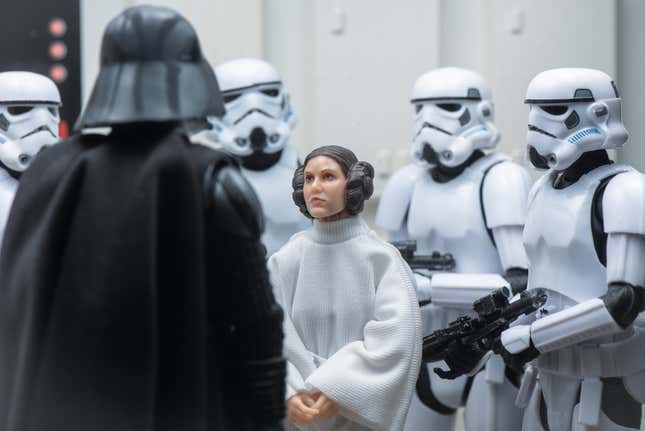
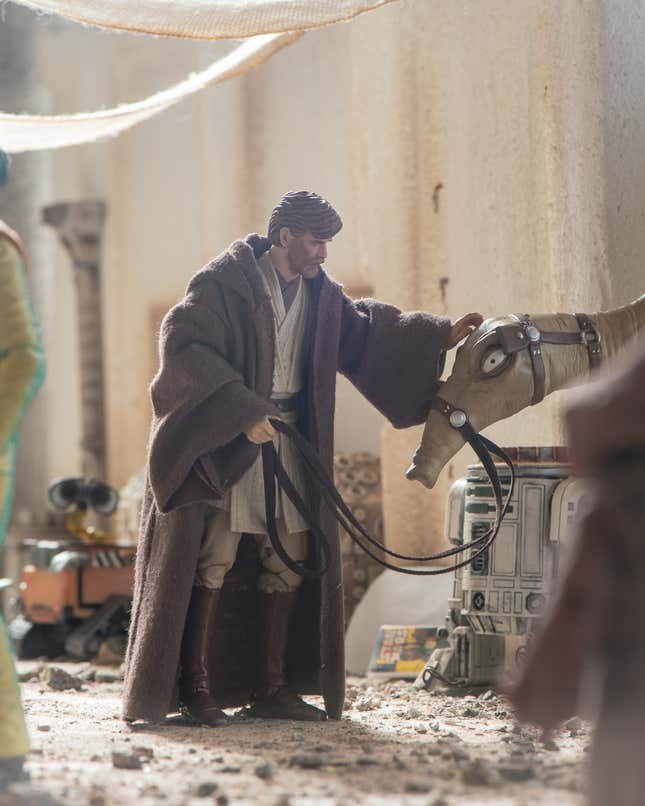
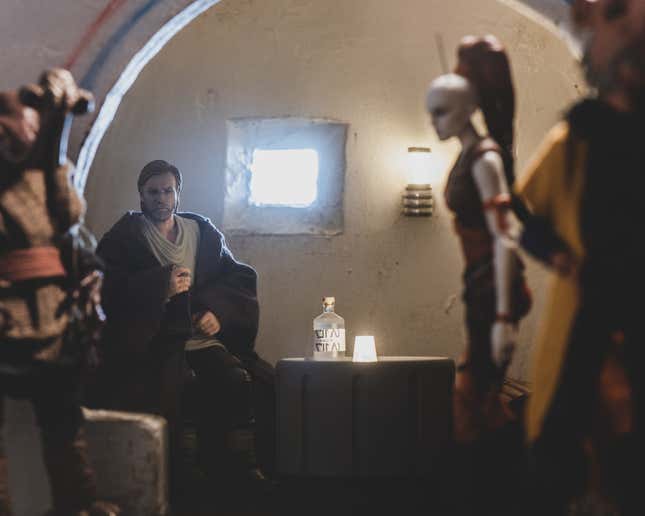
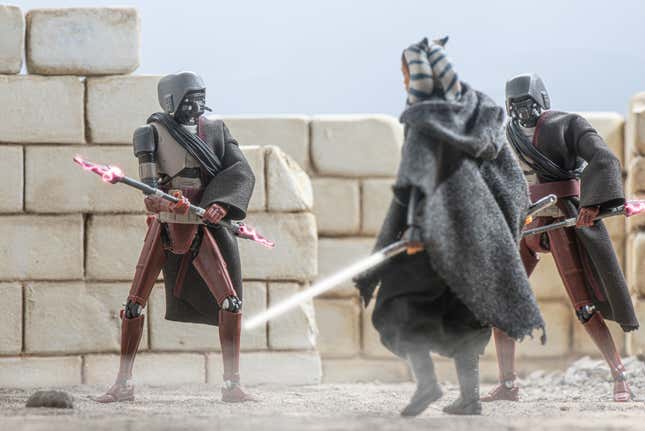
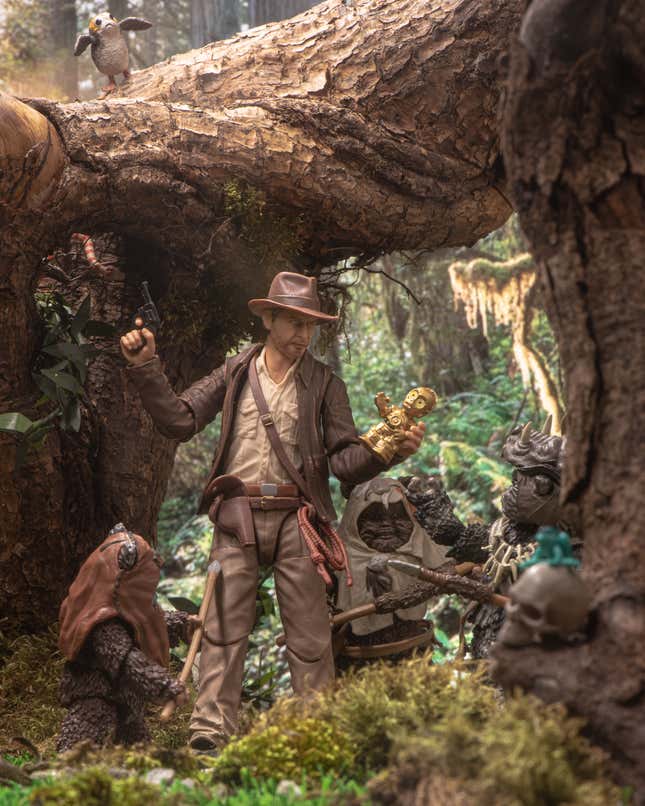
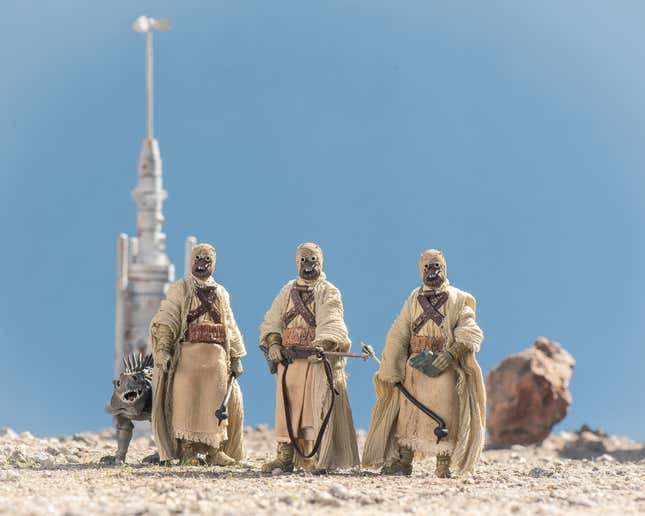
It’s funny that May 4 has become the official Star Wars day, because if you follow movies, television, and pop culture, every day is basically a Star Wars day. It’s one of the most popular franchises in the world and we all talk about it so much that, on a day like May 4, maybe you want something different.
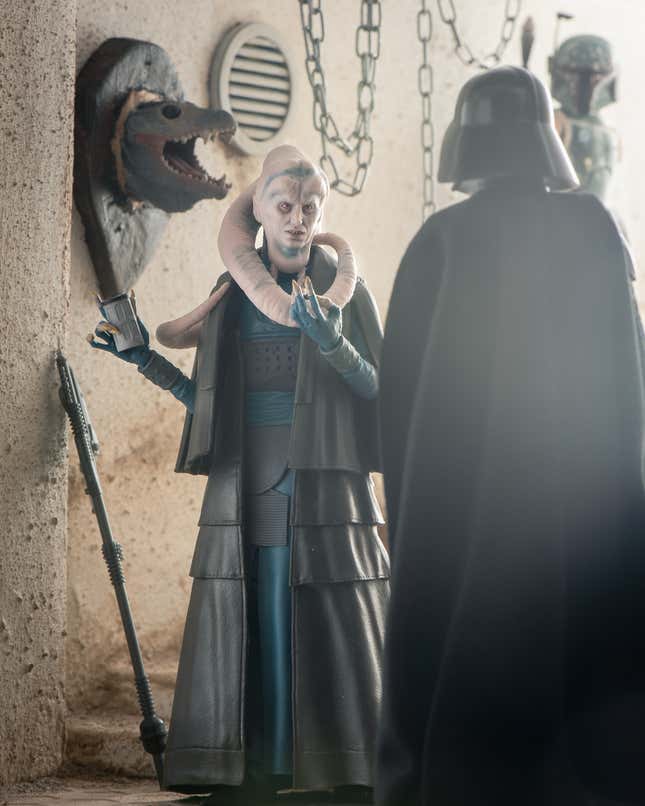
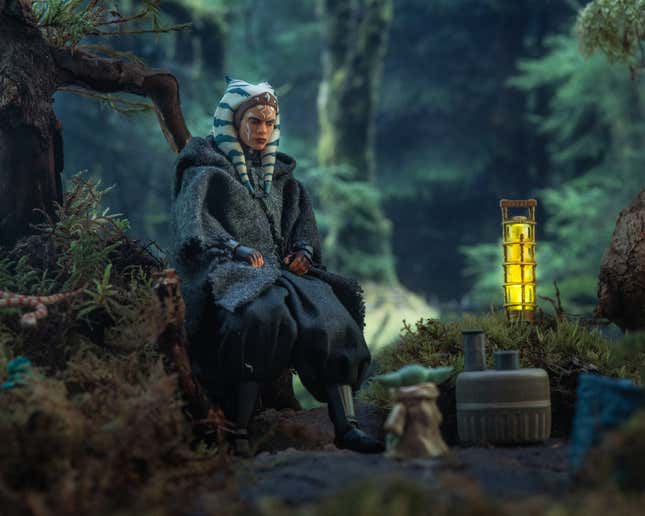
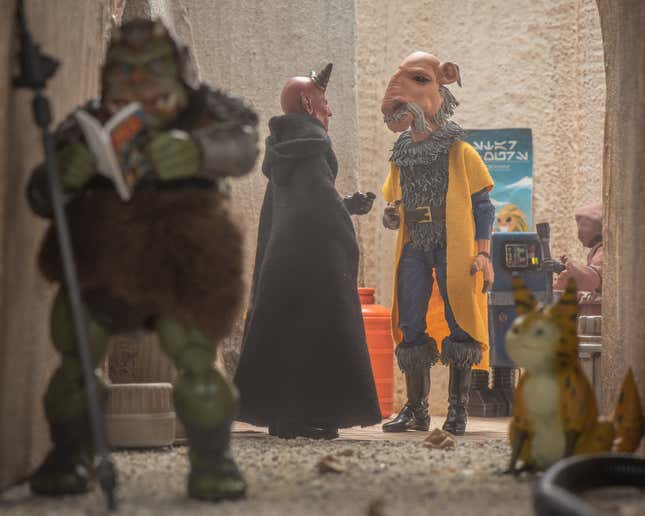
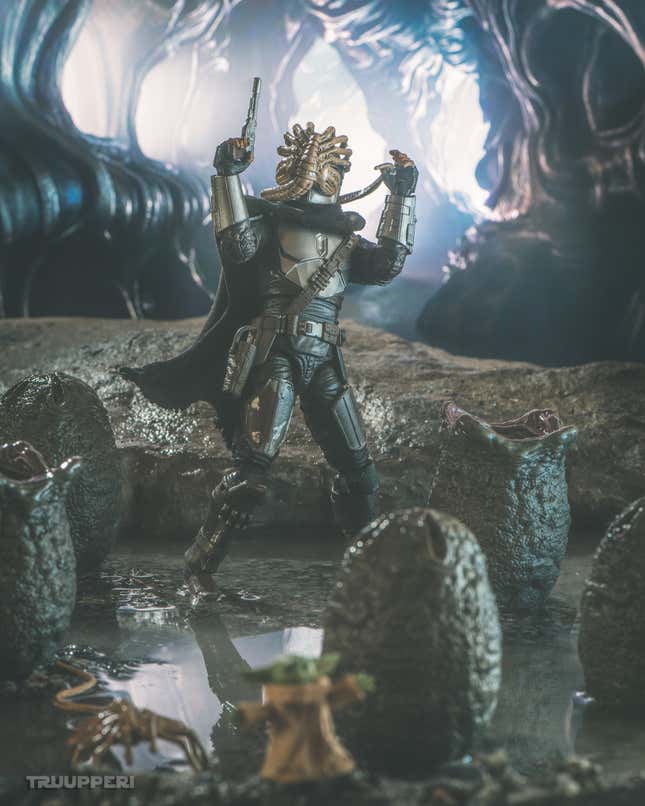
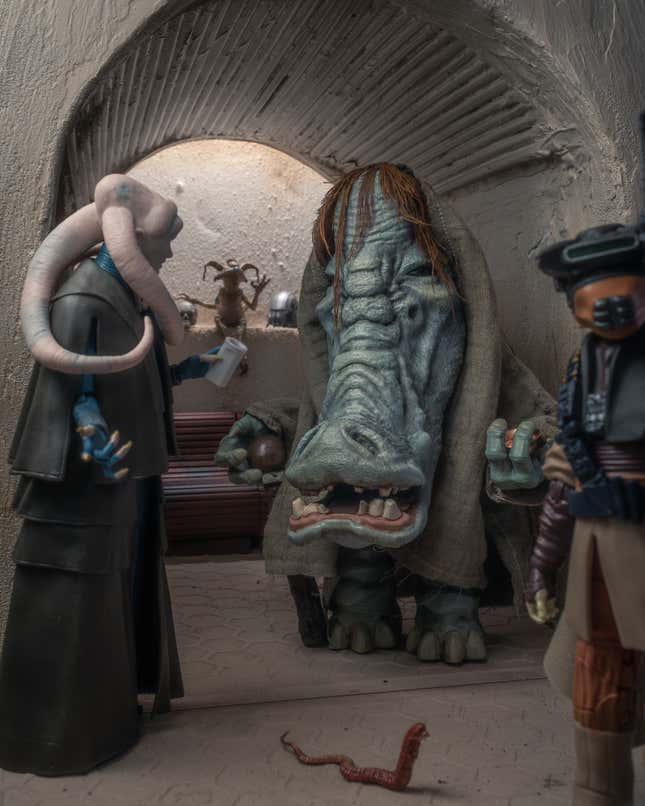
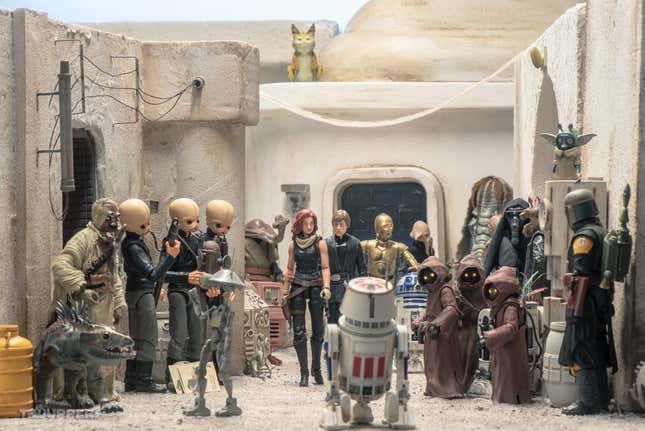
We’ve got just the thing. A Finnish photographer who goes by the name Truupperi has given io9 permission to share some of their incredible Star Wars-themed photography. Truupperi uses a mix of bought and custom figures, along with custom backgrounds, to recreate some of your favorite scenes—and bring to life some you didn’t know you wanted.
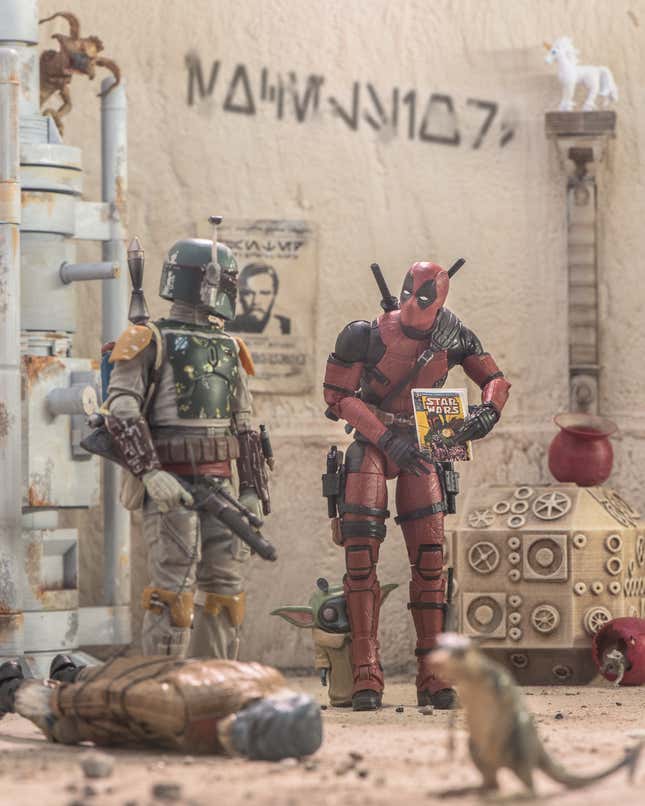
And then Truupperi gets cheeky. They’ll sneak in characters from other franchises, like Marvel or Alien, and make them look perfectly at home in Star Wars. It’s a lot of fun. We’ve got a ton of photos to click through here; for more work by Truupperi, you can visit their Instagram.



It’s Deadpool!










Prescott News – From May 18 through June 20, 2023, the ‘Tis Art Center and Gallery in historic downtown Prescott will present “Journeys in Spirit 2023”: Traditional and Contemporary Native Art. Produced in partnership with the Museum of Indigenous People, with additional support from the City of Prescott and the Prescott Area Arts and Humanities Council, this fascinating exhibit will showcase the artwork, culture and stories of a diverse group of Native artists. Attendees will have a chance to meet the artists during Prescott’s 4th Friday Art Walk, on May 26 from 5-7 p.m.
From the rock paintings and carvings of early ancestors to basketry, bead working, ceramics and other mediums, art has always played a powerful and integral role in Native cultures. Today, many traditions continue to be handed down from generation to generation, and children are taught from an early age that color and imagery carry symbolic meaning and that through the arts, stories can be told.
The Native artists of “Journeys in Spirit” come from varied backgrounds and cultures, with some living within and others living outside of their tribal communities. The exhibit will highlight a range of styles and mediums, from more traditional works to modern mediums such as painting and photography. As they explore the intriguing artwork on display, “Journeys in Spirit” attendees will gain insight into the lives of the artists and the cultures and stories of their tribes.

The ’Tis Art Center and Gallery is located at 105 S. Cortez Street, Prescott, Ariz. 86303. For more information about “Journeys in Spirit,” visit https://www.tisartgallery.com/journeys-in-spirit-american-indian-art/.


In a peripatetic life, beginning with a flight from the Nazis, she found a kind of stability in making pictures for more than seven decades.
For more than seven decades, the click of a camera shutter was the soundtrack to Dorothy Bohm’s life.
She was a teenager in Lithuania when her father gave her a Leica as she boarded a train to flee the Nazis. She studied photography in Manchester, England, after the Blitzkrieg drove her from London. Her camera was a steadfast companion when she traveled the world, chronicling her travels and the people she saw with an empathetic eye. And as her renown as a photographer grew, she switched to color film and experimented with bold new styles.
Mrs. Bohm created a vast body of photographs, in the process becoming a grande dame of the art form, before she died at 98 on March 15 at a care facility in Northwest London. Her daughter Monica Bohm-Duchen confirmed the death.
Mrs. Bohm began as a portraitist, but her photography blossomed when she left the studio. She branched out to make black-and-white landscapes and street photographs that documented life in cities like London and Paris; colorful abstract compositions; and still lifes.
There was a permanence to photography that Mrs. Bohm, whose life was uprooted repeatedly, found appealing.
“A photograph fulfills my deep need to stop things from disappearing,” she told The Times of Israel in 2016.
Her photographs have appeared in more than a dozen books and more than two dozen exhibitions:
A streetlamp casts a filigreed shadow in a beam of sunlight slanting into a deserted alley.
A sturdy woman selling flowers seems to rise out of a cloud of petals in front of a striped umbrella propped on its side.
Israeli and Palestinian children play on a sun-drenched street, laughing into the lens.
A woman and a child stare down at a small dog in a starkly-lit courtyard as Mrs. Bohm’s camera stares down at them.
Regardless of the subject, warmth suffused much of her work.
“Dorothy Bohm knows her camera not only sees, it feels,” wrote Roland Penrose, an English artist and historian, in the introduction to her first book, “A World Observed” (1970).
Mrs. Bohm wanted those feelings to be positive. As she said in 2016: “I’ve seen a lot. But I don’t show the ugliness of life; I try to show the good.”
Dorothea Israelit was born on June 22, 1924, to Tobias and Ethel (Meirovich) Israelit in Koenigsberg, East Prussia (now Kaliningrad, Russia). Her mother was a homemaker, and her father was a successful textile industrialist.
After a privileged childhood, the Israelit family, who were Jewish, moved to Lithuania in 1932, where Mr. Israelit had business interests. In June 1939, with the rise of Nazi Germany and its persecution of Jews, her father sent Dorothy to a boarding school in England for her safety.
When she said farewell to her parents, her father handed her his Leica and said, “It might be useful to you,” she recalled in 2016. She made it to England but would not see her parents again for more than 20 years.
Dorothy was attending a boarding school in Ditchling, a village in East Sussex, in the south of England, when a relative there suggested that she try photography. After interviewing with the London studio photographer Germaine Kanova, she was hired to be her assistant.
But with London being bombed in the Blitz, beginning in September 1940, Ms. Kanova was forced to close her studio, and Dorothy moved north to Manchester. In 1942, in the midst of war, she graduated from a photography program at the Manchester College of Technology (now the University of Manchester Institute of Science and Technology).
While in Manchester she met Louis Bohm, a Polish Jewish refugee whose mother and sister had died in the Warsaw Ghetto. They married in 1945, and Mrs. Bohm insisted that he complete his studies for a chemistry Ph.D. while she worked. She opened a portrait studio in Manchester, called Studio Alexander, in 1946.
By the late 1940s, Dr. Bohm was working for a petrochemical company and traveling frequently. Mrs. Bohm, carrying her Rolleiflex camera, accompanied him on trips to Israel, Mexico, Russia, Egypt, Portugal, Italy and Switzerland, at first producing black-and-white, usually plein-air, photographs.
The couple lived in Paris, New York City and San Francisco before settling in London’s Hampstead neighborhood, where Mrs. Bohm lived until her death.
In the late 1950s, Mrs. Bohm learned from the Red Cross that her parents and sister Dina had survived the war but, by then living in Soviet-controlled territory, had all been deported to Siberian labor camps as capitalist enemies of the Kremlin and had spent years there before being released. They were living in Riga, then part of the Soviet Union and now the capital of Latvia, when Mrs. Bohm visited them for a reunion in 1960.
Three years later, Mrs. Bohm’s parents obtained permission to go to England. Her younger sister, Dina, moved to Israel in the early 1970s.
Mrs. Bohm’s first show of her photographs was held in 1969 at the Institute of Contemporary Arts in London.
Beginning in 1971, she became associate director of the Photographers’ Gallery, one of London’s first galleries devoted solely to photography. It had been founded that year by Sue Davies. Mrs. Bohm spent 15 years at the gallery in that role, nurturing up-and-coming photographers like Martin Parr and Marketa Luskacova and working with stars like Manuel Álvarez Bravo, Henri Cartier-Bresson, Bill Brandt and André Kertész.
Impressed by Polaroid photos shot by Mr. Kertész, Mrs. Bohm worked with Polaroids in the early 1980s and switched to color film exclusively in 1984. Her color work included abstract images of torn posters, reflections of store displays in puddles and mannequins leaning in storefronts. Her photographs of Hong Kong and Japan were all shot in color.
Dr. Bohm died in 1994. In addition to her daughter Monica, she is survived by another daughter, Yvonne Nicholas; four grandchildren; and two great-grandchildren.
Mrs. Bohm’s other books include “A World Observed 1940-2010: Photographs by Dorothy Bohm” (2010) and “About Women: Photographs by Dorothy Bohm” (2015). She was the subject of two documentaries, one for the BBC titled “Dorothy Bohm — Photographer” (1980) and “Seeing Daylight: The Photography of Dorothy Bohm” (2018).
By 2018, Mrs. Bohm had stopped making photographs but, as she told The Guardian, the visual world still brought her joy.
“From my bedroom there’s a wonderful view, as beautiful as any in the Mediterranean,” she said.





