About

Posts by :

Peter Miller, Iconic Vermont Photographer, Dies at 89

Peter Miller, Iconic Vermont Photographer, Dies at 89
click to enlarge Peter Miller - COURTESY OF PETER MILLER

  • Courtesy of Peter Miller
  • Peter Miller

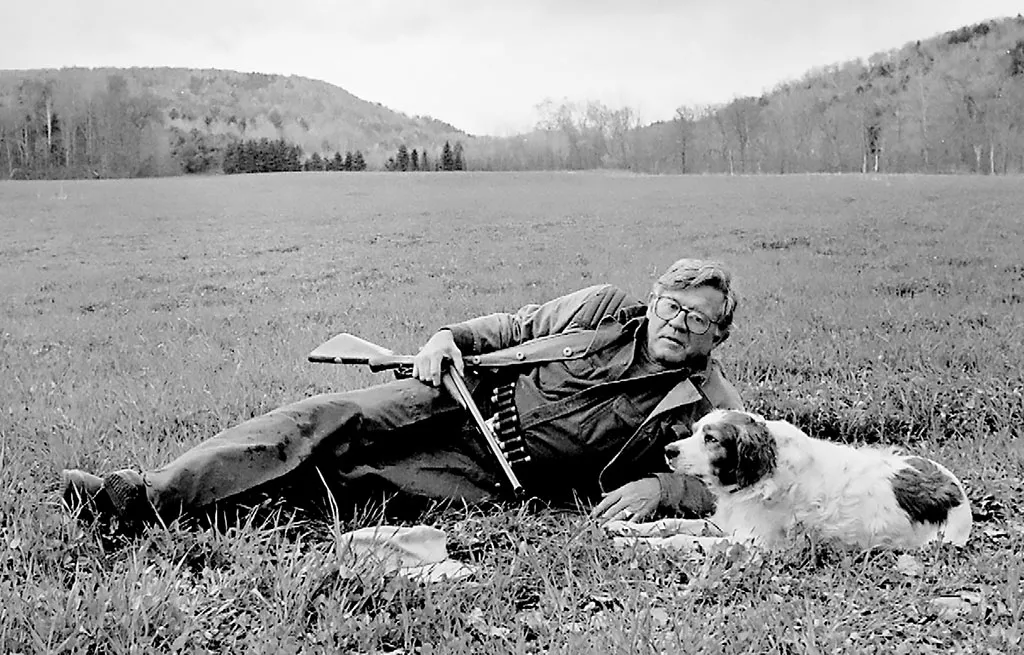
Peter Miller, the photographer and writer who documented a passing way of life in rural Vermont through intimate black and white portraits of its people, died on Monday. He was 89.

His death, confirmed by his longtime friend Rob Hunter, followed a hospitalization for pneumonia.

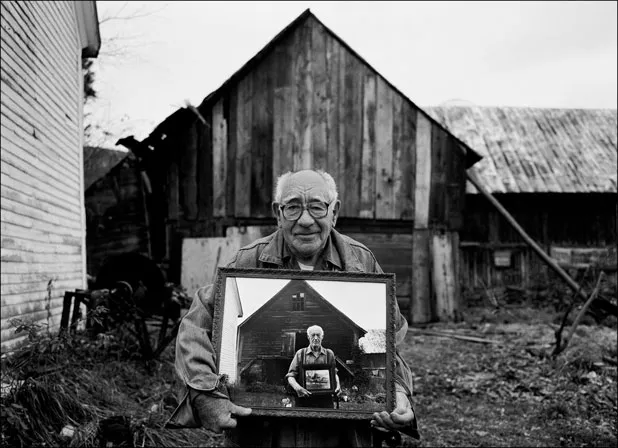
Even Vermonters who don’t recognize Miller by name will likely recognize his work. He’s best known for a series of self-published coffee-table books that featured portraits of and essays about older Vermonters — often farmers — who embodied the rugged authenticity that first made him fall in love with the state upon arriving here in the 1940s as a teenager.

Among his most iconic images are the 1959 portrait of Will and Rowena Austin, a retired farm couple from Weston; and the 1997 portrait of Fred Tuttle, a Tunbridge dairy farmer and U.S. Senate candidate.

An avid outdoorsman, Miller also had an affinity for landscape photography. Until his health began to fail him recently, he could often be found chasing sunsets across the countryside. “It isn’t photography that I like so much,” he said during one of a few interviews with Seven Days in the months before his death. “What I do like is beauty.”

Miller received his first camera as a gift from his mother, who bought it with insurance money the family received after someone stole some guns Miller owned. As a student at the University of Toronto, he met famous portrait photographer Yousuf Karsh and traveled to Europe as his assistant, helping out on photo shoots of notable figures including Pablo Picasso, Albert Camus and John Steinbeck.

Miller enlisted in the U.S. Army after graduating college and spent two years working as a Signal Corps photographer in Paris, roaming the streets with his camera. He then wrote for Life magazine in the late 1950s before returning to Vermont to raise his children.

In the late 1980s, Miller sought to compile his three decades of Vermont images into a book that would tell the story of a changing culture. He pitched it to roughly a dozen publishers — and struck out with each.

Undeterred, Miller refinanced his house in Waterbury and used the money to self-publish Vermont People, an acclaimed book that sold over 15,000 copies. He went on to self-publish six other books, the most recent of which, Vanishing Vermonters: Loss of a Rural Culture, was released in 2017.

His work would earn him notable acclaim. In 2005, he was named the Burlington Free Press Vermonter of the Year. And in 2013, former senator Patrick Leahy read a tribute to Miller on the floor of the U.S. Senate.

click to enlarge Peter Miller's iconic photo of Fred Tuttle - PETER MILLER

  • Peter Miller
  • Peter Miller’s iconic photo of Fred Tuttle

“His resiliency is remarkable and his uncanny ability to display the beauty of Vermont in a way words cannot do justice serves as an inspiration for photographers everywhere,” Leahy said in his speech.

The self-publishing route allowed Miller to produce his books with meticulous care, which is perhaps why the quality of his volumes rival those put out by large publishers. His works can often be found at small-town bookshops and general stores.

But the do-it-yourself approach had its downsides — primarily, financial.  Though his writing and photography sales once brought in up to $85,000 annually, Miller’s income had plummeted in recent years, making it harder and harder for him to get by in an increasingly expensive state. Last year, he sold his longtime home in Waterbury and moved into an apartment at a senior facility in Stowe. At the time of his death, he was cataloging his work with the hope of  selling his portfolio.

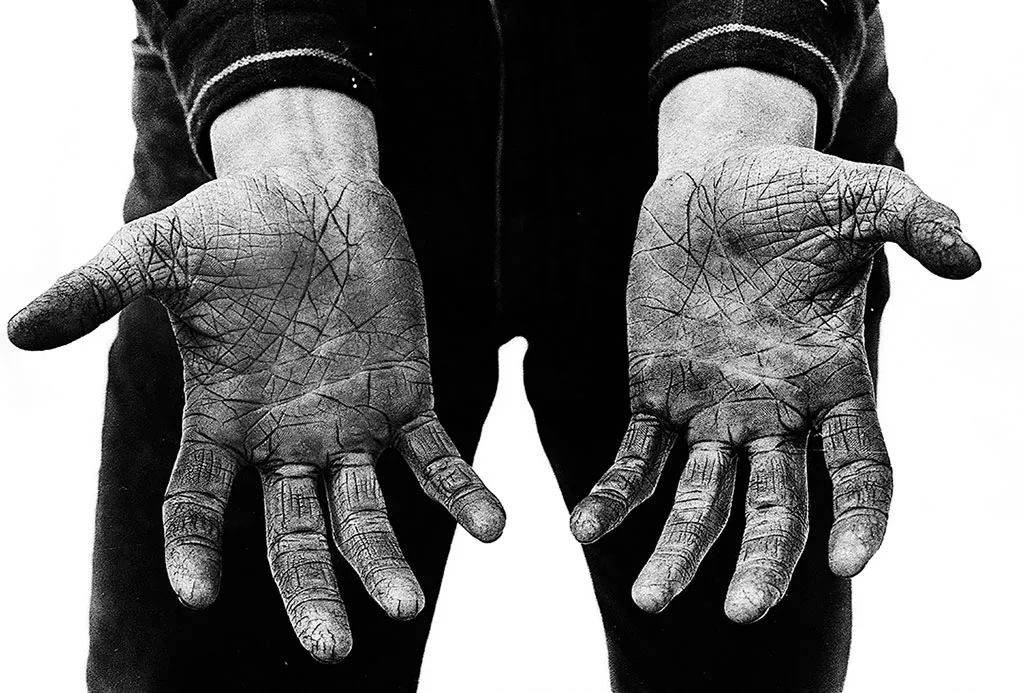
click to enlarge A Blacksmith's Hands - PETER MILLER

  • Peter Miller
  • A Blacksmith’s Hands

A self-described curmudgeon, Miller could indeed come off rough to new acquaintances. Hunter, for instance, recalled meeting him for the first time while working as the executive director of the Frog Hollow Vermont Craft Gallery. “He came in, and he’s like, ‘So you gonna buy my books?'” Hunter said with a laugh.

But Miller’s gruff exterior quickly gave way to a warmth and kindness that friends say stemmed from his deep curiosity about people and their stories.

“All those people he photographed, a lot of them were long-term investments that he would make: going out, talking to them, getting to know who they are,” said Hunter, a documentary filmmaker. “That, I think, made for a better end product.”

Hunter grew close with Miller over the years and once even spent dozens of hours following him around while producing a documentary film series about some of Frog Hollow’s artists. The two had fallen out of touch during the pandemic but recently reconnected, with Hunter visiting Miller numerous times before his death.

After learning of Miller’s passing, Hunter searched his own computer for the raw footage he shot of his friend and sat down to watch.

“I will miss him tremendously,” Hunter said.

Meet the first Native American woman to bring a show to Broadway

Meet the first Native American woman to bring a show to Broadway

When Larissa FastHorse was growing up in South Dakota, she was taught that Thanksgiving was a time for harvest and gratitude. The inaccurate portrayal of happy pilgrims and Indians that many students learn today was never part of story.

It’s part of the reason why FastHorse, 51, decided to write the satirical comedy “The Thanksgiving Play,” which tells the story of four woke, white theater makers who are writing a Thanksgiving play for students to perform. The liberal, well-meaning artists worry so much about not offending anyone and getting the story historically right, that things go very wrong.

“The Thanksgiving Play” stars Katie Finneran, Scott Foley, Chris Sullivan, and D’Arcy Carden.Joan Marcus / Joan Marcus

“[Growing up], I was aware that there was an Indigenous truth being left out of Thanksgiving, but even I was not fully aware of how fictionalized the national holiday story is until I did research from the play,” said FastHorse.

With the play’s opening this week, FastHorse is making history as the first Native American woman to bring a show on Broadway. It’s being directed by Tony Award-winning director Rachel Chavkin and stars Katie Finneran, Scott Foley, Chris Sullivan and D’Arcy Carden.

FastHorse recently chatted with Know Your Value about her new play, the importance of representation, her career pivot from ballet dancer to playwright and more. Below is the conversation, which has been edited for brevity and clarity.

Know Your Value: You grew up in South Dakota. What are your memories of Thanksgiving during your childhood, and how did it influence the story you tell in “The Thanksgiving Play”?

Larissa FastHorse: The play is based in a classroom. My childhood classroom experiences with Thanksgiving was not like the play. My experience was [that Thanksgiving is] entirely a harvest festival. The way Thanksgiving is taught in schools with plays and pageants depicting pilgrims and Indians was completely new to me. It’s been really big for me to realize what we have kids to learn about Thanksgiving, because my in my world, Thanksgiving is just about harvest, gratitude and thankfulness.

Larissa FastHorse’s “The Thanksgiving Play” opens on Broadway this week.John D. and Catherine T. MacArthur Foundation

Know Your Value: You have gotten a lot of attention for being the first Native American woman to bring a show on Broadway. What does that honor mean to you?

FastHorse: It’s huge. I go back and forth between being so excited and honored, and then feeling like a lot of pressure. The last Native American playwright that we know of was Lynn Riggs, and it was nearly 100 years ago. It’s taken a whole new century for us to have another Native American playwright… me. I do not want that to happen again. I have a lot of pressure to make sure things go well so that it isn’t another century before we have the many, many incredible Native writers we should have on Broadway.

Know Your Value: Tell us about the genesis of the play — and how you decided to weave a lot of humor into a story about America’s dark history.

FastHorse: I’m a comedy writer. Comedy is also in Native American culture. We say, “you have to laugh or cry,” so we choose to laugh … We deal with the dark history with humor and that’s how we persevere and we survive. Using comedy is natural for me, and it’s the indigenous way to deal with things.

Know Your Value: The play is being directed by Rachel Chavkin, best known as the Tony Award winning director of “Hadestown.” On the surface, this may seem like an unlikely pairing. Tell us about this decision and how you two decided to collaborate.

FastHorse: Rachel Chavkin and I have known each other for 10 years, at least. We always have admired each other’s work but this is the first project we’ve been able to work on together. Her sense of theatricality is incredible. She can take something very simple and make it large and beautiful and inviting. And she’s hilarious. She’s also our … secret weapon of understanding well-meaning, liberal white people. She does that role well for us because everyone else on the creative team is a person of color.

image
Aug. 5, 201905:06

Know Your Value: What do you hope viewers take away from the play— and America’s painful history of how they treated Native Americans?

FastHorse: First and foremost, I hope people have fun and can enjoy being together in the theater, at the play, as a comedy within a satire. But then I think also it should leave people asking themselves about what they were and were not taught: Why wasn’t I taught these things? Why didn’t I learn different history? Why is it so hard to find history about indigenous people and the lands we’re standing on? I want people to start to really question why Native American history is taught how it is, why there’s an access or lack of access to certain information, and why we haven’t sorted it out sooner and started to do better.

Know Your Value: Let’s talk about career pivots. You began your career as a ballet dancer and choreographer but left that dream behind when you were forced into early retirement due to an injury. What was the pivot to playwright like?

FastHorse: A career pivot is really hard… Suddenly you have to let go of what you know (in my case dancing) and find out what to do with the rest of your life. I was fortunate and found an organization called Career Transitions for Dancers. They give career counseling, training and education to the dancers both during and after their career to figure out what to do next. I really needed that at that time. They helped get me into writing.

I worked in film and TV writing first, 15 years ago. At the time, I was really disappointed in how Hollywood was depicting Native people and Native stories. It just wasn’t accurate, and I felt like I was fighting all the time to share true Native stories. Eventually theater found me through the Sundance Institute’s Indigenous Program. I really was excited about how theater wanted to do things right with storytelling. I’m now back in film and TV because things have changed in the past 15 years. And now, theater, film and TV are trying to do things right as

10 Ways to Have a Dope Time at the DAM

10 Ways to Have a Dope Time at the DAM

4. As you expand your mind, decolonize it. Many artworks in the galleries explore race, gender, identity, and other issues related to equity, diversity, and inclusion. As artist Wendy Red Star is quoted as saying in the renowned Indigenous arts of North America galleries on level 3 of the Martin Building:

A lot of people will say, ‘Well, that’s just Native history.’ No, that’s everybody’s history who lives on this continent. It’s about decolonizing the way people are seeing things.

5. Vibe with surreal Latin American art on level 4 of the Martin Building. Works by Leonora Carrington, Pedro Friedeberg, Gunther Gerzso, Bridget Bate Tichenor, and others will blow your mind!

6. On the same floor, you can learn about ancient origin stories in the art of the ancient Americas galleries. For example, you can learn how ancient Andean communities believed in dualism—the understanding that the world is made up of complementary pairs. The Inca described the world as kay pacha, the here-now earth. They believed that humans lived on the edge between the sky and the earth and between the past and the future.

7. Contemplate matters of the spirit with Buddhist, Hindu, and Islamic art on level 5 of the Martin Building. For example, you can see a Hayagriva mandala created at the DAM by three monks from Seraje Monastic University in southern India.

8. Enjoy the beauty. From the Monets and other Impressionist masterworks on level 2 of the Hamilton Building to the sweeping landscapes of the American west on level 7 of the Martin Building, the museum is filled with creations that will take your breath away.

9. Speaking of level 7, you can take in the views from the rooftop of the Martin Building. Also on this floor, you can see It’s Roundup Time in Heaven, in which a cowboy serenades squirrels in party hats while being blessed by the Great Acorn in the Sky. That’s right. Squirrels. In party hats. You’ll also be able to flip through a comic about legendary Black cowboy Nat Love and find many other cool and unexpected artworks in these galleries including a painting by Andy Warhol!

10. Awaken your own creativity. You’ll find something interactive in almost every gallery. In the Creative Hub on level 1 of the Martin Building (developed in collaboration with Moe Gram and Frankie Toan), spin the experimentation wheel to play with colors, textures, and patterns, and shred the expectations that might get in the way of your creativity. Get hands on with artists in the Landscape Studio on level 1 of the Hamilton Building, and on the weekends visit with one of the artists demonstrating their process.

Job Spotlight: Meet Curstin Carpenter, see how art and marketing helps OSA

Job Spotlight: Meet Curstin Carpenter, see how art and marketing helps OSA
image

When walking down the BSC, I am sure that you have realized the beautiful and creative banners made by the Marketing Team of the Office of Student Activities (OSA). One of the people that work for OSA, Curstin Carpenter, makes these creatively painted banners for organizations and activities happening on campus. Carpenter is a sophomore majoring in business administration with a concentration in marketing. Additionally, her work is to attend these activities and create social media posts to inform students of the various things that will be happening on or out of campus.

“Anyone who has a love for student organizations and activities and can effectively manage social media platforms for specific events can work in the marketing team of OSA,” Carpenter said. 

Working in this position has given her many skills like managing, organizing and working with a team. The job is very technical, but you do not need to be good at drawing and painting to be a part of it. You just need to be creative and let your inner self be expressed by the different paintings.

“What I enjoy the most is painting the banners and getting to see/hear people refer to my work when walking through the BSC,” Carpenter explained. 

“Applying for the job was simple,” she said. Carpenter applied online through the school website and a few days later she got an interview for the position. “It was a fairly easy process,” she claimed.

The hours of operation are from 10 a.m. to 6 p.m. for a normal schedule. But as an advantage, they give you the opportunity to adjust it by your availability. Carpenter finds that extremely useful because she does not have to be stressed about working and attending classes.

“When getting out of class, I can go to the Marketplace and then head to my on-campus job without any worry and a belly full, which is a good thing,” she said.

There are multiple tasks that must be taken care of before a certain day and time. Not only does one person work on them, but multiple people do, making it fun and entertaining. Carpenter loves her job because it helps sometimes relieve some of the stress she has. It has grown to become her safe place to be when she wants to escape from time to time.

“We could always need help and new people applying for this position,” Carpenter stated.

If anyone is interested in applying for the position, you are welcome to head to the HUB which is located downstairs of the BSC, close to the mail services, and ask for information. At the same time, you could come across other on-campus jobs that OSA offers.

Design Milk’s Favorite 2023 Designs for the Cannabis Connoisseur

Design Milk’s Favorite 2023 Designs for the Cannabis Connoisseur

This colorful borosilicate glass piece gives off the impression it could be a design object found within the likes of the MoMA gift shop or Design Within Reach. And that’s why we’re fond of this graphical glass design: a purposeful object with the bonus of being worthy of a space on your shelf for display. Available in five different colors.

A follow-up to the three “smoking design objects” Weed’d collection revealed last year for World Cannabis Day, the Milanese brand returns just ahead of 2023’s celebrations with three new water pipes fashioned in tasteful objects for smoke ‘n display duties by Gabriele Chiave, Cara/Davide, and Attila Veress in grey and sky blue. The first drop by Simone Bonanni, Valerio Sommella, and Maddalena Casadei is also getting a refresh with new red and gray options, joined by new candle pots designed by all three second wave of designers, along with a compact pipe and round ashtray combination designed by Weed’d’s own Design Director, Simone Bonanni.

Go Easy Smoking Glass shaped like a cloud and floating with smoke coming out of it against magenta background.

We love this playful smoking tool crafted to resemble a “shimmery Texas sky…that mimics the sky just before a rainstorm.” The clear iridescent finish imparts the borosilicate glass a color-shifting effect, a mesmerizing sheen that will definitely spark up some conversations and perhaps a social session, with its dreamy effect becoming even more pronounced with every hit.

Four DaVinci vaporizers in black, magenta, yellow and dark green matte metallic finishes floating against white background.

Not everyone wants to overindulge when it comes to enjoying herb. Sometimes a micro-dose session with precise and measured doses delivering a relaxed state without the heavy head later is the preferred destination. This dry herb and concentrate-compatible vaporizer is perfect for those planned or impromptu sessions where a little can go a long way. The Miqro C’s sleek pocketable design and affordable $99 price tag makes this model an accommodating entry level electronic vaporizer with four pre-sets, requiring only 39 seconds to heat up, and engineered to last 30 minutes before requiring recharging via USB-C.

Rose gold smoking pipe with detailed close up smoking chamber exhaust.

The pun-loving side of us would like to say this smoking tool’s design is piping hot, but that would be a misnomer. It’s more sublime and sophisticated, especially in its Rose Gold iteration (also available in Maritime and Onyx). With a capacity to hold up to 1g of flower in its bowl, the Vessel Pipe’s real magic is hidden within: a double-helix interior spiral shaped to cool down smoke before it hits the lungs for a more enjoyable cough-free experience.

sculptural aluminum four-piece grinder standing on a corner with top section rotated

Imagine Isamu Noguchi’s iconic steel cube public sculpture or the spinning Astor Place Cube miniaturized down to handheld size into an aluminum grinder. One of Laundry Day’s material-driven Cube, Chrome, and Aluminum Grinder collection designs, the aluminum grinder hides four detachable compartments – two dedicated for grinding flower, one for collecting grounds, and the last “floor” for gathering any excess kief. A sliced corner allows displaying your very good taste prominently and openly like a sculpture.

four different flavors of Rose cannabis infused Turkish delights edibles.

Too many edibles either taste too dank or hit with immeasurable consequences regardless of their listed dosage. Which is why we like Rose Delights, Turkish Delights candy cubes available in both THC or CBD-only formulations. Half or one cube hits the sweet spot between taste and intended (and predictable) efficacy, formulated with just the right amount of plant material and paired with a culinary-exquisite menu of flavors ranging from Apple Ume Ginger, Rose Hibiscus, or our favorites made in collaboration with confectionary specialists Eat Nunchi, Jasmine Boba, and Oolong Boba. The graphic design across their range of packaging is a bonus for those who take such details into consideration [raises hand].

Package of cannabis-infused ketchup against red background set vertically on wood surface

In what has to be one of the most unexpected, but in hindsight, perfect 4/20 themed collaborations, edibles brand Kiva has cozied up with Los Angeles burger institution Fatburger to elevate the “would you like fries with that?” experience to new highs. The condiment’s graphic design does a commendable job of keeping its contents clearly labeled, but without bringing too much attention to its 10 mg-enhanced “special sauce” that may compel another case of the munchies.

Three matchbooks with small people as the matchsticks set against dark blue background.

A “cheeky” design that we’d be very hesitant to use, only because we’d want to save these matchbooks for only the most special occasions deserving of sacrificing a strike. But in hindsight, we’d likely associate any missing matches with good times shared, so it’s all good.

Multi-color tubes of Phases cannabis stir-in pack next to metal tin for brand's pre-rolls.

Phases use of color and typography isn’t merely aesthetic (though appreciated nonetheless), but a means for the brand to make social cannabis more approachable for new users or the experienced alike. The California brand’s range is each assigned an ideal situation/application associated with their pre-roll offerings, with their 5-roll tin our favorite for its variety pack selection.

Six cans of Cann cannabis-infused beverages with grapefruit, blood orange, and lemon lavender flavors on wooden tray with person's torso in background.

As someone who has sampled numerous brands of cannabis-infused beverages over the years, I’ve found the vast majority of these drinks as one-and-done affairs. The overpowering herbal taste and bouquet of the mood-altering extract can negate even the most appetizing of flavors into a skunky unappetizing sip. But Cann seems to have nailed it, with flavors like Grapefruit Rosemary, Ginger Lemongrass, and Blood Orange Cardamom all tasting like quenching, delicious adult sodas, down to their perfect not too sweetness. A low 2mg THC, 4mg CBD content means you can enjoy one or even two servings with hardly a worry about hazy daze the next morning, making a strong case Cann could become a new brunch time cocktail fave in lieu of boozy beverages.

Stone Road dark blue baseball cap and bucket hat with embroidered patches with nature imagery attached onto their sides.

We’ve been enthusiastic fans of this established California grower and their smooth smoking selection of flowers grown across their 57-acre, off-grid farm in Nevada City, including their tastefully designed packaging incorporating the flora and fauna of the Golden State into a whole vibe. These two hats take the nature-first aesthetic to new highs.

Grey ceramic cup-style ashtray finished with bumpy globular glaze finish.

The name says it all. The limited edition Gloopy Ashtray is inspired by Seth Rogan’s experimentation with trypophobic-inducing globular textures reminiscent of slime molds. These cup-style ash receptacles are handcrafted, with only 375 limited editions made in Westminster, Colorado by Hammerly Ceramics. The studio is well acquainted with the principle of creating useful objects that beg to be picked up, and nobody will deny this ashtray begs to be picked up, if not simply touched.

Sandoval aromatic incense and room sprays, two small jars with incense, one large room spray in black spray bottle and one larger jar of cone incense.

These interior scent sprays and incense aren’t marketed for cannabis, but we find they offer an effective post-smoke accompaniment. Sandoval’s impressive ability to overpower the sometimes disagreeable stink of skunk is unmatched (alongside wildlife skunk odors in our experience). These natural ingredient sourced, synthetic-free fragrances can pack a wallop, especially the cones, but quickly dissipate into a mildly pleasant herbaceous aroma comparative to the olfactory effects of lighting up a stick of Palo Santo or a few leaves of white sage instead of pure perfume.

This post contains affiliate links, so if you make a purchase from an affiliate link, we earn a commission. Thanks for supporting Design Milk!

Gregory Han is Tech Editor of Design Milk. A Los Angeles native with a profound love and curiosity for design, hiking, tide pools, and road trips, a selection of his adventures and musings can be found at gregoryhan.com.

Why Sedona’s Tourism Bureau Fired Its City Over Destination Marketing

Why Sedona’s Tourism Bureau Fired Its City Over Destination Marketing

The Sedona Chamber of Commerce & Tourism Bureau recently ended its tourism partnership with the City of Sedona because the local government wouldn’t allow it to restart destination marketing. The move came in the wake of a November election that saw a mayor and council member voted out and that was seen as a referendum on resident attitudes toward tourism.

“It got to the point where somebody had to make a bold decision,” said city councilman Pete Furman. “The chamber pulled the trigger first.”

The non-renewal of the contract for the next fiscal year represents a broader tale of many places rethinking their spending on tourism promotion. Sedona’s tourism bureau is one of a growing list of entities put under greater pressure from legislators and constituents to redirect funds toward destination management and other community goals. A recent Skift megatrend noted that residents in many parts of the world no longer want to be spectators in tourism.

Tourism Surge, Tourism Slump

Two years ago, the Sedona City Council revised its contract with the tourism bureau, stopping the bureau from spending money on destination marketing.

Before the pause, the tourism bureau spent between $500,000 and $600,000 a year on marketing and advertising per year to attract affluent, longer-staying visitors, said Michelle Conway, CEO and president of Sedona Chamber of Commerce & Tourism Bureau. The promotion expenses were only a minority of its expenditure, with destination management the bulk. Yet for the past two years, it only spent money on destination management.

Not everyone’s happy about the move.

Sedona benefited from a surge in tourism in 2021. But last year, business flagged.

Like other rural destinations, Sedona — a hiking and mountain biking destination — is facing wider competition now that the pandemic is over, international travel is open, and cities are attractive again to tourists.

In 2022, Sedona saw a decline in tourist traffic year over year. Meanwhile, direct competitors like Jackson Hole and Napa Valley haven’t seen the same drop and are eating away at Sedona’s share, Conway said.

Many hoteliers are concerned. Occupancy is now down 6.5 percent from its pre-pandemic level. Average daily rates have been dropping.

Hoteliers had been one of the most active stakeholders years ago in pushing for a 0.5 percent addition to the city’s 3 percent bed tax. The 0.5 percent was originally earmarked specifically for tourism promotion. 

Businesses — 60 percent of which are tourism-oriented — are now “suffering” and “asking for help,” Conway said. Some have seen double-digit drops in revenue. On top of lost visitor spending, business operations costs are above pre-Covid levels.

The tourism bureau thought it was time to restart destination marketing. Yet the Sedona City Council wouldn’t budge. It denied requests to jump-start marketing.

To properly support its business stakeholders, the chamber had to break away from the city, its leaders said. It’s confident it will find alternative sources to support future marketing efforts.

2021: The Turning Point

Something of a split between residents and the tourism industry had been appearing before the marketing pause.

Many locals haven’t been happy with changes in their life due to tourism in the last five years, said Ryan Casago, a resident and local vacation rental owner.

The year 2021 was something of a turning point because of overtourism, said Conway. Like other outdoor destinations during the pandemic, Sedona saw an explosion in visitors, with 3.7 million in 2021, up from its annual 3 million, according to the Sedona Chamber of Commerce.

“We were super successful,” said Furman. “Tourists started to flock to Sedona.”

But there were negative consequences.

The city’s road infrastructure was being pushed “close to its limits,” said Furman.

Traffic congestion, longer wait times at restaurants, and poor habits from new outdoor enthusiasts hit the town of 10,000 people. 

The influx of short-term rental properties has cut available housing and changed the community makeup. Conway said there are now more short-term rental rooms than hotel rooms (2,800), which has added to the angst of the locals.

Affordable and available housing has become harder to come by for large segments of the local workforce, said Furman. 

Such stress on community, physical, and natural infrastructure was a common problem among destinations in 2021 and 2022 in response to unprecedented tourism. What commonly followed were communities questioning the value of tourism promotion. In Jackson Hole, Wyoming, for example, residents have directly questioned its tourism board about ceasing marketing.

Destination marketing tactics like filling in slow seasons and promoting lesser-used trails instead of popular attractions do more harm than good, said Fuman. Lesser known trails not set up for parking suffered overcapacity, for example, which pushed the tourist parking to other locations. 

“All those decisions have unintended consequences of pissing off the locals,” he said. 

Tough Choices

The chamber doesn’t have an alternative funding source yet. The details of which funding model to use to replace the loss of bed tax dollars are still being worked out, but the business community said it’s fully behind whatever the chamber does.

Come July 1, when the current contract ends, the chamber will have to do “what it needs to survive,” said Conway. That may include operational and program cuts. Details on who will be responsible for which destination management programs and projects are still being worked out, but the chamber expects to have less on its plate.

With the contract over, Conway is “excited” about the new opportunities for creative marketing now that it won’t have its hands tied. One area of interest is potentially expanding marketing to include the greater Verde Valley that Sedona sits in — highlighting the region’s diversity of towns, wine country, and art communities.

Meanwhile, the city council is looking at hiring a consultant to help internally manage and mitigate the impacts of tourism.

“I don’t see a lot of energy in the near term to do destination marketing,” said Furman.

Jaune Quick-to-See Smith, Shaped by the Land

Jaune Quick-to-See Smith, Shaped by the Land

Jaune Quick-to-See Smith was sitting on the shore of a lake in Montana when she had an epiphany. An artist and curator, Smith was visiting the Flathead Reservation — the home of the Confederated Salish and Kootenai Tribes, of which she is a citizen. She’d been born on the reservation in 1940 and later moved to Albuquerque. On this trip, in 1991, as she looked out at the landscape that had helped shape her, she realized that she needed to do a better job of communicating. “I’m making paintings and I know what they’re about but the viewer doesn’t,” she recalled in a recent interview.

Then came the light-bulb moment: Her works were about contemporary Native life, but they were more abstract, less direct in approach. “What if I cut articles out of the newspaper, glue them in, and paint on them, like Rauschenberg did?” she thought.

Smith liked Robert Rauschenberg’s process of incorporating cutouts into his works, building his famous collage aesthetic that placed a medley of objects and images on equal footing. “But if I do it,” Smith told herself, “I can make it so that it really says something.”

She started placing newspaper clippings on her canvases and painting around and over them. As the idea took hold, she made the layouts more purposeful: juxtaposing excerpts from The New York Times and the Flathead Reservation’s Char-Koosta News, as well as other printed snippets, that, when read together, became suggestive and rhythmic, creating what Smith calls her “rap.” She added found images, bits of fabric, and more expressive passages of paint, all of it simmering behind large, simply rendered icons, like a canoe. In 1992, she hung above one such canvas a series of objects featuring racist Native stereotypes, including a baseball cap from the Cleveland Indians. With a twist of dry humor, she titled her piece, which stretched 14 feet long, “Trade (Gifts for Trading Land With White People).”

A painting in red, green, with white newspaper collage and fabric on canvas with 31 found objects representing Native stereotypes, including a Cleveland Indians baseball cap, A viewer is at left at the Whitney Museum.
“Trade (Gifts for Trading Land with White People),” 1992, features a large canoe and a collage of oil, paper, newspaper and fabric on canvas. Above the artist hung 31 found objects on a chain. It is on view in “Jaune Quick-to-See Smith: Memory Map” at the Whitney Museum of American Art.Hiroko Masuike/The New York Times
Detail, “Trade (Gifts for Trading Land With White People).” Above the expressive passages of paint, she hung a series of objects featuring racist Native stereotypes.Hiroko Masuike/The New York Times

That monumental, still stunning artwork sits at the heart of “Jaune Quick-to-See Smith: Memory Map,” opening this week at the Whitney Museum of American Art. The exhibition includes some 130 pieces from over five decades, making it the artist’s largest survey. Smith’s is the first retrospective of a Native artist that the New York institution has itself organized, a fact that’s less surprising than it is vexing.

“It forces the question of, why not before? Why not more attention to contemporary Indigenous art?” said Laura Phipps, the Whitney’s assistant curator who organized the exhibition with Caitlin Chaisson, a curatorial project assistant. “We’re constantly questioning what ‘American’ means, but in a lot of those conversations, the idea of Native America has not been a part of that.”

Smith’s retrospective arrives as the map of the art world seems to be shifting: Contemporary Native artists have been more visible and sought after than ever before, in museum commissions and collections and in galleries. Smith, 83, also has a commission in Counterpublic, a new triennial in St. Louis, and is curating an exhibition featuring some 50 Native artists at the National Gallery of Art. The show, which will open in September, represents more overdue firsts: the first time an artist has ever curated an exhibition there and the first show of Native art at the NGA in 30 years.

A visitor inspects “Trade Canoe: Making Medicine, (2018), a collaboration by Jaune Quick-to-See Smith and Neal Ambrose-Smith. It is made of wood and filled with environmental detritus degrading the Native landscape. Back right, Quick-to-See Smith’s “McFlag” (1996) riffs on Jasper Johns’s flag paintingsHiroko Masuike/The New York Times
Prints from Quick-to-See Smith’s “Custer Series” (1993), a good example of the artist’s dark humor.Hiroko Masuike/The New York Times

But if the current wave of attention has opened up new possibilities for Indigenous artists, particularly younger ones, credit is due less to the institutions than to Smith and others of her generation for the tireless work they did to “break the buckskin ceiling,” in her words. The Whitney retrospective makes that clear. Although Smith’s curating and activism are represented only minimally, her paintings, prints and sculptures demonstrate how she took various modern and postmodern artistic languages, including collage, appropriation and Pop Art, and made them her own — or, as she would say, made them Native.

Take, for example, “Trade (Gifts for Trading Land With White People),” which, according to the Choctaw-Cherokee artist Jeffrey Gibson, “offers so much allowance and freedom for Native artists.” Gibson spoke of the challenges he has felt in trying to be a Native artist, activist, educator and parent simultaneously. “You need a unified model of how someone can be the same person in all those spaces,” he said. “Jaune has provided that for me.”

Smith has always occupied multiple roles. She and her sister were raised by their father, Arthur, after their mother, who gave birth to Smith as a teenager, left. Arthur was a horse trader, and while attending school, Smith worked with him — and in canneries and on farms — throughout her childhood. One of her favorite escapes was to hide in a tree and read books.

Smith didn’t get an advanced art degree until she was 40. In high school, a white adviser told her, “Indians don’t go to college,” so she did college prep. When an art teacher told her she drew better than the men, but that “women cannot be artists,” she got an art education degree. Along the way, she met her partner, Andy Ambrose, had children, and worked a variety of jobs to help support them. (Her son Neal Ambrose-Smith is also an artist; two of their collaborations are on view at the Whitney.)

“Indian Madonna Enthroned,” from 1974. which Quick-to-See Smith made while still in school for art education.Hiroko Masuike/The New York Times

In 1976, Smith moved to Albuquerque and started auditing art classes at the University of New Mexico, — it took three applications until the school admitted her. There, she and the Indigenous artists Larry Emerson, Conrad House, Felice Lucero, Emmi Whitehorse and Paul Willeto formed a collective called Grey Canyon. “She’s like a mother hen,” said Whitehorse, who is Navajo and was then an undergraduate at UNM. “She took it on herself to teach me the ropes.”

Grey Canyon provided emotional support, but Smith wanted their art to be taken seriously. She sought places for them to exhibit and in 1979 landed their first show, at New York’s American Indian Community House. At the time, she was making pastels that referred to places that were meaningful to her. They look like enigmatic maps, with floating pictographs and tracks — Smith’s response to professors who emphasized abstraction. But when Grey Canyon exhibited at the Wheelwright Museum of the American Indian in 1980, the members found that their modern paintings and abstract art clashed with some people’s stereotypical expectations of Native artists. Whitehorse recalled that white board members “hated it. They said, ‘What the heck are you doing? You should be at home, learning the craft your grandmothers are doing, making pottery and rugs.’”

Jaune Quick-to-See Smith working on a wood canoe with her son Neal Ambrose-Smith, Matthew Eaton and David Beams in Smith’s sculpture studio in Corrales, N.M. Brad Trone for The New York Times
Jaune Quick-to-See Smith’s sculpture studio with the artist’s wood canoes of various sizes made with her team of artists and two of Smith’s unfinished paintings and plaster sculptures of Tierra Madre figures.Brad Trone for The New York Times
In the artist’s studio are Mexican masks, unknown artists; an oil painting from 2022 by Patrick Dean Hubbell titled “They may run out of Natives to sit for these portraits.”Brad Trone for The New York Times

Smith’s approach to organizing the Grey Canyon shows — cold-calling anywhere she could think of — established how she would go about much of her activism and curating for the next two decades: in a mode between seat-of-the-pants and “when the spirit moves me,” as her father would say.

Her improvisational urgency has had remarkable results. Her projects include helping to save Albuquerque’s Petroglyph National Monument and Santa Fe’s Institute of American Indian Arts. She’s also organized over 30 exhibitions, including important group shows of contemporary Native American photographers and women artists, and two exhibitions that rebutted the 1992 quincentennial celebrations of Columbus’s arrival in the Americas.

Such work reflects her communal mind-set — how she has expanded the space for Indigenous people in art by inviting others to give talks, connecting them to resources, or just writing notes of encouragement. “When I come through the door, I bring a community with me,” Smith said. “I want there to be others after me.” She attributes this to her heritage. “I’m still doing my dad’s horse trading,” she told me, only now what’s being exchanged are ideas and support.

Jaune Quick-to-See Smith talking with her son Neal Ambrose-Smith and her friend Emmi Whitehorse, both artists; the painting, “House and Home” (1996), contrasts Native and non-Native ideas of home.Hiroko Masuike/The New York Times

Molly Donovan, the National Gallery’s curator of contemporary art, likened working with her to being “this lucky student in a pro seminar being taught by the pre-eminent voice on the subject. Jaune has a generous pedagogy; she freely shares her knowledge.”

Smith’s early solo gallery shows were in Santa Fe, then New York. She’s continued to exhibit regularly throughout her career, but has nonetheless felt relegated to the periphery: seen and heard but not always fully understood, her work written about but rarely in real depth.

“We’re marginalized,” she said, “and actually, there’s a certain comfort level in that. You don’t have to worry about bad PR, because nobody writes about it — nobody looks at it. So you can do whatever you want.”

In Smith’s case, that has meant honing her collage technique; introducing more icons, like the U.S. map and bison; and adjusting her colors and insistent strokes and drips of paint to better convey the clamorous contradictions of American Indian life. One potent painting, “Sovereign Nations” (2002), features three layered wingtip dresses decorated with American-flag stars (a nod to Jasper Johns’s “Three Flags” from 1958, hanging upstairs at the Whitney). They’re set against the text of the 1855 Treaty of Hellgate, which created the Flathead Reservation.

Jaune Quick-to-See Smith, “Sovereign Nations,” 2002. Part of what makes Smith’s practice fascinating is the tension it carries between her embrace of more Eurocentric, modernist methods and her pro-Indigenous, environmentalist messages.via Jaune Quick-to-See Smith and Garth Greenan Gallery, New York

Part of what makes Smith’s practice fascinating is the tension it carries between her embrace of more Eurocentric, modernist methods and her pro-Indigenous, environmentalist, anticapitalist messages. Those messages feel very contemporary and of a piece with art by Nicholas Galanin, Maria Hupfield, and New Red Order, yet these younger Indigenous artists’ work is more formally experimental and often more direct.

“I’m caught between two generations,” Smith told me: that of her father, whose childhood experiences of being beaten at an American Indian boarding school made him feel like he “couldn’t say anything,” and that of younger Native artists, who “can say things that maybe we felt like we couldn’t,” Smith reflected, “I don’t think I have that freedom.”

It’s difficult to walk through her retrospective and reconcile that sentiment with what’s on view. Her canoe piled with skulls and flag with Mickey Mouse ears suggest that despite limitations or fear, she has found ways to say what she needs to. In a recent painting, she took the U.S. map and flipped it sideways. The move dispels the map’s authority, making it look precarious and absurd. In the center, amid yellows, reds and oranges, Smith added a cutout phrase that could serve as a secondhand manifesto: “NDN humor Causes people To survive.”

Left: “Survival Map,” 2021; right, “Map to Heaven,” 2021. Hiroko Masuike/The New York Times

Jaune Quick-to-See Smith: Memory Map

Through Aug. 13, Whitney Museum of American Art, 99 Gansevoort Street, Meatpacking District; (212) 570-3600, whitney.org.

Xiaomi 13 Ultra Preview: Game-changer for Smartphone Photography?

Xiaomi 13 Ultra Preview: Game-changer for Smartphone Photography?

Xiaomi 13 Ultra Intro

Let’s say it right away: the Xiaomi 13 Ultra is the elephant in the room when it comes to smartphone cameras in 2023, and it’s not even about the advanced camera hardware or the specs.

It’s about the processing. Photos out of an iPhone 14 Pro or a Galaxy S23 Ultra are a huge improvement from previous generations of smartphones, but they are undeniably “smartphone photographs”. That is to say that they are over-processed, often with unrealistic colors, excessive sharpening and altogether when viewed on anything bigger than a phone, they lose their appeal.

The Xiaomi 13 Ultra changes all of that. Instead of trying to give you the wildest colors and most “pop”, it goes for a more toned down, realistic look. Something way more similar to how photos taken on a real camera would look.

And that’s what makes it so special. But of course, it’s not just about that.

The Xiaomi 13 Ultra is also a great flagship phone. It has the Snapdragon 8 Gen 2 processor inside cooled with a proprietary Xiaomi solution so gamers can get even better performance than with conventional flagships. It has the world’s brightest display. It has long battery life. And it has much faster charging the Samsung and Apple. Let’s see if this is indeed not just the camera phone of 2023, but the smartphone of 2023, full stop.

*This preview is based on specs and other official information about the Xiaomi 13 Ultra, but we have not yet used/tested the phone fully.  

What’s new about the Xiaomi 13 Ultra

  • Photos that don’t have typical oversharpening, “smartphone processing” 
  • Superb night time zoom camera performance
  • Ultra-wide lens goes even wider than most cameras
  • Variable aperture main camera
  • Very cool camera-like design
  • All out flagship with Snapdragon 8 Gen 2 chip
  • Long battery life, fast charging
  • To arrive globally later in 2023

Table of Contents:

Xiaomi 13 Ultra Specs

It’s amazing Xiaomi fit all of this hardware in a phone

Let’s start with an overview of the specs, shall we?

Xiaomi 13 Ultra Design & Colors

QUICKSUMMARY


The Xiaomi 13 Ultra is a perfect illustration of what happens when form follows function. The function is a camera-first phone and the Xiaomi 13 Ultra looks a lot like a traditional camera that is slimmed down to a phone size. The slightly raised camera bed, the round camera system, the textured leather like finish are all throwbacks to traditional camera design.

It might be an acquired taste for some, but we love this look. It’s at least different than the glass-and-metal sameness that surrounds us.

Xiaomi calls the texture on the back of the phone a second generation nano-skin and ensures it will resist stains and look brand new even after a long while of using the phone. It takes some courage to sell a white phone and we’d be curious to see if it really holds its color even after months of use. Speaking of colors, you have a white, a green, and a black version, and all of them look stunning.

The other thing that strikes us is just how thick the aluminum frame on the phone is. We don’t think we’ve seen such a thick frame, and this should definitely help make this phone extra durable.

The USB-C port on the bottom now supports USB 3.2 speeds finally too.

We should also mention the so called professional camera kit, which is basically a case, a camera handgrip with a physical shutter key, and a 67mm filter thread. Super cool and we bet photographers will appreciate it. The kit is sold separately for around $150. 

Xiaomi 13 Ultra Display

The brightest display ever on a phone  

Xiaomi partnered with panel maker China Star and this is their latest C7 display generation technology, and it seems like the only reason why it exists is to beat the most advanced screens out there by just a tiny bit.

While the latest Samsung OLED panels hit as much as 2,500 nits of brightness, the Xiaomi 13 Ultra hits 2,600 nits. Yes, the difference is not huge, but also yes, this makes it the world’s brightest smartphone ever. This has a good ring to it, don’t you think?

We have not yet tested the screen in our lab measurements, but that’s coming soon.

As for biometrics, you have an in-screen fingerprint scanner, and again, we will be testing that in more detail soon, but we don’t expect any major issues or innovation there.

Xiaomi 13 Ultra Camera

Photographer’s dream!

We probably all know that one guy who really cares about photography, carries a big camera around with them, edits the RAW files, all that good stuff.

But what if you could get similar looking photos straight out of the camera without ever touching Photoshop?

That would be the dream, wouldn’t it?

Unfortunately, that’s not where the industry went with smartphone photography. Phones recently go for wild extra-vibrant colors, aggressive HDR and excessive sharpening. Looks good on a 6-inch screen, but pretty disappointing once you see it on a bigger screen like a tablet or a laptop.

Well, Xiaomi says no to all of that with the Xiaomi 13 Ultra.

No crazy vibrant colors, no excessive sharpening here. This phone goes for a completely different look with a more natural, film feel. Colors are fine tuned with some contribution from Leica, and the massive 1-inch type main camera sensor is amazing in both daytime and low-light conditions.

Xiaomi 13 Ultra Camera Specs:

  • 50MP Wide (IMX989, 1″ sensor), 23mm lens, f/1.9 – f/4.0
  • 50MP Ultra-wide (IMX858, 1/2.51″ sensor)
  • 50MP 3.2X Zoom (IMX858): 75mm f/1.8
  • 50MP 5X Periscope zoom (IMX858): 120mm f/3.0
  • 32MP Front cam
As you can see, the main camera comes with variable aperture. At f/1.9 it’s wide open and that’s great if you shoot an object up-close and want the background to be slightly blurry. At f/4.0 everything is in focus. Cool.

*Images courtesy of @UniverseIce.

The image above showcases just what a massive difference we have in the processing on the Xiaomi 13 Ultra and the Galaxy S23 Ultra.

And just look at that massive 1-inch camera sensor and how Xiaomi managed to include three other cameras in the mix too. Really impressive.

What we feel is the biggest improvement here is just how useful the zoom cameras are in low light. The telephoto cameras on most phones just fall apart in dim conditions, but not the Xiaomi. Early samples show that because of its wider aperture, it even captures better looking shots at 10X zoom than the Galaxy S23 Ultra!

And you also have a good amount of detail all across the zoom range: 0.5X, 1X, 2X, 3X, 5X and 10X are where the quality is at its best.

Xiaomi 13 Ultra Performance & Benchmarks

Snapdragon 8 Gen 2 with some Xiaomi cooling magic

Having the Snapdragon 8 Gen 2 inside would put the Xiaomi 13 Ultra on par with all the rest of the phones, but the company wanted to stand out, so it has developed a new cooling solution that is way more efficient than others.

This is particularly important for gaming, but also for camera tasks which can be even more tasking than a game. With this cooling technology, the 13 Ultra maintains video frame rates at a lower temperature than all other major competitors.

We will be looking at the performance of the Xiaomi 13 Ultra in depth soon, so make sure to check back here in a while.

There is no compromise with the rest of the specs too: all models come with 12GB of LPDDR5X RAM. The base starts at 256GB of UFS 4.0 storage, and you can also get a 512GB model, or even a 1TB model. There is no microSD card slot on this phone.

Xiaomi 13 Ultra Android version and MIUI

Our biggest concern with Xiaomi phones has always been the software. The 13 Ultra runs on Android 13 skinned with MIUI 14.

This is a simple skin that borrows quite a few ideas from iOS. It has its quirks like a weird multitasking interface and a visual style that might not appeal to everyone.

However, the bigger concern is with the way it aggressively kills background apps and often, there is nothing you can do about it. If you rely on a certain app for notifications, you don’t know what the MIUI skin will decide about it. It might kill it in the background and you will never have your push notifications on time. This is the biggest issue for Xiaomi phones and it has been the case in the past few years, so do keep that in mind. Xiaomi is doing that to optimize the battery performance, but that’s really not the way to go from our point of view.

Xiaomi 13 Ultra Battery

5,000mAh inside with super fast charging

Somehow, despite the giant camera system, the Xiaomi 13 Ultra is still able to pack the same 5,000mAh battery size as other flagship phones.

We still have not tested battery life, but considering our experience with previoous Xiaomi phones, there is no reason for concernt.

Xiaomi’s official measurements say this phone will last 1.3 days of use on average which is a solid score.

Xiaomi 13 Ultra Charging Speeds

The 13 Ultra supports an impressive 90W fast charging and you get the cable and the charger included in the box.

A full 1-100% charge takes just 37 minutes, approximately twice as fast as a Galaxy phone and even faster compared to an iPhone. 

You also have support for 50W fast wireless charging, which is great too. Compare this to 10W wireless charging on the Galaxy and 15W MagSafe charging on the iPhone, it’s a world of a difference.

Xiaomi 13 Ultra Audio Quality and Haptics

We have not yet tested the loudspeakers of the Xiaomi 13 Ultra, so check back for more information about this in a couple of weeks.

What we have seen is that Xiaomi uses a slightly smaller vibration motor on the 13 Ultra compared to the previous model, the 13 Pro. That makes sense considering the giant battery and camera module, but should reflect slightly on the quality of the haptic feedback you get.


Xiaomi 13 Ultra Competitors

The Xiaomi 13 Ultra is both a camera phone and just a stellar flagship, so it’s main competition are the best phones around: the Samsung Galaxy S23 Ultra, the iPhone 14 Pro Max, and the Google Pixel 7 Pro.

It is also competing with other phones out of China that also have put their focus on the camera system: the Oppo Find X6 Pro has recently received glowing reviews for its camera, the Vivo X90 Pro Plus is great at night, and the list goes on.

Still, the global availability of the Xiaomi 13 Ultra and its unique camera approach make it stand out in a crowd.

Xiaomi 13 Ultra Summary

The Xiaomi 13 Ultra shapes up to be one of the most impressive flagship releases in 2023.

It shifts the paradigm for smartphone photography with what might well become the best camera of the year. But it also has stellar performance, it’s a great device for gaming, it has a stand-out design, fast charging and all the bells and whistles you could think of.

The thing that might be holding it back the most is the restrictive MIUI software which aggressively kills apps in the background and might not be to everyone’s liking.

But let’s hold back until we finalize our testing. Stay tuned for our final review with detailed camera and performance measurements of the Xiaomi 13 Ultra coming soon.

Working on Ice Floes, David Popa Renders Ephemeral Portraits that Fracture and Split into the Sea

Working on Ice Floes, David Popa Renders Ephemeral Portraits that Fracture and Split into the Sea

“Bemuse.” All images © David Popa, shared with permission

After a decade of living in Finland, David Popa has established a fruitful creative collaboration that would be impossible in his native New York City. The artist frequently works on land and sea, particularly the fractured ice floes of the Baltic, to render large-scale portraits and figurative murals that draw connections between the ephemerality of human life and the environment. Whether depicting his wife or newborn child in intimate renderings, he highlights the inevitability of change as time passes, seasons transition, and the climate warms.

Popa’s use of such unconventional canvases emerged from a desire for adventure and child-like play, when he put on a drysuit, climbed onto his paddleboard, and ventured out to a frozen mass. “These spaces were so mysterious and so interesting,” the artist says. “I derived an enormous amount of inspiration from going out into these ethereal spots.” After taking some drone photos of the areas, he began working, spraying the contours of a cheek or lip onto the icy matter.


Two photos, both Greek sculptures rendered on fractured landscapes

Left: “Remnants of the Past.” Right: “Prometheus”

Because many of his works are destined to melt and be reabsorbed, Popa opts for natural materials like white chalk from the Champagne region, ochres from France and Italy, and powdered charcoal he makes himself—the latter also plays a small role in purifying the water, leaving it cleaner than the artist found it. Most pieces take between three and six hours to complete, and his work time is dependent on the weather, temperature, and condition of the sea. “The charcoal will sink into the ice and disappear from a very dark shade to a medium shade, so it has to be created very quickly and documented. No to mention the work on the ice will just crack and drift away completely, or the next day it will snow and be completely covered,” he says. “I’m really battling the elements.”

Popa embraces this cyclical process and the lack of control over the fate of his works, which he preserves only through stunning aerial photos. Broadly reflecting themes of existence and time, some of his murals, like “Prometheus” and “Remnants of the Past,” also emphasize shifts in aesthetic impulses. Mimicking Greek sculptures, the works appear “washed up on shore,” drawing connections between antiquity and today and the differences in how we perceive beauty.

Popa will release a new limited-edition print next month, and you can follow that release on his site and Instagram. (via Yatzer)


A hand stretches through a vineyard and cradles grapes in its palm

“Power of the Earth”

A portrait of a man is rendered on a fractured ice floe

“Fractured”

A portrait of a woman is rendered on the landscape

“Redemption”

A hand stretches through a vineyard and cradles grapes in its palm

“Power of the Earth”

Two images, both portraits of women rendered on the landscape

Left: “Lautassari.” Right: “Inceptus”

A portrait of a woman is rendered on a fractured ice floe

“Mirage”

Do stories and artists like this matter to you? Become a Colossal Member today and support independent arts publishing for as little as $5 per month. The article Working on Ice Floes, David Popa Renders Ephemeral Portraits that Fracture and Split into the Sea appeared first on Colossal.