Acrobats sculpture vandalized, restored
By Admin in Photography
“Documenting Israel: Visions of 75 Years” will open at the Museum of Tolerance Jerusalem on Independence Day. The exhibition will include documentation of Israel since before its establishment through photographs and works of renowned local and international photographers.
The exhibition was curated by Anna-Patricia Kahn, founder of the international photography gallery °CLAIRbyKahn. She has curated exhibitions of the most prominent photographers of the 20th and 21st centuries.
The exhibition includes 120 photographs and one video, compromising the works of 12 artists from 1931 until today. The selected works draw a diverse portrait of Israeli society and offer many viewpoints to observe Israel, its development and the growth of its communities.
Two founders of the international photography agency Magnum, Jewish photographers Robert Capa and David “Chim” Seymour, visited Israel frequently from 1947 to 1956 and closely documented the rise of the state in its earliest years. The documentation of these photographers, who gained worldwide fame due to their international work covering wars and conflicts, presents an optimistic point of view on the new state that was established from the ruins of the Holocaust.
The exhibition includes never-before-seen documentation from photographer Inge Morath, one of the first women members of the Magnum photographic agency. Her photographs will be shown alongside the work of other senior photographers, including Israeli photographer Micha Bar-Am and modern artists Benyamin Reich and Nanna Heitmann, as well as the video work of international Israeli artist Sigalit Landau.
The exhibition culminates in a large-scale exhibit that presents dialogue photographs taken in Mandatory Palestine in the 1930s by Swiss avant-garde portrait photographer Helmar Lerski, alongside works commissioned in January by American photographer Bruce Gilden.
The exhibition will open to the general public starting in May. Entry is subject to prior registration on the museum’s website.
By Admin in Photography
El Paso Inc. won multiple awards, including first place for a Father’s Day story focused on a blended family, in a state journalism contest.
By Admin in Art World News
Last spring, the 29th Lipinsky Family San Diego Jewish Arts Festival was well under way at the Lyceum Theatre in downtown San Diego when its founding organization, San Diego Repertory Theatre, collapsed with an insurmountable $2 million of debt.
San Diego Rep is no more, but JFest is rising again. Thanks to an outpouring of support from Jewish community organizations, private donors, international artists and local venue operators who have offered both financial support and performance space, the 30th-anniversary JFest will return June 1 through July 16 in a reimagined form.
In the past, JFest held most of its events at the Rep’s former home, the city-owned Lyceum Theatre. The new festival will present events all over the county at venues in La Jolla, Encinitas, Balboa Park, Hillcrest, Solana Beach, East Village and Carlsbad. This year’s venues include two professional theater companies, a Universalist church, a farm, a movie theater and a Jewish temple.
Newsletter
Get the La Jolla Light weekly in your inbox
News, features and sports about La Jolla, every Thursday for free
You may occasionally receive promotional content from the La Jolla Light.
JFest’s founding artistic director, Todd Salovey, said he was overwhelmed by the community’s desire to rescue the festival, particularly the generous sponsorship by the fest’s longtime donors, the Lipinsky family of San Diego, as well as a new producing partner, the Lawrence Family Jewish Community Center in La Jolla.
But even with those offers of support, Salovey said it was herculean effort to cobble together a new management team and festival program. He said it was touch and go for months, but several weeks ago, he and his team saw the light at the end of the tunnel.
“We felt like a start-up,” he said. “There was a lot of work to do without us knowing what would actually happen. About a month ago, we all looked at each other and realized this is going to happen.”
Theatre Dybbuk of Los Angeles, pictured last year, will perform “The Merchant of Venice (Annotated), or In Sooth I Know Not Why I Am So Sad” at the 2023 Lipinsky Family San Diego Jewish Arts Festival.
(Taso Papadakis)
Salovey has returned in the role of artistic director. JFest’s new managing director is Matt Graber, who served as director of marketing and later as director of external affairs at San Diego Rep from 2015 to 2022 and is now chief marketing officer for San Diego Opera.
Joining them as festival advisers are Rebecca Myers, producer of the fest’s 3-year-old Whole Megillah Jewish New Play Festival, and Ali Viterbi, a festival producer and an associate artistic director for more than a decade.
Graber said this summer’s festival will be a “proof of concept” test to see if the public will support the festival in its new form. If it is successful, the creative team plans to put together a new mission, vision and values statement as well as a three-year fiscal plan.
Despite the challenging year in relaunching the festival, Graber and Salovey said they feel optimistic about the future.
“It has given us a freedom that we can make the festival take on different programming and be more ambitious,” Salovey said. “That will be super exciting.”
Besides working with the local artists that past festival-goers know, Salovey said he would love to attract even more international touring Jewish artists such as frequent past performer Hershey Felder and this summer’s Perla Batalla. He’d also like to produce more new events, like this summer’s 24-hour “Eco-Jewish Play Fest,” and perhaps partner on full theatrical productions with other local theater companies.
But the festival’s core goals won’t change.
“We love that our audience is not just Jewish,” Salovey said. “It’s important we demystify and de-stereotype the images of what we think Jewish people are and [that] we develop an audience across communities.”
Graber said a rising tide of anti-Semitism both in the United States and abroad has made it more important than ever for the festival to expand and diversify its audience.
“We want to represent Jews of many hues and we want to take the festival out to people,” he said. “We have to do what we can to ‘un-otherize’ ourselves. … One of the best ways to un-otherize people is through art. We want to represent the entire breadth and weight of the diaspora.”
When: Thursday, June 1, through Sunday, July 16
Cost: $18-$50
Information: sdjfest.org
Schedule:
• Festival launch party: 7:30 p.m. June 1, Lawrence Family Jewish Community Center, 4126 Executive Drive, La Jolla. Details to come.
CCAE Theatricals’ world-premiere musical “Witnesses” won the top prize at the San Diego Theatre Critics Circle’s 2022 Craig Noel Awards.
(Ken Jacques)
• “Witnesses” concert: One-night reunion concert-style performance of CCAE Theatricals’ award-winning world-premiere 2022 musical inspired by the diaries of five European Jewish teenagers who died in the Holocaust. 2 p.m. June 4, Lawrence Family Jewish Community Center, La Jolla.
• “Judaism & Art” by Rabbi Meir Soloveitchik: The senior rabbi of Congregation Shearith Israel in Manhattan will be the festival keynote speaker. 7:30 p.m. June 5, Congregation Adat Yeshurun, 8625 La Jolla Scenic Drive North, La Jolla.
• The Whole Megillah New Jewish Play Festival: “Unapologetically Jewish” new plays will be presented at local theaters. 7:30 p.m. June 7 and 7 p.m. June 11 at The Old Globe, 1363 Old Globe Way, Balboa Park; 7:30 p.m. July 6 and 2 p.m. July 9 at New Village Arts, 2787 State St., Carlsbad.
• “Neshama — Music of the Soul”: A communitywide concert of pop, folk, klezmer, classical, Sephardic, dance and Middle Eastern music. 7:30 p.m. June 8, The Old Globe, Balboa Park.
• 14th annual Woman of Valor: Celebration of six San Diego Jewish women — Annie Benaroch, Amelia Glaser, Jan Landau, Fanny Krasner Lebovits, Sheila Lipinsky and Beth Sirull. 1 p.m. June 11, Leichtag Commons, 441 Saxony Road, Encinitas.
• “Hereville”: Family-friendly musical by Robby Sandler and Lizzie Hagstead about a time-traveling, monster-fighting orthodox Jewish girl. 7 p.m. June 11 at The Old Globe, Balboa Park, and 2 p.m. July 9 at New Village Arts, Carlsbad.
Perla Batalla will perform some of Leonard Cohen’s lesser-known songs and share anecdotes about their friendship on June 15.
(Courtesy photo)
• Perla Batalla in “House of Cohen”: The Grammy-nominated Batalla, who once toured as a backup singer with Canadian singer-songwriter Leonard Cohen, performs some of his lesser-known songs and shares anecdotes about their friendship. 7:30 p.m. June 15, Lawrence Family Jewish Community Center, La Jolla.
• Theatre Dybbuk presents “The Merchant of Venice (Annotated), or In Sooth I Know Not Why I Am So Sad”: This Los Angeles-based Jewish theater company presents its latest play, exploring the history and theatricality of one of William Shakespeare’s most controversial plays. 2 p.m. June 18, Lawrence Family Jewish Community Center, La Jolla.
Singer Matisyahu will appear June 20 as part of the San Diego Jewish Arts Festival.
(Charles Vidal)
• Matisyahu in concert: This Jewish American singer, known for his pop hit “One Day,” performs reggae, rap, beatboxing and alternative pop. 8 p.m. June 20, Belly Up Tavern, 143 S. Cedros Ave., Solana Beach.
• 22nd Klezmer Summit: The World of Jewish Music: Yale Strom, Elizabeth Schwartz and Hot Pstromi will perform Jewish music from Western and Eastern Europe and the Middle East with guests Farhad Bahrami, Corale Thuet, Robert Zelickman and Fred Benedetti. 7:30 p.m. June 21, First Universalist Unitarian Church of San Diego, 298 W. Arbor Drive, Hillcrest.
• “Recordially Yours, Lou Curtiss”: Screening of Yale Strom’s new documentary that chronicles the life and times of local audiophile and raconteur Lou Curtiss, who created both the San Diego Folk Festival and the Adams Ave. Unplugged Festival and ran Folk Arts Rare Records in San Diego. 7 p.m. June 25, Digital Gym Cinema, Park & Market, 1100 Market St., East Village. The screening will be preceded by a talk about Jews and folk music at 6:15 p.m.
• “Chagall”: This concert reading, created by writer-composer Yale Strom and writer-director Todd Salovey, traces how Bella and Marc Chagall became refugees in their lives and art. 7:30 p.m. July 6, New Village Arts, Carlsbad.
• Eco-Jewish Play Fest: Coastal Roots Farm will collaborate with Rebecca Fletcher on this new event, in which seven writers, directors and stage managers and 21 actors will be given 24 hours to create seven short plays inspired by the farm’s core Jewish values of sustainable agriculture and food justice. 6 p.m. July 16, Leichtag Commons, Encinitas. ◆
By Admin in Photography
Join the Sedona Camera Club for a presentation by professional photographer Amy Horn. The meeting starts at 6:30 p.m. on Monday, April 24 at the Mary D. Fisher Theater, 2030 W. State Route 89A, Suite B-2, Sedona. Doors open at 6 p.m. The Club’s annual business meeting will precede Amy’s presentation.
Join Amy as she presents the ‘Art of Macro Photography – Liquids!’ She will explain her methods for capturing abstract images of liquids from water drops to paint, oil, and milk, and include behind-the-scenes images. In addition, she will include tips and tricks for creating your own setups at home and where to find the gear. Finally, she will share her newest cross-polarization and colored paper projects to inspire your creativity.
Amy lives in Flagstaff, Arizona, and has enthusiastically shared her knowledge in software and photography-related fields in secondary and post-secondary levels since 1995. With a Master’s Degree in Education, she enjoys demonstrating photographic techniques both in the classroom and out in the field.


In addition to teaching photography, her photo interests include macro, water, studio splash photography, ice, wildlife, sports, and travel. Let’s face it – if it’s not a wedding, she’s shot it. Amy says, “For me, the joy in photography comes from finding the extraordinary image of the ordinary subject.”
Her ongoing personal project is photographing water: from oceans to ice. During the summer of 2018, she spent 10 weeks in a teardrop trailer along the Pacific Coast in search of lakes, rivers, waterfalls, oceans, and mist while on a year-long sabbatical.
Amy loves teaching photography. An educator at Northern Arizona University, she also teaches workshops with Arizona Highways PhotoScapes. Her publications include Arizona Highways, Gold Prospectors Association, and her co-authored book, The Art of Macro Photography. When she is not teaching, she enjoys time with her family, running, and photographing the tiny landscapes around her.
To see more of Amy’s work, visit HornDesigns.com.
Presentations, hosted by the Sedona Camera Club, are free to members. There is a $5 fee for guests. The Club does not have any requirements for COVID precautions. Attendees are welcome to wear masks. Local photographers are encouraged to join to support bringing high-quality speakers to promote interest in photography and develop photographic skills. Membership costs $35 for the whole year. For more information on the Sedona Camera Club, go to SedonaCamera.Club.
By Admin in Art World News

A track like “Heart on My Sleeve,” which went viral before being taken down by streaming services this week, may be a novelty for now. But the legal and creative questions it raises are here to stay.
For Drake and the Weeknd, two of the most popular musicians on the planet, the existence of “Heart on My Sleeve,” a track that claimed to use A.I. versions of their voices to create a passable mimicry, may have qualified as a minor nuisance — a short-lived novelty that was easily stamped out by their powerful record company.
But for others in the industry, the song — which became a viral curio on social media, racking up millions of plays across TikTok, Spotify, YouTube and more before it was removed this week — represented something more serious: a harbinger of the headaches that can occur when a new technology crosses over into the mainstream consciousness of creators and consumers before the necessary rules are in place.
“Heart on My Sleeve” was the latest and loudest example of a gray-area genre that has exploded in recent months: homemade tracks that use generative artificial intelligence technology, in part or in full, to conjure familiar sounds that can be passed off as authentic, or at least close enough. It earned instant comparisons to earlier technologies that disrupted the music industry, including the dawn of the synthesizer, the sampler and the file-sharing service Napster.
Yet while A.I. Rihanna singing a Beyoncé song or A.I. Kanye West doing “Hey There Delilah” may seem like a harmless lark, the successful (if brief) arrival of “Heart on My Sleeve” on official streaming services, complete with shrewd online marketing from its anonymous creator, intensified alarms that were already ringing in the music business, where corporations have grown concerned about A.I. models learning from, and then diluting, their copyrighted material.
Universal Music Group, the largest of the major labels and home to both Drake and the Weeknd, had already flagged such content to its streaming partners this month, citing intellectual property concerns. But in a statement this week, the company spoke to the broader stakes, asking “which side of history all stakeholders in the music ecosystem want to be on: the side of artists, fans and human creative expression, or on the side of deep fakes, fraud and denying artists their due compensation.”
Artists and their labels are confident, at least for the time being, that the social and emotional component of fandom will separate the work of the real Drake from a fake one, even if an A.I. version can nod at his emotional preoccupations and musical tics.
But whether superstars could have their pockets picked, or become altogether obsolete in favor of machines that can imitate them, is only one side of the equation. Royalty-free music generators can be used now to compose a rap beat, a commercial jingle or a film score, cutting into an already fragile economy for working musicians.
And as generative A.I. booms and rapidly improves across text, images, sound and video, experts say the technology could reshape creative industries at all levels, with fans, artists and the systems that govern them having to adjust to new norms on the fly.
“It is now possible to produce infinite media in the style or likeness of someone else, soon with little effort, so we all have to come to terms with what that means,” the musician Holly Herndon, who has studied and used A.I. in her work for years, wrote in an email.
“The question is, as a society, do we care what Drake really feels or is it enough to just hear a superficially intelligent rendering?” she asked. “For some people that will not be enough. However, when you consider that most people listening to Spotify are doing so just to have something pleasant to listen to, it complicates things.”
The breakthrough success of “Heart on My Sleeve,” uploaded by a user called ghostwriter, has helped bring music to the forefront of a conversation that has intensified lately around other mediums, especially since the release of Open AI’s ChatGPT language model and image generators like DALL-E. Commenting under the track on YouTube, ghostwriter promised, “This is just the beginning.”
Courts and lawmakers are only beginning to sort out questions of ownership when it comes to A.I., and copyrights in music can be complicated as it is. For now, protected intellectual property can only be created by humans, but what about when musicians collaborate with the machines?
Martin Clancy, a musician and the chair of a global committee that seeks to explore the ethics of A.I. in the arts, said the music industry was more organized than some other fields grappling with the rise of A.I.
“What’s at stake are things we take for granted: listening to music made by humans, people doing that as a livelihood and it being recognized as a special skill,” he said.
It was unclear exactly which elements of “Heart on My Sleeve” — the lyrics, the instrumental beat, the melody, the vocals — were created by A.I. (Ghostwriter declined to comment.)
Some songs have been written by real people and recorded with real human vocals, before being replaced by A.I. imitations of brand-name artists using tools that had “learned” from existing music and produced a similar effect. Those could invite one form of legal challenge: Artists and photographers, for instance, have sued image generators for creating derivative versions of their work.
But a human creator passing off her own song as being performed by a famous artist, or promoting it commercially using that singer’s name or likeness, could lead to a different kind of legal threat. In the past, musicians including Tom Waits and Bette Midler have successfully argued in court that they had a right to not just their musical compositions or recordings, but their voices, in the face of sound-alike imitators in advertisements.
In this case, getting “Heart on My Sleeve” removed from services where it could have earned streaming royalties — and even charted on Billboard — may have been even simpler for Drake, the Weeknd and Universal Music. The track appeared to use a popular vocal snippet from the rapper Future that implied the song was produced by Metro Boomin, a sample of a master recording that was not cleared for use.
Drake, the Weeknd and Metro Boomin declined to comment. (Last week, in response to another track that used an A.I. Drake voice to perform Ice Spice’s “Munch,” Drake wrote cheekily on Instagram, “This is the final straw AI.”)
Aside from raising questions of legality, such technology can introduce knotty ethical concerns regarding race and identity. Last year, Capitol Records apologized and dropped the digital rap avatar FN Meka after critics said the project amounted to a form of blackface. Among the recent explosion of A.I. imitations, rap has emerged as the most common playground.
“It’s another way for people who are not Black to put on the costume of a Black person — to put their hands up Kanye or Drake and make him a puppet — and that is alarming to me,” said Lauren Chanel, a writer on tech and culture. “This is just another example in a long line of people underestimating what it takes to create the type of art that, historically, Black people make.”
But for musicians like Herndon, who has provided her own A.I. voice as a tool for other musicians — complete with a system for compensation — and created a company, Spawning, to build consent guidelines for A.I., there can be magic in harnessing the future fairly and ethically.
“There is more opportunity in exploring this technology than trying to shut it down,” she said.
While meme art like “Heart on My Sleeve” may quickly become “a real cultural force,” she added, “the novelty will eventually be exhausted.” What will remain are the artistic possibilities “when anyone can assume the identity of someone else, even just for a second, as an expressive tool.”
As the technology continues to advance and is adopted in novel ways, someone may eventually do for A.I. voice models — part of what Herndon calls “identity play” — what producers like Prince Paul and J Dilla did for sampling.
“As an artist I am interested in what it means for someone to be me, with my permission, and maybe even be better at being me in different ways,” Herndon said. “The creative possibilities there are fascinating and will change art forever. We just have to figure out the terms and tech.”
Every month, hundreds of galleries add newly available works by thousands of artists to the Artnet Gallery Network—and every week, we shine a spotlight on one artist or exhibition you should know. Check out what we have in store, and inquire for more with one simple click.
About the Artist: A native New Yorker, Ethel Schwabacher (1903–1984) spent much of her career steeped in the vibrant and dynamic art scene of the city, and she is today recognized as an important and influential member of the Abstract Expressionist movement. While current art historical scholarship frequently investigates the work of women artists who have been overlooked, Schwabacher is significant in that she was quite well-known in her time. She was represented by the famed Betty Parsons Gallery, a hub of avant-garde art in the 1940s and ’50s, and moved in the same circles as artists like Willem de Kooning, Kenzo Okada, and José Guerrero. Arshile Gorky, an artist credited as a seminal influence on Abstract Expressionism, was a close friend and mentor of Schwabacher, and she ultimately wrote and published Gorky’s biography in 1957. Gorky introduced Schwabacher to automatism in the 1930s, a mode of artmaking that emphasizes the subconscious mind, which in conjunction with prevailing abstract trends in the art world, led the artist to develop her own distinct and inimitable artistic style. Her work is held in numerous important collections today, including the Metropolitan Museum of Art, New York; San Francisco Museum of Modern Art, California; and Smithsonian American Art Museum, Washington, D.C., among others.
Ethel Schwabacher (ca. 1920s). Courtesy of Berry Campbell, New York.
What You Need to Know: Opening tomorrow, April 20, with a reception from 6–8 p.m., and on view through May 26, 2023, Berry Campbell in New York presents “Ethel Schwabacher: Woman in Nature (Paintings from the 1950s),” the gallery’s first show on Schwabacher—and the artist’s first solo show in New York in 30 years. Berry Campbell has developed a specialty in significant women artists from the 1950s, and Schwabacher is a fitting addition to the gallery’s roster. Many of the works on view have not been exhibited since they were included in one of the artist’s five solo shows with Betty Parsons Gallery, counting the present exhibition’s large-scale cornerstone Prometheus (1959). Accompanied by a 26-page exhibition catalogue containing an essay by Dr. Joan M. Marter, the exhibition offers an exciting opportunity to see one of Abstract Expressionism’s more prominent woman artists.
Ethel Schwabacher (ca. 1955). Courtesy of Berry Campbell, New York.
Why We Like It: Schwabacher’s vivid and gestural compositions within the exhibition at Berry Campbell illustrate the confluence of influences and inspirations she employed. While each painting contains its own inherent logic and balance, the unencumbered brushstrokes and free use of color convey a sense of immediacy and vigor. Works such as Seasons and Days: July (1955) offers a tantalizing glimpse into her world and vision, evoking the sense of a landscape or window view filtered through her own finely honed abstract style—and evidencing the continued influence of automatism. Later in the decade, Origins I (1958) eschews any hint of the representational, and embodies total abstraction. Though Schwabacher established a presence and career for herself in her lifetime, her oeuvre has still not garnered the same academic or critical attention as her male counterparts. This exhibition presents the opportunity not only to bring Schwabacher’s work back to the spotlight, but also initiate a renewed interest in her work within the art world at large.
See featured works from the exhibition below.
Ethel Schwabacher, Seasons and Days: July (1955). Courtesy of Berry Campbell, New York.
Ethel Schwabacher, Steps of the Sun (1957). Courtesy of Berry Campbell, New York.
Ethel Schwabacher, Return No. 3 (1957). Courtesy of Berry Campbell, New York.
Ethel Schwabacher, Origins I (1958). Courtesy Berry Campbell, New York.
Ethel Schwabacher, Prometheus (1959). Courtesy of Berry Campbell, New York.
“Ethel Schwabacher: Woman in Nature (Paintings from the 1950s)” is on view at Berry Campbell, New York, through May 26, 2023.
Follow Artnet News on Facebook:
Want to stay ahead of the art world? Subscribe to our newsletter to get the breaking news, eye-opening interviews, and incisive critical takes that drive the conversation forward.
By Admin in Photography
If you’re in the photography scene at all, there’s no avoiding just how popular the Fujifilm X100V is. And even if you’re not, odds are you’ve at least seen someone on TikTok or Twitter sharing gorgeous photos all across social media. But if you’ve tried to get your hands on one, all of that popularity has made it nearly impossible to bring those signature vibes to your photography kit.
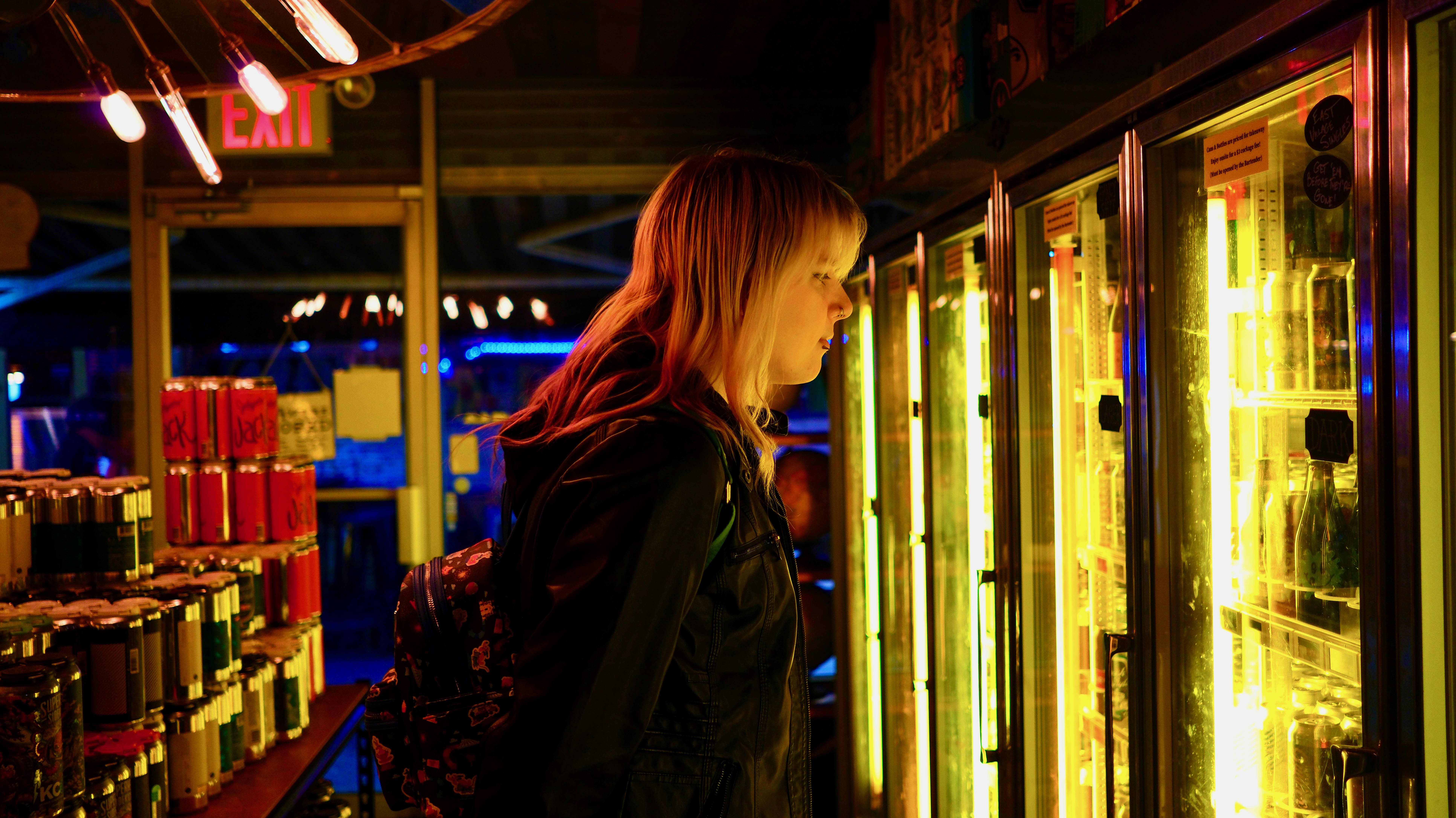
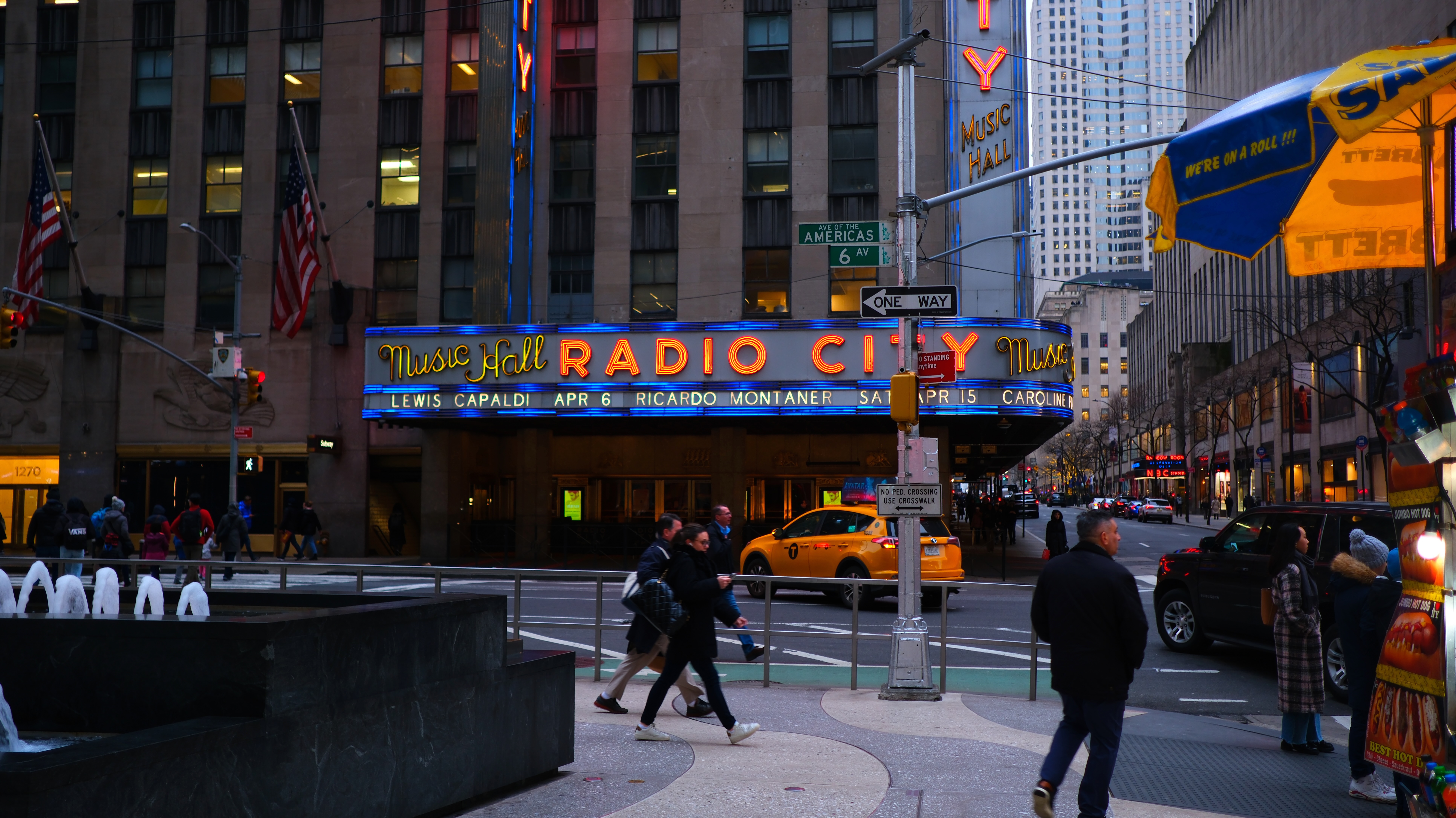
Last fall, Fujifilm released the new X-T5, a mirrorless camera that not only delivers on those signature vintage shooting capabilities and old-school form factor but packs even more professional features. As far more than just the next best thing to its famous brethren, I’ve been putting the new camera through its paces over the past few months.
The latest edition of Fujifilm’s higher-end mirrorless camera lineup, the X-T5, first hit the scene back in November of last year. It’s a predecessor to the 2020 X-T4, delivering a number of quality-of-life adjustments and improvements along the way. All packed into a smaller body than before, the new release still has that trademark retro flourish while also delivering a higher resolution 40.2-megapixel sensor backed by improved autofocus and so much more.
Here’s a quick look at the specs:


For the past few years, I’ve been a Sony girl through and through. In that time, I’ve been rocking the A6400, which has served as the workhorse of my photography for 9to5Toys and beyond. As much as I loved the shots I could pull off with it, the camera just wasn’t that fun for use outside of my professional life. That’s really what drew me to the Fujifilm X-T5 in the first place, though I did learn that there’s more to the camera than its film-inspired features.
Easily one of the most enticing aspects of any Fujifilm camera is its superb build quality, and the X-T5 is no exception. Everything from the metal body to the textured grip makes this one delight of a camera to hold, and the smaller body size means that it’s also more comfortable for extended periods of time.
On top of just looking like an old-school camera with the optional chrome finish, there are also the brand’s signature physical controls on top. It’s a design philosophy that I adored in theory before I actually got my hands on the camera and that I have really come to love in actual practice. Having quick access to all of the ISO, shutter speed, and exposure adjustments I need – without having to dig through settings or look at the screen – really makes shooting with the Fujifilm X-T5 such a blast.


It’s far easier to dial in settings in a pinch than the simplified control schemes from over in the Sony camp. There was certainly a bit of a learning curve, but once I got the hang of it, Fujifilm’s signature design isn’t something I am going to be ditching any time soon.
Not everything is perfect, though. As much as the Fujifilm X-T5 likes to think that it’s an all-arounder for general photography, there are some areas where the build falls short. The biggest of these is the touchscreen. It’s certainly responsive and makes it easy to get the autofocus dialed into the subject of your scene, but it lacks the articulation that even its predecessor had. I suppose that’s one of the sacrifices of the more compact design, but not being able to position the screen in-view to take selfies or vlogs or anything of the sort does limit its potential for me. It’s hardly enough to knock this out of my everyday carry, but it’s something that does make me yearn for what could have been.


Physical form factor aside, the biggest element of the Fujifilm X-T5 that drew my attention was its film-simulation technology. It’s something of a trademark for Fujifilm and isn’t exclusive to the X-T series. But combined with the massive 40.2 MP sensor, the promise of being able to take detailed photos with fun effects called to me in a way that previous DSLRs and mirrorless cameras haven’t.
Packed into the X-T5 are 19 different film-simulation modes that let you digitally replicate the look of classic film photography. There are so many options to recreate the look of old photographs, all of which are far from just adding filters on top of finished shots. And if the built-in monochrome simulation, motion picture recreation, and other ultra-vivid modes aren’t quite cutting it, you can also go in and fine-tune your own custom adjustments.


I’ve been particularly obsessed with the color priority mode that adds such a distinct flair to many of the photos I take. And if all of that wasn’t enough, you can even go in and add grain to your photos – you know, to really deliver on the vintage photography vibes that a film camera would.
The biggest praise that I can give to the Fujifilm X-T5 is that it makes me feel like such a pro. I might take photos for a living here reviewing gear at 9to5Toys, but I’m far from a “professional” in a more classic sense of the word. But this camera truly makes me feel like one. So many shots leave the camera without any editing and are instantly ready for sharing on social media. I bought the X-T5 to really start getting into more casual photography and enjoy shooting as a hobby, and the camera has already accomplished that. It’s just plain fun to shoot with, and more importantly, it produces results that give me more pride in my work than I’ve felt from almost anything captured on my old A6400.


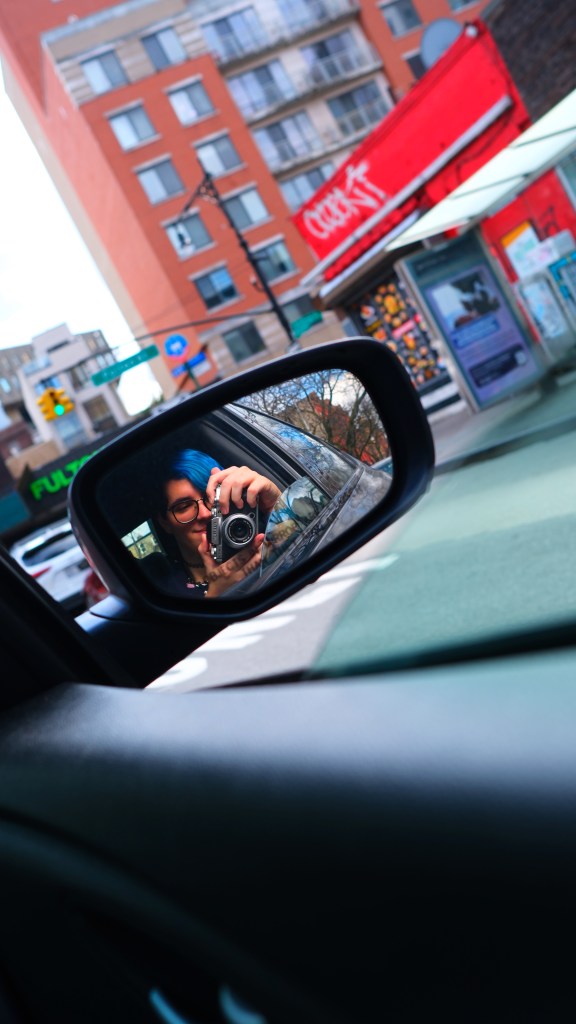
That’s led the X-T5 to become an essential part of my everyday carry. Whether I’m going out on a Saturday morning to get some coffee or you see me heading out for the night in Brooklyn, Fujifilm’s latest has been glued to my person. In fact, it’s even become my preferred way to take photos – period. I’m a person of convenience through and through these days, and all of the ease-of-use features that are packed into the camera help make it worth taking the second to switch on the X-T5 and capture a shot. My iPhone 14’s camera has certainly been feeling a little neglected as of late, and please don’t tell it, but that’s likely not going to change anytime soon.
Over the past few months, I’ve been using the Fujifilm X-T5 for everything from product shots for reviews to just street photography, portraits, and other odds and ends. You’ve likely already seen countless photos that fit into the former category, and if you follow me on social media, then all of the others have certainly popped up on your feed here and there.


Clocking in at $1,700, the Fujifilm X-T5 isn’t going to be for every photographer. But if you’re like me and are looking for a new addition to your kit or just your first serious camera, there is so much to love. It may even clock in at a higher MSRP than the X100V that has captured the minds of photographers all around the world and the Internet, but that difference in price is so worth it to me.
I personally picked up the kit version that includes the XF16-80mm lens and then went out to get an even more compact XF23mm lens from Fujinon, which is what you see in the review photos above. That secondary pickup has served me so well that I almost don’t even reach for the XF16-80mm anymore – especially not when I am using the camera to capture street photography. I’d easily recommend getting just the X-T5 camera body alongside the XF23mm lens and calling it a day. You won’t be disappointed in the performance, and one of the improvements over the X100V is that you can, in fact, swap the lens.
Subscribe to the 9to5Toys YouTube Channel for all of the latest videos, reviews, and more!
Milwaukee Art Museum announces new Herzfeld Center for Photography show
Wondering what’s the importance of PDF editing software for photographers? Hop inside this guide to find out!
The loon traveled from Los Angeles to its permanent home in the Twin Cities.
A new beetle species has been named to honor a fellow Husker, bridging the worlds of academia and wildlife conservation.
Silversea, a premier brand in experiential luxury and expedition travel, recently concluded the inaugural season of its first Nova-class ship, Silver Nova,
The Desert Foothills Land Trust (DFLT) is proud to announce a special presentation event featuring acclaimed botanical photographer Jimmy Fike on Saturday, Oct. 12 at 6:30 p.m. at the Sanderson