
Designing a Succulent Garden: Sculpture Painting Workshop
Designing a Succulent Garden: Sculpture Painting Workshop


Happy NAB2024 everyone. Last we covered the Module 8 series, its L1, L2, and L3 tuners just got a new PL version that acts as both a tuner and a PL lens adapter for RF and E mount cameras. Now, Moment is releasing a mount conversion kit for $100 that allows you to convert the tuners’ mounts. This allows you to switch between the previously available RF and E mounts or adapt the tuners between two new options: the Fujifilm X and Leica’s L mounts.


If you are a fan of classic lenses, you may have already heard of the Module 8 Tuners. They’re essentially front filters that give your lenses a “classic lens look”. Specifically, Lenses like the Canon FD, Super Baltars, and Canon K-35. If the claim is solid, getting a Tuner is an order of magnitude cheaper than getting a high-end vintage lens.
Here is the deal: if you like vintage looks, digital filters are great, but they are not the real thing. A lens “look” is tied to its optics and is hard to reproduce in post. There is a reason that old optics are getting a renaissance. The Nour Triplet, Petzval 80.5mm, Lensbaby Velvet, and the Daguerreotype Achromat 2.9/64 Art Lens are just a few samples. They are more on the stills side, but you get my point.
Optical flows are hard to reproduce digitally, but what if you reproduce them optically? That’s what the Module 8 Tuners are for. Of course, it does not hurt that multiple-Oscar winner Iain Neil is the optics designer behind this project.

| Lens Type | Variable Look Zoom Attachment |
|---|---|
| Materials | Aerospace Quality |
| Mechanical Design | Precision Multi-cam |
| Lens Side Mount | Canon EF Lenses and PL Lenses Only |
| Electronics Support | Canon, Tamron, Sigma |
| Electronics Support | EF Tuner: Focus (wire), Aperture, IS and Autofocus Pass though – PL Tuner: None |
| Inspired By | Canon® K-35 |
| Neutral Setting | Yes |
| Adjustment Rage | 0-10 |
| Halation (Center) | Low/Medium |
| Halation (Edge) | Low |
| Axial Aberrations | Spherical |
| Full Frame Aberrations | 5th Order Coma Oblique Spherical |
| Resolution | 4K+ |
| Max. Bokeh Effect | Soap Bubble |
| Magnification Factor | 1.1x |
| Tuner Breathing | < 0.25% |
| F/# Range (Optimal) | EF Tuner: F/1.2-F/2.8 – PL Tuner: F/1.0-F/2.8 |
| Stop Loss | < 1/4 |
| Lens Image Circle | Full Frame |
| Coatings | Vintage Emulation |
| Weight | 180g (E Mount) – 170g (RF Mount) – 280g (PL Tuner) |
| Tuner Dial Rotation | 70 degrees |
| Firmware Update | EF Tuner: Via Micro USB – PL Tuner: No Firmware |
| Warranty | 1 Year |
| Dimensions | EF Tuner: Ø76mm x L31mm – PL Tuner: Ø80mm x L45mm |
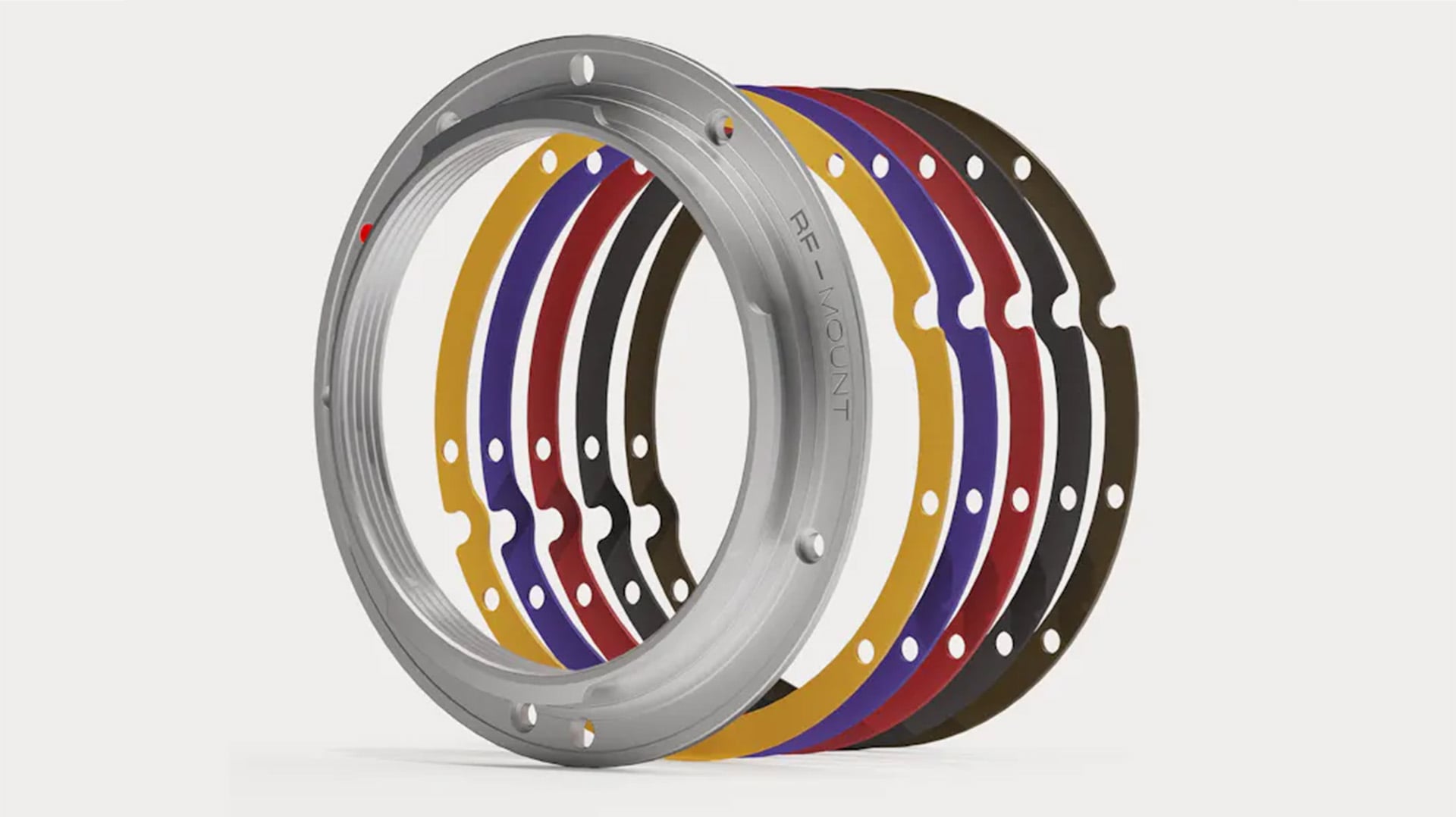
The mount conversion kit costs $100 per unit. Personally, I find this price to be quite “bananas” for what is essentially a rear mount part and a shim kit.
Sponsor shout-out: A huge shout-out for our #NAB2024 gear sponsors. They pick up the bill so you can get amazing free content: Nanlite, ProGrade Digital, Sennheiser, SmallRig, Ugreen, YC onion


FORT WORTH, TEXAS (AP) — Photographer Mat Otero has been working at the AP in the Dallas bureau for nearly 30 years. In that time, he’s covered an annular and partial solar eclipse, so he was prepared for the challenge of making a photo of the only total solar eclipse on this scale he will likely cover in his career (the next coast-to-coast eclipse in the U.S. is expected in 21 years). This is what he said about making this extraordinary image.
Why this photo


The Mount Airy Photography Club is hosting a free photography presentation featuring award-winning photographer Cornell Watson on April 20 at 2 p.m. in the Arts Center at 215 Rockford Street during the Downtown Art Walk.
Cornell Watson is an award-winning photographer based in Durham. His photography is centered around sharing the stories of Black people. He frequently contributes photography to national publications such as The New York Times, The Washington Post, The Wall Street Journal, NPR, ESPN, and Bloomberg.
![The first Nikon RED cameras are here – RED V-RAPTOR [X] and V-RAPTOR XL [X]](https://www.mecreates.com/story/news/wp-content/uploads/2024/04/hqdefault-6.jpg)
The RED V-RAPTOR [X] ($29,995) and V-RAPTOR XL [X] ($39,995) are the first RED cameras released since the Nikon-RED acquisition. The new cameras feature large format 40.96 x 21.6-millimeter image sensors, insane video quality, and an impressive dynamic range. Needless to say, RED’s new tech is worth being excited about. But, the most interesting thing about the new RAPTORS isn’t their new sensor or new video capabilities. Rather, it’s the fact that Nikon now has access to this new tech, which interests me, as it suggests we may see some of this tech returning in a future Nikon Z camera.
![RED V- RAPTOR XL [X]](https://www.diyphotography.net/wp-content/uploads/2024/04/red_raptor_nikon-8-scaled.jpg)
![RED V-RAPTOR [X]](https://www.diyphotography.net/wp-content/uploads/2024/04/red_raptor_nikon-2-scaled.jpg)
Visually, the RED V-RAPTOR [X] and V-RAPTOR XL [X] don’t look much different than the cameras RED made before the acquisition. That much is to be expected, as their design was most definitely finished by the time the acquisition took place. It will take time until we’ll see a RED camera that looks a bit more “Nikon-like”.
![RED V-RAPTOR [X] and V-RAPTOR XL [X] - the first global-shutter, large-format cinema cameras](https://www.diyphotography.net/wp-content/uploads/2024/04/red_raptor_sensor.jpg)
The RED V-RAPTOR [X] and V-RAPTOR XL [X] utilize the new large-format V-RAPTOR [X] 8K VV and V-RAPTOR XL [X] 8K VV sensors, respectively, alongside a global shutter. As we saw with the Sony a9iii, the world’s first full-frame global-shutter camera, the global shutter offers a massive speed improvement when compared to the traditional rolling shutter. While a rolling shutter reads sensor data line-by-line, a global shutter reads all the sensor data simultaneously. This means you’ll have a much faster image read speed, allowing you to avoid effects like rolling shutter distortion. You can read more about the differences between the two shutter types in this great post by Studiobinder.

With the new V-RAPTOR [X] and V-RAPTOR XL [X], RED introduced their Global Vision, “a new suite of tools that use the global shutter sensor to provide even more flexibility and ease of use throughout the production process. Global Vision’s Extended Highlights allows the camera to see even further into highlight detail, providing more detail for HDR finishes or softer and more subtle highlight roll-off for SDR.
RED also introduced the new Phantom Track feature, a new recording option for cinematographers who work in virtual productions that utilize tools like Unreal Engine or Ghostframe:

![RED V-RAPTOR [X] and V-RAPTOR XL [X] - dynamic range](https://www.diyphotography.net/wp-content/uploads/2024/04/raptor_dynamic_range.jpg)
According to RED, the new RAPTORS have 17-plus stops of dynamic range in normal shooting modes and a whopping 20-plus stops when the new “Extended Highlights” feature is enabled.
“Extended Highlights is a beta feature designed to capture more color and detail in the extremely bright portions of your image. It uses multiple exposures to reconstruct previously clipped details in the most faithful way possible. There are no adjustments or levers for the Extended Highlight process; it is simply an On or Off feature,” explains RED on their Extended Highlights feature support page.
The RED V-RAPTOR [X] and V-RAPTOR XL [X] are available starting at $29,995 and $39,995, respectively.


RICH CREEK, Va. — Gene Herrick, a retired Associated Press photographer who covered the Korean War and is known for his iconic images of Martin Luther King Jr., Rosa Parks and the trial of the killers of Emmett Till in the early years of the Civil Rights Movement, died Friday. He was 97.
In 1956, Herrick photographed Rosa Parks being fingerprinted after refusing to move to the back of a bus in Montgomery, Alabama. That same year, Herrick captured an image of King smiling while being kissed by Coretta Scott King on the courthouse steps after being found guilty of conspiracy to boycott the city’s buses.
In a 2020 interview with The Associated Press, Herrick said it was rare to get a photo of King smiling.
“I knew he was going to be let out of jail that morning,” Herrick said. “And all these people were out there on the steps waiting for him, including his wife, who reached out and gave him a big kiss.”
Herrick’s longtime companion Kitty Hylton said he died at a nursing home in Rich Creek, Virginia, surrounded by people who loved him.
“He was so proud to be a journalist. That was his life,” Hylton said. “He loved The Associated Press. He loved the people of the AP. He was so grateful to have had all the adventures that he had.”
Herrick also covered the trial of two white men in the killing of the 14-year-old Till, a Black youth who was abducted, tortured and lynched in Mississippi after being accused of flirting with a white woman. The two men were found not guilty in 1955 by an all-white jury, and admitted to the murder a year later in an interview with Look Magazine.
Herrick was particularly proud of his Korean War coverage. “Good journalists want to go where the action is, wherever it is,” he said for an AP article in 2018.
In a 2015 interview for AP’s corporate archives, Herrick acknowledged the danger of war photography but added, “So is civilian photography. I’ve come pretty close to getting killed many times with guns and having guns put in my chest in the riots in Clinton, Tennessee and places like that.”
He also covered sports including Major League Baseball, Elvis Presley and five U.S. presidents.
“God and the AP have given me opportunities I could never have had,” Herrick said in the 2018 AP story. “I mean, I’m the luckiest kid in the world to have done what I’ve done.”
AP Executive Editor Julie Pace said Sunday that Herrick “captured history for the AP. We, and so many people around the world, benefited from his sharp eye and the power of his visual storytelling.”
Herrick joined the AP at age 16 in Columbus, Ohio, as an office assistant. Two years later he transferred to Cleveland, where he lived with an AP photographer and often assisted him. Herrick got his big break when his roommate was unable to cover a Cleveland Indians game, and he was asked to take his place.
“They’ve got to be stupid,” Herrick said he thought at the time. “Me cover a ball game for the AP?”
Herrick was equally stunned when, not long after, he was promoted to AP photographer in Memphis. He still didn’t have much experience when he volunteered for Korea in 1950, and found himself at the front lines, standing in the middle of a road, totally exposed.
“It’s a beautiful war going on. I mean, the planes are coming in, dropping napalms, and machine guns, and right there on the mountainside, and I’ve got a picture here of wounded being carried on a litter, coming up the road right at me, and, oh, I thought, man, this is great,” Herrick recalled in 2015, laughing at the memory. “I’m bam-bamming with the old four-by-five Speed Graphic, the film pack in those days. And I look around, and some GI over in a ditch says, ‘Sir?’ I said, ‘Yes?’ He said, ‘Do you see that dirt popping up there … do you know what that is?’
And I said, ‘No. What is it?’ He said, ‘Those are bullets!’ … so I got off the road and got in the ditch with him. But I got some really nice pictures.”
He retired from the AP in 1970 to start a second career working with the developmentally disabled in Columbus, and later in Rocky Mount, Virginia.
At age 91, Herrick was inducted into the Virginia Communications Hall of Fame at Virginia Commonwealth University – an event he considered a highlight of his life.
Herrick, who was born in Columbus and was previously married, is survived by two sons, Chris and Mark Herrick of the Indianapolis area, daughter Lola Reece of Peterstown, W. Va., five grandchildren and three great-grandchildren.

Have you been taking the same images with slight variations over the last few years? Have you seen new technologies shake up the photography world, yet largely kept your distance from them? Today, the esteemed Kristina Sherk from Shark Pixel shares with us one such tool that can revamp the work you’ve been putting out. Following her tutorial written for us below, I decided to try it out myself. I encourage you to break out of your comfort zone, give it a try, and share your photos with us in the comments.
One great thing COVID gave me was the time to finally start seeing what I could actually do with Photoshop composites. I mean… I had been teaching Photoshop for years through my business SharkPixel.com, but I was always petrified of even the word composite. Having all my DC headshot and portrait work disappear turned out to be somewhat of a blessing as it started me on a path (which I am still on) of creating interesting composites.
Within the past year, since Adobe announced Firefly and integrated Generative Fill into Photoshop, my composites have taken a little less time to complete thanks to this amazing (but still growing) tool. Designer Mark Heaps comically refers to Firefly as a “genius toddler.” In this article, I’ll show you a few tips on using Adobe Firefly and Photoshop Generative Fill to speed up the time it takes to create composite images.

A lesser-known fact about the new Generative Fill features within Photoshop is that its big brother is an AI engine on the web called Adobe Firefly, located at firefly.adobe.com. This platform is more similar to other AI engines out there since you create the entire image from a written prompt. This model is newer than the one in Photoshop proper, and Adobe is constantly updating Firefly’s AI engine. To do this, they use feedback from Firefly and Generative Fill users to better improve the next AI model that gets rolled out inside Photoshop.
I often use Firefly to create elements for my composite. For example, in “H is for Hijack,” I used Firefly to create the reindeer, the background, and Santa. Now, I did have to use multiple body parts from multiple Santas and reindeer to get the final characters, because as we stated earlier, AI is like a genius toddler. It gets some things right, but it might also go off the rails. So, there’s a lot it also does not so right.

Another thing that I love about Firefly is all the easy-to-use buttons that can help you determine style, orientation, depth of field, focal length, and so much more. These buttons make the act of writing literary prompts much easier for us non-reader, visually minded folk.
If you want to start your composite from an image instead of a written prompt, Firefly provides the option to upload a reference image to base your generation on. I used this image on the left to draw out a horribly rudimentary sketch in Photoshop of what I wanted my image to look like. I then I uploaded it to the reference image spot in Firefly within the style section which helped show Firefly the kind of image I was looking for. Because my initial reference image was so bad, it took me a few revisions to do this. Each time, I got a more realistic version of what scene I wanted to use. I would then replace the previous reference image with that one. After the fifth round of re-generations (and updated reference photos), I was able to achieve what I wanted in my final realistic shot. You can see the process here.


Adobe Firefly can also be helpful when trying to create items that need to fit into an image you already have. For example, when I generated the reindeer for “H is for Hijack,” I explicitly told the AI to light the reindeer from the bottom. I also incorporated the vantage point into the prompt. I knew the reindeer would be flying up and away into the night sky, so the perspective and lighting needed to match for the final image to look right. Knowing the physics and qualities of how light reacts is a really important skill when compositing images together.
There’s no easier way to screw up a composite than to try and merge images without consistent lighting. That means the direction of the light and the light qualities (ie. harsh/soft/warm/cool) need to match for the composite to look realistic. Firefly even has a dropdown menu just for this!
But you also need to know the rules of photography lighting to be a good compositer. For example, in “B is for Burnt Out,” the match in the before image did not cast any light onto my face, so I had to relight my skin closest to the match manually using layers and blending modes. It’s important to think about what areas of my face the match would illuminate naturally if the fire from the match was bright enough to do this. Whenever I’m not sure about the proper way to make the lighting look realistic, I always either take a reference image or search stock for examples. I would either take a frame of the lit match in my mouth without the key light firing so I could see where the fire actually illuminated, or search stock for the terms “lit match, fire, face” to help me get a sense of what the light looks like from a real illuminated match.

Thankfully nowadays, Generative Fill in Photoshop does this proverbial spellchecking for you! When you use Generative Fill, it actually sends a larger portion of your image up to the cloud. To assess the image attributes so it can best replicate them in the generation it gives you, it will reference the lighting quality and direction, the vantage point the photo was taken from, and other important qualities to generate the best match.
I often get asked when Firefly version 2 will be integrated into Photoshop. While I’m not sure of an exact date, I would speculate that it will be released sometime in the first half of this year (2024).
The more I use Photoshop’s Generative Fill and Adobe Firefly, the more I am assured these tools will not replace true creatives. Although it may seem impressive the kinds of images that AI can produce, I view these programs as generative tools. I know the image in my head, and while these tools can help me get there faster, they aren’t able to envision what I conceptualize. Additionally, in Photoshop, all the Generative Fill layers that are created include elements of the background to seamlessly integrate the produced items into the picture. But if you are anywhere near as wishy-washy as I am regarding item placement, color, lighting, and perspective within the image, you’ll still need to have a hefty toolbelt full of Photoshop tools to appropriately bring your images to life.
In “D is for Dreams,” I created all of the items within the head using original compositing techniques but added the birds, clouds, and bottom beach rocks on either shoulder area with AI.
As a project for a masterclass I created on AI, I attempted to create an entire image only using AI in Photoshop. I suggest you try the same. It was really fun, insightful, and it opened my eyes to all the ways I could use Generative Fill to my advantage. This is how I created “O is for Overlensed.” Everything is generated using Photoshop AI, except my son, of course.

In the end, it’s imperative to learn both traditional Photoshop tools as well as AI in order to take your composites to the next level. Learning just AI isn’t going to help you when you need to change the color of something you generated, or you need to slightly tweak the perspective of the object. The way to be the most proficient in this new era of photo retouching is to make sure you have extensive knowledge in both fields. Because if you do, the opportunities are absolutely limitless.
Having worked regularly with Generative Fill and being pretty handy in Photoshop, I expected Firefly to be a breeze when I gave it a test run. It proved to require a little more patience than I had anticipated. I challenge anyone who says that using such technologies is cheating to give it a try. Actually. Come up with a concept, visit Firefly, and try it. When using it, I kept coming back to Sherk’s reference to the technology as being a genius toddler. Indeed, sometimes it listened, sometimes it was stubborn and decided to absolutely ignore my prompts. The part I did like about it was its ability to generate photo-realistic elements which I could use in my work. At times, stock platforms don’t have the exact element I’m looking for. Firefly allowed me to tweak the result over and over again until it was close enough to my vision.
Here is our challenge to you: try it, just once. Step outside of what you know, maybe even into something you despise, fear, or feel overwhelmed by. Why? Because you’re an artist and it’s an interesting challenge. You can make a piece like Sherk from scratch using prompts. Maybe you create a fantastical landscape you would love to photograph but don’t have the miles to fly to. Or perhaps, you create elements to export and composite them into base image you have.
We challenge you! Give it a shot and share your creation results below in the comments. It just may end up being the biggest tool you haven’t been using in your work.
Images provided by and used with permission of Kristina Sherk.


The Amon Carter Museum of American Art (the Carter) in Fort Worth has announced the appointment of María Beatriz H. Carrión as the museum’s Assistant Curator of Photographs. Ms. Carrión joins the museum following the 2023 departures of Kristen Gaylord, Associate Curator of Photographs, and John Rohrbach, Senior Curator of Photographs.

María Beatriz H. Carrión. Image courtesy of the Amon Carter Museum of American Art.
Ms. Carrión is a PhD candidate in the History of Art at the Graduate Center of the City University of New York (CUNY). She specializes in the history of photography in the U.S., with a focus on image-making as it relates to race, gender, and ecology. Her dissertation, Picturing Americans: Indigeneities and Modern Visualities, 1873 – 1929, explores how works by Edward Curtis, Eadweard Muybridge, and Carlos Endara have shaped the relationship between image and viewer, and how photography relates to issues of race and the history of colonialism. Her previous research endeavors have investigated American and European women photographers working during World War II, the history of photography in Latin America, and contemporary Indigenous and Latino photography.
Ms. Carrión holds a BA in Liberal Arts from Ecuador’s Universidad San Francisco de Quito, an MA in History of Art from Tulane University, and an MPhil from CUNY. Prior to joining the Carter, Ms. Carrión served as the Terra Fellow in American Photography at the Rijksmuseum in Amsterdam, a Mellon Global Programs Fellow at the Amie and Tony James Gallery at CUNY, and the Elaine Goldman ArtTable Curatorial Fellow at the Morgan Library & Museum in New York City. During her time at the Rijksmuseum she organized the symposium Interrogating Western Americana: Photography, Indigeneity, and Intersectional Ecology. She has also held positions at the New Orleans Museum of Art and the Saint Augustine Cloisters in Quito, Ecuador.
In a press release, Andrew J. Walker, Executive Director of the Carter, said, “María brings a global perspective and a demonstrated interest in interdisciplinary collaboration to the Carter’s curatorial team. Her meticulous scholarship, experience forging meaningful connections with local communities, and passion for the American artistic tradition and its evolution will serve to advance our institution’s mission of telling a multifaceted story of creativity throughout the United States’ history.”
Ms. Carrión will begin her position at the Carter on May 6, 2024.








