
They are part of the entire $2.4 million project to improve the Orland interchange.
You may soon see 2 bee sculptures along Interstate 5 in Glenn County


One of the most interesting iPhone 16 rumors so far is that the incoming smartphone could get a so-called Capture button – and some fresh rumors have revealed exactly how that could reinvent the traditional camera shutter button.
A Weibo account called Setsuna Digital (via MacRumors), which has successfully predicted some Apple innovations in the past like the iPhone 15 Pro’s spatial video, has claimed that the Capture button will have a two-step action that’ll work like a traditional camera shutter, letting you first focus and then take a shot.
Unless they’ve been set up with back-button focusing, this is how most standalone cameras work – letting you lock the focus and exposure with a light press of the shutter, then recompose your shot before hitting the shutter to take the photo. As Setsuna Digital notes, this could push Apple’s next iPhone further towards feeling like a pro camera and video tool.
It wouldn’t be the first smartphone to do this – the Sony Xperia 1 V also has a two-stage shutter button, though you can switch this to a more straightforward setup using Basic mode. But what’s particularly interesting about the rumored Capture button is that it isn’t just looking to ape the traditional camera shutter.
According to an earlier report from The Information, you’ll also be able to swipe across the surface of the Capture button to zoom in and out of your scene. It’ll also apparently work for both stills and video, as Apple is seemingly discovering that content creators are recording more horizontal videos for big screens (rather than the vertical format favored by TikTok).
Considering ergonomics is one of the biggest weaknesses of smartphones compared to the best mirrorless cameras, rumors of this Capture button could be good news for prospective iPhone 16 owners – particularly photographers like me.

If you’re planning to upgrade to an iPhone 16 or iPhone 16 Pro this year, then the latest rumors suggest Apple is planning some strong photography and video boosts for those phones.
Both phones are expected to get the rumored Capture button, which would be one of the most significant hardware changes to the iPhone in a while (arguably more so than this year’s Action Button). It’s expected to appear on the bottom-right-hand side of the iPhone, with the current mmWave antenna moving to the left-hand side of the phone.
As a photographer who decided to skip the iPhone 15 Pro this year, these rumors are getting me excited about upgrading this year. If the iPhone 16 Pro combines this new Capture button with the ‘tetraprism’ periscope camera tech seen on the iPhone 15 Pro (which has been predicted by analysts Ming-Chi Kuo and Jeff Pu), then it’ll be a powerful pocket camera.
While current iPhones are incredible compact cameras, relying solely on a touchscreen to take photos and video can feel like a downgrade from the tactile experience of using one of the best cameras.
With the iPhone 16 Pro also tipped to get a 48MP ultra-wide camera, plus all the rumored AI upgrades from iOS 18, this could be a very good year to upgrade indeed.

Portrait photography is a sought-after skill in various sectors of the industry, including fashion, lifestyle, wedding, and commercial photography, plus much more. For aspiring photographers, venturing into portrait photography not only opens doors to many career paths but also enhances personal growth by improving communication and collaboration skills.
Coming to you from Mitch Lally, this insightful video provides practical advice for beginners on how to start a career in portrait photography, even without a portfolio. Lally emphasizes the importance of starting with friends and acquaintances to build a portfolio, moving on to working with real models to foster a more collaborative environment. He discusses the significance of reaching out to modeling agencies for development models or new faces, suggesting TFP (time for print) or test shoots as a cost-effective way to enhance portfolios for both photographers and models. Lally’s approach demystifies the initial steps towards becoming a portrait photographer, highlighting the value of building relationships within the industry.
The video also delves into the necessity of clear, intentional planning for shoots through the use of mood boards and focusing resources on the shoot’s concept rather than on equipment. Lally advocates for investing in aspects that contribute directly to the photo shoot’s success, such as location, outfits, and professional services like makeup artists or stylists, rather than the latest camera gear. This prioritization underscores a crucial lesson for newcomers: the idea and execution of a photo shoot have a more profound impact on the outcome than the equipment used. This mindset shift from gear to creativity is vital for anyone looking to make a mark in the genre. Check out the video above for the full rundown from Lally.
If you would like to continue learning about the art of portraiture, be sure to check out our range of tutorials on the subject in the Fstoppers store.


Life in Pompeii has long captured imaginations since Mt. Vesuvius erupted nearly 2,000 years ago, coating the Italian city in ash and soot—yet, remarkably, not entirely destroying its striking art and architecture. A recently released book, sure to spark wanderlust, is now providing a behind-the-scenes look at the once vibrant metropolis.
In 2019, Italian photographer Luigi Spina was given unprecedented access to the ancient city by the Archeological Park of Pompeii, which commissioned him to photograph the World Heritage site. His work is now compiled in Inside Pompeii, published by the J. Paul Getty Museum.
Spina documents the architecture of Pompeii in 274 color photographs, capturing it with an eerie emptiness—nary a tourist in sight—as if all the former residents simply vanished from the city’s bustling streets. The photographs were taken at all times of the day, inside and outside buildings and with a clear reverence for the lives of those who once inhabited the city.

The house of Caesius Blandus. Photo: Luigi Spina, courtesy of the J. Paul Getty Museum.
“For centuries, a thick grey blanket covered the urban fabric of a living city,” Spina wrote in the introduction. “The shops and the domus lining the street are an invitation to keep exploring the stories of others. Stories that are not so different from our own.”
Spina added that nothing in Pompeii has changed in millennia: “This is Pompeii, a glimpse of other people’s lives, through a fissure in time.”
One photograph documents windows overlooking a garden which includes illustrations from the epic poem, The Iliad, accompanied by the named of the characters of the story. And in another, viewers can see the remains of what was once a luxurious bath complex owned by an elite businesswoman named Julia Felix.
The illusion is only seemingly broken in some images, such as one of an interior courtyard in a home owned by wealthy traders Aulus Vettius Conviva and Aulus Vettius Restitutu, where modern gates to protect the architecture are not just seen but dominant in the frame.
Still, some of the pictures show how much of the ancient world mirrors our own. In one image, what looks like a buffet line can be seen in a thermopolium, a place to buy hot food. The particular counter photographed was discovered as recently as 2019 even though excavations go back as far as 1709.
See more of Spina’s images below.

The house of Venus in a Shell. Photo: Luigi Spina, courtesy of the J. Paul Getty Museum.

The praedia of Julia Felix. Photo: Luigi Spina, courtesy of the J. Paul Getty Museum.

The house and thermopolium of Vetutius Placidus is pictured in Pompeii. Photo: Luigi Spina, courtesy of the J. Paul Getty Museum.

The house of Ephebe. Photo: Luigi Spina, courtesy of the J. Paul Getty Museum.

The house of Paquius Proculus. Photo: Luigi Spina, courtesy of the J. Paul Getty Museum.

The house of the Vettii. Photo: Luigi Spina, courtesy of the J. Paul Getty Museum.

The house of Cryptoporticus. Photo: Luigi Spina, courtesy of the J. Paul Getty Museum.

The house of Paquius Proculus. Photo: Luigi Spina, courtesy of the J. Paul Getty Museum.
Follow Artnet News on Facebook:
Want to stay ahead of the art world? Subscribe to our newsletter to get the breaking news, eye-opening interviews, and incisive critical takes that drive the conversation forward.

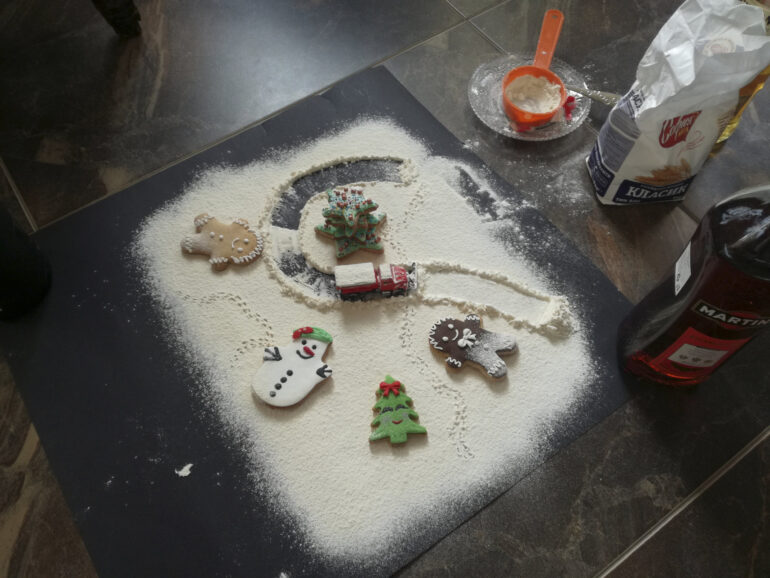
“If a concept is easy to execute, it has probably been done before by somebody else,” says photographer Yuliy Vasilev to the Phoblographer in an interview. “So I am not afraid of something that at first seems impossible. I love the challenges that my brain puts me through.” Yuliy admits that it’s a lot of work, but that he always makes the final results very worth it. Luckily, he finds inspiration in nearly anything and everything.
All images by Yuliy Vasilev. Used with permission. Please check out his Instagram and website for more.
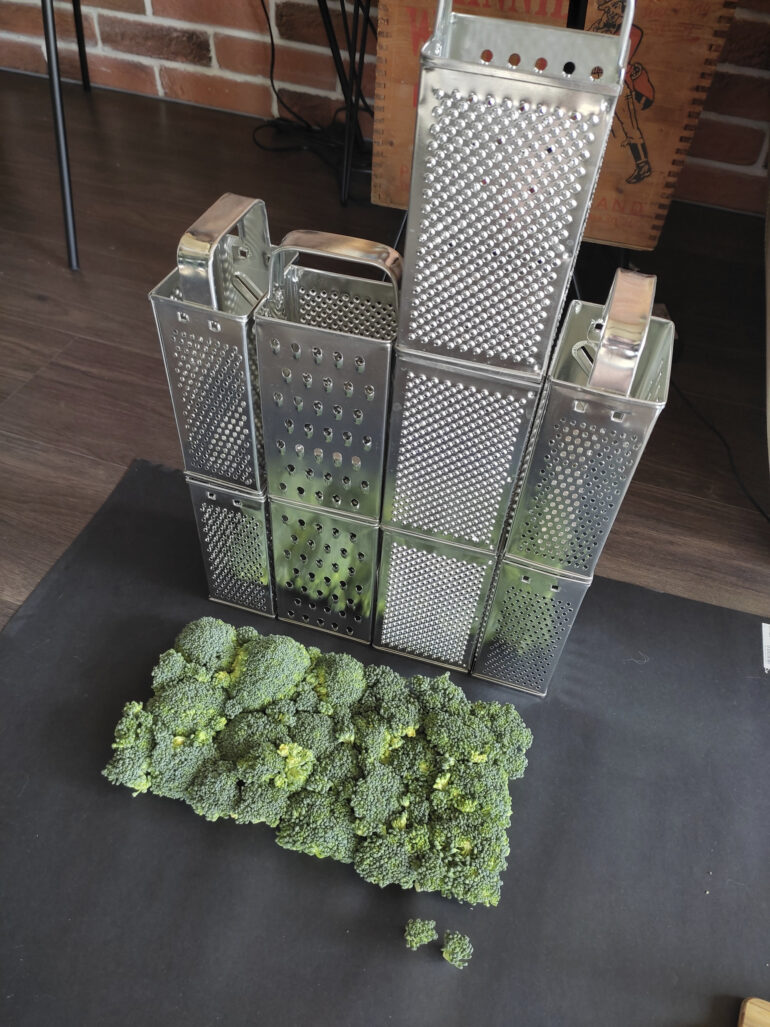
Yuliy recounts when he was creating his photograph of Central Park, he needed a lot of cheese graters — like around 50. “I was not keen on spending that much money, so at the end, I decided to buy 12 and make many photos, which I later blended in software,” he tells us. “I think there were 10 separate shots for that single image. A lot of people received graters as gifts for Christmas that year.”
Yuliy got into photography at the age of 27. Until then, he took photos when being a tourist — and none of it had artistic value. “During a trip to London in the beginning of 2012, it was probably the first time that I discovered that making photos is something that I really enjoy doing,” he shares. “I was walking around the city with my point-and-shoot camera, and it was really fun. Later that year, I bought a mirrorless Sony Nex-C3 camera.” He started out shooting landscapes and stuff — food photography was a natural transition.
Because of his experience in the hospitality industry, he got more into food. He’s a former restaurant manager at a 5-star hotel. “I started to make commercial food photography; I was even working with some world-class chefs on a few photoshoots, but somehow it was not that interesting for me because I was only making pictures of dishes that were not made by me,” he expresses. “I wanted more, and I started to experiment with different food compositions by myself. At first, simple ideas, then more complex ones.” The result is the work that we have from him today.
He admits that he’s not a gear guy. After the NEX C3, he upgraded to a Sony a6300 and uses a tripod with either a Sony 18-135 or 55-210 lenses for food.
Yuliy gets his ideas from anything and everything. But once he’s got an idea solidified, he takes time to get the props together. “Sometimes I am creating props, like painting plates, cutlery, etc. And when I am absolutely sure of what and how I want to make it, then I do the shooting,” he shares. More important to him is the composition. To him, sometimes it requires moving a prop 1mm to get a beterr photo. Beyond all this, he cares about the light — and he always uses natural light. In his creative mind, it adds to the authenticity. In fact, he’ll even Google photos to make sure that nobody else has done it before.
Self-critique is a must for every artist. I have made photos that many other photographers will consider great, but in my opinion, they are not worthy, and I never even tried to even edit them. I am absolutely happy if I am able to make 10–15 excellent shots a year.
Yuliy Vasilev
Yuliy sees AI as a natural part of human evolution. “As an artist, I don’t dislike AI images, but I do dislike the people behind them, especially when they call themselves artists,” he shares. “With AI, it is very easy for somebody with zero creativity and absolutely no skills to make something out of nothing. But art is much more than that; it is not only the final result but also the whole process behind it.” He states that this is a similar moment to when photography was introduced and what it did to painters. Two centuries later, they’re totally different mediums.
“AI images should not be called photos, and definitely, there is a place under the sun for them, but in my opinion, AI imagery is something that will be forgotten as quickly as it entered our world as there is absolutely no added value in them.”
The Phoblographer works with human photographers to verify that they’ve actually created their work through shoots. These are done by providing us assets such as BTS captures, screenshots of post-production, extra photos from the shoot, etc. We do this to help our readers realize that this is authentically human work. Here’s what this photographer provided for us.

Alexis Trice, “The Taste of a Memory” (2024). All images courtesy of Hashimoto Contemporary, shared with permission
At Hashimoto Contemporary’s Los Angeles gallery, there’s more than enough to go around. Nearly 50 artists have contributed to Potluck, a group exhibition opening this week that celebrates the joys, comforts, and disgusts of sharing a meal.
From paintings and drawings to ceramics to crochet, the show encompasses a wide array of tastes and preferences, presenting dozens of works that speak to eating and communal gatherings across cultures. Included are pieces by several artists previously featured on Colossal, including Lou Benesch, Liz Flores, Sara Hagale, Seonna Hong, and Kate Jenkins.
Potluck is now in its fourth iteration and on view from February 10 to March 2.

Bianca Foratori, “Cesta De Laranjas” (2023)

Carmen McNall, “Pomegranates #4” (2024)

Jess Ackerman, “Yellow Cake”

Kate Jenkins, “Sardines on Toast (Willow Pattern Plate)” (2022)

Lou Benesch, “Gather and Grow” (2024)

Sara Hagale, “Stockpile” (2024)

Seonna Hong, “Oranges and Watermelon” (2024)

Shannon Taylor, “Crab Dip (Eel)” (2024)

Taylor Lee, “Sharing Slices” (2024)
Do stories and artists like this matter to you? Become a Colossal Member today and support independent arts publishing for as little as $5 per month. The article Bring a Dish to Pass: ‘Potluck’ at Hashimoto Contemporary Relishes the Joy of Gathering appeared first on Colossal.

The International Garden Photographer of the Year (IGPOTY) competition has once again highlighted the incredible beauty of the natural world, as seen through the lenses of talented photographers across the globe. This year’s exhibition, currently on display at the Kew Gardens in London until March 10, showcases a stunning collection of images that capture the unique characteristics of gardens, plants, trees, wildlife, and more.
The accolade of Overall Winner went to June Sharpe for her captivating image entitled ‘Birdscape’. The competition was intense, with numerous other finalists showcasing their talent with equally remarkable images. The overall winner was selected from a plethora of categories, each celebrating a different aspect of garden and nature photography.
Among the winning images, the audience can expect to be mesmerized by a composite shot of Cribraria slime moulds and a Mycena mushroom. These images, displaying the otherworldly grace of these organisms, serve as a testament to the often overlooked beauty present in the smallest corners of our gardens and natural landscapes.
The competition also shed light on the intricate art of macro photography. This photographic technique involves capturing close-up images of small subjects, like insects and flowers, making them look larger than life. This style of photography has been embraced by many participants in the IGPOTY competition, resulting in a breathtaking collection of images that showcase the vibrant details of the natural world.
The International Garden Photographer of the Year competition is more than just a contest; it serves as a platform for photographers to exhibit their work and share their unique perspective of the beauty found in gardens and natural landscapes. It celebrates all things botanical, from close-ups and abstract images to sweeping landscape scenes.
The IGPOTY exhibition at Kew Gardens offers visitors an opportunity to immerse themselves in the enchanting world of garden and nature photography. It’s an experience that promises to inspire and captivate, leaving one with a deeper appreciation for the beauty and intricacies that lie within our natural world.





