Art World News

Food, Art & More at Patagonia’s Sky Islands Fall Artisan Market

Food, Art & More at Patagonia’s Sky Islands Fall Artisan Market

The Southern Arizona Arts & Cultural Alliance (SAACA) and the Sky Islands Tourism Association (SITA) are teaming up to present the 34th annual fall celebration at Patagonia Town Park.

The Sky Islands Artisan Market (formerly the Patagonia Fall Festival) will take place from 9 a.m. – 5 p.m. on Saturday, October 14 and 10 a.m. – 4 p.m. on Sunday, October 15. This year’s market is free to attend and will feature more than 100 artisans, food vendors, craft food makers, and live music at 325 McKeown Ave. in Patagonia.

a group of people that are standing in the grass
Sky Islands Fall Artisan Market (Photo courtesy of SAACA)

For over three decades, this event, which is said to be one of Arizona’s most well-attended rural community art gatherings, has been a flagship for community outreach in Patagonia and throughout Southern Arizona.

Food Court & Picnic Areas

Festival attendees can enjoy a variety of food offerings from Patagonia Fire Department’s hotdog and hamburger cookout to numerous food trucks. Gyros, lemonade, barbecue chicken, Filipino food, vegetarian options, Italian Ice, oh my! There’s a lot to try over the weekend.

Participating Food Vendors

  • Hungary Express
  • Gus’s Gyros and Lemonade
  • BlackJack Citrus
  • Kettlelicious
  • Sparky’s Cantina
  • Fiesta Filipina
  • I & C Kitchen
  • Colonel Mustard’s & Mr. Ice Guy
  • Patagonia Volunteer Fire & Rescue
Sky Islands Fall Artisan Market (Photo courtesy of SAACA)
Fun for all ages

Aside from the food and artisans, the festival will have plenty of entertainment suitable for all ages.

There’s a South 32’s Kid Zone, which will offer interactive activities and grab-and-go options throughout the entire weekend, as well as balloon animals and face painting. The Friends of the Patagonia Library Book Sale is returning with a selection of books, DVDs, and literary arts merchandise available for purchase. 

Live Entertainment Schedule

Saturday, October 14
  • 10 – 11 a.m. – Jam Pak Blues ‘N Grass (Youth Blues and Bluegrass)
  • 11:30 a.m. – 12:30 p.m. – Zach Farley & Friends (World / Folk)
  • 1 – 3 p.m. – Bessett and Callahan (Alt-Country)
  • 3:30 – 5:30 p.m. – Sunny Gable & The Whiskey Machine (Americana)  
Sunday, October 15
  • 10 – 11 a.m. – Jam Pak Blues ‘N Grass (Youth Blues and Bluegrass)
  • 11:30 a.m. – 1:30 p.m. – Mr. Boogie Woogie (Classic R&B)
  • 2 – 4 p.m. – Znora (Blues Rock)  
a group of people sitting at a table in front of a crowd
Sky Islands Fall Artisan Market (Photo courtesy of SAACA)

The event typically attracts more than 15,000 visitors and is a tourist destination that makes for a great weekend trip. Overall, the celebration highlights tourism to the Sky Islands region including local wineries, shops, outdoor spaces, and restaurants — it’s a perfect day trip.

Sky Islands Fall Artisan Market will be at the Patagonia Town Park, 325 McKeown Ave., Patagonia, Arizona. For more information, visit skyislandsartisanmarket.com.                                                                

Tucson Foodie is a locally owned and operated community. Thanks to our partners and members, we are able to offer paywall-free guides and articles. We value your support and invite you to become a Tucson Foodie Insider today.

Mind the (shrinking) gap: Paris gains on leading London

Mind the (shrinking) gap: Paris gains on leading London

The international art fair circus is on the move again, testing the relative strengths and weaknesses of the world’s premier cities as places to see, buy and sell serious contemporary art. After Frieze Seoul in September, October’s major stops are the 20th anniversary edition of Frieze London, followed the next week by the second iteration of Paris+ par Art Basel.

For decades, London has been the undisputed capital of Europe’s art market. A year ago, opinions were split on whether the city’s momentum was flagging. But now, seven years on from Britain’s momentous vote to leave the European Union, art market momentum is fixated on Paris, even as international wealth still largely favours London.

The Paris gallery scene is clearly gathering strength. Since Brexit, David Zwirner, Gagosian and White Cube have all opened branches in the City of Light, boosting its primary market. Hauser & Wirth is next; it will debut an imposing four-floor, 400 sq. m gallery there in October. Even cutting-edge British dealer Stuart Shave will expand his gallery, Modern Art, to Paris this month, although the new space will stage only three shows a year and operate by appointment for now.

“I see Paris as the capital of the European art market, or at least its primary market,” says the respected Paris-based dealer Jocelyn Wolff, who is also celebrating his business’s 20th anniversary this year. “We have a bigger local clientele here, and bigger institutions that buy art,” he adds, alluding to the purchasing power of museums like François Pinault’s Bourse de Commerce and the large pool of collectors who spend at least €10,000 a year on art in Paris.

But leading London dealers Pilar Corrias, Stephen Friedman and Alison Jacques are all opening prestigious new spaces in Mayfair during Frieze. Corrias, who represents several international women artists with lengthy waiting lists, says that “the discrepancy in business between London and Paris is still huge”. For her, London is a more “outward-looking” city whose dealerships and institutions attract a “proper international audience”. As for Brexit, she adds: “I don’t see it as a problem at all.”

Shave is sensitive to the nuances in the debate over Europe’s art capital. He agrees with Wolff’s view of the Parisian market, saying: “I love the city and its energy. It has some of the most ambitious private collectors today.” But, like Corrias, he also contends that Brexit “has not discernibly affected sales in London”; it has only disheartened him personally and made his registrars’ jobs more difficult.

Not every sector of the British art trade concurs. In a July filing with Companies House, Sotheby’s blamed the resulting welter of extra taxes, administrative costs and other red tape incurred in Brexit’s aftermath for having “a negative impact on the appeal of selling property in the UK”. The auction house’s profits in Britain fell a bracing 24% in 2022, according to the filing. Sotheby’s plans to inaugurate a new flagship salesroom in Paris in 2024.

Sotheby’s results probably surprise readers of the most recent Art Basel and UBS Art Market report, which ranked the British trade second in the world in 2022. The report found the UK amassed an 18% share of all sales by value, dwarfing the 7% accrued by fourth-place France. Reliable data on private dealer sales remains elusive, making meaningful comparisons between the nations’ art trading difficult. However, these figures reflect the continuing strength of London’s high-end auctions, even during a significant down year for one of the two most consequential sellers.

Energy versus power

So, is London’s auction market losing steam, or is it still the most lucrative in Europe by a comfortable margin? Is Paris’s gallery scene the most energetic around, or is a substantial charge still needed before it becomes the consensus choice for the region’s most powerful? Has Brexit meaningfully diminished returns even for some of London’s top art sellers, or do outside observers tend to overestimate its real costs to the British market overall?

What makes it so difficult to sort London and Paris in the art market hierarchy is that it is possible to answer yes to both sides of every question above without contradicting oneself.

The cities have been moving in opposite directions in the art-fair sector lately. In January, the Swiss-based MCH Group, owner of Art Basel, the organiser of Paris+, announced that it was scrapping London’s upscale Masterpiece fair in June, citing “escalating costs and a decline in the number of international exhibitors”. The Art & Antiques Fair Olympia, held annually since 1972, axed its summer edition later the same month.

Meanwhile, last October’s inaugural edition of Paris+, replacing the long-in-the-tooth FIAC as France’s flagship fair, created positive mood music. Former FIAC stalwart Galerie 1900-2000 sold 10 works priced between €3,000 and €100,000 within the first two hours of the fair. Mega-gallerist David Zwirner, who had previously told the media that Paris had been an underperforming fair venue for him, found a buyer for a Joan Mitchell painting priced at $4.5m en route to $11m in opening-day sales, adding that these were “certainly numbers that we weren’t able to achieve here in Paris in the past”.

Frieze London and Paris+ are of course the centrepieces of much bigger weeks offering high-quality satellite fairs, dealer exhibitions, auctions and museum shows. But more and more market players are behaving as if Paris itself, not just “Paris+ Week”, is a worthier competitor to London than ever.

Heather Flow, a New York-based adviser who specialises in emerging artists, will be visiting Paris with clients in October—but not London. “Paris is a convenient city for the rest of Europe, and it’s more affordable. I’m there not so much for the galleries but for pop-up spaces doing weird stuff,” she says. But what about London? “There are so many barriers that make it difficult to transact,” she adds. “I know more artists who have moved to Paris than London.”

“Sadly, Paris will probably take the place of London,” says Cyril Moumen, the French founder of Gallery Nosco. “It’s easier to deal with the rest of the world in Paris. There are more up-and-coming galleries. It’s a hot spot,” he adds.

Before relocating to Marseille in 2019, Gallery Nosco, which is now based in Brussels, showed international contemporary artists in London for 23 years. “Things became very complicated with shipping and temporary importing,” says Moumen, who will at least return to London for Frieze Week to exhibit at the 1-54 Contemporary African Art Fair and hold a pop-up show in Great Titchfield Street, Fitzrovia. At last year’s edition of 1-54, Gallery Nosco sold out its stand of impastoed paintings by the French Algerian artist Isabelle.D, priced from £4,000 to £15,000. For a smaller gallerist like Moumen, who says that 70% to 80% of his sales come from art fairs, London still has its occasional uses.

It also has a firm lead among the well-heeled. A huge amount of international money still pauses or resides in London, directly or indirectly underpinning businesses that sell high-value art. According to Statista.com, London currently has 87 billionaire residents, the fifth highest concentration of any global city; Paris has just 49. So it was little surprise that London was the venue for Gustav Klimt’s 1918 portrait Dame mit Fächer (lady with a fan) to set the record for the priciest work of art ever auctioned in Europe, when it sold for £85.3m at Sotheby’s in June.

Europe in flux

Apart from the Klimt record, however, London’s auction dominance has been tempered by signs of a Europe in flux. Eyebrows were raised around Britain when Sotheby’s announced its forthcoming sale of 300 works of contemporary art and design owned by the Manchester-born collector Pauline Karpidas would be held in its Paris auction rooms. A renowned supporter of young artists, Karpidas bought the works for her idyllic home on the Greek island of Hydra, where she entertained names like Tracey Emin, Sarah Lucas and Damien Hirst. The material will be offered in an evening and day sale on 30 and 31 October and is expected to raise at least €11m.

A Sotheby’s spokesperson insists red tape and taxes have nothing to do with the house’s choice of sales venue for the Karpidas collection. “Though there are some great British names in that group, the bulk of the value lies in Pauline’s extraordinary collection of Lalanne,” they say, referring to Karpidas’s holdings of the quirky creations of the French designers Claude and François-Xavier Lalanne, whose market pivots on Paris.

Nonetheless, the sight of so much Young British Art being auctioned in the Rue du Faubourg Saint-Honoré, opposite the Élysée Palace, will leave many thinking that this is yet another example of Paris’s ongoing Brexit dividend, whose value continues to climb.

Lively Blooms Suffocate Under Acrylic in Ant Hamlyn’s Pressed Sculptures

Lively Blooms Suffocate Under Acrylic in Ant Hamlyn’s Pressed Sculptures

“Pink Daisy.” All images © Ant Hamlyn, shared with permission

Thorny roses, toxic bluebells, and the carnivorous Venus flytrap are pinned beneath sheets of acrylic in the works of Ant Hamlyn. The London-based artist (previously) continues his herbarium-style sculptures that consider the human impulse to pick and preserve flowers. Vivid specimens at the height of life are squashed under the synthetic material, appearing supple, lively, and in the midst of suffocation.

In his latest body of work, Love, Death & Velvet, Hamlyn incorporates velvet alongside shiny, inflatable plastic. The soft, smooth fabric is an expensive, laborious textile historically accessible only to the wealthy, and using it for forget-me-not petals and colorful bouquets adds questions of value and comfort to the simultaneously playful and menacing sculptures. “The tactile act of hand stitching, stuffing, and squashing can either be seen as preservation or destruction,” the artist said recently. “Similarly to nostalgia, on one side remembering a fond place or memory, on the other, longing for a time that can never be replaced. I like the idea that my works have this melancholy twist.”

Love, Death & Velvet will open on October 20 at Yusto/Giner in Madrid. Until then, find more of Hamyln’s work on his site and Instagram.


red flowers are squashed under a clear acrylic panel

“Red Roses”

blue flowers are squashed under a clear acrylic panel

“Bluebells”

white flowers are squashed under a clear acrylic panel

“Daisy Disk”

vivid flowers are squashed under a clear acrylic panel

“Velvet Forget-me-nots”

sunflowers are squashed under a clear acrylic panel

“Vase”

vivid flowers are squashed under a clear acrylic panel

“Velvet Bouquet”

green and red plants are squashed under a clear acrylic panel

“Velvet Venus”

Do stories and artists like this matter to you? Become a Colossal Member today and support independent arts publishing for as little as $5 per month. The article Lively Blooms Suffocate Under Acrylic in Ant Hamlyn’s Pressed Sculptures appeared first on Colossal.

Mastering Customer Engagement Strategies: The Art of Cultivating Brand Loyalty

Mastering Customer Engagement Strategies: The Art of Cultivating Brand Loyalty
[embedded content]

The Gist

  • Empowering brand enthusiasts. Harness the organic advocacy of brand enthusiasts within local communities as a potent strategy for cultivating a lively brand connection with customers.
  • Crafting localized immersive experiences. Prioritize authentic, localized experiences over generic global marketing campaigns.

Fostering brand allegiance and enhancing customer interaction is always the goal. The best path’s just not always clear.

It requires connecting to customers on a deep, personal level and simply knowing where their passion is, was and is likely to be. Brand loyalty is often found nestled within these nuanced customer engagement strategies.

Sounds easy, right? It isn’t. It takes work connecting with customers on a level beyond support and commerce transactions. How do you truly connect with your customers in a non-transactional way?

Justin Racine, CMSWire Contributor, recognizes these personal customer connections can lead to great customer engagement strategies. He catches up with us today with another awesome personal tale spanning yesteryear and today and gleans important customer experience business lessons. The video interview stems from Racine’s article on brand loyalty via early memories of Porsche enthusiasts — including he and his Dad, as Justin recalls taking rides in a Porsche with his father behind the wheel. He’s now a brand enthusiast that loves going to car shows years later.

The conversation in the video interview unveils:

  • Brand Enthusiast Harnessing: Channeling the organic advocacy of brand enthusiasts, within the core of communities, as a channel for nurturing a vibrant brand environment.
  • Local Experiential Cultivation: A maneuver toward fostering local communities, where authentic real-life encounters overshadow the appeal of traditional marketing campaigns.
  • Dialogue-Driven Engagement: Transitioning from monologues to dialogues, where insights gleaned from engaged communication sculpt experiences that reverberate with resonance amongst customers and potential brand enthusiasts.
  • Sensory Engagement Venture: A journey toward crafting memorable moments, engaging human senses and forging deeper brand connections.
  • Social Media Storytelling: Unraveling authentic brand enthusiast narratives on social media platforms.

The myriad facets of these strategies reveals a common thread: the quest for authentic, meaningful interactions that lay the cornerstone for enduring brand loyalty and vibrant customer engagement strategies.

Let’s dive more into these customer engagement strategies that can lead to brand loyalty:

Leveraging Brand Enthusiasts

Brand enthusiasts, with a lens on the automotive industry, can act as organic brand ambassadors within their communities. This form of organic advocacy, Racine suggests, connects people with a brand beyond traditional marketing and customer support and customer experience campaigns.

“Not only do they drive the vehicle, but they embody what it means to represent that brand,” Racine said. “They make their vehicle uniquely their own, and it becomes a part of their personality. And it’s a representation of who they are. And because of this, these auto manufacturers are now starting to embrace these enthusiasts even more through social channels. … And really embracing the idea that these folks are not only brand ambassadors, but they’re also helping them sell cars.”

Brand enthusiasts go to car shows and extol the virtues of the latest features and models their favorite brands offer. Not only that, they connect with people who may be in the entry levels of brand enthusiasm and inspire them to maybe buy a vehicle of their own, Racine added. 

Brands can emulate the concept of the car show by creating communities of customers, where brand enthusiasts inspire one another on a deep, personal level. You can’t replace consumer-to-consumer interactions where brand enthusiasts interact, and “you can actually tangibly feel the passion that this person is articulating with their words and their actions and their body language.” That’s more than any salesperson can do, Racine said, adding, “and I think a lot of the automotive organizations are realizing that the power of enthusiasts is so strong that they should tap into it, because it’s helping them sell vehicles, and it’s helping them create customers for life.”

The takeaway for brands: any brand is capable of curating an enthusiast group.

Related Article: 10 Guaranteed Ways to Improve Customer Satisfaction

Localized Immersive Experiences

With a personal anecdote of a Porsche event as a backdrop, Racine delves into the essence of crafting localized, immersive experiences. He sees a shift of focus toward nurturing local communities, placing a premium on authentic, real-life experiences over generic, global marketing campaigns — ultimately leading to stronger customer engagement strategies.

“And I think that’s what you’re going to continue to see in the automotive space, of course, but this is also going to push into other verticals as well,” Racine said. “And if your brand can adopt this mindset, and start to build some of these immersive interactions, and looking more local versus global … global campaigns are important for marketing, of course. But if you can focus the locality of the people within the community, and tap into different organizations that already have the finger on the pulse of what’s important to them, the dividends will provide massive amounts of uplift for years to come.”

Related Article: Brand Loyalty: Cars, Coffee & Exceptional CX

Two-way Communication and Customer Engagement

The conversation with Racine also covers shifting from monologues to dialogues with customers, shedding light on the significance of two-way communication. Racine suggests gleaning insights from engaged communication, especially through the lens of customer service and sales personnel, to tailor experiences that resonate. 

The best way to leverage this? People on the front lines. In B2B settings, you have customer service and sales, and “they’re the tip of the spear on the front lines to the sentiment that customers are providing,” according to Racine. “And I can guarantee you today that they know of two or three or four or five different people that they’re servicing that are enthusiasts or brand advocates.”

They love ordering from a particular salesperson. Or a particular technologist within the brand helped them build some new features on the website.

“And they feel heard by the B2B organization,” Racine said. “There’s a dialogue. We don’t want to have a monologue. We want two-way communication. … Even in a B2B organization, folks will tell you how they’re feeling. And that’s a great way to start. And once you’ve identified these folks, it’s really then just enabling them. How can their story become a part of your story?”

Appealing to the Five Senses

Racine foresees a movement toward experiences that speak to human senses. He references his earlier tale on Corona beer, elaborating on how brands can create indelible memories by engaging the senses, a pathway he believes leads to more immersive in-store experiences, fortifies the brand connection and creates solid customer engagement strategies.

“That is a perfect example of what we’re going to continue to see in the customer experience space,” Racine said. “We as consumers, or really we as human beings, have five senses. And when all of them are appealed to in a way that meets and exceeds our expectations, we really have a good experience. And I think brands are starting to do that more with immersive experiences within stores. Before you buy that new stainless steel pan to cook on, why not come in and take a cooking class and see how it can be used?”

Curate experiences within your brand communities that are focused around the five senses. And if you can do that effectively, you’re going to create customers for life, according to Racine. “That’s what I’m focused on,” he said.

Related Article: Embrace Multi-Sensory Customer Experience, Just Like Corona Does

Cultivating Loyalty: A Harmonic Convergence of Engagement Strategies

In conclusion, clearly not all brands can gather consumers around the calendar year in one room showing off great products like a brand like Porsche can. That’s why Racine mentions online communities and avenues like online reviews and social media as a conduit for narrating authentic stories of enthusiasts, a potent marketing tool in his view. Brands like Porsche are now narrating real enthusiast stories on their platforms, etching a more authentic and relatable brand image to work into your customer engagement strategies.

The landscape of customer engagement strategies is akin to a fertile ground where the seeds of brand loyalty and enriching customer experiences are sown. The narrative underscores a shift toward more authentic, localized and immersive strategies, each chord playing a symphony that resonates with the modern consumer.

“At the end of the day, you’re only as strong as your last best experience,” Racine said. “So why not continue to curate experiences in the way that customers want, and what customers want is to be able to relate and connect and have communication with other people who are like-minded.”

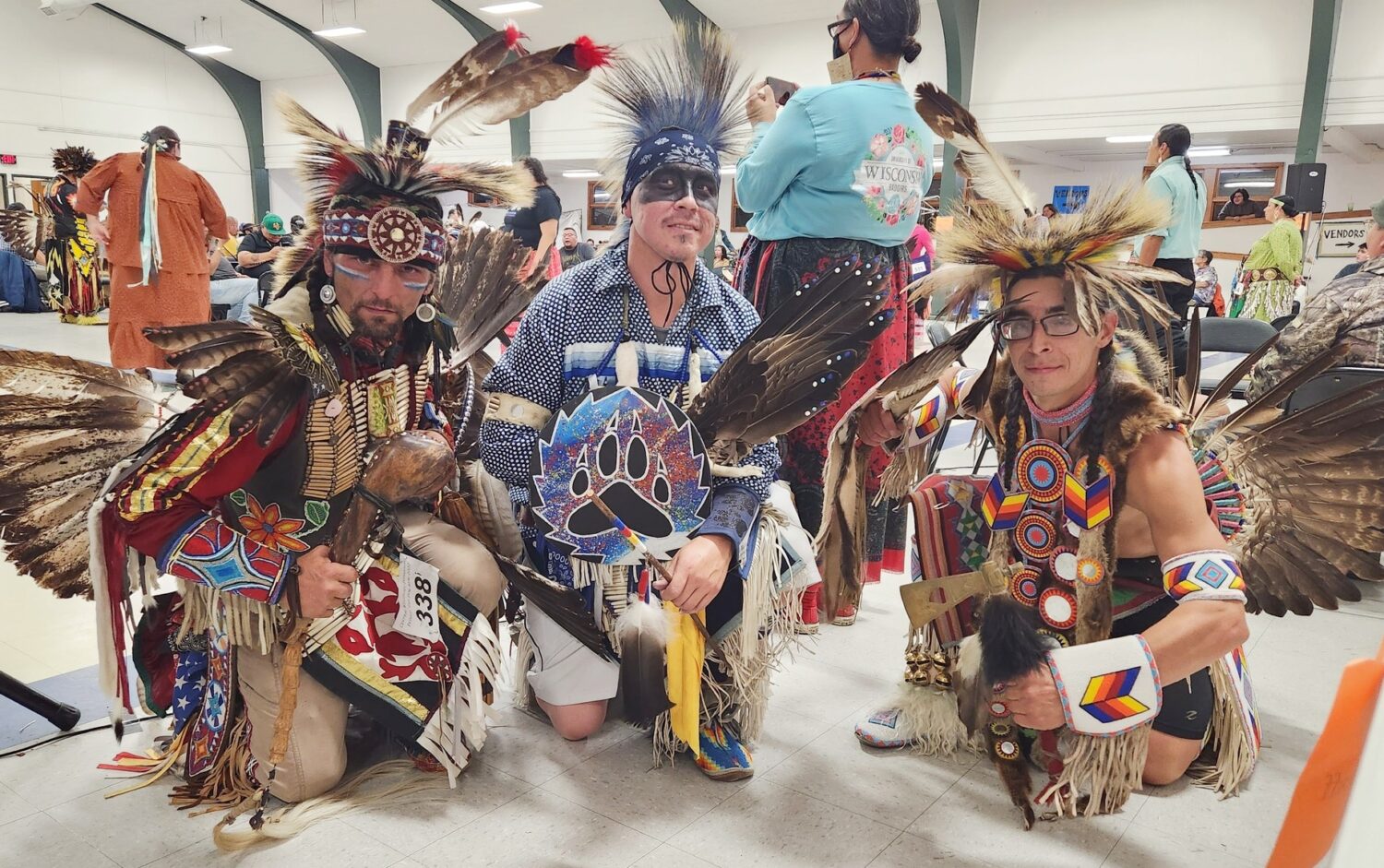
3rd annual Central Wisconsin Indigenous Peoples’ Day Pow Wow & Native American Art Market returns this weekend

3rd annual Central Wisconsin Indigenous Peoples’ Day Pow Wow & Native American Art Market returns this weekend
Last year’s Central Wisconsin Indigenous Peoples’ Day Pow Wow
(Photo: Central Wisconsin Indigenous Peoples’ Day Committee)

The Central Wisconsin Indigenous Peoples’ Day Pow Wow & Native American Art Market in Rothschild, Wis., is returning this weekend. Hosted by the Central Wisconsin Indigenous Peoples’ Day Committee (CWIPDC), this event is currently the only Native American event in Marathon County. In addition to music and dancing, there will be over 30 Native American craft vendors and food vendors at the event.

“The Indigenous Peoples’ Day Pow Wow is a fitting way to celebrate our continued existence, way of life, and contributions to greater society; we’re still here,” said CWIPDC founding director and Ho-Chunk tribal member Tricia Zunker in a statement. “It wasn’t that long ago that our people couldn’t sing our songs or gather publicly to dance — only in 1978 was this right restored. We invite the community to join us and enjoy the beautiful dancing and powerful music and to support the Indigenous artisans.”

CWIPDC was formed in 2019 to organize this annual pow-wow in celebration of Indigenous Peoples’ Day, the second Monday of October.

The event will be held at the Central Wisconsin Convention and Expo Center, 10101 Market Street, in Rothschild on Saturday and Sunday. Rothschild is located approximately two hours straight north of Madison. Grand Entry is at 1 p.m. and 7 p.m. on Saturday, Oct. 7 and at noon on Sunday, Oct. 8. A traditional feast is offered at 5 p.m. on Saturday, Oct. 7.  Admission is free for the Central Wisconsin Indigenous Peoples’ Day Pow Wow & Native American Art Market and it is open to the public.

Sponsors for this event include Ho-Chunk Nation (gold sponsor); Forest County Potawatomi (gold sponsor); B & A Esther Greenheck Foundation (bronze sponsor); Democratic Party of Wisconsin (bronze sponsor); Connexus Cares; Lac du Flambeau Band of Lake Superior Chippewa Indians; Ho-Chunk Gaming-Wittenberg; Wisconsin Public Radio; Wausau Pilot & Review; and the Victor & Helen Geisel Foundation.

Art Basel’s Director Asia Adeline Ooi Steps Down After Steering the Swiss Mega Fair’s Activity in the Region for a Decade

Art Basel’s Director Asia Adeline Ooi Steps Down After Steering the Swiss Mega Fair’s Activity in the Region for a Decade

Adeline Ooi will be stepping down from her role as Art Basel’s Asia director at the end of November after leading the Swiss mega fair’s development and operation for a decade.

The departure, announced internally on Thursday, October 5, is a conclusion of a major chapter of Asia’s art world story that saw the region’s rise to become an integral part of the global art market with Hong Kong, home to Art Basel’s fair in Asia, at the center. Ooi said she will be focusing on personal matters following her departure. Her role will not immediately be replaced as Art Basel continues to undergo a structural reorganization.

“It has been a magical ride,” Ooi said via telephone from her home in Malaysia. “It was something very special that we did together in Hong Kong, from establishing a proper art platform in Asia and trying to tell the world that we are not second best to bringing together that very special Asian energy. It was truly amazing.”

Looking back at the past decade since she took on the role in 2014 after serving as Art Basel’s VIP representative for Southeast Asia, she said it has been a special journey professionally and on a personal level. Ooi spearheaded the launch of Art Basel’s new initiatives in Asia, such as the collaboration with Art Week Tokyo and S.E.A. Focus in Singapore over the past two years.

“Adeline has delivered a tremendous amount to the Art Basel organization and to our clients in the Asian context and also at a global level. We’re really saddened to see her leaving,” said Noah Horowitz, CEO of Art Basel. Horowitz worked with Ooi when he was the fair’s director of Americas from 2015 to 2021; he returned to Art Basel as the fair’s CEO in November last year.

A visitor poses for a photo at the entrance of the Art Basel Hong Kong. Photo by Sebastian Ng/SOPA Images/LightRocket via Getty Images.

A visitor poses for a photo at the entrance of the Art Basel Hong Kong. Photo by Sebastian Ng/SOPA Images/LightRocket via Getty Images.

Ooi was appointed to Asia director as Art Basel’s parent company MCH Group took full ownership of the Hong Kong fair in 2014, following the initial acquisition of a 60 percent stake in Asian Art Fairs, which launched ART HK in 2008. The company rebranded the Hong Kong fair as Art Basel in Hong Kong in 2013.

Since then, Art Basel Hong Kong became a destination event in Asia as a platform to introduce western galleries to the region’s collectors, and shining a spotlight on artistic talents and galleries from across the region, while drawing international VIPs. The fair expanded to hosting 242 exhibitors in 2019 until Covid hit in 2020, forcing organizers to cancel fair events around the world that year. Art Basel Hong Kong resumed in 2021 and 2022 but in much scaled-down editions with a local focus, until March this year when the city fully reopened to world travelers.

Richard Koh Fine Art at Art Basel Hong Kong 2023. Courtesy of Art Basel.

Richard Koh Fine Art at Art Basel Hong Kong 2023. Courtesy of Art Basel.

Art Basel has been going through a structural change following media scion James Murdoch’s acquisition of a 38 percent stake in MCH Group in 2020, pledging for $80 million investment. While bringing back Horowitz to Art Basel as successor to former global director Marc Spiegler, who was at the helm for over a decade until end of last year, Art Basel also appointed the newly created fair director positions to lead each of its four fairs: Angelle Siyang-Le as director of the Hong Kong fair; Bridget Finn to lead Art Basel Miami Beach; Maike Cruse to direct the flagship fair in Switzerland; and Clément Delépine to head Paris+ by Art Basel, the latest addition to the Art Basel fair enterprise. They were all installed following last year’s appointment of Vincenzo de Bellis as director of fairs and exhibition platforms.

Horowitz assured that the new organizational structure will strengthen Art Basel’s operation globally, and the fair remains committed to Asia despite Ooi’s departure.

“We recognize that the Asian market is not a single umbrella market. There are very distinct regional markets. Our team will continue to look at where we can make an impact, where we can continue to build relationships, and build and help to service local, artistically collecting communities,” Horowitz noted.

Art Week Tokyo will return from November 2 to 5. Art Basel Hong Kong, led by Siyang-Le and Gil Schorr, Art Basel’s Hong Kong general manager, will return from March 26 through 30, 2024, with the first two days as VIP days.

More Trending Stories:  

An Elderly Couple Sold a ‘Worthless’ African Mask for $157. Now They Are Suing the Buyer Who Auctioned It for $4.4 Million 

A Norwegian Man Stumbled Upon a Trove of Gold Dating to the Early Middle Ages, Including a Rare Pendant Depicting the Norse God Odin 

A Top Antiquities Sleuth Has Called Out the Manhattan D.A. For Continually Passing His Work Off As Its Own 

Emerging Artist Li Hei Di Calls Her London Studio a ‘Parallel Universe,’ Where Hong Kong’s Cinematic Heroines and Mystical Abstraction Meet 

After Its Team-Up With Pokémon, Scalpers Swarm the Van Gogh Museum to Snap Up Merch and ‘Pick the Gift Shop Clean’ 

An Enigmatic Still-Life Picasso, Made During His Now-Celebrated ‘Wonder Year’ of 1932, Will Hit the Auction Block This Fall 

Get a Closer Look at Lagos-Based Artist Nengi Omuku’s Intricate Textile Paintings—Made on Traditional Nigerian Cloth 

A Mexican Journalist Went Viral After He Presented ‘Alien Bodies’ to Congress. Now He Is Accused of Plundering Them From Ancient Sites 

Follow Artnet News on Facebook:
Want to stay ahead of the art world? Subscribe to our newsletter to get the breaking news, eye-opening interviews, and incisive critical takes that drive the conversation forward.

In ‘Doom & Bloom,’ Lisa Ericson Illuminates the Surreal Impacts of Rising Sea Levels

In ‘Doom & Bloom,’ Lisa Ericson Illuminates the Surreal Impacts of Rising Sea Levels

“Extinguish.” All images courtesy of Corey Helford Gallery, shared with permission

Magical, surreal companionship characterizes Lisa Ericson’s hyperrealistic paintings in acrylic, which depict unusual pairs of species in easy coexistence. The Portland-based artist (previously) is known for illuminating flora and fauna and emphasizing the impending impacts of the climate crisis, particularly rising sea levels that in many of her latest works, encroach on her subjects’ environments. She shares about her chiaroscuro-style works:

I use the black background to create the drama of the spotlight on my chosen subject. It singles them out, exposes their every tiny detail, and creates a void of the unknown around them. In that way, each piece becomes an intimate portrait. I think of the animals in my paintings as simultaneously representing the natural world and also reflecting our own human struggle and emotion. I like to draw parallels between the two.

On view this month at Corey Helford Gallery, Ericson’s solo show Doom & Bloom features six portraits of animals that accentuate the devastating effects of a warming planet. In “Chariot,” a turtle carries an entire ecosystem across the road, while “Edge of Night” portrays a fox trapped on a tree stump blossoming with pink coneflowers. Each painting harnesses the intrigue of vivid color to draw the viewer in while also serving as a poignant reminder of what’s at stake, and the title of the exhibition suggests that gloom isn’t the only option amid such heartbreaking circumstances.

Doom & Bloom is on view in Los Angeles from October 7 to November 11. Head to Instagram to glimpse Ericson’s process and how these paintings came to be.


a turtle carries an entire ecosystem of plants and animals across the road

“Chariot”

a fox is trapped on a tree stump with coneflowers growing around it

“Edge of Night”

a detail image of a fox's fur and pink coneflowers

Detail of “Edge of Night”

a fawn curls up on its mother's back with birds in her antlers. water rises to her midsection

“Mother”

a snake in a roadway surrounds an ecosystem of plants, birds, and chipmunks

“Fortress”

a chipmunk stands in the middle of flowering succulents

Detail of “Fortress”

a spotted cat stands on the top of a tree stump blooming with flowers while the sea rises around it

“Territorial”

Do stories and artists like this matter to you? Become a Colossal Member today and support independent arts publishing for as little as $5 per month. The article In ‘Doom & Bloom,’ Lisa Ericson Illuminates the Surreal Impacts of Rising Sea Levels appeared first on Colossal.

Best Bets: St. Louis Bourbon Festival, Best of Missouri Market, Shaw Art Fair and more

Best Bets: St. Louis Bourbon Festival, Best of Missouri Market, Shaw Art Fair and more

Broadway star’s original goal was to become a rock singer, which led to a starring role in the hit musical “Rent.”

St. Louis Bourbon Festival

When 6-9 p.m. Oct. 6 • Where From Lemp’s Grand Hall (1817 Cherokee Street) to the Lemp Mansion (3322 Demenil Place) • How much $90 • More info stlouisbourbonfestival.com

Yeah, it costs 90 bucks, but there will be more than 500 types of bourbon, rye, Scotch and other varieties of whiskey to sample as part of the St. Louis Bourbon Festival. There also will be music, food trucks and street performers. Plus cigars. Of all the St. Louis festivals, this may be the only one with cigars. By Daniel Neman

The Spinners

When 8 p.m. Oct. 6 • Where J. Scheidegger Center for the Arts at Lindenwood University, 2300 West Clay Street, St. Charles • How much $35-$75 • More info lindenwood.edu

People are also reading…

The Spinners aren’t as widely regarded as some of the other fine R&B groups of the 1960s and ’70s, such as the Temptations and the Four Tops, but the band’s music was just as vital. After recording for Motown, the band went on to become one of the signature acts representing the lush Philadelphia soul sound. Hits include “The Rubberband Man,” “I’ll Be Around,” “Could It Be I’m Falling in Love,” “Then Came You,” “Mighty Love” and “Love Don’t Love Nobody.” The group released “Round the Block and Back Again” in 2021. By Kevin C. Johnson

For kids to adults, from pleasant and serene to downright terrifying, here are events and attractions to keep your hair on end and your candy bag filled.

Lori Rader-Day

When 6 p.m. Oct. 6 • Where Left Bank Books, 399 North Euclid Avenue • How much Free • More info left-bank.com

Thriller writer Lori Rader-Day presents her new novel, “The Death of Us,” in which a car found in a pond appears linked to a long-ago disappearance. What happened to a woman who handed over a baby to another woman who then raised the boy as her own? Rader-Day is the author of books such as “Death at Greenway” and “The Lucky One.” By Jane Henderson

Naomi Shihab Nye, James Crews

When 7 p.m. Oct. 6 • Where Ethical Society, 9001 Clayton Road • How much Free • More info slcl.org

Two acclaimed poets, both St. Louis natives, talk about looking at nature and wildness throught their art. Naomi Shihab Nye and James Crews will be in conversation with moderator and local poet Travis Mossotti. By Jane Henderson

The Temptations, the Four Tops

When 7:30 p.m. Oct. 6 • Where Fox Theatre, 527 North Grand Boulevard • How much $55-$150 • More info metrotix.com

It will be a night of hits when the Temptations and the Four Tops team up, just like in their heyday. Both groups are Motown royalty and Rock & Roll Hall of Famers. The Temptations gave the world classics such as “Just My Imagination,” “My Girl,” “I Can’t Get Next to You” and “Papa Was a Rolling Stone,” while the Four Tops’ hits include “Baby I Need Your Loving,” “Bernadette,” “I Can’t Help Myself (Sugar Pie, Honey Bunch)” and “When She Was My Girl.” By Kevin C. Johnson


1396[2] - slb.png

The St. Louis Ballet production of “Giselle”


‘Giselle’

When 7 p.m. Oct. 6-7, 2:30 p.m. Oct. 8 • Where Touhill Performing Arts Center, 1 Touhill Circle • How much $36-$84 • More info 534-1111; stlouisballet.org

A collaboration between St. Louis Ballet and Chamber Music Society of St. Louis, “Giselle” features romance, deception, betrayal, heartbreak, madness and death. Sound like a good time? It should, if classic ballet is your thing. The wildly emotional piece is considered a 19th-century masterwork. The music is by Adolphe Adam and the choreography and production conceived by Gen Horiuchi. By Daniel Durchholz

Best of Missouri Market

When Noon-8 p.m. Oct. 6, 9 a.m.-5 p.m. Oct. 7-8 • Where Missouri Botanical Garden, 4344 Shaw Boulevard • How much $16 for adults, $8 for children and members, free for member children under 13 and all children 3 and under • More info mobot.org

Missouri-made items — and only Missouri-made items — are the focus of this popular annual event. All the usual temptations will be at the Best of Missouri Market: arts, crafts, and food and beverage products. There is certain to be something you don’t need, but you’ve just got to have anyway. By Daniel Neman

Off-Broadway hit gets Midwestern debut in playwright’s hometown.

The Black Opry Revue’s Sheldon Concert Hall show will feature Rachel Maxann, Tylar Bryant, Sug Daniels, Grace Givertz, and Nicky Diamonds.

GroveFest returns this weekend for its biggest year yet in one of St. Louis’ most popular neighborhoods.

St. Louis Children’s Choirs

When 3 and 7 p.m. Oct. 7 • Where Manchester United Methodist Church, 129, Woods Mill Road • How much $5-$15 • More info 314-993-9626

St. Louis Children’s Choirs, which feature more than 300 singers age 6 to 18, from across the metro area, hold their concerts for family and friends. The groups Music Makers, Children’s Choir, Concert Choir and Cantus perform at 3 p.m., while the concert featuring Chorale, Choirsters, Concert Choir and Cantus is held at 7 p.m. By Daniel Durchholz

American Chamber Chorale

When 7 p.m. Oct. 7 • Where Salem United Methodist Church, 1200 South Lindbergh Boulevard • How much Free • More info acchorale.com

The American Chamber Chorale, an auditioned ensemble of experienced singers from diverse backgrounds, presents the first concert of its 2023-24 season. The group’s varied repertoire consists of music both old and new. By Daniel Durchholz

“Real Time” host says it’s important for liberals and conservatives to find common ground and laugh at themselves.

Chamber Project St. Louis

When 7:30 p.m. Oct. 7 • Where The Chapel Venue, 6238 Alexander Drive • How much $20, $5 for students • More info 314-401-0450; chamberprojectstl.org

Harp, flute, clarinet and stringed instruments are featured in Chamber Project St. Louis’ program “Classified: Sound Secrets.” Works featured include Ravel’s “Sonatine for flute, viola, harp,” Rebecca Clark’s “Lullaby and Grotesque for viola and cello,” and pieces by Mason Bates, Carlos Simon and Elizabeth Poston. By Daniel Durchholz

The Tallest Man on Earth, Andrea von Kampen

When 8 p.m. Oct. 7 • Where The Pageant, 6161 Delmar Boulevard • How much $35-$40 More info ticketmaster.com

The Tallest Man on Earth’s Kristian Matsson returns to the Pageant with “Henry St.,” his first album in four years, featuring “Every Little Heart.” He calls “Henry St.” “the most playful, most me album yet, because it covers so many of the different noises in my head. When you overthink things, you get further away from your original ideas.” By Kevin C. Johnson

Historic Shaw Art Fair

When 9 a.m.-5 p.m. Oct. 7, 10 a.m.-5 p.m. Oct. 8 • Where 4100 and 4200 blocks of Flora Place • How much $10 • More info shawartfair.org

Here is your chance to peruse some great local (and nonlocal) art, while saying to yourself, “I wish I were cool enough to live in one of these houses on Flora Place.” Along with more than 120 artists showing their stuff, there will be food trucks and music. Save $2 on admission by purchasing tickets at shawartfair.org. By Daniel Neman


Lucinda Williams at the Pageant

Lucinda Williams performs April 15, 2022, at the Pageant.


Lucinda Williams and Her Band

When 8 p.m. Oct. 8 • Where Sheldon Concert Hall & Art Galleries, 3648 Washington Boulevard • How much Sold out • More info metrotix.com

Singer-songwriter Lucinda Williams follows a 2022 concert at the Pageant with a new show featuring her new album, “Stories From a Rock ’n’ Roll Heart.” It’s her first album since surviving a stroke in 2020 and is accompanied by a video, in which she stars for the first time in more than three decades. By Kevin C. Johnson

LaToya Sharen

When 7 p.m. Oct. 8 • Where • City Winery, City Foundry, 3730 Foundry Way • How much $25-$30 • More info citywinery.com/stlouis

LaToya Sharen, born and raised in Belleville, brings some shine to City Winery. On “Shine,” her latest album, she’s putting the pieces of her life back together after her marriage crumbled and her faith dwindled. The album is produced by Jo “Capo” Kent and includes R&B, Afrobeats and trap music. By Kevin C. Johnson

Alarm Will Sound: Land of Winter

When 7 p.m. Oct. 8 • Where Community Music School, 535 Garden Avenue, Webster Groves • How much $10-$15 • More info onthestage.tickets/webster-university-department-of-music

Contemporary music ensemble Alarm Will Sound performs composer Donnacha Dennehy’s evening-length “Land of Winter” — a work that doubles as an evocation of the changing light of the shifting seasons in Ireland and a chance for introspection regarding our journey through life. By Daniel Durchholz

Florissant Fall Festival

When 10 a.m.-5 p.m. Oct. 8 • Where Florissant Old Town Marketplace, Florissant • How much Free • More info florissantoldtown.com

The longstanding Florissant Fall Festival will have a dog show and pony rides — it’s a dog-and-pony show! — plus pumpkin decorating, a car show, and all the live music, food and vendors you could want. By Daniel Neman

Italian Heritage Parade and Festa

When 12:30-5 p.m. Oct. 8 • Where Berra Park, Mackland Avenue between Shaw and Daggett avenues • How much Free • More info hillstl.org

This is the Hill’s Italian festival, so you know it’s vero. The festivities begin with a parade starting at Shaw School and then head to Berra Park for a lot of genuine Italian food, some St. Louis-Italian food (toasted ravioli), music, Italian vendors and maybe a game of bocce or two. By Daniel Neman

Masterworks Chorale

When 3 p.m. Oct. 8 • Where St. Clare Catholic Church, 1411 Cross Street, O’Fallon, Illinois • How much $10-$20 • More info singmasterworks.org

Masterworks Chorale opens its 50th anniversary jubilee season with “A Serenade to Music,” a reunion of the group’s alums as well as its founder, A. Dennis Sparger. The concert’s title matches the Ralph Vaughan Williams composition that will be the evening’s featured piece. The performance also includes the world premiere of Masterworks artistic director Stephen Mager’s choral composition based on Psalm 150. By Daniel Durchholz

Three Dog Night

When 7:30 p.m. Oct. 8 • Where The Factory, 17105 North Outer 40 Road, Chesterfield • How much $49-$89 • More info ticketmaster.com

Rock band Three Dog Night, known for “Black and White,” “Mama Told Me (Not to Come)” and “Joy to the World,” makes its Factory debut this weekend. The current lineup includes Danny Hutton (founder/lead vocalist), Michael Allsup (guitar), Paul Kingery (bass/vocals), Pat Bautz (drums), Howard Laravea (keyboards) and David Morgan (vocals). By Kevin C. Johnson

LOS ANGELES — SZA is one of the biggest names in music — but that doesn’t mean she enjoys being on its biggest stage. The “Kill Bill” performer opened up about her complicated relationship with the Grammy Awards, which despite nominating her in five categories in 2018 had her walking away at night’s end empty-handed. Now, she’s gone on to paint a bleak picture of the music industry’s …

Michael MacCambridge

When 7 p.m. Oct. 11 • Where Left Bank Books, 399 North Euclid Avenue • How much Free • More info left-bank.com

Sports writer Michael MacCambridge talks about how the 1970s transformed sports, as detailed in his book “The Big Time.” Stars such as Billie Jean King, Chris Evert, Muhammad Ali, Henry Aaron, Kareem Abdul-Jabbar and Jack Nicklaus were among those who redefined the role of athletics in America, the author writes. He’ll be in conversation with Gerald Early of Washington University, who is the editor of books such as “The Culture of Bruising.” By Jane Henderson

Ethel Morgan Smith

When 7 p.m. Oct. 11 • Where Grant’s View library, 9700 Musick Road • How much Free • More info slcl.org

In her book “Path to Grace: Reimagining the Civil Rights Movement,” Ethel Morgan Smith discusses how ordinary Americans were instrumental in making changes in their communities. She talks to Pulitzer Prize-winning novelist Jane Smiley, formerly of St. Louis, about the lesser-known heroes of the civil rights movement. By Jane Henderson

Martin Sexton

When 7:30 p.m. Oct. 11 • Where City Winery, City Foundry, 3730 Foundry Way • How much $35-$65 • More info citywinery.com/stlouis

Singer-songwriter Martin Sexton brings his tour to City Winery in support of his latest EP, “2020 Vision.” The album is produced by John Alagia, who has worked with Lukas Nelson, John Mayer and Dave Matthews. By Kevin C. Johnson

Morgan Talty

When 7 p.m. Oct. 12 • Where Kirkwood Performing Arts Center, 210 East Monroe Avenue, Kirkwood • How much Free; ticket required • More info thenovelneighbor.com; kirkwoodpubliclibrary.org

Morgan Talty, of the Penobscot Indian Nation, won the Pen/Bingham Prize for “Night of the Living Rez,” his debut story collection. In it, 12 tales look at what it means to be Penobscot in the 21st century. His book was chosen for the One Author/One Kirkwood reading event, and he will talk about the collection. Talty teaches at the University of Maine, Orono. By Jane Henderson

‘The Immigrant’

When Oct. 12-29; performance times vary • Where Wool Studio Theater, Jewish Community Center, 2 Millstone Campus Drive • How much $27.02 — $58.37 • More info newjewishtheatre.org

New Jewish Theatre presents “The Immigrant,” Mark Harelik’s play based on the true story of a young Russian-Jewish immigrant who begins a new chapter of his life in rural central Texas in 1909. The play is directed by artistic director Rebekah Scallet. By Valerie Schremp Hahn

The coming months are filled with music, theater and dance performances, visual art exhibitions, festivals and more festive experiences.  

Performing Arts Market to link local artists to world

Performing Arts Market to link local artists to world
Experts participate in a discussion session during the 2022 Performing Arts Market in Seoul. (Korea Arts Management Support Center)

Experts participate in a discussion session during the 2022 Performing Arts Market in Seoul. (Korea Arts Management Support Center)

The annual Performing Arts Market in Seoul, this year together with Journey to Korean Music, will offer a platform where local performing artists can present their productions to potential overseas buyers.

Supported by the Ministry of Culture, Sports and Tourism, Arts Council Korea and Korea Arts Management Support Center, the 19th edition of PAMS will take place Oct. 11-14 at various venues including the National Theater of Korea, JCC Art Center and Namsan Gugakdang. This year, PAMS joins forces with Journey to Korea, a market platform for Korean traditional music.

During the four-day run, a total of 10 performance programs across the dance, street theater and music genres, selected through the Seoul Art Market PAMS Choice open call competition, and five performances based on Korean traditional music, selected through Journey to Korean Music’s Journey Choice, will be showcased.

From 2017 to 2021, 59 organizations have been selected for PAMS Choice and presented 65 works at the art fair. Among them, groups like Brush Theater, Elephants Laugh and Ambiguous Dance Company gave 91 performances overseas in 2022. Similarly, Journey to Korean Music’s Journey Choice introduced 92 works last year, resulting in negotiations for 418 international performances.

With sustainability, circulation, cooperation and re-connected as thematic keywords, the joint event has invited international performing arts experts including France’s Festival d’Aurillac Artistic Director Frederic Remy, Spain’s Fira Tarrega Director Natalia Lloreta and Program Director Danni Gee of The Joyce Dance Theater based in New York. Creative Producer Kirsty Harris of London’s Barbican Center, and Director Bob Van Heur of Le Guess Who? Festival of Utrecht, the Netherlands will also join the event.

Frieze at 20: how the fair revolutionised London’s art world

The night before the inaugural Frieze art fair in October 2003, co-founder Matthew Slotover had a nightmare. That auspicious morning, he dreamt he’d arrived at Regent’s Park only to encounter a completely different tent, something far more incongruous than the white minimalist construction we’ve come to know. “It was a big top circus tent; they’d ordered the wrong one!” The inside was empty with a grass floor and horses roaming in the dark.

Luckily, the first fair went without incident — at least nothing like Slotover’s anxiety dream. Having etched itself into the art-world calendar, Frieze went on to transform the London art world, and while there’s much to celebrate, the anniversary also comes at a time of uncertainty for the art market and London; much has changed since those early heady days.

Before Frieze, the big European fairs were Art Basel (still is) and Art Cologne, which sold blue-chip art from a glass monolith on the Rhine. Locked out of the main fair, younger gallerists in Cologne took it upon themselves to break away and started the aptly named Unfair, which took place in 1992 and 1993. Held in a disused commercial space, the Unfair was abuzz, not just with gallerists and collectors but artists such as Damien Hirst, who staged a performance with identical twins sitting beneath a pair of Spot paintings, and Skip Arnold, who delivered himself in a crate. For the first time, the Unfair brought together emerging gallerists such as Daniel Buchholz, Jay Jopling, Maureen Paley and David Zwirner, now mainstays of the art market, all under the same roof.

A crowd of people gather around a large arch with a sign saying ‘Frieze Art Fair’.
Visitors entering Frieze at Regent’s Park in 2009 © Linda Nylind

The earliest discussions around a London fair took place in the mid-Nineties at the Atlantic Bar & Grill, in the sumptuous Art Deco basement of the Regent Palace Hotel just off Piccadilly Circus, when New York gallerist Matthew Marks floated the idea of supporting an event at the hotel. Restaurateur Oliver Peyton had just revived the Atlantic, filling its walls with contemporary art.

Marks’s suggestion came off the back of a similar initiative taking place in New York, where a group of gallerists came together to take over the Gramercy Park Hotel, turning individual rooms into art-fair booths. (Tracey Emin lay in a bed covered with one of her embroidered quilts, smoking cigarettes, becoming one of the fair’s main attractions.) The Gramercy International Art Fair eventually gave rise to The Armory Show, a far more ambitious project held across two waterfront piers, which was recently acquired by Frieze along with Expo Chicago.

When they first launched, these indie fairs, with artists on hand to present their projects, offered a viable alternative to the otherwise staid approach taken by the established fairs, which felt sterile by comparison, like a car showroom.

When the Frieze Art Fair opened in 2003, Tate Modern was only three years old, its visitor figures having surpassed expectations by millions. The British public, once scathing of contemporary art, had become more accepting thanks in part to the media interest surrounding the Young British Artists and the Turner Prize. As gallerist Sadie Coles says, “The opening of the Frieze fair was yet another symbol of progressive internationalism, reflecting the energy of London in the new millennium — a city with unparalleled public spaces, art schools and a rapidly expanding commercial gallery sector.”

An indigo magazine cover with with ‘frieze’ in lower-case yellow letters at the top and a painting of a yellow and orange butterfly at the centre. Below it is a yellow circle with the text: ‘pilot issue summer 1991 £3’.
The first issue of Frieze magazine, from 1991 © Courtesy Frieze

The Frieze brand had been established earlier through its magazine, launched in 1991, which lent the fair an air of curatorial authenticity. As co-founder Amanda Sharp recalls, “Our background through the magazine was with the artists, gallerists, writers and curators. We didn’t come to the fair knowing the collecting world.”

Many recall the fair’s early experimental leanings, with a mix of young and established galleries, sometimes facing each other across the aisles. Artist spaces such as Townhouse in Cairo and Vitamin Creative Space in Guangzhou were included even though they weren’t considered obvious commercial galleries. In the first year, The Wrong Gallery (an art project involving artist Maurizio Cattelan) presented an empty booth where child actors approached people in an attempt to sell a “constructed situation” by Tino Sehgal, reciting the edition number and price of their performative art work.

A man playing a banjo sits next to a table covered in candle holders, candelabras and lit candles.
The booth of Gavin Brown’s Enterprise was transformed into a flea market in 2007 © Frieze/Linda Nylind

Over time, certain gallerists allowed artists to take over their booths. Rob Pruitt turned Gavin Brown’s Enterprise into a flea market; Hauser & Wirth invited classics professor Mary Beard to open a fake museum; Anthea Hamilton presented huge pumpkins at Thomas Dane Gallery. With the arrival of Frieze Masters in 2012 for art from before the year 2000, Helly Nahmad Gallery transformed its booth into a series of immersive sets, including a recreation of a 1960s collector’s home and a 1940s psychiatric hospital inspired by Jean Dubuffet.

The fair’s artistic programme — Frieze Projects and Talks and Frieze Music — helped distinguish it from its rivals. While not alone in presenting talks or art projects, Frieze’s commissioning strategy was much more invested, ultimately changing the dynamic between artists and art fairs. As Sarah McCrory, who used to commission these projects for Frieze, says, “There was a special kind of naive ambition that came through Frieze Projects, where curators were allowed to run riot with large-scale commissions.” Some of the earliest Frieze Projects included an artificial hillside made from real grass by Paola Pivi, which visitors were invited to “roll down at their leisure”. Frieze was different. As Sharp says, “We believed a fair could be more than a purely transactional market space, which is why the architecture, design, food, projects and the talks programme were so important to us.”

An audience gathers around a large artificial grass slope while a person rolls down it.
‘Untitled (slope)’ (2003) by Paola Pivi at Frieze Projects © Courtesy Frieze

Over the years, the fair has also helped both the London art market and the city more broadly, with galleries reporting strong sales and new clients. Sensing the number of collectors passing through town, the auction houses moved their midseason sales into “Frieze Week”; across Christie’s, Sotheby’s and Phillips, last October’s evening sales totalled nearly £160mn. London hotels continue to welcome guests in the lull after the summer, while top-end galleries book out entire restaurants. Then there are the countless people employed by the fair, from logistics companies to an army of ground staff.

Moreover, galleries and museums across the country benefit from special acquisition funds to spend at Frieze, such as the Frieze Tate Fund and the Contemporary Art Society’s Collections Fund, giving cash-strapped institutions the chance to buy transformative works.

It’s also refreshing to see a collegiate approach to Frieze Week, with galleries and institutions coming together to pull out all the stops. As the fair’s success radiates outwards, visitors are encouraged to explore West End and East End galleries, with the offer of an exemplary London-wide programme, which this year includes El Anatsui’s Hyundai Commission at Tate Modern and Nicole Eisenman at the Whitechapel Gallery.

An oil painting depicting a surreal scene of different-coloured figures gathered around an orange car. The moon, some trees and a house looms ominously in the background.
‘The Triumph of Poverty’ (2009) by Nicole Eisenman © Leo Koenig Inc

So where are we now? Twenty years on and it is hard to escape a Covid- and austerity-bashed economy — arts organisations reel from budget cuts — and Brexit, which has left the UK struggling to compete and far less welcoming. Art Basel’s new Paris+ fair and the number of commercial galleries opening branches there represent a serious challenge to London. Moreover, during a cost of living crisis, can the public even afford Frieze tickets? It’s £245 for a “combined first preview” for both fairs; a single ticket at £75 is reduced to £46 at the weekend. Before Covid, the number of visitors across both fairs proved consistently high, with a peak of 110,000 in 2019. Last year’s 90,000 visitors, up from the previous year, suggests a return to form, but will London’s art world automatically do the same?

There’s a sense that the glitz and glamour of fairs such as Frieze detracts from regular gallery visits across the year and more intimate engagements with art. Where commercial galleries are concerned, big or small, fairs have become all-consuming one-stop extravaganzas, leaving them little choice other than to participate. But as galleries become more dependent on fairs, often appearing in several a year, they become exposed to sharply increased transport costs and rising overheads. Might this explain the trend for galleries to de-risk by focusing on more commercially viable practices such as figurative painting, as opposed to complex installations or time-based media?

A large multi-coloured abstract sculpture covered in patterns displayed on the grass of a leafy park.
Work by Yinka Shonibare in Frieze Sculpture in Regent’s Park © Linda Nylind

Frieze now sits alongside 300 art fairs worldwide that relentlessly contribute to the commercialisation of art — pressuring artists to come up with the goods, jettisoning fragile careers in favour of what the market desires. There’s also a tendency for fairs to become fashionable in the pursuit of bringing hot artists to an aspirant collector class. Seeing A-listers in the aisles makes Frieze seem sexier than most fairs, placing added pressure on galleries to live up to the advertisements and sponsorship provided by high-end fashion brands and luxury goods.

As fairs become more polished and more generic, should Frieze’s format change? Change may be in the air anyway, given concerns around the art world’s carbon footprint and the vast number of flights and long-haul shipments required to service international fairs.

A talking point at this year’s Art Basel was the Basel Social Club, an informal gathering of artists in a disused factory where artworks, including performances, appeared alongside ad hoc bars, sound stages, and food stations. A non-selling exhibition centred on artist interactions, collectors nevertheless descended in droves, with former Art Basel director Marc Spiegler serving cocktails. Is there life beyond the booth? When Frieze first opened it did things differently (just like new “non-fair” Minor Attractions will do this Frieze Week). Should it do so again?

As a sign of London’s resilience, the return of galleries to Cork Street and St James’s is welcome news. Eva Langret, director of Frieze London, says, “The UK remains the largest art market in Europe, and the second largest globally. It’s energising to see existing galleries such as Pilar Corrias, Stephen Friedman, Alison Jacques and Tiwani Contemporary taking up major new spaces.” With the opening of younger galleries such as Alice Amati, Guts Gallery and Harlesden High Street, London still offers the promise of discoveries, along with new art centres such as Margate and Manchester.

Meanwhile, the energy behind Frieze has far from dissipated. With its extended network of fairs including New York, Los Angeles and Seoul and recent full acquisition by entertainment giant Endeavor, Frieze is not hanging around. Victoria Siddall, former global director of Frieze’s fairs, points to the bigger picture: “Frieze has been constantly growing and adapting since it began, and it’s no surprise that it continues to do so today.” With its legacy of internationalism, the fair reminds us how 20 years ago the world came to London, just as Frieze now goes out to the world.

October 11-15, frieze.com