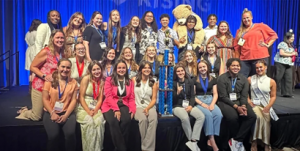
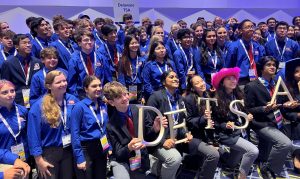
Women artists celebrated at the 2023 Women’s Art Festival in Cedar Rapids


In its second consecutive year back since the COVID-19 pandemic hit, the Haskell Indian Art Market will feature a wide variety of products made by local Native American creators.
Hosted by Haskell Indian Nations University, the annual event brings the Lawrence community together to promote and support Native American creators. During the market, vendors will be selling their jewelry, pottery, carvings, paintings, clothing and other handmade pieces as well as food such as frybread and Indian tacos.
Vendors during the two-day event will be set up underneath tents, where attendees will be able to browse and shop. Live cultural performances will take place throughout each day.
The Haskell Indian Art Market is scheduled for 10 a.m. to 6 p.m. Saturday, Sept. 9 and 10 a.m. to 5 p.m. Sunday, Sept. 10.
Live entertainment will begin at noon, 2 and 4 p.m. both days. Admission and parking are free of cost.
The event will be held at the Haskell Pow Wow grounds, 2535 West Perimeter Road, located off of 23rd and Massachusetts streets in Lawrence.
Road construction on 23rd Street in Lawrence is still underway, so there may be delays for folks driving in from the east.
No pets — with the exception of service animals — are allowed, according to the event flyer. Those planning on attending should note that the market is held outdoors in a grassy area, and wheelchairs or strollers may be difficult to maneuver. Cash payment for purchases is preferred, and there will be an ATM on-site.
Visit Haskell’s website, haskell.edu/hiam, and the Haskell Indian Art Market’s Facebook page to learn more about the event.
See photos from last year’s market in this article.

Maya Hodison (she/her), equity reporter, can be reached at mhodison (at) lawrencekstimes (dot) com. Read more of her work for the Times here. Check out her staff bio here.

Local scholars Patrizio Ceccagnoli, Stanley Lombardo and Megan Kaminski will give readings and discuss the art of translation during a Monday evening event.
 Molly Adams / Lawrence Times
 For half a century, longtime Lawrence resident Bill James has been asking questions about baseball. He’s still looking for answers.
 August Rudisell/Lawrence Times
 As part of the Kansas Highway 10 interchange project, a section of U.S. Highway 40 (West Sixth Street) will be closed for about 100 days, beginning Tuesday.


In its indictment of a collector accused of helping the militant group, U.S. prosecutors presented evidence of how easily art sales can be used to evade sanctions and launder money.
Earlier this year, a Lebanese art collector was accused of money laundering and violating terrorism-related sanctions in a federal indictment that focused attention on the reported beneficiary of some of his activities: the militant group Hezbollah.
The collector, Nazem Ahmad, had been identified by U.S. authorities as a top financier of Hezbollah, the Lebanon-based group that the U.S. government has designated a terrorist organization. The indictment, in April, charged Mr. Ahmad, with evading U.S. sanctions imposed on him in 2019, by using a network of businesses to conceal millions of dollars in transactions involving art and diamonds. Eight others were also charged.
The indictment led to headlines around the world. But less discussed has been the extent to which it detailed, with example after example, how the art market had, by the government’s accounting, played a significant role in Mr. Ahmad’s scheme.
More than a dozen galleries and artists had abetted what investigators characterized as Mr. Ahmad’s evasive tactics, the indictment asserted. Though the galleries or artists were not charged with wrongdoing, or accused of having knowingly helped Mr. Ahmad, the indictment depicted the art market as a ready vehicle for money laundering and sanctions evasion.
For example, more than a year after Mr. Ahmad had been identified as a financial resource for Hezbollah, and business with him or entities he controlled had been banned, a New York artist agreed, apparently unwittingly, to sell him artwork, according to the indictment. The government said Mr. Ahmad asked the artist, who was not named in the indictment, not to mention his name to the artist’s gallery because he preferred to remain anonymous. In 2021, the gallery, also unnamed, sold six of that artist’s works to a “Sierra Leone-based entity” described by investigators as a front for Mr. Ahmad, according to the indictment.
In another instance, the indictment said, an unnamed Chicago gallery sold 21 works to a company that Mr. Ahmad had long used to buy art. The March 2022 sale came more than two years after the sanctions were imposed prohibiting him from such transactions. The shipment to a company in Lebanon was identified as containing “wooden baby cribs,” not works of art, the legal documents said.
U.S. officials have said that Mr. Ahmad used his art to convert and shelter proceeds from his diamond trading, which ultimately was a source of funding for Hezbollah.
“Since 2012, Nazem Said Ahmad has acquired over $54 million in works of art from major auction houses, galleries, and exhibitions, or even directly from artists’ studios, often concealing his beneficial ownership by having official invoices drawn up using cover companies, family members, or business associates as the owners,” the indictment said.
Mr. Ahmad could not be reached for comment but he has previously denied any role in money laundering or in financing Hezbollah.
U.S. regulators have long complained that art transactions happen in such secrecy — with the true parties seldom being publicly identified — that the market has become ripe for money laundering and tax evasion.
Art dealers and auction houses argue that the threats have been exaggerated and the abuses are few. Some auction houses say they have programs to ensure they possess a firm understanding of the underlying customers involved in transactions. Other, often smaller galleries and individual artists say it’s unreasonable to expect them to perform extensive background checks of clients, especially if they have taken measures to obscure their identity.
Eric Allouche, for example, confirmed that his Allouche Gallery had been one of the unnamed businesses mentioned in the indictment as having done business with Mr. Ahmad. But he said he had no clue he was dealing with an entity that the government contends was affiliated with Mr. Ahmad. He said his gallery dealt with a representative of that entity who he knew to be someone who had bought art previously from artists he handles and that the transaction “didn’t seem suspicious at all.”
“We had an address and we got paid and shipped,” said Mr. Allouche. He noted it would remain difficult for galleries to research shell companies and check government databases for every sale “unless we are given easy tools to do so.”
So far the U.S. government has refrained from adopting regulations like those enacted recently in Europe that require art dealers to verify not only the identities of their clients but also the sources of their wealth. Nicholas O’Donnell, an art market lawyer in Boston who has been involved with efforts to get the industry to police itself without government regulation, said in the Ahmad case the market could have done a better job of reviewing its clients.
“When it comes to dealing with sanctioned persons, ignorance is no excuse,” he said, adding, “It’s not that hard to do this kind of due diligence with the publicly available database.”
He meant the searchable online database of sanctioned individuals that is maintained by the U.S. Office of Foreign Assets Control. When Mr. Ahmad was cited, the government issued a news release and his name and those of companies he was known to trade under were published on the database. Galleries can also sign up for alerts from that office, which is involved in the leveling sanctions.
The indictment cited relatives and associates of Mr. Ahmad who it said had helped him buy art in violation of sanctions and often dealt directly with the artists or galleries. Among these was Mr. Ahmad’s daughter, Hind Ahmad, who ran the now-shuttered Artual Gallery and Four You Gallery in Lebanon.
She has denied the accusations, saying in an interview last April that her father was not a financier of Hezbollah and that her galleries had never been used to launder money.
Mr. Ahmad, who was born into a wealthy family of diamond traders, remains at large outside the United States, the authorities have said. The State Department has put out a video offering a reward of up to $10 million for information about him and his financial network. The video shows a man it identifies as Mr. Ahmad firing a shoulder-launched rocket, in what the government presents as evidence of his connections to Hezbollah.
In Beirut, Mr. Ahmad, 58, was known as a lover of contemporary art. An article in Architectural Digest Middle East in 2018 showed the walls of his penthouse there lined with paintings and sculptures; U.S. officials said his collection was worth tens of millions of dollars and included works by Picasso and Warhol.
In an interview published in 2021 with Daraj, an Arabic news site, Mr. Ahmad said his passion for art was real, not a front for money laundering, and he described the charges against him as politically inspired.
He has been publicly associated with Hezbollah since at least 2011. In articles that year, he was said to have taken part in a property transaction in Lebanon connected to Hezbollah, an armed movement and a political party that is supported by Iran. He described the deal as an ordinary business transaction that had nothing to do with the organization.
American officials have said they are particularly interested in money he amassed from what they describe as the smuggling of “blood diamonds,” gems used to finance armed conflict. They said he personally donated funds to Hezbollah’s leader, Hassan Nasrallah, and laundered the group’s money through his companies.
The sanctions announced in December 2019 were designed to isolate Mr. Ahmad from the U.S. financial system and stop his doing business with any U.S. entities. Those who did business with him could also face sanctions.
The court papers say that despite the ban, he or his companies continued to ship hundreds of diamonds to the U.S. for grading, the process of evaluating their quality. One stone alone was valued at $80 million, according to the indictment.
In total, federal prosecutors for the Eastern District of New York in Brooklyn reported uncovering about $400 million worth of imports and exports, primarily of artwork and diamonds, to and from the United States by entities connected to Mr. Ahmad after the sanctions were imposed. Of this, more than a million dollars’ worth of contemporary art was acquired from the United States or from American nationals abroad — though the art was often undervalued to avoid tariffs, the indictment said.
“The art market remains particularly vulnerable to abuse, but the scale of the problem is difficult to ascertain,” said Natasha Degen, professor of art market studies at the Fashion Institute of Technology.
“Shell companies are more likely to be used to purchase art tax-free than to purchase art for a sanctioned individual,” she said. “Money laundering and tax evasion, of course, can go hand in hand (as in the Ahmad case). And it’s the same vulnerabilities that make both possible in the art market.”
The indictment cites several instances in which galleries and artists went out of their way to meet the demands of Mr. Ahmad and his associates. According to the court documents, the Chicago gallery allowed “entities controlled or operated for the benefit” of Mr. Ahmad to pay part of a $241,000 bill indirectly, via a third party, in increments below $10,000, which avoided U.S. financial reporting requirements and obscured his role in the sale.
Some galleries and artists also accommodated requests to undervalue sales receipts and export documents so he could avoid foreign tax, according to the indictment.
Wyatt Mills, a California-based artist who is referred to but not named in the indictment, said he had no idea Mr. Ahmad was under sanctions or accused of being affiliated with Hezbollah when he sold him four works in 2021. He said a gallery he had worked with in the past alerted him to the fact that Mr. Ahmad had posted several of Mr. Mills’s paintings on Instagram and suggested he get in touch with him.
“They said he got in some trouble, something about the I.R.S. or something,” Mr. Mills recalled, but he said he was told by the same gallery that Mr. Ahmad had not been found guilty of anything and that he seemed like a “legit collector.”
“He had Picassos and Basquiats and all of these big galleries followed him” on Instagram, he said.
Nothing seemed amiss, Mr. Mills said, until federal agents visited his home earlier this year.
Looking back, Mr. Mills said he believed that artists are even less equipped than auction houses or galleries to carry out the level of due diligence some now expect of them.
“My job isn’t to do a criminal-background check on anyone buying a painting,” he said. “They definitely don’t teach you this stuff in art school.”

Landmark pieces by Argentina’s top 20th-century painters, galleries from all over the country, and emerging artists will all converge this weekend at arteba, Argentina’s storied art fair.
The 2023 edition, which runs through Sunday, September 3, at the Costa Salguero Center in Buenos Aires, will feature upwards of 400 artists from 58 art galleries across more than 15 cities.
Fundación arteba President Larisa Andreani and Vice President Eduardo Mallea officially inaugurated the exhibition on Thursday at the fair’s “First Visit.” In attendance were Argentina’s art-scene insiders, along with the head of Santander Argentina and Chairman of the Santander Argentina Foundation Guillermo Tempesta Leeds, and Santander Argentina’s CEO Alejandro Butti. Santander Bank is the main sponsor of arteba 2023.
This year’s selection of galleries and participants was chosen by an independent committee formed by: César Abelenda, head of Pasto Gallery; independent curators Carla Barbero and Sonia Becce; Leopol Mones Cazón, head of the Isla Flotante Gallery; and Marina Pellegrini, head of Vasari Gallery.
Arteba’s Main Section showcases well-established galleries, which feature both new and renowned artists. Highlights include Uruguayan gallery Sur and its paintings by Rosario-born Antonio Berni. Some of these paintings, like El carnicero (The Butcher) from the 1950s, will be back on the market for the first time in three decades.
Another historic piece from Emilio Pettoruti — The Pipe, from 1924 — will be shown at the Roldan gallery stand. Other works by top-tier artists like Luis Felipe Noé, Carlos Alonso, Julio LeParc, Guillermo Kuitca, and Luis Benedit will also be on display.

“We’ve been coming here to arteba since the beginning, so we have a history here,” Sur director Matín Castillo told Telam .“Argentina is going through complicated times, but arteba is always a very relevant event, and the country has a great level of art collectors and cultural audiences. People know what they are looking at, they’re interested, and that doesn’t happen everywhere. So, the expectations for sales are good.”
“We’d already sold pieces before the fair started, which surprised me,” said Florencia Giordana, head of Rolf Gallery. “The phone started ringing as soon as we announced what we were going to display at our stand. This includes the work of renowned artists from the audiovisual scene like Silvia Rivas, a pioneer of video artist, Andrés Denegri, who has a piece that won us the best stand award in Arcomadrid, and Graciela Sacco, whose bocanada series was exhibited in Basel París.”

Arteba’s other main section, “Utopia,” focuses on ground-breaking and experimental artists, along with innovative new art productions, galleries, artist-managed spaces, profit and non-profit organizations and art marketing platforms. Six of the projects in Utopia were the products of a MICA Utopia Grant — a new program by Fundación arteba and the Ministry of Culture to promote federalism and help galleries from the interior with less exposure participate free of charge.
One such beneficiary was the Laguanacazul gallery from Patagonia. “It’s the first time ever that an art space from El Calafate, in Santa Cruz, has attended the fair,” gallery director Toia Ibáñez said.


A major standout at the expo was the MC gallery’s Fancy Monas — a collection of NFTs depicting monkeys dressed like women by pop artist Edgardo Giménez. Giménez is currently having a retrospective exhibition at the Buenos Aires Museum of Latin American Art (MALBA, by its Spanish acronym) called “There Will Be No One Like Him.” Fancy Monas are his first digital works.
“People love them, and we already sold a few,” said gallery manager Maria Calcaterra. “I don’t usually work with such a contemporary thing, but people like them a lot, especially younger buyers.”
Argentina’s current political-economic tensions have, of course, filtered into local artists’ work. For example, visitors will be able to notice US dollar notes depicted in several pieces but perhaps most notably in a sculpture by the famous collective, Mondongo. The work on display at the Barro gallery features a giant dollar bill made with thousands of nails sewed together with silver lurex thread on a fakir bed.
Nahuel Ortiz Vidal, head of Barro, is optimistic about this year’s edition of arteba. “We’ve already sold a piece by Faivovich & Goldberg — an artist duo that works with meteorites — for US$20,000, a piece by Lucrecia Lionti for US$12,000, one by Nicanor Aráoz for US$15,000 and a delicate piece by Matias Duville for US$35,000,” he told Télam. “Argentine art pieces are very affordable in comparison with the rest of the region. And there’s been a market renovation, with lots of new buyers.”

Arteba is open for general audiences from 12 p.m. to 8 p.m. at the Costa Salguero Center, Avenida Costanera Rafael Obligado 1221. Ticket prices are AR$2500.
*with information from Télam

Vulturine Guineafowl, Acryllium vulturinum, Plate 8, Icones Avium (1837–38). All images courtesy of the Trustees of the Natural History Museum, London, shared with permission
As often happens with creative couples throughout history, Elizabeth Gould’s legacy tends to be overshadowed by her husband’s. Gould (1804-1840) was an ambitious and knowledgeable artist, who, throughout her short lifetime, illustrated more than 600 avian species that ushered in significant advances in natural history. Many of the birds had previously gone undocumented, and paired with her husband John’s studies, the lithographs conveyed the true diversity within ornithology.
Now partially compiled in a celebratory tome of her life and work, 220 of Gould’s illustrations have migrated from the collections of London’s Natural History Museum to the page. Birds of the World: The Art of Elizabeth Gould spans 248 pages with full-color reproductions depicting myriad species, from a speckled vulturine guineafowl and chromatic crimson rosella to a slender-beaked glossy ibis. Written by the museum’s special collections manager Andrea Hart and zoology librarian Ann Datta, the volume contains several previously unpublished works and is organized across five continents.
Birds of the World, which is published by Prestel, is scheduled for release this fall. Pre-order your copy on Bookshop.

Glossy Ibis, Plegadis falcinellus, Plate 301, The Birds of Europe (1832–37)

Left: Crimson Rosella, Platycercus elegans, Vol. 5, Plate 22, The Birds of Australia (1840–48). Right: Narina Trogon, Apaloderma narina, Plate 26, A Monograph of the Trogonidæ, or Family of Trogons (1835–38)

Sulphur-crested Cockatoo, Cacatua galerita, A Synopsis of the Birds of Australia, and the Adjacent Islands (1837–38)

Northern Lapwing, Vanellus vanellus, Plate 291, The Birds of Europe (1832–37)

Top left: Black-throated Magpie-Jay, Calocitta colliei, 1829, [No. 52], J & E Gould Drawings album, Natural
History Museum, London. Bottom left: Eastern Shrike-tit, Falcunculus frontatus, Vol. 2, Plate 79, The Birds of Australia (1840–48). Top right: Blackbird, Turdus merula, Plate 72, The Birds of Europe (1832–37). Bottom right: Long-eared Owl, Asio otus, Plate 39, The Birds of Europe, (1832–37)

Do stories and artists like this matter to you? Become a Colossal Member today and support independent arts publishing for as little as $5 per month. The article A Forthcoming Book Flies Through Hundreds of Elizabeth Gould’s Groundbreaking Avian Illustrations appeared first on Colossal.

Delaware Division of the Arts presents “Enlightenment” by Bryant “Tee” Bell – Opens September 1 – State of Delaware News
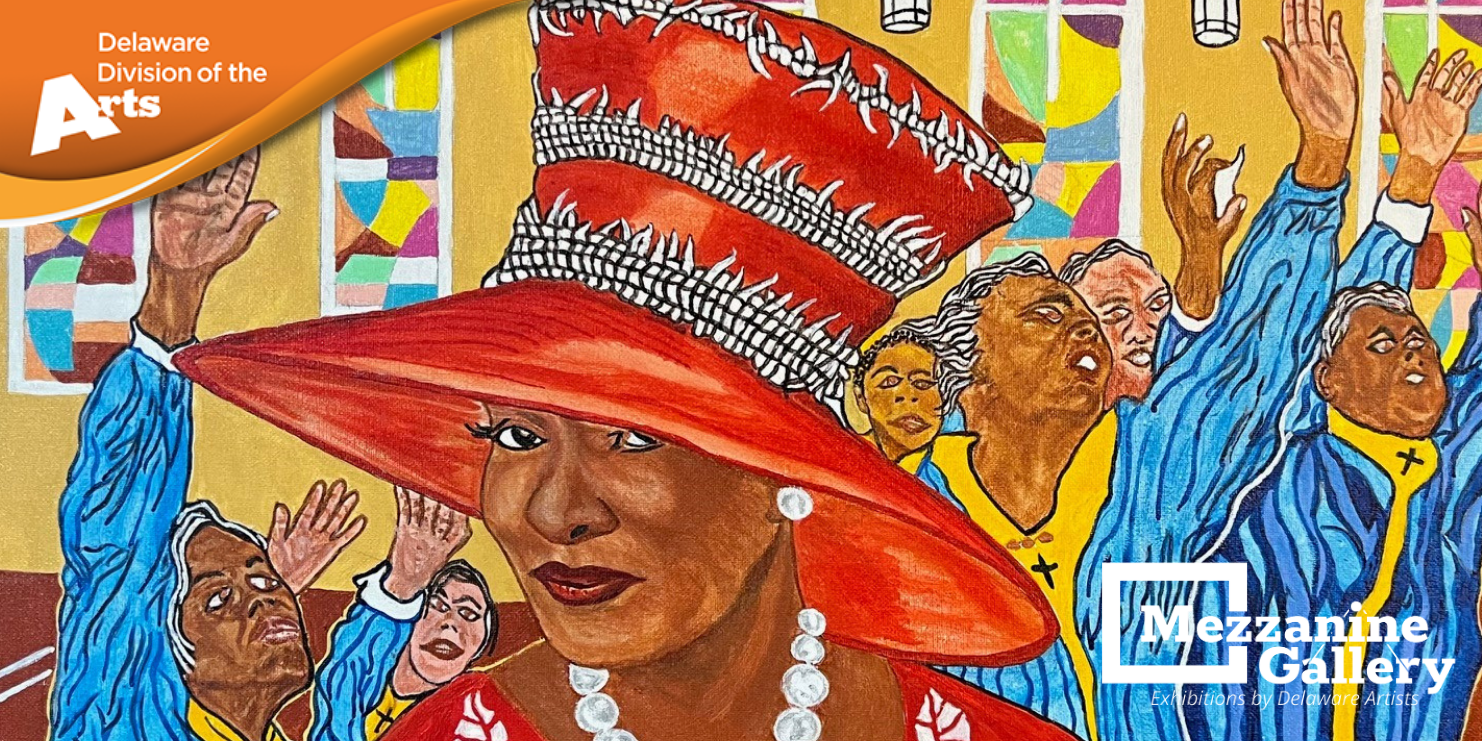
Wilmington, Del. (September 1, 2023) – The Delaware Division of the Arts’ Mezzanine Gallery presents Bryant “Tee” Bell’s exhibition, “Enlightenment,” running September 1-29, 2023. Bell is an Emerging 2023 Individual Artist Fellow in the field of visual arts: painting. Guests are invited to attend a Meet-the-Artist Reception on Friday, September 8 from 5:00-7:00 p.m. (Art Loop Wilmington has been moved to the second Friday of September due to the Labor Day Holiday).
Bell’s artwork takes a critical view of social, political, and cultural issues regarding inclusion and representation in our society. His work examines the reality of the American dream for different cultures and engages diverse subjects that may include Caribbean, African American, Muslim, American Indian, Caucasian, homeless and poor people, in addition to historically black colleges and universities (HBCUs), and Veterans. Bell’s work shares “a look at some Americans that make up the very fabric of our society, who are often unseen and overlooked in their daily struggle for equal rights, opportunity, and their piece of a dream that we call freedom in America.”
Bell’s paintings are sometimes people of color with facial features often expressing the stress and experiences of their everyday lives. Each of Bell’s projects consist of multiple ideas, using a range of different media, grouped around specific themes and meanings. It has required him to research other artists, color choices, materials, approaches and concepts to produce new works of art.
As a painter, Bell consistently works to master new mediums, seeking to learn techniques and paint on a larger scale. He exhibits regularly throughout Delaware – frequently at the Mispillion Art League (Milford), at the Biggs Museum of American Art (Dover), and at CAMP Rehoboth. He also works to relate music, photography, sculpture, and other mediums to his practice, and he finds that meeting new artists and viewers is especially fruitful and rewarding.
The Mezzanine Gallery, open weekdays from 8:00 a.m. to 4:30 p.m., is located on the second floor of the Carvel State Office Building, 820 N. French Street, Wilmington.
Image: Joyful Noise, 2023, acrylic on canvas, 18 x 24 inches
###
Contact: Andrew Truscott, Program Officer, Marketing and Communications
302-577-8280, andrew.truscott@delaware.gov
The Delaware Division of the Arts, a branch of the Delaware Department of State, is dedicated to cultivating and supporting the arts to enhance the quality of life for all Delawareans. Together with its advisory body, the Delaware State Arts Council, the Division administers grants and programs that support arts programming, educate the public, increase awareness of the arts, and integrate the arts into all facets of Delaware life. For more information about the Delaware Division of the Arts, visit arts.delaware.gov or call 302-577-8278.
Related Topics: “Delaware Division of the Arts”, Bryant “Tee” Bell, Mezzanine Gallery

Keep up to date by receiving a daily digest email, around noon, of current news release posts from state agencies on news.delaware.gov.
Here you can subscribe to future news updates.
Wilmington, Del. (September 1, 2023) – The Delaware Division of the Arts’ Mezzanine Gallery presents Bryant “Tee” Bell’s exhibition, “Enlightenment,” running September 1-29, 2023. Bell is an Emerging 2023 Individual Artist Fellow in the field of visual arts: painting. Guests are invited to attend a Meet-the-Artist Reception on Friday, September 8 from 5:00-7:00 p.m. (Art Loop Wilmington has been moved to the second Friday of September due to the Labor Day Holiday).
Bell’s artwork takes a critical view of social, political, and cultural issues regarding inclusion and representation in our society. His work examines the reality of the American dream for different cultures and engages diverse subjects that may include Caribbean, African American, Muslim, American Indian, Caucasian, homeless and poor people, in addition to historically black colleges and universities (HBCUs), and Veterans. Bell’s work shares “a look at some Americans that make up the very fabric of our society, who are often unseen and overlooked in their daily struggle for equal rights, opportunity, and their piece of a dream that we call freedom in America.”
Bell’s paintings are sometimes people of color with facial features often expressing the stress and experiences of their everyday lives. Each of Bell’s projects consist of multiple ideas, using a range of different media, grouped around specific themes and meanings. It has required him to research other artists, color choices, materials, approaches and concepts to produce new works of art.
As a painter, Bell consistently works to master new mediums, seeking to learn techniques and paint on a larger scale. He exhibits regularly throughout Delaware – frequently at the Mispillion Art League (Milford), at the Biggs Museum of American Art (Dover), and at CAMP Rehoboth. He also works to relate music, photography, sculpture, and other mediums to his practice, and he finds that meeting new artists and viewers is especially fruitful and rewarding.
The Mezzanine Gallery, open weekdays from 8:00 a.m. to 4:30 p.m., is located on the second floor of the Carvel State Office Building, 820 N. French Street, Wilmington.
Image: Joyful Noise, 2023, acrylic on canvas, 18 x 24 inches
###
Contact: Andrew Truscott, Program Officer, Marketing and Communications
302-577-8280, andrew.truscott@delaware.gov
The Delaware Division of the Arts, a branch of the Delaware Department of State, is dedicated to cultivating and supporting the arts to enhance the quality of life for all Delawareans. Together with its advisory body, the Delaware State Arts Council, the Division administers grants and programs that support arts programming, educate the public, increase awareness of the arts, and integrate the arts into all facets of Delaware life. For more information about the Delaware Division of the Arts, visit arts.delaware.gov or call 302-577-8278.
Related Topics: “Delaware Division of the Arts”, Bryant “Tee” Bell, Mezzanine Gallery
Keep up to date by receiving a daily digest email, around noon, of current news release posts from state agencies on news.delaware.gov.
Here you can subscribe to future news updates.

“Reservoir” by John Grade
Every month, Colossal shares a selection of opportunities for artists and designers, including open calls, grants, fellowships, and residencies. If you’d like to list an opportunity here, please get in touch at hello@colossal.art. You can also join our monthly Opportunities Newsletter.
$1,800 Innovate Grants for Art + Photo—Summer 2023 Open CallFeatured
For its Summer 2023 cycle, Innovate Grant will offer two awards of $1,800 each to one visual artist and one photographer. Six honorable mentions are also featured on the Innovate Grant site. Applications are open to anyone 18 and older from anywhere in the world.
Deadline: 11:59 p.m. PST on September 14, 2023.
Open Calls
SaveArtSpace and Art at a Time Like This (ATLT) Open Call (Houston)
8X5, a public art campaign named for the size of an average prison cell, will commission ten artists to display their works on billboards, kiosks, and digital trucks at important sites throughout Houston. Artists at all stages of their careers are encouraged to apply.
Deadline: September 1, 2023.
L+A+N+D: An Experience of Discovery—Bernheim Arboretum and Research Forest (International)
Located just outside of Louisville, Kentucky, Bernheim Arboretum and Research Forest’s new initiative L+A+N+D (Landscape + Art + Nature + Design) invites proposals for immersive outdoor installations. The organization will provide creative outdoor experiences with topics addressing humans’ connection to nature, beauty in the landscape, biodiversity, conservation, sustainability, and climate change, along with a stipend and a construction budget for fabrication and installation expenses.
Deadline: September 4, 2023.
All About Photo Call for Entries: Shapes (International)
Photographers working under the theme of “shapes” are eligible for this open call. Winners will receive $1,000, and their winning image(s) or full portfolio will be published in AAP Magazine Vol.34.
Deadline: September 5, 2023.
Print Center New York Open Call: New Voices 2024 (U.S.)
Six to eight artists will present their work and develop their practices through a group exhibition, artist-led public programming, focused conversation, and community-building. Each receives $2,500, a shipping and framing stipend, travel, and lodging.
Deadline: September 8, 2023.
Call For Pitches: Midwest Makers Video Series (Midwest)
Nine videographers will receive $3,000 each to create a short documentary video showcasing a Midwest Maker, a.k.a. visual artists, chefs, community organizers, folk and traditional arts practitioners, musicians, oral historians, farmers, and next-door neighbors.
Deadline: September 24, 2023.
Prospect Art Open Call (Los Angeles)
Selected artists will participate in Prospect Art’s NEW WORK series and receive a $1,500 project grant.
Deadline: September 24, 2023.
The Elizabeth Foundation for the Arts Open Calls (International)
EFA has two open calls around the theme of “folklore”: The exhibition open call offers a $12,000 curatorial budget for a six-week exhibition at the space. The projects open call is based on bi-weekly group gatherings for three months. Projects can include thematic conversations, poetry readings, music, movement and dance exercises, activism, and various workshops.
Deadline: September 29, 2023.
BigCi Environmental Awards 2023 (International)
Two winners will receive $4,000 and a four-week BigCi residency. Artists working in visual art, installation, multimedia, performance, literature, music, photography, filmmaking, curating, are welcome to apply. There is a $35 entry fee.
Deadline: October 2, 2023.
The Bennett Prize (U.S.)
Women working in figurative realism are eligible for this prize, which provides $50,000 over two years to one artist. Ten finalists will be selected to participate in a traveling exhibition organized by the Muskegon Museum of Art (MMA) and the winner will be showcased in a solo exhibition at the close of her grant. $10,000 will be given to one finalist. There is a $40 entry fee.
Deadline: 11:59 p.m. MT on October 7, 2023.
Passepartout Photo Prize (International)
Open to photographers at any stage of their careers, the Passepartout Photo Prize is accepting submissions for its seventh edition. Winners receive exhibition and publication opportunities, with one 500 Euro award. There is a 25 Euro entry fee.
Deadline: October 10, 2023.
Loewe Foundation Craft Prize (International)
The prestigious Loewe prize is accepting entries from artists and craftspeople. One 50,000 Euro award will be given to the top artist, with other winning works exhibited in Paris in spring 2024.
Deadline: October 25, 2023.
Sony Future Filmmaker Awards (International)
The Sony Future Filmmaker Awards elevates voices that bring a fresh perspective to storytelling. The shortlisted filmmakers are flown to Los Angeles for an exclusive four-day event to gain unparalleled insight into all aspects of the filmmaking process to advance their careers.
Deadline: February 15, 2024.
Grants
2024 Joyce Awards (Great Lakes region)
The final 2024 funding cycle for the Joyce Awards is now open to cultural workers and organizations working toward racial equity and economic mobility.
Deadline: September 11, 2023.
LMCC Manhattan Arts Grants (Manhattan)
LMCC currently has applications open for three programs that award up to $16,000 for arts projects in all disciplines, serving communities in Manhattan.
Deadline: September 12, 2023.
Foundwork Artist Prize (International)
The Foundwork Artist Prize is an annual juried grant that recognizes outstanding practices by emerging and mid-career artists working in any media. The 2023 honoree will receive an unrestricted $10,000 grant.
Deadline: September 26, 2023.
Monument Lab Re:Generation Initiative (U.S.)
Monument Lab’s Re:Generation supports teams of two or more individuals working together to create a new or expand an existing public-facing project. Each selected Re:Generation team will receive a total of $100,000 in unrestricted funding toward their commemorative campaign or project.
Deadline: October 2, 2023.
The Adolf and Esther Gottlieb Emergency Grant (International)
The Adolph and Esther Gottlieb Emergency Grant program provides one-time interim financial assistance to qualified painters, printmakers, and sculptors whose needs are the result of an unforeseen catastrophic incident and who lack the resources to meet that situation. Awardees typically receive $5,000, up to $15,000.
Deadline: Rolling.
Adobe Creative Residency Community Fund (Ukraine or refugee)
Adobe’s Creative Residency Community Fund commissions visual artists to create company projects on a rolling basis. Awardees will receive between $500 and $5,000.
Deadline: Rolling.
Pollock-Krasner Foundation Grant (International)
The foundation welcomes applications from actively exhibiting visual artists who are painters, sculptors, and artists who work on paper, including printmakers. Grants are intended for a one-year period. The foundation will review expenditures relating to an artist’s professional work and personal expenses, and amounts range up to $50,000. The size of the grant is determined by the individual circumstances of the artist, and professional exhibition history is taken into consideration.
Deadline: Rolling.
Residencies, Fellowships, & More
Kimmel Harding Nelson Center for the Arts Artist Residency (International)
Open to visual artists, composers, and writers, this program offers two to eight-week residencies with private studio space, housing, and a $175 per week stipend.
Deadline: September 1, 2023.
Breck Creek Artist-in-Residence Program (International)
Artists across disciplines are eligible to spend two to four months in a live/work studio. Residents receive a biweekly stipend of $600 and access to all classes.
Deadline: September 1, 2023.
Bloedel Reserve Creative Residency (International)
Open across disciplines, this residency offers access to a 140-acre nature reserve and lodging. Projects must be related to nature. One fellow will be supported by a $2,000 stipend, while others receive $1,000.
Deadline: September 1, 2023.
Lower East Side Printshop Keyhold Residency (U.S.)
This residency offers emerging artists 24-hour access to printmaking facilities for one year, a $1,000 stipend, storage space, basic supplies, and more.
Deadline: September 1, 2023.
MacDowell Residency (International)
About 300 artists in seven disciplines are awarded this residency each year, which offers a studio, accommodations, and three meals a day for up to six weeks.
Deadline: September 10, 2023.
Princeton Arts Fellowship (International)
Applicants should be early-career visual artists, poets, novelists, playwrights, directors, and performance artists who would find it beneficial to spend two years teaching. A $90,000 stipend is provided per year.
Deadline: September 12, 2023.
Monson Arts Winter Residencies 2024 (International)
Emerging and established artists and writers are eligible for this year’s residency cohort, which invites five artists and five writers to Maine’s North Woods each year. Residents receive a private studio, private bedroom in shared housing, all meals, and a $1,000 stipend for four-week programs or $500 for 2-week programs.
Deadline: September 15, 2023.
Dry Tortuga National Park Artist in Residence Program (International)
This one-month residency is open across disciplines and offers a $4,000 stipend and housing.
Deadline: September 29, 2023.
Pine Meadow Ranch Center for Arts & Agriculture Residency (International)
Open to disciplines that include metal, glass, wood, leather, ceramics, fibers, textiles, writing, painting, drawing, photography, film, and music, this residency is geared toward artists interested in land conservation and agriculture. Three residents will spend two to four weeks at the Sisters, Oregan-ranch, and studio space, private room, and shared bathroom, kitchen, dining, and laundry area are provided. This year’s theme is “transitions and migration.”
Deadline: September 30, 2023.
Hawai’i Volcanoes National Park May 2024 Artist in Residence Program (International)
Artists working across mediums are eligible for this program at Hawai’i Volcanoes National Park, which offers a $4,000 stipend, housing, and artist events.
Deadline: September 30, 2023.
True/ False Film Fest Artist Residency Program (International)
Aimed at emerging and mid-career artists, this five-week virtual residency will culminate in an in-person exhibition of large-scale installations, projections, and performance works at the 2024 True/False Film Festival. Projects should fall within the theme “The Human Paradox.”
Deadline: September 30, 2023.
Eyebeam Fellowship Open Call (International)
Artists interested in technology and decolonization, reframing history, language, and care are invited to apply for this six-month fellowship. Selected artists receive a $20,000 stipend.
Deadline: 11:59 p.m. ET on October 1, 2023.
Art Omi Residencies (International)
Architects, artists, and writers are eligible for this round of Art Omi’s residencies, which provide food, lodging, and studio space.
Deadline: October 15, 2023.
2024 RAIR Open Call (International)
Applications are open for two Recycled Artist in Residency (RAIR) programs: The Standard is a four- to six-week traditional residency, while The Biggie Shortie is project-based. Both grant access to Revolution Recovery’s waste stream and RAIR’s staff. There is a $25 application fee.
Deadline: 11:59 p.m. ET on October 22, 2023.
Do stories and artists like this matter to you? Become a Colossal Member today and support independent arts publishing for as little as $5 per month. The article September 2023 Opportunities: Open Calls, Residencies, and Grants for Artists appeared first on Colossal.

What price will a museum pay to hold onto a contested artwork? The Cleveland Museum of Art is facing this question following the seizure of one of its prized Roman antiquities.
The work in question is a spectacular, life-sized, headless bronze statue of a man wearing a toga-like garment. Featured in every “greatest hits” guide to the museum, it presided until recently over the Roman sculpture gallery, despite previous claims by the republic of Turkey that it was looted. The label called it, “The Emperor as Philosopher, probably Marcus Aurelius (reigned AD 161-180),” and dated it to just after Marcus’ death, “c. AD 180-200.” The museum’s online listing for the statue repeated this information, adding that it came from “Turkey, Bubon(?) (in Lycia)”. But in recent months, the work’s origins and provenance have come under intensifying scrutiny.
First, law enforcement officials in both the United States and Turkey renewed their interest in artworks looted from Bubon. At this ancient site in southwest Turkey, local peasants discovered a number of bronze portrait statues in the 1960s. Despite strict cultural patrimony laws, they secretly sold the bronzes to antiquities traffickers. By the time Turkish authorities arrived on the scene in 1967, all that remained were empty pedestals and a single statue, now in a nearby museum. The pedestals bear the names of 14 Roman emperors and empresses, including Marcus Aurelius. Had it been scientifically excavated rather than plundered, the site—perhaps a shrine honouring the imperial family—would have been one of the most important archaeological discoveries of the 20th century.

Information listed on the Cleveland Museum of Art website until recently (left) and currently (right) regarding the seized bronze Screenshots by the author
Unusual numbers of high-quality Roman imperial statues and portrait heads began appearing on the international art market in the mid-1960s. Dealers whispered the story of these extremely rare bronzes’ discovery in southwest Turkey. Between the 1970s and 90s, Turkish and American scholars attempted to reconstruct the dispersed Bubon group. Recently, the Antiquities Trafficking Unit of the Manhattan District Attorney’s office, in partnership with Turkish authorities, renewed the investigation, building on that earlier work. Since November 2022, four other Bubon bronzes have been seized from public and private American collections, including the Metropolitan Museum of Art and the Fordham Museum of Greek, Etruscan and Roman Art. These are being returned to Turkey.
Last spring, Cleveland’s statue of Marcus Aurelius was taken off view. The museum purchased this work in 1986 from the same dealer, Charles Lipson, who sold three of the four pieces that were recently seized. It, too, has always been associated with Bubon. Indeed, for the statue’s 1987 debut, the museum displayed photographs of other Bubon statues and an additional Bubon portrait, borrowed from another museum. The gallery labels and press release discussed the group as a whole and its likely origins at a provincial shrine in Turkey honouring the Roman imperial family. The museum’s curator even travelled to Bubon and published a scholarly article examining this context.

Descriptions of the seized bronze on the Cleveland Museum of Art website until recently (left) and currently (right) Screenshots by the author
The most recent developments, however, negate that context. Not only did the museum remove the statue from view and the Manhattan District Attorney issue a warrant for its seizure; the statue’s online listing has been rewritten. The references to Bubon, to Turkey and even to Marcus Aurelius have been deleted. It is now simply called a “Draped Male Figure”. There is no information about where it came from. Its hypothesised date is no longer the period after Marcus’s death. Instead, the museum throws up its hands, claiming it could have been made at any point over a 350-year span, between “150 BCE and 200 CE”. It could be “Roman or possibly Greek Hellenistic”. Although the museum has not removed an embedded video titled “Imperial Portrait?” that discusses Marcus Aurelius, this more specific information is directly contradicted by the new written description of the statue, which states that, “Without a head, inscription or other attributes, the identity of the figure represented remains unknown.” In fact, an inscription to Marcus Aurelius at Bubon has been known since 1993.
It is clear that these erasures are a defensive response by the museum to moves by the Manhattan District Attorney. The museum’s chosen strategy is to pretend to have no idea what this statue is, despite decades of scholarship and public education to the contrary. In doing so, it is tacitly admitting that it would rather erase knowledge about a major work of ancient art than have to return it to the country from which it was stolen. This stance represents a serious compromise of the museum’s ethics and integrity, and is certain to erode public trust. This is a devil’s bargain indeed.
“The Cleveland Museum of Art takes provenance issues very seriously and reviews claims to objects in the collection carefully and responsibly. As a matter of policy, the CMA does not discuss publicly whether a claim has been made. The CMA believes that public discussion before a resolution is reached detracts from the free and open dialogue between the relevant parties that leads to the best result for all concerned.”

Isaac Asimov’s ‘Foundation’ on a quarter-sized nanofiche disk. All images courtesy of Samuel Peralta, shared with permission
The global race for the moon is well underway, and as space programs around the world scramble to explore the lunar surface, another project vies for a tiny spot on the satellite. One of many endeavors by physicist and spec-fic author Samuel Peralta, the Lunar Codex is projected to send works by more than 30,000 artists, writers, filmmakers, and more to the moon later this year for safekeeping.
Split into four capsules with varying launch dates, the collection primarily consists of visual art, although books, podcasts, poetry, essays, music, and films are present, too. Artists from 158 countries and every continent contributed works, which are stored on either digital memory cards or a newer, analog technology known as NanoFiche. Similar to microfilm, this archival medium is lightweight because of its nickel base and can store 150,000 pages of information etched into a single 8.5 x 11-inch sheet. In a recent interview, Peralta likened the technological innovation to another apace archive: NASA”s “Golden Record,” which sent audio and images to the moon via the Voyager in 1977.
The first capsule of the Lunar Codex, the “Orion Collection,” already completed its trip with NASA’s Artemis I and returned on December 11, 2022. This fall, the remaining three will launch, with the “Nova Collection” slated to launch toward the Malapert A crater at the lunar south pole in October or November, the “Peregrine Collection” to the Sinus Viscositati plane in November or December, and finally, the “Polaris Collection” to the Nobile Crater and lunar south pole. These will remain on the moon.

Dime-sized nanofiche disks used in Lunar Codex’s Polaris time capsule
Given the archive is intended to offer a glimpse at life today, the Lunar Codex contains works that are distinctly 2023. There are prints by Ukrainian artist Olesya Dzhurayeva who was forced to flee Kyiv with her daughters after Russia began its war on the country, along with “New American Gothic” by Ayana Ross, who won the Bennett Prize for Women Figurative Painters in 2021. Ross’ inclusion, and those of other Bennett Prize finalists, is indicative of Peralta’s focus on sending work by a more diverse group of artists than earlier missions. “It’s fitting that, in parallel with Artemis—a program attempting to land the first woman on the Moon—the Lunar Codex is the first project to launch the works of women artists to the lunar surface,” he says in a statement, explaining further:
People have also pointed out other firsts, including being the first project to place contemporary film and music on the Moon. It is the first to include work from disabled artists; the work of artisans in wood, clay, bronze, stone, mosaics, cloth; inked tattoo work, digital art, spray-painted urban art; and to include poetry from a human-AI collaboration.
The aforementioned earlier missions date back to 1969 with Forrest Myers’ “The Moon Museum,” which inscribed drawings by Andy Warhol, Robert Rauschenberg, David Novros, John Chamberlain, and Claes Oldenburg onto a ceramic tile. Two years later, Paul van Hoeydonc created a small aluminum “Fallen Astronaut” sculpture that tagged along with Apollo 15. More recently, the nonprofit Arch Mission Foundation launched several “Lunar Libraries” containing everything from a copy of Wikipedia to Isaac Asimov’s sci-fi classic Foundation Trilogy, which, as shown above, is also aboard the Lunar Codex.

Heather Brunetti, “Pearl” (2020). Image courtesy of 33 Contemporary Gallery
As reported by The Guardian earlier this month, no nation owns the moon, although an unratified United Nations treaty states that any use should be universally beneficial. The momentum of the lunar race has subsequently sparked conversations about space colonialism and the potential for destruction, although Peralta reminds those concerned that the technology is designed to store a lot of information in very small spaces.
Ultimately, the Lunar Codex is optimistic, with a hope that future generations—or whoever stumbles upon the archive—will find joy and insight in the collections. Peralta told The New York Times that he considers the project “a message in the bottle for the future that during this time of war, pandemic, and economic upheaval people still found time to create beauty.”

Microphotograph of nickel nanofiche with RGB channel images of works on Lunar Codex’s Nova time capsule

Left: Sthef Millan, “In Puribus: Desplazamiento” (2020). Image courtesy of the artist. Right: John Hyland, “As the Twig is Bent, so is the Tree” (2021). Image courtesy of 33 Contemporary Gallery

Anna Jurinich, “The Delusion and Persistence of Peace” (2021). Image courtesy of the artist

Viktoria Savenkova, “Yesterday Today Tomorrow” (2019). Image courtesy of 33 Contemporary Gallery
Do stories and artists like this matter to you? Become a Colossal Member today and support independent arts publishing for as little as $5 per month. The article The ‘Lunar Codex’ Is Sending Works from More than 30,000 Artists to the Moon appeared first on Colossal.